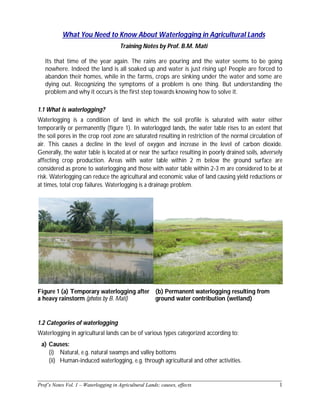
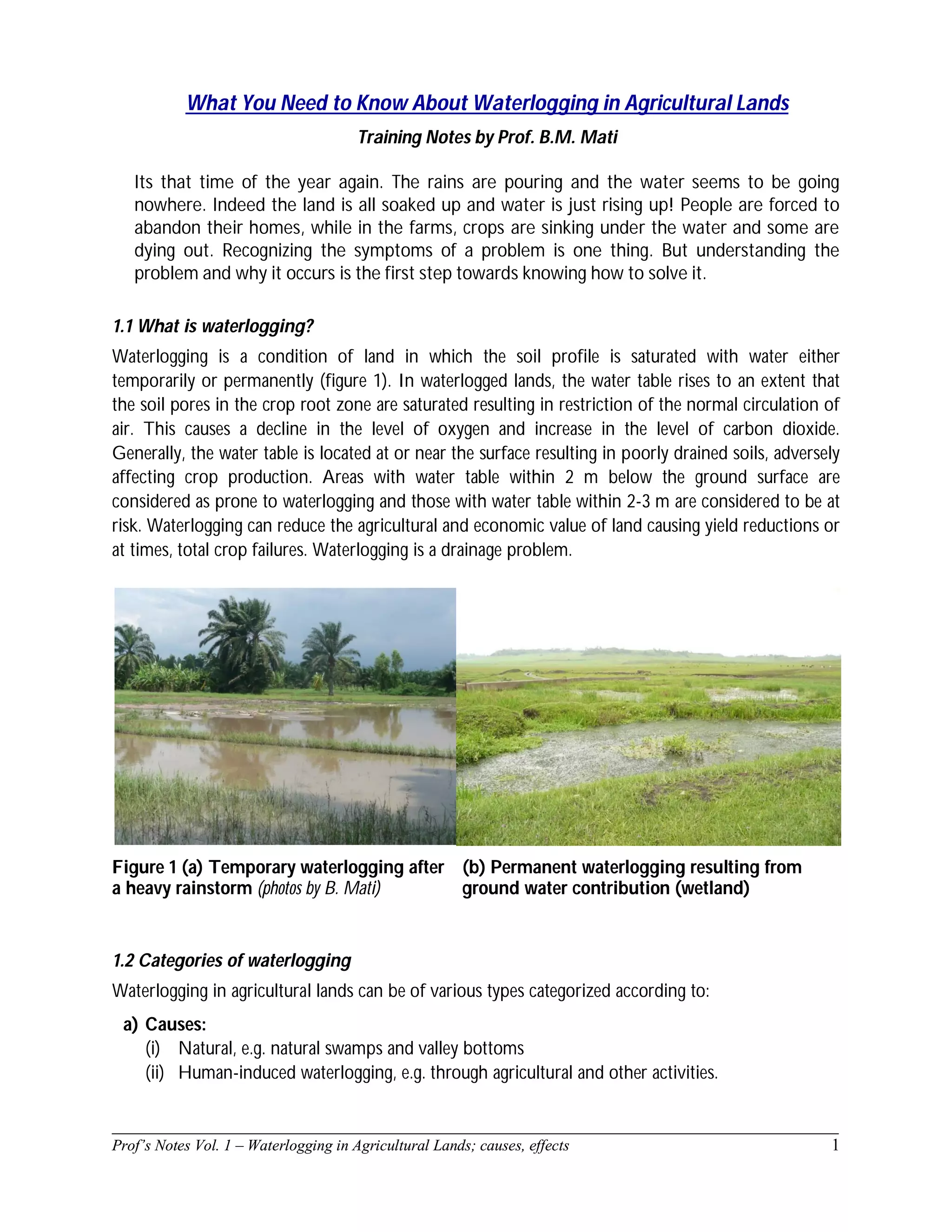
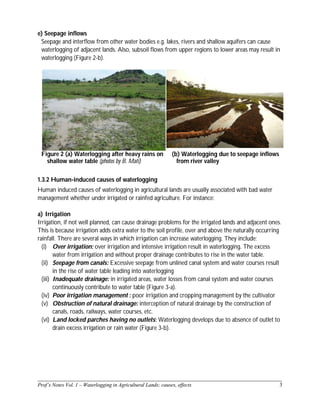
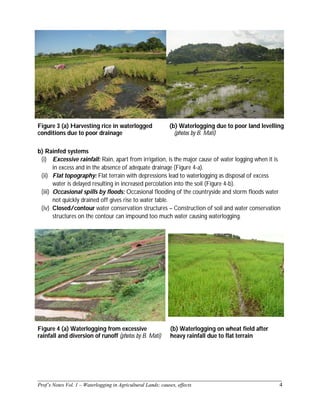
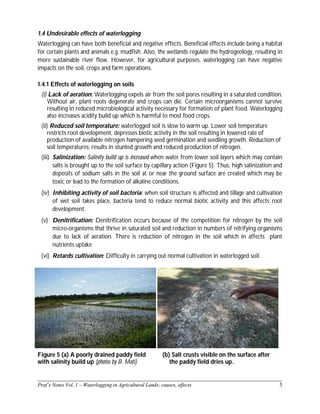
1. Waterlogging occurs when soil pores are saturated with water, either temporarily or permanently, restricting air circulation. This can be caused by natural factors like heavy rainfall or human activities like poor irrigation management.
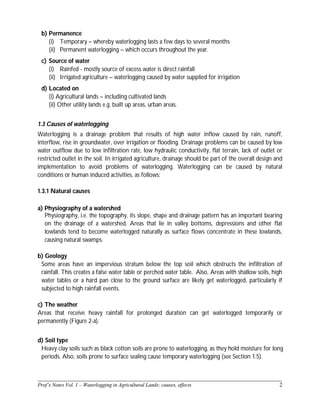
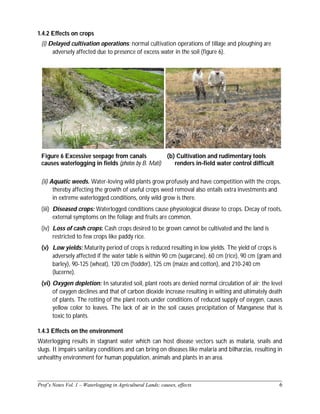
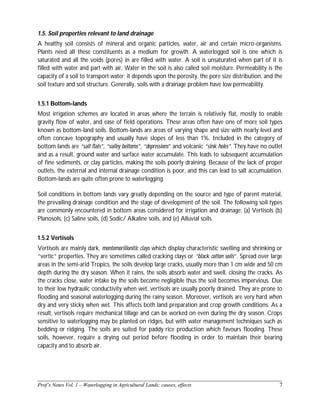
2. Waterlogging has negative effects including lack of soil aeration, reduced crop yields, and creation of unhealthy environments that can spread disease. Specific soil types like vertisols and planosols are more prone to waterlogging issues.
3. Understanding the causes and effects of waterlogging is important to address drainage problems and improve agricultural productivity on lands affected by excess water.


![10. Silt Theories [Kennedy's Theory-I].pdf](https://cdn.slidesharecdn.com/ss_thumbnails/10-230714062707-39749e3d-thumbnail.jpg?width=640&height=640&fit=bounds)
![11. Silt Theories [Lacey's Theory].pdf](https://cdn.slidesharecdn.com/ss_thumbnails/11-230714062706-5eed0a09-thumbnail.jpg?width=640&height=640&fit=bounds)


