BY
R.DILLI BABU
S.R.SAKTHIVEL
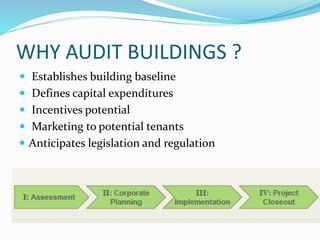
WHY AUDIT BUILDINGS ?
 Establishes building baseline
 Defines capital expenditures
 Incentives potential
 Marketing to potential tenants
 Anticipates legislation and regulation
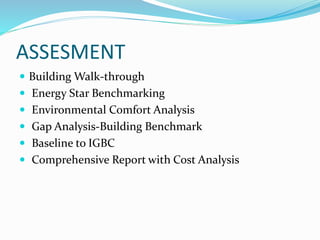
ASSESMENT
 Building Walk-through
 Energy Star Benchmarking
 Environmental Comfort Analysis
 Gap Analysis-Building Benchmark
 Baseline to IGBC
 Comprehensive Report with Cost Analysis
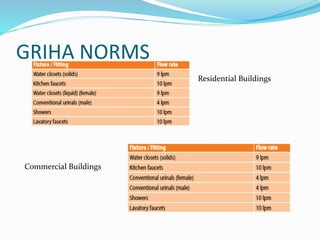
GRIHA NORMS
Residential Buildings
Commercial Buildings
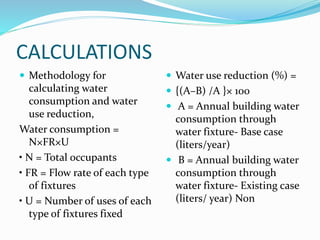
CALCULATIONS
 Methodology for
calculating water
consumption and water
use reduction,
Water consumption =
N×FR×U
• N = Total occupants
• FR = Flow rate of each type
of fixtures
• U = Number of uses of each
type of fixtures fixed
 Water use reduction (%) =
 {(A–B) /A }× 100
 A = Annual building water
consumption through
water fixture- Base case
(liters/year)
 B = Annual building water
consumption through
water fixture- Existing case
(liters/ year) Non
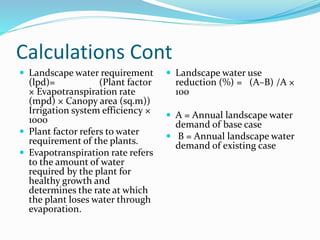
Calculations Cont
 Landscape water requirement
(lpd)= (Plant factor
× Evapotranspiration rate
(mpd) × Canopy area (sq.m))
Irrigation system efficiency ×
1000
 Plant factor refers to water
requirement of the plants.
 Evapotranspiration rate refers
to the amount of water
required by the plant for
healthy growth and
determines the rate at which
the plant loses water through
evaporation.
 Landscape water use
reduction (%) = (A–B) /A ×
100
 A = Annual landscape water
demand of base case
 B = Annual landscape water
demand of existing case
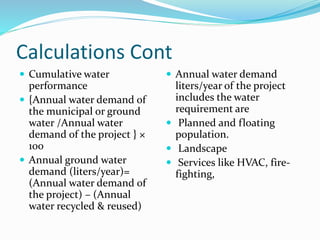
Calculations Cont
 Cumulative water
performance
 {Annual water demand of
the municipal or ground
water /Annual water
demand of the project } ×
100
 Annual ground water
demand (liters/year)=
(Annual water demand of
the project) – (Annual
water recycled & reused)
 Annual water demand
liters/year of the project
includes the water
requirement are
 Planned and floating
population.
 Landscape
 Services like HVAC, fire-
fighting,
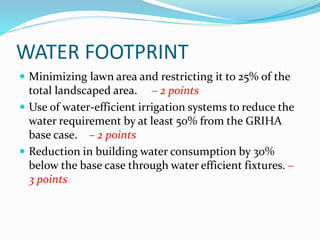
WATER FOOTPRINT
 Minimizing lawn area and restricting it to 25% of the
total landscaped area. – 2 points
 Use of water-efficient irrigation systems to reduce the
water requirement by at least 50% from the GRIHA
base case. – 2 points
 Reduction in building water consumption by 30%
below the base case through water efficient fixtures. –
3 points
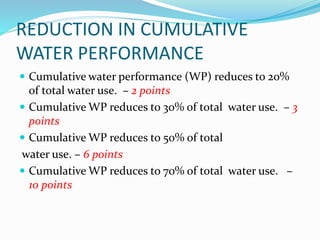
REDUCTION IN CUMULATIVE
WATER PERFORMANCE
 Cumulative water performance (WP) reduces to 20%
of total water use. – 2 points
 Cumulative WP reduces to 30% of total water use. – 3
points
 Cumulative WP reduces to 50% of total
water use. – 6 points
 Cumulative WP reduces to 70% of total water use. –
10 points
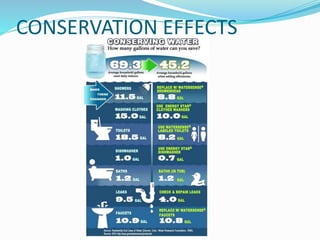
CONSERVATION EFFECTS

Water efficiency in green buildings

  • 1.
  • 2.
    WHY AUDIT BUILDINGS?  Establishes building baseline  Defines capital expenditures  Incentives potential  Marketing to potential tenants  Anticipates legislation and regulation
  • 3.
    ASSESMENT  Building Walk-through Energy Star Benchmarking  Environmental Comfort Analysis  Gap Analysis-Building Benchmark  Baseline to IGBC  Comprehensive Report with Cost Analysis
  • 4.
  • 5.
    CALCULATIONS  Methodology for calculatingwater consumption and water use reduction, Water consumption = N×FR×U • N = Total occupants • FR = Flow rate of each type of fixtures • U = Number of uses of each type of fixtures fixed  Water use reduction (%) =  {(A–B) /A }× 100  A = Annual building water consumption through water fixture- Base case (liters/year)  B = Annual building water consumption through water fixture- Existing case (liters/ year) Non
  • 6.
    Calculations Cont  Landscapewater requirement (lpd)= (Plant factor × Evapotranspiration rate (mpd) × Canopy area (sq.m)) Irrigation system efficiency × 1000  Plant factor refers to water requirement of the plants.  Evapotranspiration rate refers to the amount of water required by the plant for healthy growth and determines the rate at which the plant loses water through evaporation.  Landscape water use reduction (%) = (A–B) /A × 100  A = Annual landscape water demand of base case  B = Annual landscape water demand of existing case
  • 7.
    Calculations Cont  Cumulativewater performance  {Annual water demand of the municipal or ground water /Annual water demand of the project } × 100  Annual ground water demand (liters/year)= (Annual water demand of the project) – (Annual water recycled & reused)  Annual water demand liters/year of the project includes the water requirement are  Planned and floating population.  Landscape  Services like HVAC, fire- fighting,
  • 8.
    WATER FOOTPRINT  Minimizinglawn area and restricting it to 25% of the total landscaped area. – 2 points  Use of water-efficient irrigation systems to reduce the water requirement by at least 50% from the GRIHA base case. – 2 points  Reduction in building water consumption by 30% below the base case through water efficient fixtures. – 3 points
  • 9.
    REDUCTION IN CUMULATIVE WATERPERFORMANCE  Cumulative water performance (WP) reduces to 20% of total water use. – 2 points  Cumulative WP reduces to 30% of total water use. – 3 points  Cumulative WP reduces to 50% of total water use. – 6 points  Cumulative WP reduces to 70% of total water use. – 10 points
  • 10.