WATER CYCLE
TISHA LIZA TOMY
ASSISTANT PROFESSOR
DEPARTMENT OF BIOTECHNOLOGY
ST.MARY’S COLLEGE
THRISSUR
INTRODUCTION
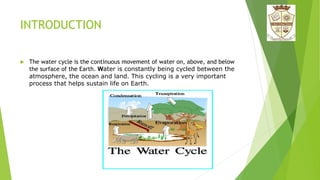
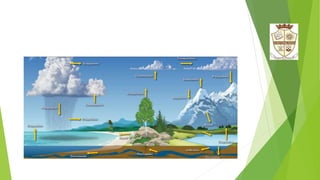
 The water cycle is the continuous movement of water on, above, and below
the surface of the Earth. Water is constantly being cycled between the
atmosphere, the ocean and land. This cycling is a very important
process that helps sustain life on Earth.
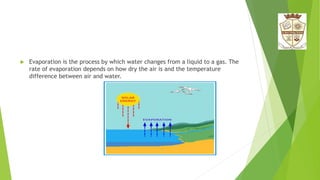
 Evaporation is the process by which water changes from a liquid to a gas. The
rate of evaporation depends on how dry the air is and the temperature
difference between air and water.
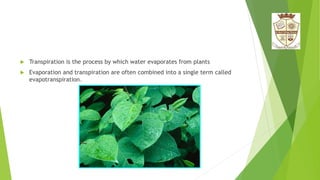
 Transpiration is the process by which water evaporates from plants
 Evaporation and transpiration are often combined into a single term called
evapotranspiration.
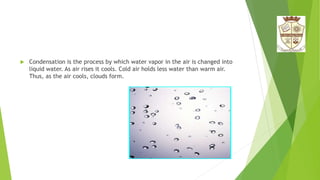
 Condensation is the process by which water vapor in the air is changed into
liquid water. As air rises it cools. Cold air holds less water than warm air.
Thus, as the air cools, clouds form.
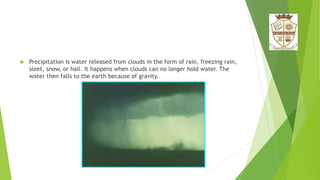
 Precipitation is water released from clouds in the form of rain, freezing rain,
sleet, snow, or hail. It happens when clouds can no longer hold water. The
water then falls to the earth because of gravity.
 Infiltration is the process by which water soaks into the ground. Infiltration is
faster on dry soils and in sandy soils compared to wet and clay soils.
 Water infiltrates much faster and deeper into a sand compared to a clay. This
is because the pore spaces in the sand are much larger than in the clay and
can therefore transport more water.
 Percolation is an important process where rain water soaks into
(infiltrates) the ground, into the soil and underlying rock layers.
 Surface runoff is precipitation or melted snow that runs off over the
landscape. Runoff occurs when the rate of precipitation or snowmelt is
greater than the rate of infiltration.
 Runoff water flows to sewers in some urban areas (then usually to surface
water), to retention basins in other urban areas (then usually soaks into the
ground), and to rivers, lakes, and wetlands in nonurban areas.
 Water that infiltrates the soil can either be taken up by plants, evaporate, be
stored in the soil, or become ground water. Ground water is water stored in
the saturated part of soil or rock.
 Ground water moves from high to low elevations due to gravity. It eventually
flows to a spring, lake, river, wetland, or well.
 Water in lakes, streams, and wetlands may come from precipitation, surface
runoff, and ground water discharge.
 Water in oceans comes from precipitation, runoff, ground water discharge,
and streams
 Water in glaciers and icecaps is stored for a long time. Some evaporates and
glaciers slowly flow toward oceans and lakes.
 97% of the earth’s water is in the oceans. Of the remainder, 69% is in glaciers
and icecaps, 30% in ground water, and 1% in lakes, rivers, and wetlands. Very
little water is stored in the atmosphere.
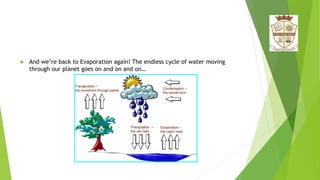
 And we’re back to Evaporation again! The endless cycle of water moving
through our planet goes on and on and on…
REFERENCES
 http://ga.water.usgs.gov/edu/watercycle.html
 https://www.noaa.gov/education/resource-collections/freshwater/water-
cycle
Water cycle

Water cycle

  • 1.
    WATER CYCLE TISHA LIZATOMY ASSISTANT PROFESSOR DEPARTMENT OF BIOTECHNOLOGY ST.MARY’S COLLEGE THRISSUR
  • 2.
    INTRODUCTION  The watercycle is the continuous movement of water on, above, and below the surface of the Earth. Water is constantly being cycled between the atmosphere, the ocean and land. This cycling is a very important process that helps sustain life on Earth.
  • 3.
     Evaporation isthe process by which water changes from a liquid to a gas. The rate of evaporation depends on how dry the air is and the temperature difference between air and water.
  • 4.
     Transpiration isthe process by which water evaporates from plants  Evaporation and transpiration are often combined into a single term called evapotranspiration.
  • 5.
     Condensation isthe process by which water vapor in the air is changed into liquid water. As air rises it cools. Cold air holds less water than warm air. Thus, as the air cools, clouds form.
  • 6.
     Precipitation iswater released from clouds in the form of rain, freezing rain, sleet, snow, or hail. It happens when clouds can no longer hold water. The water then falls to the earth because of gravity.
  • 7.
     Infiltration isthe process by which water soaks into the ground. Infiltration is faster on dry soils and in sandy soils compared to wet and clay soils.  Water infiltrates much faster and deeper into a sand compared to a clay. This is because the pore spaces in the sand are much larger than in the clay and can therefore transport more water.  Percolation is an important process where rain water soaks into (infiltrates) the ground, into the soil and underlying rock layers.
  • 8.
     Surface runoffis precipitation or melted snow that runs off over the landscape. Runoff occurs when the rate of precipitation or snowmelt is greater than the rate of infiltration.  Runoff water flows to sewers in some urban areas (then usually to surface water), to retention basins in other urban areas (then usually soaks into the ground), and to rivers, lakes, and wetlands in nonurban areas.  Water that infiltrates the soil can either be taken up by plants, evaporate, be stored in the soil, or become ground water. Ground water is water stored in the saturated part of soil or rock.  Ground water moves from high to low elevations due to gravity. It eventually flows to a spring, lake, river, wetland, or well.
  • 9.
     Water inlakes, streams, and wetlands may come from precipitation, surface runoff, and ground water discharge.  Water in oceans comes from precipitation, runoff, ground water discharge, and streams  Water in glaciers and icecaps is stored for a long time. Some evaporates and glaciers slowly flow toward oceans and lakes.  97% of the earth’s water is in the oceans. Of the remainder, 69% is in glaciers and icecaps, 30% in ground water, and 1% in lakes, rivers, and wetlands. Very little water is stored in the atmosphere.
  • 10.
     And we’reback to Evaporation again! The endless cycle of water moving through our planet goes on and on and on…
  • 12.