Rachele Kanigel
San Francisco State University
Kanigel@sfsu.edu
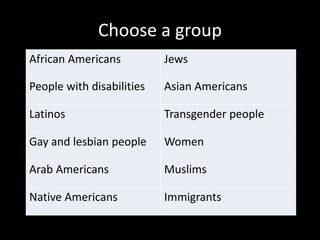
Choose a group
African Americans Jews
People with disabilities Asian Americans
Latinos Transgender people
Gay and lesbian people Women
Arab Americans Muslims
Native Americans Immigrants
Categorize your words
Acceptable Not sure Offensive
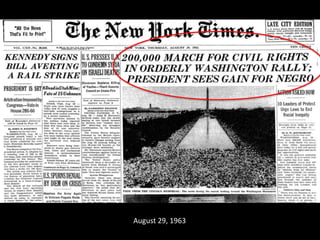
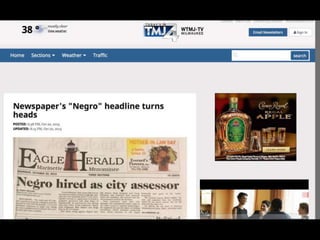
August 29, 1963
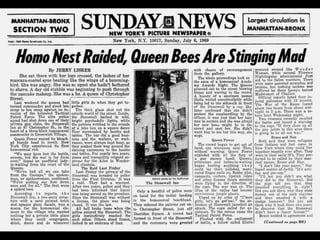
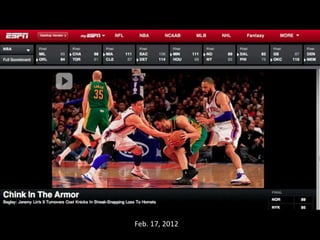
Feb. 17, 2012
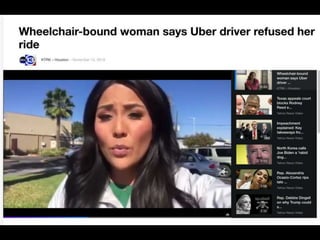
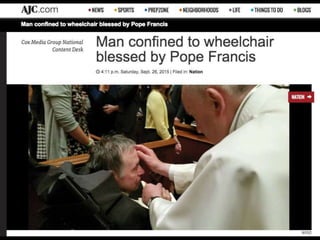
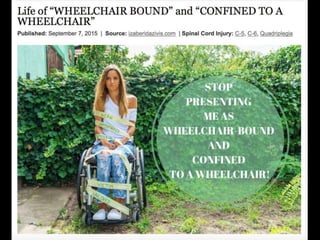
Wheelchair-bound/confined to a
wheelchair
• Why not?: These terms describe people only
in relationship to a piece of equipment, not as
individuals
• Inaccurate: Wheelchairs actually enable
people who use them
• Instead say: A person who uses a wheelchair
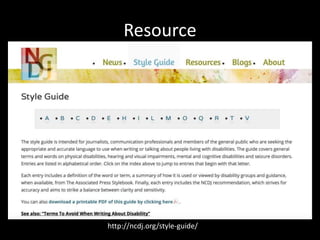
Resource
http://ncdj.org/style-guide/
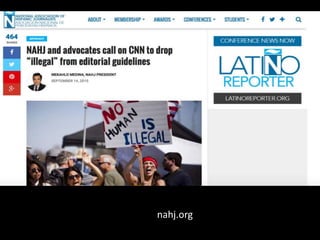
http://nahj.org/
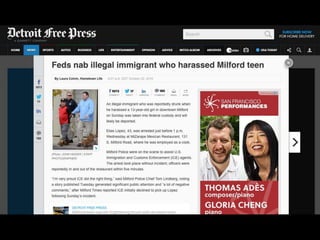
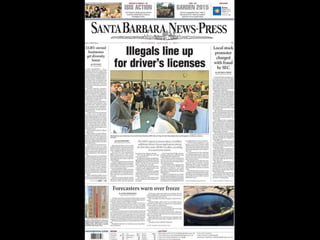
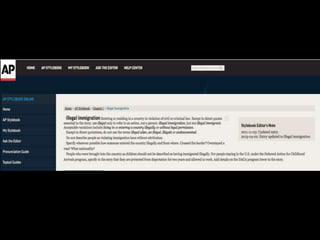
Illegal alien, illegal immigrant, illegals
• Why not?: You are effectively saying the
individual, as opposed to the actions the
person has taken, is unlawful.
• Inaccurate: People aren’t illegal; actions are.
Living in the U.S. illegally is not a crime.
• Instead say: undocumented worker or
undocumented immigrant.
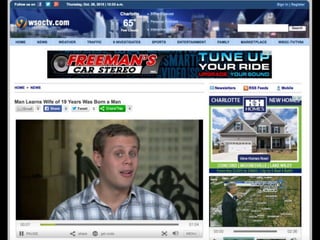
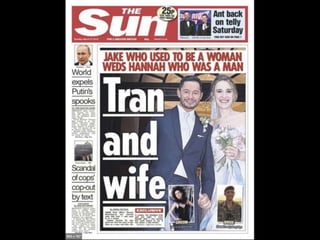
biologically male, genetically male,
born a man
• Why not? These are all problematic terms. A
person's sex is determined by a number of
factors, not just genetics.
• Inaccurate: People are born babies - they are
not "born a man" or "born a woman.”
• Instead say: transgender, trans man, trans
woman
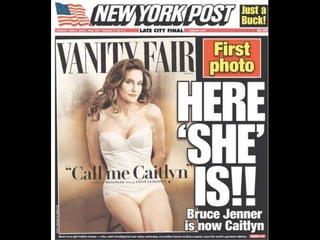
sex change, pre-operative, post-
operative
• Why not? Referring to a "sex-change
operation," or using terms such as "pre-
operative" or "post-operative,” suggests that
one must have surgery in order to transition.
• Inaccurate: Changing gender is a process that
may or may not include surgery
• Instead say: transition, sex-reassignment
surgery and don’t focus on surgery unless
your subject does
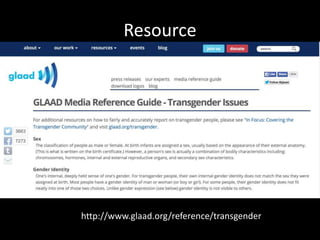
Tips for Reporting on Transgender
People
• Always use a transgender person's chosen name.
• When possible, ask transgender people which
pronoun they would like you to use.
• If you can’t ask the source, use the pronoun that
is consistent with the person's appearance and
gender expression. For example, if a person
wears a dress and uses the name Susan, feminine
pronouns are usually appropriate.
• Never put quotation marks around a transgender
person's chosen name or the pronoun that
reflects that person's gender identity.
Source: GLAAD Media Reference Guide
Resource
http://www.glaad.org/reference/transgender
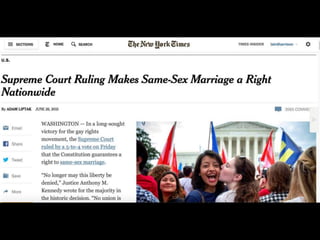
gay marriage, same-sex marriage
• Why not? While these terms are commonly
used by mainstream media organizations,
many lesbian and gay people find them
offensive because they suggest “gay marriage”
is different from marriage between a man and
woman
• Instead use: marriage equality
• Example: Marriage equality is now the law of
the land
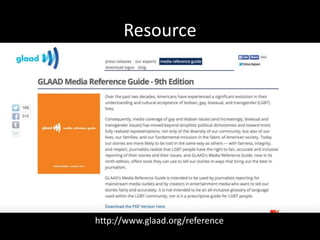
Resource
http://www.glaad.org/reference
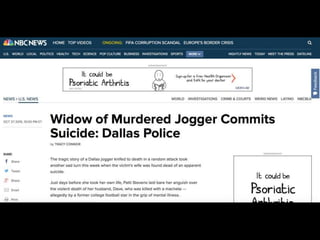
commit suicide
• Why not? The verb commit with suicide
suggests a criminal act.
• Inaccurate: Laws against suicide have been
repealed in the United States and many other
places.
• Instead say: killed himself, took her own life or
died by suicide.
Birth defect, defect
• Offensive: A defect is defined as an
imperfection or shortcoming. Many people
consider such terms offensive when describing
a disability as they imply the person is
deficient or inferior to others.
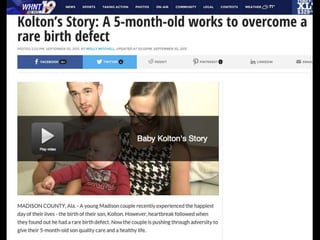
• Instead use: Name the condition or describe
the disability.
• Example: She was born with cerebral palsy.
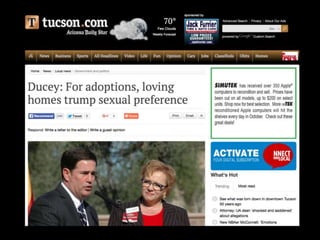
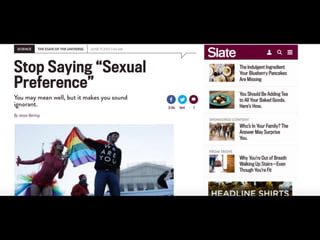
Sexual preference
• Why not: The term "sexual preference"
suggests that being lesbian, gay or bisexual is
a choice and therefore can and should be
"cured.”
• Instead use: sexual orientation
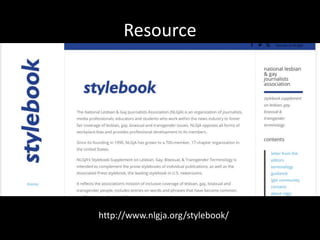
Resource
http://www.nlgja.org/stylebook/
afflicted with/stricken with/suffers
from/victim of
• Why not: These terms carry the assumption
that a person with a disability is suffering or
has a reduced quality of life.
• Inaccurate: Not every person with a disability
suffers, is a victim or is stricken.
• Instead: Use neutral terms.
• Example: He has muscular dystrophy or She
was born with a heart condition.
Other tips
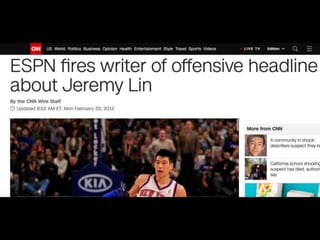
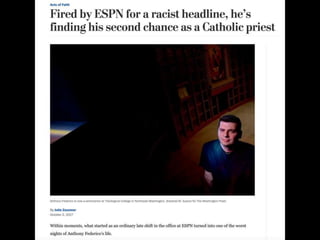
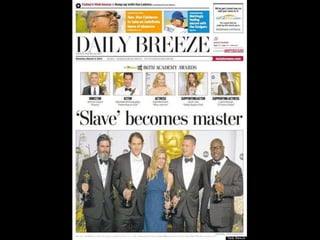
• Be careful of puns when writing about
sensitive issues
Other tips
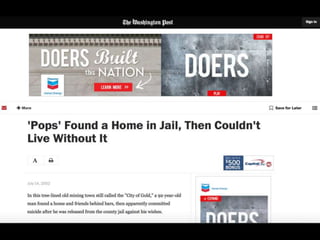
• Be careful of the tone you use when writing
about sensitive stories
Other tips
• Avoid stereotypes.
Tips
• When in doubt, ask your source.
Other resources
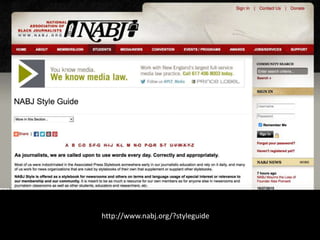
http://www.nabj.org/?styleguide
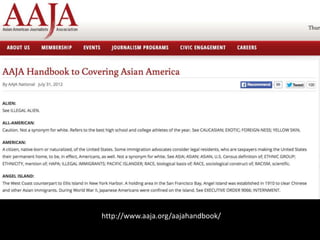
http://www.aaja.org/aajahandbook/
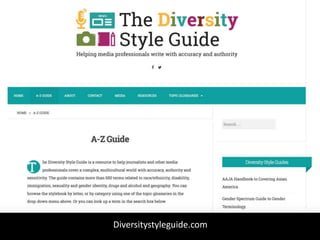
Diversitystyleguide.com
Watc You Langu ge!
Contact Rachele Kanigel
Kanigel@sfsu.edu

Watch yourlanguagejacc2019

  • 1.
    Rachele Kanigel San FranciscoState University Kanigel@sfsu.edu
  • 2.
    Choose a group AfricanAmericans Jews People with disabilities Asian Americans Latinos Transgender people Gay and lesbian people Women Arab Americans Muslims Native Americans Immigrants
  • 3.
  • 4.
  • 7.
  • 15.
    Wheelchair-bound/confined to a wheelchair •Why not?: These terms describe people only in relationship to a piece of equipment, not as individuals • Inaccurate: Wheelchairs actually enable people who use them • Instead say: A person who uses a wheelchair
  • 16.
  • 21.
  • 22.
    Illegal alien, illegalimmigrant, illegals • Why not?: You are effectively saying the individual, as opposed to the actions the person has taken, is unlawful. • Inaccurate: People aren’t illegal; actions are. Living in the U.S. illegally is not a crime. • Instead say: undocumented worker or undocumented immigrant.
  • 27.
    biologically male, geneticallymale, born a man • Why not? These are all problematic terms. A person's sex is determined by a number of factors, not just genetics. • Inaccurate: People are born babies - they are not "born a man" or "born a woman.” • Instead say: transgender, trans man, trans woman
  • 28.
    sex change, pre-operative,post- operative • Why not? Referring to a "sex-change operation," or using terms such as "pre- operative" or "post-operative,” suggests that one must have surgery in order to transition. • Inaccurate: Changing gender is a process that may or may not include surgery • Instead say: transition, sex-reassignment surgery and don’t focus on surgery unless your subject does
  • 29.
    Tips for Reportingon Transgender People • Always use a transgender person's chosen name. • When possible, ask transgender people which pronoun they would like you to use. • If you can’t ask the source, use the pronoun that is consistent with the person's appearance and gender expression. For example, if a person wears a dress and uses the name Susan, feminine pronouns are usually appropriate. • Never put quotation marks around a transgender person's chosen name or the pronoun that reflects that person's gender identity. Source: GLAAD Media Reference Guide
  • 30.
  • 33.
    gay marriage, same-sexmarriage • Why not? While these terms are commonly used by mainstream media organizations, many lesbian and gay people find them offensive because they suggest “gay marriage” is different from marriage between a man and woman • Instead use: marriage equality • Example: Marriage equality is now the law of the land
  • 34.
  • 36.
    commit suicide • Whynot? The verb commit with suicide suggests a criminal act. • Inaccurate: Laws against suicide have been repealed in the United States and many other places. • Instead say: killed himself, took her own life or died by suicide.
  • 38.
    Birth defect, defect •Offensive: A defect is defined as an imperfection or shortcoming. Many people consider such terms offensive when describing a disability as they imply the person is deficient or inferior to others. • Instead use: Name the condition or describe the disability. • Example: She was born with cerebral palsy.
  • 41.
    Sexual preference • Whynot: The term "sexual preference" suggests that being lesbian, gay or bisexual is a choice and therefore can and should be "cured.” • Instead use: sexual orientation
  • 42.
  • 44.
    afflicted with/stricken with/suffers from/victimof • Why not: These terms carry the assumption that a person with a disability is suffering or has a reduced quality of life. • Inaccurate: Not every person with a disability suffers, is a victim or is stricken. • Instead: Use neutral terms. • Example: He has muscular dystrophy or She was born with a heart condition.
  • 45.
    Other tips • Becareful of puns when writing about sensitive issues
  • 48.
    Other tips • Becareful of the tone you use when writing about sensitive stories
  • 51.
  • 54.
    Tips • When indoubt, ask your source.
  • 55.
  • 56.
  • 57.
  • 58.
  • 59.
    Watc You Languge! Contact Rachele Kanigel Kanigel@sfsu.edu