RACHELE KANIGEL
   Beats help reporters focus their reporting
   Beats help sources know who to contact with
    story ideas & concerns
   Beats help keep reporters from stepping on
    each other’s toes
   Professional news organizations want to see
    prospective reporters can cover a beat
1   Identify your beat – what does it include?
2   Develop sources – people who are
    knowledgeable about your beat
3   Identify resources – publications, websites,
    data sources
4   Use social media tools to expand your
    network
5   Hunt for story ideas
Ask yourself:
 What does this beat encompass?
 What do I need to learn about this beat?
 Who are the major players on the beat –
  faculty, administrators, students, staff, leader
  s of organizations?
 What are the major issues/problems/conflicts
  on your beat?
   Consider everyone – classmates, professors,
    janitors, the baristas at the local coffeehouse
    – a source
   Compile a list of potential sources, including
    titles, phone numbers, email addresses
   Introduce yourself to sources – set up
    appointments for coffee, drop in on
    professors’ offices
   Tell people what you’re looking for – story
    ideas, problems, issues, frustrations
   Look for publications, websites, blogs related
    to your beat – follow them
   Look for data sources – police
    logs, reports, audits
   Set up a Google news alert for topics related
    to your beat
   Find and follow sources on Twitter
   Follow discussions on Twitter, Facebook &
    Google+
   Don’t just lurk; ask questions, seek sources,
    invite discussion
   Read other news outlets
   Look for changes – new businesses, new
    employees, administrative changes, new
    policies
   Scan bulletin boards
   Talk to people – ask what’s new, what bothers
    them
For more information


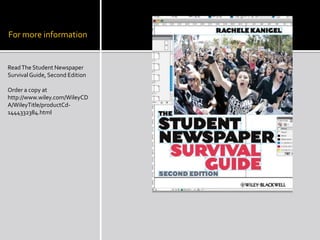
Read The Student Newspaper
Survival Guide, Second Edition

Order a copy at
http://www.wiley.com/WileyCD
A/WileyTitle/productCd-
1444332384.html

Coveringa beatsnsg

  • 1.
  • 2.
    Beats help reporters focus their reporting  Beats help sources know who to contact with story ideas & concerns  Beats help keep reporters from stepping on each other’s toes  Professional news organizations want to see prospective reporters can cover a beat
  • 3.
    1 Identify your beat – what does it include? 2 Develop sources – people who are knowledgeable about your beat 3 Identify resources – publications, websites, data sources 4 Use social media tools to expand your network 5 Hunt for story ideas
  • 4.
    Ask yourself:  Whatdoes this beat encompass?  What do I need to learn about this beat?  Who are the major players on the beat – faculty, administrators, students, staff, leader s of organizations?  What are the major issues/problems/conflicts on your beat?
  • 5.
    Consider everyone – classmates, professors, janitors, the baristas at the local coffeehouse – a source  Compile a list of potential sources, including titles, phone numbers, email addresses  Introduce yourself to sources – set up appointments for coffee, drop in on professors’ offices  Tell people what you’re looking for – story ideas, problems, issues, frustrations
  • 6.
    Look for publications, websites, blogs related to your beat – follow them  Look for data sources – police logs, reports, audits  Set up a Google news alert for topics related to your beat
  • 8.
    Find and follow sources on Twitter  Follow discussions on Twitter, Facebook & Google+  Don’t just lurk; ask questions, seek sources, invite discussion
  • 9.
    Read other news outlets  Look for changes – new businesses, new employees, administrative changes, new policies  Scan bulletin boards  Talk to people – ask what’s new, what bothers them
  • 10.
    For more information ReadThe Student Newspaper Survival Guide, Second Edition Order a copy at http://www.wiley.com/WileyCD A/WileyTitle/productCd- 1444332384.html