Covering Suicide

                Rachele Kanigel
         San Francisco State University

http://www.slideshare.net/rkanigel/covering-suicide
Suicide: To cover or not to cover?

 When should a news organization report news
  of a suicide?
 Why should a news organization report a
  suicide?
 What are the reasons for not reporting on
  suicide?
 How can journalists, especially student
  journalists, cover suicide responsibly?
Most professional news
organizations DO NOT cover suicide
unless…

 It causes a public spectacle
 It’s committed in connection with another
  crime, such as a homicide or kidnapping
 It’s committed by a public figure
Student news organizations often
DO cover suicide because…
 It may affect a large segment of the campus
  community
 Suicide is the leading cause of death among
  college students (6 suicides per 100,000
  college students per year, according to a
  recent study)
 Coverage can dispel rumors
 It can help the community heal and make
  sense of a tragedy
“The media can play a powerful role in
 educating the public about suicide
 prevention. Stories about suicide
 can inform readers and viewers about
 the likely causes of suicide, its warning
 signs, trends in suicide rates, and recent
 treatment advances. They can also
 highlight opportunities to prevent suicide.
       --American Society of Suicidology
Risk: Suicide clusters

 Every year in the United States 100 to 200
  youngsters die in suicide clusters, and there
  are signs that the rate is rising.
 Suicide clusters in the U.S. occur
  predominantly among teenagers and young
  adults.
        -- Suicide and Mental Health Association
                                      International
Media contagion

 Research suggests that spotlighting a suicide
  through media coverage can actually
  encourage others to follow suit -- especially if
  suicide is portrayed as glamorous or romantic.
 Prominent newspaper (or television) coverage
  of a suicide has been found to increase
  suicidal behavior within the
  readership(viewing) area of the newspaper
  (network).
Ethics Case Study: U of Portland

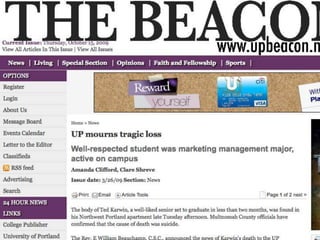
 In March 2009 a University of Portland student
  committed suicide
 The Beacon wrote a story with the headline:
  “Suicide claims UP senior”
 University officials pulled the paper, saying the
  headline was insensitive, inappropriate and
  “designed to shock people.”
Ethics Case Study: U of Portland

    Suicide claims UP senior

 Do you think the headline was insensitive?
 What would you have done if campus officials
  yanked your paper from the racks in a
  situation like this?
Ethics Case Study: San Francisco
State University
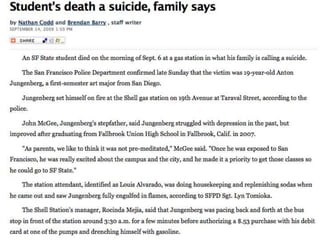
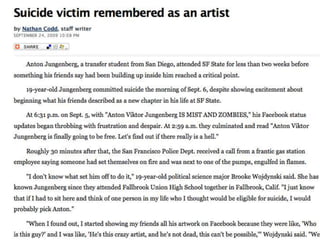
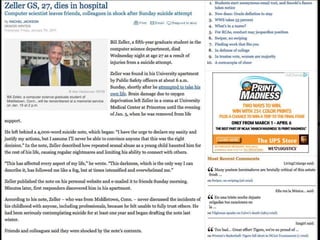
In September a SFSU student set
 himself on fire at a gas station.
Here are the original Golden Gate
 Xpress story and a follow-up:
Ethics Case Study: SFSU

What do you think of the use of suicide
 in the headlines?
Is the original story too graphic?
Should the paper have described the
 cause of death?
Should the paper have gone into so
 much detail about his state of mind?
Ethics Case Study: University of
Ottawa
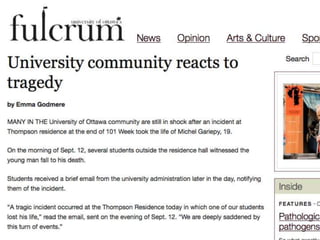
On Sept. 19, 2009 a 19-year-old jumped
 to his death from the 15th floor of a U of
 Ottawa residence hall
The Fulcrum named the student but
 didn’t say how he died
Case Study: University of Ottawa

Should the story have included the fact
 the student had committed suicide?
Was it irresponsible to say the student
 fell rather than that he jumped?
Did the paper sweep the issue under the
 rug or protect its readers?
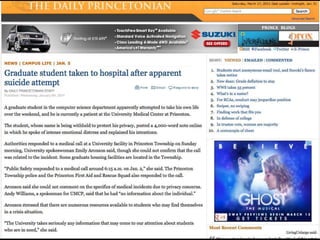
Ethics Case Study: Princeton U

Was it responsible for The Daily
 Princetonian to report on a suicide
 attempt?
When is it appropriate to report on an
 attempted suicide?
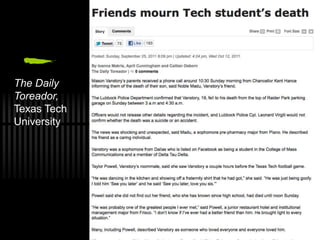
The Daily
Toreador,
Texas Tech
University
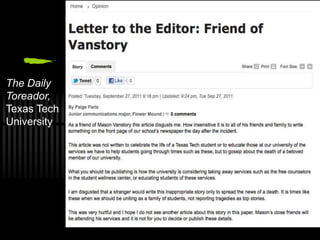
The Daily
Toreador,
Texas Tech
University
Ethics Case Study: Texas Tech U.

Was The Daily Toreador insensitive in its
 coverage of the story?
What could the paper have done to
 ensure the story wouldn’t offend readers
 and friends of the dead young man?
Should editors worry about offending
 friends and family members in covering
 a suicide or simply report the truth?
Tips for Covering Suicide
How to cover suicide responsibly

Don’t oversimplify reasons for the
 suicide, such as blaming it on stress.
Don’t make it seem painless or easy.
Don’t sensationalize the death.
Avoid melodramatic languague – ex:
 tragic death, a life cut short
How to cover suicide responsibly

Don’t glorify the victim.
Don’t engage in ongoing or excessive
 coverage.
Don’t use the word suicide unless official
 sources – police or family members –
 confirm the cause of death was suicide.
How to cover suicide responsibly

Don’t provide a how-to; don’t cover the
 method of death in detail.
Bring awareness to the problem
Offer resources -- suicide hotlines,
 counseling services, etc.
Doublecheck statements from family
 members
Readings on Covering Suicide

Poynter: Reporting on Suicide
The Globe & Mail: Burying the story
 won't stop suicide
Dart Center for Journalism & Trauma:
 Covering Teen Suicide
Dart Center: Suicide
ReportingonSuicide.org
Links to Stories Referenced

 The Beacon, University of Portland
 Golden Gate Xpress, San Francisco State U
 The Daily Toreador, Texas Tech University
 Fulcrum, University of Ottawa
 The Daily Princetonian, Princeton U
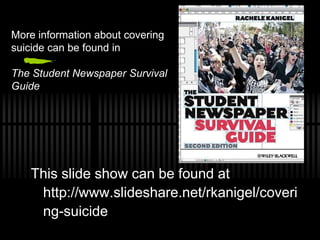
More information about covering
suicide can be found in

The Student Newspaper Survival
Guide


   This slide show can be found at
    http://www.slideshare.net/rkanigel/coveri
    ng-suicide

Covering suicide

  • 1.
    Covering Suicide Rachele Kanigel San Francisco State University http://www.slideshare.net/rkanigel/covering-suicide
  • 2.
    Suicide: To coveror not to cover?  When should a news organization report news of a suicide?  Why should a news organization report a suicide?  What are the reasons for not reporting on suicide?  How can journalists, especially student journalists, cover suicide responsibly?
  • 3.
    Most professional news organizationsDO NOT cover suicide unless… It causes a public spectacle It’s committed in connection with another crime, such as a homicide or kidnapping It’s committed by a public figure
  • 4.
    Student news organizationsoften DO cover suicide because…  It may affect a large segment of the campus community  Suicide is the leading cause of death among college students (6 suicides per 100,000 college students per year, according to a recent study)  Coverage can dispel rumors  It can help the community heal and make sense of a tragedy
  • 5.
    “The media canplay a powerful role in educating the public about suicide prevention. Stories about suicide can inform readers and viewers about the likely causes of suicide, its warning signs, trends in suicide rates, and recent treatment advances. They can also highlight opportunities to prevent suicide. --American Society of Suicidology
  • 6.
    Risk: Suicide clusters Every year in the United States 100 to 200 youngsters die in suicide clusters, and there are signs that the rate is rising.  Suicide clusters in the U.S. occur predominantly among teenagers and young adults. -- Suicide and Mental Health Association International
  • 7.
    Media contagion  Researchsuggests that spotlighting a suicide through media coverage can actually encourage others to follow suit -- especially if suicide is portrayed as glamorous or romantic.  Prominent newspaper (or television) coverage of a suicide has been found to increase suicidal behavior within the readership(viewing) area of the newspaper (network).
  • 9.
    Ethics Case Study:U of Portland  In March 2009 a University of Portland student committed suicide  The Beacon wrote a story with the headline: “Suicide claims UP senior”  University officials pulled the paper, saying the headline was insensitive, inappropriate and “designed to shock people.”
  • 10.
    Ethics Case Study:U of Portland Suicide claims UP senior  Do you think the headline was insensitive?  What would you have done if campus officials yanked your paper from the racks in a situation like this?
  • 12.
    Ethics Case Study:San Francisco State University In September a SFSU student set himself on fire at a gas station. Here are the original Golden Gate Xpress story and a follow-up:
  • 15.
    Ethics Case Study:SFSU What do you think of the use of suicide in the headlines? Is the original story too graphic? Should the paper have described the cause of death? Should the paper have gone into so much detail about his state of mind?
  • 16.
    Ethics Case Study:University of Ottawa On Sept. 19, 2009 a 19-year-old jumped to his death from the 15th floor of a U of Ottawa residence hall The Fulcrum named the student but didn’t say how he died
  • 18.
    Case Study: Universityof Ottawa Should the story have included the fact the student had committed suicide? Was it irresponsible to say the student fell rather than that he jumped? Did the paper sweep the issue under the rug or protect its readers?
  • 20.
    Ethics Case Study:Princeton U Was it responsible for The Daily Princetonian to report on a suicide attempt? When is it appropriate to report on an attempted suicide?
  • 22.
  • 23.
  • 24.
    Ethics Case Study:Texas Tech U. Was The Daily Toreador insensitive in its coverage of the story? What could the paper have done to ensure the story wouldn’t offend readers and friends of the dead young man? Should editors worry about offending friends and family members in covering a suicide or simply report the truth?
  • 25.
  • 26.
    How to coversuicide responsibly Don’t oversimplify reasons for the suicide, such as blaming it on stress. Don’t make it seem painless or easy. Don’t sensationalize the death. Avoid melodramatic languague – ex: tragic death, a life cut short
  • 27.
    How to coversuicide responsibly Don’t glorify the victim. Don’t engage in ongoing or excessive coverage. Don’t use the word suicide unless official sources – police or family members – confirm the cause of death was suicide.
  • 28.
    How to coversuicide responsibly Don’t provide a how-to; don’t cover the method of death in detail. Bring awareness to the problem Offer resources -- suicide hotlines, counseling services, etc. Doublecheck statements from family members
  • 29.
    Readings on CoveringSuicide Poynter: Reporting on Suicide The Globe & Mail: Burying the story won't stop suicide Dart Center for Journalism & Trauma: Covering Teen Suicide Dart Center: Suicide ReportingonSuicide.org
  • 30.
    Links to StoriesReferenced  The Beacon, University of Portland  Golden Gate Xpress, San Francisco State U  The Daily Toreador, Texas Tech University  Fulcrum, University of Ottawa  The Daily Princetonian, Princeton U
  • 31.
    More information aboutcovering suicide can be found in The Student Newspaper Survival Guide This slide show can be found at http://www.slideshare.net/rkanigel/coveri ng-suicide