3/13/2022 waste valorization 1
Waste Valorization
Presented by
• Dr. Arvind Kumar, Assistant Professor
• Department of Chemical Engineering
• NIT Rourkela-769008
The waste-to-wealth concept aims to promote a future sustainable
lifestyle where waste valorization is seen not only for its intrinsic
benefits to the environment but also to develop new technologies,
livelihoods and jobs.
3/13/2022 2
waste valorization
• Waste valorization is the process of converting waste
materials into more useful products including chemicals,
materials, and fuels.
3/13/2022 3
waste valorization
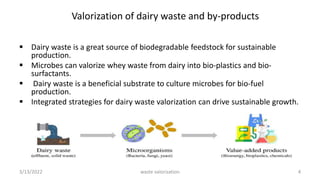
Valorization of dairy waste and by-products
 Dairy waste is a great source of biodegradable feedstock for sustainable
production.
 Microbes can valorize whey waste from dairy into bio-plastics and bio-
surfactants.
 Dairy waste is a beneficial substrate to culture microbes for bio-fuel
production.
 Integrated strategies for dairy waste valorization can drive sustainable growth.
3/13/2022 4
waste valorization
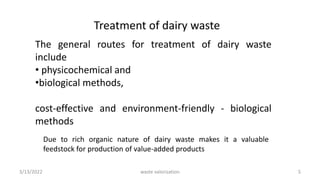
Treatment of dairy waste
The general routes for treatment of dairy waste
include
• physicochemical and
•biological methods,
cost-effective and environment-friendly - biological
methods
Due to rich organic nature of dairy waste makes it a valuable
feedstock for production of value-added products
3/13/2022 5
waste valorization
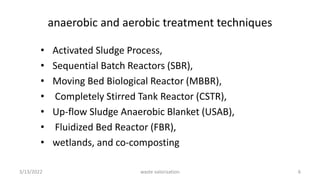
anaerobic and aerobic treatment techniques
• Activated Sludge Process,
• Sequential Batch Reactors (SBR),
• Moving Bed Biological Reactor (MBBR),
• Completely Stirred Tank Reactor (CSTR),
• Up-flow Sludge Anaerobic Blanket (USAB),
• Fluidized Bed Reactor (FBR),
• wetlands, and co-composting
3/13/2022 6
waste valorization
Many factors determine the efficacy of the
biobased techniques,
• substrate type and characterization,
• operational parameters and
• the performance of the microbes themselves.
anaerobic conversion of dairy waste is significantly impacted by the syntrophic
activity of the microbes active in different phases of anaerobic digestion (Pagliano
et al., 2019). Pagliano, G., Ventorino, V., Panico, A., Romano,
I., Pirozzi, F., Pepe, O., 2019. Anaerobic process
for bioenergy recovery from dairy waste: meta-
analysis and enumeration of microbial
community related to intermediates production.
Frontiers in microbiology 9, 3229.
3/13/2022 7
waste valorization
Dairy effluent has been demonstrated to be a beneficial substrate for
enzymatic hydrolysis using Saccharomyces cerevisiae to produce
ethanol (Parashar et al., 2016).
Parashar, A., Jin, Y., Mason, B., Chae, M., Bressler, D.C., 2016.
Incorporation of whey permeate, a dairy effluent, in ethanol
fermentation to provide a zero waste solution for the dairy
industry. J. Dairy Sci. 99 (3), 1859–1867.
The enzymes produced by filamentous fungi can hydrolyse complex
carbohydrates present in dairy waste into simple sugars aiding in
production of high-quality biomass suitable as animal/fish or even
human consumption (Mahboubi et al., 2017).
Mahboubi, A., Ferreira, J.A., Taherzadeh, M.J., Lennartsson,
P.R., 2017. Value-added products from dairy waste using
edible fungi. Waste management (New York, NY) 59, 518.
3/13/2022 8
waste valorization
hydrolysis of lipids during the anaerobic digestion of fat/oil rich dairy
waste inhibits the overall process, which can be overcome by
addition of enzymes (Meng et al., 2017).
Meng, Y., Luan, F., Yuan, H., Chen, X., Li, X., 2017. Enhancing
anaerobic digestion performance of crude lipid in food waste by
enzymatic pretreatment. Bioresource Technology 224, 48–55.
3/13/2022 9
waste valorization
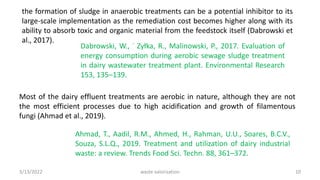
the formation of sludge in anaerobic treatments can be a potential inhibitor to its
large-scale implementation as the remediation cost becomes higher along with its
ability to absorb toxic and organic material from the feedstock itself (Dabrowski et
al., 2017).
Dabrowski, W., ˙ Zyłka, R., Malinowski, P., 2017. Evaluation of
energy consumption during aerobic sewage sludge treatment
in dairy wastewater treatment plant. Environmental Research
153, 135–139.
Most of the dairy effluent treatments are aerobic in nature, although they are not
the most efficient processes due to high acidification and growth of filamentous
fungi (Ahmad et al., 2019).
Ahmad, T., Aadil, R.M., Ahmed, H., Rahman, U.U., Soares, B.C.V.,
Souza, S.L.Q., 2019. Treatment and utilization of dairy industrial
waste: a review. Trends Food Sci. Techn. 88, 361–372.
3/13/2022 10
waste valorization
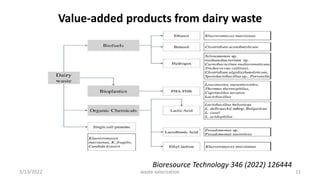
Value-added products from dairy waste
Bioresource Technology 346 (2022) 126444
3/13/2022 11
waste valorization
3/13/2022 waste valorization 12
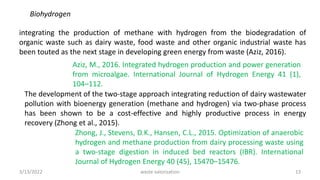
Biohydrogen
integrating the production of methane with hydrogen from the biodegradation of
organic waste such as dairy waste, food waste and other organic industrial waste has
been touted as the next stage in developing green energy from waste (Aziz, 2016).
Aziz, M., 2016. Integrated hydrogen production and power generation
from microalgae. International Journal of Hydrogen Energy 41 (1),
104–112.
The development of the two-stage approach integrating reduction of dairy wastewater
pollution with bioenergy generation (methane and hydrogen) via two-phase process
has been shown to be a cost-effective and highly productive process in energy
recovery (Zhong et al., 2015).
Zhong, J., Stevens, D.K., Hansen, C.L., 2015. Optimization of anaerobic
hydrogen and methane production from dairy processing waste using
a two-stage digestion in induced bed reactors (IBR). International
Journal of Hydrogen Energy 40 (45), 15470–15476.
3/13/2022 13
waste valorization
Despite these obvious advantages, few downstream and upstream parameters
such as the choice of bacterial culture for the dairy waste treatment and their
biohydrogen production efficiency still need to be studied in depth to test the
large-scale feasibility and setup of these integrated techniques.
microbial populations including bacteria, fungi, algae are known to produce
biohydrogen using dairy waste biomass as their carbon source in anaerobic
conditions.
Biohydrogen
photo fermentation (PF) and
dark fermentation (DF)- by product-volatile fatty acids
3/13/2022 14
waste valorization
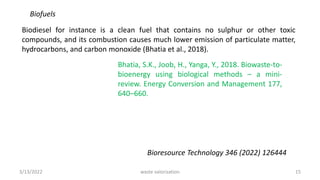
Biofuels
Biodiesel for instance is a clean fuel that contains no sulphur or other toxic
compounds, and its combustion causes much lower emission of particulate matter,
hydrocarbons, and carbon monoxide (Bhatia et al., 2018).
Bhatia, S.K., Joob, H., Yanga, Y., 2018. Biowaste-to-
bioenergy using biological methods – a mini-
review. Energy Conversion and Management 177,
640–660.
Bioresource Technology 346 (2022) 126444
3/13/2022 15
waste valorization
3/13/2022 waste valorization 16
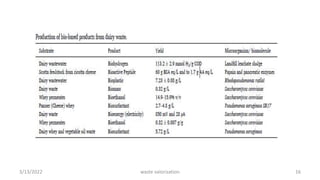
Biosurfactants
Various microbes such as bacteria, fungi and yeast are capable of producing bio-
surfactants also known as surface-active agents which can be used in place of
other organic surfactants. The global market for biosurfactants has been
estimated to stand at USD 30.64 billion (Singh et al., 2019).
Singh, P., Patil, Y., Rale, V., 2019. Biosurfactant production:
emerging trends and promising strategies. Journal of
applied microbiology 126 (1), 2–13.
Biosurfactants such as Sophorolipids, Rhamnolipids, Trehalose lipids, and
Ornithine lipids have all been demonstrated to be produced by various
microbial cultures using organic waste as substrates (Varjani et al., 2020).
Varjani, S., Rakholiya, P., Ng, H.Y., Taherzadeh, M.J., Ngo, H.H.,
Chang, J.S., Wong, J. W., You, S., Teixeira, J.A. and Bui, X.T., 2020.
Bio-based rhamnolipids production and recovery from waste
streams: Status and perspectives. Bioresource technology,
p.124213.
3/13/2022 17
waste valorization
3/13/2022 18
waste valorization
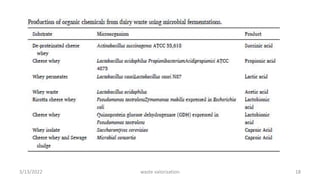
its industrial production from dairy waste is posed with challenges such as low yield,
high cost, feedstock availability, and downstream purification and processing
Bioplastics
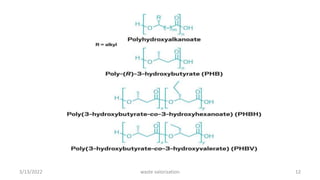
extract a high amount of polyhydroxyalkanoate (PHA)
bioplastic (60 g/kg)
Poly-3-hydroxybutyrate (PHB)
Other bioproducts
galacto-oligosaccharides (GOS), microbial pigments and industrial enzymes from
dairy waste.
microbes such as Streptococcus thermophiles, Aspergillus oryzae,
Bifidobacterium bifidum, Bacillus circulans, and Kluyveromyces lactis have been
used to produce β-galactosidase biocatalyst (Contesini et al., 2019;).
Contesini, F.J., de Lima, E.A., Mandelli, F., Borin, G.P., Alves, R.F. and
Terrasan, C.R.F., 2019. Carbohydrate active enzymes applied in the
production of functional oligosaccharides.
3/13/2022 19
waste valorization
bioactive peptides from dairy whey using methods such as proteolytic activity of
microorganisms and starter cultures and, enzymatic hydrolysis by digestive
enzymes (Mohan et al., 2015).
Mohan, A., Udechukwu, M.C., Rajendran, S.R., Udenigwe, C.C.,
2015. Modification of peptide functionality during enzymatic
hydrolysis of whey proteins. RSC advances 5 (118), 97400–
97407.
the microbial fermentation can form biopeptides with opioid characteristics (Garg et
al., 2018) anticancer (Hern´andez- Ledesma et al., 2017) and antioxidant (Rocha et al.,
2017) Garg, G., Singh, S., Singh, A.K., Rizvi, S.I., 2018. Whey protein concentrate supplementation protects rat brain against
aging-induced oxidative stress and neurodegeneration. Applied Physiology, Nutrition, and Metabolism 43 (5), 437–444.
Hern´andez-Ledesma, B., Hsieh, C.C. and Martínez-Villaluenga, C., 2017. Food bioactive compounds against
diseases of the 21st century 2016.
Rocha, G.F., Kise, F., Rosso, A.M., Parisi, M.G., 2017. Potential antioxidant peptides produced from whey hydrolysis
with an immobilized aspartic protease from Salpichroa origanifolia fruits. Food chemistry 237, 350–355.
Carotenoids have also been produced from dairy waste such as β-carotene, γ-
carotene, and lycopene
3/13/2022 20
waste valorization
filamentous fungal species such as Penicillium chrysogenum and Penicillium
purpurogenum have been reported to produce pigments by using cheese whey as
the sole carbon source.
Basto, B., Silva, N.R.D., Silv´erio, S.I.C. and Teixeira,
J.A., 2019. Low-cost alternative culture media for
fungal pigments production.
bioprocesses require further exploration to identify the metabolic pathways
involved in the production of useful biomolecules and there are several
challenges that need to be overcome for in vitro and in vivo production of these
molecules. For instance, development of new bioprocessing techniques using
omics approaches such as nutrigenomic, proteomics, and peptidomics, are being
progressed for bioactive peptides production
3/13/2022 21
waste valorization
gaps and future research directions
the efficiency and yield of bio-energy is very dependent on the process parameters
such as temperature, pH, co-substrates, mode of operation, and reactor
configuration.
multi-channel approach would not only reduce the burden of waste disposal at an
industry level, but also provide additional source of income for the plant.
the production of organic acids from dairy waste, there is a lot of variability in the
process and a large dependency on process parameters to successfully produce acids.

the identification of an appropriate microbial strain in bio-plastic production that
produces higher yields and also high-quality product remains a challenge.
microbes with higher carbon consumption efficiency and the capability to produce a
single product i.e., bio-plastic. This would further help in reducing the cost of
downstream processing and improve quality.
3/13/2022 22
waste valorization
• microbial treatment techniques developed in the recent past are
progressing the conversion of dairy waste into useful products.
• Anaerobic treatment can directly convert the waste into valuable
energy resource, whereas other biotechnological methods can use it as a
substrate for production of other value-added products such as bio-
surfactants, bio-plastics and bio-molecules.
•These strategies are promoting circular economy and reducing the
impact of waste disposal on the environment.
Conclusion
3/13/2022 23
waste valorization
3/13/2022 waste valorization 24
Silva et. Al., Cleaner Engineering and Technology 7 (2022) 100453
the feasibility of replacing feldspathic flux by ceramic sludge waste
(CS) in the sanitary ware production.
Food waste valorization - SCG valorization
• Food waste valorization is a goal of sustainable development,
gaining high interest in resolving environmental and resources
challenges.
• Coffee use generates massive quantities of spent coffee
grounds (SCG), a resource rich in fatty acids, amino acids,
polyphenols, minerals, and polysaccharides.
3/13/2022 25
waste valorization
Food waste valorization-perspectives of spent coffee
grounds biorefinery
3/13/2022 waste valorization 26
Journal of Cleaner Production Volume 211, 20 February 2019, Pages 1553-1566
3/13/2022 27
waste valorization
28
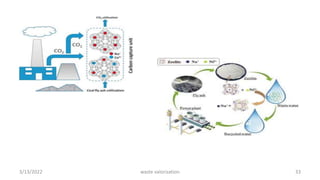
Water pollution from fly ash
MoEF&CC (3/11/2009): “Fly ash
"means and includes all the coal or
lignite ash generated at thermal
power plant, such as ESP ash, dry
fly ash, bottom ash, pond ash and
mound ash for the purpose of
utilization”.
Fly-Ash NTPC Kaniha
29
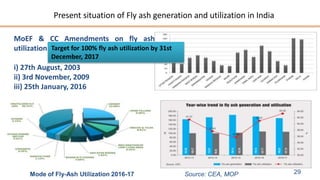
Present situation of Fly ash generation and utilization in India
MoEF & CC Amendments on fly ash
utilization:
i) 27th August, 2003
ii) 3rd November, 2009
iii) 25th January, 2016
Target for 100% fly ash utilization by 31st
December, 2017
Mode of Fly-Ash Utilization 2016-17 Source: CEA, MOP
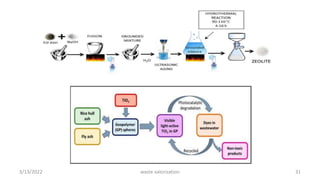
Fly Ash- A potential source of making Zeolite
• Zeolite-a versatile green material
30
Formula (wt %) Raw coal fly ash
Na2O 9.091
MgO 3.923
Al2O3 22.933
SiO2 55.186
K2O 0.581
CaO 0.529
TiO2 2.219
Fe2O3 5.530
BaO 0.004
SiO2/ Al2O3 2.40
Surface area (m2/g) 5.93
3/13/2022 31
waste valorization
3/13/2022 33
waste valorization
3/13/2022 waste valorization 34
3/13/2022 waste valorization 35
Waste Tyre Pyrolysis
Rubber 38%
Fillers (Carbon black, silica, carbon chalk) 30%
Reinforcing material (steel, rayon, nylon) 16%
Plasticizers (oils and resins) 10%
Vulcanisation agents (Sulphur, zinc oxide, various chemicals) 4%
Antioxidants to counter ozone effect and material fatigue 1%
Miscellaneous 1%
Elementary Composition
Carbon 86.40%
Hydrogen 8.00%
Nitrogen 0.50%
Sulphur 1.70%
Oxygen 2.40%
Proximate Analysis
Volatiles 62.10%
Fixed carbon 29.40%
Ash 7.10%
Moisture 1.30%
Composition of Whole Tyres
COMPOSITION OF WHOLE TYRES
3/13/2022 waste valorization 36
Pyrolysis process pathway
Gasification process pathway
3/13/2022 waste valorization 37
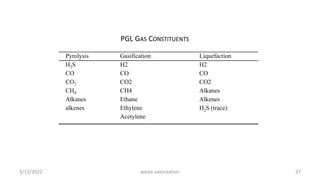
Pyrolysis Gasification Liquefaction
H2S H2 H2
CO CO CO
CO2 CO2 CO2
CH4 CH4 Alkanes
Alkanes Ethane Alkenes
alkenes Ethylene H2S (trace)
Acetylene
PGL GAS CONSTITUENTS
3/13/2022 waste valorization 38
Pyrolysis Gasification
Reaction
Temp °C
Tyre gas
wt%
Tyre gas
wt%
Reaction
Temp °C
Tyre gas
wt%
450 4.5 6.8 850 34.7
500 5.5 8.0 925 64.5
600 8.9 8.1 1000 85.9
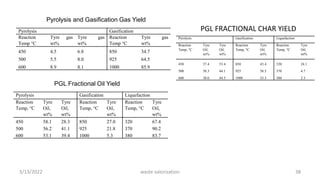
Pyrolysis and Gasification Gas Yield
Pyrolysis Gasification Liquefaction
Reaction
Temp, °C
Tyre
Oil,
wt%
Tyre
Oil,
wt%
Reaction
Temp, °C
Tyre
Oil,
wt%
Reaction
Temp, °C
Tyre
Oil,
wt%
450 58.1 28.3 850 27.0 320 67.4
500 56.2 41.1 925 21.8 370 90.2
600 53.1 39.4 1000 5.3 380 83.7
PGL Fractional Oil Yield
PGL FRACTIONAL CHAR YIELD
Pyrolysis Gasification Liquefaction
Reaction
Temp, °C
Tyre
Oil,
wt%
Tyre
Oil,
wt%
Reaction
Temp, °C
Tyre
Oil,
wt%
Reaction
Temp, °C
Tyre
Oil,
wt%
450 37.4 53.4 850 43.4 320 24.1
500 38.3 44.1 925 38.5 370 4.7
600 38.0 44.5 1000 33.3 380 2.3
3/13/2022 waste valorization 39
Process Liquefaction Gasification Pyrolysis
Process definition Liquefaction is the thermochemical
conversion of an organic solid into liquids.
Gasification is a sub-stoichiometric oxidation
of organic material to maximize waste
conversion to high temperature flue gases,
mainly CO2 and H2.
The thermal degradation of carbonaceous
material in an oxygen deprived atmosphere to
maximize thermal decomposition of solid
into gases and condensed liquid and residual
char.
Operating conditions:
Reaction environment Oxidizing (oxidant amount larger than that
required by stoichiometric combustion)
Reducing (oxidant amount lower than that
required by stoichiometric combustion)
Total absence of any oxidant
Reactant gas none Air, pure oxygen, oxygen enriched air, steam None
Temperature Between 300oC and 450oC [19] Between 550 – 900 oC [20] (in air) Between 400 and 800oC [3]
Pressure Atmospheric Atmospheric Slightly above atmospheric pressure
Process output:
Produced gases H2, CO, CO2, Alkanes Alkenes, H2S (trace) CO, H2, CO2, H2O, CH4 CO, H2, CH4 and other hydrocarbons
Produced liquids Petroleum like liquid, heavy molecular
compounds with properties similar to those of
petroleum based fuels.
Condensable fraction of tar and soot which is
minimal.
Oil is similar to diesel and can be used as a
fuel. High aromatic content, thus can serve as
a feed stock in the chemical industry
Produced solids After the combustion process. Bottom ash is
often produced as vitreous slag that can be
utilized as backfilling material for road
construction.
The pyrolysis char residue has a considerable
amount of carbon content and can either be
utilized as tyre derived fuel for the process or
be sold as a carbon-rich material for the
manufacture of activated carbon or for other
similar industrial purposes
Pollutants SOx, NOx, CO, H2S, HCl, CO, NH3, HCN, tar, alkali,
particulate.
H2S, HCl, NH3, HCN, tar, particulate.
40
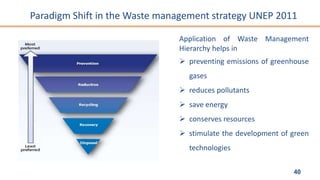
Paradigm Shift in the Waste management strategy UNEP 2011
Application of Waste Management
Hierarchy helps in
 preventing emissions of greenhouse
gases
 reduces pollutants
 save energy
 conserves resources
 stimulate the development of green
technologies
3/13/2022 waste valorization 41

Waste valorization-opportunities & Challenges

  • 1.
    3/13/2022 waste valorization1 Waste Valorization Presented by • Dr. Arvind Kumar, Assistant Professor • Department of Chemical Engineering • NIT Rourkela-769008
  • 2.
    The waste-to-wealth conceptaims to promote a future sustainable lifestyle where waste valorization is seen not only for its intrinsic benefits to the environment but also to develop new technologies, livelihoods and jobs. 3/13/2022 2 waste valorization
  • 3.
    • Waste valorizationis the process of converting waste materials into more useful products including chemicals, materials, and fuels. 3/13/2022 3 waste valorization
  • 4.
    Valorization of dairywaste and by-products  Dairy waste is a great source of biodegradable feedstock for sustainable production.  Microbes can valorize whey waste from dairy into bio-plastics and bio- surfactants.  Dairy waste is a beneficial substrate to culture microbes for bio-fuel production.  Integrated strategies for dairy waste valorization can drive sustainable growth. 3/13/2022 4 waste valorization
  • 5.
    Treatment of dairywaste The general routes for treatment of dairy waste include • physicochemical and •biological methods, cost-effective and environment-friendly - biological methods Due to rich organic nature of dairy waste makes it a valuable feedstock for production of value-added products 3/13/2022 5 waste valorization
  • 6.
    anaerobic and aerobictreatment techniques • Activated Sludge Process, • Sequential Batch Reactors (SBR), • Moving Bed Biological Reactor (MBBR), • Completely Stirred Tank Reactor (CSTR), • Up-flow Sludge Anaerobic Blanket (USAB), • Fluidized Bed Reactor (FBR), • wetlands, and co-composting 3/13/2022 6 waste valorization
  • 7.
    Many factors determinethe efficacy of the biobased techniques, • substrate type and characterization, • operational parameters and • the performance of the microbes themselves. anaerobic conversion of dairy waste is significantly impacted by the syntrophic activity of the microbes active in different phases of anaerobic digestion (Pagliano et al., 2019). Pagliano, G., Ventorino, V., Panico, A., Romano, I., Pirozzi, F., Pepe, O., 2019. Anaerobic process for bioenergy recovery from dairy waste: meta- analysis and enumeration of microbial community related to intermediates production. Frontiers in microbiology 9, 3229. 3/13/2022 7 waste valorization
  • 8.
    Dairy effluent hasbeen demonstrated to be a beneficial substrate for enzymatic hydrolysis using Saccharomyces cerevisiae to produce ethanol (Parashar et al., 2016). Parashar, A., Jin, Y., Mason, B., Chae, M., Bressler, D.C., 2016. Incorporation of whey permeate, a dairy effluent, in ethanol fermentation to provide a zero waste solution for the dairy industry. J. Dairy Sci. 99 (3), 1859–1867. The enzymes produced by filamentous fungi can hydrolyse complex carbohydrates present in dairy waste into simple sugars aiding in production of high-quality biomass suitable as animal/fish or even human consumption (Mahboubi et al., 2017). Mahboubi, A., Ferreira, J.A., Taherzadeh, M.J., Lennartsson, P.R., 2017. Value-added products from dairy waste using edible fungi. Waste management (New York, NY) 59, 518. 3/13/2022 8 waste valorization
  • 9.
    hydrolysis of lipidsduring the anaerobic digestion of fat/oil rich dairy waste inhibits the overall process, which can be overcome by addition of enzymes (Meng et al., 2017). Meng, Y., Luan, F., Yuan, H., Chen, X., Li, X., 2017. Enhancing anaerobic digestion performance of crude lipid in food waste by enzymatic pretreatment. Bioresource Technology 224, 48–55. 3/13/2022 9 waste valorization
  • 10.
    the formation ofsludge in anaerobic treatments can be a potential inhibitor to its large-scale implementation as the remediation cost becomes higher along with its ability to absorb toxic and organic material from the feedstock itself (Dabrowski et al., 2017). Dabrowski, W., ˙ Zyłka, R., Malinowski, P., 2017. Evaluation of energy consumption during aerobic sewage sludge treatment in dairy wastewater treatment plant. Environmental Research 153, 135–139. Most of the dairy effluent treatments are aerobic in nature, although they are not the most efficient processes due to high acidification and growth of filamentous fungi (Ahmad et al., 2019). Ahmad, T., Aadil, R.M., Ahmed, H., Rahman, U.U., Soares, B.C.V., Souza, S.L.Q., 2019. Treatment and utilization of dairy industrial waste: a review. Trends Food Sci. Techn. 88, 361–372. 3/13/2022 10 waste valorization
  • 11.
    Value-added products fromdairy waste Bioresource Technology 346 (2022) 126444 3/13/2022 11 waste valorization
  • 12.
  • 13.
    Biohydrogen integrating the productionof methane with hydrogen from the biodegradation of organic waste such as dairy waste, food waste and other organic industrial waste has been touted as the next stage in developing green energy from waste (Aziz, 2016). Aziz, M., 2016. Integrated hydrogen production and power generation from microalgae. International Journal of Hydrogen Energy 41 (1), 104–112. The development of the two-stage approach integrating reduction of dairy wastewater pollution with bioenergy generation (methane and hydrogen) via two-phase process has been shown to be a cost-effective and highly productive process in energy recovery (Zhong et al., 2015). Zhong, J., Stevens, D.K., Hansen, C.L., 2015. Optimization of anaerobic hydrogen and methane production from dairy processing waste using a two-stage digestion in induced bed reactors (IBR). International Journal of Hydrogen Energy 40 (45), 15470–15476. 3/13/2022 13 waste valorization
  • 14.
    Despite these obviousadvantages, few downstream and upstream parameters such as the choice of bacterial culture for the dairy waste treatment and their biohydrogen production efficiency still need to be studied in depth to test the large-scale feasibility and setup of these integrated techniques. microbial populations including bacteria, fungi, algae are known to produce biohydrogen using dairy waste biomass as their carbon source in anaerobic conditions. Biohydrogen photo fermentation (PF) and dark fermentation (DF)- by product-volatile fatty acids 3/13/2022 14 waste valorization
  • 15.
    Biofuels Biodiesel for instanceis a clean fuel that contains no sulphur or other toxic compounds, and its combustion causes much lower emission of particulate matter, hydrocarbons, and carbon monoxide (Bhatia et al., 2018). Bhatia, S.K., Joob, H., Yanga, Y., 2018. Biowaste-to- bioenergy using biological methods – a mini- review. Energy Conversion and Management 177, 640–660. Bioresource Technology 346 (2022) 126444 3/13/2022 15 waste valorization
  • 16.
  • 17.
    Biosurfactants Various microbes suchas bacteria, fungi and yeast are capable of producing bio- surfactants also known as surface-active agents which can be used in place of other organic surfactants. The global market for biosurfactants has been estimated to stand at USD 30.64 billion (Singh et al., 2019). Singh, P., Patil, Y., Rale, V., 2019. Biosurfactant production: emerging trends and promising strategies. Journal of applied microbiology 126 (1), 2–13. Biosurfactants such as Sophorolipids, Rhamnolipids, Trehalose lipids, and Ornithine lipids have all been demonstrated to be produced by various microbial cultures using organic waste as substrates (Varjani et al., 2020). Varjani, S., Rakholiya, P., Ng, H.Y., Taherzadeh, M.J., Ngo, H.H., Chang, J.S., Wong, J. W., You, S., Teixeira, J.A. and Bui, X.T., 2020. Bio-based rhamnolipids production and recovery from waste streams: Status and perspectives. Bioresource technology, p.124213. 3/13/2022 17 waste valorization
  • 18.
  • 19.
    its industrial productionfrom dairy waste is posed with challenges such as low yield, high cost, feedstock availability, and downstream purification and processing Bioplastics extract a high amount of polyhydroxyalkanoate (PHA) bioplastic (60 g/kg) Poly-3-hydroxybutyrate (PHB) Other bioproducts galacto-oligosaccharides (GOS), microbial pigments and industrial enzymes from dairy waste. microbes such as Streptococcus thermophiles, Aspergillus oryzae, Bifidobacterium bifidum, Bacillus circulans, and Kluyveromyces lactis have been used to produce β-galactosidase biocatalyst (Contesini et al., 2019;). Contesini, F.J., de Lima, E.A., Mandelli, F., Borin, G.P., Alves, R.F. and Terrasan, C.R.F., 2019. Carbohydrate active enzymes applied in the production of functional oligosaccharides. 3/13/2022 19 waste valorization
  • 20.
    bioactive peptides fromdairy whey using methods such as proteolytic activity of microorganisms and starter cultures and, enzymatic hydrolysis by digestive enzymes (Mohan et al., 2015). Mohan, A., Udechukwu, M.C., Rajendran, S.R., Udenigwe, C.C., 2015. Modification of peptide functionality during enzymatic hydrolysis of whey proteins. RSC advances 5 (118), 97400– 97407. the microbial fermentation can form biopeptides with opioid characteristics (Garg et al., 2018) anticancer (Hern´andez- Ledesma et al., 2017) and antioxidant (Rocha et al., 2017) Garg, G., Singh, S., Singh, A.K., Rizvi, S.I., 2018. Whey protein concentrate supplementation protects rat brain against aging-induced oxidative stress and neurodegeneration. Applied Physiology, Nutrition, and Metabolism 43 (5), 437–444. Hern´andez-Ledesma, B., Hsieh, C.C. and Martínez-Villaluenga, C., 2017. Food bioactive compounds against diseases of the 21st century 2016. Rocha, G.F., Kise, F., Rosso, A.M., Parisi, M.G., 2017. Potential antioxidant peptides produced from whey hydrolysis with an immobilized aspartic protease from Salpichroa origanifolia fruits. Food chemistry 237, 350–355. Carotenoids have also been produced from dairy waste such as β-carotene, γ- carotene, and lycopene 3/13/2022 20 waste valorization
  • 21.
    filamentous fungal speciessuch as Penicillium chrysogenum and Penicillium purpurogenum have been reported to produce pigments by using cheese whey as the sole carbon source. Basto, B., Silva, N.R.D., Silv´erio, S.I.C. and Teixeira, J.A., 2019. Low-cost alternative culture media for fungal pigments production. bioprocesses require further exploration to identify the metabolic pathways involved in the production of useful biomolecules and there are several challenges that need to be overcome for in vitro and in vivo production of these molecules. For instance, development of new bioprocessing techniques using omics approaches such as nutrigenomic, proteomics, and peptidomics, are being progressed for bioactive peptides production 3/13/2022 21 waste valorization
  • 22.
    gaps and futureresearch directions the efficiency and yield of bio-energy is very dependent on the process parameters such as temperature, pH, co-substrates, mode of operation, and reactor configuration. multi-channel approach would not only reduce the burden of waste disposal at an industry level, but also provide additional source of income for the plant. the production of organic acids from dairy waste, there is a lot of variability in the process and a large dependency on process parameters to successfully produce acids.  the identification of an appropriate microbial strain in bio-plastic production that produces higher yields and also high-quality product remains a challenge. microbes with higher carbon consumption efficiency and the capability to produce a single product i.e., bio-plastic. This would further help in reducing the cost of downstream processing and improve quality. 3/13/2022 22 waste valorization
  • 23.
    • microbial treatmenttechniques developed in the recent past are progressing the conversion of dairy waste into useful products. • Anaerobic treatment can directly convert the waste into valuable energy resource, whereas other biotechnological methods can use it as a substrate for production of other value-added products such as bio- surfactants, bio-plastics and bio-molecules. •These strategies are promoting circular economy and reducing the impact of waste disposal on the environment. Conclusion 3/13/2022 23 waste valorization
  • 24.
    3/13/2022 waste valorization24 Silva et. Al., Cleaner Engineering and Technology 7 (2022) 100453 the feasibility of replacing feldspathic flux by ceramic sludge waste (CS) in the sanitary ware production.
  • 25.
    Food waste valorization- SCG valorization • Food waste valorization is a goal of sustainable development, gaining high interest in resolving environmental and resources challenges. • Coffee use generates massive quantities of spent coffee grounds (SCG), a resource rich in fatty acids, amino acids, polyphenols, minerals, and polysaccharides. 3/13/2022 25 waste valorization
  • 26.
    Food waste valorization-perspectivesof spent coffee grounds biorefinery 3/13/2022 waste valorization 26 Journal of Cleaner Production Volume 211, 20 February 2019, Pages 1553-1566
  • 27.
  • 28.
    28 Water pollution fromfly ash MoEF&CC (3/11/2009): “Fly ash "means and includes all the coal or lignite ash generated at thermal power plant, such as ESP ash, dry fly ash, bottom ash, pond ash and mound ash for the purpose of utilization”. Fly-Ash NTPC Kaniha
  • 29.
    29 Present situation ofFly ash generation and utilization in India MoEF & CC Amendments on fly ash utilization: i) 27th August, 2003 ii) 3rd November, 2009 iii) 25th January, 2016 Target for 100% fly ash utilization by 31st December, 2017 Mode of Fly-Ash Utilization 2016-17 Source: CEA, MOP
  • 30.
    Fly Ash- Apotential source of making Zeolite • Zeolite-a versatile green material 30 Formula (wt %) Raw coal fly ash Na2O 9.091 MgO 3.923 Al2O3 22.933 SiO2 55.186 K2O 0.581 CaO 0.529 TiO2 2.219 Fe2O3 5.530 BaO 0.004 SiO2/ Al2O3 2.40 Surface area (m2/g) 5.93
  • 31.
  • 33.
  • 34.
  • 35.
    3/13/2022 waste valorization35 Waste Tyre Pyrolysis Rubber 38% Fillers (Carbon black, silica, carbon chalk) 30% Reinforcing material (steel, rayon, nylon) 16% Plasticizers (oils and resins) 10% Vulcanisation agents (Sulphur, zinc oxide, various chemicals) 4% Antioxidants to counter ozone effect and material fatigue 1% Miscellaneous 1% Elementary Composition Carbon 86.40% Hydrogen 8.00% Nitrogen 0.50% Sulphur 1.70% Oxygen 2.40% Proximate Analysis Volatiles 62.10% Fixed carbon 29.40% Ash 7.10% Moisture 1.30% Composition of Whole Tyres COMPOSITION OF WHOLE TYRES
  • 36.
    3/13/2022 waste valorization36 Pyrolysis process pathway Gasification process pathway
  • 37.
    3/13/2022 waste valorization37 Pyrolysis Gasification Liquefaction H2S H2 H2 CO CO CO CO2 CO2 CO2 CH4 CH4 Alkanes Alkanes Ethane Alkenes alkenes Ethylene H2S (trace) Acetylene PGL GAS CONSTITUENTS
  • 38.
    3/13/2022 waste valorization38 Pyrolysis Gasification Reaction Temp °C Tyre gas wt% Tyre gas wt% Reaction Temp °C Tyre gas wt% 450 4.5 6.8 850 34.7 500 5.5 8.0 925 64.5 600 8.9 8.1 1000 85.9 Pyrolysis and Gasification Gas Yield Pyrolysis Gasification Liquefaction Reaction Temp, °C Tyre Oil, wt% Tyre Oil, wt% Reaction Temp, °C Tyre Oil, wt% Reaction Temp, °C Tyre Oil, wt% 450 58.1 28.3 850 27.0 320 67.4 500 56.2 41.1 925 21.8 370 90.2 600 53.1 39.4 1000 5.3 380 83.7 PGL Fractional Oil Yield PGL FRACTIONAL CHAR YIELD Pyrolysis Gasification Liquefaction Reaction Temp, °C Tyre Oil, wt% Tyre Oil, wt% Reaction Temp, °C Tyre Oil, wt% Reaction Temp, °C Tyre Oil, wt% 450 37.4 53.4 850 43.4 320 24.1 500 38.3 44.1 925 38.5 370 4.7 600 38.0 44.5 1000 33.3 380 2.3
  • 39.
    3/13/2022 waste valorization39 Process Liquefaction Gasification Pyrolysis Process definition Liquefaction is the thermochemical conversion of an organic solid into liquids. Gasification is a sub-stoichiometric oxidation of organic material to maximize waste conversion to high temperature flue gases, mainly CO2 and H2. The thermal degradation of carbonaceous material in an oxygen deprived atmosphere to maximize thermal decomposition of solid into gases and condensed liquid and residual char. Operating conditions: Reaction environment Oxidizing (oxidant amount larger than that required by stoichiometric combustion) Reducing (oxidant amount lower than that required by stoichiometric combustion) Total absence of any oxidant Reactant gas none Air, pure oxygen, oxygen enriched air, steam None Temperature Between 300oC and 450oC [19] Between 550 – 900 oC [20] (in air) Between 400 and 800oC [3] Pressure Atmospheric Atmospheric Slightly above atmospheric pressure Process output: Produced gases H2, CO, CO2, Alkanes Alkenes, H2S (trace) CO, H2, CO2, H2O, CH4 CO, H2, CH4 and other hydrocarbons Produced liquids Petroleum like liquid, heavy molecular compounds with properties similar to those of petroleum based fuels. Condensable fraction of tar and soot which is minimal. Oil is similar to diesel and can be used as a fuel. High aromatic content, thus can serve as a feed stock in the chemical industry Produced solids After the combustion process. Bottom ash is often produced as vitreous slag that can be utilized as backfilling material for road construction. The pyrolysis char residue has a considerable amount of carbon content and can either be utilized as tyre derived fuel for the process or be sold as a carbon-rich material for the manufacture of activated carbon or for other similar industrial purposes Pollutants SOx, NOx, CO, H2S, HCl, CO, NH3, HCN, tar, alkali, particulate. H2S, HCl, NH3, HCN, tar, particulate.
  • 40.
    40 Paradigm Shift inthe Waste management strategy UNEP 2011 Application of Waste Management Hierarchy helps in  preventing emissions of greenhouse gases  reduces pollutants  save energy  conserves resources  stimulate the development of green technologies
  • 41.

Editor's Notes

  • #3 intrinsic -belonging to something as part of its nature
  • #8 syntrophy, OR cross-feeding is the phenomenon of one species living off the metabolic products of another species.
  • #10 a lipid is a macro biomolecule that is soluble in nonpolar solvents. Non-polar solvents are typically hydrocarbons used to dissolve other naturally occurring hydrocarbon
  • #21 Proteolysis is the breakdown of proteins into smaller polypeptides or amino acids. 
  • #25 The ceramic industry consumes a large amount of raw materials, much of which consists of fluxes. In view of the growing demand for infrastructure and sanitation, the waste valorization is a viable alternative for recycling materials, mitigating the extraction of natural resources.
  • #27 Waste biorefineries are instrumental for advocating Circular Bioeconomy. Food waste valorization is a goal of sustainable development, gaining high interest in resolving environmental and resources challenges. Coffee use generates massive quantities of spent coffee grounds (SCG), a resource rich in fatty acids, amino acids, polyphenols, minerals, and polysaccharides. 
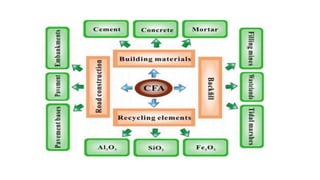
  • #33 carbonated fly ash (CFA)
  • #41  United Nations Environment Programme