Process of Toxic and Hazardous
Waste Management
1 2 3 4 5 6
1
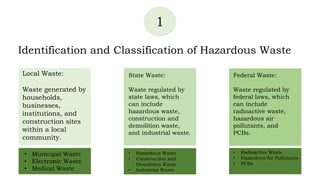
Identification and Classification of Hazardous Waste
Local Waste:
Waste generated by
households,
businesses,
institutions, and
construction sites
within a local
community.
State Waste:
Waste regulated by
state laws, which
can include
hazardous waste,
construction and
demolition waste,
and industrial waste.
Federal Waste:
Waste regulated by
federal laws, which
can include
radioactive waste,
hazardous air
pollutants, and
PCBs.
• Municipal Waste
• Electronic Waste
• Medical Waste
• Hazardous Waste
• Construction and
Demolition Waste
• Industrial Waste
• Radioactive Waste
• Hazardous Air Pollutants
• PCBs
2
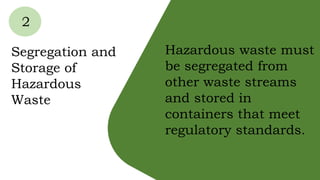
Segregation and
Storage of
Hazardous
Waste
Hazardous waste must
be segregated from
other waste streams
and stored in
containers that meet
regulatory standards.
3
Transportation
of Hazardous
Waste
Hazardous waste
must be transported
by licensed and
trained personnel
using appropriate
vehicles and
containers.
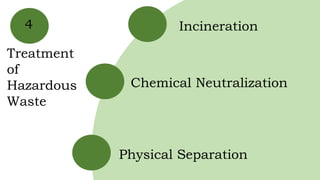
4
Treatment
of
Hazardous
Waste
Incineration
Chemical Neutralization
Physical Separation
5
Disposal of Hazardous
Waste
Hazardous waste must be disposed of
in an environmentally safe manner,
such as by landfilling in designated
facilities or by injection into deep
geological formations.
6
Monitoring
and
Reporting
Waste generators and
handlers must
monitor and report on
their waste
management activities
to ensure compliance
with regulations and
to identify
opportunities
for
improvement.
Relation between Toxic and Hazardous Waste
Treatment to Humans
Toxic and hazardous waste management is essential for
protecting human health and the environment. Improper
handling storage, and disposal of hazardous waste can
lead to contamination of air, water, soil, which can have a
serious negative impact on human health.
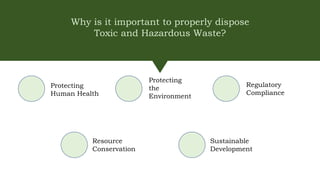
Why is it important to properly dispose
Toxic and Hazardous Waste?
Protecting
Human Health
Protecting
the
Environment
Regulatory
Compliance
Resource
Conservation
Sustainable
Development

waste management

  • 1.
    Process of Toxicand Hazardous Waste Management 1 2 3 4 5 6
  • 2.
    1 Identification and Classificationof Hazardous Waste Local Waste: Waste generated by households, businesses, institutions, and construction sites within a local community. State Waste: Waste regulated by state laws, which can include hazardous waste, construction and demolition waste, and industrial waste. Federal Waste: Waste regulated by federal laws, which can include radioactive waste, hazardous air pollutants, and PCBs. • Municipal Waste • Electronic Waste • Medical Waste • Hazardous Waste • Construction and Demolition Waste • Industrial Waste • Radioactive Waste • Hazardous Air Pollutants • PCBs
  • 3.
    2 Segregation and Storage of Hazardous Waste Hazardouswaste must be segregated from other waste streams and stored in containers that meet regulatory standards.
  • 4.
    3 Transportation of Hazardous Waste Hazardous waste mustbe transported by licensed and trained personnel using appropriate vehicles and containers.
  • 5.
  • 6.
    5 Disposal of Hazardous Waste Hazardouswaste must be disposed of in an environmentally safe manner, such as by landfilling in designated facilities or by injection into deep geological formations.
  • 7.
    6 Monitoring and Reporting Waste generators and handlersmust monitor and report on their waste management activities to ensure compliance with regulations and to identify opportunities for improvement.
  • 8.
    Relation between Toxicand Hazardous Waste Treatment to Humans Toxic and hazardous waste management is essential for protecting human health and the environment. Improper handling storage, and disposal of hazardous waste can lead to contamination of air, water, soil, which can have a serious negative impact on human health.
  • 9.
    Why is itimportant to properly dispose Toxic and Hazardous Waste? Protecting Human Health Protecting the Environment Regulatory Compliance Resource Conservation Sustainable Development