www.hsestudyguide.com
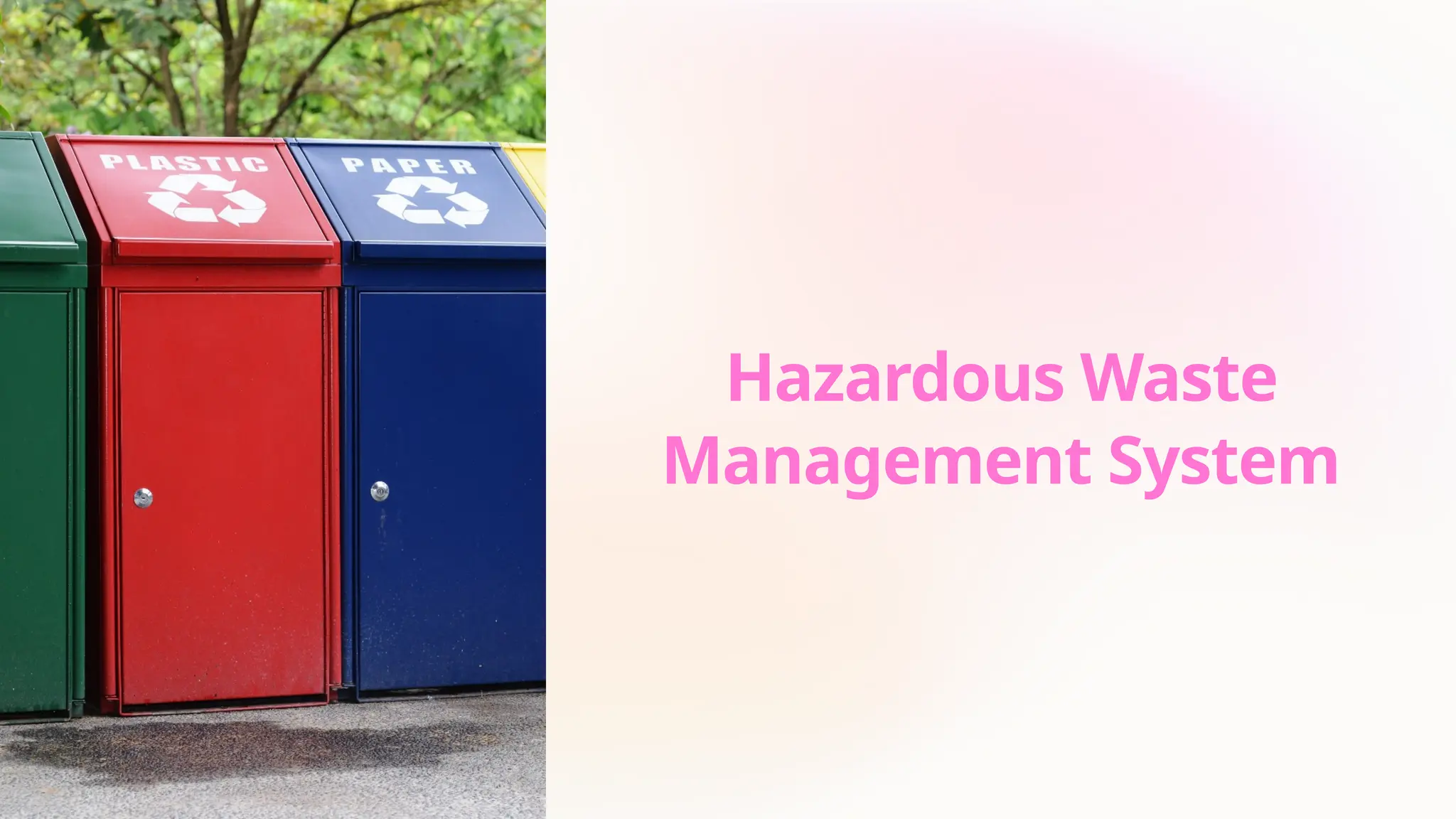
Hazardous Waste
Management System
www.hsestudyguide.com
Hazardous Waste Management System
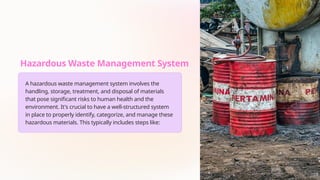
A hazardous waste management system involves the
handling, storage, treatment, and disposal of materials
that pose significant risks to human health and the
environment. It's crucial to have a well-structured system
in place to properly identify, categorize, and manage these
hazardous materials. This typically includes steps like:
www.hsestudyguide.com
Hazardous Waste Management System
Identification and Classification:
Determining what materials qualify
as hazardous waste according to
regulatory guidelines. This involves
understanding their properties and
potential risks.
Segregation and Storage: Properly
separating hazardous materials
from non-hazardous ones to
prevent contamination. Storing
them in secure, labeled containers
or designated areas to minimize
potential risks.
Transportation: Following specific
regulations for the safe
transportation of hazardous waste,
including using specialized
containers and vehicles to prevent
spills or leaks.
Treatment and Processing:
Employing various methods like
chemical, physical, or biological
processes to neutralize or reduce
the hazardous nature of the waste
before disposal.
www.hsestudyguide.com
Hazardous Waste Management System
Disposal: Ensuring the safe and
environmentally responsible
disposal of hazardous waste, which
may involve incineration, secure
landfilling, or other approved
methods to minimize harm to the
environment and public health.
Documentation and Compliance:
Keeping detailed records of the
entire waste management process
to comply with regulations and
standards set by local, national, and
international authorities.
www.hsestudyguide.com
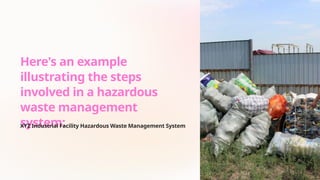
Here's an example
illustrating the steps
involved in a hazardous
waste management
system:
XYZ Industrial Facility Hazardous Waste Management System
www.hsestudyguide.com
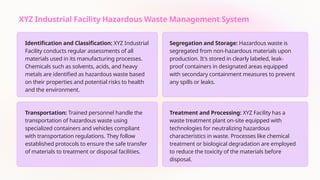
XYZ Industrial Facility Hazardous Waste Management System
Identification and Classification: XYZ Industrial
Facility conducts regular assessments of all
materials used in its manufacturing processes.
Chemicals such as solvents, acids, and heavy
metals are identified as hazardous waste based
on their properties and potential risks to health
and the environment.
Segregation and Storage: Hazardous waste is
segregated from non-hazardous materials upon
production. It's stored in clearly labeled, leak-
proof containers in designated areas equipped
with secondary containment measures to prevent
any spills or leaks.
Transportation: Trained personnel handle the
transportation of hazardous waste using
specialized containers and vehicles compliant
with transportation regulations. They follow
established protocols to ensure the safe transfer
of materials to treatment or disposal facilities.
Treatment and Processing: XYZ Facility has a
waste treatment plant on-site equipped with
technologies for neutralizing hazardous
characteristics in waste. Processes like chemical
treatment or biological degradation are employed
to reduce the toxicity of the materials before
disposal.
www.hsestudyguide.com
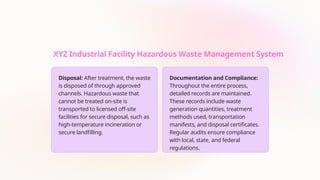
XYZ Industrial Facility Hazardous Waste Management System
Disposal: After treatment, the waste
is disposed of through approved
channels. Hazardous waste that
cannot be treated on-site is
transported to licensed off-site
facilities for secure disposal, such as
high-temperature incineration or
secure landfilling.
Documentation and Compliance:
Throughout the entire process,
detailed records are maintained.
These records include waste
generation quantities, treatment
methods used, transportation
manifests, and disposal certificates.
Regular audits ensure compliance
with local, state, and federal
regulations.
www.hsestudyguide.com
Effective hazardous waste management is critical to prevent
environmental pollution, safeguard public health, and maintain
regulatory compliance. Companies and organizations handling
hazardous waste must prioritize safety, sustainability, and
adherence to legal requirements throughout the waste
management lifecycle.

Hazardous-Waste-Manag ment-System.pptx

  • 1.
  • 2.
    www.hsestudyguide.com Hazardous Waste ManagementSystem A hazardous waste management system involves the handling, storage, treatment, and disposal of materials that pose significant risks to human health and the environment. It's crucial to have a well-structured system in place to properly identify, categorize, and manage these hazardous materials. This typically includes steps like:
  • 3.
    www.hsestudyguide.com Hazardous Waste ManagementSystem Identification and Classification: Determining what materials qualify as hazardous waste according to regulatory guidelines. This involves understanding their properties and potential risks. Segregation and Storage: Properly separating hazardous materials from non-hazardous ones to prevent contamination. Storing them in secure, labeled containers or designated areas to minimize potential risks. Transportation: Following specific regulations for the safe transportation of hazardous waste, including using specialized containers and vehicles to prevent spills or leaks. Treatment and Processing: Employing various methods like chemical, physical, or biological processes to neutralize or reduce the hazardous nature of the waste before disposal.
  • 4.
    www.hsestudyguide.com Hazardous Waste ManagementSystem Disposal: Ensuring the safe and environmentally responsible disposal of hazardous waste, which may involve incineration, secure landfilling, or other approved methods to minimize harm to the environment and public health. Documentation and Compliance: Keeping detailed records of the entire waste management process to comply with regulations and standards set by local, national, and international authorities.
  • 5.
    www.hsestudyguide.com Here's an example illustratingthe steps involved in a hazardous waste management system: XYZ Industrial Facility Hazardous Waste Management System
  • 6.
    www.hsestudyguide.com XYZ Industrial FacilityHazardous Waste Management System Identification and Classification: XYZ Industrial Facility conducts regular assessments of all materials used in its manufacturing processes. Chemicals such as solvents, acids, and heavy metals are identified as hazardous waste based on their properties and potential risks to health and the environment. Segregation and Storage: Hazardous waste is segregated from non-hazardous materials upon production. It's stored in clearly labeled, leak- proof containers in designated areas equipped with secondary containment measures to prevent any spills or leaks. Transportation: Trained personnel handle the transportation of hazardous waste using specialized containers and vehicles compliant with transportation regulations. They follow established protocols to ensure the safe transfer of materials to treatment or disposal facilities. Treatment and Processing: XYZ Facility has a waste treatment plant on-site equipped with technologies for neutralizing hazardous characteristics in waste. Processes like chemical treatment or biological degradation are employed to reduce the toxicity of the materials before disposal.
  • 7.
    www.hsestudyguide.com XYZ Industrial FacilityHazardous Waste Management System Disposal: After treatment, the waste is disposed of through approved channels. Hazardous waste that cannot be treated on-site is transported to licensed off-site facilities for secure disposal, such as high-temperature incineration or secure landfilling. Documentation and Compliance: Throughout the entire process, detailed records are maintained. These records include waste generation quantities, treatment methods used, transportation manifests, and disposal certificates. Regular audits ensure compliance with local, state, and federal regulations.
  • 8.
    www.hsestudyguide.com Effective hazardous wastemanagement is critical to prevent environmental pollution, safeguard public health, and maintain regulatory compliance. Companies and organizations handling hazardous waste must prioritize safety, sustainability, and adherence to legal requirements throughout the waste management lifecycle.