VSAT
IN SATELLITE COMMUNICATIONS
What it VSAT(Very Small Aperture Terminal)?
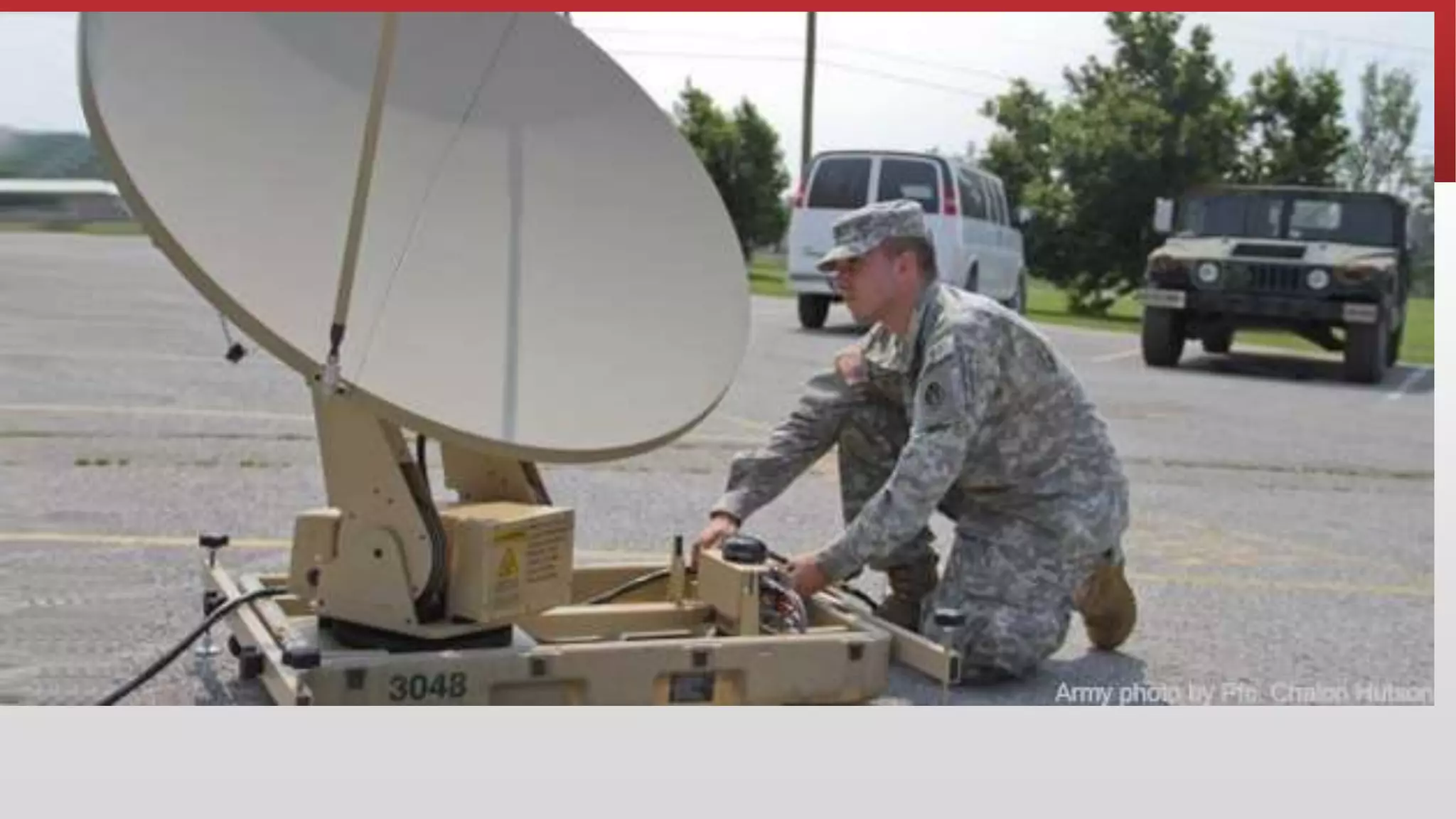
▪VSAT is a very small satellite antenna ranging in size
from 80cm to 1.2m.
▪VSAT is used for both broadcast & interactive
applications of effective data, voice and video transfer.
▪They can be installed where there is not predominant
infrastructure for communication in remote locations
because of their small size.
Why do we need VSAT’s?
▪ The dish is small, easily transportable and installation
lead-time is much shorter if compared to terrestrial
links.
▪ VSAT network allows rapid, low-cost network
reconfiguration and expansion to meet new or
unexpected business requirements.
▪ Cost effective transmission and network operations
are made possible by use of the Ex-C band satellite
frequency and FTDMA, FDMA or Time division multiple
access (TDMA) transmission techniques.
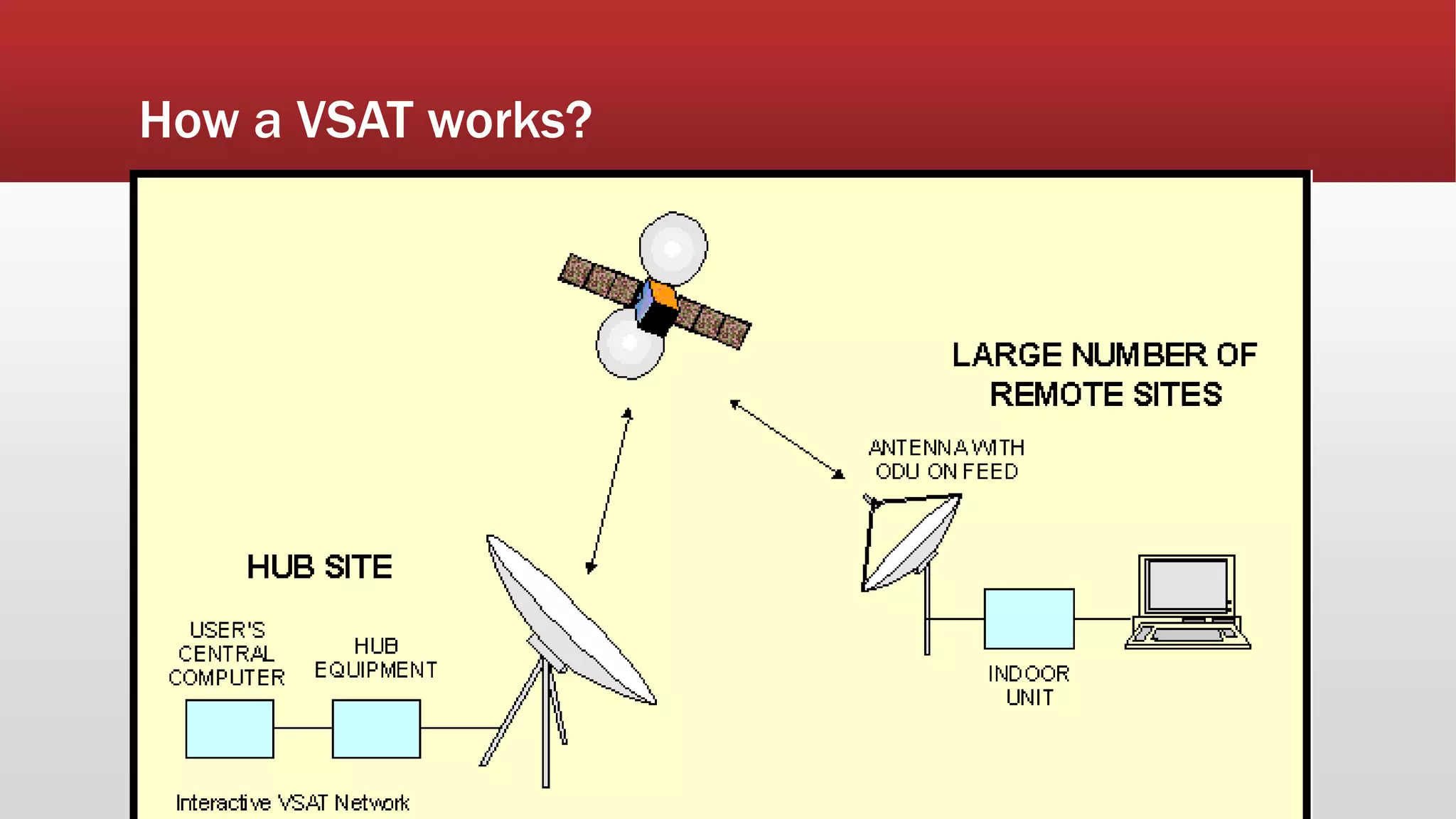
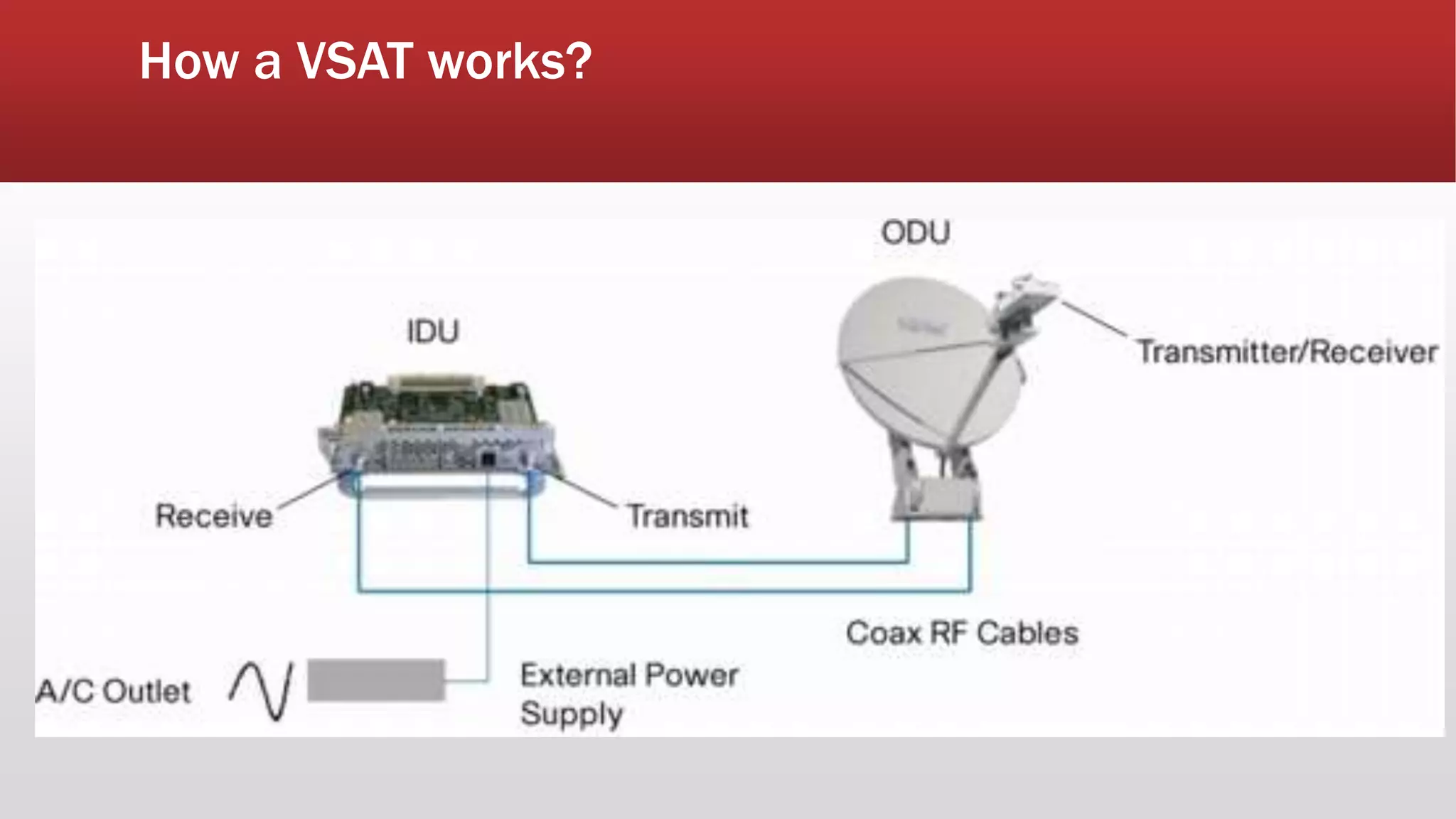
How a VSAT works?
How a VSAT works?
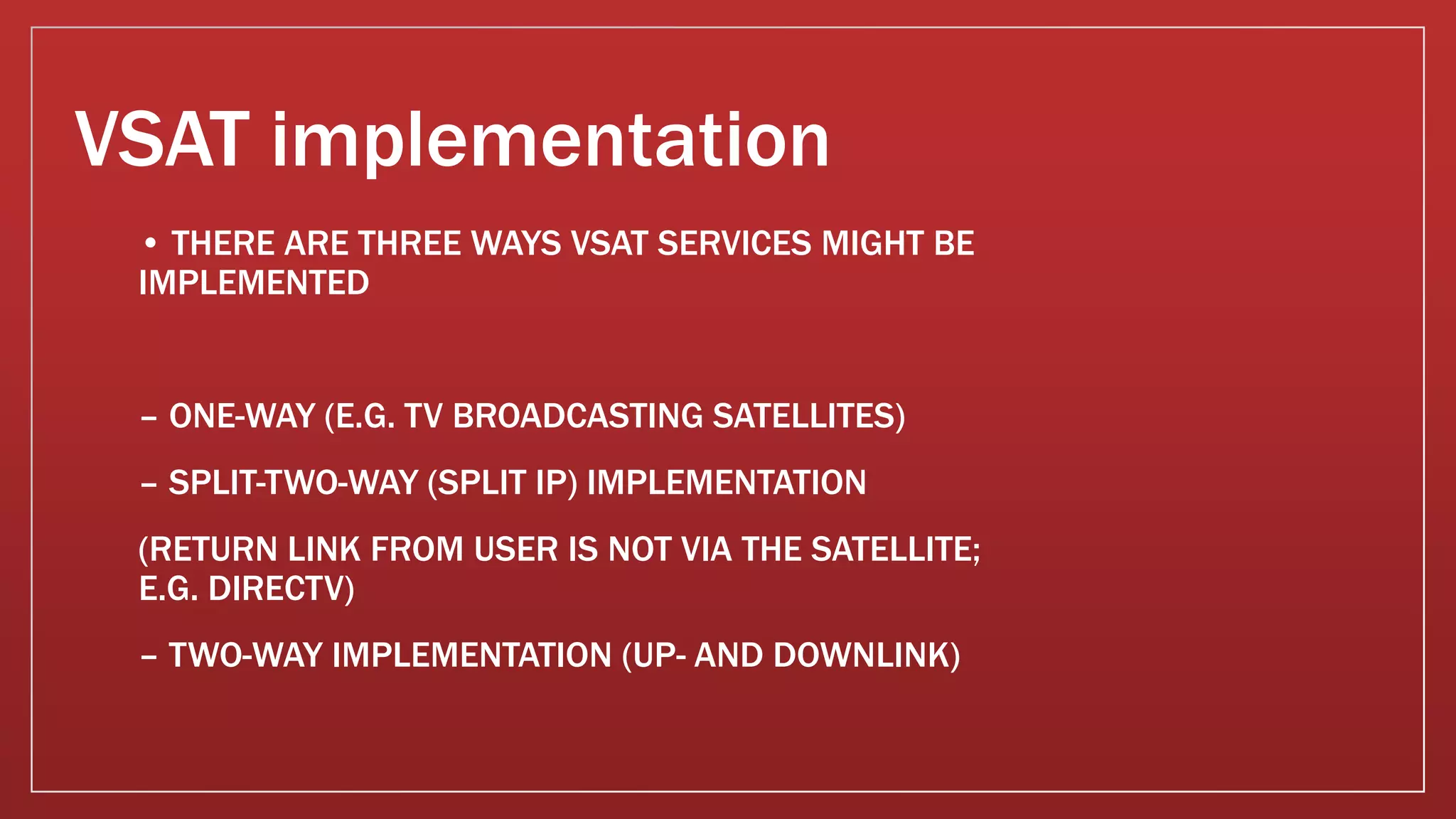
VSAT implementation
• THERE ARE THREE WAYS VSAT SERVICES MIGHT BE
IMPLEMENTED
– ONE-WAY (E.G. TV BROADCASTING SATELLITES)
– SPLIT-TWO-WAY (SPLIT IP) IMPLEMENTATION
(RETURN LINK FROM USER IS NOT VIA THE SATELLITE;
E.G. DIRECTV)
– TWO-WAY IMPLEMENTATION (UP- AND DOWNLINK)
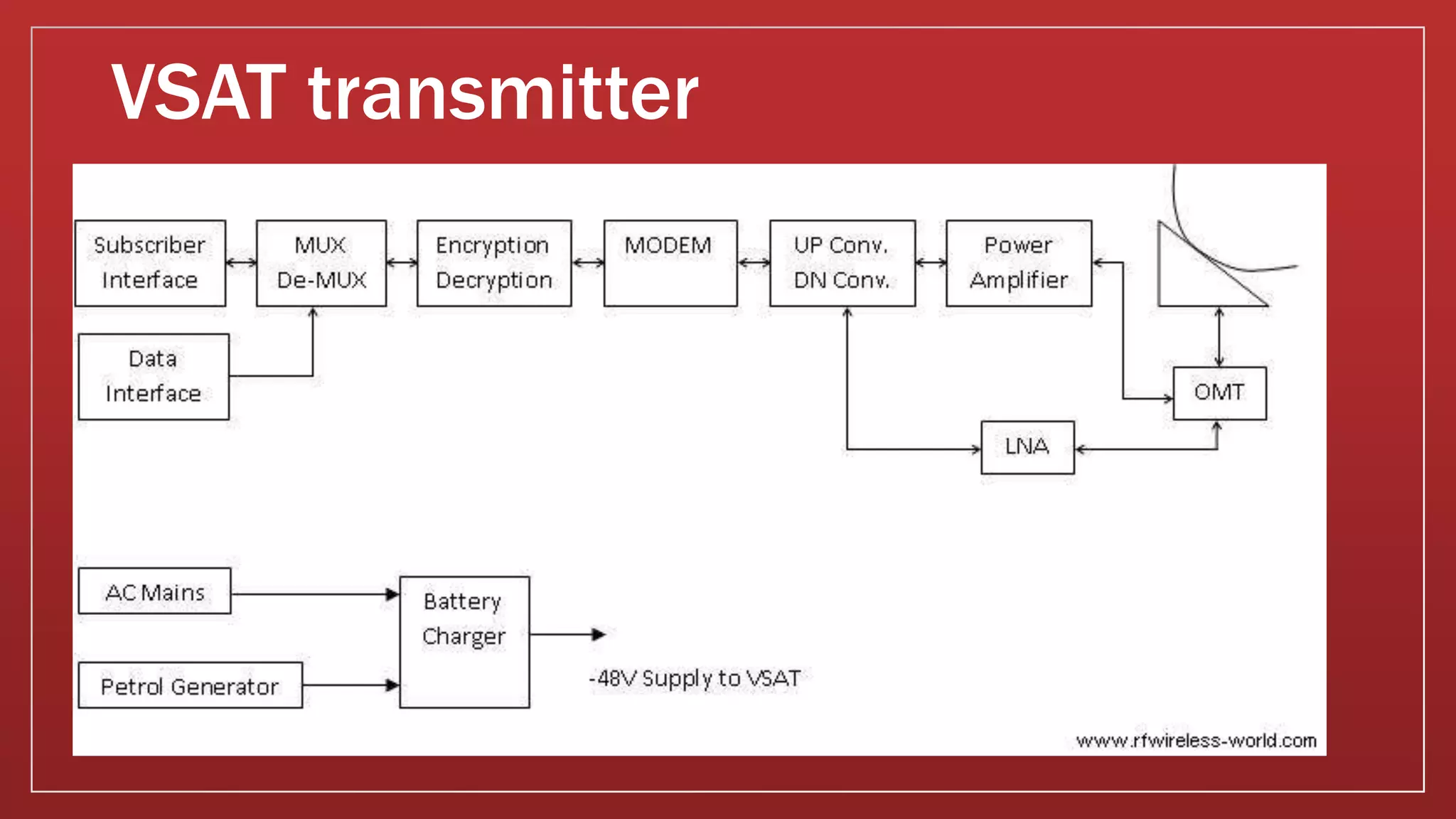
VSAT transmitter
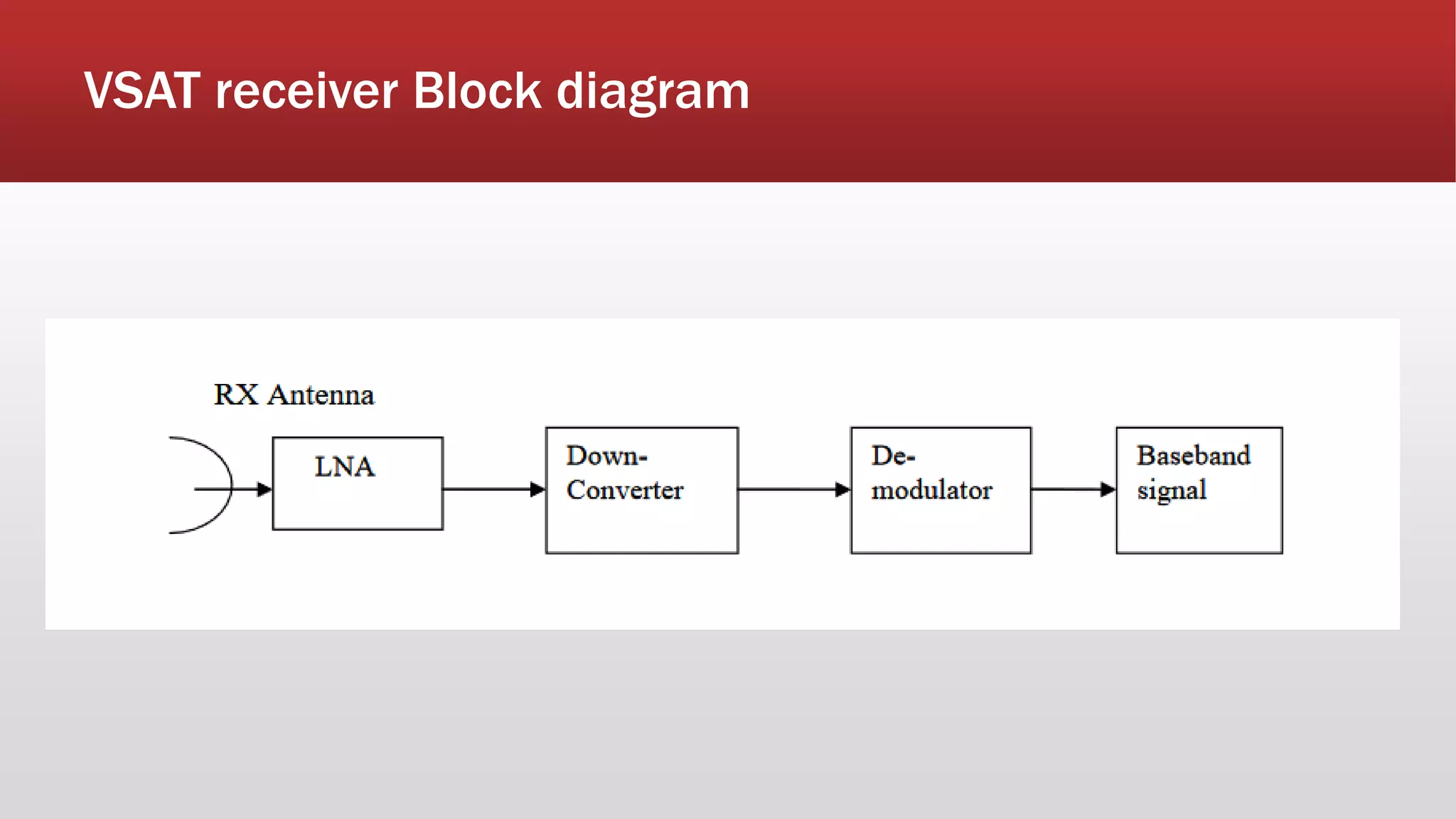
VSAT receiver Block diagram
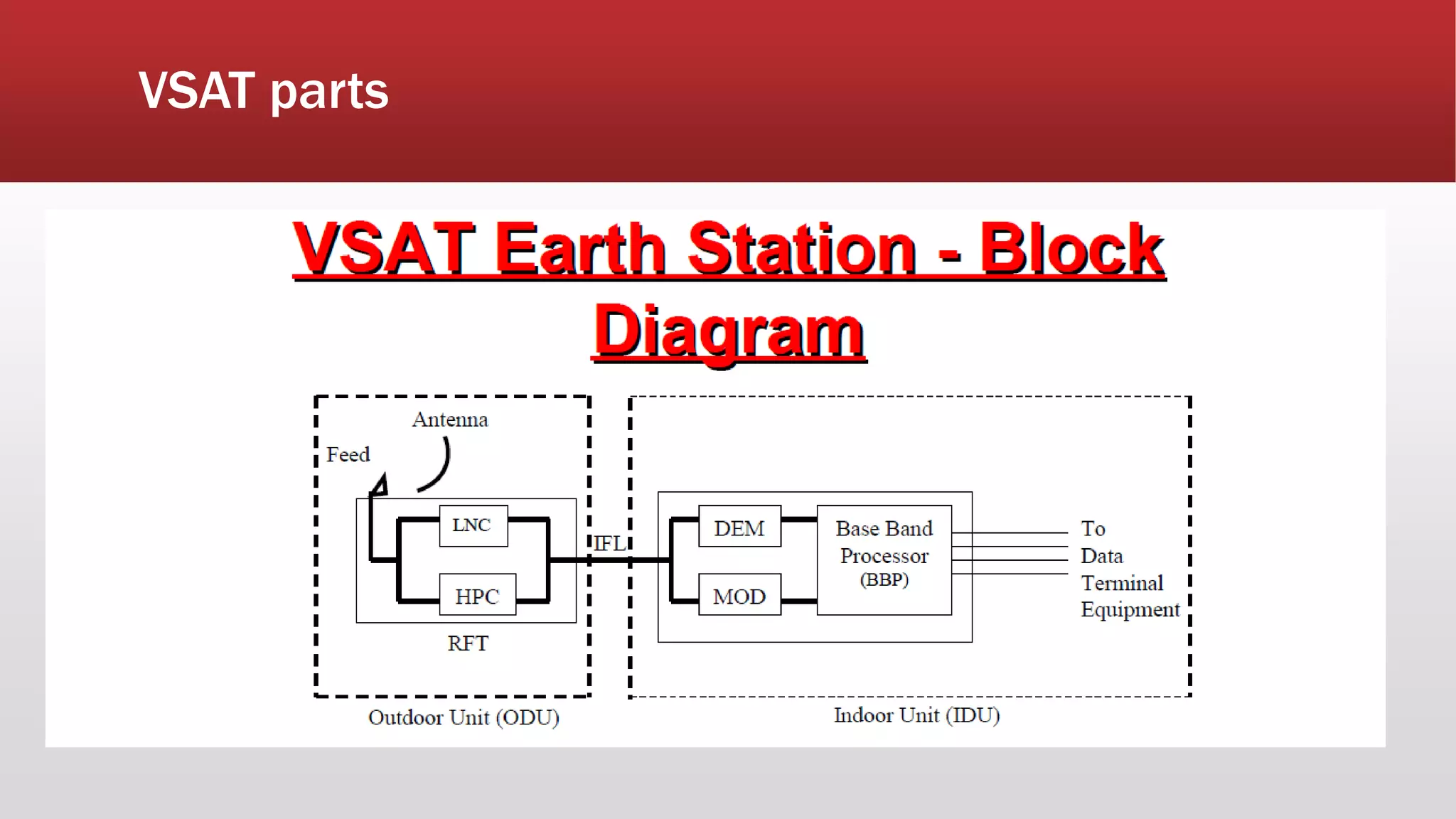
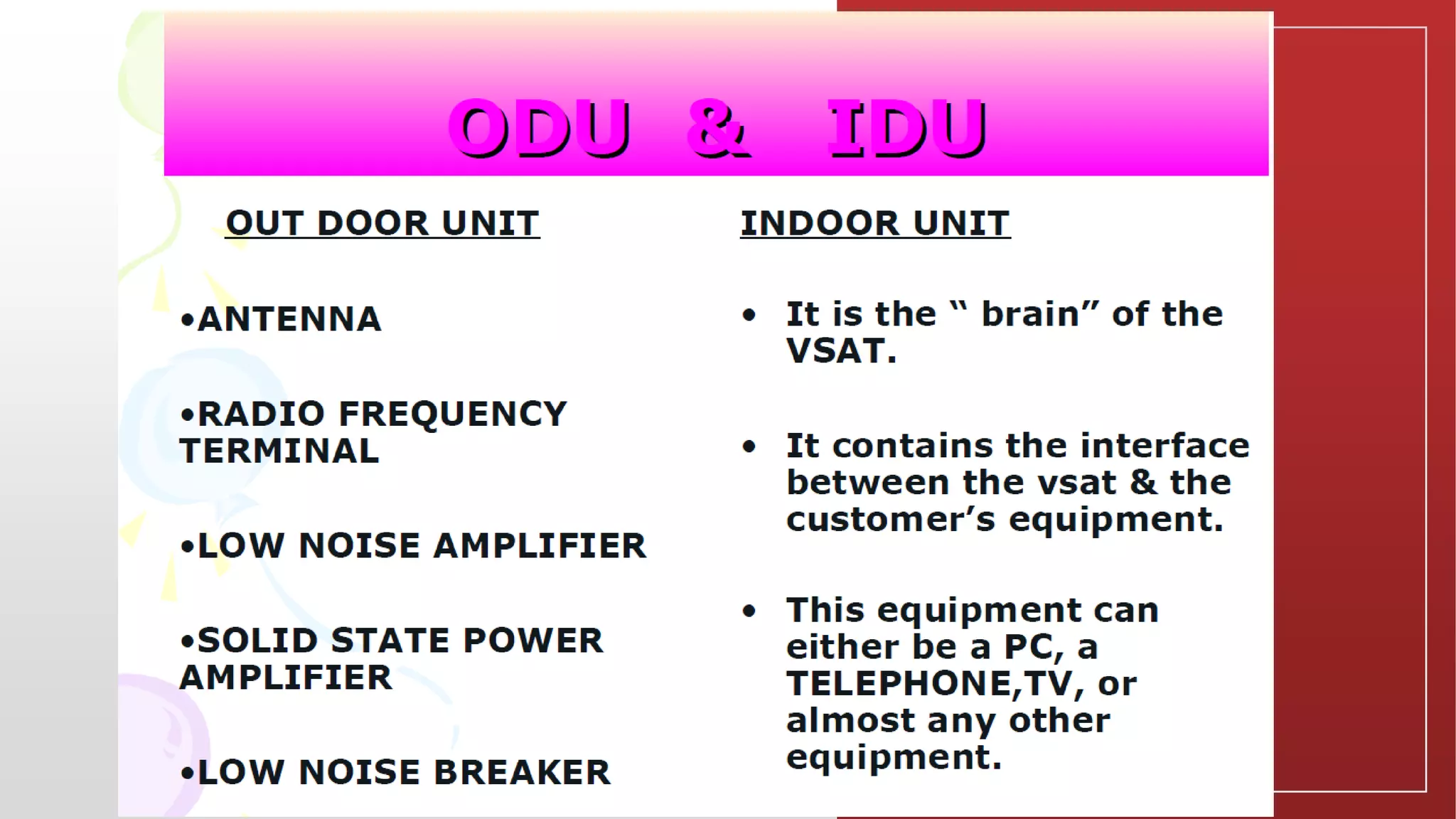
VSAT parts
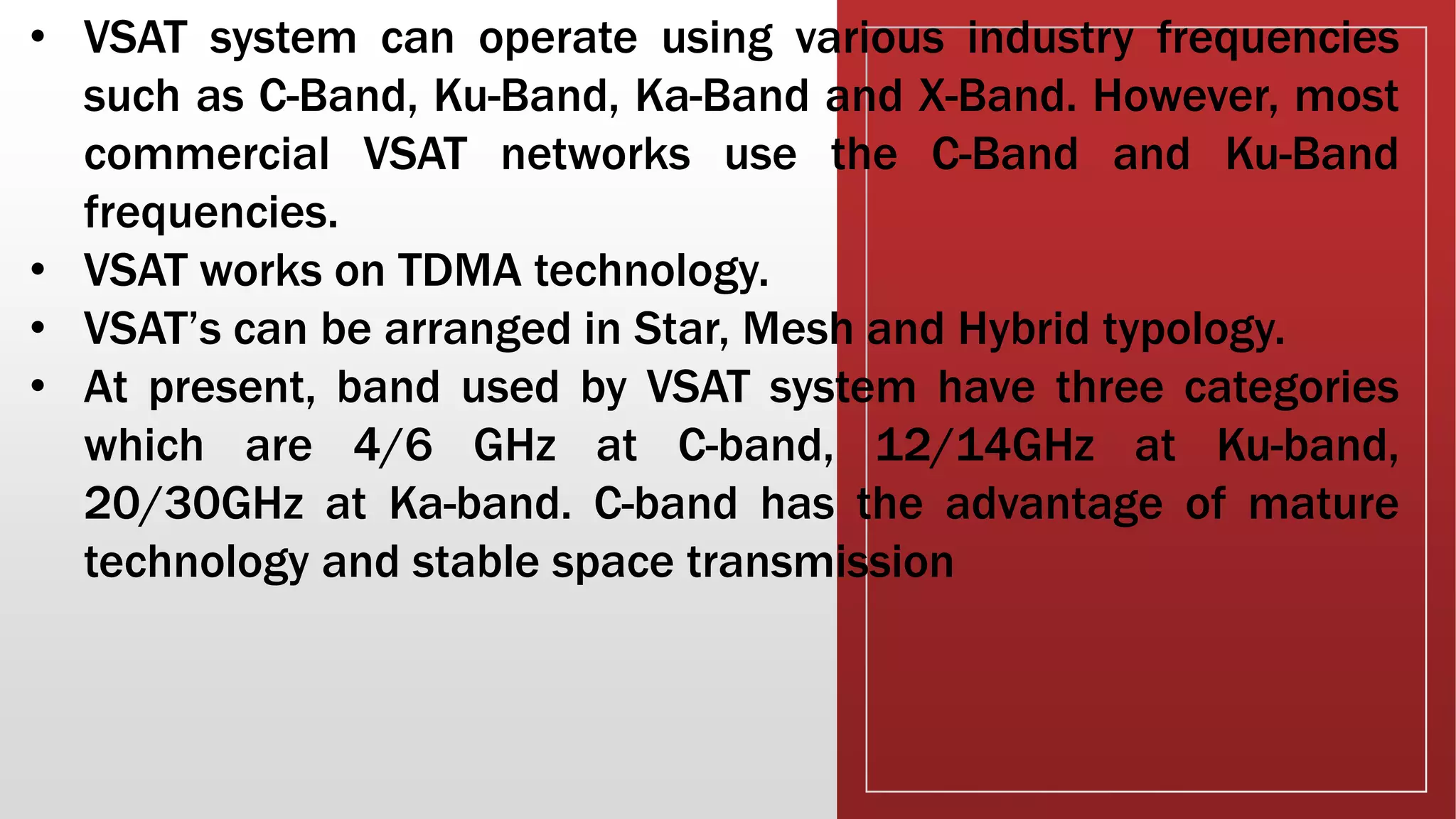
• VSAT system can operate using various industry frequencies
such as C-Band, Ku-Band, Ka-Band and X-Band. However, most
commercial VSAT networks use the C-Band and Ku-Band
frequencies.
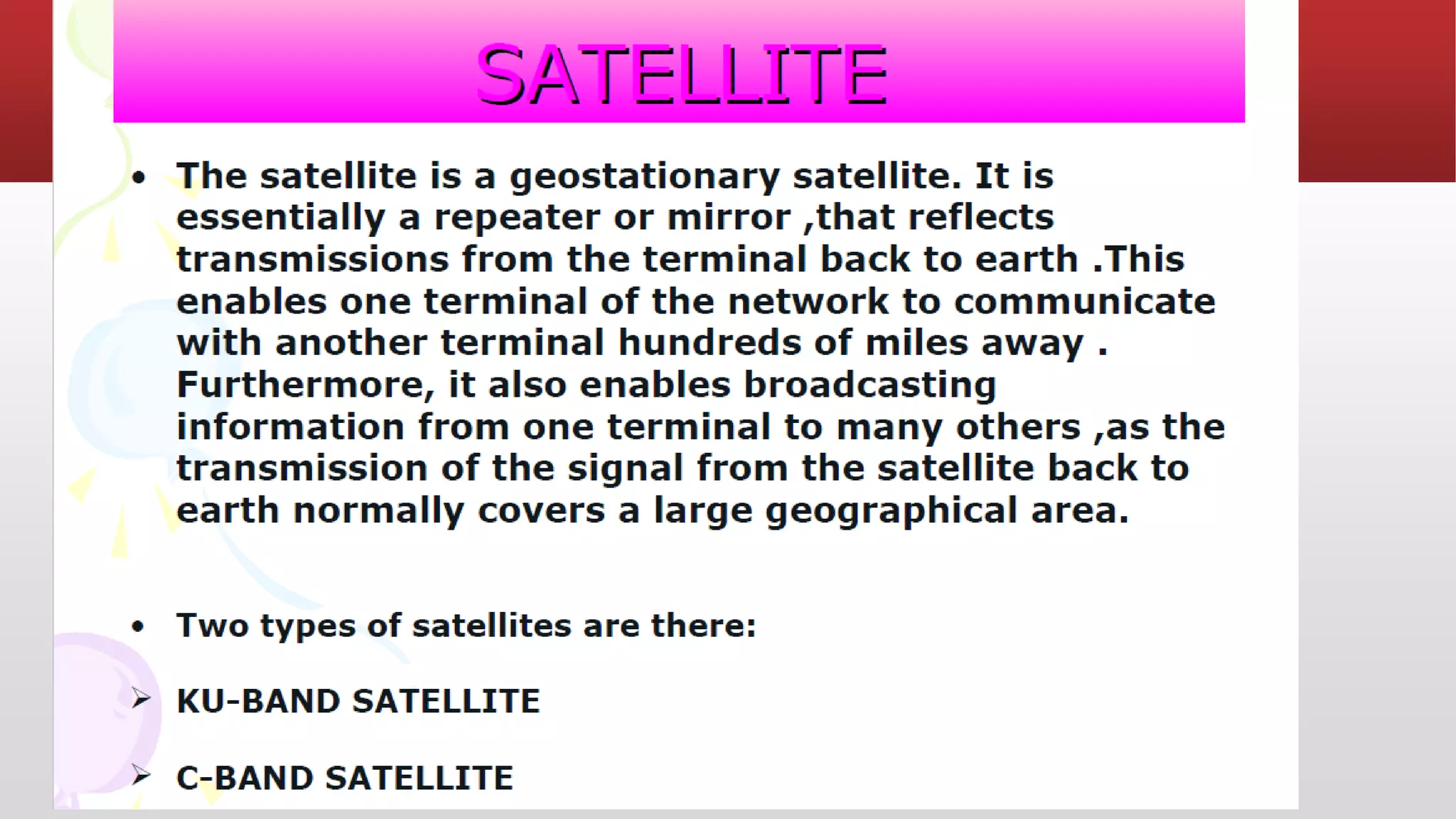
• VSAT works on TDMA technology.
• VSAT’s can be arranged in Star, Mesh and Hybrid typology.
• At present, band used by VSAT system have three categories
which are 4/6 GHz at C-band, 12/14GHz at Ku-band,
20/30GHz at Ka-band. C-band has the advantage of mature
technology and stable space transmission
VSAT( Very Small Aperture Terminal) :- In Detail

VSAT( Very Small Aperture Terminal) :- In Detail

  • 1.
  • 2.
    What it VSAT(VerySmall Aperture Terminal)? ▪VSAT is a very small satellite antenna ranging in size from 80cm to 1.2m. ▪VSAT is used for both broadcast & interactive applications of effective data, voice and video transfer. ▪They can be installed where there is not predominant infrastructure for communication in remote locations because of their small size.
  • 4.
    Why do weneed VSAT’s? ▪ The dish is small, easily transportable and installation lead-time is much shorter if compared to terrestrial links. ▪ VSAT network allows rapid, low-cost network reconfiguration and expansion to meet new or unexpected business requirements. ▪ Cost effective transmission and network operations are made possible by use of the Ex-C band satellite frequency and FTDMA, FDMA or Time division multiple access (TDMA) transmission techniques.
  • 5.
    How a VSATworks?
  • 6.
    How a VSATworks?
  • 9.
    VSAT implementation • THEREARE THREE WAYS VSAT SERVICES MIGHT BE IMPLEMENTED – ONE-WAY (E.G. TV BROADCASTING SATELLITES) – SPLIT-TWO-WAY (SPLIT IP) IMPLEMENTATION (RETURN LINK FROM USER IS NOT VIA THE SATELLITE; E.G. DIRECTV) – TWO-WAY IMPLEMENTATION (UP- AND DOWNLINK)
  • 10.
  • 11.
  • 12.
  • 14.
    • VSAT systemcan operate using various industry frequencies such as C-Band, Ku-Band, Ka-Band and X-Band. However, most commercial VSAT networks use the C-Band and Ku-Band frequencies. • VSAT works on TDMA technology. • VSAT’s can be arranged in Star, Mesh and Hybrid typology. • At present, band used by VSAT system have three categories which are 4/6 GHz at C-band, 12/14GHz at Ku-band, 20/30GHz at Ka-band. C-band has the advantage of mature technology and stable space transmission