VOM READING

Northampton Community College

         Jack Schreiber
Meter Safety

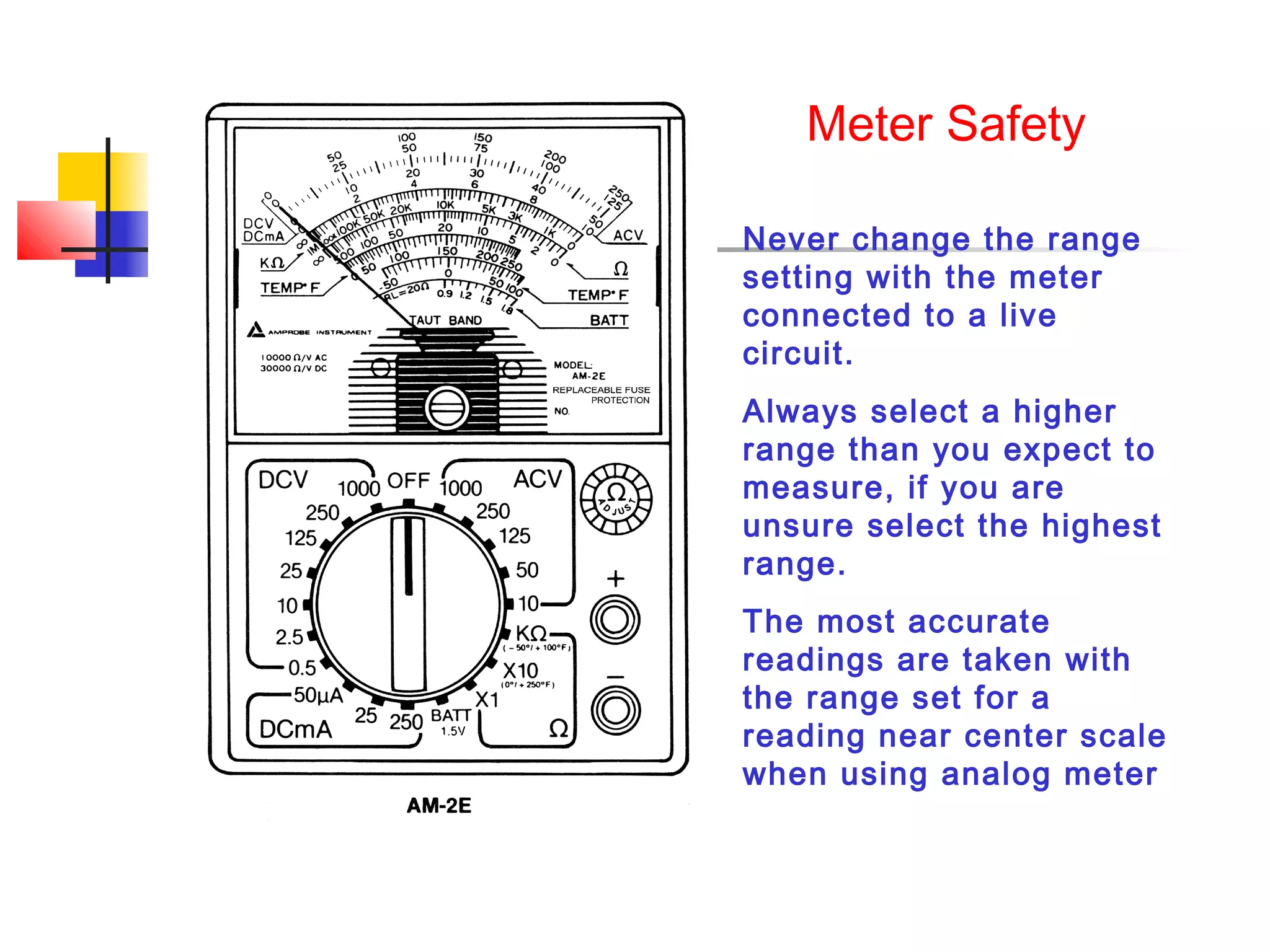
Never change the range
setting with the meter
connected to a live
circuit.
Always select a higher
range than you expect to
measure, if you are
unsure select the highest
range.
The most accurate
readings are taken with
the range set for a
reading near center scale
when using analog meter
Meter Safety

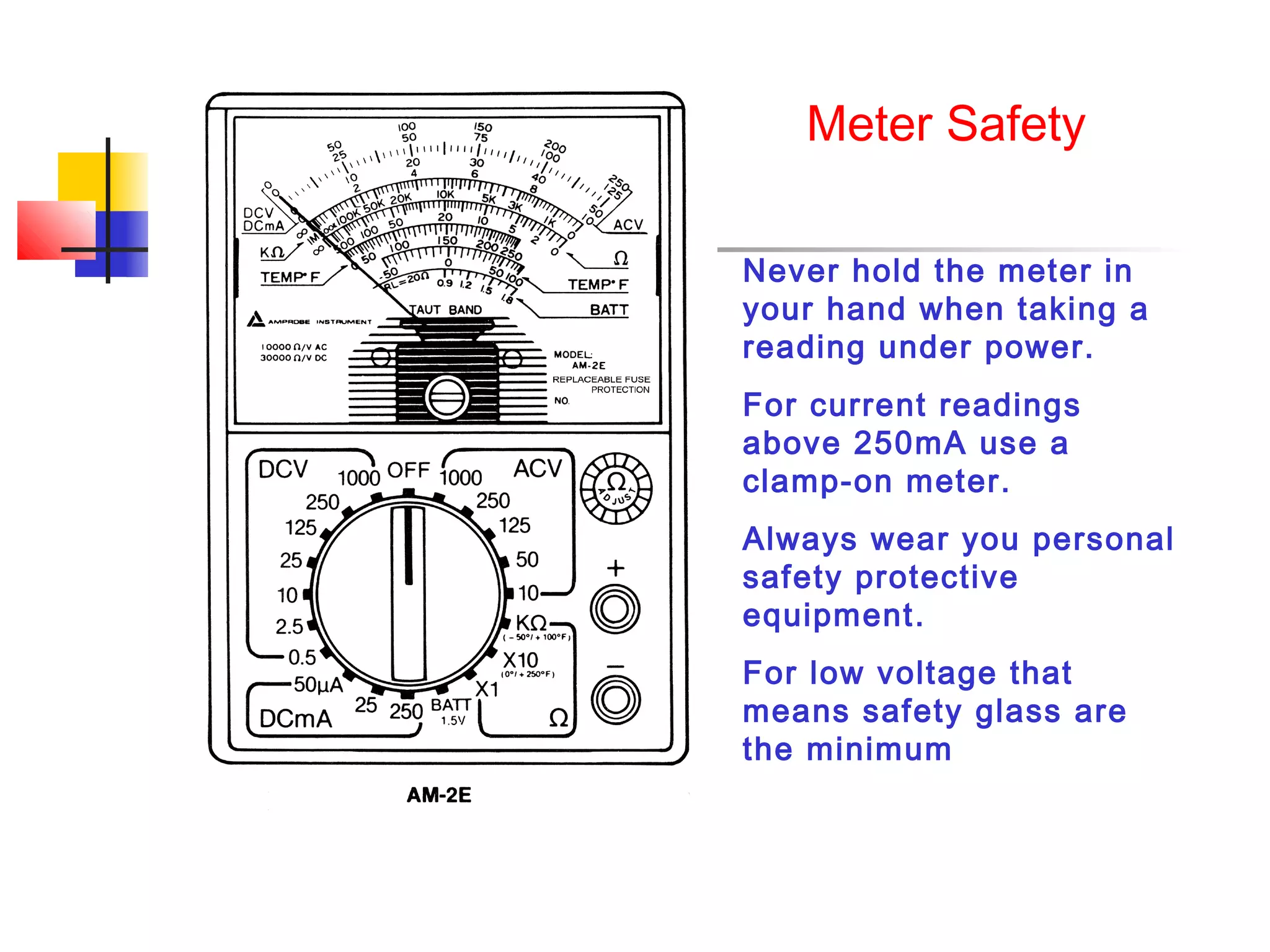
Never hold the meter in
your hand when taking a
reading under power.
For current readings
above 250mA use a
clamp-on meter.
Always wear you personal
safety protective
equipment.
For low voltage that
means safety glass are
the minimum
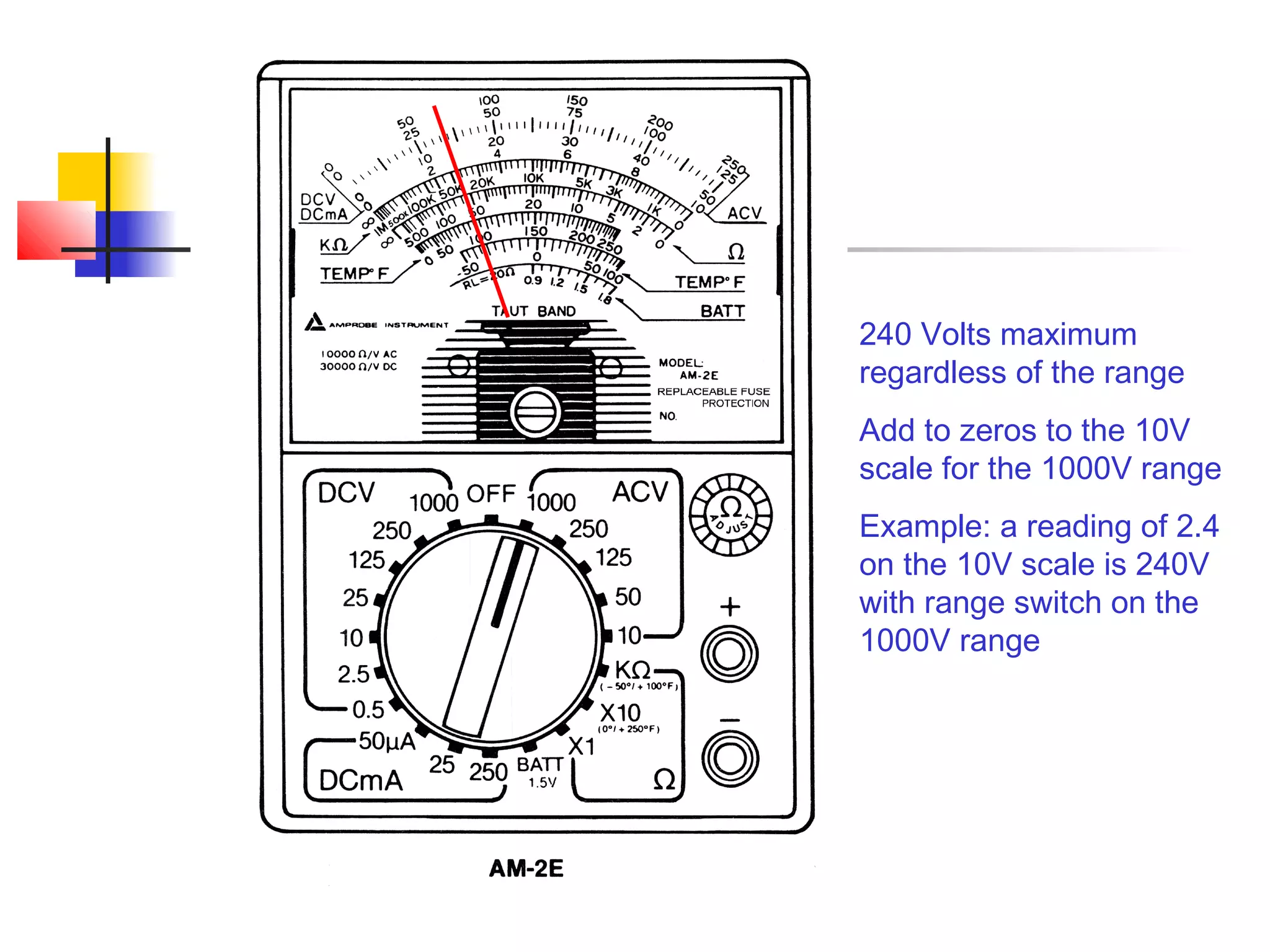
240 Volts maximum
regardless of the range
Add to zeros to the 10V
scale for the 1000V range
Example: a reading of 2.4
on the 10V scale is 240V
with range switch on the
1000V range
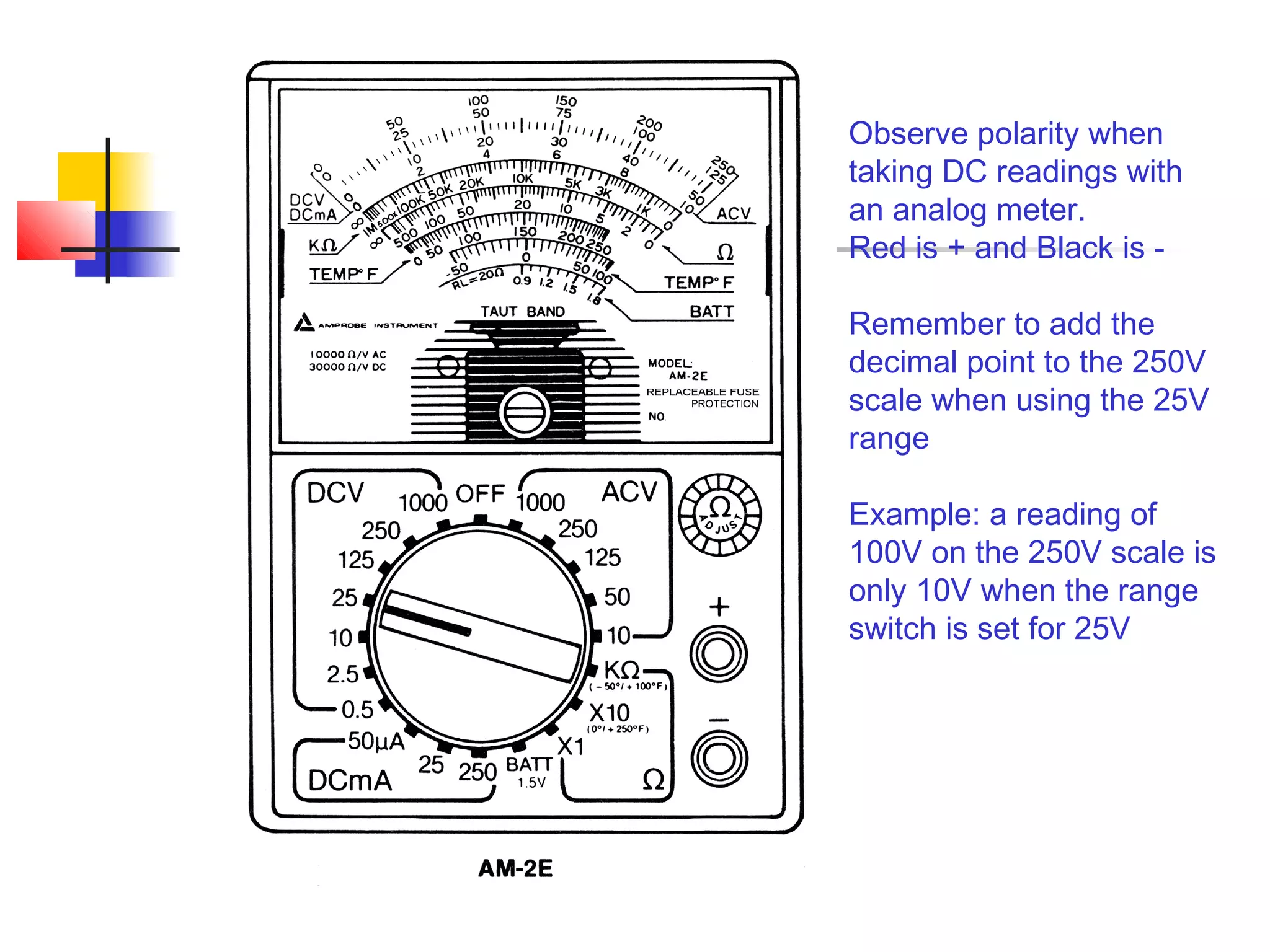
Observe polarity when
taking DC readings with
an analog meter.
Red is + and Black is -

Remember to add the
decimal point to the 250V
scale when using the 25V
range

Example: a reading of
100V on the 250V scale is
only 10V when the range
switch is set for 25V
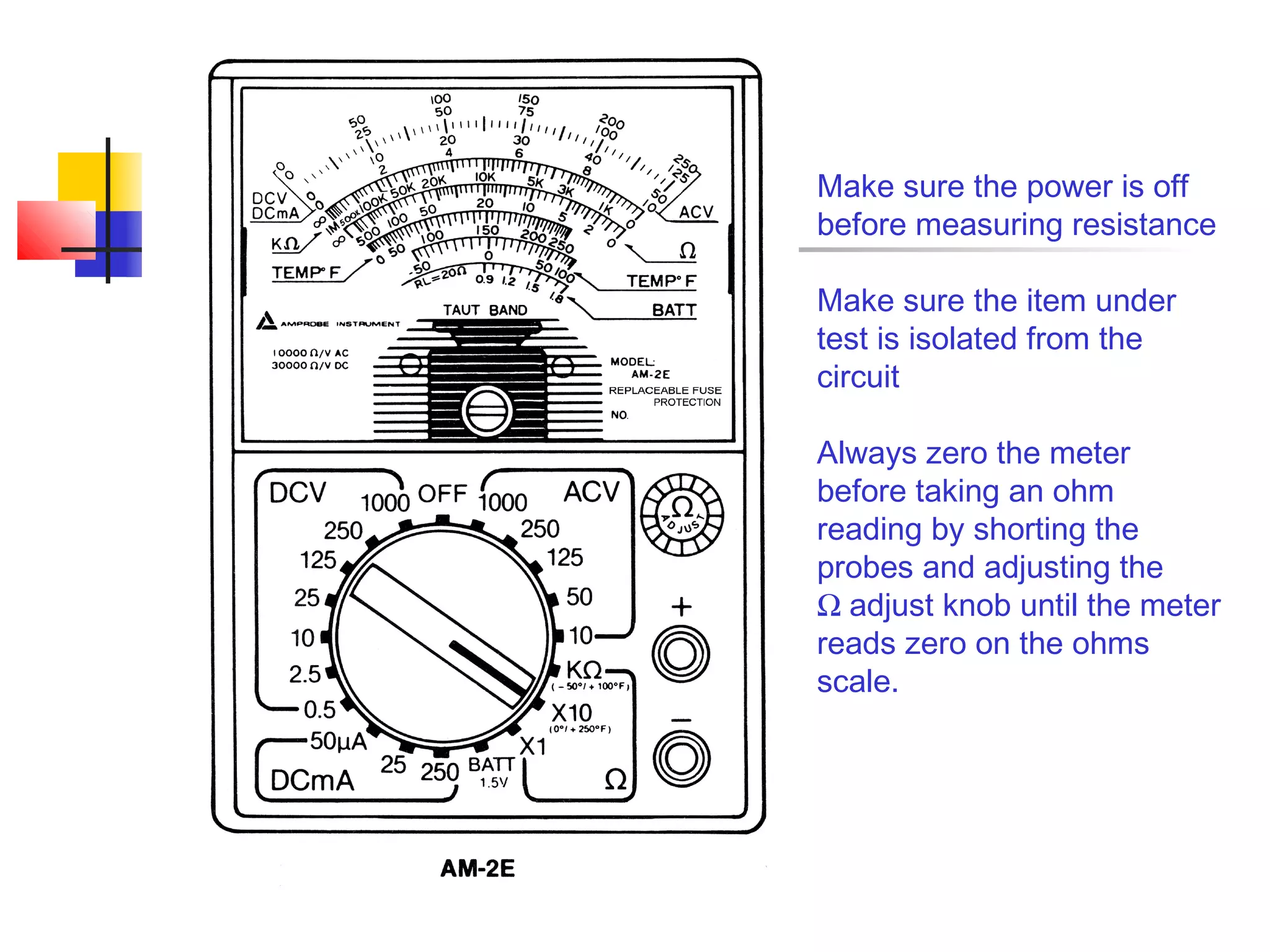
Make sure the power is off
before measuring resistance

Make sure the item under
test is isolated from the
circuit

Always zero the meter
before taking an ohm
reading by shorting the
probes and adjusting the
Ω adjust knob until the meter
reads zero on the ohms
scale.
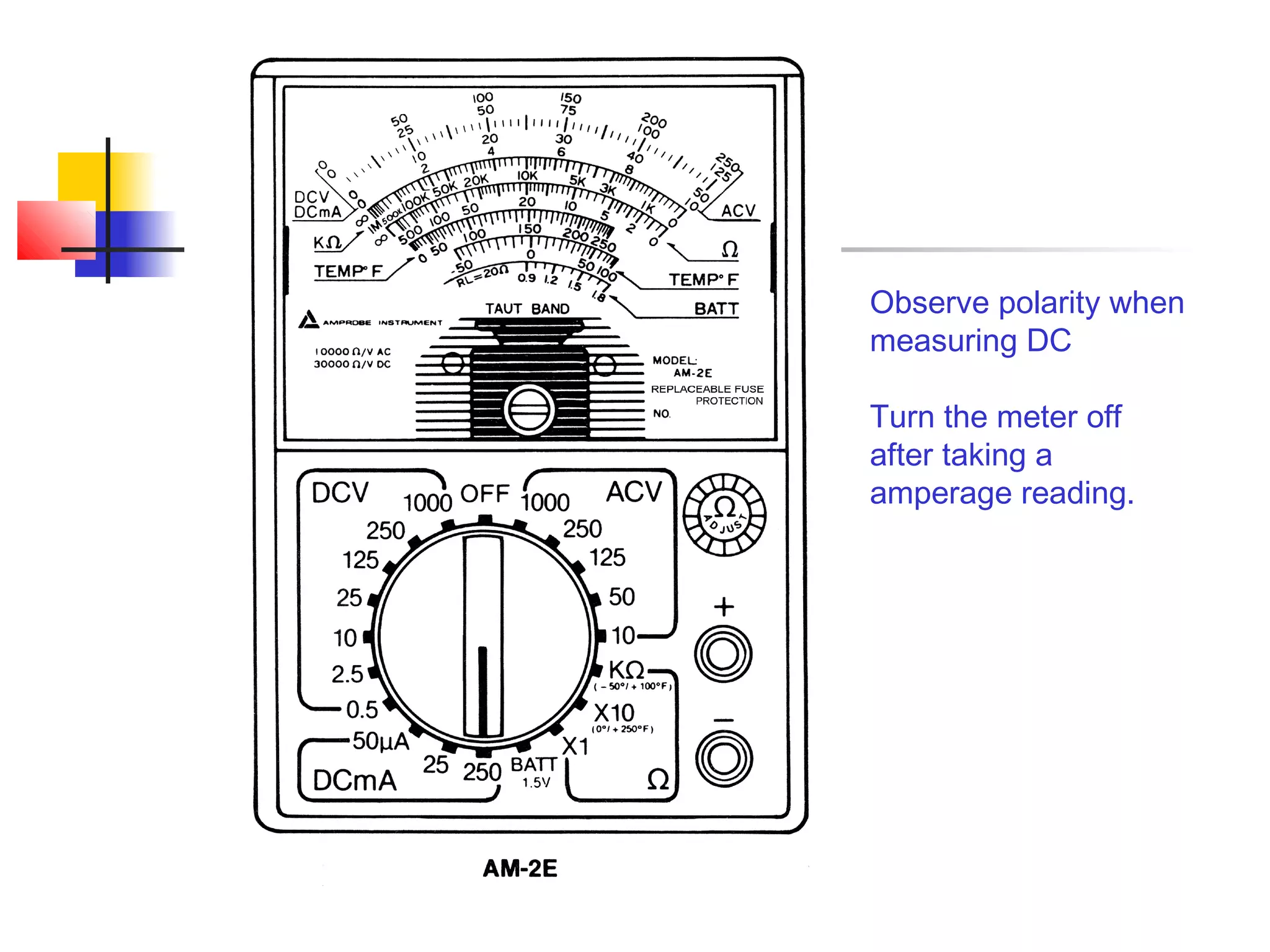
Observe polarity when
measuring DC

Turn the meter off
after taking a
amperage reading.
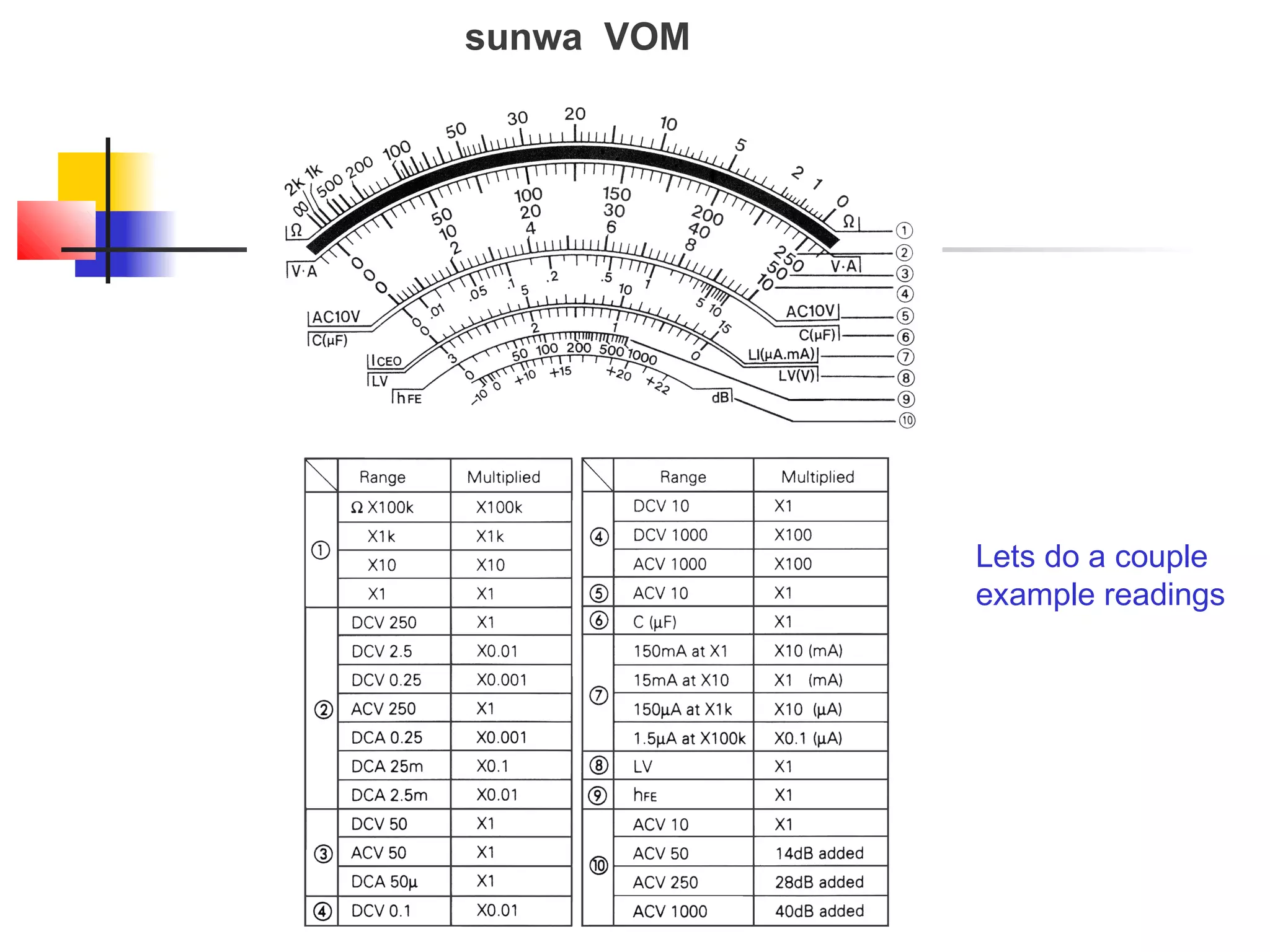
Lets do a couple
example readings
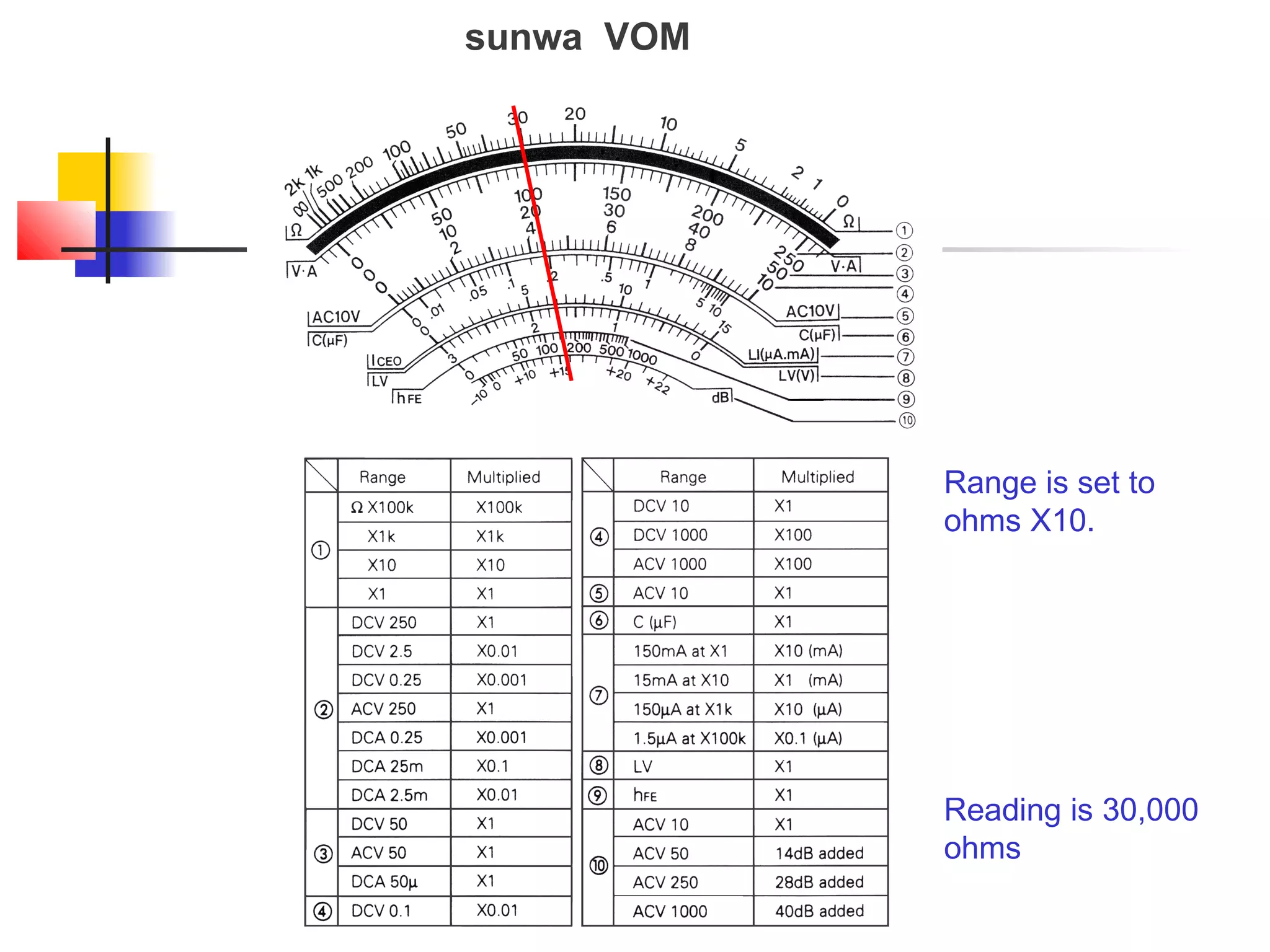
Range is set to
ohms X10.


Reading is 30,000
ohms
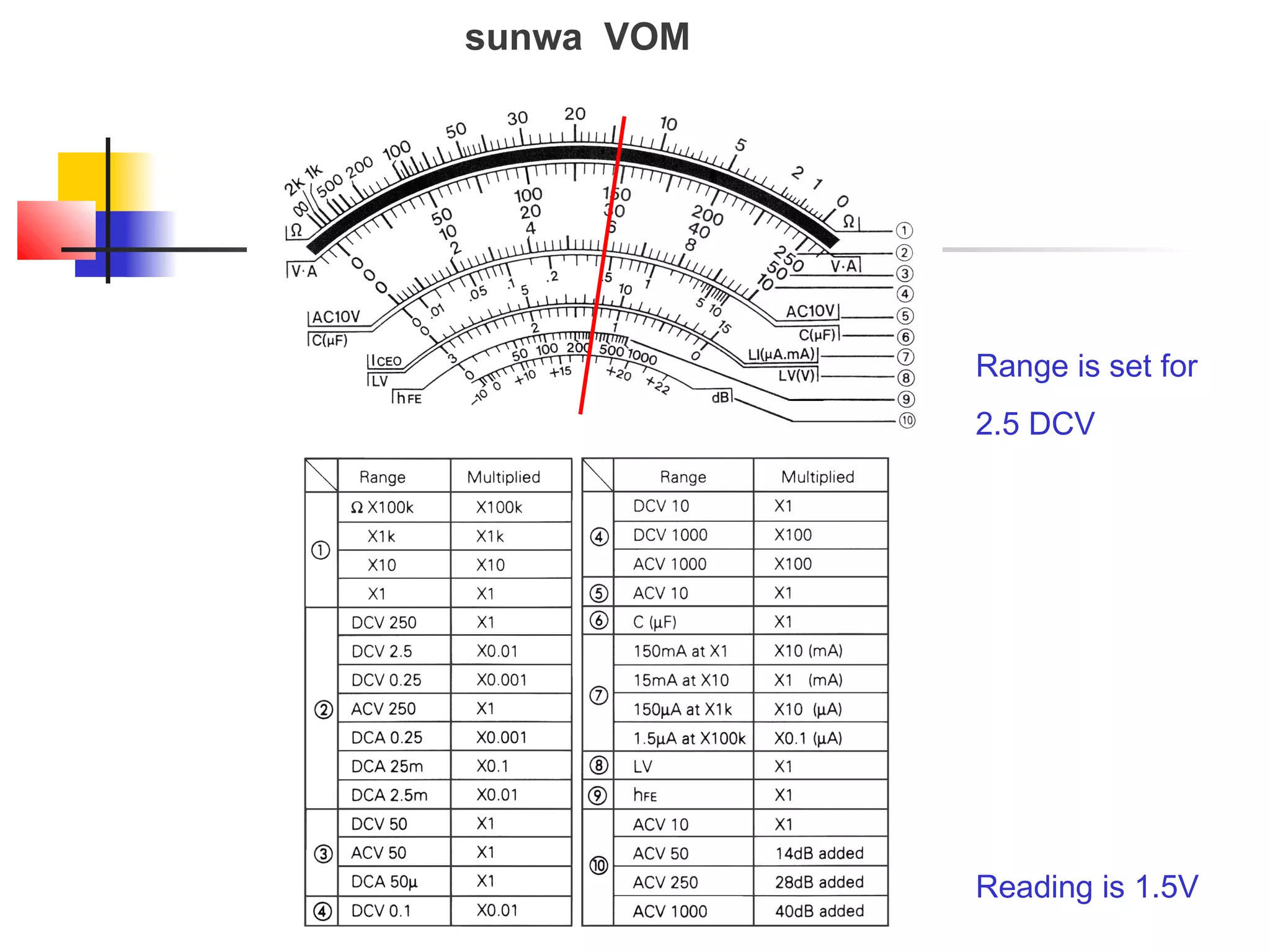
Range is set for
2.5 DCV


Reading is 1.5V
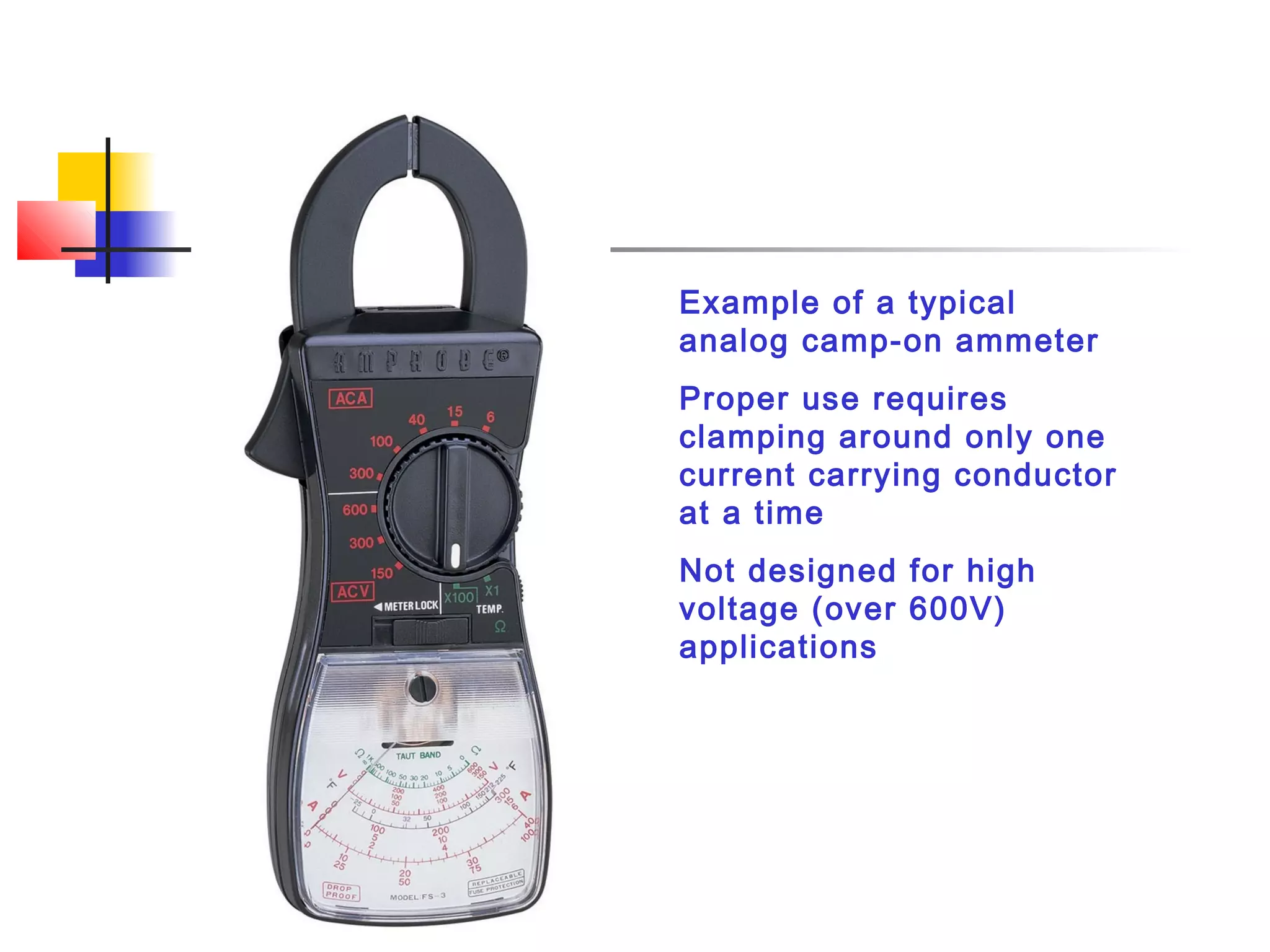
Example of a typical
analog camp-on ammeter
Proper use requires
clamping around only one
current carrying conductor
at a time
Not designed for high
voltage (over 600V)
applications
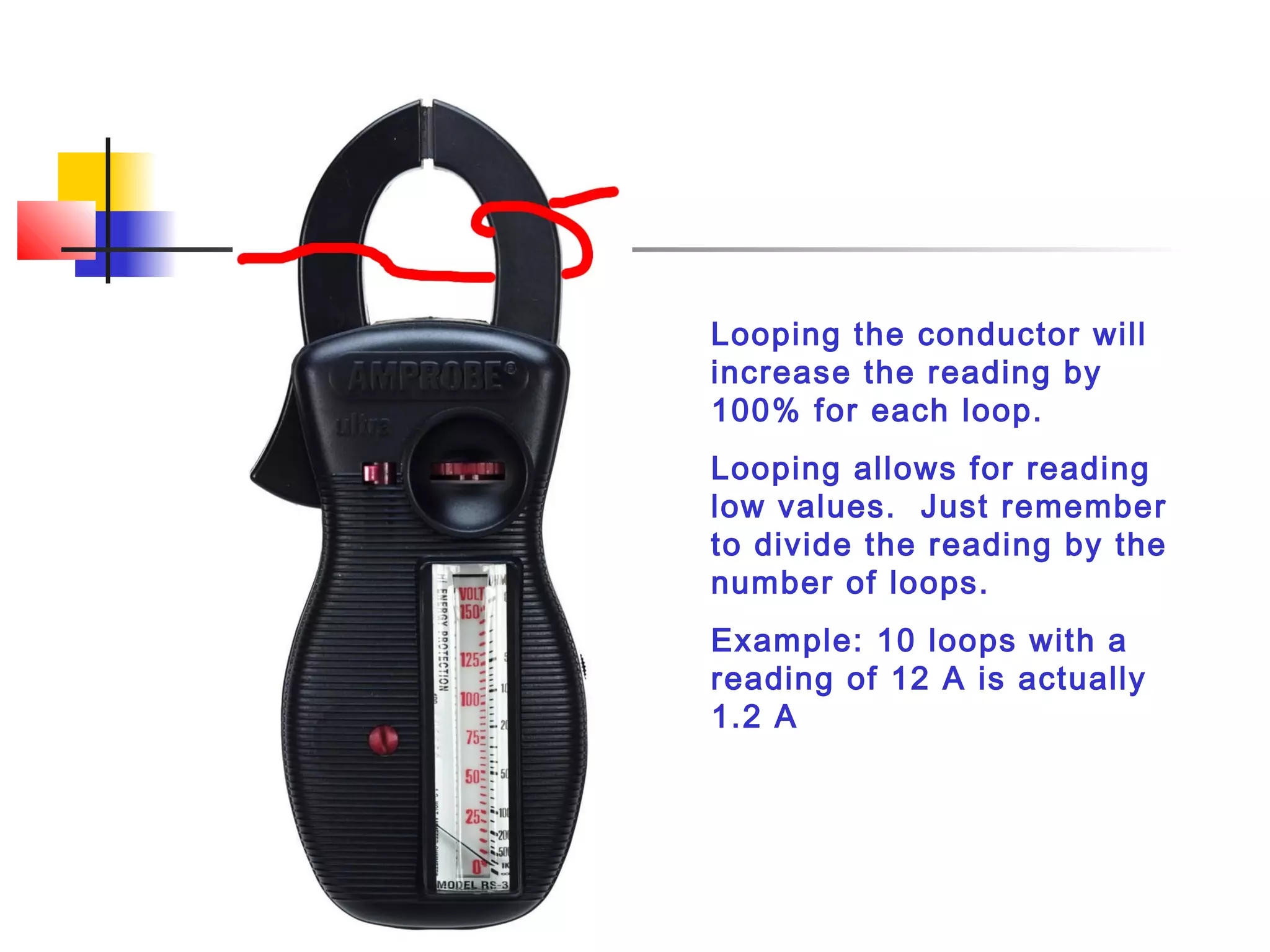
Looping the conductor will
increase the reading by
100% for each loop.
Looping allows for reading
low values. Just remember
to divide the reading by the
number of loops.
Example: 10 loops with a
reading of 12 A is actually
1.2 A

Vom reading

  • 1.
    VOM READING Northampton CommunityCollege Jack Schreiber
  • 2.
    Meter Safety Never changethe range setting with the meter connected to a live circuit. Always select a higher range than you expect to measure, if you are unsure select the highest range. The most accurate readings are taken with the range set for a reading near center scale when using analog meter
  • 3.
    Meter Safety Never holdthe meter in your hand when taking a reading under power. For current readings above 250mA use a clamp-on meter. Always wear you personal safety protective equipment. For low voltage that means safety glass are the minimum
  • 4.
    240 Volts maximum regardlessof the range Add to zeros to the 10V scale for the 1000V range Example: a reading of 2.4 on the 10V scale is 240V with range switch on the 1000V range
  • 5.
    Observe polarity when takingDC readings with an analog meter. Red is + and Black is - Remember to add the decimal point to the 250V scale when using the 25V range Example: a reading of 100V on the 250V scale is only 10V when the range switch is set for 25V
  • 6.
    Make sure thepower is off before measuring resistance Make sure the item under test is isolated from the circuit Always zero the meter before taking an ohm reading by shorting the probes and adjusting the Ω adjust knob until the meter reads zero on the ohms scale.
  • 7.
    Observe polarity when measuringDC Turn the meter off after taking a amperage reading.
  • 8.
    Lets do acouple example readings
  • 9.
    Range is setto ohms X10. Reading is 30,000 ohms
  • 10.
    Range is setfor 2.5 DCV Reading is 1.5V
  • 11.
    Example of atypical analog camp-on ammeter Proper use requires clamping around only one current carrying conductor at a time Not designed for high voltage (over 600V) applications
  • 12.
    Looping the conductorwill increase the reading by 100% for each loop. Looping allows for reading low values. Just remember to divide the reading by the number of loops. Example: 10 loops with a reading of 12 A is actually 1.2 A

Editor's Notes

  • #3 This will damage the switch by pitting due to arcing.
  • #4 This will damage the switch by pitting due to arcing.
  • #5 Never exceed 240V because the fuse is only rated for 240V, under a fault condition the meter could explode in your hand. On the 250V scale each line is 5V on the 10V scale each line is 2V The meter when set to read voltage has a high value of resistance so as not to upset the circuit under test (10k ohms per volt on AC)
  • #6 Observe polarity when taking DC readings the meter needle will go down scale and can be damaged. Remember to add the decimal point to the 250V scale when using the 25 V range range On the 50V scale each line is 1 volt
  • #7 Note how the Ohm’s scale is non-linear as compared to the other scales Also note that the Ohm’s scale is right to left because the battery in the meter supplies power and shorting the probes causes full scale deflection at 0 ohms Always remember to zero the meter before taking any ohm reading On this type meter the leads are often reverse polarity using the ohm’s ranges (the black probe is +)
  • #8 If you leave the meter on a current scale an then try to read voltage the meter becomes a short circuit and will damage itself or the circuit under test (for current ranges the meter has low resistance so as not to upset the readings)
  • #9 For the 2.5 V range use the 250 scale and remember to add the decimal point For the Ohm’s range remember to add the zero’s. Note the ohm’s scale is on top on this meter
  • #10 For the 2.5 V range use the 250 scale and remember to add the decimal point For the Ohm’s range remember to add the zero’s. Note the ohm’s scale is on top on this meter
  • #11 For the 2.5 V range use the 250 scale and remember to add the decimal point For the Ohm’s range remember to add the zero’s. Note the ohm’s scale is on top on this meter