z
Vitamin A
Dr Kavindya Fernando
1
z
Contents
2
 Vitamin classification
 Structure of vitamin A
 Sources of vitamin A
 Absorption and transport
 Mechanism of action
 Functions & body requirement
z
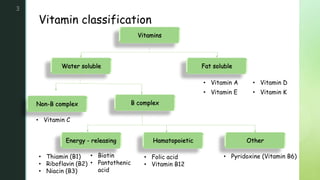
Vitamin classification
3
Vitamins
Water soluble Fat soluble
Non-B complex B complex
Energy - releasing Hamatopoietic Other
• Vitamin A • Vitamin D
• Vitamin E • Vitamin K
• Vitamin C
• Thiamin (B1)
• Riboflavin (B2)
• Niacin (B3)
• Folic acid
• Vitamin B12
• Pyridoxine (Vitamin B6)
• Biotin
• Pantothenic
acid
z
Vitamin A
4
z
Structure of Vitamin A
5
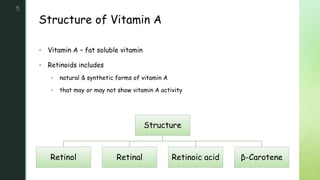
 Vitamin A – fat soluble vitamin
 Retinoids includes
 natural & synthetic forms of vitamin A
 that may or may not show vitamin A activity
Structure
Retinol Retinal Retinoic acid β-Carotene
z
Structure of Vitamin A
6
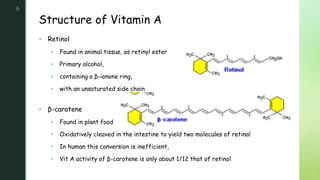
 Retinol
 Found in animal tissue, as retinyl ester
 Primary alcohol,
 containing a β-ionone ring,
 with an unsaturated side chain
 β-carotene
 Found in plant food
 Oxidatively cleaved in the intestine to yield two molecules of retinal
 In human this conversion is inefficient,
 Vit A activity of β-carotene is only about 1/12 that of retinol
z
Structure of Vitamin A
7
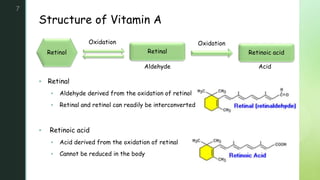
 Retinal
 Aldehyde derived from the oxidation of retinol
 Retinal and retinol can readily be interconverted
 Retinoic acid
 Acid derived from the oxidation of retinal
 Cannot be reduced in the body
Retinol Retinal Retinoic acid
Oxidation
Aldehyde Acid
Oxidation
z
Sources of Vitamin A
8
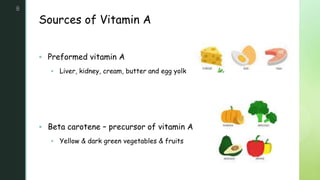
 Preformed vitamin A
 Liver, kidney, cream, butter and egg yolk
 Beta carotene – precursor of vitamin A
 Yellow & dark green vegetables & fruits
z
Absorption and transport of vitamin A
9
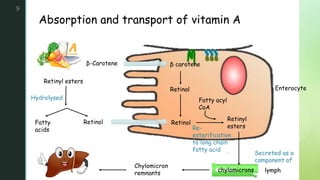
Retinyl esters
β-Carotene
Fatty
acids
Retinol
β carotene
Retinal
Retinol
Retinyl
esters
Hydrolysed
Enterocyte
Fatty acyl
CoA
Re-
esterification
to long chain
fatty acid
Secreted as a
component of
chylomicrons lymph
Chylomicron
remnants
z
Absorption and transport of vitamin A …cnt
10
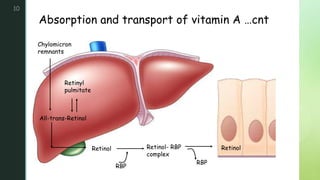
RBP
Retinyl
pulmitate
All-trans-Retinol
Retinol- RBP
complex
Retinol Retinol
Chylomicron
remnants
RBP
z
Mechanism of action of vitamin A
11
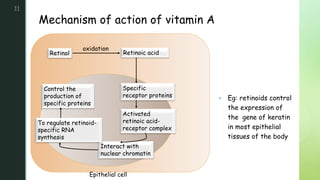
 Eg: retinoids control
the expression of
the gene of keratin
in most epithelial
tissues of the body
Retinoic acid
Retinol
oxidation
Specific
receptor proteins
Epithelial cell
Activated
retinoic acid-
receptor complex
Interact with
nuclear chromatin
To regulate retinoid-
specific RNA
synthesis
Control the
production of
specific proteins
z
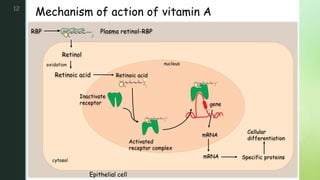
Mechanism of action of vitamin A
12
Retinoic acid
Retinol
oxidation
Epithelial cell
Plasma retinol-RBP
RBP
Retinoic acid
Inactivate
receptor
Activated
receptor complex
gene
mRNA
mRNA Specific proteins
Cellular
differentiation
cytasol
nucleus
z
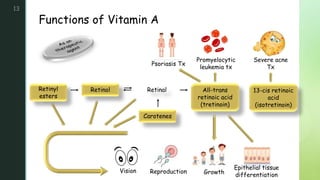
Functions of Vitamin A
13
Retinyl
esters
Retinol
Carotenes
Retinal All-trans
retinoic acid
(tretinoin)
13-cis retinoic
acid
(isotretinoin)
Psoriasis Tx
Promyelocytic
leukemia tx
Severe acne
Tx
Vision Growth
Reproduction
Epithelial tissue
differentiation
z
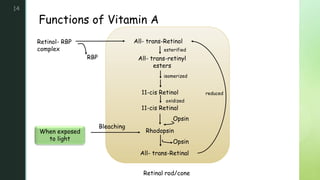
Functions of Vitamin A
14
Retinol- RBP
complex
All- trans-Retinol
RBP
Retinal rod/cone
All- trans-retinyl
esters
11-cis Retinol
11-cis Retinal
Rhodopsin
All- trans-Retinal
Opsin
Opsin
When exposed
to light
Bleaching
reduced
esterified
isomerized
oxidized
z
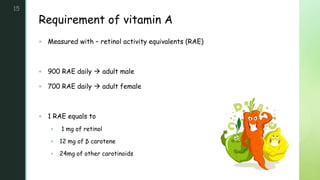
Requirement of vitamin A
15
 Measured with – retinol activity equivalents (RAE)
 900 RAE daily  adult male
 700 RAE daily  adult female
 1 RAE equals to
 1 mg of retinol
 12 mg of β carotene
 24mg of other carotinoids
z
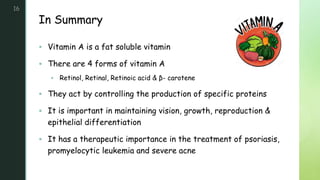
In Summary
16
 Vitamin A is a fat soluble vitamin
 There are 4 forms of vitamin A
 Retinol, Retinal, Retinoic acid & β- carotene
 They act by controlling the production of specific proteins
 It is important in maintaining vision, growth, reproduction &
epithelial differentiation
 It has a therapeutic importance in the treatment of psoriasis,
promyelocytic leukemia and severe acne
z
Thank You!
17

vitamina-201008011033.pdf

  • 1.
  • 2.
    z Contents 2  Vitamin classification Structure of vitamin A  Sources of vitamin A  Absorption and transport  Mechanism of action  Functions & body requirement
  • 3.
    z Vitamin classification 3 Vitamins Water solubleFat soluble Non-B complex B complex Energy - releasing Hamatopoietic Other • Vitamin A • Vitamin D • Vitamin E • Vitamin K • Vitamin C • Thiamin (B1) • Riboflavin (B2) • Niacin (B3) • Folic acid • Vitamin B12 • Pyridoxine (Vitamin B6) • Biotin • Pantothenic acid
  • 4.
  • 5.
    z Structure of VitaminA 5  Vitamin A – fat soluble vitamin  Retinoids includes  natural & synthetic forms of vitamin A  that may or may not show vitamin A activity Structure Retinol Retinal Retinoic acid β-Carotene
  • 6.
    z Structure of VitaminA 6  Retinol  Found in animal tissue, as retinyl ester  Primary alcohol,  containing a β-ionone ring,  with an unsaturated side chain  β-carotene  Found in plant food  Oxidatively cleaved in the intestine to yield two molecules of retinal  In human this conversion is inefficient,  Vit A activity of β-carotene is only about 1/12 that of retinol
  • 7.
    z Structure of VitaminA 7  Retinal  Aldehyde derived from the oxidation of retinol  Retinal and retinol can readily be interconverted  Retinoic acid  Acid derived from the oxidation of retinal  Cannot be reduced in the body Retinol Retinal Retinoic acid Oxidation Aldehyde Acid Oxidation
  • 8.
    z Sources of VitaminA 8  Preformed vitamin A  Liver, kidney, cream, butter and egg yolk  Beta carotene – precursor of vitamin A  Yellow & dark green vegetables & fruits
  • 9.
    z Absorption and transportof vitamin A 9 Retinyl esters β-Carotene Fatty acids Retinol β carotene Retinal Retinol Retinyl esters Hydrolysed Enterocyte Fatty acyl CoA Re- esterification to long chain fatty acid Secreted as a component of chylomicrons lymph Chylomicron remnants
  • 10.
    z Absorption and transportof vitamin A …cnt 10 RBP Retinyl pulmitate All-trans-Retinol Retinol- RBP complex Retinol Retinol Chylomicron remnants RBP
  • 11.
    z Mechanism of actionof vitamin A 11  Eg: retinoids control the expression of the gene of keratin in most epithelial tissues of the body Retinoic acid Retinol oxidation Specific receptor proteins Epithelial cell Activated retinoic acid- receptor complex Interact with nuclear chromatin To regulate retinoid- specific RNA synthesis Control the production of specific proteins
  • 12.
    z Mechanism of actionof vitamin A 12 Retinoic acid Retinol oxidation Epithelial cell Plasma retinol-RBP RBP Retinoic acid Inactivate receptor Activated receptor complex gene mRNA mRNA Specific proteins Cellular differentiation cytasol nucleus
  • 13.
    z Functions of VitaminA 13 Retinyl esters Retinol Carotenes Retinal All-trans retinoic acid (tretinoin) 13-cis retinoic acid (isotretinoin) Psoriasis Tx Promyelocytic leukemia tx Severe acne Tx Vision Growth Reproduction Epithelial tissue differentiation
  • 14.
    z Functions of VitaminA 14 Retinol- RBP complex All- trans-Retinol RBP Retinal rod/cone All- trans-retinyl esters 11-cis Retinol 11-cis Retinal Rhodopsin All- trans-Retinal Opsin Opsin When exposed to light Bleaching reduced esterified isomerized oxidized
  • 15.
    z Requirement of vitaminA 15  Measured with – retinol activity equivalents (RAE)  900 RAE daily  adult male  700 RAE daily  adult female  1 RAE equals to  1 mg of retinol  12 mg of β carotene  24mg of other carotinoids
  • 16.
    z In Summary 16  VitaminA is a fat soluble vitamin  There are 4 forms of vitamin A  Retinol, Retinal, Retinoic acid & β- carotene  They act by controlling the production of specific proteins  It is important in maintaining vision, growth, reproduction & epithelial differentiation  It has a therapeutic importance in the treatment of psoriasis, promyelocytic leukemia and severe acne
  • 17.