Visual and Creative Thinking
  What we learned from Peter Pan and Willy Wonka
                               Kelsey Ruger, Pop Labs
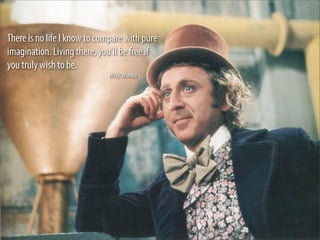
There is no life I know to compare with pure
imagination. Living there, you'll be free if
you truly wish to be.
                             Willy Wonka
creativity: cre·a·tiv·i·ty n. the ability to use
imagination to transcend traditional ideas, rules,
 patterns, relationships, or the like, and to create
     meaningful new ideas, forms, methods.
visual thinking: vis·u·al thin·king adj. the practice of
using pictures to solve problems, think through issues,
               and communicate clearly.
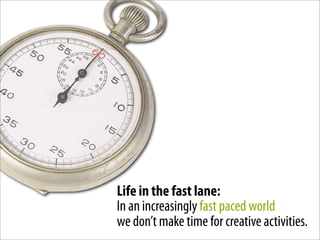
Life in the fast lane:
In an increasingly fast paced world
we don’t make time for creative activities.
Keeping up with the competition:
It’s getting harder to innovate, produce new
     ideas and communicate at this pace.
What About Creativity?
This can be overwhelming for many professionals
 because many of the “standard” we put in place
actually limit creative ability and competitiveness.
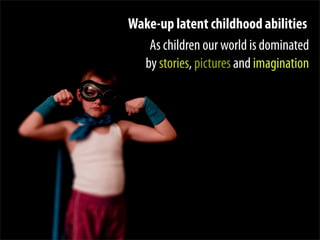
Wake-up latent childhood abilities
   As children our world is dominated
  by stories, pictures and imagination
Visual and creative thinking techniques can help
reawaken natural visual and creative skills in adults
nurturing creative and visual thinking in your organization

• Learning and removing the myths that prevent creativity
• Start using visual and creative thinking
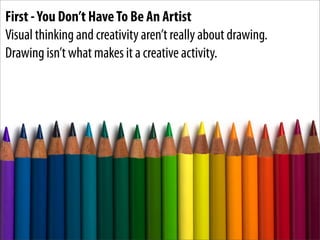
First - You Don’t Have To Be An Artist
Visual thinking and creativity aren’t really about drawing.
Drawing isn’t what makes it a creative activity.
The Myths of Innovation
             Scott Burken - 2007
The Myths of Creativity
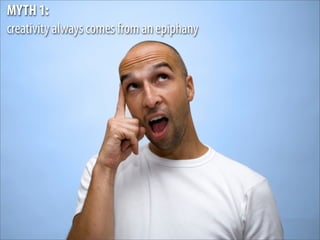
MYTH 1:
creativity always comes from an epiphany
MYTH 2:
there is always a clear path to creativity
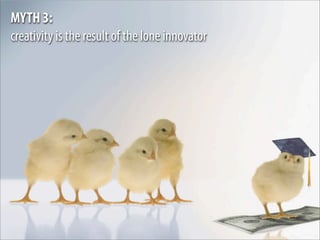
MYTH 3:
creativity is the result of the lone innovator
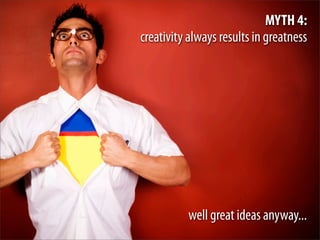
MYTH 4:
creativity always results in greatness


          well great ideas anyway...
MYTH 5:
I’m not creative
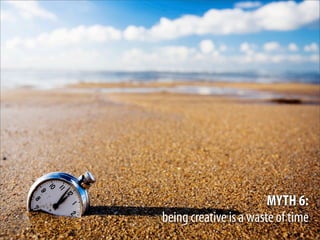
MYTH 6:
being creative is a waste of time
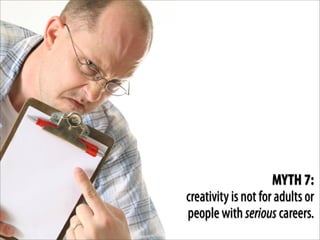
MYTH 7:
creativity is not for adults or
people with serious careers.
A Beautiful Mind
Understanding Why These Myths Exist
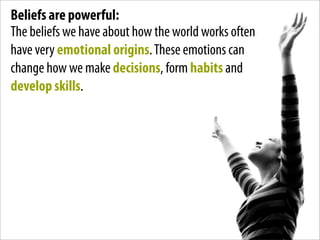
Beliefs are powerful:
The beliefs we have about how the world works often
have very emotional origins. These emotions can
change how we make decisions, form habits and
develop skills.
our need for consistency is stronger than just about
any other intrinsic need we have. People will behave
 in a manner that is consistent with their previously
  existing self-concept, even when this behavior is
          unrewarding to them otherwise.
                                          Prescott Leaky
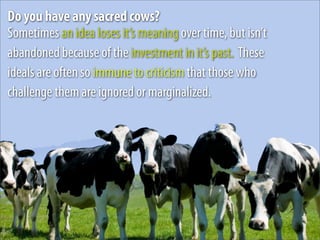
Do you have any sacred cows?
Sometimes an idea loses it’s meaning over time, but isn’t
abandoned because of the investment in it’s past. These
ideals are often so immune to criticism that those who
challenge them are ignored or marginalized.
How do you overcome the power of
the creative myths?


                        File Number: 4471239
Are you smarter than a 5th grader?
The chief enemy of creativity is "good" sense.”
                                    Pablo Picaso
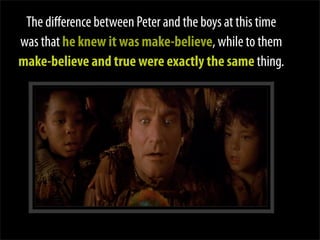
The di erence between Peter and the boys at this time
was that he knew it was make-believe, while to them
make-believe and true were exactly the same thing.
Overcoming the Myths of Creativity
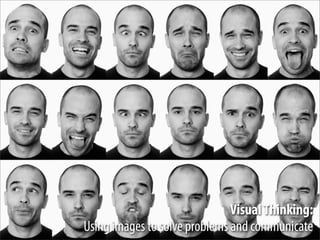
Visual Thinking:
Using images to solve problems and communicate
• 80% of the brain is dedicated to visual processing
• Visual processing is not new, it’s part of our history
• Written language originated from drawing and sketching
Tips for starting visual thinking
Visual Thinking Tip 1:
Create an environment for creativity
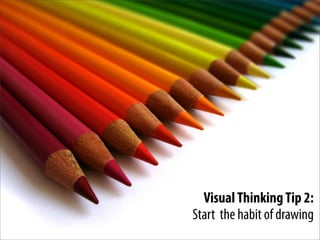
Visual Thinking Tip 2:
Start the habit of drawing
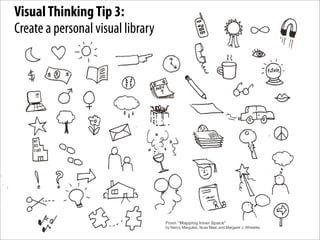
Visual Thinking Tip 3:
Create a personal visual library


                              Text
                               Text


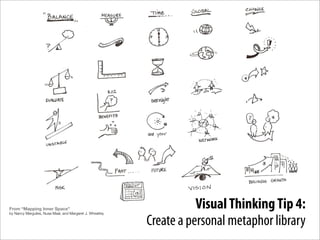
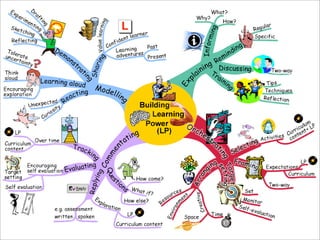
                                   From “Mapping Inner Space”
                                   by Nancy Margulies, Nusa Maal, and Margaret J. Wheatley
From “Mapping Inner Space”
by Nancy Margulies, Nusa Maal, and Margaret J. Wheatley
                                                                     Visual Thinking Tip 4:
                                                          Create a personal metaphor library
Visual Thinking Tip 5:
Take creative and visual thinking breaks
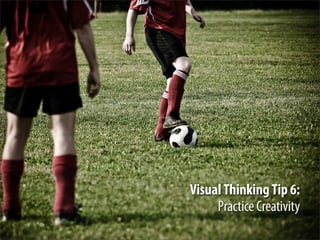
Visual Thinking Tip 6:
     Practice Creativity
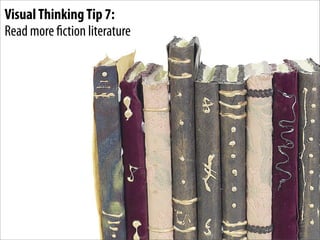
Visual Thinking Tip 7:
Read more ction literature
Visual Thinking Tip 8:
Start a visual thinking school


  • Schedule it - Set aside dedicated time
  • Be holistic - It’s not just drawing, not just brainstorming
  • Set objectives - What do you intend to learn
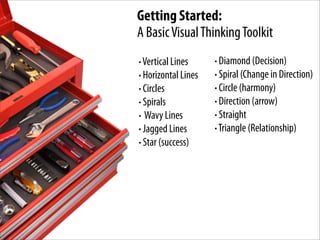
Getting Started:
A Basic Visual Thinking Toolkit
• Vertical Lines     • Diamond (Decision)
• Horizontal Lines   • Spiral (Change in Direction)
• Circles            • Circle (harmony)
• Spirals            • Direction (arrow)
• Wavy Lines         • Straight
• Jagged Lines       • Triangle (Relationship)
• Star (success)
Kelsey Ruger
kruger@poplabs.com

 www.poplabs.com
www.themoleskin.com

Visual thinking

  • 1.
    Visual and CreativeThinking What we learned from Peter Pan and Willy Wonka Kelsey Ruger, Pop Labs
  • 2.
    There is nolife I know to compare with pure imagination. Living there, you'll be free if you truly wish to be. Willy Wonka
  • 3.
    creativity: cre·a·tiv·i·ty n.the ability to use imagination to transcend traditional ideas, rules, patterns, relationships, or the like, and to create meaningful new ideas, forms, methods.
  • 4.
    visual thinking: vis·u·althin·king adj. the practice of using pictures to solve problems, think through issues, and communicate clearly.
  • 5.
    Life in thefast lane: In an increasingly fast paced world we don’t make time for creative activities.
  • 6.
    Keeping up withthe competition: It’s getting harder to innovate, produce new ideas and communicate at this pace.
  • 7.
    What About Creativity? Thiscan be overwhelming for many professionals because many of the “standard” we put in place actually limit creative ability and competitiveness.
  • 8.
    Wake-up latent childhoodabilities As children our world is dominated by stories, pictures and imagination
  • 9.
    Visual and creativethinking techniques can help reawaken natural visual and creative skills in adults
  • 10.
    nurturing creative andvisual thinking in your organization • Learning and removing the myths that prevent creativity • Start using visual and creative thinking
  • 11.
    First - YouDon’t Have To Be An Artist Visual thinking and creativity aren’t really about drawing. Drawing isn’t what makes it a creative activity.
  • 12.
    The Myths ofInnovation Scott Burken - 2007
  • 13.
    The Myths ofCreativity
  • 14.
    MYTH 1: creativity alwayscomes from an epiphany
  • 15.
    MYTH 2: there isalways a clear path to creativity
  • 16.
    MYTH 3: creativity isthe result of the lone innovator
  • 17.
    MYTH 4: creativity alwaysresults in greatness well great ideas anyway...
  • 18.
  • 19.
    MYTH 6: being creativeis a waste of time
  • 20.
    MYTH 7: creativity isnot for adults or people with serious careers.
  • 21.
    A Beautiful Mind UnderstandingWhy These Myths Exist
  • 22.
    Beliefs are powerful: Thebeliefs we have about how the world works often have very emotional origins. These emotions can change how we make decisions, form habits and develop skills.
  • 23.
    our need forconsistency is stronger than just about any other intrinsic need we have. People will behave in a manner that is consistent with their previously existing self-concept, even when this behavior is unrewarding to them otherwise. Prescott Leaky
  • 24.
    Do you haveany sacred cows? Sometimes an idea loses it’s meaning over time, but isn’t abandoned because of the investment in it’s past. These ideals are often so immune to criticism that those who challenge them are ignored or marginalized.
  • 25.
    How do youovercome the power of the creative myths? File Number: 4471239
  • 26.
    Are you smarterthan a 5th grader?
  • 27.
    The chief enemyof creativity is "good" sense.” Pablo Picaso
  • 28.
    The di erencebetween Peter and the boys at this time was that he knew it was make-believe, while to them make-believe and true were exactly the same thing.
  • 29.
    Overcoming the Mythsof Creativity
  • 30.
    Visual Thinking: Using imagesto solve problems and communicate
  • 31.
    • 80% ofthe brain is dedicated to visual processing • Visual processing is not new, it’s part of our history • Written language originated from drawing and sketching
  • 32.
    Tips for startingvisual thinking
  • 33.
    Visual Thinking Tip1: Create an environment for creativity
  • 34.
    Visual Thinking Tip2: Start the habit of drawing
  • 35.
    Visual Thinking Tip3: Create a personal visual library Text Text From “Mapping Inner Space” by Nancy Margulies, Nusa Maal, and Margaret J. Wheatley
  • 36.
    From “Mapping InnerSpace” by Nancy Margulies, Nusa Maal, and Margaret J. Wheatley Visual Thinking Tip 4: Create a personal metaphor library
  • 37.
    Visual Thinking Tip5: Take creative and visual thinking breaks
  • 38.
    Visual Thinking Tip6: Practice Creativity
  • 39.
    Visual Thinking Tip7: Read more ction literature
  • 40.
    Visual Thinking Tip8: Start a visual thinking school • Schedule it - Set aside dedicated time • Be holistic - It’s not just drawing, not just brainstorming • Set objectives - What do you intend to learn
  • 41.
    Getting Started: A BasicVisual Thinking Toolkit • Vertical Lines • Diamond (Decision) • Horizontal Lines • Spiral (Change in Direction) • Circles • Circle (harmony) • Spirals • Direction (arrow) • Wavy Lines • Straight • Jagged Lines • Triangle (Relationship) • Star (success)
  • 43.