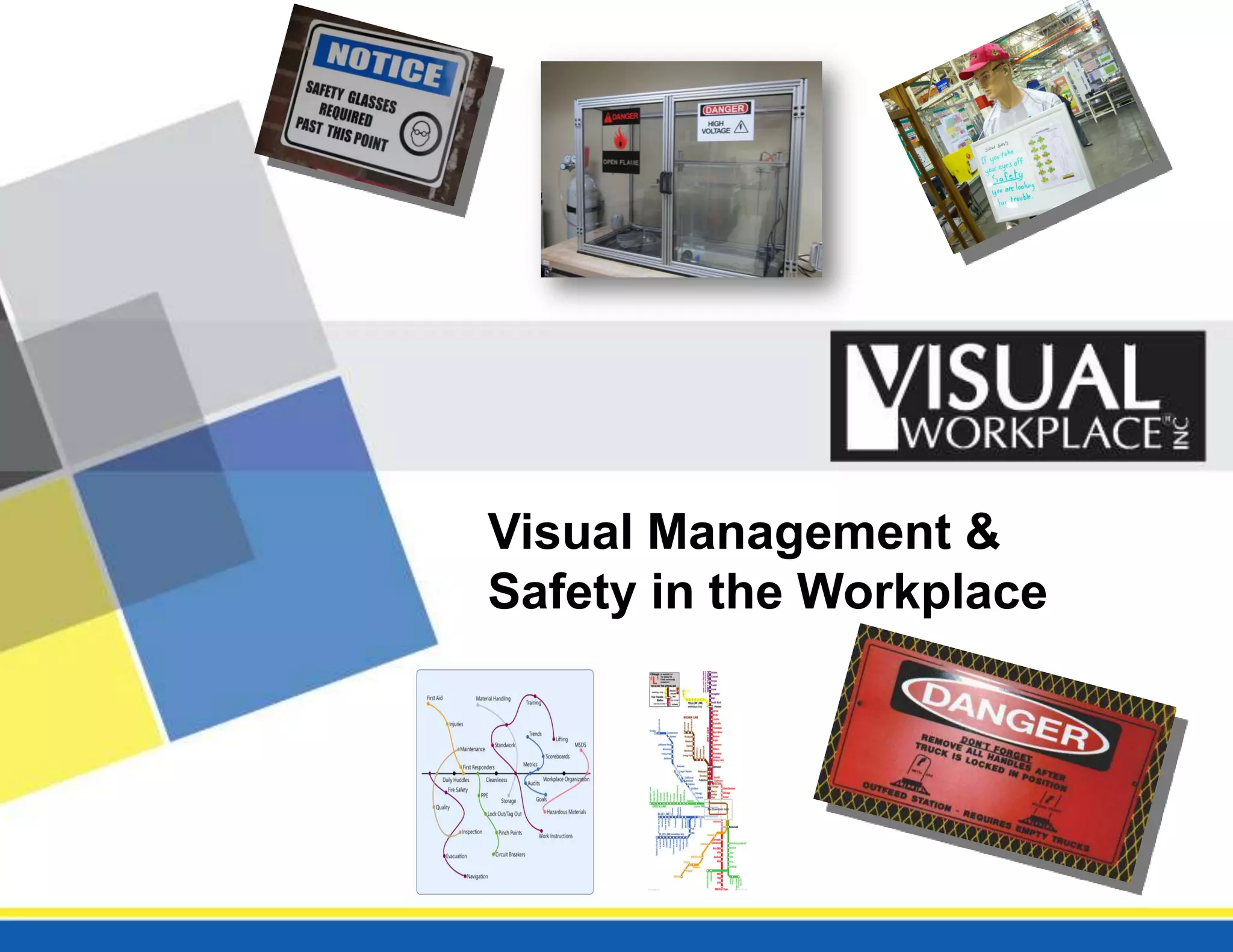
Visual Management &
Safety in the Workplace
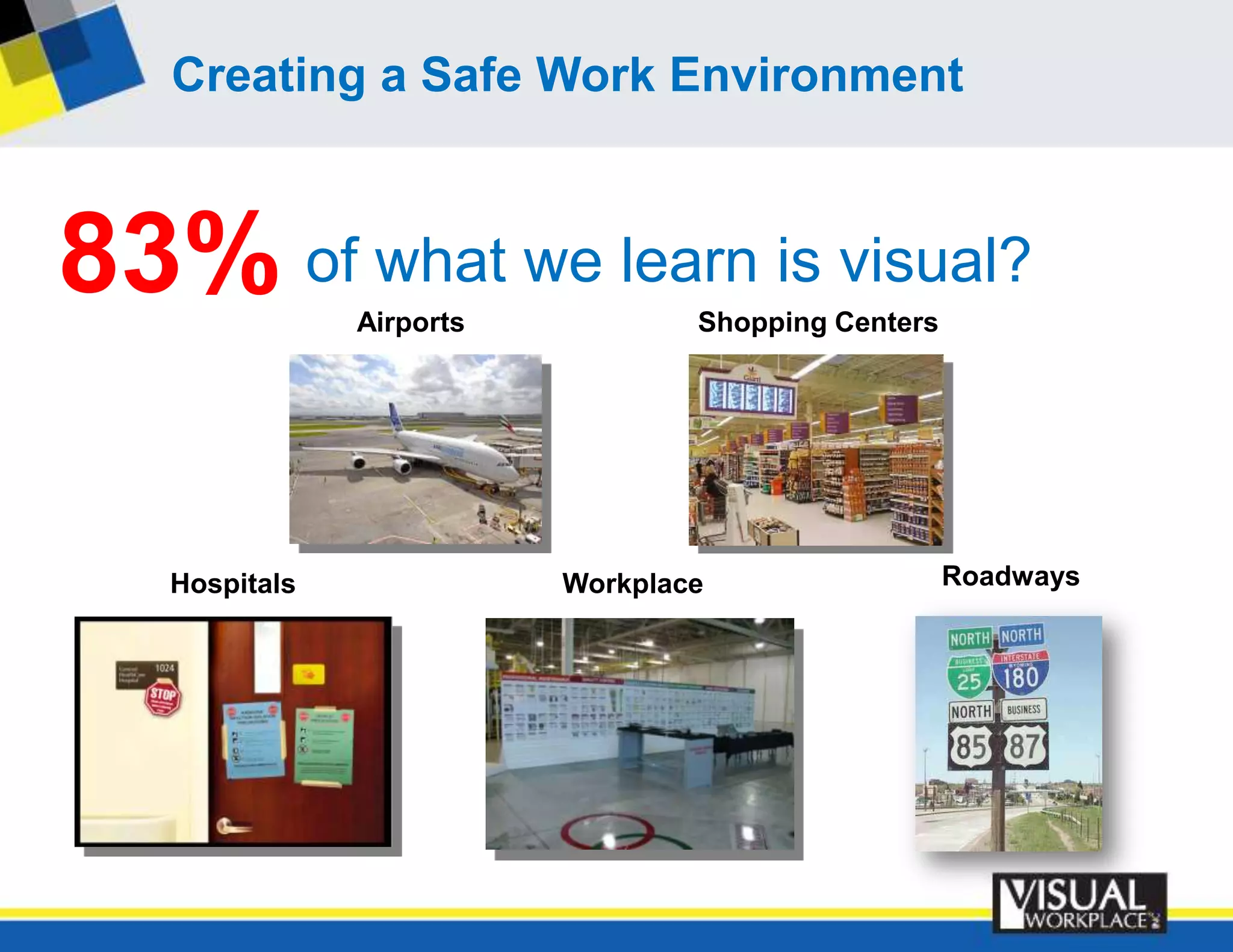
Creating a Safe Work Environment


83% of what we learn is visual?
               Airports           Shopping Centers


   Hospitals              Workplace                  Roadways
A safe workplace is a visual workplace!


A Visual workplace is
•


•     …an environment that speaks for itself.
       Identifies and eliminates abnormal situations
       Directs behavior
       Eliminates missing information
       Reduces injury
       Uses Key Performance Indicators (KPI) to reveal
        opportunities for improvement
Benefits a Visual Workplace


A visual workplace creates employee engagement paving a path
for continuous improvement.
      Increased quality
      Increased machine efficiency
      Increased throughput
      Reduced scrap
      Reduced setup time
      Reduced inventory
    Reduced injuries
      Standardized work
      Sustainable workplace organization
A Road Map for a Visual Workplace


Visual Workplace
      Learn to see waste and opportunities for improvement
      Organize your workplace
      Set standards for each element of a visual workplace
       •   Leadership
       •   Territories
       •   Process
       •   Work instructions
       •   Scoreboards
       • Safety
      Measure your performance and improve
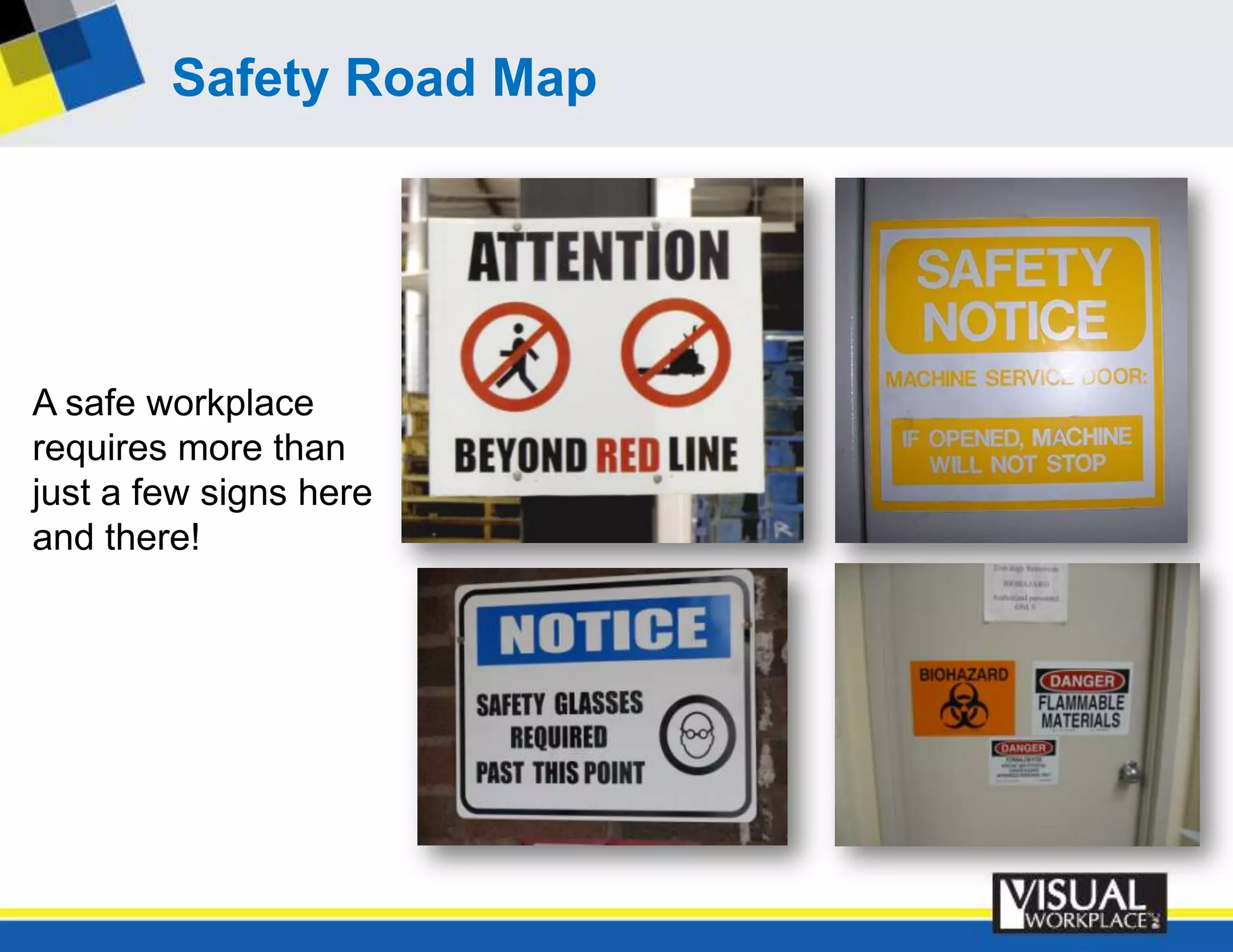
Safety Road Map


A safe workplace
requires more than
just a few signs here
and there!
Safety Road Map


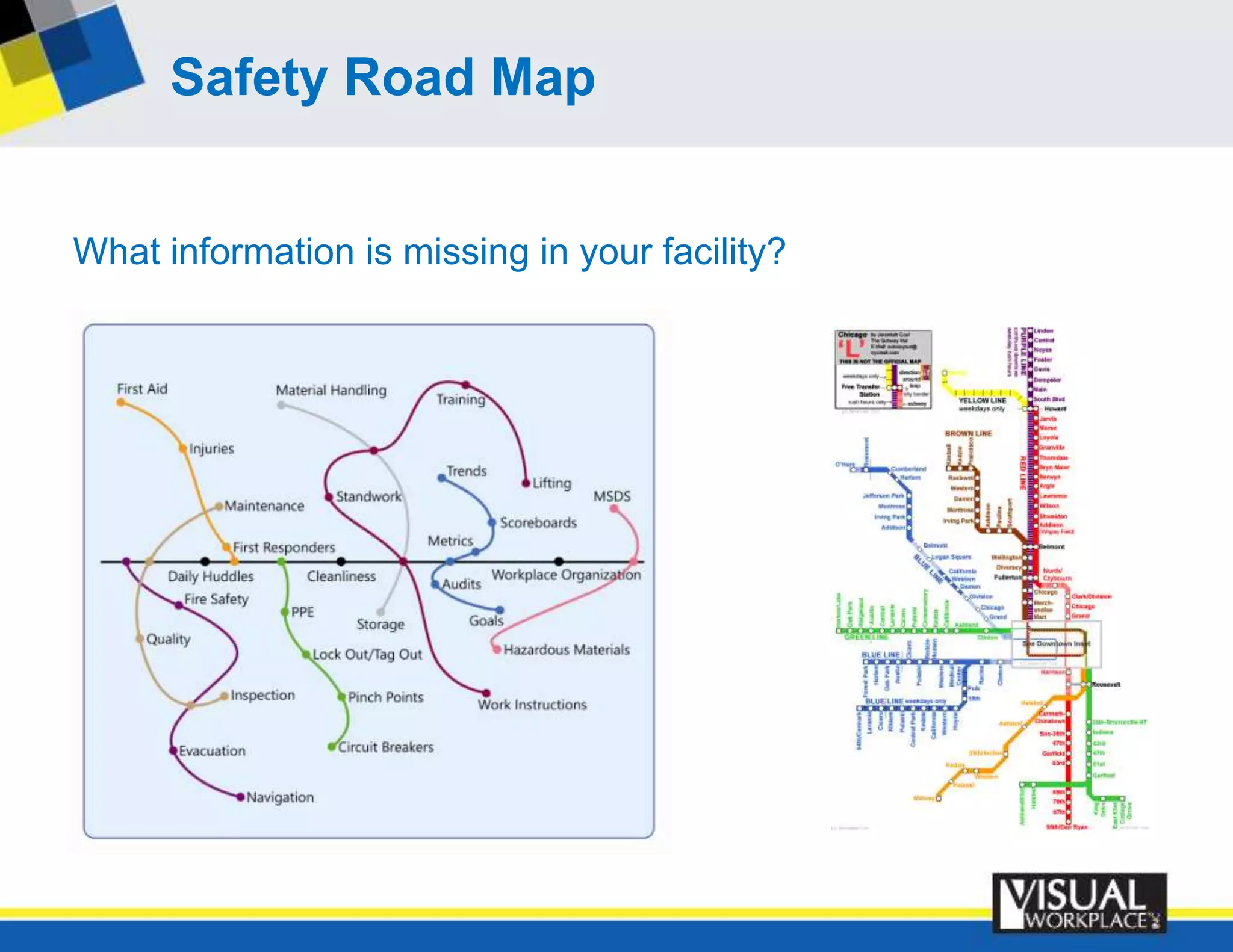
What information is missing in your facility?
Creating a Safety Road Map

•   Step 1
       Start by making sure that safety items have procedures are
        visually identified, unobstructed and inspected regularly.
Creating a Safety Road Map

•   Step 2
       Identify missing information by asking questions. A repeated
        question in the workplace usually indicates a need for a visual
        system.
Creating a Safety Road Map

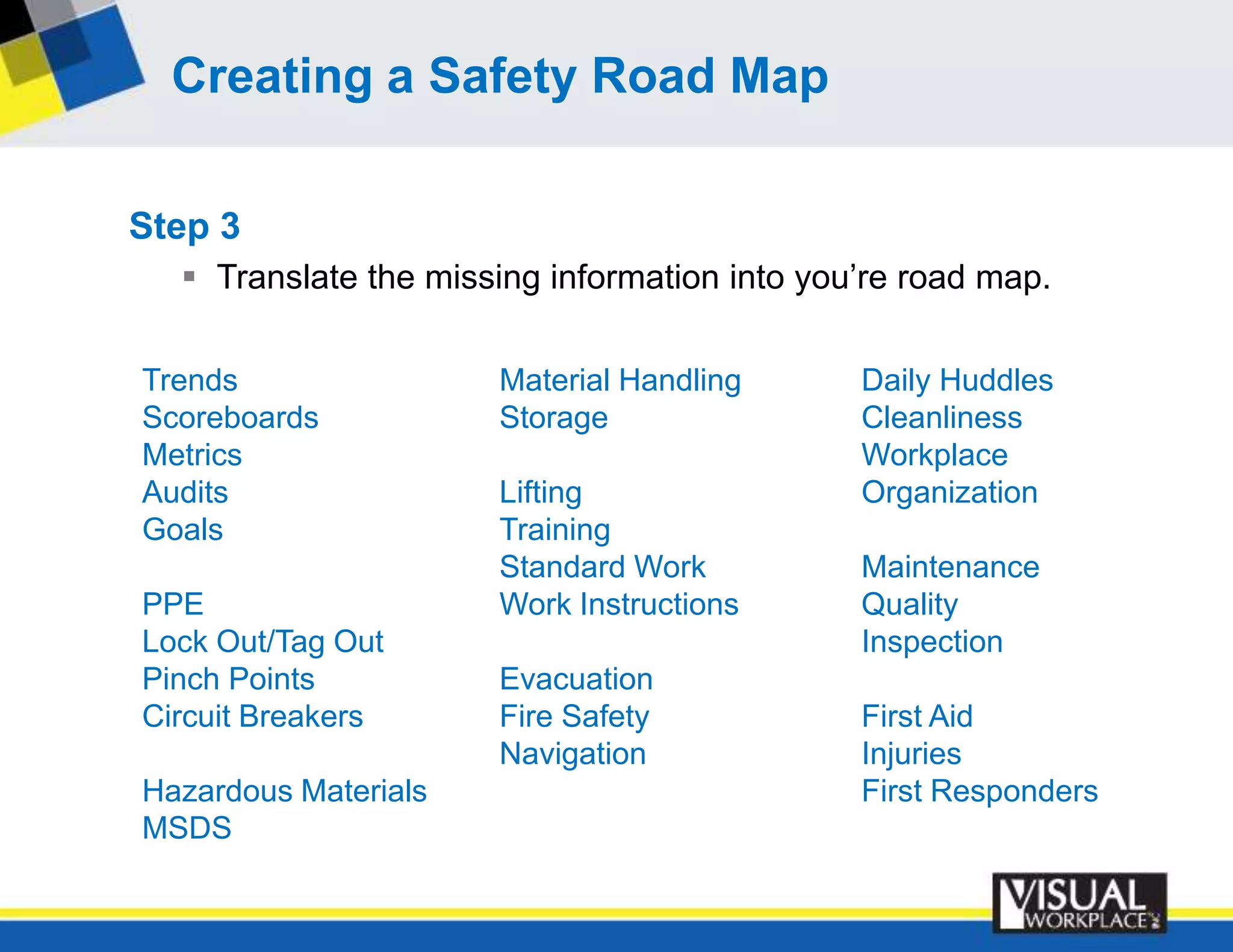
•   Step 3
       Translate the missing information into you’re road map.

    Trends                Material Handling       Daily Huddles
    Scoreboards           Storage                 Cleanliness
    Metrics                                       Workplace
    Audits                Lifting                 Organization
    Goals                 Training
                          Standard Work           Maintenance
    PPE                   Work Instructions       Quality
    Lock Out/Tag Out                              Inspection
    Pinch Points          Evacuation
    Circuit Breakers      Fire Safety             First Aid
                          Navigation              Injuries
    Hazardous Materials                           First Responders
    MSDS
Safety Road Map


First Aid


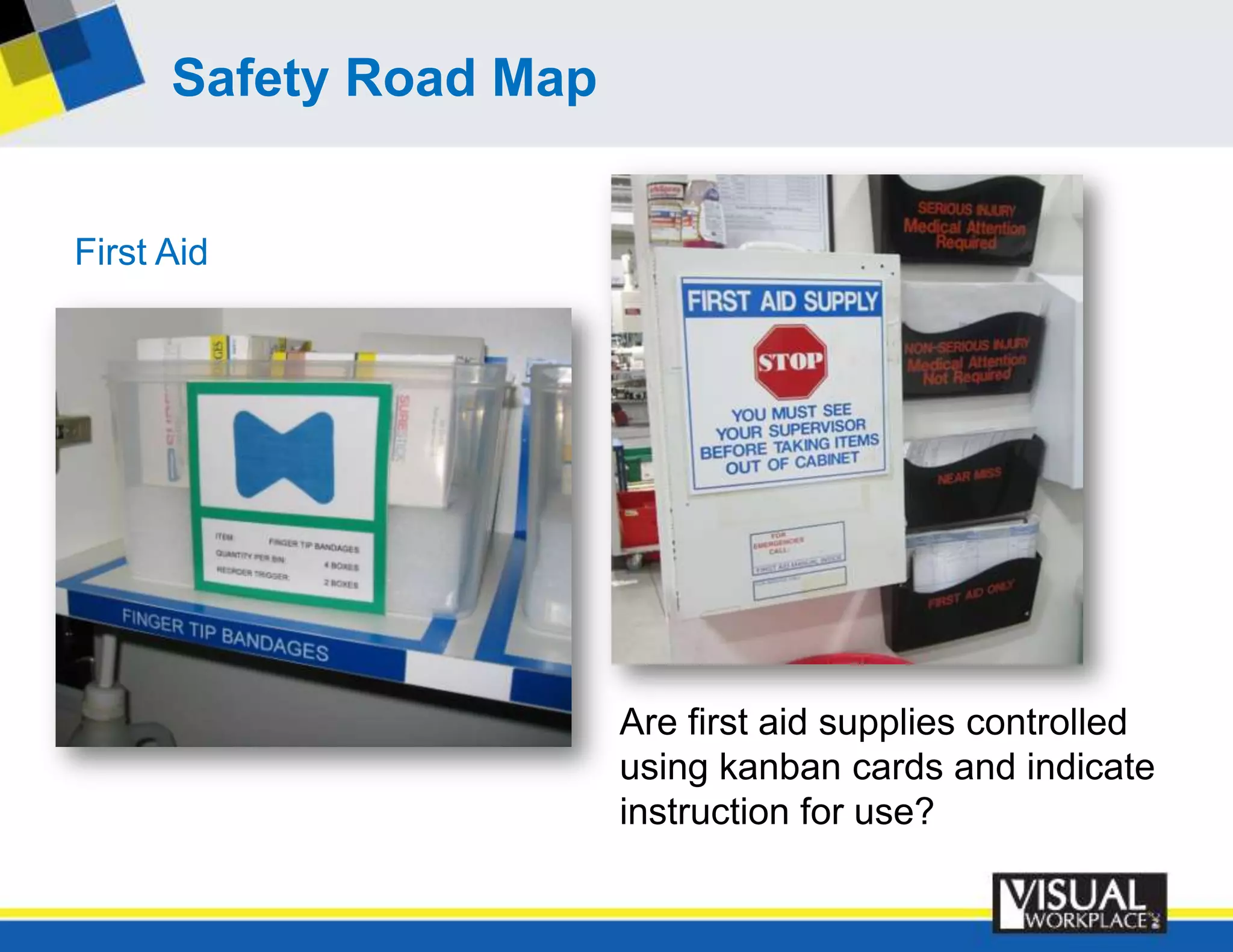
                        Are first aid supplies controlled
                        using kanban cards and indicate
                        instruction for use?
Safety Road Map


First Responders


            Are first responders for the facility visually
                identified by department or shift?
Safety Road Map

  Safety Sam


Use your creativity
when developing
visual systems!

When this facility
has a recordable
injury, Safety Sam’s
hat is changed from
Green to Red for
that day.
Safety Road Map


 Metrics


Year to date
performance is
displayed at a
glance!
Safety Road Map


  Trends


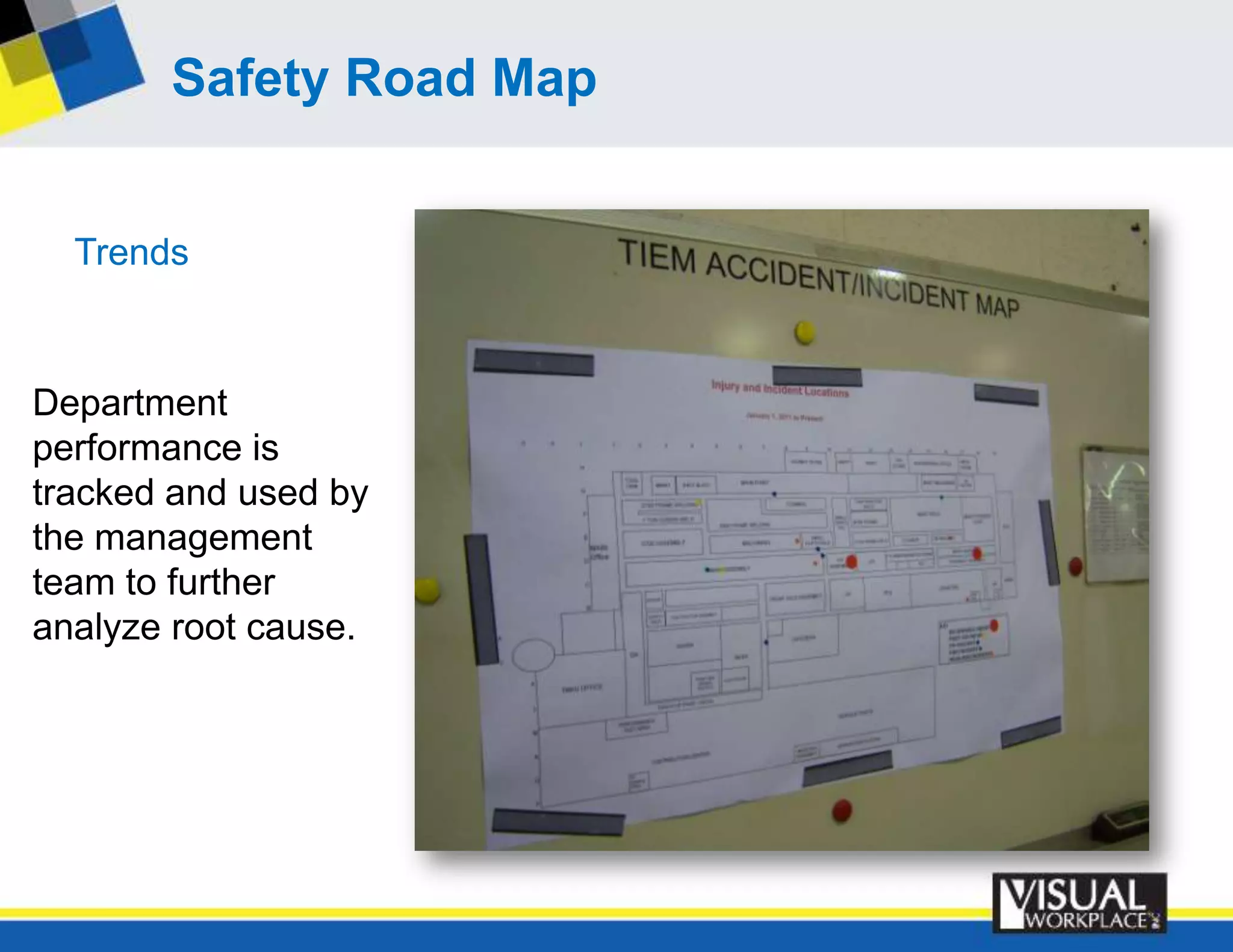
Department
performance is
tracked and used by
the management
team to further
analyze root cause.
Safety Road Map

                Are safety stations stocked regularly and
Accessibility   easily accessible?
Safety Road Map


  Lock Out/Tag Out


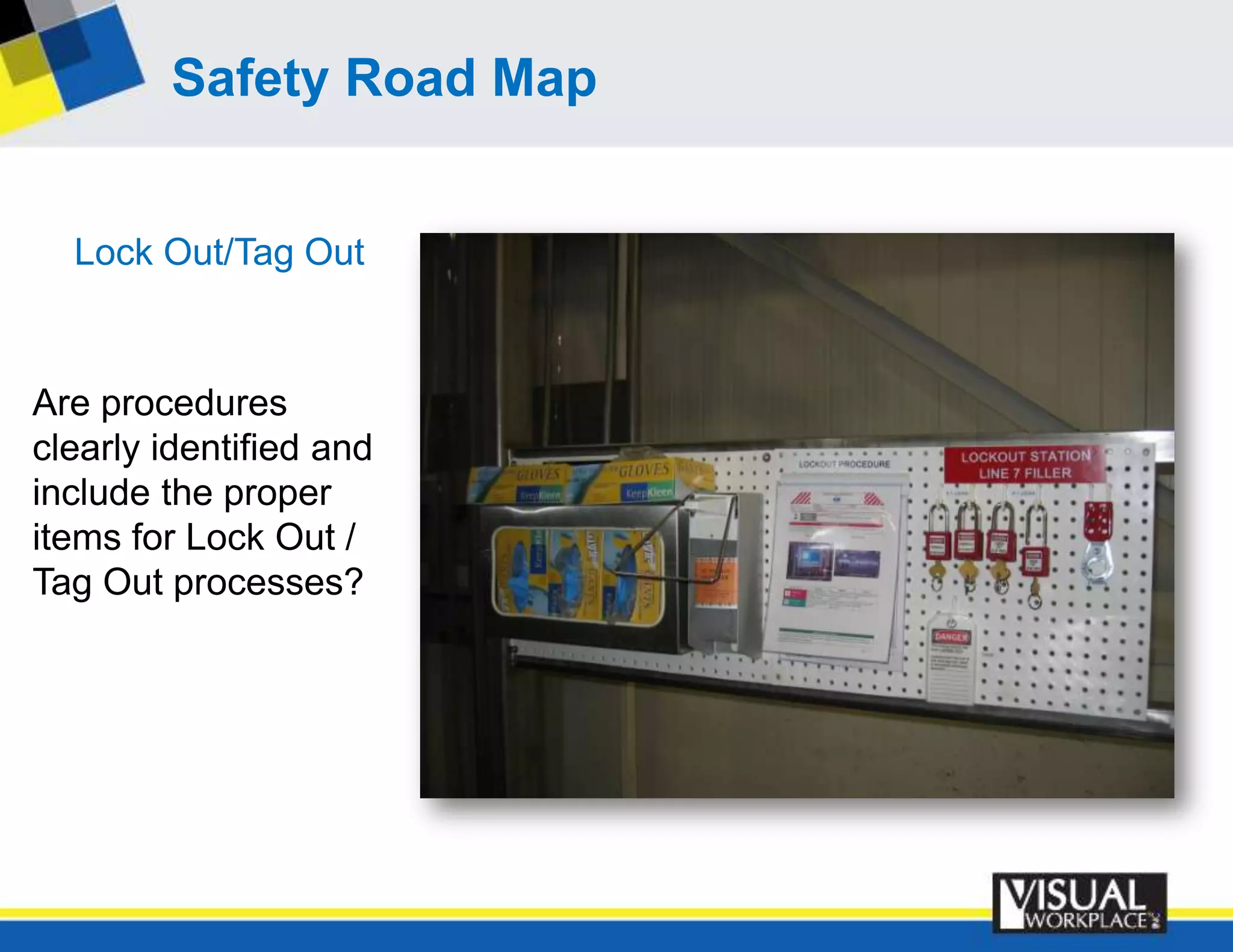
Are procedures
clearly identified and
include the proper
items for Lock Out /
Tag Out processes?
Safety Road Map


 PPE
Do you have the
necessary equipment
available at the point of
use?
Safety Road Map


PPE


                        Are your PPE instructions
                        clearly displayed and at the
                        point of use?
Safety Road Map


 Maintenance


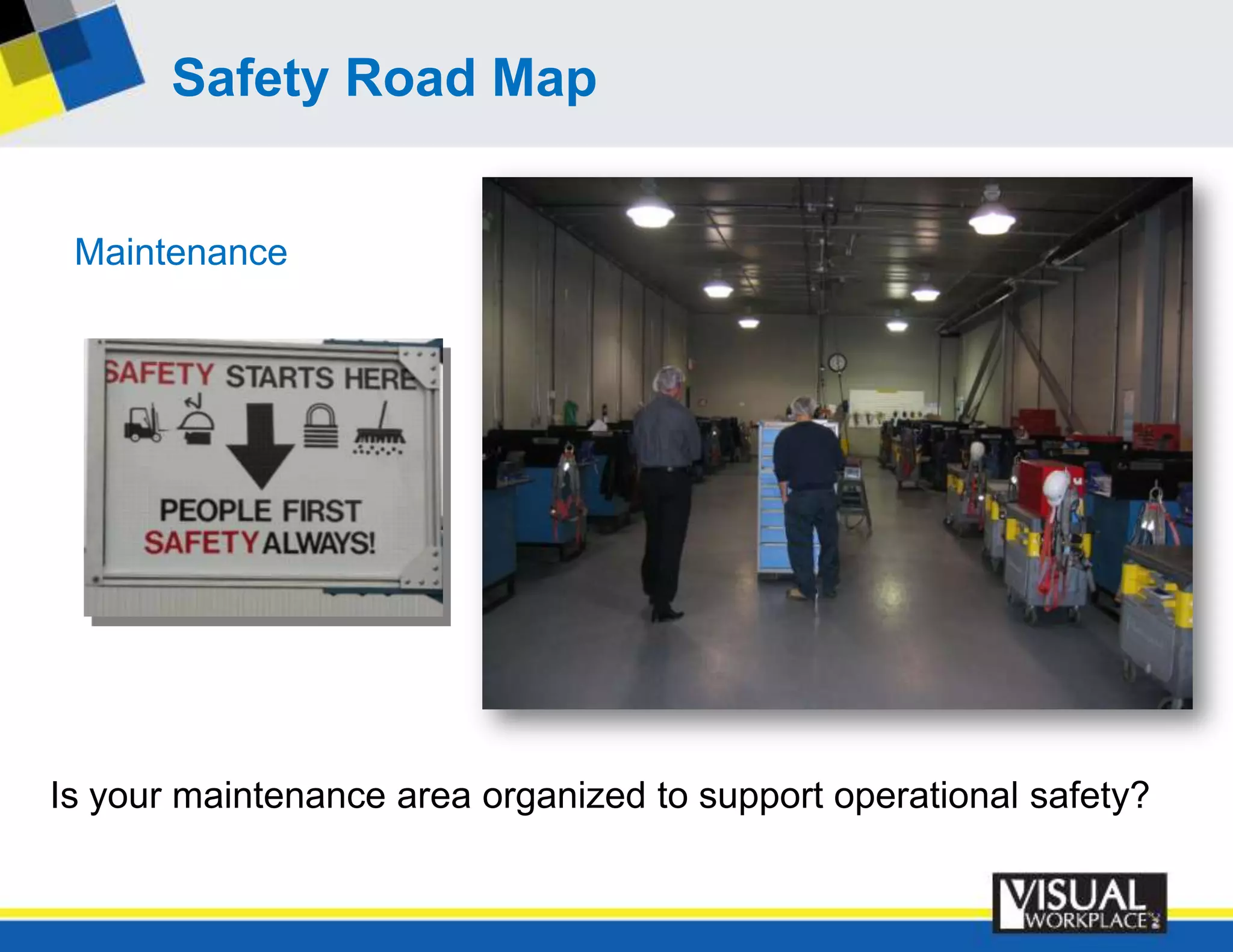
Is your maintenance area organized to support operational safety?
Safety Road Map


Distinction

 Do you use color to
 communicate differentiation?
Safety Road Map


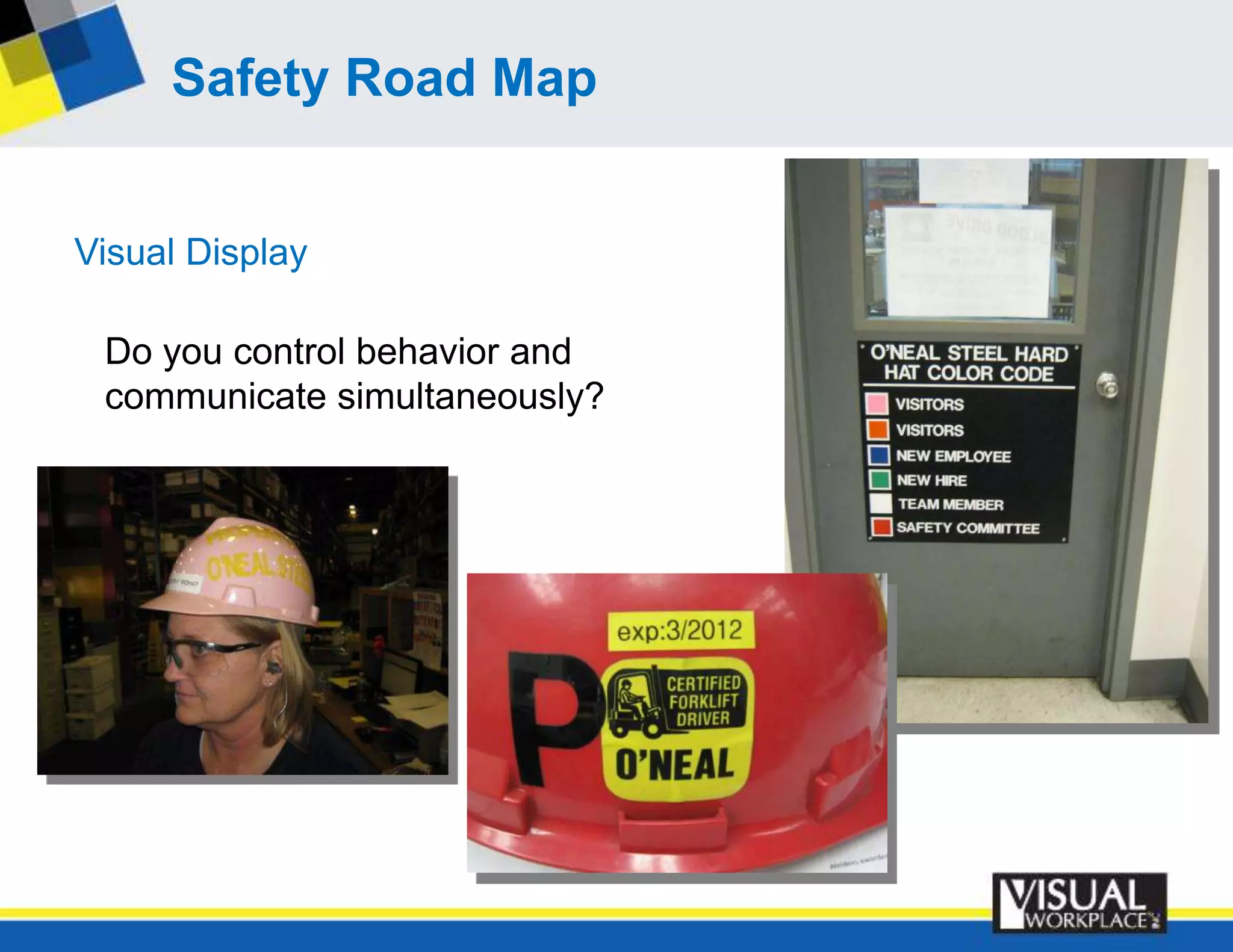
Visual Display

 Do you control behavior and
 communicate simultaneously?
Safety Road Map


  Metrics


Is there an
opportunity to
incorporate safety
and workplace
organization metrics
together?
Safety Road Map


Daily Huddles


                       Are safety audits
                       visually posted and
                       discussed with the
                       team?
Safety Road Map


Scoreboard Idea
      Color-coded tasks are
       displayed to communicate
       daily, weekly, and monthly
       cleaning requirements.
      Departmental information
       includes:
       •   Suggestions
       •   Action Items
       •   Monthly Audit
       •   Work Instructions
       •   Board Owner
       •   Cleaning Tasks
Safety Road Map


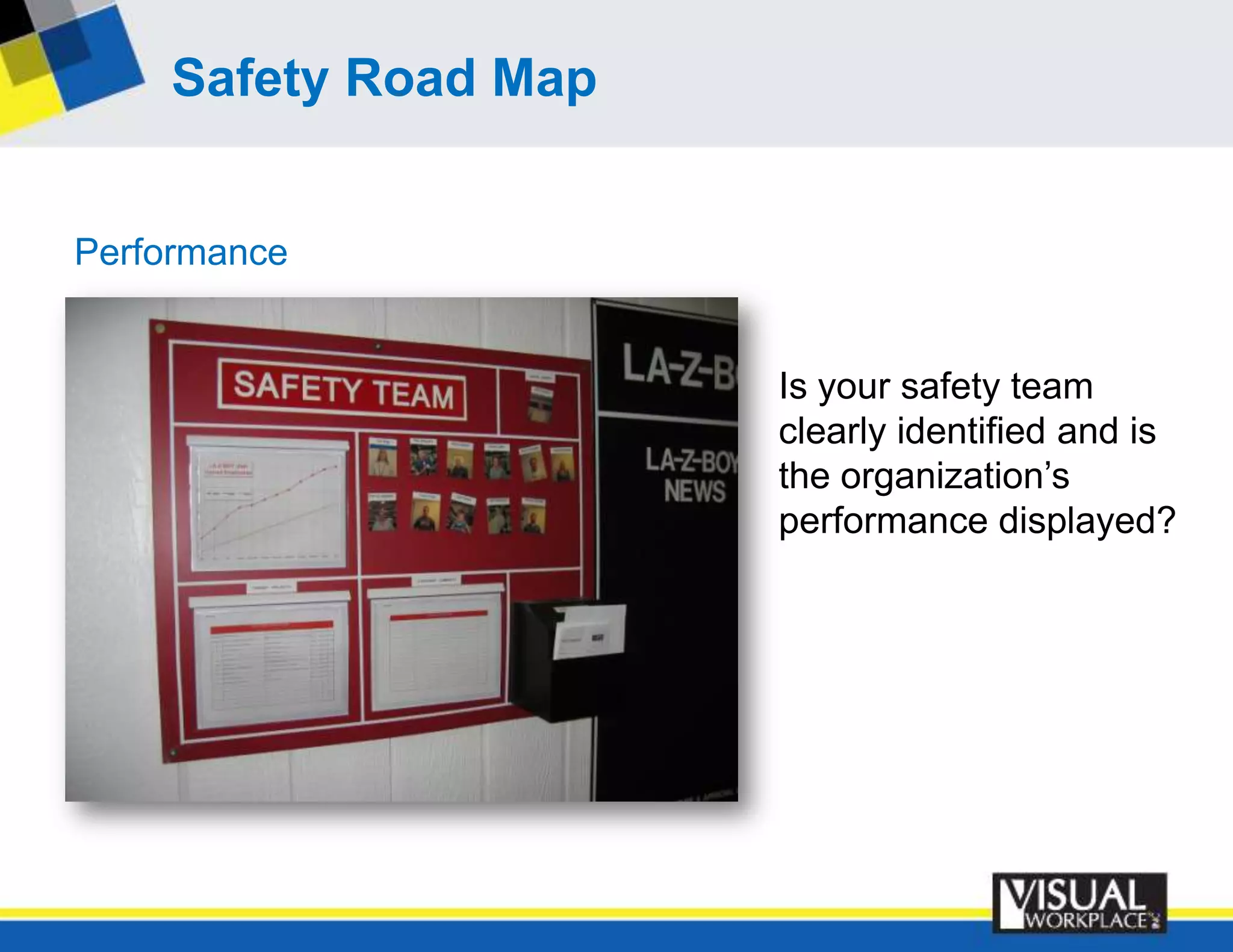
Performance


                      Is your safety team
                      clearly identified and is
                      the organization’s
                      performance displayed?
Safety Road Map


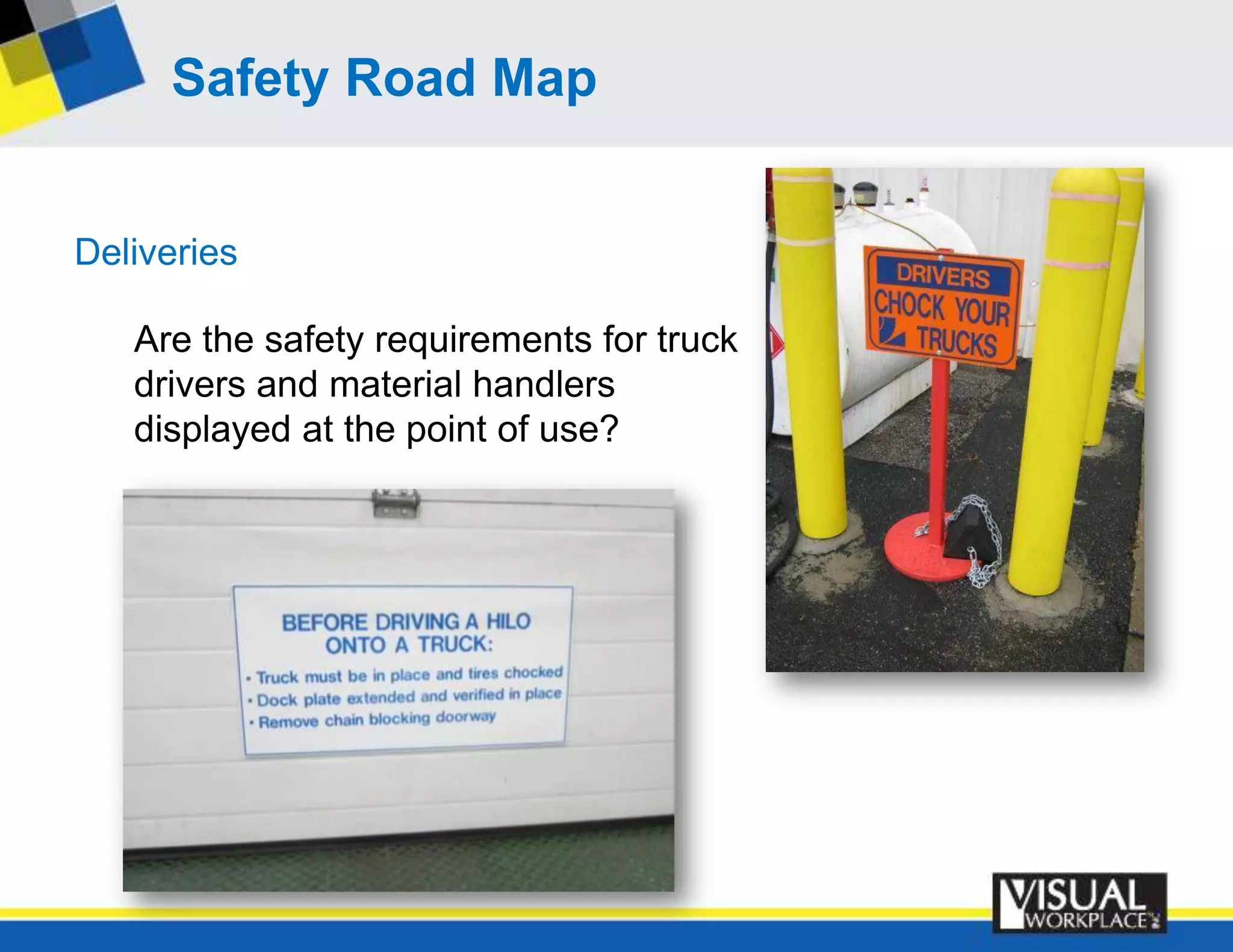
Deliveries

   Are the safety requirements for truck
   drivers and material handlers
   displayed at the point of use?
Safety Road Map


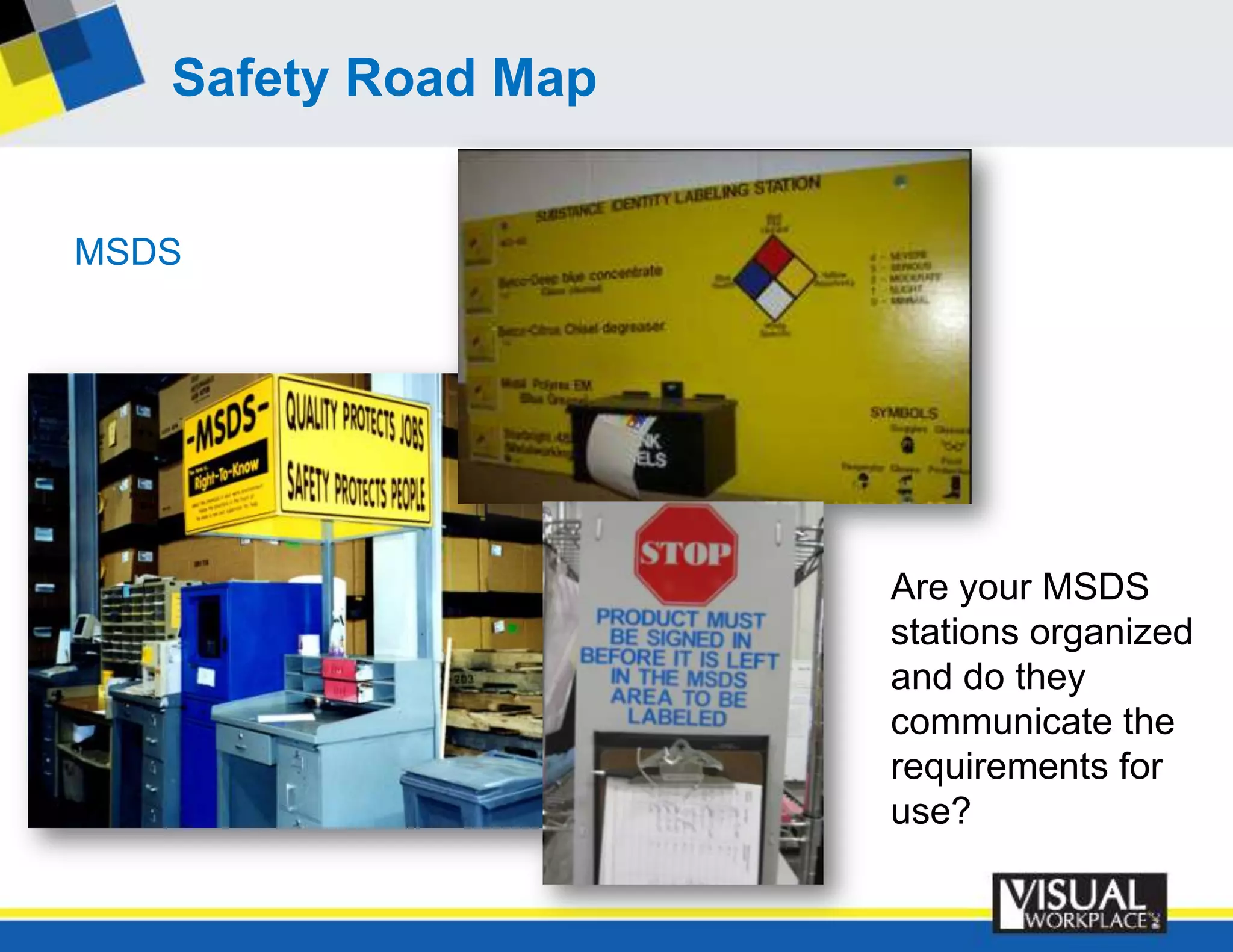
MSDS


                     Are your MSDS
                     stations organized
                     and do they
                     communicate the
                     requirements for
                     use?
Road Map


 Reduce Time Searching


Before                   After
Safety Road Map

               Are emergency evacuation procedures
Evacuation     rehearsed and routes visibly displayed
               for all team members?
Safety Road Map


Pinch Points


               How do you
               communicate where
               it is safe to be?
Safety Road Map


Doorways

Can you see
through passage
ways and if not, are
cautions displayed?
Safety Road Map


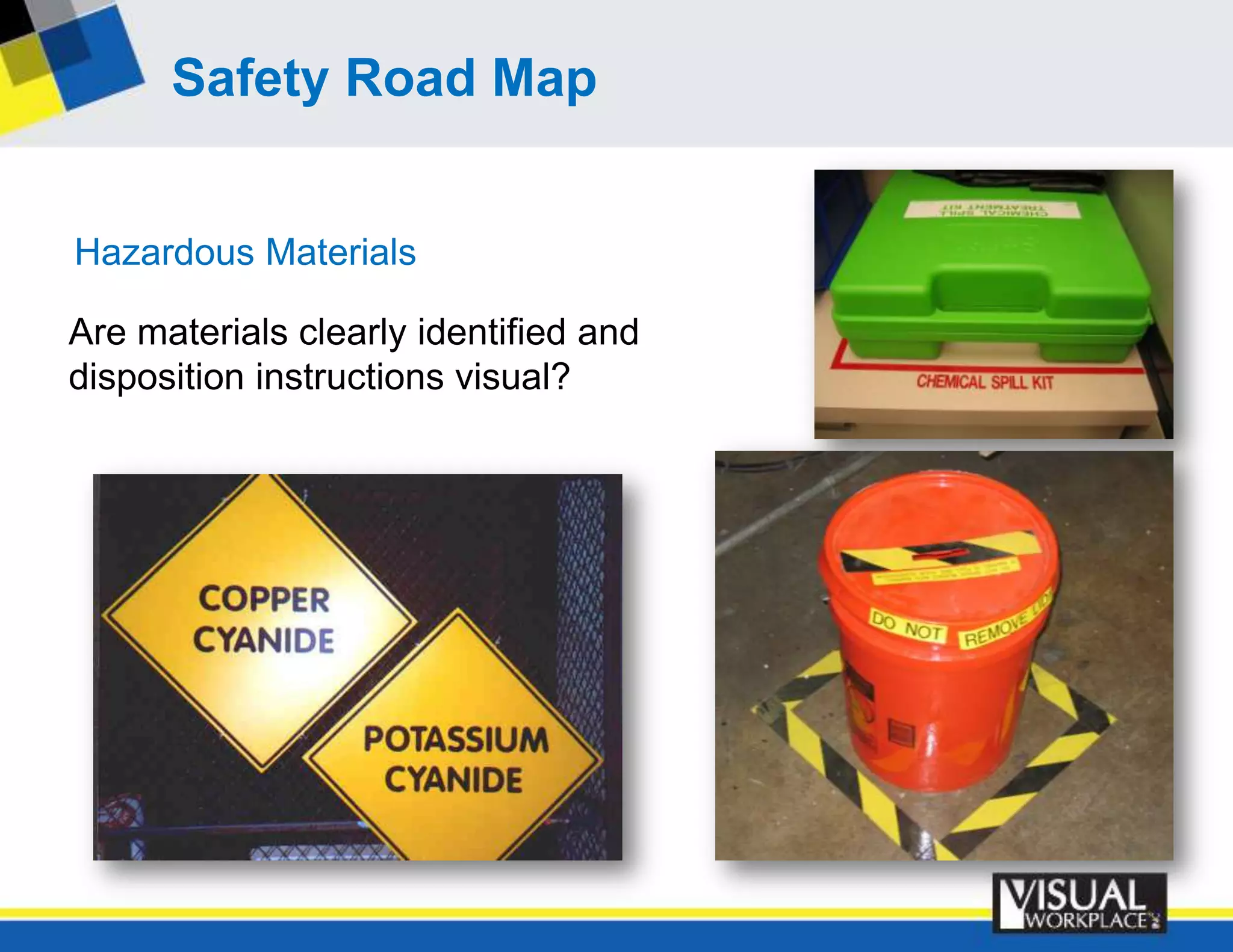
Hazardous Materials

Are materials clearly identified and
disposition instructions visual?
Safety Road Map


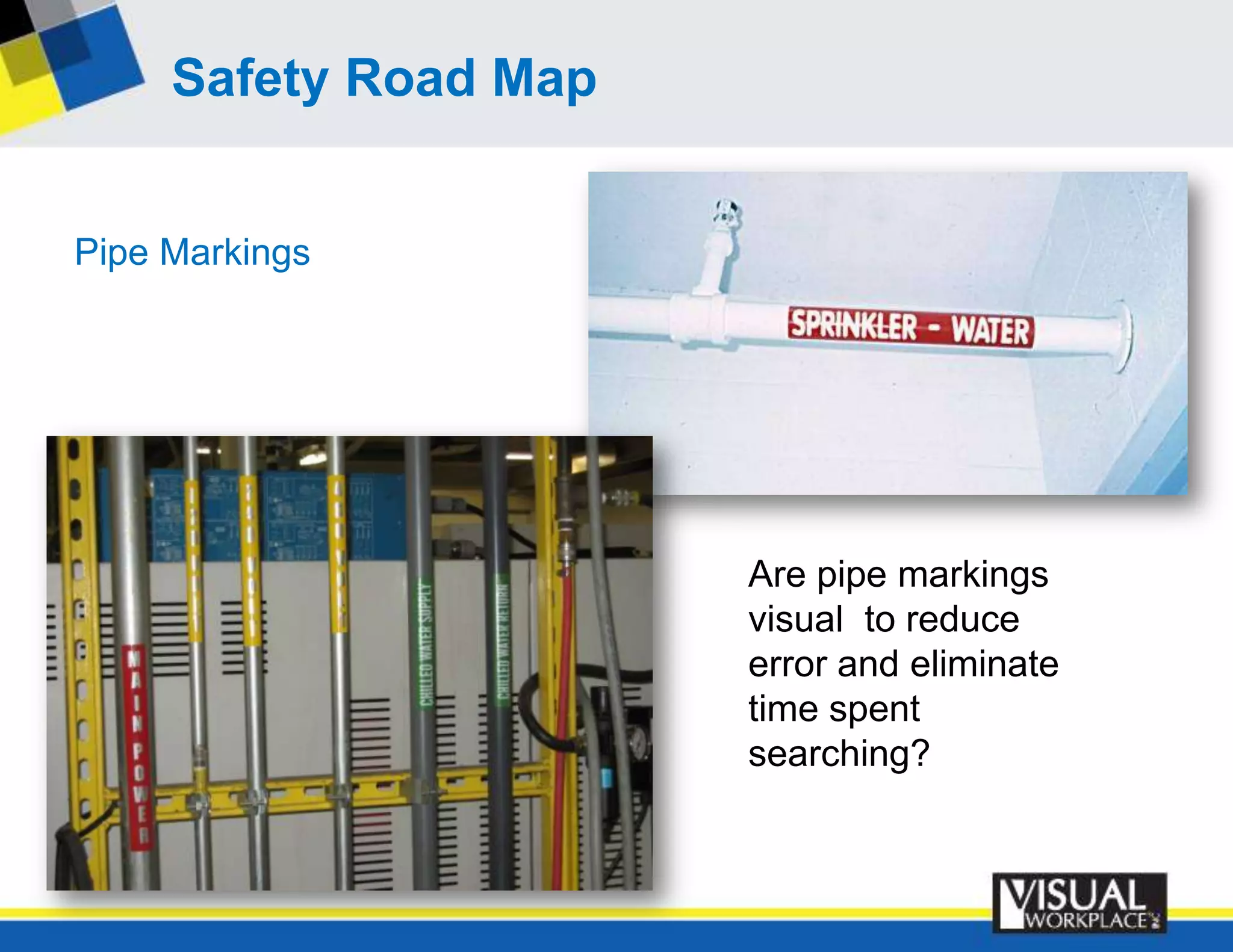
Pipe Markings


                       Are pipe markings
                       visual to reduce
                       error and eliminate
                       time spent
                       searching?
Safety Road Map


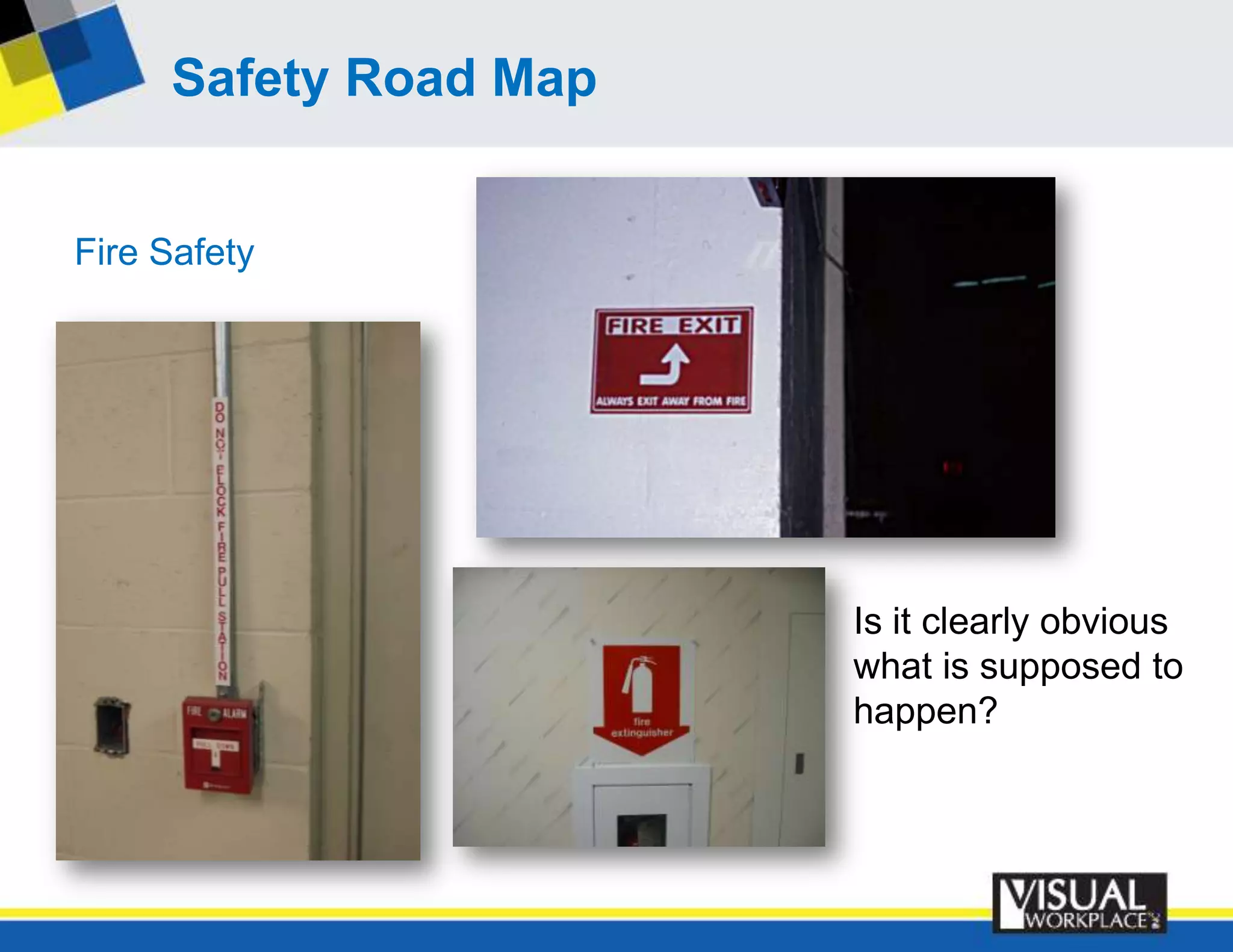
Fire Safety


                       Is it clearly obvious
                       what is supposed to
                       happen?
Safety Road Map


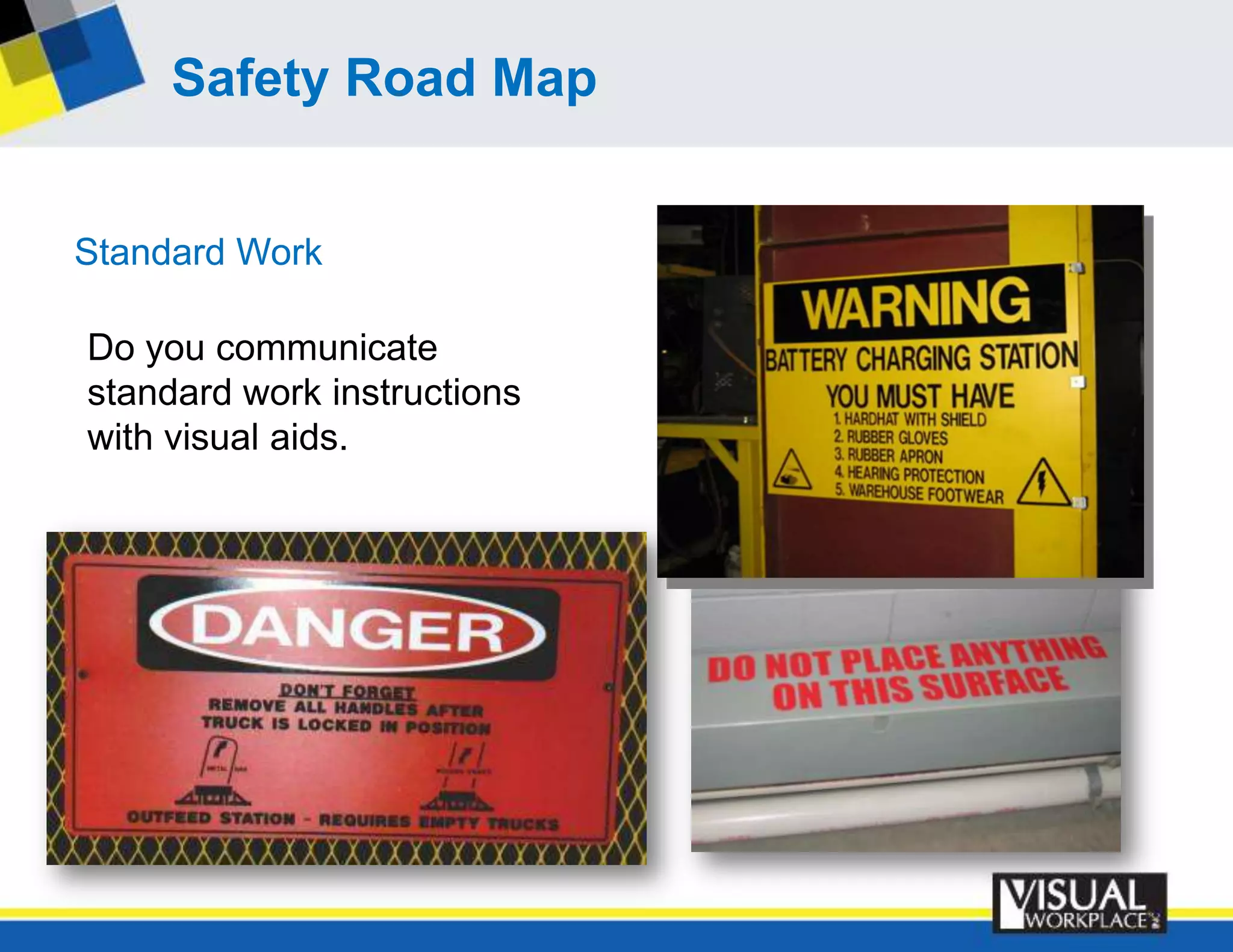
Standard Work

Do you communicate
standard work instructions
with visual aids.
Safety Road Map


Material Handling


 Are the material handling requirements posted at critical paths?
Safety Road Map


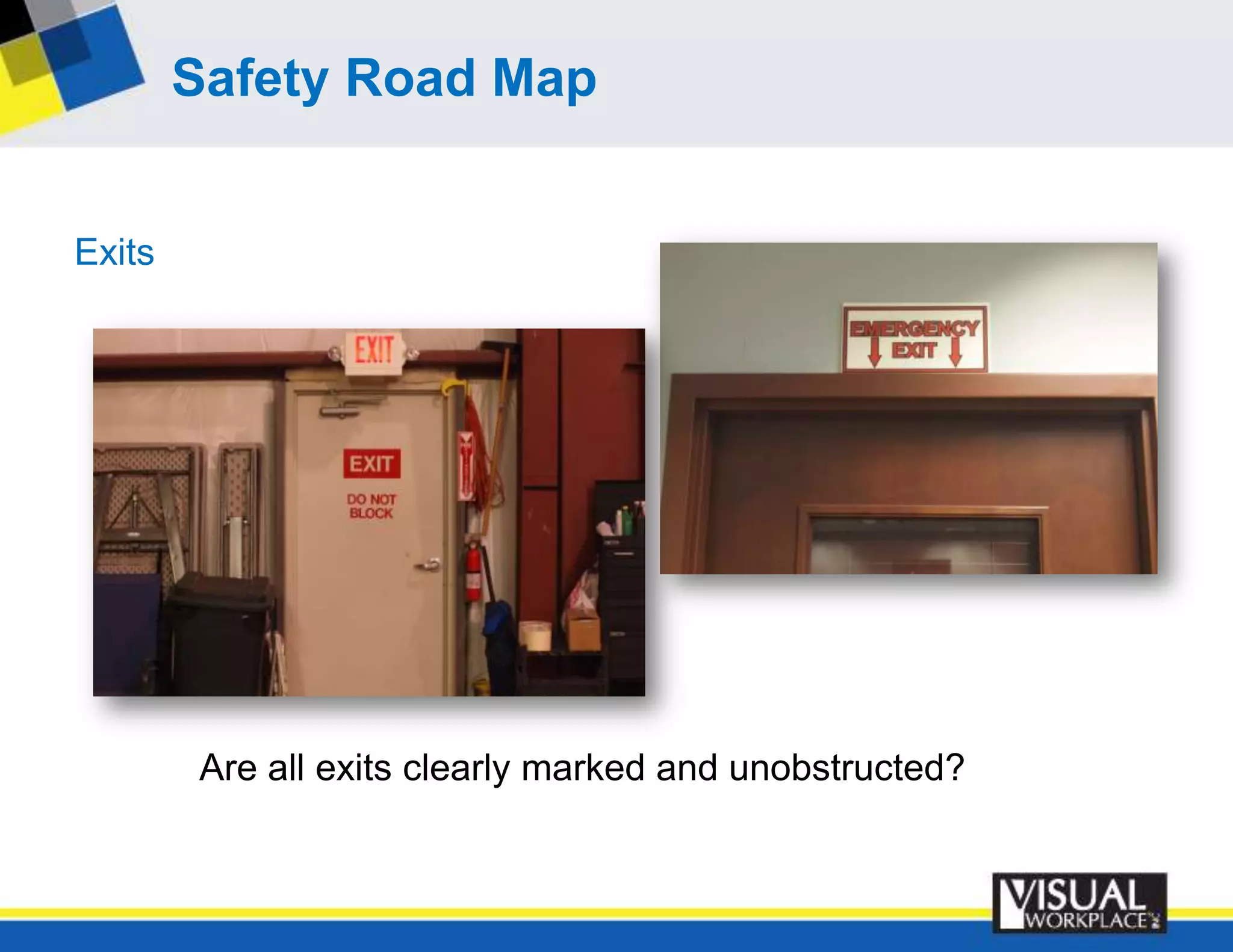
Exits


        Are all exits clearly marked and unobstructed?
Safety Road Map


Caution


                       Do you add reminders to
                       prevent injuries?
Safety Road Map


Do Not Block   Are circuit breakers and charging stations
               clearly marked and unobstructed?
Safety Road Map


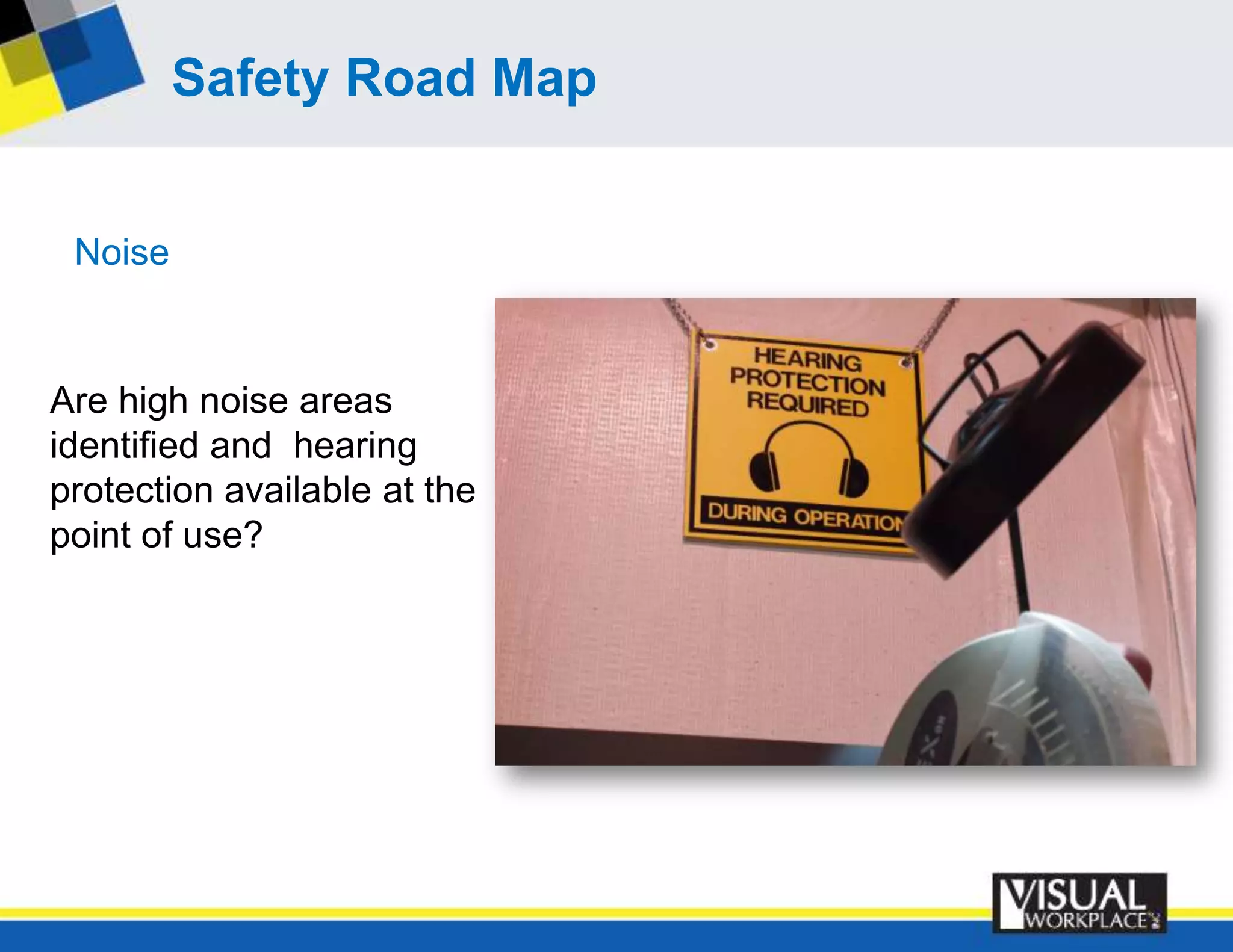
 Noise


Are high noise areas
identified and hearing
protection available at the
point of use?
Safety Road Map


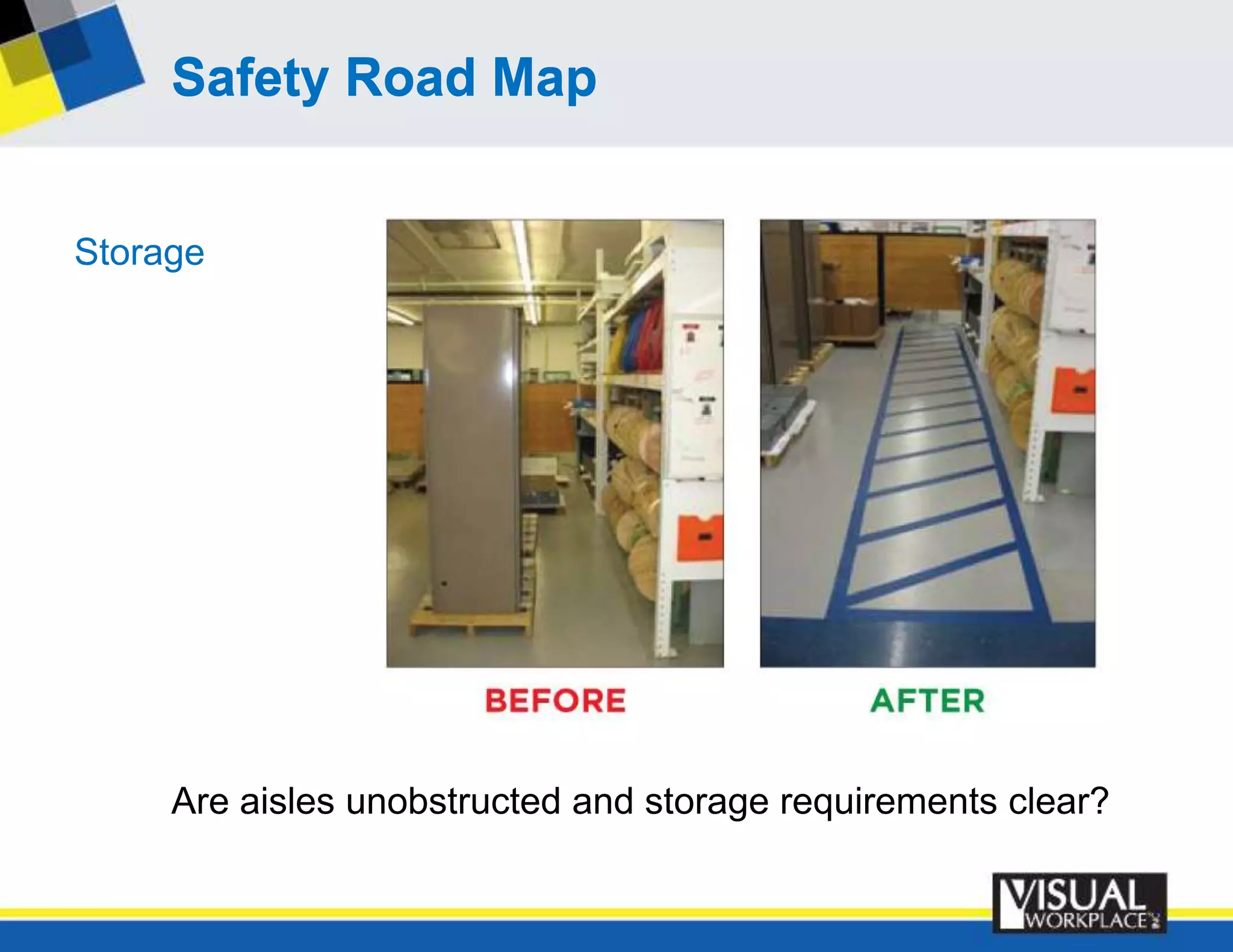
Storage


     Are aisles unobstructed and storage requirements clear?
Safety Road Map


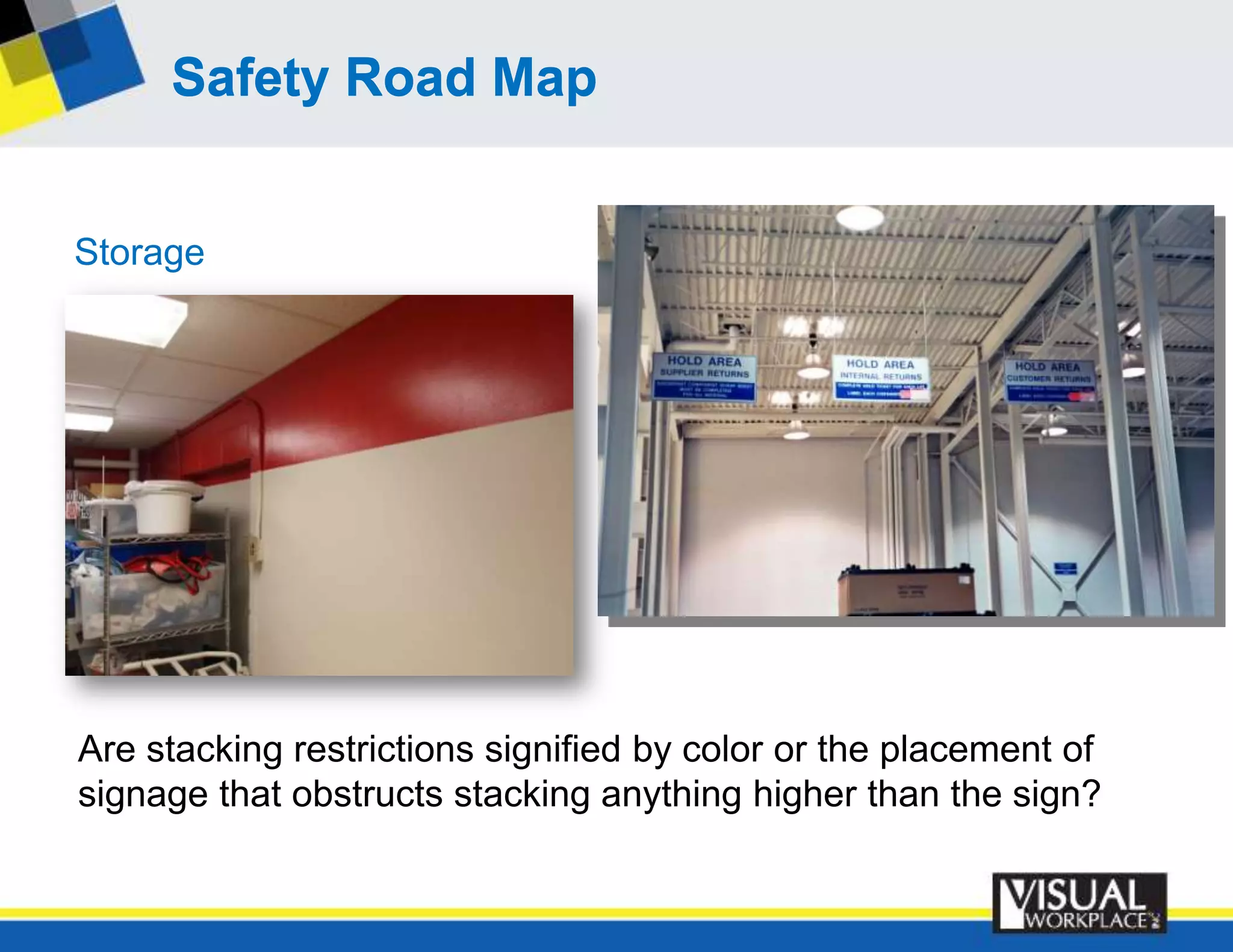
Storage


Are stacking restrictions signified by color or the placement of
signage that obstructs stacking anything higher than the sign?
A Visual & Safe Workplace


Visual information is essential for making safe decisions!
Safety Road Map


Safety


         Never underestimate the power of visuals!
Webinars


• Weekly Webinars
     • Product Demos
     • Continuous Improvement Best Practices
     • Sign Shop Training


          To see our upcoming schedule listed on our website
           www.mobileinhousesignshop.com/Events/
Learn from Others


We hope this information will motivate you to try something
new and inspire you to share your ideas with us.

                  Visualworkplacemangement.com

                  Photos & Events

                  Discussions & Best Practices

                  New Products & Tech Support
Share Your Best Practices


    www.mobileinhousesignshop.com/share/
www.visualworkplaceinc.com
             616-583-9400
      info@visualworkplaceinc.com

Learning Opportunities That Support a Culture
        for Continuous Improvement:

Visual Mangement & Safety in the Workplace

  • 1.
  • 2.
    Creating a SafeWork Environment 83% of what we learn is visual? Airports Shopping Centers Hospitals Workplace Roadways
  • 3.
    A safe workplaceis a visual workplace! A Visual workplace is • • …an environment that speaks for itself.  Identifies and eliminates abnormal situations  Directs behavior  Eliminates missing information  Reduces injury  Uses Key Performance Indicators (KPI) to reveal opportunities for improvement
  • 4.
    Benefits a VisualWorkplace A visual workplace creates employee engagement paving a path for continuous improvement.  Increased quality  Increased machine efficiency  Increased throughput  Reduced scrap  Reduced setup time  Reduced inventory  Reduced injuries  Standardized work  Sustainable workplace organization
  • 5.
    A Road Mapfor a Visual Workplace Visual Workplace  Learn to see waste and opportunities for improvement  Organize your workplace  Set standards for each element of a visual workplace • Leadership • Territories • Process • Work instructions • Scoreboards • Safety  Measure your performance and improve
  • 6.
    Safety Road Map Asafe workplace requires more than just a few signs here and there!
  • 7.
    Safety Road Map Whatinformation is missing in your facility?
  • 8.
    Creating a SafetyRoad Map • Step 1  Start by making sure that safety items have procedures are visually identified, unobstructed and inspected regularly.
  • 9.
    Creating a SafetyRoad Map • Step 2  Identify missing information by asking questions. A repeated question in the workplace usually indicates a need for a visual system.
  • 10.
    Creating a SafetyRoad Map • Step 3  Translate the missing information into you’re road map. Trends Material Handling Daily Huddles Scoreboards Storage Cleanliness Metrics Workplace Audits Lifting Organization Goals Training Standard Work Maintenance PPE Work Instructions Quality Lock Out/Tag Out Inspection Pinch Points Evacuation Circuit Breakers Fire Safety First Aid Navigation Injuries Hazardous Materials First Responders MSDS
  • 11.
    Safety Road Map FirstAid Are first aid supplies controlled using kanban cards and indicate instruction for use?
  • 12.
    Safety Road Map FirstResponders Are first responders for the facility visually identified by department or shift?
  • 13.
    Safety Road Map Safety Sam Use your creativity when developing visual systems! When this facility has a recordable injury, Safety Sam’s hat is changed from Green to Red for that day.
  • 14.
    Safety Road Map Metrics Year to date performance is displayed at a glance!
  • 15.
    Safety Road Map Trends Department performance is tracked and used by the management team to further analyze root cause.
  • 16.
    Safety Road Map Are safety stations stocked regularly and Accessibility easily accessible?
  • 17.
    Safety Road Map Lock Out/Tag Out Are procedures clearly identified and include the proper items for Lock Out / Tag Out processes?
  • 18.
    Safety Road Map PPE Do you have the necessary equipment available at the point of use?
  • 19.
    Safety Road Map PPE Are your PPE instructions clearly displayed and at the point of use?
  • 20.
    Safety Road Map Maintenance Is your maintenance area organized to support operational safety?
  • 21.
    Safety Road Map Distinction Do you use color to communicate differentiation?
  • 22.
    Safety Road Map VisualDisplay Do you control behavior and communicate simultaneously?
  • 23.
    Safety Road Map Metrics Is there an opportunity to incorporate safety and workplace organization metrics together?
  • 24.
    Safety Road Map DailyHuddles Are safety audits visually posted and discussed with the team?
  • 25.
    Safety Road Map ScoreboardIdea  Color-coded tasks are displayed to communicate daily, weekly, and monthly cleaning requirements.  Departmental information includes: • Suggestions • Action Items • Monthly Audit • Work Instructions • Board Owner • Cleaning Tasks
  • 26.
    Safety Road Map Performance Is your safety team clearly identified and is the organization’s performance displayed?
  • 27.
    Safety Road Map Deliveries Are the safety requirements for truck drivers and material handlers displayed at the point of use?
  • 28.
    Safety Road Map MSDS Are your MSDS stations organized and do they communicate the requirements for use?
  • 29.
    Road Map ReduceTime Searching Before After
  • 30.
    Safety Road Map Are emergency evacuation procedures Evacuation rehearsed and routes visibly displayed for all team members?
  • 31.
    Safety Road Map PinchPoints How do you communicate where it is safe to be?
  • 32.
    Safety Road Map Doorways Canyou see through passage ways and if not, are cautions displayed?
  • 33.
    Safety Road Map HazardousMaterials Are materials clearly identified and disposition instructions visual?
  • 34.
    Safety Road Map PipeMarkings Are pipe markings visual to reduce error and eliminate time spent searching?
  • 35.
    Safety Road Map FireSafety Is it clearly obvious what is supposed to happen?
  • 36.
    Safety Road Map StandardWork Do you communicate standard work instructions with visual aids.
  • 37.
    Safety Road Map MaterialHandling Are the material handling requirements posted at critical paths?
  • 38.
    Safety Road Map Exits Are all exits clearly marked and unobstructed?
  • 39.
    Safety Road Map Caution Do you add reminders to prevent injuries?
  • 40.
    Safety Road Map DoNot Block Are circuit breakers and charging stations clearly marked and unobstructed?
  • 41.
    Safety Road Map Noise Are high noise areas identified and hearing protection available at the point of use?
  • 42.
    Safety Road Map Storage Are aisles unobstructed and storage requirements clear?
  • 43.
    Safety Road Map Storage Arestacking restrictions signified by color or the placement of signage that obstructs stacking anything higher than the sign?
  • 44.
    A Visual &Safe Workplace Visual information is essential for making safe decisions!
  • 45.
    Safety Road Map Safety Never underestimate the power of visuals!
  • 46.
    Webinars • Weekly Webinars • Product Demos • Continuous Improvement Best Practices • Sign Shop Training To see our upcoming schedule listed on our website www.mobileinhousesignshop.com/Events/
  • 47.
    Learn from Others Wehope this information will motivate you to try something new and inspire you to share your ideas with us. Visualworkplacemangement.com Photos & Events Discussions & Best Practices New Products & Tech Support
  • 48.
    Share Your BestPractices www.mobileinhousesignshop.com/share/
  • 49.
    www.visualworkplaceinc.com 616-583-9400 info@visualworkplaceinc.com Learning Opportunities That Support a Culture for Continuous Improvement:

Editor's Notes

  • #4 So what is a visual workplace? It is an environment that speaks for itself. That means all of the repeated questions that are asked every hour, day or week disappear. Instead of people answering the questions, the workplace answers them. Think about how much time we spend answering questions every day. Ultimately, your workplace should answer the WHO, WHAT, WHERE, WHEN, WHY, and HOW without talking.A visual workplace will identify and eliminate abnormal situations.If you walk by a machine that is not running, you should ask yourself, “Why?” Is it scheduled for maintenance? That is a normal situation. But if is not running because you are out of packaging, that is not normal. The problem for most companies is that these abnormal situations are not easily recognizable.
  • #5 A commitment to implementing a visual workplace starts with your leadership. When an organization becomes fully engaged with the principles of visual management, the benefits are seen throughout the entire value stream. Safety is one are that can be greatly influenced through visual management. Creating a safe workplace is the ultimate goal. Without defining standard work expectations this is very difficult.
  • #6 Engage your employees by educating them on the principles of Visual Management and teaching them to see opportunities for improvement. The next step is to create a road map for implementing a visual workplace. It begins with developing a series of questions within these 6 categories and identifying missing information in your workplace. Once the missing information is identified, creating a system for the information must be developed and implemented. These categories give you a road map for looking for missing information.
  • #8 What information is missing in your facility? This missing information becomes the basis for creating a road map for improvement.These are just a few areas that should be evaluated for missing information. Considerations: First Aid Workplace Organization Evacuation MSDS Metrics
  • #11 We will now take you through a series of questions that you can ask in your facility and provide you with examples showing how others have addressed these issues.
  • #13 This is glimpse of a the visual systems at water bottling plant in Canada. Canada’s safety regulations are very stringent. The penalties for recordable injuries are costly so they go to great lengths to prevent accidents. Their display of first responders was very impressive.
  • #14 Not every visual system requires a sign. While on a plant tour and I noticed a manikin near the companies KPI center. His name was Safety Sam. As we were standing there a gentleman came up to Safety Sam and switch his hat. The hat he had on before was green. I asked, “Why the change?”, our guide responded, “there must have been a recordable accident”. Their creativity and their communication was impressive. Safety Sam stood in the plant where nearly every employee walked by each day. They all new what was going on.
  • #15 To take it even further, Sam wore a display the showed at a glance how many injuries to date had been recorded using the safety cross. Safety was very important to this company and they went to great lengths to let everyone know what their past performance was.
  • #16 They weren’t done yet. The created a map of the facility that tracked where the injuries occurred. Are there trends happening that we don’t even realize? Scoreboards help you identify…Who, What, When? Once this information has been identified we can determine Why.
  • #23 In this facility everyone was required to wear a hard outside the office area. When deliveries were made the truck drivers were always walking off the hard hats. They were costly and were always have to be replaced. To deter this from happening they created a color code system for the hats. Pink hats were designated specifically for truck drivers, sudddenly the hats stopped disappearing. In addition to making sure that hard hats did not vanish, they company added the forklift certification to the had of each employee as necessary. Information became visible at a glance.
  • #26 Here is an example of a visual system used to sustain cleanliness that incorporates the entire team. Tasks are first divided into daily, weekly, and monthly frequency. A card is created for each task and then filed in a card holder. The color of the card identifies the frequency of the task and what action is required. When the task is complete, the card is turned over. It is easy to see when tasks have not been completed or if the team is behind schedule. At the beginning of each cycle, the cards are turned back over to be completed again.The owners of the scoreboard are clearly displayed. If questions come up, you know who to ask.Additional data points for Suggestions, Open Action Items, and Audits are available at a glance.
  • #30 It is usually fairly easy to identify waste spent search for the tools needed to do our job. But what about the time spent searching for information? This visual system addressed that very issue. Before – Operators frequently had to stop and replace MSDS labels on containers for different oils because they fell off. Searching for the correct MSDS label was time consuming, as you can see just by the size of the book.After – The Safety Manager realized that there were only about 10 different materials used 80% of the time. They created a visual displaying these top 10 and now the time spent replacing MSDS labels was almost eliminated.
  • #47 This concludes our webinar. We will have questions in just a moment but want to leave you with a few ideas for continuous learning.
  • #48 We have been very fortunate that our customers share many of their ideas with us. So in return we have decided to share them you using the social sites. Please feel free to look around and if you have something you would like us to share please don’t hesitate to contact us.
  • #49 In an effort to help organizations share more information with each other internally we have developed a website dedicated specifically for this purpose. We create a custom website with a user name and password for the entire organization to use. You can uploads templates, pictures and files. If you are interested in a demo please contact us.
  • #50 Thank you for your time today. We hope we were able to share some information that will be useful in your workplace. The presentation will be emailed to you through WEBEX. If you don’t receive it please contact us. Are there any questions?