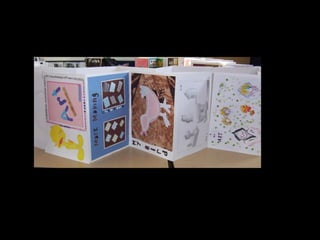
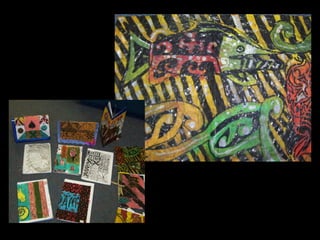
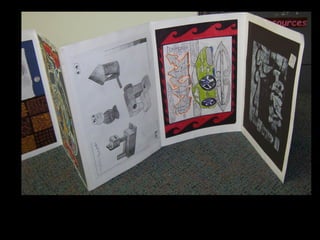
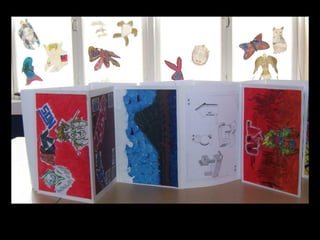
Book Unit
             Year 9
        5 month course
this unit provides introductory
    information to prepare
students for further studies in
              art.
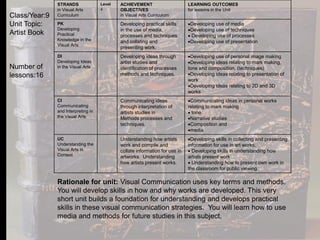
STRANDS               Level   ACHIEVEMENT                      LEARNING OUTCOMES
               in Visual Arts        4       OBJECTIVES                       for lessons in the Unit
Class/Year:9   Curriculum                    in Visual Arts Curriculum

Unit Topic:    PK                            Developing practical skills      Developing use of media
               Developing                    in the use of media,             Developing use of techniques
Artist Book    Practical                     processes and techniques          Developing use of processes
               Knowledge in the              and collating and                Developing use of presentation
               Visual Arts
                                             presenting work.
               DI                            Developing ideas through         Developing use of personal image making
               Developing Ideas              artist studies and               Developing ideas relating to mark making,
Number of      in the Visual Arts            identification of processes      tone and composition, (techniques)
lessons:16                                   methods and techniques.          Developing ideas relating to presentation of
                                                                              work
                                                                              Developing ideas relating to 2D and 3D
                                                                              works
               CI                            Communicating ideas              Communicating ideas in personal works
               Communicating                 through interpretation of        relating to mark making
               and Interpreting in           artists studies in                tone
               the Visual Arts               Methods processes and            Narrative studies
                                             techniques.                      Composition and
                                                                              media
               UC                            Understanding how artists        Developing skills in collecting and presenting
               Understanding the             work and compile and             information for use in art works.
               Visual Arts in                collate information for use in    Developing skills in understanding how
               Context                       artworks. Understanding          artists present work
                                             how artists present works.        Understanding how to present own work in
                                                                              the classroom for public viewing.

               Rationale for unit: Visual Communication uses key terms and methods.
               You will develop skills in how and why works are developed. This very
               short unit builds a foundation for understanding and develops practical
               skills in these visual communication strategies. You will learn how to use
               media and methods for future studies in this subject.
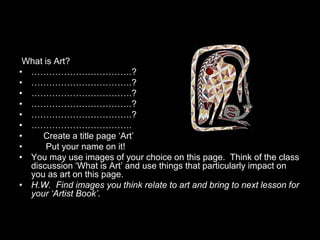
What is Art?
• …………………………….?
• …………………………….?
• …………………………….?
• …………………………….?
• …………………………….?
• …………………………….
•    Create a title page ‘Art’
•      Put your name on it!
• You may use images of your choice on this page. Think of the class
  discussion ‘What is Art’ and use things that particularly impact on
  you as art on this page.
• H.W. Find images you think relate to art and bring to next lesson for
  your ‘Artist Book’.
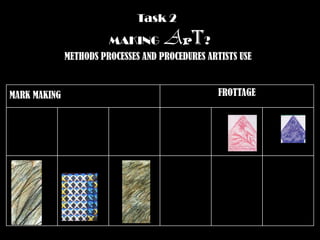
Task 2
                        MAKING       Art?
              METHODS PROCESSES AND PROCEDURES ARTISTS USE


MARK MAKING                                       FROTTAGE
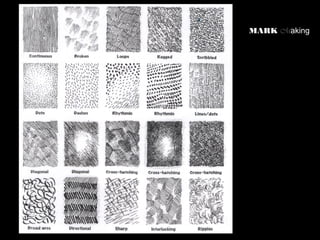
MARK Making
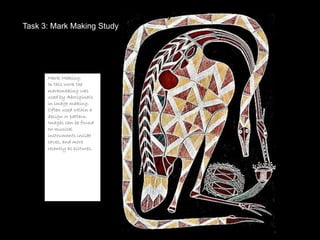
Task 3: Mark Making Study


      Mark Making:
      In this work the
      markmaking was
      used by Aboriginals
      in image making.
      Often used within a
      design or pattern.
      Images can be found
      on musical
      instruments inside
      caves, and more
      recently as pictures.
Art
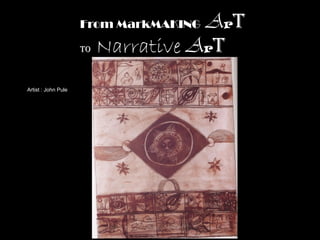
                     From MarkMAKING

                     To Narrative Art


Artist : John Pule
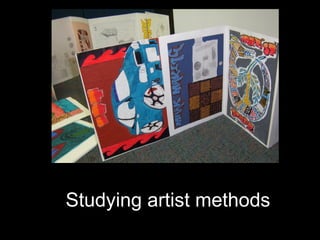
Studying artist methods
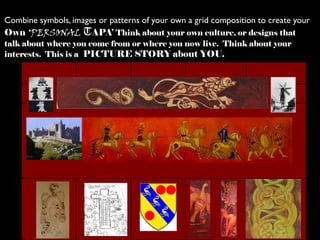
Combine symbols, images or patterns of your own a grid composition to create your
Own ‘PERSONAL TAPA’ Think about your own culture, or designs that
talk about where you come from or where you now live. Think about your
interests. This is a PICTURE STORY about YOU.
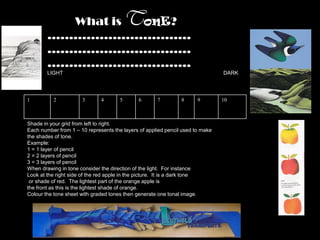
What is onE?                    T
        ……………………………
        ……………………………
        ……………………………
        LIGHT                                                                  DARK


1         2           3       4       5      6       7         8      9        10


Shade in your grid from left to right.
Each number from 1 – 10 represents the layers of applied pencil used to make
the shades of tone.
Example:
1 = 1 layer of pencil
2 = 2 layers of pencil
3 = 3 layers of pencil
When drawing in tone consider the direction of the light. For instance
Look at the right side of the red apple in the picture. It is a dark tone
 or shade of red. The lightest part of the orange apple is
the front as this is the lightest shade of orange.
Colour the tone sheet with graded tones then generate one tonal image.
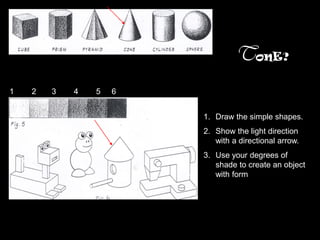
TonE?
1   2   3   4   5   6


                        1. Draw the simple shapes.
                        2. Show the light direction
                           with a directional arrow.
                        3. Use your degrees of
                           shade to create an object
                           with form
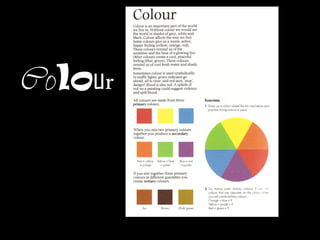
Colou
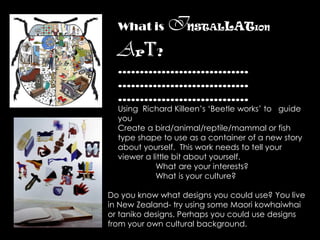
What is     INSTALLAT             ION


  Art?
  …………………………
  …………………………
  …………………………
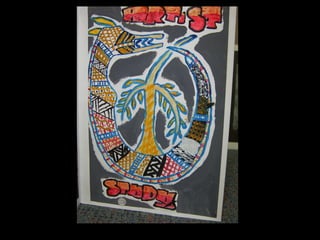
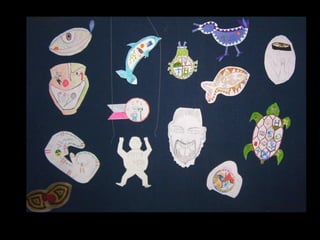
  Using Richard Killeen’s ‘Beetle works’ to guide
  you
  Create a bird/animal/reptile/mammal or fish
  type shape to use as a container of a new story
  about yourself. This work needs to tell your
  viewer a little bit about yourself.
            What are your interests?
            What is your culture?

Do you know what designs you could use? You live
in New Zealand- try using some Maori kowhaiwhai
or taniko designs. Perhaps you could use designs
from your own cultural background.
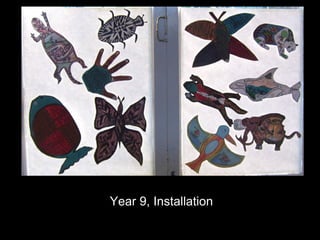
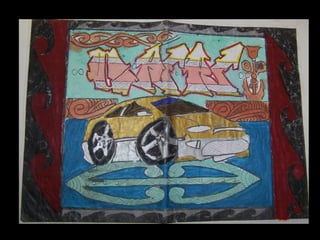
Year 9, Installation
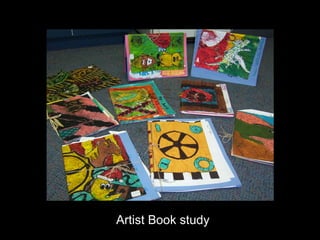
Artist Book study

Book unityear9

  • 1.
    Book Unit Year 9 5 month course this unit provides introductory information to prepare students for further studies in art.
  • 2.
    STRANDS Level ACHIEVEMENT LEARNING OUTCOMES in Visual Arts 4 OBJECTIVES for lessons in the Unit Class/Year:9 Curriculum in Visual Arts Curriculum Unit Topic: PK Developing practical skills Developing use of media Developing in the use of media, Developing use of techniques Artist Book Practical processes and techniques  Developing use of processes Knowledge in the and collating and Developing use of presentation Visual Arts presenting work. DI Developing ideas through Developing use of personal image making Developing Ideas artist studies and Developing ideas relating to mark making, Number of in the Visual Arts identification of processes tone and composition, (techniques) lessons:16 methods and techniques. Developing ideas relating to presentation of work Developing ideas relating to 2D and 3D works CI Communicating ideas Communicating ideas in personal works Communicating through interpretation of relating to mark making and Interpreting in artists studies in  tone the Visual Arts Methods processes and Narrative studies techniques. Composition and media UC Understanding how artists Developing skills in collecting and presenting Understanding the work and compile and information for use in art works. Visual Arts in collate information for use in  Developing skills in understanding how Context artworks. Understanding artists present work how artists present works.  Understanding how to present own work in the classroom for public viewing. Rationale for unit: Visual Communication uses key terms and methods. You will develop skills in how and why works are developed. This very short unit builds a foundation for understanding and develops practical skills in these visual communication strategies. You will learn how to use media and methods for future studies in this subject.
  • 3.
    What is Art? •…………………………….? • …………………………….? • …………………………….? • …………………………….? • …………………………….? • ……………………………. • Create a title page ‘Art’ • Put your name on it! • You may use images of your choice on this page. Think of the class discussion ‘What is Art’ and use things that particularly impact on you as art on this page. • H.W. Find images you think relate to art and bring to next lesson for your ‘Artist Book’.
  • 5.
    Task 2 MAKING Art? METHODS PROCESSES AND PROCEDURES ARTISTS USE MARK MAKING FROTTAGE
  • 6.
  • 7.
    Task 3: MarkMaking Study Task 3: Mark Making Study Mark Making: In this work the markmaking was used by Aboriginals in image making. Often used within a design or pattern. Images can be found on musical instruments inside caves, and more recently as pictures.
  • 8.
    Art From MarkMAKING To Narrative Art Artist : John Pule
  • 9.
  • 10.
    Combine symbols, imagesor patterns of your own a grid composition to create your Own ‘PERSONAL TAPA’ Think about your own culture, or designs that talk about where you come from or where you now live. Think about your interests. This is a PICTURE STORY about YOU.
  • 11.
    What is onE? T …………………………… …………………………… …………………………… LIGHT DARK 1 2 3 4 5 6 7 8 9 10 Shade in your grid from left to right. Each number from 1 – 10 represents the layers of applied pencil used to make the shades of tone. Example: 1 = 1 layer of pencil 2 = 2 layers of pencil 3 = 3 layers of pencil When drawing in tone consider the direction of the light. For instance Look at the right side of the red apple in the picture. It is a dark tone or shade of red. The lightest part of the orange apple is the front as this is the lightest shade of orange. Colour the tone sheet with graded tones then generate one tonal image.
  • 12.
    TonE? 1 2 3 4 5 6 1. Draw the simple shapes. 2. Show the light direction with a directional arrow. 3. Use your degrees of shade to create an object with form
  • 13.
  • 14.
    What is INSTALLAT ION Art? ………………………… ………………………… ………………………… Using Richard Killeen’s ‘Beetle works’ to guide you Create a bird/animal/reptile/mammal or fish type shape to use as a container of a new story about yourself. This work needs to tell your viewer a little bit about yourself. What are your interests? What is your culture? Do you know what designs you could use? You live in New Zealand- try using some Maori kowhaiwhai or taniko designs. Perhaps you could use designs from your own cultural background.
  • 15.
  • 22.