Portraiture
Drawing the Human Face, Step-by-Step!
Beginner’s Tutorial
by Emily Valenza
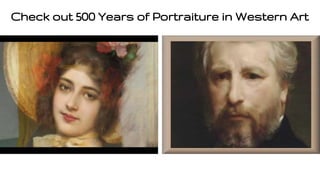
Check out 500 Years of Portraiture in Western Art
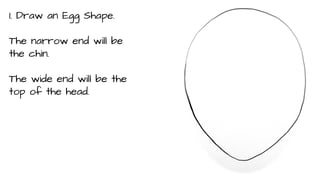
1. Draw an Egg Shape.
The narrow end will be
the chin.
The wide end will be the
top of the head.
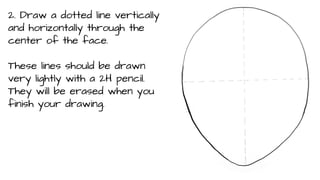
2. Draw a dotted line vertically
and horizontally through the
center of the face.
These lines should be drawn
very lightly with a 2H pencil.
They will be erased when you
finish your drawing.
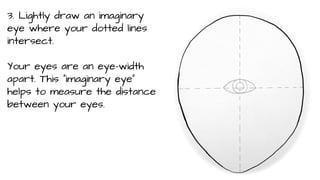
3. Lightly draw an imaginary
eye where your dotted lines
intersect.
Your eyes are an eye-width
apart. This “imaginary eye”
helps to measure the distance
between your eyes.
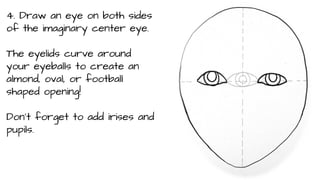
4. Draw an eye on both sides
of the imaginary center eye.
The eyelids curve around
your eyeballs to create an
almond, oval, or football
shaped opening!
Don’t forget to add irises and
pupils.
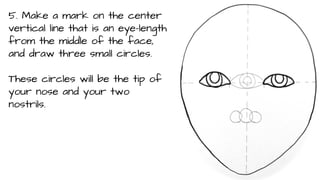
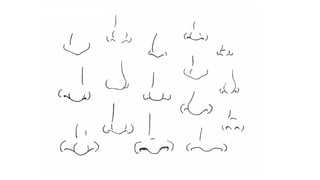
5. Make a mark on the center
vertical line that is an eye-length
from the middle of the face,
and draw three small circles.
These circles will be the tip of
your nose and your two
nostrils.
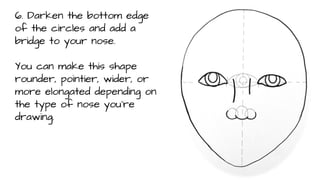
6. Darken the bottom edge
of the circles and add a
bridge to your nose.
You can make this shape
rounder, pointier, wider, or
more elongated depending on
the type of nose you’re
drawing.
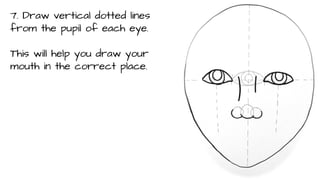
7. Draw vertical dotted lines
from the pupil of each eye.
This will help you draw your
mouth in the correct place.
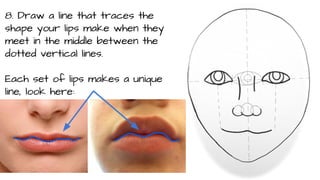
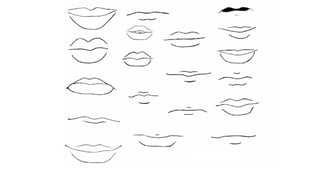
8. Draw a line that traces the
shape your lips make when they
meet in the middle between the
dotted vertical lines.
Each set of lips makes a unique
line, look here:
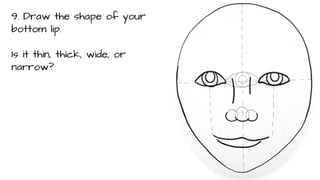
9. Draw the shape of your
bottom lip.
Is it thin, thick, wide, or
narrow?
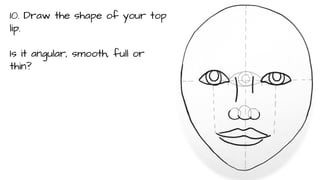
10. Draw the shape of your top
lip.
Is it angular, smooth, full or
thin?
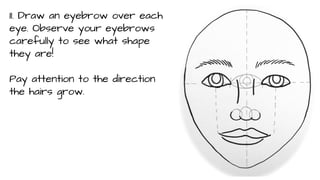
11. Draw an eyebrow over each
eye. Observe your eyebrows
carefully to see what shape
they are!
Pay attention to the direction
the hairs grow.
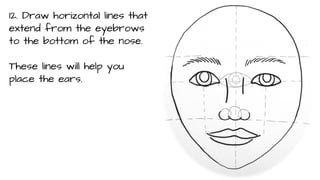
12. Draw horizontal lines that
extend from the eyebrows
to the bottom of the nose.
These lines will help you
place the ears.
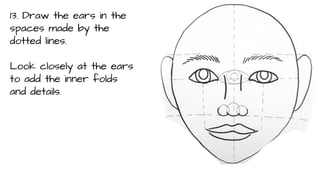
13. Draw the ears in the
spaces made by the
dotted lines.
Look closely at the ears
to add the inner folds
and details.
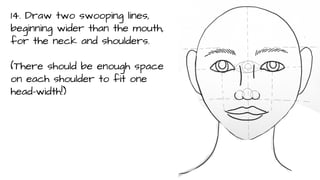
14. Draw two swooping lines,
beginning wider than the mouth,
for the neck and shoulders.
(There should be enough space
on each shoulder to fit one
head-width!)
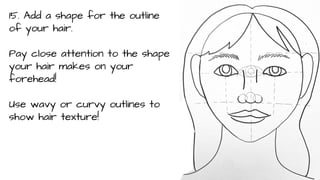
15. Add a shape for the outline
of your hair.
Pay close attention to the shape
your hair makes on your
forehead!
Use wavy or curvy outlines to
show hair texture!
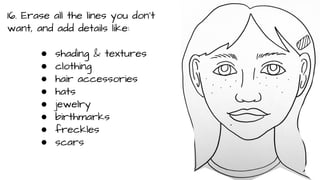
16. Erase all the lines you don’t
want, and add details like:
●
●
●
●
●
●
●
●

shading & textures
clothing
hair accessories
hats
jewelry
birthmarks
freckles
scars
These rules are helpful, but the most
important skill you can practice is
observation:
● Look carefully in the mirror or at your model. Note the
exact shape of the face, eyes, nose, lips and ears.
● What is unique about the person that you see? Glasses?
Braces? An awesome hairstyle?
● Make sure to add these details to achieve a likeness.
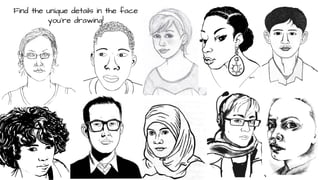
Find the unique details in the face
you’re drawing!
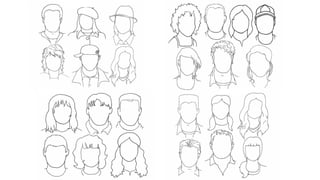
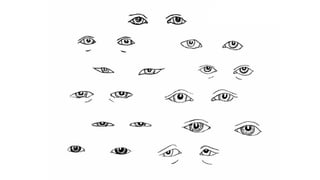
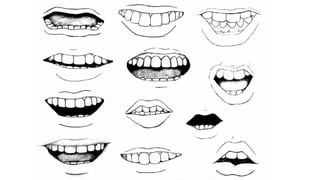
There are infinite ways to draw each
part of the face!
Examine the next few slides to see a
few ways to draw each facial
feature.
Beginning Portraiture

Beginning Portraiture

  • 1.
    Portraiture Drawing the HumanFace, Step-by-Step! Beginner’s Tutorial by Emily Valenza
  • 2.
    Check out 500Years of Portraiture in Western Art
  • 3.
    1. Draw anEgg Shape. The narrow end will be the chin. The wide end will be the top of the head.
  • 4.
    2. Draw adotted line vertically and horizontally through the center of the face. These lines should be drawn very lightly with a 2H pencil. They will be erased when you finish your drawing.
  • 5.
    3. Lightly drawan imaginary eye where your dotted lines intersect. Your eyes are an eye-width apart. This “imaginary eye” helps to measure the distance between your eyes.
  • 6.
    4. Draw aneye on both sides of the imaginary center eye. The eyelids curve around your eyeballs to create an almond, oval, or football shaped opening! Don’t forget to add irises and pupils.
  • 7.
    5. Make amark on the center vertical line that is an eye-length from the middle of the face, and draw three small circles. These circles will be the tip of your nose and your two nostrils.
  • 8.
    6. Darken thebottom edge of the circles and add a bridge to your nose. You can make this shape rounder, pointier, wider, or more elongated depending on the type of nose you’re drawing.
  • 9.
    7. Draw verticaldotted lines from the pupil of each eye. This will help you draw your mouth in the correct place.
  • 10.
    8. Draw aline that traces the shape your lips make when they meet in the middle between the dotted vertical lines. Each set of lips makes a unique line, look here:
  • 11.
    9. Draw theshape of your bottom lip. Is it thin, thick, wide, or narrow?
  • 12.
    10. Draw theshape of your top lip. Is it angular, smooth, full or thin?
  • 13.
    11. Draw aneyebrow over each eye. Observe your eyebrows carefully to see what shape they are! Pay attention to the direction the hairs grow.
  • 14.
    12. Draw horizontallines that extend from the eyebrows to the bottom of the nose. These lines will help you place the ears.
  • 15.
    13. Draw theears in the spaces made by the dotted lines. Look closely at the ears to add the inner folds and details.
  • 16.
    14. Draw twoswooping lines, beginning wider than the mouth, for the neck and shoulders. (There should be enough space on each shoulder to fit one head-width!)
  • 17.
    15. Add ashape for the outline of your hair. Pay close attention to the shape your hair makes on your forehead! Use wavy or curvy outlines to show hair texture!
  • 18.
    16. Erase allthe lines you don’t want, and add details like: ● ● ● ● ● ● ● ● shading & textures clothing hair accessories hats jewelry birthmarks freckles scars
  • 19.
    These rules arehelpful, but the most important skill you can practice is observation: ● Look carefully in the mirror or at your model. Note the exact shape of the face, eyes, nose, lips and ears. ● What is unique about the person that you see? Glasses? Braces? An awesome hairstyle? ● Make sure to add these details to achieve a likeness.
  • 20.
    Find the uniquedetails in the face you’re drawing!
  • 21.
    There are infiniteways to draw each part of the face! Examine the next few slides to see a few ways to draw each facial feature.