VISION 2020
THE RIGHT TO SIGHT
 A global initiative to reduce or eliminate avoidable
(preventable and curable) blindness by the year
2020.
 Launched by WHO on 18th Feb. 1999.
 India has also committed to this initiative.
 Plan of action for the country has been developed
with following main features:
 Target disease : Cataract, refractive errors,
childhood blindness, corneal blindness, glaucoma,
diabetes retinopathy.
 Preventive interventions : Strengthening of vitamin
A supplementation, prevention of trauma to eyes in
industry, agriculture and household; school eye
screening program for detection and correction of
refractive errors, IEC for public awareness.
 Human resource development : Increasing the
capacity and skills of available human resources in
various area of ophthalmology.
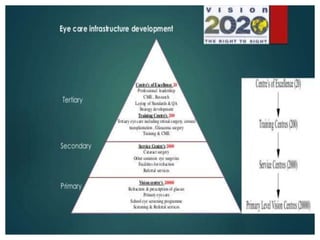
 Infrastructure development : Proposed structure
includes center of excellence (20), training center
(200), service center (2000), and vision centers
(20,000).
Vision center at the primary level
1. Refraction and prescription of glasses
2. Primary eye care
3. School eye screening program
4. Screening referral services
 Service centers at the secondary level
1. Cataract surgeries
2. Other common eye surgeries
3. Facilities for refraction
4. Referral services
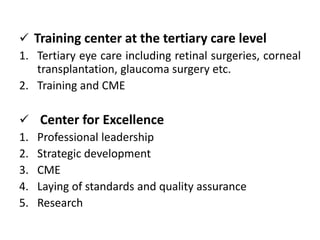
 Training center at the tertiary care level
1. Tertiary eye care including retinal surgeries, corneal
transplantation, glaucoma surgery etc.
2. Training and CME
 Center for Excellence
1. Professional leadership
2. Strategic development
3. CME
4. Laying of standards and quality assurance
5. Research
Vision 2020

Vision 2020

  • 1.
  • 2.
     A globalinitiative to reduce or eliminate avoidable (preventable and curable) blindness by the year 2020.  Launched by WHO on 18th Feb. 1999.  India has also committed to this initiative.
  • 3.
     Plan ofaction for the country has been developed with following main features:  Target disease : Cataract, refractive errors, childhood blindness, corneal blindness, glaucoma, diabetes retinopathy.  Preventive interventions : Strengthening of vitamin A supplementation, prevention of trauma to eyes in industry, agriculture and household; school eye screening program for detection and correction of refractive errors, IEC for public awareness.
  • 4.
     Human resourcedevelopment : Increasing the capacity and skills of available human resources in various area of ophthalmology.  Infrastructure development : Proposed structure includes center of excellence (20), training center (200), service center (2000), and vision centers (20,000).
  • 5.
    Vision center atthe primary level 1. Refraction and prescription of glasses 2. Primary eye care 3. School eye screening program 4. Screening referral services  Service centers at the secondary level 1. Cataract surgeries 2. Other common eye surgeries 3. Facilities for refraction 4. Referral services
  • 6.
     Training centerat the tertiary care level 1. Tertiary eye care including retinal surgeries, corneal transplantation, glaucoma surgery etc. 2. Training and CME  Center for Excellence 1. Professional leadership 2. Strategic development 3. CME 4. Laying of standards and quality assurance 5. Research