By Mr UV


Computer Viruses and Worms
Definition of Virus
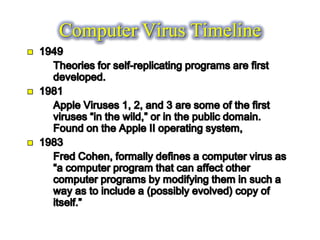
Computer Virus Timeline
Worms
History of Worms
   The first worm to attract wide attention, the
    Morris worm, was written by Robert Tappan
    Morris, who at the time was a graduate
    student at Cornell University.
   It was released on November 2, 1988
   Morris himself was convicted under the US
    Computer Crime and Abuse Act and received
    three years probation, community service and
    a fine in excess of $10,000.
Worms…
   Worms – is a small piece of software that
    uses computer networks and security holes to
    replicate itself. A copy of the worm scans the
    network for another machine that has a
    specific security hole. It copies itself to the
    new machine using the security hole, and
    then starts replicating from there, as well.
   They are often designed to exploit the file
    transmission capabilities found on many
    computers.
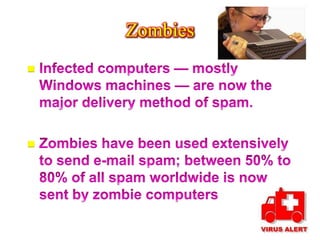
Zombies




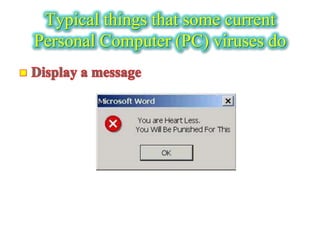
Typical things that some current
Personal Computer (PC) viruses do
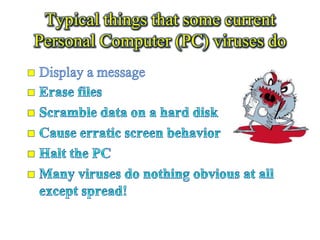
Typical things that some current
Personal Computer (PC) viruses do
Distributed Denial of
       Service
How it works?
MyDoom
   27 January: SCO Group offers a US $250,000
    reward for information leading to the arrest of the
    worm's creator.
   1 February: An estimated one million computers
    around the world infected with MyDoom begin
    the virus's massive distributed denial of service
    attack—the largest such attack to date.
   2 February: The SCO Group moves its site to
    www.thescogroup.com.
 Traditional Viruses
 pieces of code attached to a legitimate
  program
 run when the legitimate program gets
  executed
 loads itself into memory and looks around
  to see if it can find any other programs on
  the disk
 Traditional Virus
 infect the boot sector on floppy disks and
  hard disks
 By putting its code in the boot sector, a
  virus can guarantee it gets executed
 load itself into memory immediately, and it
  is able to run whenever the computer is on
Decline of traditional viruses
   Reasons:
    – Huge size of today’s programs storing on a
      compact disk
    – Operating systems now protect the boot
      sector
E-mail Viruses
 Moves around in e-mail messages
 Replicates itself by automatically mailing
  itself to dozens of people in the victim’s e-mail
  address book
 Example: Melissa virus, ILOVEYOU virus
   March 1999
   the Melissa virus was the fastest-spreading virus
    ever seen
   Someone created the virus as a Word document
    uploaded to an Internet newsgroup
   People who downloaded the document and opened
    it would trigger the virus
   The virus would then send the document in an e-
    mail message to the first 50 people in the person's
    address book
Melissa virus
   Took advantage of the programming
    language built into Microsoft Word called
    VBA (Visual Basic for Applications)
Prevention
 Updates
 Anti-Viruses
 More secure operating systems
  e.g. UNIX
Reference
   http://mirror.aarnet.edu.au/pub/code-red/newframes-small-log.gif
   http://www.factmonster.com/ipka/A0872842.html
    http://www.faqs.org/faqs/computer-virus/new-users/
   http://www.mines.edu/academic/computer/viri-sysadmin.htm

Viruses

  • 1.
    By Mr UV ComputerViruses and Worms
  • 2.
  • 3.
  • 5.
  • 6.
    History of Worms  The first worm to attract wide attention, the Morris worm, was written by Robert Tappan Morris, who at the time was a graduate student at Cornell University.  It was released on November 2, 1988  Morris himself was convicted under the US Computer Crime and Abuse Act and received three years probation, community service and a fine in excess of $10,000.
  • 7.
    Worms…  Worms – is a small piece of software that uses computer networks and security holes to replicate itself. A copy of the worm scans the network for another machine that has a specific security hole. It copies itself to the new machine using the security hole, and then starts replicating from there, as well.  They are often designed to exploit the file transmission capabilities found on many computers.
  • 8.
  • 9.
    Typical things thatsome current Personal Computer (PC) viruses do
  • 10.
    Typical things thatsome current Personal Computer (PC) viruses do
  • 11.
  • 12.
  • 13.
  • 14.
    27 January: SCO Group offers a US $250,000 reward for information leading to the arrest of the worm's creator.  1 February: An estimated one million computers around the world infected with MyDoom begin the virus's massive distributed denial of service attack—the largest such attack to date.  2 February: The SCO Group moves its site to www.thescogroup.com.
  • 15.
     Traditional Viruses pieces of code attached to a legitimate program  run when the legitimate program gets executed  loads itself into memory and looks around to see if it can find any other programs on the disk
  • 16.
     Traditional Virus infect the boot sector on floppy disks and hard disks  By putting its code in the boot sector, a virus can guarantee it gets executed  load itself into memory immediately, and it is able to run whenever the computer is on
  • 17.
    Decline of traditionalviruses  Reasons: – Huge size of today’s programs storing on a compact disk – Operating systems now protect the boot sector
  • 18.
    E-mail Viruses  Movesaround in e-mail messages  Replicates itself by automatically mailing itself to dozens of people in the victim’s e-mail address book  Example: Melissa virus, ILOVEYOU virus
  • 19.
    March 1999  the Melissa virus was the fastest-spreading virus ever seen  Someone created the virus as a Word document uploaded to an Internet newsgroup  People who downloaded the document and opened it would trigger the virus  The virus would then send the document in an e- mail message to the first 50 people in the person's address book
  • 20.
    Melissa virus  Took advantage of the programming language built into Microsoft Word called VBA (Visual Basic for Applications)
  • 21.
    Prevention  Updates  Anti-Viruses More secure operating systems e.g. UNIX
  • 22.
    Reference  http://mirror.aarnet.edu.au/pub/code-red/newframes-small-log.gif  http://www.factmonster.com/ipka/A0872842.html http://www.faqs.org/faqs/computer-virus/new-users/  http://www.mines.edu/academic/computer/viri-sysadmin.htm