By
     RAVITEJA
 the most high-profile threats to information
integrity is the computer virus.


The most sophisticated threats to computer
systems are presented by programs that exploit the
vulnerabilities in computing systems


Malware has a mechanism to replicate and
propagate itself. The different types of malware are:
Trap doors, logic bombs, trojan horses, viruses,
worms and zombies.
Worms
Spam
Virus Hoaxes
Trojan Horses
Adware
Spyware
Malware
 Boot viruses
 Program viruses
 Polymorphic viruses
 Stealth viruses
 Macro viruses
 Network viruses
 Multipartite Viruses
Boot viruses:
 These viruses infect floppy disk.
 These viruses load into memory if the
computer tries to read the disk while it is
booting.
Boot sector viruses can be created without
much difficulty and infect either the Master boot
record of the hard disk or the floppy drive.
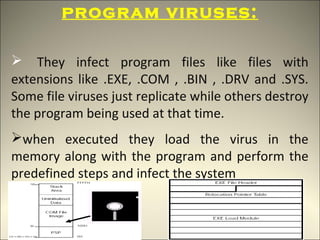
program viruses:

 They infect program files like files with
extensions like .EXE, .COM , .BIN , .DRV and .SYS.
Some file viruses just replicate while others destroy
the program being used at that time.
when executed they load the virus in the
memory along with the program and perform the
predefined steps and infect the system
STEALTH VIRUSES:

 These viruses steals computers memory.
 They viruses are use various methods to hide
themselves and to avoid detection.
POLYMORPHIC
            VIRUSES:
 These viruses are more difficult to detect
They have the ability to mutate this means that
they change the viral code known as the signature
each time it spreads or infects.
macro viruses:
 A macro virus is a new type of computer virus
that infects macros with in a document.
In essence, a macro is an executable program
embedded in a word processing document or other
type of file. Typically users employ macros to
automate repetitive tasks and there by save key
strokes.
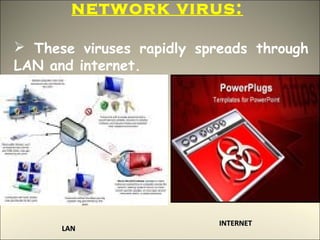
network virus:

 These viruses rapidly spreads through
LAN and internet.


                           INTERNET
      LAN
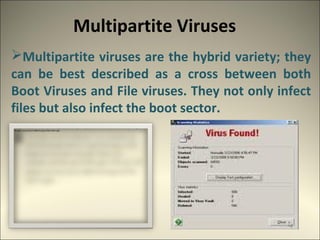
Multipartite Viruses
Multipartite viruses are the hybrid variety; they
can be best described as a cross between both
Boot Viruses and File viruses. They not only infect
files but also infect the boot sector.
The ideal solution to the threat of viruses is
prevention. Do not allow a virus is get into the system in first
place. This goal is in general difficult to achieve, although
prevention can reduce the no: of successful viral attacks..

Detection: Once the infection has occurred, determine that it
has occurred and locate the virus.
Identification: Once detection has been achieved, identify the
specific virus has infected a program.
Removal: Once the specific virus has been identified, remove all
traces of the virus from the infected program and restore it to its
original state.

        Advances in viruses and antivirus technology go hand in
hand. As the virus arms race has evolved, both viruses and
antivirus software have grown more complex and sophisticated
Usage of the “good-virus” in Centralized Anti-Virus Update:
The person responsible for maintaining the virus protection has to go personally to each
computer and download the new version of the package manually from the server, the situation
has not improved very much.

One segment of the worm will constantly monitor the logins. Each time a workstations
attempts to login, that segment automatically queries that workstation whether it is running the
anti-virus product and which version of it.

Affirmation to “good virus” Norms:

It conforms to the Control requirement as the virus attempts to spread only on the computers
attempting to access the network on which it is running.

In fact, the replication code will not be copied, if they are not needed. The fact that it is a worm
and spreads as a whole on the network makes it relatively easy to fulfill the requirement too.

Since the "virus" modifies only old copies of itself and does not touch other programs, no
compatibility problems due to its virus-like behavior will occur.
Computer viruses are not evil and that programmers have a
right to create them, posses them and experiment with them.
 But we should never support those people who writing
viruses with destructive nature
Thus it can be effectively proved that it is possible to use the
concept of a virus for beneficial purposes.
The future might use this technology for tedious and resource
consuming jobs like software updates, system maintenance
and intruder detection.
The “good viruses” are capable of annihilating their malicious
counterparts
1. The Little Black book of Computer Viruses (electronic
   edition) By Mark A. Ludwig
2. An Undetectable Computer Virus by David Chess and Steve
   White, presented at the Virus Bulletin Conference,
   September 2000 [PDF version]
3. Fred Cohen, Computer Viruses - Theory and Experiments,
   Computer Security: A Global Challenge, Elsevier Science
   Publishers B. V. (North-Holland), 1984, pp. 143-158.
4. Fred Cohen, Models of Practical Defenses against Computer
   Viruses, Computers Security, 8 (1989), 2, pp. 149-160.
5. Nachenberg, C. “Computer Virus-Antivirus Coevolution.”
   Communications of the ACM.
6. Computational Aspects of Computer Viruses by Fred Cohen
7. Trends in Computer Virus Research by Fred Cohen
8. Methodology of Computer Anti-Virus Research by Vesselin
   Bontchev
Computer viruses
Computer viruses

Computer viruses

  • 1.
    By RAVITEJA
  • 2.
     the mosthigh-profile threats to information integrity is the computer virus. The most sophisticated threats to computer systems are presented by programs that exploit the vulnerabilities in computing systems Malware has a mechanism to replicate and propagate itself. The different types of malware are: Trap doors, logic bombs, trojan horses, viruses, worms and zombies.
  • 3.
  • 5.
     Boot viruses Program viruses  Polymorphic viruses  Stealth viruses  Macro viruses  Network viruses  Multipartite Viruses
  • 6.
    Boot viruses:  Theseviruses infect floppy disk.  These viruses load into memory if the computer tries to read the disk while it is booting. Boot sector viruses can be created without much difficulty and infect either the Master boot record of the hard disk or the floppy drive.
  • 7.
    program viruses:  Theyinfect program files like files with extensions like .EXE, .COM , .BIN , .DRV and .SYS. Some file viruses just replicate while others destroy the program being used at that time. when executed they load the virus in the memory along with the program and perform the predefined steps and infect the system
  • 8.
    STEALTH VIRUSES:  Theseviruses steals computers memory.  They viruses are use various methods to hide themselves and to avoid detection.
  • 9.
    POLYMORPHIC VIRUSES:  These viruses are more difficult to detect They have the ability to mutate this means that they change the viral code known as the signature each time it spreads or infects.
  • 10.
    macro viruses:  Amacro virus is a new type of computer virus that infects macros with in a document. In essence, a macro is an executable program embedded in a word processing document or other type of file. Typically users employ macros to automate repetitive tasks and there by save key strokes.
  • 11.
    network virus:  Theseviruses rapidly spreads through LAN and internet. INTERNET LAN
  • 12.
    Multipartite Viruses Multipartite virusesare the hybrid variety; they can be best described as a cross between both Boot Viruses and File viruses. They not only infect files but also infect the boot sector.
  • 14.
    The ideal solutionto the threat of viruses is prevention. Do not allow a virus is get into the system in first place. This goal is in general difficult to achieve, although prevention can reduce the no: of successful viral attacks.. Detection: Once the infection has occurred, determine that it has occurred and locate the virus. Identification: Once detection has been achieved, identify the specific virus has infected a program. Removal: Once the specific virus has been identified, remove all traces of the virus from the infected program and restore it to its original state. Advances in viruses and antivirus technology go hand in hand. As the virus arms race has evolved, both viruses and antivirus software have grown more complex and sophisticated
  • 16.
    Usage of the“good-virus” in Centralized Anti-Virus Update: The person responsible for maintaining the virus protection has to go personally to each computer and download the new version of the package manually from the server, the situation has not improved very much. One segment of the worm will constantly monitor the logins. Each time a workstations attempts to login, that segment automatically queries that workstation whether it is running the anti-virus product and which version of it. Affirmation to “good virus” Norms: It conforms to the Control requirement as the virus attempts to spread only on the computers attempting to access the network on which it is running. In fact, the replication code will not be copied, if they are not needed. The fact that it is a worm and spreads as a whole on the network makes it relatively easy to fulfill the requirement too. Since the "virus" modifies only old copies of itself and does not touch other programs, no compatibility problems due to its virus-like behavior will occur.
  • 17.
    Computer viruses arenot evil and that programmers have a right to create them, posses them and experiment with them.  But we should never support those people who writing viruses with destructive nature Thus it can be effectively proved that it is possible to use the concept of a virus for beneficial purposes. The future might use this technology for tedious and resource consuming jobs like software updates, system maintenance and intruder detection. The “good viruses” are capable of annihilating their malicious counterparts
  • 18.
    1. The LittleBlack book of Computer Viruses (electronic edition) By Mark A. Ludwig 2. An Undetectable Computer Virus by David Chess and Steve White, presented at the Virus Bulletin Conference, September 2000 [PDF version] 3. Fred Cohen, Computer Viruses - Theory and Experiments, Computer Security: A Global Challenge, Elsevier Science Publishers B. V. (North-Holland), 1984, pp. 143-158. 4. Fred Cohen, Models of Practical Defenses against Computer Viruses, Computers Security, 8 (1989), 2, pp. 149-160. 5. Nachenberg, C. “Computer Virus-Antivirus Coevolution.” Communications of the ACM. 6. Computational Aspects of Computer Viruses by Fred Cohen 7. Trends in Computer Virus Research by Fred Cohen 8. Methodology of Computer Anti-Virus Research by Vesselin Bontchev