Virtual teams - learnings
from Crisis Management
w w w . l e a n b e e . s e
R O L F @ L E A N B E E . S E | @ R O L F H A S A N E N
Goals
1. Share my experience applying research from Crisis
Management area to distributed development
teams with people in Nordics and India.
2. Describe why we need to pay attention to Team
Situational Awareness especially for distributed /
virtual teams.
3. Describe the Team Situational Awareness Model and
how it can be used
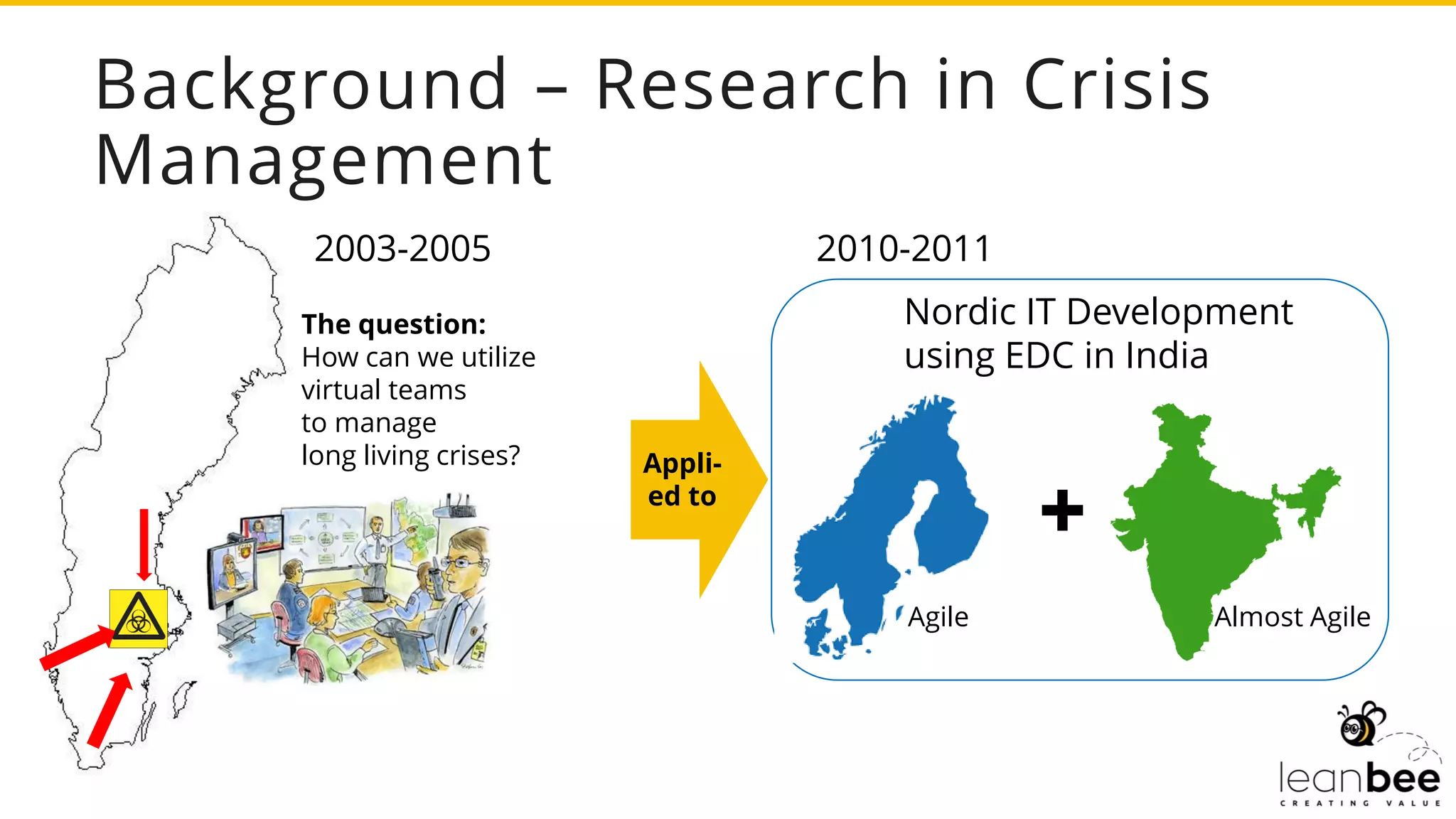
Background – Research in Crisis
Management
Nordic IT Development
using EDC in India
Appli-
ed to
The question:
How can we utilize
virtual teams
to manage
long living crises?
+
Agile
2003-2005 2010-2011
Almost Agile
LAW
Mental vacuum does not
exist!
Every person comes with existing values, assumptions and mental models that
they apply to all situations believing that their interpretation works well.
It takes time and effort for people to gel into a high performing team
during that time people actually sync and update their mental models
this process can be speeded up, the rest of the talk is about how to do that
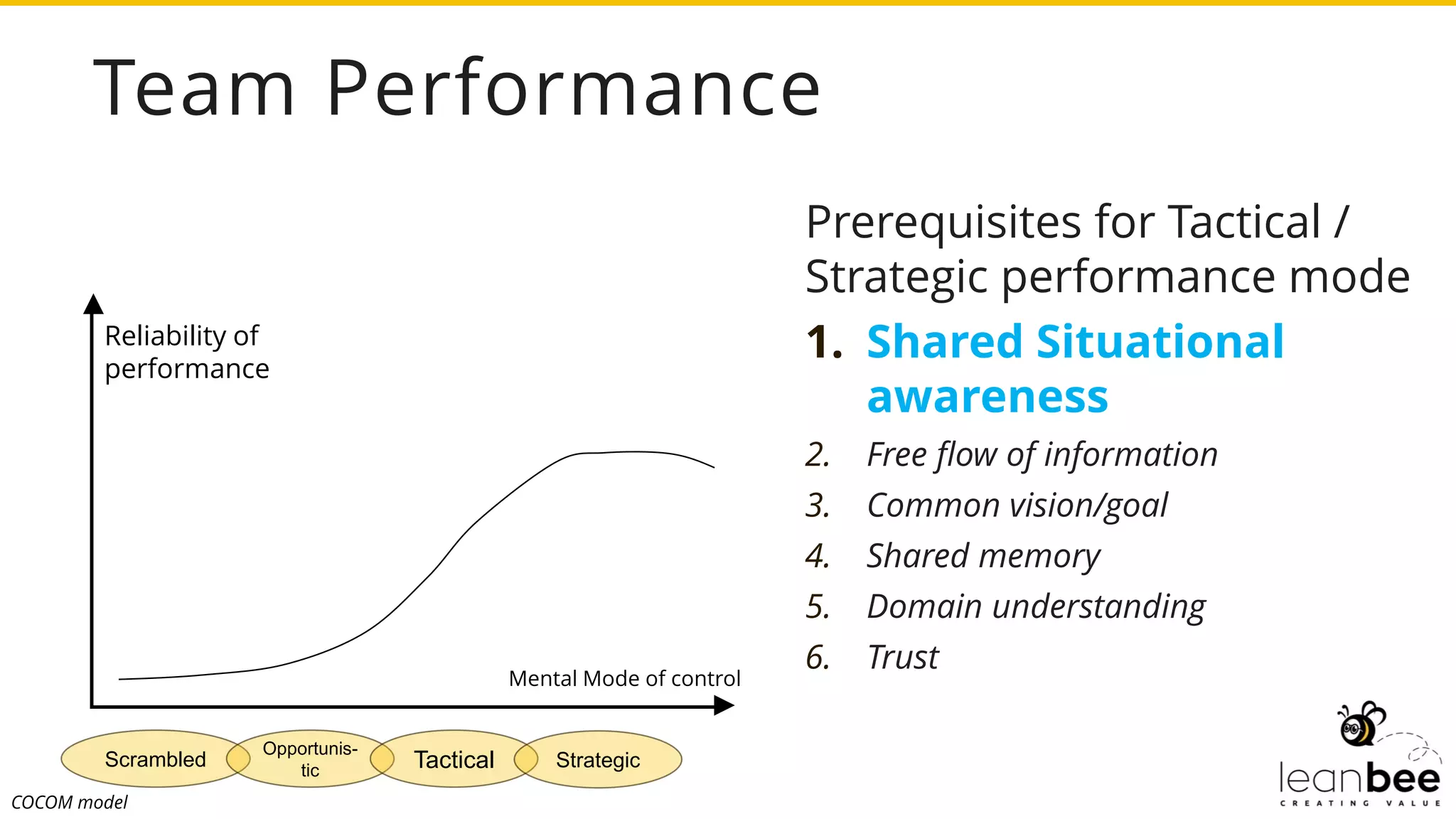
Team Performance
Prerequisites for Tactical /
Strategic performance mode
1. Shared Situational
awareness
2. Free flow of information
3. Common vision/goal
4. Shared memory
5. Domain understanding
6. Trust
Scrambled
Opportunis-
tic Tactical Strategic
Reliability of
performance
Mental Mode of control
COCOM model
Shared Situational Awareness::Definition
is the ability to identify, process, and comprehend the
critical elements of information about what is
happening to the team with regards to the mission.
More simply, it's knowing what is going on around you
and what to do about it.
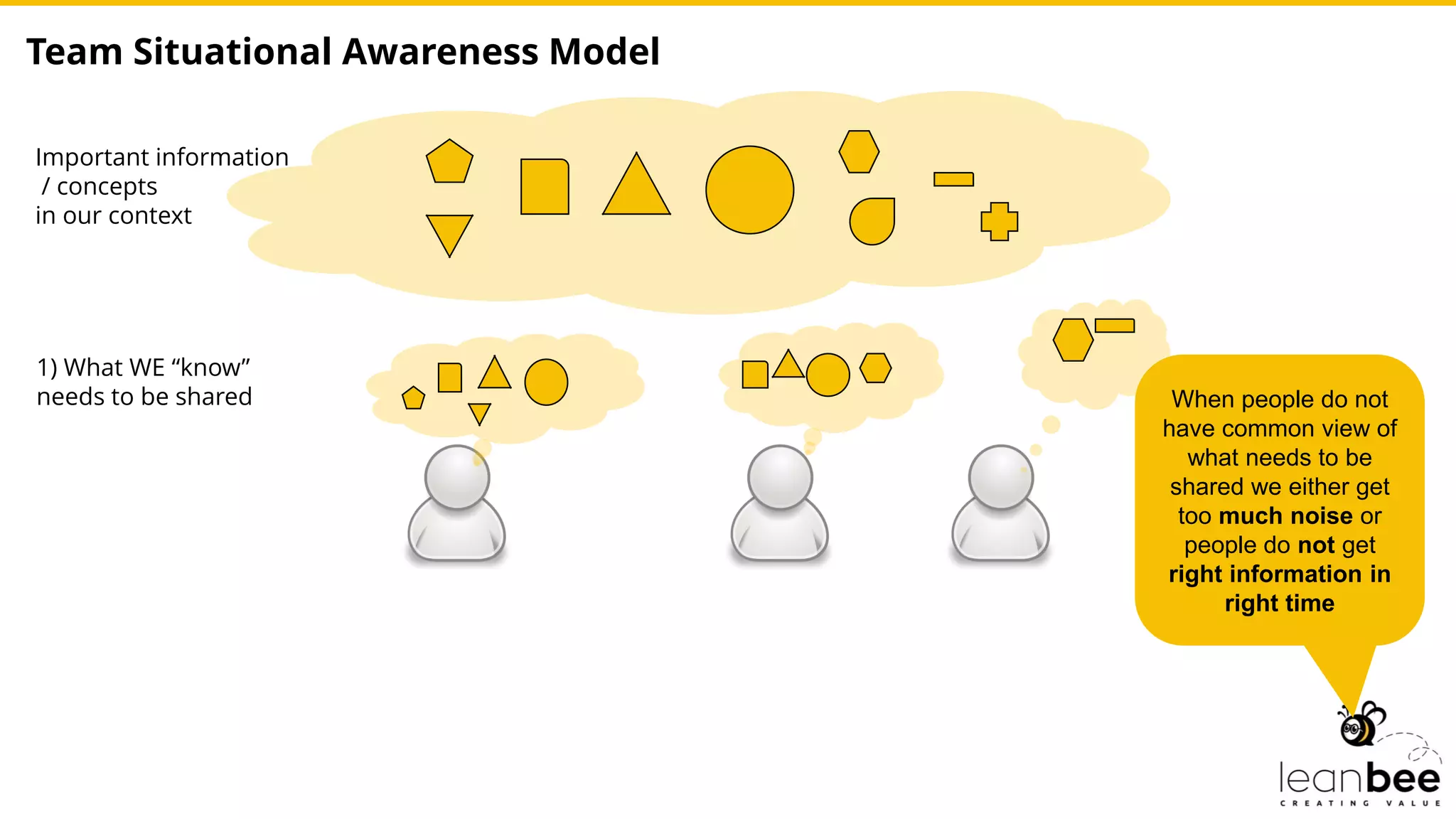
Important information
/ concepts
in our context
1) What WE “know”
needs to be shared
Team Situational Awareness Model
When people do not
have common view of
what needs to be
shared we either get
too much noise or
people do not get
right information in
right time
Important information
/ concepts
in our context
1) What WE “know”
needs to be shared
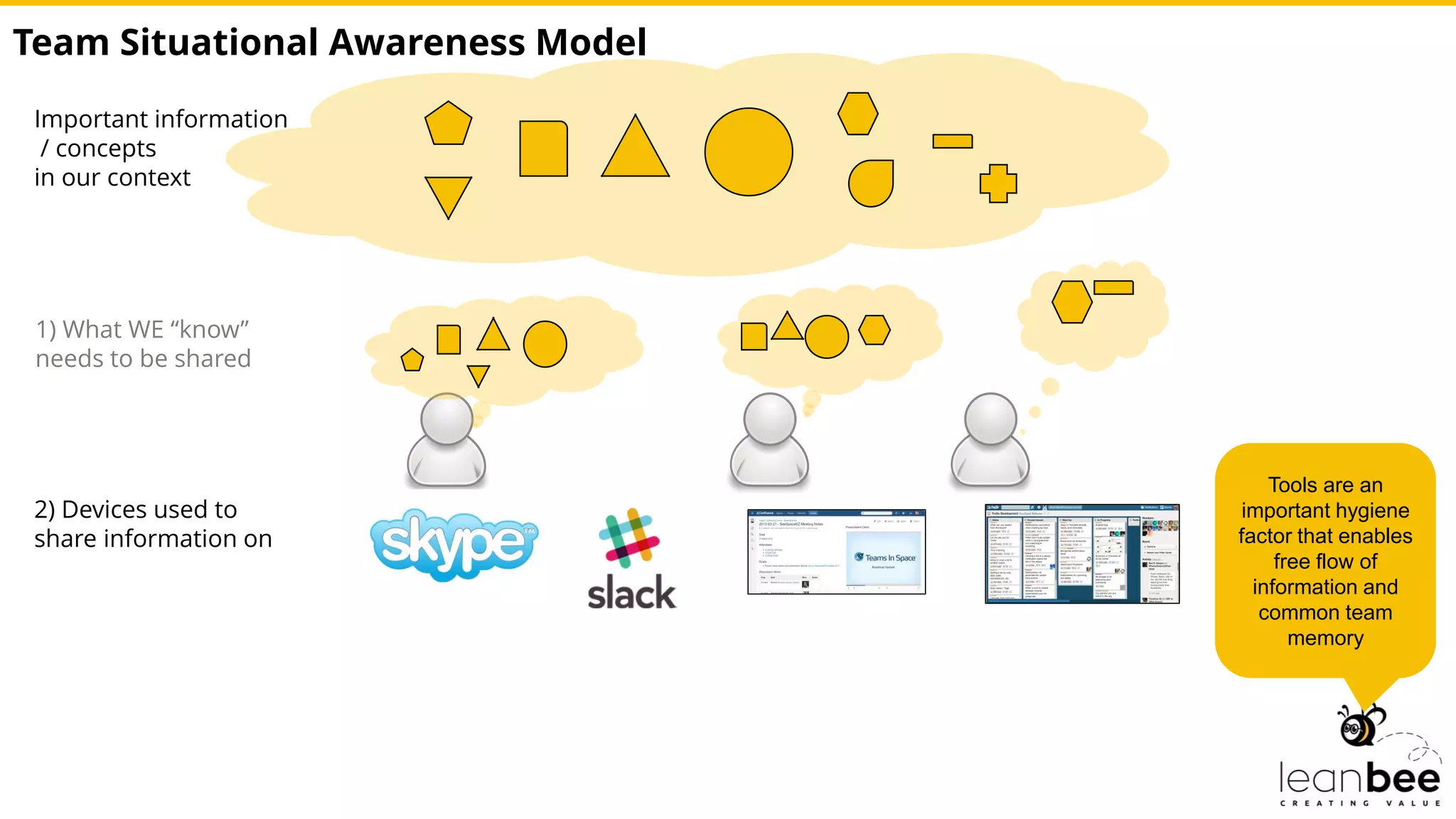
2) Devices used to
share information on
Team Situational Awareness Model
Tools are an
important hygiene
factor that enables
free flow of
information and
common team
memory
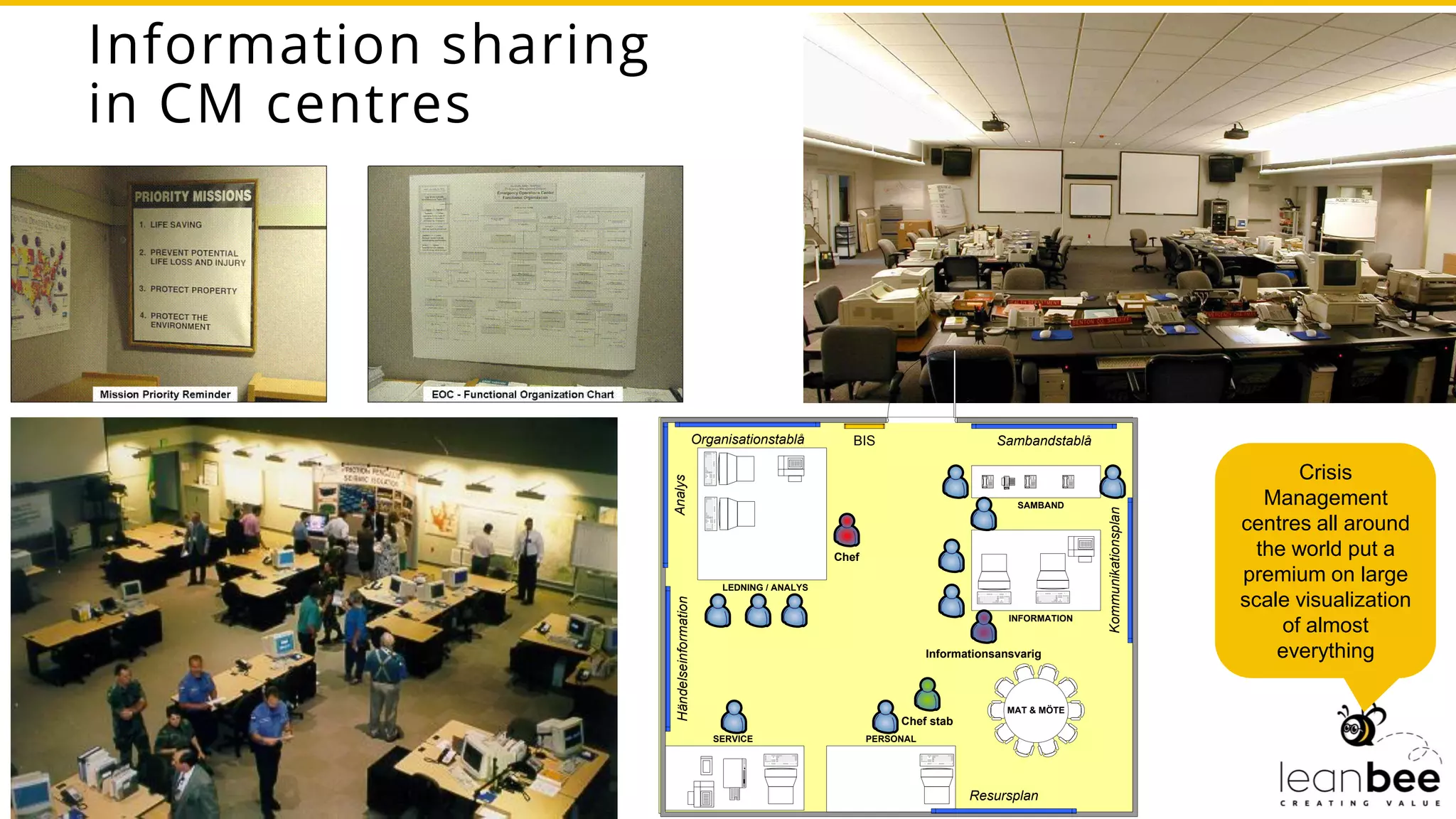
Information sharing
in CM centres
Sambandstablå
Händelseinformation
Kommunikationsplan
SAMBAND
INFORMATION
LEDNING / ANALYS
Resursplan
PERSONALSERVICE
Analys
Organisationstablå
MAT & MÖTE
BIS
Chef stab
Chef
Informationsansvarig
Crisis
Management
centres all around
the world put a
premium on large
scale visualization
of almost
everything
Important information
/ concepts
in our context
1) What WE “know”
needs to be shared
2) Devices used to
share information on
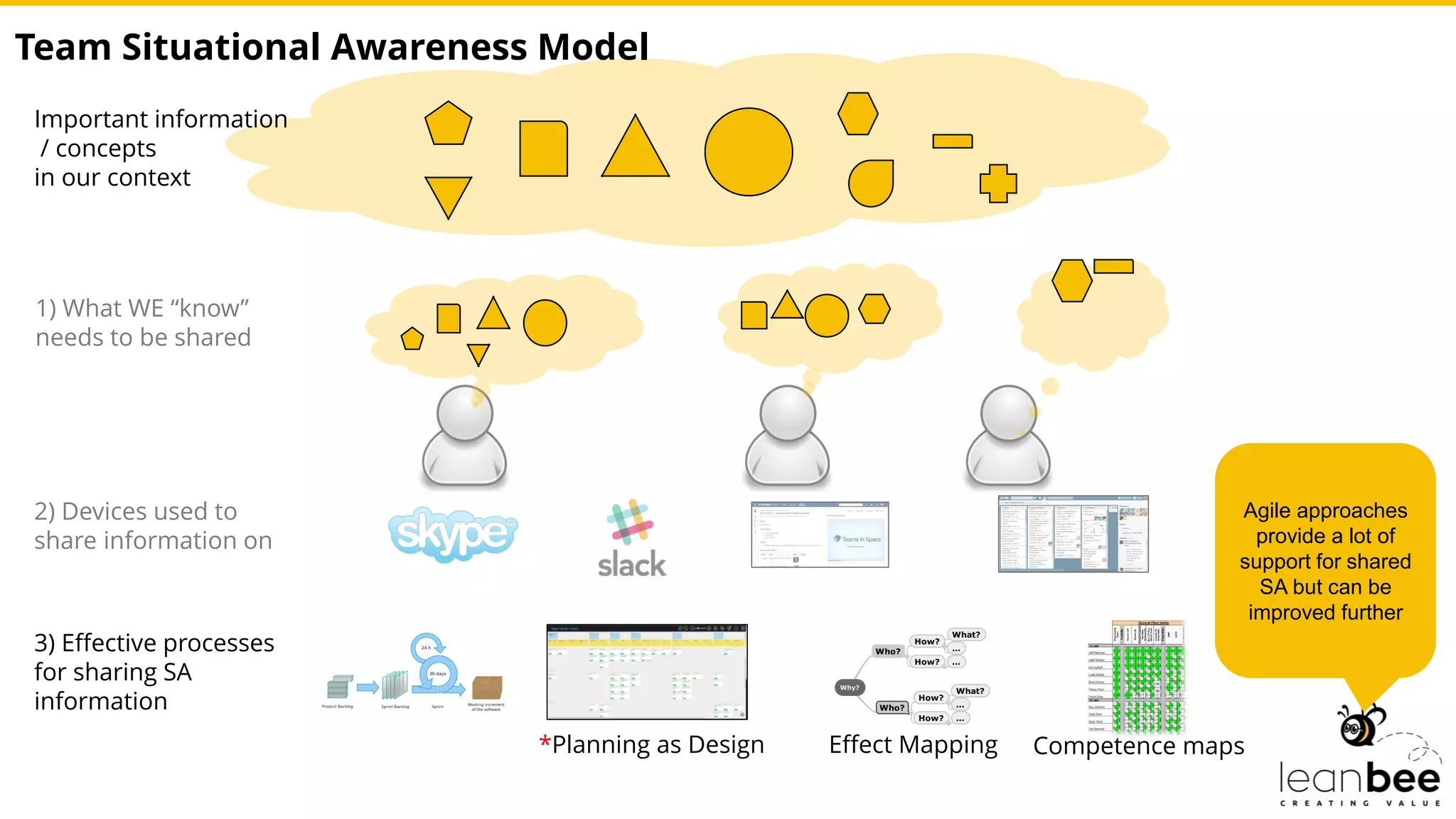
3) Effective processes
for sharing SA
information
*Planning as Design Effect Mapping Competence maps
Team Situational Awareness Model
Agile approaches
provide a lot of
support for shared
SA but can be
improved further
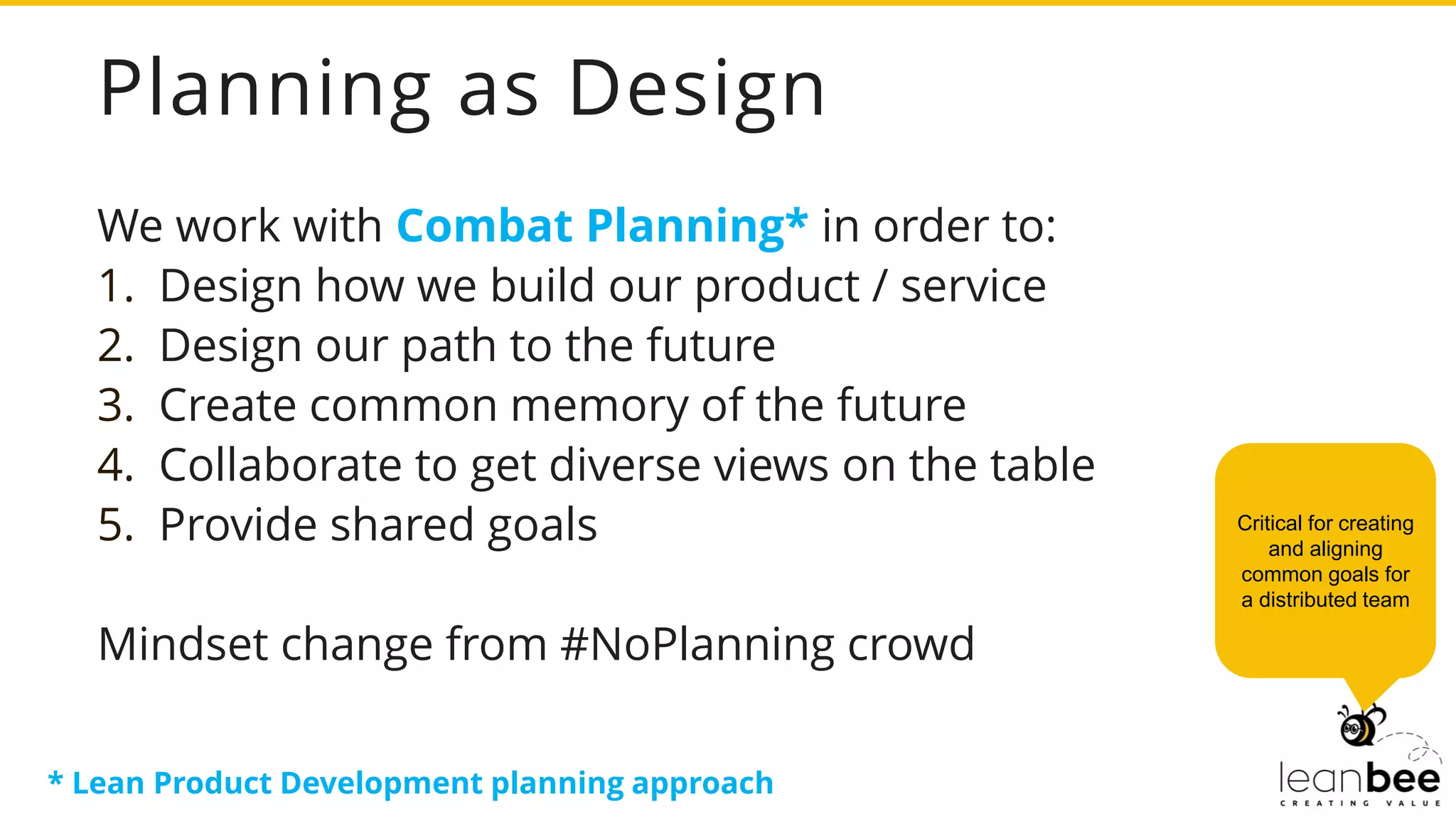
Planning as Design
We work with Combat Planning* in order to:
1. Design how we build our product / service
2. Design our path to the future
3. Create common memory of the future
4. Collaborate to get diverse views on the table
5. Provide shared goals
Mindset change from #NoPlanning crowd
Critical for creating
and aligning
common goals for
a distributed team
* Lean Product Development planning approach
Important information
/ concepts
in our context
1) What WE “know”
needs to be shared
2) Devices used to
share information on
3) Effective processes
for sharing SA
information
*Planning as Design
Learning dialogue
Effect Mapping Competence maps
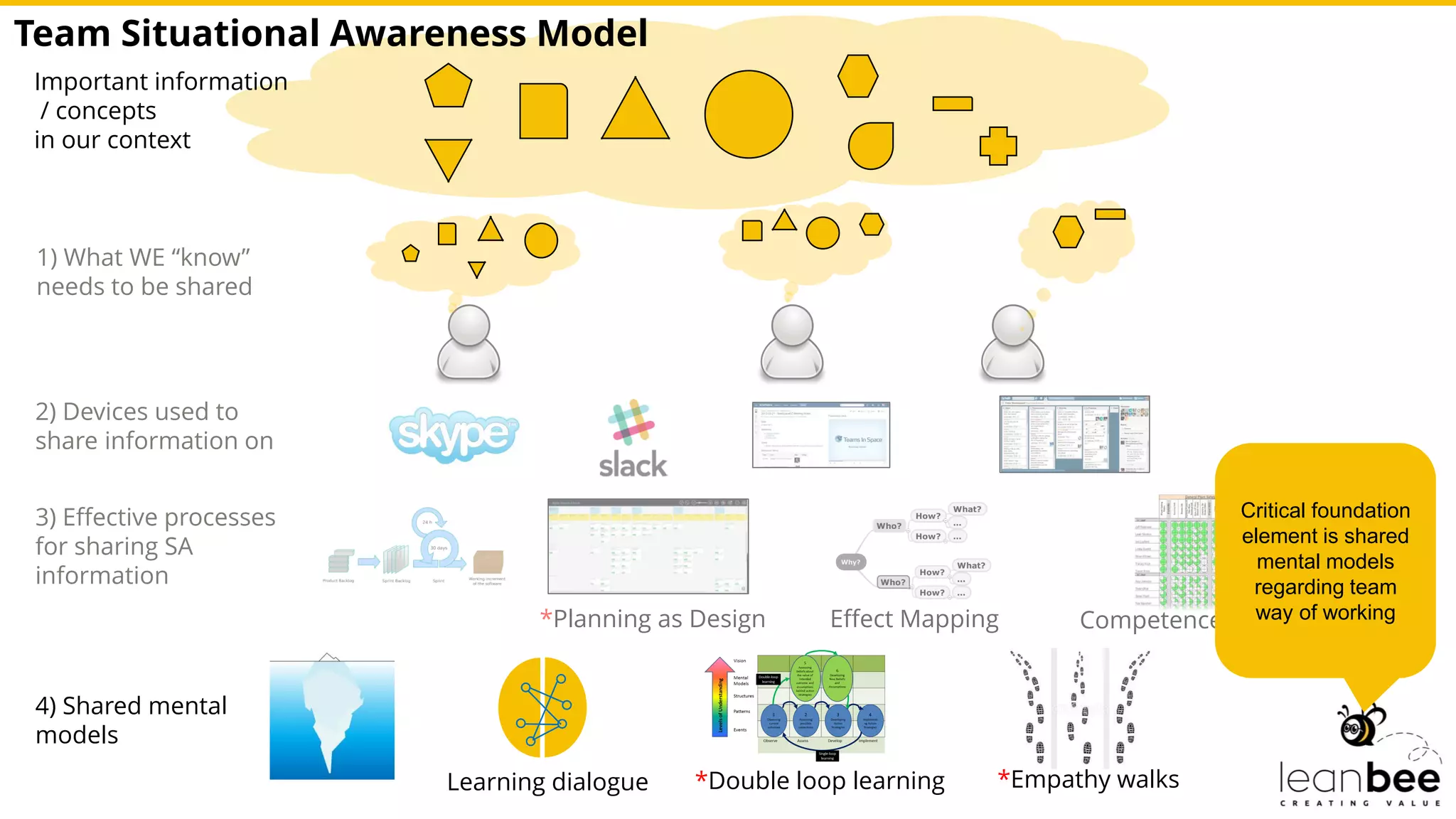
4) Shared mental
models
*Double loop learning *Empathy walks
Team Situational Awareness Model
Critical foundation
element is shared
mental models
regarding team
way of working
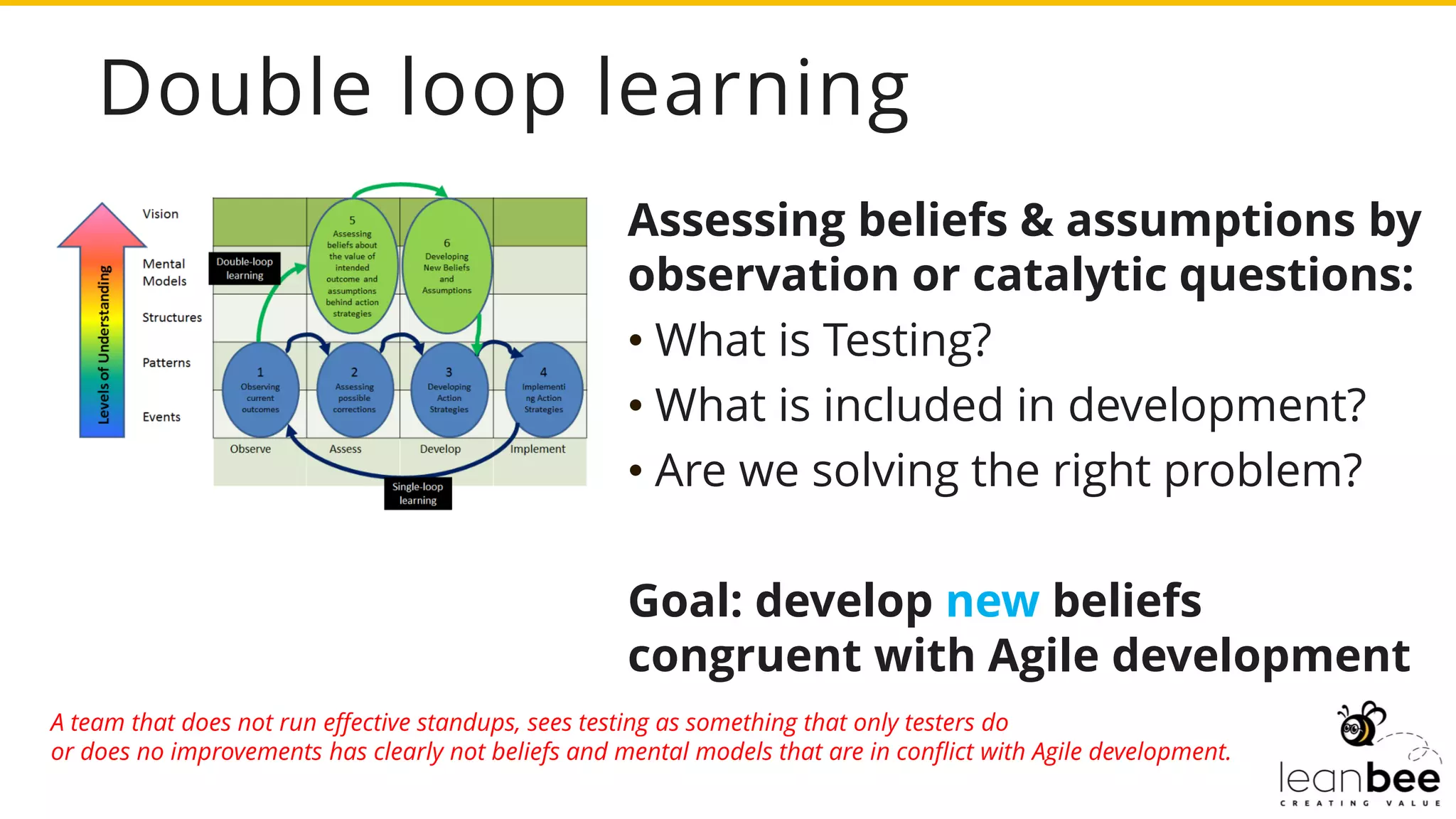
Double loop learning
Assessing beliefs & assumptions by
observation or catalytic questions:
• What is Testing?
• What is included in development?
• Are we solving the right problem?
Goal: develop new beliefs
congruent with Agile development
A team that does not run effective standups, sees testing as something that only testers do
or does no improvements has clearly not beliefs and mental models that are in conflict with Agile development.
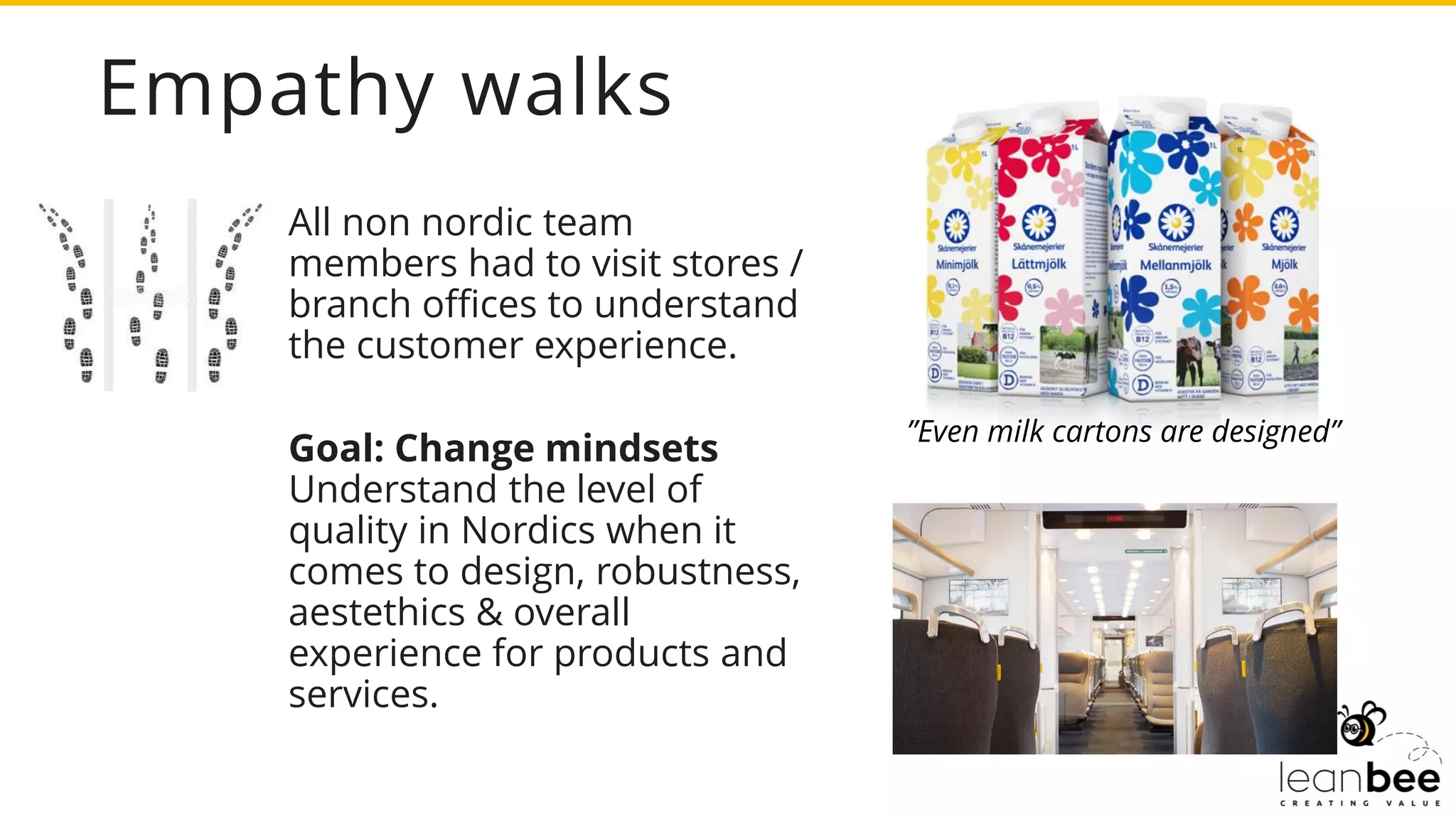
Empathy walks
All non nordic team
members had to visit stores /
branch offices to understand
the customer experience.
Goal: Change mindsets
Understand the level of
quality in Nordics when it
comes to design, robustness,
aestethics & overall
experience for products and
services.
”Even milk cartons are designed”
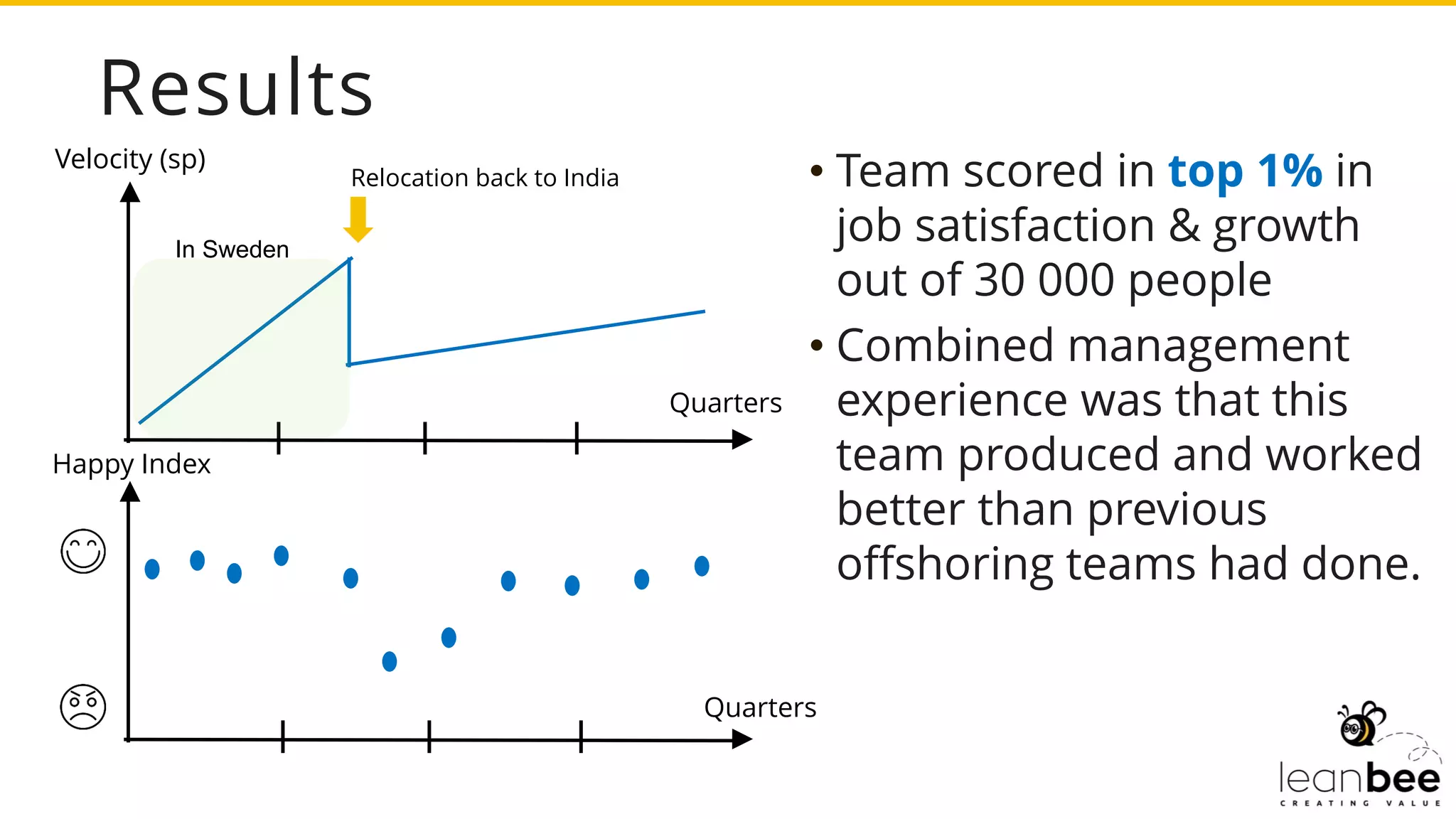
Results
• Team scored in top 1% in
job satisfaction & growth
out of 30 000 people
• Combined management
experience was that this
team produced and worked
better than previous
offshoring teams had done.
Velocity (sp)
Quarters
Happy Index
Quarters
Relocation back to India
In Sweden
Summary
• Team Situational Awareness Model helps in assessing
Situational Awareness mismatches between team
members and designing counter measures
”There is always a better way!
- even if we do not know it today”
rolf@leanbee.se
@RolfHasanen
If you want to have a fika* and talk – reach out on
*

Virtual teams - Learnings from Crisis Management Teams for Distributed Agile Teams

  • 1.
    Virtual teams -learnings from Crisis Management w w w . l e a n b e e . s e R O L F @ L E A N B E E . S E | @ R O L F H A S A N E N
  • 2.
    Goals 1. Share myexperience applying research from Crisis Management area to distributed development teams with people in Nordics and India. 2. Describe why we need to pay attention to Team Situational Awareness especially for distributed / virtual teams. 3. Describe the Team Situational Awareness Model and how it can be used
  • 3.
    Background – Researchin Crisis Management Nordic IT Development using EDC in India Appli- ed to The question: How can we utilize virtual teams to manage long living crises? + Agile 2003-2005 2010-2011 Almost Agile
  • 4.
    LAW Mental vacuum doesnot exist! Every person comes with existing values, assumptions and mental models that they apply to all situations believing that their interpretation works well. It takes time and effort for people to gel into a high performing team during that time people actually sync and update their mental models this process can be speeded up, the rest of the talk is about how to do that
  • 5.
    Team Performance Prerequisites forTactical / Strategic performance mode 1. Shared Situational awareness 2. Free flow of information 3. Common vision/goal 4. Shared memory 5. Domain understanding 6. Trust Scrambled Opportunis- tic Tactical Strategic Reliability of performance Mental Mode of control COCOM model
  • 6.
    Shared Situational Awareness::Definition isthe ability to identify, process, and comprehend the critical elements of information about what is happening to the team with regards to the mission. More simply, it's knowing what is going on around you and what to do about it.
  • 7.
    Important information / concepts inour context 1) What WE “know” needs to be shared Team Situational Awareness Model When people do not have common view of what needs to be shared we either get too much noise or people do not get right information in right time
  • 8.
    Important information / concepts inour context 1) What WE “know” needs to be shared 2) Devices used to share information on Team Situational Awareness Model Tools are an important hygiene factor that enables free flow of information and common team memory
  • 9.
    Information sharing in CMcentres Sambandstablå Händelseinformation Kommunikationsplan SAMBAND INFORMATION LEDNING / ANALYS Resursplan PERSONALSERVICE Analys Organisationstablå MAT & MÖTE BIS Chef stab Chef Informationsansvarig Crisis Management centres all around the world put a premium on large scale visualization of almost everything
  • 10.
    Important information / concepts inour context 1) What WE “know” needs to be shared 2) Devices used to share information on 3) Effective processes for sharing SA information *Planning as Design Effect Mapping Competence maps Team Situational Awareness Model Agile approaches provide a lot of support for shared SA but can be improved further
  • 11.
    Planning as Design Wework with Combat Planning* in order to: 1. Design how we build our product / service 2. Design our path to the future 3. Create common memory of the future 4. Collaborate to get diverse views on the table 5. Provide shared goals Mindset change from #NoPlanning crowd Critical for creating and aligning common goals for a distributed team * Lean Product Development planning approach
  • 12.
    Important information / concepts inour context 1) What WE “know” needs to be shared 2) Devices used to share information on 3) Effective processes for sharing SA information *Planning as Design Learning dialogue Effect Mapping Competence maps 4) Shared mental models *Double loop learning *Empathy walks Team Situational Awareness Model Critical foundation element is shared mental models regarding team way of working
  • 13.
    Double loop learning Assessingbeliefs & assumptions by observation or catalytic questions: • What is Testing? • What is included in development? • Are we solving the right problem? Goal: develop new beliefs congruent with Agile development A team that does not run effective standups, sees testing as something that only testers do or does no improvements has clearly not beliefs and mental models that are in conflict with Agile development.
  • 14.
    Empathy walks All nonnordic team members had to visit stores / branch offices to understand the customer experience. Goal: Change mindsets Understand the level of quality in Nordics when it comes to design, robustness, aestethics & overall experience for products and services. ”Even milk cartons are designed”
  • 15.
    Results • Team scoredin top 1% in job satisfaction & growth out of 30 000 people • Combined management experience was that this team produced and worked better than previous offshoring teams had done. Velocity (sp) Quarters Happy Index Quarters Relocation back to India In Sweden
  • 16.
    Summary • Team SituationalAwareness Model helps in assessing Situational Awareness mismatches between team members and designing counter measures
  • 17.
    ”There is alwaysa better way! - even if we do not know it today” rolf@leanbee.se @RolfHasanen If you want to have a fika* and talk – reach out on *