Vinod Tiwari
Head of Sales and Business Development, Power Ledger
17 Nov, 2017
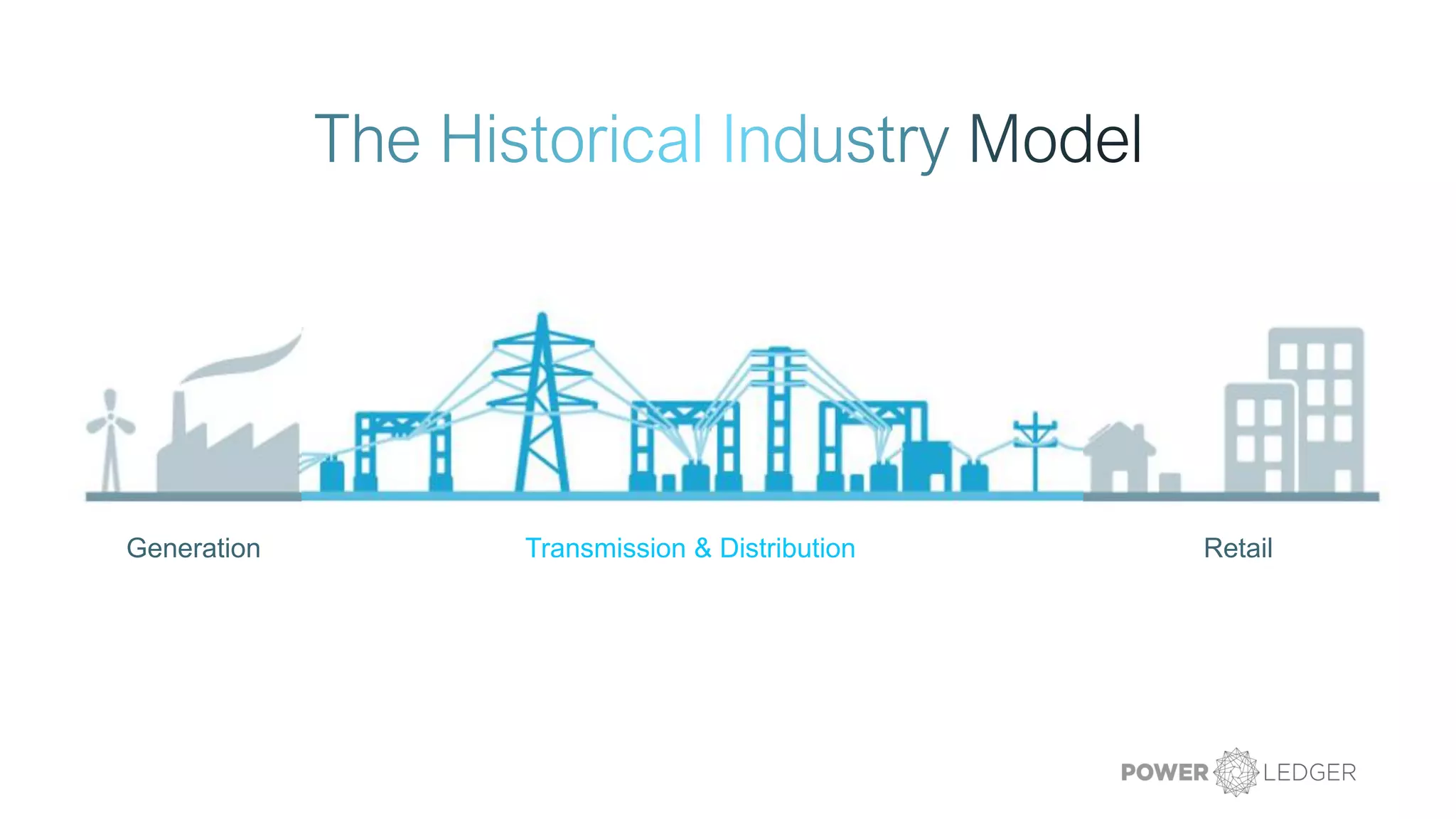
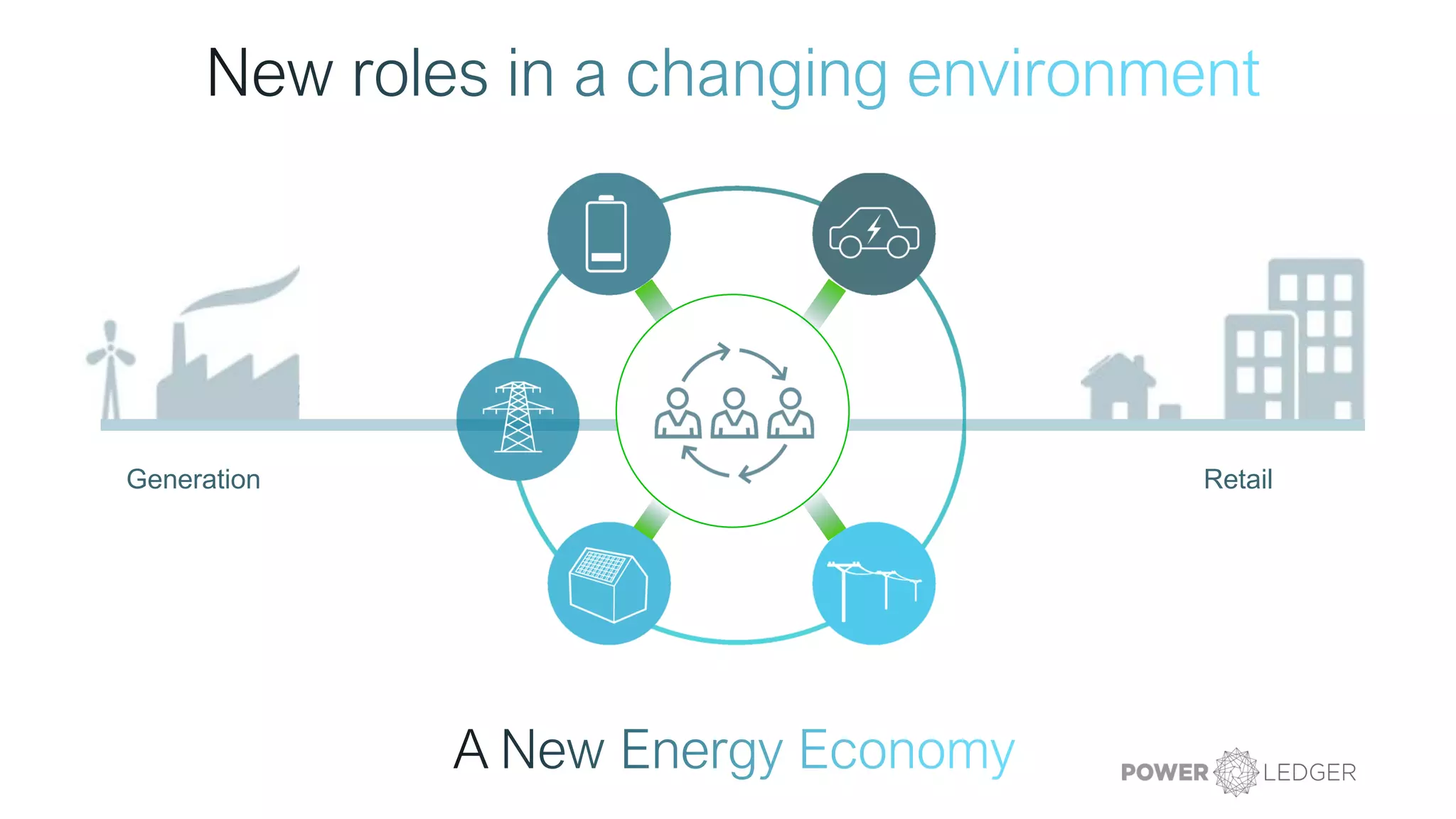
Generation RetailTransmission & Distribution
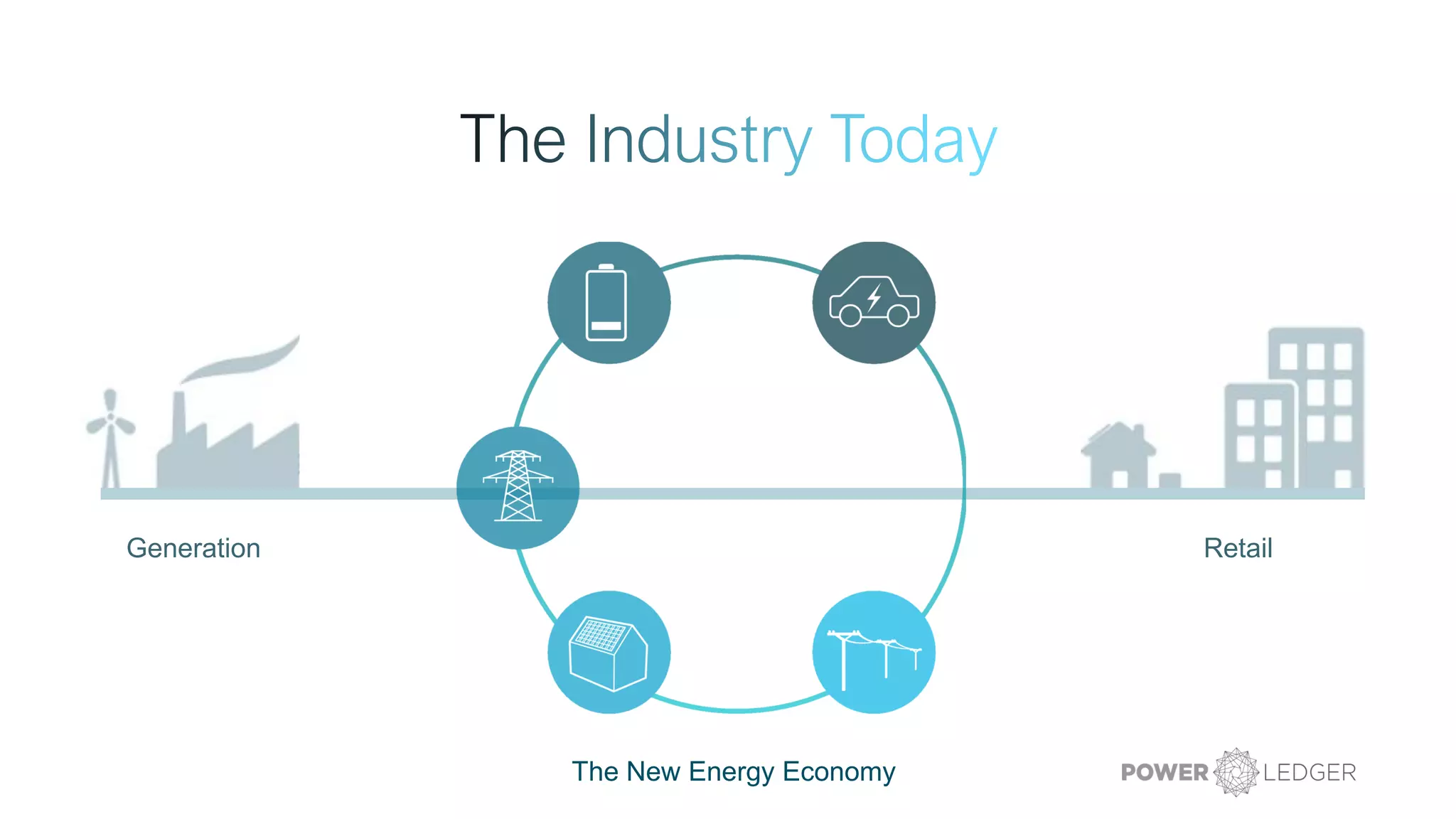
Generation Retail
The New Energy Economy
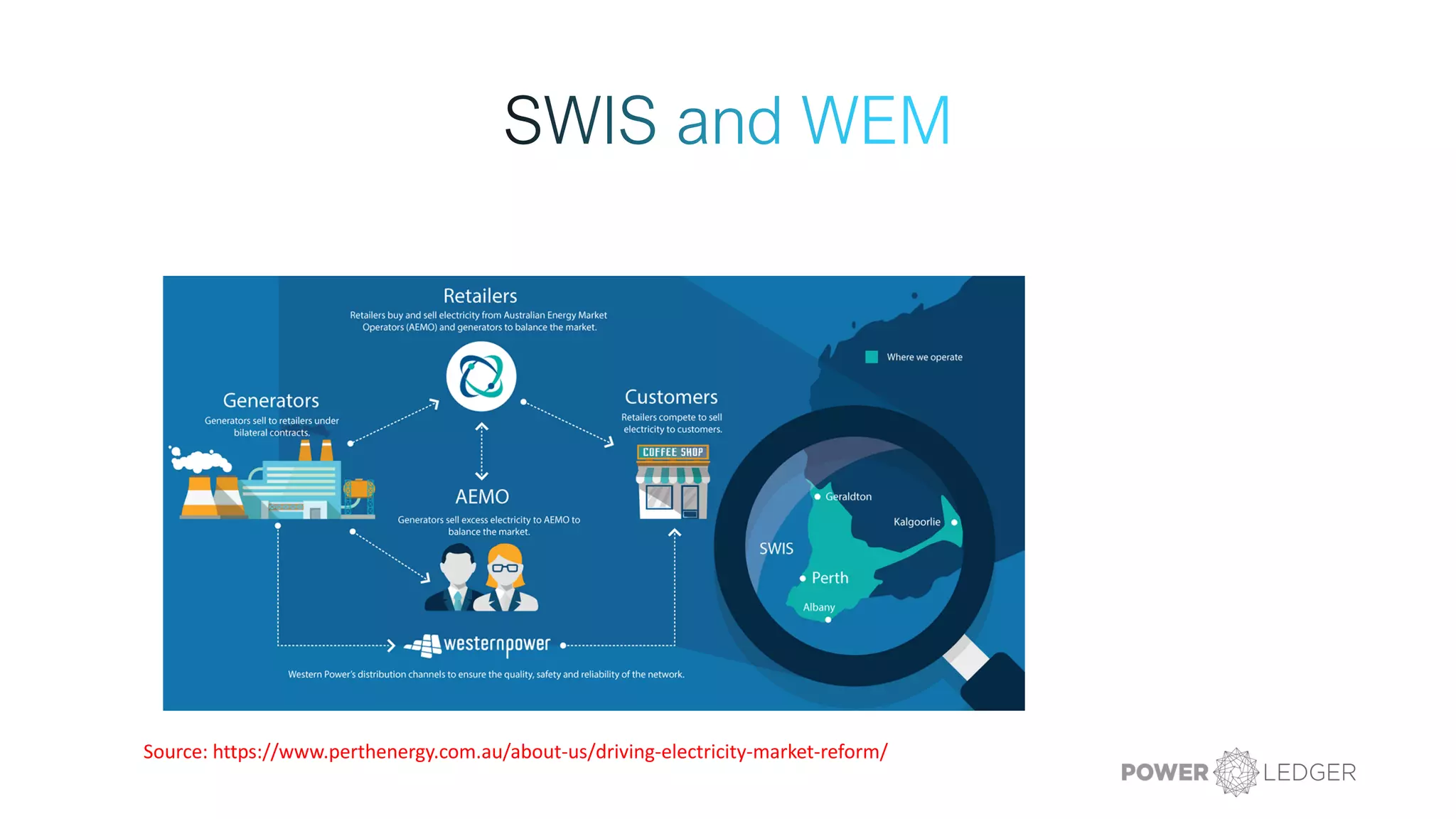
Source: https://www.perthenergy.com.au/about-us/driving-electricity-market-reform/
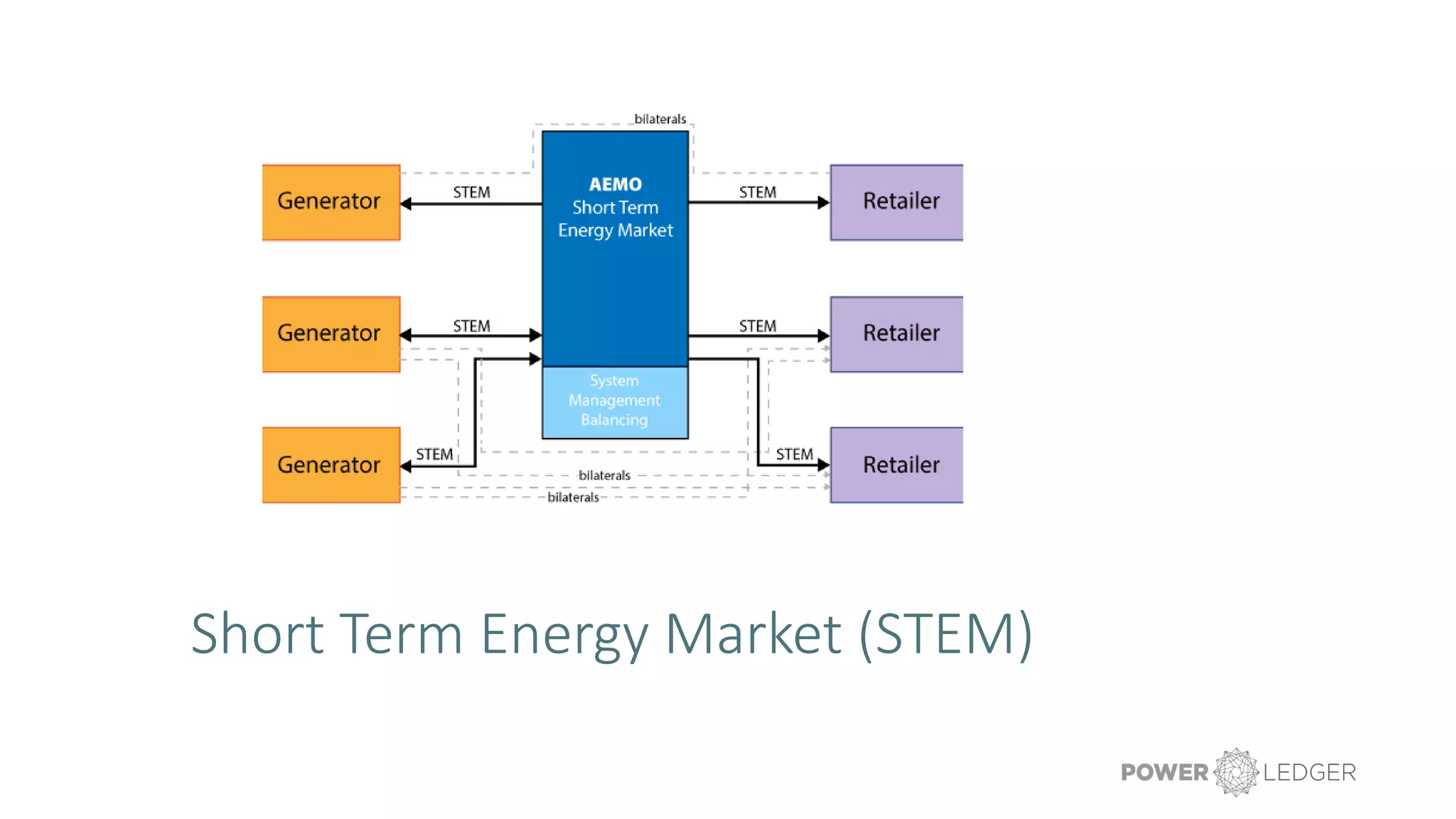
Short Term Energy Market (STEM)
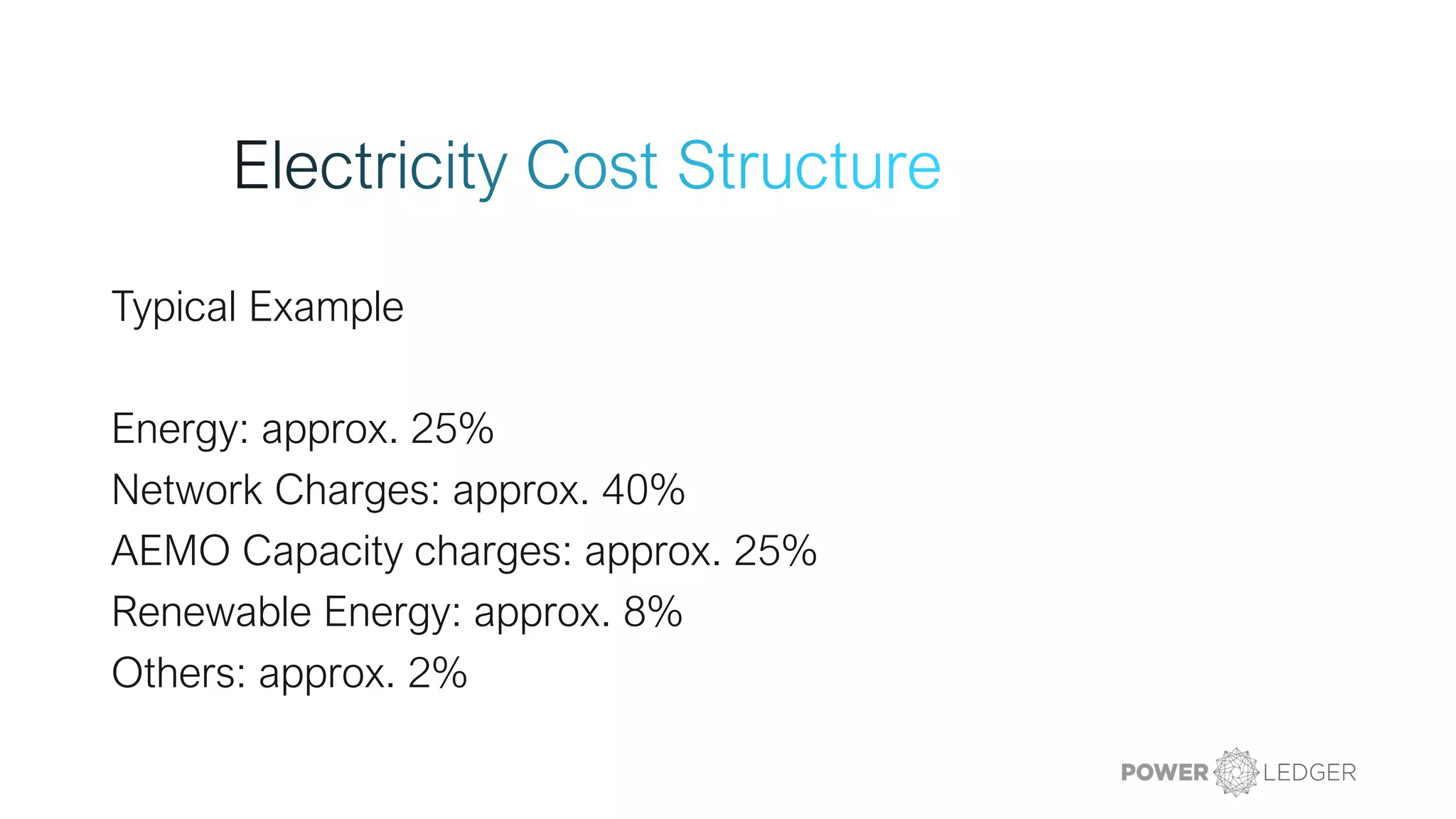
Typical Example
Energy: approx. 25%
Network Charges: approx. 40%
AEMO Capacity charges: approx. 25%
Renewable Energy: approx. 8%
Others: approx. 2%
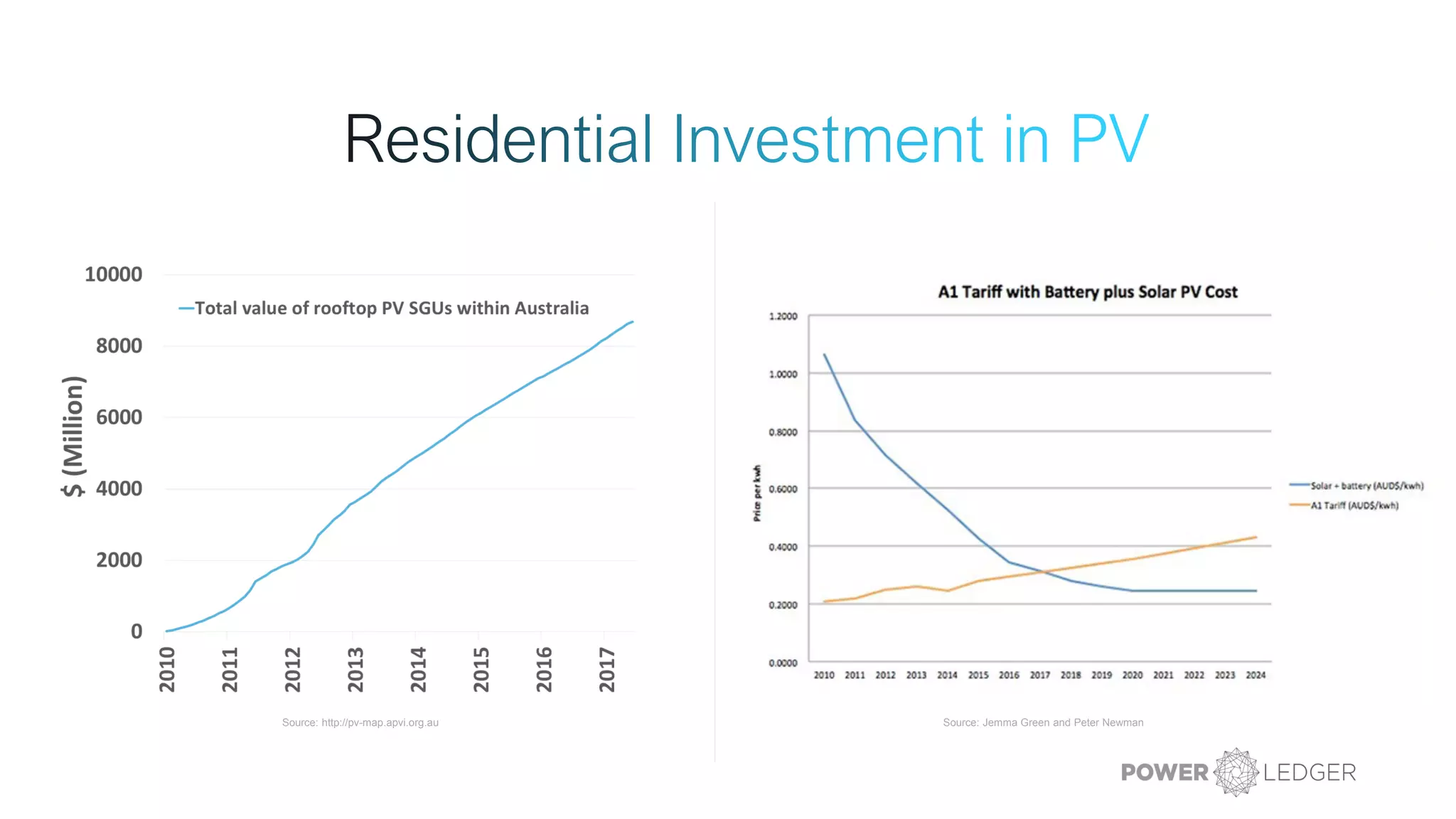
Source: http://pv-map.apvi.org.au Source: Jemma Green and Peter Newman
Generation Retail
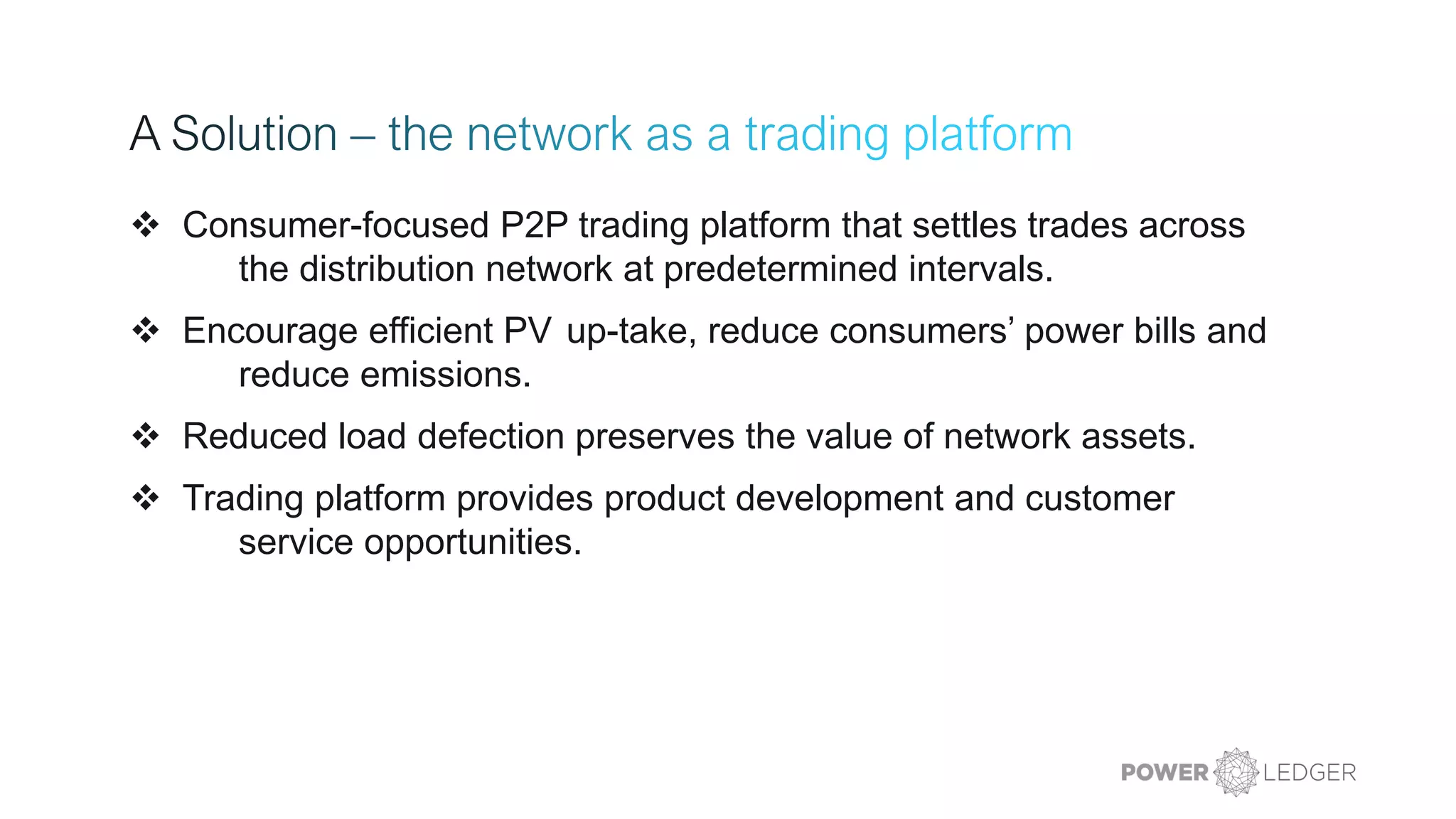
❖ Consumer-focused P2P trading platform that settles trades across
the distribution network at predetermined intervals.
❖ Encourage efficient PV up-take, reduce consumers’ power bills and
reduce emissions.
❖ Reduced load defection preserves the value of network assets.
❖ Trading platform provides product development and customer
service opportunities.
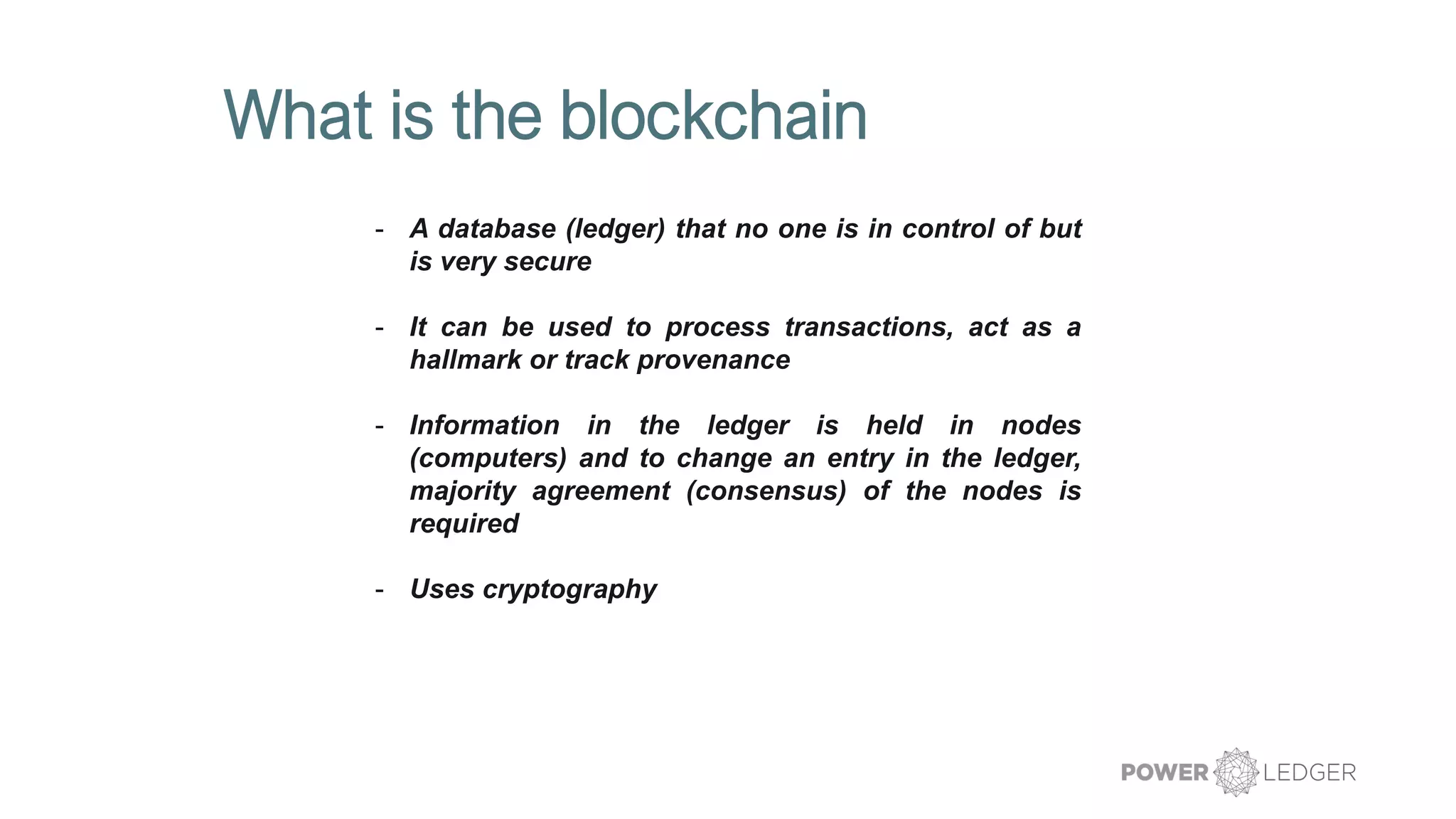
What is the blockchain
- A database (ledger) that no one is in control of but
is very secure
- It can be used to process transactions, act as a
hallmark or track provenance
- Information in the ledger is held in nodes
(computers) and to change an entry in the ledger,
majority agreement (consensus) of the nodes is
required
- Uses cryptography
❖ Fast, cheap, secure, transparent settlement of multi-party
transactions.
❖ Formation of dynamic trading ecosystems.
❖ Development of autonomous, secure and transparent
distributed transactive markets with low-cost and virtually
instantaneous market reconciliation and settlement.
❖ Trading arrangements between any number of
counterparties where each counterparty is able to trust the
trading environment is free from the interference or
interpretation of any other counterparty.
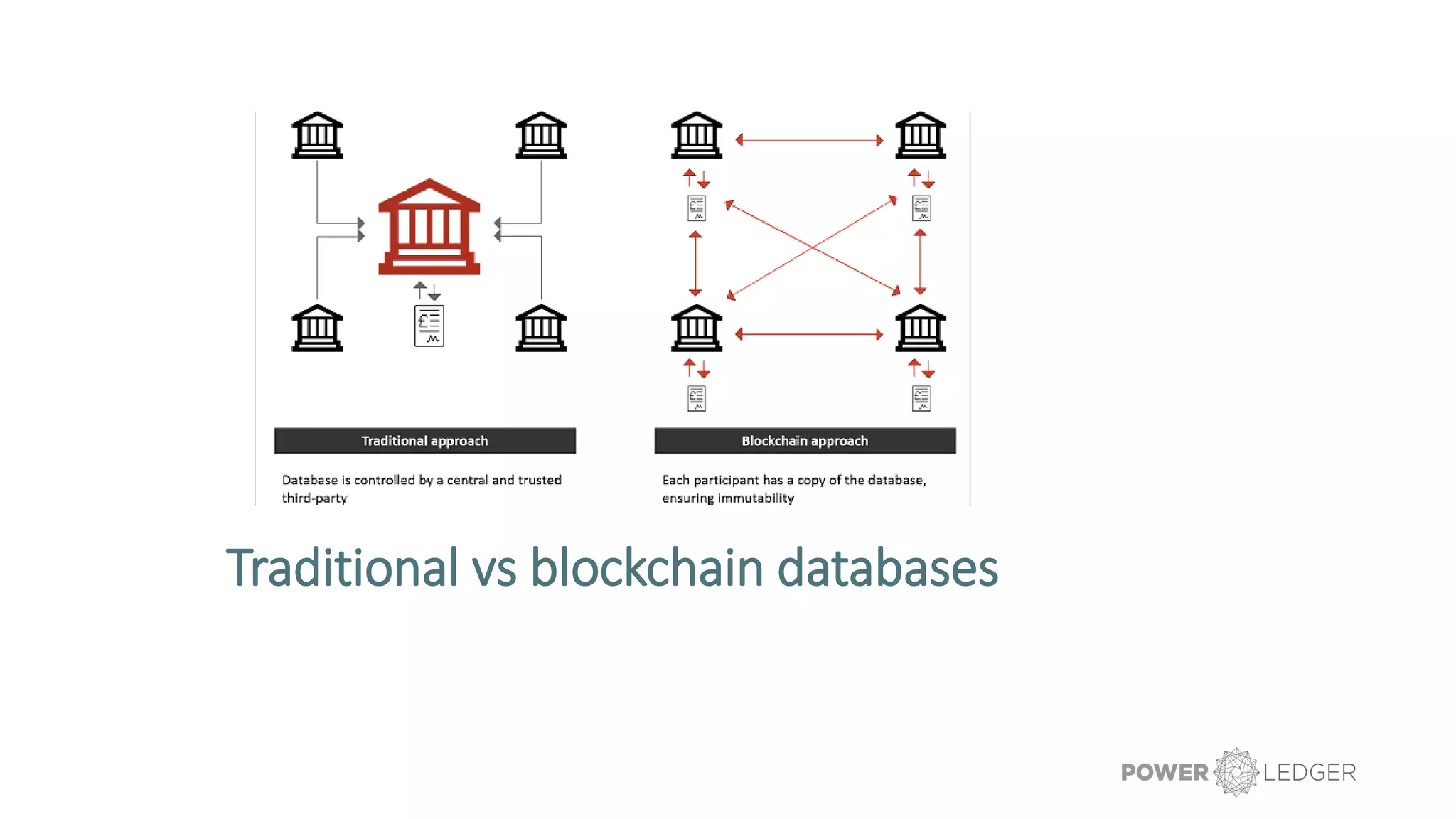
Traditional vs blockchain databases
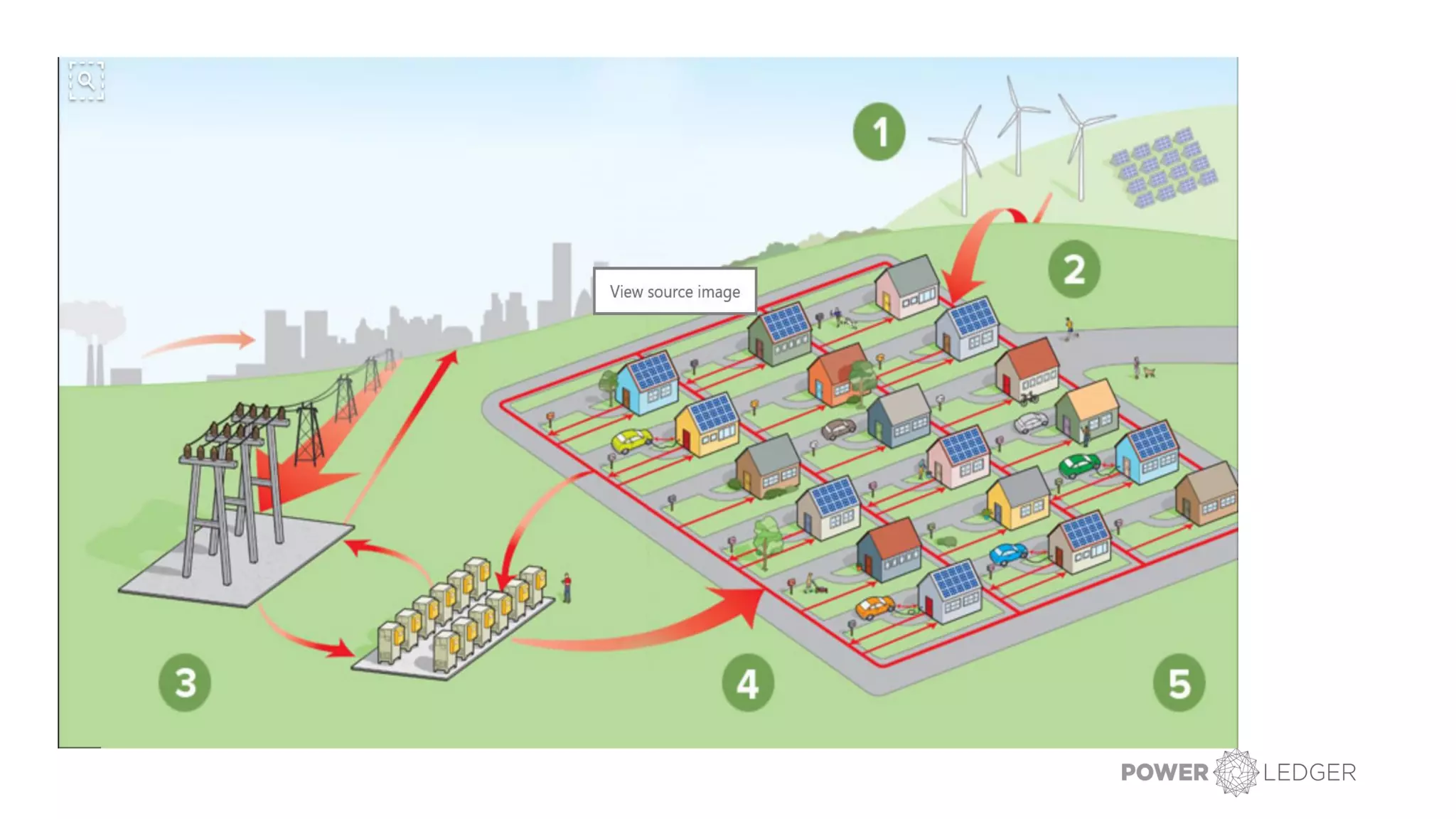
• A microgrid is a localised grouping of distributed electricity sources, loads
and storage mechanisms that can operate both as part of the central grid or
independently as an island
• A microgrid can be powered by distributed generators, batteries, and/or
renewable resources like solar panels, wind, diesel etc. Depending on how
it’s fueled and how its requirements are managed, a microgrid might run
indefinitely
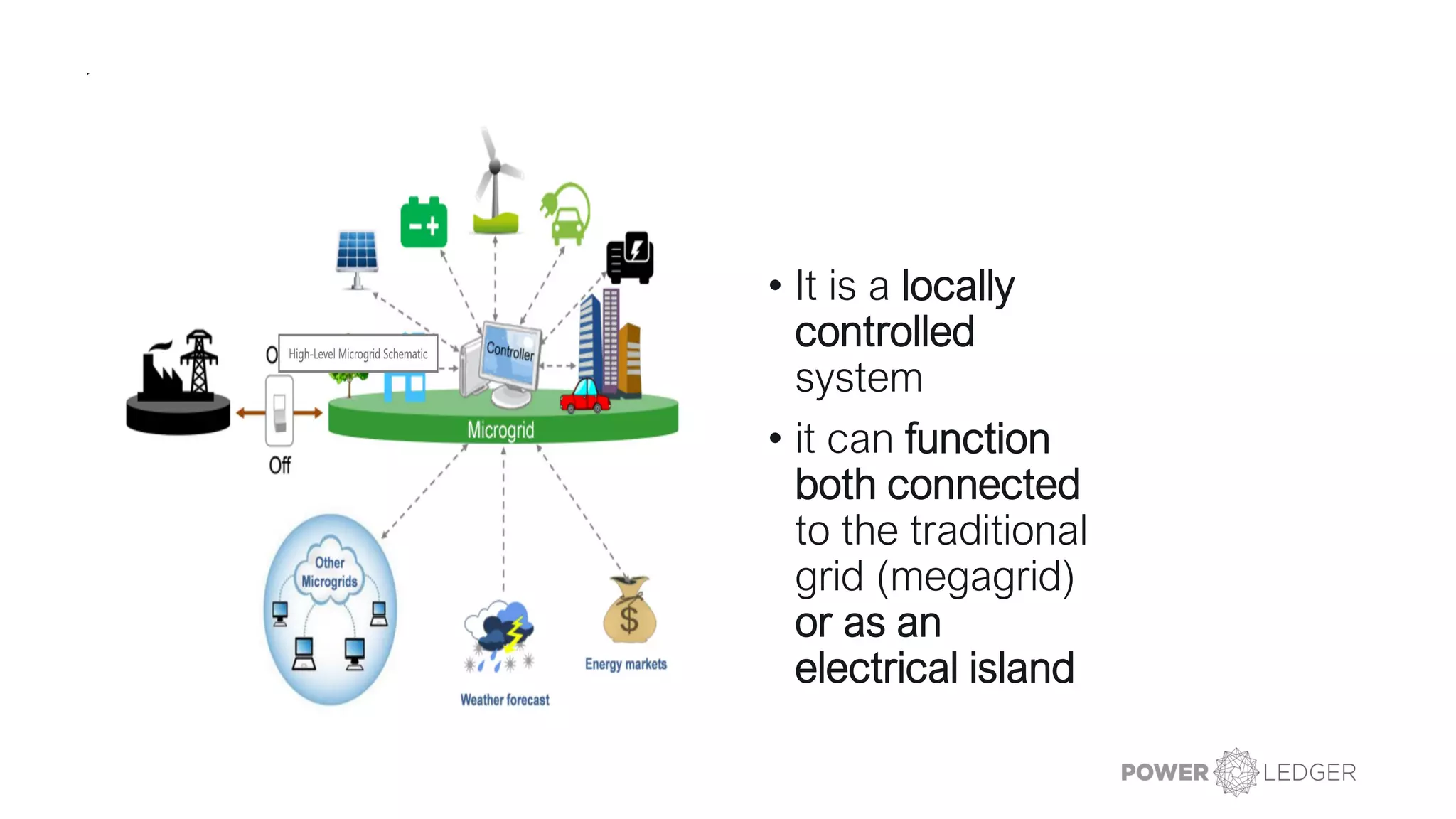
• It is a locally
controlled
system
• it can function
both connected
to the traditional
grid (megagrid)
or as an
electrical island
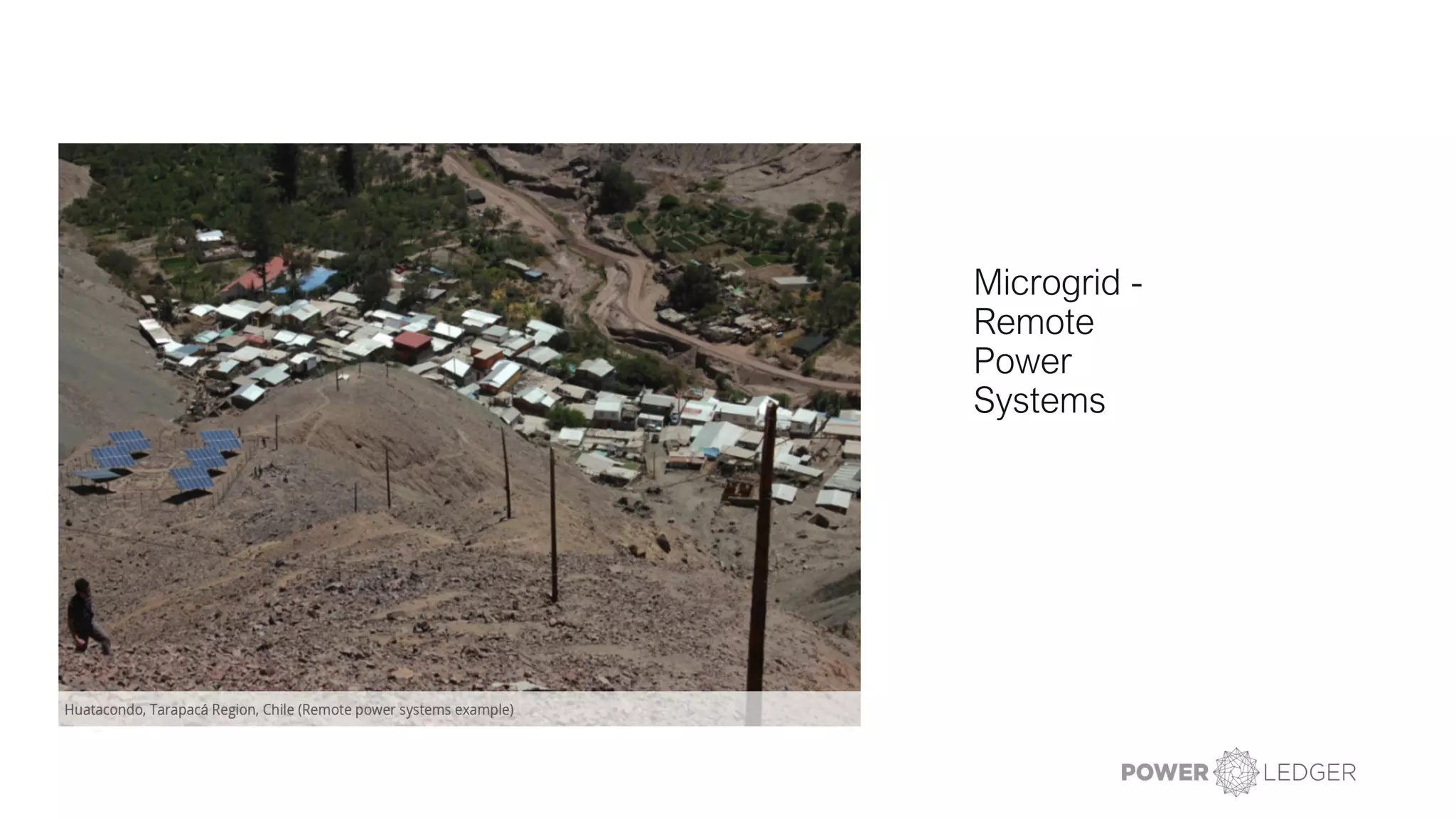
Microgrid -
Remote
Power
Systems
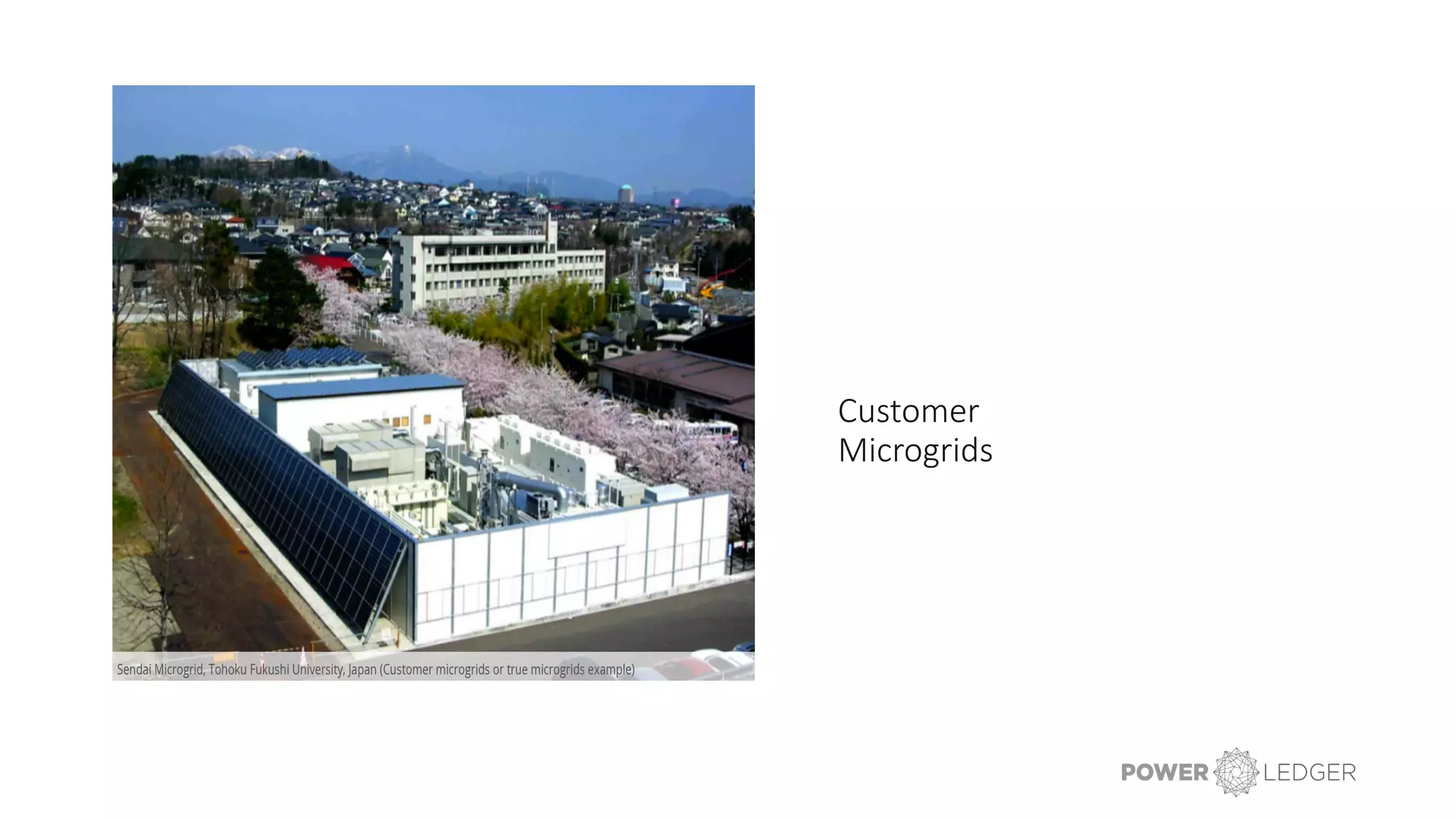
Customer
Microgrids
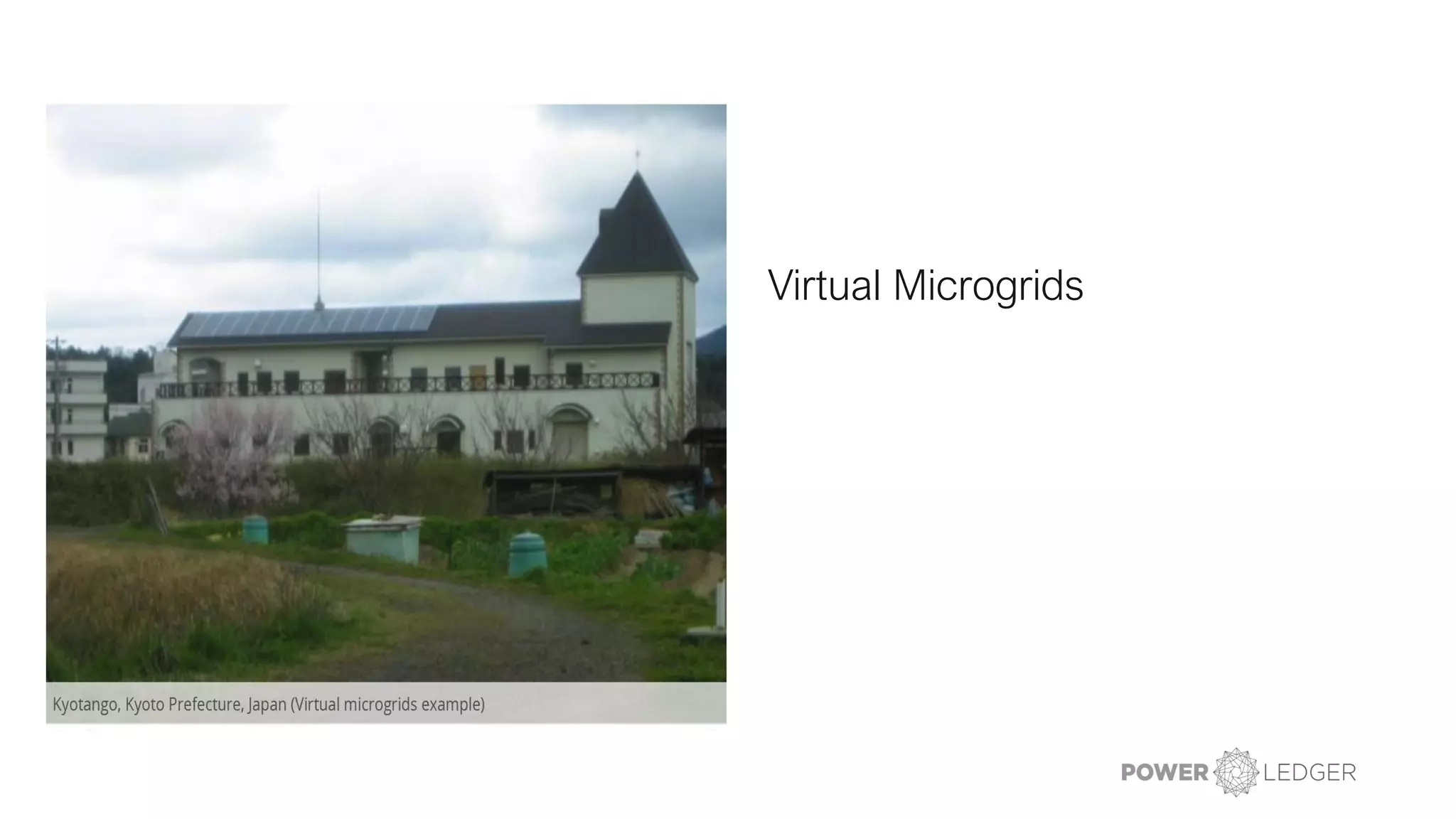
Virtual Microgrids
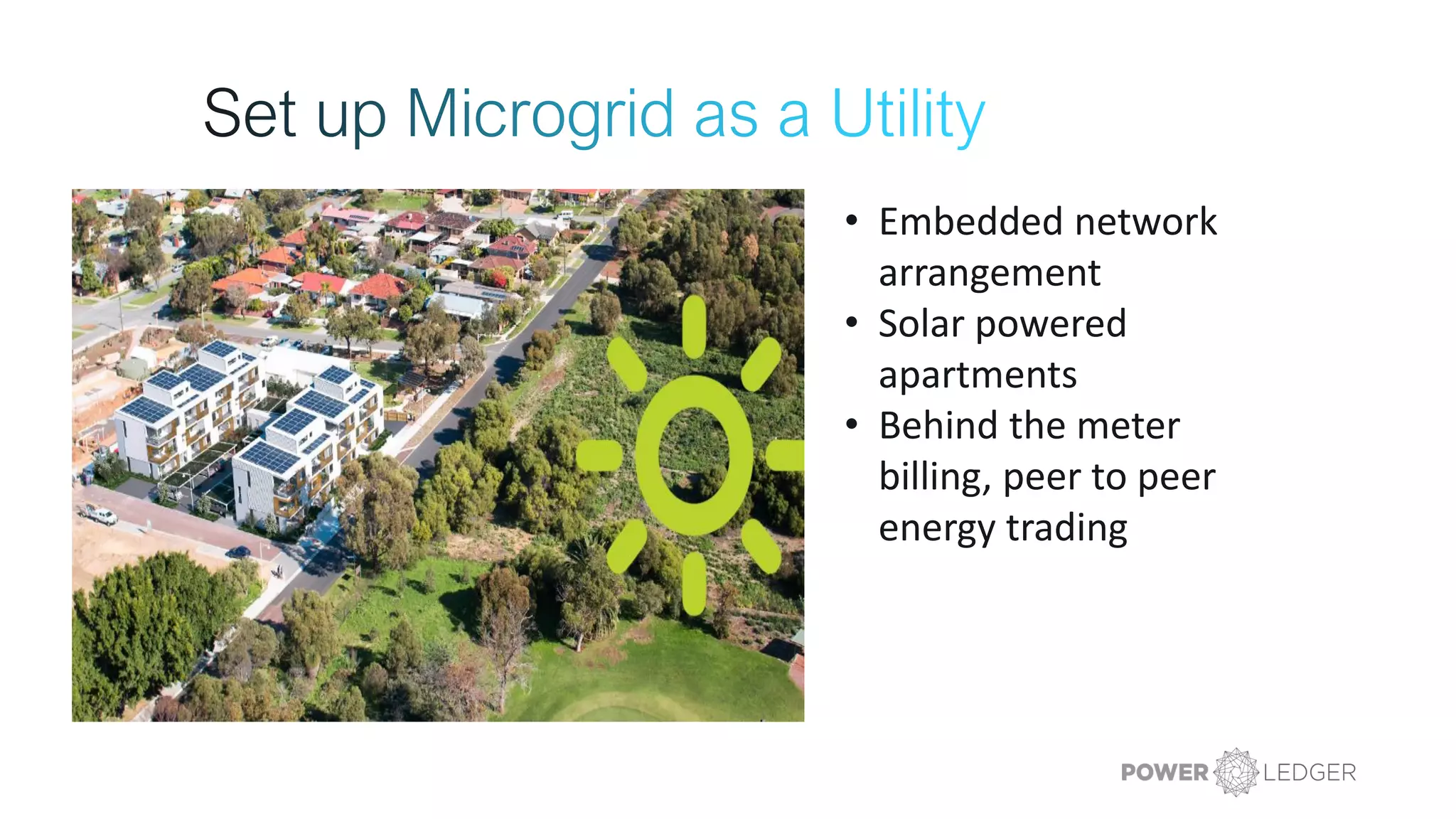
• Embedded network
arrangement
• Solar powered
apartments
• Behind the meter
billing, peer to peer
energy trading
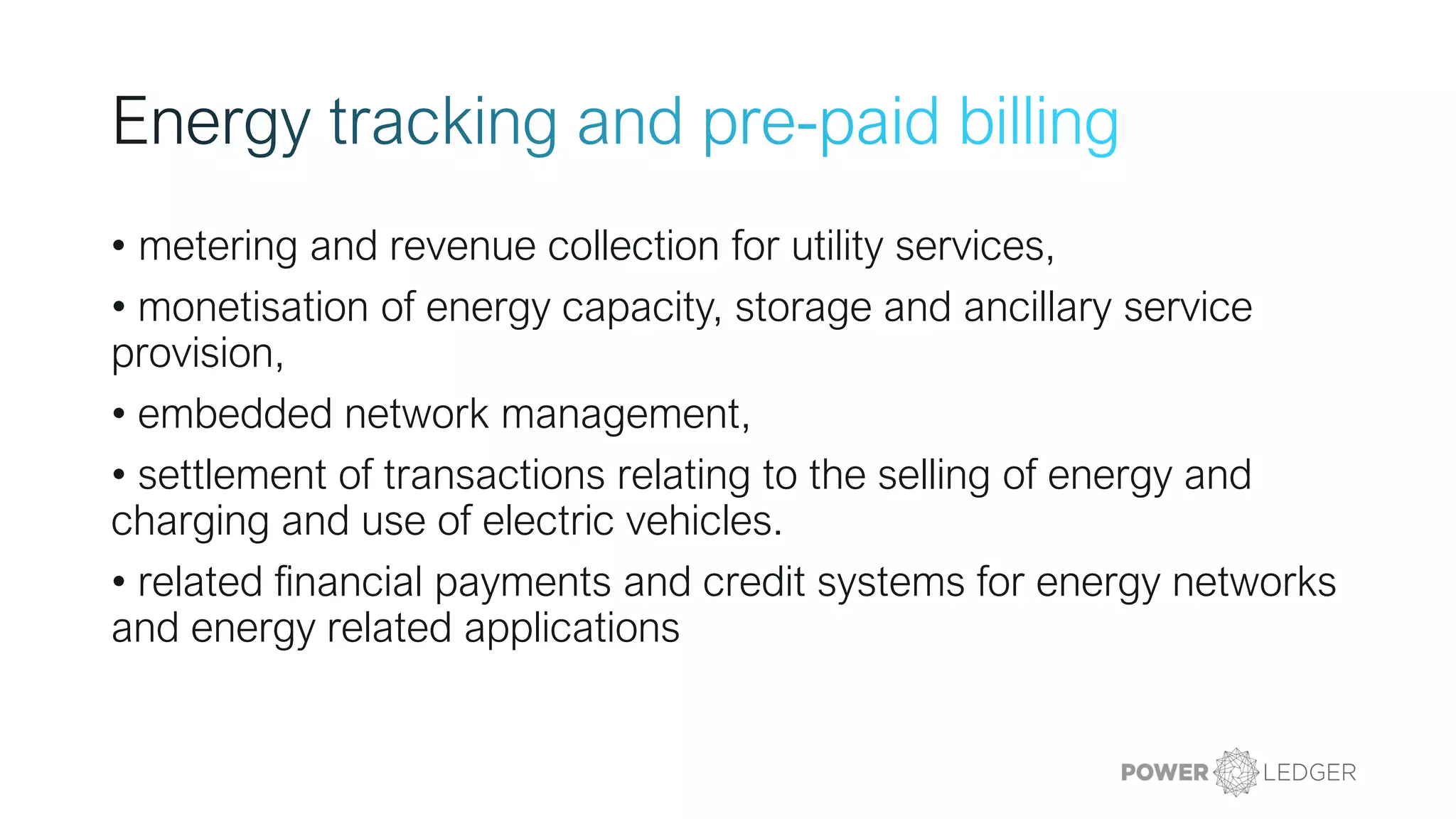
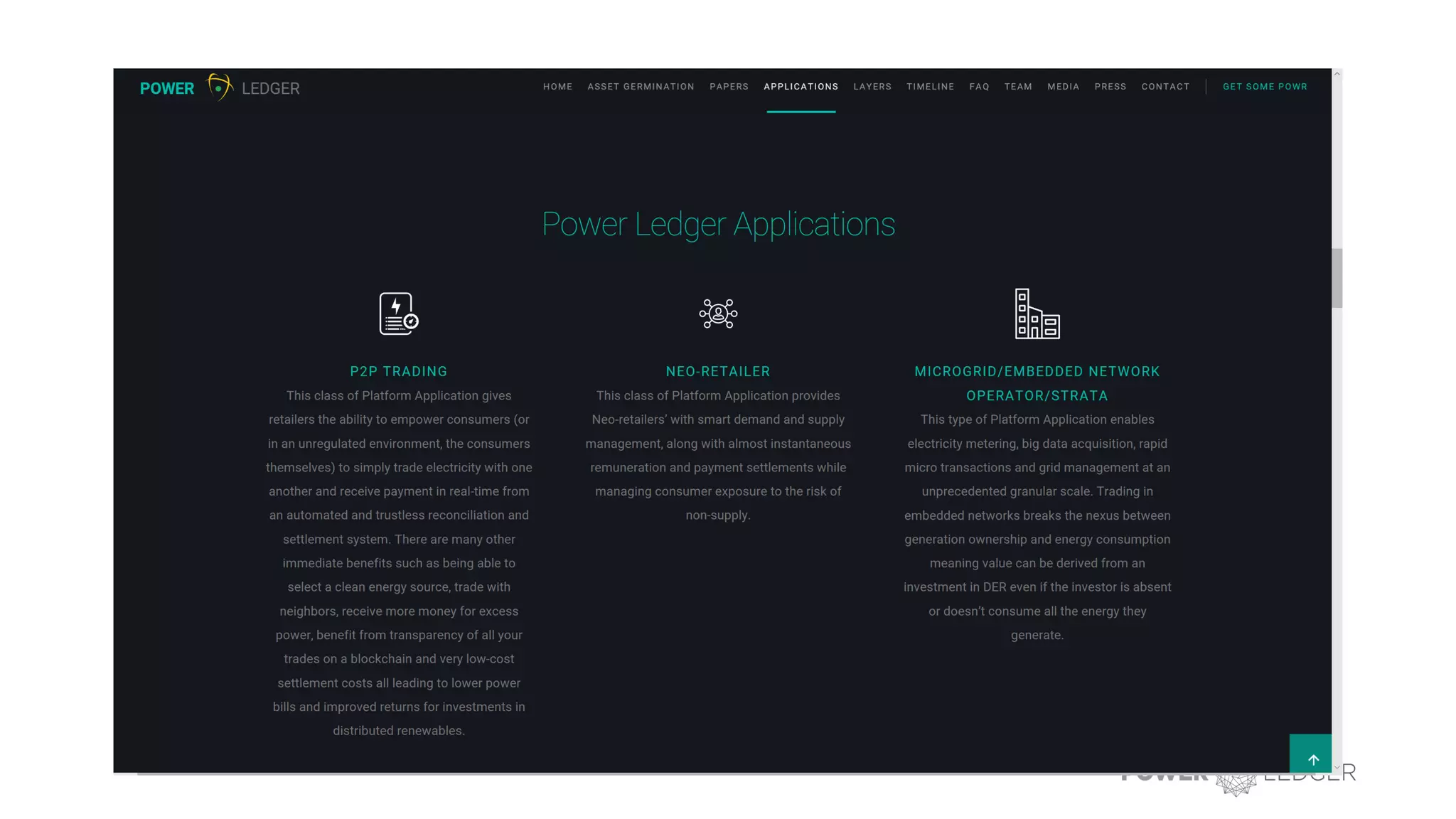
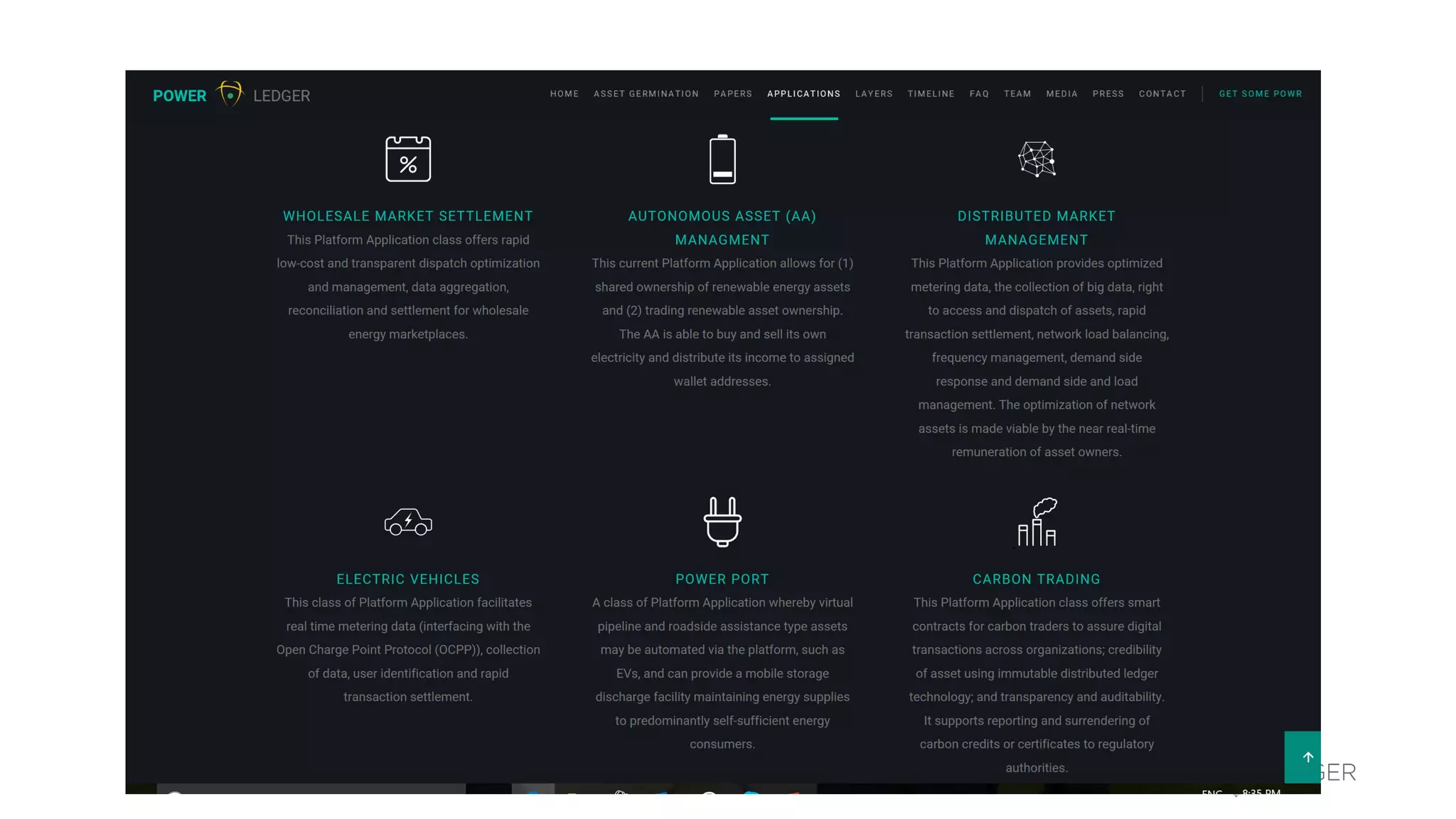
• metering and revenue collection for utility services,
• monetisation of energy capacity, storage and ancillary service
provision,
• embedded network management,
• settlement of transactions relating to the selling of energy and
charging and use of electric vehicles.
• related financial payments and credit systems for energy networks
and energy related applications
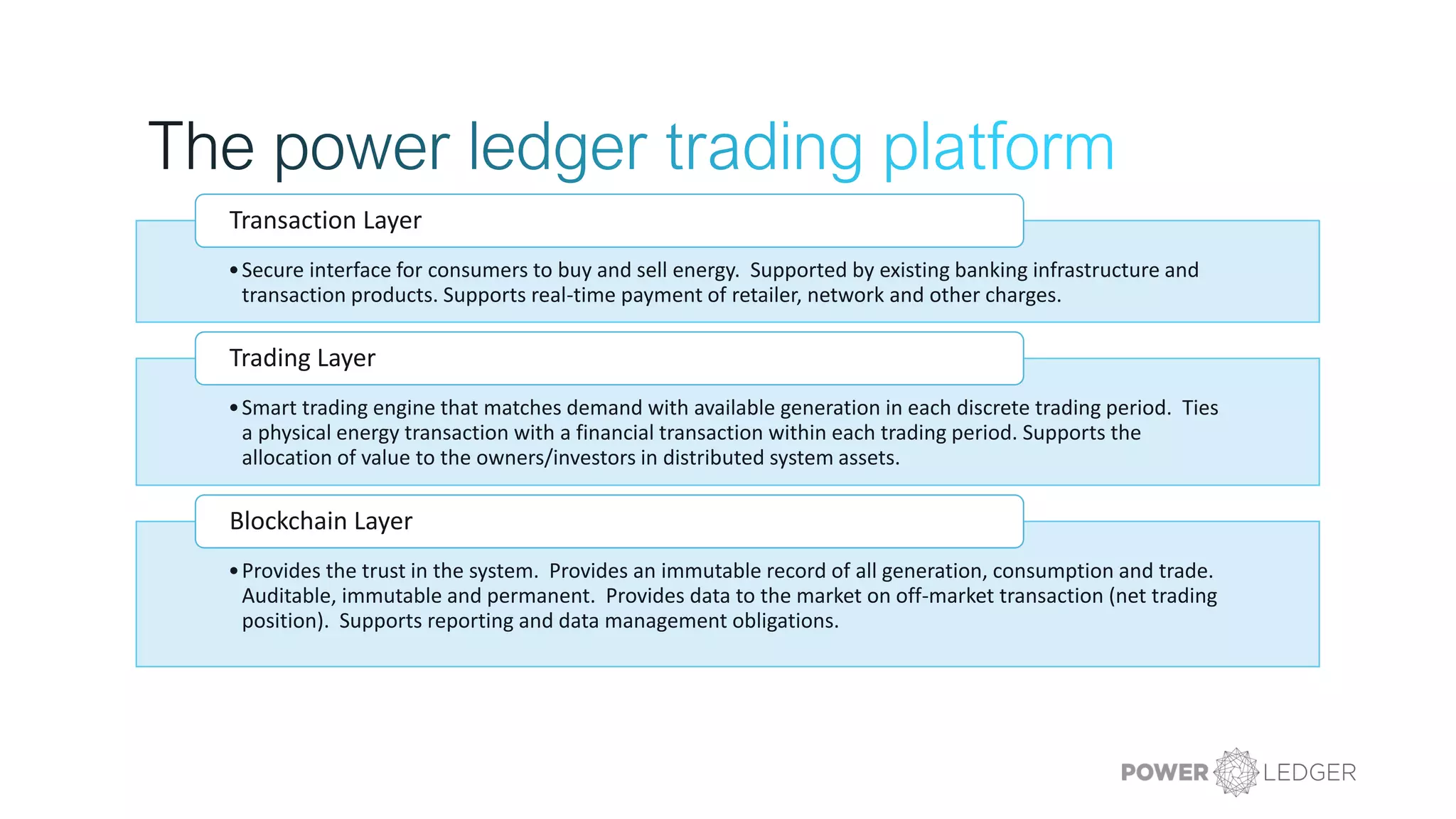
•Secure interface for consumers to buy and sell energy. Supported by existing banking infrastructure and
transaction products. Supports real-time payment of retailer, network and other charges.
Transaction Layer
•Smart trading engine that matches demand with available generation in each discrete trading period. Ties
a physical energy transaction with a financial transaction within each trading period. Supports the
allocation of value to the owners/investors in distributed system assets.
Trading Layer
•Provides the trust in the system. Provides an immutable record of all generation, consumption and trade.
Auditable, immutable and permanent. Provides data to the market on off-market transaction (net trading
position). Supports reporting and data management obligations.
Blockchain Layer
• Power Ledger youtube channel:
• https://www.youtube.com/watch?v=jMqMRs34_u8
• https://www.youtube.com/watch?v=7U0YojaoigI
Vinod tiwari-blockchain-for-microgrid-transactions

Vinod tiwari-blockchain-for-microgrid-transactions

  • 1.
    Vinod Tiwari Head ofSales and Business Development, Power Ledger 17 Nov, 2017
  • 2.
  • 3.
  • 4.
  • 5.
    Short Term EnergyMarket (STEM)
  • 6.
    Typical Example Energy: approx.25% Network Charges: approx. 40% AEMO Capacity charges: approx. 25% Renewable Energy: approx. 8% Others: approx. 2%
  • 7.
    Source: http://pv-map.apvi.org.au Source:Jemma Green and Peter Newman
  • 8.
  • 10.
    ❖ Consumer-focused P2Ptrading platform that settles trades across the distribution network at predetermined intervals. ❖ Encourage efficient PV up-take, reduce consumers’ power bills and reduce emissions. ❖ Reduced load defection preserves the value of network assets. ❖ Trading platform provides product development and customer service opportunities.
  • 12.
    What is theblockchain - A database (ledger) that no one is in control of but is very secure - It can be used to process transactions, act as a hallmark or track provenance - Information in the ledger is held in nodes (computers) and to change an entry in the ledger, majority agreement (consensus) of the nodes is required - Uses cryptography
  • 13.
    ❖ Fast, cheap,secure, transparent settlement of multi-party transactions. ❖ Formation of dynamic trading ecosystems. ❖ Development of autonomous, secure and transparent distributed transactive markets with low-cost and virtually instantaneous market reconciliation and settlement. ❖ Trading arrangements between any number of counterparties where each counterparty is able to trust the trading environment is free from the interference or interpretation of any other counterparty.
  • 15.
  • 17.
    • A microgridis a localised grouping of distributed electricity sources, loads and storage mechanisms that can operate both as part of the central grid or independently as an island • A microgrid can be powered by distributed generators, batteries, and/or renewable resources like solar panels, wind, diesel etc. Depending on how it’s fueled and how its requirements are managed, a microgrid might run indefinitely
  • 18.
    • It isa locally controlled system • it can function both connected to the traditional grid (megagrid) or as an electrical island
  • 19.
  • 20.
  • 21.
  • 24.
    • Embedded network arrangement •Solar powered apartments • Behind the meter billing, peer to peer energy trading
  • 25.
    • metering andrevenue collection for utility services, • monetisation of energy capacity, storage and ancillary service provision, • embedded network management, • settlement of transactions relating to the selling of energy and charging and use of electric vehicles. • related financial payments and credit systems for energy networks and energy related applications
  • 27.
    •Secure interface forconsumers to buy and sell energy. Supported by existing banking infrastructure and transaction products. Supports real-time payment of retailer, network and other charges. Transaction Layer •Smart trading engine that matches demand with available generation in each discrete trading period. Ties a physical energy transaction with a financial transaction within each trading period. Supports the allocation of value to the owners/investors in distributed system assets. Trading Layer •Provides the trust in the system. Provides an immutable record of all generation, consumption and trade. Auditable, immutable and permanent. Provides data to the market on off-market transaction (net trading position). Supports reporting and data management obligations. Blockchain Layer
  • 34.
    • Power Ledgeryoutube channel: • https://www.youtube.com/watch?v=jMqMRs34_u8 • https://www.youtube.com/watch?v=7U0YojaoigI