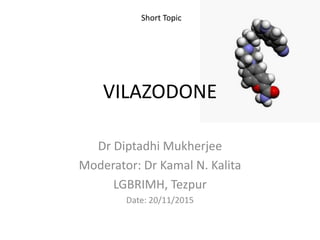
Dr Diptadhi Mukherjee
Moderator: Dr Kamal N. Kalita
LGBRIMH, Tezpur
Date: 20/11/2015
Short Topic
VILAZODONE
Outline
• Introduction
• History of Vilazodone
• Pharmacokinetics
• Pharmacodynamics
• Dosing and administration
• Clinical trials
• Adverse effects
• Special populations
• Conclusion
Introduction
• Major depressive disorder (MDD)- the third leading cause of
moderate to severe disability and of disease burden
worldwide.
• History of Anti-depressant and their evolution
• Numerous antidepressants available (31 FDA approved and
few others).
• Despite that many patients with depression not achieving
adequate response
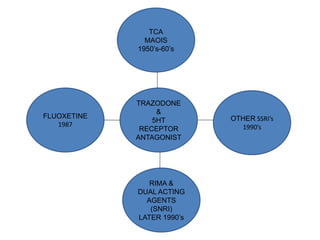
TCA
MAOIS
1950’s-60’s
TRAZODONE
&
5HT
RECEPTOR
ANTAGONIST
RIMA &
DUAL ACTING
AGENTS
(SNRI)
LATER 1990’s
FLUOXETINE
1987
OTHER SSRI’s
1990’s
• Search for novel antidepressants with different mechanism of
actions is continuing
• Vilazodone is one of the newest of novel antidepressant.
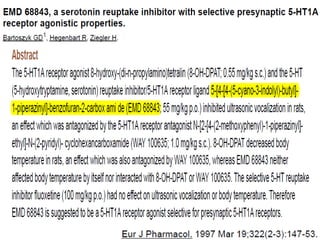
• The chemical compound was originally developed by Merck
KGaA (Germany).
• Approved by the FDA for use in the United States to treat
major depressive disorder in Adults in 2011
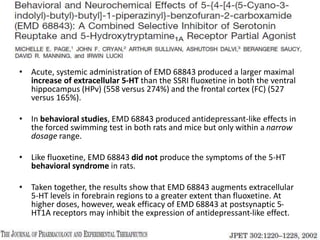
• Acute, systemic administration of EMD 68843 produced a larger maximal
increase of extracellular 5-HT than the SSRI fluoxetine in both the ventral
hippocampus (HPv) (558 versus 274%) and the frontal cortex (FC) (527
versus 165%).
• In behavioral studies, EMD 68843 produced antidepressant-like effects in
the forced swimming test in both rats and mice but only within a narrow
dosage range.
• Like fluoxetine, EMD 68843 did not produce the symptoms of the 5-HT
behavioral syndrome in rats.
• Taken together, the results show that EMD 68843 augments extracellular
5-HT levels in forebrain regions to a greater extent than fluoxetine. At
higher doses, however, weak efficacy of EMD 68843 at postsynaptic 5-
HT1A receptors may inhibit the expression of antidepressant-like effect.
History of Vilazodone
• Vilazodone was originally discovered by Merck KGaA
• After early clinical development, the drug was licensed to GlaxoSmithKline
(NYSE:GSK).
• Following disappointing Phase II data, the licensing agreement was
abandoned in 2003 and all rights to vilazodone were returned to Merck
KGaA.
• Later discovered that patients exhibiting a specific genetic biomarker,
known as PGx, responded better to treatment with vilazodone- licensed to
Genaissance Pharmaceuticals, a company specializing in
pharmacogenomic therapies, or "personalized medicine."
• In 2005, ‘Clinical Data’ acquired ‘Genaissance’
History of Vilazodone cont…
• While the new company originally planned to submit the drug for approval
for only those with the PGx marker, it was found during testing that
Vilazodone did, in fact, show a statistically significant improvement of
depression symptoms versus placebo in broader patient populations
• In February of 2010, Clinical Data announced it would be submitting the
vilazodone NDA for the treatment of major depressive disorder without
the companion biomarker test.
• The NDA was accepted by the FDA.
• Approved by the FDA for use in the United States to treat major
depressive disorder in Adults in 2011
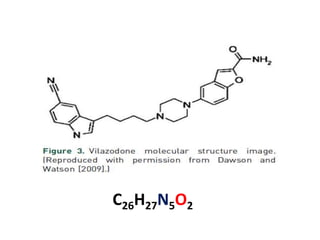
C26H27N5O2
Pharmacokinetics
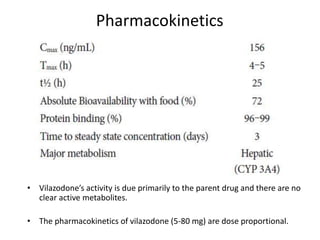
• Vilazodone’s activity is due primarily to the parent drug and there are no
clear active metabolites.
• The pharmacokinetics of vilazodone (5-80 mg) are dose proportional.
Pharmacodynamics
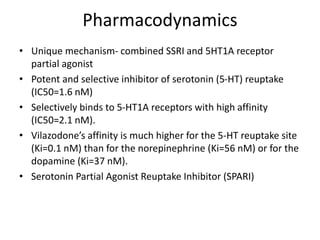
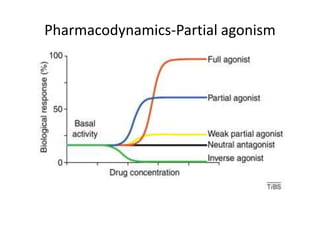
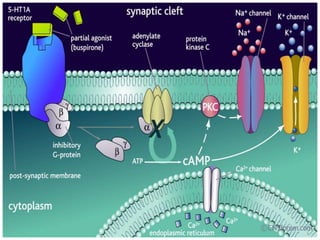
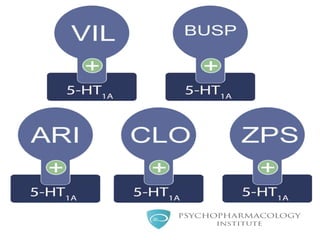
• Unique mechanism- combined SSRI and 5HT1A receptor
partial agonist
• Potent and selective inhibitor of serotonin (5-HT) reuptake
(IC50=1.6 nM)
• Selectively binds to 5-HT1A receptors with high affinity
(IC50=2.1 nM).
• Vilazodone’s affinity is much higher for the 5-HT reuptake site
(Ki=0.1 nM) than for the norepinephrine (Ki=56 nM) or for the
dopamine (Ki=37 nM).
• Serotonin Partial Agonist Reuptake Inhibitor (SPARI)
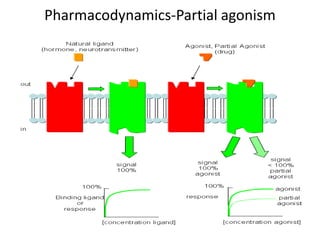
Pharmacodynamics-Partial agonism
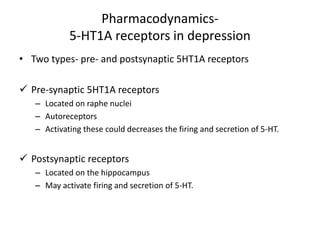
Pharmacodynamics-
5-HT1A receptors in depression
• Two types- pre- and postsynaptic 5HT1A receptors
 Pre-synaptic 5HT1A receptors
– Located on raphe nuclei
– Autoreceptors
– Activating these could decreases the firing and secretion of 5-HT.
 Postsynaptic receptors
– Located on the hippocampus
– May activate firing and secretion of 5-HT.
Pharmacodynamics cont..
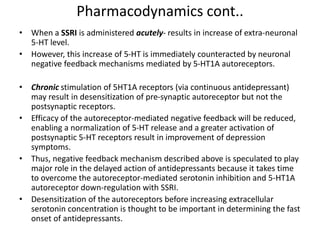
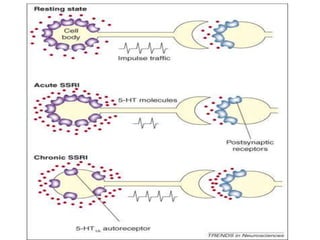
• When a SSRI is administered acutely- results in increase of extra-neuronal
5-HT level.
• However, this increase of 5-HT is immediately counteracted by neuronal
negative feedback mechanisms mediated by 5-HT1A autoreceptors.
• Chronic stimulation of 5HT1A receptors (via continuous antidepressant)
may result in desensitization of pre-synaptic autoreceptor but not the
postsynaptic receptors.
• Efficacy of the autoreceptor-mediated negative feedback will be reduced,
enabling a normalization of 5-HT release and a greater activation of
postsynaptic 5-HT receptors result in improvement of depression
symptoms.
• Thus, negative feedback mechanism described above is speculated to play
major role in the delayed action of antidepressants because it takes time
to overcome the autoreceptor-mediated serotonin inhibition and 5-HT1A
autoreceptor down-regulation with SSRI.
• Desensitization of the autoreceptors before increasing extracellular
serotonin concentration is thought to be important in determining the fast
onset of antidepressants.
Pharmacodynamics cont..
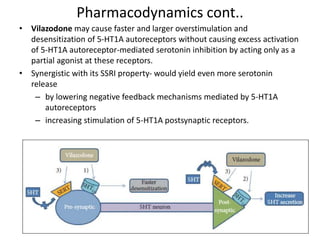
• Vilazodone may cause faster and larger overstimulation and
desensitization of 5-HT1A autoreceptors without causing excess activation
of 5-HT1A autoreceptor-mediated serotonin inhibition by acting only as a
partial agonist at these receptors.
• Synergistic with its SSRI property- would yield even more serotonin
release
– by lowering negative feedback mechanisms mediated by 5-HT1A
autoreceptors
– increasing stimulation of 5-HT1A postsynaptic receptors.
Similar to the common depression treatment strategy of
augmenting SSRI monotherapy with the commercially
available 5HT1A receptor partial agonist (like, buspirone)??
• Buspirone -weaker 5HT1A partial agonists than vilazodone
– estimated to occupy fewer 5HT1A receptors for a shorter time at
clinically administered doses
– bind to 5HT1A receptors with lower affinity than 5HT itself, whereas
vilazodone binds to 5HT1A receptors with higher affinity than 5HT.
• On buspirone augmentation – buspirone and SSRI are dosed
so that about 10–20% of 5HT1A receptors are occupied versus
80% of SERTs are blocked by SSRI.
• On the other hand, human neuroimaging studies suggest that
vilazodone is dosed so that about 50% of both SERTs and
5HT1A receptors are occupied.
• ?Accounts for clinically significant differences / account for
the apparent lesser incidence of sexual dysfunction with
vilazodone than with either SSRIs alone or with the
augmentation of SSRIs with buspirone.
• Advantages-
– Vilazodone allows immediate, simultaneous combination of these two
pharmacodynamic properties at the outset of treatment.
– In theory produce a smaller side effect burden compaired to second-
generation antipsychotic (SGA) augmentation , especially given its
absence of metabolic and movement disorders.
• ?? Other combinations like SDA with Vilazodone or Buspirone
with Vilazodone or SSRI with Vilazodone
Dosing and administration
Usual Dosage Range
• 40 mg/day
Dosage Forms
• Tablets 10 mg, 20 mg, 40 mg
Recommended titration schedule
• Initial 10 mg/day; increase to 20 mg/day after one
week; increase to 40 mg/day after one more week;
should be taken with food
Dosing Tips
– Given once daily, any time of day tolerated but must be
administered with food, because taking on an empty stomach
may reduce absorption of vilazodone by 50%
– If intolerable anxiety, insomnia, agitation, akathisia, or activation
occur either upon dosing initiation or discontinuation, consider
the possibility of activating a bipolar disorder and switch to a
mood stabilizer or an atypical antipsychotic
– No minimally effective dose has been established, so
theoretically possible that doses lower than 40 mg daily may be
effective in some patients
– Doses higher than 40 mg daily have not been well studied-
higher than 40 mg may be effective in some patients,
particularly those with treatment-resistant depression who fail
to respond adequately to 40 mg daily
Overdose
• Few reports of vilazodone overdose
• No fatalities; serotonin syndrome, lethargy, restlessness, hallucinations,
disorientation
Long-Term Use
• Has not been evaluated in controlled studies, but long-term treatment of
major depressive disorder is generally necessary
Habit Forming
• No
How to Stop
• Tapering to avoid potential withdrawal reactions generally prudent
• Many patients tolerate 50% dose reduction for 3 days, then another 50%
reduction for 3 days, then discontinuation
Drug Interaction
• Inhibitors of CYP450 3A4, such as nefazodone, fluoxetine, fluvoxamine,
erythromycin, amiodarone, protease inhibitors, ketoconazole and even
grapefruit juice, may decrease the clearance of vilazodone and thereby
raise its plasma levels, so dose should be reduced to 20 mg when co-
adminsteredwith strong CYP3A4 inhibitors
• Inducers of CYP450 3A4, such as carbamazepine, may increase clearance
of vilazodone and thus lower its plasma levels and possibly reduce
therapeutic effects
• Digoxin or coumadin- due to vilazodone’s high (96-99%) protein bound
may disrupt binding temporarily because it displaces these drugs into a
non-protein bound, free plasma state, which increases their availability
and activity.
Drug Interaction cont…
• Tramadol increases the risk of seizures in patients taking an
antidepressant
• MAO inhibitors- Can cause a fatal “serotonin syndrome” when combined-
so do not use with MAO inhibitors or for at least 14 days after MAOIs are
stopped/ Do not start an MAO inhibitor for at least 5 half-lives (5 to 7 days
for most drugs) after discontinuing vilazodone
• Anticoagulants (e.g., warfarin, NSAIDs) - Possible increased risk of
bleeding.
• Triptans- theoretically could cause weakness, hyperreflexia, and
incoordination when combined with, requiring careful monitoring of
patient
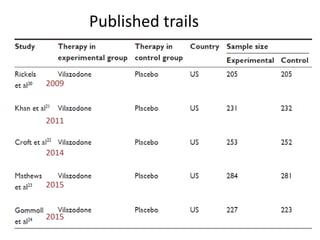
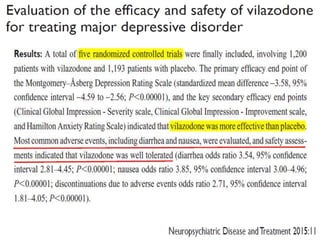
Published trails
2009
2011
2014
2015
2015
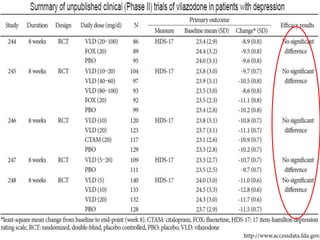
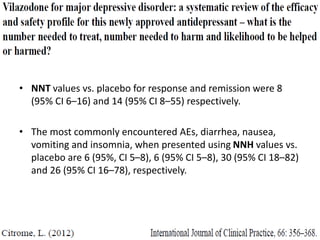
• NNT values vs. placebo for response and remission were 8
(95% CI 6–16) and 14 (95% CI 8–55) respectively.
• The most commonly encountered AEs, diarrhea, nausea,
vomiting and insomnia, when presented using NNH values vs.
placebo are 6 (95%, CI 5–8), 6 (95% CI 5–8), 30 (95% CI 18–82)
and 26 (95% CI 16–78), respectively.
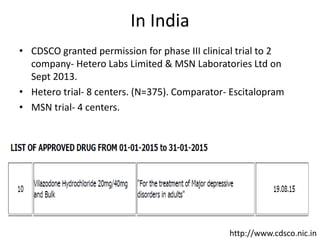
In India
• CDSCO granted permission for phase III clinical trial to 2
company- Hetero Labs Limited & MSN Laboratories Ltd on
Sept 2013.
• Hetero trial- 8 centers. (N=375). Comparator- Escitalopram
• MSN trial- 4 centers.
http://www.cdsco.nic.in
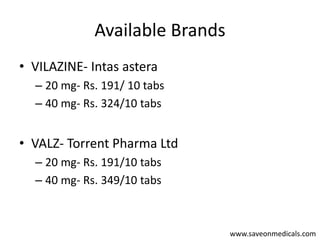
Available Brands
• VILAZINE- Intas astera
– 20 mg- Rs. 191/ 10 tabs
– 40 mg- Rs. 324/10 tabs
• VALZ- Torrent Pharma Ltd
– 20 mg- Rs. 191/10 tabs
– 40 mg- Rs. 349/10 tabs
www.saveonmedicals.com
Adverse effects
Mechanism of Side Effects
• Increases in serotonin concentrations at serotonin receptors
in parts of the brain and body other than those that cause
therapeutic actions (e.g., unwanted actions of serotonin in
sleep centers causing insomnia, unwanted actions of
serotonin in the gut causing diarrhea, etc.)
• Increasing serotonin can cause diminished dopamine release
and might contribute to emotional flattening, cognitive
slowing, and apathy in some patients
• Most side effects are immediate but often go away with time,
in contrast to most therapeutic effects, which are delayed and
are enhanced over time
Adverse effect cont…
• Nausea, diarrhea, vomiting
• Insomnia, dizziness
(patients with diagnosed or undiagnosed bipolar or psychotic disorders
may be more vulnerable to CNS-activating actions of serotonergic
antidepressants)
• Bruising and rare bleeding
• Rare hyponatremia (mostly in elderly patients and generally
reversible on discontinuation of vilazodone)
• Sexual dysfunction (men: delayed ejaculation; men and
women: decreased sexual desire, anorgasmia) slightly greater
than placebo and generally less than for SSRIs/SNRIs, but no
head-to-head studies
• Rare seizures
• Rare induction of mania and activation of suicidal ideation
Adverse effect cont…
• Many side effects are dose-dependent (i.e., they increase as
dose increases, or they reemerge until tolerance redevelops)
• Many side effects are time-dependent (i.e., they start
immediately upon dosing and upon each dose increase, but
go away with time)
• Precaution-
– Patients with history of seizure
– Patients with bipolar disorder unless treated with concomitant mood-
stabilizing agent
– In children (not approved )
Special populations
• Renal Impairment
– No dose adjustment necessary
• Hepatic Impairment
– No dose adjustment necessary for mild to moderate impairment
– Has not been studied in patients with severe hepatic impairment
• Cardiac Impairment
– Not systematically evaluated in patients with cardiac impairment
– Vilazodone has not shown any significant effect on blood pressure, heart rate,
or QT interval in placebo-controlled trials
– Treating depression with SSRIs in patients with acute angina or following
myocardial infarction may reduce cardiac events and improve survival as well
as mood
• Elderly
– No dose adjustment necessary
– Some patients may tolerate lower doses better
– Reduction in the risk of suicidality with antidepressants compared to placebo
in adults age 65 and older
Special populations cont..
• Children and Adolescents
– Safety and efficacy have not been established
– Use with caution, observing for activation of known or unknown
bipolar disorder and/ or suicidal ideation, and strongly consider
• Pregnancy
– Risk Category C [some animal studies have shown adverse effects; no
controlled studies in humans]
– Not generally recommended for use during pregnancy, especially
during first trimester
– Nonetheless, continuous treatment during pregnancy may be
necessary and has not been proven to be harmful to the fetus
– Must weigh the risk of treatment (first trimester fetal development,
third trimester newborn delivery) to the child against the risk of no
treatment (recurrence of depression, maternal health, infant bonding)
to the mother and child
Special populations cont..
– Exposure early in pregnancy may be associated with increased risk of
septal heart defects (absolute risk is small)
– Use beyond the 20th week of pregnancy may be associated with
increased risk of pulmonary hypertension in newborns, although- not
proven
– Exposure late in pregnancy may be associated with increased risk of
gestational hypertension, increase chance of hemorrhage and
preeclampsia
– Neonates exposure- complications requiring prolonged hospitalization,
respiratory support, and tube feeding.
• Due to either a direct toxic effect of SSRIs and SNRIs or, possibly, a drug
discontinuation syndrome. Symptoms include respiratory distress, cyanosis, apnea,
seizures, temperature instability, feeding difficulty, vomiting, hypoglycemia,
hypotonia, hypertonia, hyperreflexia, tremor, jitteriness, irritability, and constant
crying.
• Breast Feeding
– Unknown if secreted in human breast milk
Conclusion
• Further head to head study with established SSRI much
needed.
• Apply caution and look for new adverse effect.
• Availability and cost- major issue.
• Competition with other novel antidepressant like
Vortioxetine.
• Exploration of possible other uses of the drug.
References
• Essential psychopharmacology Prescriber’s guide- Stephen M. Stahl. 5th
ed.
• Stahl’s essential psychopharmacology : neuroscientific basis and practical
application / Stephen M. Stahl– 4th ed.
• Rickels K, Athanasiou M, Robinson D, et al. Evidence for efficacy and
tolerability of vilazodone in the treatment of major depressive disorder: a
randomized, double-blind, placebocontrolled trial. J Clin Psychiatry
2009;e1–e8.
• Wang, SM; Han, C; Lee, SJ; Patkar, AA; Masand, PS; Pae, CU (August 2013).
"A review of current evidence for vilazodone in major depressive
disorder.". International Journal of Psychiatry in Clinical Practice 17 (3):
160–9.
• "VIIBRYD (vilazodone hydrochloride) tablet VIIBRYD (vilazodone
hydrochloride) kit [Forest Laboratories, Inc.]". DailyMed. Forest
Laboratories, Inc. December 2012.
THANK YOU

Vilazodone

  • 1.
    Dr Diptadhi Mukherjee Moderator:Dr Kamal N. Kalita LGBRIMH, Tezpur Date: 20/11/2015 Short Topic VILAZODONE
  • 2.
    Outline • Introduction • Historyof Vilazodone • Pharmacokinetics • Pharmacodynamics • Dosing and administration • Clinical trials • Adverse effects • Special populations • Conclusion
  • 3.
    Introduction • Major depressivedisorder (MDD)- the third leading cause of moderate to severe disability and of disease burden worldwide. • History of Anti-depressant and their evolution • Numerous antidepressants available (31 FDA approved and few others). • Despite that many patients with depression not achieving adequate response
  • 4.
  • 5.
    • Search fornovel antidepressants with different mechanism of actions is continuing • Vilazodone is one of the newest of novel antidepressant. • The chemical compound was originally developed by Merck KGaA (Germany). • Approved by the FDA for use in the United States to treat major depressive disorder in Adults in 2011
  • 7.
    • Acute, systemicadministration of EMD 68843 produced a larger maximal increase of extracellular 5-HT than the SSRI fluoxetine in both the ventral hippocampus (HPv) (558 versus 274%) and the frontal cortex (FC) (527 versus 165%). • In behavioral studies, EMD 68843 produced antidepressant-like effects in the forced swimming test in both rats and mice but only within a narrow dosage range. • Like fluoxetine, EMD 68843 did not produce the symptoms of the 5-HT behavioral syndrome in rats. • Taken together, the results show that EMD 68843 augments extracellular 5-HT levels in forebrain regions to a greater extent than fluoxetine. At higher doses, however, weak efficacy of EMD 68843 at postsynaptic 5- HT1A receptors may inhibit the expression of antidepressant-like effect.
  • 8.
    History of Vilazodone •Vilazodone was originally discovered by Merck KGaA • After early clinical development, the drug was licensed to GlaxoSmithKline (NYSE:GSK). • Following disappointing Phase II data, the licensing agreement was abandoned in 2003 and all rights to vilazodone were returned to Merck KGaA. • Later discovered that patients exhibiting a specific genetic biomarker, known as PGx, responded better to treatment with vilazodone- licensed to Genaissance Pharmaceuticals, a company specializing in pharmacogenomic therapies, or "personalized medicine." • In 2005, ‘Clinical Data’ acquired ‘Genaissance’
  • 9.
    History of Vilazodonecont… • While the new company originally planned to submit the drug for approval for only those with the PGx marker, it was found during testing that Vilazodone did, in fact, show a statistically significant improvement of depression symptoms versus placebo in broader patient populations • In February of 2010, Clinical Data announced it would be submitting the vilazodone NDA for the treatment of major depressive disorder without the companion biomarker test. • The NDA was accepted by the FDA. • Approved by the FDA for use in the United States to treat major depressive disorder in Adults in 2011
  • 10.
  • 11.
    Pharmacokinetics • Vilazodone’s activityis due primarily to the parent drug and there are no clear active metabolites. • The pharmacokinetics of vilazodone (5-80 mg) are dose proportional.
  • 12.
    Pharmacodynamics • Unique mechanism-combined SSRI and 5HT1A receptor partial agonist • Potent and selective inhibitor of serotonin (5-HT) reuptake (IC50=1.6 nM) • Selectively binds to 5-HT1A receptors with high affinity (IC50=2.1 nM). • Vilazodone’s affinity is much higher for the 5-HT reuptake site (Ki=0.1 nM) than for the norepinephrine (Ki=56 nM) or for the dopamine (Ki=37 nM). • Serotonin Partial Agonist Reuptake Inhibitor (SPARI)
  • 13.
  • 14.
  • 15.
    Pharmacodynamics- 5-HT1A receptors indepression • Two types- pre- and postsynaptic 5HT1A receptors  Pre-synaptic 5HT1A receptors – Located on raphe nuclei – Autoreceptors – Activating these could decreases the firing and secretion of 5-HT.  Postsynaptic receptors – Located on the hippocampus – May activate firing and secretion of 5-HT.
  • 17.
    Pharmacodynamics cont.. • Whena SSRI is administered acutely- results in increase of extra-neuronal 5-HT level. • However, this increase of 5-HT is immediately counteracted by neuronal negative feedback mechanisms mediated by 5-HT1A autoreceptors. • Chronic stimulation of 5HT1A receptors (via continuous antidepressant) may result in desensitization of pre-synaptic autoreceptor but not the postsynaptic receptors. • Efficacy of the autoreceptor-mediated negative feedback will be reduced, enabling a normalization of 5-HT release and a greater activation of postsynaptic 5-HT receptors result in improvement of depression symptoms. • Thus, negative feedback mechanism described above is speculated to play major role in the delayed action of antidepressants because it takes time to overcome the autoreceptor-mediated serotonin inhibition and 5-HT1A autoreceptor down-regulation with SSRI. • Desensitization of the autoreceptors before increasing extracellular serotonin concentration is thought to be important in determining the fast onset of antidepressants.
  • 19.
    Pharmacodynamics cont.. • Vilazodonemay cause faster and larger overstimulation and desensitization of 5-HT1A autoreceptors without causing excess activation of 5-HT1A autoreceptor-mediated serotonin inhibition by acting only as a partial agonist at these receptors. • Synergistic with its SSRI property- would yield even more serotonin release – by lowering negative feedback mechanisms mediated by 5-HT1A autoreceptors – increasing stimulation of 5-HT1A postsynaptic receptors.
  • 21.
    Similar to thecommon depression treatment strategy of augmenting SSRI monotherapy with the commercially available 5HT1A receptor partial agonist (like, buspirone)?? • Buspirone -weaker 5HT1A partial agonists than vilazodone – estimated to occupy fewer 5HT1A receptors for a shorter time at clinically administered doses – bind to 5HT1A receptors with lower affinity than 5HT itself, whereas vilazodone binds to 5HT1A receptors with higher affinity than 5HT. • On buspirone augmentation – buspirone and SSRI are dosed so that about 10–20% of 5HT1A receptors are occupied versus 80% of SERTs are blocked by SSRI. • On the other hand, human neuroimaging studies suggest that vilazodone is dosed so that about 50% of both SERTs and 5HT1A receptors are occupied.
  • 22.
    • ?Accounts forclinically significant differences / account for the apparent lesser incidence of sexual dysfunction with vilazodone than with either SSRIs alone or with the augmentation of SSRIs with buspirone. • Advantages- – Vilazodone allows immediate, simultaneous combination of these two pharmacodynamic properties at the outset of treatment. – In theory produce a smaller side effect burden compaired to second- generation antipsychotic (SGA) augmentation , especially given its absence of metabolic and movement disorders. • ?? Other combinations like SDA with Vilazodone or Buspirone with Vilazodone or SSRI with Vilazodone
  • 23.
    Dosing and administration UsualDosage Range • 40 mg/day Dosage Forms • Tablets 10 mg, 20 mg, 40 mg Recommended titration schedule • Initial 10 mg/day; increase to 20 mg/day after one week; increase to 40 mg/day after one more week; should be taken with food
  • 24.
    Dosing Tips – Givenonce daily, any time of day tolerated but must be administered with food, because taking on an empty stomach may reduce absorption of vilazodone by 50% – If intolerable anxiety, insomnia, agitation, akathisia, or activation occur either upon dosing initiation or discontinuation, consider the possibility of activating a bipolar disorder and switch to a mood stabilizer or an atypical antipsychotic – No minimally effective dose has been established, so theoretically possible that doses lower than 40 mg daily may be effective in some patients – Doses higher than 40 mg daily have not been well studied- higher than 40 mg may be effective in some patients, particularly those with treatment-resistant depression who fail to respond adequately to 40 mg daily
  • 25.
    Overdose • Few reportsof vilazodone overdose • No fatalities; serotonin syndrome, lethargy, restlessness, hallucinations, disorientation Long-Term Use • Has not been evaluated in controlled studies, but long-term treatment of major depressive disorder is generally necessary Habit Forming • No How to Stop • Tapering to avoid potential withdrawal reactions generally prudent • Many patients tolerate 50% dose reduction for 3 days, then another 50% reduction for 3 days, then discontinuation
  • 26.
    Drug Interaction • Inhibitorsof CYP450 3A4, such as nefazodone, fluoxetine, fluvoxamine, erythromycin, amiodarone, protease inhibitors, ketoconazole and even grapefruit juice, may decrease the clearance of vilazodone and thereby raise its plasma levels, so dose should be reduced to 20 mg when co- adminsteredwith strong CYP3A4 inhibitors • Inducers of CYP450 3A4, such as carbamazepine, may increase clearance of vilazodone and thus lower its plasma levels and possibly reduce therapeutic effects • Digoxin or coumadin- due to vilazodone’s high (96-99%) protein bound may disrupt binding temporarily because it displaces these drugs into a non-protein bound, free plasma state, which increases their availability and activity.
  • 27.
    Drug Interaction cont… •Tramadol increases the risk of seizures in patients taking an antidepressant • MAO inhibitors- Can cause a fatal “serotonin syndrome” when combined- so do not use with MAO inhibitors or for at least 14 days after MAOIs are stopped/ Do not start an MAO inhibitor for at least 5 half-lives (5 to 7 days for most drugs) after discontinuing vilazodone • Anticoagulants (e.g., warfarin, NSAIDs) - Possible increased risk of bleeding. • Triptans- theoretically could cause weakness, hyperreflexia, and incoordination when combined with, requiring careful monitoring of patient
  • 29.
  • 31.
    • NNT valuesvs. placebo for response and remission were 8 (95% CI 6–16) and 14 (95% CI 8–55) respectively. • The most commonly encountered AEs, diarrhea, nausea, vomiting and insomnia, when presented using NNH values vs. placebo are 6 (95%, CI 5–8), 6 (95% CI 5–8), 30 (95% CI 18–82) and 26 (95% CI 16–78), respectively.
  • 32.
    In India • CDSCOgranted permission for phase III clinical trial to 2 company- Hetero Labs Limited & MSN Laboratories Ltd on Sept 2013. • Hetero trial- 8 centers. (N=375). Comparator- Escitalopram • MSN trial- 4 centers. http://www.cdsco.nic.in
  • 33.
    Available Brands • VILAZINE-Intas astera – 20 mg- Rs. 191/ 10 tabs – 40 mg- Rs. 324/10 tabs • VALZ- Torrent Pharma Ltd – 20 mg- Rs. 191/10 tabs – 40 mg- Rs. 349/10 tabs www.saveonmedicals.com
  • 34.
    Adverse effects Mechanism ofSide Effects • Increases in serotonin concentrations at serotonin receptors in parts of the brain and body other than those that cause therapeutic actions (e.g., unwanted actions of serotonin in sleep centers causing insomnia, unwanted actions of serotonin in the gut causing diarrhea, etc.) • Increasing serotonin can cause diminished dopamine release and might contribute to emotional flattening, cognitive slowing, and apathy in some patients • Most side effects are immediate but often go away with time, in contrast to most therapeutic effects, which are delayed and are enhanced over time
  • 35.
    Adverse effect cont… •Nausea, diarrhea, vomiting • Insomnia, dizziness (patients with diagnosed or undiagnosed bipolar or psychotic disorders may be more vulnerable to CNS-activating actions of serotonergic antidepressants) • Bruising and rare bleeding • Rare hyponatremia (mostly in elderly patients and generally reversible on discontinuation of vilazodone) • Sexual dysfunction (men: delayed ejaculation; men and women: decreased sexual desire, anorgasmia) slightly greater than placebo and generally less than for SSRIs/SNRIs, but no head-to-head studies • Rare seizures • Rare induction of mania and activation of suicidal ideation
  • 36.
    Adverse effect cont… •Many side effects are dose-dependent (i.e., they increase as dose increases, or they reemerge until tolerance redevelops) • Many side effects are time-dependent (i.e., they start immediately upon dosing and upon each dose increase, but go away with time) • Precaution- – Patients with history of seizure – Patients with bipolar disorder unless treated with concomitant mood- stabilizing agent – In children (not approved )
  • 37.
    Special populations • RenalImpairment – No dose adjustment necessary • Hepatic Impairment – No dose adjustment necessary for mild to moderate impairment – Has not been studied in patients with severe hepatic impairment • Cardiac Impairment – Not systematically evaluated in patients with cardiac impairment – Vilazodone has not shown any significant effect on blood pressure, heart rate, or QT interval in placebo-controlled trials – Treating depression with SSRIs in patients with acute angina or following myocardial infarction may reduce cardiac events and improve survival as well as mood • Elderly – No dose adjustment necessary – Some patients may tolerate lower doses better – Reduction in the risk of suicidality with antidepressants compared to placebo in adults age 65 and older
  • 38.
    Special populations cont.. •Children and Adolescents – Safety and efficacy have not been established – Use with caution, observing for activation of known or unknown bipolar disorder and/ or suicidal ideation, and strongly consider • Pregnancy – Risk Category C [some animal studies have shown adverse effects; no controlled studies in humans] – Not generally recommended for use during pregnancy, especially during first trimester – Nonetheless, continuous treatment during pregnancy may be necessary and has not been proven to be harmful to the fetus – Must weigh the risk of treatment (first trimester fetal development, third trimester newborn delivery) to the child against the risk of no treatment (recurrence of depression, maternal health, infant bonding) to the mother and child
  • 39.
    Special populations cont.. –Exposure early in pregnancy may be associated with increased risk of septal heart defects (absolute risk is small) – Use beyond the 20th week of pregnancy may be associated with increased risk of pulmonary hypertension in newborns, although- not proven – Exposure late in pregnancy may be associated with increased risk of gestational hypertension, increase chance of hemorrhage and preeclampsia – Neonates exposure- complications requiring prolonged hospitalization, respiratory support, and tube feeding. • Due to either a direct toxic effect of SSRIs and SNRIs or, possibly, a drug discontinuation syndrome. Symptoms include respiratory distress, cyanosis, apnea, seizures, temperature instability, feeding difficulty, vomiting, hypoglycemia, hypotonia, hypertonia, hyperreflexia, tremor, jitteriness, irritability, and constant crying. • Breast Feeding – Unknown if secreted in human breast milk
  • 40.
    Conclusion • Further headto head study with established SSRI much needed. • Apply caution and look for new adverse effect. • Availability and cost- major issue. • Competition with other novel antidepressant like Vortioxetine. • Exploration of possible other uses of the drug.
  • 41.
    References • Essential psychopharmacologyPrescriber’s guide- Stephen M. Stahl. 5th ed. • Stahl’s essential psychopharmacology : neuroscientific basis and practical application / Stephen M. Stahl– 4th ed. • Rickels K, Athanasiou M, Robinson D, et al. Evidence for efficacy and tolerability of vilazodone in the treatment of major depressive disorder: a randomized, double-blind, placebocontrolled trial. J Clin Psychiatry 2009;e1–e8. • Wang, SM; Han, C; Lee, SJ; Patkar, AA; Masand, PS; Pae, CU (August 2013). "A review of current evidence for vilazodone in major depressive disorder.". International Journal of Psychiatry in Clinical Practice 17 (3): 160–9. • "VIIBRYD (vilazodone hydrochloride) tablet VIIBRYD (vilazodone hydrochloride) kit [Forest Laboratories, Inc.]". DailyMed. Forest Laboratories, Inc. December 2012.
  • 42.

Editor's Notes

  • #2 Short Topic
  • #5 In 1965 “Catecholaminergic hypothesis” was the first to be postulated by Joseph J. Schildkraut In 1970, Izyaslav P. Lapin and Gregory F. Oxenkrug postulated the serotonergic theory of depression
  • #22 This suggests that administration of buspirone as an augmenting agent to an SSRI/SNRI likely results in 5HT1A receptor occupancy that occurs more robustly in states of low 5HT levels and not as robustly in states of high 5HT levels, whereas administration of vilazodone results in binding to 5HT1A receptors even in the presence of 5HT. Simultaneous combination of these two pharmacodynamic properties at the outset of treatment
  • #23 Merely theoritical
  • #30 2009
  • #42 Viibryd