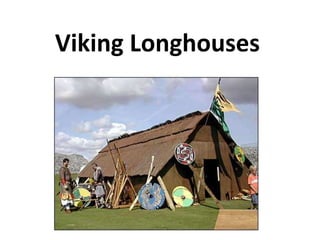
Viking Longhouses
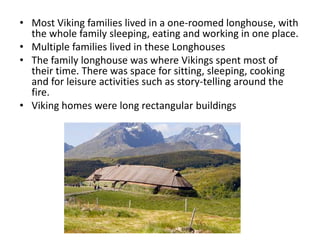
• Most Viking families lived in a one-roomed longhouse, with
the whole family sleeping, eating and working in one place.
• Multiple families lived in these Longhouses
• The family longhouse was where Vikings spent most of
their time. There was space for sitting, sleeping, cooking
and for leisure activities such as story-telling around the
fire.
• Viking homes were long rectangular buildings
How it was built
• Longhouses were usually made of wood with
stone footings as a base.
• The roof was usually made from turf, which
could be replaced periodically.
• The roof of the longhouse had a hole, through
which smoke from the central fire, which was
used for cooking and as a source of heat,
could escape
Life in the Longhouse
• The main living area of the longhouse was around
the fire.
• Around the outside of the room were benches,
covered in animal fur or skin, to provide extra
warmth and comfort.
• The only light came from the door, roof opening
and the fire.
• The poorest families shared their living quarters
with the family’s animals.
Outside the Longhouse
• Most families had access to at least a small
yard, where animals and non-perishable
belongings could be kept
• The majority of longhouses were grouped
together, probably to provide protection in an
uncertain and often violent age.

Viking longhouses

  • 1.
  • 2.
    • Most Vikingfamilies lived in a one-roomed longhouse, with the whole family sleeping, eating and working in one place. • Multiple families lived in these Longhouses • The family longhouse was where Vikings spent most of their time. There was space for sitting, sleeping, cooking and for leisure activities such as story-telling around the fire. • Viking homes were long rectangular buildings
  • 3.
    How it wasbuilt • Longhouses were usually made of wood with stone footings as a base. • The roof was usually made from turf, which could be replaced periodically. • The roof of the longhouse had a hole, through which smoke from the central fire, which was used for cooking and as a source of heat, could escape
  • 4.
    Life in theLonghouse • The main living area of the longhouse was around the fire. • Around the outside of the room were benches, covered in animal fur or skin, to provide extra warmth and comfort. • The only light came from the door, roof opening and the fire. • The poorest families shared their living quarters with the family’s animals.
  • 5.
    Outside the Longhouse •Most families had access to at least a small yard, where animals and non-perishable belongings could be kept • The majority of longhouses were grouped together, probably to provide protection in an uncertain and often violent age.