The Water Cycle
Sunshine
   The sun will shine
    on water located in
    various areas
    making it warmer.
    This causes the
    water to eventually
    turn into vapour.
    This vapour
    becomes a cloud.
Evaporation
                 Evaporation occurs
                  when the sun heats
                  water turning it into
                  water vapour. This
                  vapor leaves its
                  source and
                  becomes part of a
                  cloud.
Rain
   As evaporation
    occurs, the water
    vapour becomes
    clouds. These clouds
    get so full of water
    that water droplets
    (rain) starts to fall. It
    falls onto the ground
    and into lakes,
    rivers,and streams.
Snow
          When the air is
           really cold, it might
           snow rather than
           rain. It will remain
           on top of the ground
           until it melts. It will
           then turn into water
           and run into streams
           and rivers.
Mountains and Ice
   The snow that falls
    onto mountains may
    turn into ice
    because of the cold
    temperatures. This
    ice and snow may
    form glaciers.
Rivers and Streams
                 Rivers and steams
                  carry water to
                  reservoirs, lakes
                  and finally to the
                  ocean. Many carry
                  the water thousands
                  of miles.
Oceans
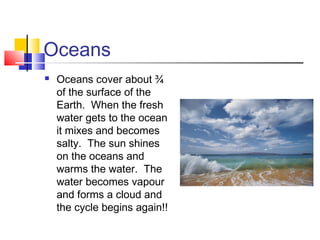
   Oceans cover about ¾
    of the surface of the
    Earth. When the fresh
    water gets to the ocean
    it mixes and becomes
    salty. The sun shines
    on the oceans and
    warms the water. The
    water becomes vapour
    and forms a cloud and
    the cycle begins again!!

Watercycle1

  • 1.
  • 2.
    Sunshine  The sun will shine on water located in various areas making it warmer. This causes the water to eventually turn into vapour. This vapour becomes a cloud.
  • 3.
    Evaporation  Evaporation occurs when the sun heats water turning it into water vapour. This vapor leaves its source and becomes part of a cloud.
  • 4.
    Rain  As evaporation occurs, the water vapour becomes clouds. These clouds get so full of water that water droplets (rain) starts to fall. It falls onto the ground and into lakes, rivers,and streams.
  • 5.
    Snow  When the air is really cold, it might snow rather than rain. It will remain on top of the ground until it melts. It will then turn into water and run into streams and rivers.
  • 6.
    Mountains and Ice  The snow that falls onto mountains may turn into ice because of the cold temperatures. This ice and snow may form glaciers.
  • 7.
    Rivers and Streams  Rivers and steams carry water to reservoirs, lakes and finally to the ocean. Many carry the water thousands of miles.
  • 8.
    Oceans  Oceans cover about ¾ of the surface of the Earth. When the fresh water gets to the ocean it mixes and becomes salty. The sun shines on the oceans and warms the water. The water becomes vapour and forms a cloud and the cycle begins again!!