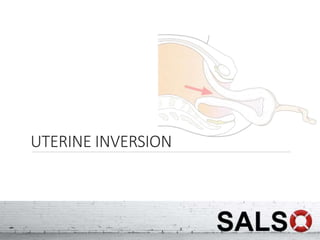
UTERINE INVERSION
GOALS
1. To learn how to diagnose uterine inversion
2. Steps to manage uterine inversion
UTERINE INVERSION
Incidence : 1 in 2000 deliveries
Causes:
Mismanagement of 3rd stage
Excessive cord traction (esp. with an unseparated placenta)
Excessive fundal pressure (esp. when uterus is poorly contracted @
atonic)
Placenta accreta
Congenital predisposition
Fundal implantation of placenta
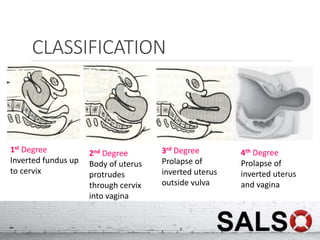
CLASSIFICATION
1st Degree
Inverted fundus up
to cervix
2nd Degree
Body of uterus
protrudes
through cervix
into vagina
3rd Degree
Prolapse of
inverted uterus
outside vulva
4th Degree
Prolapse of
inverted uterus
and vagina
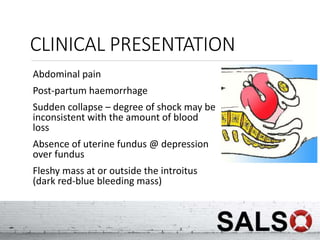
CLINICAL PRESENTATION
Abdominal pain
Post-partum haemorrhage
Sudden collapse – degree of shock may be
inconsistent with the amount of blood
loss
Absence of uterine fundus @ depression
over fundus
Fleshy mass at or outside the introitus
(dark red-blue bleeding mass)
MANAGEMENT
Prompt recognition and treatment
Should be suspected if profound shock without obvious
explanation
Treat vasovagal shock (i.e. ABC, IV access, GXM)
Placental should not be detached until the uterus is
replaced and contracted
Replace uterus immediately- several techniques
◦ Manual or hydrostatic replacement
◦ Surgical replacement
May require tocolytics, anaesthesia, or both
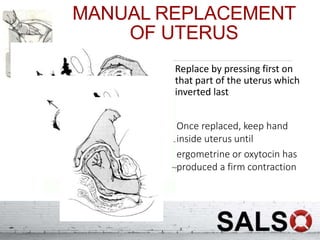
MANUAL REPLACEMENT
OF UTERUS
Replace by pressing first on
that part of the uterus which
inverted last
Once replaced, keep hand
inside uterus until
ergometrine or oxytocin has
produced a firm contraction
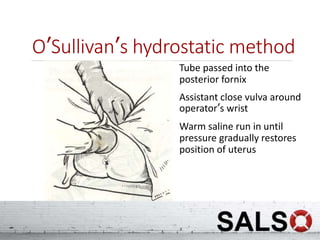
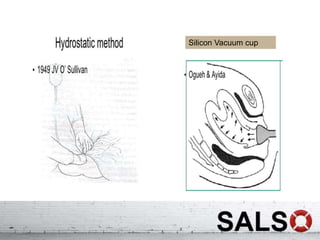
O’Sullivan’s hydrostatic method
Tube passed into the
posterior fornix
Assistant close vulva around
operator’s wrist
Warm saline run in until
pressure gradually restores
position of uterus
Silicon Vacuum cup
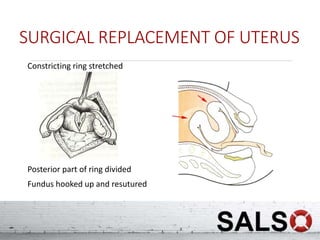
SURGICAL REPLACEMENT OF UTERUS
Constricting ring stretched
Posterior part of ring divided
Fundus hooked up and resutured
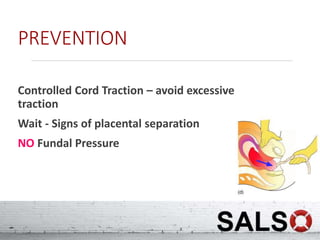
PREVENTION
Controlled Cord Traction – avoid excessive
traction
Wait - Signs of placental separation
NO Fundal Pressure
Uterine Inversion 2018

Uterine Inversion 2018

  • 2.
  • 3.
    GOALS 1. To learnhow to diagnose uterine inversion 2. Steps to manage uterine inversion
  • 4.
    UTERINE INVERSION Incidence :1 in 2000 deliveries Causes: Mismanagement of 3rd stage Excessive cord traction (esp. with an unseparated placenta) Excessive fundal pressure (esp. when uterus is poorly contracted @ atonic) Placenta accreta Congenital predisposition Fundal implantation of placenta
  • 5.
    CLASSIFICATION 1st Degree Inverted fundusup to cervix 2nd Degree Body of uterus protrudes through cervix into vagina 3rd Degree Prolapse of inverted uterus outside vulva 4th Degree Prolapse of inverted uterus and vagina
  • 6.
    CLINICAL PRESENTATION Abdominal pain Post-partumhaemorrhage Sudden collapse – degree of shock may be inconsistent with the amount of blood loss Absence of uterine fundus @ depression over fundus Fleshy mass at or outside the introitus (dark red-blue bleeding mass)
  • 7.
    MANAGEMENT Prompt recognition andtreatment Should be suspected if profound shock without obvious explanation Treat vasovagal shock (i.e. ABC, IV access, GXM) Placental should not be detached until the uterus is replaced and contracted Replace uterus immediately- several techniques ◦ Manual or hydrostatic replacement ◦ Surgical replacement May require tocolytics, anaesthesia, or both
  • 8.
    MANUAL REPLACEMENT OF UTERUS Replaceby pressing first on that part of the uterus which inverted last Once replaced, keep hand inside uterus until ergometrine or oxytocin has produced a firm contraction
  • 9.
    O’Sullivan’s hydrostatic method Tubepassed into the posterior fornix Assistant close vulva around operator’s wrist Warm saline run in until pressure gradually restores position of uterus
  • 10.
  • 11.
    SURGICAL REPLACEMENT OFUTERUS Constricting ring stretched Posterior part of ring divided Fundus hooked up and resutured
  • 12.
    PREVENTION Controlled Cord Traction– avoid excessive traction Wait - Signs of placental separation NO Fundal Pressure