Sarawak Gynaecology referral
Pathways
When &What to do
Dr. Chai MC
• Standardised guidance
• Evidence-based management
• Fast and easy to refer
• Simple and comprehensive
• Enhance familiarization of management
Pathways
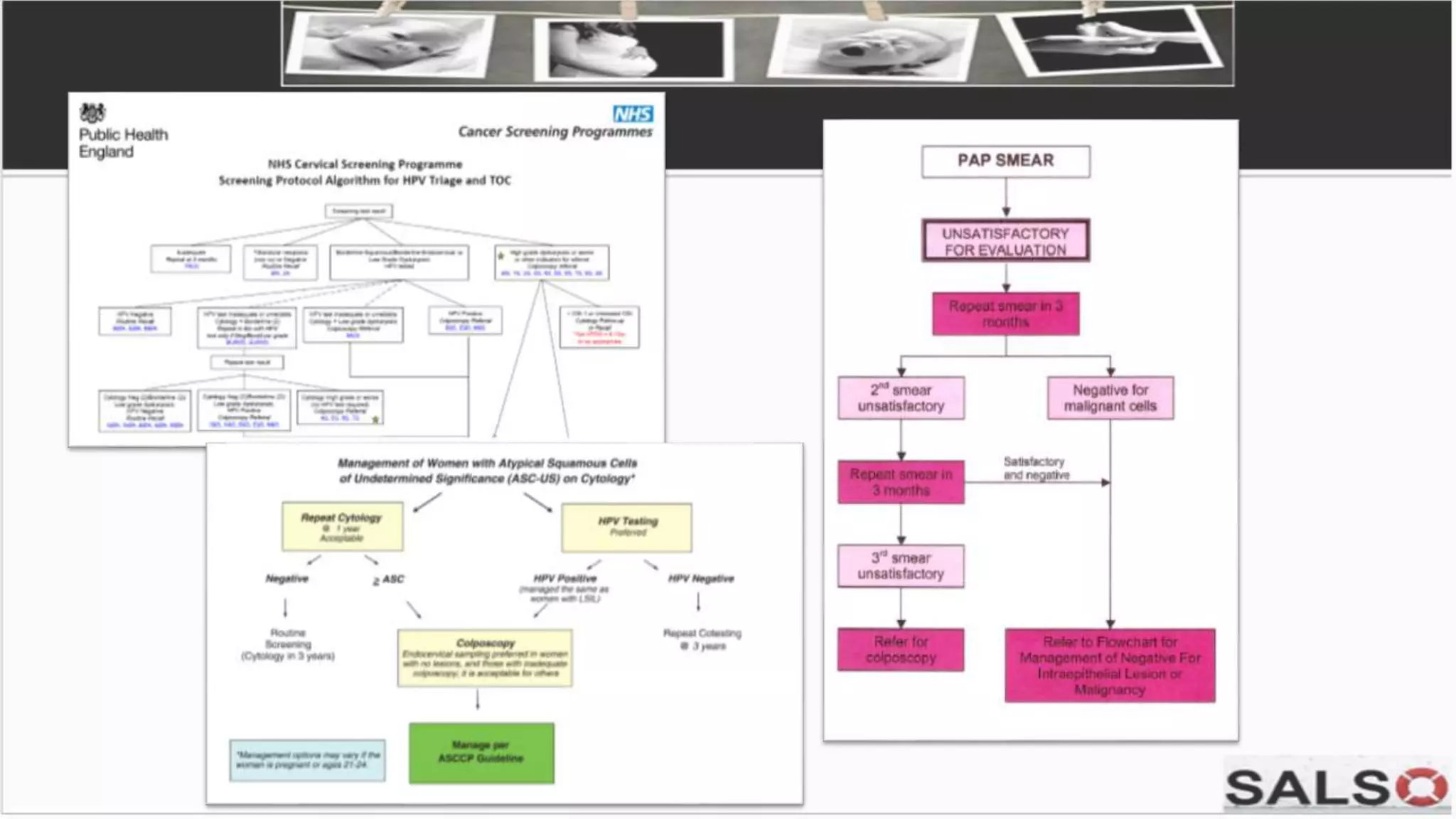
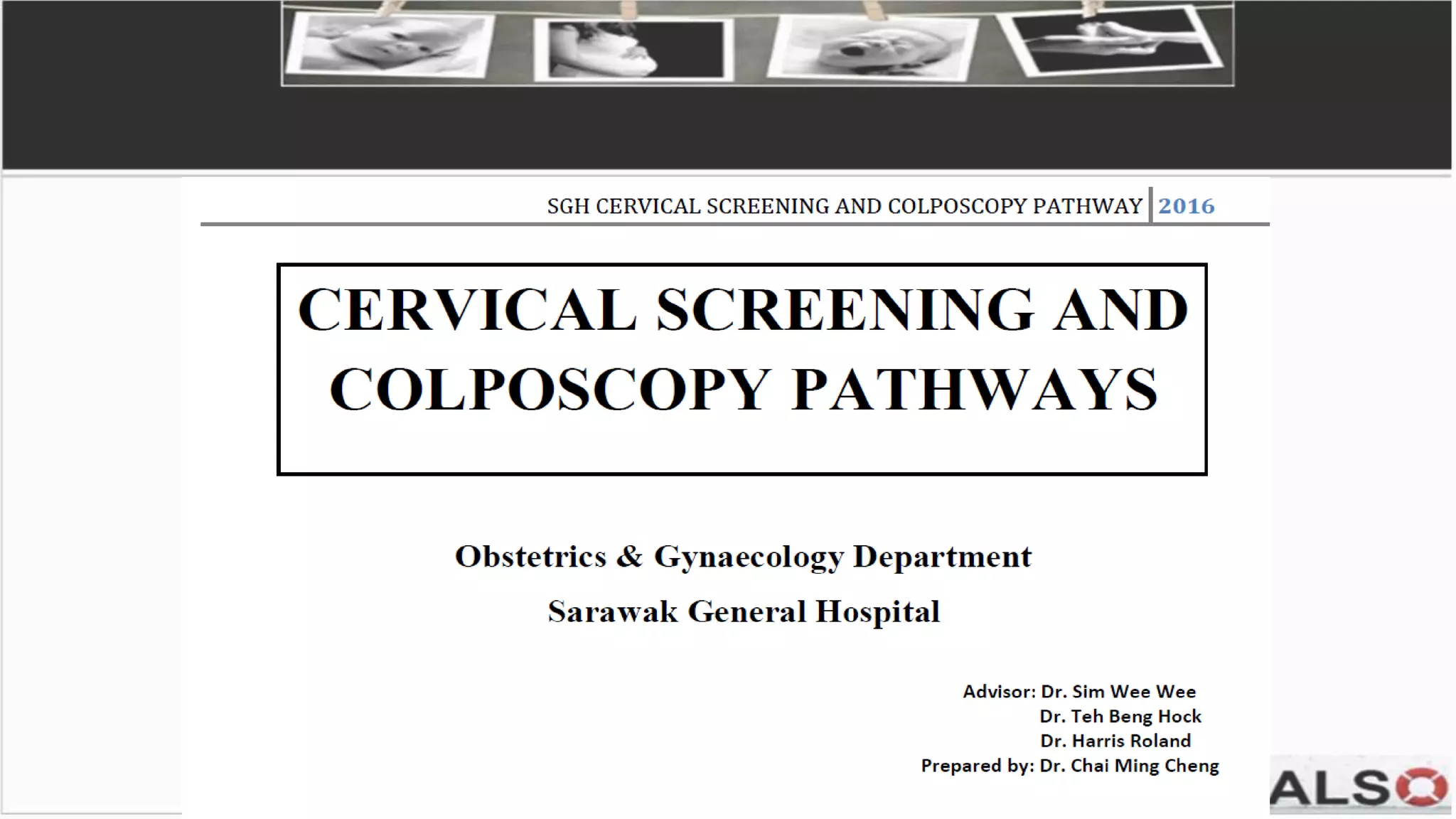
1. Cervical Screening & Colposcopy Pathways
2. Management of Cervical Cancer Pathways
3. Management of Endometrial Hyperplasia Pathways
4. Management of OvarianTumour Pathways
5. Management of Pregnancy of Unknown Location Pathways
SGH Gynaecological Management Pathways
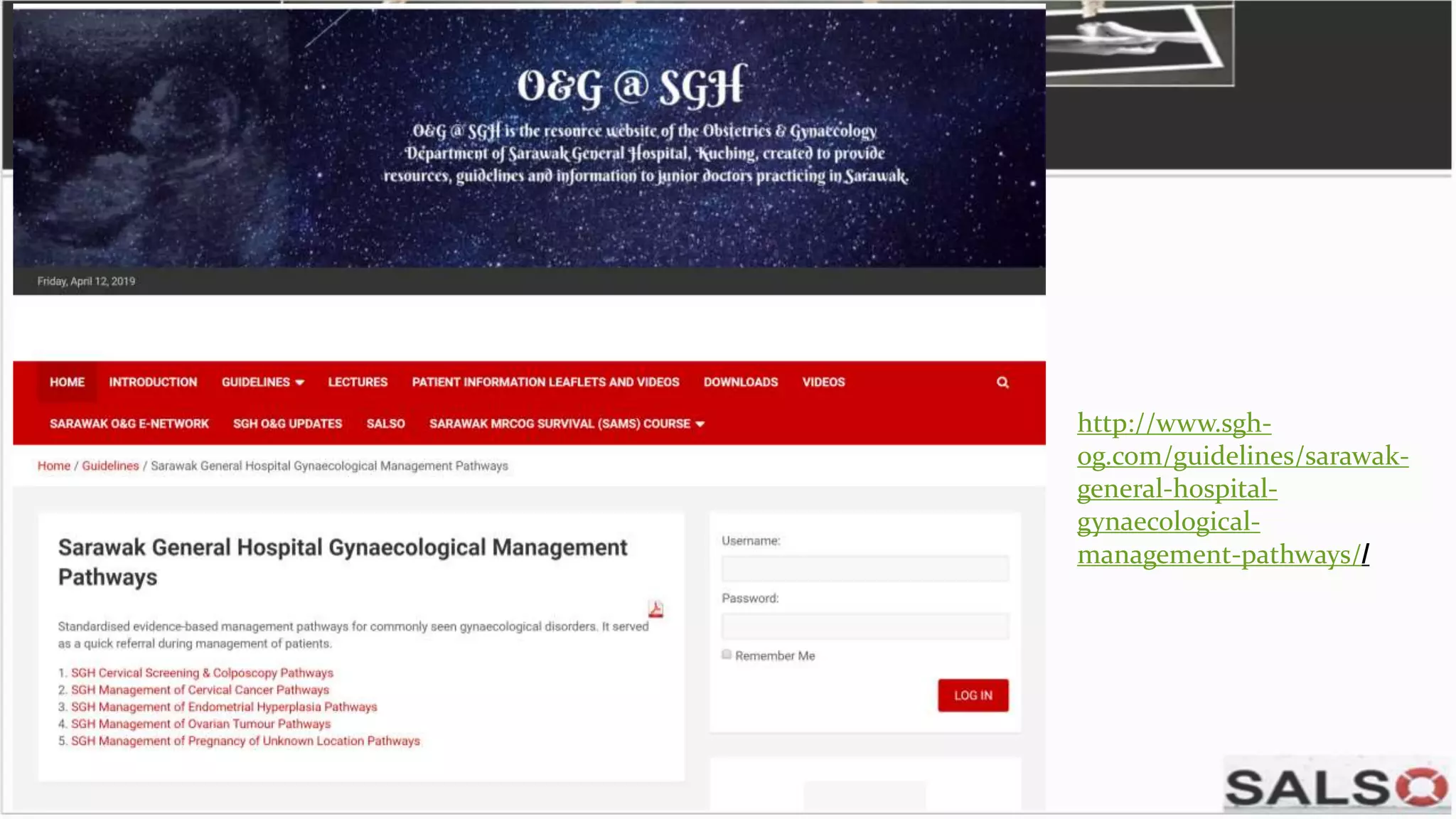
http://www.sgh-
og.com/guidelines/sarawak-
general-hospital-
gynaecological-
management-pathways//
1.Cervical screening and referral
2.Abnormal uterine bleeding and referral
3.Ovarian tumour and referral
Content
Cervical Screening
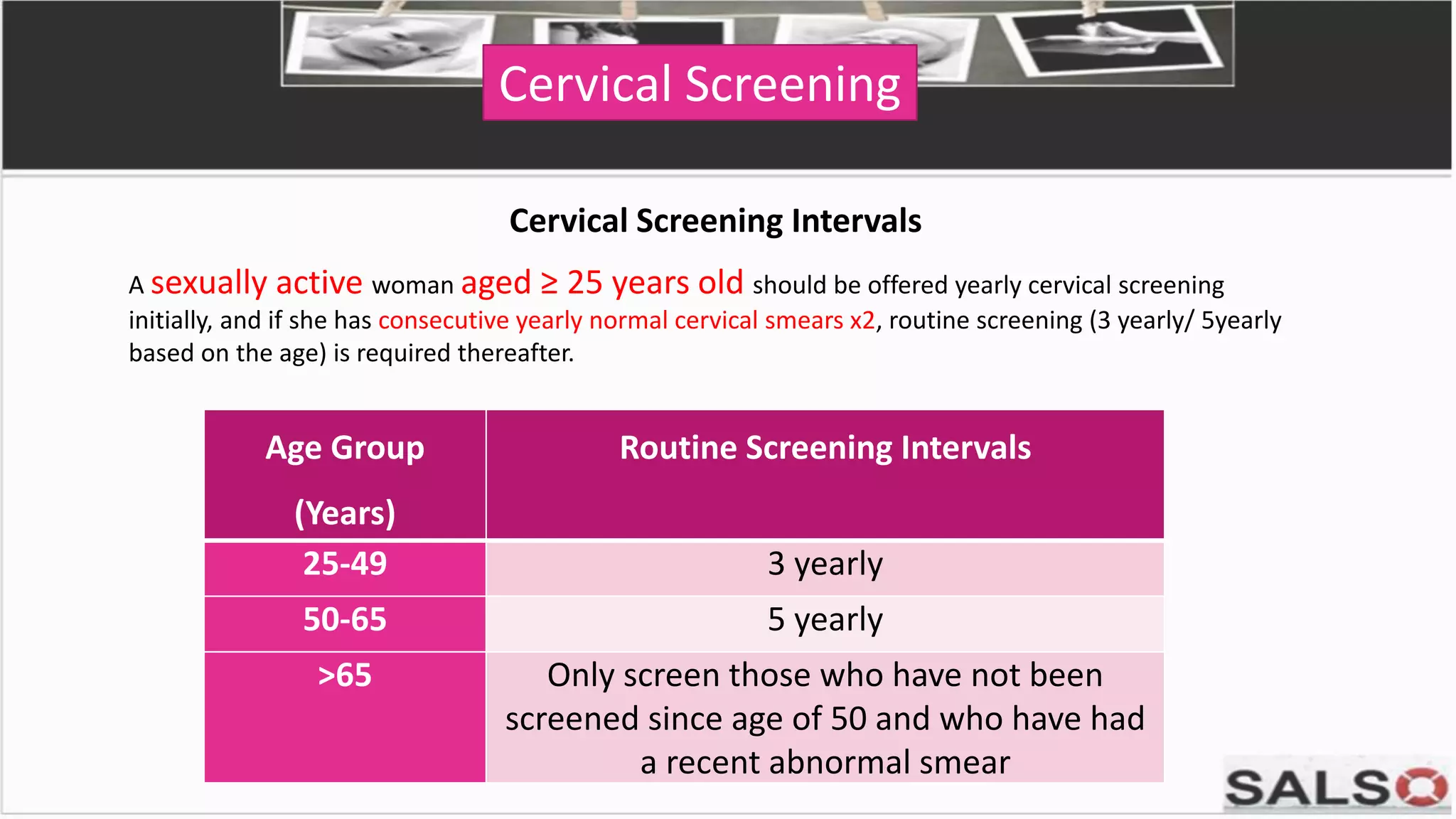
Cervical Screening Intervals
A sexually active woman aged ≥ 25 years old should be offered yearly cervical screening
initially, and if she has consecutive yearly normal cervical smears x2, routine screening (3 yearly/ 5yearly
based on the age) is required thereafter.
Age Group
(Years)
Routine Screening Intervals
25-49 3 yearly
50-65 5 yearly
>65 Only screen those who have not been
screened since age of 50 and who have had
a recent abnormal smear
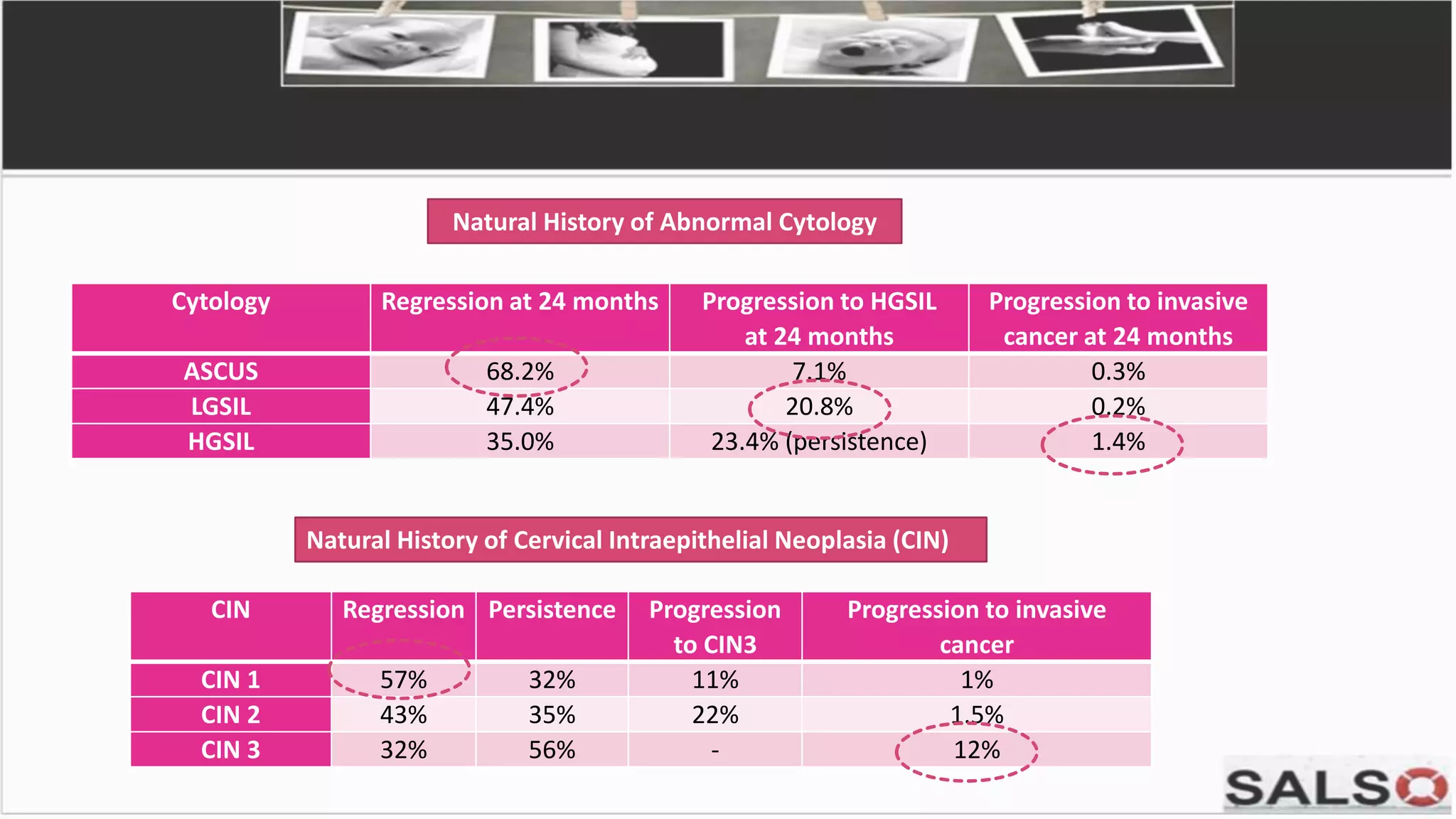
Cytology Regression at 24 months Progression to HGSIL
at 24 months
Progression to invasive
cancer at 24 months
ASCUS 68.2% 7.1% 0.3%
LGSIL 47.4% 20.8% 0.2%
HGSIL 35.0% 23.4% (persistence) 1.4%
CIN Regression Persistence Progression
to CIN3
Progression to invasive
cancer
CIN 1 57% 32% 11% 1%
CIN 2 43% 35% 22% 1.5%
CIN 3 32% 56% - 12%
Natural History of Abnormal Cytology
Natural History of Cervical Intraepithelial Neoplasia (CIN)
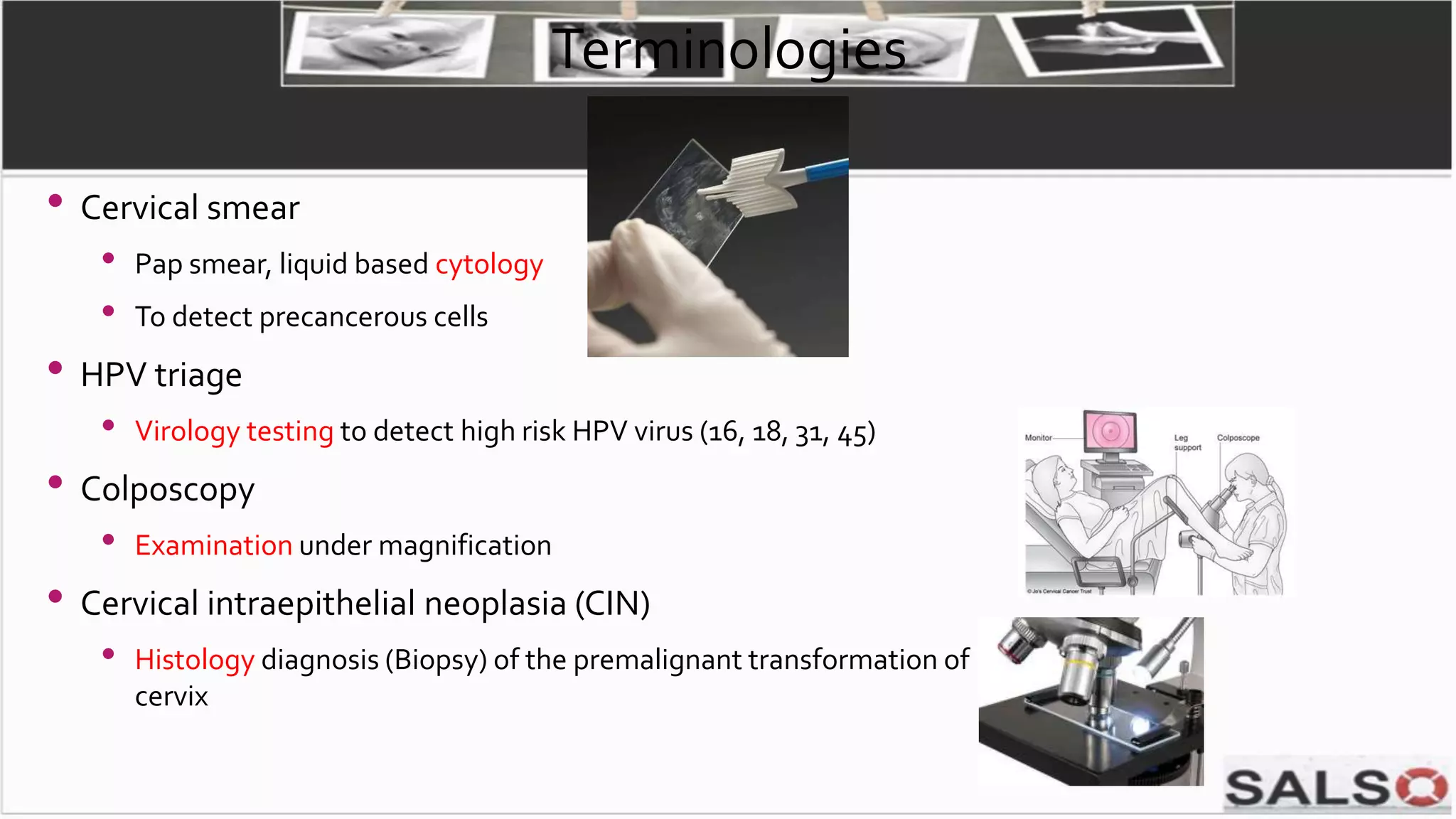
Terminologies
• Cervical smear
• Pap smear, liquid based cytology
• To detect precancerous cells
• HPV triage
• Virology testing to detect high risk HPV virus (16, 18, 31, 45)
• Colposcopy
• Examination under magnification
• Cervical intraepithelial neoplasia (CIN)
• Histology diagnosis (Biopsy) of the premalignant transformation of
cervix
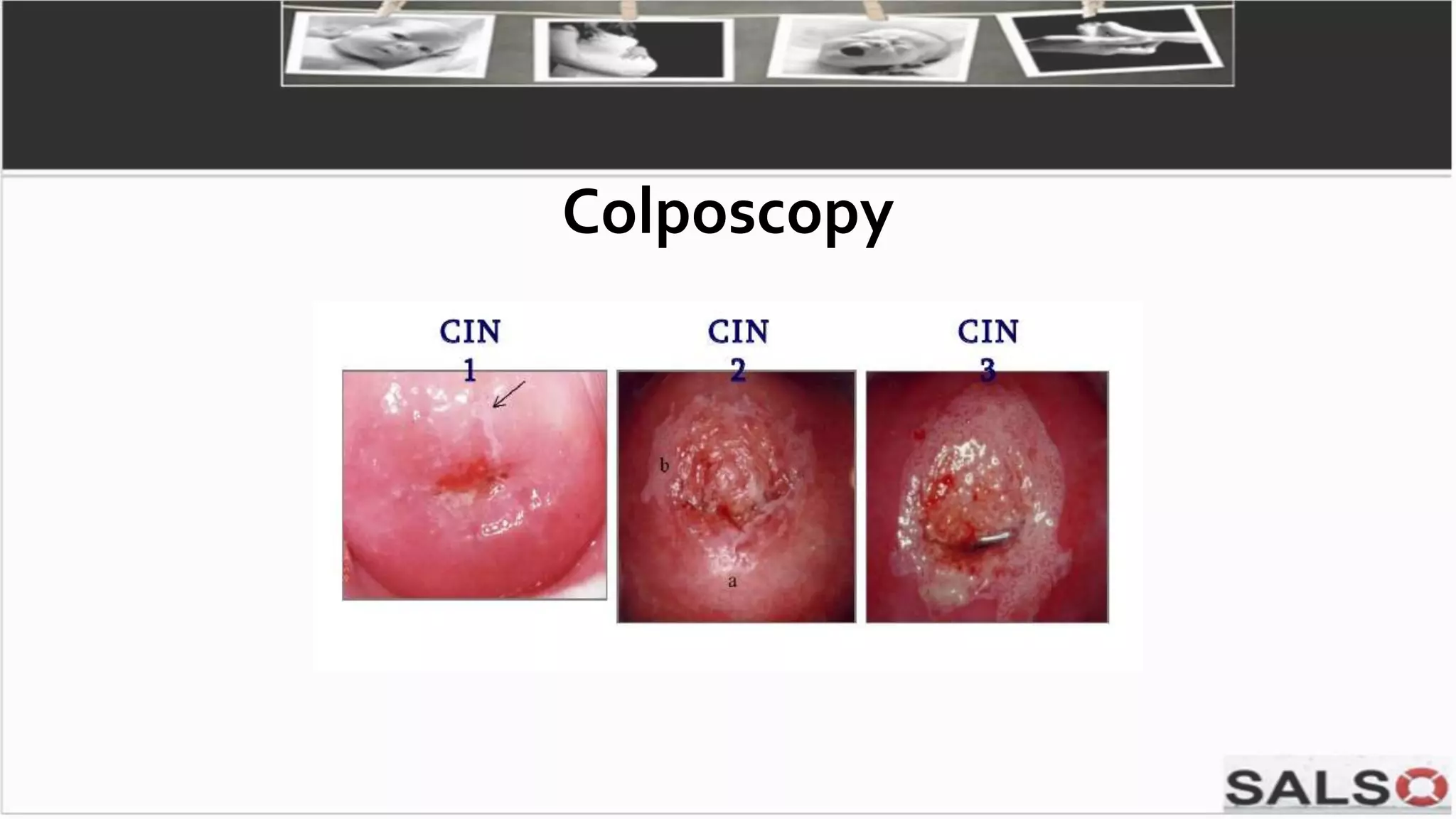
Colposcopy
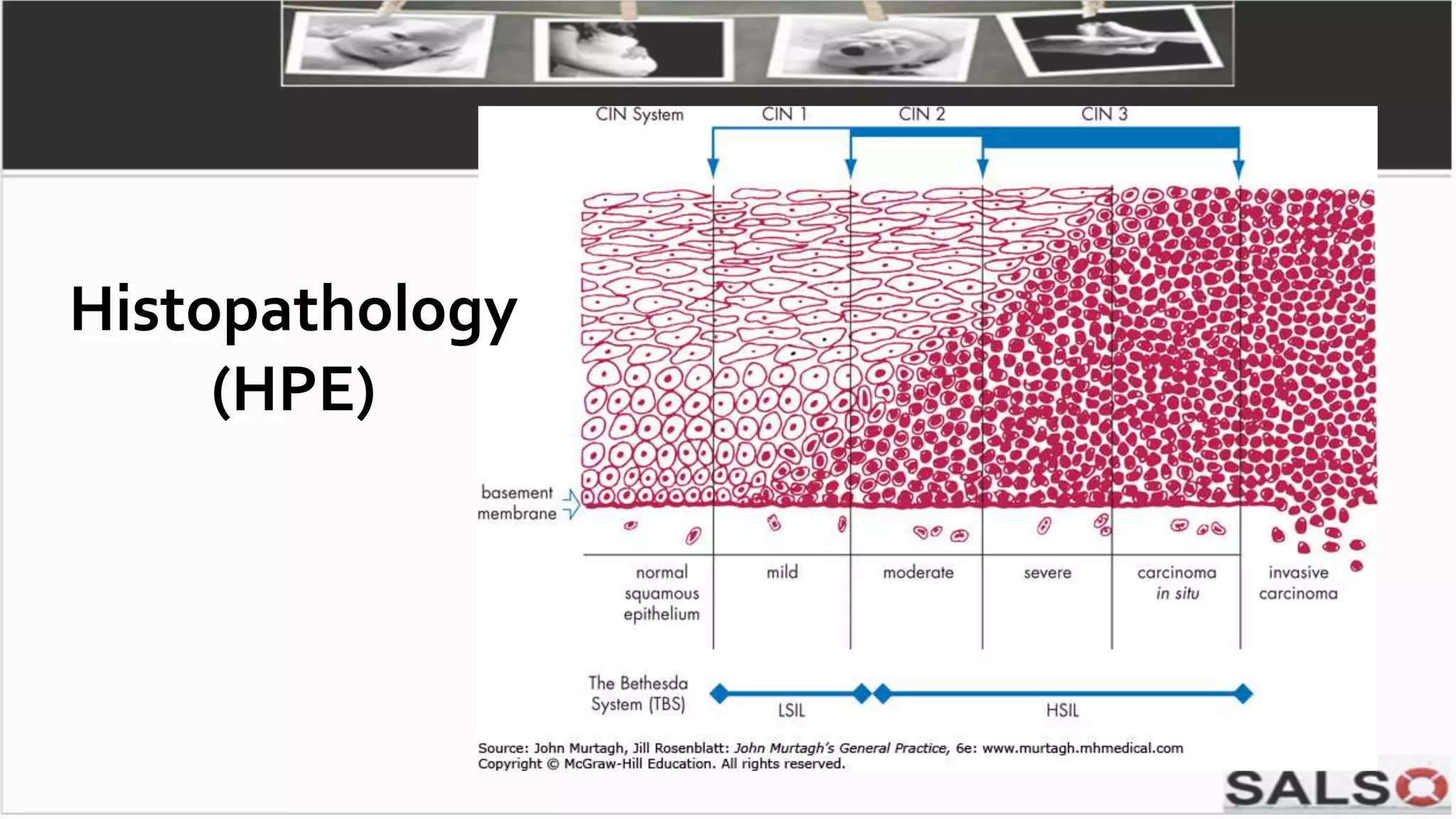
Histopathology
(HPE)
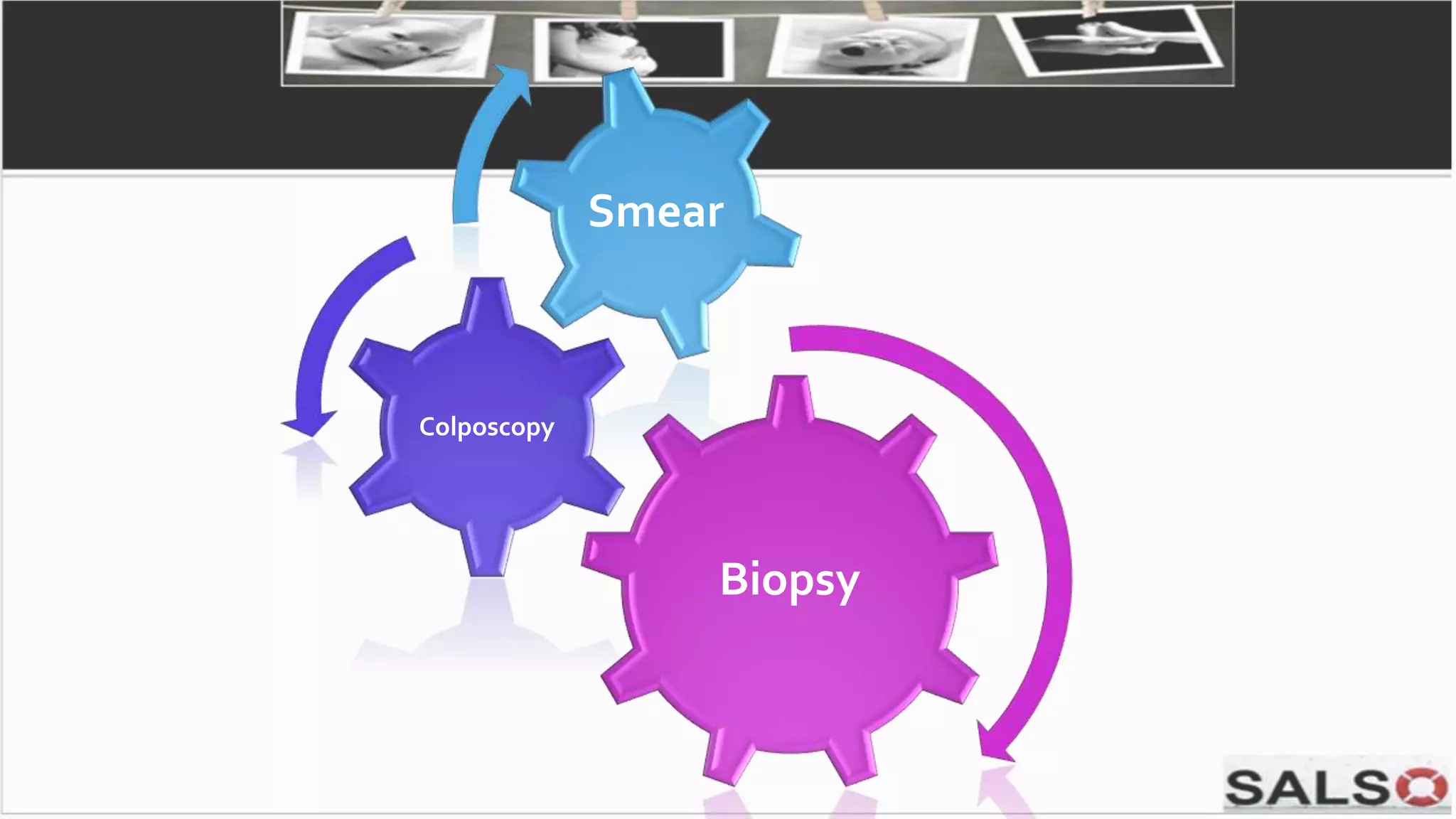
Biopsy
Colposcopy
Smear
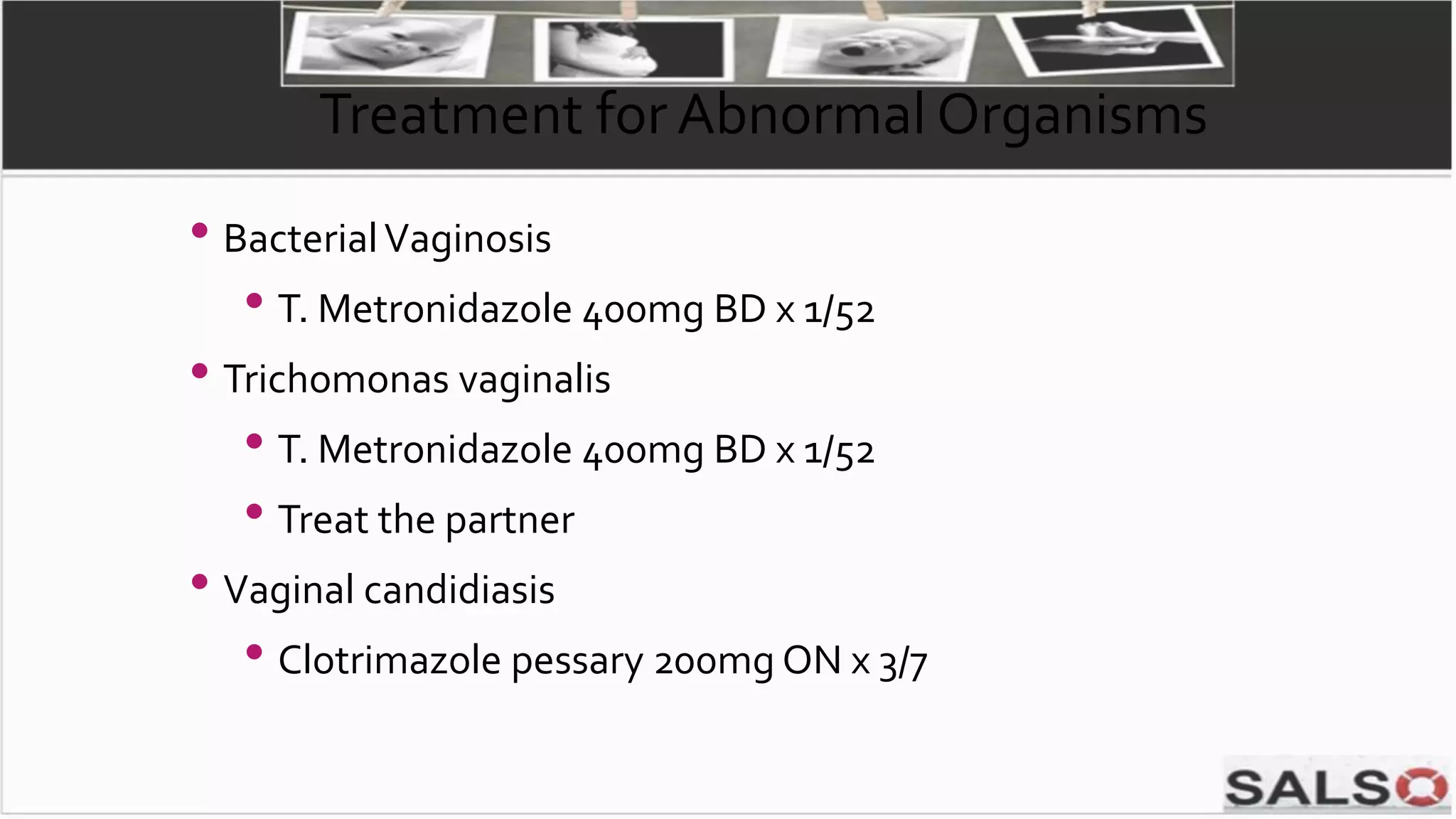
Treatment for Abnormal Organisms
• BacterialVaginosis
• T. Metronidazole 400mg BD x 1/52
• Trichomonas vaginalis
• T. Metronidazole 400mg BD x 1/52
• Treat the partner
• Vaginal candidiasis
• Clotrimazole pessary 200mg ON x 3/7
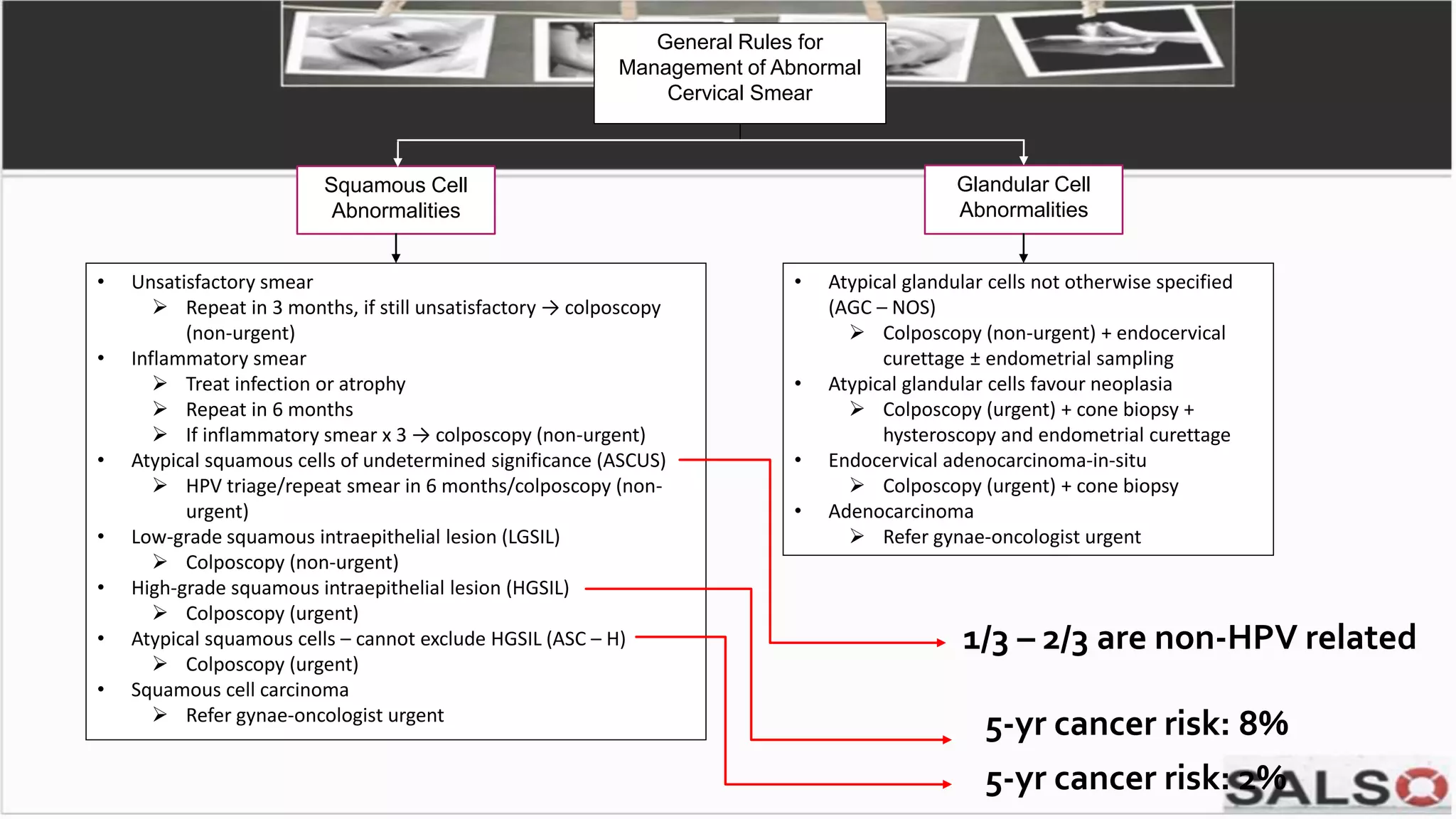
General Rules for
Management of Abnormal
Cervical Smear
Squamous Cell
Abnormalities
Glandular Cell
Abnormalities
• Unsatisfactory smear
 Repeat in 3 months, if still unsatisfactory → colposcopy
(non-urgent)
• Inflammatory smear
 Treat infection or atrophy
 Repeat in 6 months
 If inflammatory smear x 3 → colposcopy (non-urgent)
• Atypical squamous cells of undetermined significance (ASCUS)
 HPV triage/repeat smear in 6 months/colposcopy (non-
urgent)
• Low-grade squamous intraepithelial lesion (LGSIL)
 Colposcopy (non-urgent)
• High-grade squamous intraepithelial lesion (HGSIL)
 Colposcopy (urgent)
• Atypical squamous cells – cannot exclude HGSIL (ASC – H)
 Colposcopy (urgent)
• Squamous cell carcinoma
 Refer gynae-oncologist urgent
• Atypical glandular cells not otherwise specified
(AGC – NOS)
 Colposcopy (non-urgent) + endocervical
curettage ± endometrial sampling
• Atypical glandular cells favour neoplasia
 Colposcopy (urgent) + cone biopsy +
hysteroscopy and endometrial curettage
• Endocervical adenocarcinoma-in-situ
 Colposcopy (urgent) + cone biopsy
• Adenocarcinoma
 Refer gynae-oncologist urgent
5-yr cancer risk: 8%
5-yr cancer risk: 2%
1/3 – 2/3 are non-HPV related
WHENEVERTHERE ISAN
ABNORMAL SUSPICIOUS LOOKING GROWTH
OVERTHE CERVIX,
REFER O&G SPECIALIST URGENT
FOR ASSESSMENTAND BIOPSY!!!!!
(DO NOT PROCEEDWITH PAP SMEAR ONLY)
Case Scenario
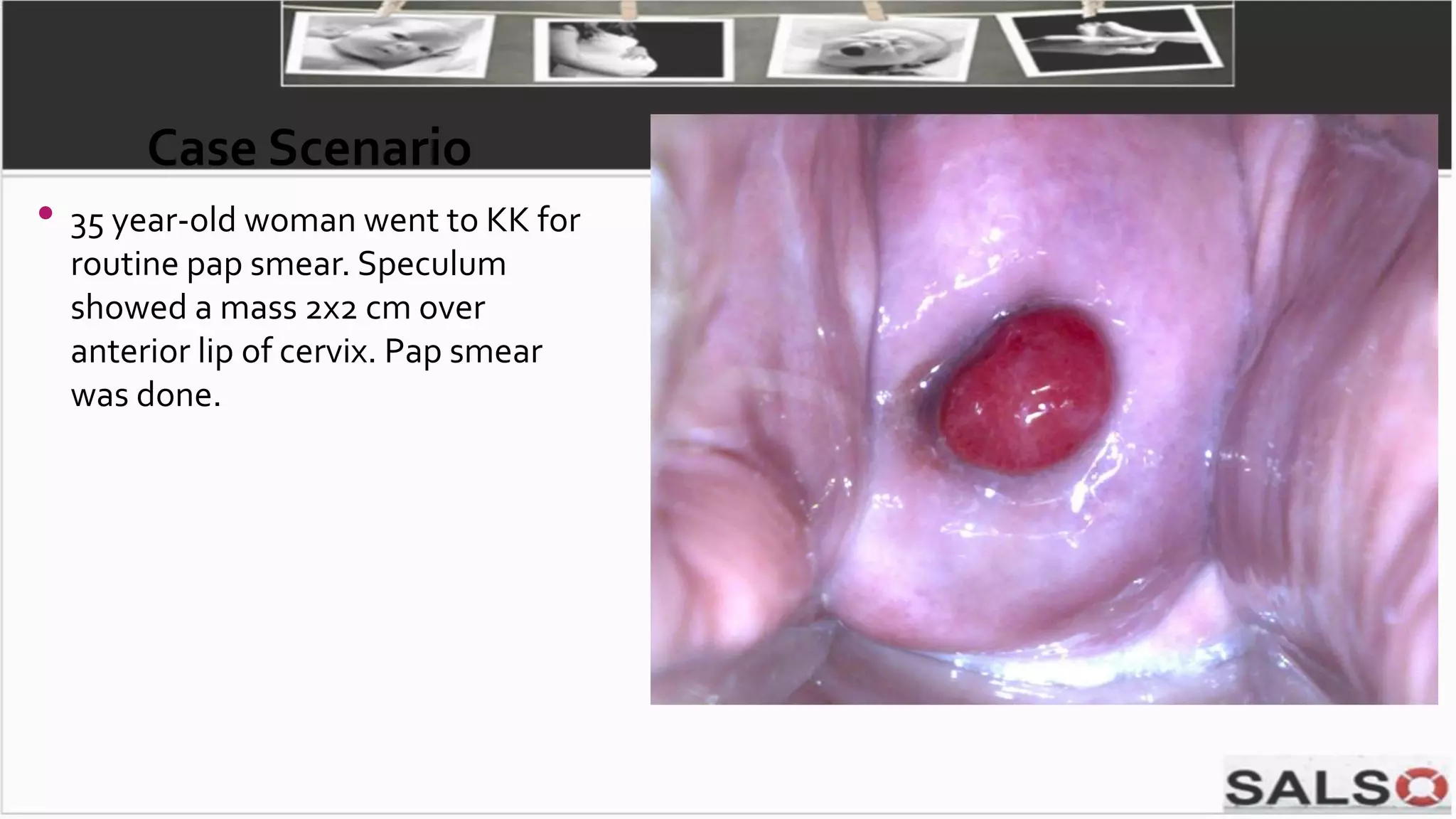
• 35 year-old woman went to KK for
routine pap smear. Speculum
showed a mass 2x2 cm over
anterior lip of cervix. Pap smear
was done.
Abnormal Uterine Bleeding
(AUB)
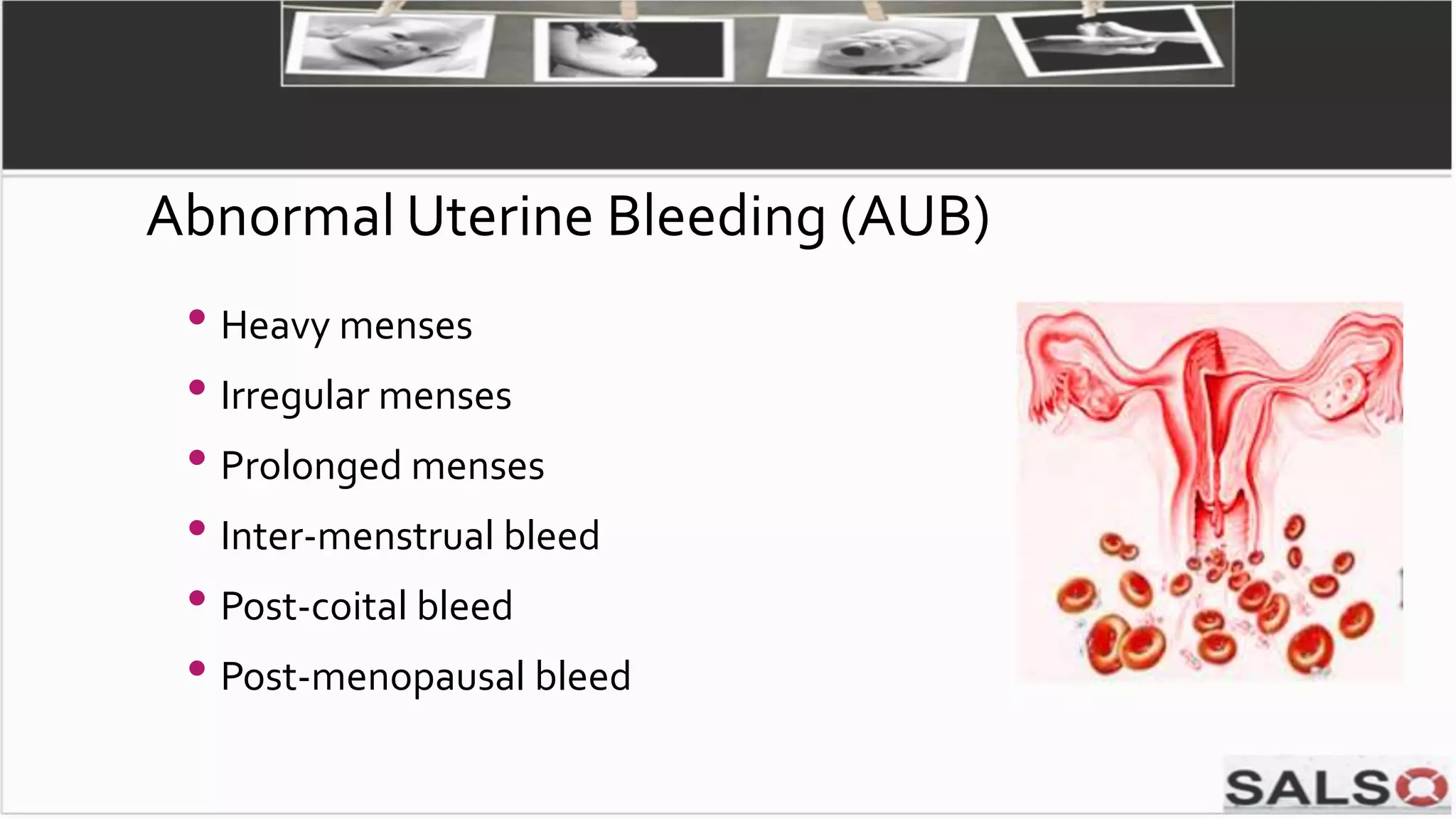
• Heavy menses
• Irregular menses
• Prolonged menses
• Inter-menstrual bleed
• Post-coital bleed
• Post-menopausal bleed
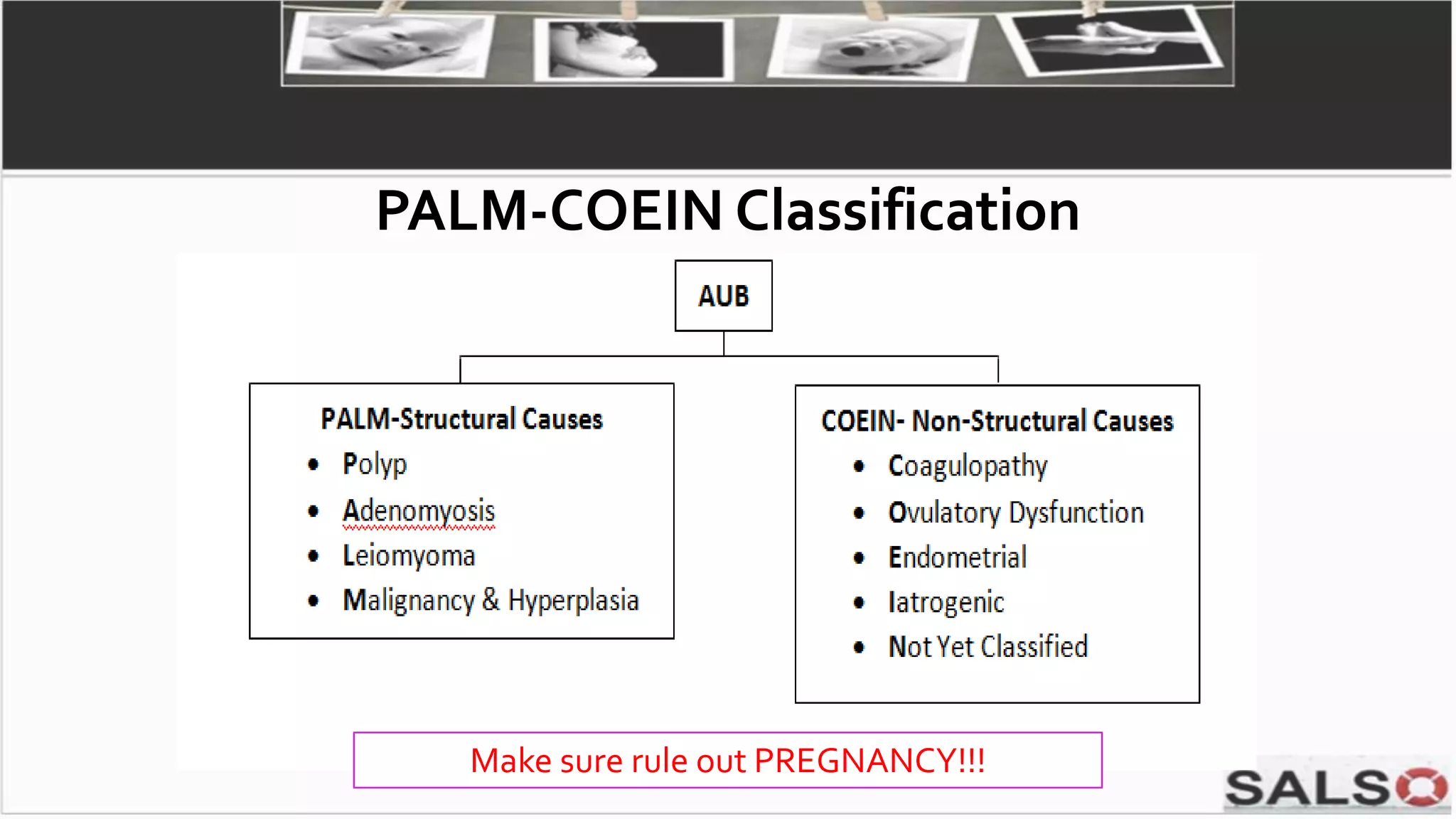
Abnormal Uterine Bleeding (AUB)
PALM-COEIN Classification
Make sure rule out PREGNANCY!!!
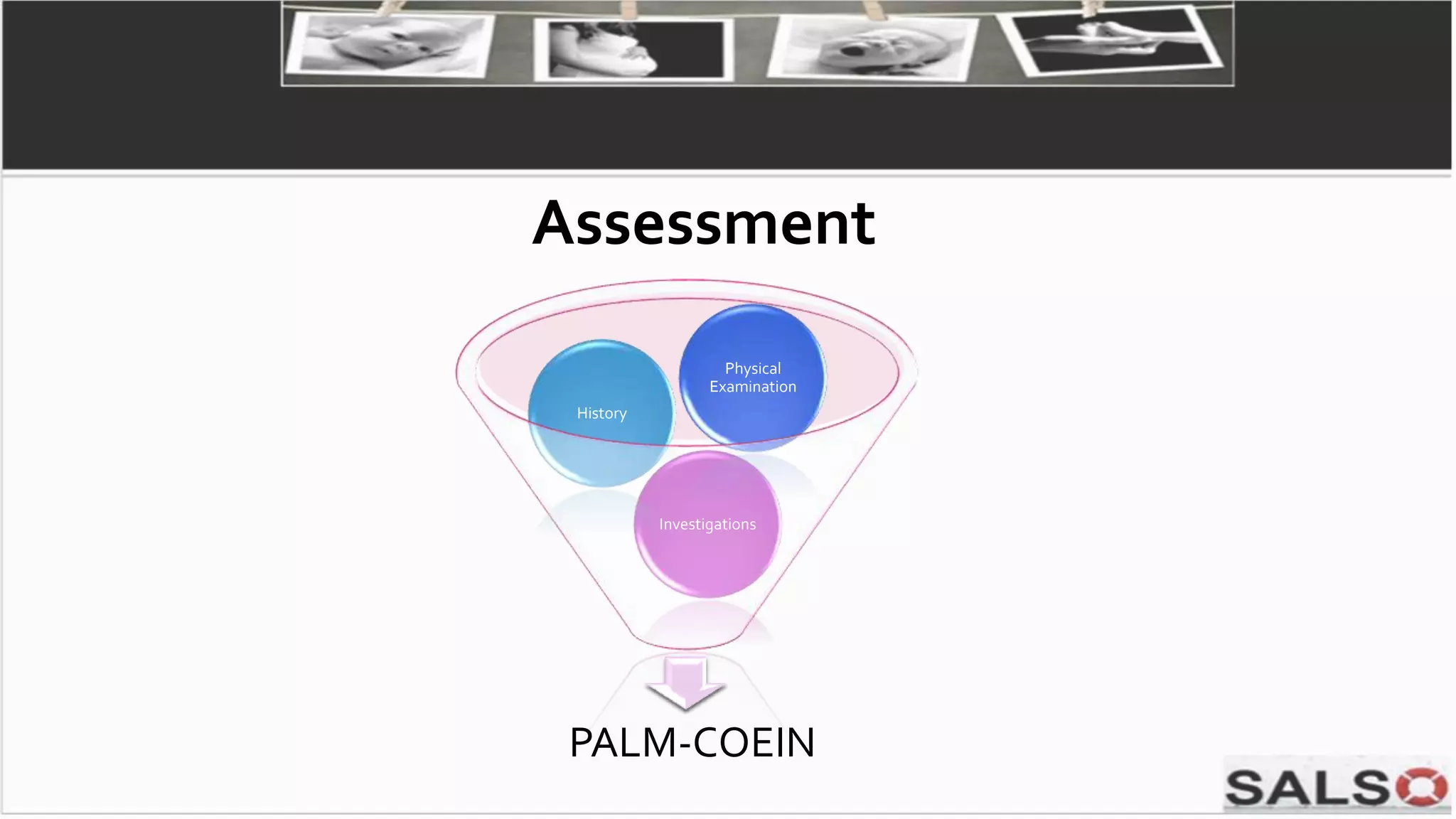
Assessment
PALM-COEIN
Investigations
History
Physical
Examination
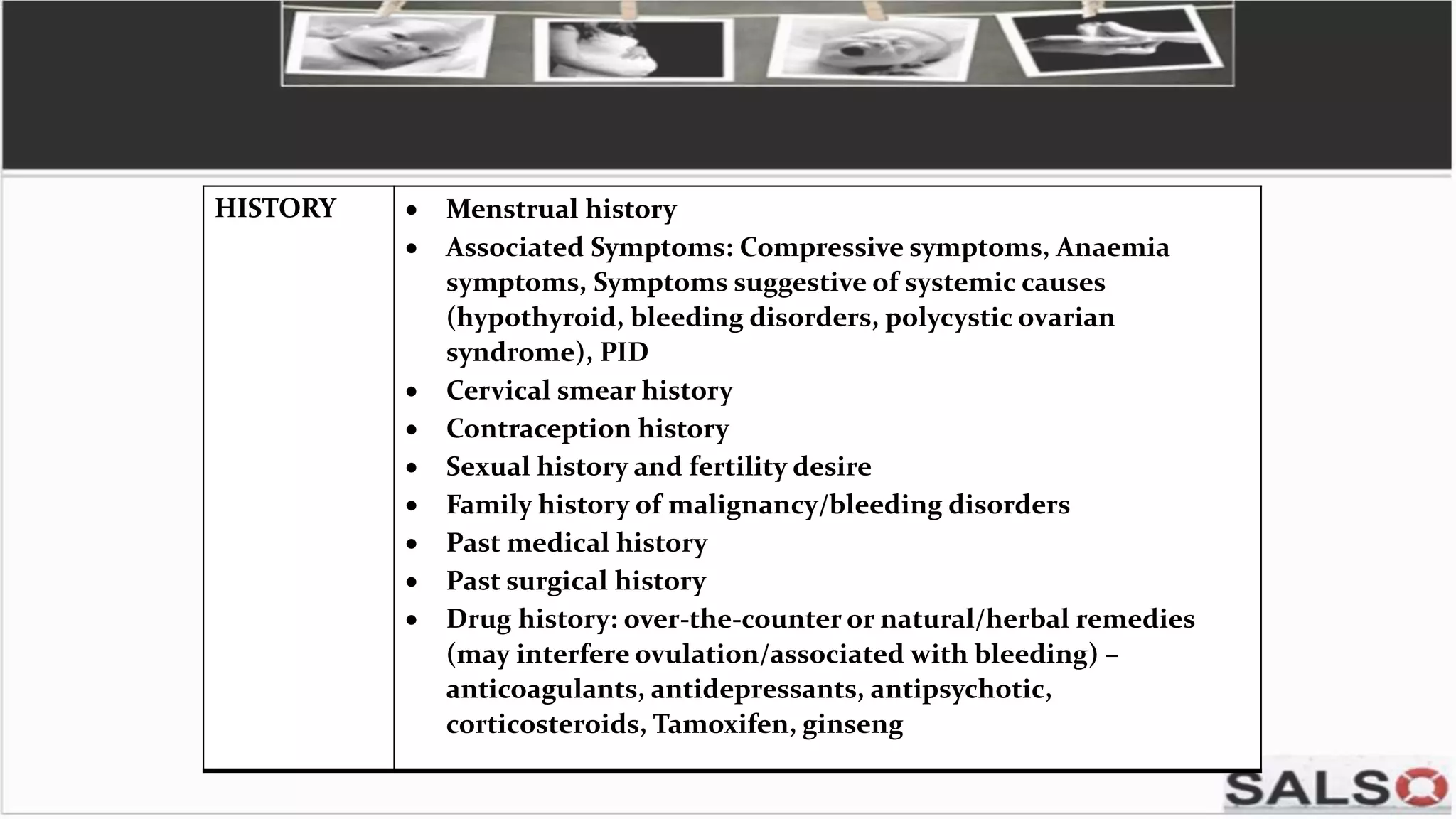
HISTORY  Menstrual history
 Associated Symptoms: Compressive symptoms, Anaemia
symptoms, Symptoms suggestive of systemic causes
(hypothyroid, bleeding disorders, polycystic ovarian
syndrome), PID
 Cervical smear history
 Contraception history
 Sexual history and fertility desire
 Family history of malignancy/bleeding disorders
 Past medical history
 Past surgical history
 Drug history: over-the-counter or natural/herbal remedies
(may interfere ovulation/associated with bleeding) –
anticoagulants, antidepressants, antipsychotic,
corticosteroids, Tamoxifen, ginseng
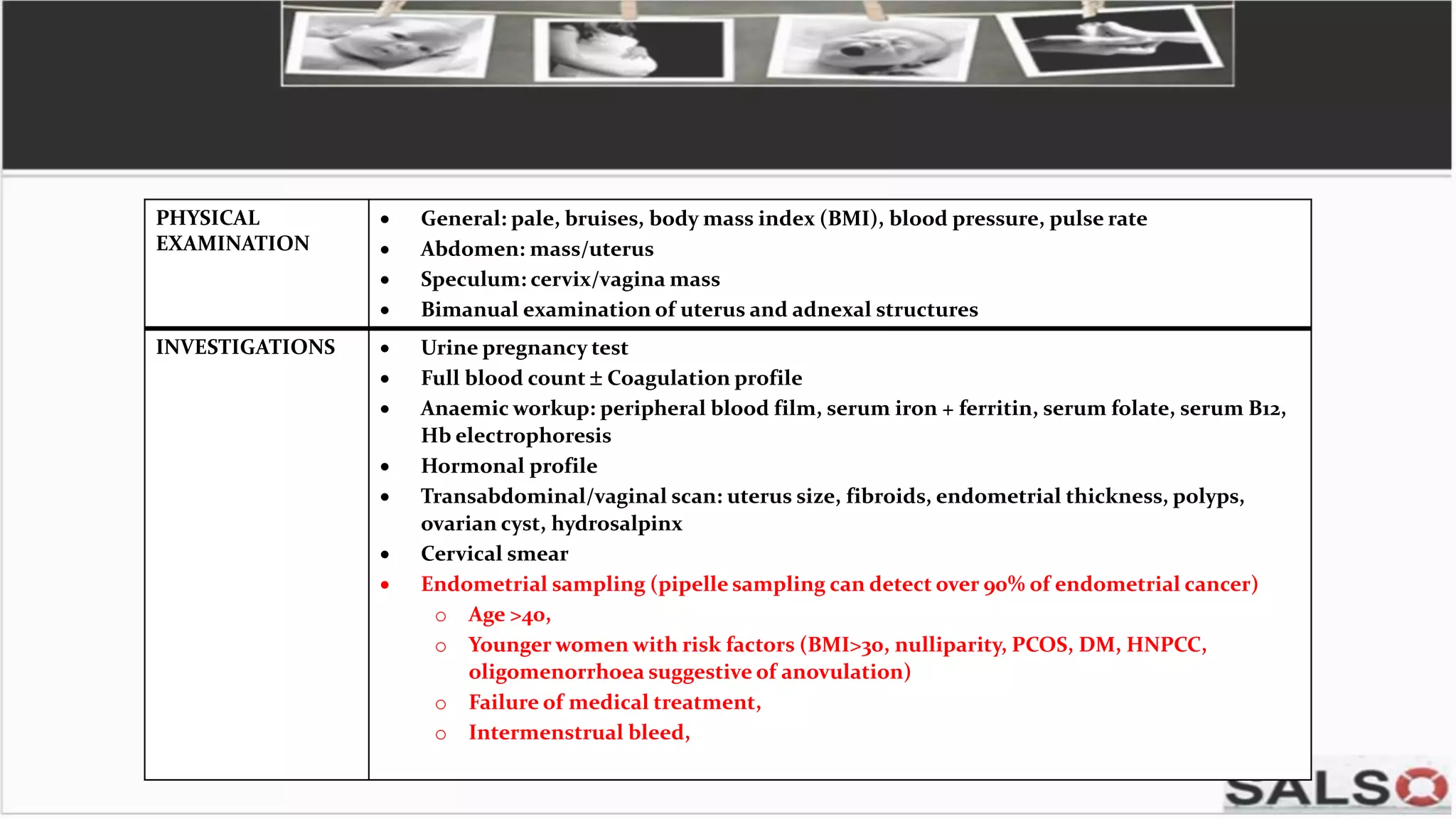
PHYSICAL
EXAMINATION
 General: pale, bruises, body mass index (BMI), blood pressure, pulse rate
 Abdomen: mass/uterus
 Speculum: cervix/vagina mass
 Bimanual examination of uterus and adnexal structures
INVESTIGATIONS  Urine pregnancy test
 Full blood count  Coagulation profile
 Anaemic workup: peripheral blood film, serum iron + ferritin, serum folate, serum B12,
Hb electrophoresis
 Hormonal profile
 Transabdominal/vaginal scan: uterus size, fibroids, endometrial thickness, polyps,
ovarian cyst, hydrosalpinx
 Cervical smear
 Endometrial sampling (pipelle sampling can detect over 90% of endometrial cancer)
o Age >40,
o Younger women with risk factors (BMI>30, nulliparity, PCOS, DM, HNPCC,
oligomenorrhoea suggestive of anovulation)
o Failure of medical treatment,
o Intermenstrual bleed,
1. Structural abnormality requiring surgery (polyps, big fibroids)
2. Suspecting malignancy (postmenopausal bleed, thickened ET,
cervical mass)
3. Failed to response to medical treatment
4. Endocrinology disorders: Refer medical team
When do you refer??
RED FLAGS!!! – REFER!!!
•Non-cyclical PV bleed
•Intermenstrual Bleed
•Post-coital bleed
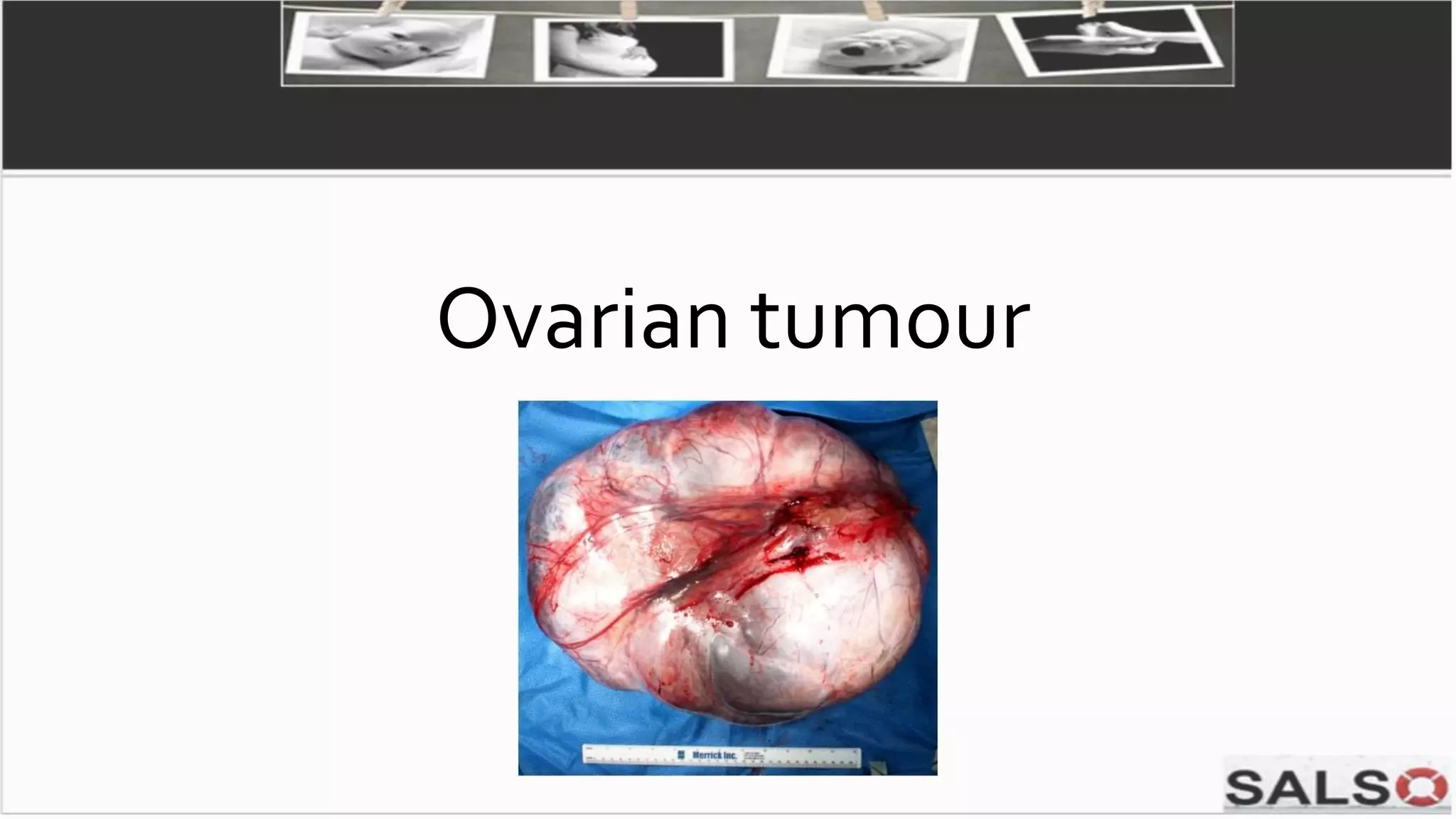
Ovarian tumour
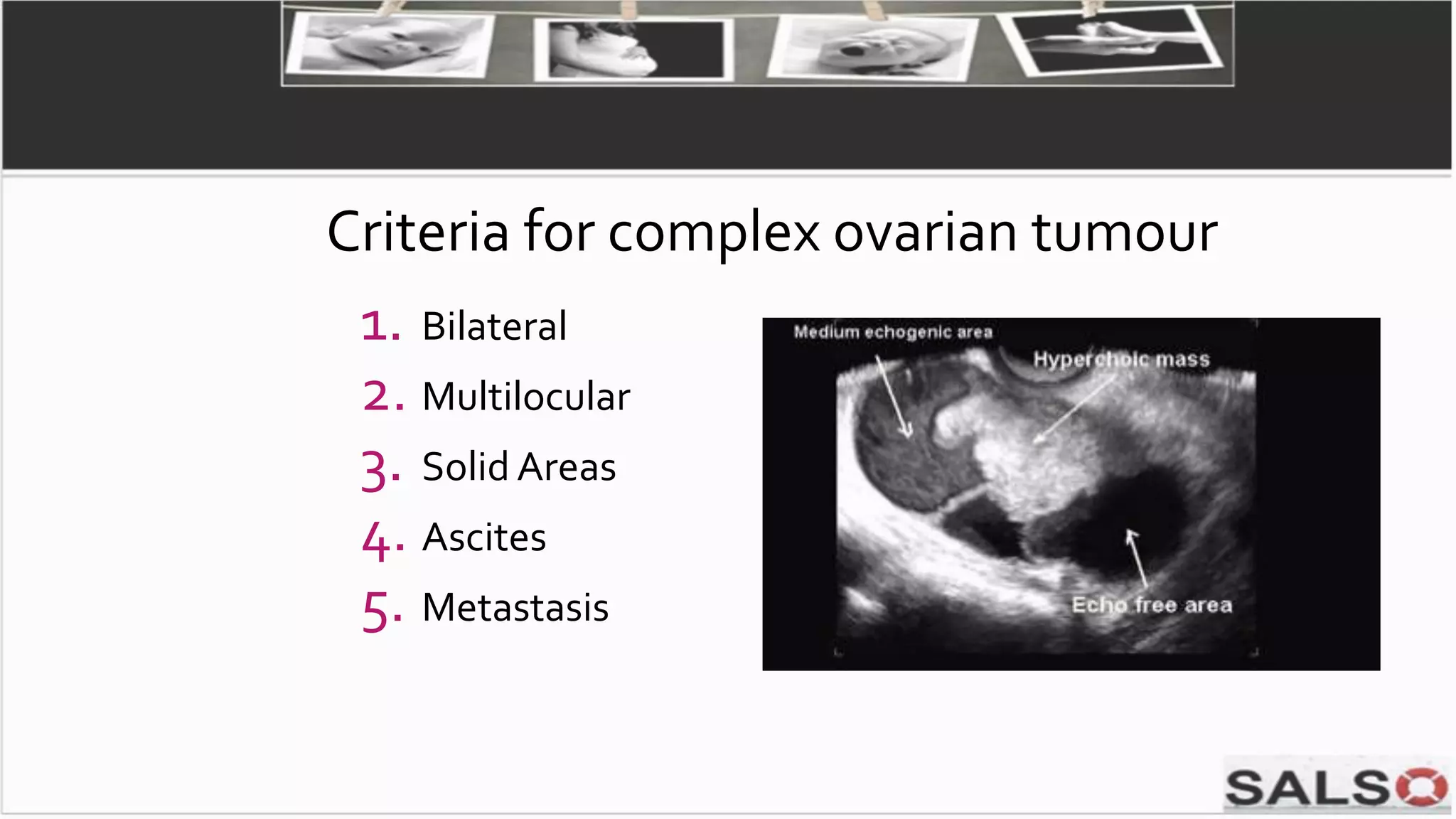
1. Bilateral
2. Multilocular
3. Solid Areas
4. Ascites
5. Metastasis
Criteria for complex ovarian tumour
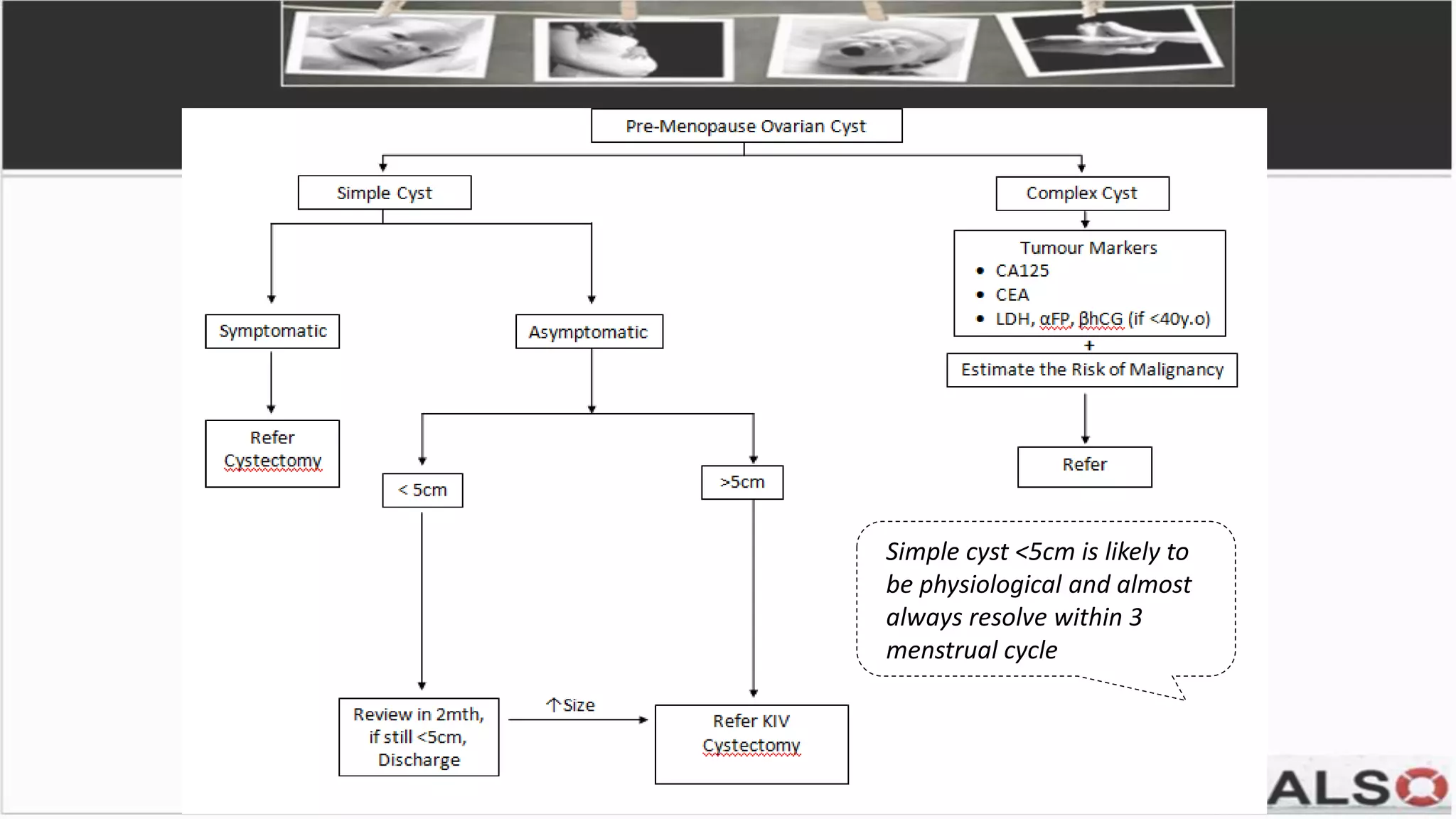
Simple cyst <5cm is likely to
be physiological and almost
always resolve within 3
menstrual cycle
PostmenopausalWomen??
Postmenopausal cyst: REFER
Cervical Screening and Colposcopy Update April 2019

Cervical Screening and Colposcopy Update April 2019

  • 2.
  • 3.
    • Standardised guidance •Evidence-based management • Fast and easy to refer • Simple and comprehensive • Enhance familiarization of management Pathways
  • 5.
    1. Cervical Screening& Colposcopy Pathways 2. Management of Cervical Cancer Pathways 3. Management of Endometrial Hyperplasia Pathways 4. Management of OvarianTumour Pathways 5. Management of Pregnancy of Unknown Location Pathways SGH Gynaecological Management Pathways
  • 6.
  • 7.
    1.Cervical screening andreferral 2.Abnormal uterine bleeding and referral 3.Ovarian tumour and referral Content
  • 10.
    Cervical Screening Cervical ScreeningIntervals A sexually active woman aged ≥ 25 years old should be offered yearly cervical screening initially, and if she has consecutive yearly normal cervical smears x2, routine screening (3 yearly/ 5yearly based on the age) is required thereafter. Age Group (Years) Routine Screening Intervals 25-49 3 yearly 50-65 5 yearly >65 Only screen those who have not been screened since age of 50 and who have had a recent abnormal smear
  • 11.
    Cytology Regression at24 months Progression to HGSIL at 24 months Progression to invasive cancer at 24 months ASCUS 68.2% 7.1% 0.3% LGSIL 47.4% 20.8% 0.2% HGSIL 35.0% 23.4% (persistence) 1.4% CIN Regression Persistence Progression to CIN3 Progression to invasive cancer CIN 1 57% 32% 11% 1% CIN 2 43% 35% 22% 1.5% CIN 3 32% 56% - 12% Natural History of Abnormal Cytology Natural History of Cervical Intraepithelial Neoplasia (CIN)
  • 12.
    Terminologies • Cervical smear •Pap smear, liquid based cytology • To detect precancerous cells • HPV triage • Virology testing to detect high risk HPV virus (16, 18, 31, 45) • Colposcopy • Examination under magnification • Cervical intraepithelial neoplasia (CIN) • Histology diagnosis (Biopsy) of the premalignant transformation of cervix
  • 13.
  • 14.
  • 15.
  • 17.
    Treatment for AbnormalOrganisms • BacterialVaginosis • T. Metronidazole 400mg BD x 1/52 • Trichomonas vaginalis • T. Metronidazole 400mg BD x 1/52 • Treat the partner • Vaginal candidiasis • Clotrimazole pessary 200mg ON x 3/7
  • 18.
    General Rules for Managementof Abnormal Cervical Smear Squamous Cell Abnormalities Glandular Cell Abnormalities • Unsatisfactory smear  Repeat in 3 months, if still unsatisfactory → colposcopy (non-urgent) • Inflammatory smear  Treat infection or atrophy  Repeat in 6 months  If inflammatory smear x 3 → colposcopy (non-urgent) • Atypical squamous cells of undetermined significance (ASCUS)  HPV triage/repeat smear in 6 months/colposcopy (non- urgent) • Low-grade squamous intraepithelial lesion (LGSIL)  Colposcopy (non-urgent) • High-grade squamous intraepithelial lesion (HGSIL)  Colposcopy (urgent) • Atypical squamous cells – cannot exclude HGSIL (ASC – H)  Colposcopy (urgent) • Squamous cell carcinoma  Refer gynae-oncologist urgent • Atypical glandular cells not otherwise specified (AGC – NOS)  Colposcopy (non-urgent) + endocervical curettage ± endometrial sampling • Atypical glandular cells favour neoplasia  Colposcopy (urgent) + cone biopsy + hysteroscopy and endometrial curettage • Endocervical adenocarcinoma-in-situ  Colposcopy (urgent) + cone biopsy • Adenocarcinoma  Refer gynae-oncologist urgent 5-yr cancer risk: 8% 5-yr cancer risk: 2% 1/3 – 2/3 are non-HPV related
  • 19.
    WHENEVERTHERE ISAN ABNORMAL SUSPICIOUSLOOKING GROWTH OVERTHE CERVIX, REFER O&G SPECIALIST URGENT FOR ASSESSMENTAND BIOPSY!!!!! (DO NOT PROCEEDWITH PAP SMEAR ONLY)
  • 20.
    Case Scenario • 35year-old woman went to KK for routine pap smear. Speculum showed a mass 2x2 cm over anterior lip of cervix. Pap smear was done.
  • 21.
  • 22.
    • Heavy menses •Irregular menses • Prolonged menses • Inter-menstrual bleed • Post-coital bleed • Post-menopausal bleed Abnormal Uterine Bleeding (AUB)
  • 23.
  • 24.
  • 25.
    HISTORY  Menstrualhistory  Associated Symptoms: Compressive symptoms, Anaemia symptoms, Symptoms suggestive of systemic causes (hypothyroid, bleeding disorders, polycystic ovarian syndrome), PID  Cervical smear history  Contraception history  Sexual history and fertility desire  Family history of malignancy/bleeding disorders  Past medical history  Past surgical history  Drug history: over-the-counter or natural/herbal remedies (may interfere ovulation/associated with bleeding) – anticoagulants, antidepressants, antipsychotic, corticosteroids, Tamoxifen, ginseng
  • 26.
    PHYSICAL EXAMINATION  General: pale,bruises, body mass index (BMI), blood pressure, pulse rate  Abdomen: mass/uterus  Speculum: cervix/vagina mass  Bimanual examination of uterus and adnexal structures INVESTIGATIONS  Urine pregnancy test  Full blood count  Coagulation profile  Anaemic workup: peripheral blood film, serum iron + ferritin, serum folate, serum B12, Hb electrophoresis  Hormonal profile  Transabdominal/vaginal scan: uterus size, fibroids, endometrial thickness, polyps, ovarian cyst, hydrosalpinx  Cervical smear  Endometrial sampling (pipelle sampling can detect over 90% of endometrial cancer) o Age >40, o Younger women with risk factors (BMI>30, nulliparity, PCOS, DM, HNPCC, oligomenorrhoea suggestive of anovulation) o Failure of medical treatment, o Intermenstrual bleed,
  • 27.
    1. Structural abnormalityrequiring surgery (polyps, big fibroids) 2. Suspecting malignancy (postmenopausal bleed, thickened ET, cervical mass) 3. Failed to response to medical treatment 4. Endocrinology disorders: Refer medical team When do you refer??
  • 28.
    RED FLAGS!!! –REFER!!! •Non-cyclical PV bleed •Intermenstrual Bleed •Post-coital bleed
  • 29.
  • 30.
    1. Bilateral 2. Multilocular 3.Solid Areas 4. Ascites 5. Metastasis Criteria for complex ovarian tumour
  • 31.
    Simple cyst <5cmis likely to be physiological and almost always resolve within 3 menstrual cycle
  • 32.
  • 34.