Infographics: show me the
data
Tamara cox
Palmetto
middle
Definition
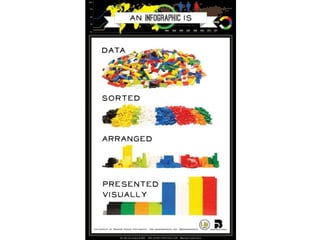
• Infographics are visual representations of
information, data or knowledge
• Use when you need to explain complex
information quickly
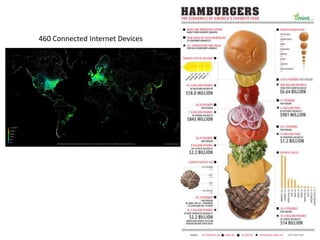
460 Connected Internet Devices
Why should we use them?
• Approximately 65% of people are visual learners
• Information literacy standards are included in
ISTE NETS and Common Core: CCSS.ELA-Literacy.RI.6.7 Integrate
information presented in different media or formats (e.g., visually, quantitatively) as
well as in words to develop a coherent understanding of a topic or issue.
• They require a higher level of thinking (analyze
and create)
• They inject rigor into your classroom
• They are fun!!
Where do you find them?
Links:
http://dailyinfographic.com/
http://www.coolinfographics.com/
http://pinterest.com
How do you use them with students?
• Share one for a warm up to introduce topic
• Have students search for infographics on a topic
and share with the class
• Compare two infographics on the same topic
• Ask students to fact check infographics
• Have students create math problems using data
from an infographic
• Require students to locate and explain data from
an infographic
• Have students create their own!
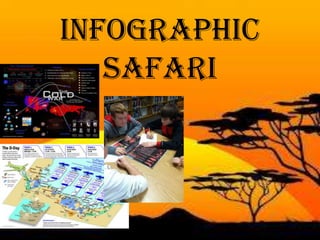
Infographic
Safari
Mrs. Cox, Palmetto Middle
Librarian, 2013
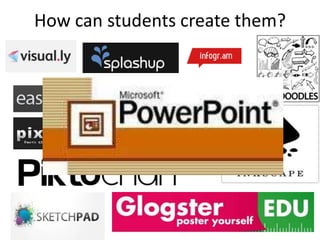
How can students create them?
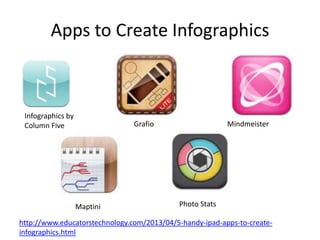
Apps to Create Infographics
Infographics by
Column Five Grafio Mindmeister
Maptini Photo Stats
http://www.educatorstechnology.com/2013/04/5-handy-ipad-apps-to-create-
infographics.html
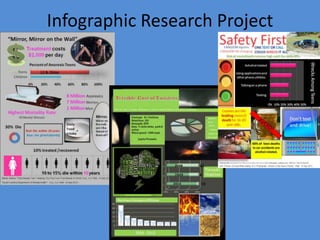
Infographic Research Project
Infographic Teaching Resources
• NY Times Learning Blog Posts:
http://learning.blogs.nytimes.com/2010/08/23/teachin
g-with-infographics-places-to-start/
• Kathy Schrock’s Guide:
http://www.schrockguide.net/infographics-as-an-
assessment.html
• Free Tech 4 Teachers posts:
http://www.freetech4teachers.com/2012/12/500-cool-
infographics.html
• Scribd Guide:
http://www.educatorstechnology.com/2013/03/excelle
nt-tips-and-tools-to-create.html
Steps To Create an Infographic
1. Become familiar with the ways to visualize
data
2. Research and collect data and citations
3. Hand sketch a draft
4. Gather images and record citations
5. Pick colors and fonts based on message
6. Create infographic with citations
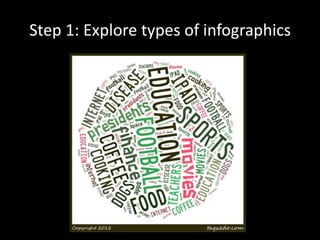
Step 1: Explore types of infographics
Step 2: Research and collect data
• Books
• DISCUS Articles
• Magazines
• Newspapers
• Web sites
• Use citationmachine.net to create MLA
citations.
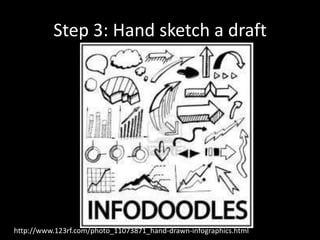
Step 3: Hand sketch a draft
http://www.123rf.com/photo_11073871_hand-drawn-infographics.html
Step 4: Gather images and cite
• Pics 4 Learning:
http://www.pics4learning.com/
• Clip Art ETC: http://etc.usf.edu/clipart/
• Edupics: http://www.edupics.com/
• Photl: http://www.photl.com/
• PicFindr: http://www.picfindr.com/
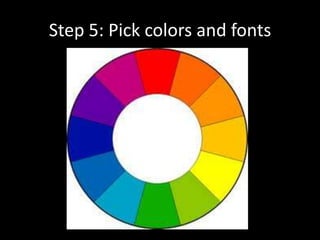
Step 5: Pick colors and fonts
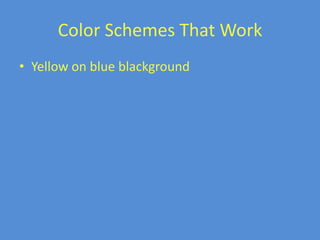
Color Schemes That Work
• Yellow on blue blackground
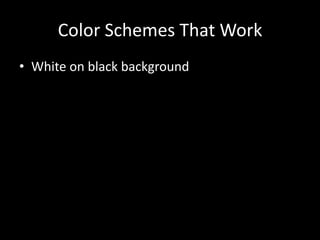
Color Schemes That Work
• White on black background
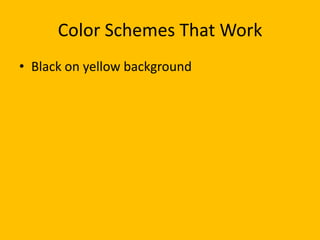
Color Schemes That Work
• Black on yellow background
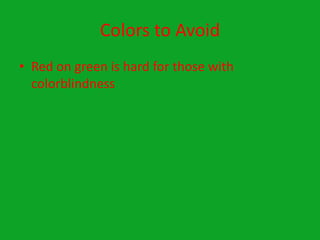
Colors to Avoid
• Red on green is hard for those with
colorblindness
Colors to Avoid
• If you want to use red, go for burgundy
instead
• Red causes an agitated emotional response
Colors Evoke Emotion
• Green makes the viewer feel involved with
topic
• Blue indicates a calm message
• Yellow is for hope and cheerfulness
• Purple is childlike, save for “light” topics
• Black indicates power
Fonts
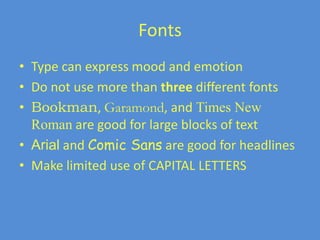
• Type can express mood and emotion
• Do not use more than three different fonts
• Bookman, Garamond, and Times New
Roman are good for large blocks of text
• Arial and Comic Sans are good for headlines
• Make limited use of CAPITAL LETTERS
Step 6: Create infographic and cite
sources
• Power Point will be used to create the
infographic
• Rubric Overview
• Don’t forget citations
Power Point Tricks to Know
• Bring to Front, Send to Back
• Set color transparent
• Change slide orientation
• Create graphs in Excel and Paste in
• Save as JPEG
Sources
Schrock, Kathy. “Power Point Etiquette” Slideshare Presentation,
http://www.slideshare.net/kathyschrock/powerpoint-for-administrators
Links to infographics used:
http://www.123rf.com/photo_11073871_hand-drawn-infographics.html
http://idea4invention.com/articles/electric-car-inventions-timeline-infographic
http://www.mobypicture.com/user/JeeeM/view/7788306
http://mashable.com/2012/07/18/lego-infographic/
http://www.markedlines.com/a-roundup-of-25-jaw-dropping-infographics/
http://www.clicksoftware.com/national-critical-planning-infrastructure-management-
during-summer.htm
http://www.coolinfographics.com/blog/2013/3/19/ink-costs-more-than-human-
blood.html
http://www.coolinfographics.com/blog/2013/3/22/460-million-connected-internet-
devices.html
http://visual.ly/anatomy-teacher

UTC infographics pres

  • 1.
    Infographics: show methe data Tamara cox Palmetto middle
  • 2.
    Definition • Infographics arevisual representations of information, data or knowledge • Use when you need to explain complex information quickly
  • 5.
  • 7.
    Why should weuse them? • Approximately 65% of people are visual learners • Information literacy standards are included in ISTE NETS and Common Core: CCSS.ELA-Literacy.RI.6.7 Integrate information presented in different media or formats (e.g., visually, quantitatively) as well as in words to develop a coherent understanding of a topic or issue. • They require a higher level of thinking (analyze and create) • They inject rigor into your classroom • They are fun!!
  • 8.
    Where do youfind them? Links: http://dailyinfographic.com/ http://www.coolinfographics.com/ http://pinterest.com
  • 9.
    How do youuse them with students? • Share one for a warm up to introduce topic • Have students search for infographics on a topic and share with the class • Compare two infographics on the same topic • Ask students to fact check infographics • Have students create math problems using data from an infographic • Require students to locate and explain data from an infographic • Have students create their own!
  • 10.
  • 11.
    How can studentscreate them?
  • 12.
    Apps to CreateInfographics Infographics by Column Five Grafio Mindmeister Maptini Photo Stats http://www.educatorstechnology.com/2013/04/5-handy-ipad-apps-to-create- infographics.html
  • 13.
  • 14.
    Infographic Teaching Resources •NY Times Learning Blog Posts: http://learning.blogs.nytimes.com/2010/08/23/teachin g-with-infographics-places-to-start/ • Kathy Schrock’s Guide: http://www.schrockguide.net/infographics-as-an- assessment.html • Free Tech 4 Teachers posts: http://www.freetech4teachers.com/2012/12/500-cool- infographics.html • Scribd Guide: http://www.educatorstechnology.com/2013/03/excelle nt-tips-and-tools-to-create.html
  • 15.
    Steps To Createan Infographic 1. Become familiar with the ways to visualize data 2. Research and collect data and citations 3. Hand sketch a draft 4. Gather images and record citations 5. Pick colors and fonts based on message 6. Create infographic with citations
  • 16.
    Step 1: Exploretypes of infographics
  • 17.
    Step 2: Researchand collect data • Books • DISCUS Articles • Magazines • Newspapers • Web sites • Use citationmachine.net to create MLA citations.
  • 18.
    Step 3: Handsketch a draft http://www.123rf.com/photo_11073871_hand-drawn-infographics.html
  • 19.
    Step 4: Gatherimages and cite • Pics 4 Learning: http://www.pics4learning.com/ • Clip Art ETC: http://etc.usf.edu/clipart/ • Edupics: http://www.edupics.com/ • Photl: http://www.photl.com/ • PicFindr: http://www.picfindr.com/
  • 20.
    Step 5: Pickcolors and fonts
  • 21.
    Color Schemes ThatWork • Yellow on blue blackground
  • 22.
    Color Schemes ThatWork • White on black background
  • 23.
    Color Schemes ThatWork • Black on yellow background
  • 24.
    Colors to Avoid •Red on green is hard for those with colorblindness
  • 25.
    Colors to Avoid •If you want to use red, go for burgundy instead • Red causes an agitated emotional response
  • 26.
    Colors Evoke Emotion •Green makes the viewer feel involved with topic • Blue indicates a calm message • Yellow is for hope and cheerfulness • Purple is childlike, save for “light” topics • Black indicates power
  • 27.
    Fonts • Type canexpress mood and emotion • Do not use more than three different fonts • Bookman, Garamond, and Times New Roman are good for large blocks of text • Arial and Comic Sans are good for headlines • Make limited use of CAPITAL LETTERS
  • 28.
    Step 6: Createinfographic and cite sources • Power Point will be used to create the infographic • Rubric Overview • Don’t forget citations
  • 29.
    Power Point Tricksto Know • Bring to Front, Send to Back • Set color transparent • Change slide orientation • Create graphs in Excel and Paste in • Save as JPEG
  • 30.
    Sources Schrock, Kathy. “PowerPoint Etiquette” Slideshare Presentation, http://www.slideshare.net/kathyschrock/powerpoint-for-administrators Links to infographics used: http://www.123rf.com/photo_11073871_hand-drawn-infographics.html http://idea4invention.com/articles/electric-car-inventions-timeline-infographic http://www.mobypicture.com/user/JeeeM/view/7788306 http://mashable.com/2012/07/18/lego-infographic/ http://www.markedlines.com/a-roundup-of-25-jaw-dropping-infographics/ http://www.clicksoftware.com/national-critical-planning-infrastructure-management- during-summer.htm http://www.coolinfographics.com/blog/2013/3/19/ink-costs-more-than-human- blood.html http://www.coolinfographics.com/blog/2013/3/22/460-million-connected-internet- devices.html http://visual.ly/anatomy-teacher

Editor's Notes

  • #11 Describe lesson
  • #12 Draw it by hand
  • #15 NY Times has a series with tips on how to make them, use them with classes, links to examples, a post for each subject with ideasKathy Schrock’s guide has video instructions, rubrics, links, online tutorials and moreFree Tech has reviews of sites, links to sites to create your own, links to cool infographics