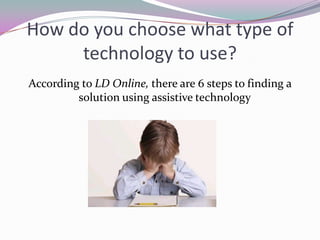
The document discusses assistive technology that can help students with disabilities in the classroom. It defines assistive technology and IDEA. It outlines the 6 steps to choosing assistive technology, including collecting student information, identifying activities, setting goals, brainstorming solutions, observing outcomes, and adjusting plans. The document then provides examples of assistive technology for three common disabilities: ADHD, auditory disabilities, and mild learning disabilities. Suggestions include laptops, audiovisual aids, FM systems, word processors, calculators, and multimedia resources.