An Agile Approach to Optimising
      our Digital Strategy

           Mia Horrigan
          ACS Conference
           March 2012
Health Insurance Industry

•   $6.8 billion Industry
•   Grudge purchase
•   Heavily regulated industry
•   Risk adverse
•   Baby Boomers and Ageing Population
•   Difficulty attracting Gen Y members
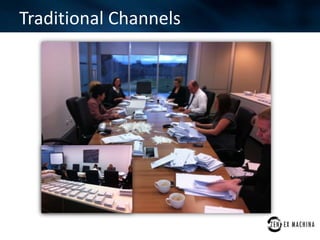
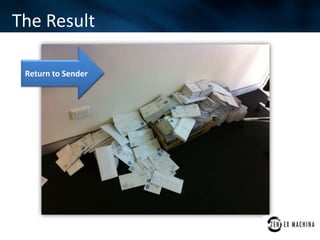
Traditional Channels
The Result

 Return to Sender
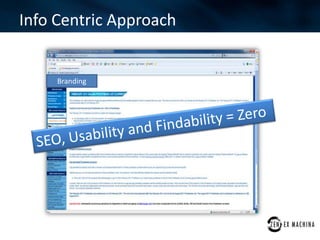
Info Centric Approach


     Branding
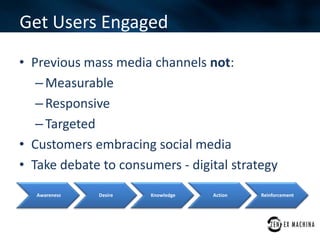
Get Users Engaged
• Previous mass media channels not:
   – Measurable
   – Responsive
   – Targeted
• Customers embracing social media
• Take debate to consumers - digital strategy
   Awareness   Desire   Knowledge   Action   Reinforcement
Why Agile ?

• Needed to be up and running with three sites
  in three months
• Message was complex
• Requirements not fully understood
• New to social media (low capability)
• Policy environment changing

 “Agility in healthcare is critical as it is one of few industries
             where lives are quite literally on the line”
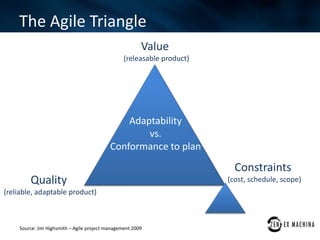
The Agile Triangle
                                                        Value
                                                 (releasable product)


                                               Adaptability
                                                   vs.
                                           Conformance to plan

                                                                          Constraints
        Quality                                                         (cost, schedule, scope)
(reliable, adaptable product)


    Source: Jim Highsmith – Agile project management 2009
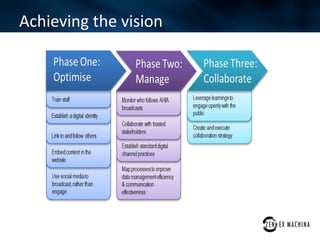
Achieving the vision
What We Did

•   Engaged a Scrum Master/Coach
•   Implemented Scrum
•   Determined what was of value to stakeholders
•   Aligned needs to priorities
•   Continuously integrated provided something
    of value each Sprint
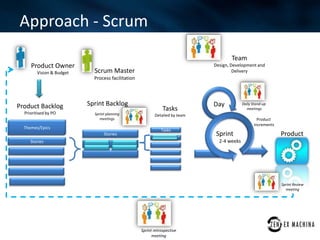
Approach - Scrum
                                                                                     Team
     Product Owner                                                           Design, Development and
        Vision & Budget     Scrum Master                                              Delivery
                            Process facilitation


Product Backlog           Sprint Backlog                                     Day           Daily Stand-up
                                                               Tasks                         meetings
  Prioritised by PO         Sprint planning               Detailed by team
                               meetings                                                             Product
                                                                                                  increments
  Themes/Epics
                                                              Tasks
                                 Stories                                      Sprint                           Product
     Stories                                                                   2-4 weeks


                                                                                                               Sprint Review
                                                                                                                 meeting


                                                   Sprint retrospective
                                                         meeting
Scrum

• 2 weekly sprint cycles
• Continuous integration to build upon skinny
  solution
• Responded to evolving needs
• Collaboration
• Build knowledge from retrospectives
• “Definition of done” important
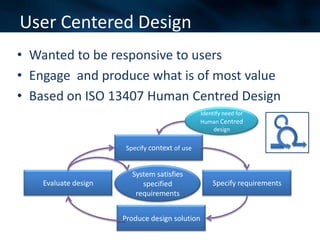
User Centered Design
• Wanted to be responsive to users
• Engage and produce what is of most value
• Based on ISO 13407 Human Centred Design
                                                Identify need for
                                                Human Centred
                                                     design


                       Specify context of use


                         System satisfies
    Evaluate design         specified               Specify requirements
                          requirements


                      Produce design solution
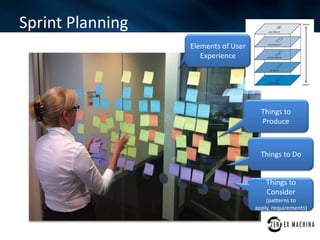
Sprint Planning
                  Elements of User
                     Experience


                                       Things to
                                       Produce


                                       Things to Do


                                         Things to
                                         Consider
                                         (patterns to
                                     apply, requirements)
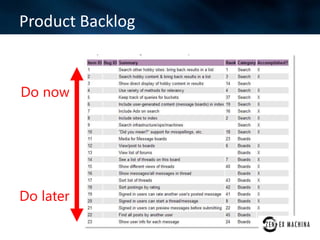
Product Backlog


Do now


Do later
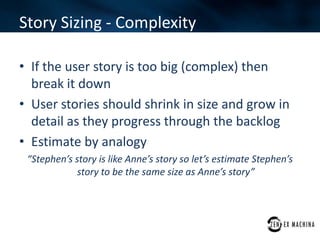
Story Sizing - Complexity

• If the user story is too big (complex) then
  break it down
• User stories should shrink in size and grow in
  detail as they progress through the backlog
• Estimate by analogy
 “Stephen’s story is like Anne’s story so let’s estimate Stephen’s
             story to be the same size as Anne’s story”
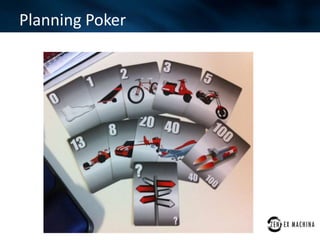
Planning Poker
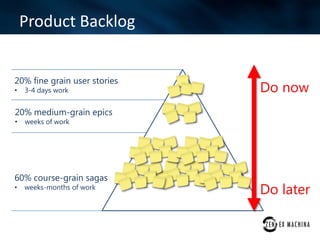
Product Backlog


20% fine grain user stories
•   3-4 days work             Do now
20% medium-grain epics
•   weeks of work


60% course-grain sagas
•   weeks-months of work
                              Do later
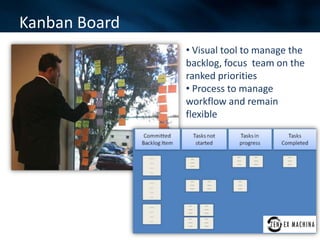
Kanban Board
               • Visual tool to manage the
               backlog, focus team on the
               ranked priorities
               • Process to manage
               workflow and remain
               flexible
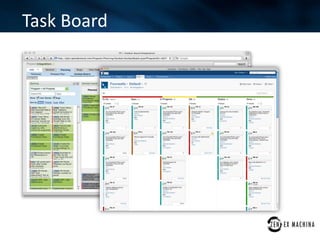
Task Board
Develop User Stories from Agile Personas
                              • As a [Role]..Gen X consumer thinking
                              about starting a family,
                              • I want to [Task]..know how much the
                              change to the rebate will affect me
                              • So that I [Goal].. can understand the
                              extra costs

• Generation
• Profile and background
• What they value
• Value of Info providers
• Pain points
Card – Conversation - Confirmation

• Start with the Agile framework
• Add Behavioural Context
   – What do they want to achieve?
   – What do they value?
   – Why?
• Understand “definition of done”
Behaviour Driven Development
                                    Title: Rebate Calculator
•   Given I am a.. [Role] and..     As a consumer on a tight budget I want
                                    to know how much the change to the
                                    rebate will affect me. So when I input
•    I Value.. [+/- Context]        info into calculator via drop down
                                    menus I will see how much extra $$$ I

•
                                    will pay via graph and text
     When I ..[User interaction]
•    Then I expect.. [This]
•   To achieve ..[Result/Outcome]
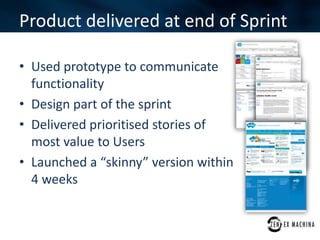
Product delivered at end of Sprint

• Used prototype to communicate
  functionality
• Design part of the sprint
• Delivered prioritised stories of
  most value to Users
• Launched a “skinny” version within
  4 weeks
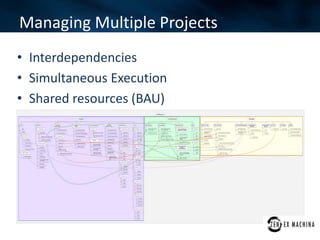
Managing Multiple Projects
• Interdependencies
• Simultaneous Execution
• Shared resources (BAU)
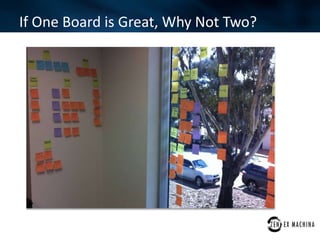
If One Board is Great, Why Not Two?
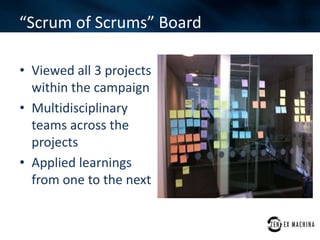
“Scrum of Scrums” Board

• Viewed all 3 projects
  within the campaign
• Multidisciplinary
  teams across the
  projects
• Applied learnings
  from one to the next
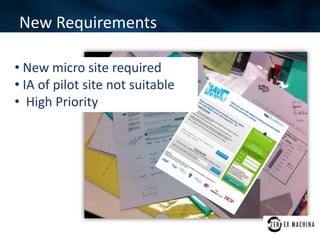
New Requirements

• New micro site required
• IA of pilot site not suitable
• High Priority
What if You are Mid Sprint?

 • Option 1 - Continue to deliver agreed tasks
   for current Sprint (Scrum Purists)
 • Option 2 -Terminate Sprint and start
   planning new work (design spike)
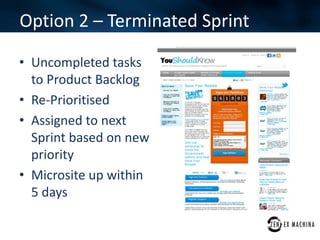
Option 2 – Terminated Sprint

• Uncompleted tasks
  to Product Backlog
• Re-Prioritised
• Assigned to next
  Sprint based on new
  priority
• Microsite up within
  5 days
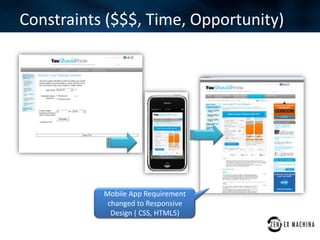
Constraints ($$$, Time, Opportunity)


           Mobile App Requirement
            changed to Responsive
             Design ( CSS, HTML5)
Sprint Retrospective

• What worked well?
• What could be done better?
• How well did we estimate effort and
  complexity?
• What would we do differently?
Continuous Integration

• Continuous Integration of new features
• Reuse of widgets across projects = reduced
  costs
• Utilised learning across projects
• 3 ½ sites in 12 weeks
• Developing social media capability
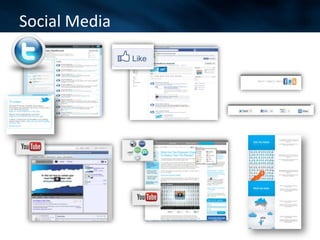
Social Media
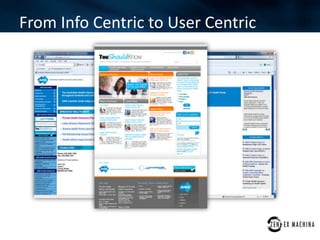
From Info Centric to User Centric
What we learned

• Multidisciplinary approach allowed us to
  remain flexible, inspect and adapt
• Kanban Board great visual tool
• Scrum process an effective way to continuously
  integrate features of value
• Scrum coach was crucial to success
• Design part of the Scrum team (not working
  ahead)
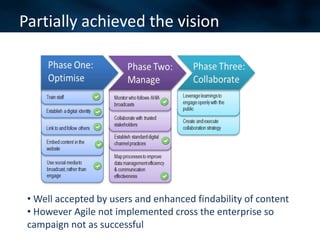
Partially achieved the vision


 • Well accepted by users and enhanced findability of content
 • However Agile not implemented cross the enterprise so
 campaign not as successful
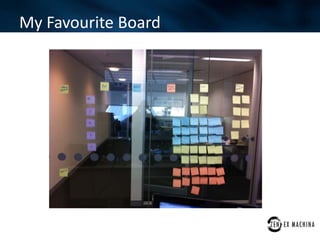
My Favourite Board
Thank you

Mia Horrigan

     @miahorri

    www.zenexmachina.wordpress.com

     Mia Horrigan


    http://www.slideshare.net/miahorri

Using Agile to move from info centric to user centric

  • 1.
    An Agile Approachto Optimising our Digital Strategy Mia Horrigan ACS Conference March 2012
  • 2.
    Health Insurance Industry • $6.8 billion Industry • Grudge purchase • Heavily regulated industry • Risk adverse • Baby Boomers and Ageing Population • Difficulty attracting Gen Y members
  • 3.
  • 4.
  • 5.
  • 6.
    Get Users Engaged •Previous mass media channels not: – Measurable – Responsive – Targeted • Customers embracing social media • Take debate to consumers - digital strategy Awareness Desire Knowledge Action Reinforcement
  • 7.
    Why Agile ? •Needed to be up and running with three sites in three months • Message was complex • Requirements not fully understood • New to social media (low capability) • Policy environment changing “Agility in healthcare is critical as it is one of few industries where lives are quite literally on the line”
  • 8.
    The Agile Triangle Value (releasable product) Adaptability vs. Conformance to plan Constraints Quality (cost, schedule, scope) (reliable, adaptable product) Source: Jim Highsmith – Agile project management 2009
  • 9.
  • 10.
    What We Did • Engaged a Scrum Master/Coach • Implemented Scrum • Determined what was of value to stakeholders • Aligned needs to priorities • Continuously integrated provided something of value each Sprint
  • 11.
    Approach - Scrum Team Product Owner Design, Development and Vision & Budget Scrum Master Delivery Process facilitation Product Backlog Sprint Backlog Day Daily Stand-up Tasks meetings Prioritised by PO Sprint planning Detailed by team meetings Product increments Themes/Epics Tasks Stories Sprint Product Stories 2-4 weeks Sprint Review meeting Sprint retrospective meeting
  • 12.
    Scrum • 2 weeklysprint cycles • Continuous integration to build upon skinny solution • Responded to evolving needs • Collaboration • Build knowledge from retrospectives • “Definition of done” important
  • 13.
    User Centered Design •Wanted to be responsive to users • Engage and produce what is of most value • Based on ISO 13407 Human Centred Design Identify need for Human Centred design Specify context of use System satisfies Evaluate design specified Specify requirements requirements Produce design solution
  • 14.
    Sprint Planning Elements of User Experience Things to Produce Things to Do Things to Consider (patterns to apply, requirements)
  • 15.
  • 16.
    Story Sizing -Complexity • If the user story is too big (complex) then break it down • User stories should shrink in size and grow in detail as they progress through the backlog • Estimate by analogy “Stephen’s story is like Anne’s story so let’s estimate Stephen’s story to be the same size as Anne’s story”
  • 17.
  • 18.
    Product Backlog 20% finegrain user stories • 3-4 days work Do now 20% medium-grain epics • weeks of work 60% course-grain sagas • weeks-months of work Do later
  • 19.
    Kanban Board • Visual tool to manage the backlog, focus team on the ranked priorities • Process to manage workflow and remain flexible
  • 20.
  • 21.
    Develop User Storiesfrom Agile Personas • As a [Role]..Gen X consumer thinking about starting a family, • I want to [Task]..know how much the change to the rebate will affect me • So that I [Goal].. can understand the extra costs • Generation • Profile and background • What they value • Value of Info providers • Pain points
  • 22.
    Card – Conversation- Confirmation • Start with the Agile framework • Add Behavioural Context – What do they want to achieve? – What do they value? – Why? • Understand “definition of done”
  • 23.
    Behaviour Driven Development Title: Rebate Calculator • Given I am a.. [Role] and.. As a consumer on a tight budget I want to know how much the change to the rebate will affect me. So when I input • I Value.. [+/- Context] info into calculator via drop down menus I will see how much extra $$$ I • will pay via graph and text When I ..[User interaction] • Then I expect.. [This] • To achieve ..[Result/Outcome]
  • 24.
    Product delivered atend of Sprint • Used prototype to communicate functionality • Design part of the sprint • Delivered prioritised stories of most value to Users • Launched a “skinny” version within 4 weeks
  • 25.
    Managing Multiple Projects •Interdependencies • Simultaneous Execution • Shared resources (BAU)
  • 26.
    If One Boardis Great, Why Not Two?
  • 27.
    “Scrum of Scrums”Board • Viewed all 3 projects within the campaign • Multidisciplinary teams across the projects • Applied learnings from one to the next
  • 28.
    New Requirements • Newmicro site required • IA of pilot site not suitable • High Priority
  • 29.
    What if Youare Mid Sprint? • Option 1 - Continue to deliver agreed tasks for current Sprint (Scrum Purists) • Option 2 -Terminate Sprint and start planning new work (design spike)
  • 30.
    Option 2 –Terminated Sprint • Uncompleted tasks to Product Backlog • Re-Prioritised • Assigned to next Sprint based on new priority • Microsite up within 5 days
  • 31.
    Constraints ($$$, Time,Opportunity) Mobile App Requirement changed to Responsive Design ( CSS, HTML5)
  • 32.
    Sprint Retrospective • Whatworked well? • What could be done better? • How well did we estimate effort and complexity? • What would we do differently?
  • 33.
    Continuous Integration • ContinuousIntegration of new features • Reuse of widgets across projects = reduced costs • Utilised learning across projects • 3 ½ sites in 12 weeks • Developing social media capability
  • 34.
  • 35.
    From Info Centricto User Centric
  • 36.
    What we learned •Multidisciplinary approach allowed us to remain flexible, inspect and adapt • Kanban Board great visual tool • Scrum process an effective way to continuously integrate features of value • Scrum coach was crucial to success • Design part of the Scrum team (not working ahead)
  • 37.
    Partially achieved thevision • Well accepted by users and enhanced findability of content • However Agile not implemented cross the enterprise so campaign not as successful
  • 38.
  • 39.
    Thank you Mia Horrigan @miahorri www.zenexmachina.wordpress.com Mia Horrigan http://www.slideshare.net/miahorri