Useful phrases for Speaking:

             1. Introducing the topic

           Today we are here to discuss…

        The goal of our discussion today is…

            2. Bringing in other people

            What is your opinion, Mr. Ito?

  Do you agree with Mr. Ito’s opinion, Ms. Suzuki?

      Mr. Ito, what do you think we should do?

  Mr. Ito, what are your views regarding this point?

        3. Keeping the Discussion Moving

             Let’s go on to another point.

               Next, let’s talk about…

              Let’s talk about that later.

               4. Giving an opinion

                  In my opinion…

              As far as I’m concerned…

             Personally, I believe that…

                The way I see it is…

          5. Getting further information

 Would you mind explaining that a little more, please?

         Could you explain that more fully?

       Could you tell us a bit more about that?
6. Restating an idea

                 In other words,

                   That is, …

           What I’m trying to say is…

                    I mean…

            To put it another way…

          7. Persuading Convincing

             You must admit that…

               Don’t forget that…

           You must remember that…

8. Inquiring about Agreement or Disagreement

        Do/don’t you agree, Ms. Suzuki?

          Wouldn’t you agree, Mr. Ito?

           9. Expressing Agreement

            Yes, that is right/correct.

              You are right/correct.

       I definitely agree with Ms. Suzuki.

          That is exactly what I think.

         10. Expressing Disagreement

        I don’t really agree with him/her.

   I’m afraid I can’t agree with his/her opinion.

          That’s not quite how I see it.
 I can see your point, but I don’t really agree with it.

              11. Expressing doubt or reservation

             Well, maybe, but I’m not sure about that.

            Hmm, he may be correct but I’m not sure.

           I can see your point, but I’m not sure I agree.

                       12. Refuting a fact

                             Actually,

                      As a matter of fact, …

         Well, I’m not sure that is true/correct because…

               13. Dismissing an irrelevant point

                I’m afraid you’re missing the point.

 I don’t think that has anything do with the goal of our discussion.

                    14. Making suggestions

                       Why don’t we/you…

                           How about…

                     I suggest that we/you…

                 15. Agreeing with a suggestion

                      Ok. That makes sense.

                            Of course.

                            Certainly

              16. Refusing a suggestion or request

              I’m sorry but that is out of the question
 Unfortunately that is not possible.

                         17. Capitulation

  Mr. Suzuki has convinced me that my opinion/suggestion/idea is not
   useful/practical/necessary/good. Therefore, I havechangedmymind.

 OK. You have persuaded me to change my mind. I can agree with you.

                    18. Expressingsimilarities

              Those two points/suggestions are similar.

           Mr. Suzuki’s idea is about the same as Ms. Ito’s.

       My idea/suggestion is (more)....er than mine/hers.

                         19. Interrupting

                  Excuse me for interrupting, but…

                      Sorry to interrupt, but…

              20. Getting a point into the discussion

                   I have a point I’d like to make.

                   I’d like to add something here.

          I’d like to say something about your/her/his idea.

                     21. Seekingclarification

                        What do you mean?

              Sorry, I’m not quite sure what you mean.

                        Do you mean that…?

                   I’m sorry, I don’t quite follow.

             I don’t quite understand what you’re saying.
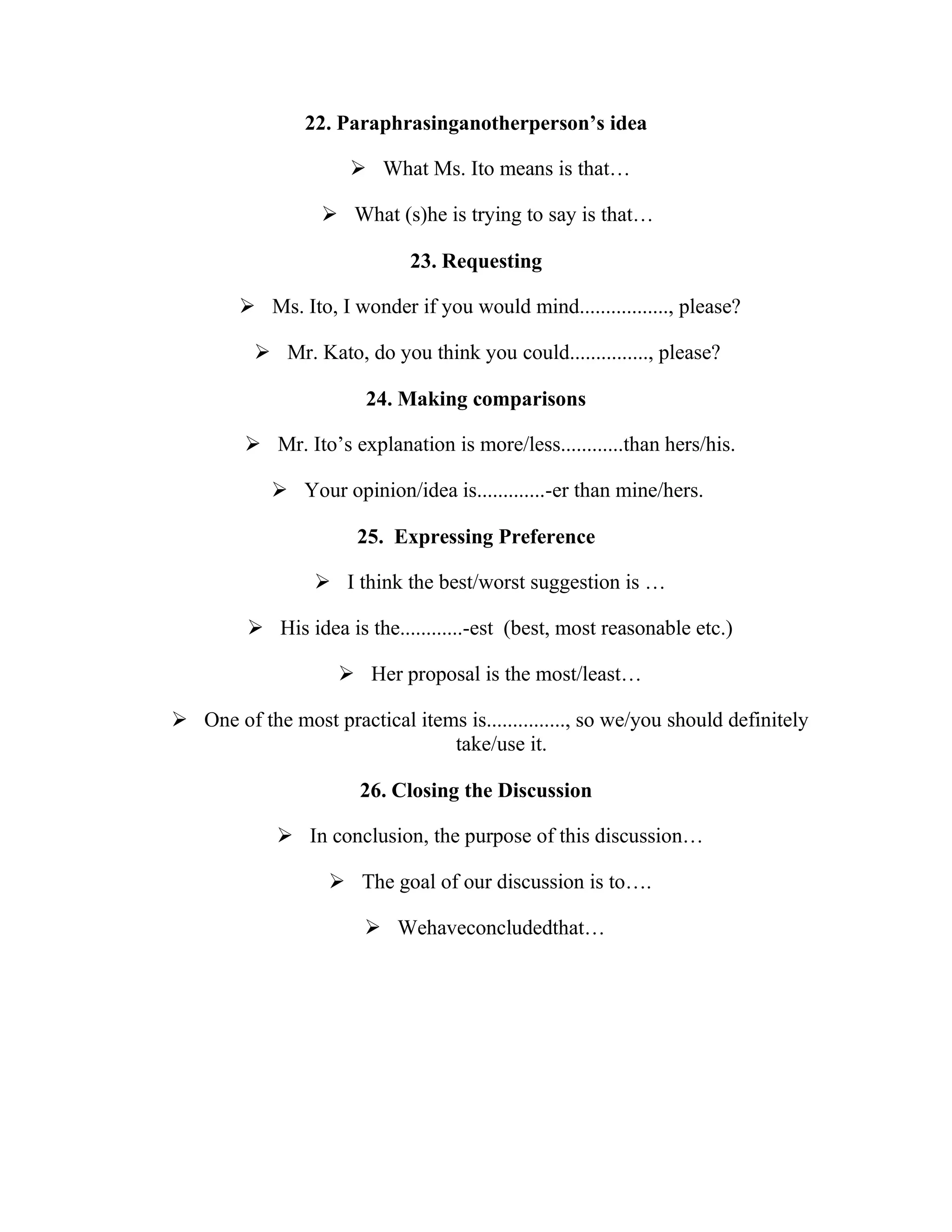
22. Paraphrasinganotherperson’s idea

                       What Ms. Ito means is that…

                   What (s)he is trying to say is that…

                             23. Requesting

         Ms. Ito, I wonder if you would mind................., please?

           Mr. Kato, do you think you could..............., please?

                        24. Making comparisons

          Mr. Ito’s explanation is more/less............than hers/his.

             Your opinion/idea is.............-er than mine/hers.

                       25. Expressing Preference

                  I think the best/worst suggestion is …

          His idea is the............-est (best, most reasonable etc.)

                     Her proposal is the most/least…

 One of the most practical items is..............., so we/you should definitely
                                take/use it.

                       26. Closing the Discussion

              In conclusion, the purpose of this discussion…

                    The goal of our discussion is to….

                         Wehaveconcludedthat…

Useful phrases for speaking

  • 1.
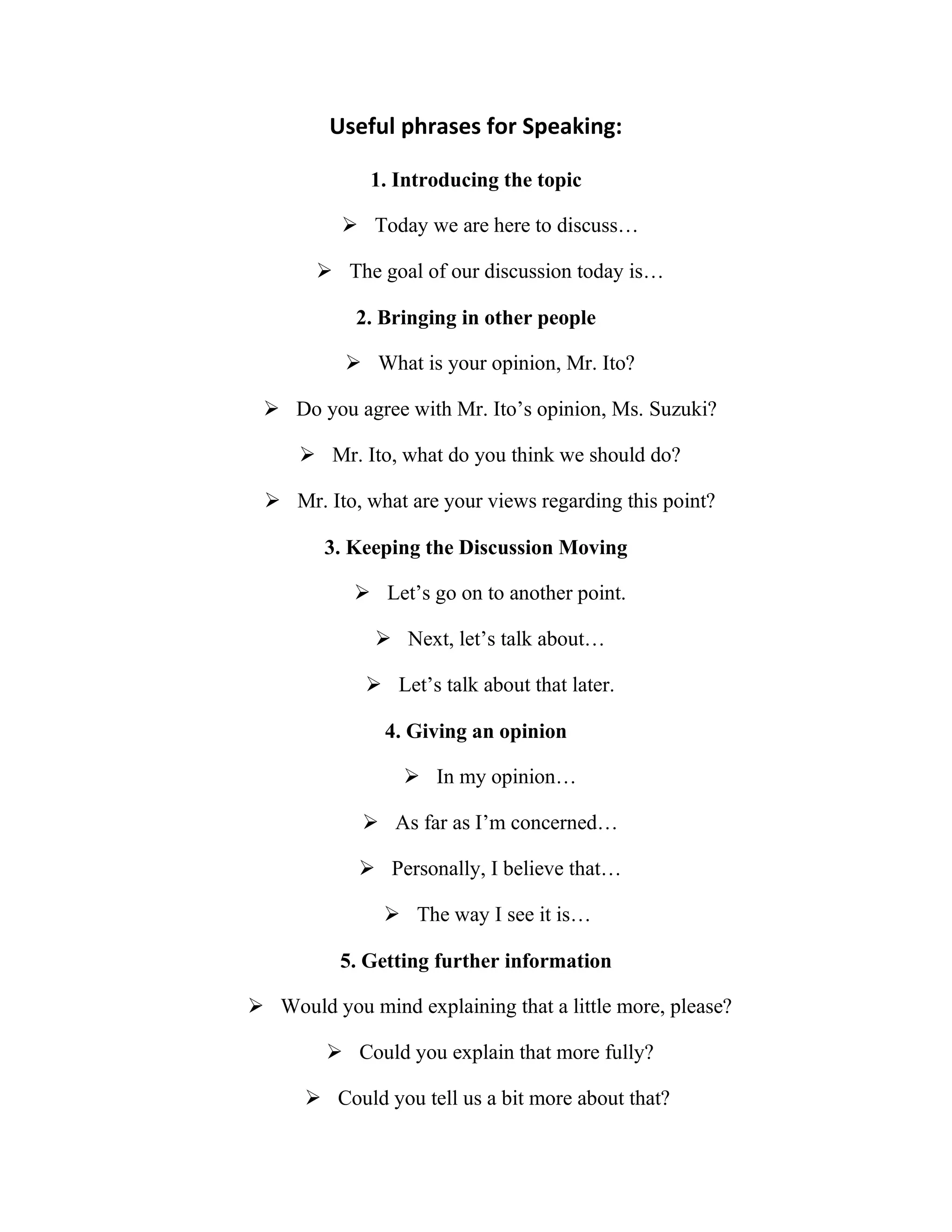
    Useful phrases forSpeaking: 1. Introducing the topic  Today we are here to discuss…  The goal of our discussion today is… 2. Bringing in other people  What is your opinion, Mr. Ito?  Do you agree with Mr. Ito’s opinion, Ms. Suzuki?  Mr. Ito, what do you think we should do?  Mr. Ito, what are your views regarding this point? 3. Keeping the Discussion Moving  Let’s go on to another point.  Next, let’s talk about…  Let’s talk about that later. 4. Giving an opinion  In my opinion…  As far as I’m concerned…  Personally, I believe that…  The way I see it is… 5. Getting further information  Would you mind explaining that a little more, please?  Could you explain that more fully?  Could you tell us a bit more about that?
  • 2.
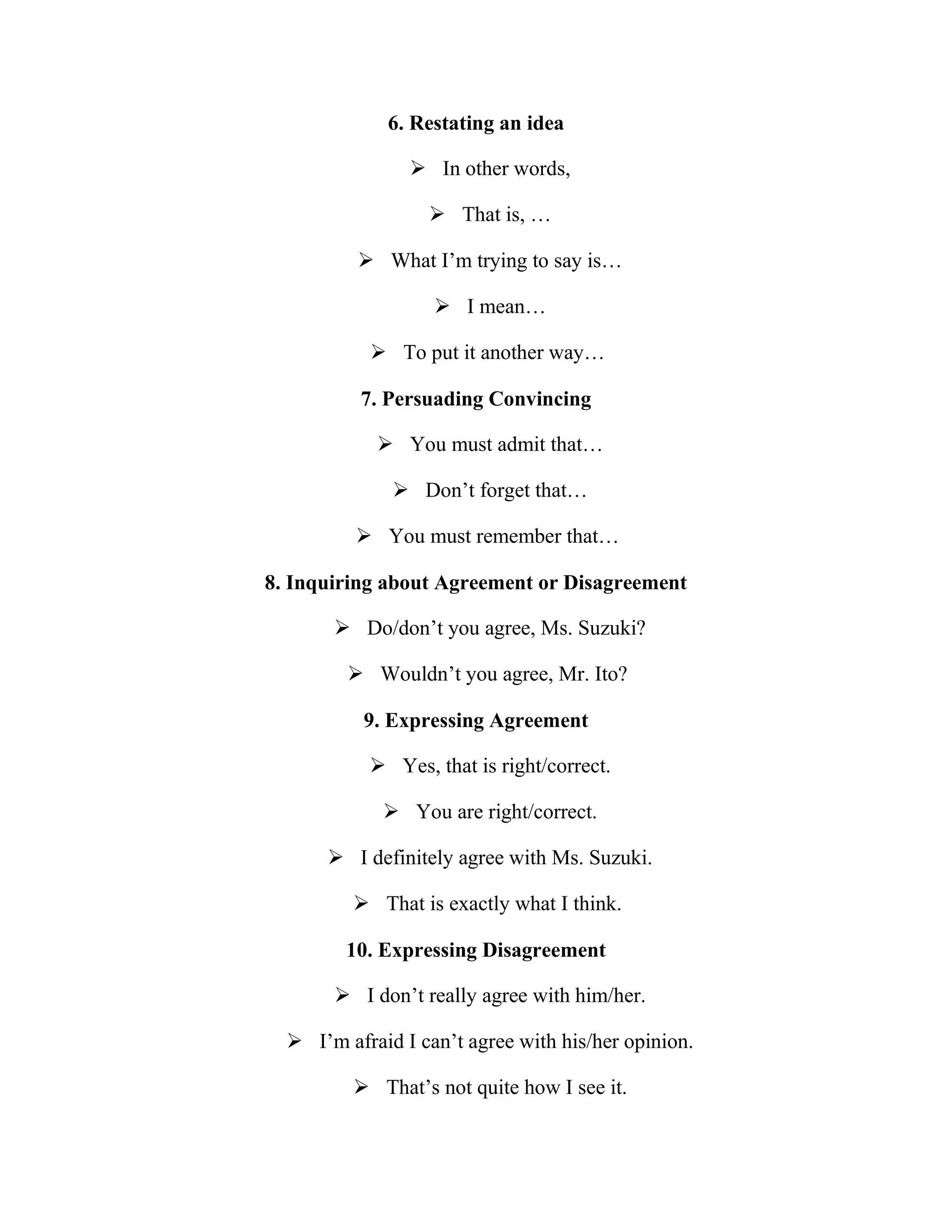
    6. Restating anidea  In other words,  That is, …  What I’m trying to say is…  I mean…  To put it another way… 7. Persuading Convincing  You must admit that…  Don’t forget that…  You must remember that… 8. Inquiring about Agreement or Disagreement  Do/don’t you agree, Ms. Suzuki?  Wouldn’t you agree, Mr. Ito? 9. Expressing Agreement  Yes, that is right/correct.  You are right/correct.  I definitely agree with Ms. Suzuki.  That is exactly what I think. 10. Expressing Disagreement  I don’t really agree with him/her.  I’m afraid I can’t agree with his/her opinion.  That’s not quite how I see it.
  • 3.
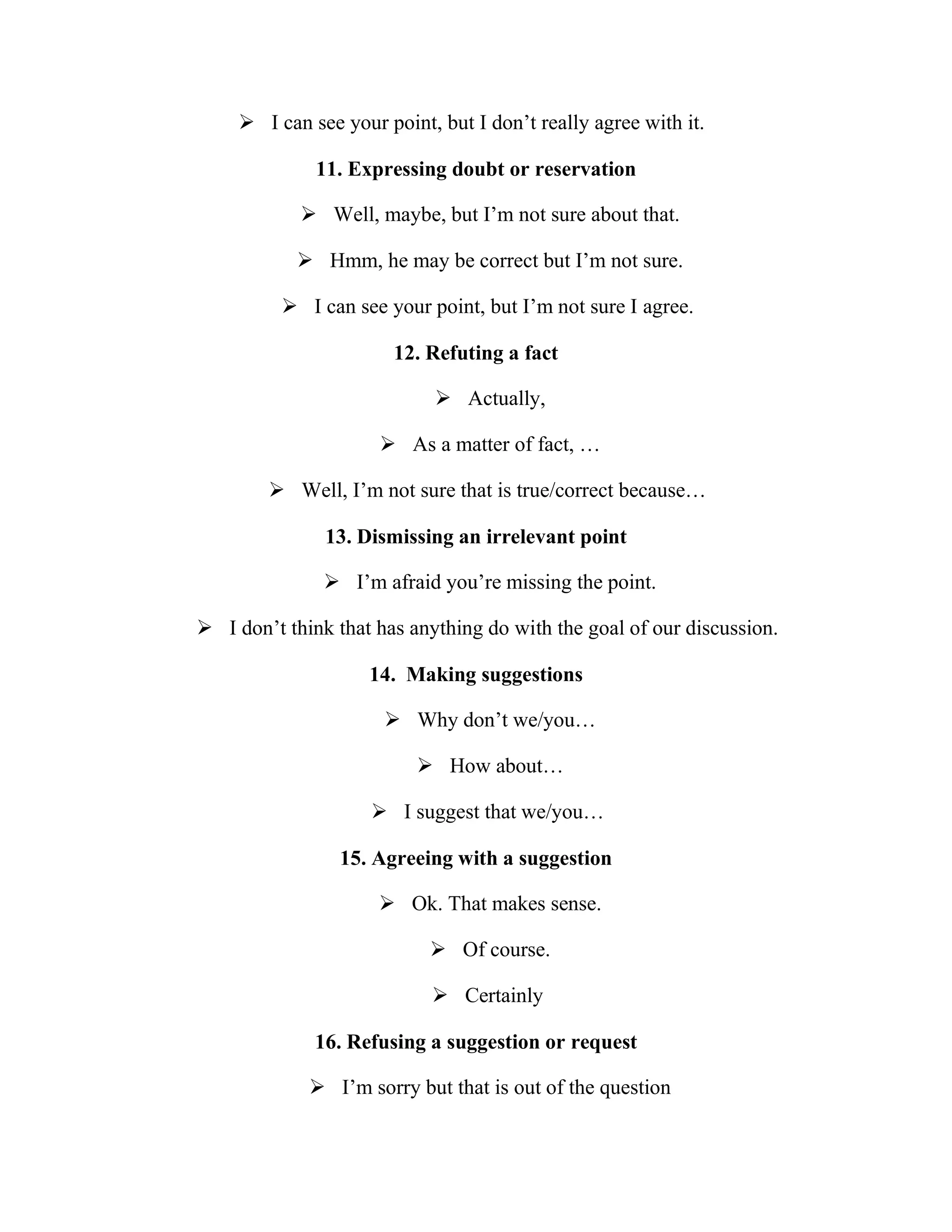
     I cansee your point, but I don’t really agree with it. 11. Expressing doubt or reservation  Well, maybe, but I’m not sure about that.  Hmm, he may be correct but I’m not sure.  I can see your point, but I’m not sure I agree. 12. Refuting a fact  Actually,  As a matter of fact, …  Well, I’m not sure that is true/correct because… 13. Dismissing an irrelevant point  I’m afraid you’re missing the point.  I don’t think that has anything do with the goal of our discussion. 14. Making suggestions  Why don’t we/you…  How about…  I suggest that we/you… 15. Agreeing with a suggestion  Ok. That makes sense.  Of course.  Certainly 16. Refusing a suggestion or request  I’m sorry but that is out of the question
  • 4.
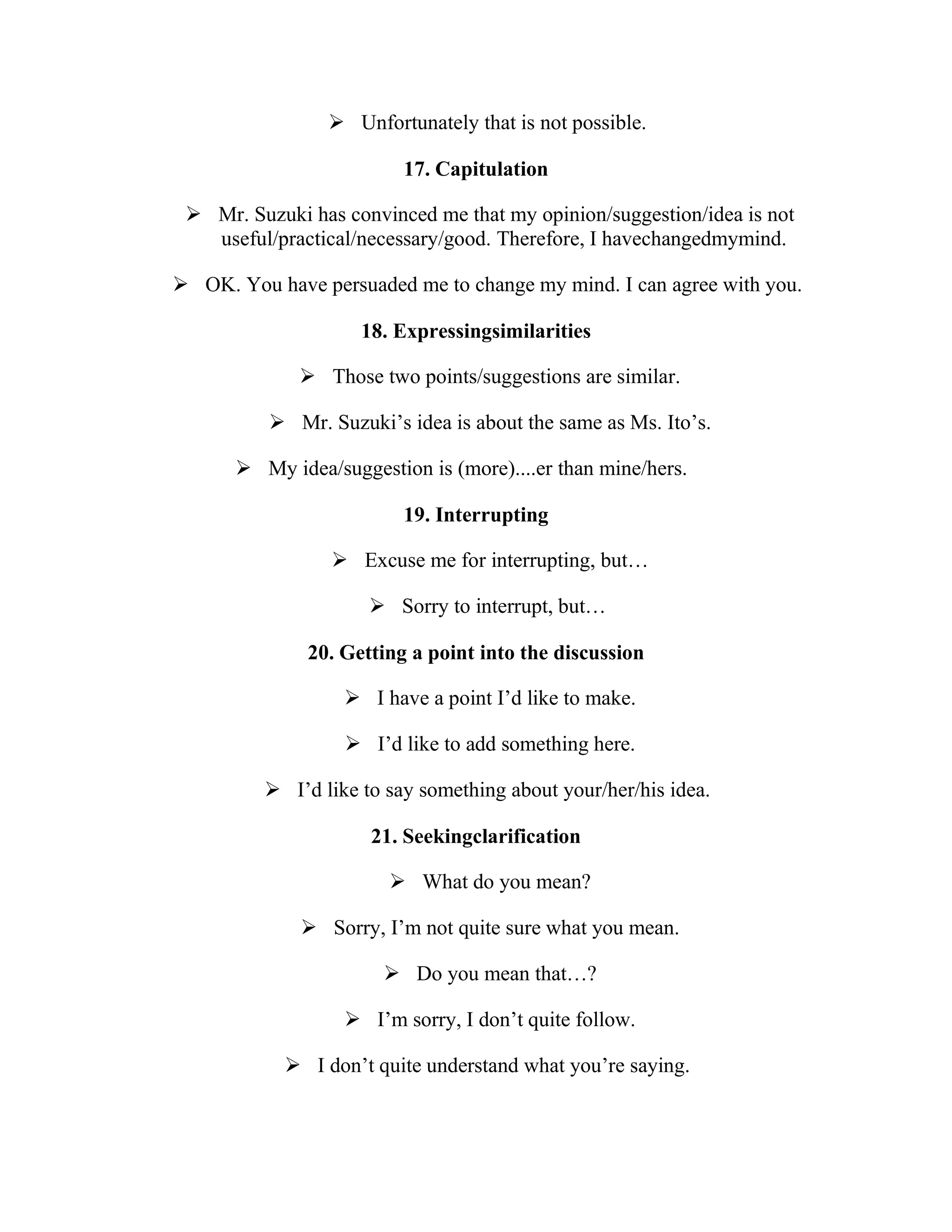
     Unfortunately thatis not possible. 17. Capitulation  Mr. Suzuki has convinced me that my opinion/suggestion/idea is not useful/practical/necessary/good. Therefore, I havechangedmymind.  OK. You have persuaded me to change my mind. I can agree with you. 18. Expressingsimilarities  Those two points/suggestions are similar.  Mr. Suzuki’s idea is about the same as Ms. Ito’s.  My idea/suggestion is (more)....er than mine/hers. 19. Interrupting  Excuse me for interrupting, but…  Sorry to interrupt, but… 20. Getting a point into the discussion  I have a point I’d like to make.  I’d like to add something here.  I’d like to say something about your/her/his idea. 21. Seekingclarification  What do you mean?  Sorry, I’m not quite sure what you mean.  Do you mean that…?  I’m sorry, I don’t quite follow.  I don’t quite understand what you’re saying.
  • 5.
    22. Paraphrasinganotherperson’s idea  What Ms. Ito means is that…  What (s)he is trying to say is that… 23. Requesting  Ms. Ito, I wonder if you would mind................., please?  Mr. Kato, do you think you could..............., please? 24. Making comparisons  Mr. Ito’s explanation is more/less............than hers/his.  Your opinion/idea is.............-er than mine/hers. 25. Expressing Preference  I think the best/worst suggestion is …  His idea is the............-est (best, most reasonable etc.)  Her proposal is the most/least…  One of the most practical items is..............., so we/you should definitely take/use it. 26. Closing the Discussion  In conclusion, the purpose of this discussion…  The goal of our discussion is to….  Wehaveconcludedthat…