PART 3 LISTENING
SHORT CONVERSATIONS
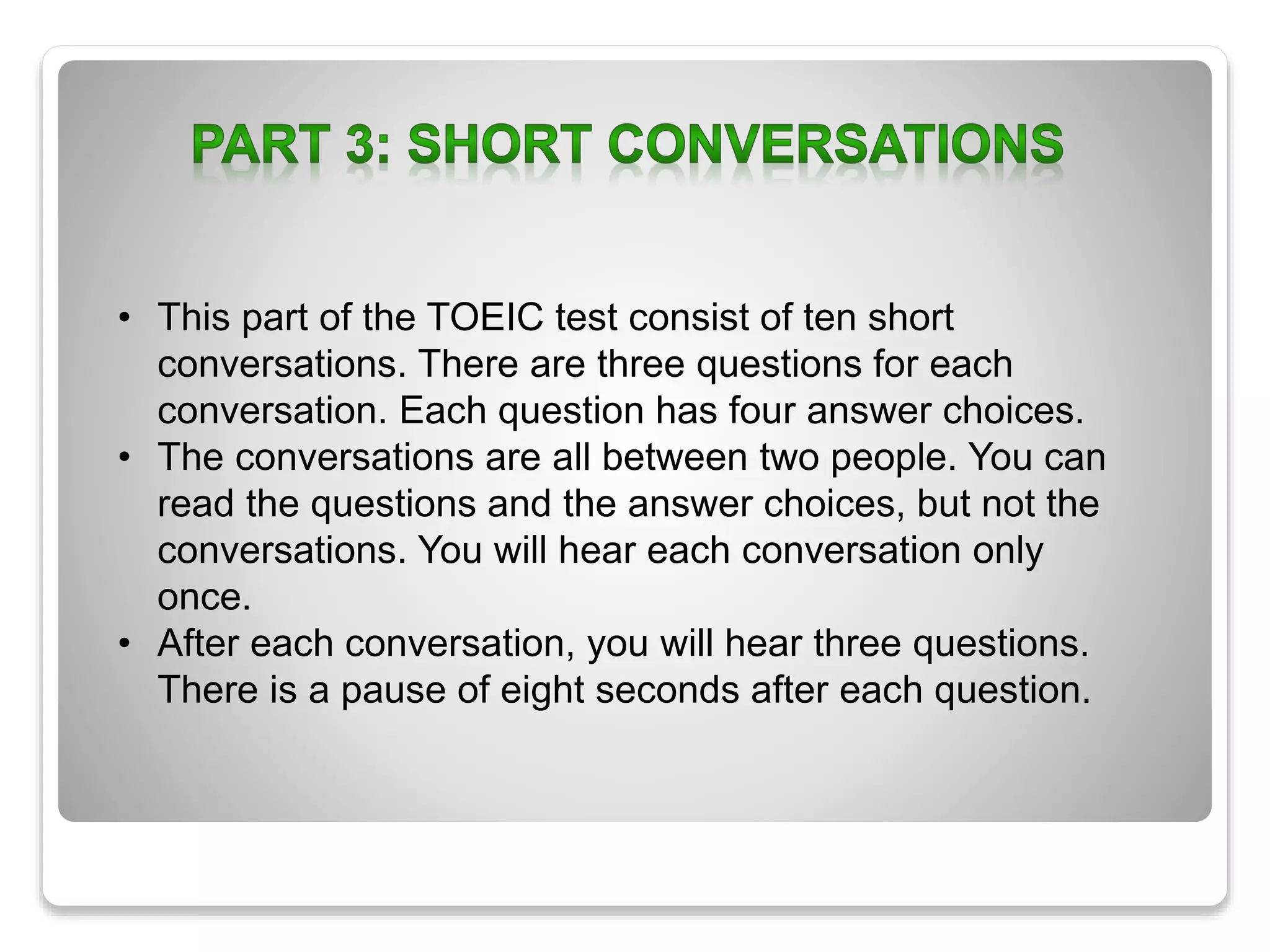
• This part of the TOEIC test consist of ten short
conversations. There are three questions for each
conversation. Each question has four answer choices.
• The conversations are all between two people. You can
read the questions and the answer choices, but not the
conversations. You will hear each conversation only
once.
• After each conversation, you will hear three questions.
There is a pause of eight seconds after each question.
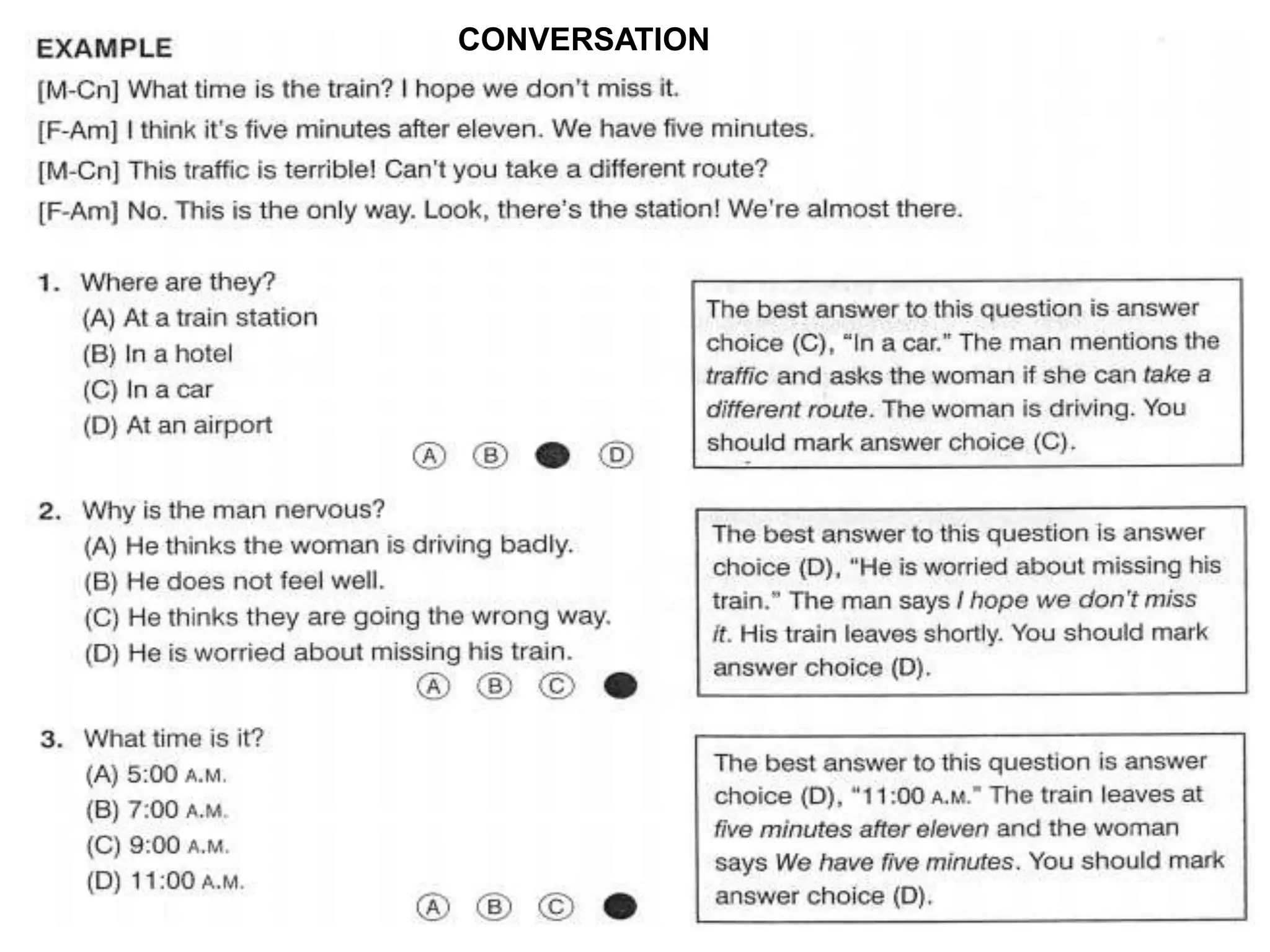
CONVERSATION
 You need to demonstrate that you have a good
overall understanding of the conversations you
hear.
 Questions that test your ability to understand
main ideas in a conversation may ask about the
speakers, the topic, the main activities and
the location.
 Look for questions such as Who is the man
talking to? What are they discussing? What is
happening now? Where is the conversation
taking place?
 Ask yourself: Who is speaking? What are they
talking about? What are they doing? Where are
they?
CONVERSATION
 You need to show that you can identify and
understand important points in the
conversations you listen to. Questions that test
your ability to understand details in a
conversationmay ask about time, reasons,
plans, offers/requests, suggestions/advice
and opinions.
 Look for questions beginning with What, when, Why
and How.
 Before you listen, make sure You know what
information you need to listen for.
 As you listen, identify any key words or phrases
relatedto the information you need.
 Focus on the information you need to answer each
question.
CONVERSATION
 You occasionally need to show that you can
understand things that are not directly stated in
the conversations you hear. Questions that test
your ability to make inferences in a conversation
may ask about the speaker´s attitude, or ask
you to make deductions based on what you
hear.
 Identifying Attitude. Notice each speaker´s
stress and intonation. The way a word or phrase
is spoken can tell you a lot about speaker´s
attitude. Try to identify how they might feel
(angry, happy, surprised, etc)
 Making deductions. Try to make deductions
based on what your hear and draw conclusions.
Think about the meaning «behind» the words.
CONVERSATION
 Quickly preview the questions and answers choices
before you hear each conversation.
 Make sure you know what information you need to listen
for.
 As you listen, try to identify the correct answer and
eliminate any answers that you think are definitely
wrong.
 If you are not sure about the answer, don´t waste time.
Decide quickly! Then preview the questions for the next
conversation.
TIPS

Listening part 3 short conversations

  • 1.
  • 2.
    • This partof the TOEIC test consist of ten short conversations. There are three questions for each conversation. Each question has four answer choices. • The conversations are all between two people. You can read the questions and the answer choices, but not the conversations. You will hear each conversation only once. • After each conversation, you will hear three questions. There is a pause of eight seconds after each question.
  • 3.
  • 4.
     You needto demonstrate that you have a good overall understanding of the conversations you hear.  Questions that test your ability to understand main ideas in a conversation may ask about the speakers, the topic, the main activities and the location.
  • 5.
     Look forquestions such as Who is the man talking to? What are they discussing? What is happening now? Where is the conversation taking place?  Ask yourself: Who is speaking? What are they talking about? What are they doing? Where are they?
  • 6.
  • 7.
     You needto show that you can identify and understand important points in the conversations you listen to. Questions that test your ability to understand details in a conversationmay ask about time, reasons, plans, offers/requests, suggestions/advice and opinions.
  • 8.
     Look forquestions beginning with What, when, Why and How.  Before you listen, make sure You know what information you need to listen for.  As you listen, identify any key words or phrases relatedto the information you need.  Focus on the information you need to answer each question.
  • 9.
  • 10.
     You occasionallyneed to show that you can understand things that are not directly stated in the conversations you hear. Questions that test your ability to make inferences in a conversation may ask about the speaker´s attitude, or ask you to make deductions based on what you hear.
  • 11.
     Identifying Attitude.Notice each speaker´s stress and intonation. The way a word or phrase is spoken can tell you a lot about speaker´s attitude. Try to identify how they might feel (angry, happy, surprised, etc)  Making deductions. Try to make deductions based on what your hear and draw conclusions. Think about the meaning «behind» the words.
  • 12.
  • 13.
     Quickly previewthe questions and answers choices before you hear each conversation.  Make sure you know what information you need to listen for.  As you listen, try to identify the correct answer and eliminate any answers that you think are definitely wrong.  If you are not sure about the answer, don´t waste time. Decide quickly! Then preview the questions for the next conversation. TIPS