USE OF PLAT-BAR ELECTRODE MEDIA TO
DETECT PARTIAL DISCHARGE IN EPOXY RESIN
MATERIALS ON PCB SURFACES
U n i v e rs i t a s Pe n d i d i ka n I n d o n e s i a , I n d o n e s i a
U n i v e rs i t a s W i d y a t a m a , I n d o n e s i a
ELIH MULYANA, MAMAN SOMANTRI, NERIS P. ARDIANSYAH, CHAFIDZ. D. YUSRI
OUTLINE
2
I N T R O D U C T I O N
R E S E A R C H M E T H O D E
D I S C U S S I O N A N D A N A LY S I S
C O N C LU S I O N
3
INTRODUCTION
P a r t i a l D i s c h a r g e
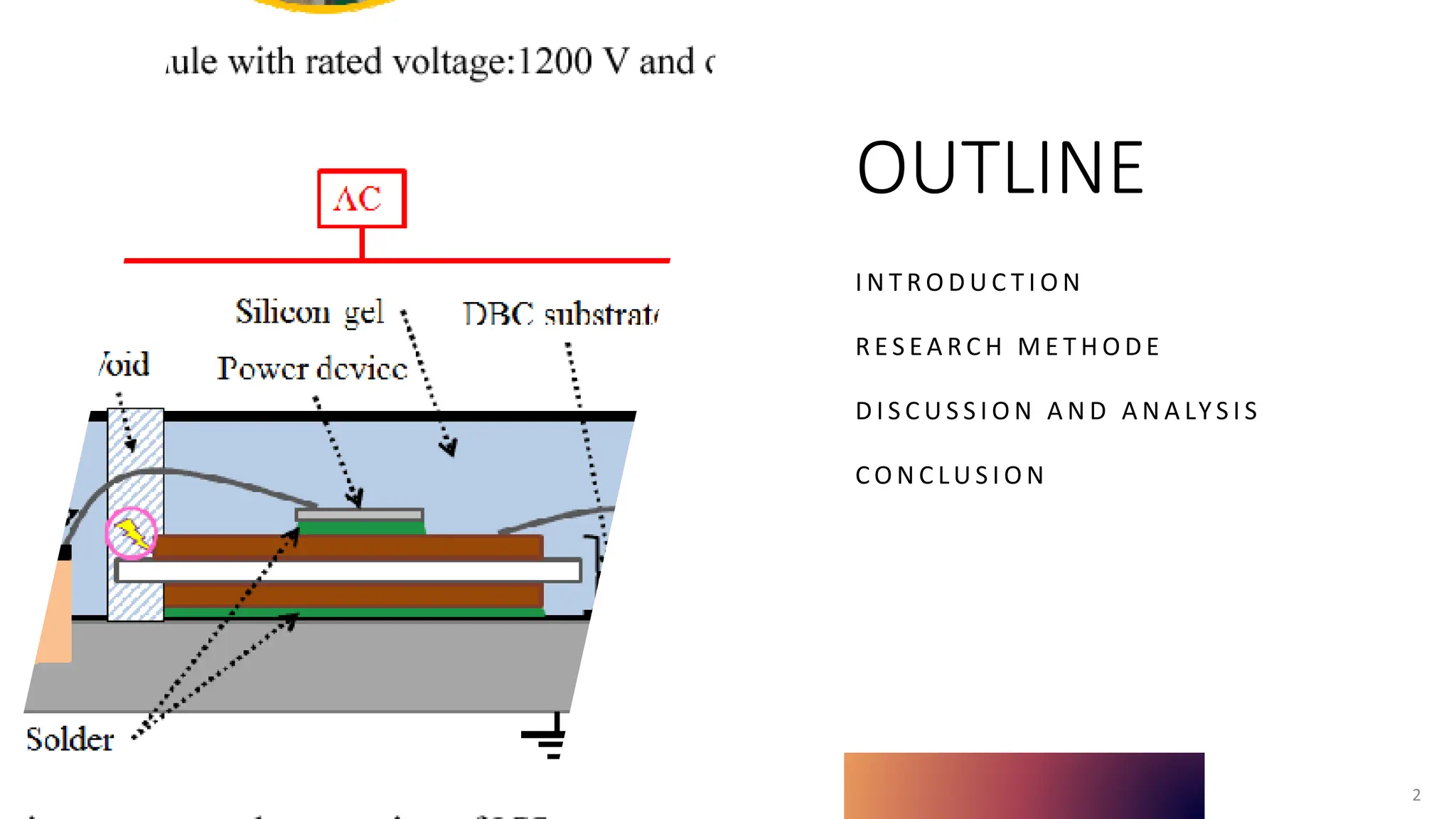
Insulating materials in high voltage materials require
reliable insulation.
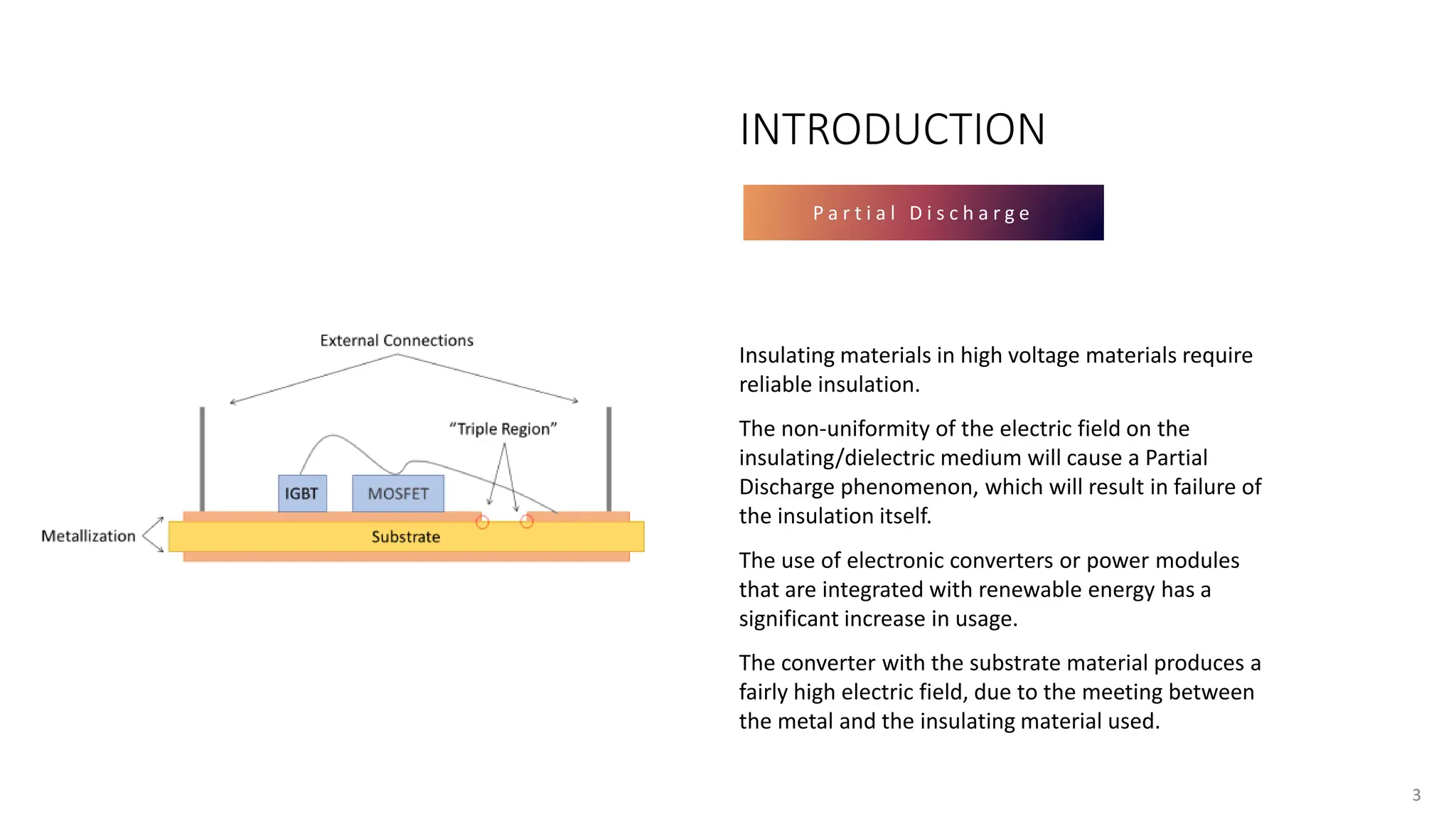
The non-uniformity of the electric field on the
insulating/dielectric medium will cause a Partial
Discharge phenomenon, which will result in failure of
the insulation itself.
The use of electronic converters or power modules
that are integrated with renewable energy has a
significant increase in usage.
The converter with the substrate material produces a
fairly high electric field, due to the meeting between
the metal and the insulating material used.
3
HISTORIS
D E V E L O P M E N T
R E S E A R C H
4
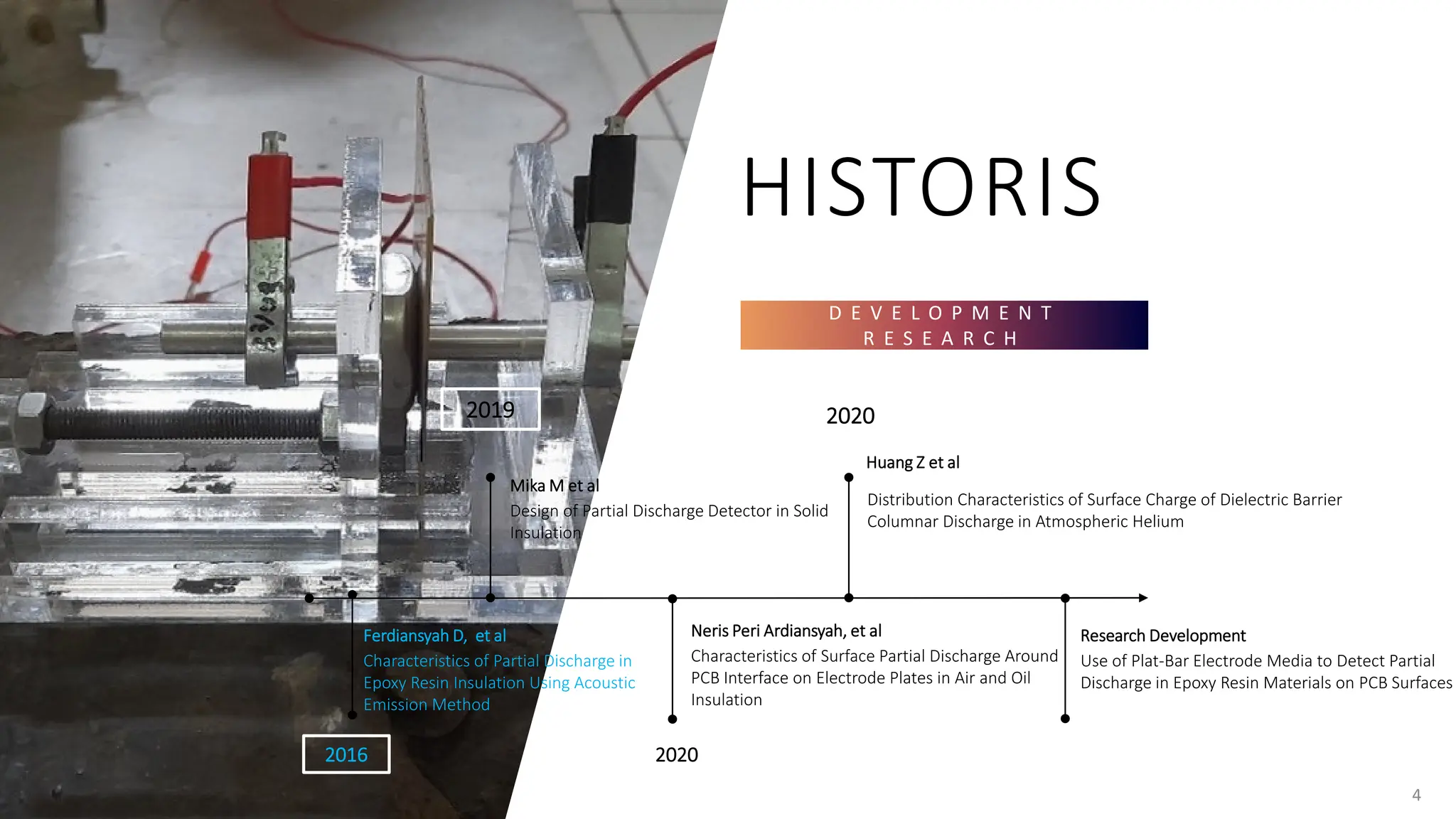
2019
Design of Partial Discharge Detector in Solid
Insulation
Mika M et al
Distribution Characteristics of Surface Charge of Dielectric Barrier
Columnar Discharge in Atmospheric Helium
Huang Z et al
2016
Characteristics of Partial Discharge in
Epoxy Resin Insulation Using Acoustic
Emission Method
Ferdiansyah D, et al
2020
Characteristics of Surface Partial Discharge Around
PCB Interface on Electrode Plates in Air and Oil
Insulation
Neris Peri Ardiansyah, et al
2020
Use of Plat-Bar Electrode Media to Detect Partial
Discharge in Epoxy Resin Materials on PCB Surfaces
Research Development
RESEARCH METHODE
5
The research was carried out by studying the literature to
find out the phenomena that occur in partial discharges on
the surface.
Furthermore, the researchers determined the characteristic
parameters of the partial surface discharge that occurs in
dielectric materials.
At the testing and data collection stage it was carried out
according to the IEC 60270 standard [6], then data processing
was carried out to verify the tests that had been carried out.
If the results of the data analysis are declared valid, then the
data analysis stage is carried out to find out the phenomena
that occur in the PCB material testing, and if the result data
are not valid, then the research process is returned to the
parameters of the partial stage discharge characteristics.
From the results of this analysis a conclusion was drawn to
determine the extent to which the results of the research
were carried out to determine the occurrence of phenomena
in PCB material testing using the rod plate electrode testing
model.
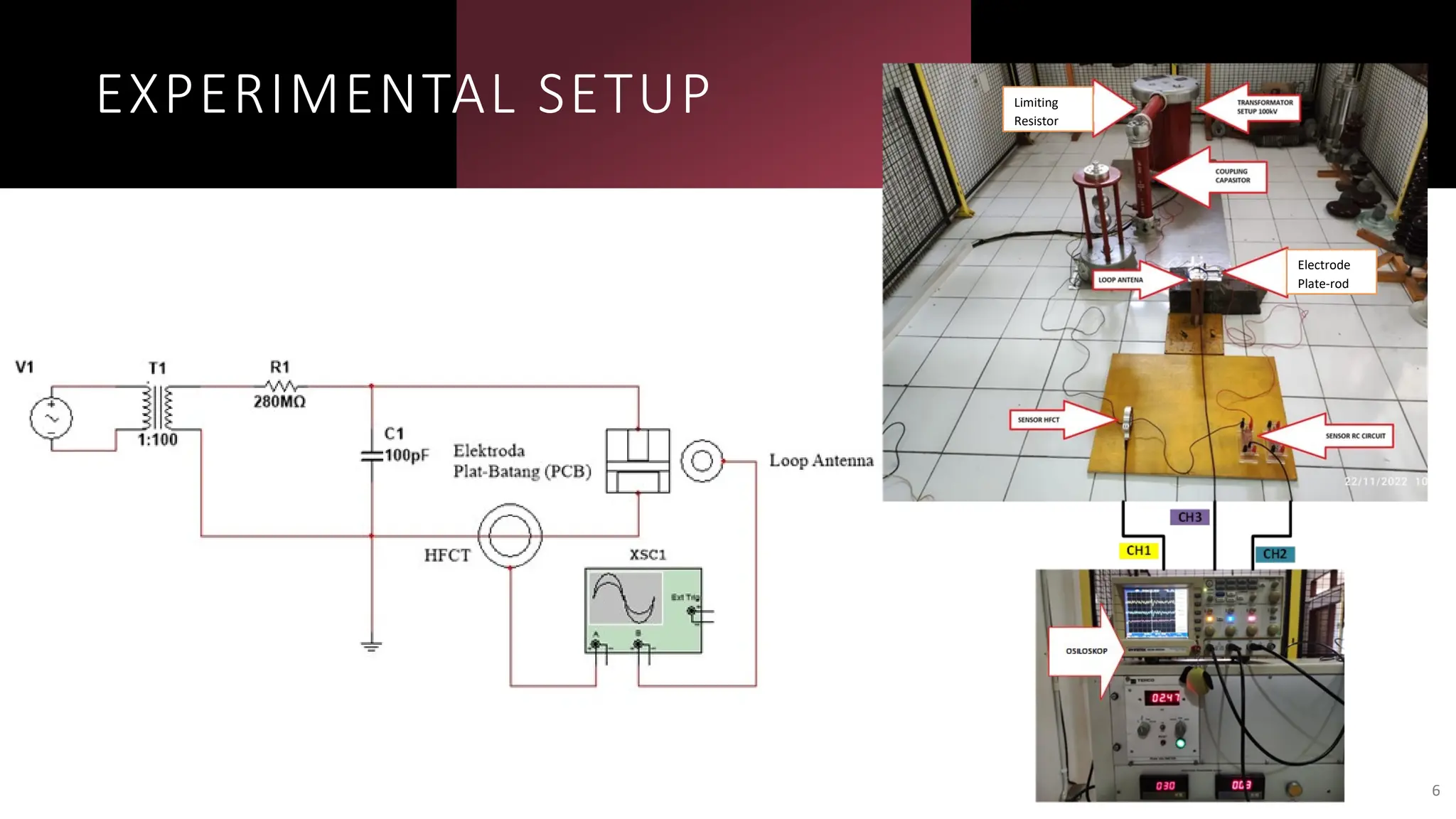
EXPERIMENTAL SETUP
6
Limiting
Resistor
Electrode
Plate-rod
DISCUSSION
AND ANALYSIS
7
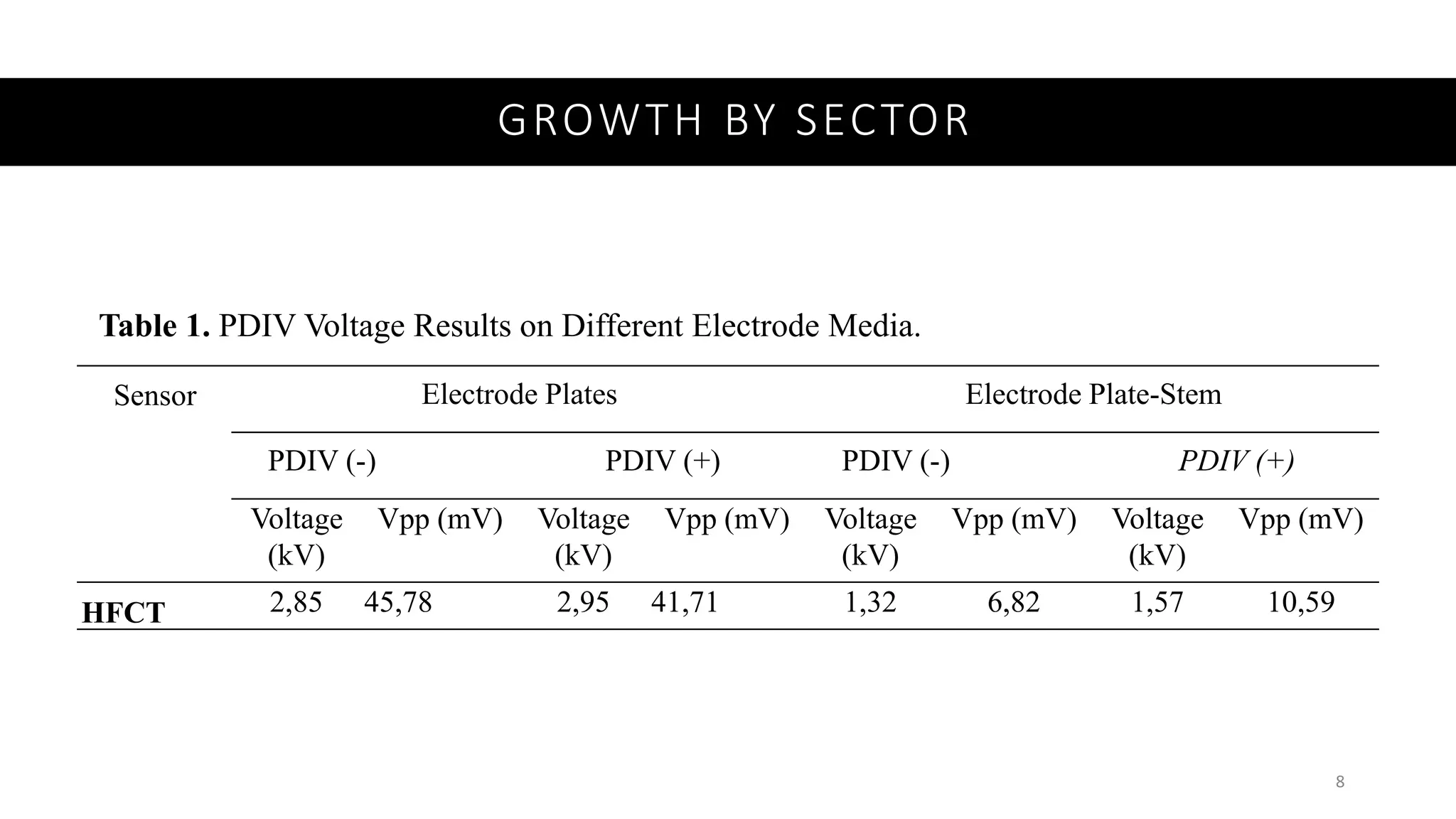
GROWTH BY SECTOR
8
Table 1. PDIV Voltage Results on Different Electrode Media.
Sensor Electrode Plates Electrode Plate-Stem
PDIV (-) PDIV (+) PDIV (-) PDIV (+)
Voltage
(kV)
Vpp (mV) Voltage
(kV)
Vpp (mV) Voltage
(kV)
Vpp (mV) Voltage
(kV)
Vpp (mV)
HFCT 2,85 45,78 2,95 41,71 1,32 6,82 1,57 10,59
9
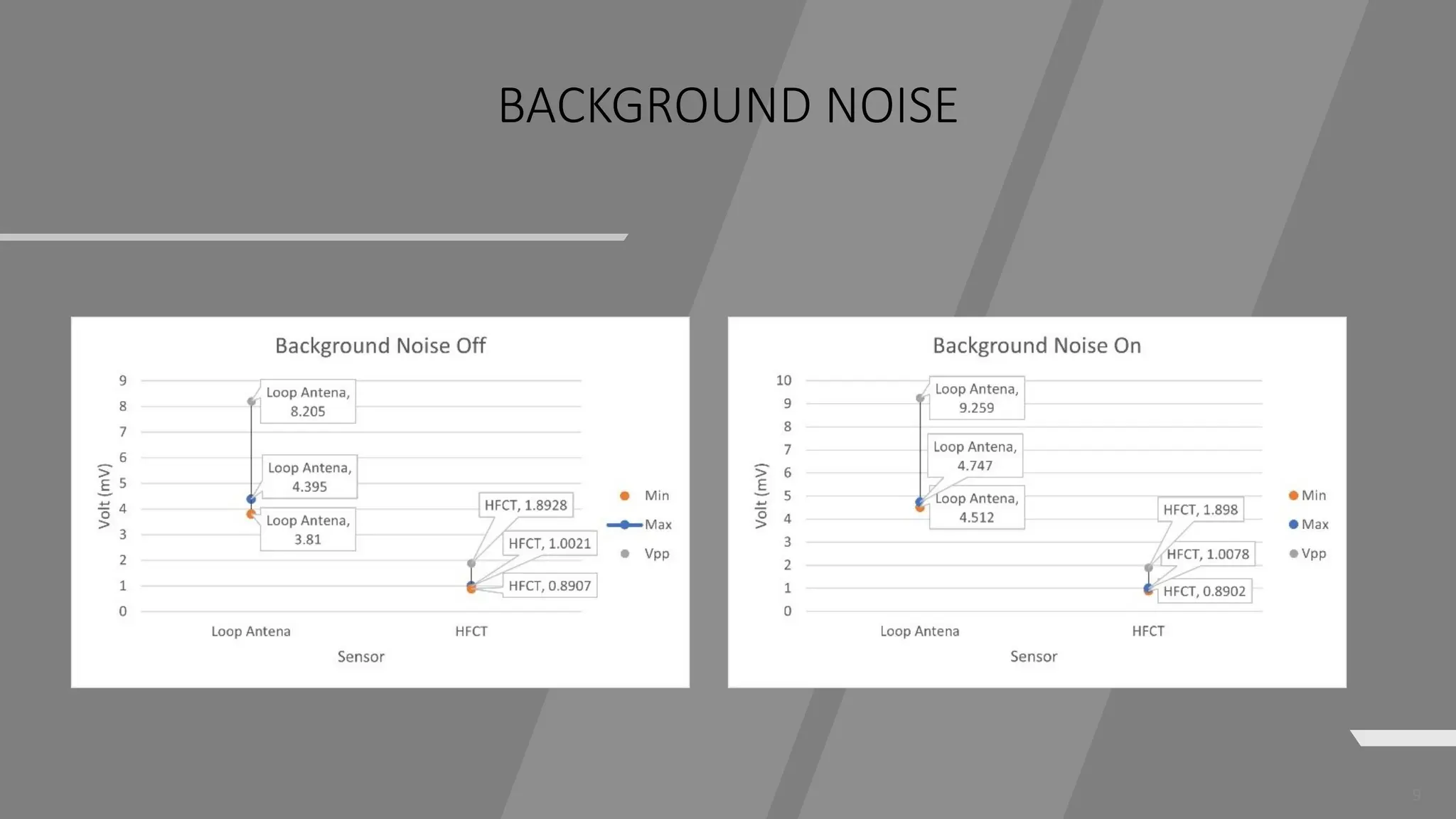
BACKGROUND NOISE
10
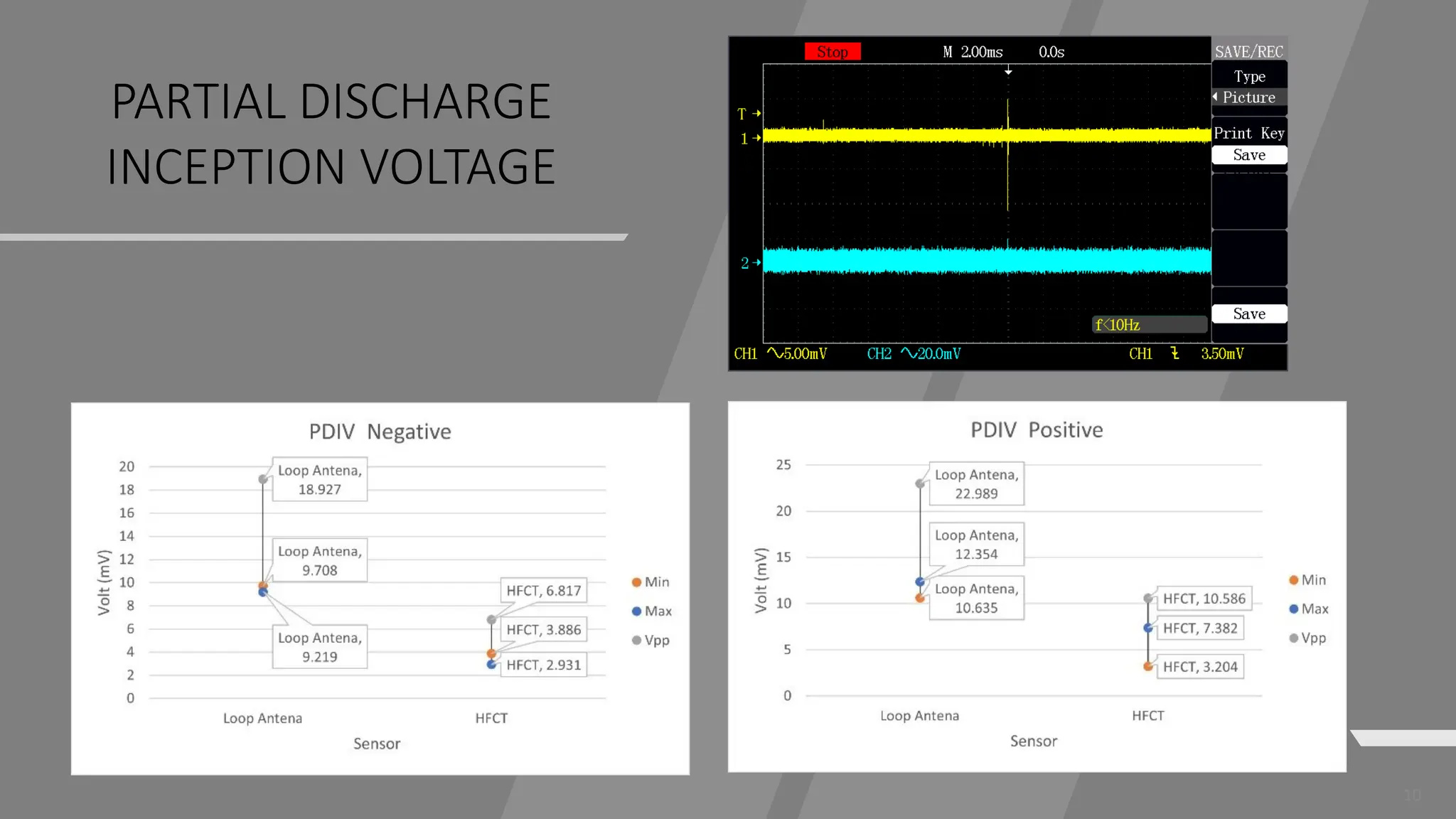
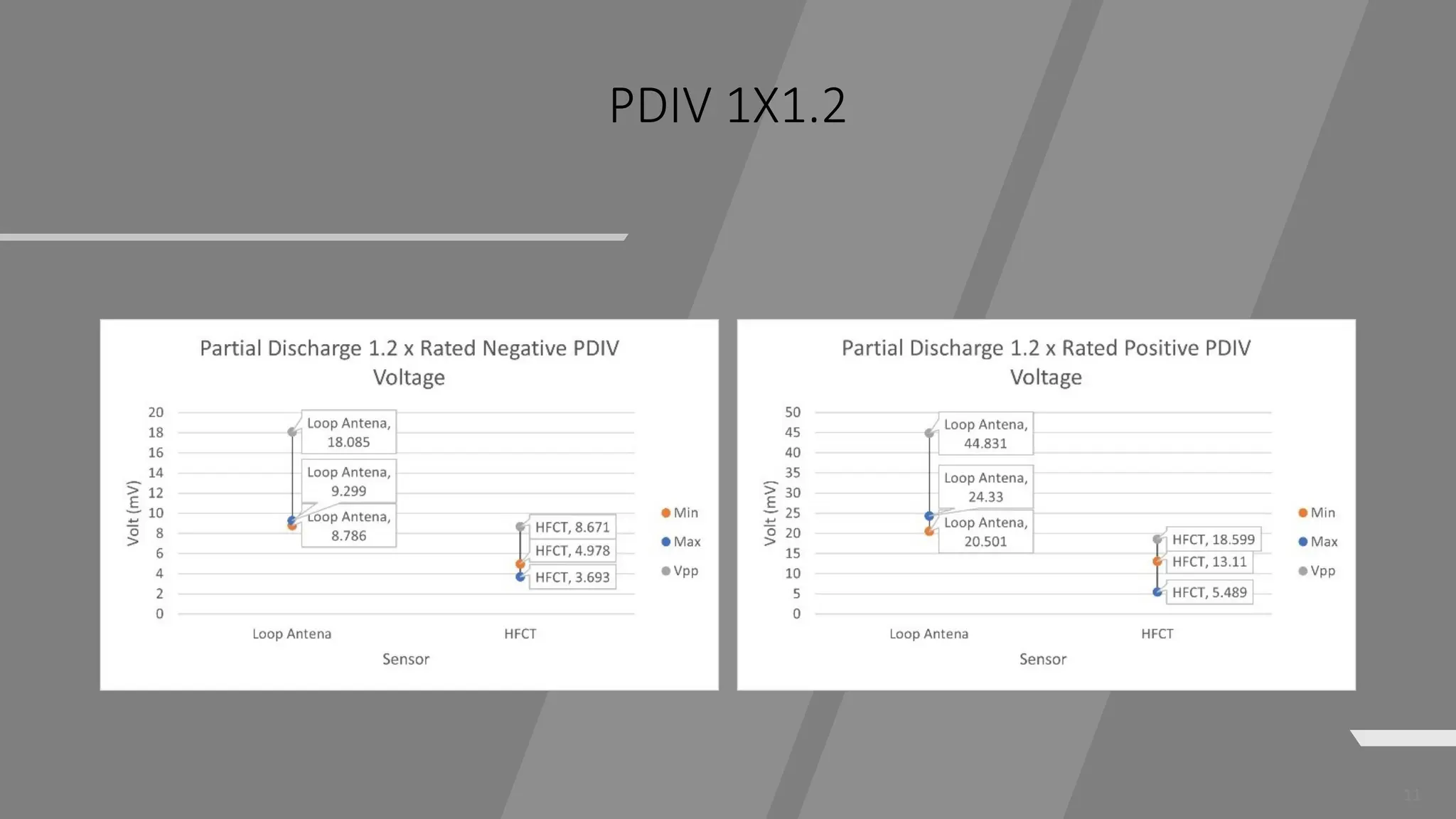
PARTIAL DISCHARGE
INCEPTION VOLTAGE
11
PDIV 1X1.2
12
CONCLUSION
• The results obtained from the use of rod-plate electrode media for
detecting partial discharges in epoxy resin materials on the surface of
PCBs using HFCT sensors and loop antennas have the characteristics,
detection of HFCT sensors is found in positive and negative polarity
with PDIV values of 2.85 kV and 2.95 kV . While the Loop Antenna
sensor on positive and negative polarity the PDIV value is 1.32 kV and
1.57 kV.
• From the experimental results that have been carried out for each
voltage variation on the two detection sensors using plate-bar
electrode media, the standard deviation value is obtained which shows
a small result so that it is more accurate with the average value. This
proves that partial discharge studies on PCB (epoxy resin) insulating
media with plate-rod electrodes have a minimum error value and a
high degree of accuracy.
12
THANK YOU
E l i h M u l y a n a e l i h _ m u l y a n a @ u p i . e d u

Use of Plat-Bar Electrode Media to Detect Partial En.pdf

  • 1.
    USE OF PLAT-BARELECTRODE MEDIA TO DETECT PARTIAL DISCHARGE IN EPOXY RESIN MATERIALS ON PCB SURFACES U n i v e rs i t a s Pe n d i d i ka n I n d o n e s i a , I n d o n e s i a U n i v e rs i t a s W i d y a t a m a , I n d o n e s i a ELIH MULYANA, MAMAN SOMANTRI, NERIS P. ARDIANSYAH, CHAFIDZ. D. YUSRI
  • 2.
    OUTLINE 2 I N TR O D U C T I O N R E S E A R C H M E T H O D E D I S C U S S I O N A N D A N A LY S I S C O N C LU S I O N
  • 3.
    3 INTRODUCTION P a rt i a l D i s c h a r g e Insulating materials in high voltage materials require reliable insulation. The non-uniformity of the electric field on the insulating/dielectric medium will cause a Partial Discharge phenomenon, which will result in failure of the insulation itself. The use of electronic converters or power modules that are integrated with renewable energy has a significant increase in usage. The converter with the substrate material produces a fairly high electric field, due to the meeting between the metal and the insulating material used. 3
  • 4.
    HISTORIS D E VE L O P M E N T R E S E A R C H 4 2019 Design of Partial Discharge Detector in Solid Insulation Mika M et al Distribution Characteristics of Surface Charge of Dielectric Barrier Columnar Discharge in Atmospheric Helium Huang Z et al 2016 Characteristics of Partial Discharge in Epoxy Resin Insulation Using Acoustic Emission Method Ferdiansyah D, et al 2020 Characteristics of Surface Partial Discharge Around PCB Interface on Electrode Plates in Air and Oil Insulation Neris Peri Ardiansyah, et al 2020 Use of Plat-Bar Electrode Media to Detect Partial Discharge in Epoxy Resin Materials on PCB Surfaces Research Development
  • 5.
    RESEARCH METHODE 5 The researchwas carried out by studying the literature to find out the phenomena that occur in partial discharges on the surface. Furthermore, the researchers determined the characteristic parameters of the partial surface discharge that occurs in dielectric materials. At the testing and data collection stage it was carried out according to the IEC 60270 standard [6], then data processing was carried out to verify the tests that had been carried out. If the results of the data analysis are declared valid, then the data analysis stage is carried out to find out the phenomena that occur in the PCB material testing, and if the result data are not valid, then the research process is returned to the parameters of the partial stage discharge characteristics. From the results of this analysis a conclusion was drawn to determine the extent to which the results of the research were carried out to determine the occurrence of phenomena in PCB material testing using the rod plate electrode testing model.
  • 6.
  • 7.
  • 8.
    GROWTH BY SECTOR 8 Table1. PDIV Voltage Results on Different Electrode Media. Sensor Electrode Plates Electrode Plate-Stem PDIV (-) PDIV (+) PDIV (-) PDIV (+) Voltage (kV) Vpp (mV) Voltage (kV) Vpp (mV) Voltage (kV) Vpp (mV) Voltage (kV) Vpp (mV) HFCT 2,85 45,78 2,95 41,71 1,32 6,82 1,57 10,59
  • 9.
  • 10.
  • 11.
  • 12.
    12 CONCLUSION • The resultsobtained from the use of rod-plate electrode media for detecting partial discharges in epoxy resin materials on the surface of PCBs using HFCT sensors and loop antennas have the characteristics, detection of HFCT sensors is found in positive and negative polarity with PDIV values of 2.85 kV and 2.95 kV . While the Loop Antenna sensor on positive and negative polarity the PDIV value is 1.32 kV and 1.57 kV. • From the experimental results that have been carried out for each voltage variation on the two detection sensors using plate-bar electrode media, the standard deviation value is obtained which shows a small result so that it is more accurate with the average value. This proves that partial discharge studies on PCB (epoxy resin) insulating media with plate-rod electrodes have a minimum error value and a high degree of accuracy. 12
  • 13.
    THANK YOU E li h M u l y a n a e l i h _ m u l y a n a @ u p i . e d u