Benefits of natural resources 
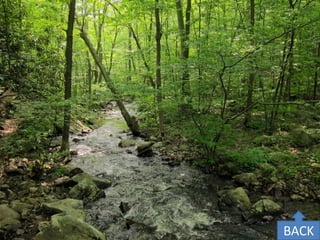
•Ample water, different types of climate & soil for domestic, agriculture, & industrial use 
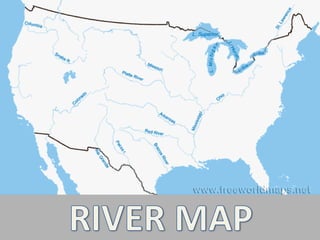
•Wide river systems for navigation network, natural harbors, seaports 
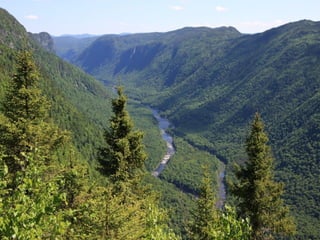
•Scenic landscapes for tourism
Challenges 
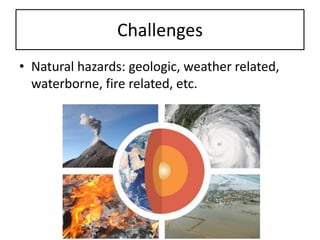
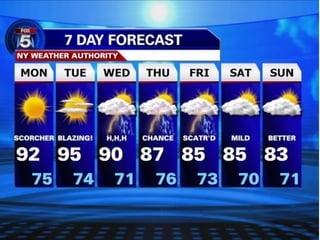
•Natural hazards: geologic, weather related, waterborne, fire related, etc.
Three questions of geographers 
1.How do people adapt to the environments in which they live? 
2.What natural elements are important to a people? How are natural resources used? 
3.How have humans changed the environments in which they live? 
BACK
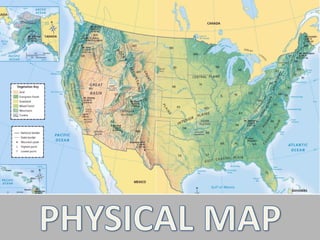
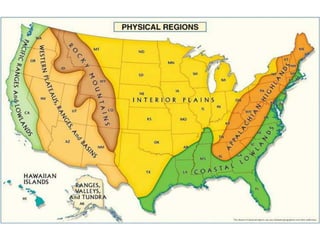
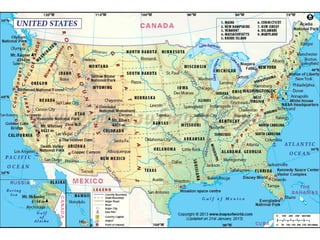
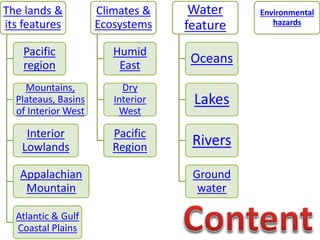
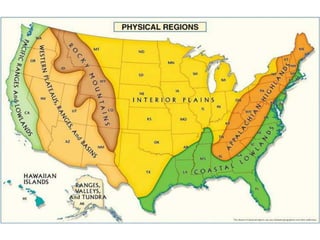
The lands & its features 
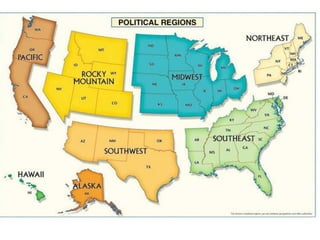
Pacific region 
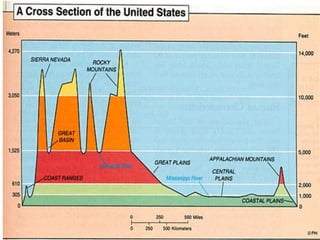
Mountains, Plateaus, Basins of Interior West 
Interior Lowlands 
Appalachian Mountain 
Atlantic & Gulf Coastal Plains 
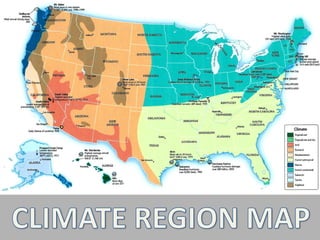
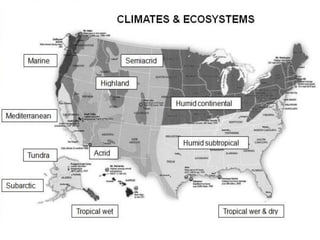
Climates & Ecosystems 
Humid East 
Dry Interior West 
Pacific Region 
Water feature 
Oceans 
Lakes 
Rivers 
Groundwater 
Environmental hazards
BACK
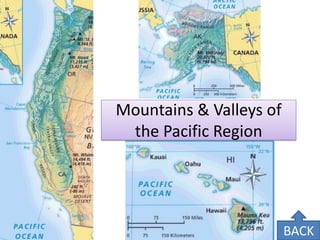
Mountains & Valleys of the Pacific Region 
BACK
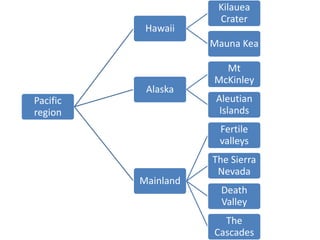
Pacific region 
Hawaii 
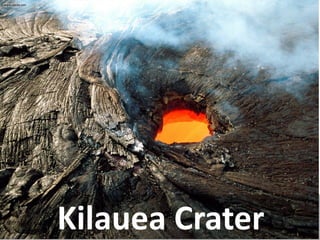
Kilauea Crater 
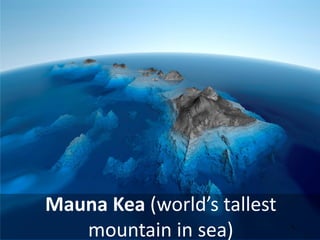
Mauna Kea 
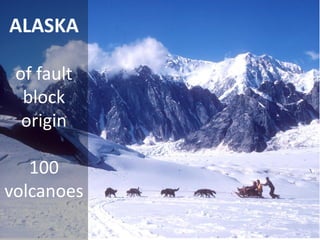
Alaska 
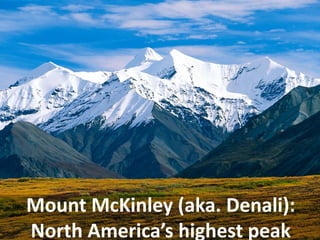
Mt McKinley 
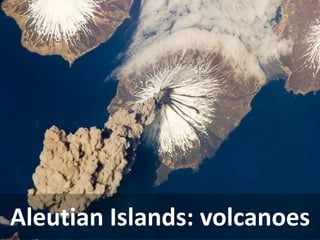
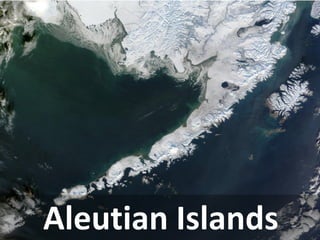
Aleutian Islands 
Mainland 
Fertile valleys 
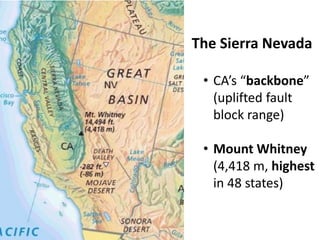
The Sierra Nevada 
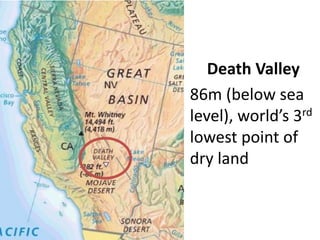
Death Valley 
The Cascades
General characteristics 
•Greatest mountain ranges, highest/tallest mountains, stunning scenery 
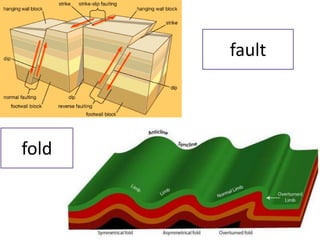
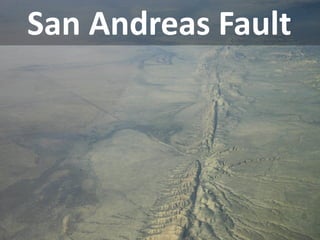
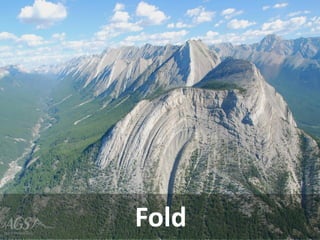
•Nature’s land-building process: volcanism, faulting, folding. 
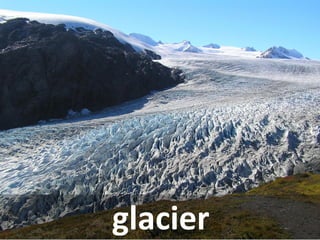
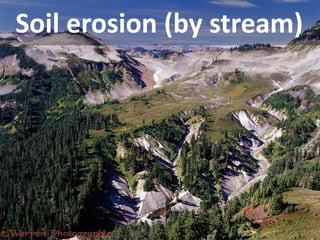
•Erosion: glacier, swift-flowing streams
fault 
fold
San Andreas Fault
Fold
glacier
Soil erosion (by stream)
ALASKA 
of fault block origin 
100 volcanoes
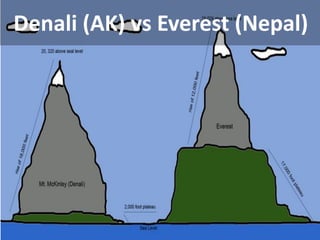
Mount McKinley (aka. Denali): North America’s highest peak
Aleutian Islands: volcanoes
Aleutian Islands
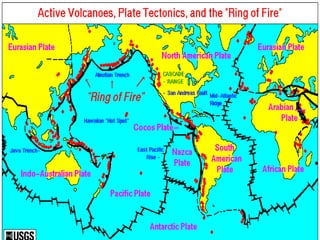
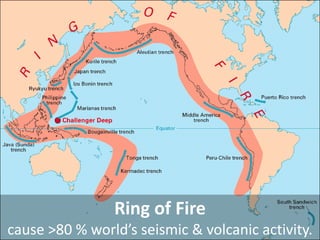
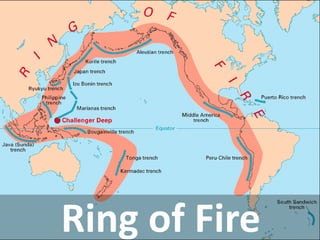
Ring of Fire 
cause >80 % world’s seismic & volcanic activity.
Denali (AK) vs Everest (Nepal)
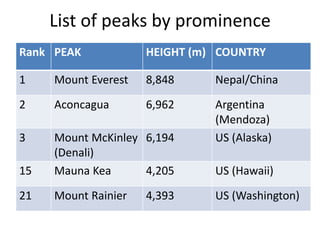
List of peaks by prominence 
Rank 
PEAK 
HEIGHT (m) 
COUNTRY 
1 
Mount Everest 
8,848 
Nepal/China 
2 
Aconcagua 
6,962 
Argentina (Mendoza) 
3 
Mount McKinley (Denali) 
6,194 
US (Alaska) 
15 
Mauna Kea 
4,205 
US (Hawaii) 
21 
Mount Rainier 
4,393 
US (Washington)
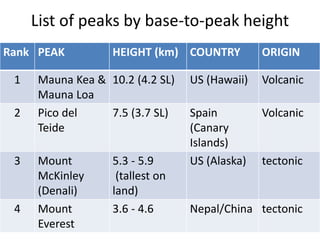
List of peaks by base-to-peak height 
Rank 
PEAK 
HEIGHT (km) 
COUNTRY 
ORIGIN 
1 
Mauna Kea & Mauna Loa 
10.2 (4.2 SL) 
US (Hawaii) 
Volcanic 
2 
Pico del Teide 
7.5 (3.7 SL) 
Spain (Canary Islands) 
Volcanic 
3 
Mount McKinley (Denali) 
5.3 - 5.9 
(tallest on land) 
US (Alaska) 
tectonic 
4 
Mount Everest 
3.6 - 4.6 
Nepal/China 
tectonic
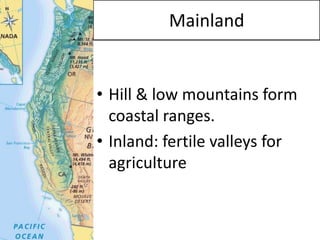
Mainland 
•Hill & low mountains form coastal ranges. 
•Inland: fertile valleys for agriculture
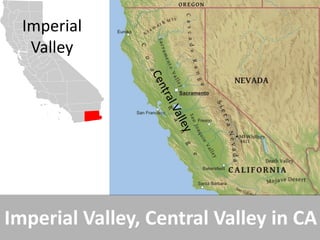
Imperial Valley 
Imperial Valley, Central Valley in CA
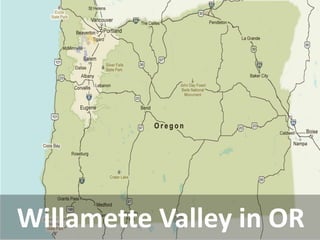
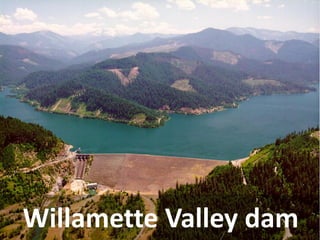
Willamette Valley in OR
Willamette Valley dam
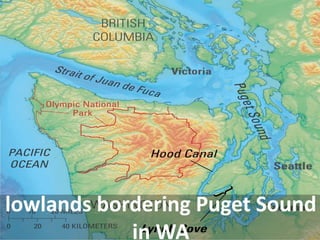
lowlands bordering Puget Sound in WA
The Sierra Nevada 
•CA’s “backbone” (uplifted fault block range) 
•Mount Whitney (4,418 m, highest in 48 states)
Death Valley 
86m (below sea level), world’s 3rd lowest point of dry land
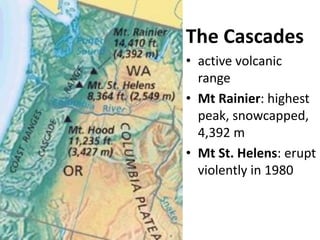
The Cascades 
•active volcanic range 
•Mt Rainier: highest peak, snowcapped, 4,392 m 
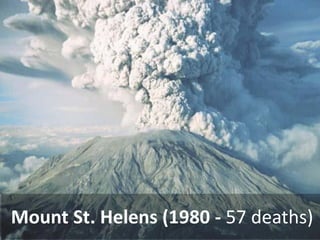
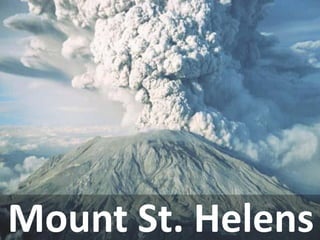
•Mt St. Helens: erupt violently in 1980
Mount St. Helens (1980 - 57 deaths)
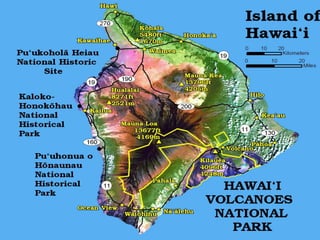
HAWAII
Kilauea Crater
Mauna Kea (world’s tallest mountain in sea)
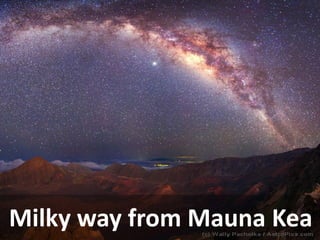
Milky way from Mauna Kea
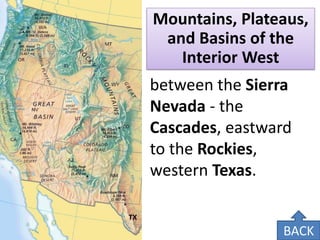
Mountains, Plateaus, and Basins of the Interior West 
between the Sierra Nevada - the Cascades, eastward to the Rockies, western Texas. 
TX 
BACK
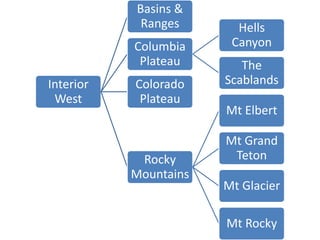
Interior West 
Basins & Ranges 
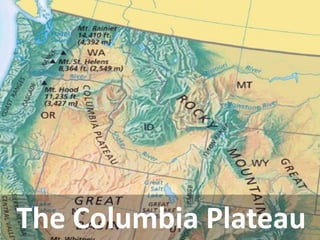
Columbia Plateau 
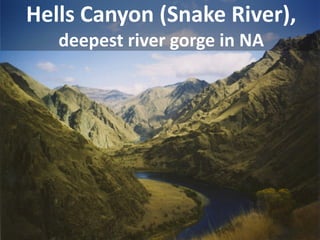
Hells Canyon 
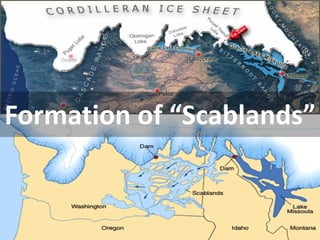
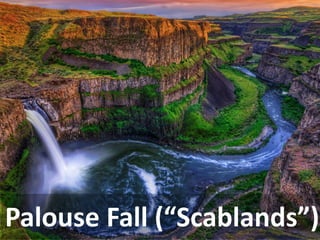
The Scablands 
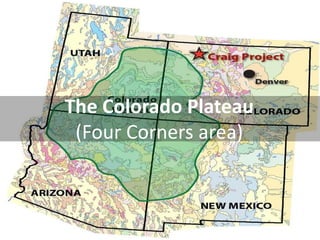
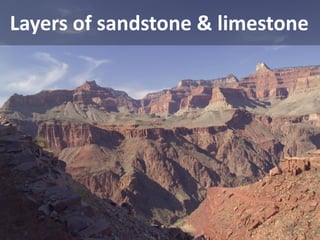
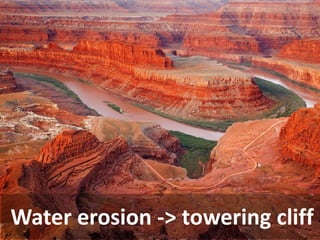
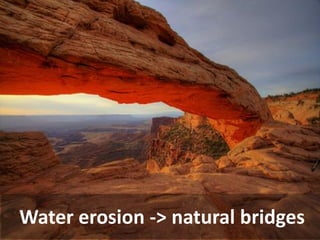
Colorado Plateau 
Rocky Mountains 
Mt Elbert 
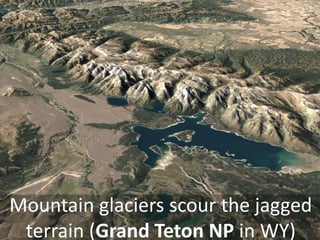
Mt Grand Teton 
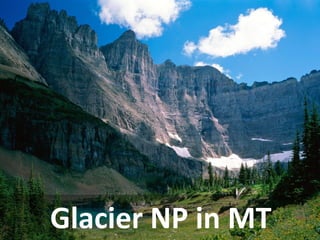
Mt Glacier 
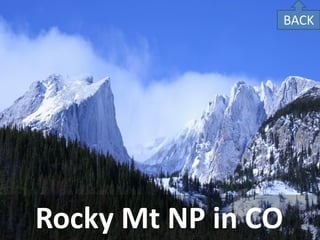
Mt Rocky
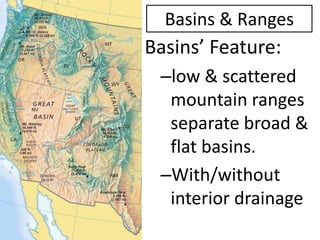
Basins & Ranges 
Basins’ Feature: 
–low & scattered mountain ranges separate broad & flat basins. 
–With/without interior drainage
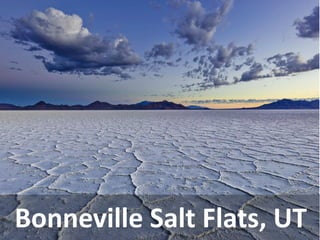
Bonneville Salt Flats, UT
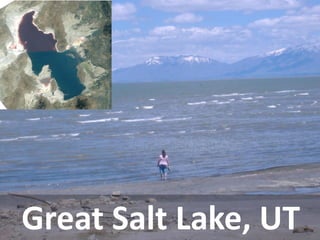
Great Salt Lake, UT
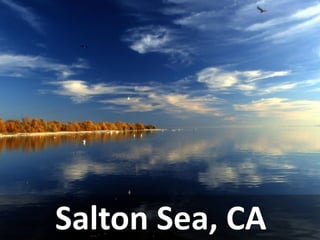
Salton Sea, CA
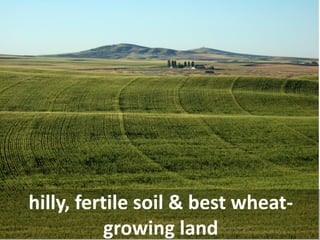
The Columbia Plateau
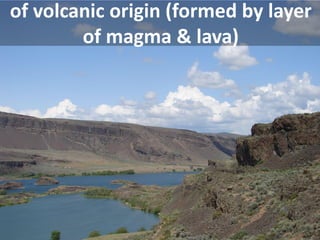
of volcanic origin (formed by layer of magma & lava)
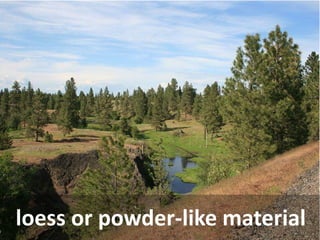
loess or powder-like material
hilly, fertile soil & best wheat- growing land
Hells Canyon (Snake River), deepest river gorge in NA
Formation of “Scablands”
Palouse Fall (“Scablands”)
The Colorado Plateau (Four Corners area)
Layers of sandstone & limestone
Water erosion -> towering cliff
Water erosion -> natural bridges
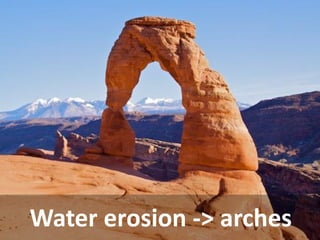
Water erosion -> arches
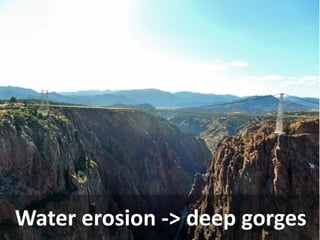
Water erosion -> deep gorges
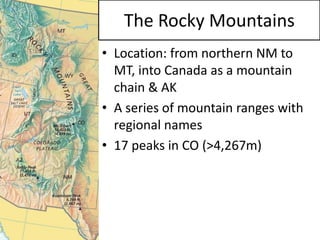
•Location: from northern NM to MT, into Canada as a mountain chain & AK 
•A series of mountain ranges with regional names 
•17 peaks in CO (>4,267m) 
The Rocky Mountains
. 
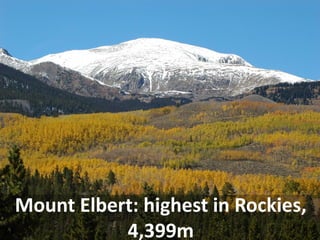
Mount Elbert: highest in Rockies, 4,399m
Mountain glaciers scour the jagged terrain (Grand Teton NP in WY)
Glacier NP in MT
BACK 
Rocky Mt NP in CO
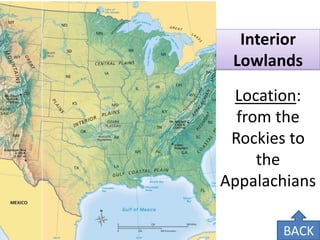
Interior Lowlands 
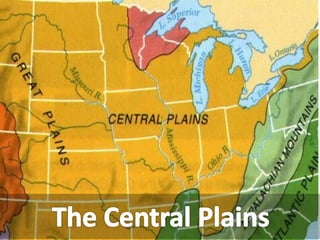
Location: from the Rockies to the Appalachians 
BACK
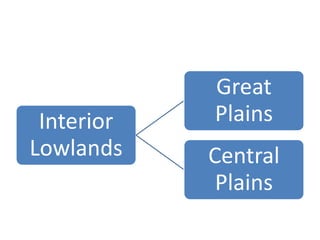
Interior Lowlands 
Great Plains 
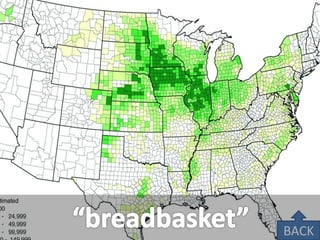
Central Plains
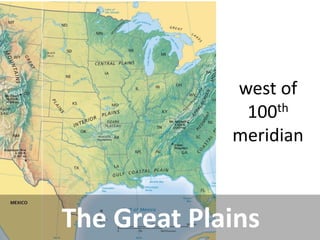
west of 100th meridian 
The Great Plains
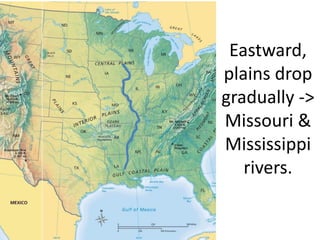
Eastward, plains drop gradually -> Missouri & Mississippi rivers.
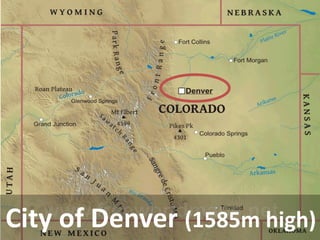
City of Denver (1585m high)
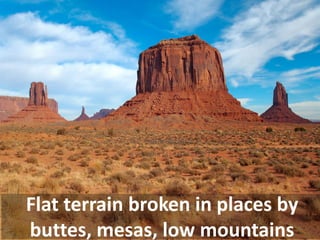
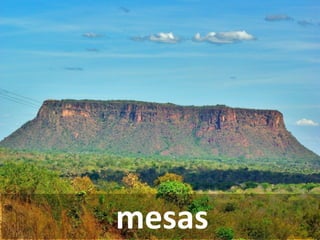
Flat terrain broken in places by buttes, mesas, low mountains
mesas
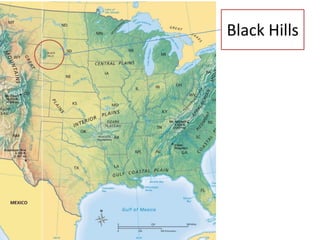
Black Hills
BACK
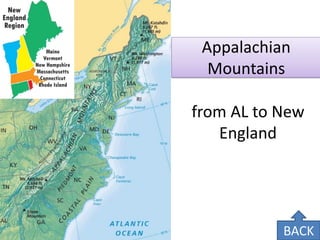
Appalachian Mountains 
from AL to New England 
BACK
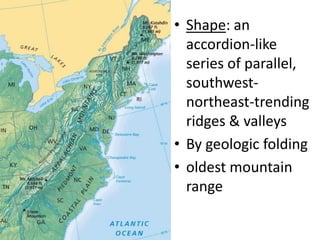
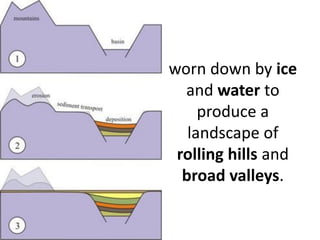
•Shape: an accordion-like series of parallel, southwest- northeast-trending ridges & valleys 
•By geologic folding 
•oldest mountain range
worn down by ice and water to produce a landscape of rolling hills and broad valleys.
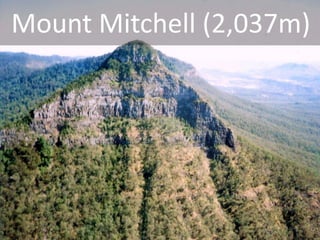
Mount Mitchell (2,037m)
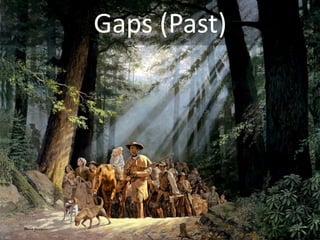
Gaps (Past)
BACK 
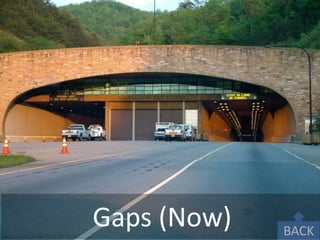
Gaps (Now)
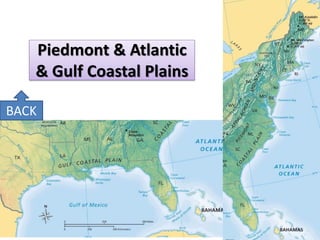
Piedmont & Atlantic & Gulf Coastal Plains 
BACK
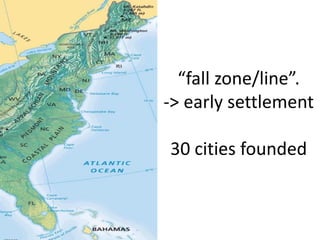
“fall zone/line”. -> early settlement 30 cities founded
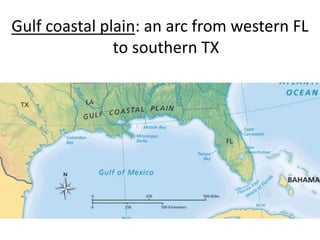
Gulf coastal plain: an arc from western FL to southern TX
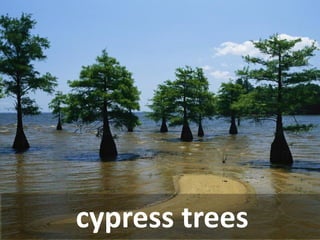
cypress trees
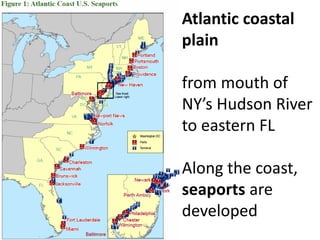
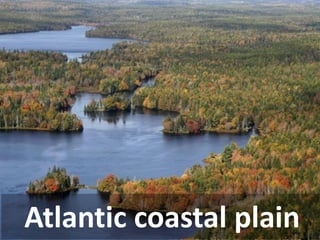
Atlantic coastal plain from mouth of NY’s Hudson River to eastern FL Along the coast, seaports are developed
Atlantic coastal plain
Factors that control our climate
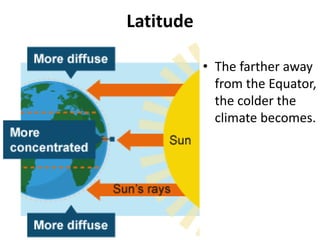
Latitude 
•The farther away from the Equator, the colder the climate becomes.
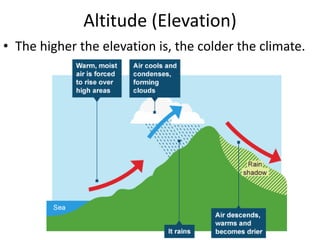
Altitude (Elevation) 
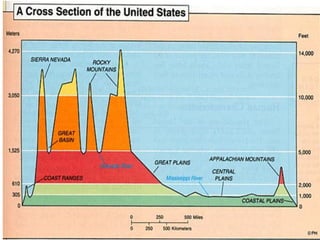
•The higher the elevation is, the colder the climate.
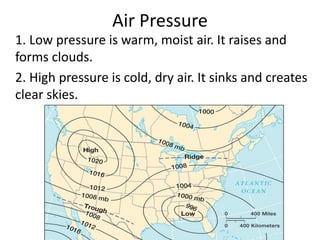
Air Pressure 
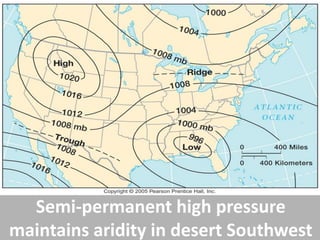
1. Low pressure is warm, moist air. It raises and forms clouds. 
2. High pressure is cold, dry air. It sinks and creates clear skies.
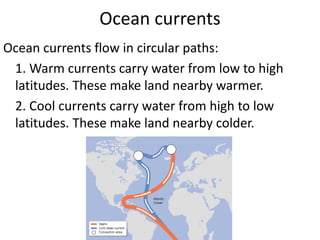
Ocean currents 
Ocean currents flow in circular paths: 
1. Warm currents carry water from low to high latitudes. These make land nearby warmer. 
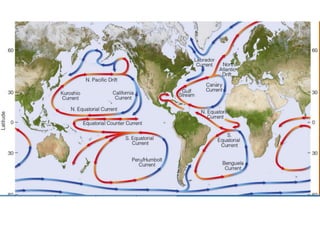
2. Cool currents carry water from high to low latitudes. These make land nearby colder.
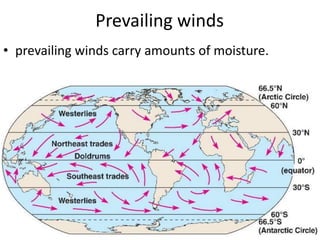
Prevailing winds 
•prevailing winds carry amounts of moisture.
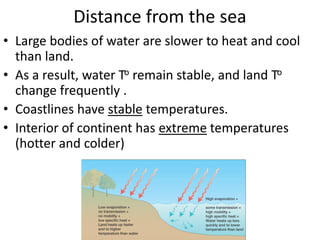
Distance from the sea 
•Large bodies of water are slower to heat and cool than land. 
•As a result, water To remain stable, and land To change frequently . 
•Coastlines have stable temperatures. 
•Interior of continent has extreme temperatures (hotter and colder)
Maritime 
•generally features warm (but not hot) summers and cool (but not cold) winters
•Within temperate mid-latitudes, moderate conditions of weather & climate (-AK, HI) 
•Extremes are seasonal (- aridity) 
•Settlers found ways to adapt to challenges: water storage, diversion, irrigation, air- conditioning, insulation, artificial heating 
•Varied climates offer diversity of natural vegetation, soil conditions, water features 
BACK
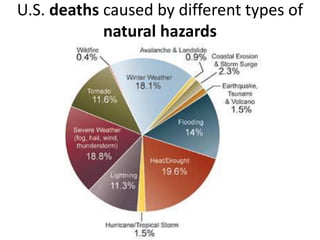
U.S. deaths caused by different types of natural hazards
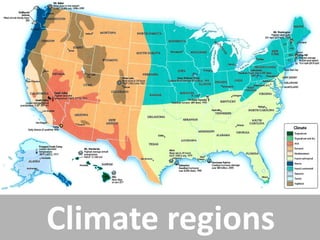
Climate regions
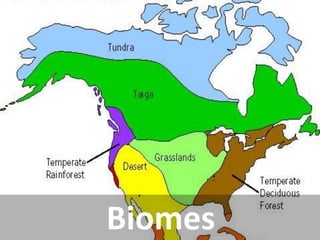
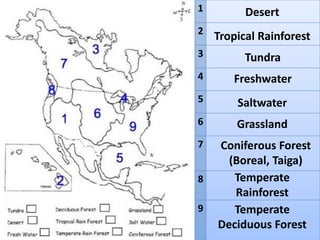
Biomes
BACK 
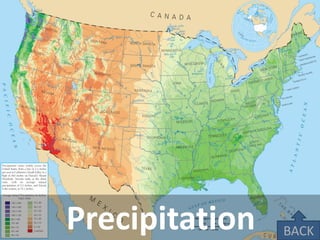
Precipitation
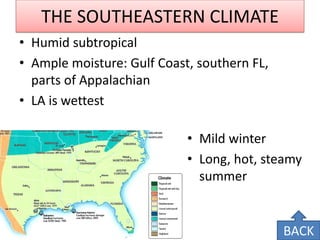
THE SOUTHEASTERN CLIMATE 
•Humid subtropical 
•Ample moisture: Gulf Coast, southern FL, parts of Appalachian 
•LA is wettest 
•Mild winter 
•Long, hot, steamy summer 
BACK
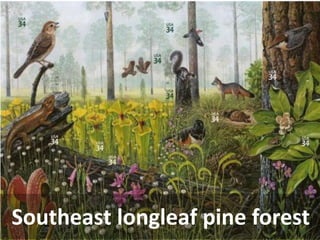
Southeast longleaf pine forest
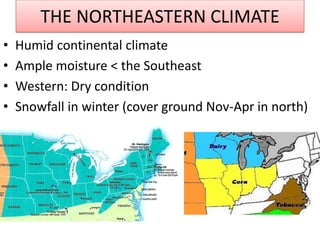
THE NORTHEASTERN CLIMATE 
•Humid continental climate 
•Ample moisture < the Southeast 
•Western: Dry condition 
•Snowfall in winter (cover ground Nov-Apr in north)
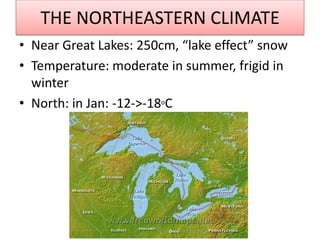
THE NORTHEASTERN CLIMATE 
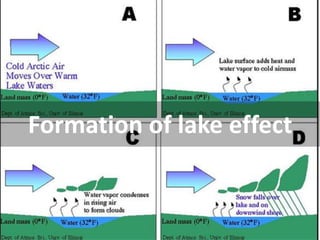
•Near Great Lakes: 250cm, “lake effect” snow 
•Temperature: moderate in summer, frigid in winter 
•North: in Jan: -12->-18oC
Formation of lake effect
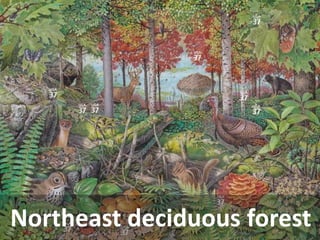
Northeast deciduous forest
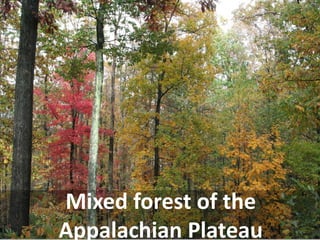
Mixed forest of the Appalachian Plateau
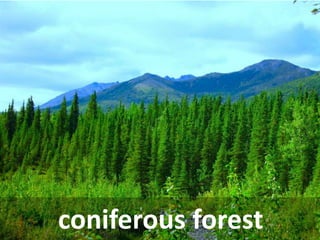
coniferous forest
BACK
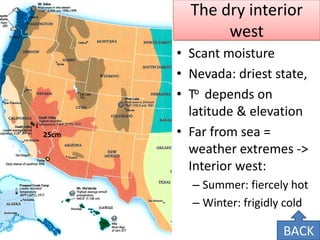
The dry interior west 
•Scant moisture 
•Nevada: driest state, 
•To depends on latitude & elevation 
•Far from sea = weather extremes -> Interior west: 
–Summer: fiercely hot 
–Winter: frigidly cold 
25cm 
BACK
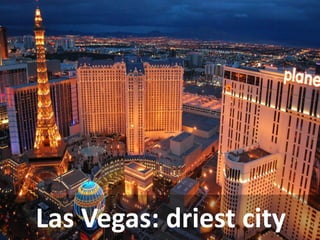
Las Vegas: driest city
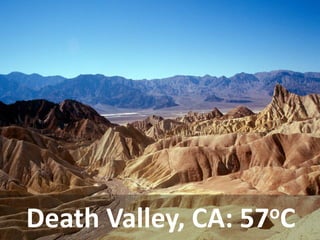
Death Valley, CA: 57oC
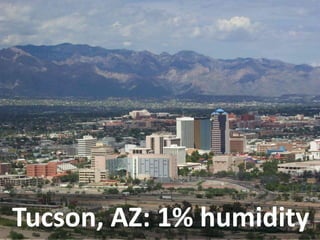
Tucson, AZ: 1% humidity
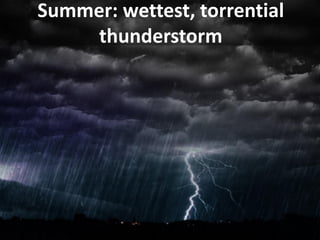
Summer: wettest, torrential thunderstorm
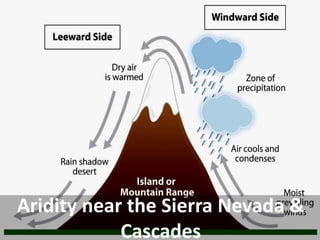
Aridity near the Sierra Nevada & Cascades
Semi-permanent high pressure maintains aridity in desert Southwest
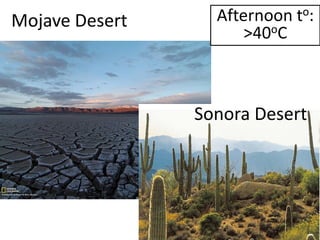
Mojave Desert 
Sonora Desert 
Afternoon to: >40oC
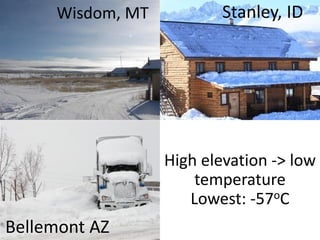
Wisdom, MT 
Stanley, ID 
Bellemont AZ 
High elevation -> low temperature 
Lowest: -57oC
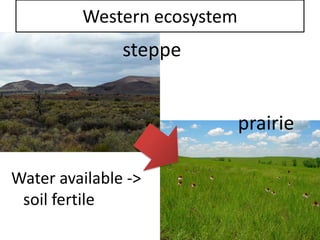
Western ecosystem 
steppe 
prairie 
Water available -> soil fertile
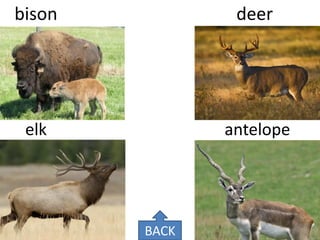
bison 
deer 
elk 
antelope 
BACK
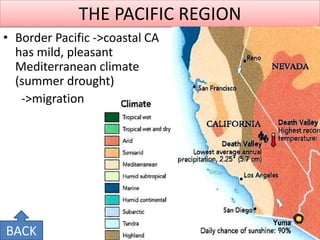
THE PACIFIC REGION 
•Border Pacific ->coastal CA has mild, pleasant Mediterranean climate (summer drought) 
->migration 
BACK
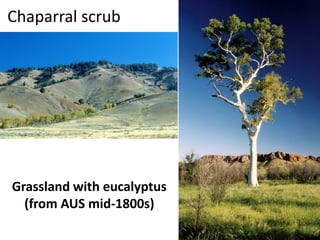
Chaparral scrub 
Grassland with eucalyptus (from AUS mid-1800s)
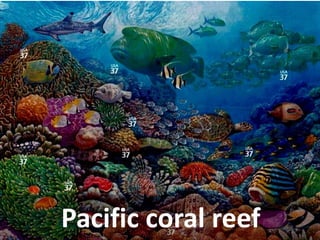
Pacific coral reef
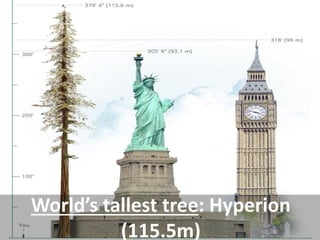
World’s tallest tree: Hyperion (115.5m)
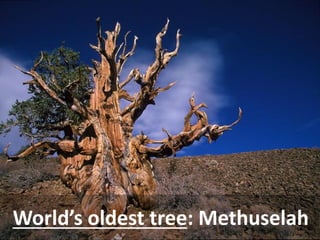
World’s oldest tree: Methuselah
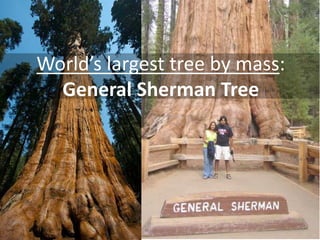
World’s largest tree by mass: General Sherman Tree
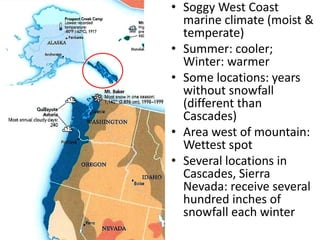
•Soggy West Coast marine climate (moist & temperate) 
•Summer: cooler; Winter: warmer 
•Some locations: years without snowfall (different than Cascades) 
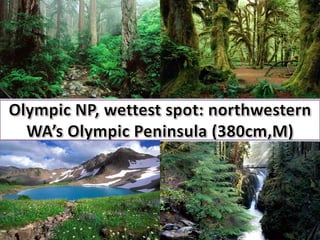
•Area west of mountain: Wettest spot 
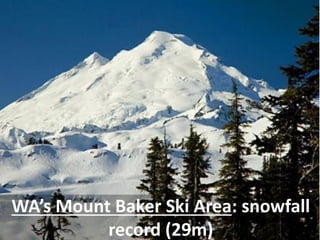
•Several locations in Cascades, Sierra Nevada: receive several hundred inches of snowfall each winter
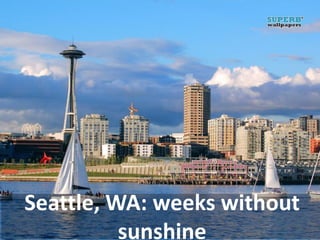
Seattle, WA: weeks without sunshine
WA’s Mount Baker Ski Area: snowfall record (29m)
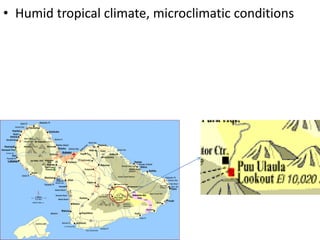
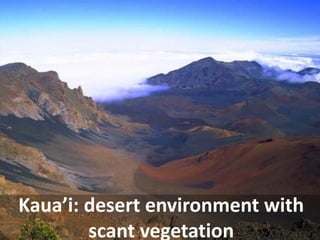
•Humid tropical climate, microclimatic conditions
Kaua’i: desert environment with scant vegetation
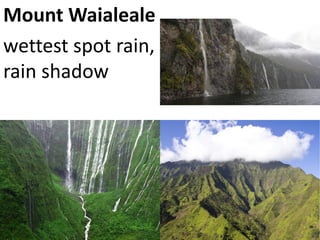
Mount Waialeale 
wettest spot rain, rain shadow
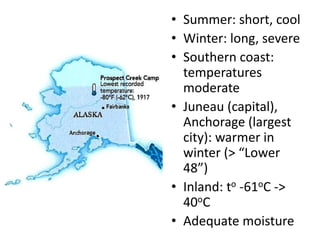
•Summer: short, cool 
•Winter: long, severe 
•Southern coast: temperatures moderate 
•Juneau (capital), Anchorage (largest city): warmer in winter (> “Lower 48”) 
•Inland: to -61oC -> 40oC 
•Adequate moisture
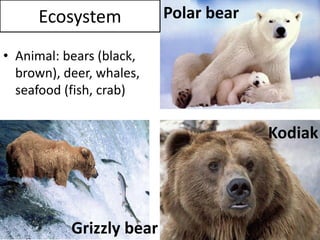
Ecosystem 
•Animal: bears (black, brown), deer, whales, seafood (fish, crab) 
Kodiak 
Grizzly bear 
Polar bear
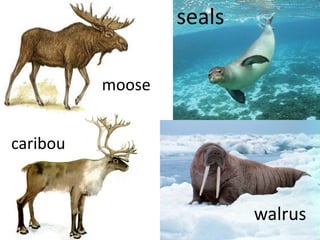
moose 
caribou 
seals 
walrus
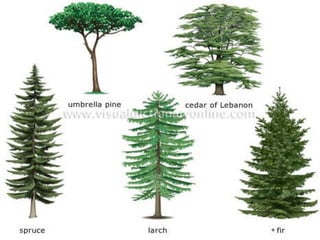
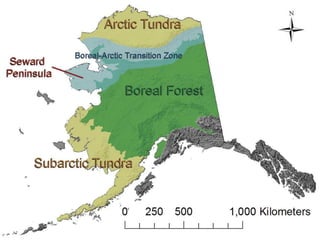
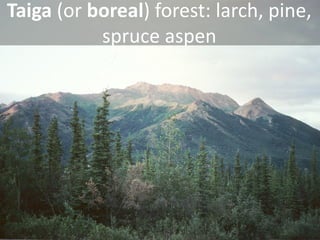
Taiga (or boreal) forest: larch, pine, spruce aspen
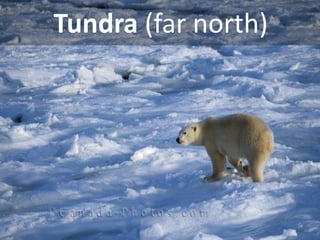
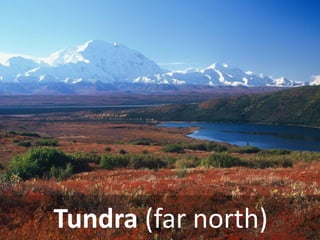
Tundra (far north)
Tundra (far north)
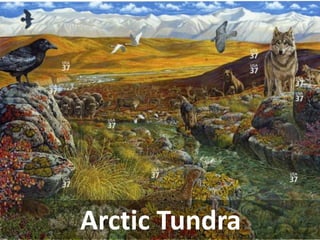
Arctic Tundra
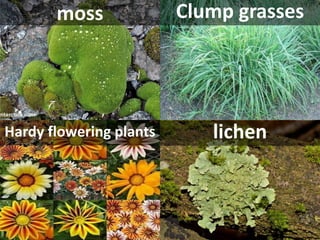
moss 
Clump grasses 
Hardy flowering plants 
lichen
WATER FEATURE 
•Importance for: 
–agriculture, 
–industry (maritime transportation, hydroelectricity- producing dams), 
–commerce, recreational activity (fishing) 
=>largest cities grow around a river mouth or natural harbor, oasis sites 
•Problematic: water pollution & depletion 
BACK
Oceans 
•Bordered by 3: Pacific, Atlantic, Arctic 
Safe from potentially hostile neighbors, 
countless marine resources, 
scenic beauty, 
shipping access to the world, 
atmospheric moisture (melting Arctic Ocean ->global navigation to Europe, Asia) 
BACK
Lakes 
•90% world’s natural lakes formed by glacial action 
•In Pleistocene (ice age), glaciers reached into US (Ohio, Missouri rivers) & formed in many of higher mountain ranges 
=>Most lakes in the northeastern & north of Ohio, Missouri rivers; reservoirs, water bodies formed behind dams in Southeast & West. 
•Great Lakes: world’s largest system of freshwater (esp. Lake Superior); -> Canada’s St. Lawrence River -> Atlantic (water route) 
BACK
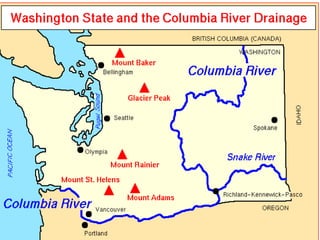
Rivers 
BACK
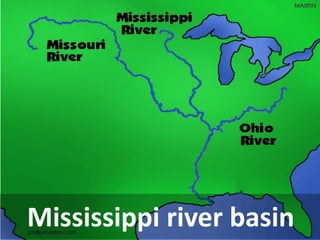
Mississippi river basin
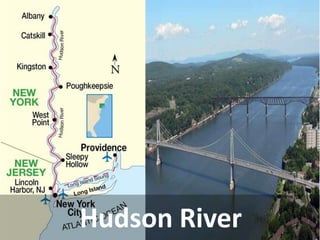
Hudson River
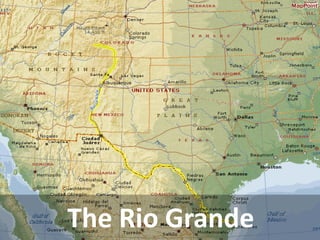
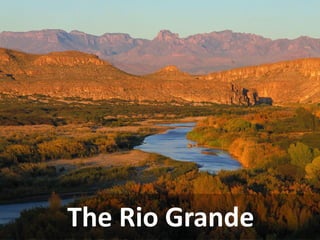
The Rio Grande
The Rio Grande
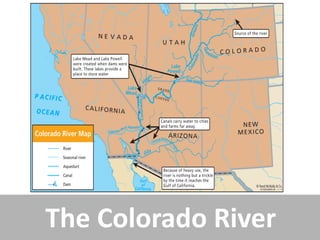
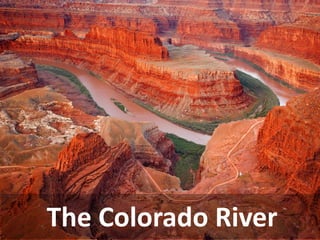
The Colorado River
The Colorado River
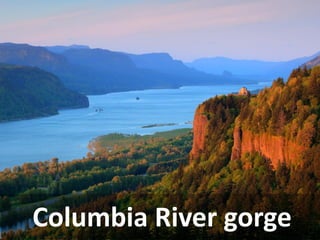
Columbia River gorge
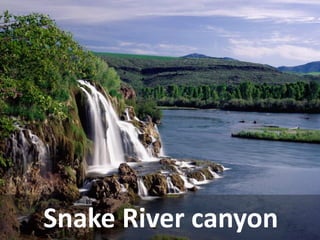
Snake River canyon
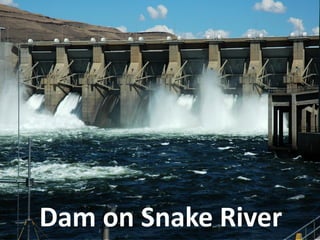
Dam on Snake River
Groundwater 
BACK
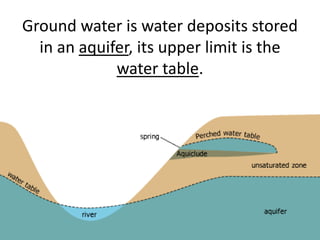
Ground water is water deposits stored in an aquifer, its upper limit is the water table.
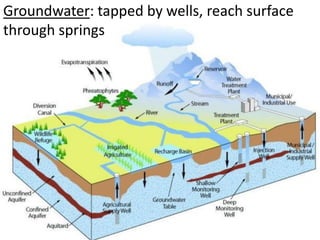
Groundwater: tapped by wells, reach surface through springs
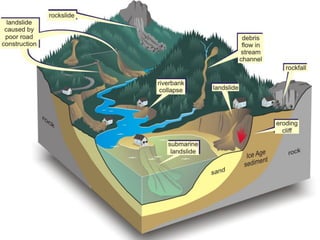
Environmental Hazards 
BACK
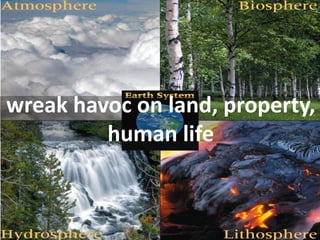
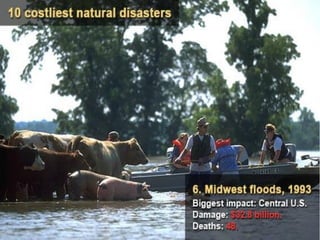
wreak havoc on land, property, human life
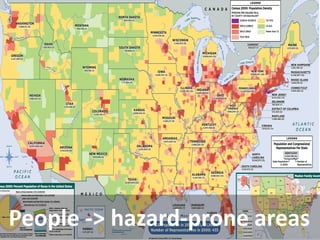
People -> hazard-prone areas
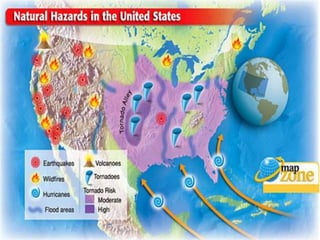
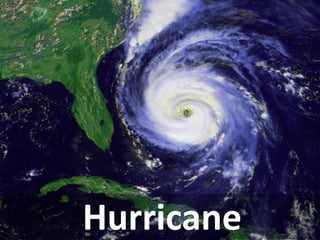
Hurricane
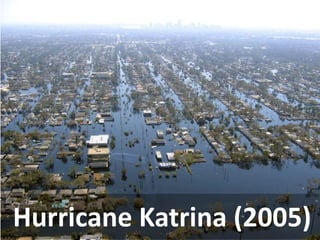
Hurricane Katrina (2005)
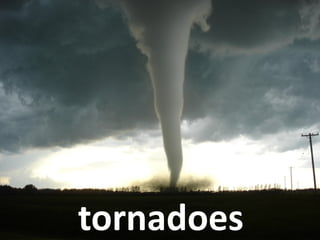
tornadoes
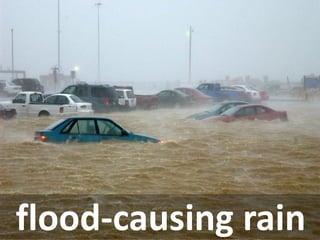
flood-causing rain
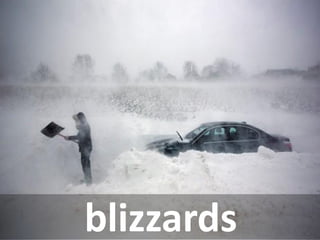
blizzards
hail
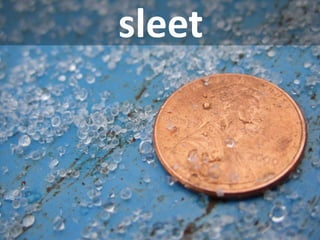
sleet
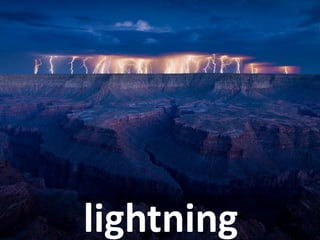
lightning
Ring of Fire
Mount St. Helens
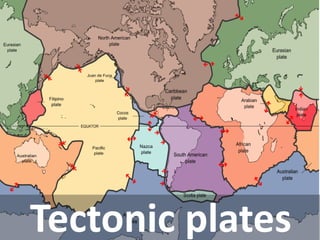
Tectonic plates
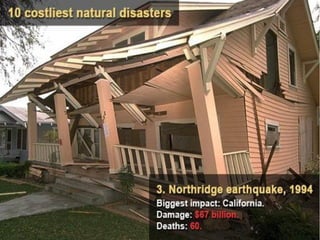
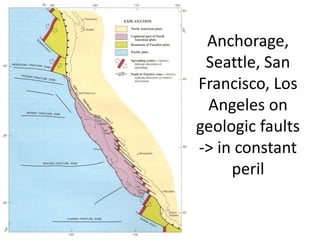
Anchorage, Seattle, San Francisco, Los Angeles on geologic faults -> in constant peril
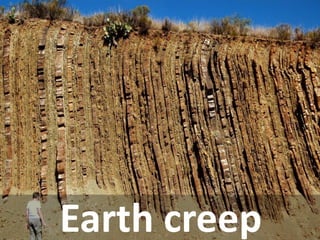
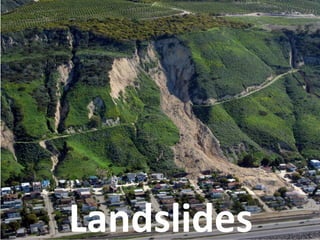
Earth creep
Landslides
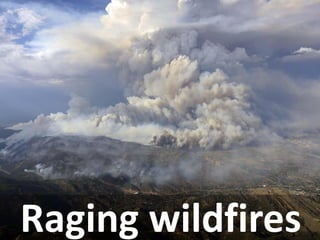
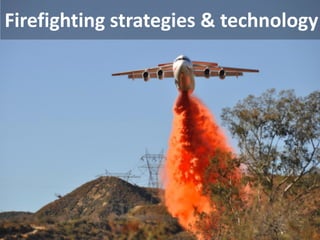
Raging wildfires
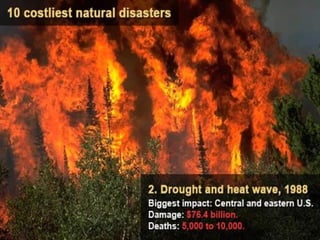
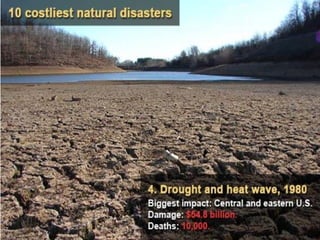
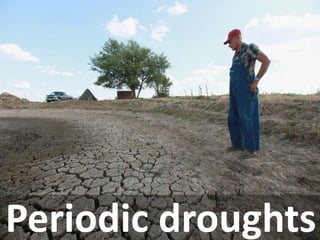
Periodic droughts
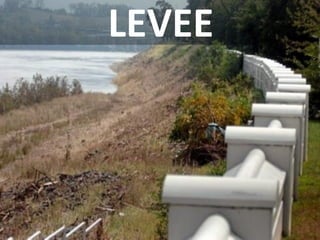
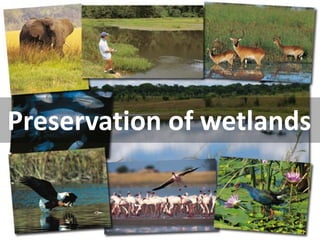
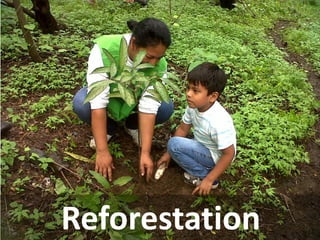
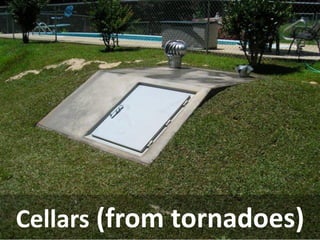
How they avoid it
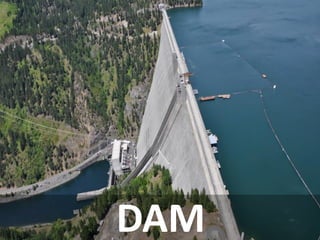
DAM
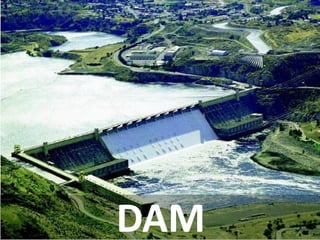
DAM
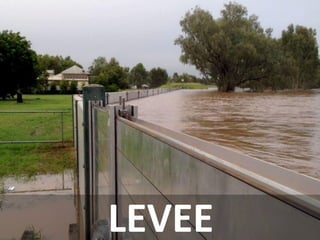
LEVEE
LEVEE
Preservation of wetlands
Reforestation
Cellars (from tornadoes)
Firefighting strategies & technology
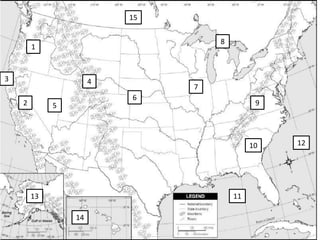
QUIZ
1 
2 
3 
4 
5 
6 
7 
8 
9 
10 
11 
12 
13 
14 
15
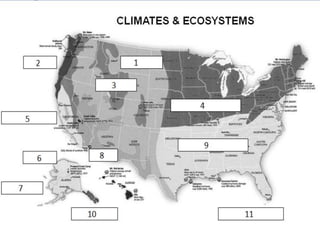
1 
2 
3 
4 
5 
6 
7 
8 
9 
Desert 
Tropical Rainforest 
Tundra 
Freshwater 
Saltwater 
Grassland 
Coniferous Forest (Boreal, Taiga) 
Temperate Rainforest 
Temperate Deciduous Forest

Us geography