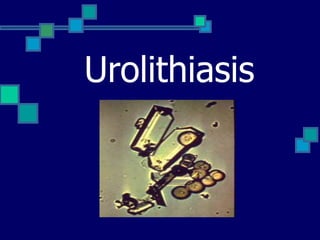
Urolithiasis
 Aggregations of sedimented urinary
solutes (minerals, proteins)
 Central nidus (usually protein),
surrounded by laminar ”stone” and
surface crystals
Uroliths
 Causes obstructions usually in males’
ureter
 At the site of obstruction, there is local
pressure necrosis, ulceration of the
mucosa and acute hemorrhagic urethritis
 Often in cats, dogs and ruminants
 Seldom in horses and pigs
Causes
 Urinary pH
 Reduced water intake causes crystallization
 Feeding; for exaple low vitamin A, high
phosphorus in ruminants, magnesium in cats
causes mucosal damage which produces nidi for
the stones
 Inflammation; leukocytes, fibrin, epithelial cells
also serve as a nidus
 Inborn error of metabolism
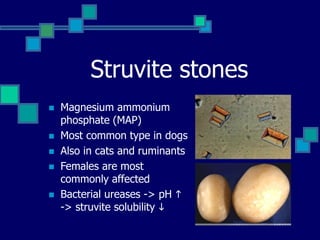
Struvite stones
 Magnesium ammonium
phosphate (MAP)
 Most common type in dogs
 Also in cats and ruminants
 Females are most
commonly affected
 Bacterial ureases -> pH h
-> struvite solubility i
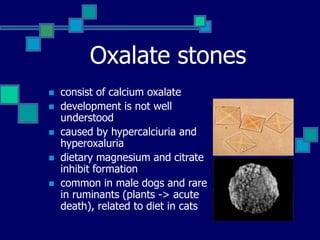
Oxalate stones
 consist of calcium oxalate
 development is not well
understood
 caused by hypercalciuria and
hyperoxaluria
 dietary magnesium and citrate
inhibit formation
 common in male dogs and rare
in ruminants (plants -> acute
death), related to diet in cats
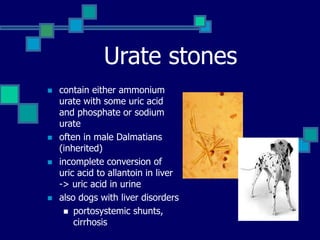
Urate stones
 contain either ammonium
urate with some uric acid
and phosphate or sodium
urate
 often in male Dalmatians
(inherited)
 incomplete conversion of
uric acid to allantoin in liver
-> uric acid in urine
 also dogs with liver disorders
 portosystemic shunts,
cirrhosis
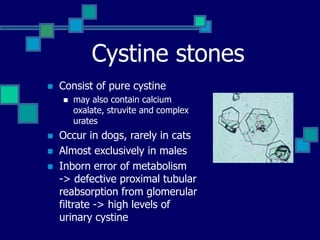
Cystine stones
 Consist of pure cystine
 may also contain calcium
oxalate, struvite and complex
urates
 Occur in dogs, rarely in cats
 Almost exclusively in males
 Inborn error of metabolism
-> defective proximal tubular
reabsorption from glomerular
filtrate -> high levels of
urinary cystine
Thanks

Urolithiasis

  • 1.
  • 2.
     Aggregations ofsedimented urinary solutes (minerals, proteins)  Central nidus (usually protein), surrounded by laminar ”stone” and surface crystals Uroliths
  • 3.
     Causes obstructionsusually in males’ ureter  At the site of obstruction, there is local pressure necrosis, ulceration of the mucosa and acute hemorrhagic urethritis  Often in cats, dogs and ruminants  Seldom in horses and pigs
  • 4.
    Causes  Urinary pH Reduced water intake causes crystallization  Feeding; for exaple low vitamin A, high phosphorus in ruminants, magnesium in cats causes mucosal damage which produces nidi for the stones  Inflammation; leukocytes, fibrin, epithelial cells also serve as a nidus  Inborn error of metabolism
  • 5.
    Struvite stones  Magnesiumammonium phosphate (MAP)  Most common type in dogs  Also in cats and ruminants  Females are most commonly affected  Bacterial ureases -> pH h -> struvite solubility i
  • 6.
    Oxalate stones  consistof calcium oxalate  development is not well understood  caused by hypercalciuria and hyperoxaluria  dietary magnesium and citrate inhibit formation  common in male dogs and rare in ruminants (plants -> acute death), related to diet in cats
  • 7.
    Urate stones  containeither ammonium urate with some uric acid and phosphate or sodium urate  often in male Dalmatians (inherited)  incomplete conversion of uric acid to allantoin in liver -> uric acid in urine  also dogs with liver disorders  portosystemic shunts, cirrhosis
  • 8.
    Cystine stones  Consistof pure cystine  may also contain calcium oxalate, struvite and complex urates  Occur in dogs, rarely in cats  Almost exclusively in males  Inborn error of metabolism -> defective proximal tubular reabsorption from glomerular filtrate -> high levels of urinary cystine
  • 9.