URODYNAMIC
STUDIES
DR. MOHAMMED HOSNI GABER
AHMED MAHER TEACHING HOSPITAL
URODYNAMIC STUDIES
It is the general term for studying storage and voiding
function/dysfunction of LUT to provide objective
pathophysiological explanations for symptoms of LUT/UUT.
UDS should reproduce the patient’s presenting symptoms.
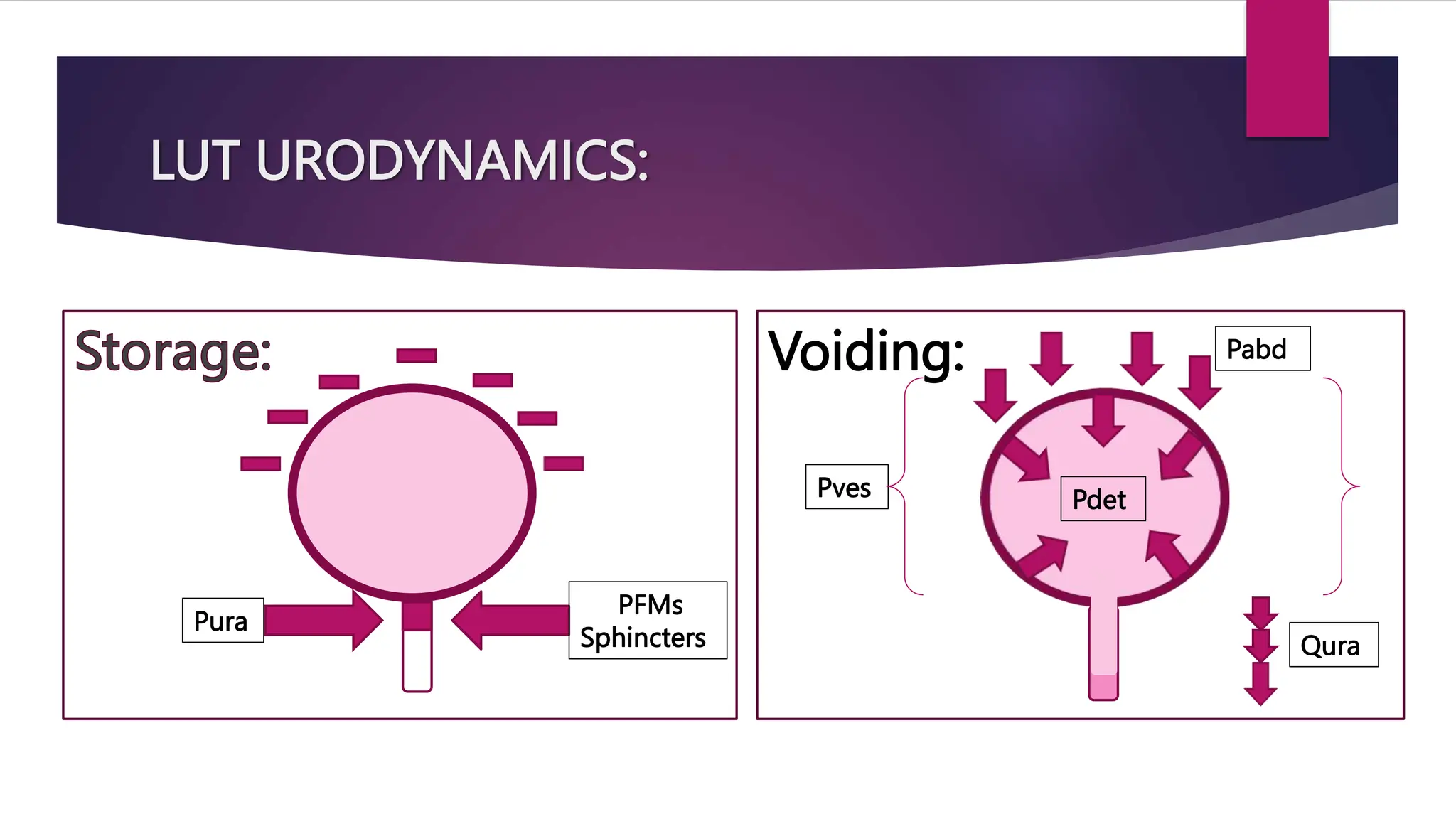
LUT URODYNAMICS:
Voiding:
Pdet
Pabd
Pves
Qura
PFMs
Sphincters
Pura
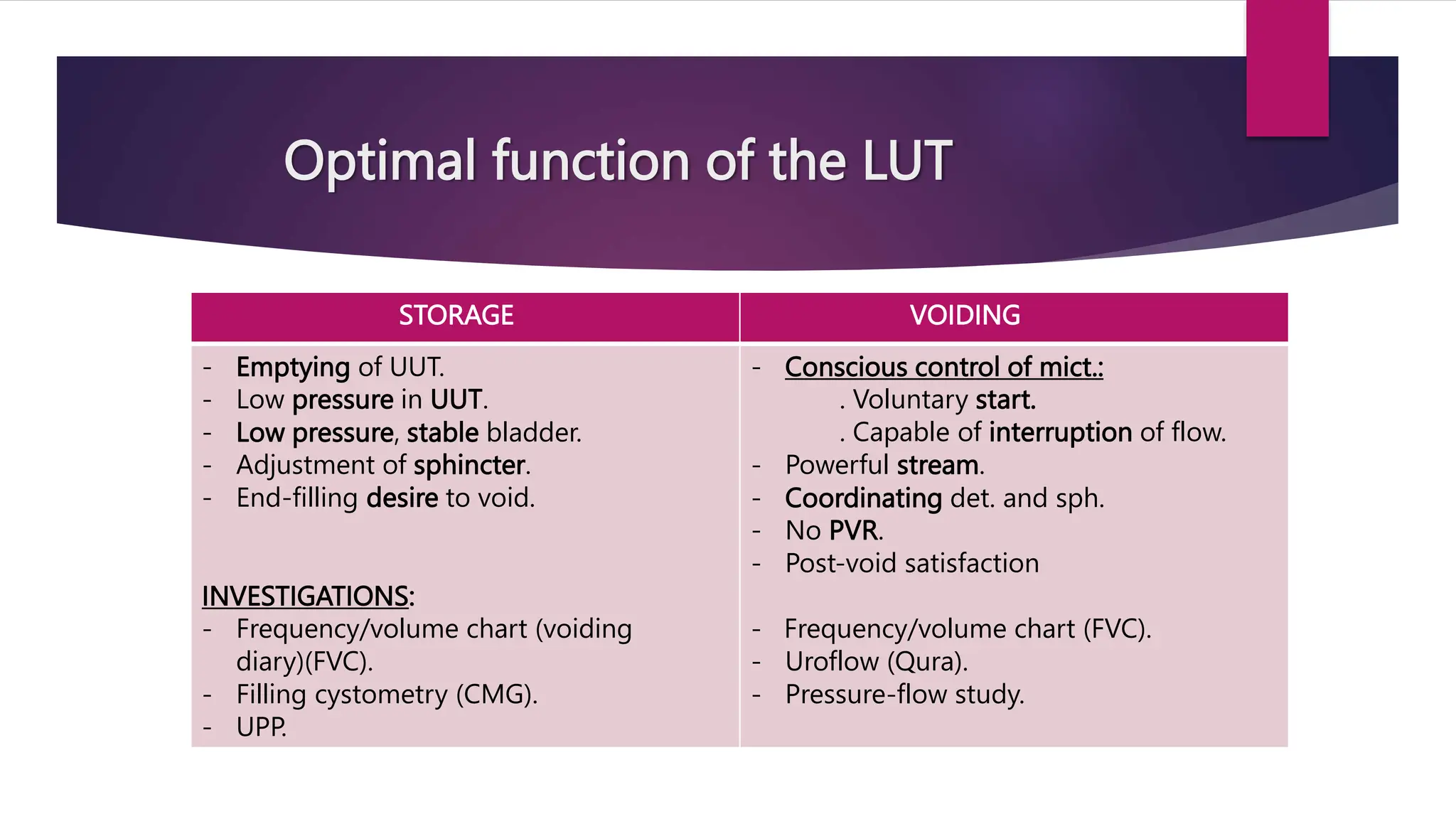
Optimal function of the LUT
STORAGE VOIDING
- Emptying of UUT.
- Low pressure in UUT.
- Low pressure, stable bladder.
- Adjustment of sphincter.
- End-filling desire to void.
INVESTIGATIONS:
- Frequency/volume chart (voiding
diary)(FVC).
- Filling cystometry (CMG).
- UPP.
- Conscious control of mict.:
. Voluntary start.
. Capable of interruption of flow.
- Powerful stream.
- Coordinating det. and sph.
- No PVR.
- Post-void satisfaction
- Frequency/volume chart (FVC).
- Uroflow (Qura).
- Pressure-flow study.
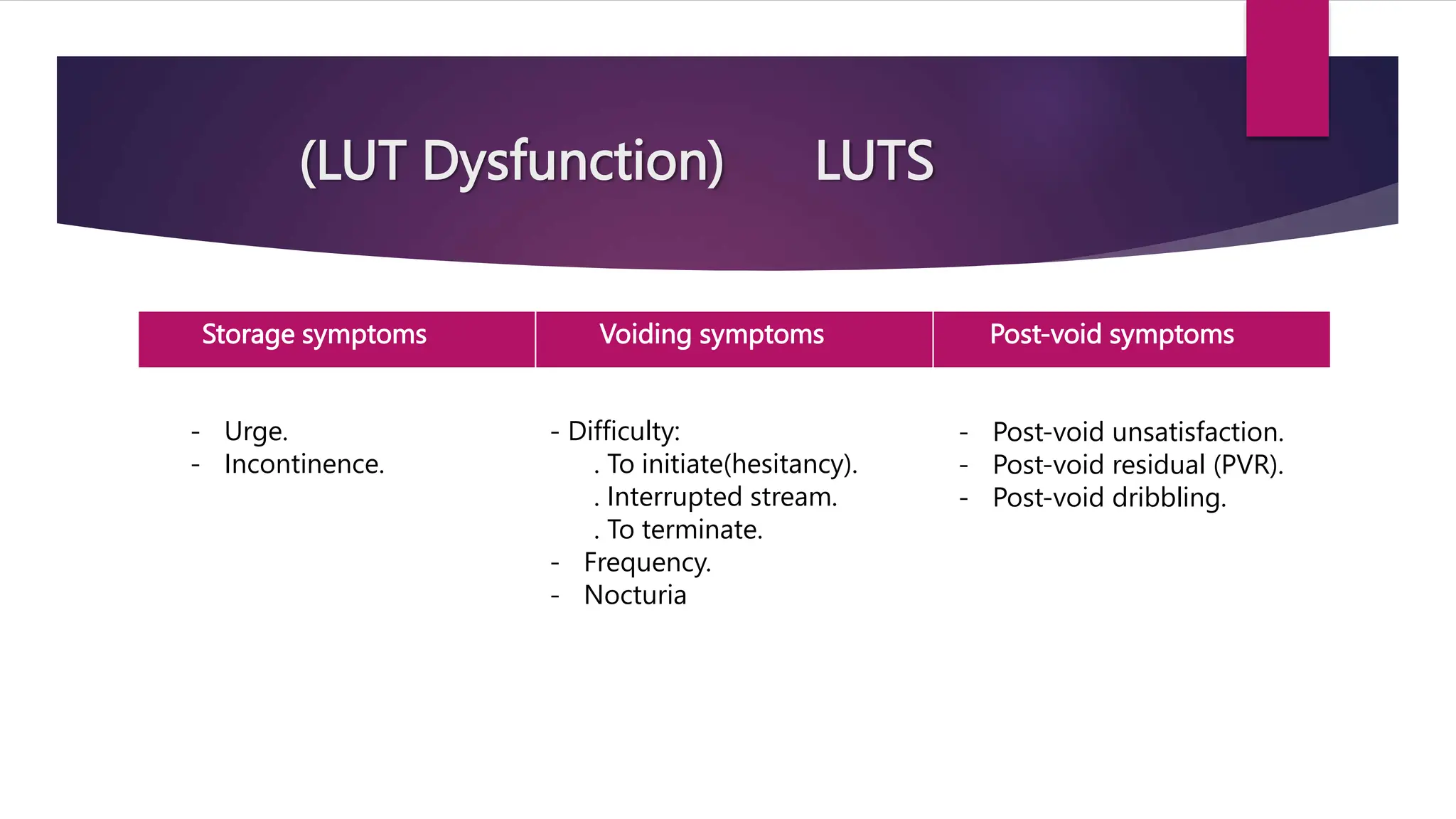
(LUT Dysfunction) LUTS
Storage symptoms Voiding symptoms Post-void symptoms
- Post-void unsatisfaction.
- Post-void residual (PVR).
- Post-void dribbling.
- Difficulty:
. To initiate(hesitancy).
. Interrupted stream.
. To terminate.
- Frequency.
- Nocturia
- Urge.
- Incontinence.
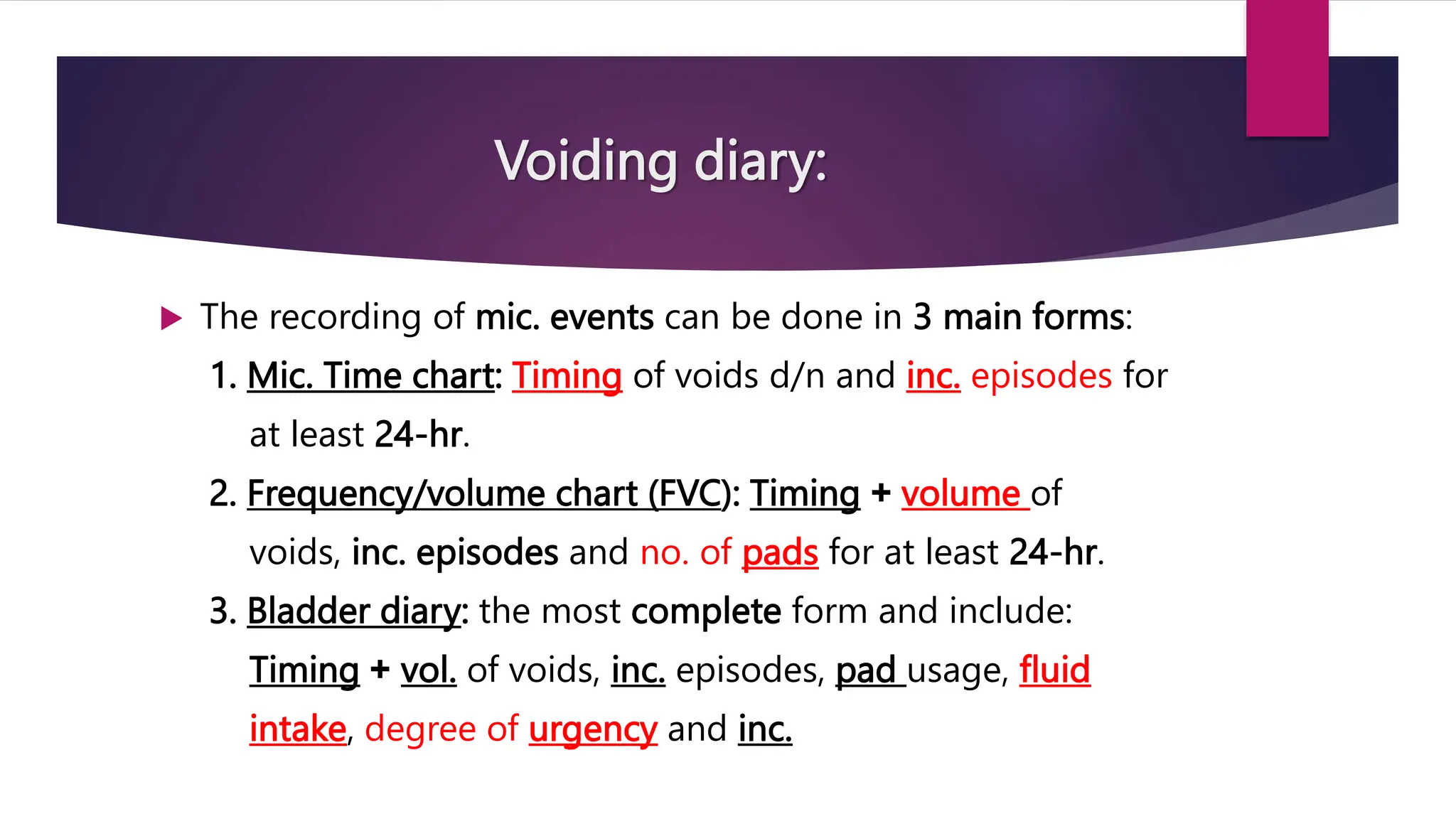
Voiding diary:
 The recording of mic. events can be done in 3 main forms:
1. Mic. Time chart: Timing of voids d/n and inc. episodes for
at least 24-hr.
2. Frequency/volume chart (FVC): Timing + volume of
voids, inc. episodes and no. of pads for at least 24-hr.
3. Bladder diary: the most complete form and include:
Timing + vol. of voids, inc. episodes, pad usage, fluid
intake, degree of urgency and inc.
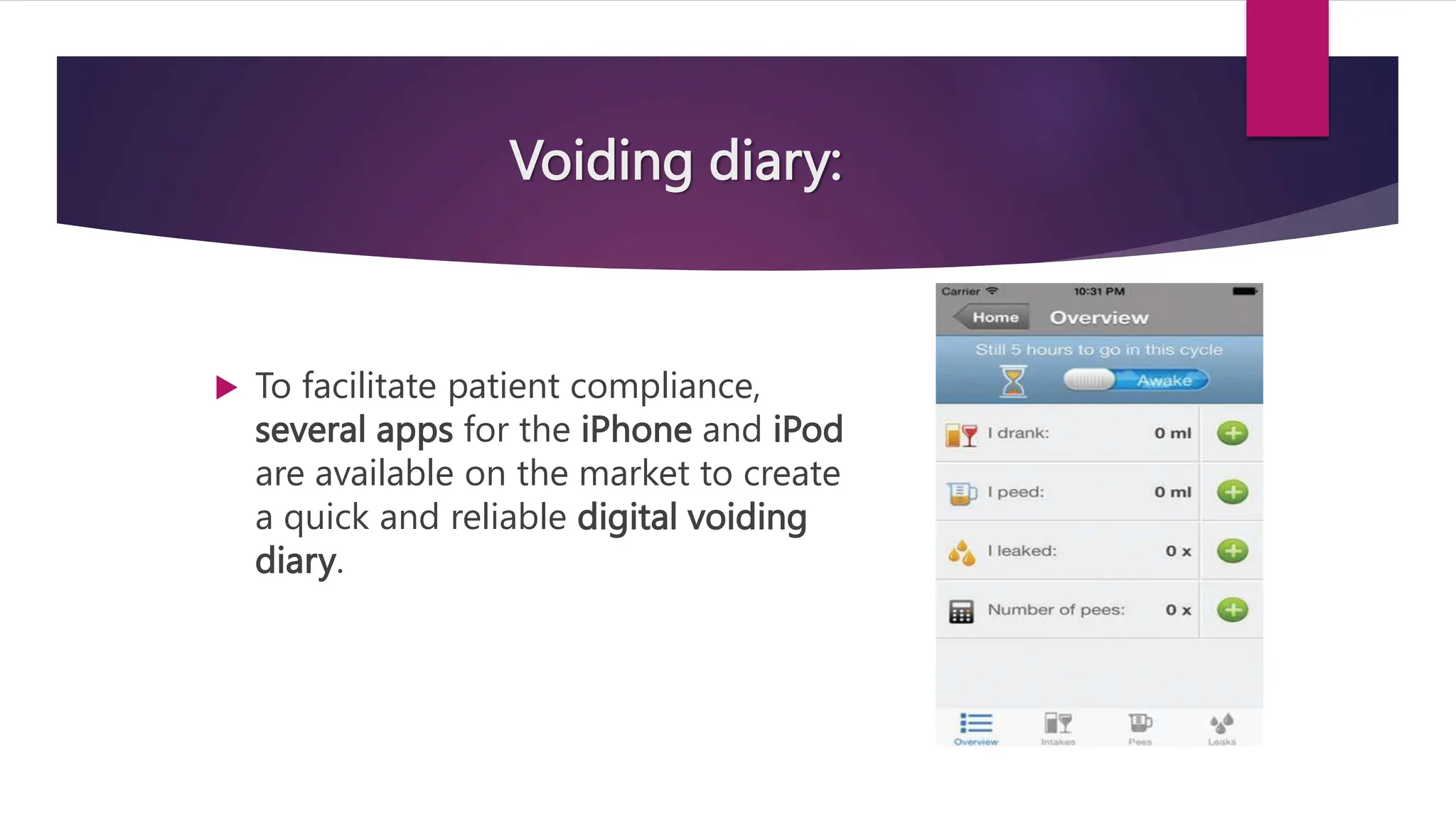
Voiding diary:
 To facilitate patient compliance,
several apps for the iPhone and iPod
are available on the market to create
a quick and reliable digital voiding
diary.
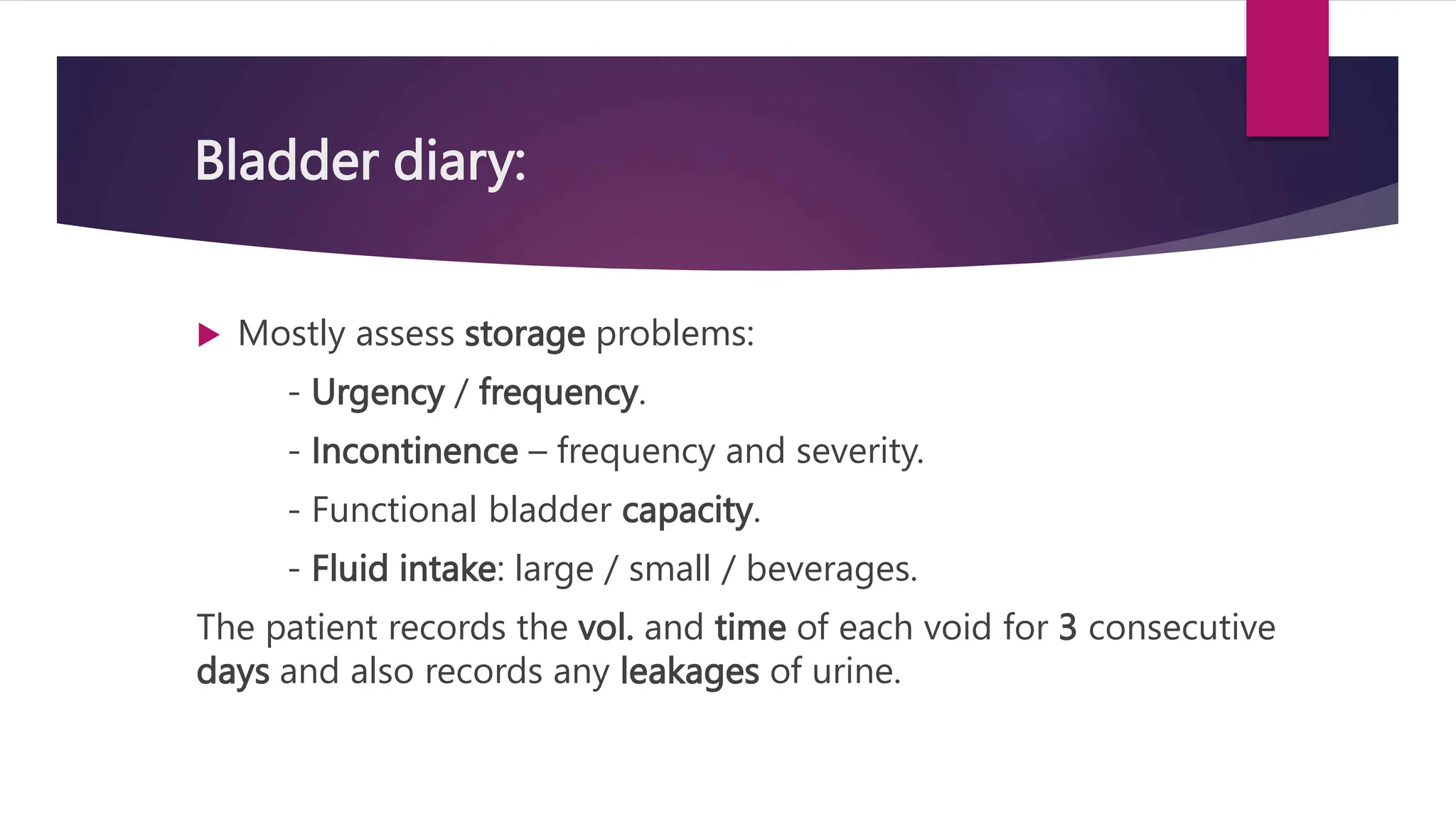
Bladder diary:
 Mostly assess storage problems:
- Urgency / frequency.
- Incontinence – frequency and severity.
- Functional bladder capacity.
- Fluid intake: large / small / beverages.
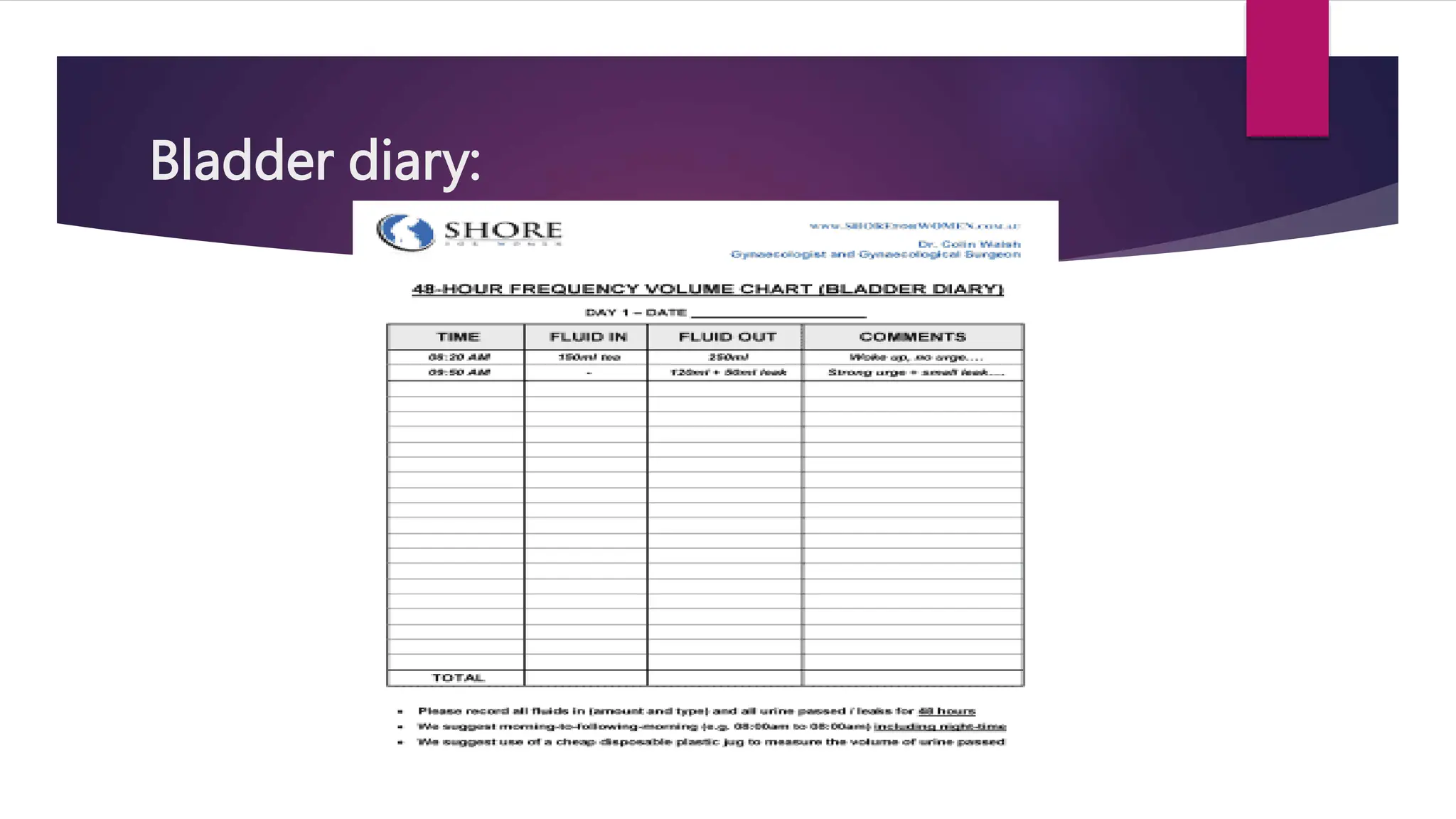
The patient records the vol. and time of each void for 3 consecutive
days and also records any leakages of urine.
Bladder diary:
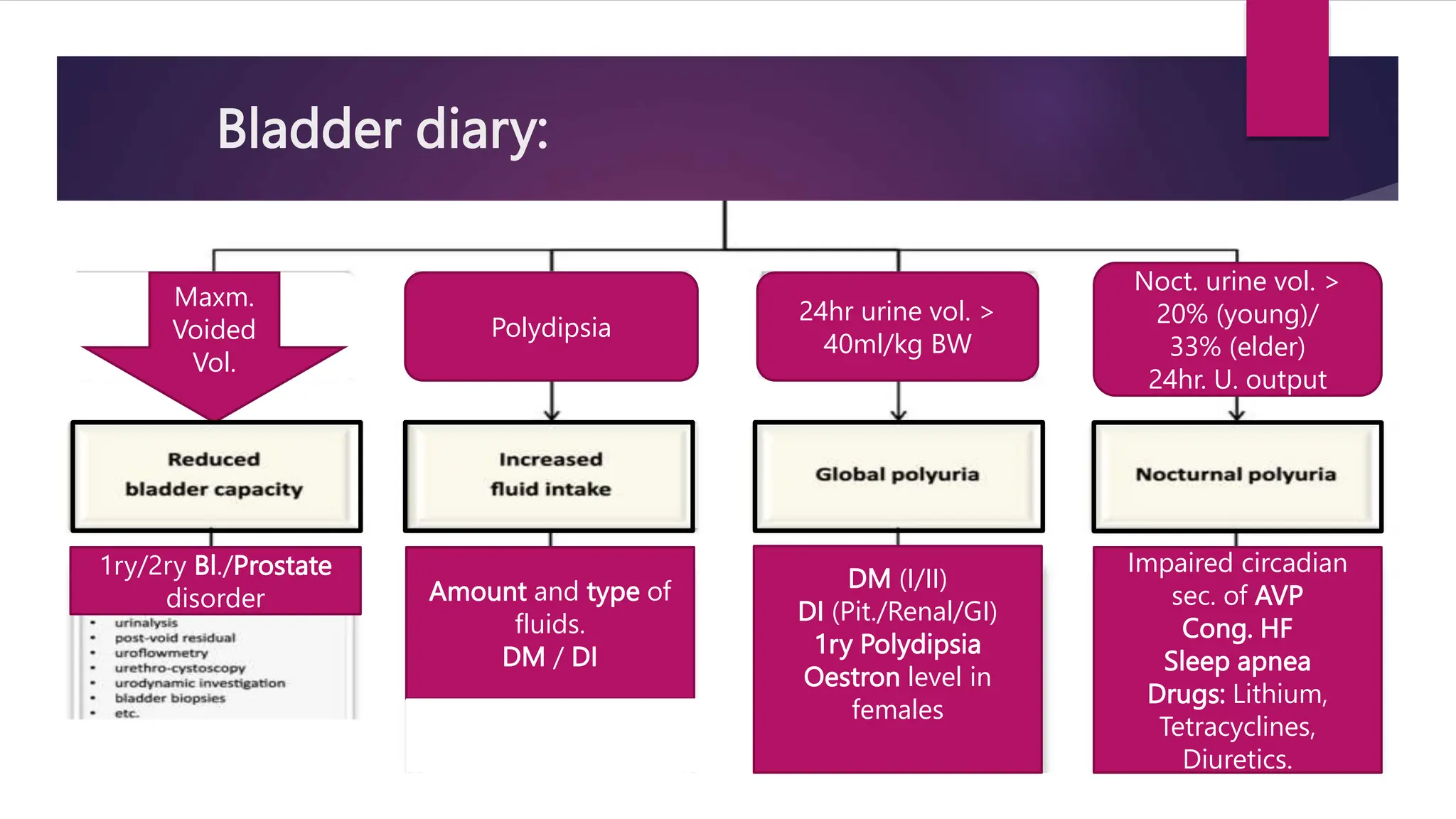
Maxm.
Voided
Vol.
Polydipsia
24hr urine vol. >
40ml/kg BW
Noct. urine vol. >
20% (young)/
33% (elder)
24hr. U. output
1ry/2ry Bl./Prostate
disorder Amount and type of
fluids.
DM / DI
DM (I/II)
DI (Pit./Renal/GI)
1ry Polydipsia
Oestron level in
females
Impaired circadian
sec. of AVP
Cong. HF
Sleep apnea
Drugs: Lithium,
Tetracyclines,
Diuretics.
Bladder diary:
Bladder diary:
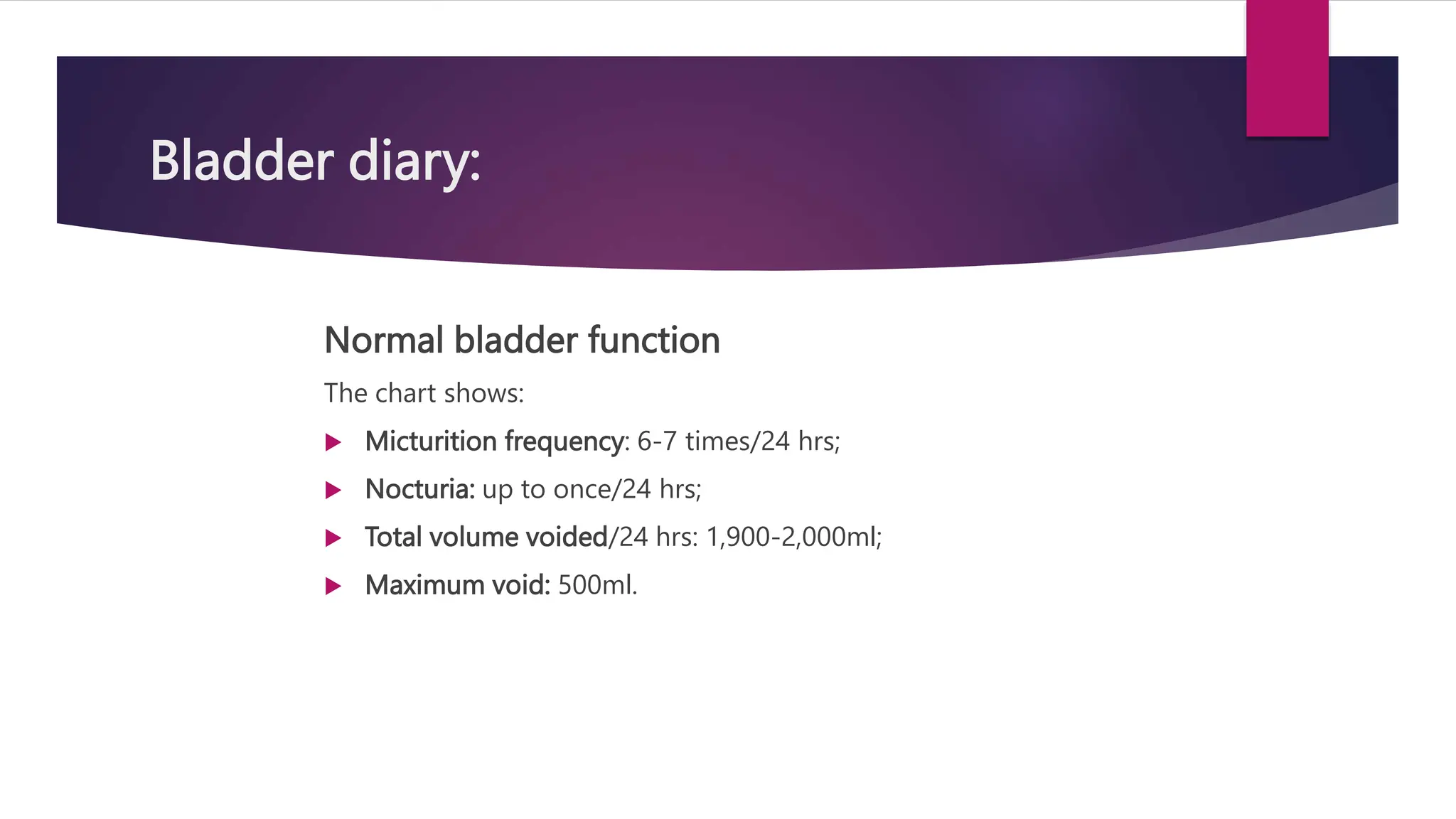
Normal bladder function
The chart shows:
 Micturition frequency: 6-7 times/24 hrs;
 Nocturia: up to once/24 hrs;
 Total volume voided/24 hrs: 1,900-2,000ml;
 Maximum void: 500ml.
Bladder diary: Examples
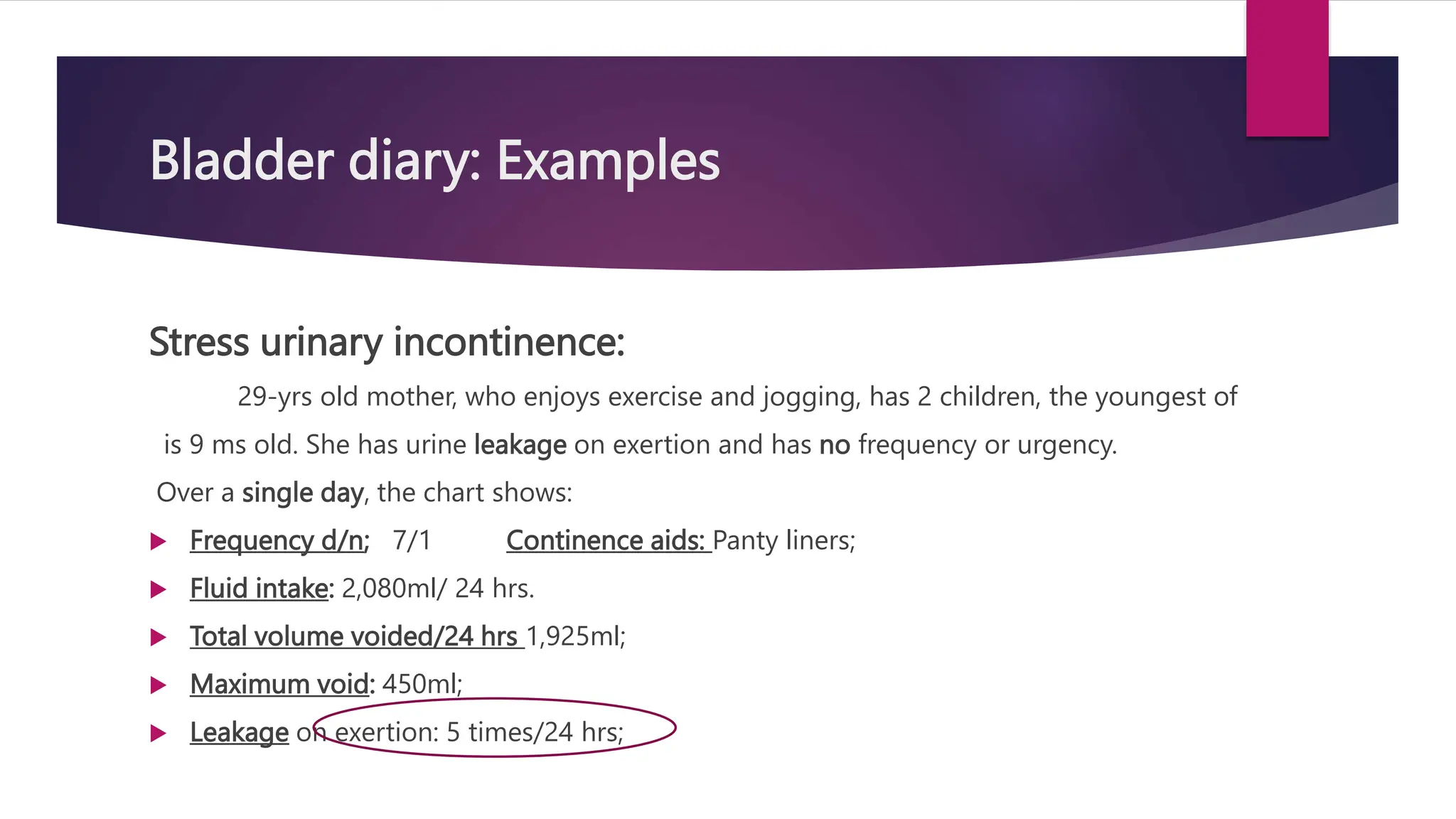
Stress urinary incontinence:
29-yrs old mother, who enjoys exercise and jogging, has 2 children, the youngest of
is 9 ms old. She has urine leakage on exertion and has no frequency or urgency.
Over a single day, the chart shows:
 Frequency d/n; 7/1 Continence aids: Panty liners;
 Fluid intake: 2,080ml/ 24 hrs.
 Total volume voided/24 hrs 1,925ml;
 Maximum void: 450ml;
 Leakage on exertion: 5 times/24 hrs;
Bladder diary : Examples
Interpretation:
 Fluid intake and bl. function are within normal parameters,
apart from episodes of leakage.
 Other investigations: Urinalysis and physical examination.
 Diagnosis of SUI was then made.
 Treatment regimen of individualized PFMEs commenced.
Bladder diary : Examples
OAB:
A 48-yr-old science teacher.
C/O: Urinary urgency, and leaks urine if he is unable to reach the toilet quickly.
On one occasion, he had to take a white coat from the classroom to cover his
clothes as he could not control his urgency on the way to the toilet.
Since he was unable to measure his voids, he was asked to put a tick in the
column each time he passed urine.
Bladder diary : Examples
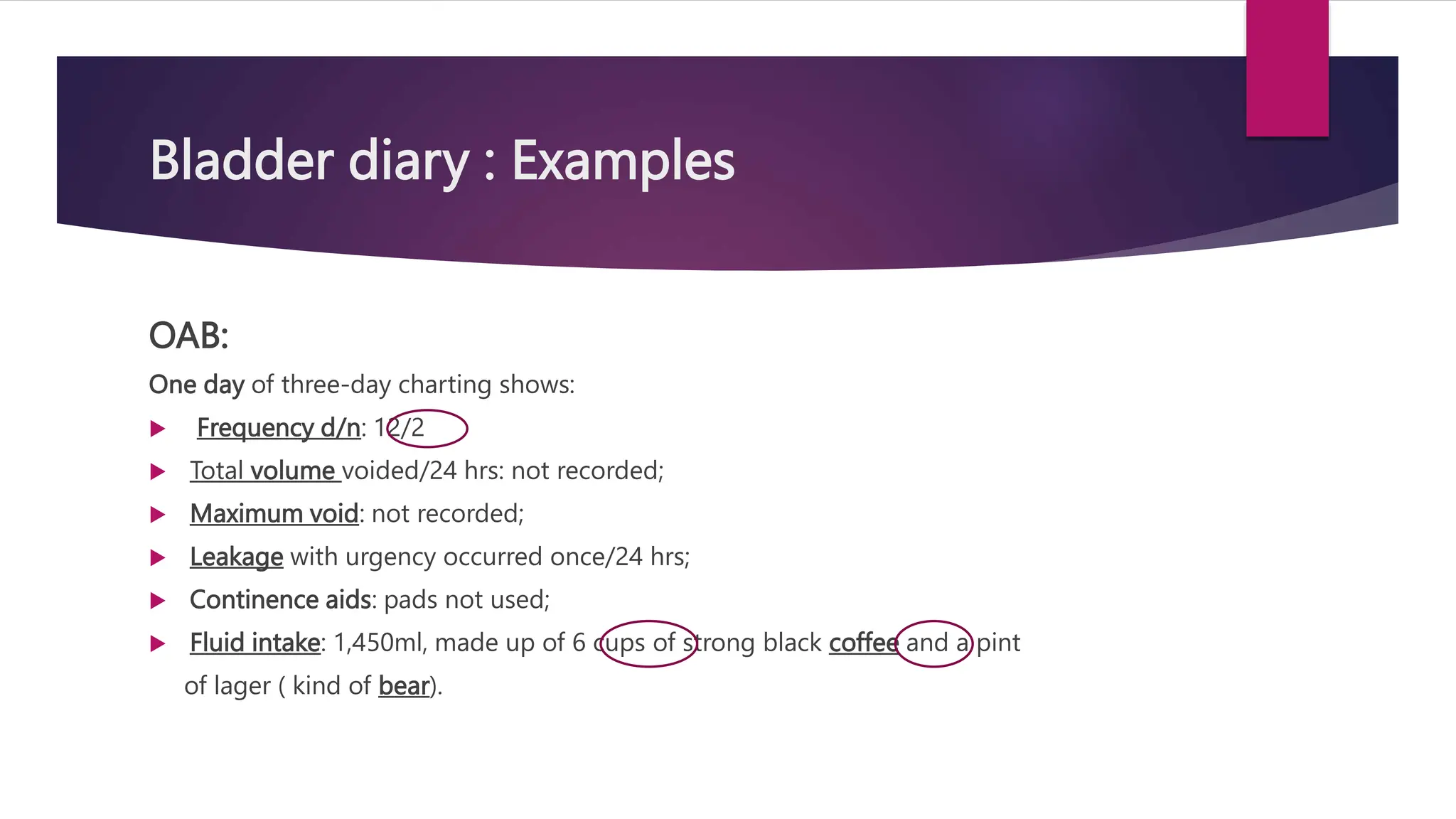
OAB:
One day of three-day charting shows:
 Frequency d/n: 12/2
 Total volume voided/24 hrs: not recorded;
 Maximum void: not recorded;
 Leakage with urgency occurred once/24 hrs;
 Continence aids: pads not used;
 Fluid intake: 1,450ml, made up of 6 cups of strong black coffee and a pint
of lager ( kind of bear).
Bladder diary : Examples
Interpretation:
The obvious causes for concern are low fluid intake and the volume of strong
black coffee. In addition, lager can irritate the bladder in some people.
Investigations: Exclude UTI and a full continence assessment,
The pnt was advised initially to gradually reduce his caffeinated drinks, replaced
with non-caffeinated drinks and ensure his fluid intake was about 2l in 24 hrs.
He will be reviewed in 4 ws for progress and further treatment, investigation
and referral if required.
Bladder diary : Examples
Interstitial cystitis (IC):
 55 yrs. old lady.
 C/O: Urinary frequency, urgency, and leaks urine if unable to reach the toilet quickly.
Lower abdominal pain occurs as her bladder fills.
 She is otherwise fit and active, but is very tired due to daytime frequency and nocturia
occurring every hour.
Bladder diary : Examples
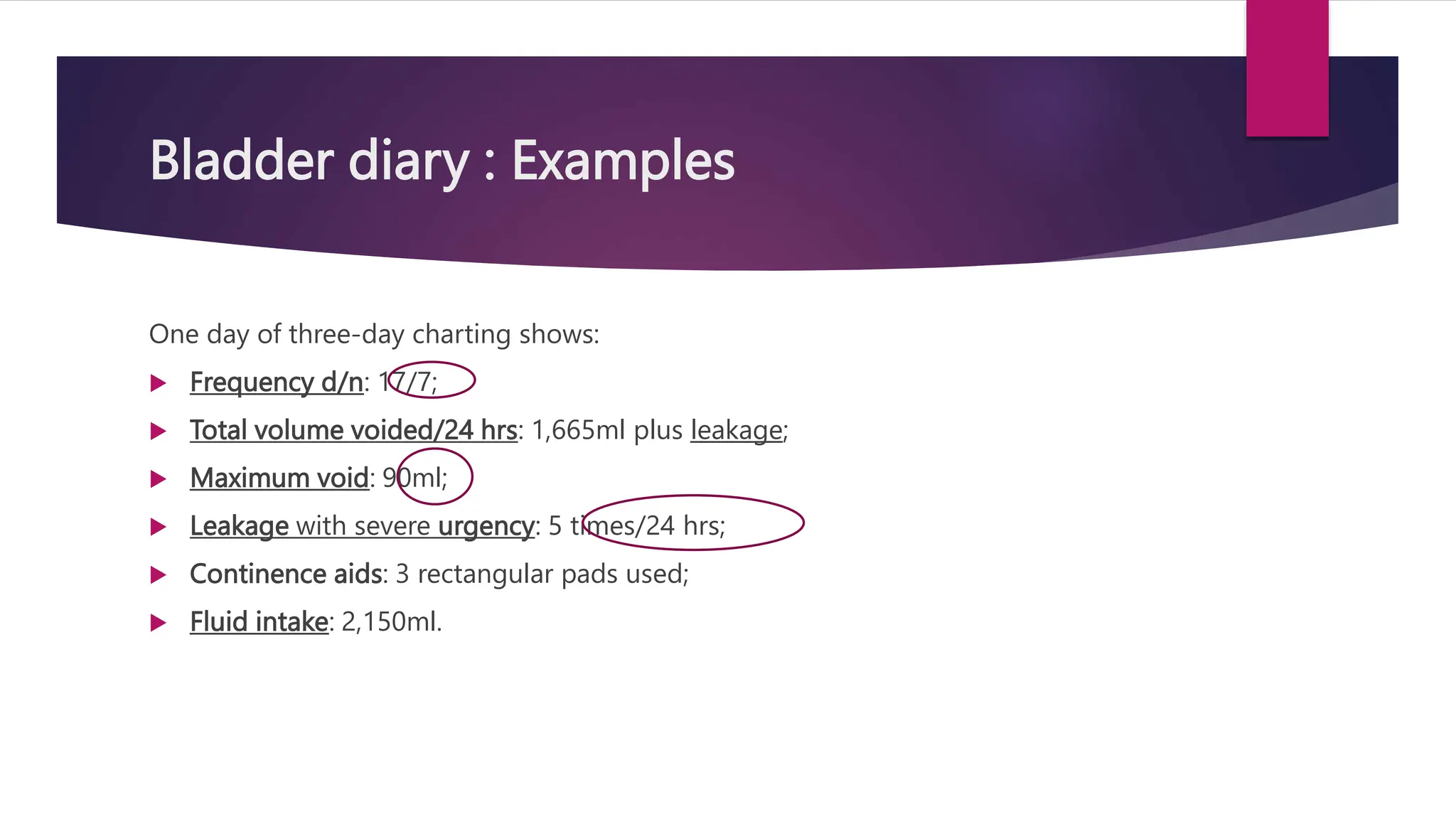
One day of three-day charting shows:
 Frequency d/n: 17/7;
 Total volume voided/24 hrs: 1,665ml plus leakage;
 Maximum void: 90ml;
 Leakage with severe urgency: 5 times/24 hrs;
 Continence aids: 3 rectangular pads used;
 Fluid intake: 2,150ml.
Bladder diary : Examples
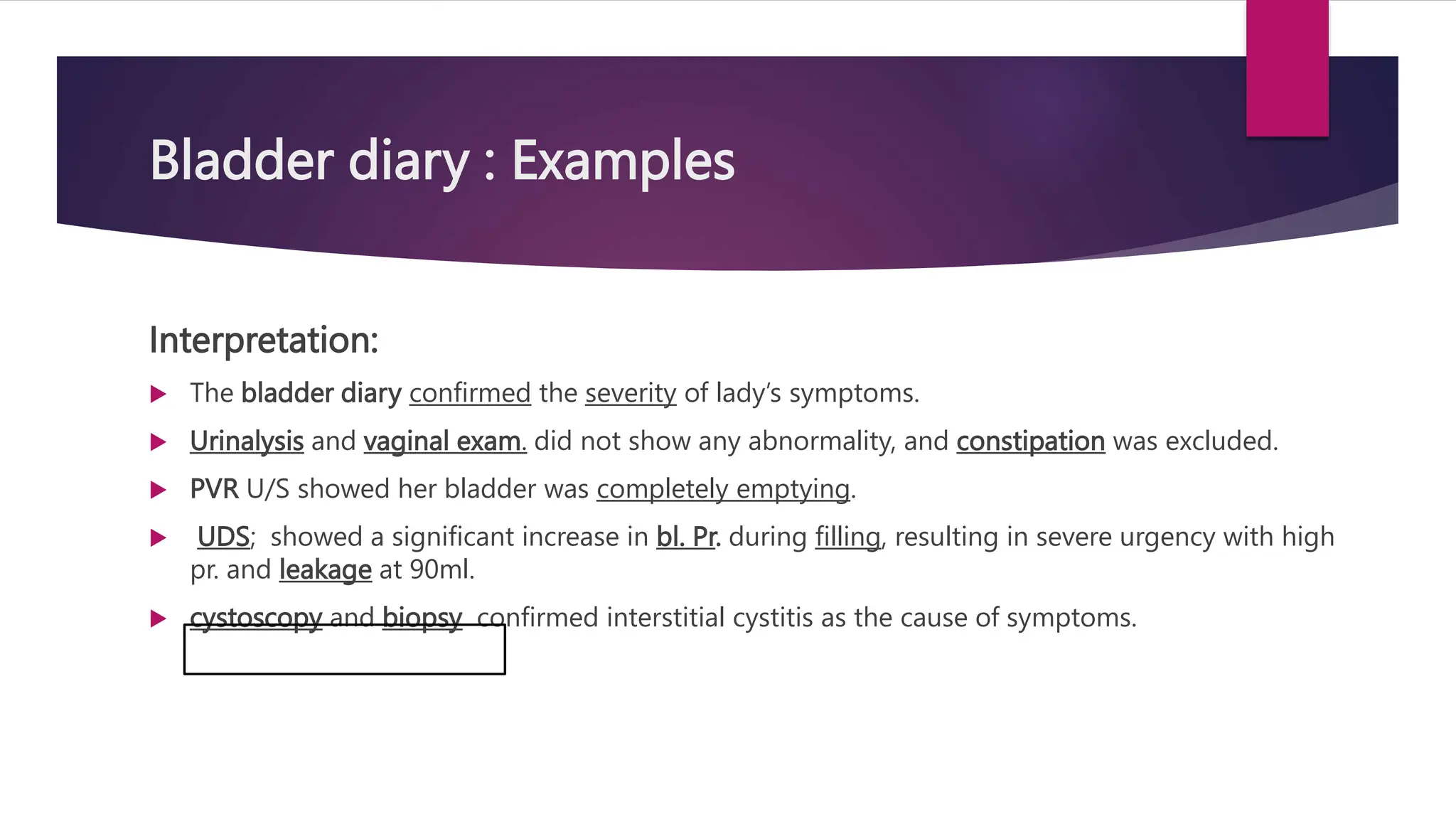
Interpretation:
 The bladder diary confirmed the severity of lady’s symptoms.
 Urinalysis and vaginal exam. did not show any abnormality, and constipation was excluded.
 PVR U/S showed her bladder was completely emptying.
 UDS; showed a significant increase in bl. Pr. during filling, resulting in severe urgency with high
pr. and leakage at 90ml.
 cystoscopy and biopsy confirmed interstitial cystitis as the cause of symptoms.
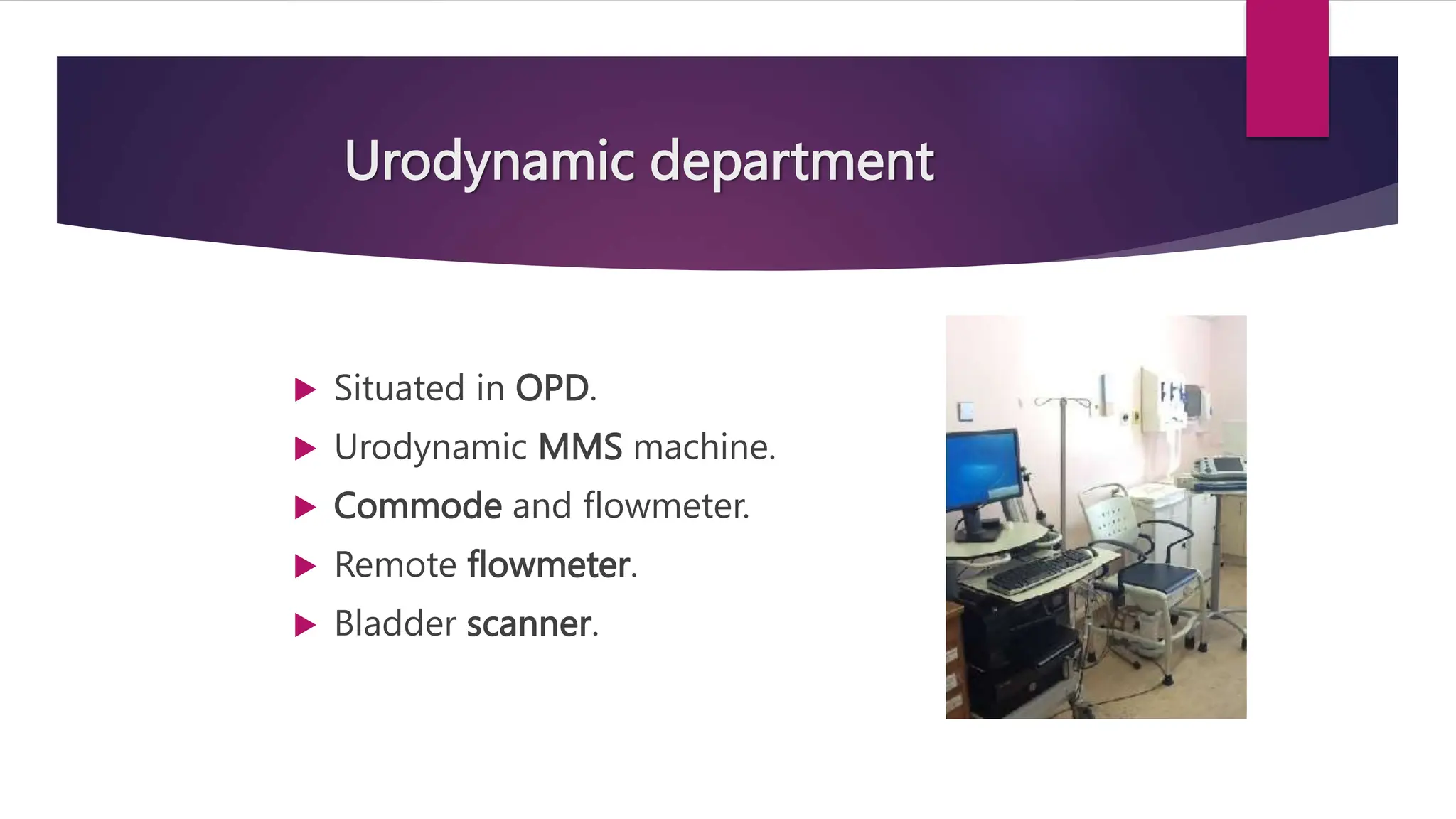
Urodynamic department
 Situated in OPD.
 Urodynamic MMS machine.
 Commode and flowmeter.
 Remote flowmeter.
 Bladder scanner.
URODYNAMIC STUDIES: Indications:
NOT a 1st line investigation
 Confirm or refute a diagnosis and identify all factors contributing to
the causes of the LUTS.
 Failed conservative and/or surgical treatments.
 Play a part in surveillance or research programs.
 Mixed UI with predominant frequency and urge, but only after failure
of initial conservative treatment and prior to considering surgery.
URODYNAMIC STUDIES:
Disadvantages / complications:
 Discomfort.
 Bleeding.
 Infection.
 Failure:
- Poor technique.
- Inadequate interpretation.
URODYNAMIC STUDIES: Consent:
 Pnts. with depression, anxiety or painful bladder syndrome have been
found to experience the most discomfort and apprehension.
 To optimize the patient’s experience, it is advisable to provide written
information to explain the tests before their arrival, so they know
what to expect.
 An ICS Standard information leaflet for urodynamics is available.
URODYNAMIC STUDIES: ICS-SUP:
 Each pnt. undergoing UDS testing; should have PRELIMINARY
ICS standard urodynamics protocol (ICS-SUP):
- A clinical history including a valid symptom and bother
score(s), Quality of life questionaire (QoL) and medication
list.
- Relevant physical examination.
- Urinalysis.
- Frequency/volume chart and, optionally, a pad test.
URODYNAMIC STUDIES: ICS-SUP:
 PAD test:
- Complementary to voiding diary.
- Assesses the degree of incontinence in a semi-objective
manner.
- Pad weight gain in non-menstruating women can be
attributed mainly to urine and in small part to perspiration
and vaginal discharges.
URODYNAMIC STUDIES: ICS-SUP:
 PAD test:
- Two types of pad test:
• The short-term (1 h) with exercise for 30 minutes.
• The long-term (24-48h) at home; changed every 4–6 hours.
- Most accurate if based on a fixed bladder volume.
- Incontinence is diagnosed if pad weight is more than 1 g/h
on the short-term pad test and more than 8 g/24h on the
long-term pad test.
URODYNAMIC STUDIES: Bother scoring:
 Examples of validated urinary incontinence questionnaires:
• Urogenital Distress Inventory (UDI)
• Incontinence Impact Questionnaire (IIQ)
• Questionnaire for Urinary Incontinence Diagnosis(QUID)
• Incontinence Quality of Life Questionnaire (I-QoL)
• Incontinence Severity Index (ISI)
• International Consultation on IncontinenceQuestionnaire (ICI-Q)
 For LUTS in men use IPSS.
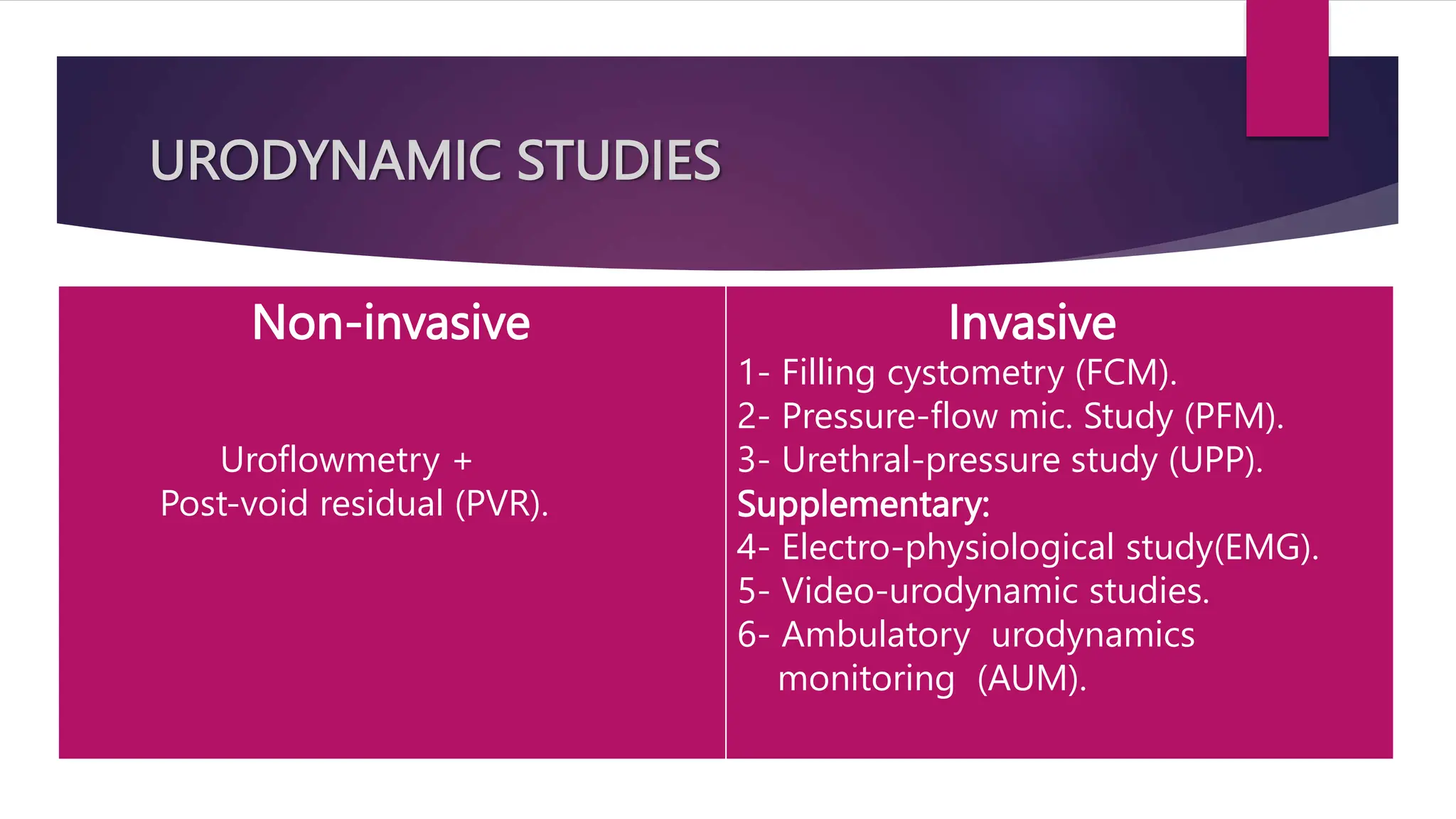
URODYNAMIC STUDIES
Non-invasive
Uroflowmetry +
Post-void residual (PVR).
Invasive
1- Filling cystometry (FCM).
2- Pressure-flow mic. Study (PFM).
3- Urethral-pressure study (UPP).
Supplementary:
4- Electro-physiological study(EMG).
5- Video-urodynamic studies.
6- Ambulatory urodynamics
monitoring (AUM).
URODYNAMIC STUDIES
NON-INVASIVE UDS
Uroflowmetry (Q in mL/s):
 Uroflowmetry is the measurement of the rate of urine flow / time.
 It is an estimate of effectiveness of the act of voiding along with PVR.
 It is the easiest urodynamic test useful as a preliminary or follow-up
investigation of the LUT symptom.
Uroflowmetry (Q in mL/s):
 There’s lack of absolute values defining normal limits.
 Nomograms are required to see the change in flow rates at
different voided volumes.
Nomograms were constructed to provide normal reference
ranges in various age groups.
Uroflowmetry (Q in mL/s):
 There are racial differences described in African and Caucasian women
and Indians for urodynamic parameters.
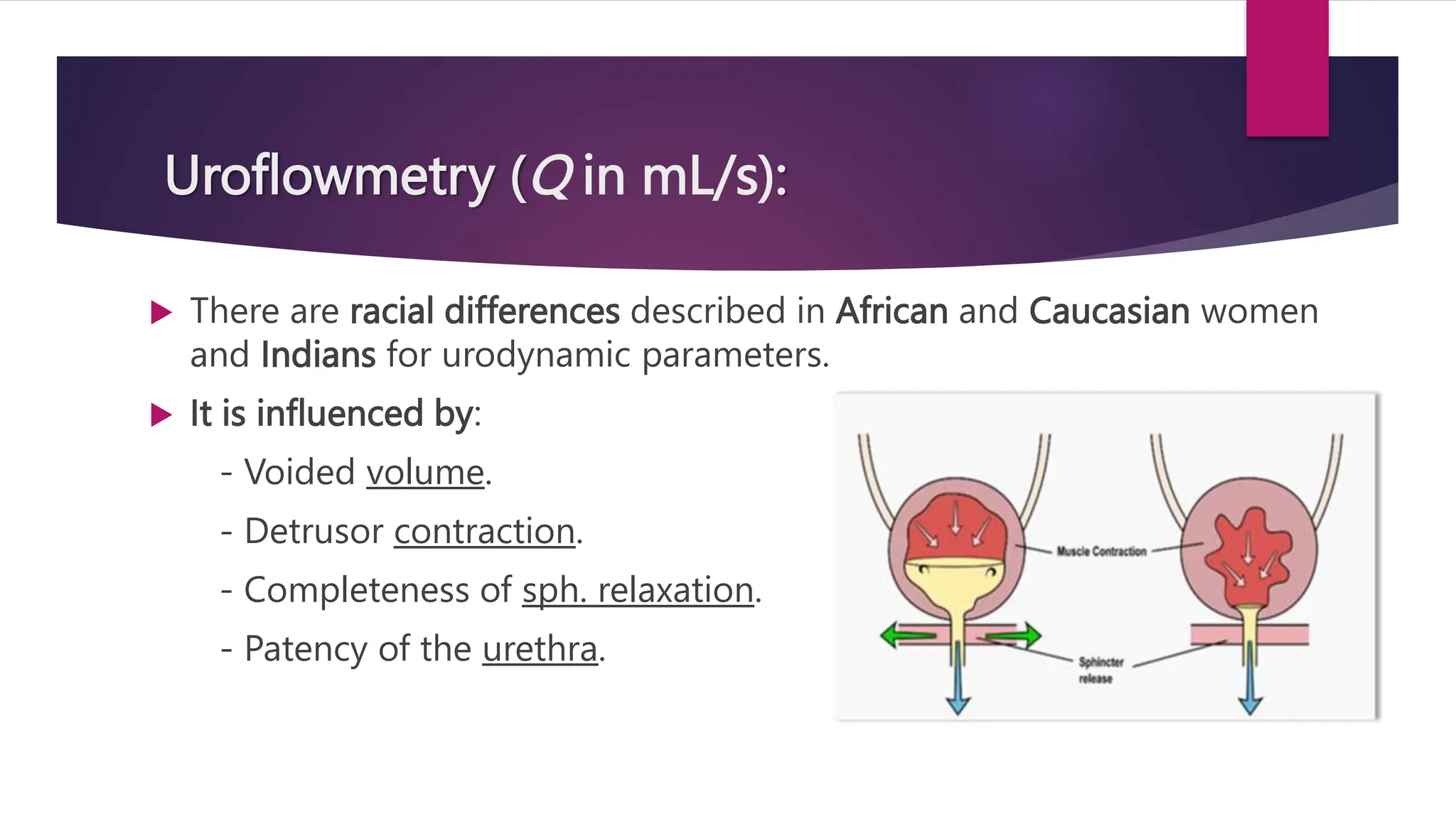
 It is influenced by:
- Voided volume.
- Detrusor contraction.
- Completeness of sph. relaxation.
- Patency of the urethra.
Uroflowmetry (Q in mL/s): Equipment:
Uroflowmetry (Q in mL/s):
 The patient should be well hydrated with full bladder.
 The study should be performed in privacy and the
patient encouraged to void his normal fashion.
 The voided volume, patient’s position, method and rate
of bladder filling, and type of fluid should be recorded.
Uroflowmetry (Q in mL/s):
 Variables during uroflowmetry:
- Flow pattern. -Voided volume.
- Maximum flow rate ( Qmax ).
- Average flow rate ( Qmean).
- Flow time. - Time to maximum flow.
- Voiding time.
Uroflowmetry (Qura in mL/s): Reports:
The test reports are
customizable. They can include
items like the main patient
data, the test graphs, summary
of test results, nomograms and
comments.
Uroflowmetry (Q in mL/s):
 Urine flow is defined as continuous or intermittent.
 The continuous flow curve described as:
- Smooth arc, bell-shaped curve without any
rapid changes in amplitude.
OR - Fluctuating when there are multiple peaks during
period of continuous urine flow.
NORMAL UROFLOW CURVE
Uroflowmetry (Q in mL/s):
NORMAL UROFLOW CURVE
Uroflowmetry (Q in mL/s):
Flow pattern
(compressive)
(constrictive)
Uroflowmetry (Q in mL/s):
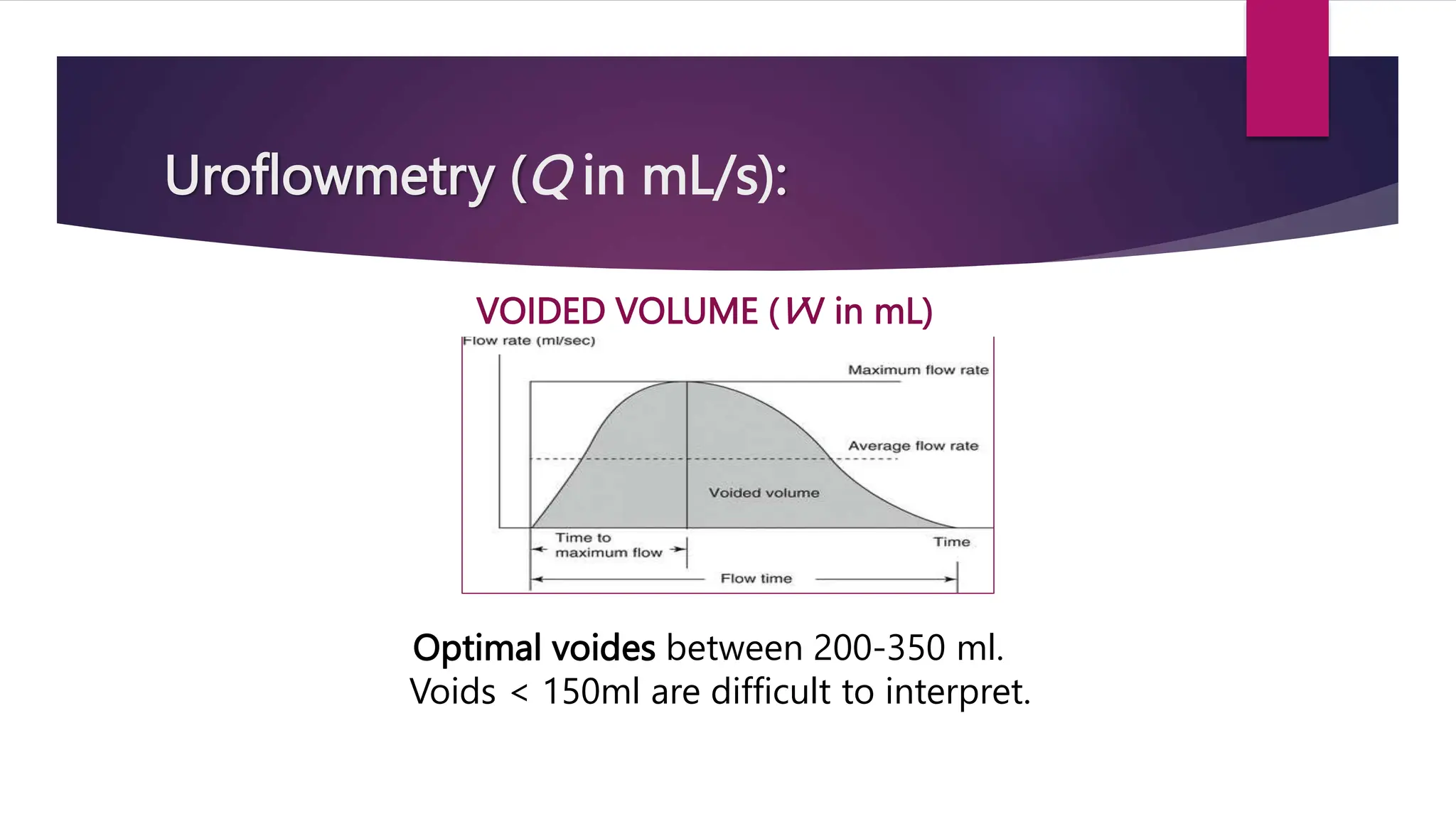
VOIDED VOLUME (VV in mL)
Optimal voides between 200-350 ml.
Voids < 150ml are difficult to interpret.
Uroflowmetry (Q in mL/s):
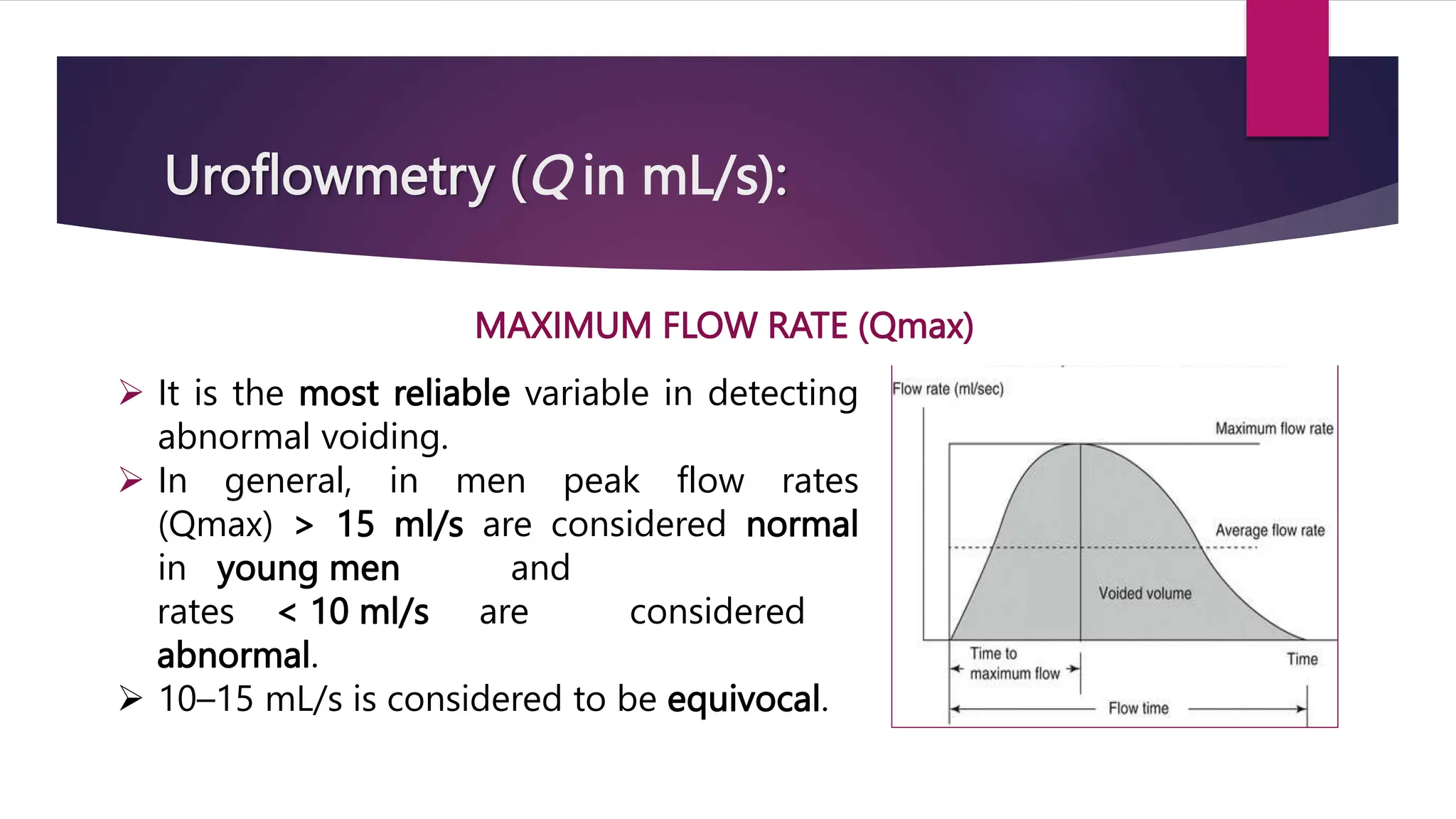
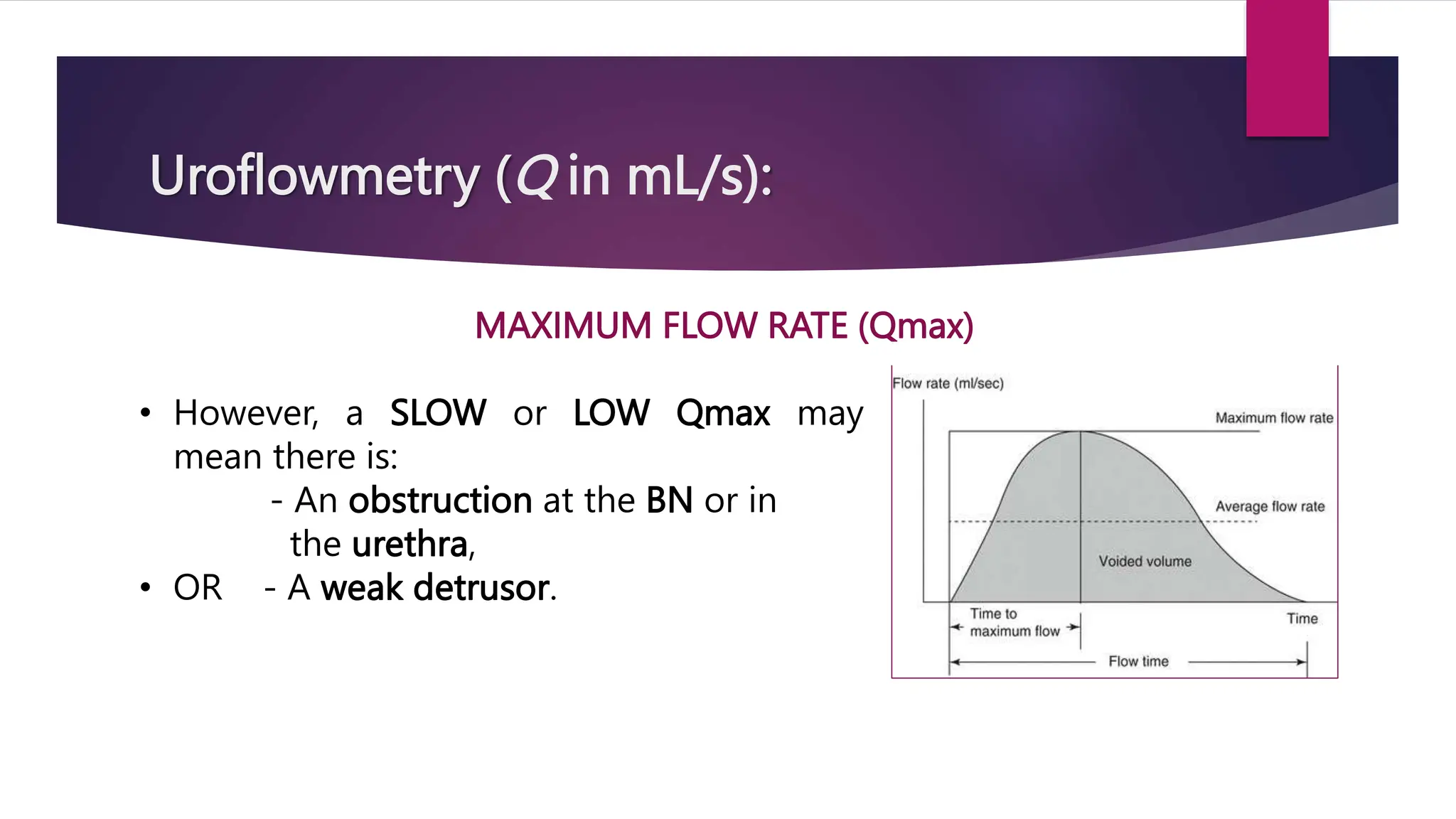
MAXIMUM FLOW RATE (Qmax)
 It is the most reliable variable in detecting
abnormal voiding.
 In general, in men peak flow rates
(Qmax) > 15 ml/s are considered normal
in young men and
rates < 10 ml/s are considered
abnormal.
 10–15 mL/s is considered to be equivocal.
Uroflowmetry (Q in mL/s):
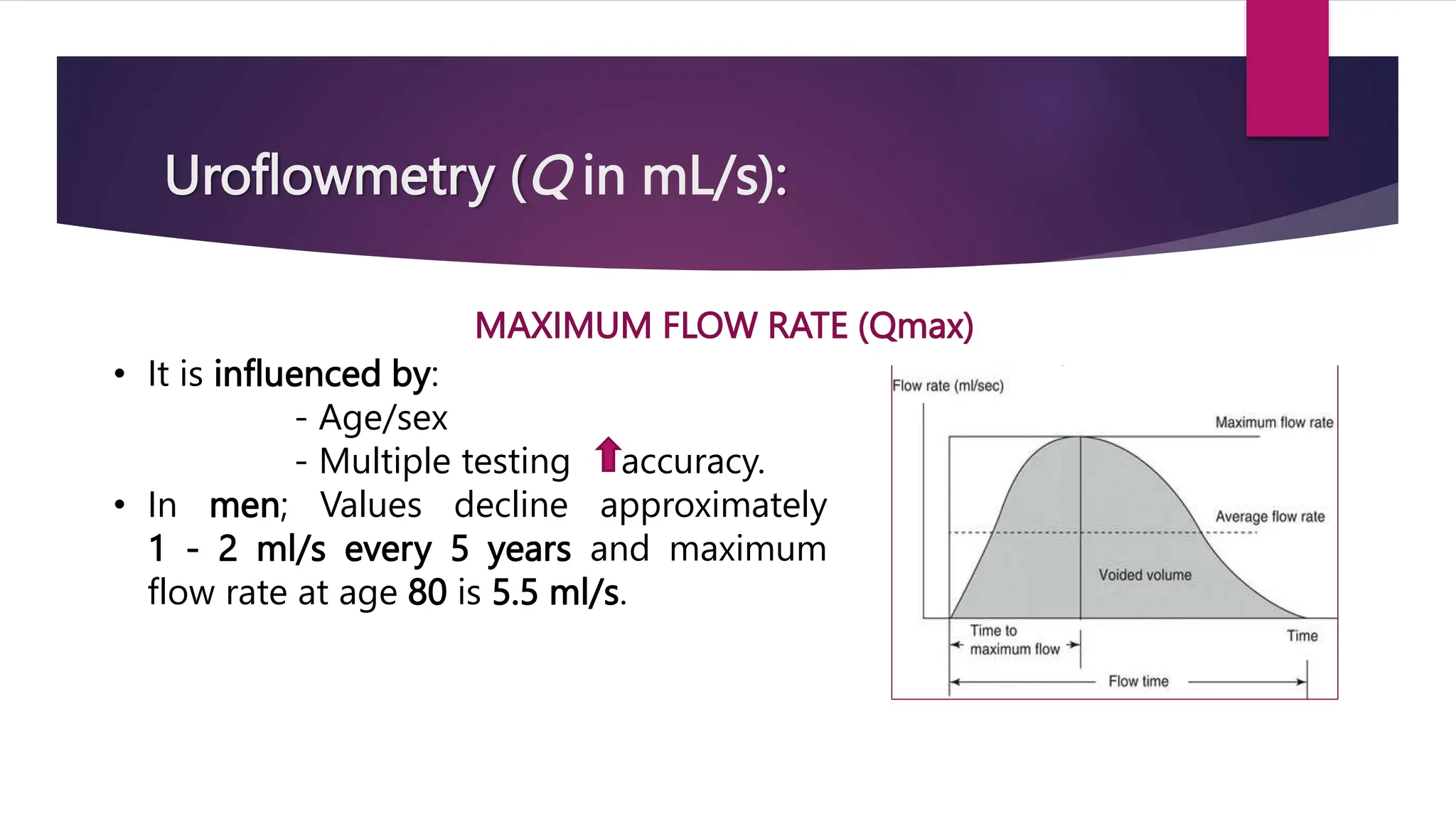
MAXIMUM FLOW RATE (Qmax)
• It is influenced by:
- Age/sex
- Multiple testing accuracy.
• In men; Values decline approximately
1 - 2 ml/s every 5 years and maximum
flow rate at age 80 is 5.5 ml/s.
Uroflowmetry (Q in mL/s):
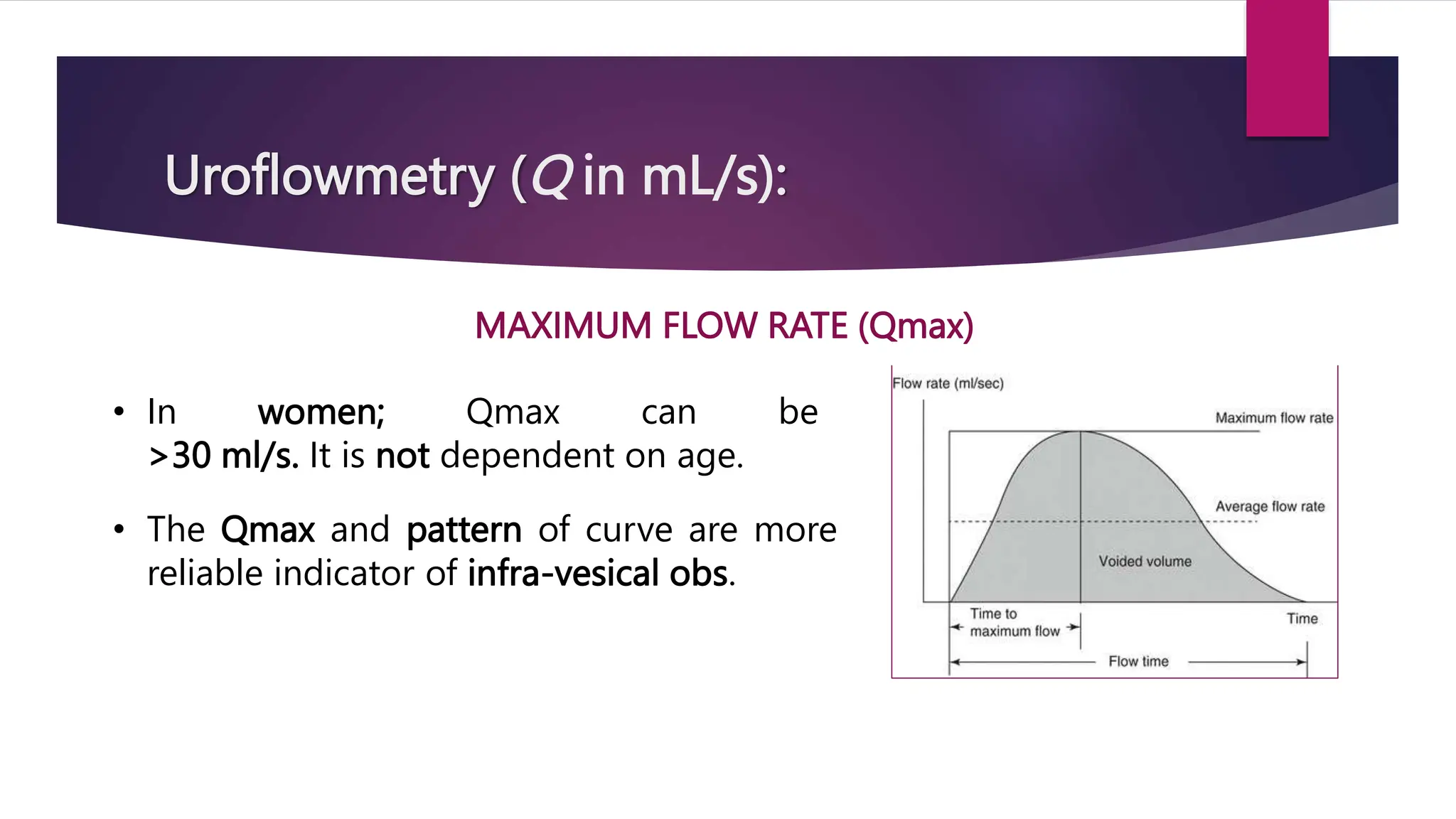
MAXIMUM FLOW RATE (Qmax)
• The Qmax and pattern of curve are more
reliable indicator of infra-vesical obs.
• In women; Qmax can be
>30 ml/s. It is not dependent on age.
Uroflowmetry (Q in mL/s):
MAXIMUM FLOW RATE (Qmax)
• However, a SLOW or LOW Qmax may
mean there is:
- An obstruction at the BN or in
the urethra,
• OR - A weak detrusor.
Uroflowmetry (Q in mL/s):
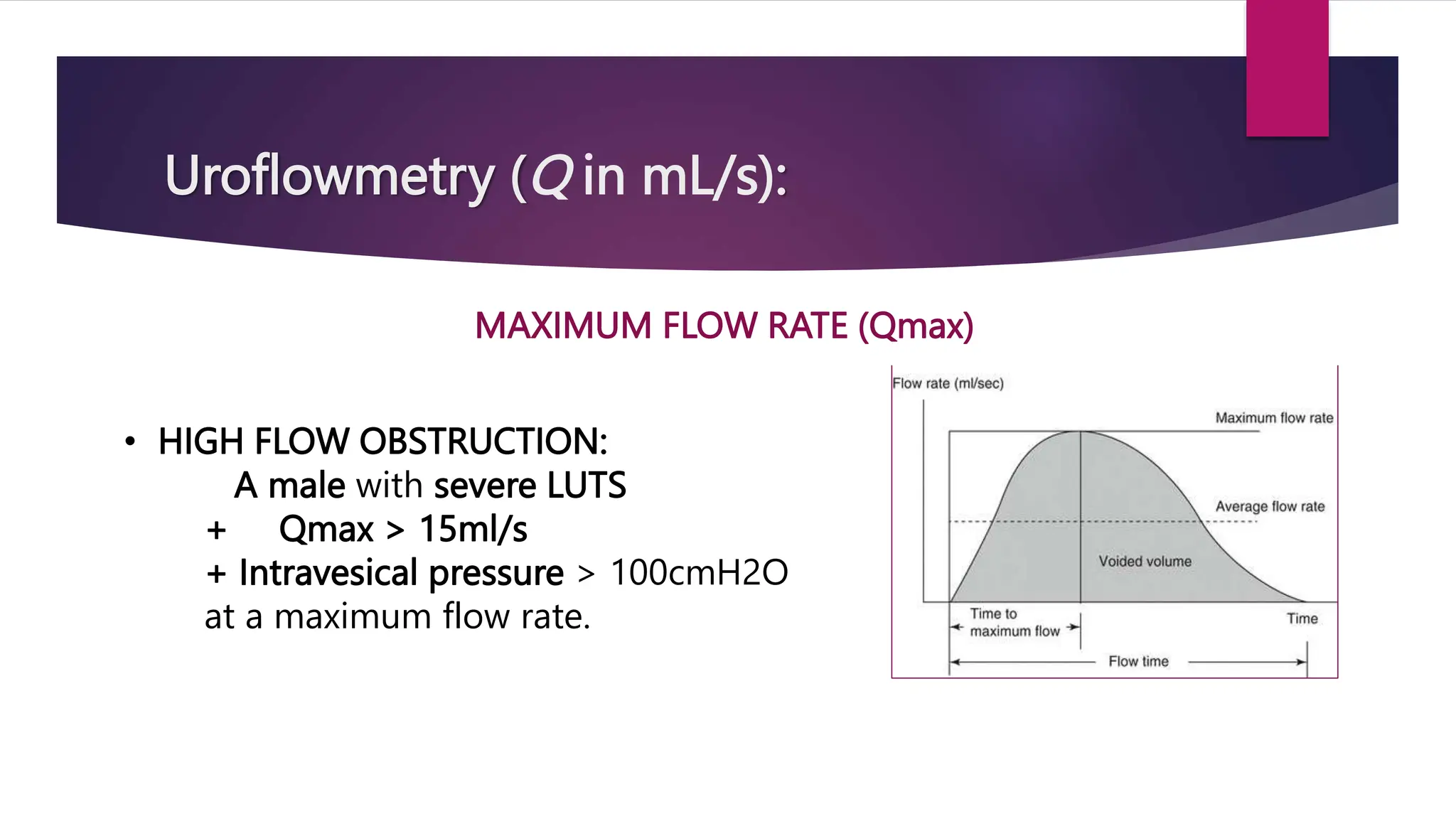
MAXIMUM FLOW RATE (Qmax)
• HIGH FLOW OBSTRUCTION:
A male with severe LUTS
+ Qmax > 15ml/s
+ Intravesical pressure > 100cmH2O
at a maximum flow rate.
Uroflowmetry (Q in mL/s):
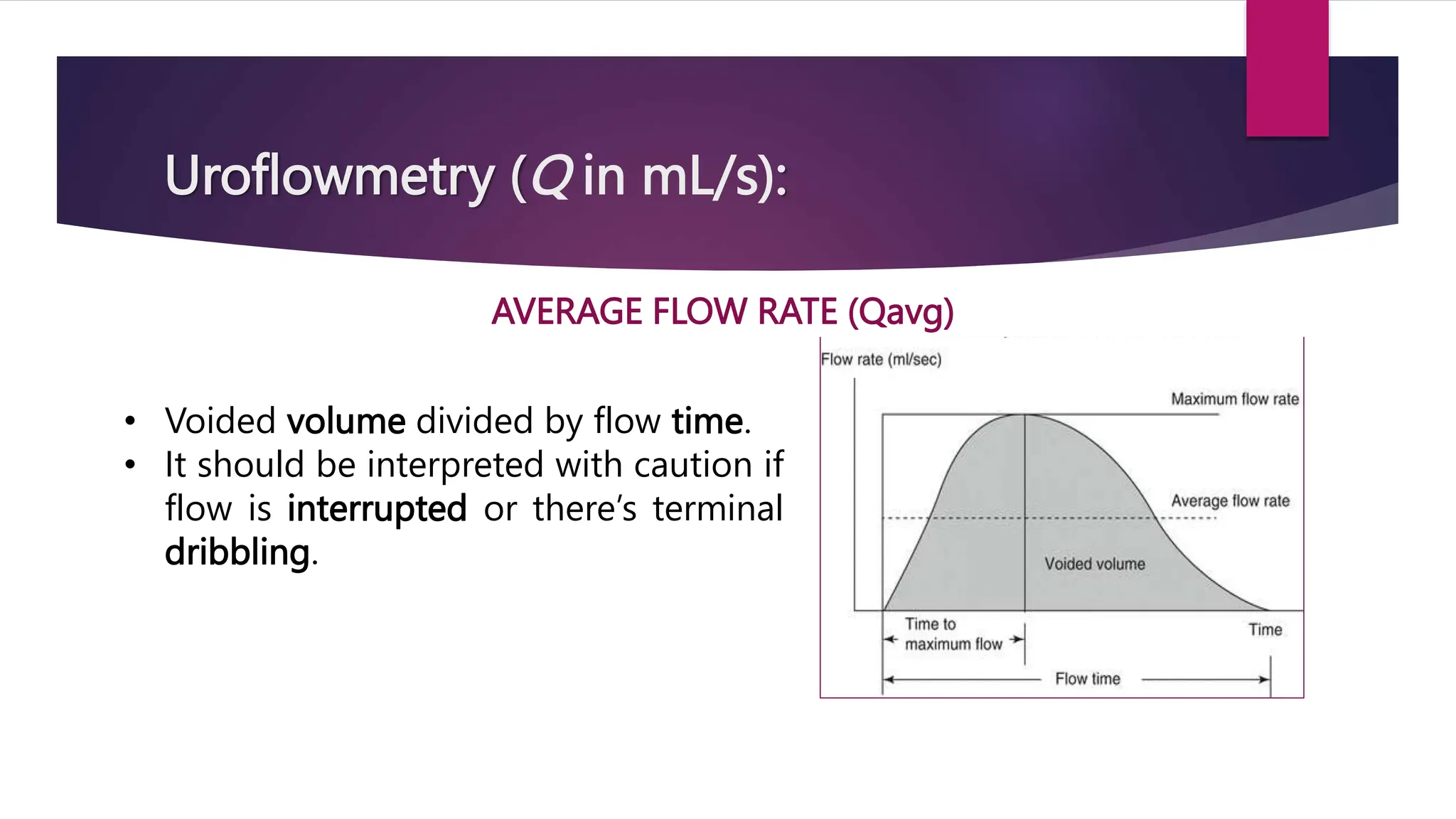
AVERAGE FLOW RATE (Qavg)
• Voided volume divided by flow time.
• It should be interpreted with caution if
flow is interrupted or there’s terminal
dribbling.
Uroflowmetry (Q in mL/s):
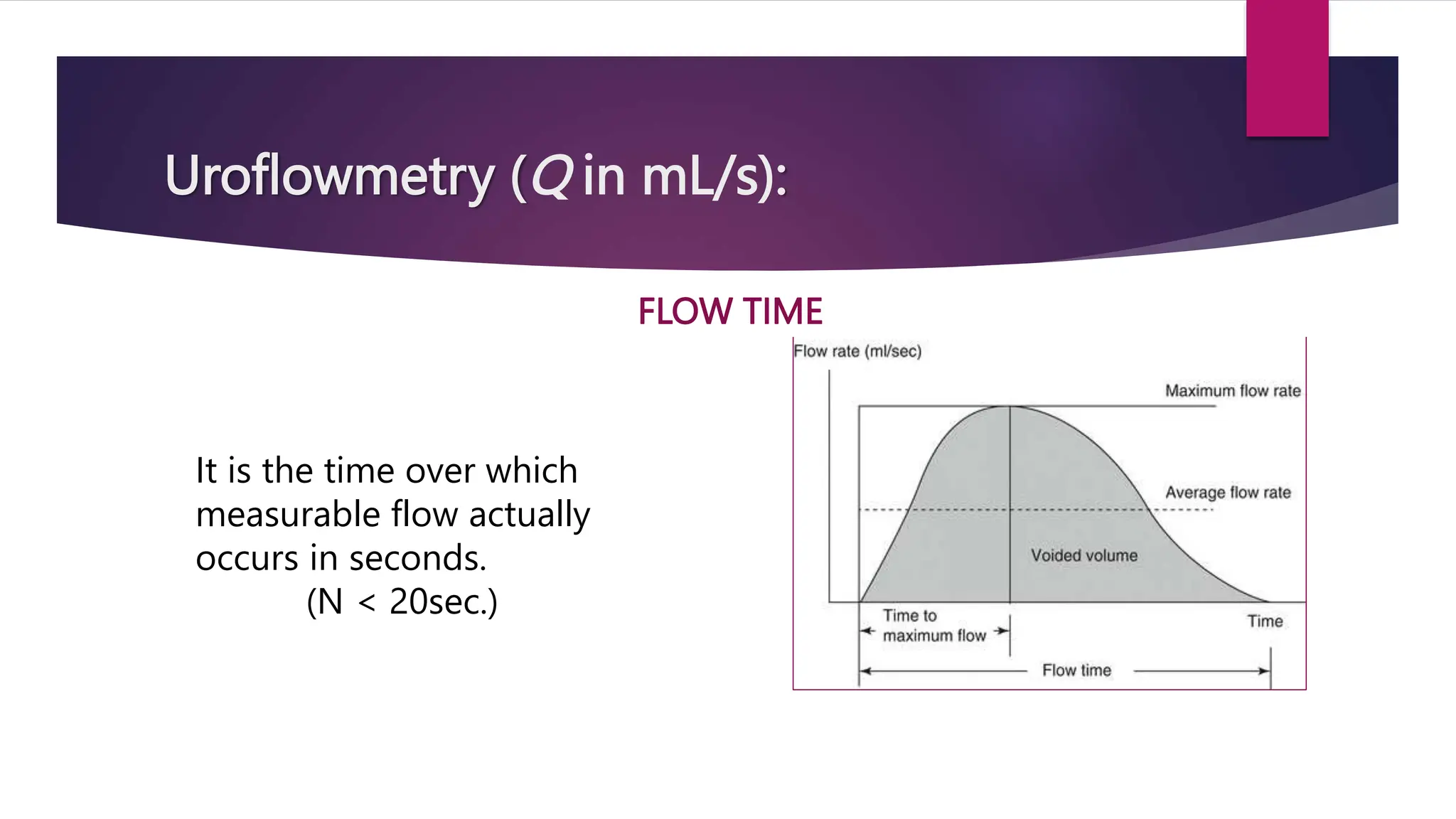
FLOW TIME
It is the time over which
measurable flow actually
occurs in seconds.
(N < 20sec.)
Uroflowmetry (Q in mL/s):
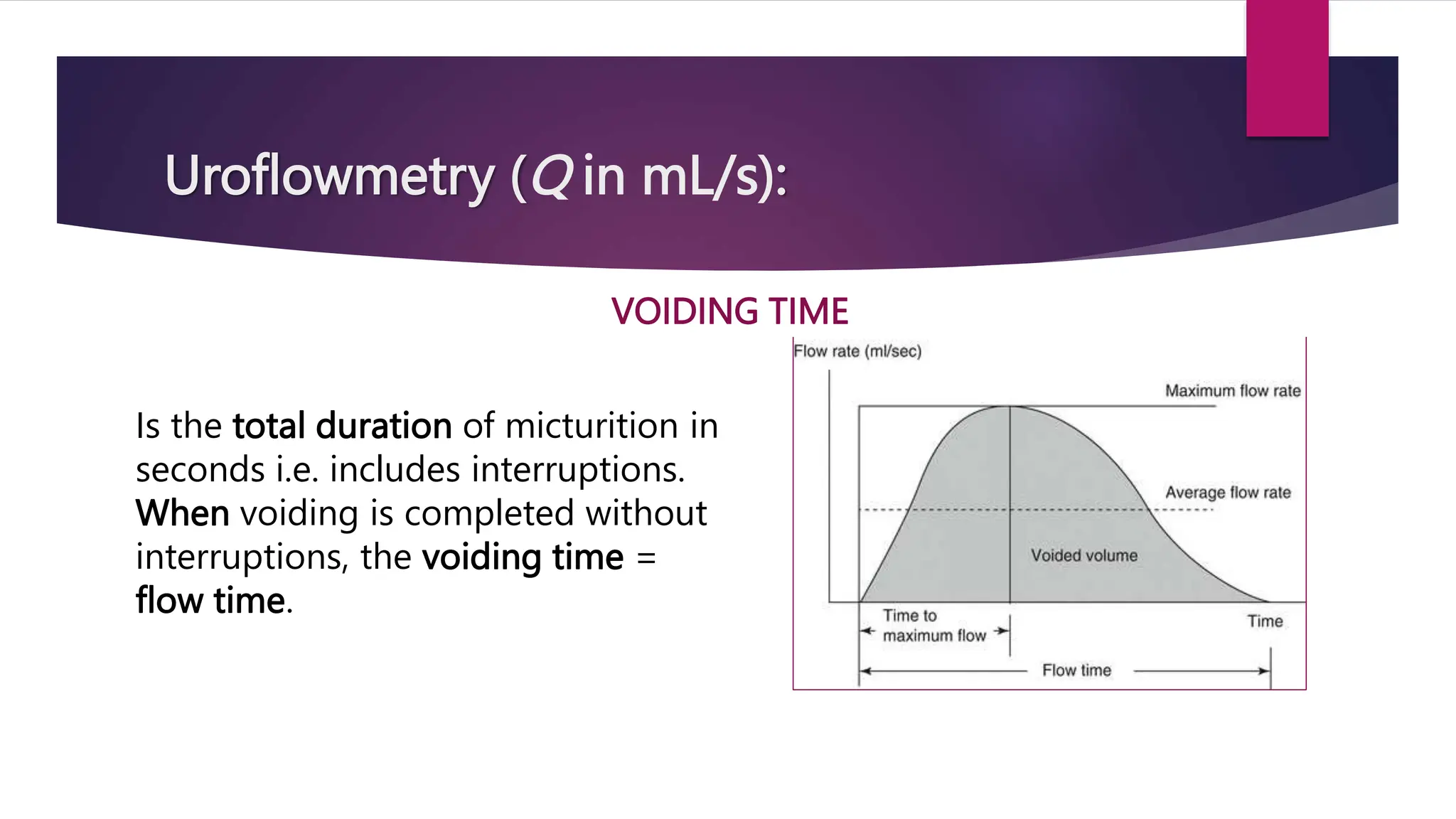
VOIDING TIME
Is the total duration of micturition in
seconds i.e. includes interruptions.
When voiding is completed without
interruptions, the voiding time =
flow time.
Uroflowmetry (Q in mL/s):
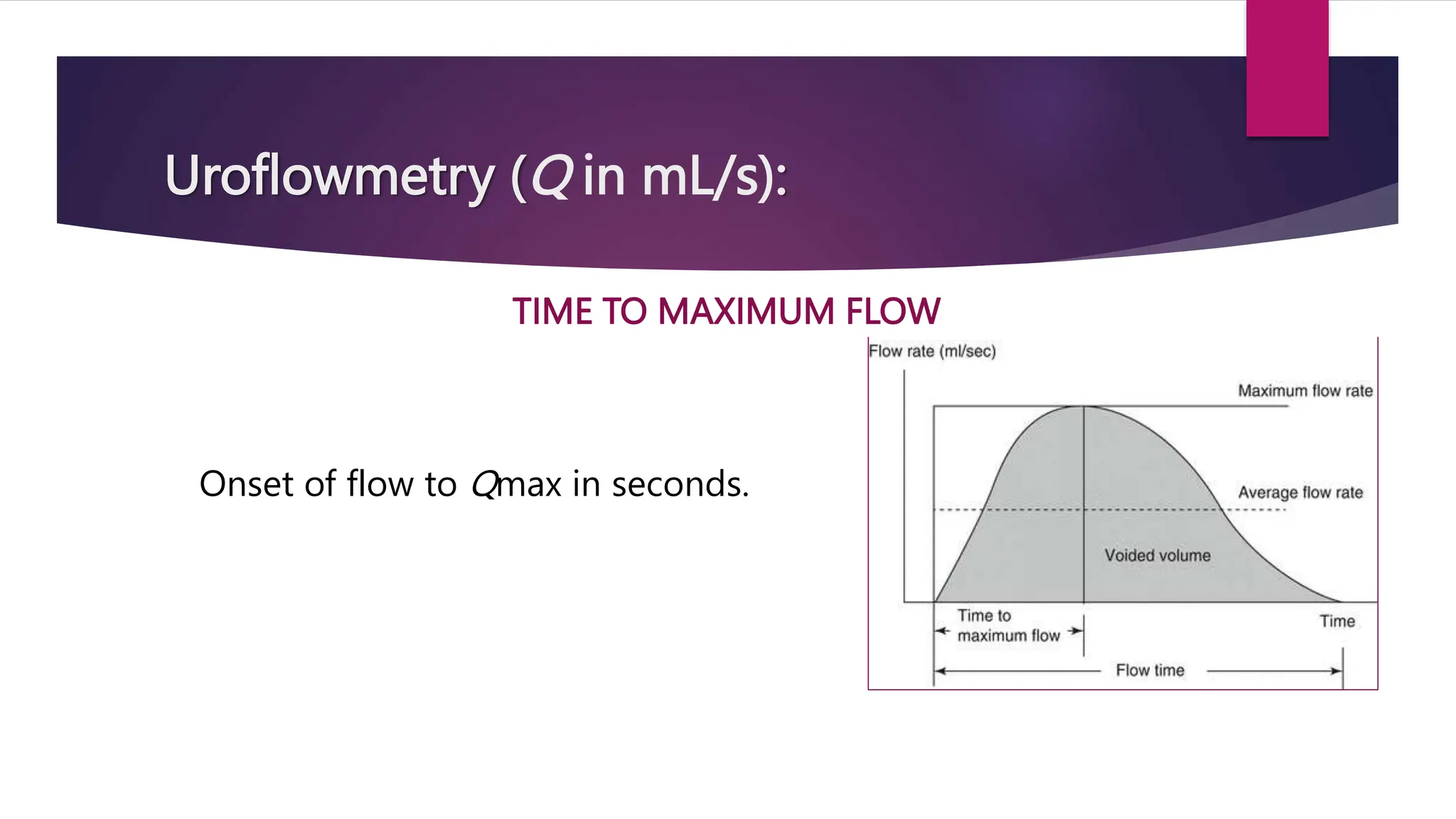
TIME TO MAXIMUM FLOW
Onset of flow to Qmax in seconds.
Uroflowmetry (Q in mL/s):
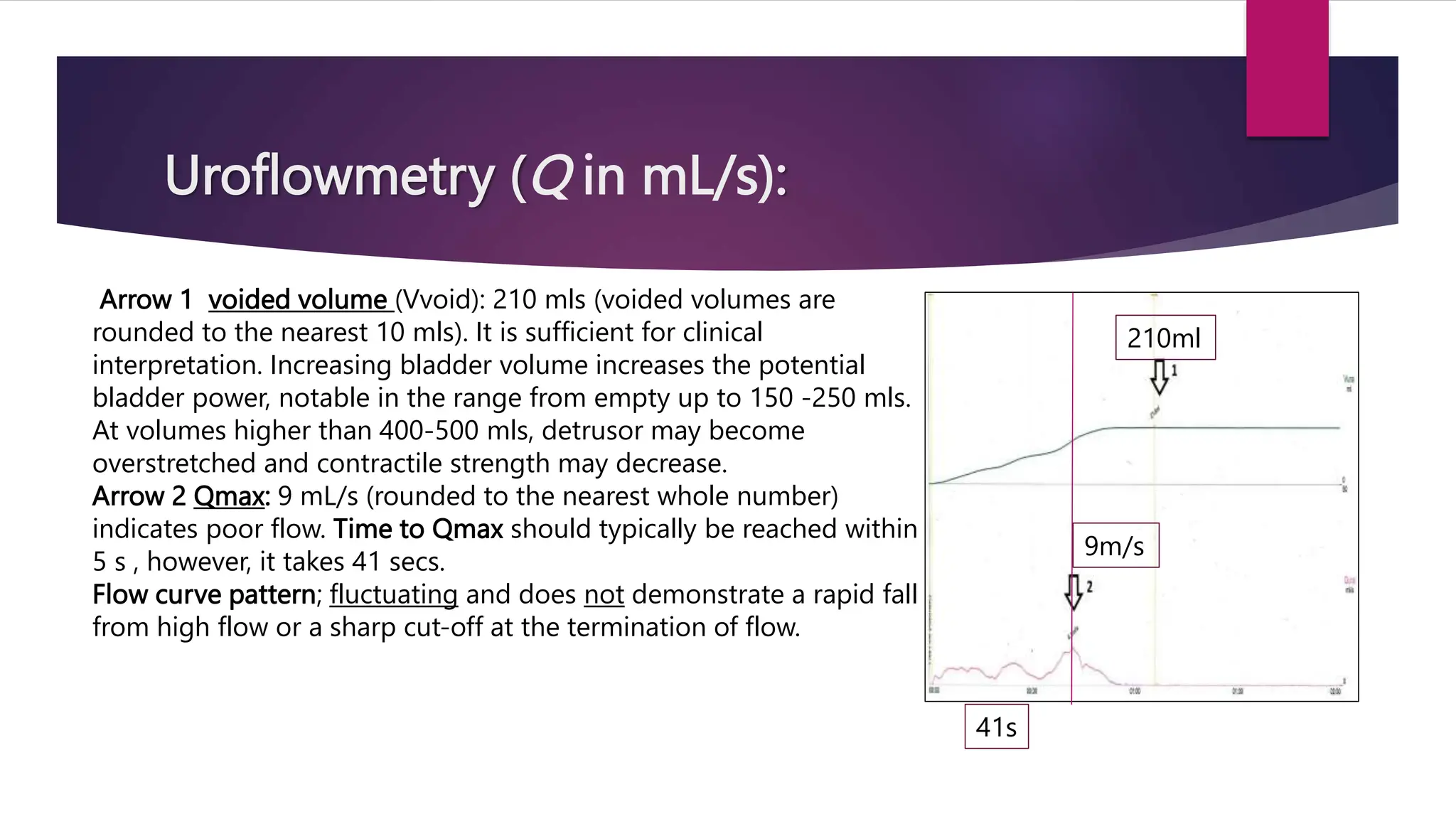
Arrow 1 voided volume (Vvoid): 210 mls (voided volumes are
rounded to the nearest 10 mls). It is sufficient for clinical
interpretation. Increasing bladder volume increases the potential
bladder power, notable in the range from empty up to 150 -250 mls.
At volumes higher than 400-500 mls, detrusor may become
overstretched and contractile strength may decrease.
Arrow 2 Qmax: 9 mL/s (rounded to the nearest whole number)
indicates poor flow. Time to Qmax should typically be reached within
5 s , however, it takes 41 secs.
Flow curve pattern; fluctuating and does not demonstrate a rapid fall
from high flow or a sharp cut-off at the termination of flow.
210ml
41s
9m/s
Post-void residual urine (PVR)
Residual urine volume ( PVR ):
 It integrates activity of the bladder and outlet during emptying.
 Measured directly by bl. catheterization or
estimated by pelvic U/S ex.
 What is considered normal PVR is controversial:
- In adults: a value < 25ml is considered normal.
- PVR > 100ml warrants careful surveillance and/or
treatment
Residual urine volume ( PVR ):
- In infants: PVR volume < 10% of the max. bl. vol. is
considered normal.
 Voided percentage (Void%):
The numerical description of the voiding efficacy (VE)
which is the proportion of bladder content emptied.
Calculation: [vol. voided / vol. voided + PVR] x 100.
Residual urine volume ( PVR ):
Fallacies:
 In female pnts, overestimation of the PVR volume is quite common as the
uterus can be measured as a part of the bladder volume.
Therefore, if U/S-measured PVR volume of female pnts does not
match the clinical signs, directly measuring PVR by
catheterization is necessary.
 Also in patients With ascites or with big ovarian cysts, ultrasound
can show similar errors.
URODYNAMIC STUDIES
INVASIVE UDS
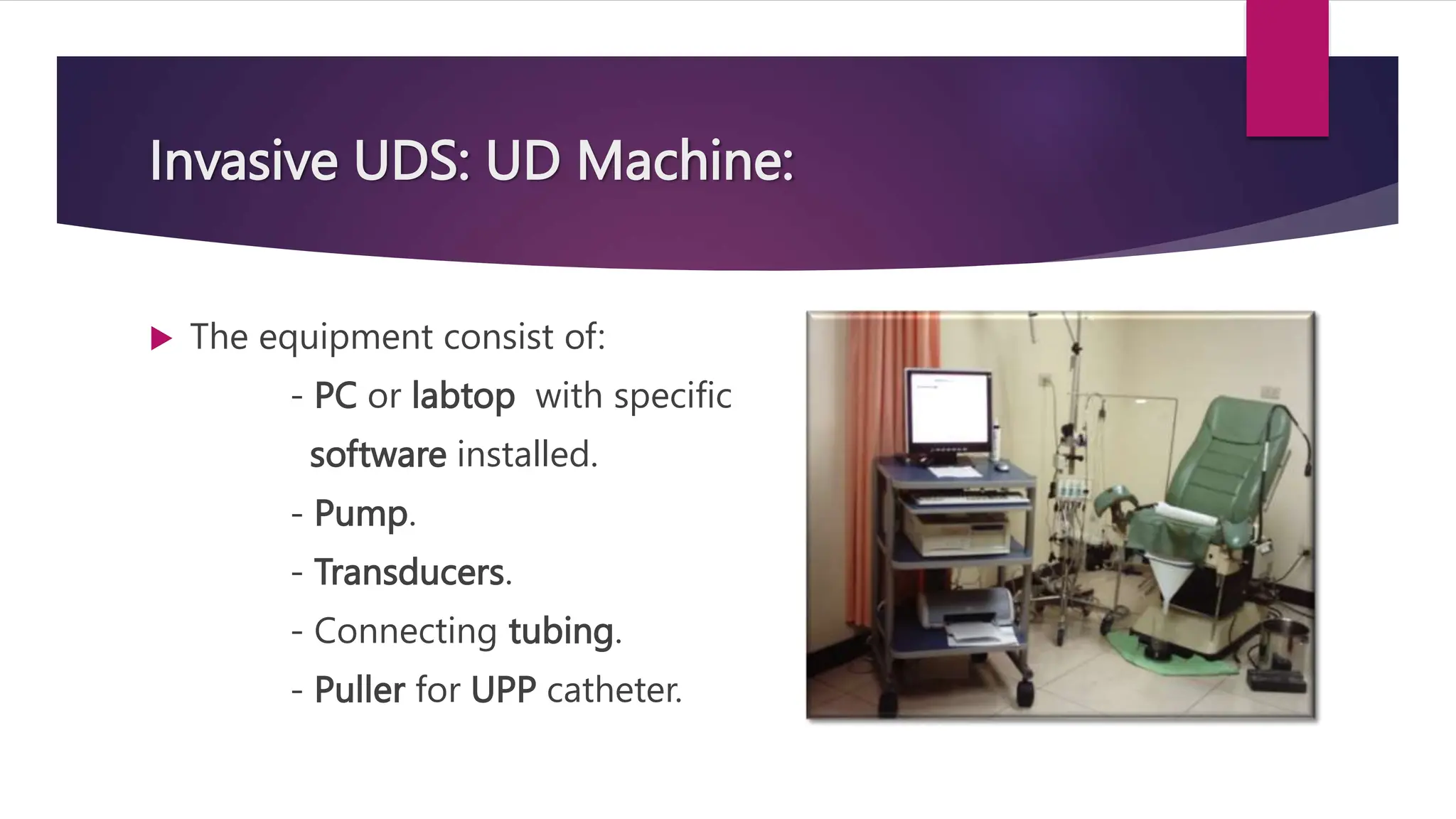
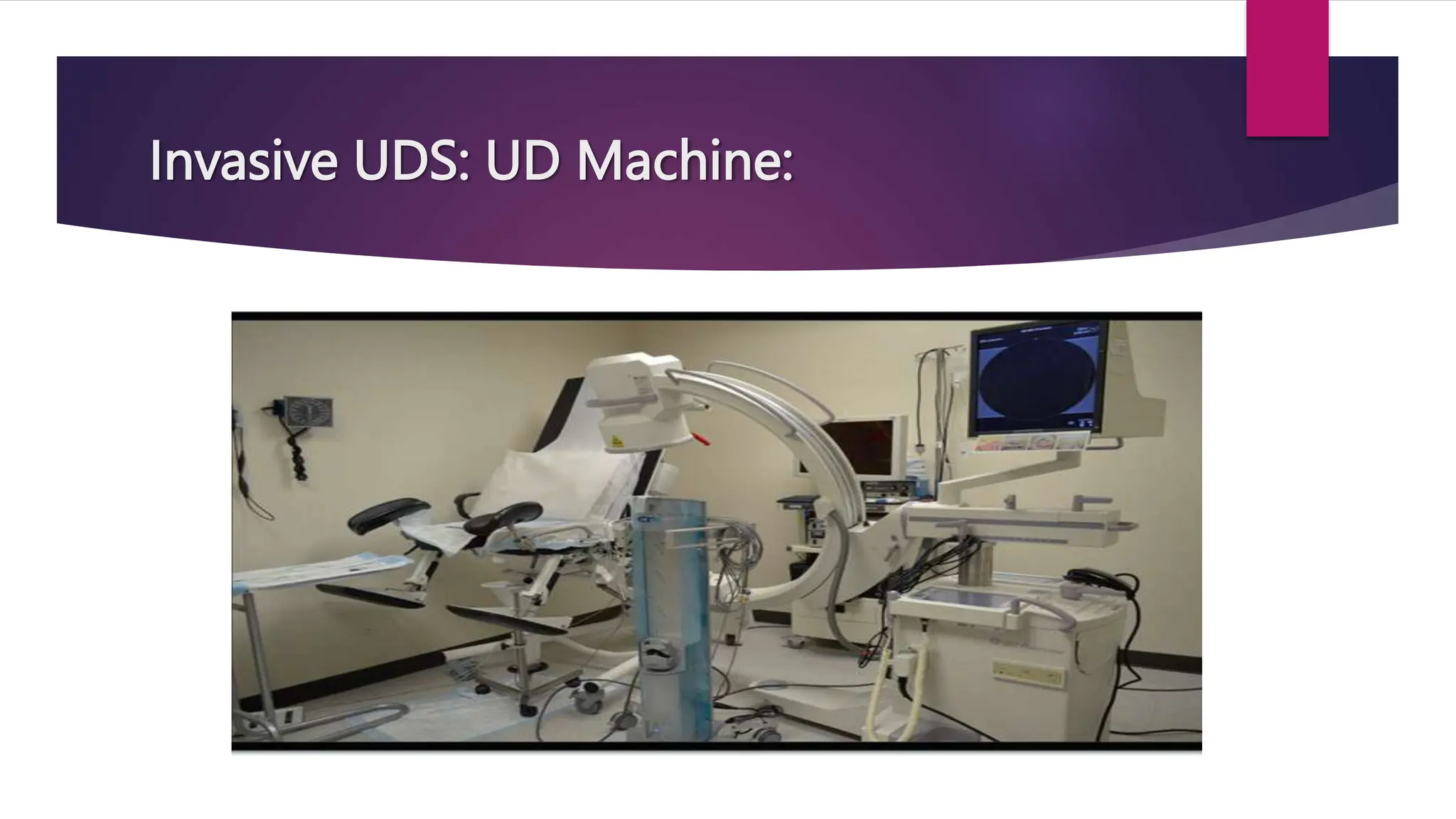
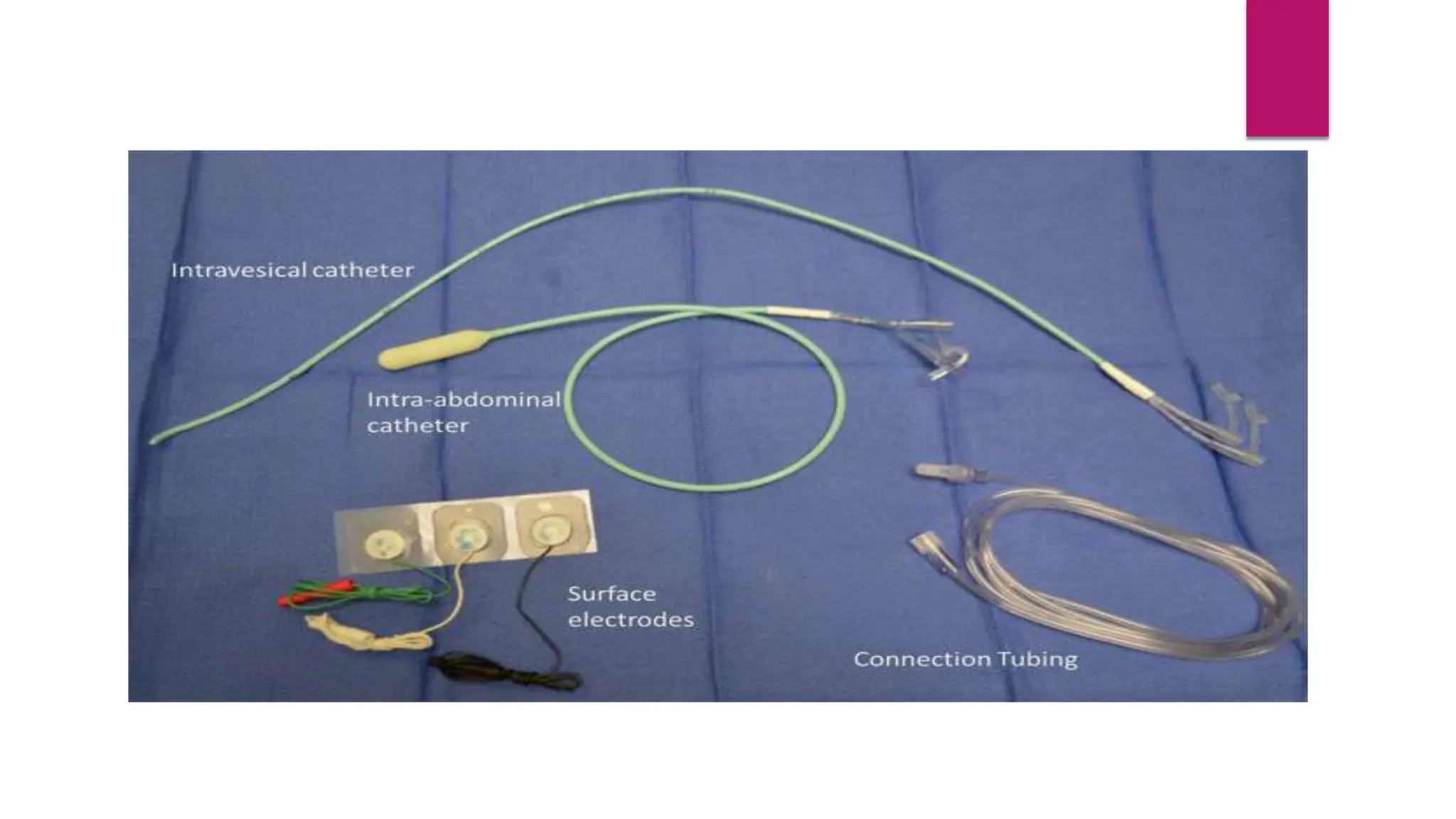
Invasive UDS: UD Machine:
 The equipment consist of:
- PC or labtop with specific
software installed.
- Pump.
- Transducers.
- Connecting tubing.
- Puller for UPP catheter.
Invasive UDS: UD Machine:
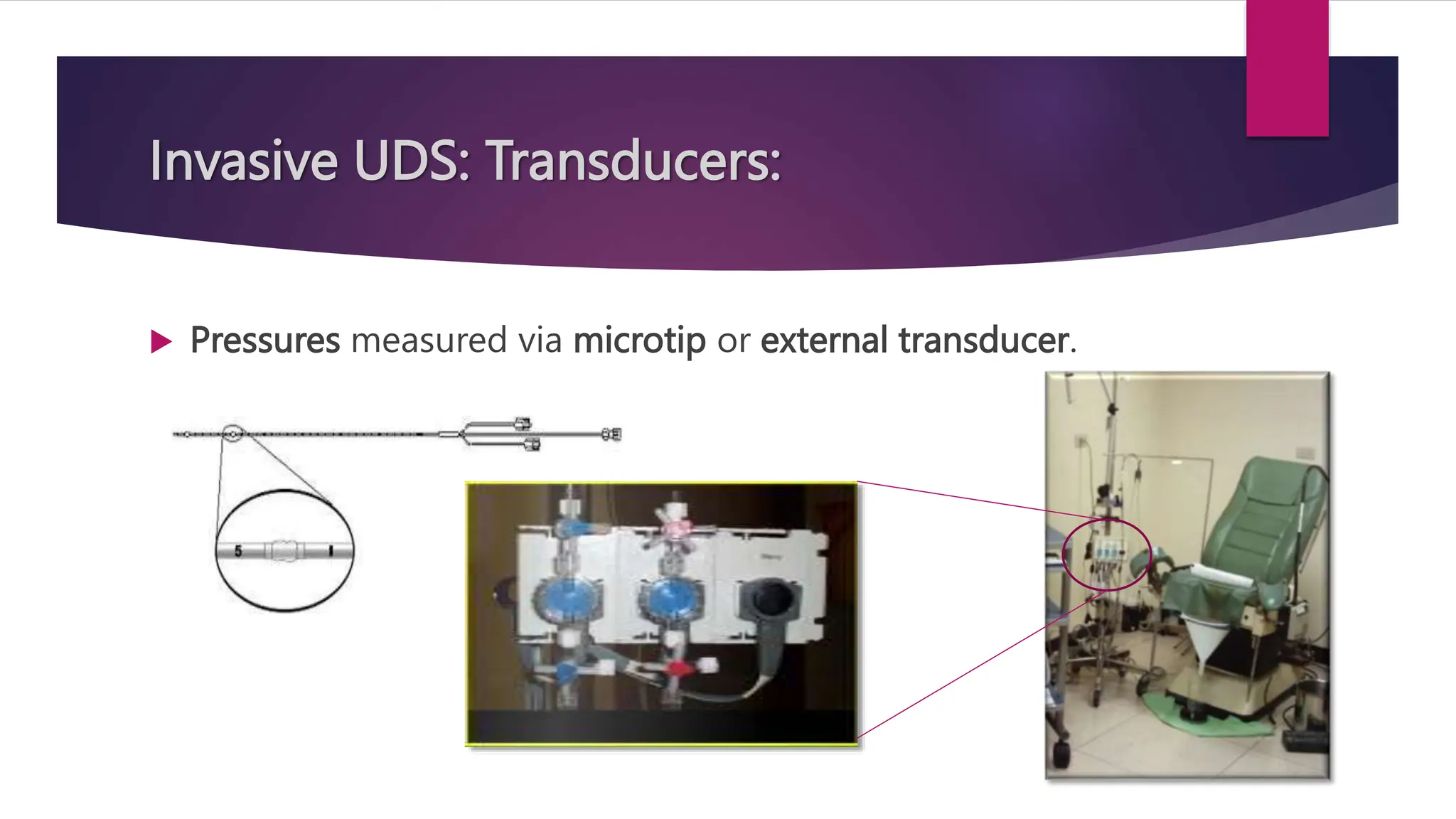
Invasive UDS: Transducers:
 Pressures measured via microtip or external transducer.
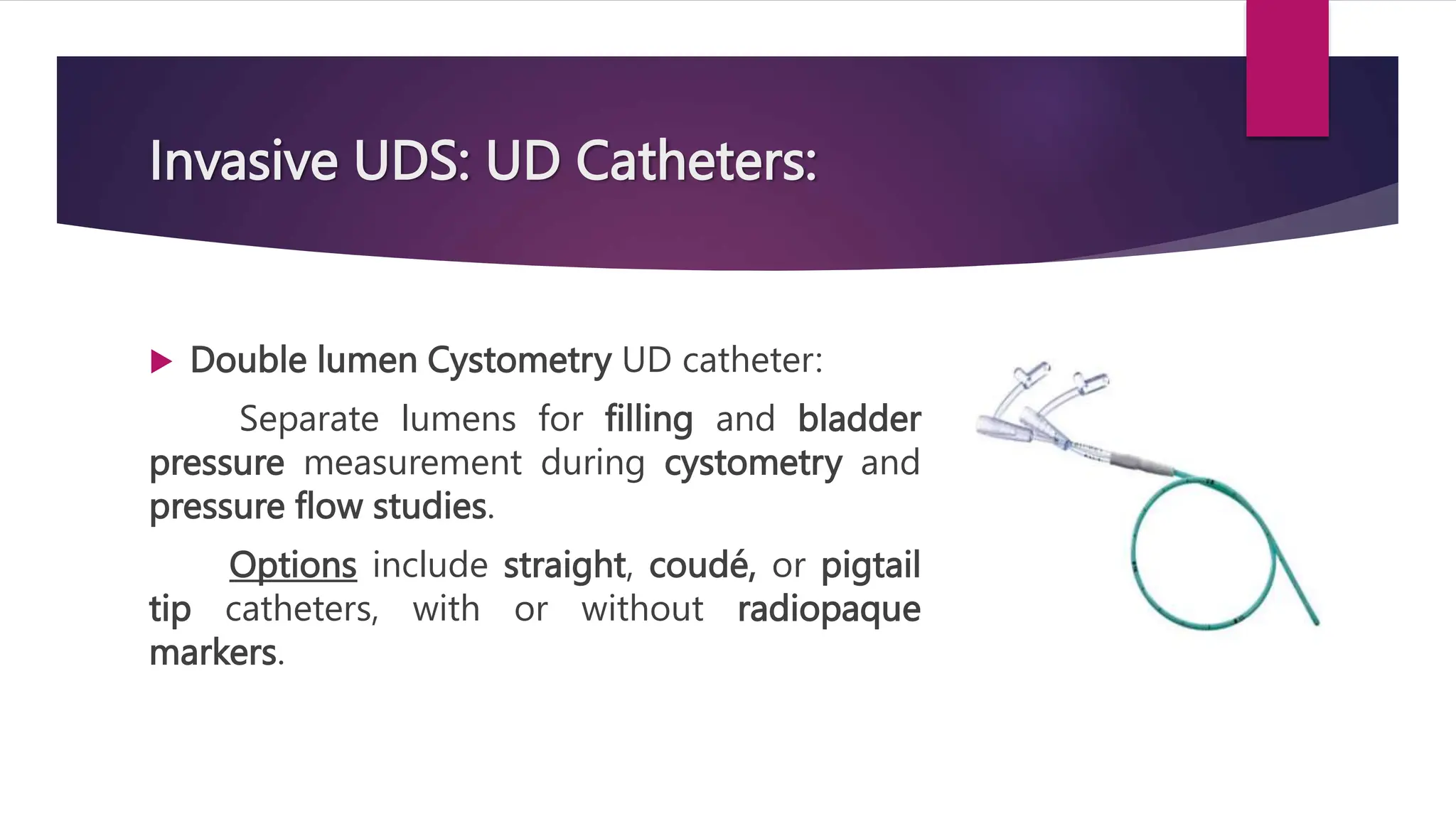
Invasive UDS: UD Catheters:
 Double lumen Cystometry UD catheter:
Separate lumens for filling and bladder
pressure measurement during cystometry and
pressure flow studies.
Options include straight, coudé, or pigtail
tip catheters, with or without radiopaque
markers.
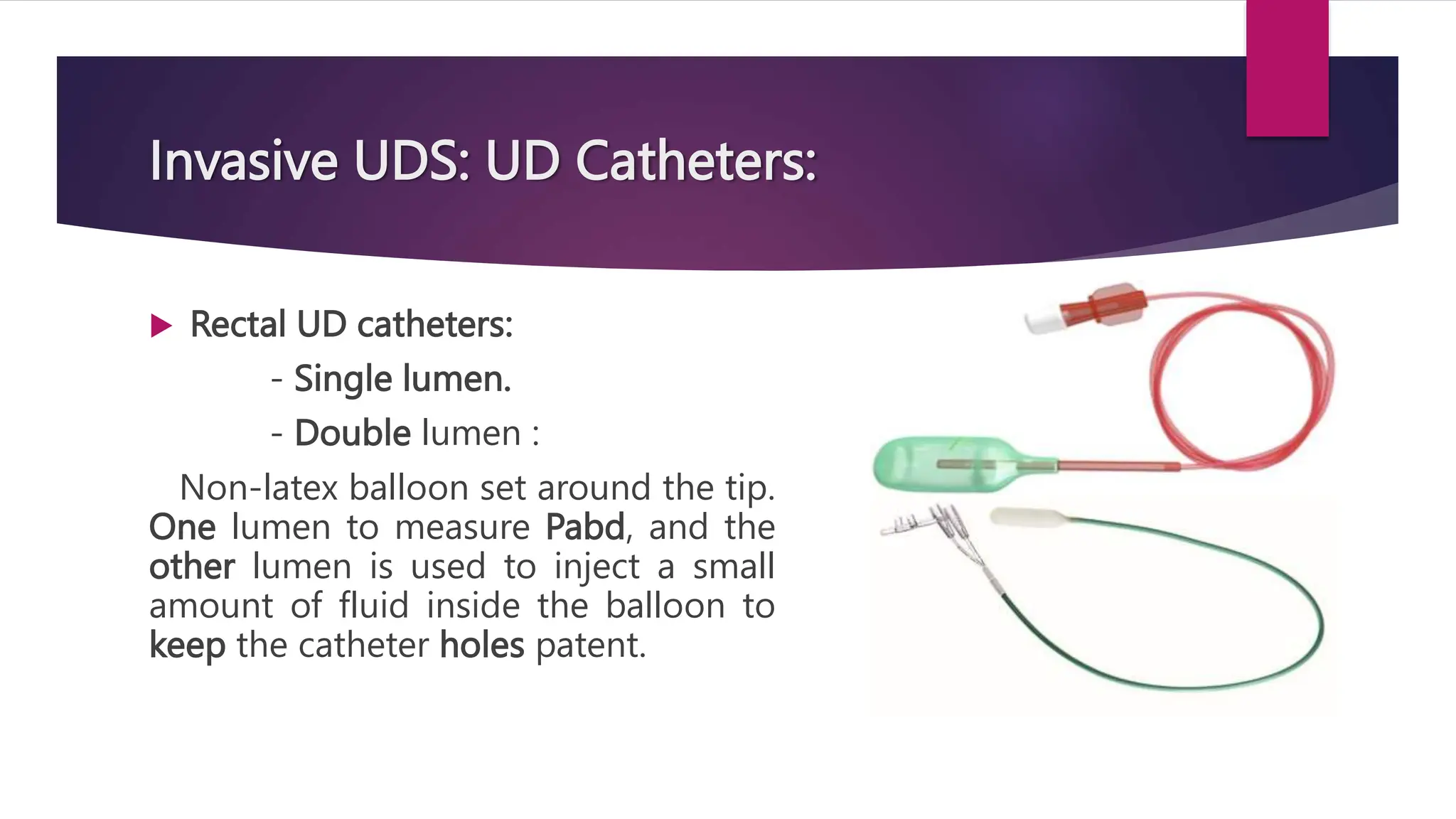
Invasive UDS: UD Catheters:
 Rectal UD catheters:
- Single lumen.
- Double lumen :
Non-latex balloon set around the tip.
One lumen to measure Pabd, and the
other lumen is used to inject a small
amount of fluid inside the balloon to
keep the catheter holes patent.
Invasive UDS: UD Catheters:
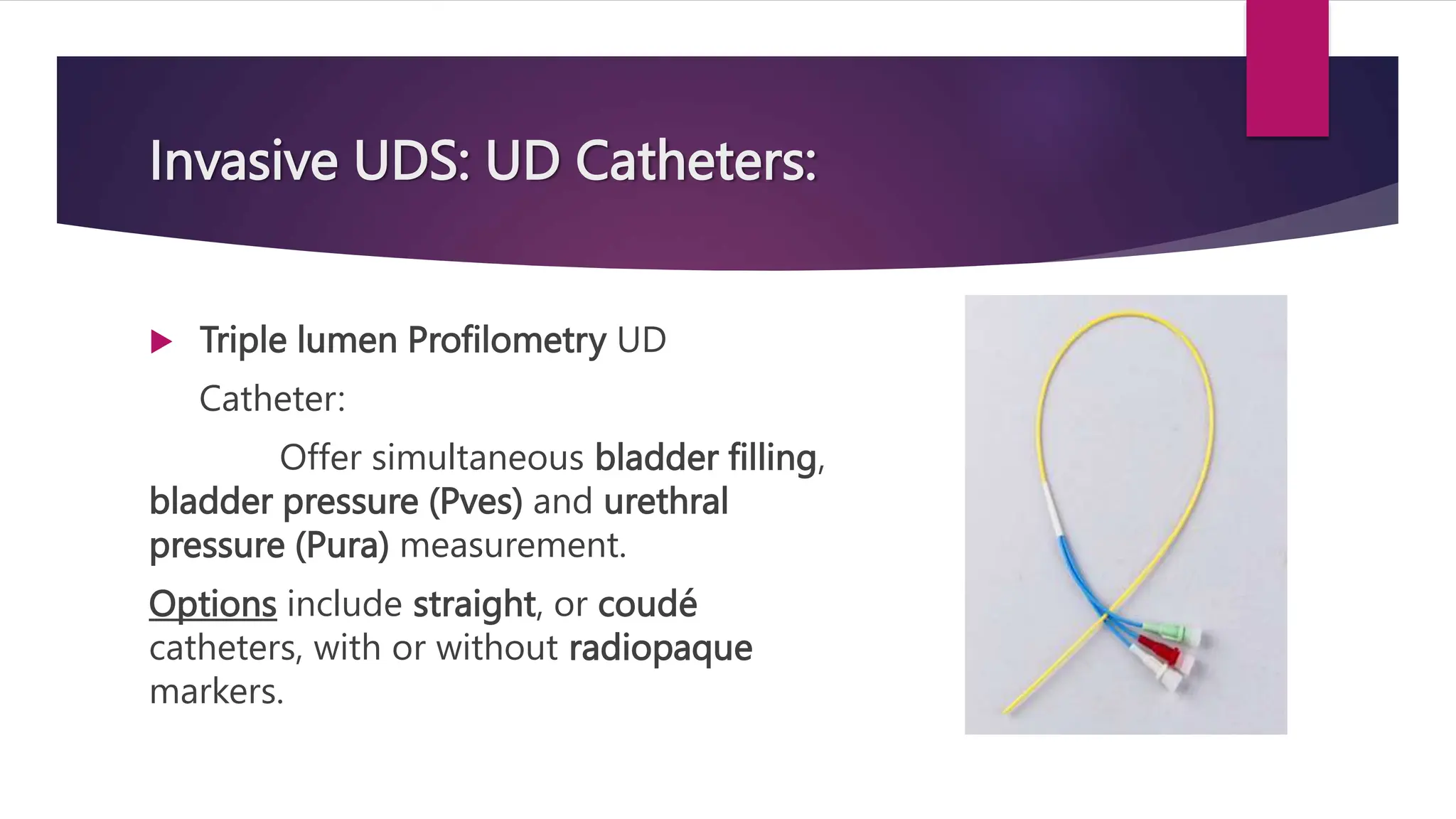
 Triple lumen Profilometry UD
Catheter:
Offer simultaneous bladder filling,
bladder pressure (Pves) and urethral
pressure (Pura) measurement.
Options include straight, or coudé
catheters, with or without radiopaque
markers.
Invasive UDS: UD Catheters:
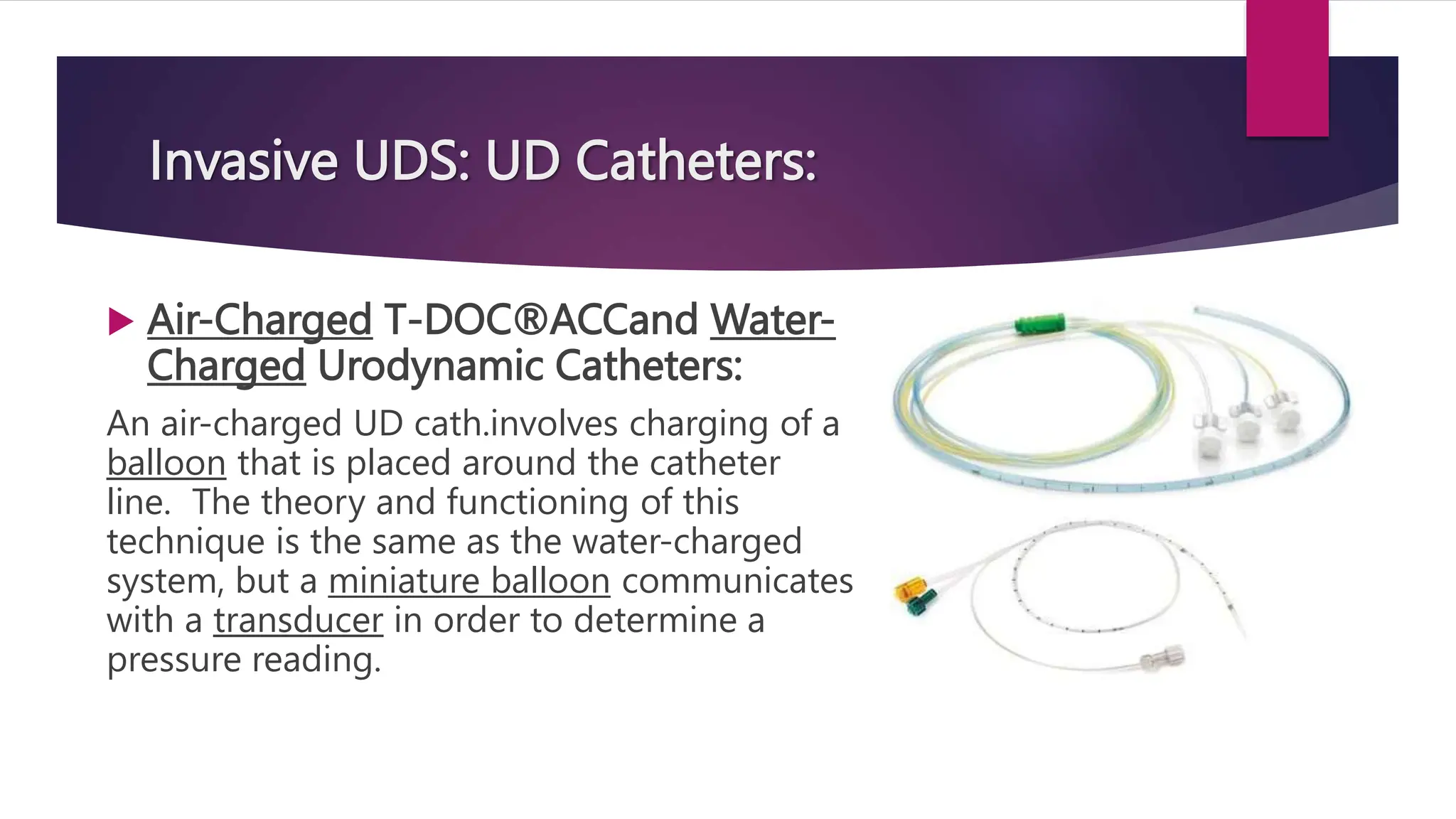
 Air-Charged T-DOC®ACCand Water-
Charged Urodynamic Catheters:
An air-charged UD cath.involves charging of a
balloon that is placed around the catheter
line. The theory and functioning of this
technique is the same as the water-charged
system, but a miniature balloon communicates
with a transducer in order to determine a
pressure reading.
Invasive UDS: UD Catheters:
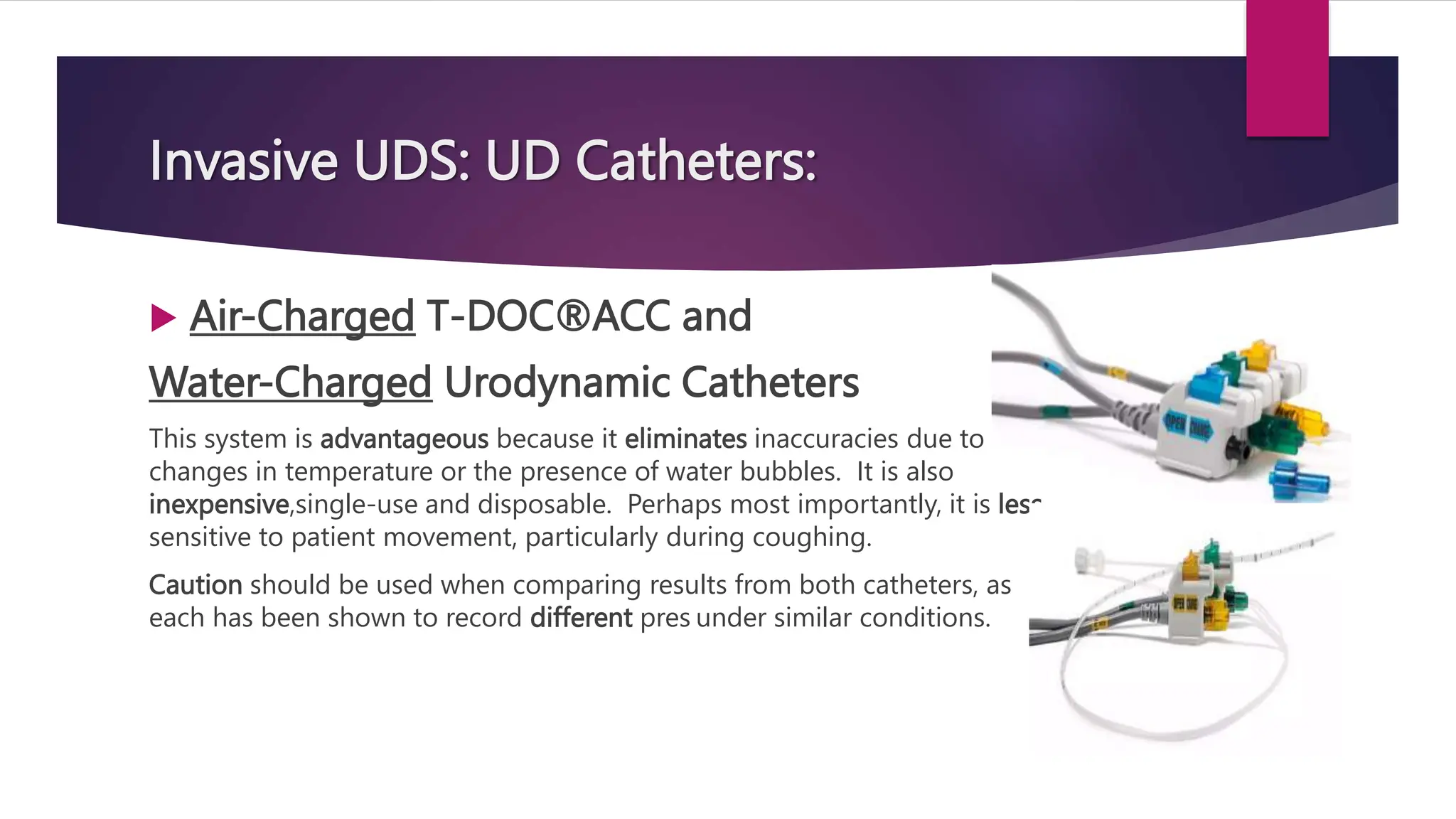
 Air-Charged T-DOC®ACC and
Water-Charged Urodynamic Catheters
This system is advantageous because it eliminates inaccuracies due to
changes in temperature or the presence of water bubbles. It is also
inexpensive,single-use and disposable. Perhaps most importantly, it is less
sensitive to patient movement, particularly during coughing.
Caution should be used when comparing results from both catheters, as
each has been shown to record different pres under similar conditions.
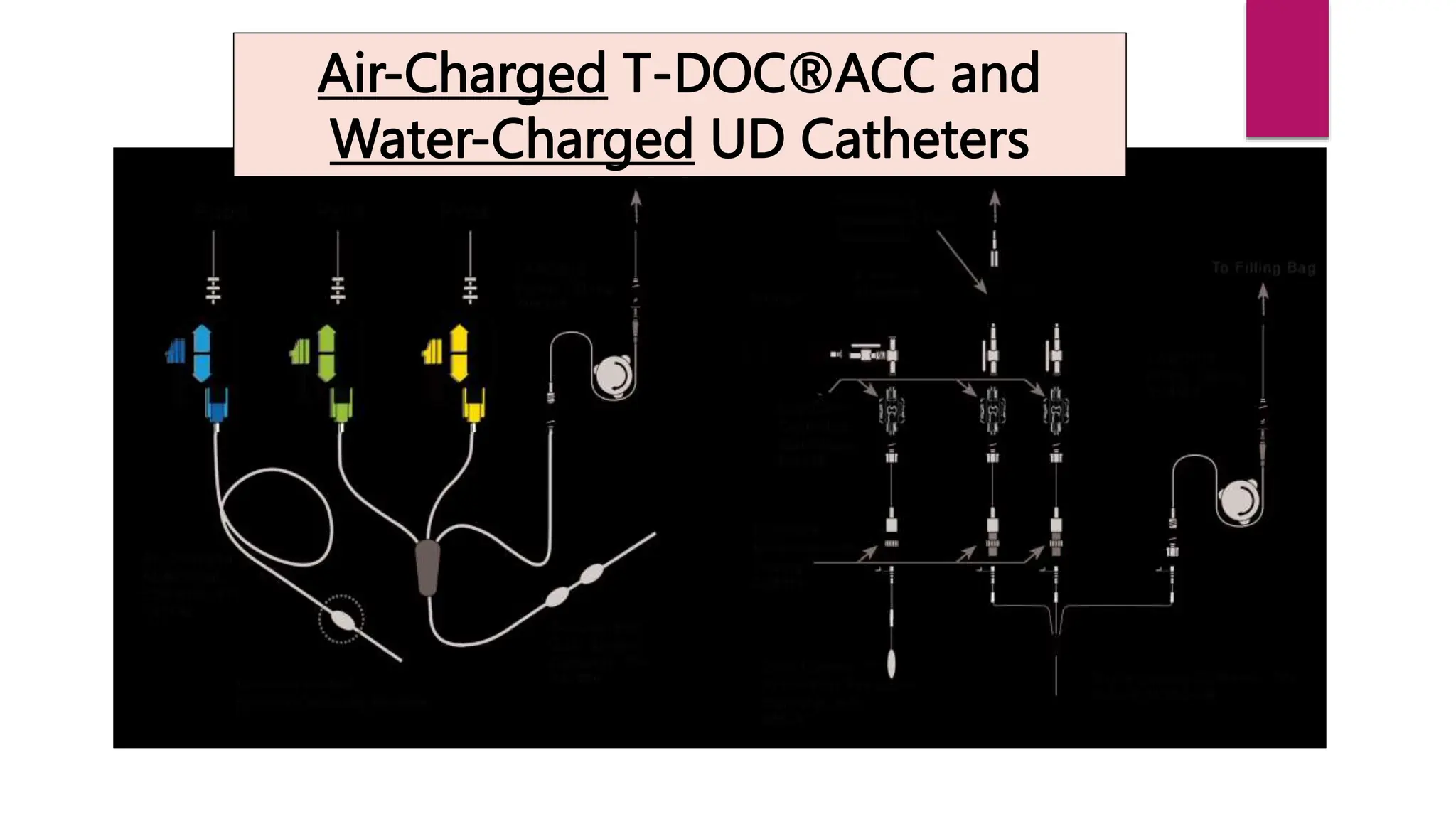
Air-Charged T-DOC®ACC and
Water-Charged UD Catheters
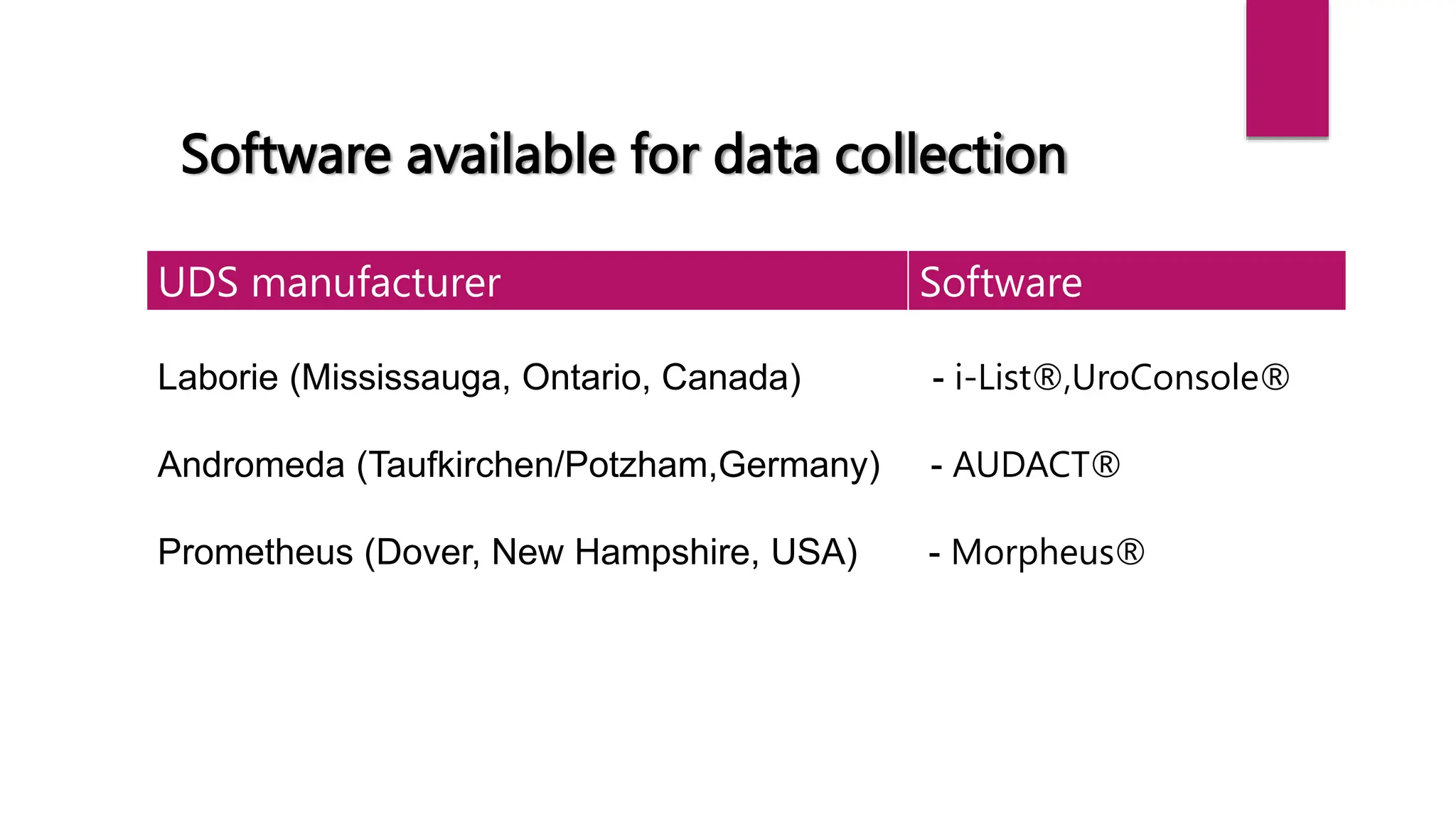
Software available for data collection
UDS manufacturer Software
Laborie (Mississauga, Ontario, Canada) - i-List®,UroConsole®
Andromeda (Taufkirchen/Potzham,Germany) - AUDACT®
Prometheus (Dover, New Hampshire, USA) - Morpheus®
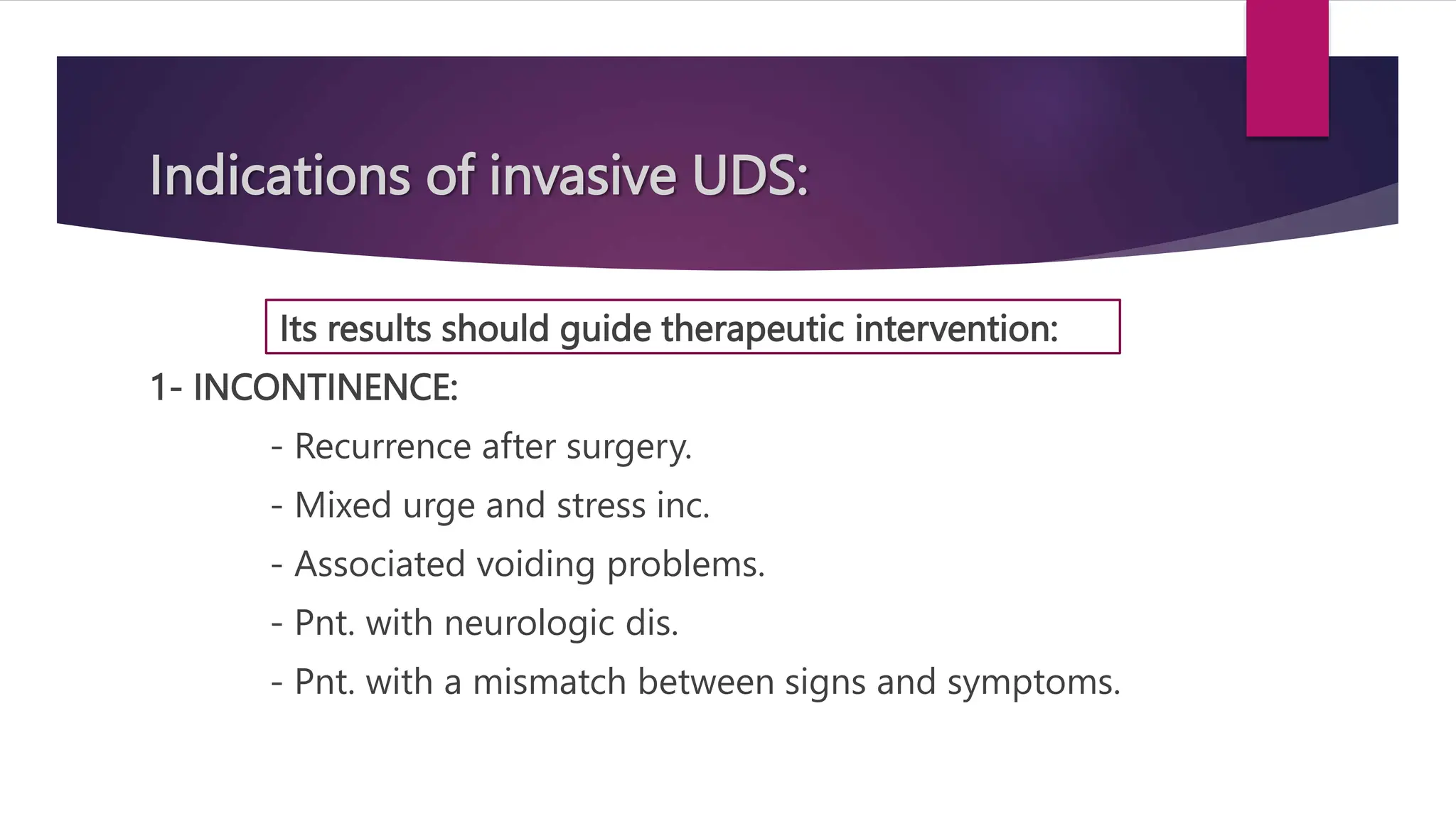
Indications of invasive UDS:
Its results should guide therapeutic intervention:
1- INCONTINENCE:
- Recurrence after surgery.
- Mixed urge and stress inc.
- Associated voiding problems.
- Pnt. with neurologic dis.
- Pnt. with a mismatch between signs and symptoms.
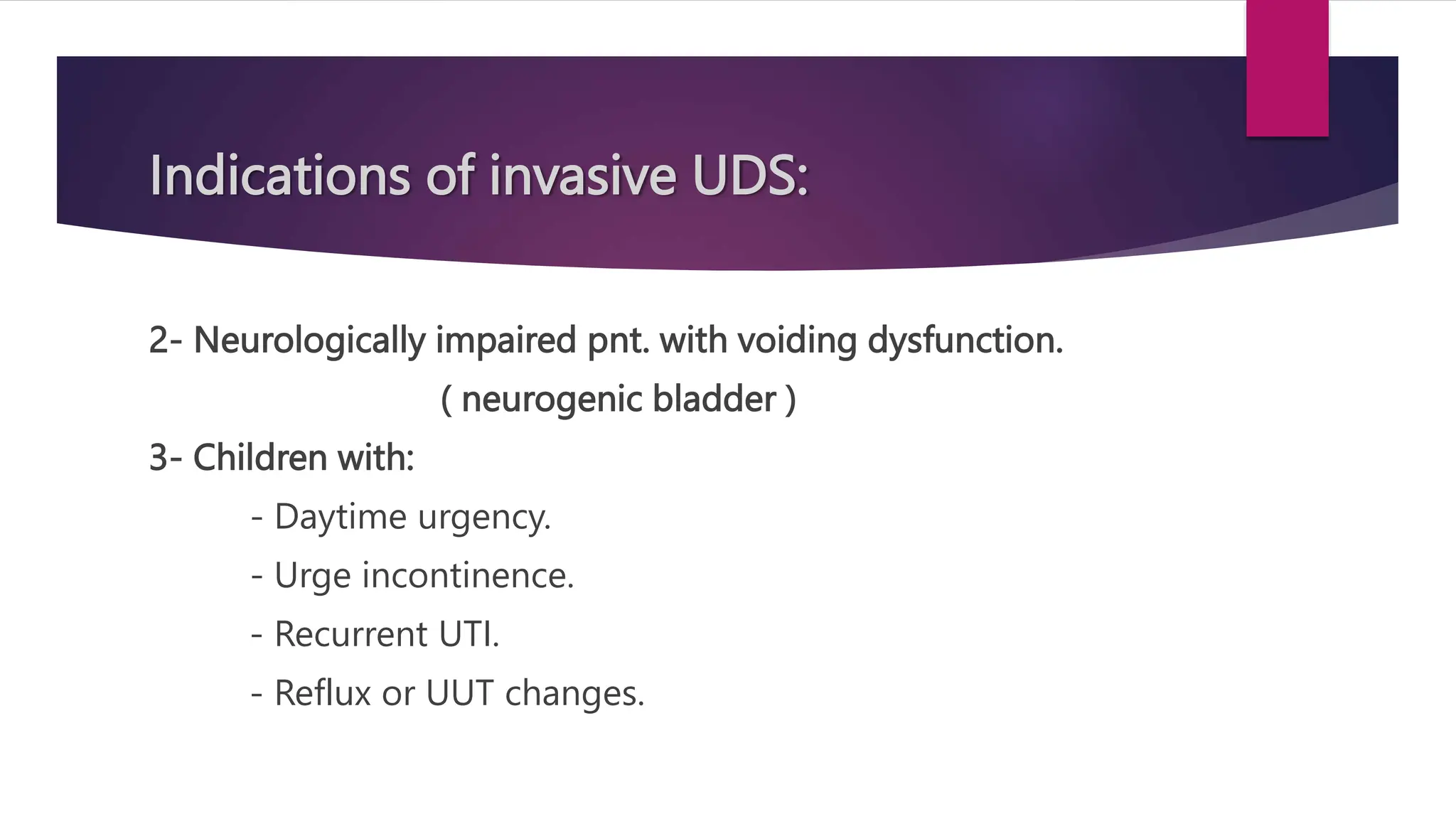
Indications of invasive UDS:
2- Neurologically impaired pnt. with voiding dysfunction.
( neurogenic bladder )
3- Children with:
- Daytime urgency.
- Urge incontinence.
- Recurrent UTI.
- Reflux or UUT changes.
Invasive UDS:
Pnt. Preperations and precautions:
 History and physical examination.
 Urinalysis and abdomino-pelvic U/S.
 Three days voiding diary.
 Certain drugs should be held (10-15ds before test).
 UDS should be deferred in presence of:
- UTI.
- Recent instrumentation.
Invasive UDS:
Pnt. Preperations and precautions:
 ANTIBIOTICS:
- Routine prophylactic antibiotics is not nessecary.
- High risk pnts. ( cardiac valve, orthopedic
prosthesis, GU prosthesis, pacemaker );
parentral AB prophylaxis might be nessecary.
 Pnts who are catheter-dependent should have the catheter removed
and be placed on CIC before UDS.
Invasive UDS:
Pnt. Preperations and precautions:
 Test should be performed in private area with as few observers
as possible.
 In neuropathic pnts.: Be cautious of autonomic dysreflexia.
Monitor the pnt. Hemodynamically during procedure.
If symptoms occur; empty the bladder and remove tight
clothing and straps. Anti-hypertensives may be needed.
Invasive UDS:
Pnt. Preperations and precautions:
 Autonomic dysreflexia:
Abn. over-reaction of the sympathetic autonomic NS to
stimulation in pnts. with sp. cord injuries at or above the
level of T6.
This reaction may include: Change in HR, excessive
sweating, high bl. Pr., m. spasms, skin color changes
(paleness, redness, blue-gray skin color).
Invasive UDS:
Pnt. Preparations and precautions:
 Monitor HR and bl. Pr. / 5 min.
 Assess for constipation and fecal impaction.
 For continued hypertension consider administration of
– Nitroglycerine (0.4 mg SL/ 5 minutes x 3 OR
½ inch nitropaste to chest wall)
– Captopril 25 mg SL
 Pnts. should be monitored after the AD event and educated on
recurrent symptoms.
 Autonomic dysreflexia:
Triggered by noxious stimuli below the level of the injury
– Urinary retention.
– UTI.
– DO with impaired compliance.
– Constipation and fecal impaction.
– Sacral decubitus ulcers.
Invasive UDS:
Pnt. Preparations and precautions:
 Autonomic dysreflexia (AD):
Other causes include:
Guillain-Barré syndrome (NS auto-immune disease).
Side effects of some medicines.
Severe head trauma and other brain injuries.
Subarachnoid hemorrhage.
Use of illegal stimulant drugs such as cocaine and
amphetamines.
Invasive UDS:
Pnt. Preparations and precautions:
Invasive UDS: Correct Preparation of
Urodynamic Equipment
 Calibration of equipment:
– Pressure transducer to read 0 and 100 cm H20.
– Urine flow meter to read 0 and 25 (or 50) ml/s.
– Filling pump to fill at 10 and 50 ml/min.
 Zero transducers to atmospheric pressure.
 Check reference level of transducers:
Superior edge of symphysis pubis.
 Flush tubing to ensure absence of bubbles or leaks.
CYSTOMETRY (CMG)
Filling cystometry (CMG): Procedure:
 Measure the pressure/volume relationship of the bladder during
bladder filling.
 TU or SP continuous fluid filling of the bladder at room
temperature; minimally with Pves and Pabd measurement and
display of Pdet, including cough (stress) testing.
Filling cystometry (CMG): Procedure:
 Filling rate: - 1ml/min. (physiologic)
- 10-25-50-100 ml/min. ( slow - medium - fast )
 Filling at a rate of 10% of the maximum voided volume
suggested by some authors.
 Patients with DO may need a slower rate of 10 ml/min.
 Fluid used N. saline at 25-37C.
Filling cystometry (CMG): Procedure:
► Position: Supine / Sitting / Standing.
► The detection of DO, urodynamic SUI, and bladder-filling
sensations are influenced by pnt’s position.
Sitting or standing position appears to have a higher sensitivity
to detect abnormalities.
Bladder sensations
Filling cystometry (CMG): Procedure:
 Bladder sensations:
ICS does not specifically provide the normal range for
bladder sensation volume. Therefore clinician has to be the
final judge of determining bladder sensation.
Filling cystometry (CMG): Procedure:
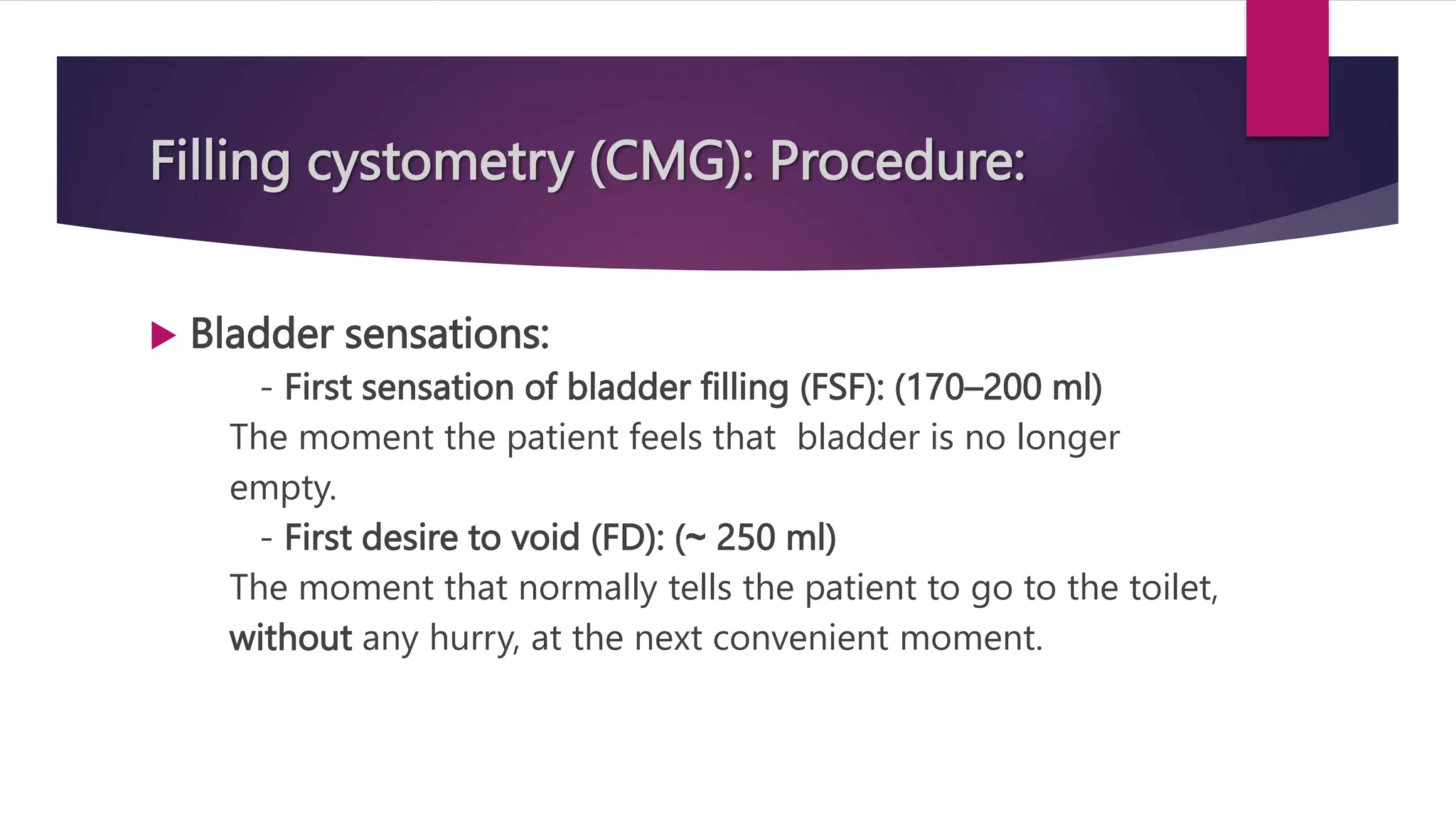
 Bladder sensations:
- First sensation of bladder filling (FSF): (170–200 ml)
The moment the patient feels that bladder is no longer
empty.
- First desire to void (FD): (~ 250 ml)
The moment that normally tells the patient to go to the toilet,
without any hurry, at the next convenient moment.
Filling cystometry (CMG): Procedure:
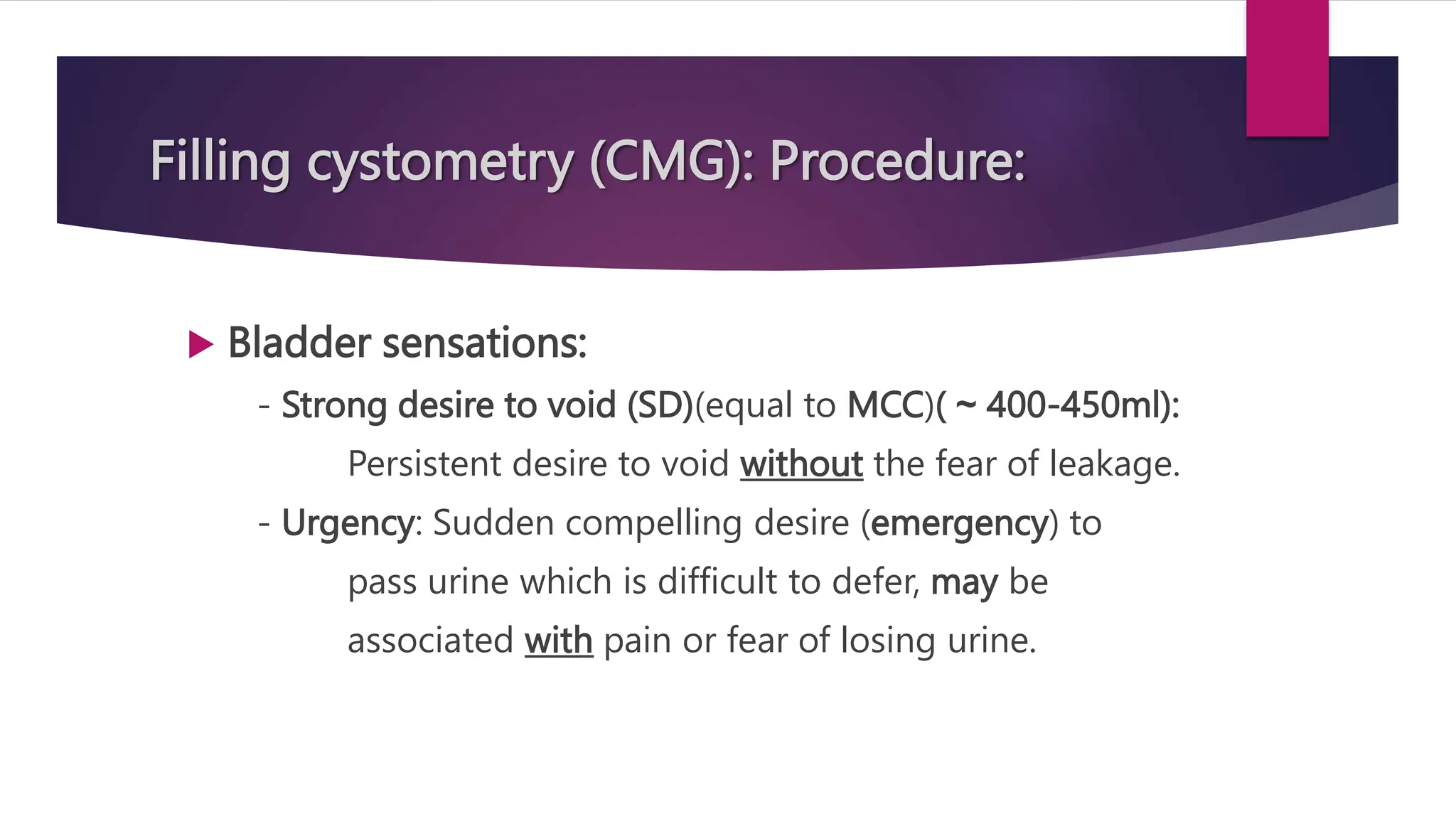
 Bladder sensations:
- Strong desire to void (SD)(equal to MCC)( ~ 400-450ml):
Persistent desire to void without the fear of leakage.
- Urgency: Sudden compelling desire (emergency) to
pass urine which is difficult to defer, may be
associated with pain or fear of losing urine.
Filling cystometry (CMG): Procedure:
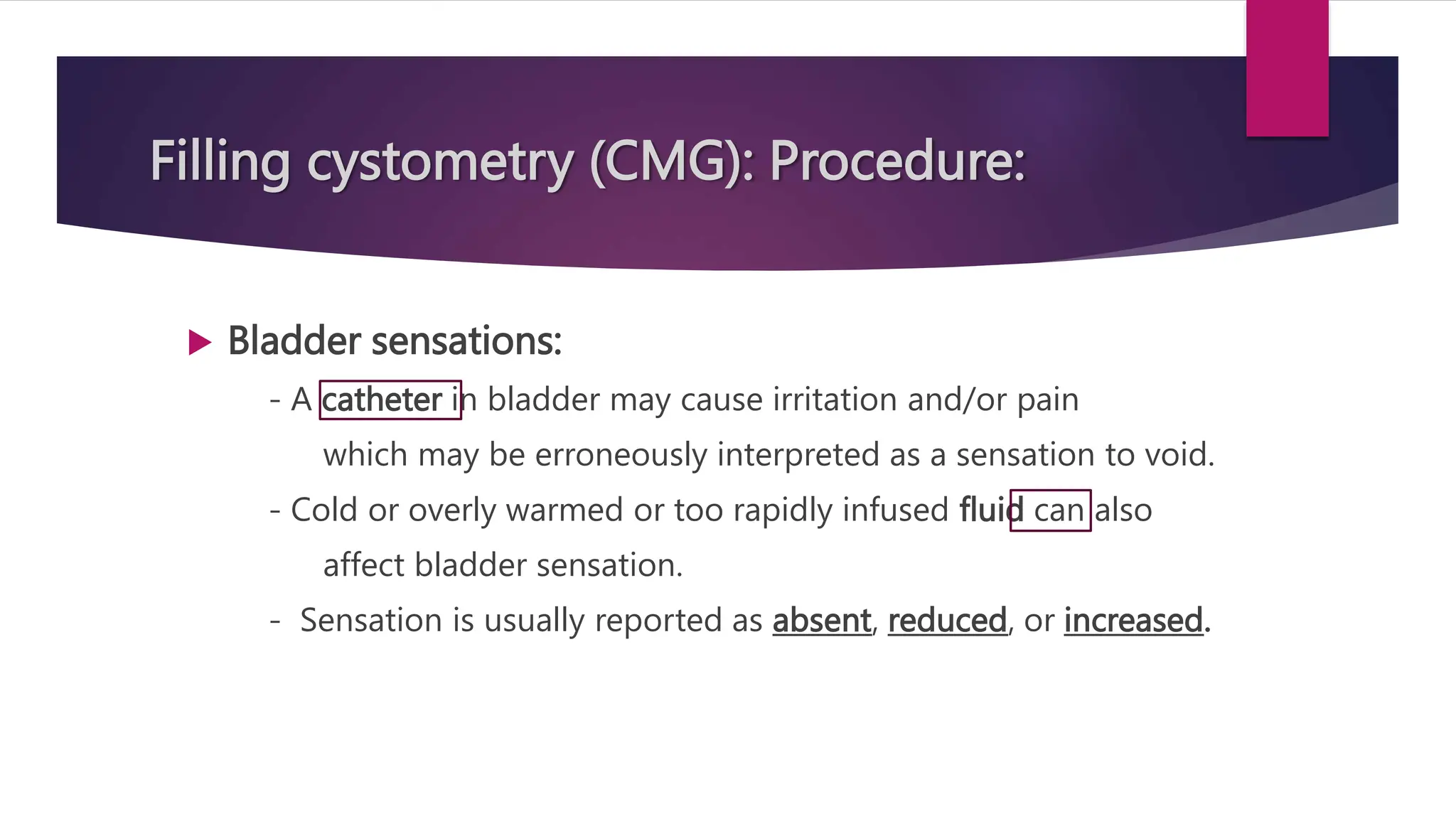
 Bladder sensations:
- A catheter in bladder may cause irritation and/or pain
which may be erroneously interpreted as a sensation to void.
- Cold or overly warmed or too rapidly infused fluid can also
affect bladder sensation.
- Sensation is usually reported as absent, reduced, or increased.
Filling cystometry (CMG): Procedure:
 Abnormal bladder sensations:
- Increased bl. Sens.: Early FS, FD, and SD which occur at
Low bl.Vol. and persists.
There will be a low max.cystometric capacity (MCC)
with no abnormal increases in Pdet.
Filling cystometry (CMG): Procedure:
 Abnormal bladder sensations:
- Reduced bl. Sens.: Diminished sens. Throughout filling.
- Absent sens.: Pnt. Has no bl. Sens.
- Abn. Bl. Sensations: is an awareness of sensation in the
bladder, urethra, or pelvis, described with words
like “tingling”,“burning”, or “electric shock”, in the
setting of a clinically relevant neurologic disorder.
Filling cystometry (CMG): Procedure:
 Abnormal bladder sensations:
- non-specific bladder sensation:
Is a perception of bl. filling as abdominal fullness,
vegetative symptoms, spasticity or other “non-bladder
awareness” in the setting of a clinically relevant
neurologic disorder.
Pressure recording
Filling cystometry (CMG): Procedure:
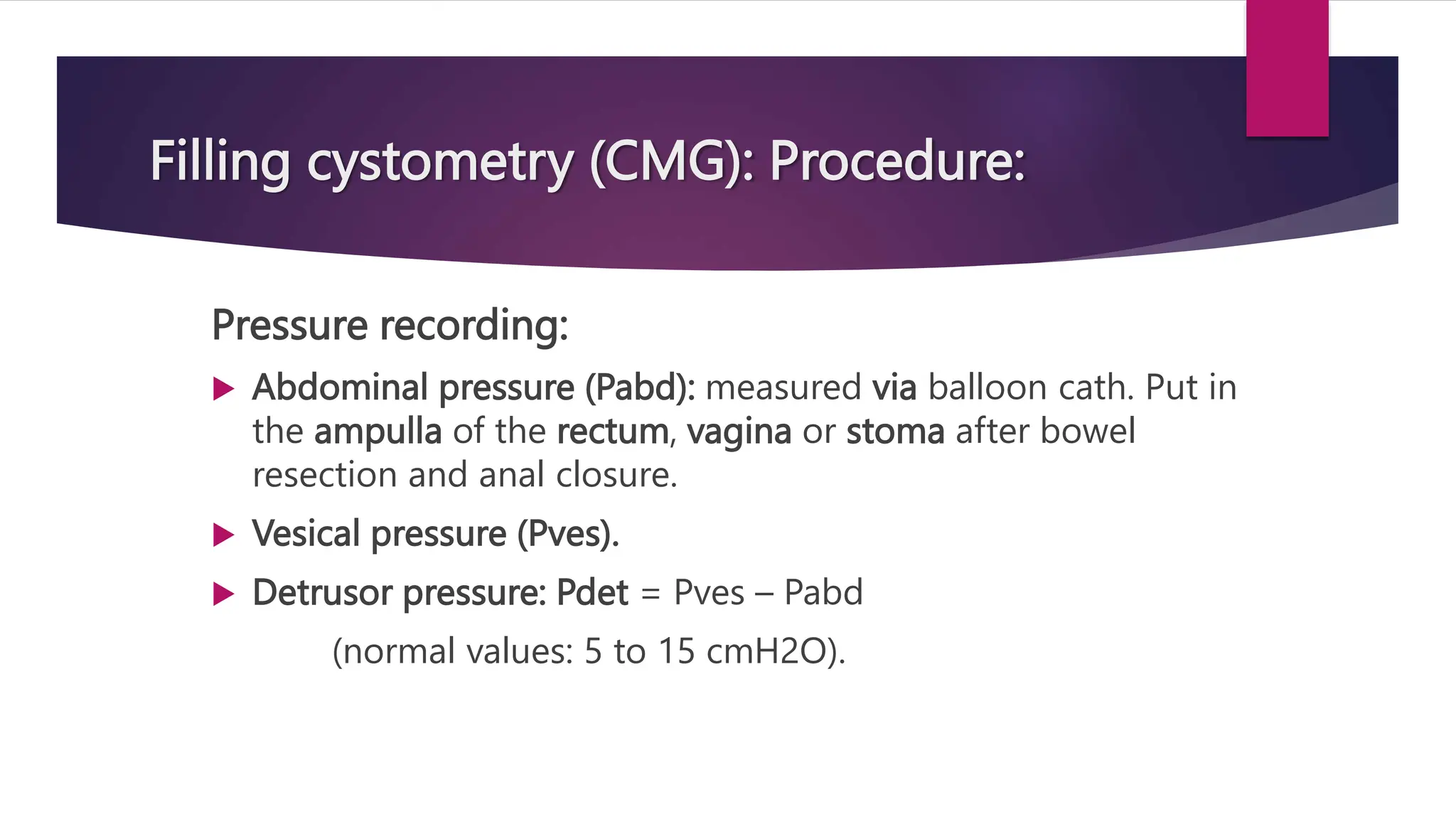
Pressure recording:
 Abdominal pressure (Pabd): measured via balloon cath. Put in
the ampulla of the rectum, vagina or stoma after bowel
resection and anal closure.
 Vesical pressure (Pves).
 Detrusor pressure: Pdet = Pves – Pabd
(normal values: 5 to 15 cmH2O).
Filling cystometry (CMG): Procedure:
Pressure recording:
The normal abdominal and vesical resting pressures are as
follows:
 Supine: 0 to 18 cm H2O
 Sitting: 15 to 40 cm H2O
 Standing: 20 to 50 cm H2O
 Resting detrusor pressure: between -5 and +5 cm H2O
Filling cystometry (CMG): Procedure:
 Normal detrusor function during Filling:
Bl. Filling with no or little change in Pdet; no involuntary
phasic det. contractions despite provocations.
Filling cystometry (CMG): Procedure:
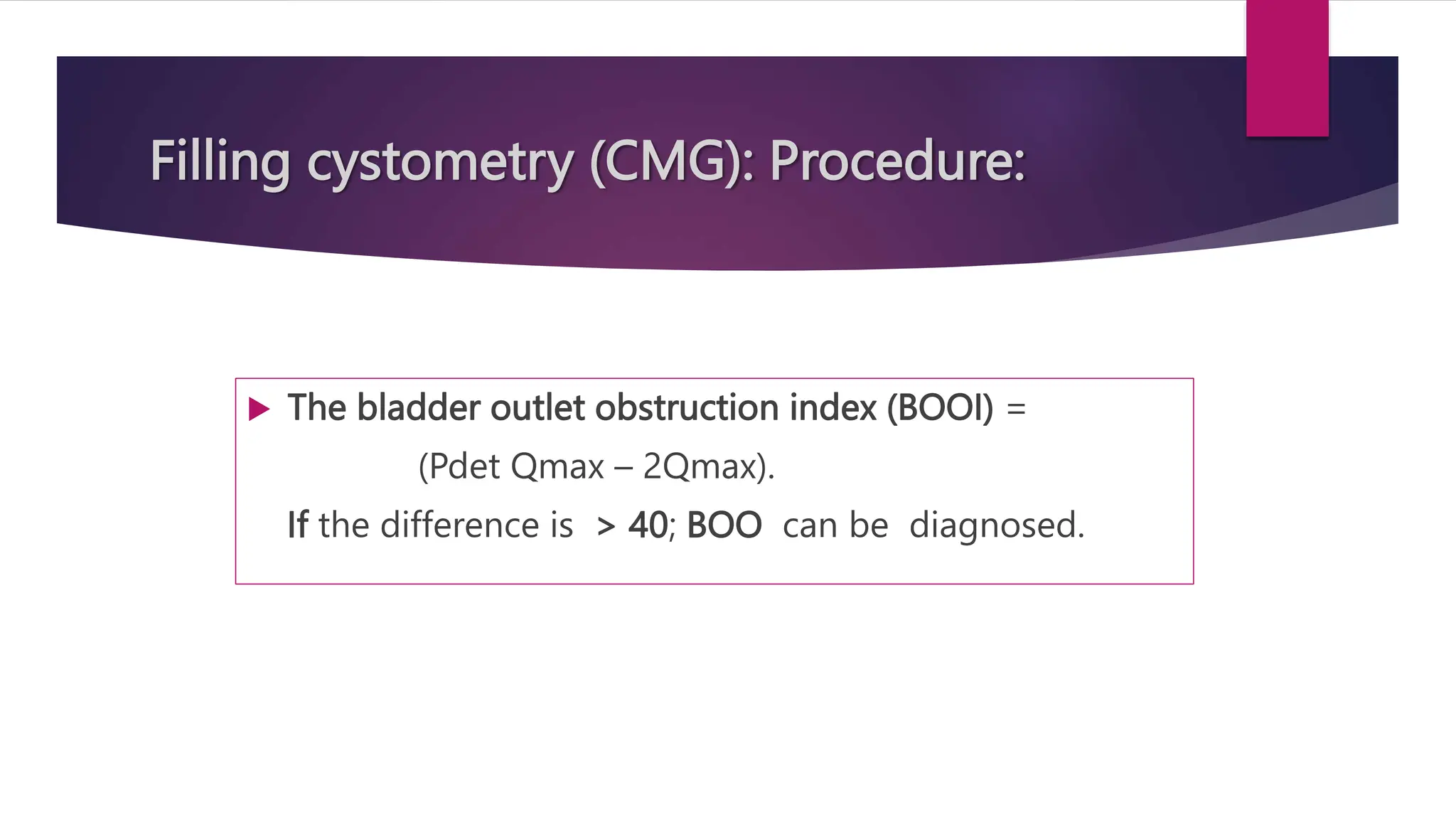
 The bladder outlet obstruction index (BOOI) =
(Pdet Qmax – 2Qmax).
If the difference is > 40; BOO can be diagnosed.
Filling cystometry (CMG): Procedure:
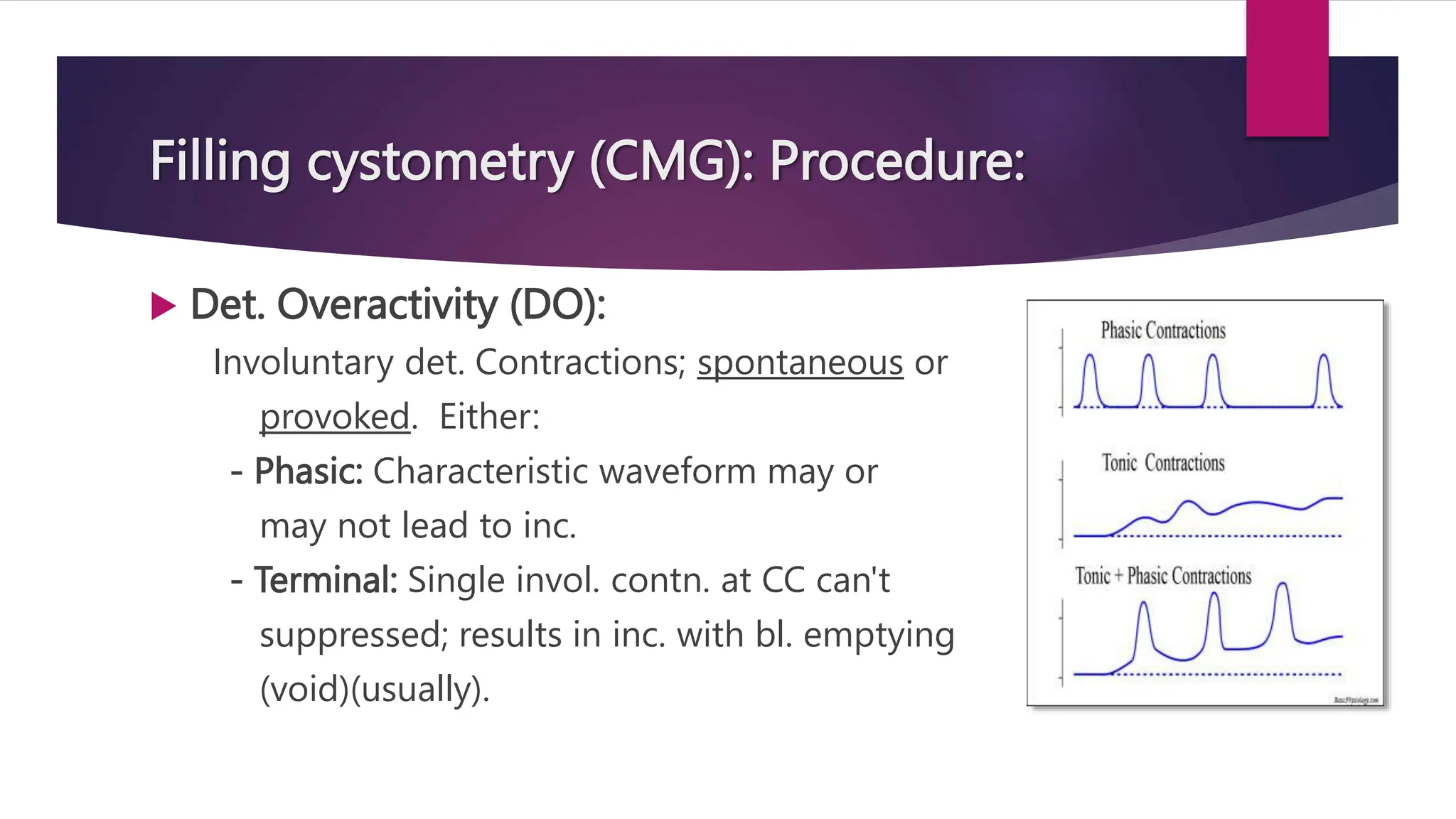
 Det. Overactivity (DO):
Involuntary det. Contractions; spontaneous or
provoked. Either:
- Phasic: Characteristic waveform may or
may not lead to inc.
- Terminal: Single invol. contn. at CC can't
suppressed; results in inc. with bl. emptying
(void)(usually).
Filling cystometry (CMG): Procedure:
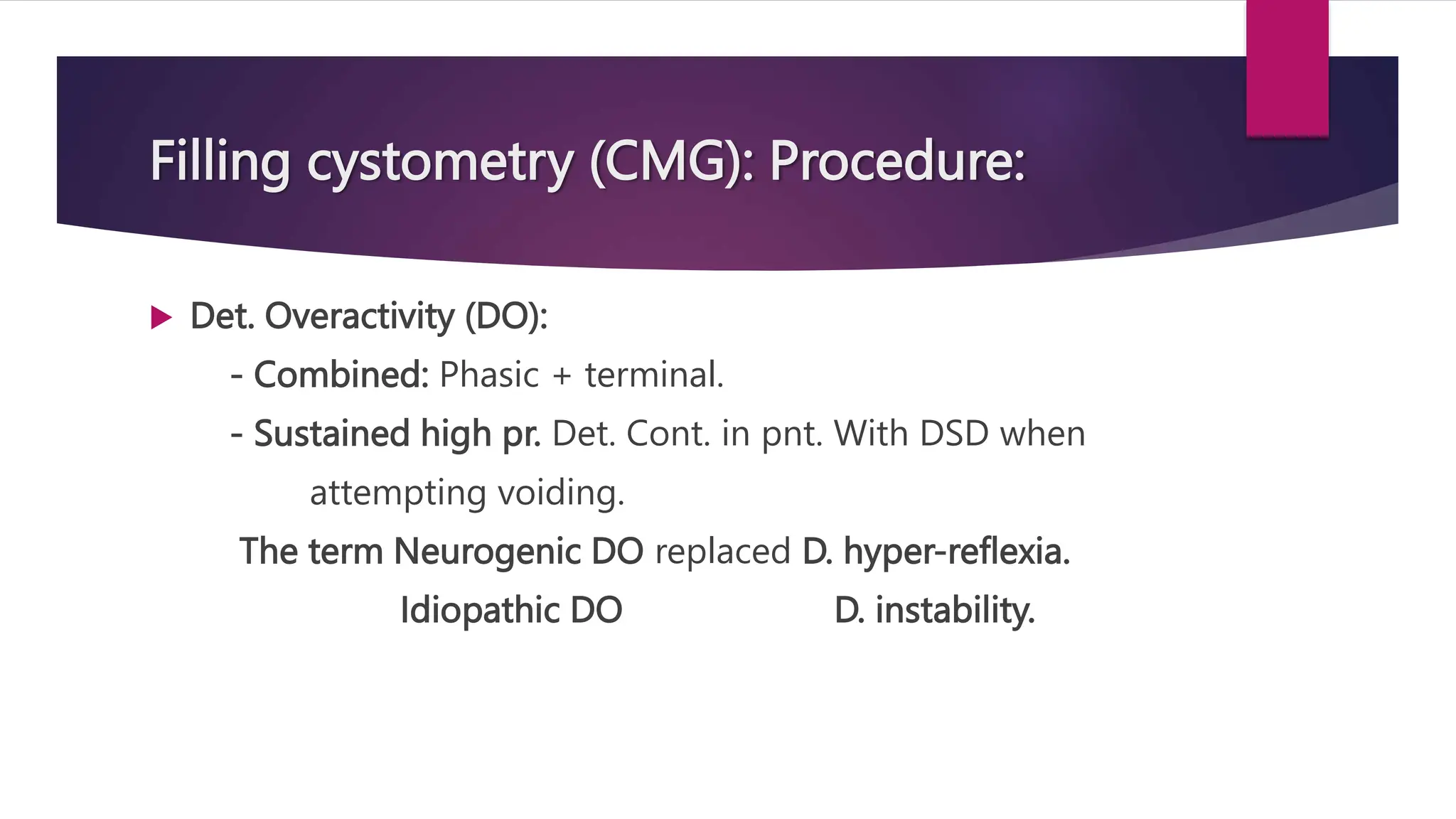
 Det. Overactivity (DO):
- Combined: Phasic + terminal.
- Sustained high pr. Det. Cont. in pnt. With DSD when
attempting voiding.
The term Neurogenic DO replaced D. hyper-reflexia.
Idiopathic DO D. instability.
Filling cystometry (CMG): Procedure:
 During bladder filling, the pnt is asked to cough every
minute to assess recording quality. This should produce
an acute and equal rise in Pabd and Pves, with little or
no rise in Pdet.
 Provocation maneuvers to elicit the pnt’s symptoms
are performed throughout the test.
Filling cystometry (CMG): Procedure:
 Provocations:
Techniques used during filling to provoke DO:
- Rapid filling.
- Cooled filling fluid.
- Postural changes.
- Hand washing.
Filling cystometry (CMG): Procedure:
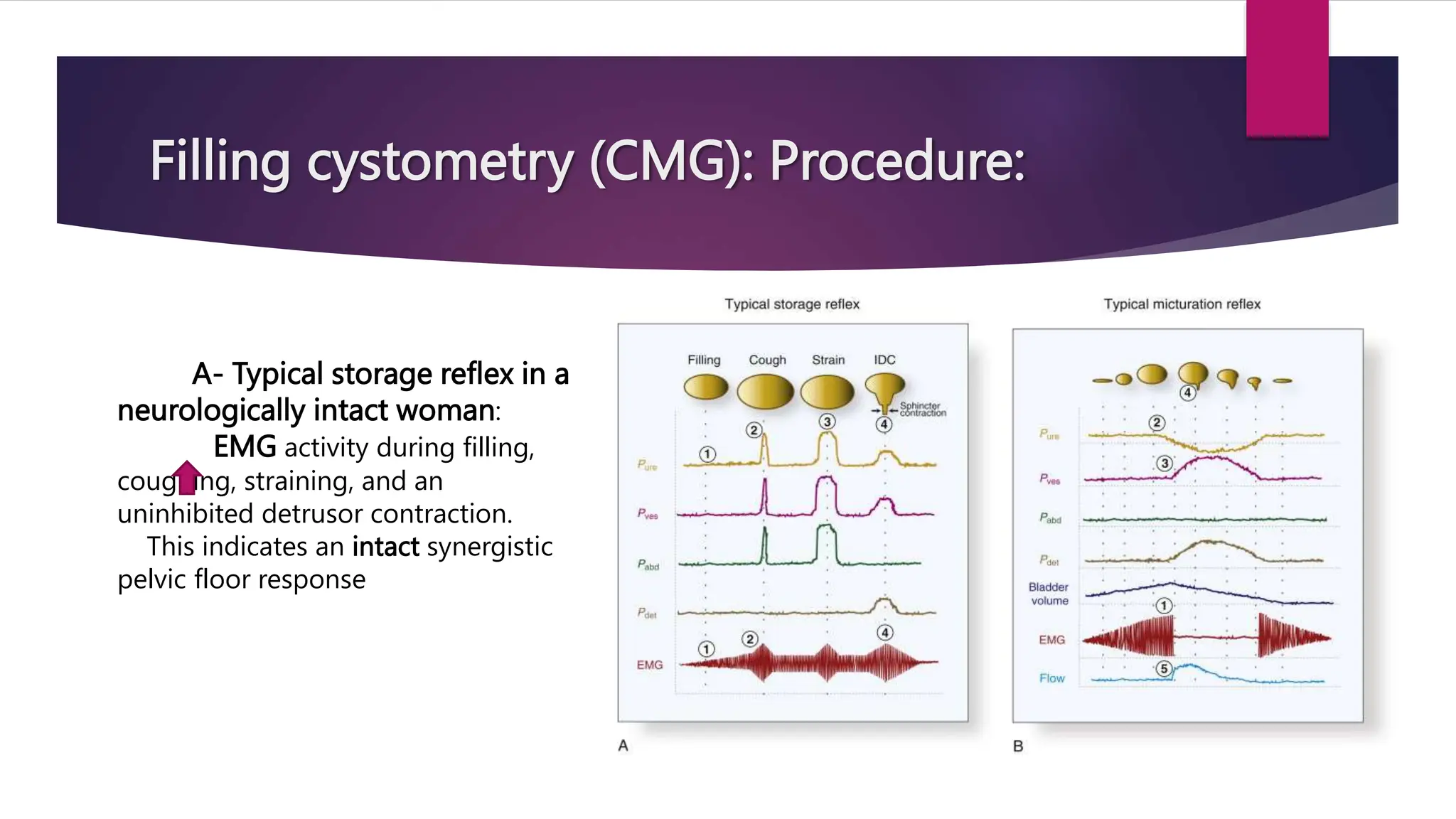
A- Typical storage reflex in a
neurologically intact woman:
EMG activity during filling,
coughing, straining, and an
uninhibited detrusor contraction.
This indicates an intact synergistic
pelvic floor response
Filling cystometry (CMG): Procedure:
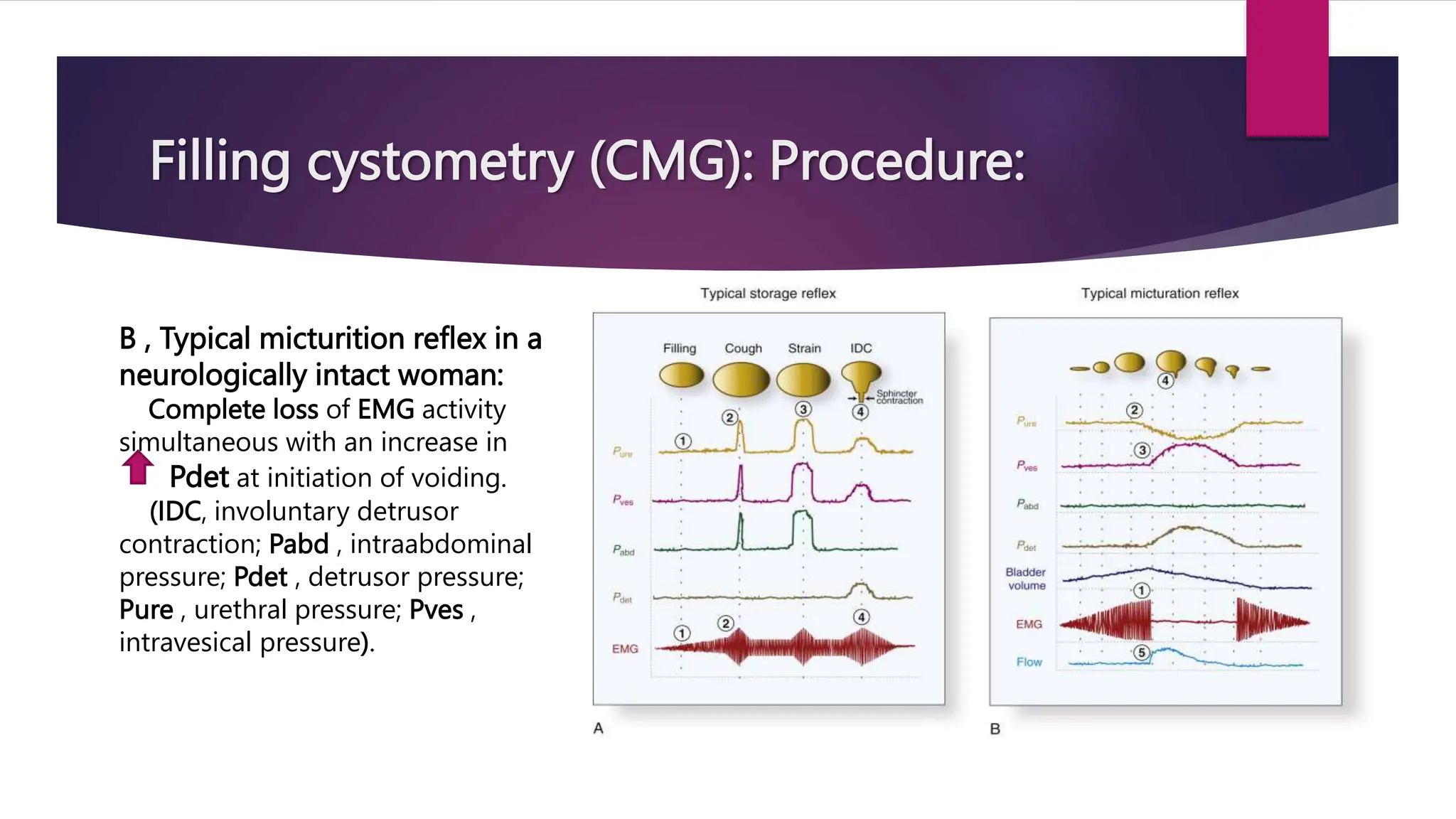
B , Typical micturition reflex in a
neurologically intact woman:
Complete loss of EMG activity
simultaneous with an increase in
Pdet at initiation of voiding.
(IDC, involuntary detrusor
contraction; Pabd , intraabdominal
pressure; Pdet , detrusor pressure;
Pure , urethral pressure; Pves ,
intravesical pressure).
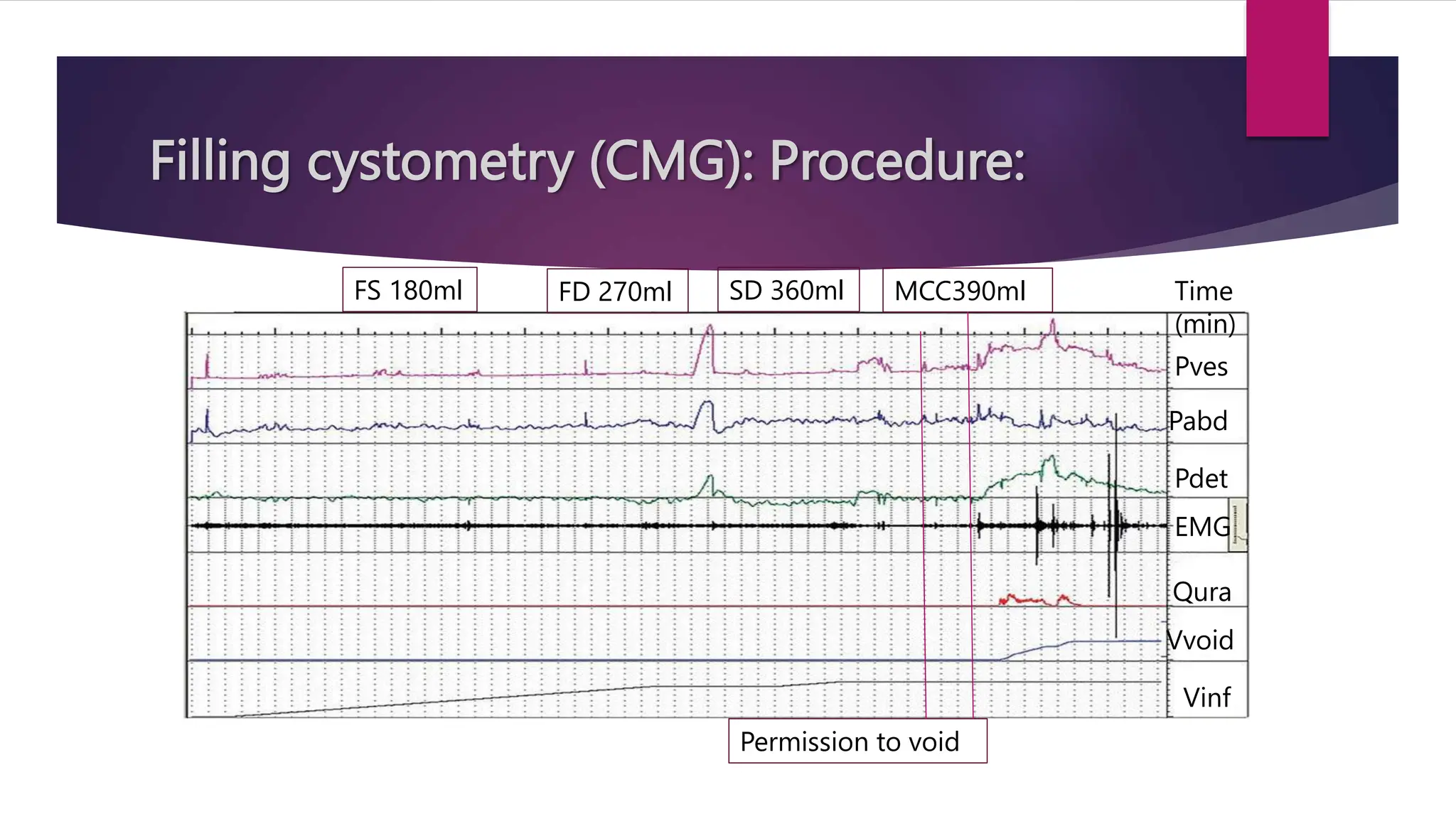
Filling cystometry (CMG): Procedure:
Time
(min)
Pves
Pabd
Pdet
EMG
Qura
Vvoid
Vinf
FS 180ml FD 270ml SD 360ml MCC390ml
Permission to void
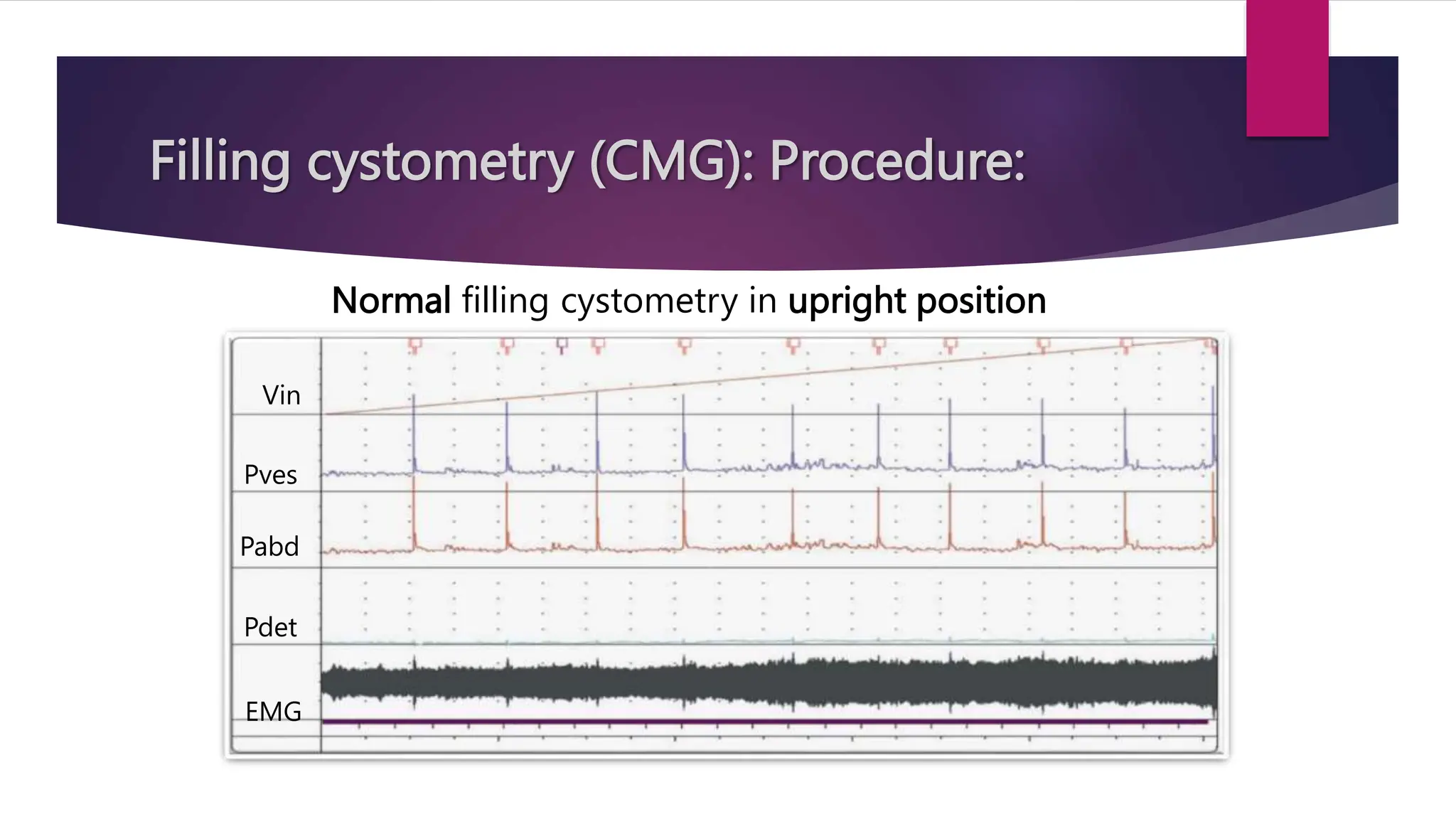
Filling cystometry (CMG): Procedure:
Normal filling cystometry in upright position
Vin
Pabd
Pves
Pdet
EMG
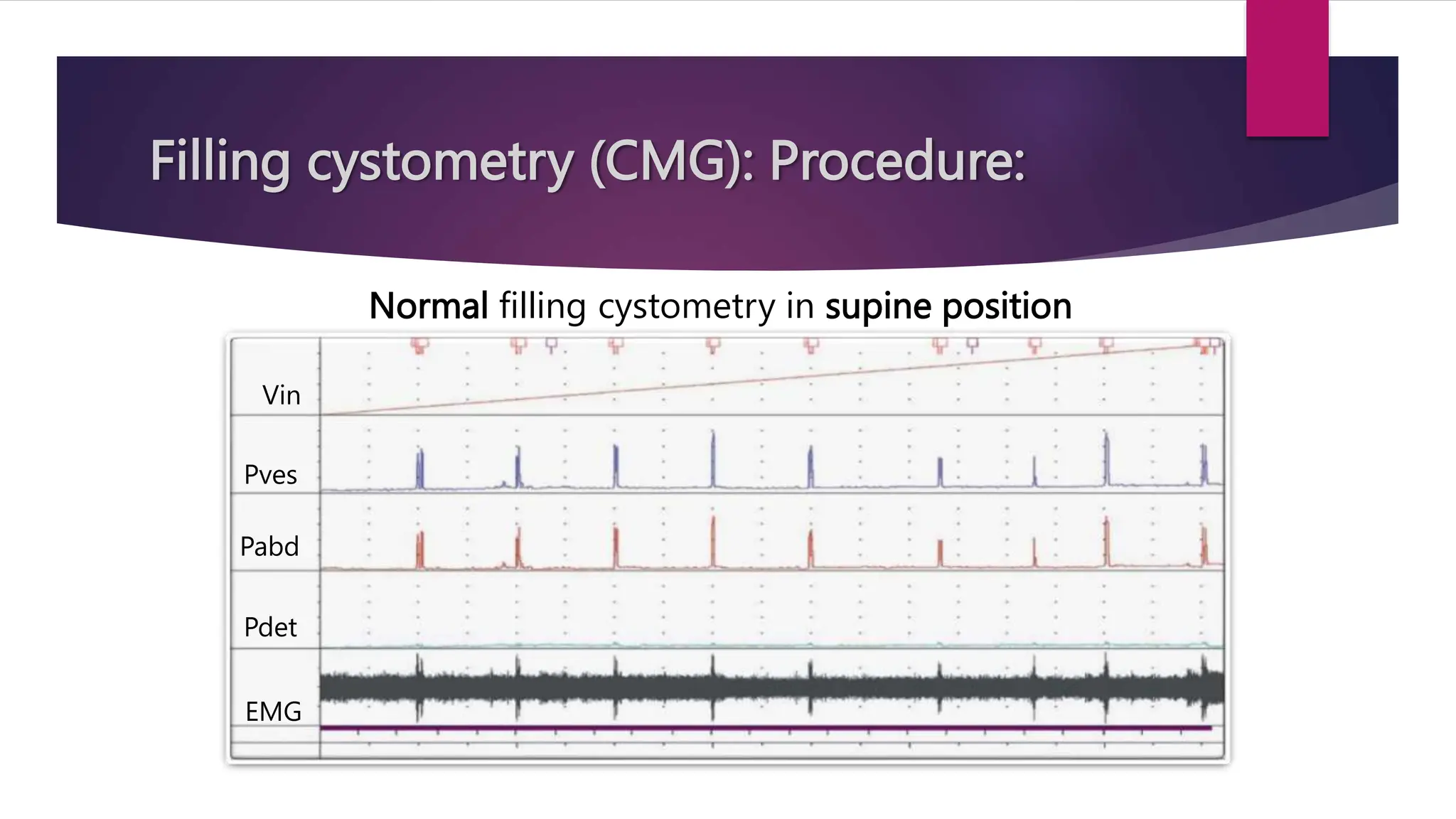
Filling cystometry (CMG): Procedure:
Normal filling cystometry in supine position
Vin
Pabd
Pves
Pdet
EMG
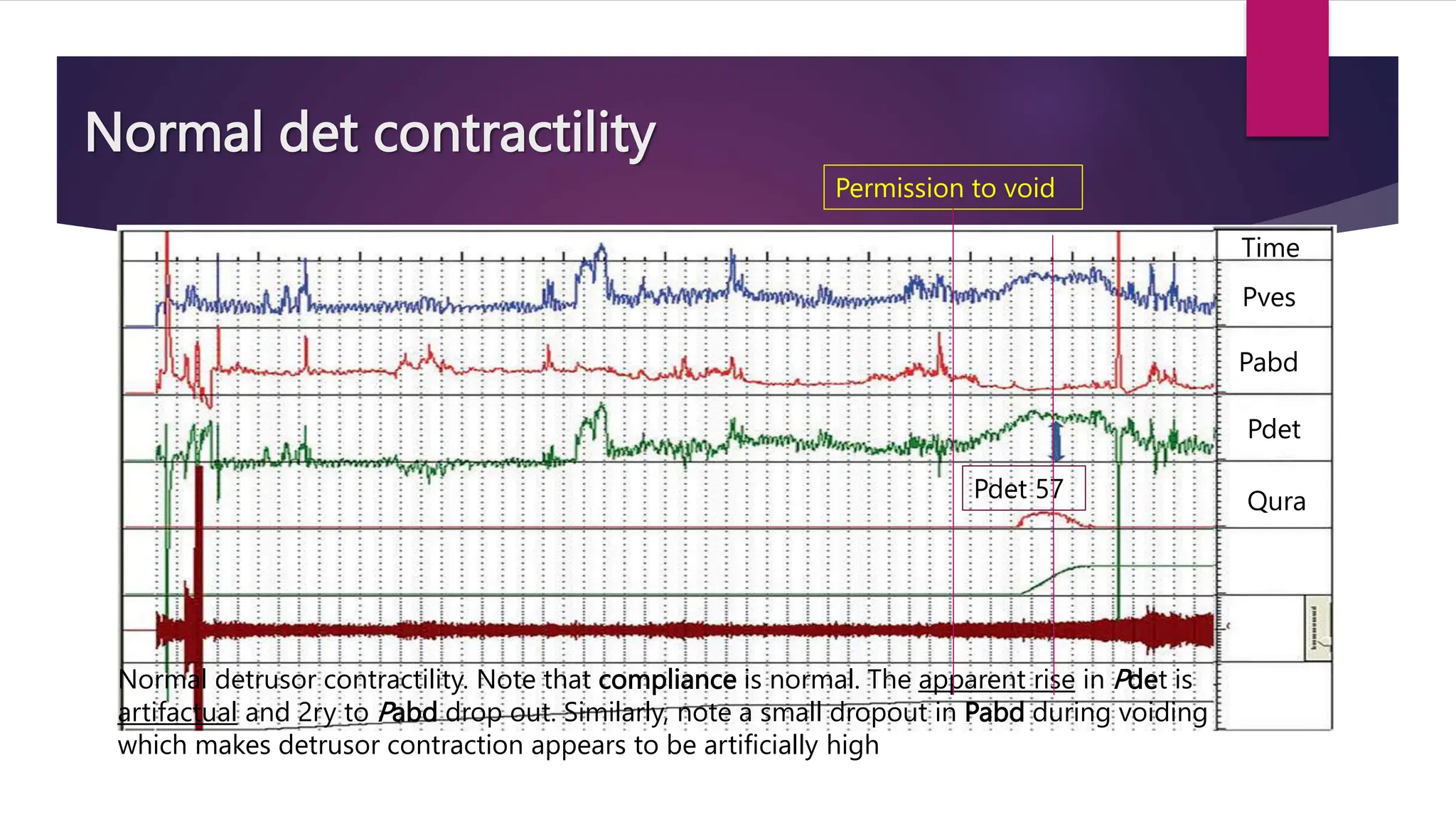
Normal det contractility
Normal detrusor contractility. Note that compliance is normal. The apparent rise in Pdet is
artifactual and 2ry to Pabd drop out. Similarly, note a small dropout in Pabd during voiding
which makes detrusor contraction appears to be artificially high
Permission to void
Pdet 57
Time
Pves
Pabd
Pdet
Qura
Filling cystometry (CMG): Procedure:
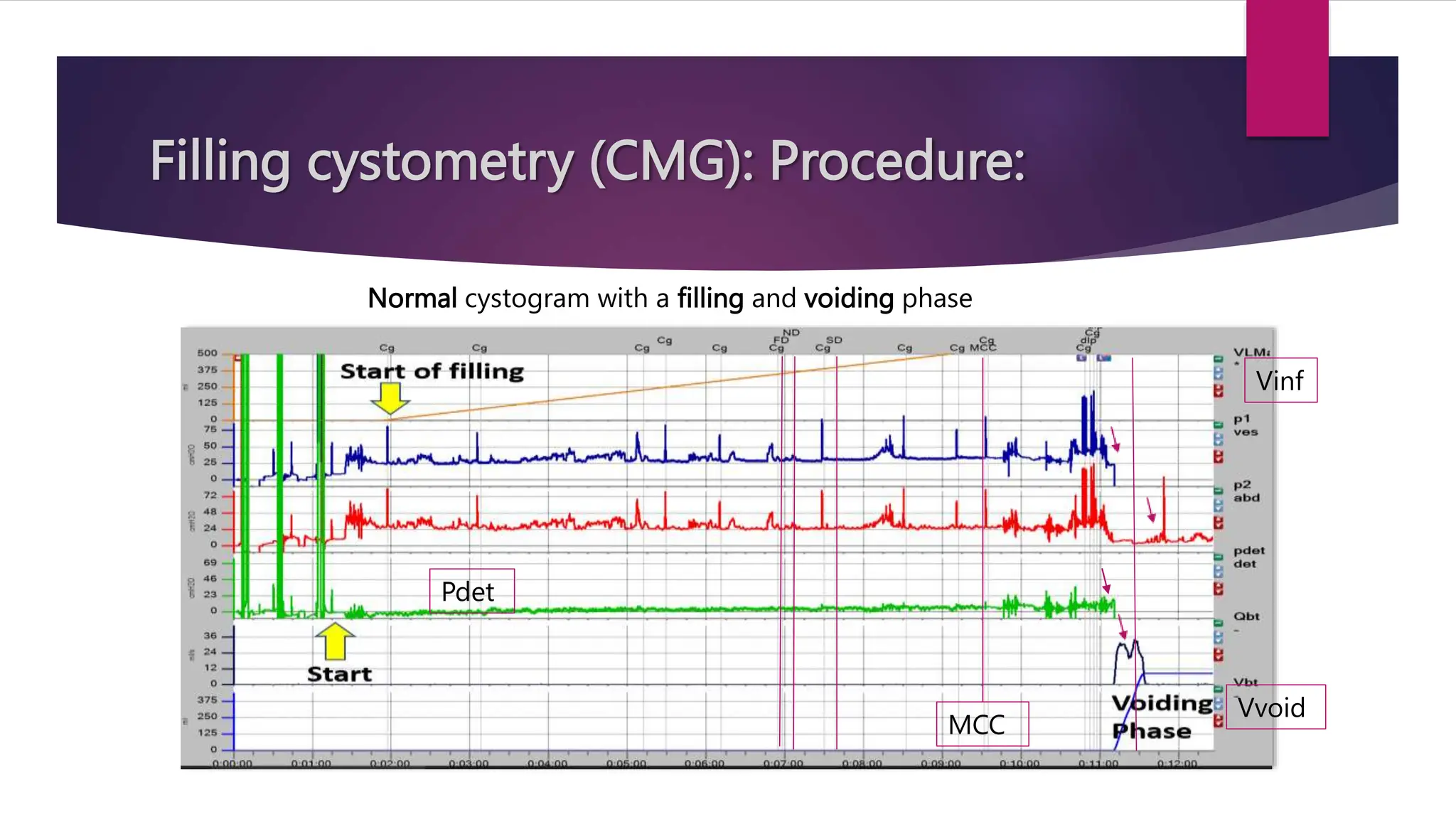
Normal cystogram with a filling and voiding phase
Vvoid
Vinf
MCC
Pdet
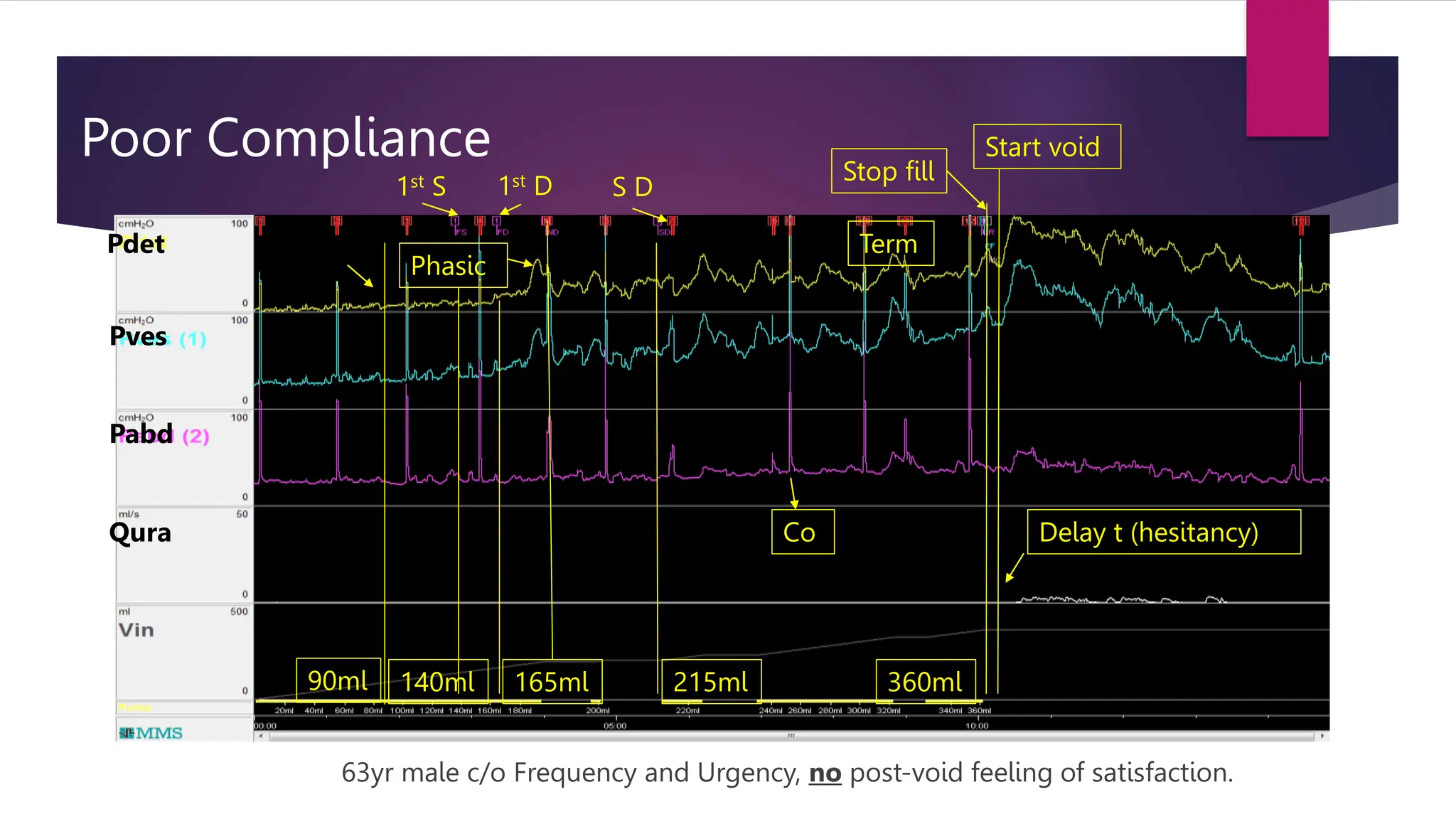
Poor Compliance
63yr male c/o Frequency and Urgency, no post-void feeling of satisfaction.
Pdet
Pves
Pabd
Qura
1st S 1st D S D
Start void
Delay t (hesitancy)
Stop fill
Phasic
Term
140ml 165ml 360ml
215ml
90ml
Co
Filling cystometry (CMG): Procedure:
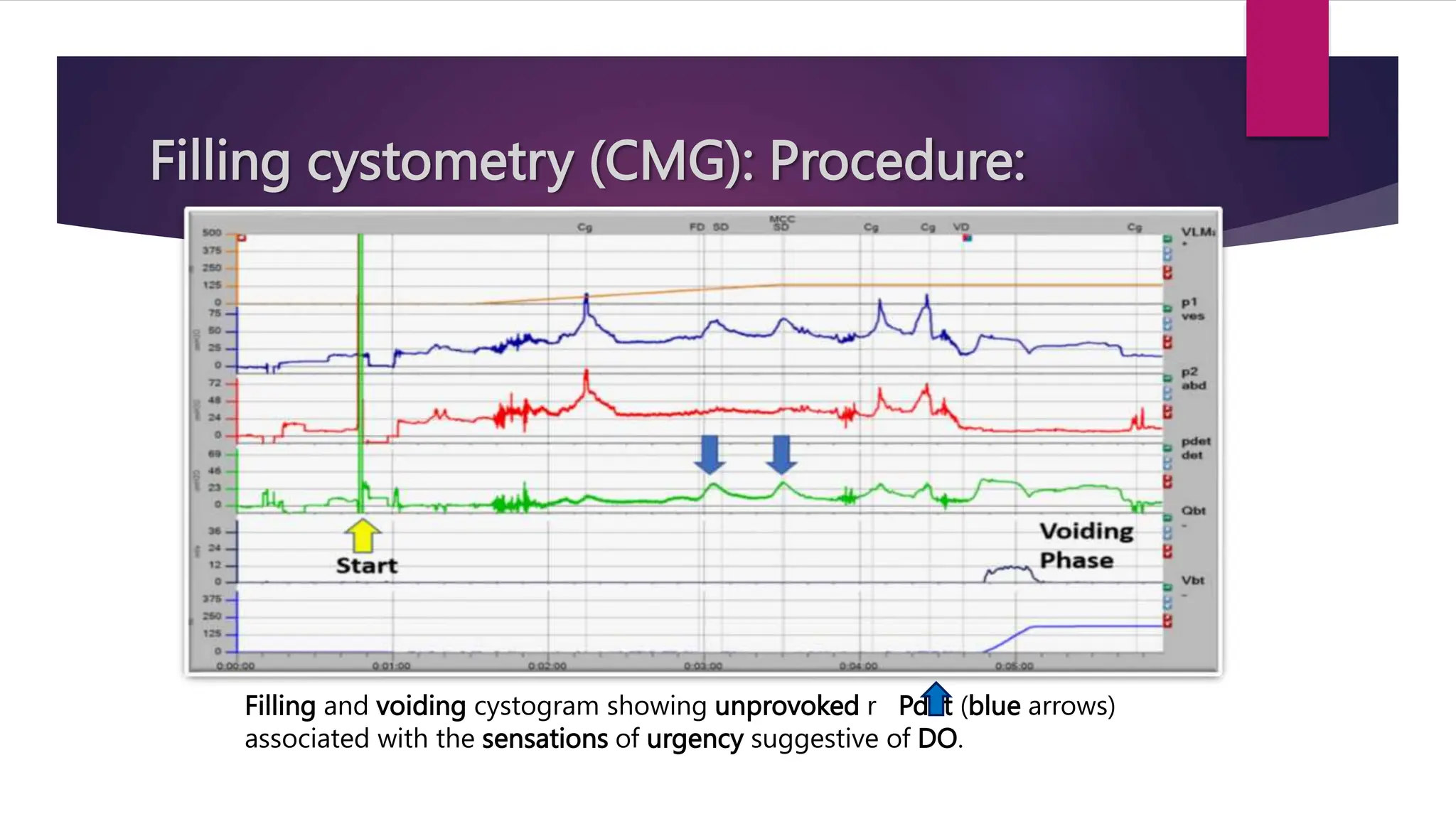
Filling and voiding cystogram showing unprovoked r Pdet (blue arrows)
associated with the sensations of urgency suggestive of DO.
Filling cystometry (CMG): Procedure:
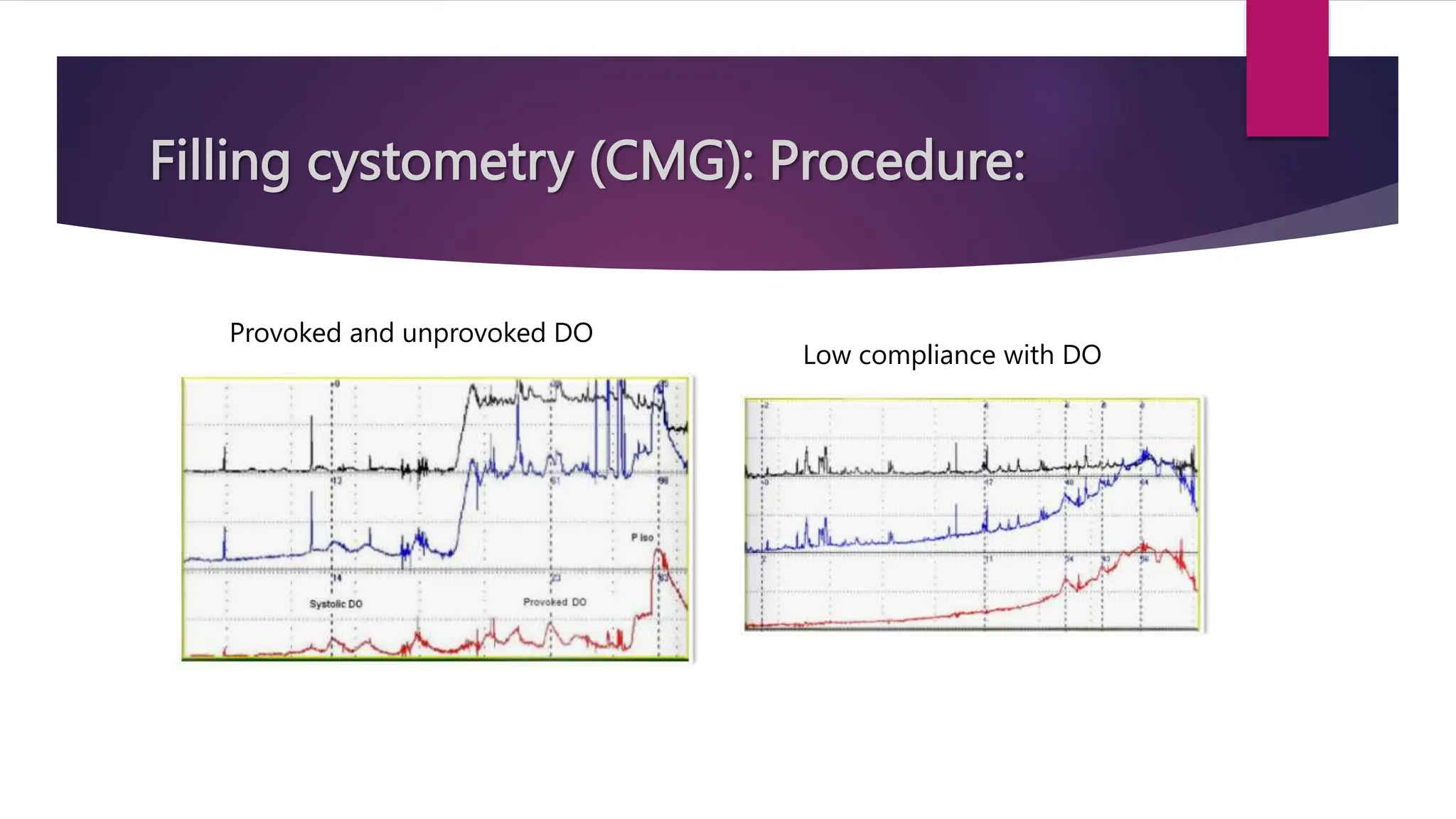
Low compliance with DO
Provoked and unprovoked DO
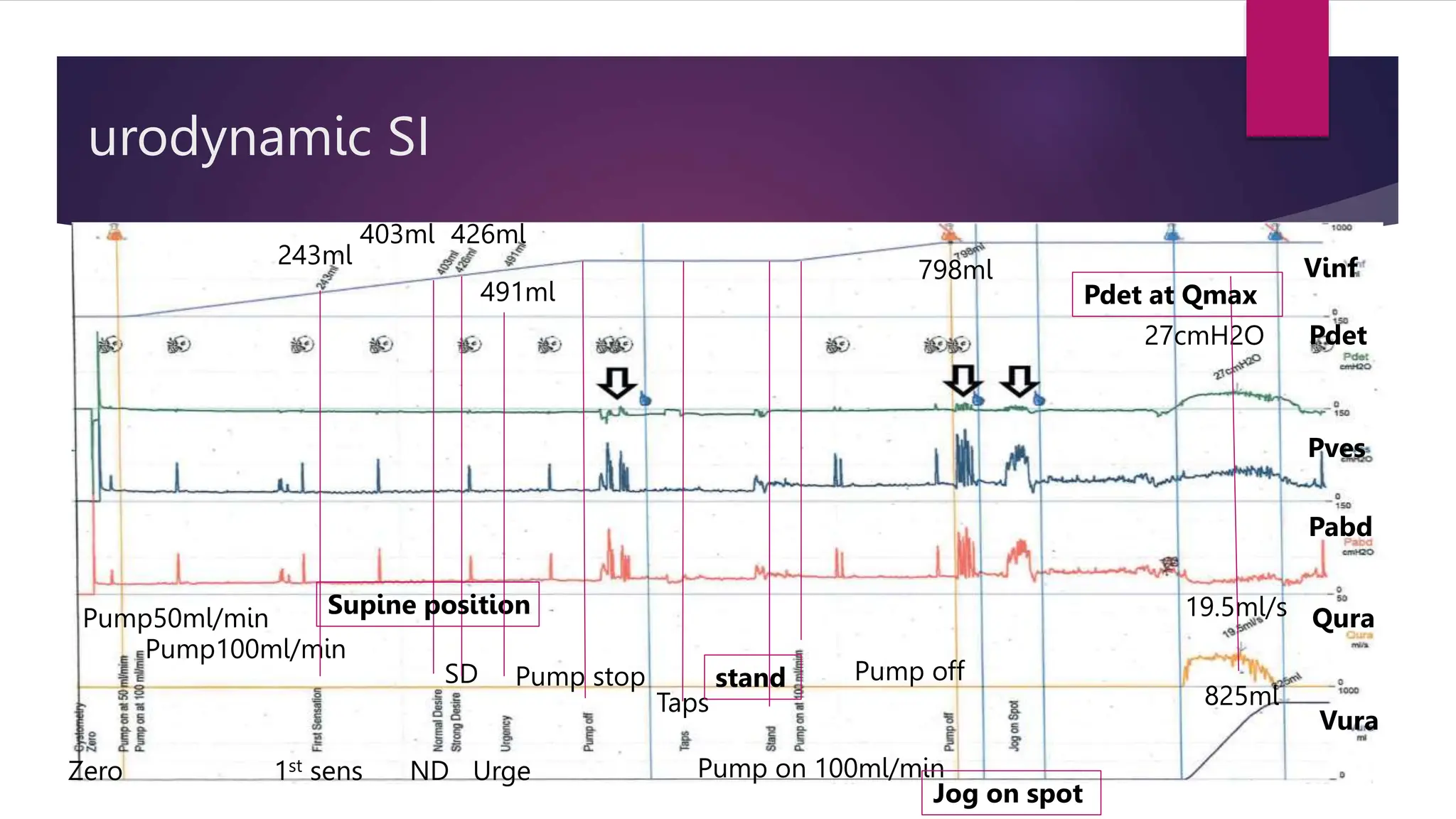
urodynamic SI
Pump50ml/min
Pump100ml/min
1st sens ND
SD
Urge
Pump stop
Zero
Taps
stand
Pump on 100ml/min
Pump off
Jog on spot
Vinf
Pdet
Pves
Pabd
Qura
Vura
19.5ml/s
825ml
243ml
403ml 426ml
491ml
798ml
27cmH2O
Supine position
Pdet at Qmax
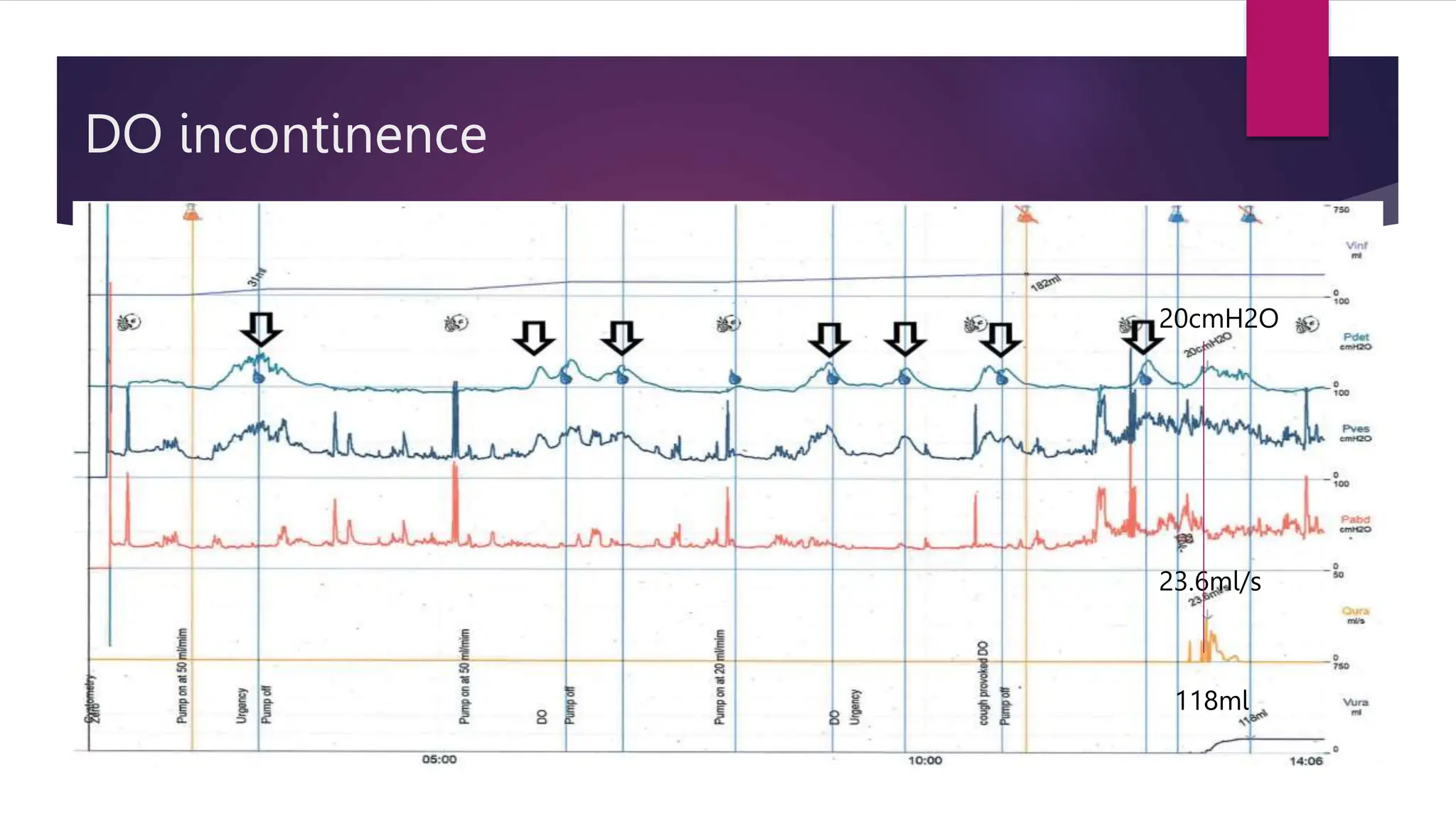
DO incontinence
118ml
23.6ml/s
20cmH2O
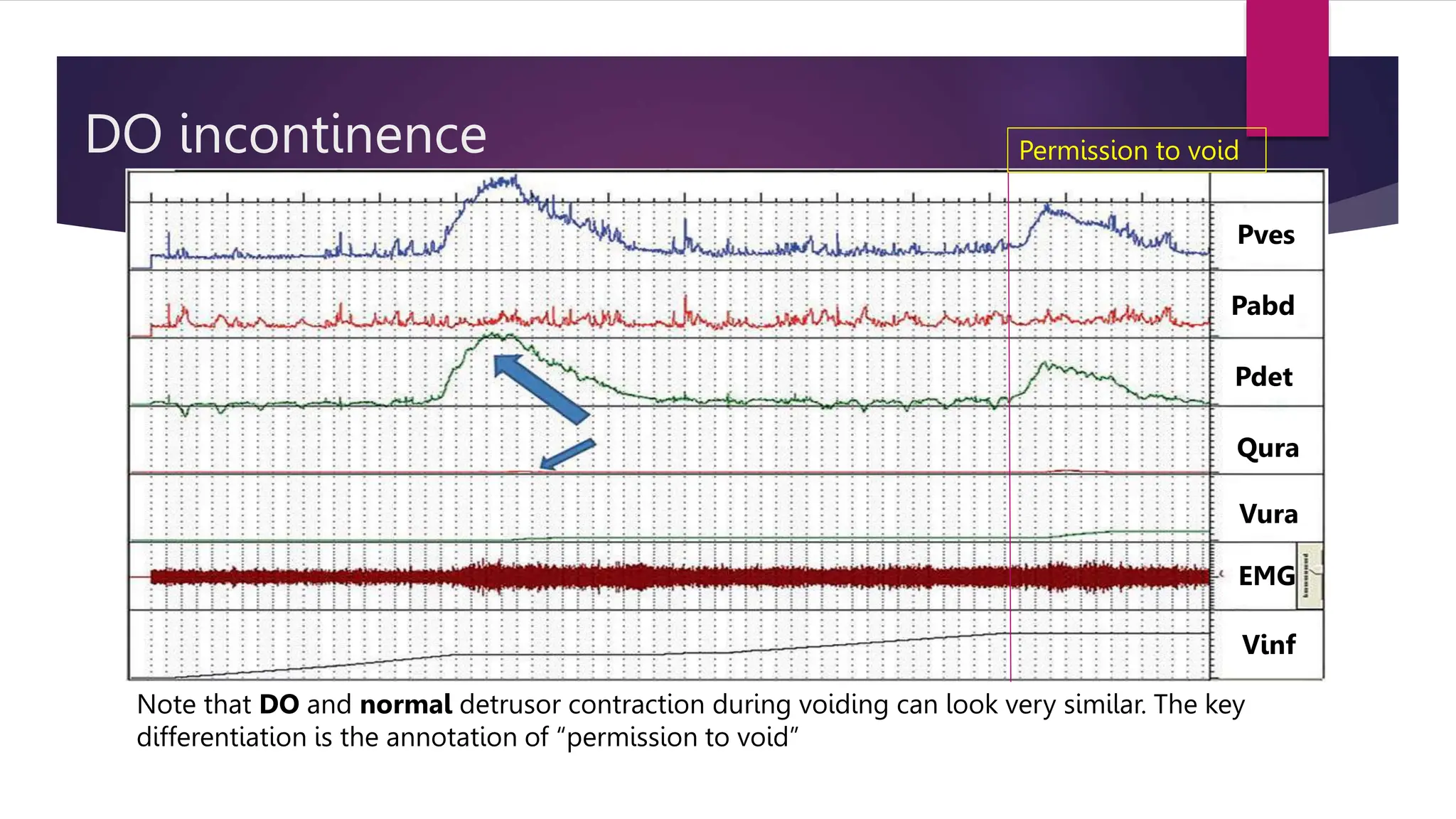
DO incontinence
Pves
Pabd
Pdet
Qura
Vura
EMG
Vinf
Permission to void
Note that DO and normal detrusor contraction during voiding can look very similar. The key
differentiation is the annotation of “permission to void”
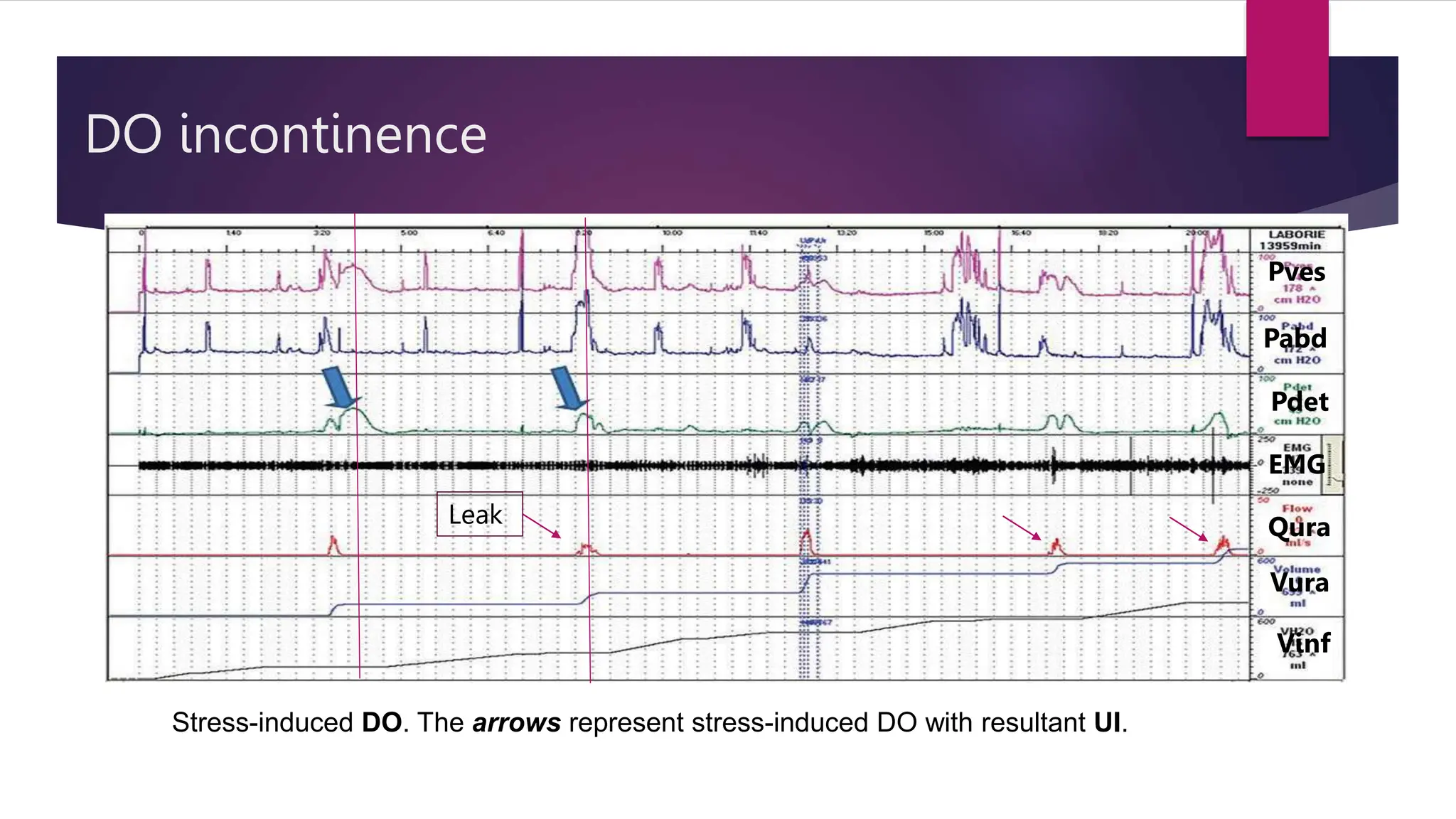
DO incontinence
Pabd
Pves
Pdet
Qura
Vura
EMG
Vinf
Stress-induced DO. The arrows represent stress-induced DO with resultant UI.
Leak
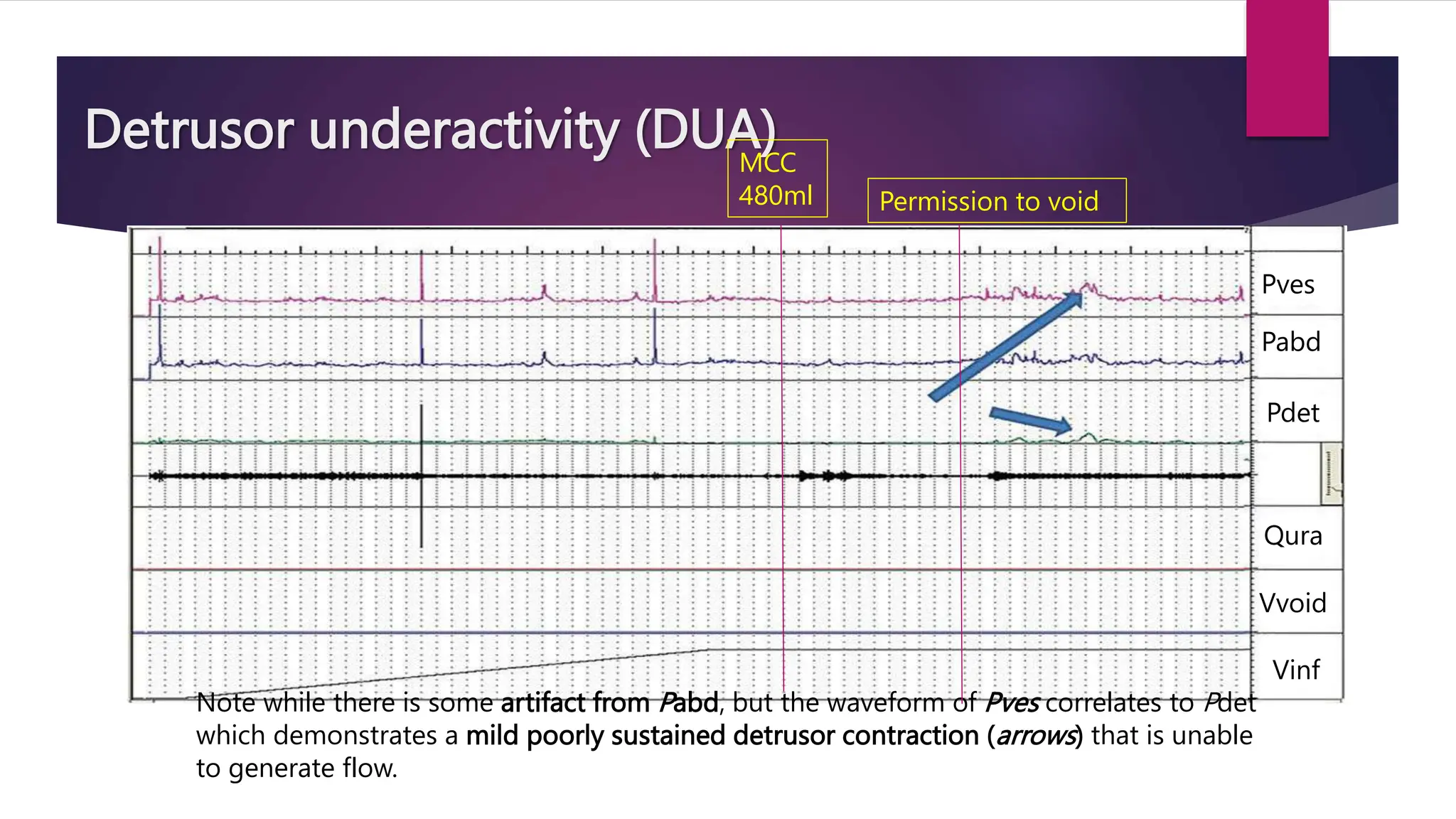
Detrusor underactivity (DUA)
Note while there is some artifact from Pabd, but the waveform of Pves correlates to Pdet
which demonstrates a mild poorly sustained detrusor contraction (arrows) that is unable
to generate flow.
Pves
Pabd
Pdet
Qura
Vvoid
Vinf
MCC
480ml Permission to void
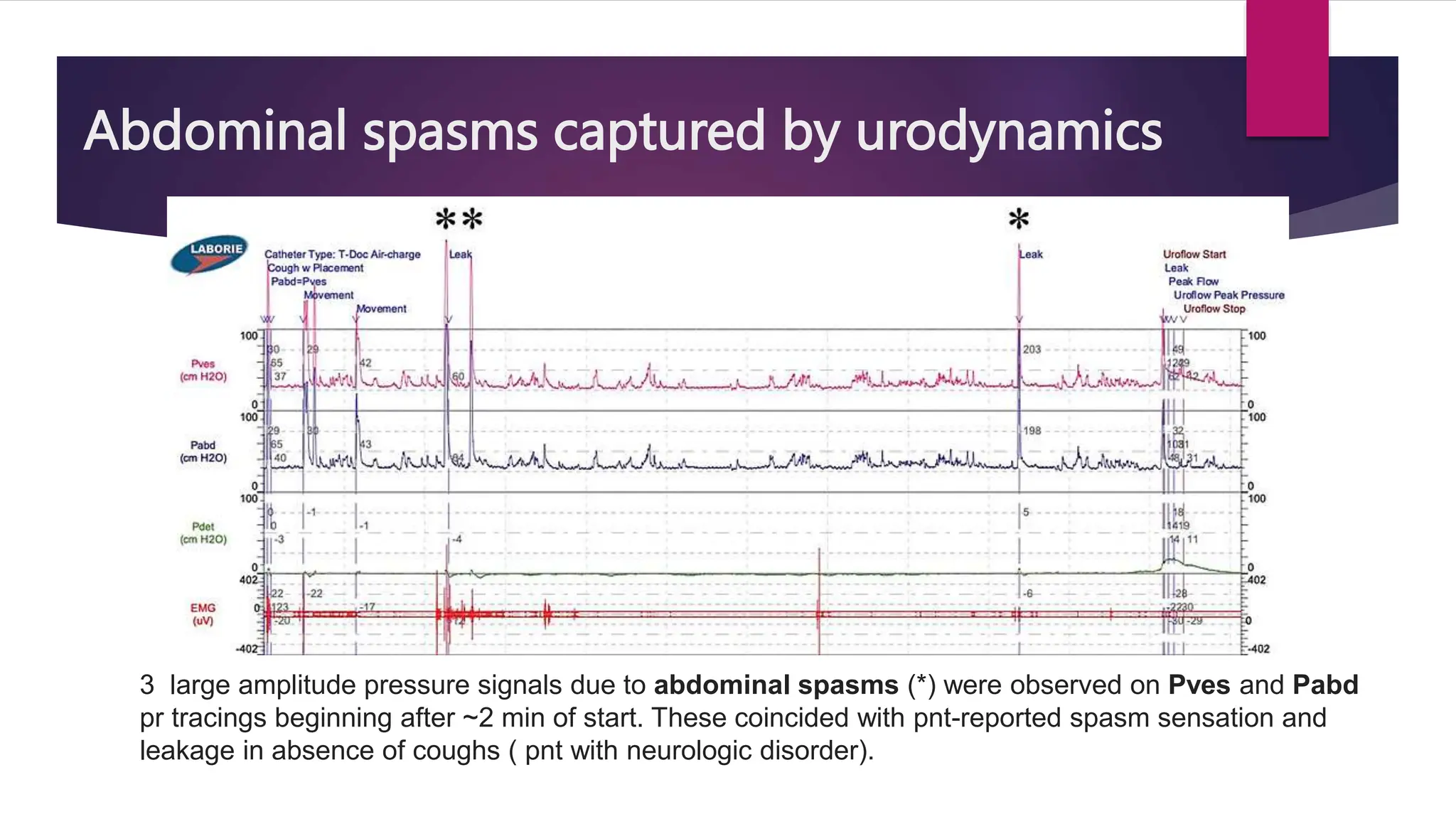
Abdominal spasms captured by urodynamics
3 large amplitude pressure signals due to abdominal spasms (*) were observed on Pves and Pabd
pr tracings beginning after ~2 min of start. These coincided with pnt-reported spasm sensation and
leakage in absence of coughs ( pnt with neurologic disorder).
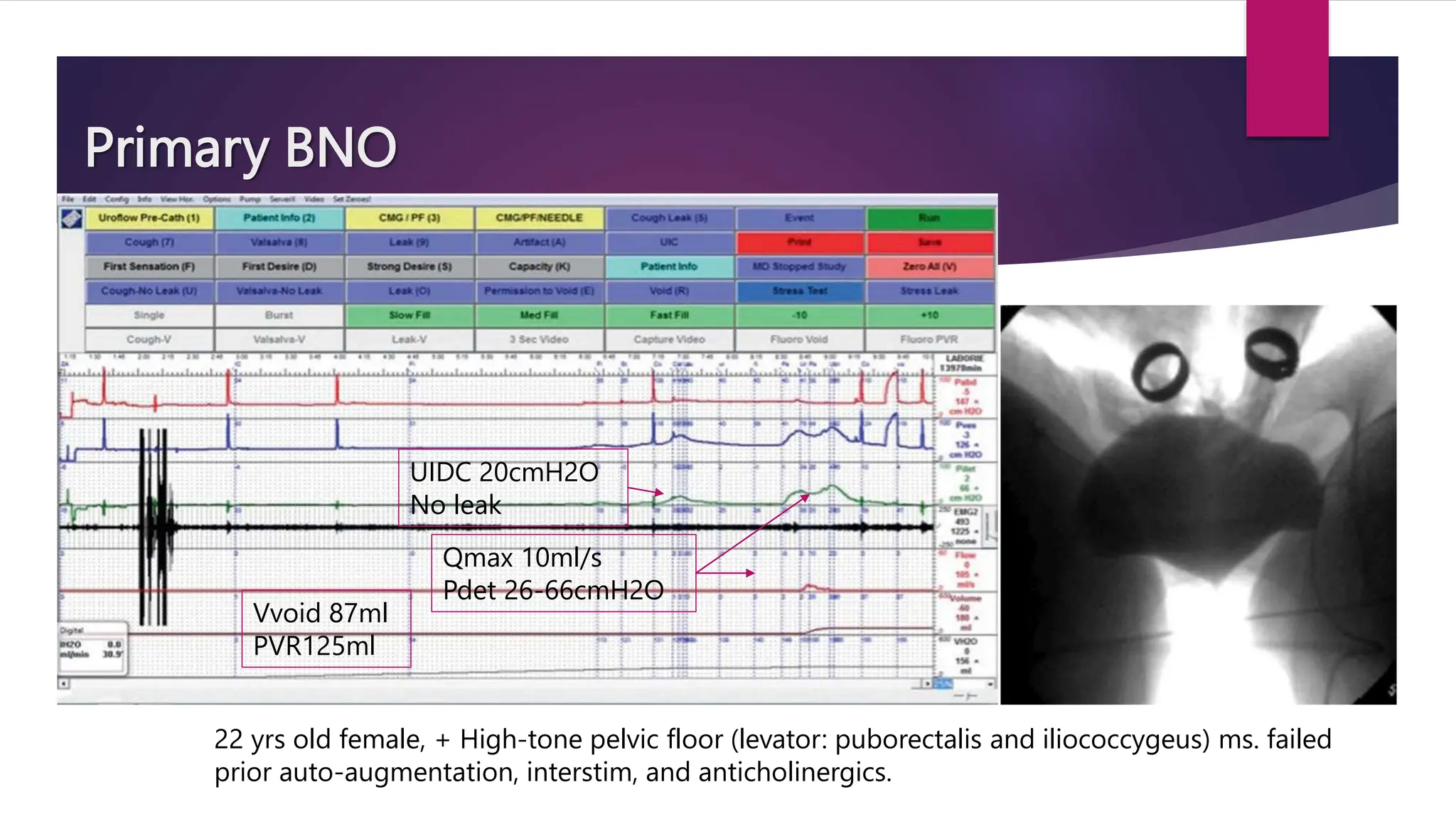
Primary BNO
22 yrs old female, + High-tone pelvic floor (levator: puborectalis and iliococcygeus) ms. failed
prior auto-augmentation, interstim, and anticholinergics.
UIDC 20cmH2O
No leak
Qmax 10ml/s
Pdet 26-66cmH2O
Vvoid 87ml
PVR125ml
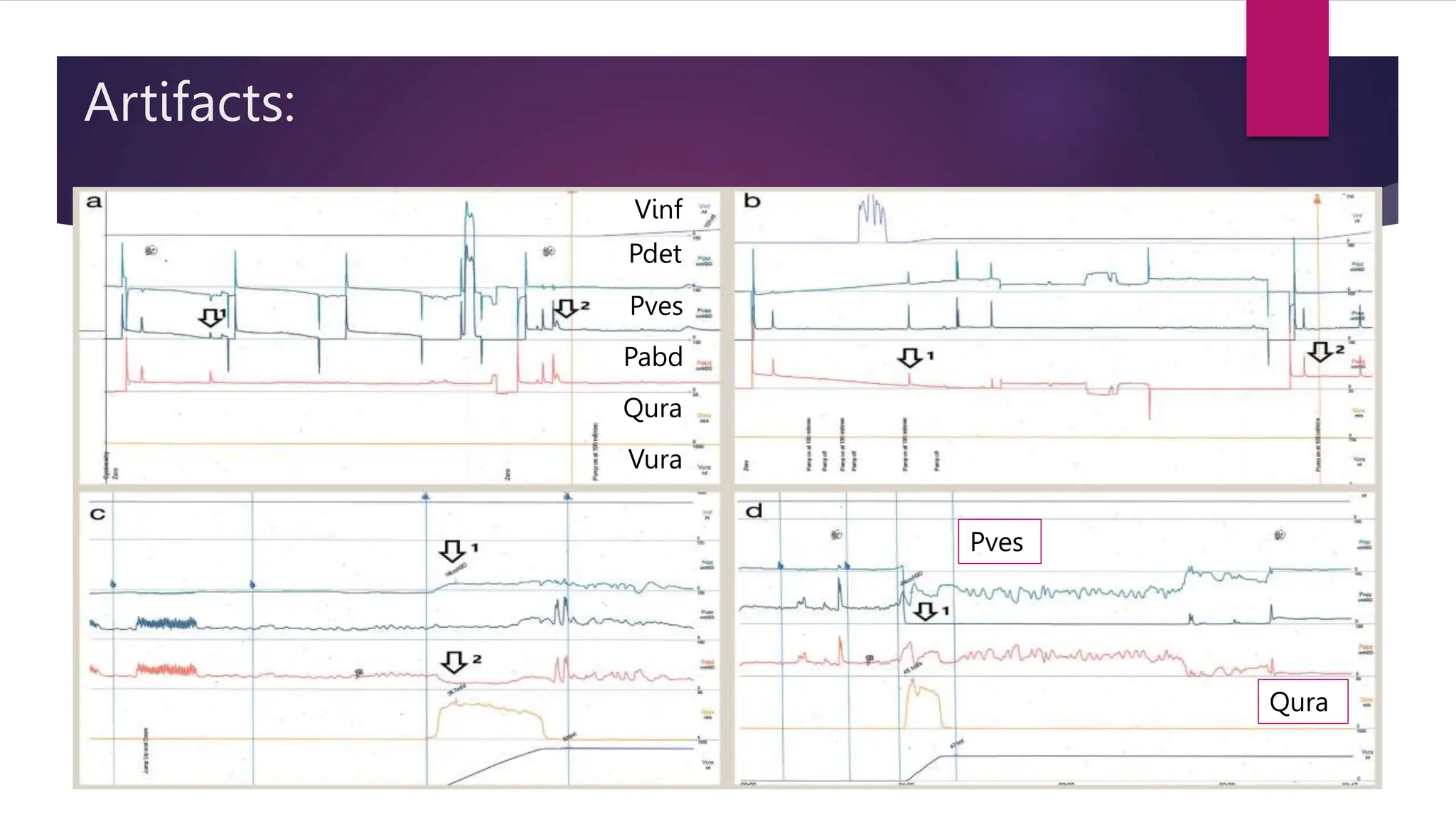
Artifacts:
Vinf
Pdet
Pves
Pabd
Qura
Vura
Qura
Pves
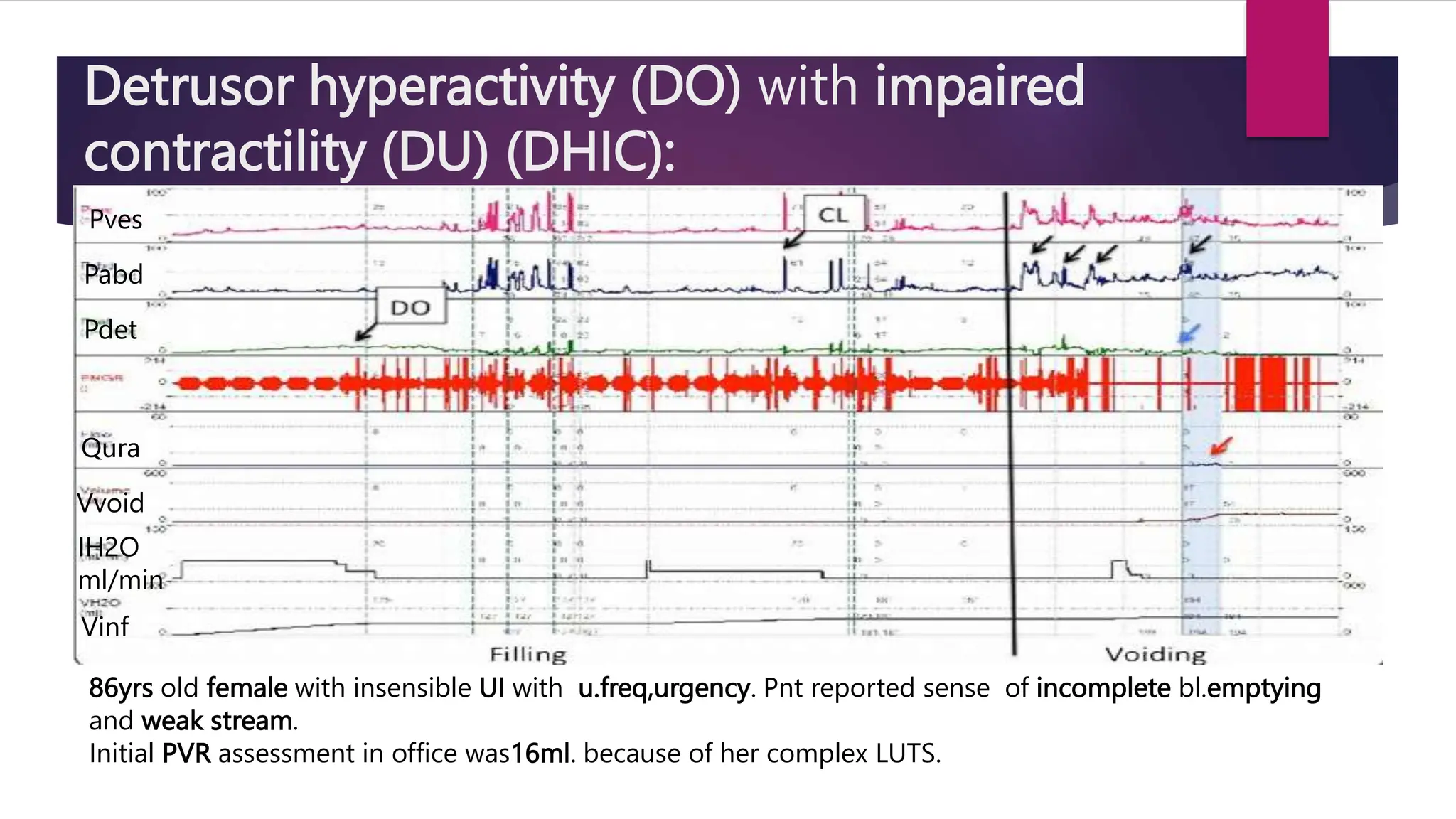
Detrusor hyperactivity (DO) with impaired
contractility (DU) (DHIC):
86yrs old female with insensible UI with u.freq,urgency. Pnt reported sense of incomplete bl.emptying
and weak stream.
Initial PVR assessment in office was16ml. because of her complex LUTS.
Pves
Pabd
Pdet
Qura
Vvoid
Vinf
IH2O
ml/min
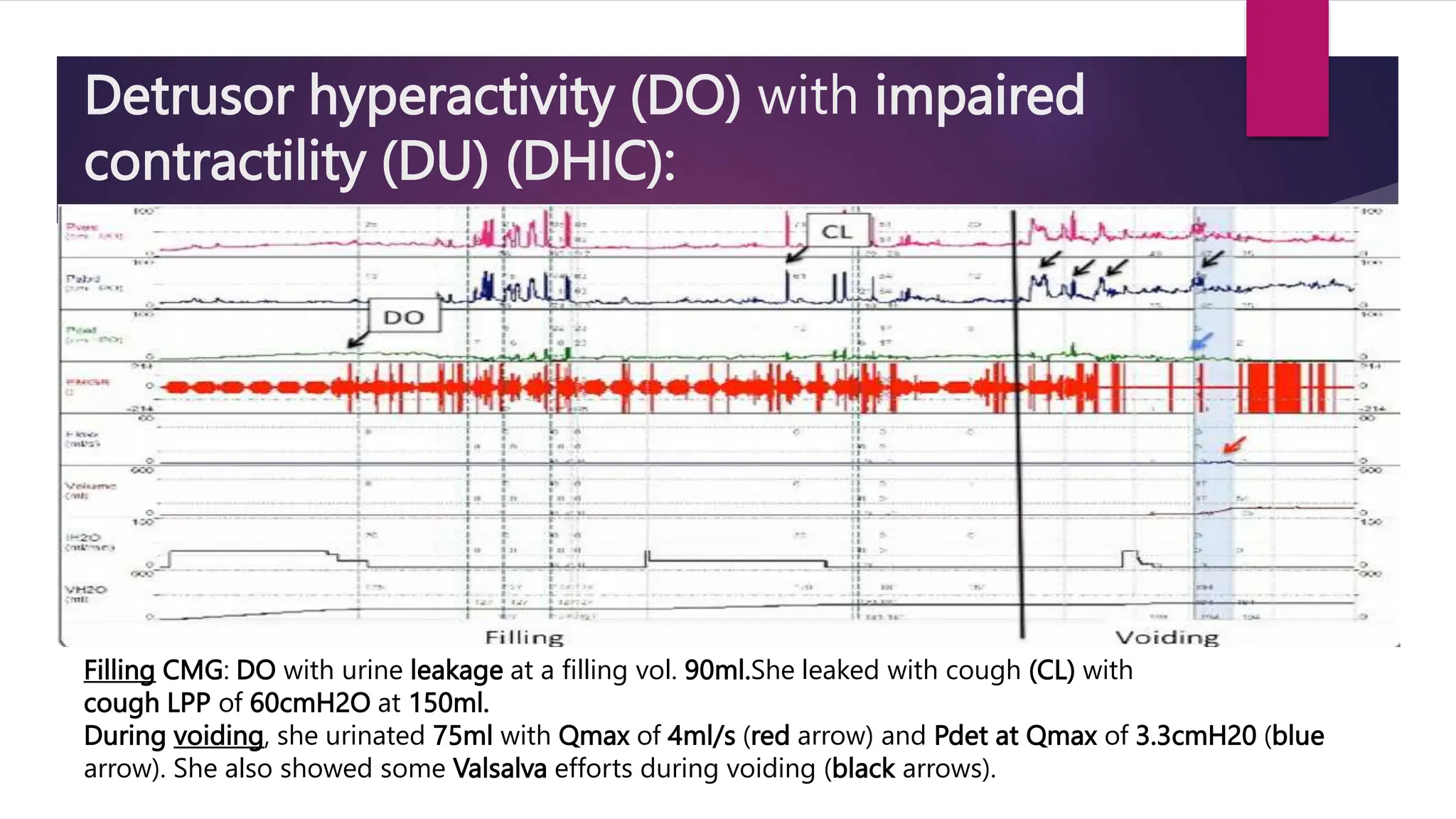
Detrusor hyperactivity (DO) with impaired
contractility (DU) (DHIC):
Filling CMG: DO with urine leakage at a filling vol. 90ml.She leaked with cough (CL) with
cough LPP of 60cmH2O at 150ml.
During voiding, she urinated 75ml with Qmax of 4ml/s (red arrow) and Pdet at Qmax of 3.3cmH20 (blue
arrow). She also showed some Valsalva efforts during voiding (black arrows).
Detrusor hyperactivity (DO) with impaired
contractility (DU) (DHIC):
 DU is defined by ICS as:
Detrusor contraction of reduced strength (BCI < 100) and/or
duration, resulting in prolonged bladder emptying and/or
a failure to achieve complete bladder emptying within
a normal time
span.
There are no standardized cutoff urodynamic values that
define DU.
To be differentiated from AD which is defined by ICS as:
one that cannot be demonstrated to contract during UDS.
Detrusor hyperactivity (DO) with impaired
contractility (DU) (DHIC):
 The elderly (≥ 65yrs) are more predisposed to:
- Fecal impaction,
- Impaired mobility, and
- Use of multiple medications that can affect det.function.
Detrusor function decline with age, probably due to normal
det.m.changes with aging with decreased sm.m. concentration
and increased collagen deposition.
DU tends to be more in men than women.
Detrusor hyperactivity (DO) with impaired
contractility (DU) (DHIC):
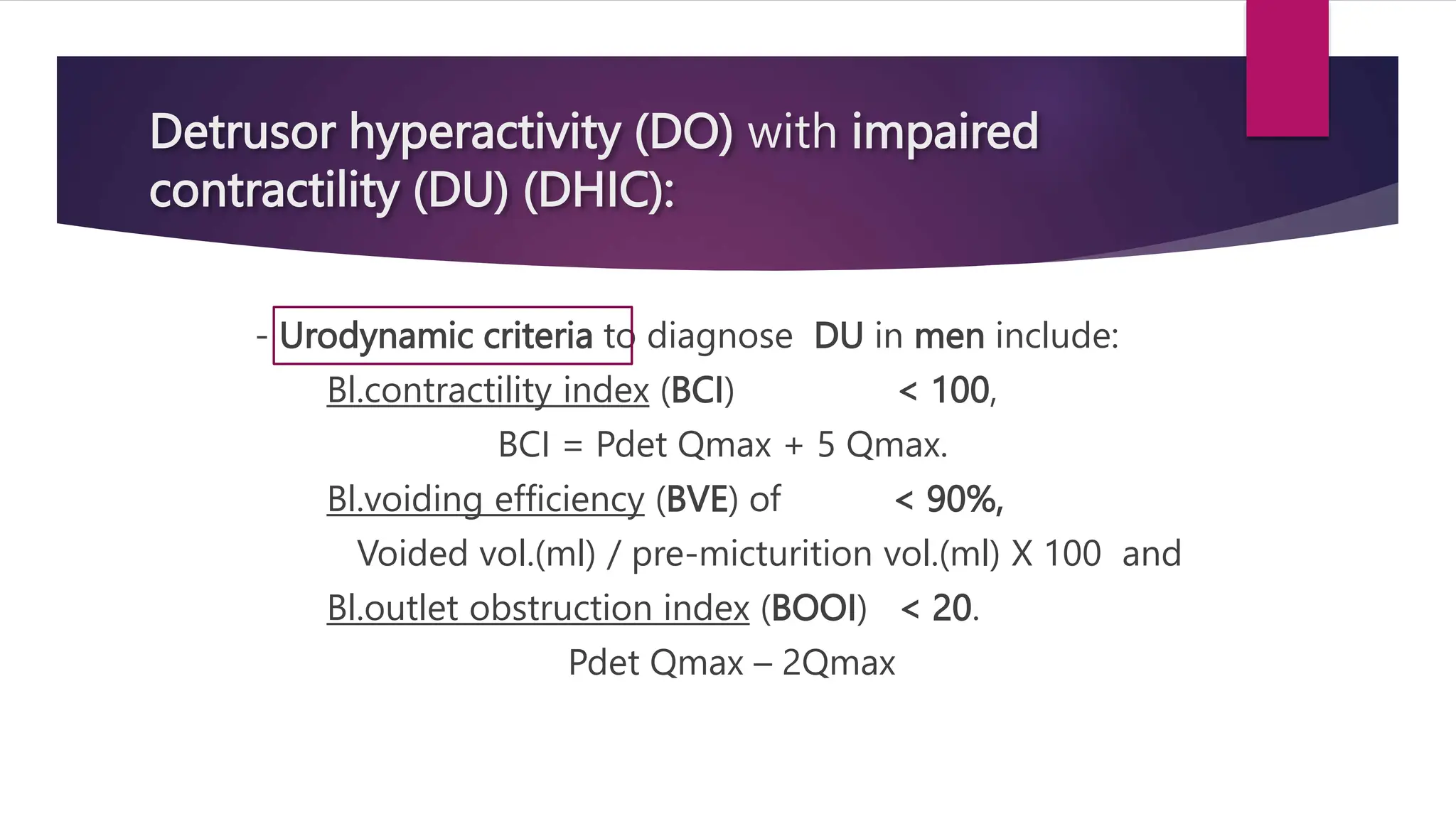
- Urodynamic criteria to diagnose DU in men include:
Bl.contractility index (BCI) < 100,
BCI = Pdet Qmax + 5 Qmax.
Bl.voiding efficiency (BVE) of < 90%,
Voided vol.(ml) / pre-micturition vol.(ml) X 100 and
Bl.outlet obstruction index (BOOI) < 20.
Pdet Qmax – 2Qmax
Compliance
Filling cystometry (CMG): Procedure:
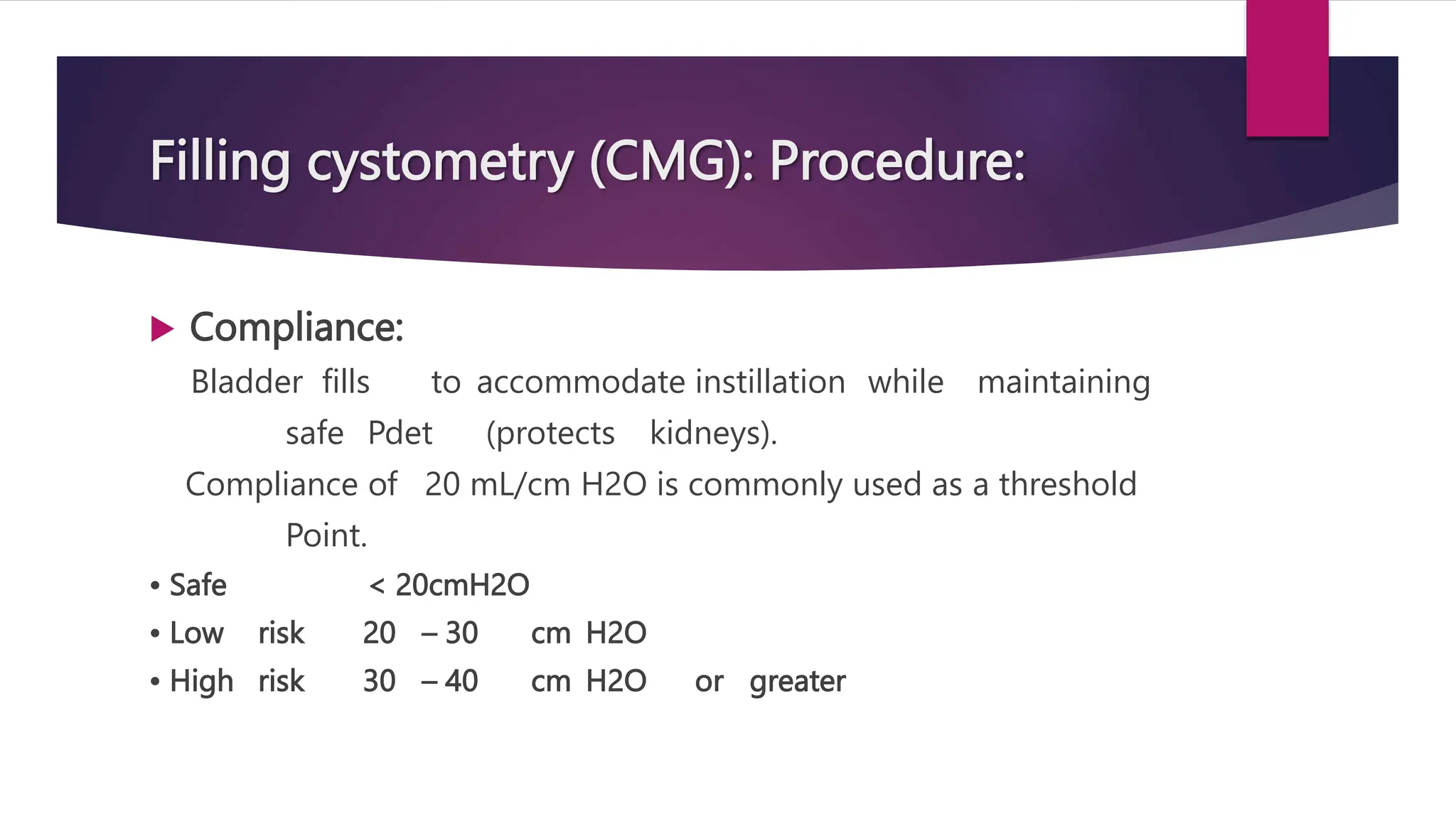
 Compliance:
Bladder fills to accommodate instillation while maintaining
safe Pdet (protects kidneys).
Compliance of 20 mL/cm H2O is commonly used as a threshold
Point.
• Safe < 20cmH2O
• Low risk 20 – 30 cm H2O
• High risk 30 – 40 cm H2O or greater
Filling cystometry (CMG): Procedure:
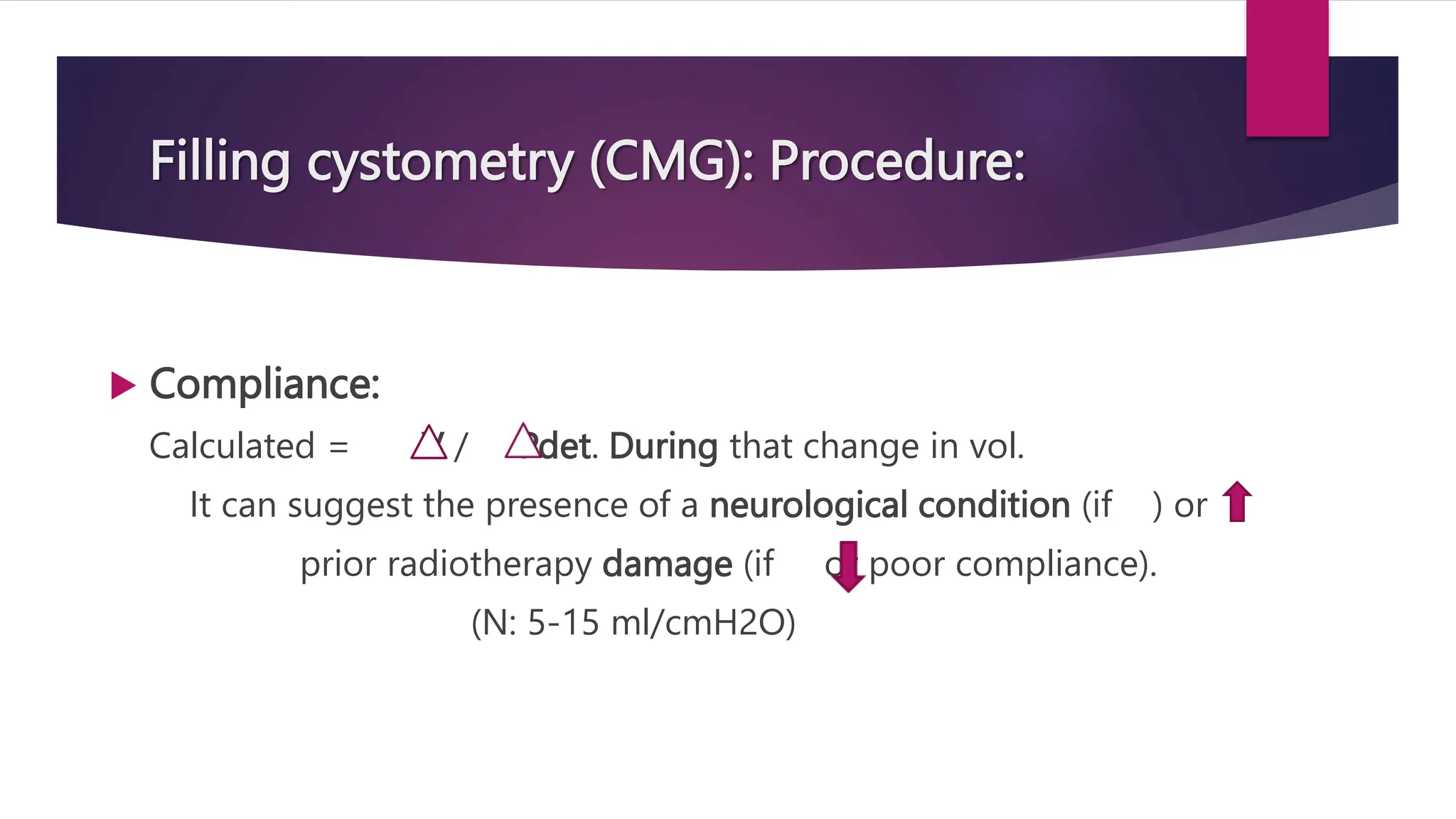
 Compliance:
Calculated = V / Pdet. During that change in vol.
It can suggest the presence of a neurological condition (if ) or
prior radiotherapy damage (if or poor compliance).
(N: 5-15 ml/cmH2O)
Filling cystometry (CMG): Procedure:
Compliance:
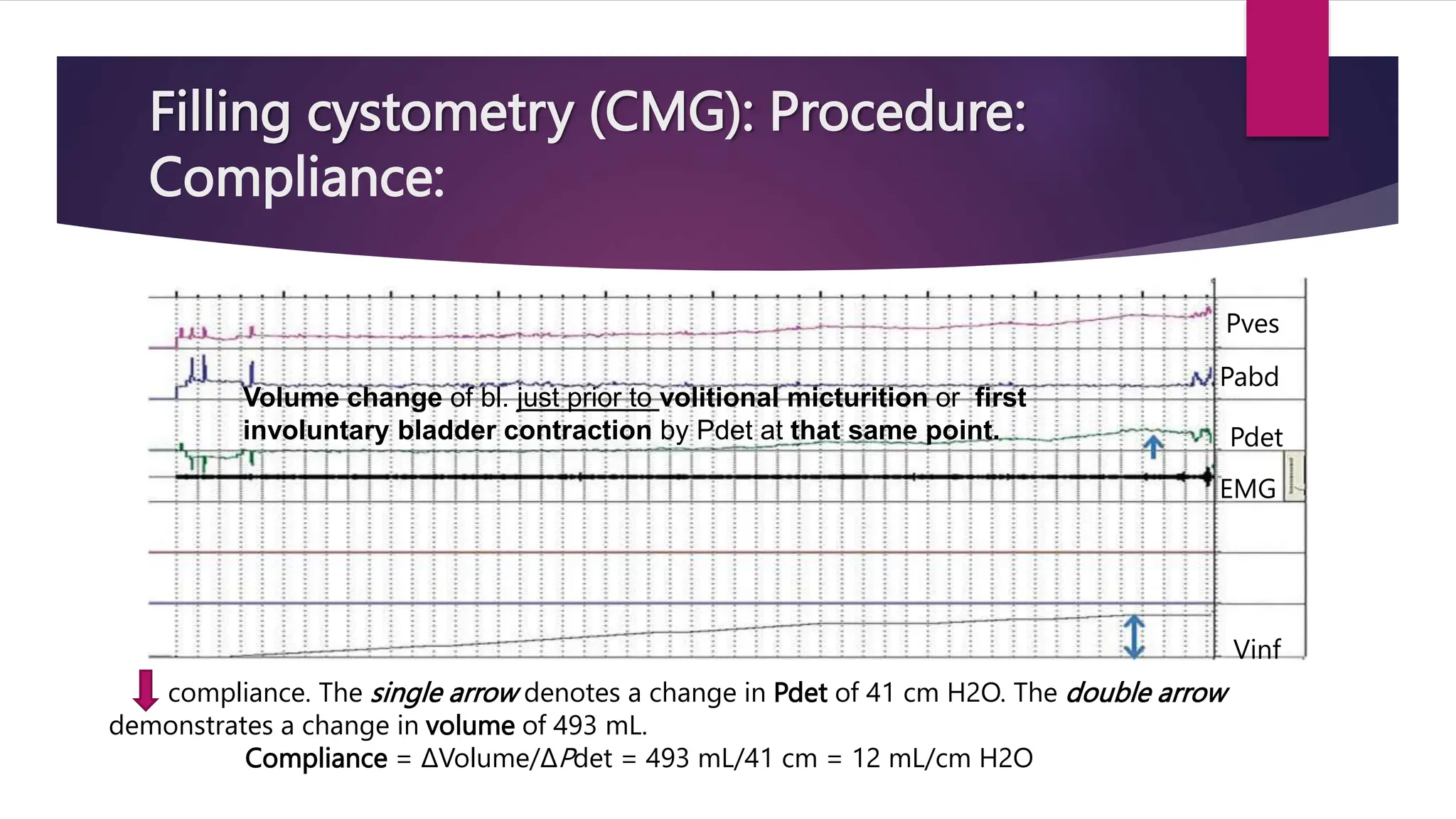
compliance. The single arrow denotes a change in Pdet of 41 cm H2O. The double arrow
demonstrates a change in volume of 493 mL.
Compliance = ΔVolume/ΔPdet = 493 mL/41 cm = 12 mL/cm H2O
Pves
Pabd
Pdet
EMG
Vinf
Volume change of bl. just prior to volitional micturition or first
involuntary bladder contraction by Pdet at that same point.
Filling cystometry (CMG): Procedure:
Compliance:
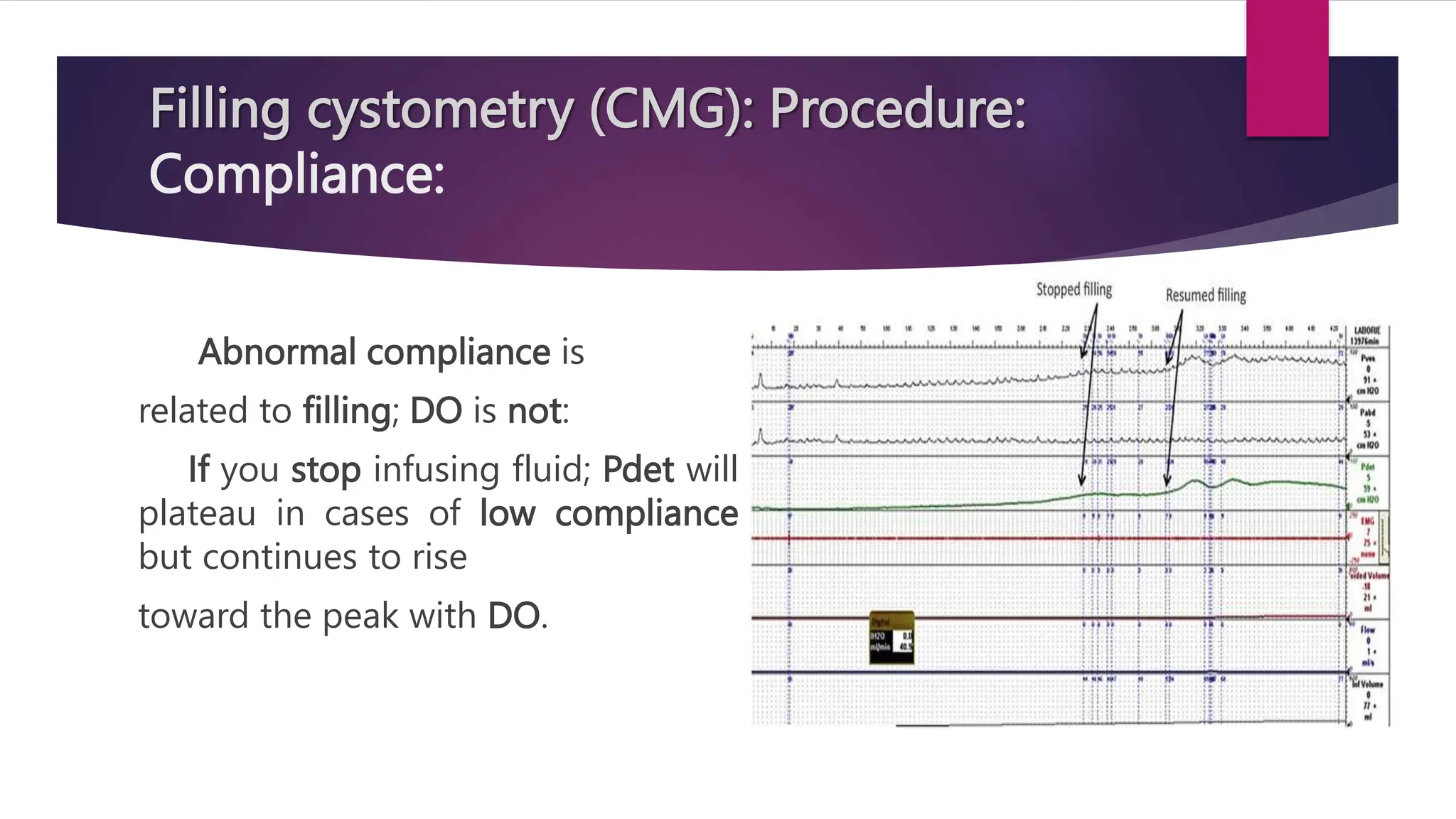
Abnormal compliance is
related to filling; DO is not:
If you stop infusing fluid; Pdet will
plateau in cases of low compliance
but continues to rise
toward the peak with DO.
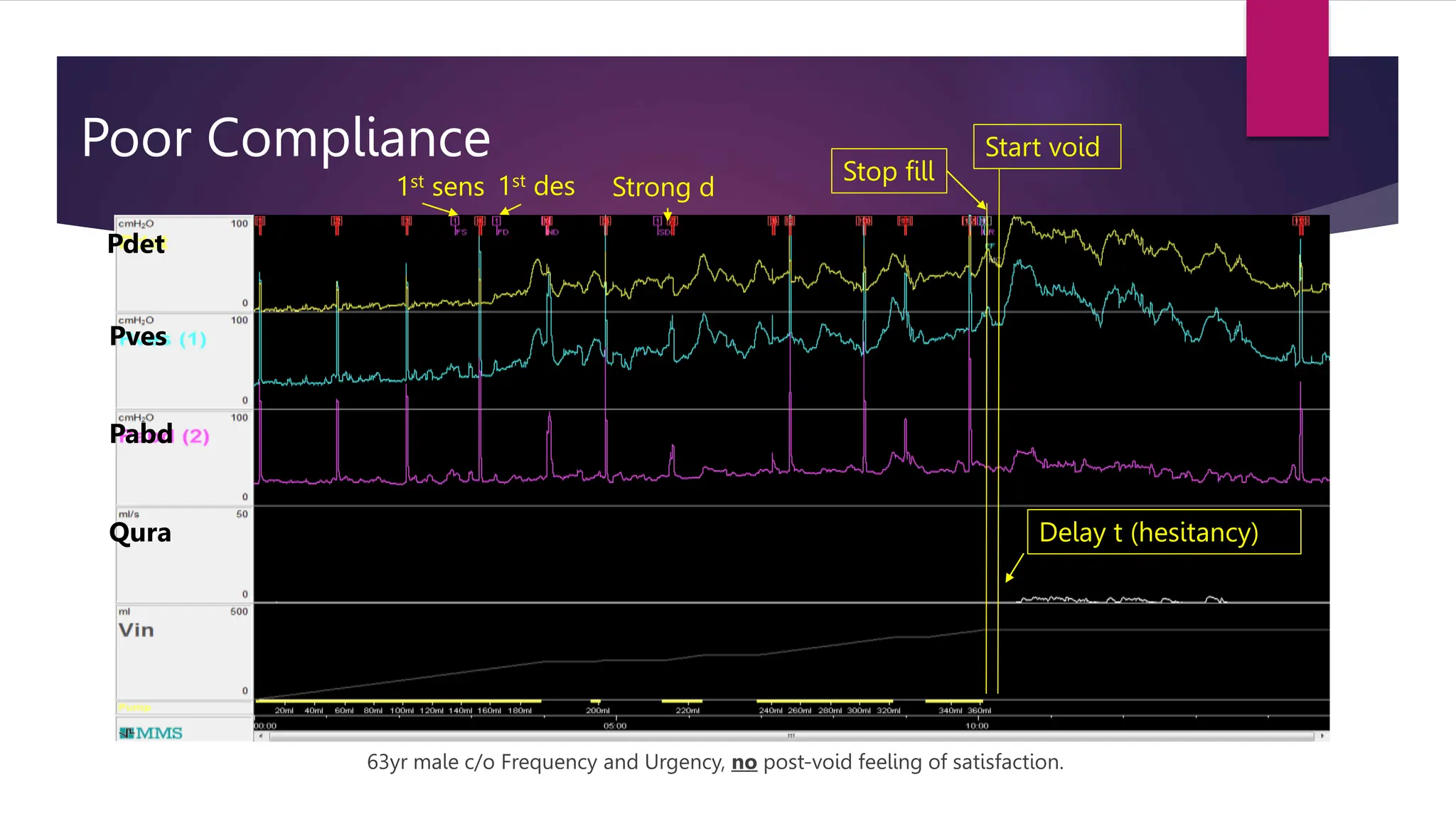
Poor Compliance
63yr male c/o Frequency and Urgency, no post-void feeling of satisfaction.
Pdet
Pves
Pabd
Qura
1st sens 1st des Strong d
Start void
Delay t (hesitancy)
Stop fill
Filling cystometry (CMG): Procedure:
Compliance:
Factors adversely affecting normal bladder compliance:
- Detrusor hypertrophy (Long-standing BOO, V-U reflux.).
- Fibrosis ( bl. radiation, multiple surgeries, multiple bl.
tumor resections, rec. inf., chr. infl.).
- Defunctionalized bl. after long-term anuria ( or u.output is <
300mL/24h), Long-term indwelling cath. ( R.transpl.)
- Neurogenic dysfunction.
- Posterior urethral valve (PUV).
Factors adversely affecting normal bladder compliance:
Video urodynamics/VCUG can be helpful as high-grade reflux
and large bladder diverticulum can act as a “pop-
off”masking underlying abnormal compliance.
Filling cystometry (CMG): Procedure:
Compliance:
Factors adversely affecting normal bladder compliance:
Testing of DLPP in pnts with abnormal compliance
can be helpful in risk assessment of future UUT deterioration.
DLPP is defined as the lowest value of Pdet at which leakage is
observed in absence of abdominal strain (Pves) or detrusor
contraction (Pdet).
However, in certain individuals, a DLPP of less than 40 may also
put the UUT at risk.
Filling cystometry (CMG): Procedure:
Compliance:
Filling cystometry (CMG): Procedure:
Compliance:
Contracted bladder:
Bl. contracture is irreversible when the cystographic or
cystometric bl. capacity was < 100 ml, with
filling pr. and bl. compliance proved by
maxm.bl. capacity under anesthesia.
Types:
- Defunctionalized (reversible).
- Irreversible.
Leak point pressures
Filling cystometry (CMG): Procedure:
 Urodynamic Stress Test: Abdominal Leak Point Pressure
(ALPP): (in pnts with SUI)
The lowest Pves at which urine leakage occurs due to Pabd
in absence of a detrusor contraction.
When Pabd increase is attained by Valsalva maneuver,
ALPP is called Valsalva leak point pressure (VLPP).
It is the best measure of ureth.sph. strength and it is used to evaluate
magnitude of abdominal force needed to drive urine across a closed
ureth.sph.
Filling cystometry (CMG): Procedure:
 Urodynamic Stress Test: Abdominal Leak Point Pressure
(ALPP):
The bl. is filled with 200 mL or ½ MCC.
Then, the pnt progressively Pabd by valsalva until leakage occurs.
If no leakage occurs even when the pressure is greater than
120 cmH2O, coughing is used to induce leakage.
Filling cystometry (CMG): Procedure:
 Urodynamic Stress Test: Abdominal Leak Point Pressure
(ALPP):
ALPPs < 60 cmH2O indicate ISD (SUI type III), whereas
ALPPs > 90 cmH2O are usually associated with pure urethral
hypermobility ( SUI type I-II), and
ALPPs in between is interpreted as gray zone.
Filling cystometry (CMG): Procedure:
 Urodynamic Stress Test: Abdominal Leak Point Pressure
(ALPP):
Pnt positioning is important factor when performing
LPP testing. It is lower in standing than in sitting or supine
positions. As a result, it is important that pnt’s position be
specified when performing the procedure and consistent
during the entire examination.
Filling cystometry (CMG): Procedure:
 Urodynamic Stress Test: Abdominal Leak Point Pressure
(ALPP):
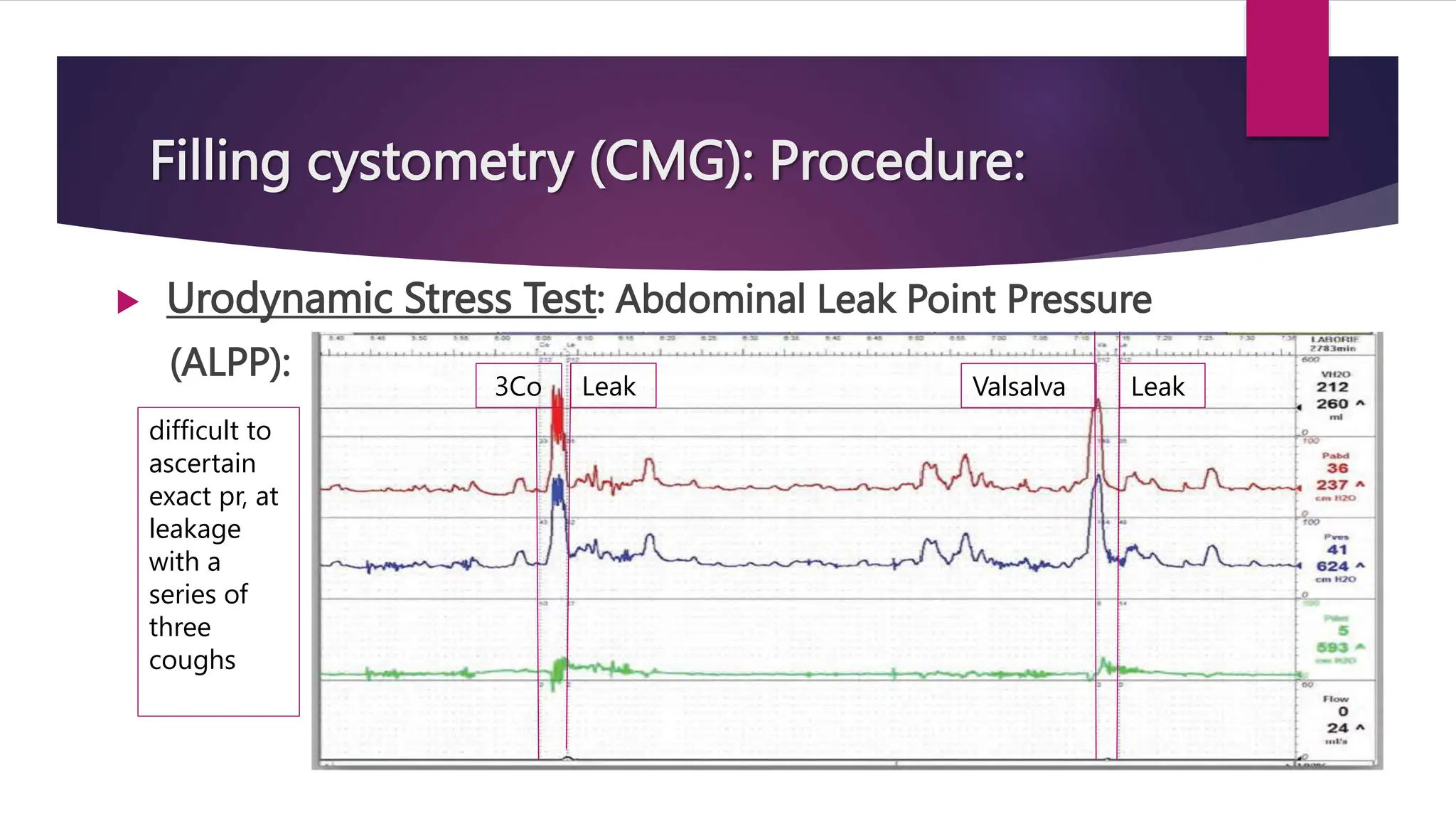
U.leakage determined by visual observation may be
challenging in some pnts due to positioning, body habitus,
or leakage of low volume. Radiographic visualization of
leakage may be useful in these cases but is less sensitive.
Filling cystometry (CMG): Procedure:
 Urodynamic Stress Test: Abdominal Leak Point Pressure
(ALPP):
Leak
Valsalva
3Co Leak
difficult to
ascertain
exact pr, at
leakage
with a
series of
three
coughs
Filling cystometry (CMG): Procedure:
 Detrusor Leak Point Pressure ( DLPP ):[ prev.bl. LPP ]
Defined by ICS as:
The lowest value of Pdet at which leakage is observed in
absence of Pabd or det. contraction.
High DLPP > 40 cm H2O may put pnts at risk for UUT
deterioration, or 2ry bl. damage in cases with neurological
dis. such as paraplegia, MS or children with MMC.
There are no data on any correlation between Det. LPP
and UUT damage in non-neurogenic pnts.
Filling cystometry (CMG): Procedure:
 Detrusor Leak Point Pressure ( DLPP ):[ prev.bl. LPP ]
The main determinant of a normal low Pdet, during filling:
- Bl.compliance which in turn is dependent on:
- Viscoelastic properties of detrusor m.,
- Normal bl.wall composition, and
- Normal neural mechanisms.
Filling cystometry (CMG): Procedure:
 Detrusor Leak Point Pressure ( DLPP ):[ bladder LPP ]
In neurogenic bladder, DLPP > 40 cmH2O is considered as high-risk
factor for upper urinary tract deterioration.
 Detrusor overactivity leak point pressure (DOLPP):
lowest Pdet with DO at which urine leakage first occurs in the
absence of voluntary detrusor contraction or Pabd.
Filling cystometry (CMG): Procedure:
 Detrusor Leak Point Pressure ( DLPP ):[ bladder LPP ]
Detrusor leak point volume (DLPV):
Bladder volume at which first urine leakage occurs,
either with DO or low compliance.
Filling cystometry (CMG): Procedure:
 Detrusor Leak Point Pressure
( DLPP ):[ bladder LPP ]
DLPP > 40 cmH2O in pnt
with long-term chronic stage of
cauda equine syndrome with
bilateral chronic poly-
radiculopathy below L5 level.
Filling cystometry (CMG): Procedure:
 Cystometry ends with ‘permission to void’ or with incontinence
(involuntary loss) of the total bladder content.
 Fluid type and temperature; filling method and rate, catheter sizes
and pressure recording technique, patient position, assessment and
documentation of sensations, observations: contractions,
compliance are recorded.
Bladder capacity
Filling cystometry (CMG): Procedure:
 Bladder capacities: (in pnt. with normal bl. Sens.)
- Cystometric bl. Capacity (CBC): The bl. Vol. at the end
of filling CMG = voided vol. + any PVR.
- Maximum cystometric capacity (MCC): Vol. at the
strong desire to void.
- Functional bladder capacity (FBC): The working, day-to-
day capacity of UB., obtained as largest recorded
vol. on FVC. Normal cutoffs vary.
Filling cystometry (CMG): Procedure:
 Bladder capacities:
- Maximum bl. Capacity under anaesthesia:
Vol. to which the bl. can be filled under deep general
or spinal anaesth. Should be qualified according to:
. Type of anaesth.
. Speed of filling.
. Length of time of filling.
. Pressure at which the bladder is filled.
Filling cystometry (CMG): Procedure:
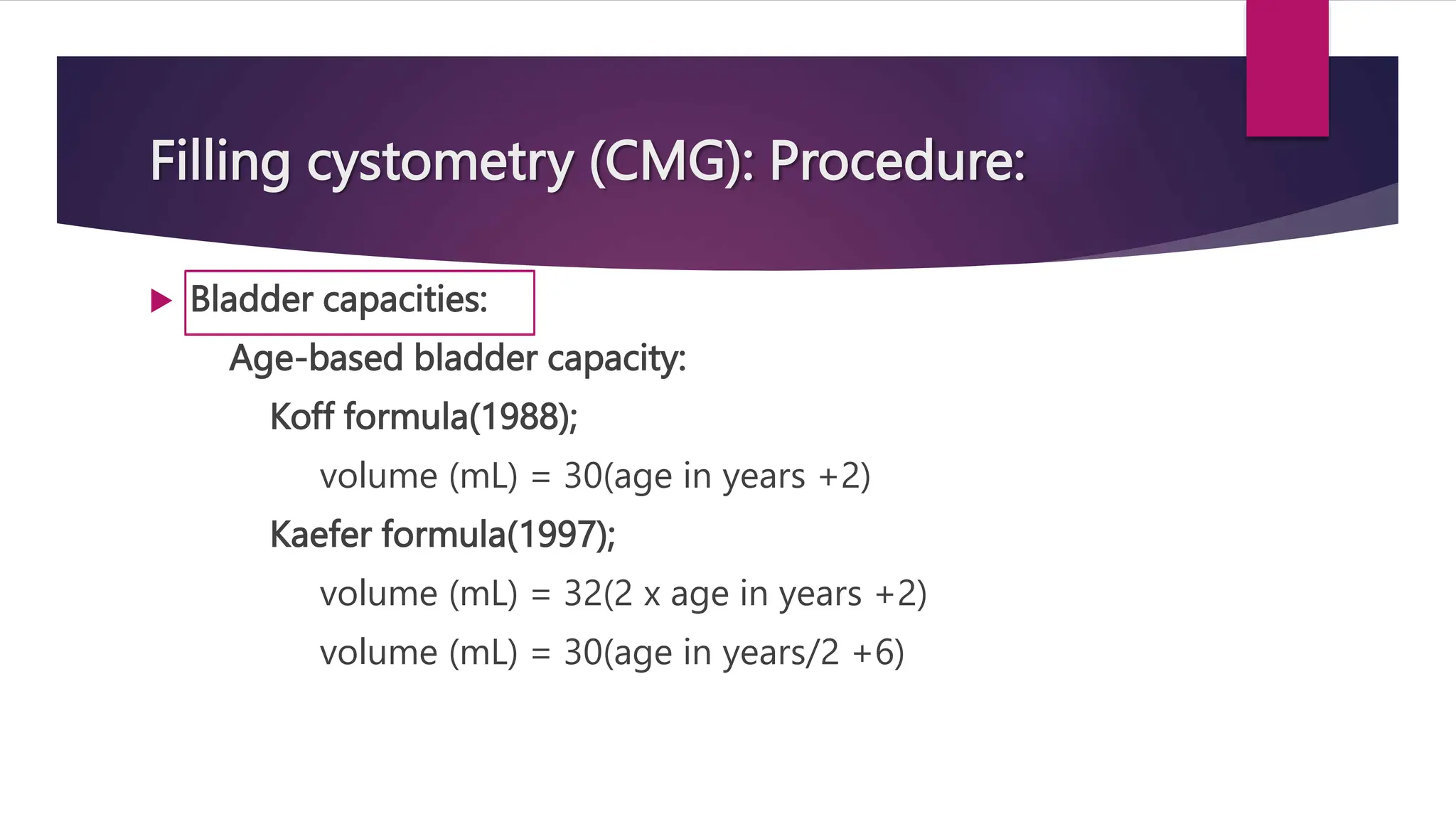
 Bladder capacities:
Age-based bladder capacity:
Koff formula(1988);
volume (mL) = 30(age in years +2)
Kaefer formula(1997);
volume (mL) = 32(2 x age in years +2)
volume (mL) = 30(age in years/2 +6)
Artefacts
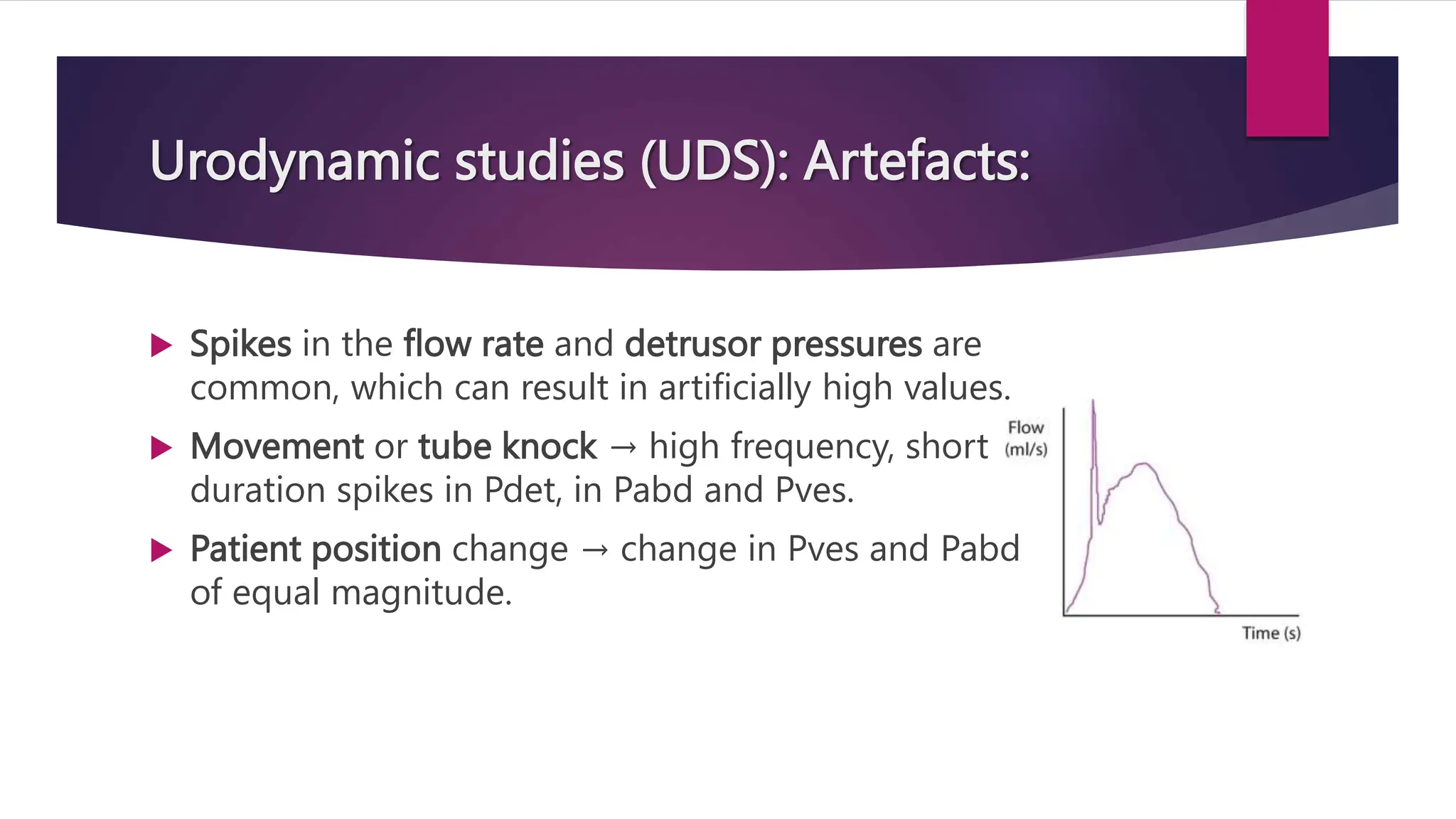
Urodynamic studies (UDS): Artefacts:
 Spikes in the flow rate and detrusor pressures are
common, which can result in artificially high values.
 Movement or tube knock → high frequency, short
duration spikes in Pdet, in Pabd and Pves.
 Patient position change → change in Pves and Pabd
of equal magnitude.
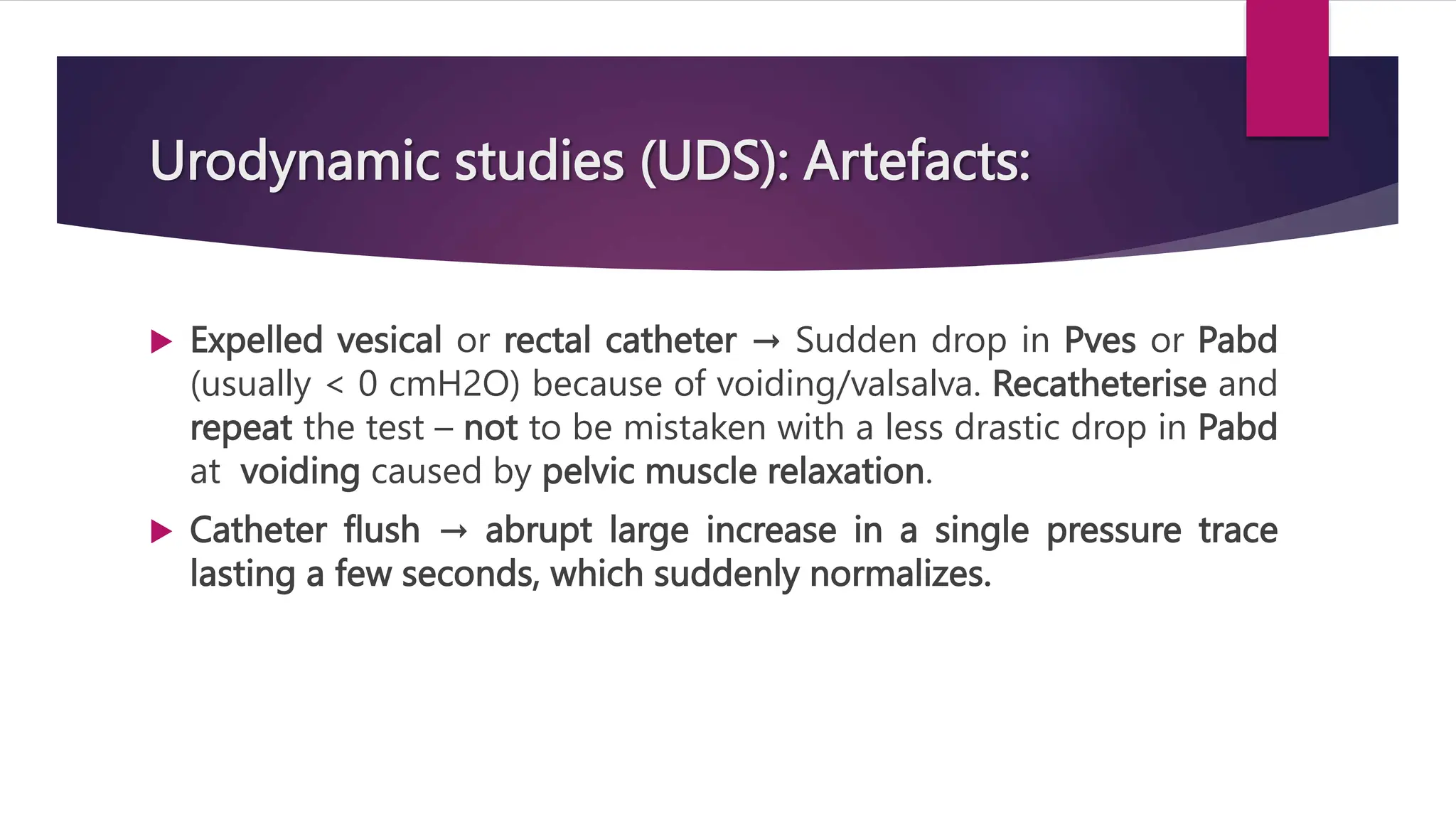
Urodynamic studies (UDS): Artefacts:
 Expelled vesical or rectal catheter → Sudden drop in Pves or Pabd
(usually < 0 cmH2O) because of voiding/valsalva. Recatheterise and
repeat the test – not to be mistaken with a less drastic drop in Pabd
at voiding caused by pelvic muscle relaxation.
 Catheter flush → abrupt large increase in a single pressure trace
lasting a few seconds, which suddenly normalizes.
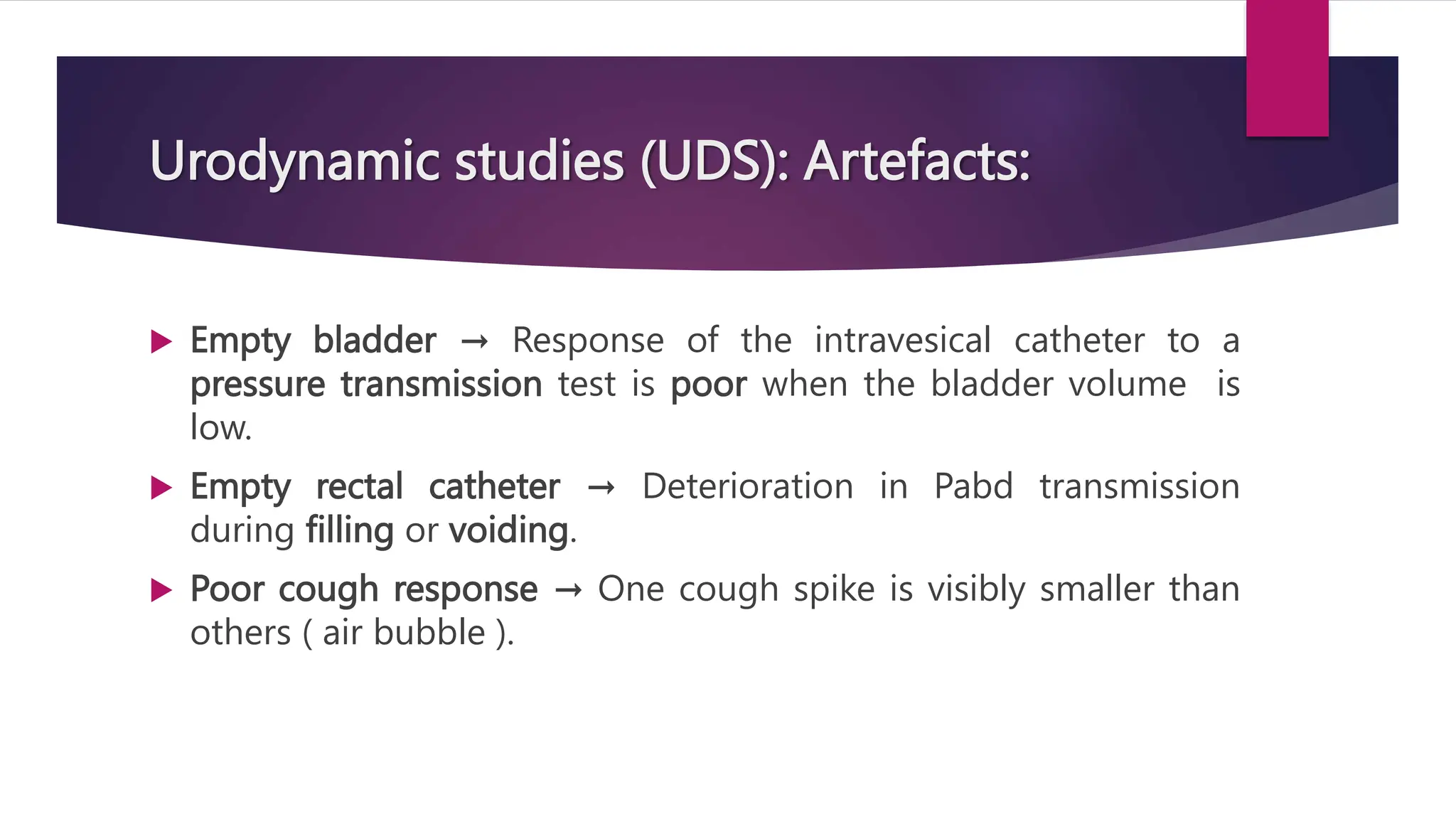
Urodynamic studies (UDS): Artefacts:
 Empty bladder → Response of the intravesical catheter to a
pressure transmission test is poor when the bladder volume is
low.
 Empty rectal catheter → Deterioration in Pabd transmission
during filling or voiding.
 Poor cough response → One cough spike is visibly smaller than
others ( air bubble ).
Urodynamic studies (UDS): Artefacts:
 Poor response to live signal or dead signal ( air bubble ).
 Rectal contractions → Temporary phasic ↑ in Pabd
without change in Pves, resulting in negative deflections of
Pdet.
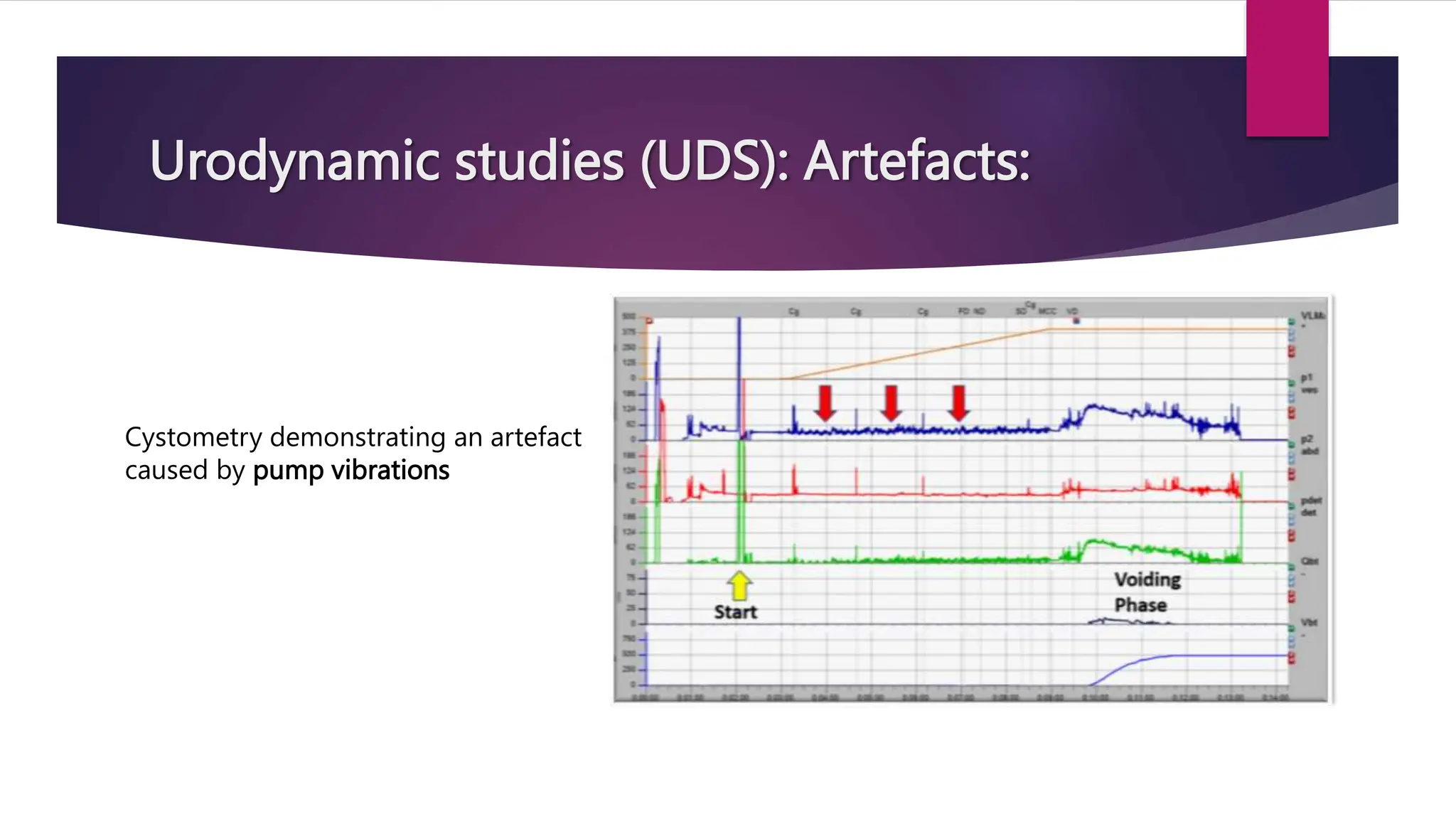
 Pump vibrations → Stable frequency oscillations of small but
constant amplitude.
Urodynamic studies (UDS): Artefacts:
Cystometry demonstrating an artefact
caused by pump vibrations
Urodynamic studies (UDS):
 Sometimes the results of the urodynamic observations do not
correspond with the patient’s symptoms;
- ensure no artefacts.
- immediately repeat the test.
- supplementary tests: Pad test, videocystometry,
ambulatory urodynamics.
urethral pressure profile tests.
Pressure-Flow study (PFS)
Urodynamic studies (UDS):
Pressure-Flow study (PFS):
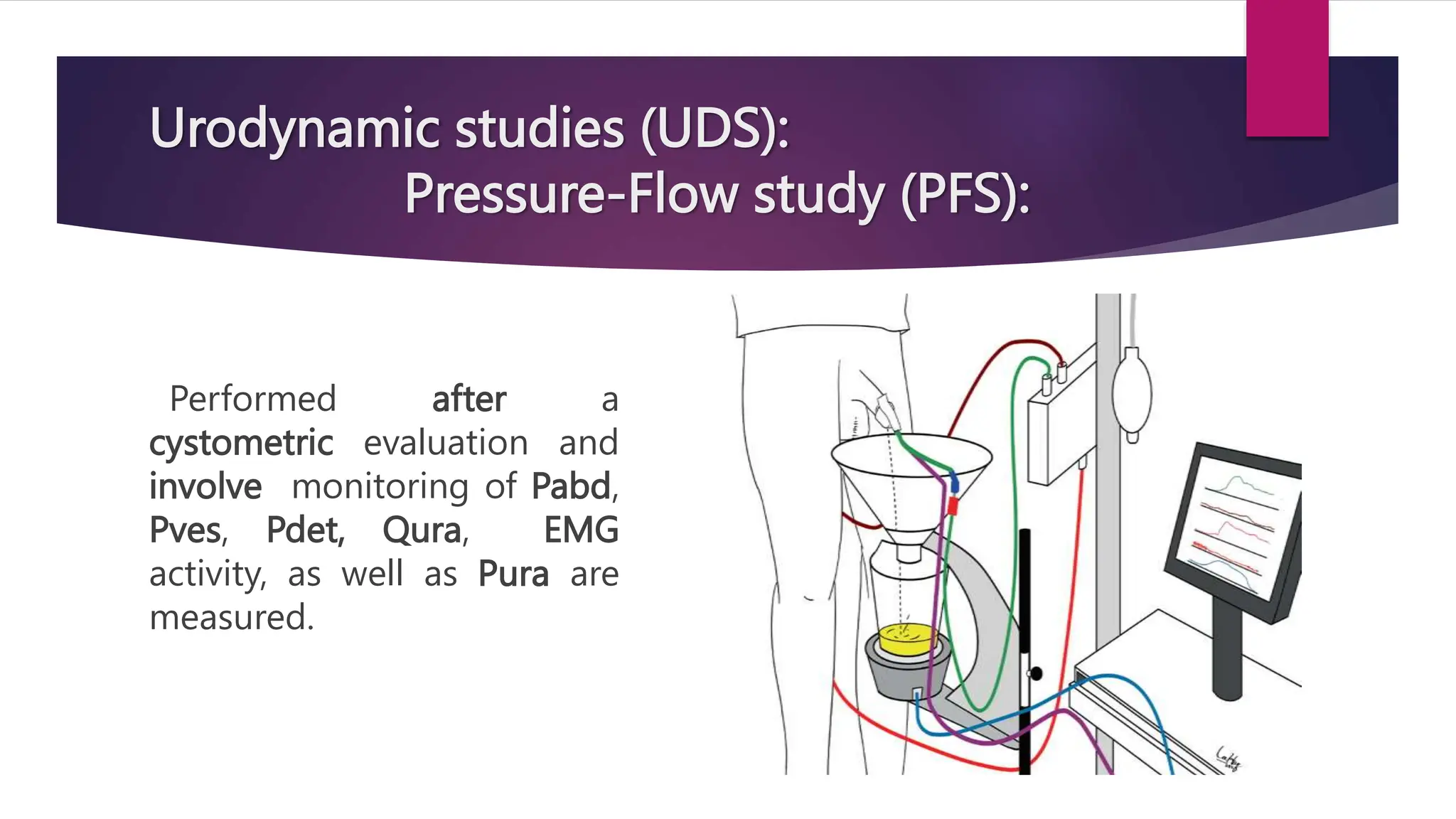
Performed after a
cystometric evaluation and
involve monitoring of Pabd,
Pves, Pdet, Qura, EMG
activity, as well as Pura are
measured.
Urodynamic studies (UDS):
Pressure-Flow study (PFS):
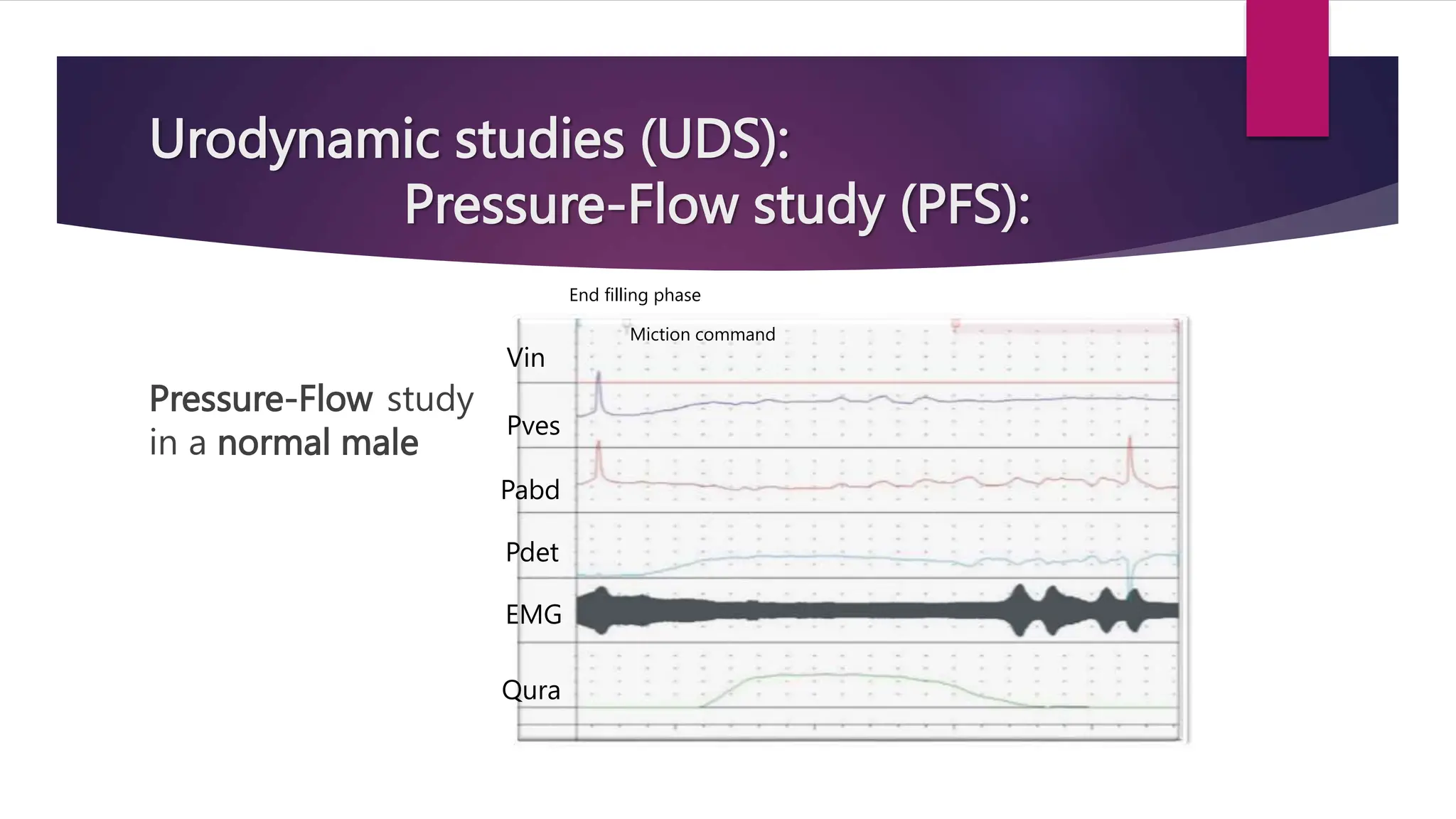
Pressure-Flow study
in a normal male
Vin
Pves
Pabd
Pdet
EMG
Qura
End filling phase
Miction command
Urodynamic studies (UDS):
Pressure-Flow study (PFS):
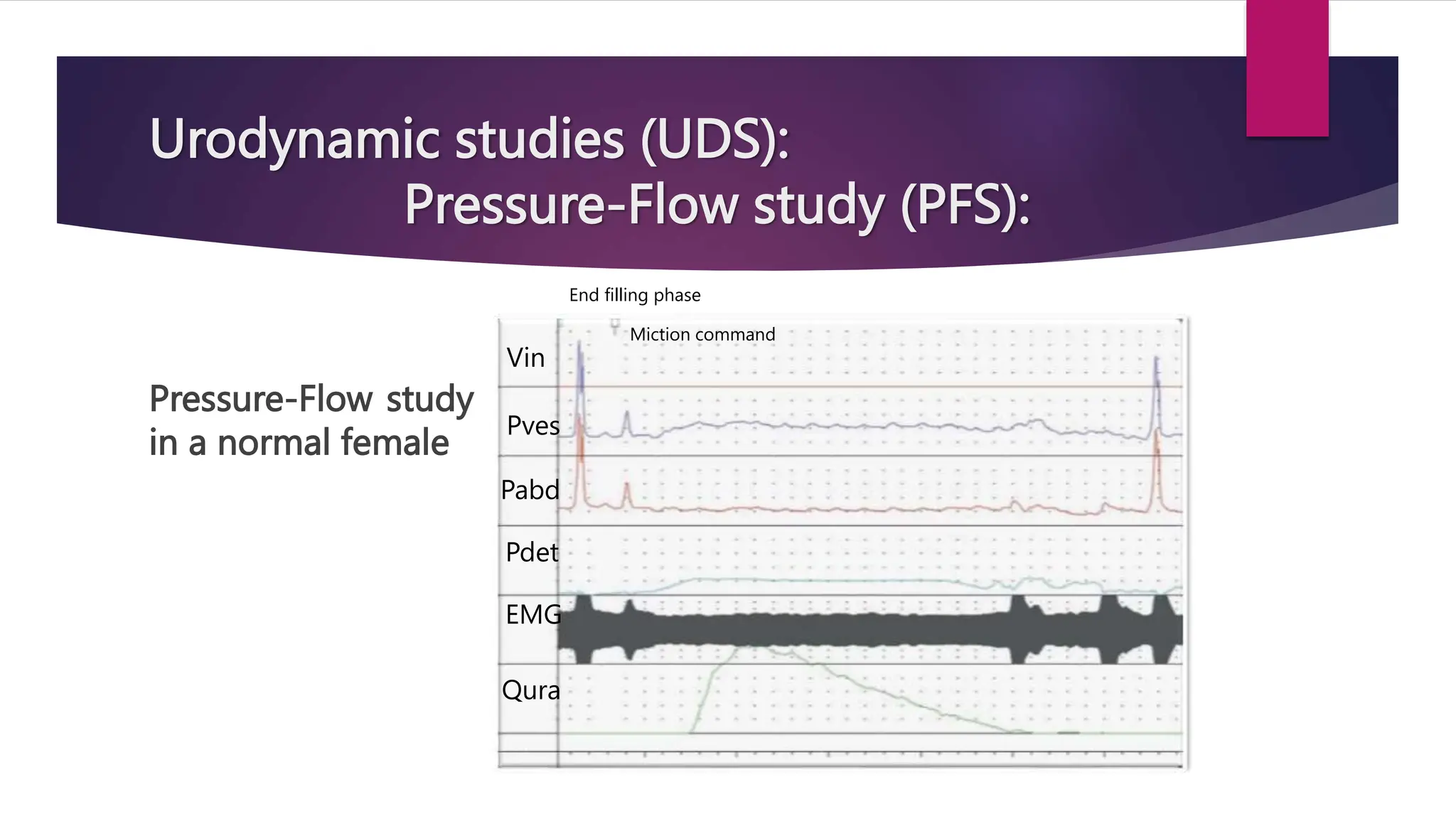
Pressure-Flow study
in a normal female
Vin
Pves
Pabd
Pdet
EMG
Qura
End filling phase
Miction command
Urodynamic studies (UDS):
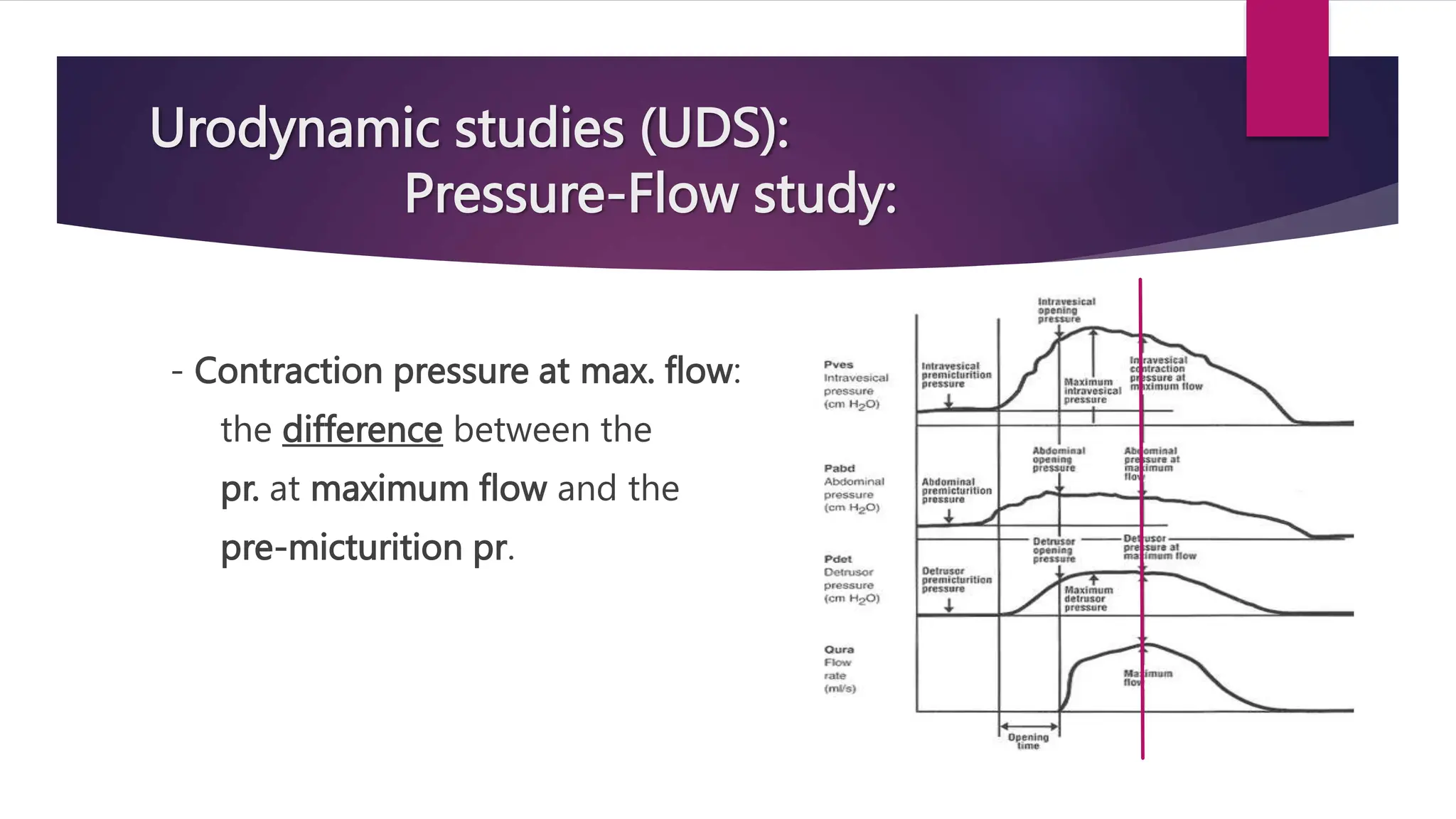
Pressure-Flow study:
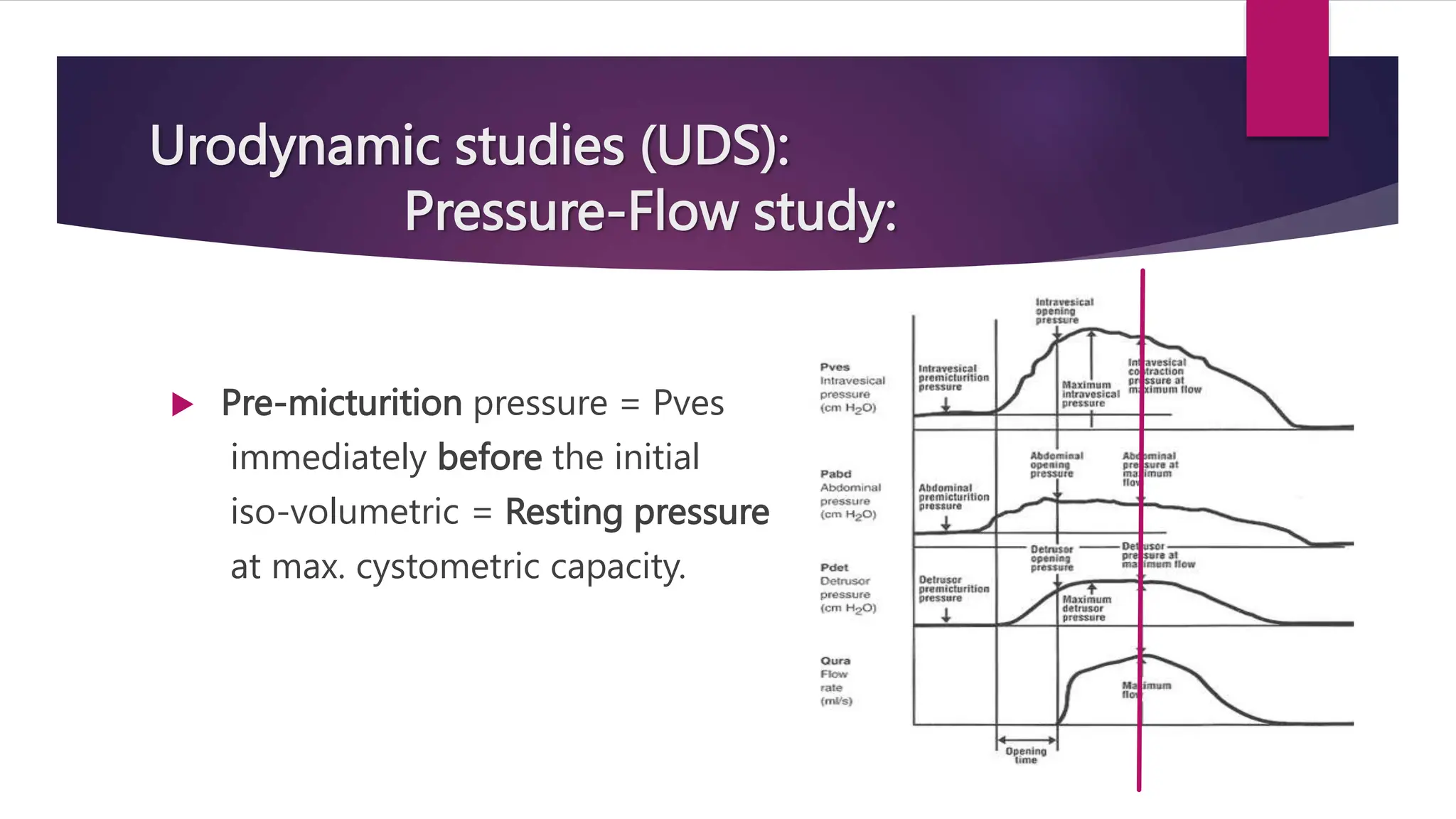
 Pre-micturition pressure = Pves
immediately before the initial
iso-volumetric = Resting pressure
at max. cystometric capacity.
Urodynamic studies (UDS):
Pressure-Flow study:
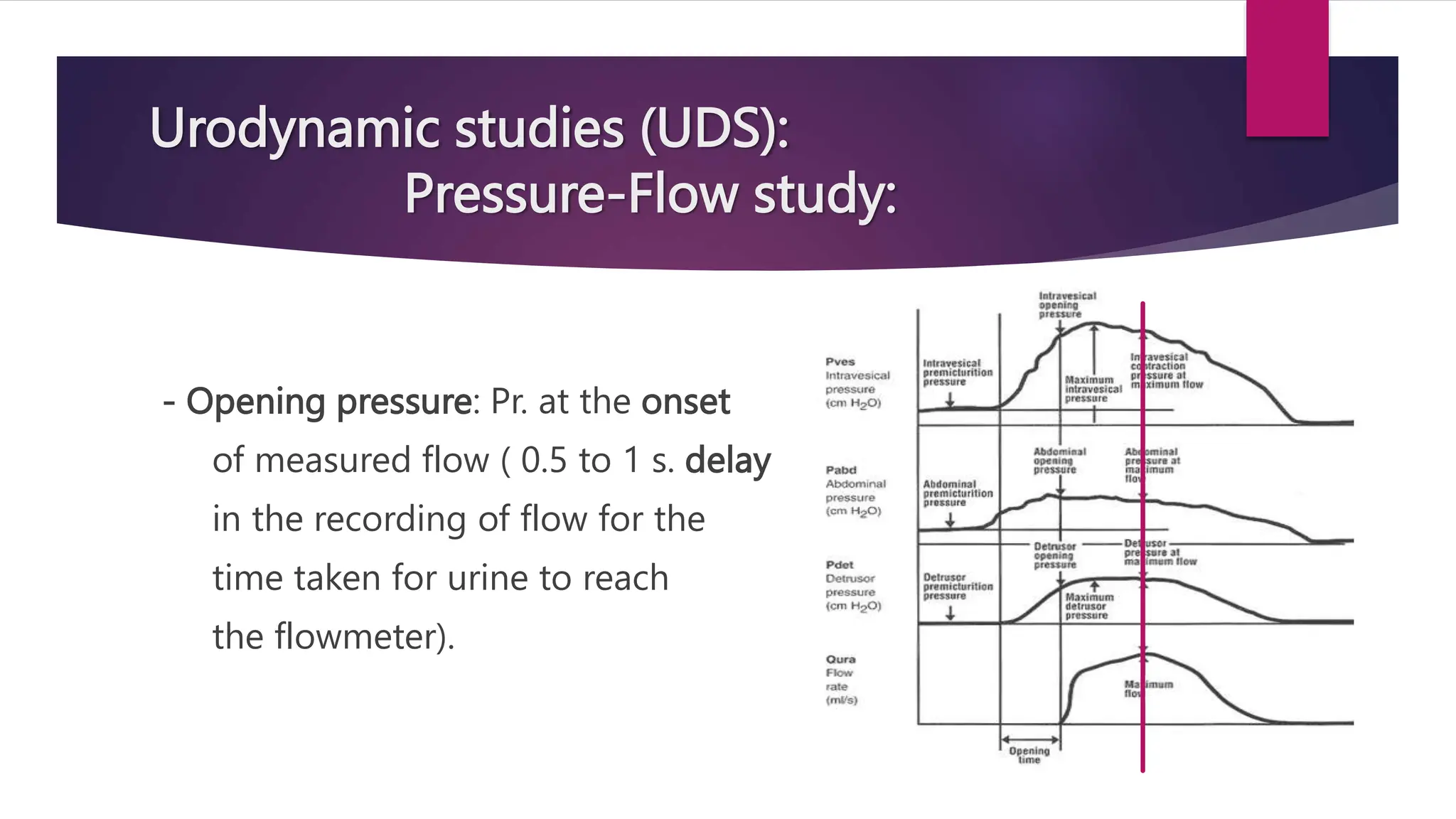
- Opening pressure: Pr. at the onset
of measured flow ( 0.5 to 1 s. delay
in the recording of flow for the
time taken for urine to reach
the flowmeter).
Urodynamic studies (UDS):
Pressure-Flow study:
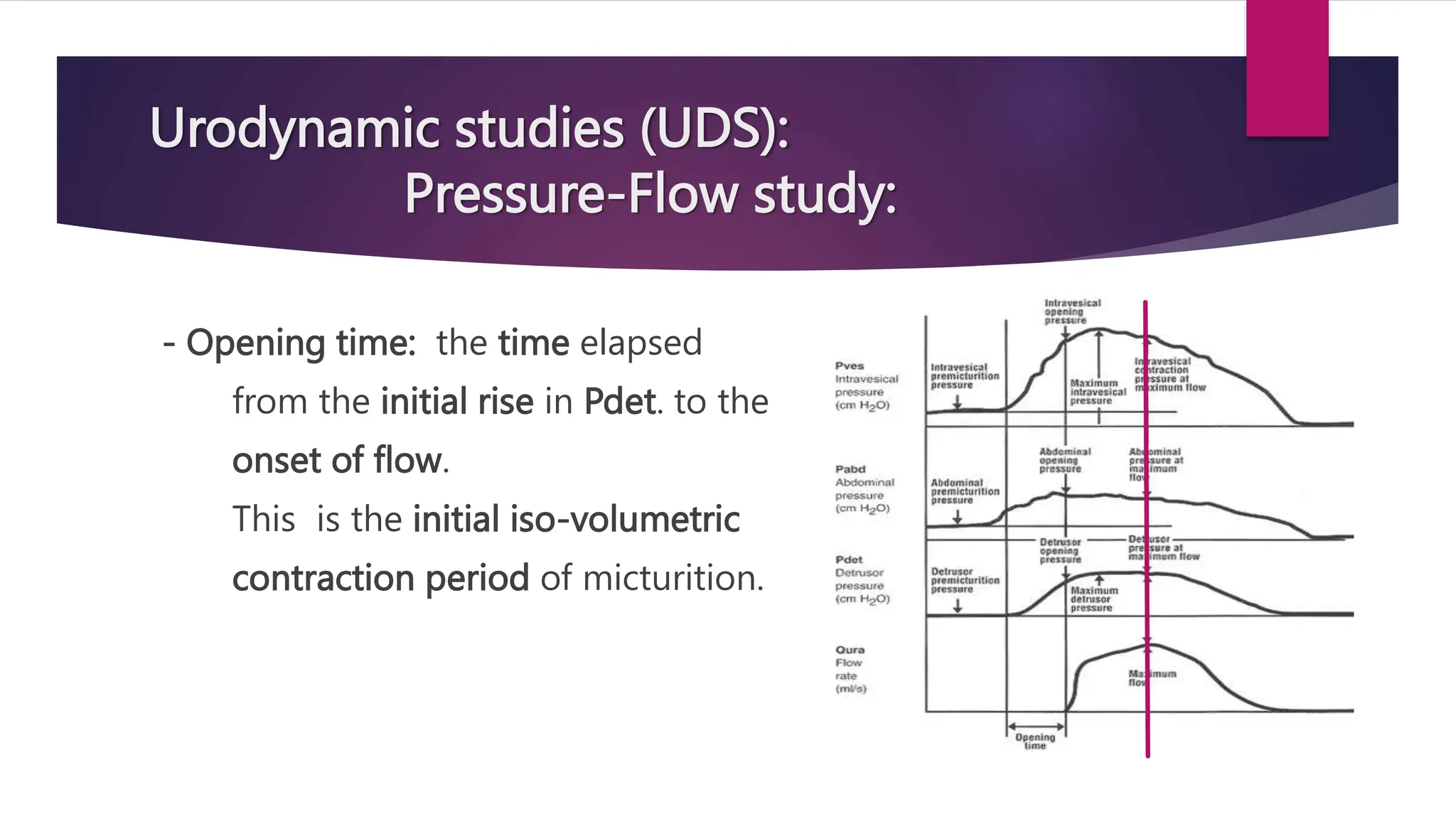
- Opening time: the time elapsed
from the initial rise in Pdet. to the
onset of flow.
This is the initial iso-volumetric
contraction period of micturition.
Urodynamic studies (UDS):
Pressure-Flow study:
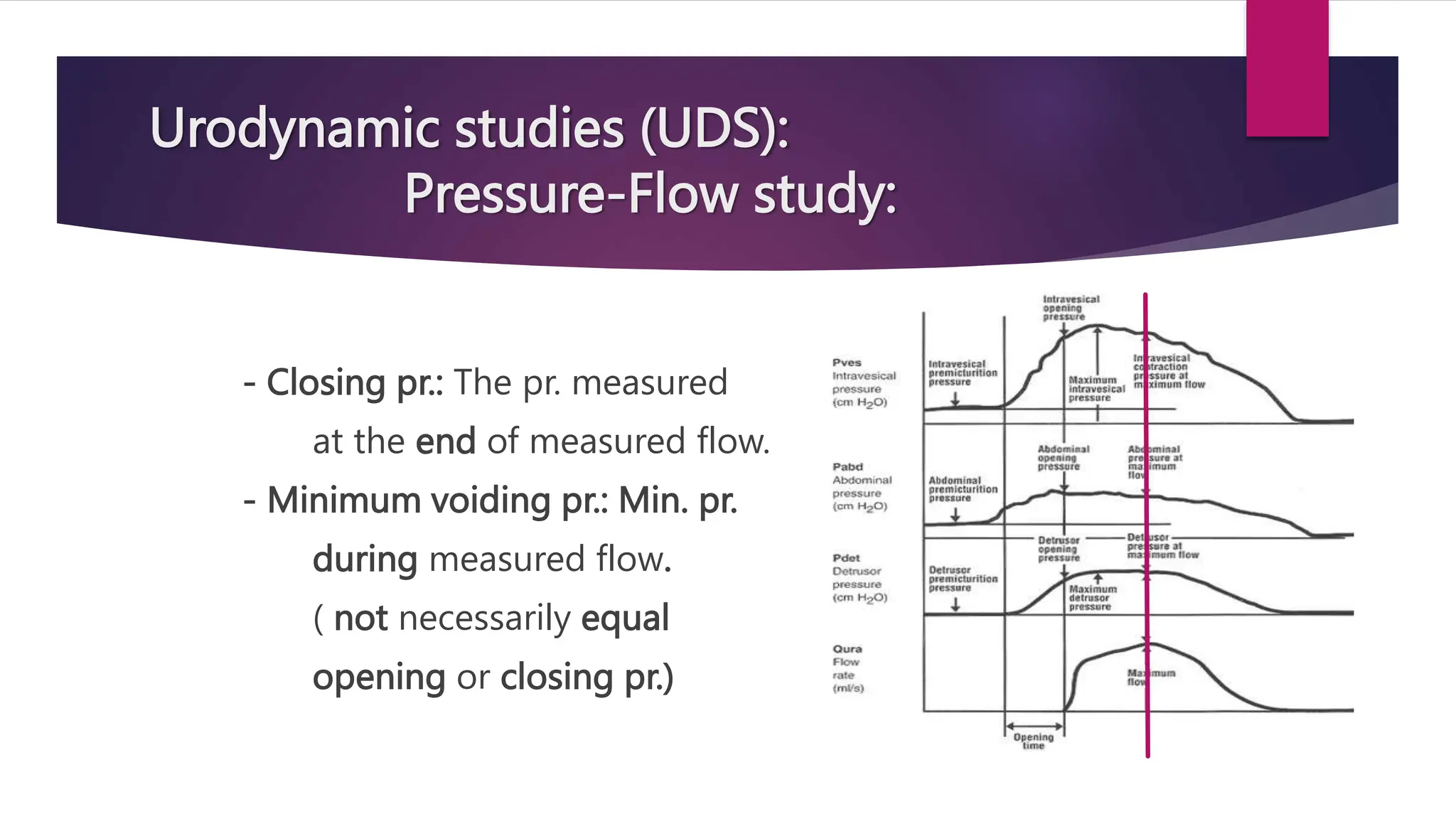
- Closing pr.: The pr. measured
at the end of measured flow.
- Minimum voiding pr.: Min. pr.
during measured flow.
( not necessarily equal
opening or closing pr.)
Urodynamic studies (UDS):
Pressure-Flow study:
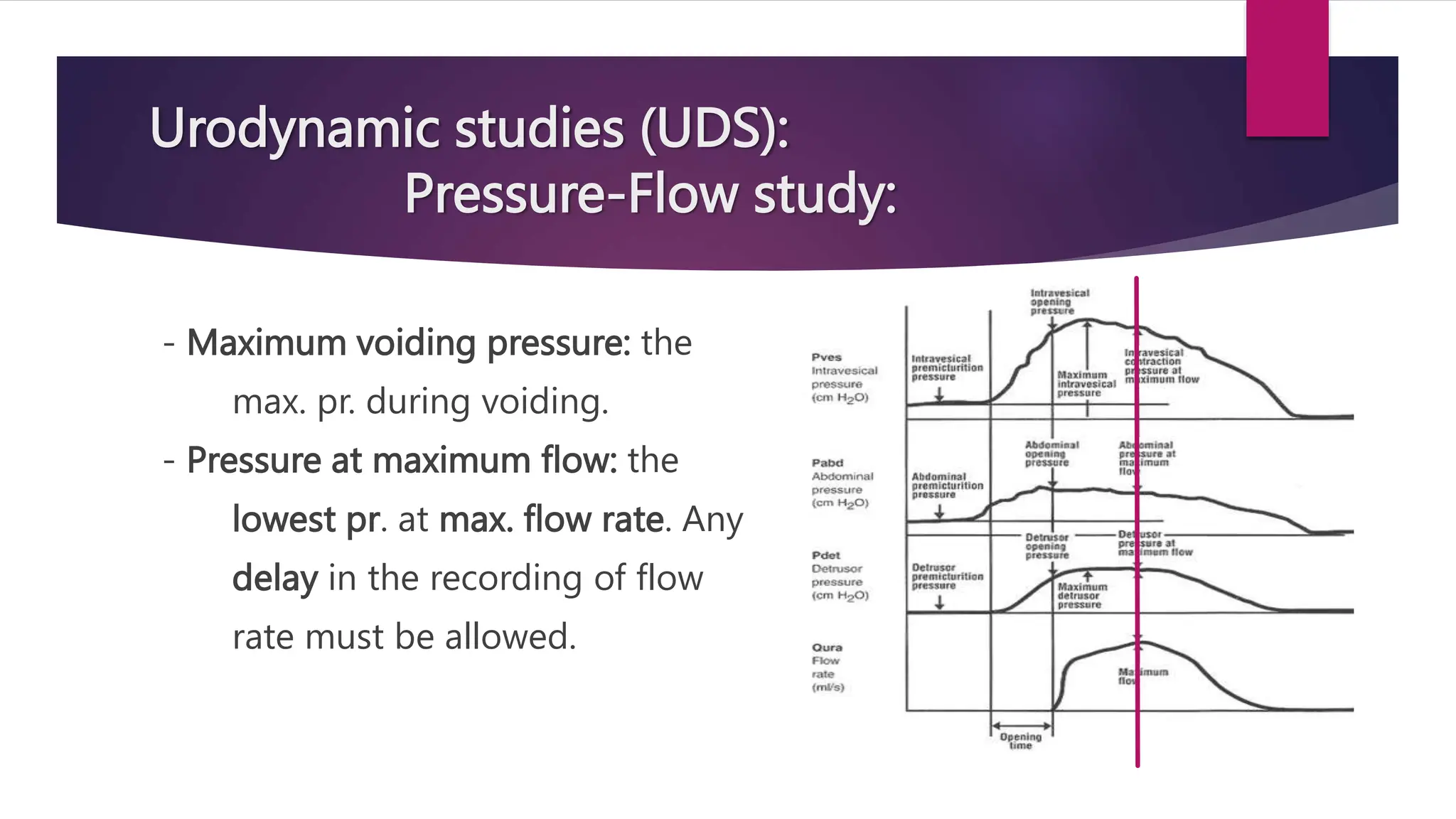
- Maximum voiding pressure: the
max. pr. during voiding.
- Pressure at maximum flow: the
lowest pr. at max. flow rate. Any
delay in the recording of flow
rate must be allowed.
Urodynamic studies (UDS):
Pressure-Flow study:
- Contraction pressure at max. flow:
the difference between the
pr. at maximum flow and the
pre-micturition pr.
Urodynamic studies (UDS):
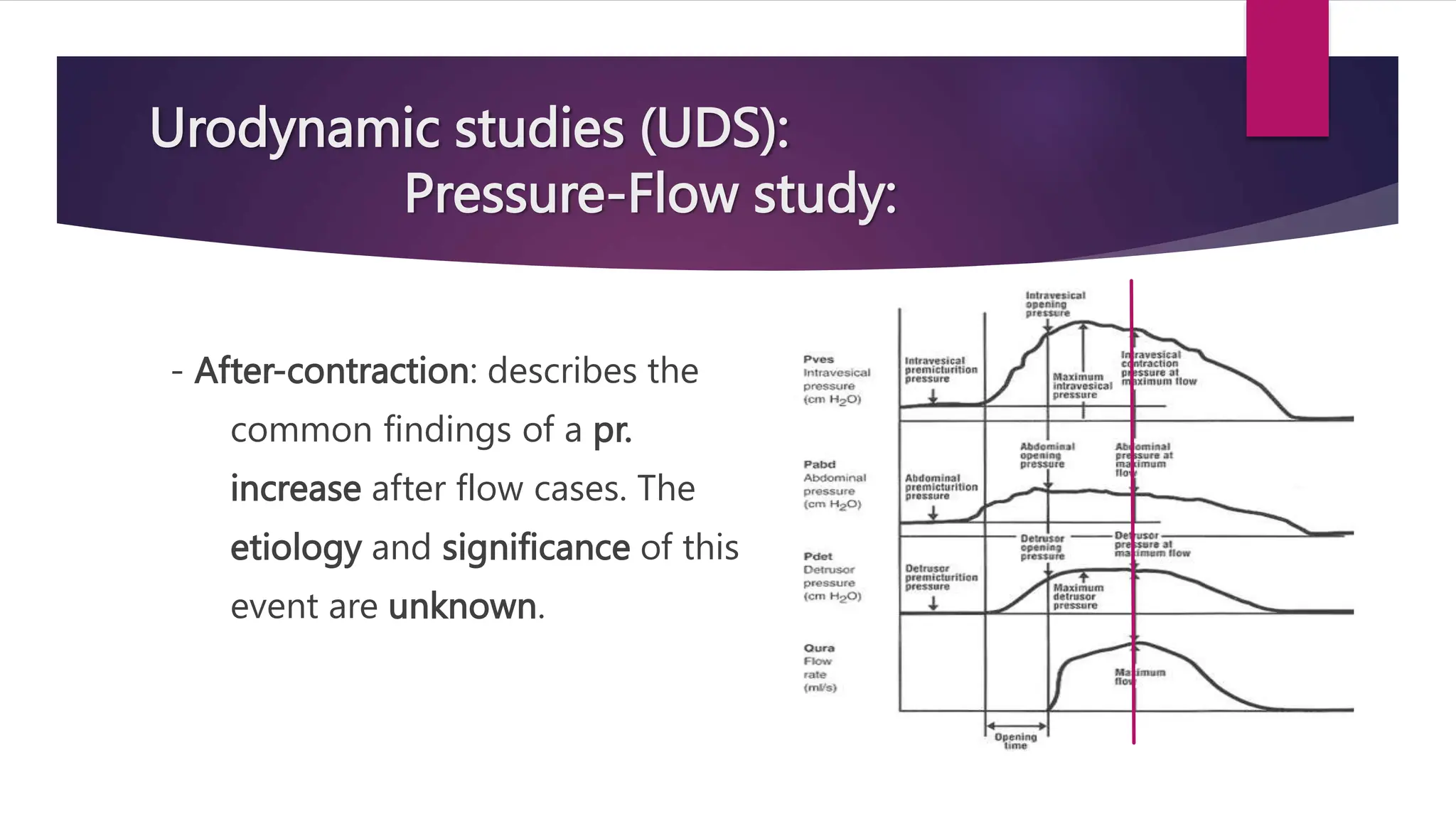
Pressure-Flow study:
- After-contraction: describes the
common findings of a pr.
increase after flow cases. The
etiology and significance of this
event are unknown.
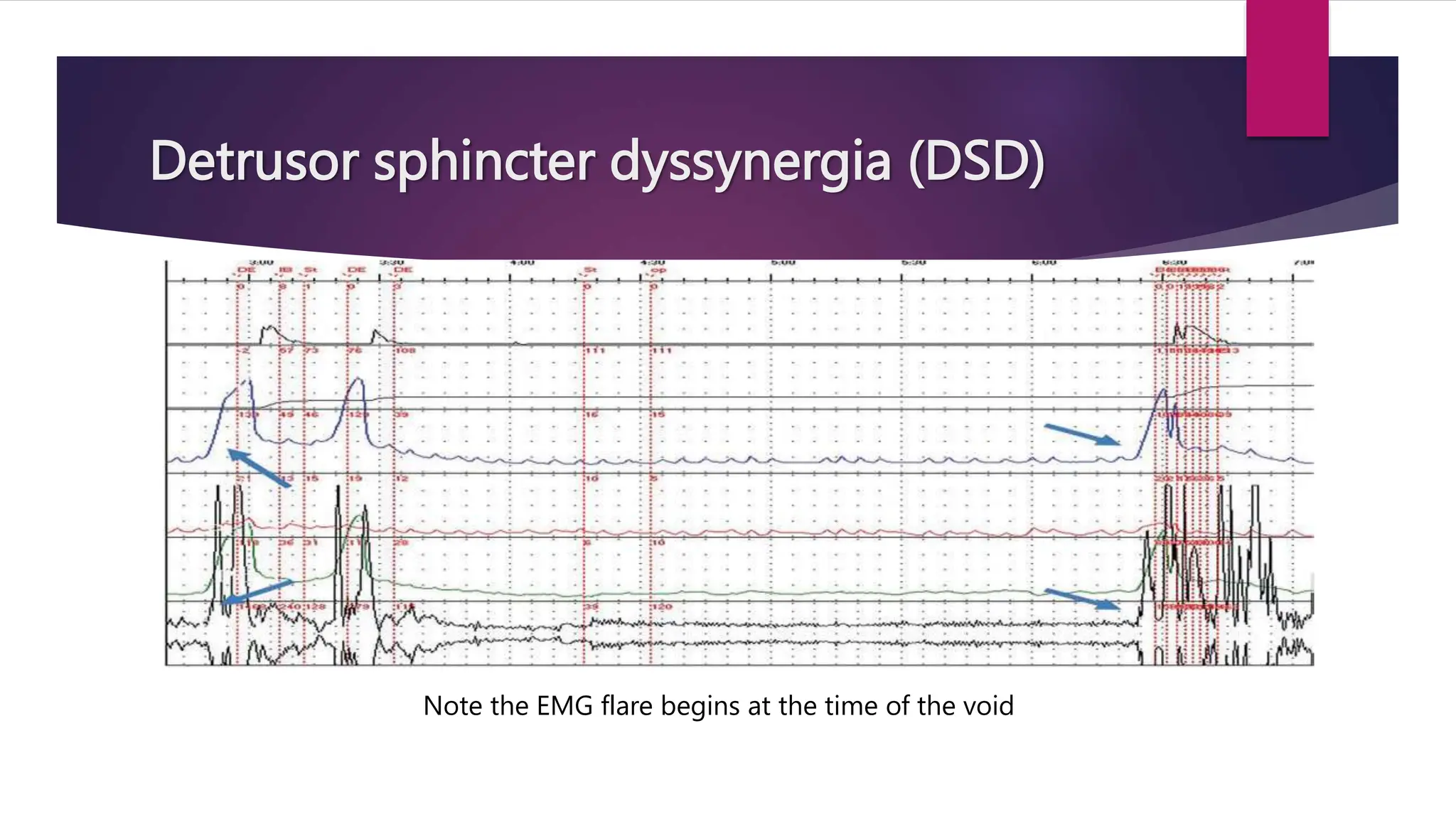
Detrusor sphincter dyssynergia (DSD)
Note the EMG flare begins at the time of the void
Urethral pressure profile
(UPP)
Urodynamic studies (UDS):
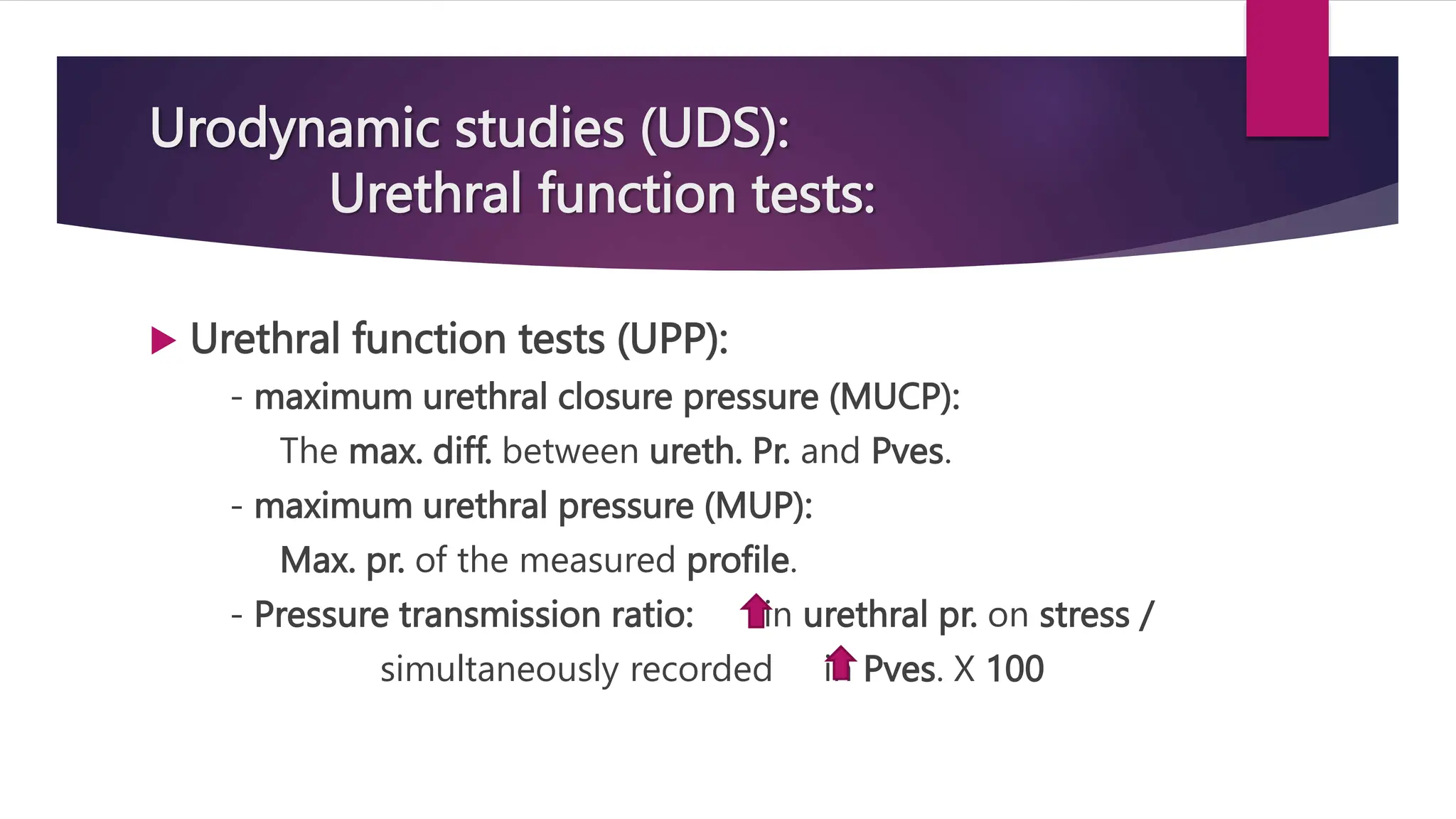
Urethral function tests:
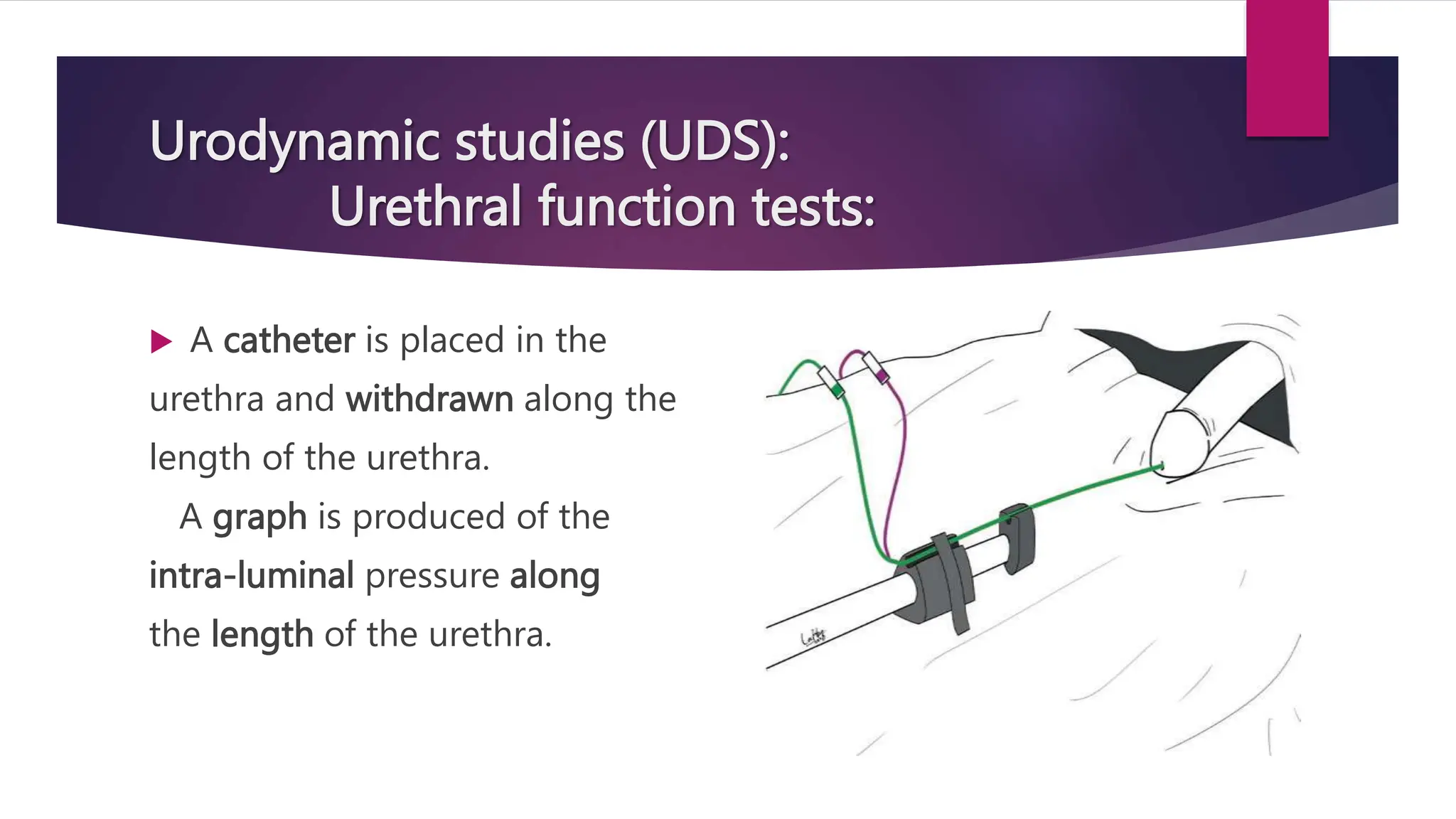
 A catheter is placed in the
urethra and withdrawn along the
length of the urethra.
A graph is produced of the
intra-luminal pressure along
the length of the urethra.
Urodynamic studies (UDS):
Urethral function tests:
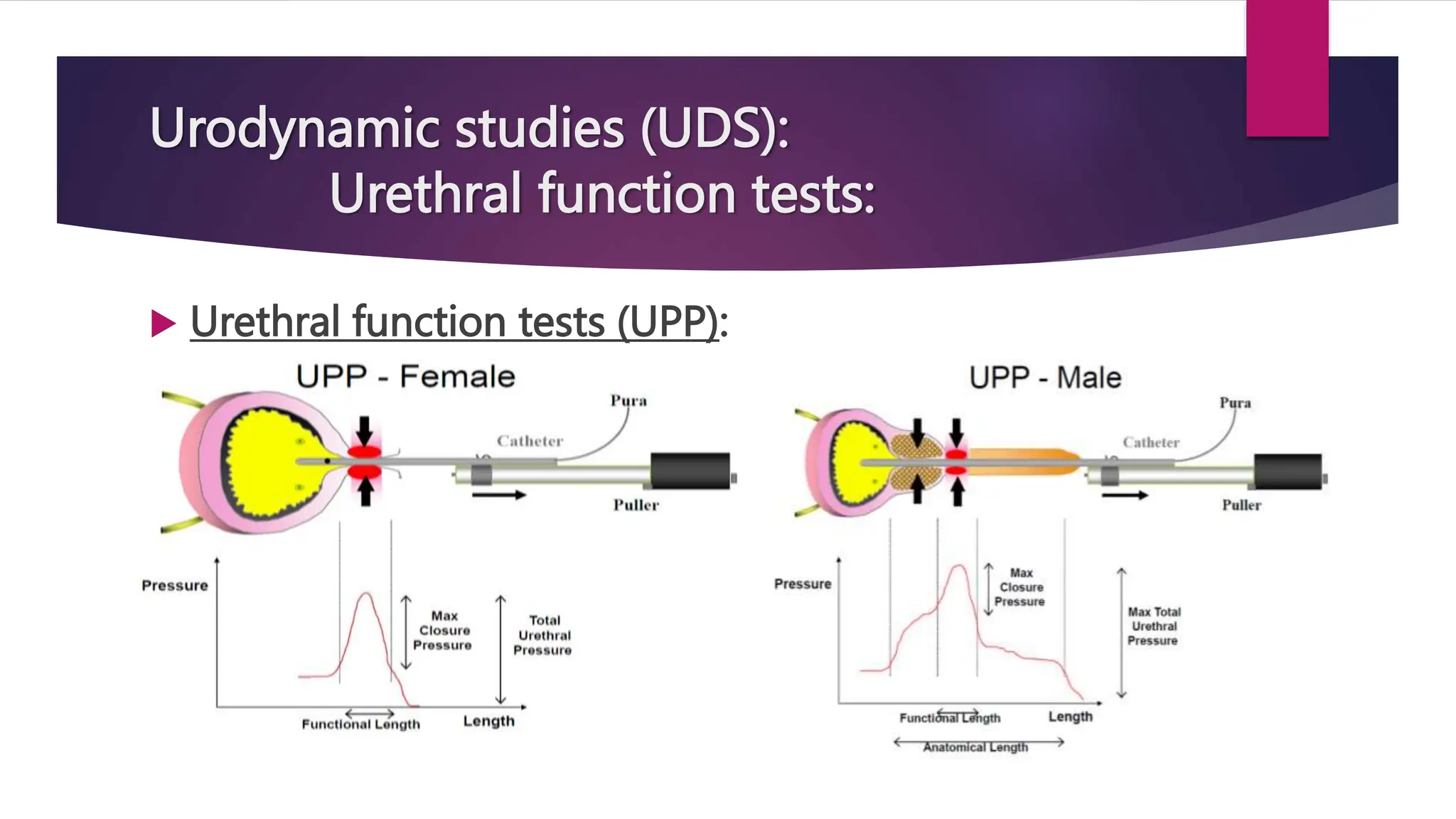
 Urethral function tests (UPP):
- Assesses the urethral ability to maintain a closed BO (along the
full urethral length) with the bladder at rest.
- It records absolute urethral length, functional urethral
length, maximum urethral pressure, and maximum
urethral closure pressure.
Urodynamic studies (UDS):
Urethral function tests:
 Urethral function tests (UPP):
- Both UPP (static) and LPP (dynamic) testing evaluate
competence of ureth.sph.
- If the patient is neurologically normal as in the case of
female SUI, the diagnostic value of UPP is low.
Urodynamic studies (UDS):
Urethral function tests:
 Urethral function tests (UPP):
Female Male
Urodynamic studies (UDS):
Urethral function tests:
 Urethral function tests (UPP):
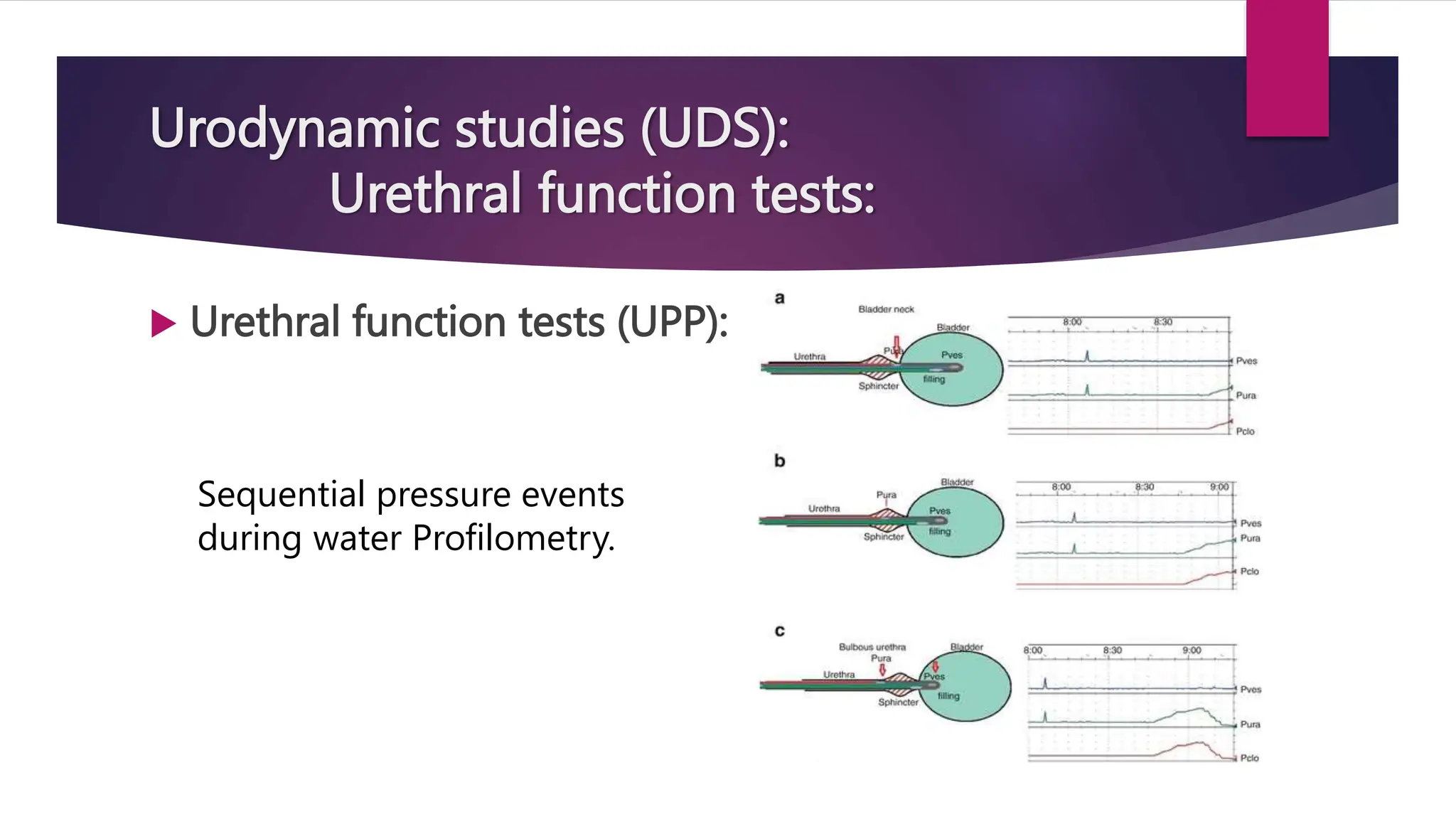
Sequential pressure events
during water Profilometry.
Urodynamic studies (UDS):
Urethral function tests:
 Normal urethral closure mechanism:
Maintains a +ve closure pr. during filling even in
presence of increased Pabd; may be overcomed by DO.
 Incompetent urethral closure mechanism:
Allows leakage of urine in absence of det. contn.
Urodynamic studies (UDS):
Urethral function tests:
 Urethral relaxation incontinence:
leakage due to urethral relaxation in absence of
raised Pabd or DO.
 Urodynamic stress incontinence:
During filling; invol. Loss of urine during increased
Pabd, in absence of det. contn. ( term replaced
term of genuine stress inc.).
Urodynamic studies (UDS):
Urethral function tests:
 Urethral function tests (UPP):
- Urethral closure pr. profile: Urethral pr. – Pves.
- Functional urethral length: Urethral length along
which urethral pr. exceeds Pves in females.
Urodynamic studies (UDS):
Urethral function tests:
 Urethral function tests (UPP):
- maximum urethral closure pressure (MUCP):
The max. diff. between ureth. Pr. and Pves.
- maximum urethral pressure (MUP):
Max. pr. of the measured profile.
- Pressure transmission ratio: in urethral pr. on stress /
simultaneously recorded in Pves. X 100
Urodynamic studies (UDS):
Urethral function tests:
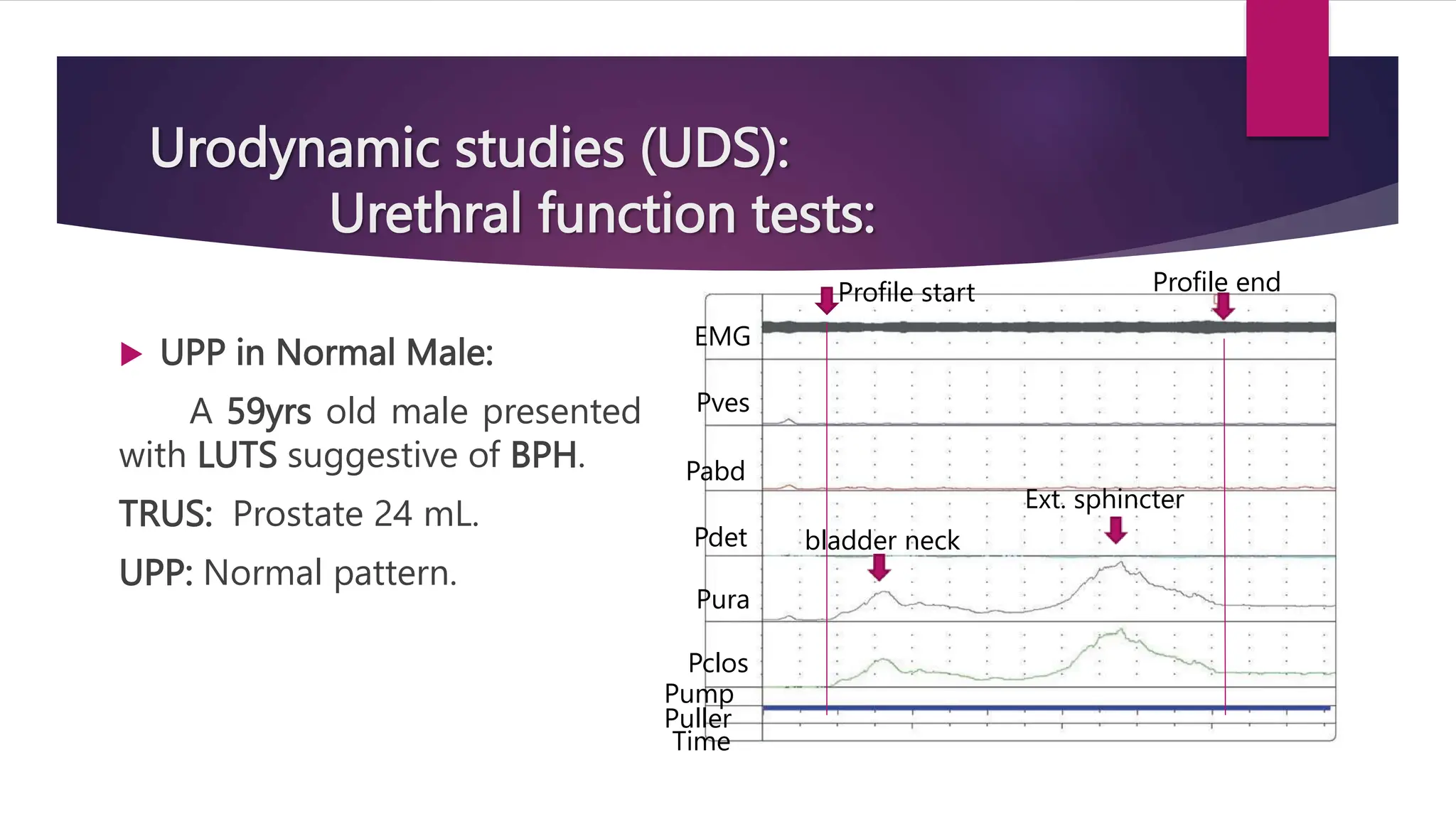
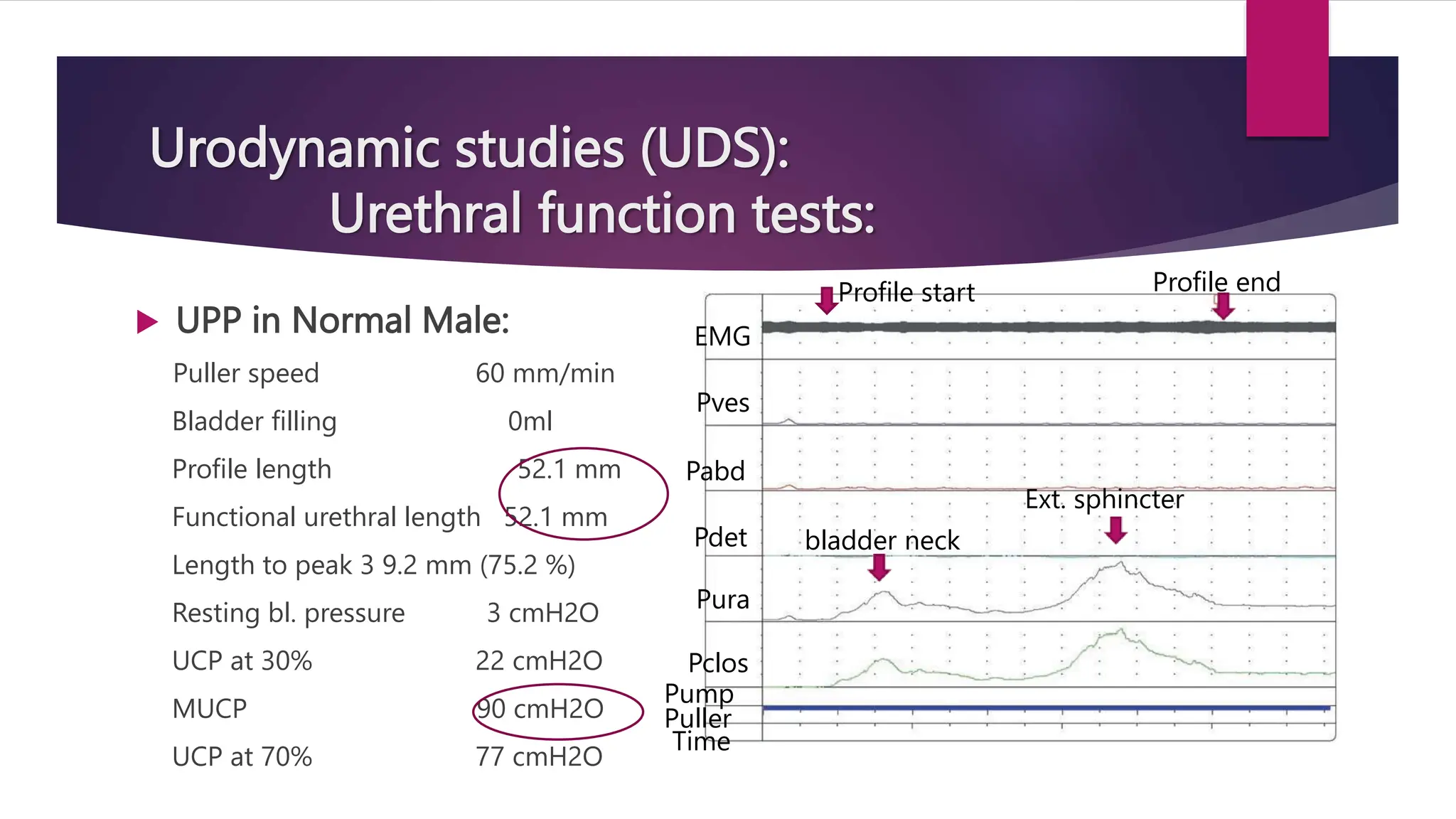
 UPP in Normal Male:
A 59yrs old male presented
with LUTS suggestive of BPH.
TRUS: Prostate 24 mL.
UPP: Normal pattern.
Profile start
EMG
Pves
Pabd
Pdet
Pura
Pclos
Pump
Puller
Time
Profile end
bladder neck
Ext. sphincter
Urodynamic studies (UDS):
Urethral function tests:
 UPP in Normal Male:
Puller speed 60 mm/min
Bladder filling 0ml
Profile length 52.1 mm
Functional urethral length 52.1 mm
Length to peak 3 9.2 mm (75.2 %)
Resting bl. pressure 3 cmH2O
UCP at 30% 22 cmH2O
MUCP 90 cmH2O
UCP at 70% 77 cmH2O
Profile start
EMG
Pves
Pabd
Pdet
Pura
Pclos
Pump
Puller
Time
Profile end
bladder neck
Ext. sphincter
Urodynamic studies (UDS):
Urethral function tests:
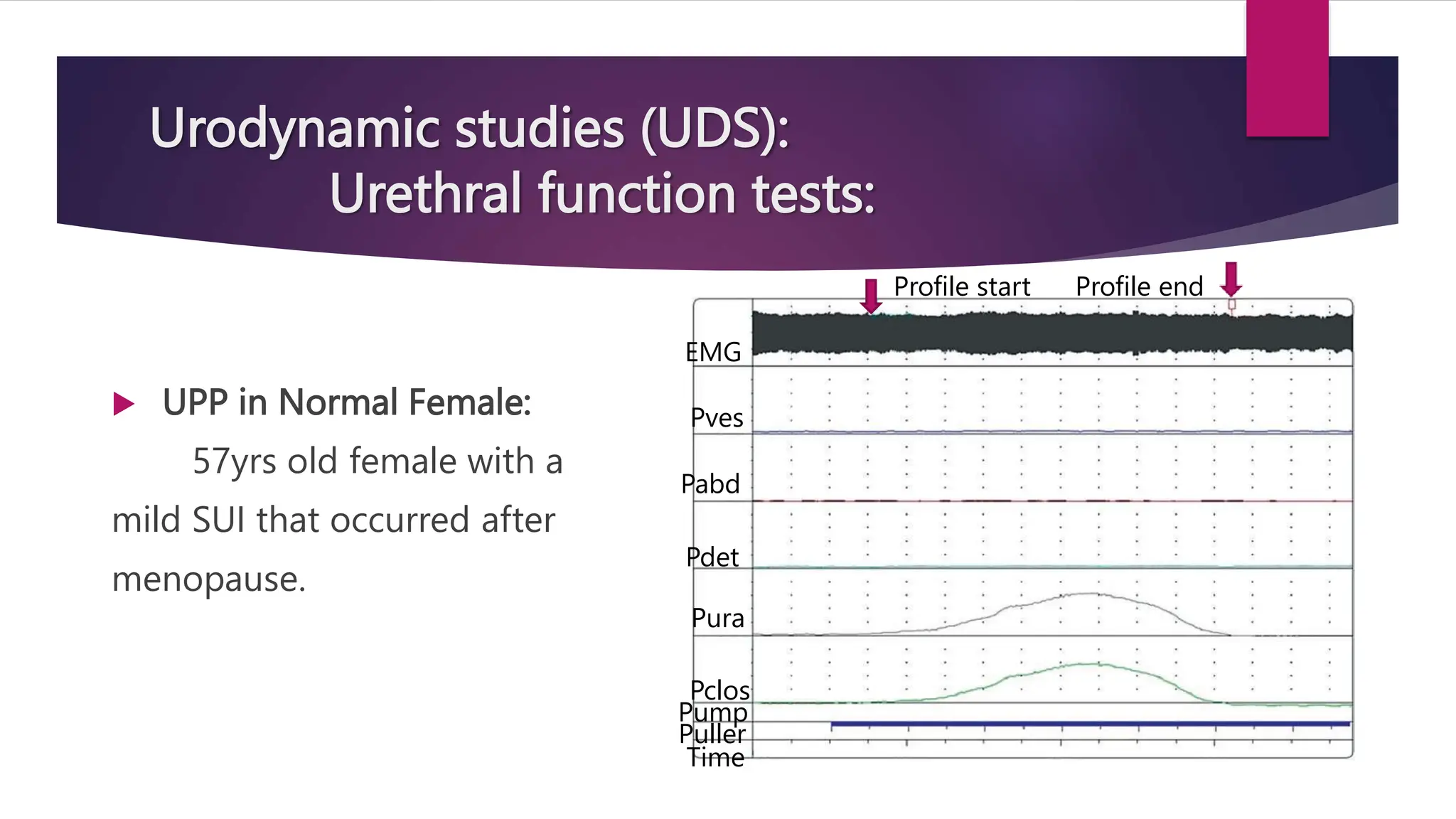
 UPP in Normal Female:
57yrs old female with a
mild SUI that occurred after
menopause.
Profile start Profile end
EMG
Pves
Pabd
Pdet
Pura
Pclos
Pump
Puller
Time
Urodynamic studies (UDS):
Urethral function tests:
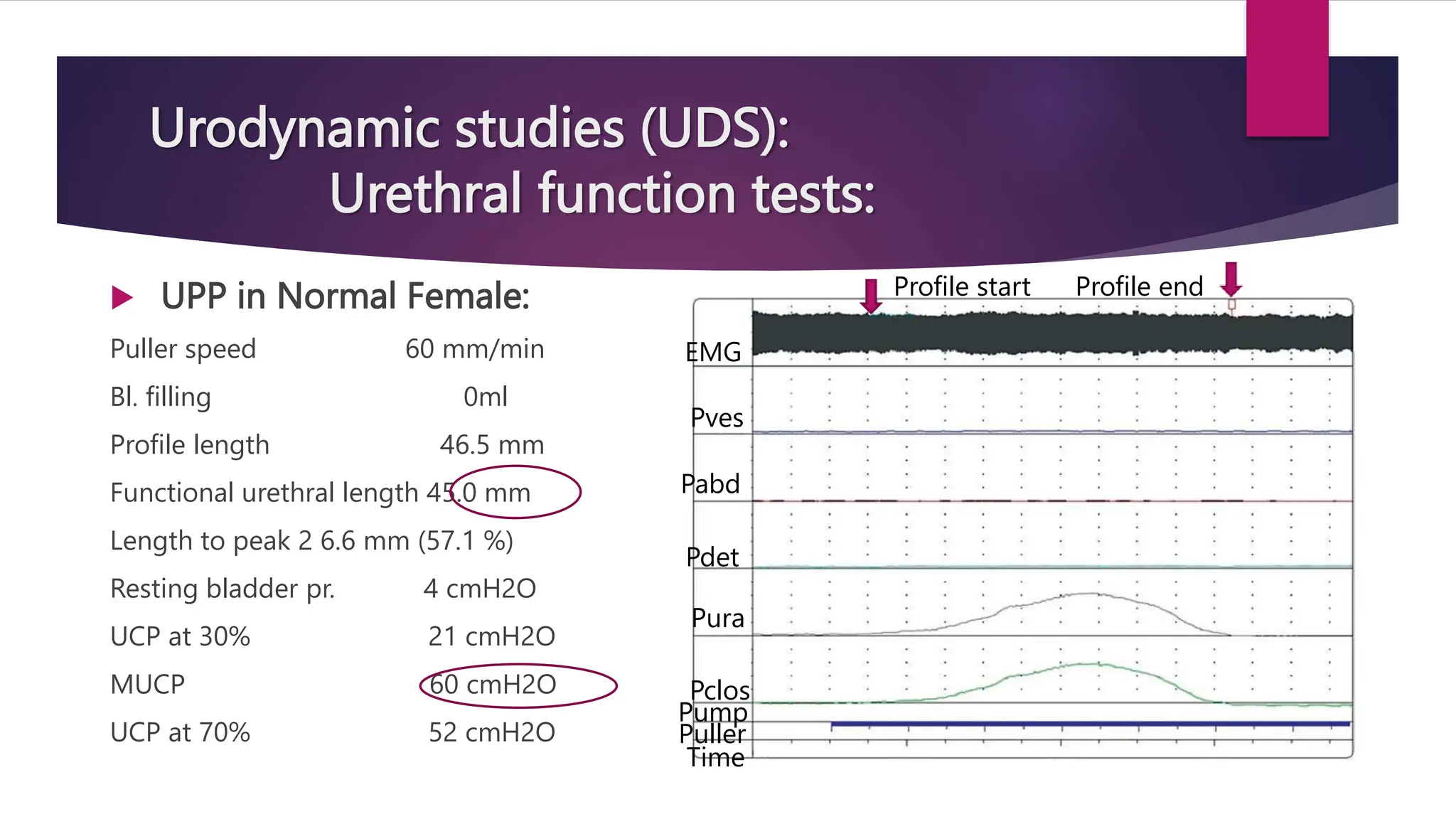
 UPP in Normal Female:
Puller speed 60 mm/min
Bl. filling 0ml
Profile length 46.5 mm
Functional urethral length 45.0 mm
Length to peak 2 6.6 mm (57.1 %)
Resting bladder pr. 4 cmH2O
UCP at 30% 21 cmH2O
MUCP 60 cmH2O
UCP at 70% 52 cmH2O
Profile start Profile end
EMG
Pves
Pabd
Pdet
Pura
Pclos
Pump
Puller
Time
Normal Urethral Pressure Profile
53yr old Uretheral Length 2.5 cms
Maximum Uretheral Closure Pressure 62 cmH2O
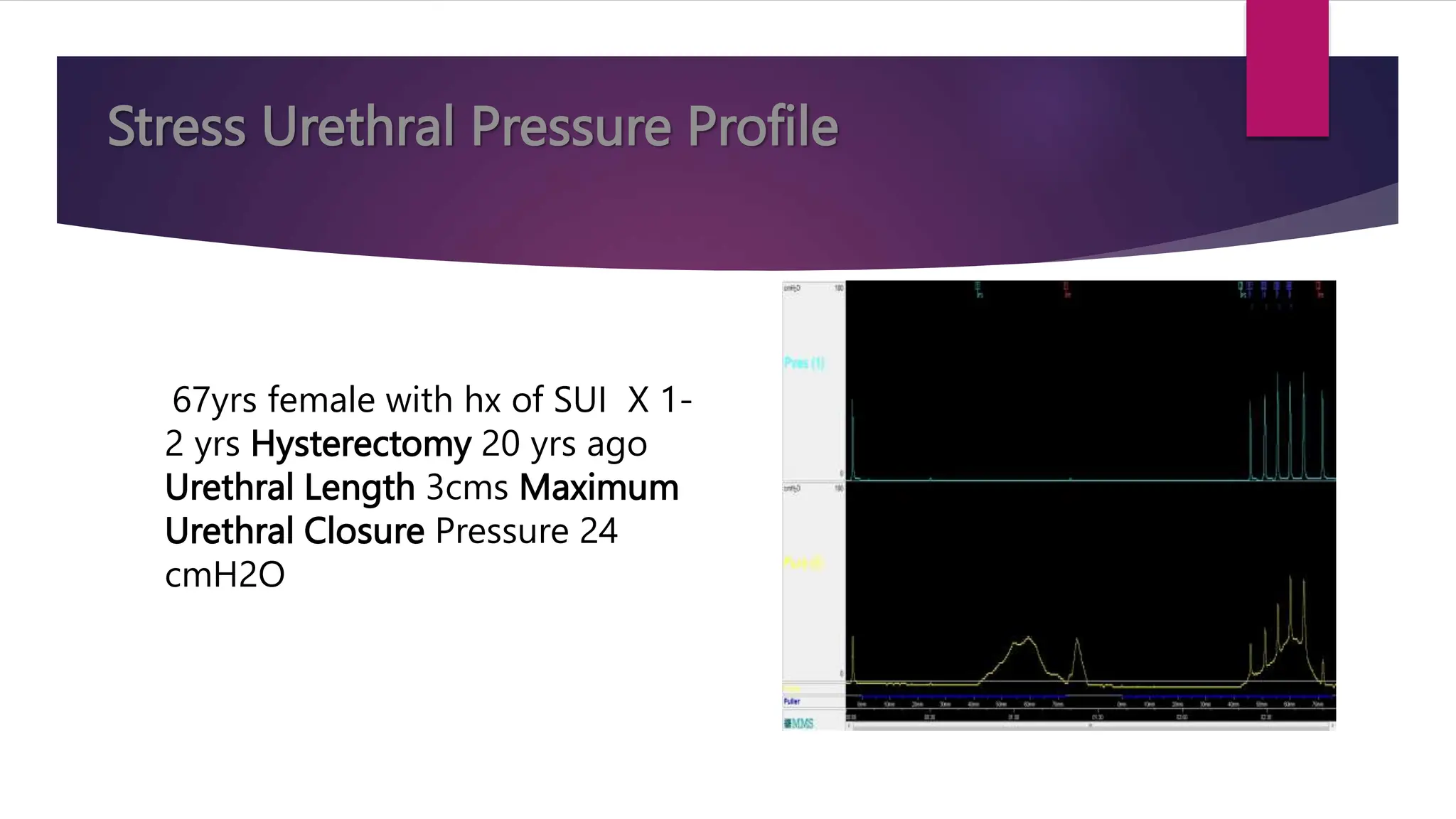
Stress Urethral Pressure Profile
67yrs female with hx of SUI X 1-
2 yrs Hysterectomy 20 yrs ago
Urethral Length 3cms Maximum
Urethral Closure Pressure 24
cmH2O
Urodynamic studies (UDS):
Urethral function tests:
 UPP in Incompetent Urethra:
52yrs old male who underwent neuro-surgery for lipo-meningo-
myelocele with tethered cord synd. 27 years ago.
He has had SUI since then.
He had CIC before, but he stopped because the PVR
was not significant. He had been on Crede voiding.
Urodynamic studies (UDS):
Urethral function tests:
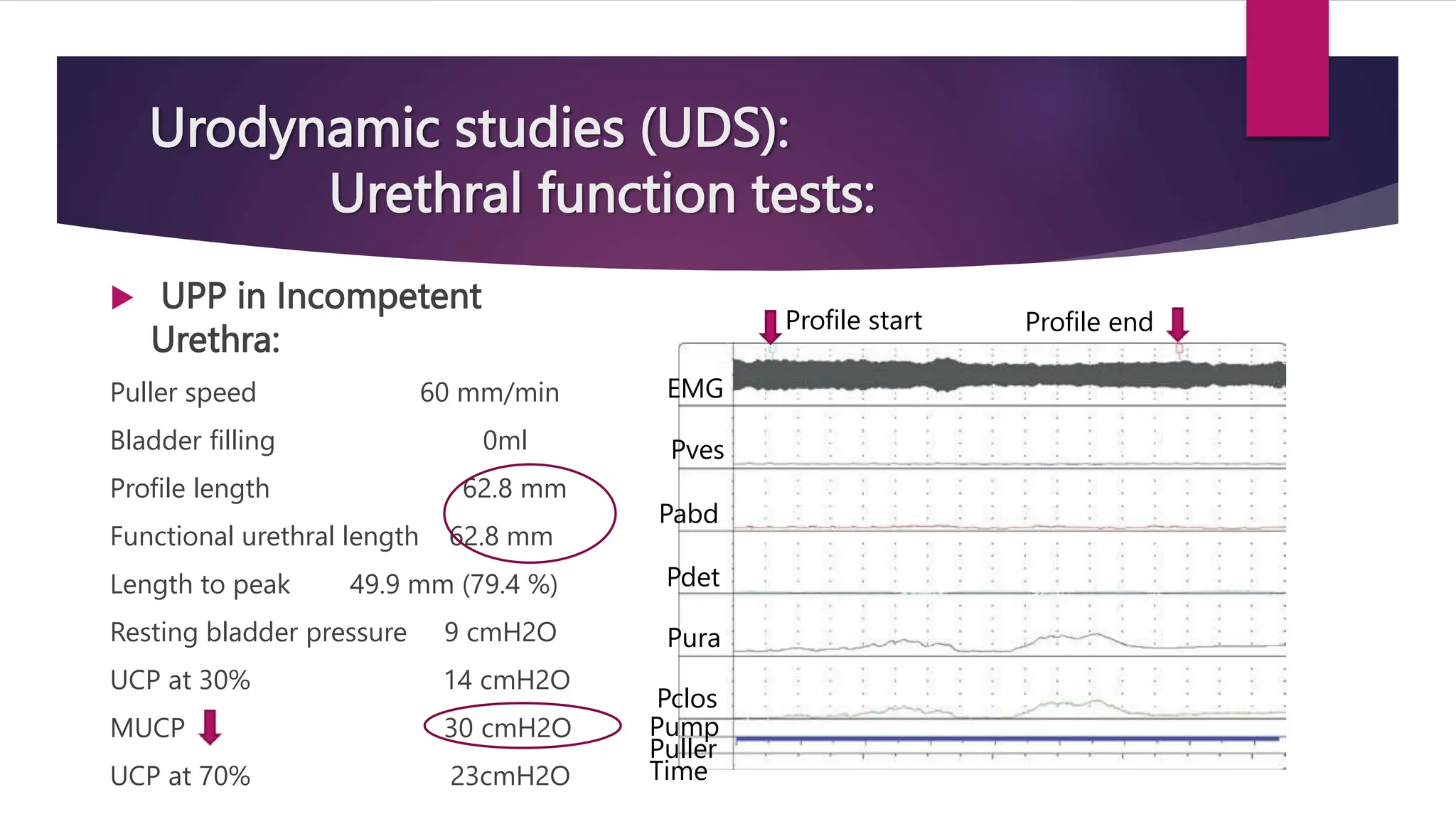
 UPP in Incompetent
Urethra:
Puller speed 60 mm/min
Bladder filling 0ml
Profile length 62.8 mm
Functional urethral length 62.8 mm
Length to peak 49.9 mm (79.4 %)
Resting bladder pressure 9 cmH2O
UCP at 30% 14 cmH2O
MUCP 30 cmH2O
UCP at 70% 23cmH2O
Profile start Profile end
EMG
Pves
Pabd
Pdet
Pura
Pclos
Pump
Puller
Time
Urodynamic studies (UDS):
Urethral function tests:
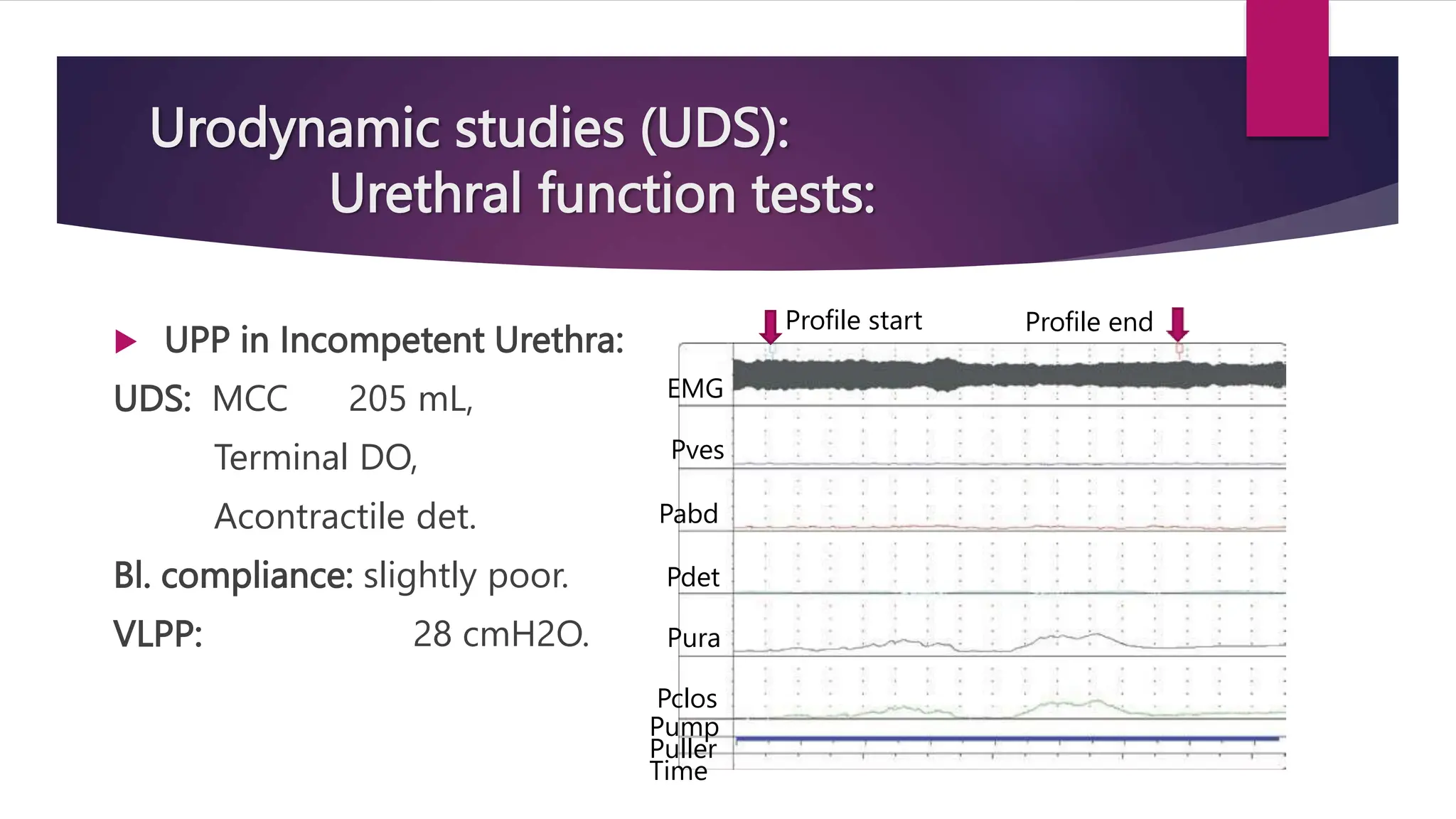
 UPP in Incompetent Urethra:
UDS: MCC 205 mL,
Terminal DO,
Acontractile det.
Bl. compliance: slightly poor.
VLPP: 28 cmH2O.
Profile start Profile end
EMG
Pves
Pabd
Pdet
Pura
Pclos
Pump
Puller
Time
Urodynamic studies (UDS):
Urethral function tests:
 UPP in Incompetent
Urethra:
DRE : prostate about 25 g.
Focused neurological ex.:
- Anal sphincter tone:
- bulbo-cavernosus reflex:
(S2–S4) NOT observed.
- Cough test: +ve.
- PVR: 130 mL.
Urodynamic studies (UDS):
Urethral function tests:
 UPP in Incompetent
Urethra:
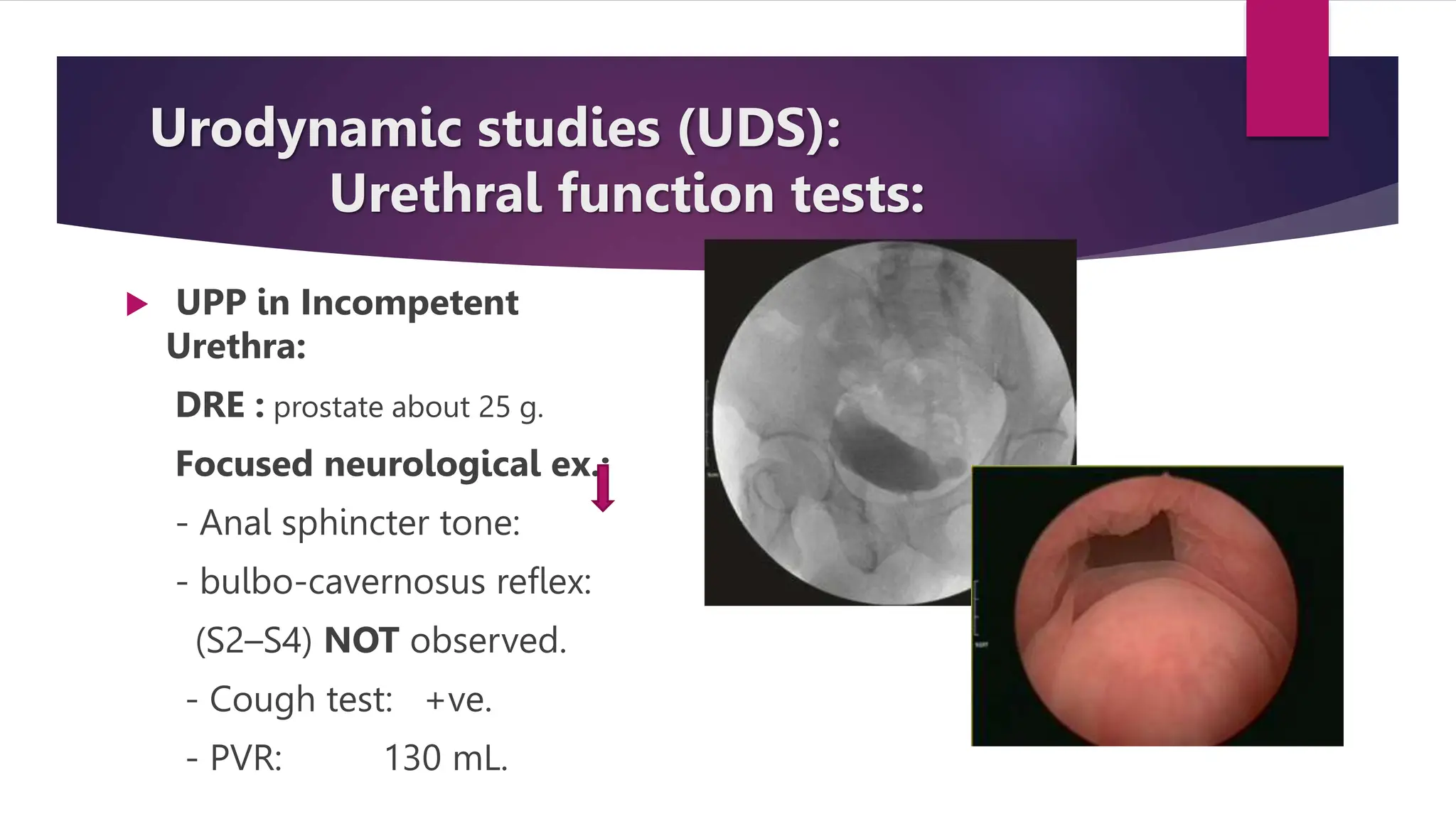
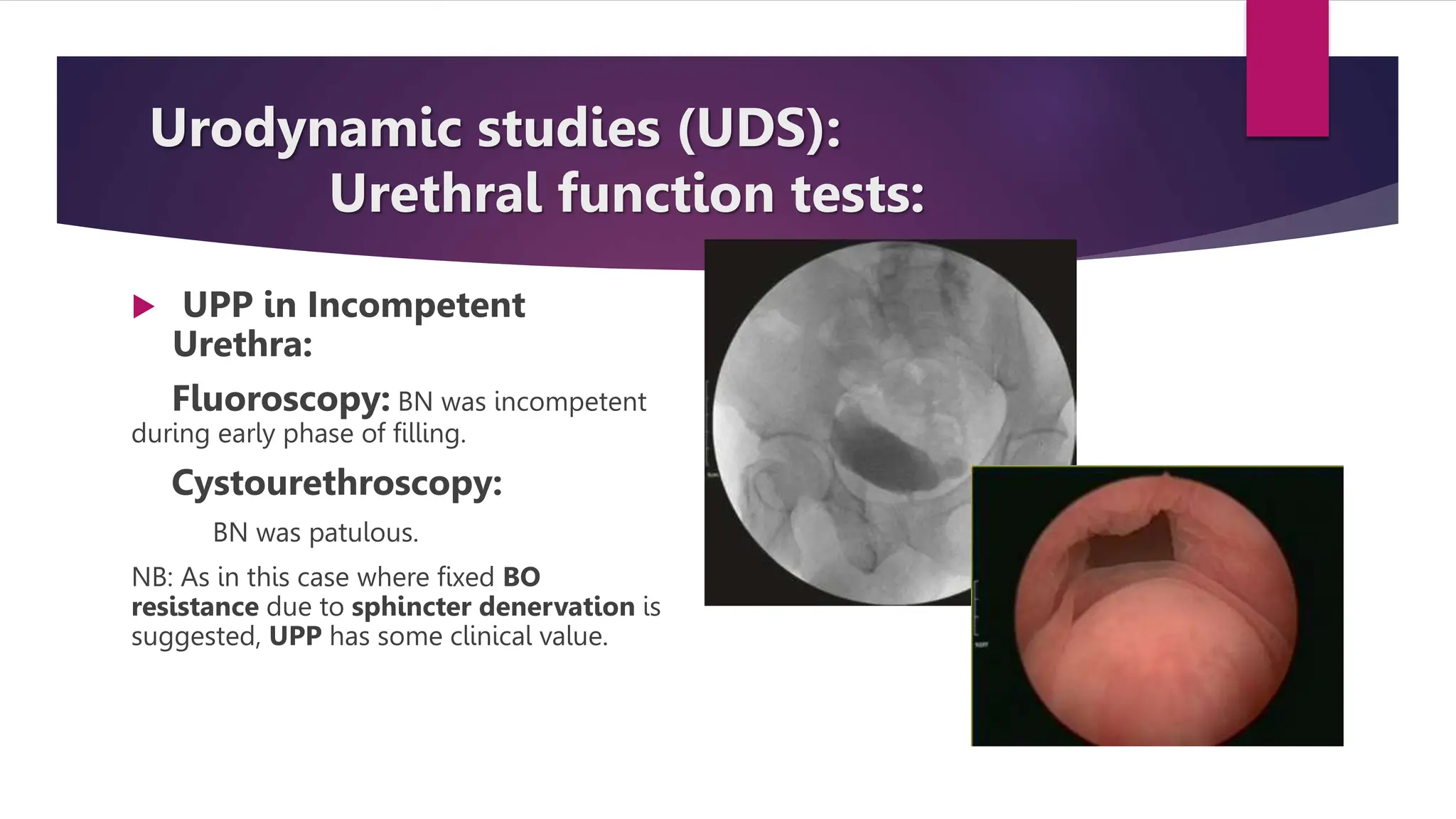
Fluoroscopy: BN was incompetent
during early phase of filling.
Cystourethroscopy:
BN was patulous.
NB: As in this case where fixed BO
resistance due to sphincter denervation is
suggested, UPP has some clinical value.
Video-urodynamic study
Video-urodynamic study:
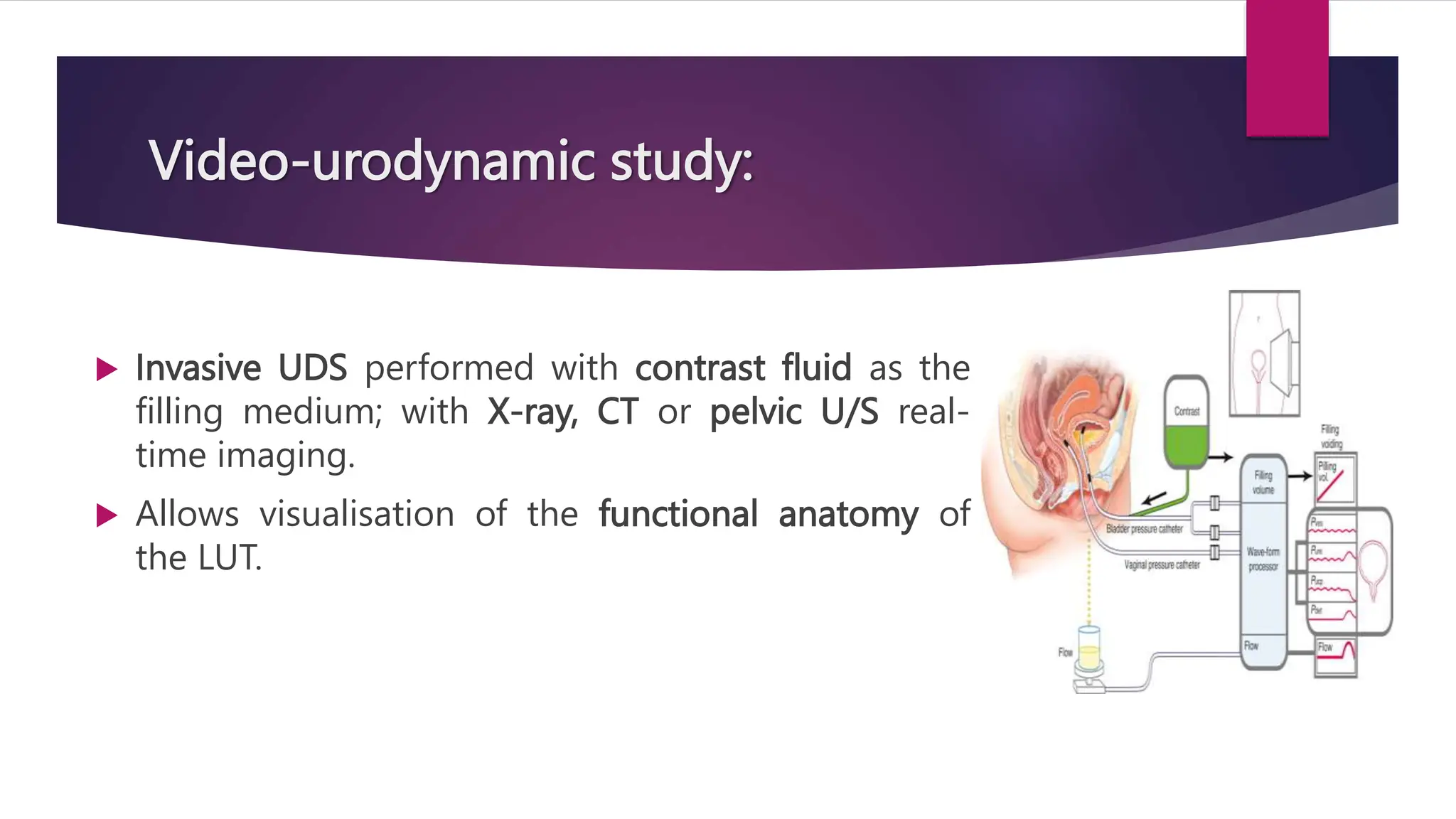
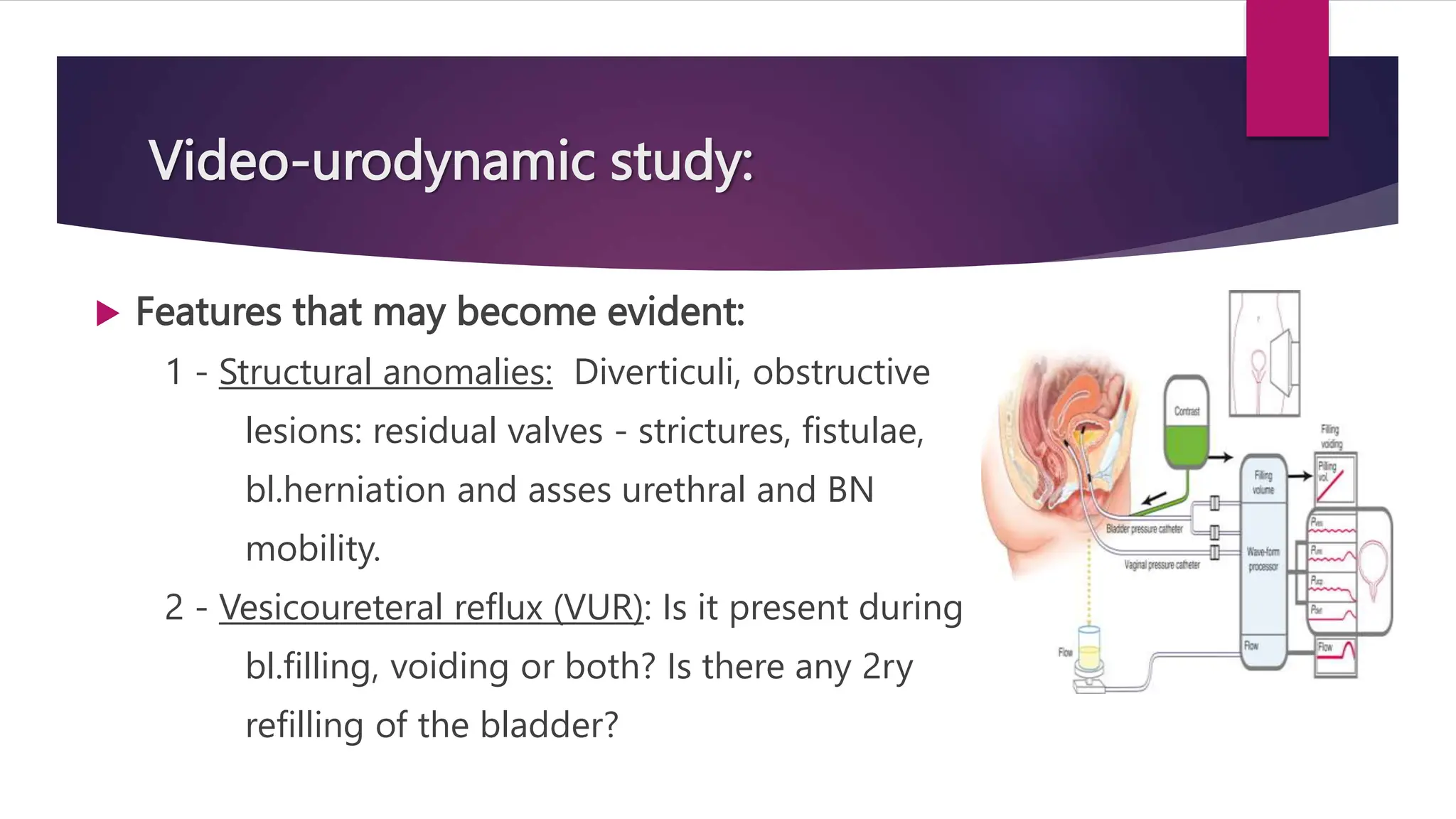
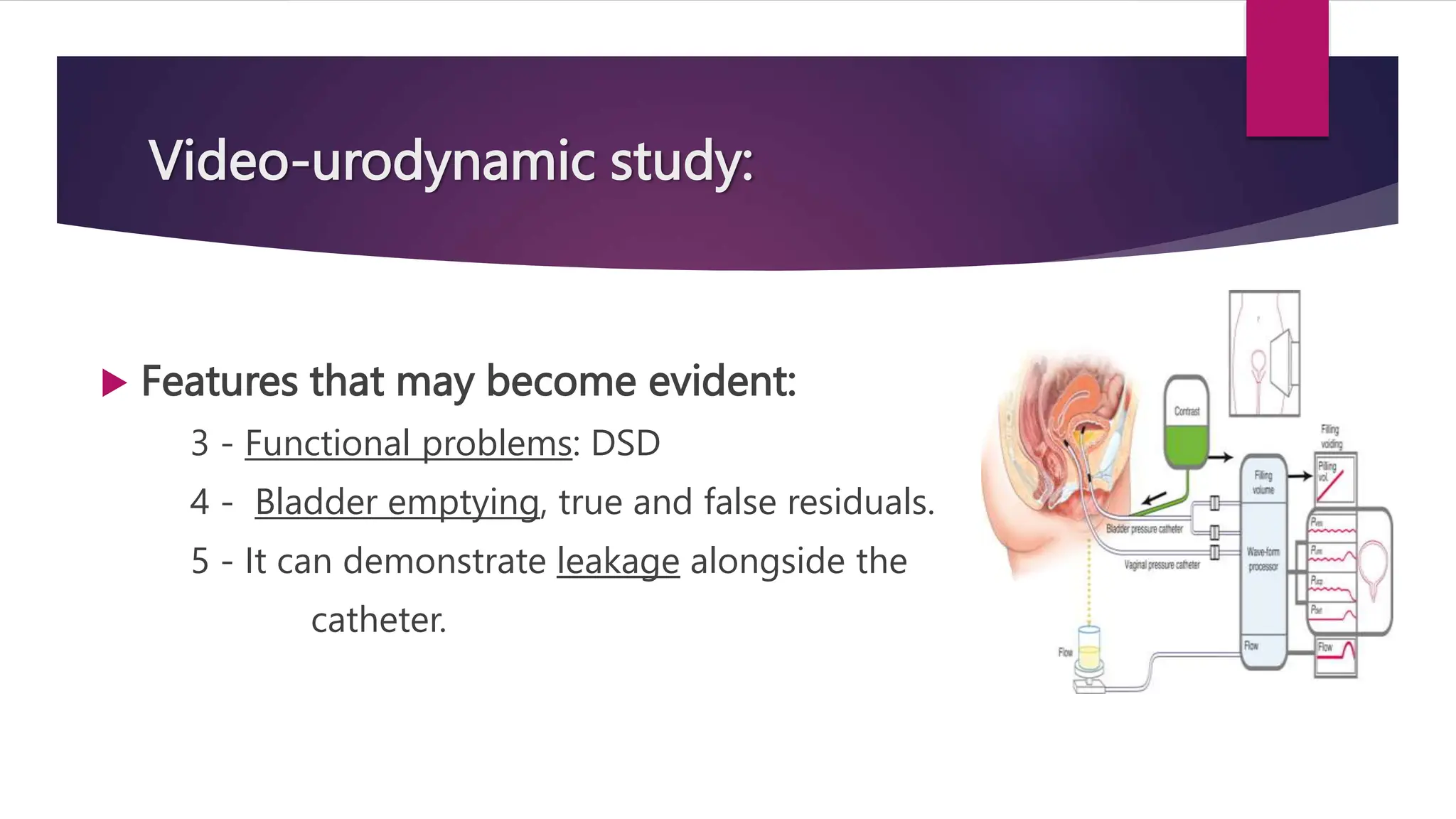
 Invasive UDS performed with contrast fluid as the
filling medium; with X-ray, CT or pelvic U/S real-
time imaging.
 Allows visualisation of the functional anatomy of
the LUT.
Video-urodynamic study:
 Features that may become evident:
1 - Structural anomalies: Diverticuli, obstructive
lesions: residual valves - strictures, fistulae,
bl.herniation and asses urethral and BN
mobility.
2 - Vesicoureteral reflux (VUR): Is it present during
bl.filling, voiding or both? Is there any 2ry
refilling of the bladder?
Video-urodynamic study:
 Features that may become evident:
3 - Functional problems: DSD
4 - Bladder emptying, true and false residuals.
5 - It can demonstrate leakage alongside the
catheter.
Video-urodynamic study:
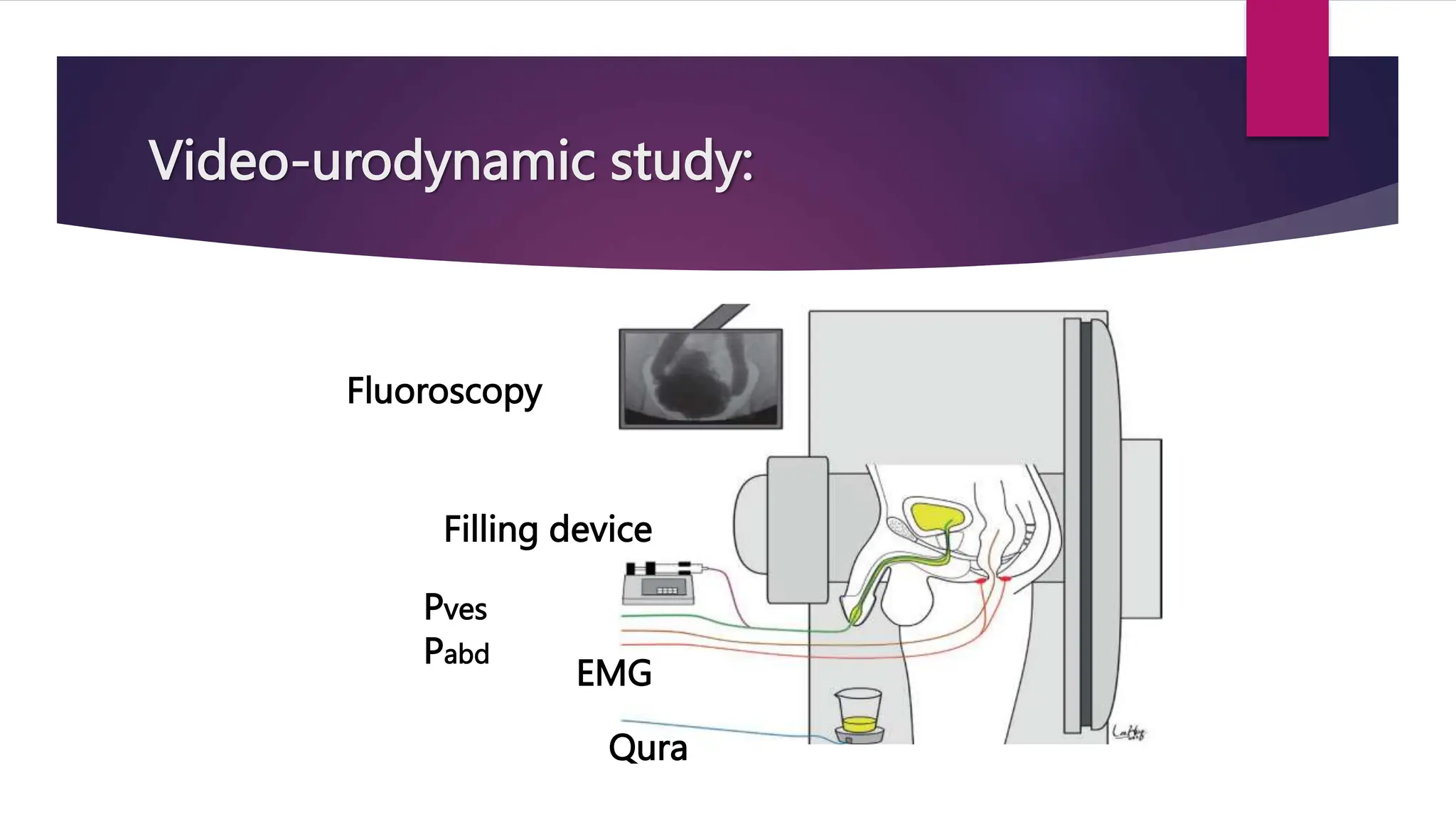
Qura
Pves
Pabd
Filling device
EMG
Fluoroscopy
Video-urodynamic study:
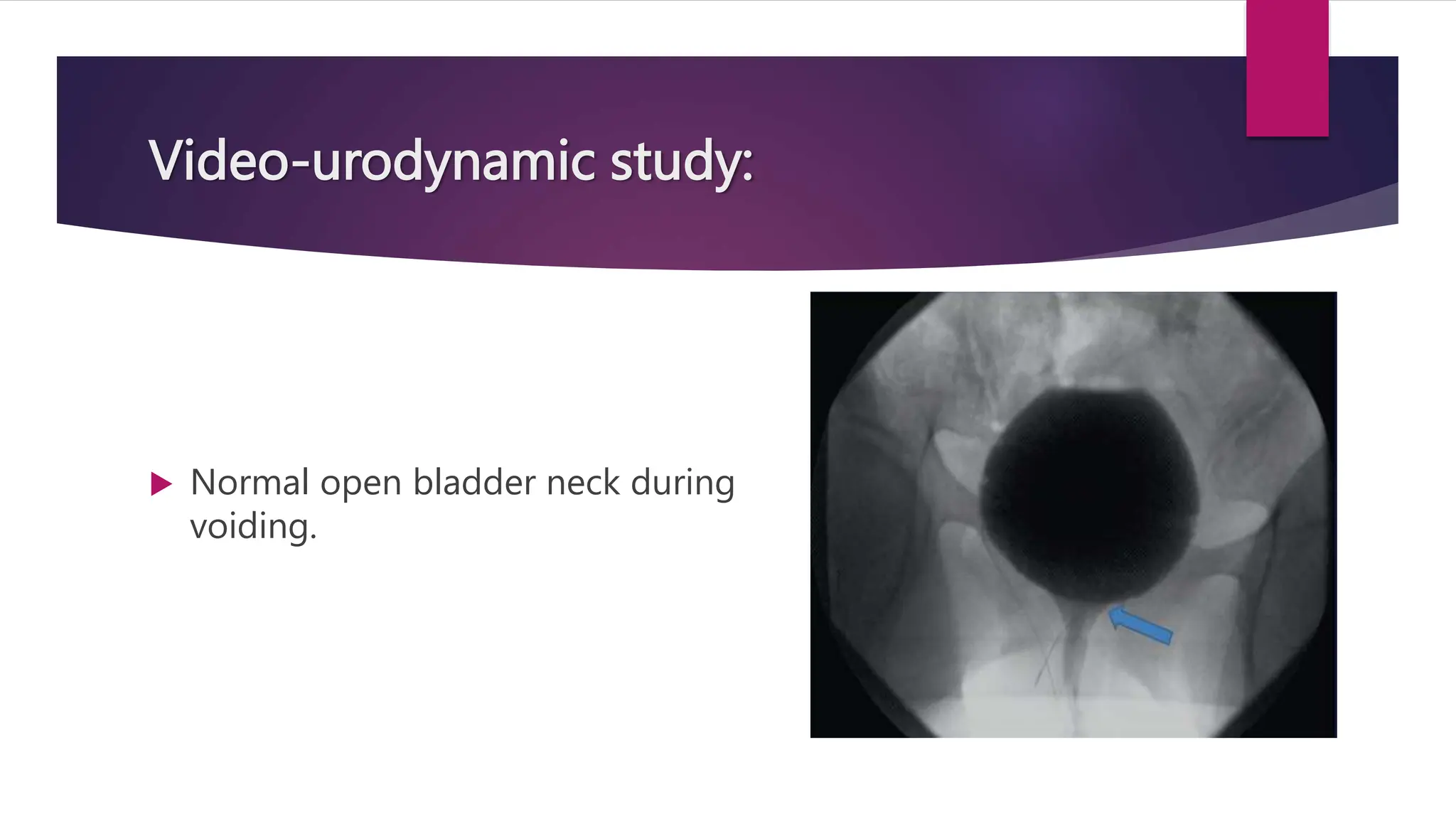
 Normal open bladder neck during
voiding.
Video-urodynamic study:
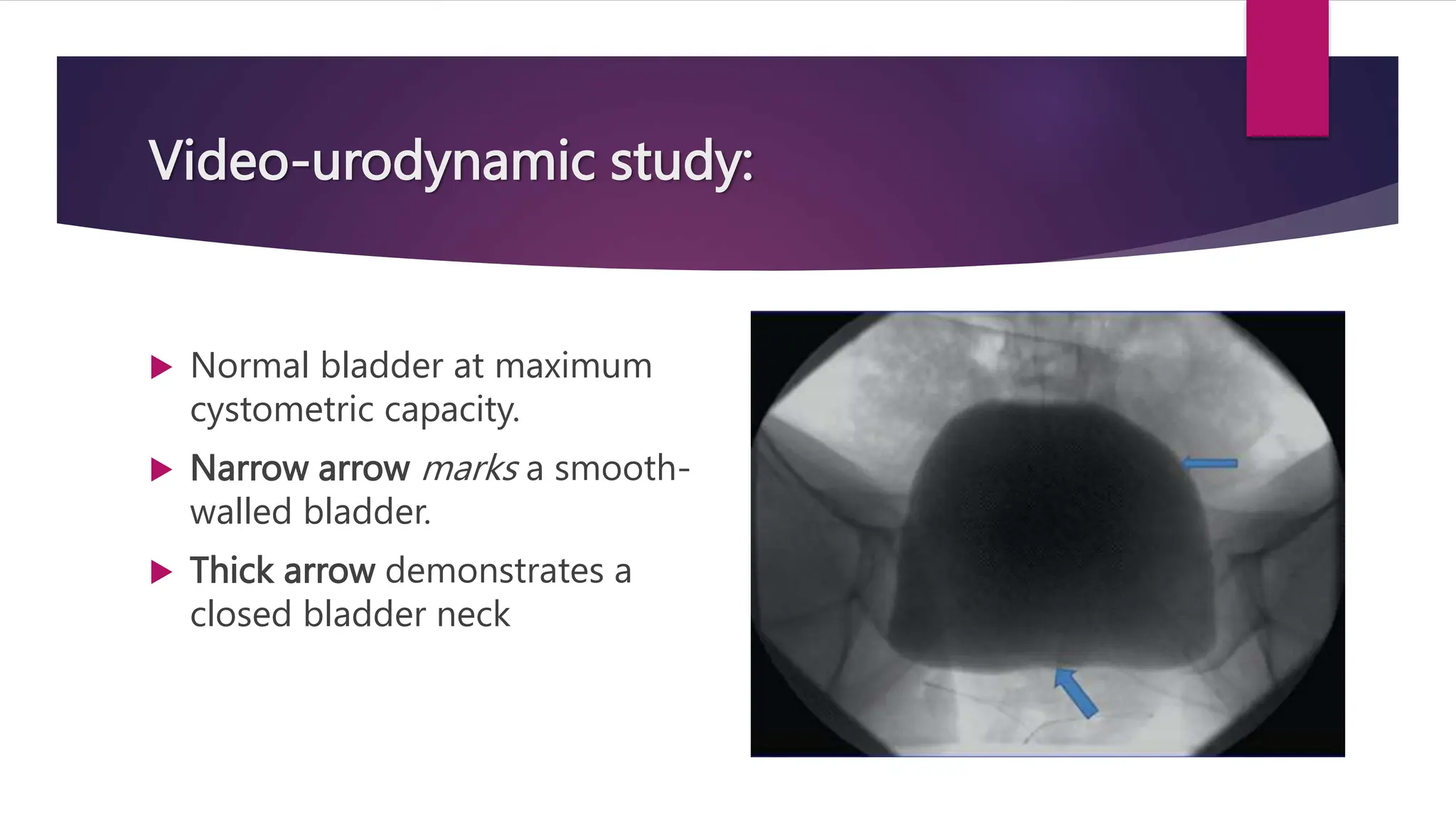
 Normal bladder at maximum
cystometric capacity.
 Narrow arrow marks a smooth-
walled bladder.
 Thick arrow demonstrates a
closed bladder neck
Video-urodynamic study:
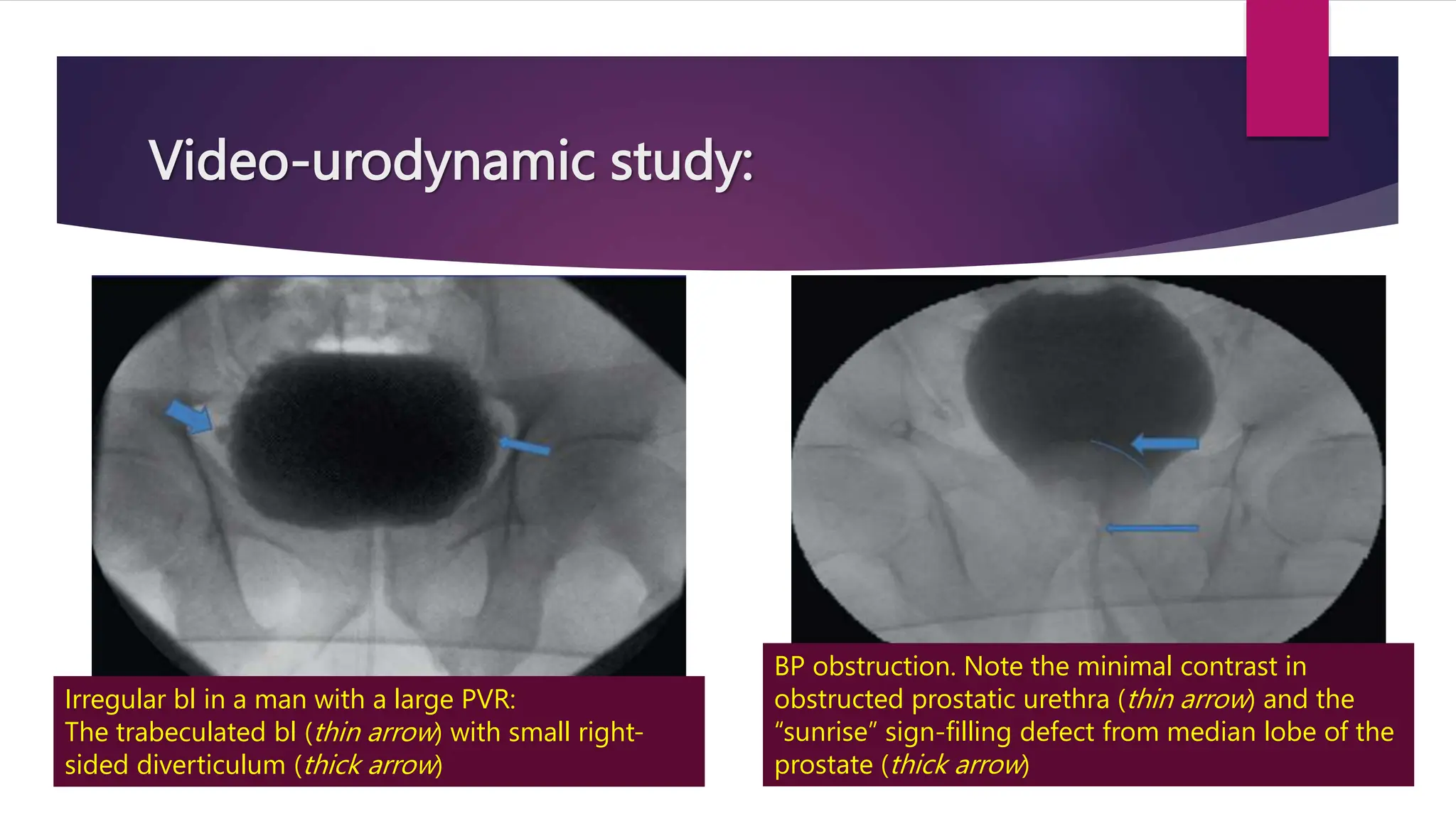
Irregular bl in a man with a large PVR:
The trabeculated bl (thin arrow) with small right-
sided diverticulum (thick arrow)
BP obstruction. Note the minimal contrast in
obstructed prostatic urethra (thin arrow) and the
“sunrise” sign-filling defect from median lobe of the
prostate (thick arrow)
Video-urodynamic study:
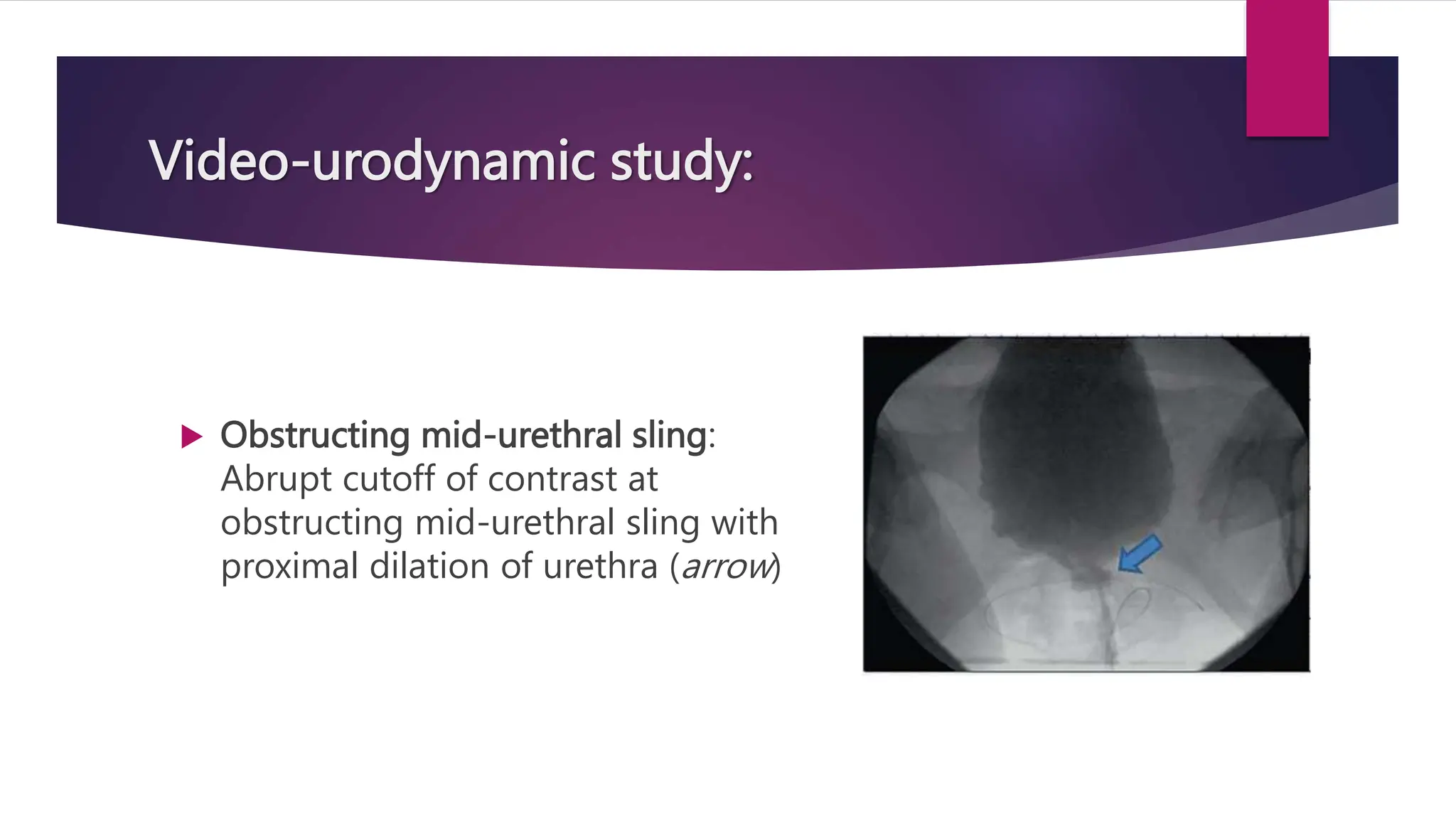
 Obstructing mid-urethral sling:
Abrupt cutoff of contrast at
obstructing mid-urethral sling with
proximal dilation of urethra (arrow)
Video-urodynamic study:
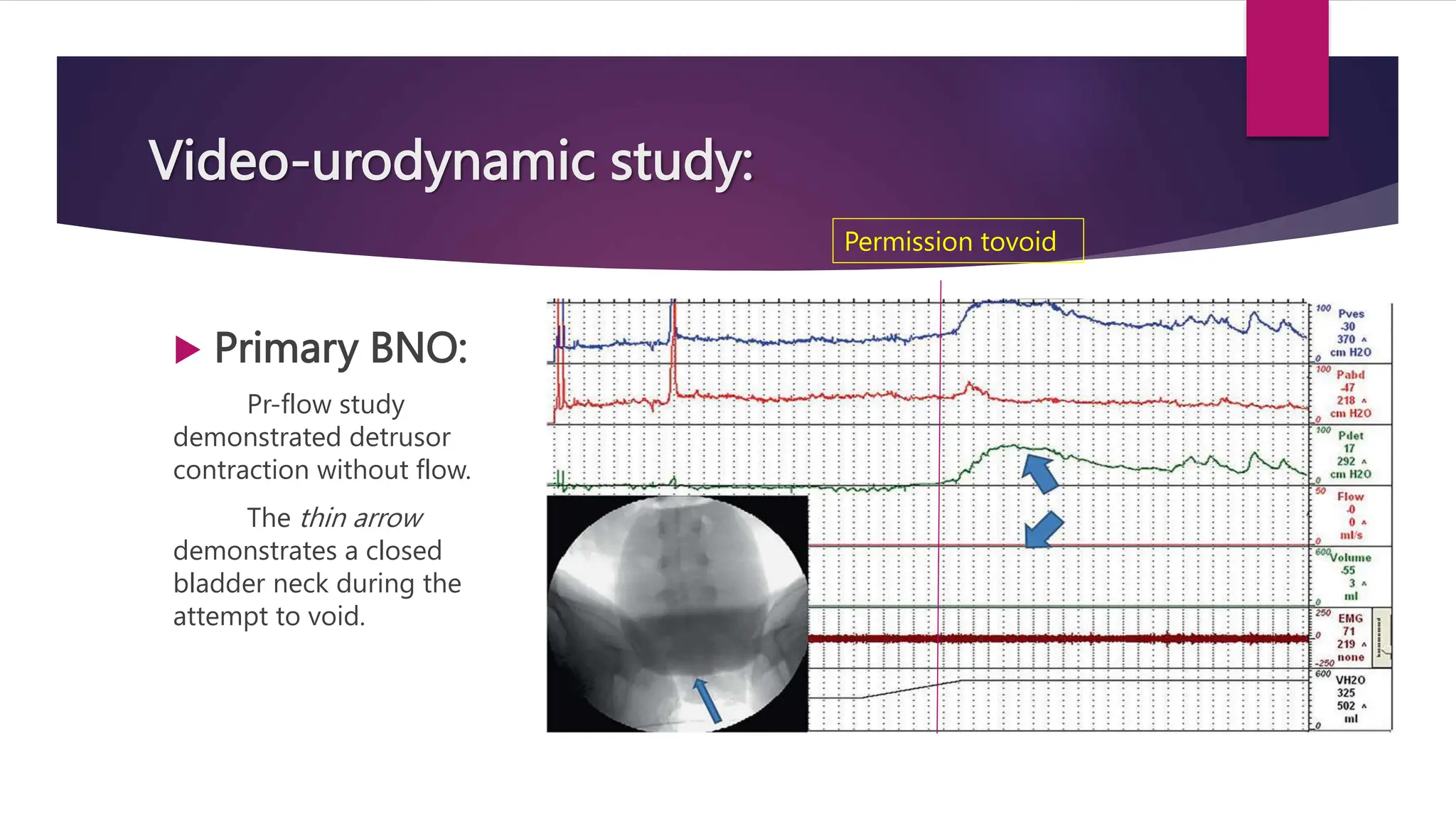
 Primary BNO:
Pr-flow study
demonstrated detrusor
contraction without flow.
The thin arrow
demonstrates a closed
bladder neck during the
attempt to void.
Permission tovoid
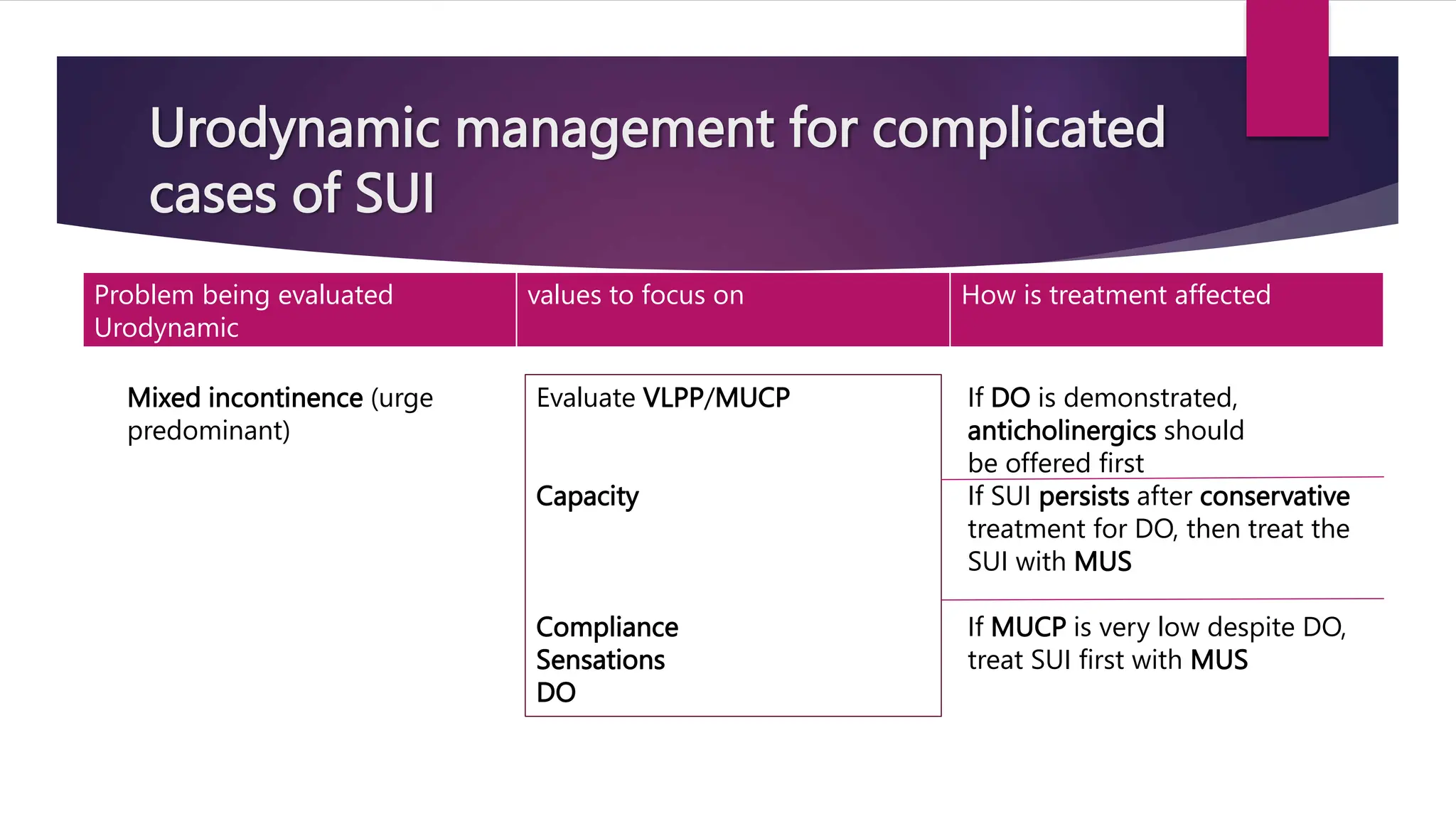
Urodynamic management for complicated
cases of SUI
Problem being evaluated
Urodynamic
values to focus on How is treatment affected
Mixed incontinence (urge
predominant)
Evaluate VLPP/MUCP
Capacity
Compliance
Sensations
DO
If DO is demonstrated,
anticholinergics should
be offered first
If SUI persists after conservative
treatment for DO, then treat the
SUI with MUS
If MUCP is very low despite DO,
treat SUI first with MUS
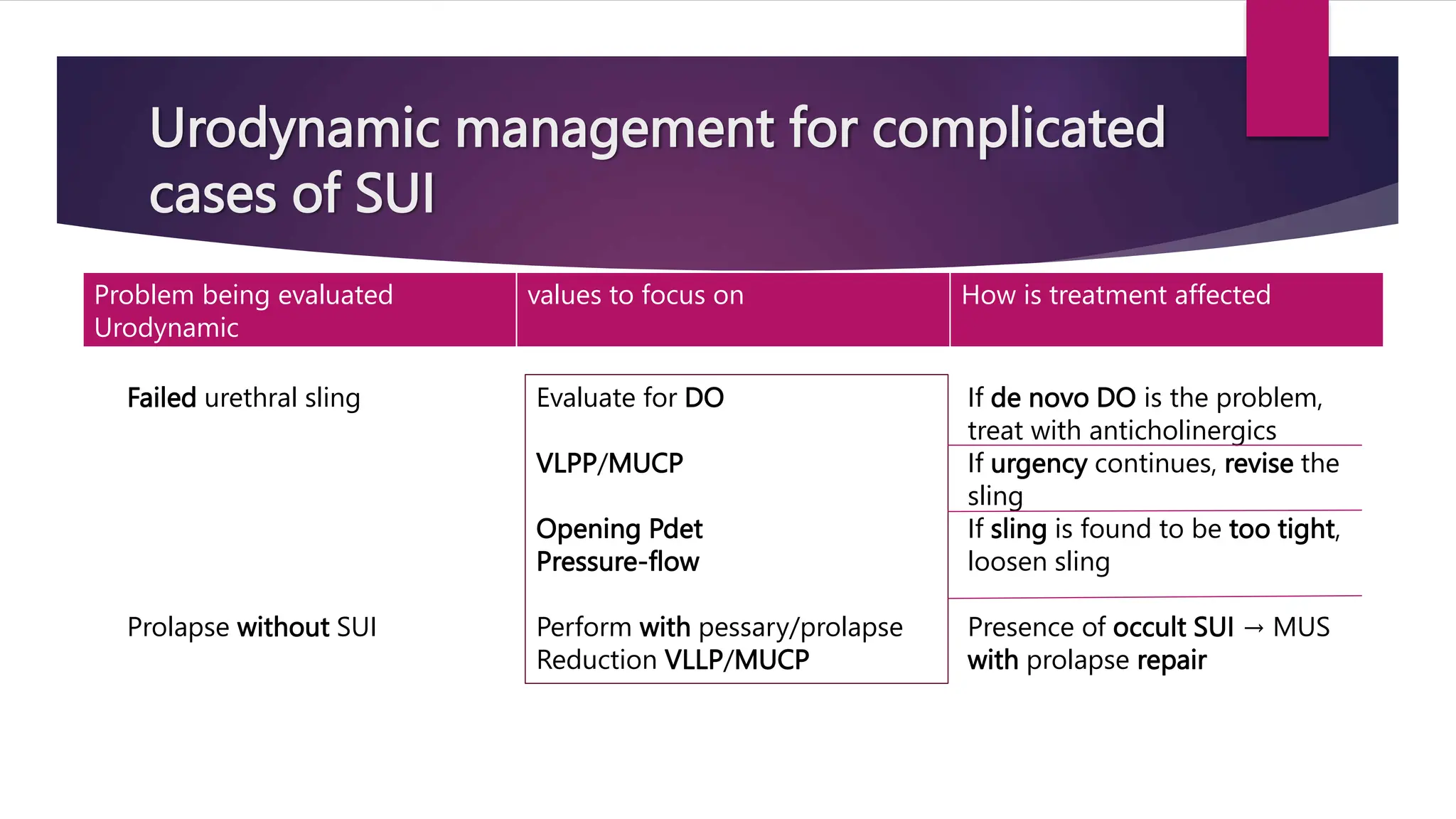
Urodynamic management for complicated
cases of SUI
Problem being evaluated
Urodynamic
values to focus on How is treatment affected
Failed urethral sling
Prolapse without SUI
Evaluate for DO
VLPP/MUCP
Opening Pdet
Pressure-flow
Perform with pessary/prolapse
Reduction VLLP/MUCP
If de novo DO is the problem,
treat with anticholinergics
If urgency continues, revise the
sling
If sling is found to be too tight,
loosen sling
Presence of occult SUI → MUS
with prolapse repair
CASE STUDY
1
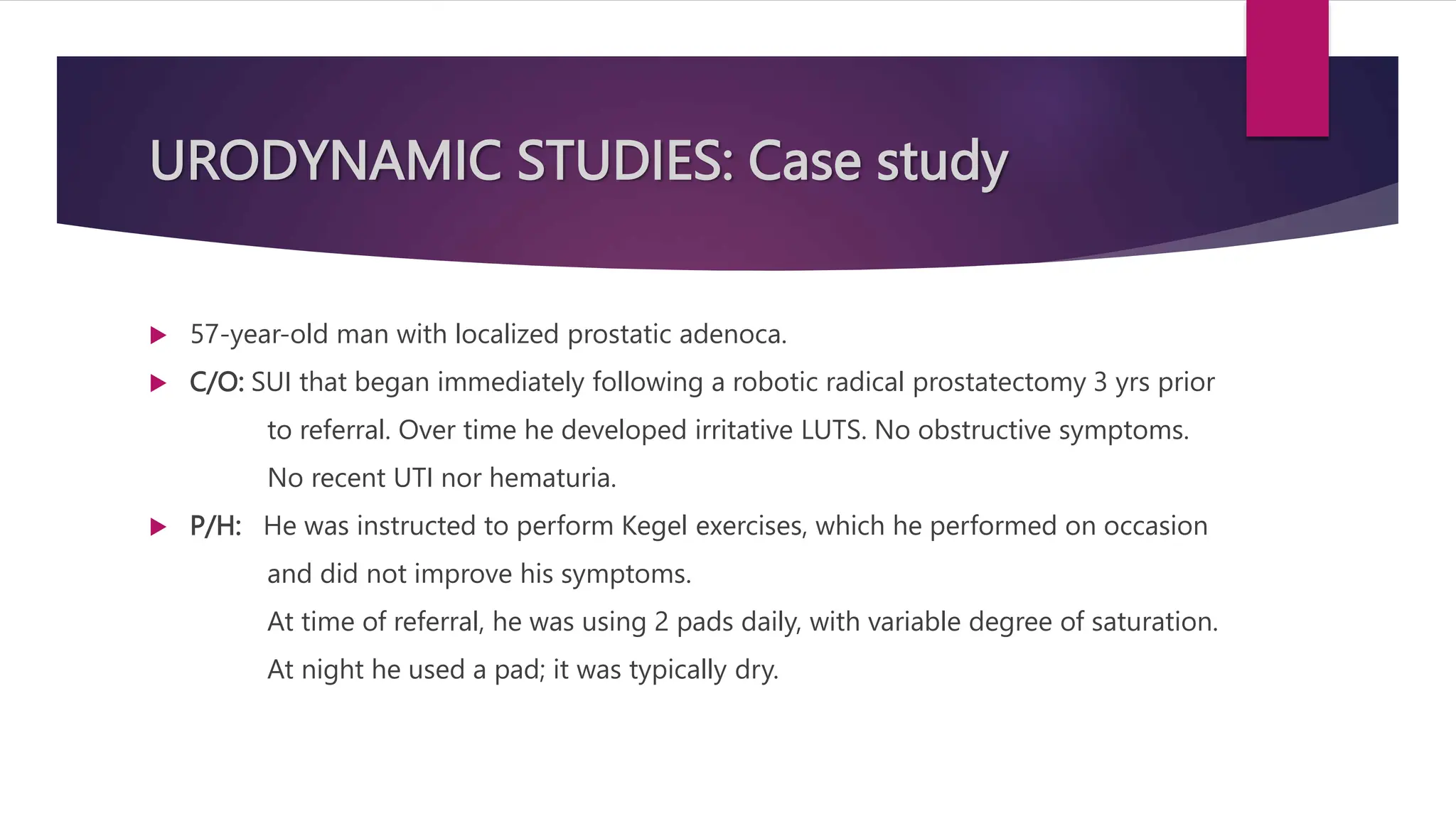
URODYNAMIC STUDIES: Case study
 57-year-old man with localized prostatic adenoca.
 C/O: SUI that began immediately following a robotic radical prostatectomy 3 yrs prior
to referral. Over time he developed irritative LUTS. No obstructive symptoms.
No recent UTI nor hematuria.
 P/H: He was instructed to perform Kegel exercises, which he performed on occasion
and did not improve his symptoms.
At time of referral, he was using 2 pads daily, with variable degree of saturation.
At night he used a pad; it was typically dry.
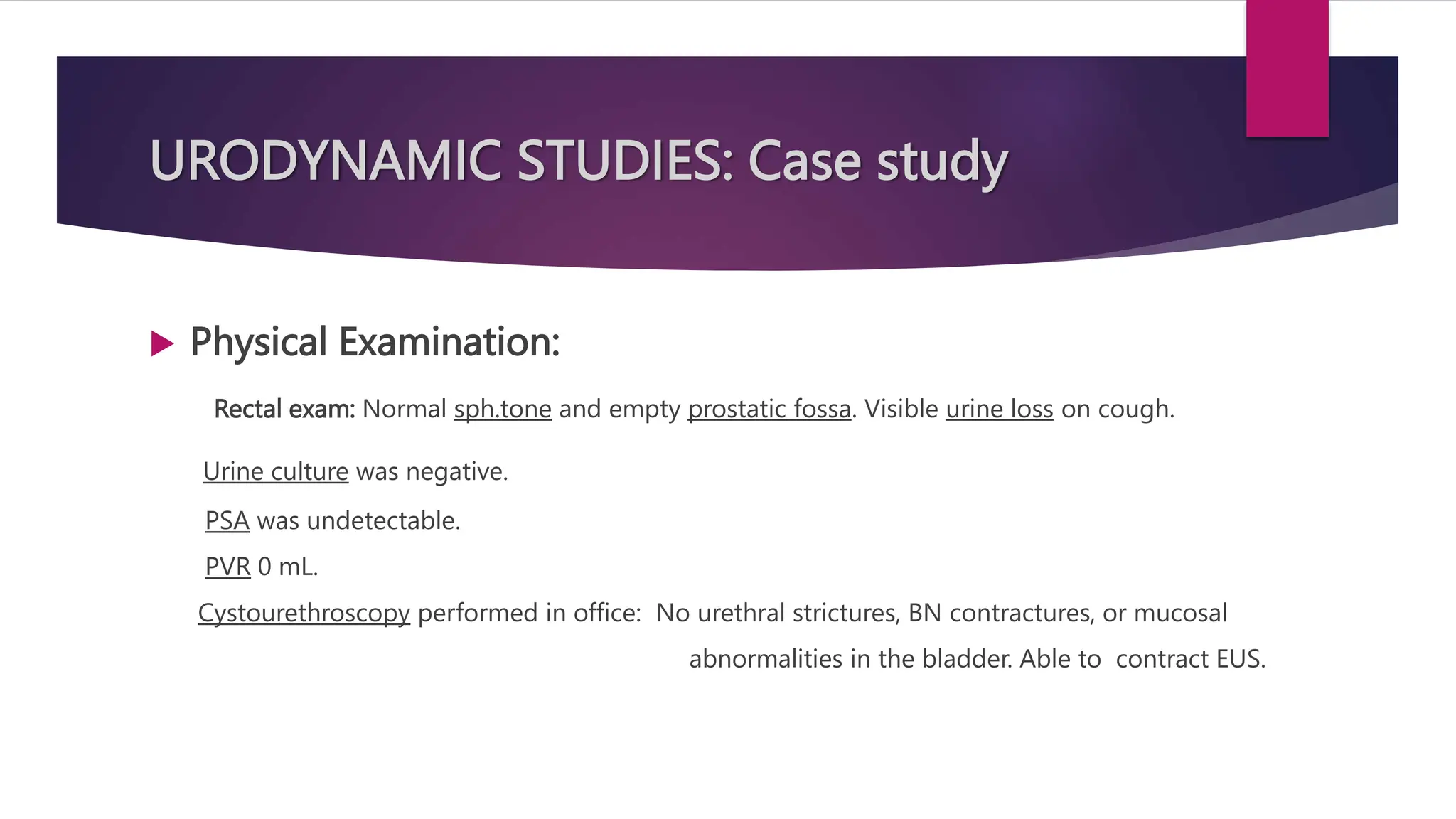
URODYNAMIC STUDIES: Case study
 Physical Examination:
Rectal exam: Normal sph.tone and empty prostatic fossa. Visible urine loss on cough.
Urine culture was negative.
PSA was undetectable.
PVR 0 mL.
Cystourethroscopy performed in office: No urethral strictures, BN contractures, or mucosal
abnormalities in the bladder. Able to contract EUS.
URODYNAMIC STUDIES: Case study
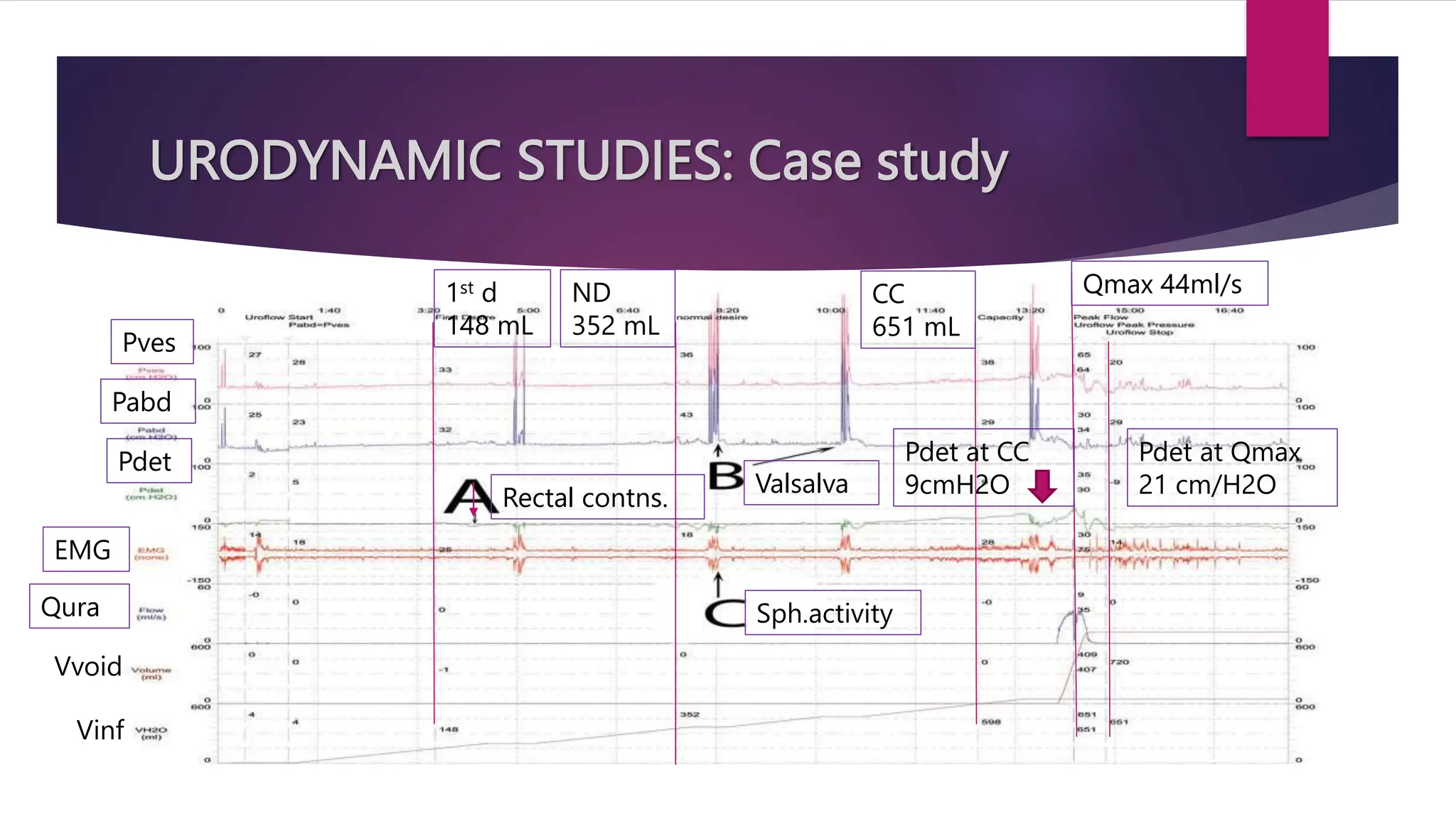
1st d
148 mL
ND
352 mL
CC
651 mL
Qmax 44ml/s
Pves
Pabd
Pdet
Qura
Vvoid
Vinf
EMG
Rectal contns.
Valsalva
Sph.activity
Pdet at CC
9cmH2O
Pdet at Qmax
21 cm/H2O
URODYNAMIC STUDIES: Case study
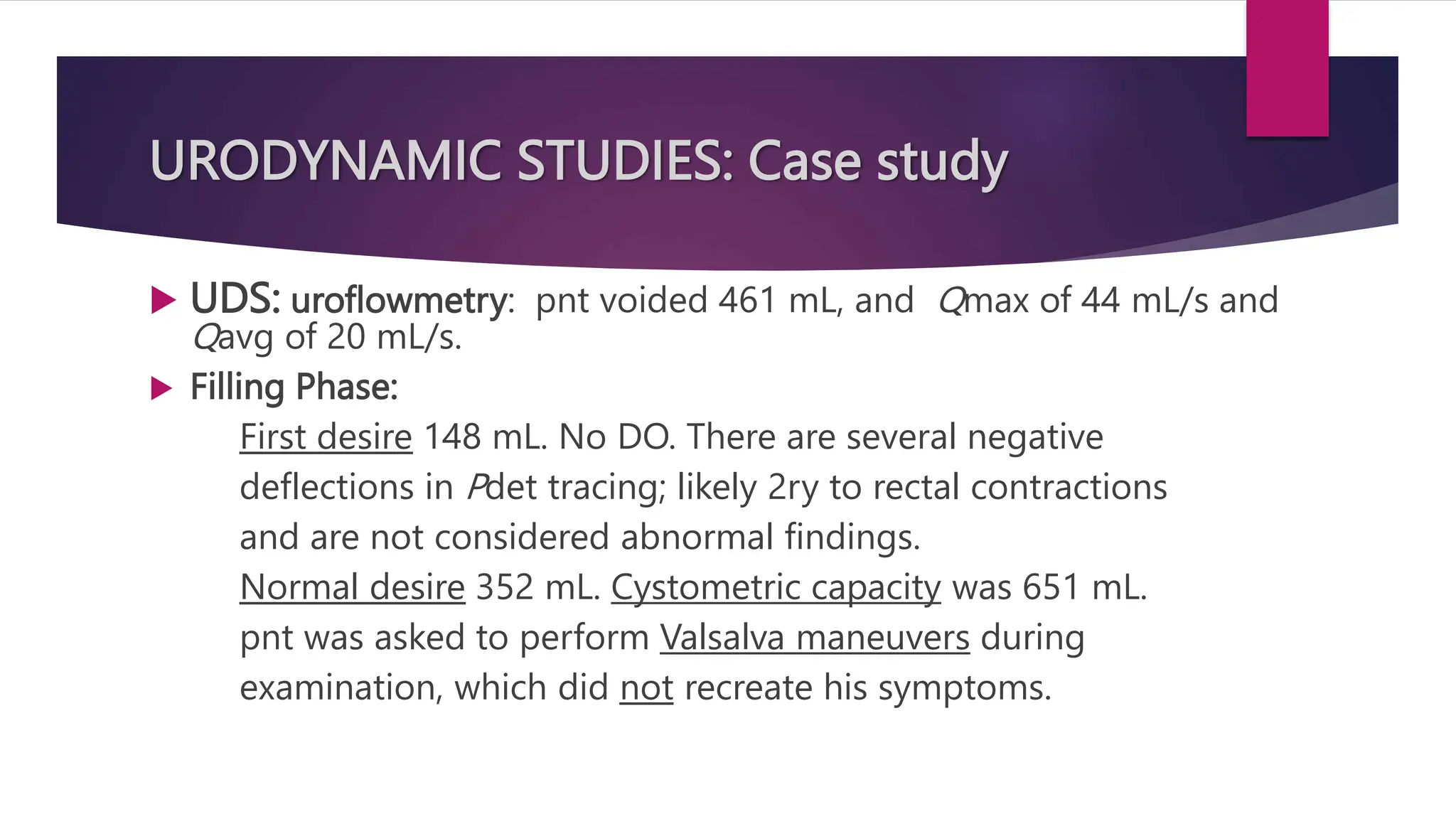
 UDS: uroflowmetry: pnt voided 461 mL, and Qmax of 44 mL/s and
Qavg of 20 mL/s.
 Filling Phase:
First desire 148 mL. No DO. There are several negative
deflections in Pdet tracing; likely 2ry to rectal contractions
and are not considered abnormal findings.
Normal desire 352 mL. Cystometric capacity was 651 mL.
pnt was asked to perform Valsalva maneuvers during
examination, which did not recreate his symptoms.
URODYNAMIC STUDIES: Case study
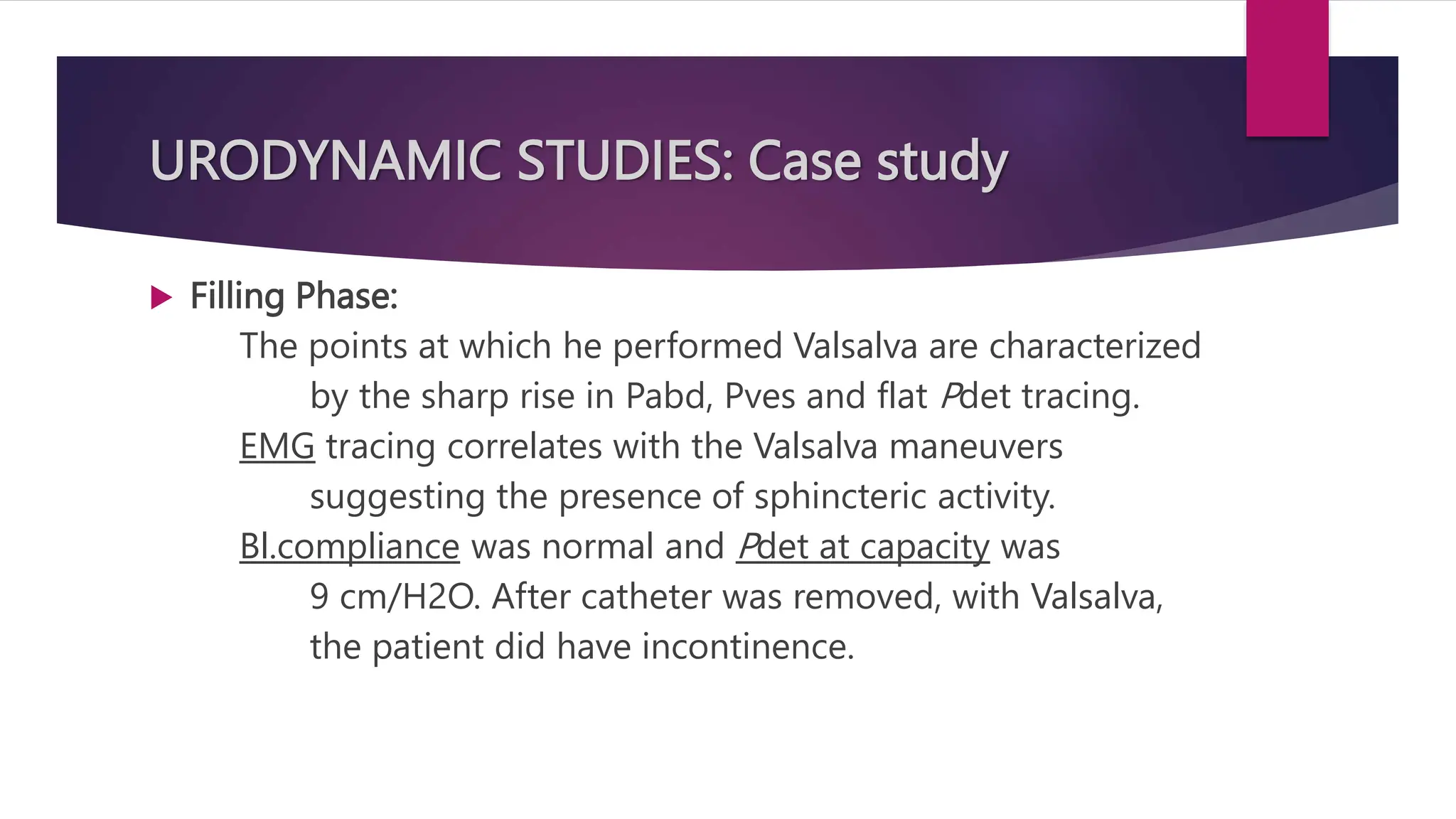
 Filling Phase:
The points at which he performed Valsalva are characterized
by the sharp rise in Pabd, Pves and flat Pdet tracing.
EMG tracing correlates with the Valsalva maneuvers
suggesting the presence of sphincteric activity.
Bl.compliance was normal and Pdet at capacity was
9 cm/H2O. After catheter was removed, with Valsalva,
the patient did have incontinence.
URODYNAMIC STUDIES: Case study
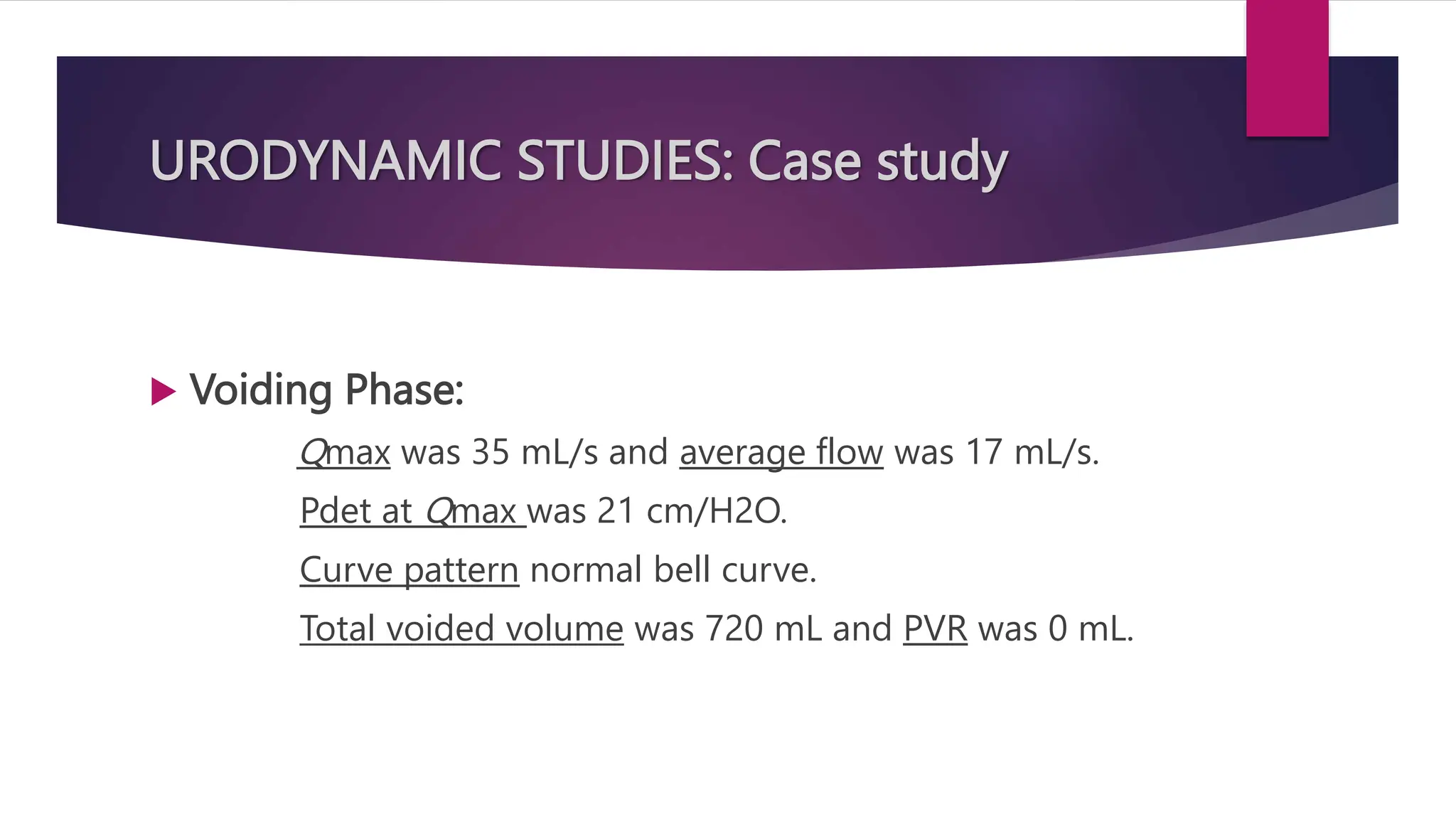
 Voiding Phase:
Qmax was 35 mL/s and average flow was 17 mL/s.
Pdet at Qmax was 21 cm/H2O.
Curve pattern normal bell curve.
Total voided volume was 720 mL and PVR was 0 mL.
URODYNAMIC STUDIES: Case study
 Conclusion:
Normal bl.sensation, capacity, and compliance.
Urodynamic stress incontinence was not demonstrated in study;
however, it had been demonstrated in physical exam.
This may be due to decreased ureth.compliance and
ureth.catheter used during the exam. ( explained by
discrepancy in his pre-procedure Qmax = 44 mL/s and his
voiding phase during UDS Qmax = 35 mL/s).
URODYNAMIC STUDIES: Case study
 He does demonstrate low Pdet at Qmax; however, this does
not reflect a poorly contractile bladder as the urethral
resistance may be diminished in a patient with stress
incontinence 2ry to ISD.
 Diagnosis: Mild to moderate stress incontinence (ISD)
URODYNAMIC STUDIES: Case study
 Treatment options:
- Penile clamping device.
- Peri-urethral bulking agents.
- Male sling.
- AUS.
CASE STUDY
2
URODYNAMIC STUDIES: Case study
 History : 65-year-old man with C/O: SUI following a radical prostatectomy
2 yrs prior to referral. At night he used a safety napkin and he used 3
napkins on a daily basis (only used napkins rather than pads). He had no
other LUTS.
P/H: Significant for a herniated lumbar disk.
Prior to referral, he had tried Kegel exercises and utilized a penile
clamp; however, he had unsatisfactory results with both.
Voiding diary notable for a morning void of 350 mL and did not find
time to perform a 24-h pad test.
URODYNAMIC STUDIES: Case study
 Physical Examination:
General: no acute distress, appearing his stated age.
Psychologic: no signs of depression.
Neurologic: normal gait and sensory ex.
CV, Abdomen, GU: NAD
DRE: Normal sph.tone and empty prostatic fossa.
He was asked to perform a Valsalva maneuver and
as a result, he leaked several drops of urine.
URODYNAMIC STUDIES: Case study
 PSA was undetectable.
UA and urine culture negative.
PVR 0 mL.
 Cystourethroscopy: No urethral stricture, BN contracture, and no bl.mucosal a
bnormalities. Able to contract EUS.
URODYNAMIC STUDIES: Case study
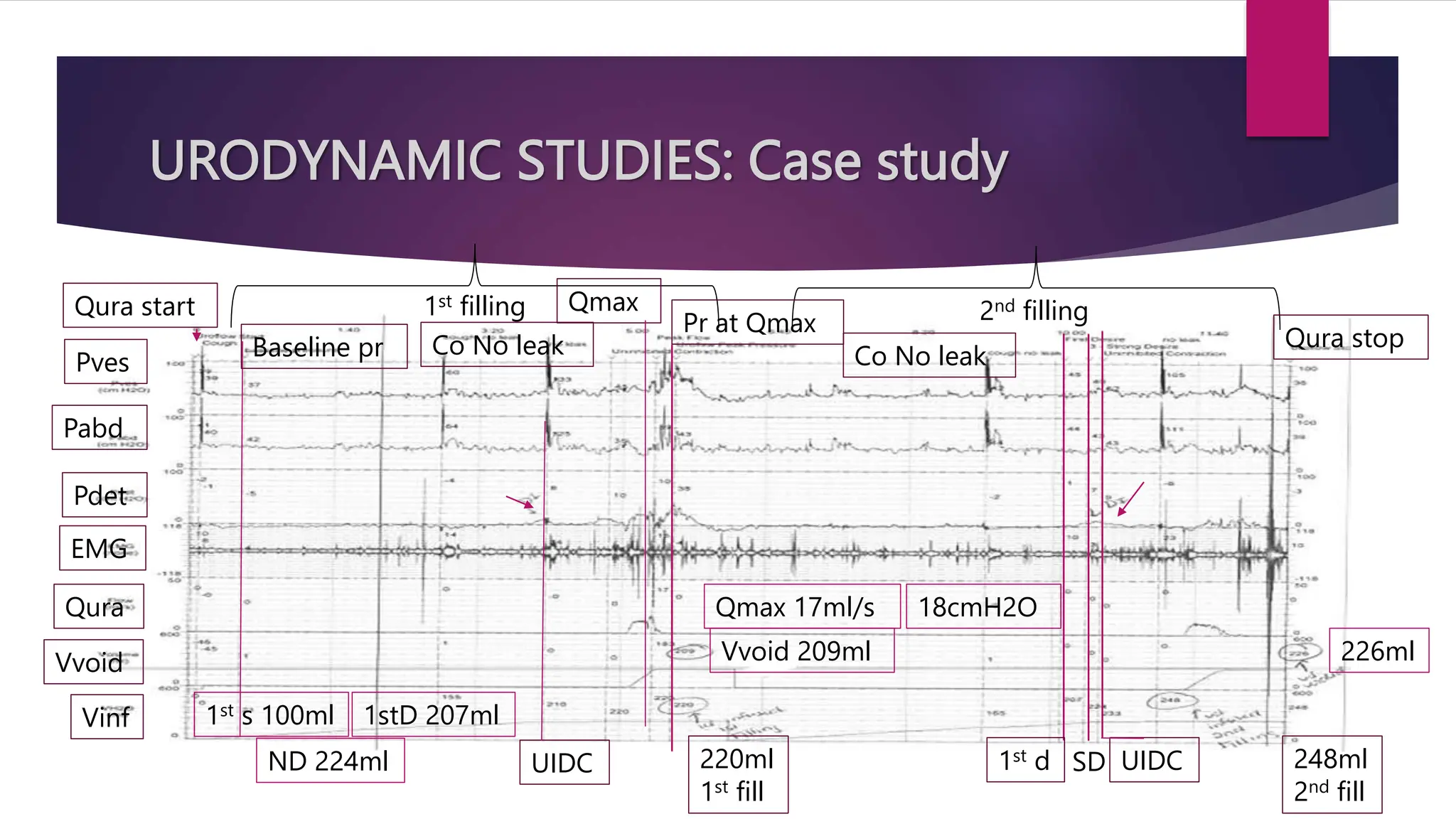
 UDS: He was quite uncomfortable and did not tolerate bladder filling.
 Filling Phase:
1st sensation 100 mL.
1st d to void was noted at 207 mL.
ND to void occurred at 224 mL.
DO noted. SUI (SUI noted without catheter on initial exam). No UUI noted.
Cystometric capacity was 247 mL.
URODYNAMIC STUDIES: Case study
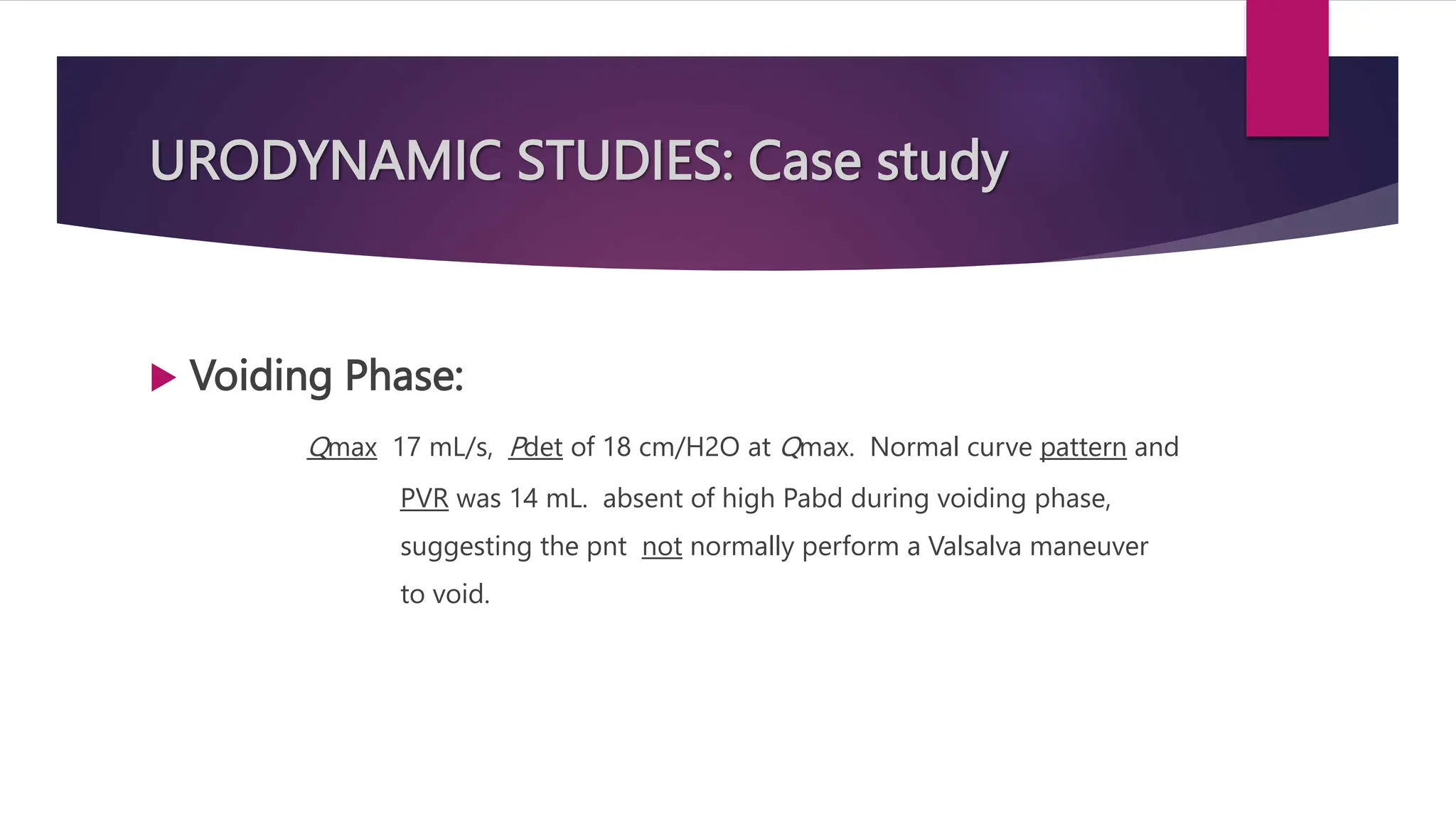
 Voiding Phase:
Qmax 17 mL/s, Pdet of 18 cm/H2O at Qmax. Normal curve pattern and
PVR was 14 mL. absent of high Pabd during voiding phase,
suggesting the pnt not normally perform a Valsalva maneuver
to void.
URODYNAMIC STUDIES: Case study
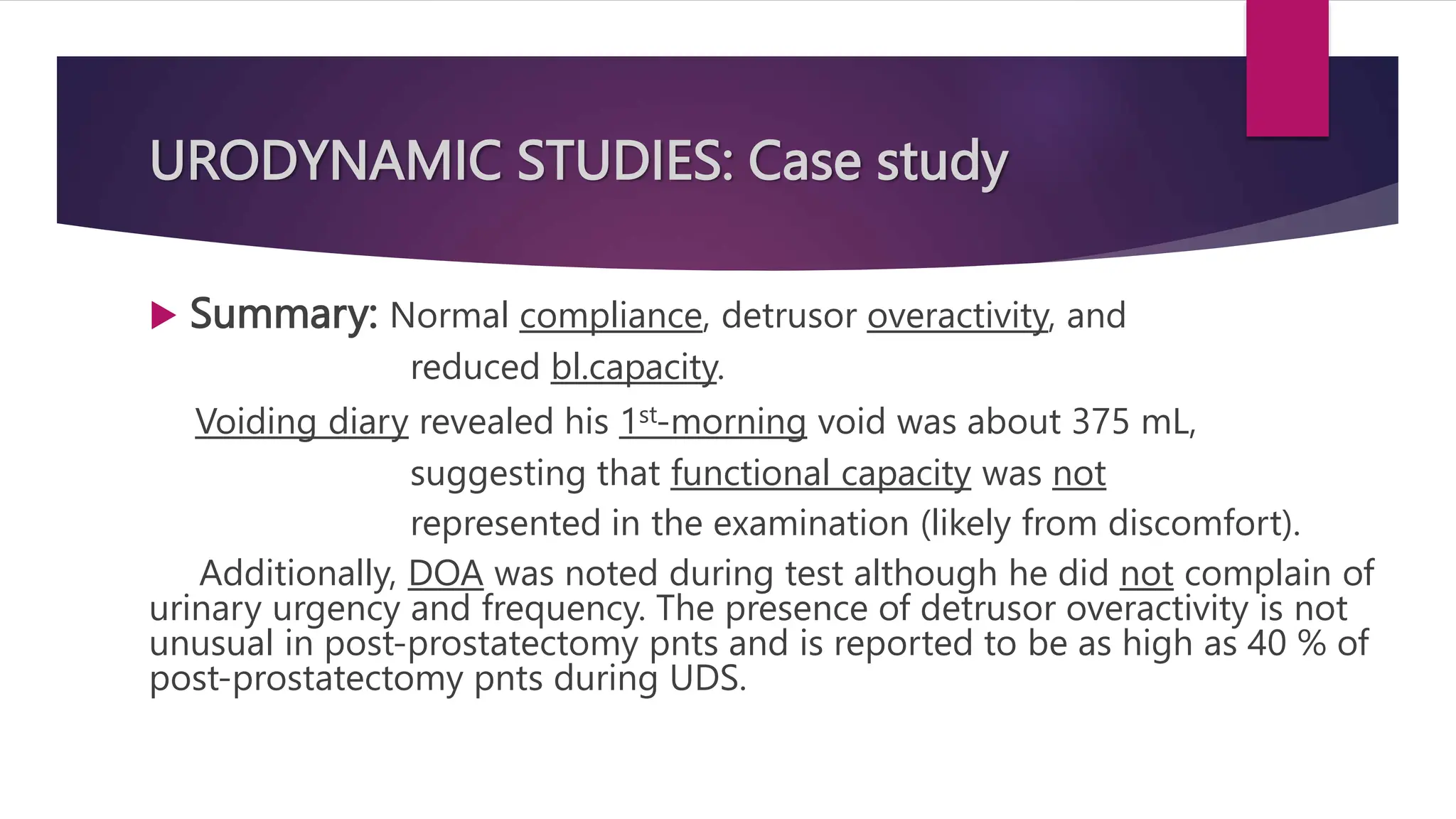
 Summary: Normal compliance, detrusor overactivity, and
reduced bl.capacity.
Voiding diary revealed his 1st-morning void was about 375 mL,
suggesting that functional capacity was not
represented in the examination (likely from discomfort).
Additionally, DOA was noted during test although he did not complain of
urinary urgency and frequency. The presence of detrusor overactivity is not
unusual in post-prostatectomy pnts and is reported to be as high as 40 % of
post-prostatectomy pnts during UDS.
URODYNAMIC STUDIES: Case study
1st filling 2nd filling
Qura start
Baseline pr Co No leak
Qmax
Pr at Qmax
Pves
Pabd
Pdet
Vvoid
Vinf
Qura
EMG
220ml
1st fill
248ml
2nd fill
Co No leak
1st d SD UIDC
Qura stop
UIDC
1st s 100ml
ND 224ml
1stD 207ml
Vvoid 209ml 226ml
Qmax 17ml/s 18cmH2O
URODYNAMIC STUDIES: Case study
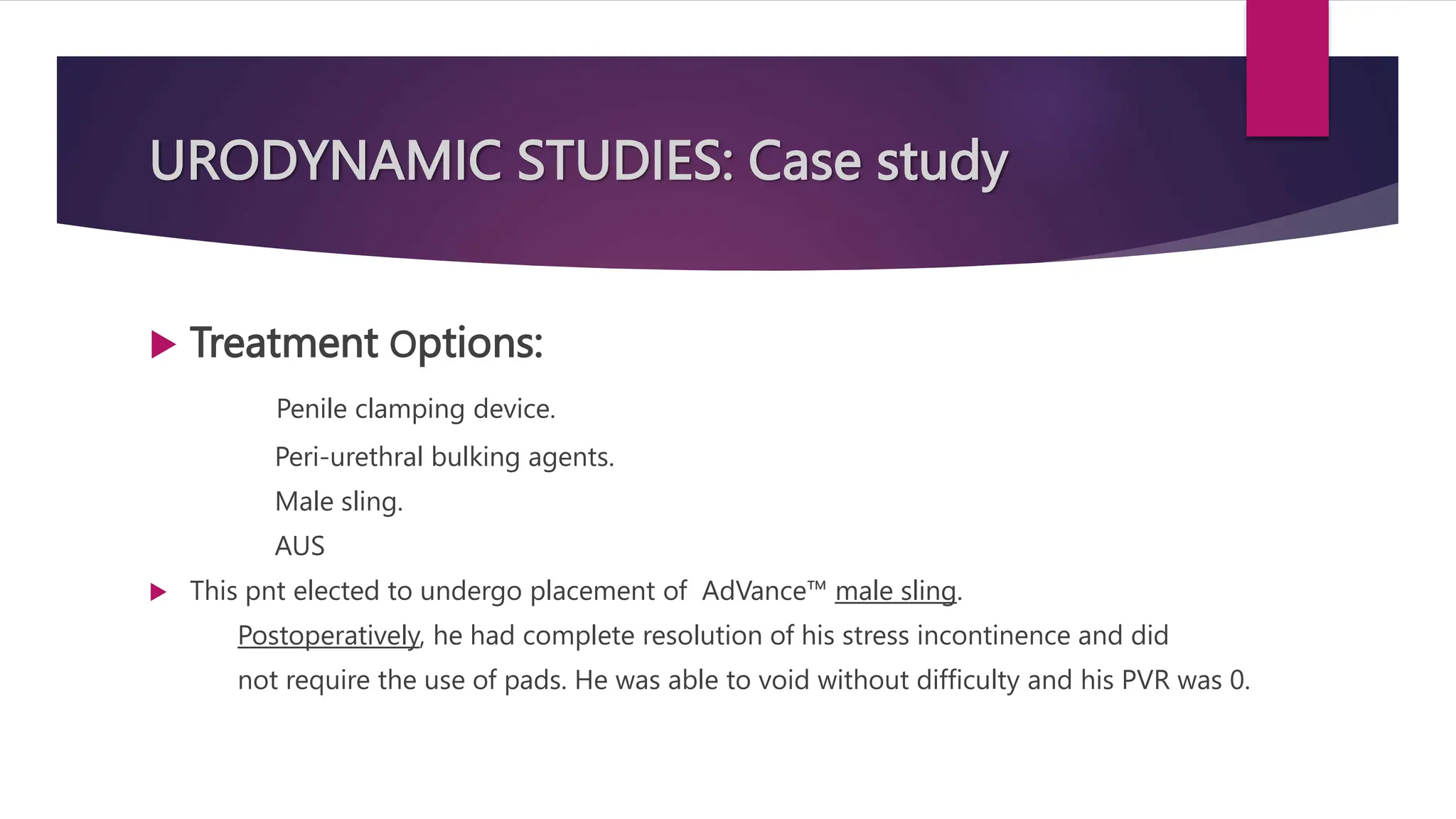
 Treatment Options:
Penile clamping device.
Peri-urethral bulking agents.
Male sling.
AUS
 This pnt elected to undergo placement of AdVance™ male sling.
Postoperatively, he had complete resolution of his stress incontinence and did
not require the use of pads. He was able to void without difficulty and his PVR was 0.
URODYNAMIC STUDIES: Case study
 2yrs later he presented with recurrent SUI for which he resumed
using sanitary pads.
He also complained of increased u.frequency
(voiding up to 15 times daily), urgency, and nocturia.
On his voiding diary, it was noted he was drinking
approximately 1 L of herbal tea and coffee in addition
to water and 3–4 glasses of wine after dinner.
URODYNAMIC STUDIES: Case study
 After behavioral modification including fluid restriction,
caffeine restriction, and decreasing alcohol consumption,
his OAB symptoms improved. He continued to experience
SI and he underwent video urodynamics as part of his new
evaluation.
URODYNAMIC STUDIES: Case study
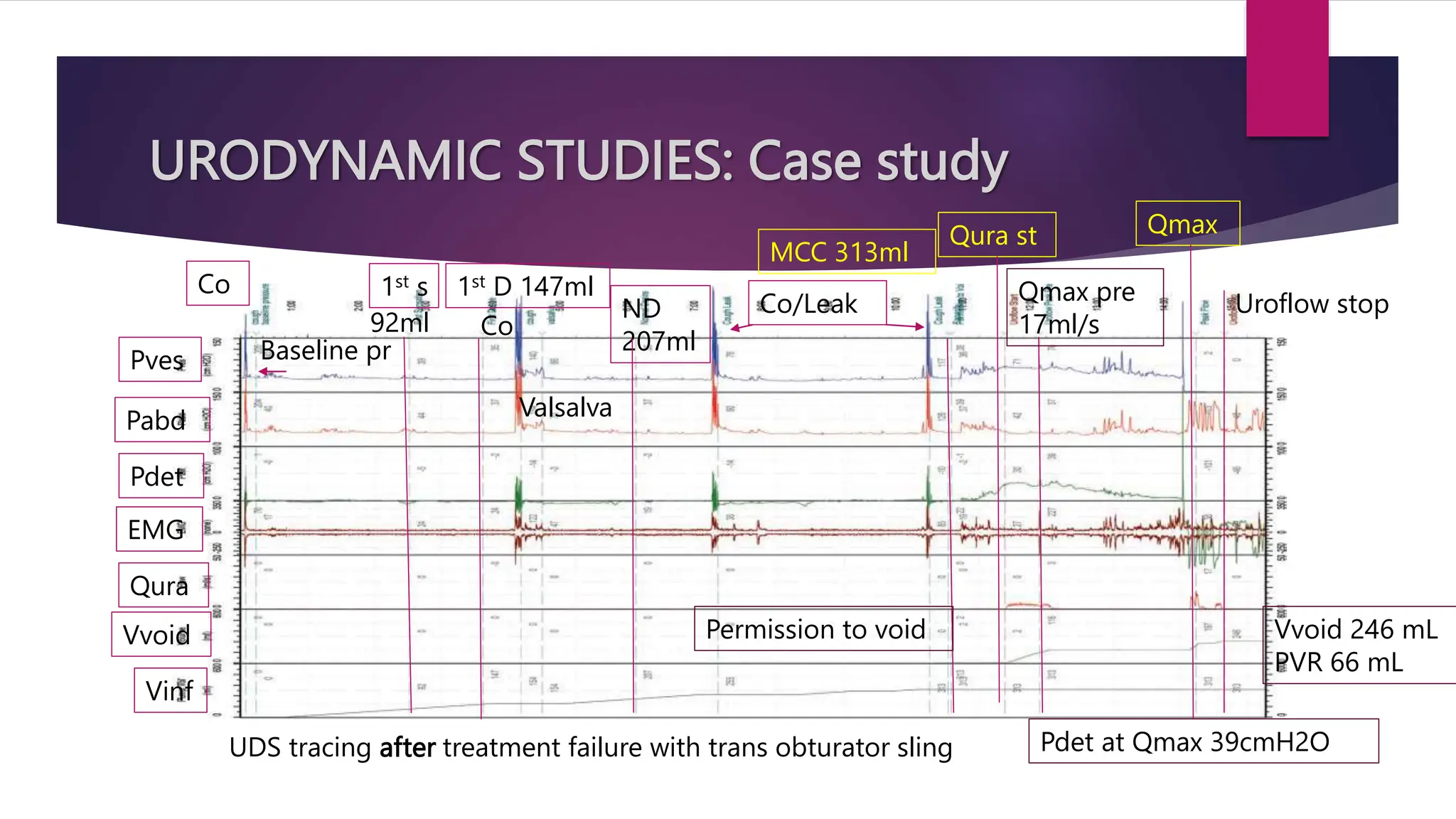
UDS tracing after treatment failure with trans obturator sling
Co
Baseline pr
1st s 1st D 147ml
Co
Valsalva
Pves
Pabd
Pdet
EMG
Qura
Vvoid
Vinf
ND
207ml
Co/Leak
Qura st
Qmax pre
17ml/s
Uroflow stop
Qmax
Permission to void
92ml
MCC 313ml
Vvoid 246 mL
PVR 66 mL
Pdet at Qmax 39cmH2O
URODYNAMIC STUDIES: Case study
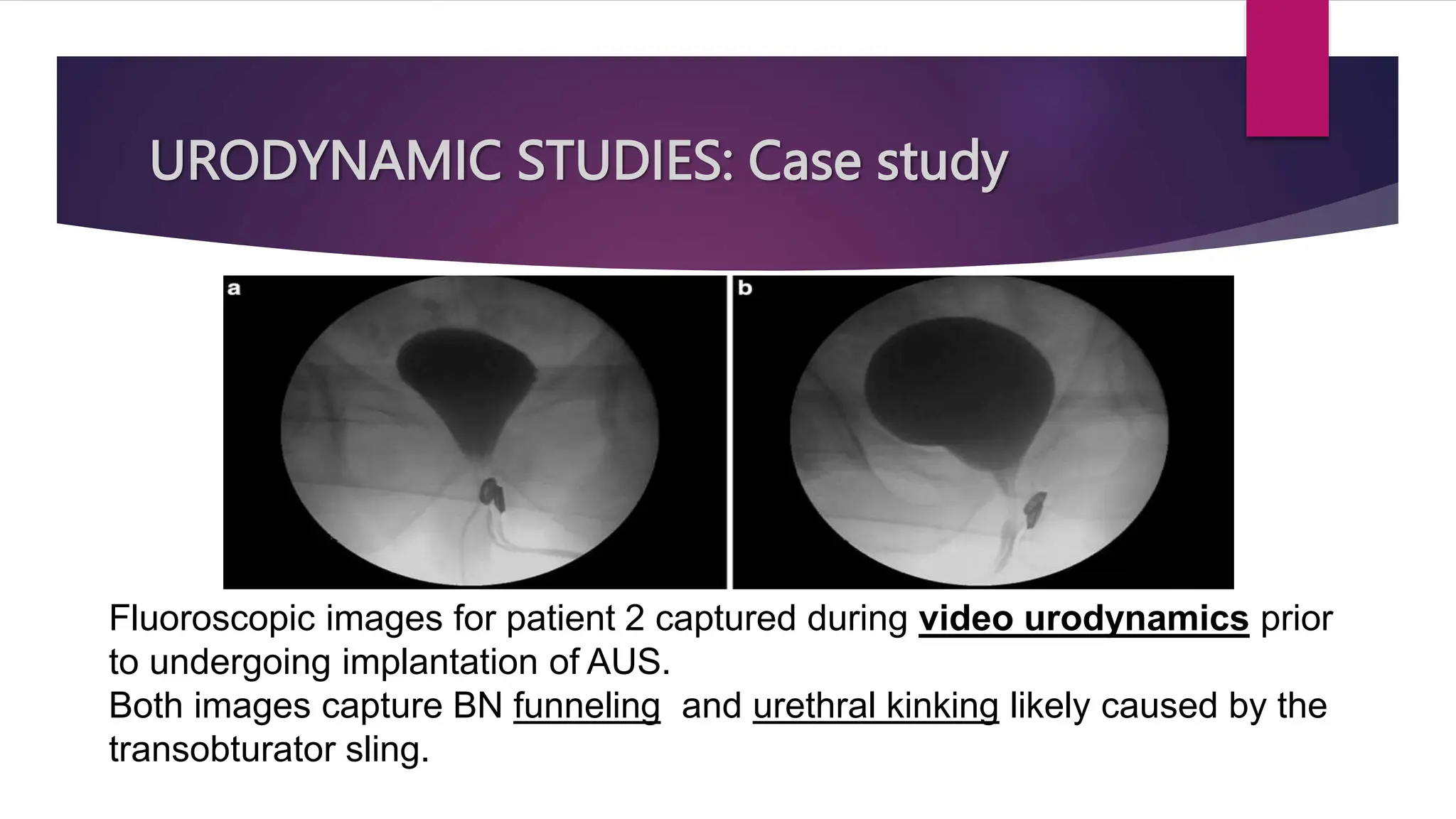
Fluoroscopic images for patient 2 captured during video urodynamics prior
to undergoing implantation of AUS.
Both images capture BN funneling and urethral kinking likely caused by the
transobturator sling.
URODYNAMIC STUDIES: Case study
 Filling Phase:
1st sensation was noted at 92 mL.
1st First desire at 147 mL. ND at 207 mL.
MCC at 313 mL.
No DO noted.
Bl.compliance was normal.
VLPP was measured at 90 cm/H2O (volume 255 mL), as this was the lowest
Pves where he leaked.
URODYNAMIC STUDIES: Case study
 Voiding Phase:
Qmax was 17 mL/s. Pdet at Qmax = 39 cm/H2O.
Total voided volume was 246 mL and PVR was 66 mL.
On fluoroscopy, his bladder had a normal contour and leakage was noted
as contrast passed alongside the catheter.
As he voided there was BN funneling and
kinking at the location of the sling.
URODYNAMIC STUDIES: Case study
 In summary, the 2nd UDS showed resolution of his DO seen on his prior study,
SUI with an ALPP of 90 cm/H2O, and a nonobstructed BOI (BOI = 5).
Treatment Options:
Periurethral bulking agent
Repeat male sling
AUS
URODYNAMIC STUDIES: Case study
 For patients who have failed surgical management with male
sling and continue to have SUI:
- Repeat UDS to reassess bl.compliance, det.function, and
rule out obs.
- Treat any underlying cause of mixed UI (inf).
- Video urodynamics can be utilized to visualize degree of
mobility in the prox.urethra, sling placement, and
examine bl.contour.
Ambulatory urodynamic
monitoring
(AUM)
Ambulatory urodynamic monitoring
(AUM)
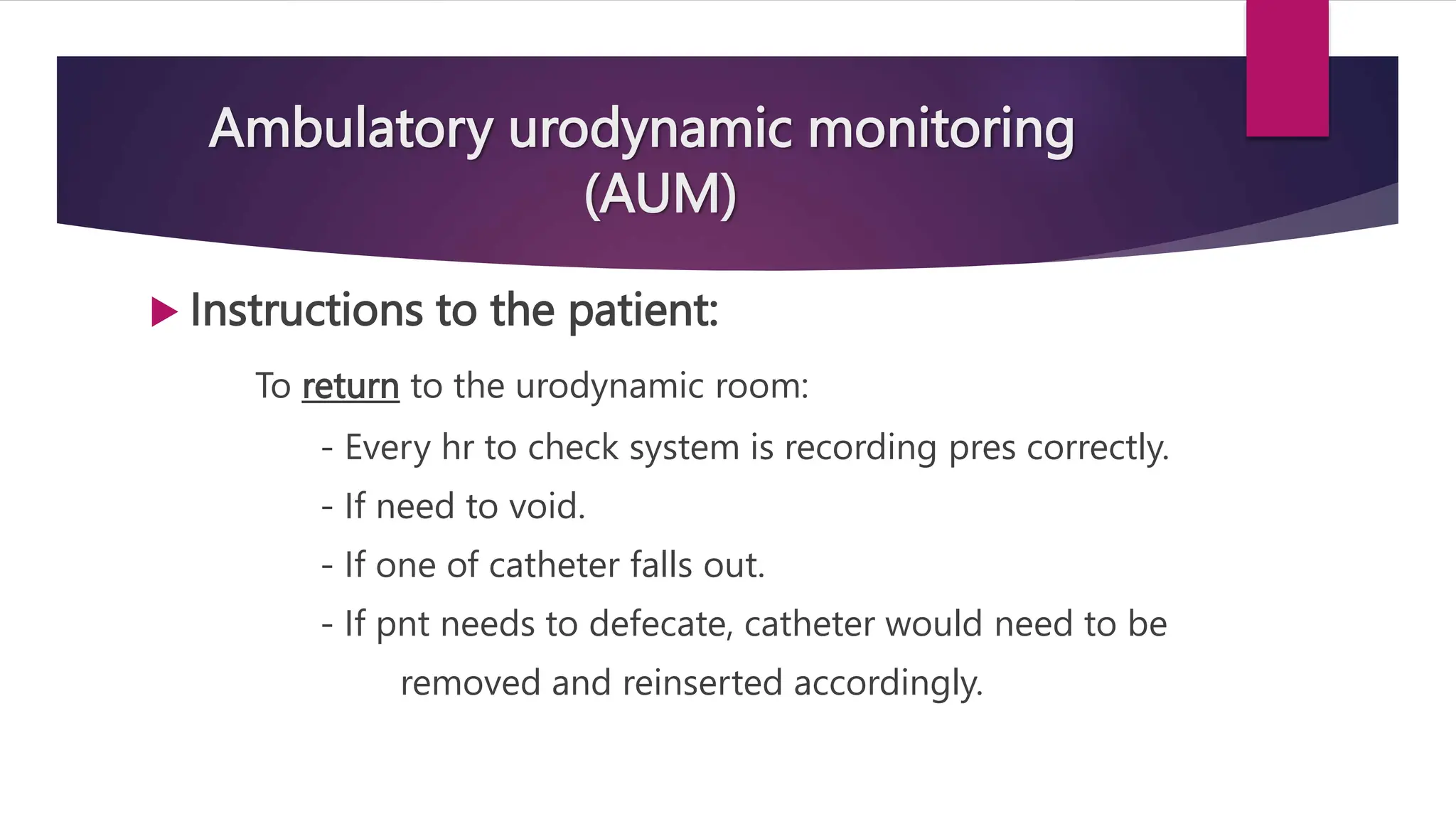
 A 2nd line investigation aiming to reproduce symptoms through
normal ambulatory activity in pnts for whom standard
urodynamic testing has not yielded definitive answers.
 AUM has been recognized by ICS as a useful tool for
investigating LUTS in pnts with inconclusive conventional
urodynamic diagnoses (19% to 44%).
Ambulatory urodynamic monitoring
(AUM)
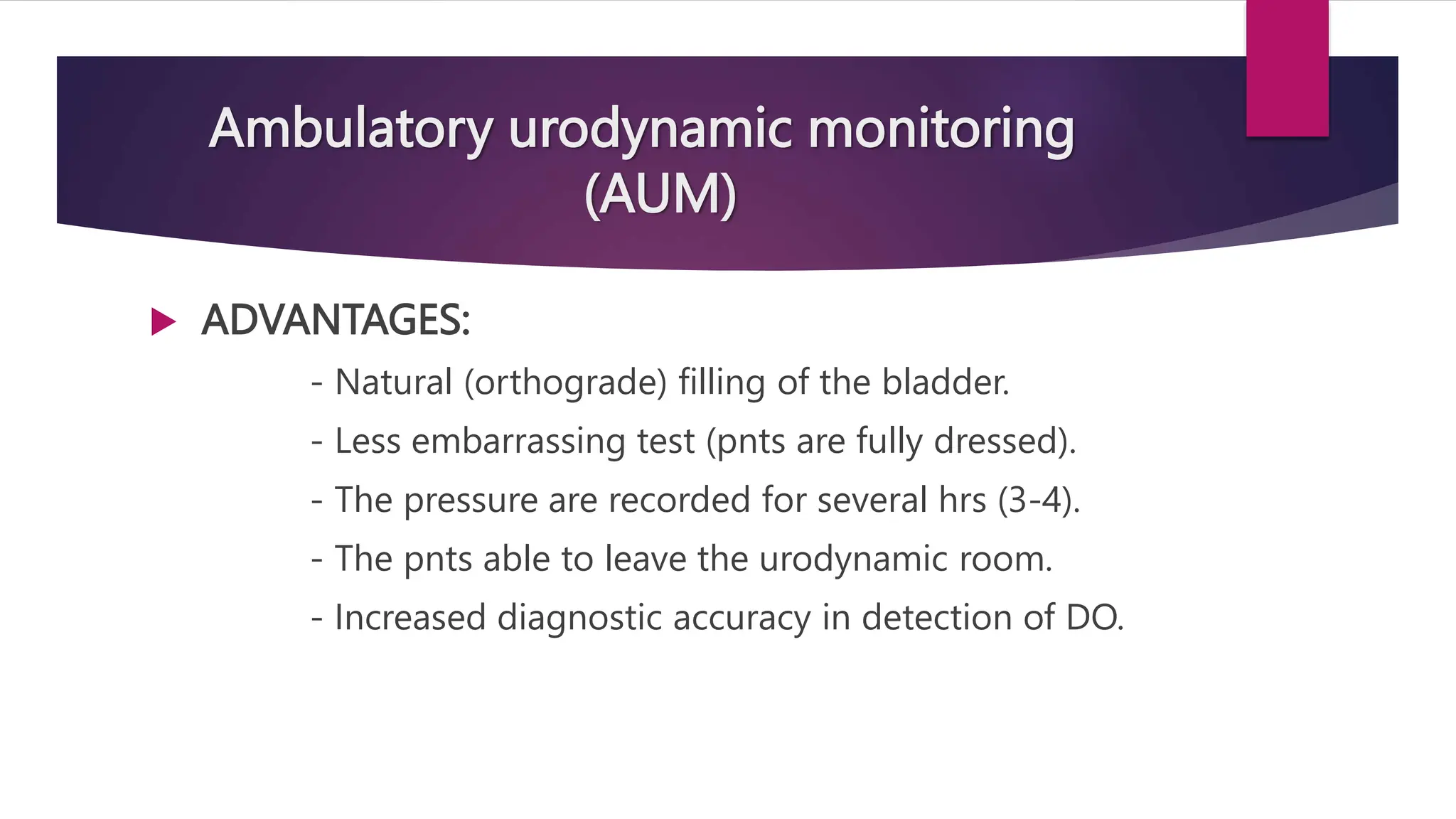
 ADVANTAGES:
- Natural (orthograde) filling of the bladder.
- Less embarrassing test (pnts are fully dressed).
- The pressure are recorded for several hrs (3-4).
- The pnts able to leave the urodynamic room.
- Increased diagnostic accuracy in detection of DO.
Ambulatory urodynamic monitoring
(AUM)
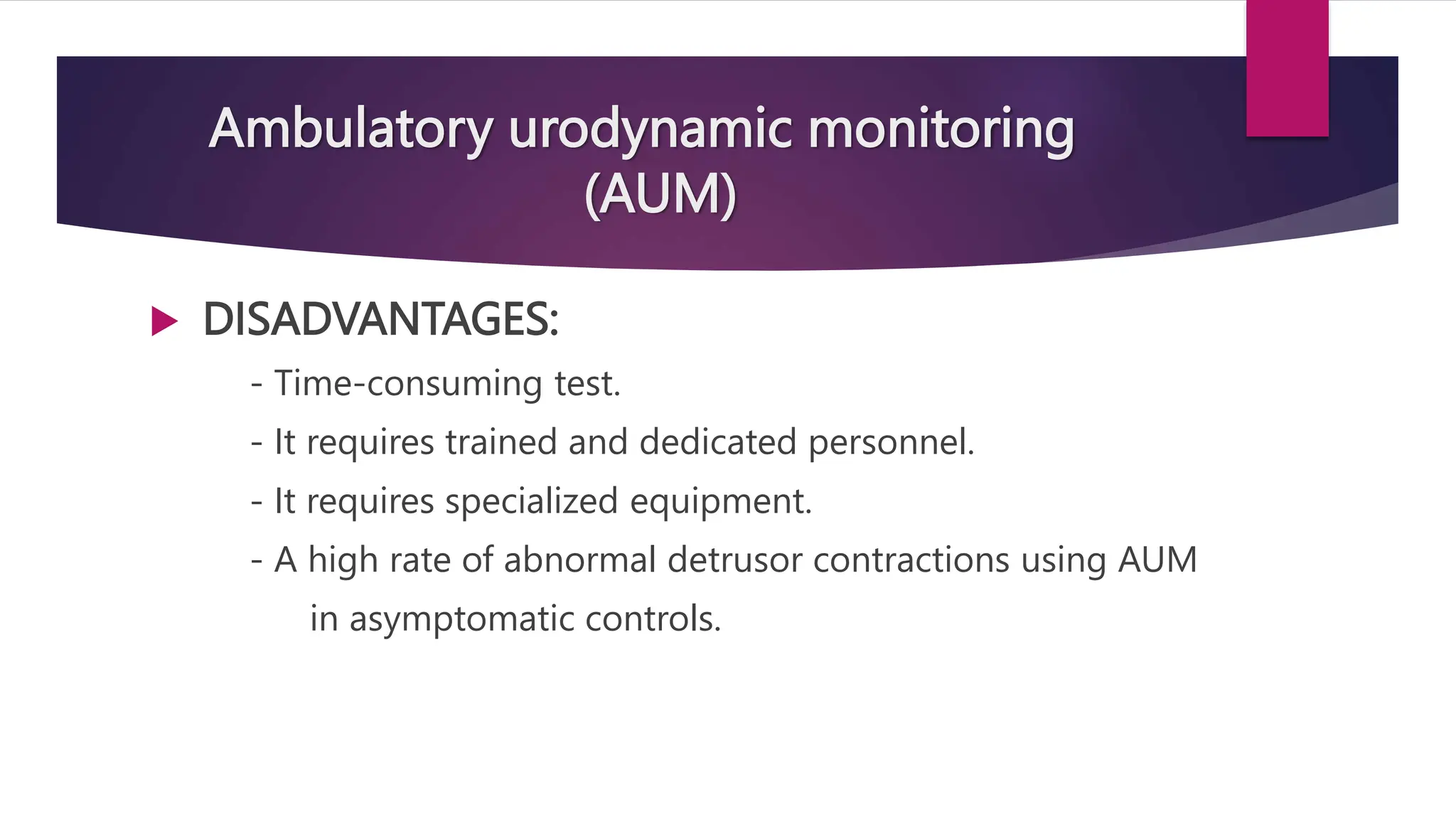
 DISADVANTAGES:
- Time-consuming test.
- It requires trained and dedicated personnel.
- It requires specialized equipment.
- A high rate of abnormal detrusor contractions using AUM
in asymptomatic controls.
Ambulatory urodynamic monitoring
(AUM)
 Recording urine leakage:
Method has not yet been standardized, may be
recorded by:
- An electronic pad.
- A remote control with event marker button.
- Completing a urinary symptom diary.
- All the above.
Ambulatory urodynamic monitoring
(AUM)
 Contraindications:
- Poor patient mobility.
- Cognitive impairment.
- Inability to follow instructions.
- Severe constipation.
- Active UTI.
- Medical conditions which limit pnt’s participation.
Ambulatory urodynamic monitoring
(AUM)
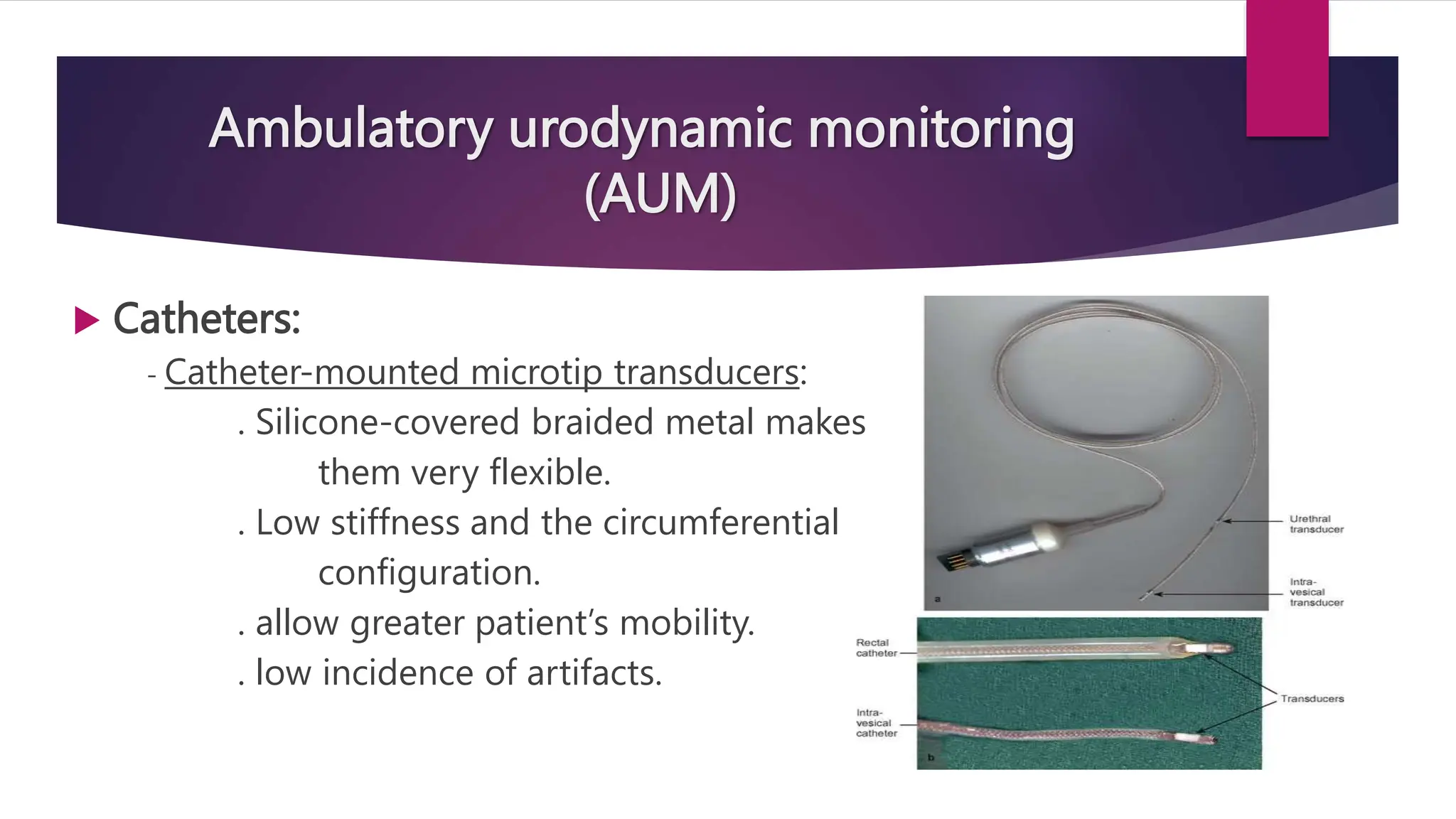
 Catheters:
- Catheter-mounted microtip transducers:
. Silicone-covered braided metal makes
them very flexible.
. Low stiffness and the circumferential
configuration.
. allow greater patient’s mobility.
. low incidence of artifacts.
Ambulatory urodynamic monitoring
(AUM)
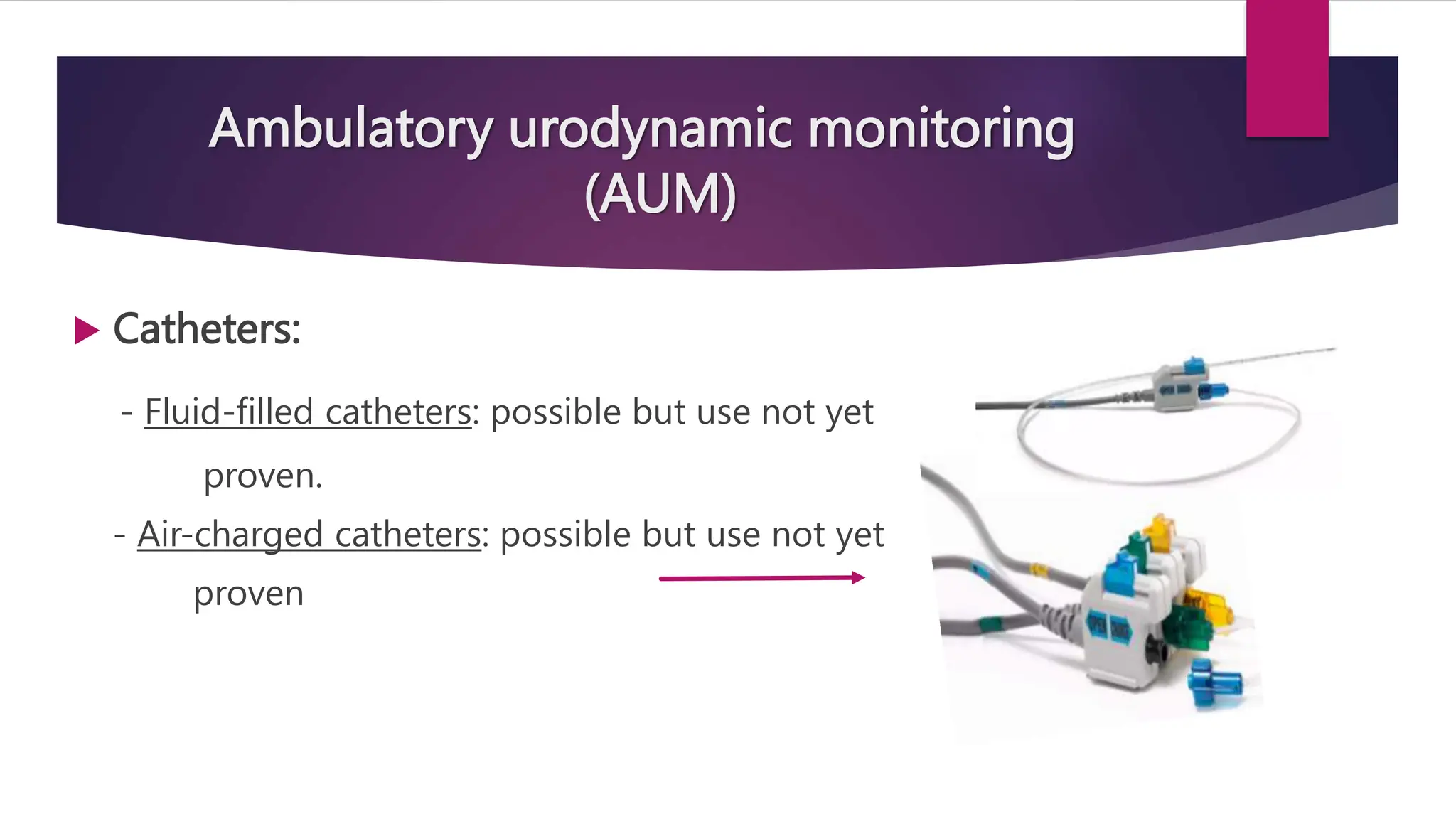
 Catheters:
- Fluid-filled catheters: possible but use not yet
proven.
- Air-charged catheters: possible but use not yet
proven
Ambulatory urodynamic monitoring
(AUM)
 Recording systems:
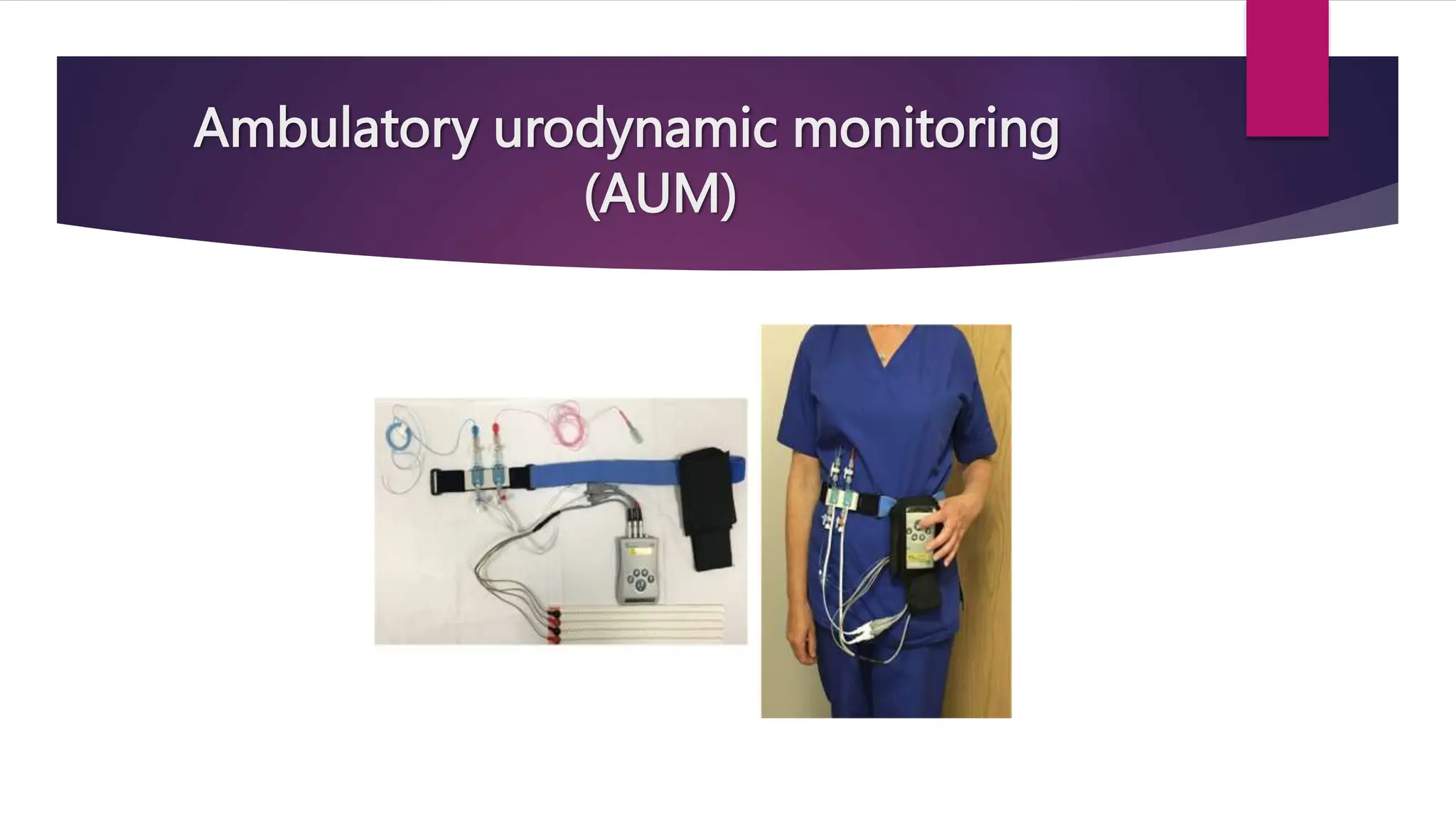
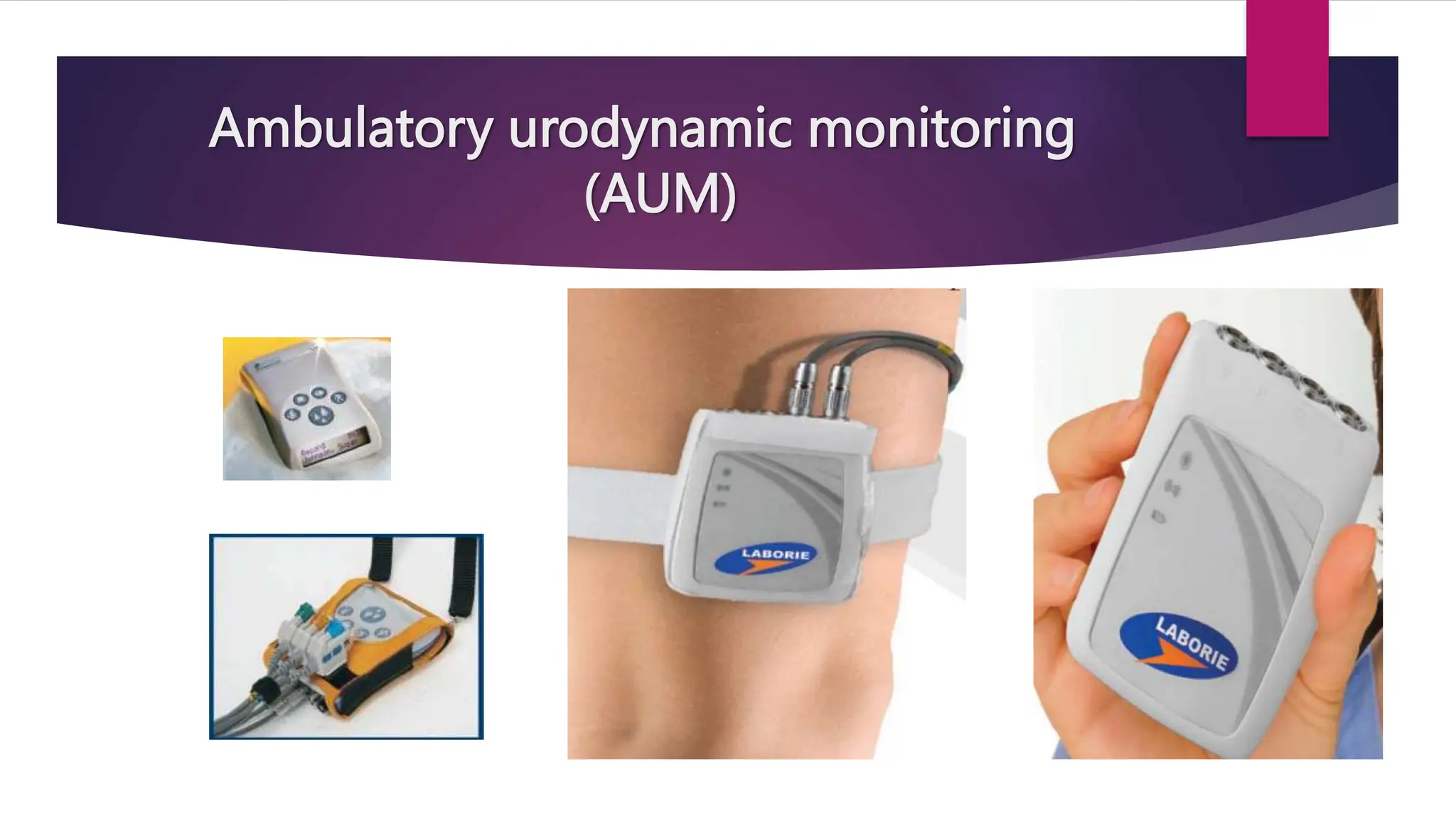
Goby, Laborie Medical or Luna, MMS:
- Newer systems
- Small remote control attachment to capture data
- Compatible with water, air and microtip catheters
Ambulatory urodynamic monitoring
(AUM)
 Patient preparation:
- Explaining the test to pnts before the test.
- Comfortably full bl.
- Uroflow and urine analysis are performed.
- Exclude UTI.
- Wearing comfortable clothes (preferably gowns for women).
- Empty bowel if possible.
Ambulatory urodynamic monitoring
(AUM)
 Patient preparation:
- Post-procedure broad spectrum antibiotic cover may be
considered in pnts with:
- Diabetes.
- Recurrent UTIs.
- High PVR.
Ambulatory urodynamic monitoring
(AUM)
 Instructions to the patient:
- To record episodes of urgency, incontinence, pain,
voluntary voids, time and volume of fluid intake,
feeling of catheter displacement, any provocative
manoeuvres (running, washing hands, coughing
etc)
Ambulatory urodynamic monitoring
(AUM)
 Instructions to the patient:
- How to use the event buttons on the AUM device
- To drink about 200-400 ml/hour or a fluid load up to
1L drunk over 30 minutes (unless a fluid load is
contraindicated the AUM time would take longer).
Ambulatory urodynamic monitoring
(AUM)
 Instructions to the patient:
To return to the urodynamic room:
- Every hr to check system is recording pres correctly.
- If need to void.
- If one of catheter falls out.
- If pnt needs to defecate, catheter would need to be
removed and reinserted accordingly.
Ambulatory urodynamic monitoring
(AUM)
 Technique:
- Similar to laboratory cystometry.
- Catheters are inserted into the bl. and rectum.
- Sufficient catheter length into bladder/rectum.
- Catheters should be securely taped adjacent to the anus
and ext. ureth. meatus.
- Transducers set to zero and cath. connected to AUM recording
system.
Ambulatory urodynamic monitoring
(AUM)
Ambulatory urodynamic monitoring
(AUM)
Ambulatory urodynamic monitoring
(AUM)
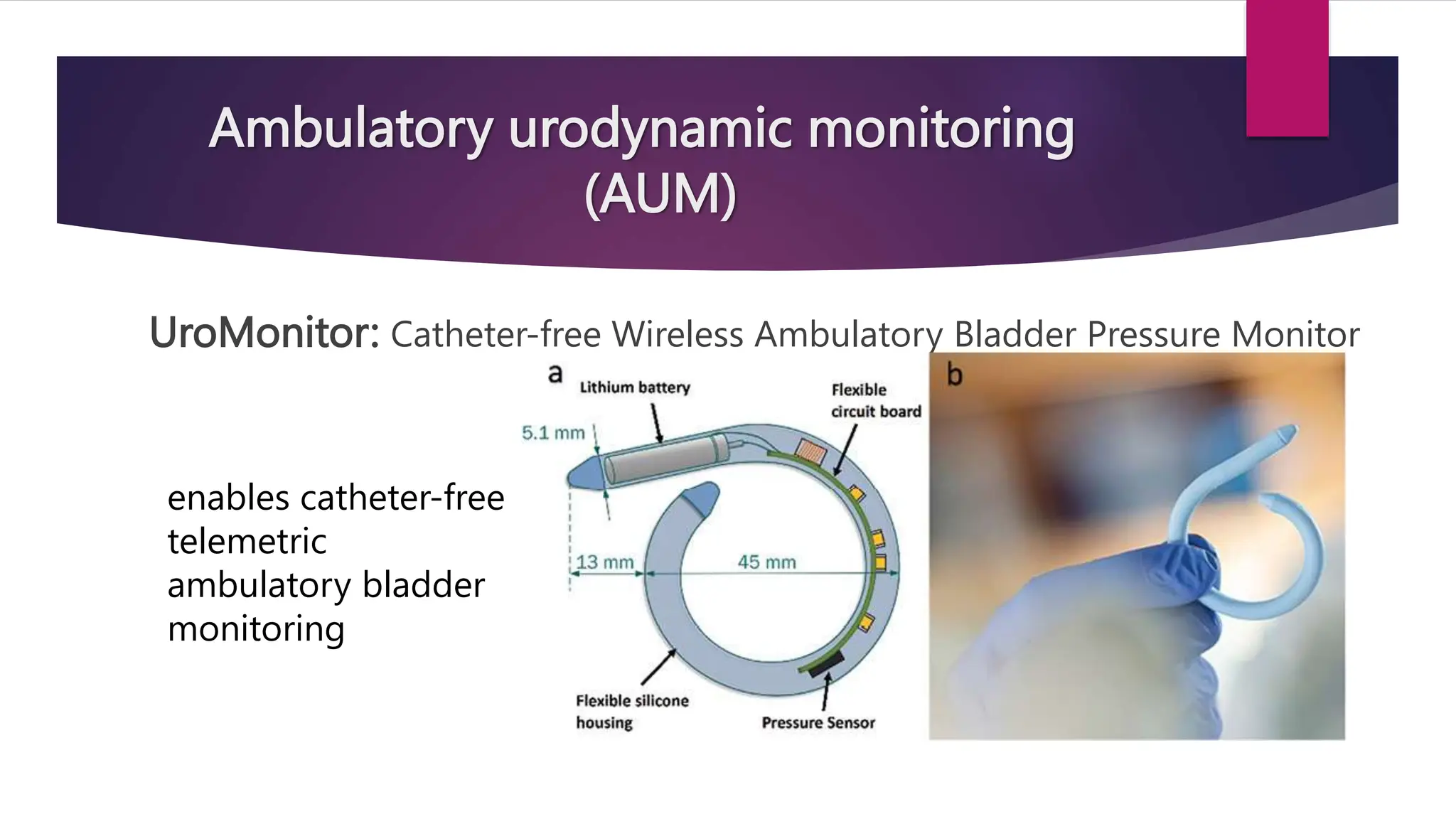
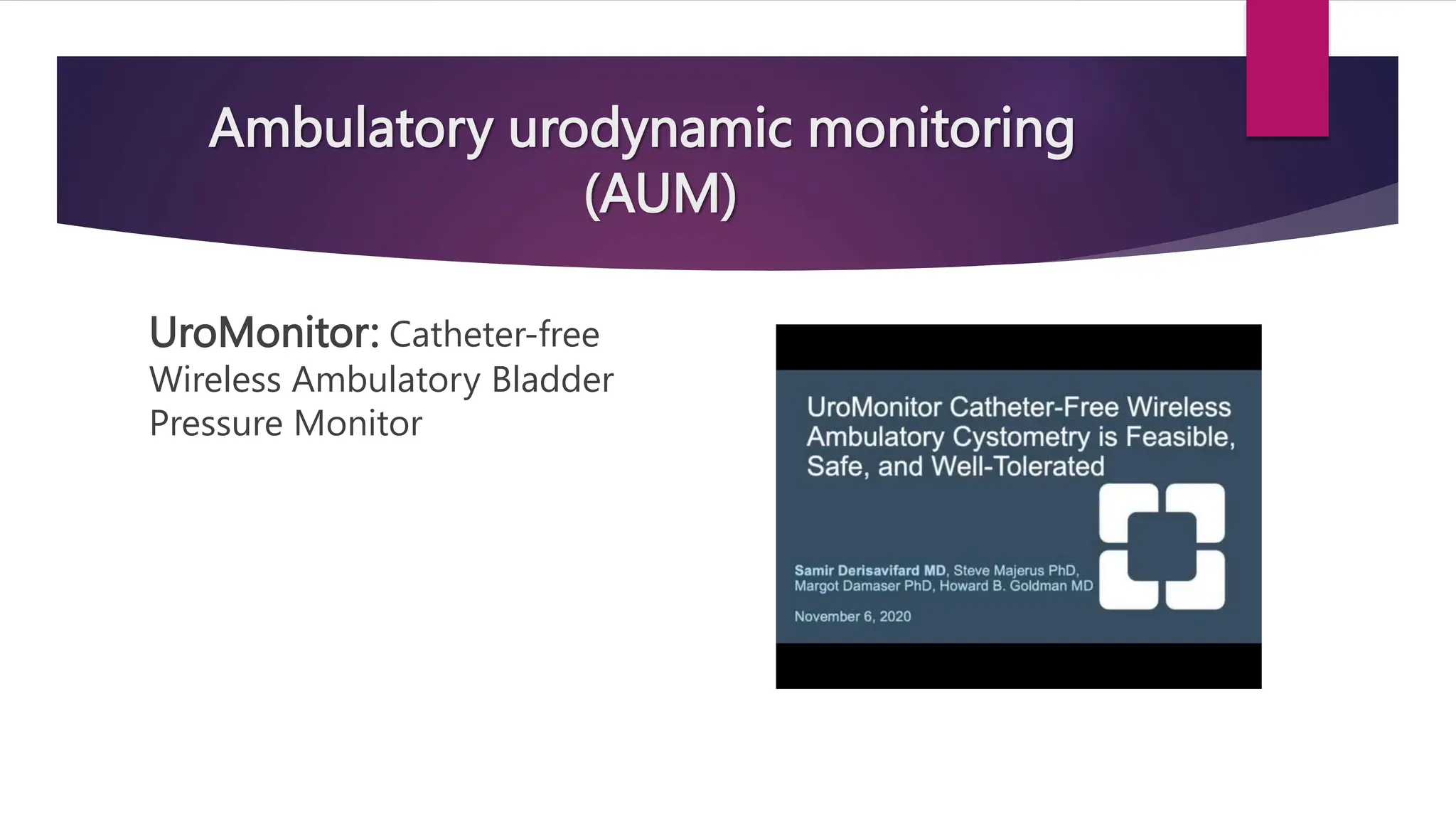
 UroMonitor: Catheter-free Wireless Ambulatory Bladder Pressure
Monitor
UroMonitor in this current early prototype stage measures pressure only and
does not include bladder volume or other diagnostic measures. Future
versions will be designed to expand the scope of measured and transmitted
parameters.
Ambulatory urodynamic monitoring
(AUM)
UroMonitor: Catheter-free Wireless Ambulatory Bladder Pressure Monitor
enables catheter-free
telemetric
ambulatory bladder
monitoring
Ambulatory urodynamic monitoring
(AUM)
UroMonitor:
It wirelessly transmits vesical pressure data at 10 Hz to a small pager-
like radio receiver taped to the subject’s abdomen. The radio receiver
stores the data on a micro secure digital (microSD) memory card and
simultaneously transmits it wirelessly to a nearby laptop using
Bluetooth. A silk suture was attached to one end of the UroMonitor to
aid in transurethral retrieval from the bl.
Ambulatory urodynamic monitoring
(AUM)
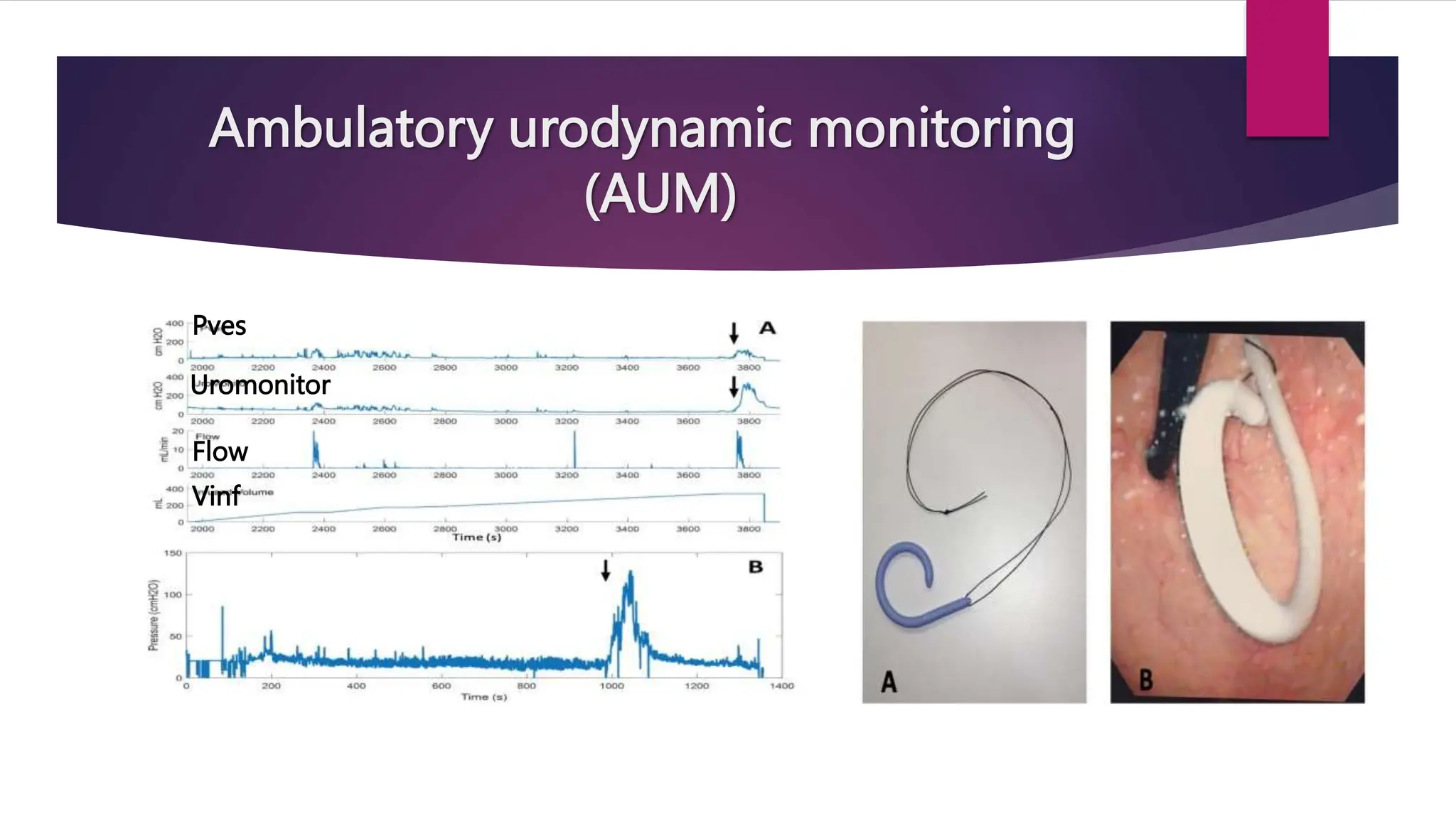
Pves
Uromonitor
Flow
Vinf
Ambulatory urodynamic monitoring
(AUM)
UroMonitor: Catheter-free
Wireless Ambulatory Bladder
Pressure Monitor
Pelvic muscle
electromyography (EMG)
Pelvic muscle electromyography (EMG):
 Pelvic floor muscle kinetics is judged with surface or needle
electrodes.
Two skin electrodes on the perineal surface placed on
either side of vaginal opening or anus.
Pelvic muscle electromyography (EMG):
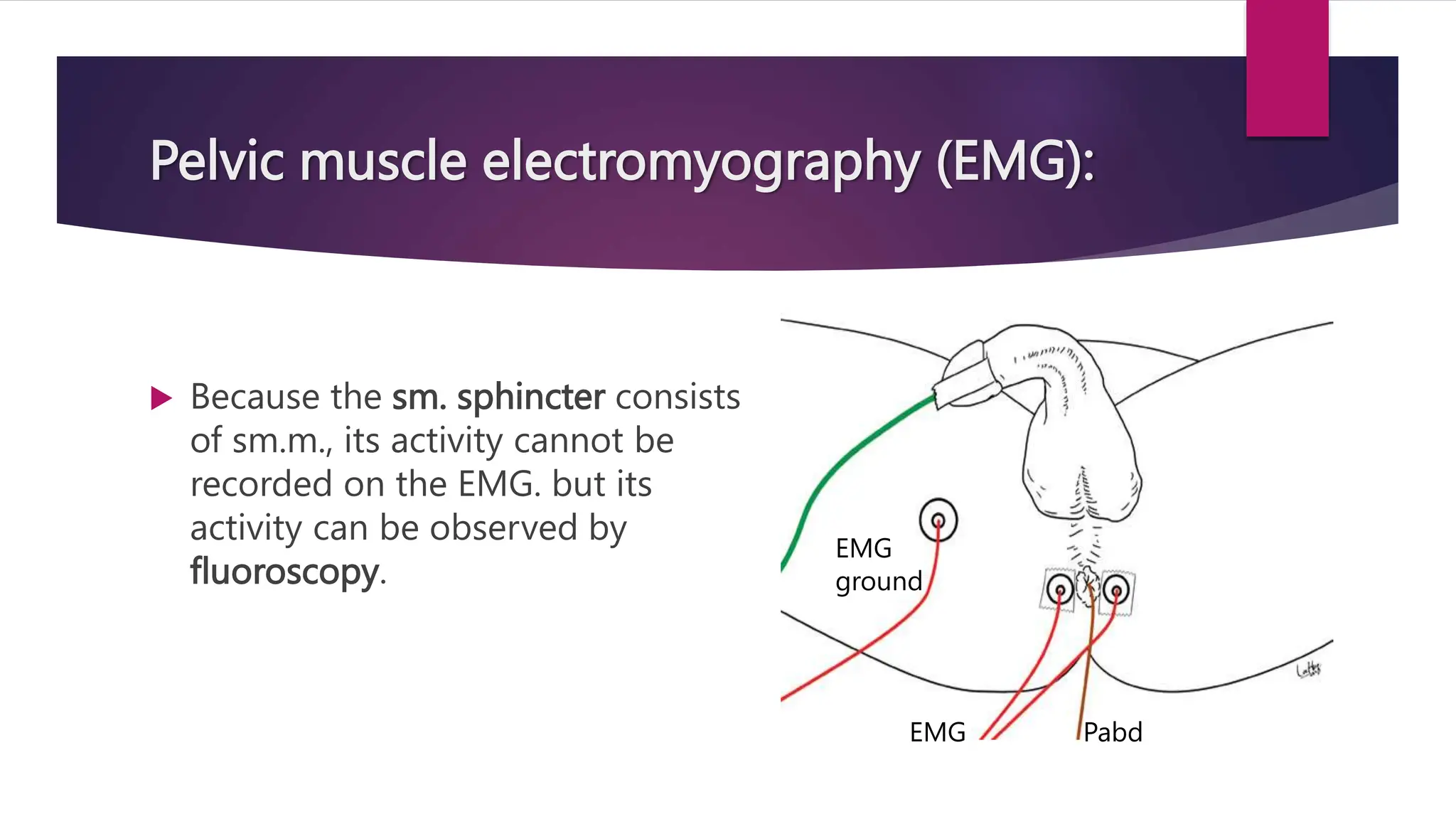
 Because the sm. sphincter consists
of sm.m., its activity cannot be
recorded on the EMG. but its
activity can be observed by
fluoroscopy.
Pabd
EMG
EMG
ground
Pelvic muscle electromyography (EMG):
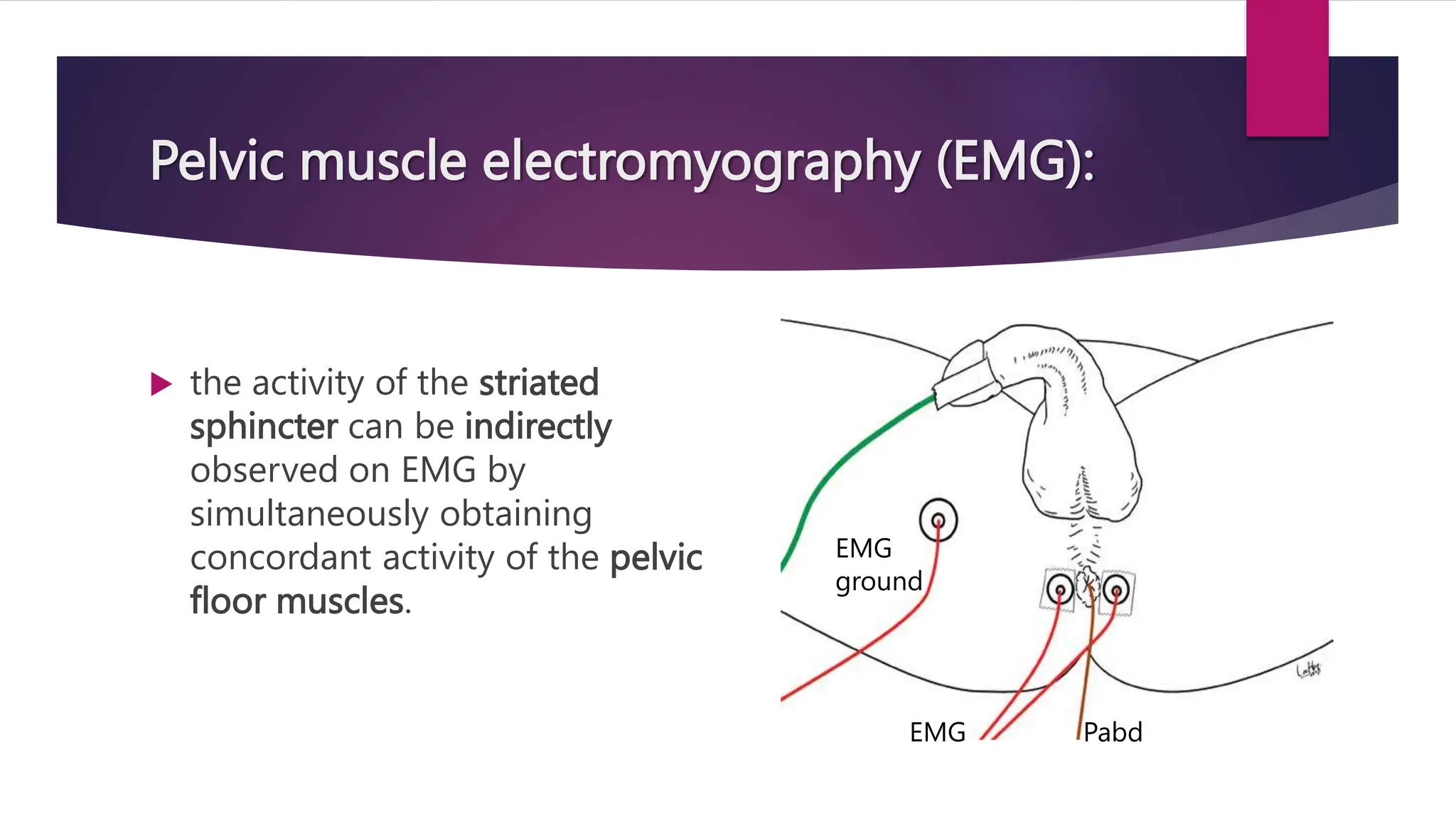
 the activity of the striated
sphincter can be indirectly
observed on EMG by
simultaneously obtaining
concordant activity of the pelvic
floor muscles.
Pabd
EMG
EMG
ground
Pelvic muscle electromyography (EMG):
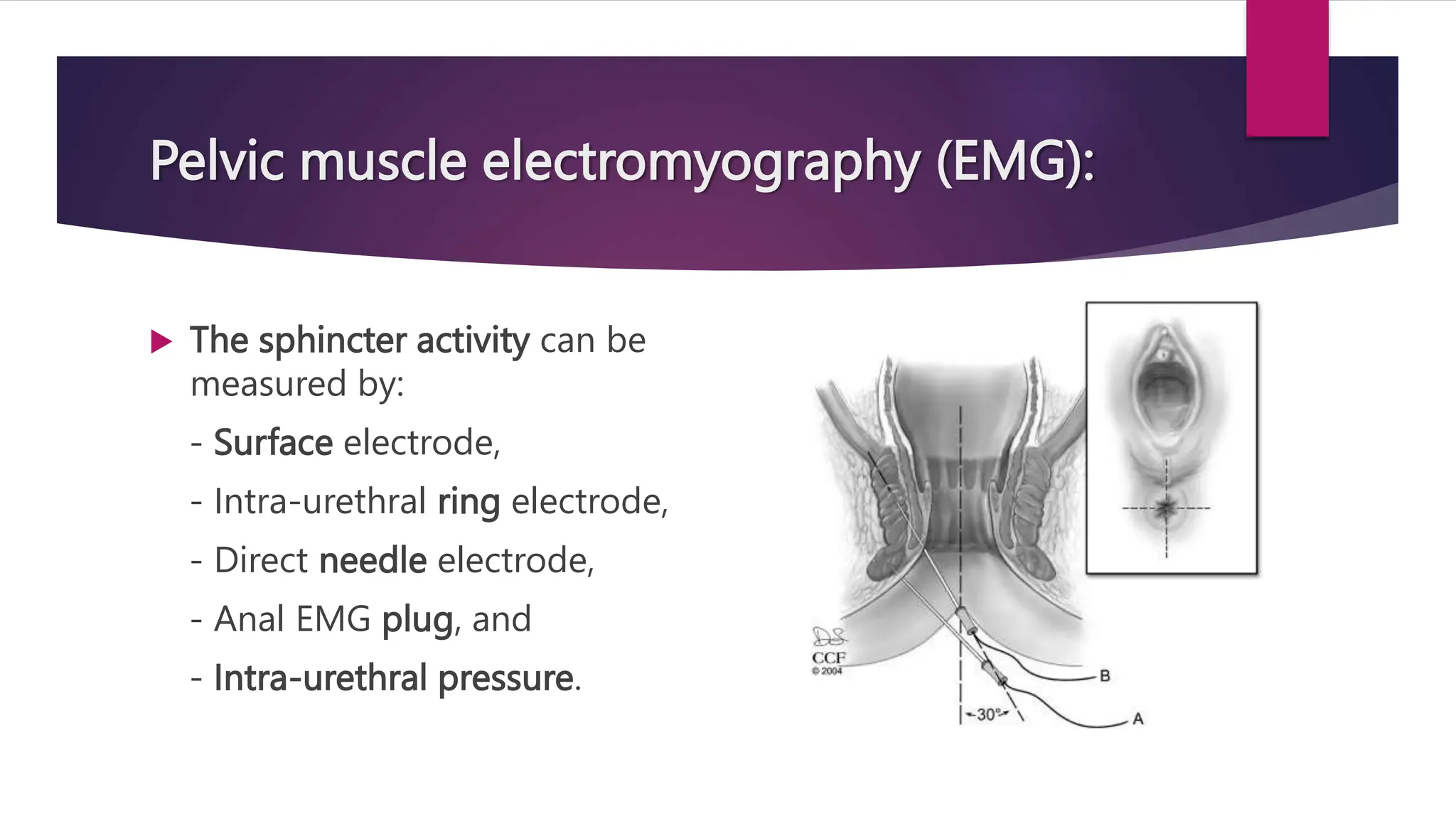
 The sphincter activity can be
measured by:
- Surface electrode,
- Intra-urethral ring electrode,
- Direct needle electrode,
- Anal EMG plug, and
- Intra-urethral pressure.
 Assesses the coordination between the detrusor muscle and
the urethral sphincter.
 Used in conjunction with filling cystometry, pressure-flow
study or combined with uroflowmetry in the form of flow-
EMG.
Pelvic muscle electromyography (EMG):
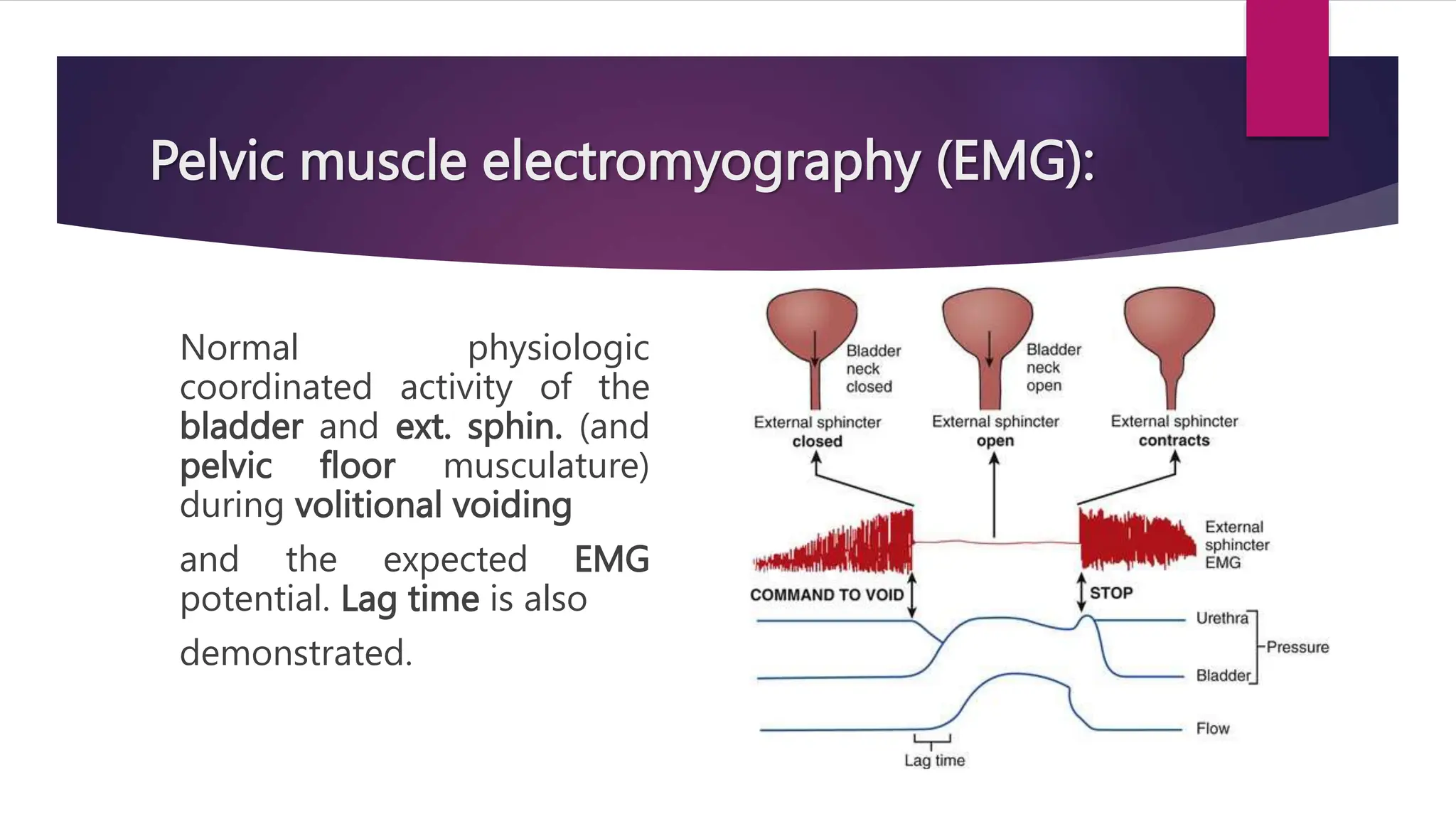
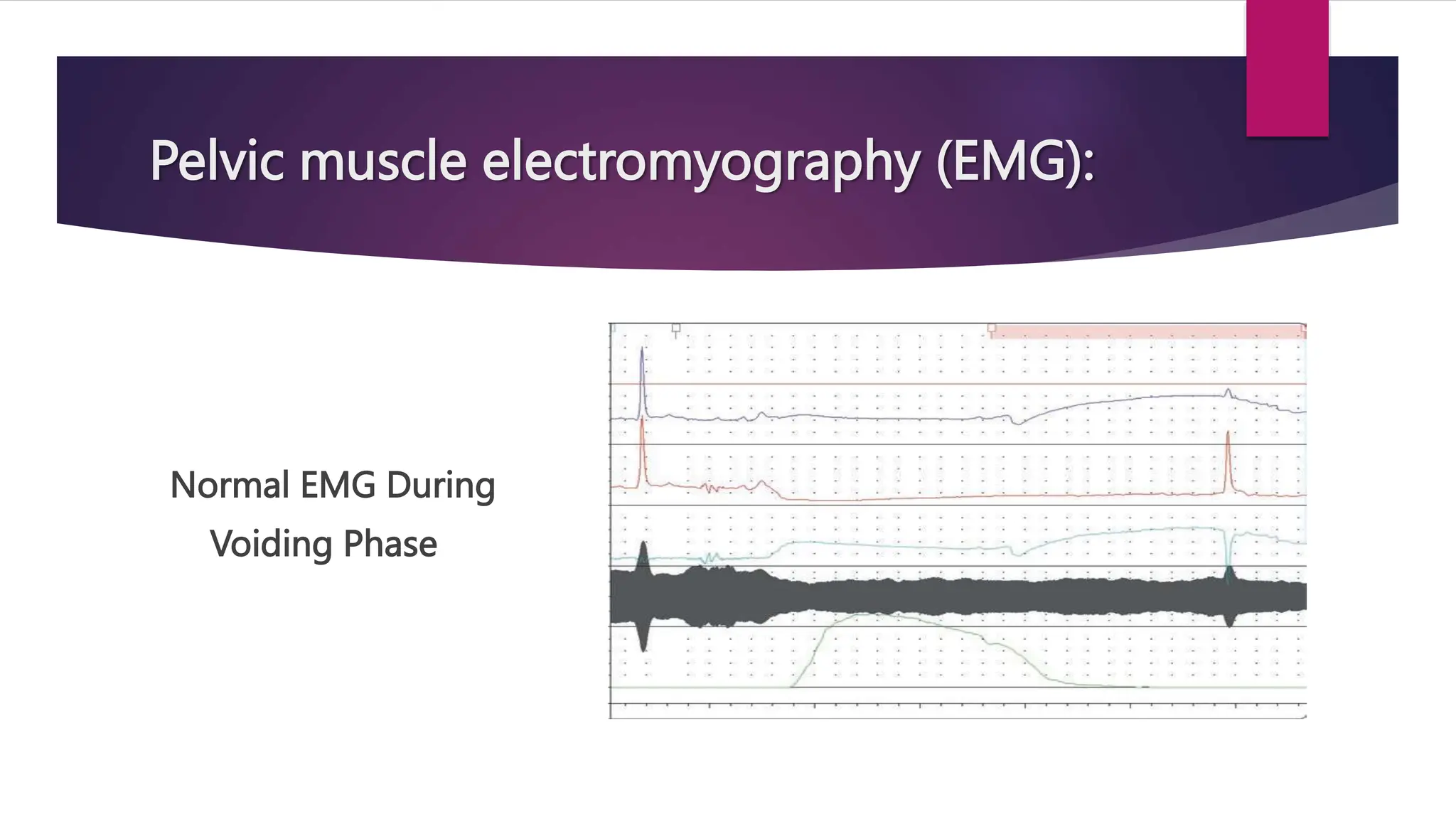
Normal physiologic
coordinated activity of the
bladder and ext. sphin. (and
pelvic floor musculature)
during volitional voiding
and the expected EMG
potential. Lag time is also
demonstrated.
 If the patient intentionally contracts PFMs during the
procedure, an error which can be misinterpreted as DSD may
may occur. This is referred as ‘pseudo-DSD’.
 It can NOT reliably assess the function of the striated
sphincter.
 it is NOT specific in many cases and also it is often inaccurate.
Pelvic muscle electromyography (EMG):
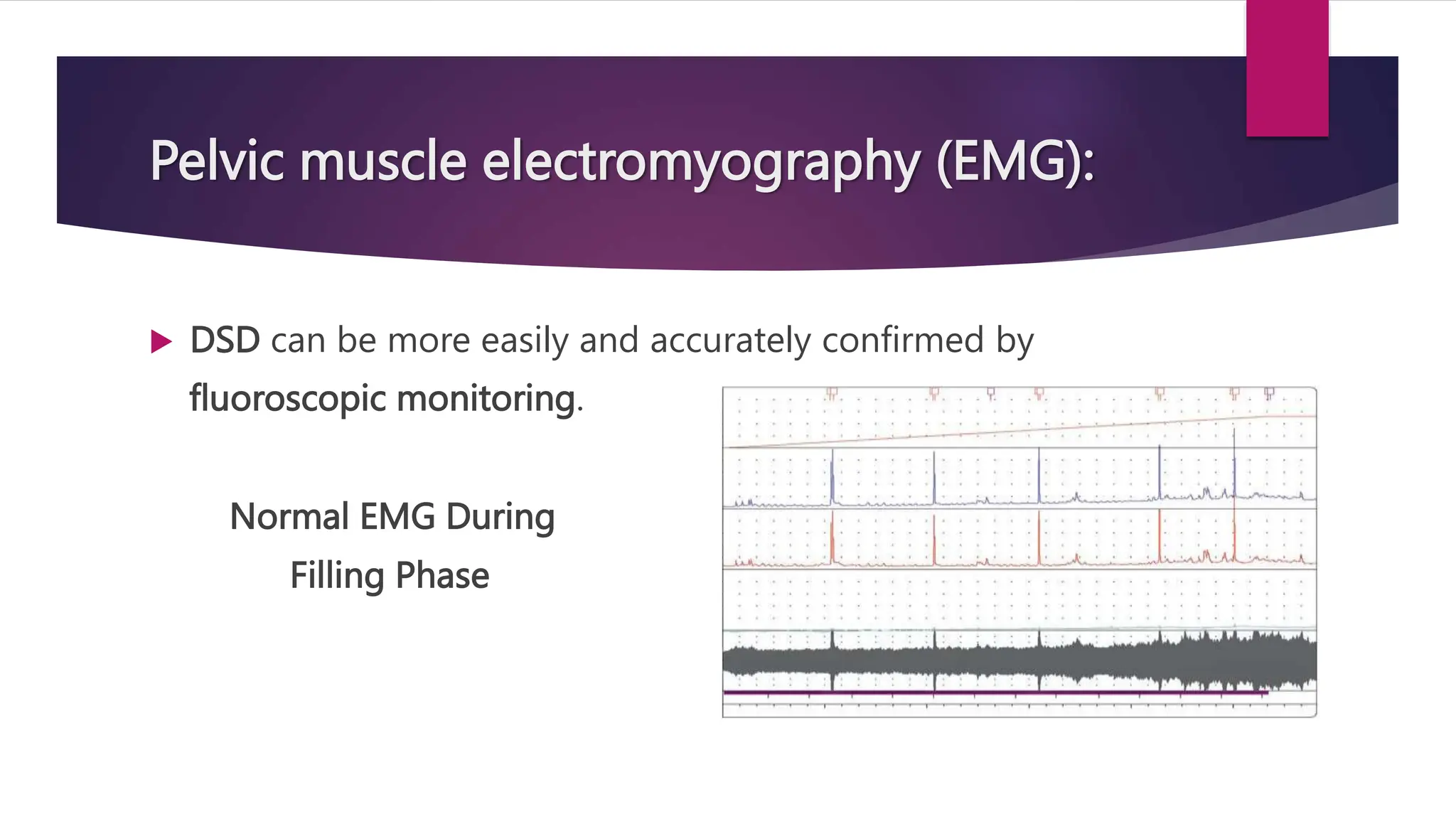
 DSD can be more easily and accurately confirmed by
fluoroscopic monitoring.
Normal EMG During
Filling Phase
Pelvic muscle electromyography (EMG):
Normal EMG During
Voiding Phase
Pelvic muscle electromyography (EMG):
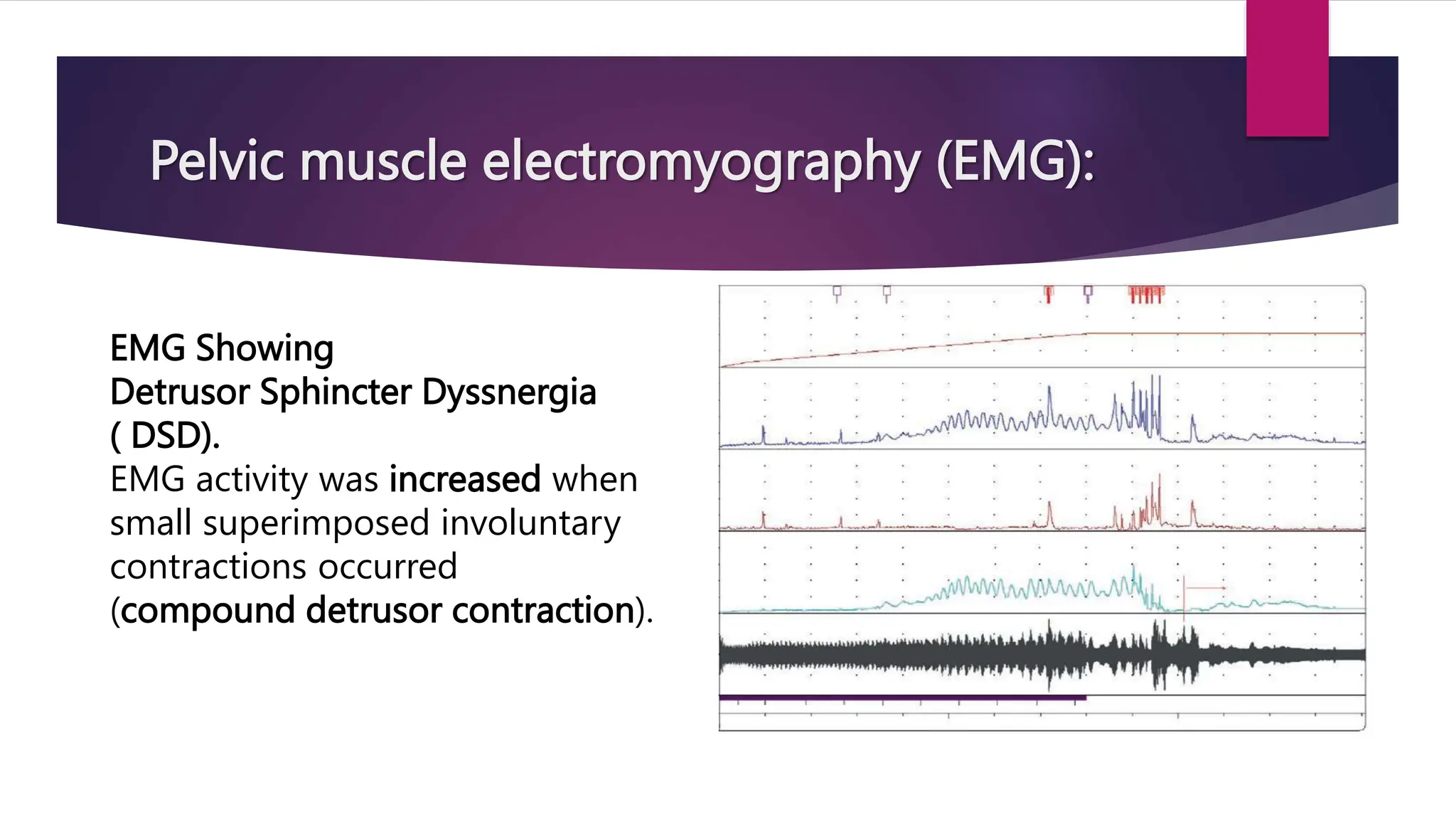
EMG Showing
Detrusor Sphincter Dyssnergia
( DSD).
EMG activity was increased when
small superimposed involuntary
contractions occurred
(compound detrusor contraction).
Pelvic muscle electromyography (EMG):
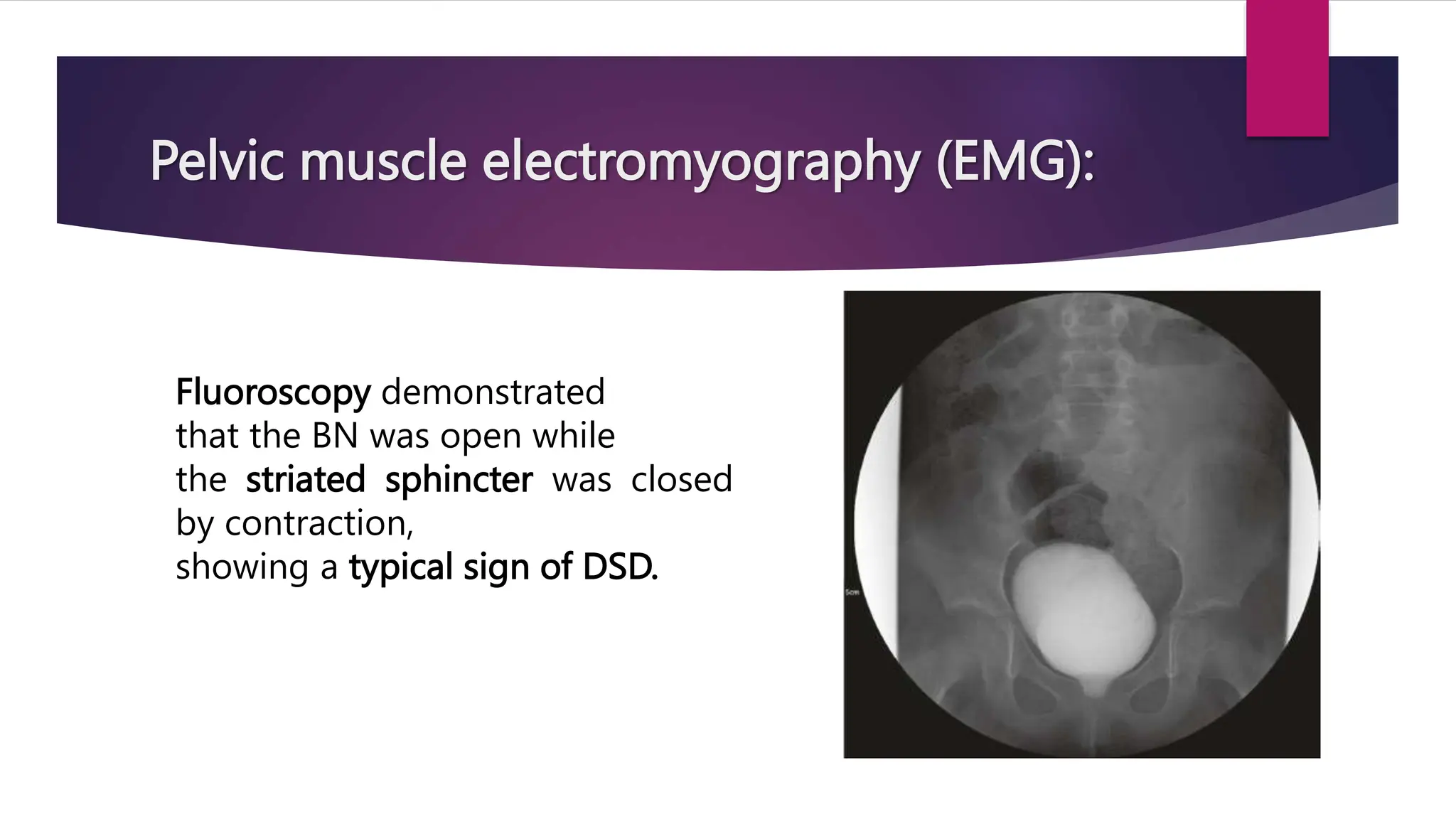
Fluoroscopy demonstrated
that the BN was open while
the striated sphincter was closed
by contraction,
showing a typical sign of DSD.
Urethral hypermobility (UH)
Urethral hypermobility (UH):
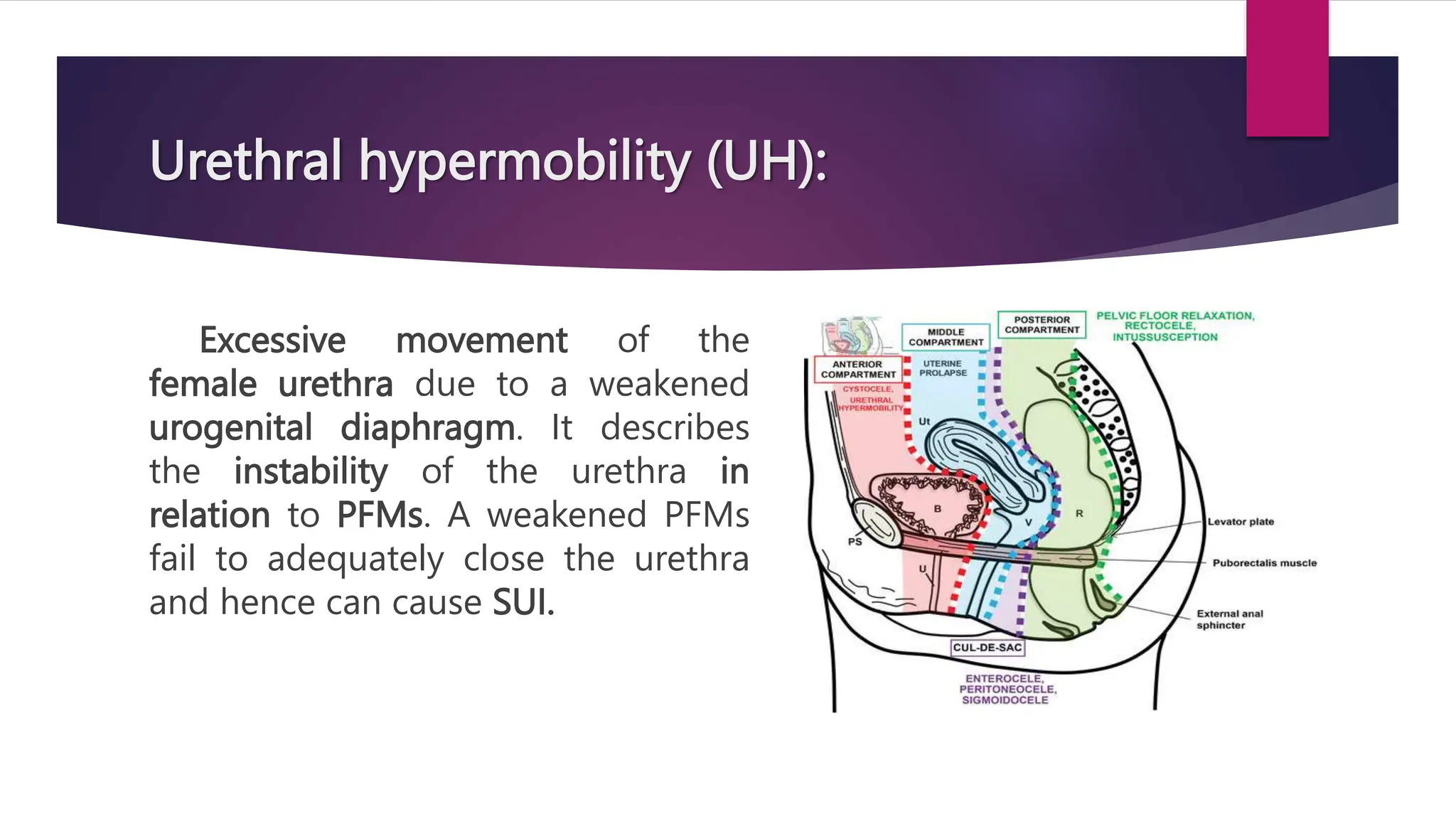
Excessive movement of the
female urethra due to a weakened
urogenital diaphragm. It describes
the instability of the urethra in
relation to PFMs. A weakened PFMs
fail to adequately close the urethra
and hence can cause SUI.
Urethral hypermobility (UH):
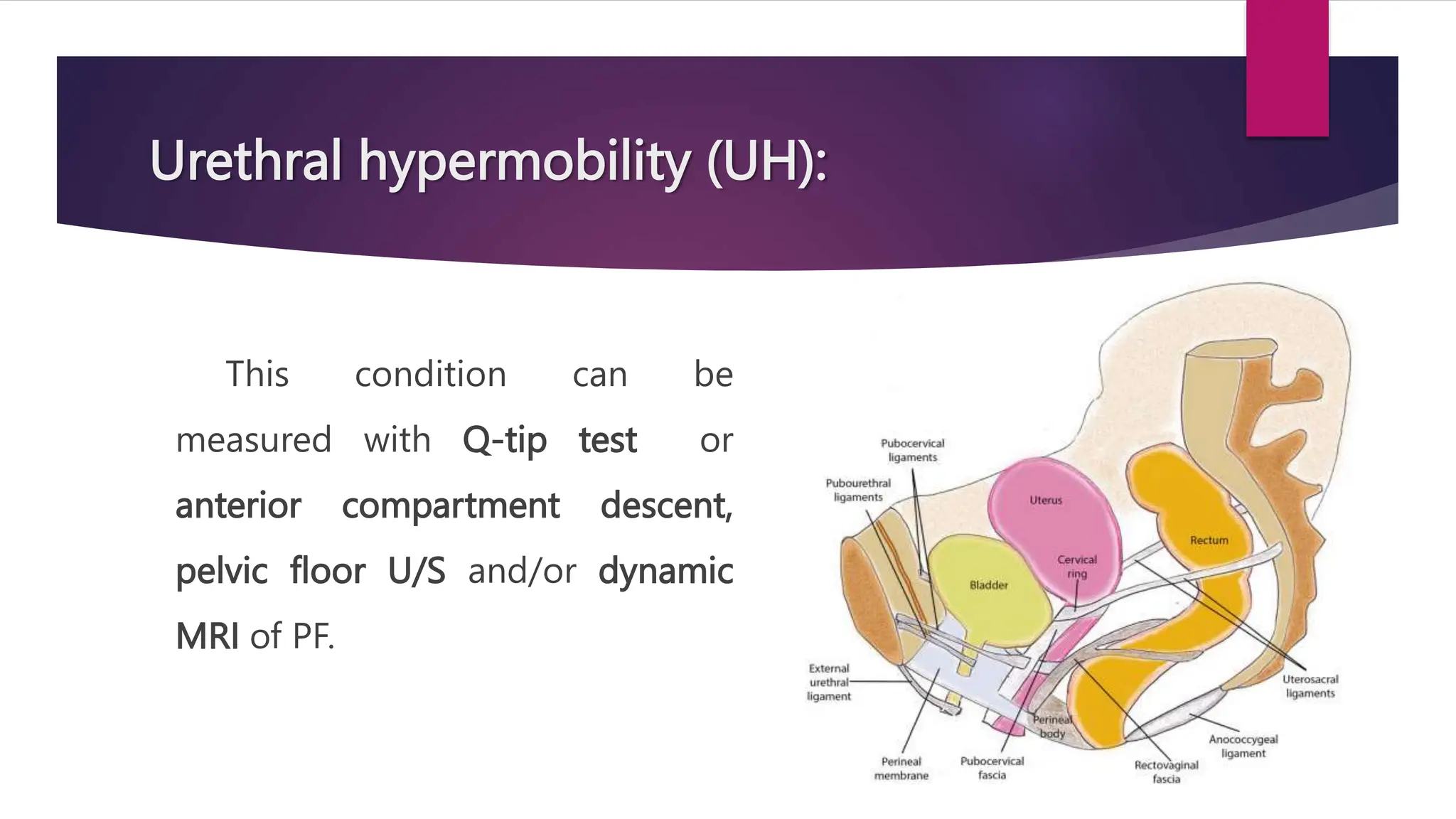
This condition can be
measured with Q-tip test or
anterior compartment descent,
pelvic floor U/S and/or dynamic
MRI of PF.
Urethral hypermobility (UH):
Q-tip test:
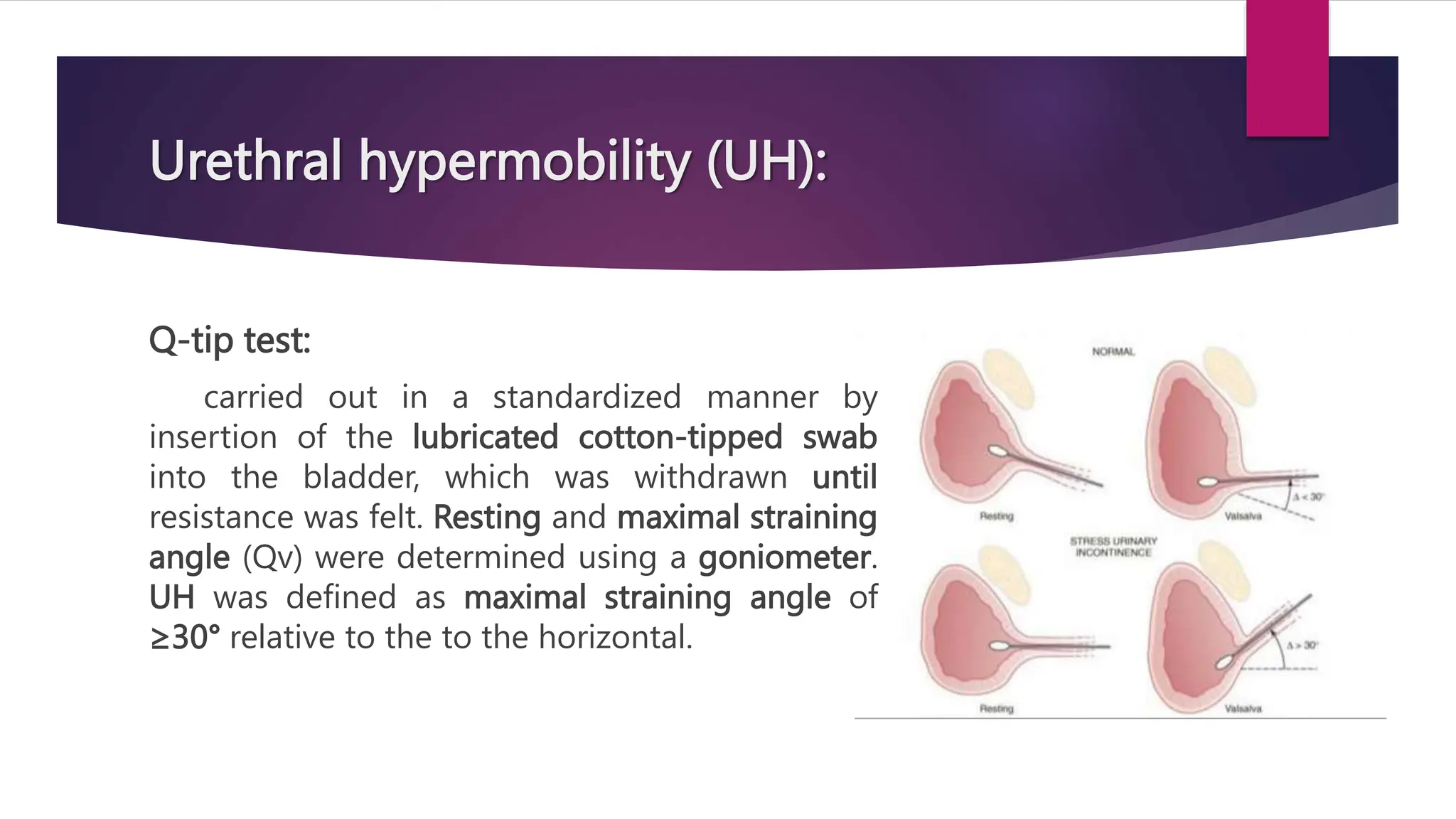
carried out in a standardized manner by
insertion of the lubricated cotton-tipped swab
into the bladder, which was withdrawn until
resistance was felt. Resting and maximal straining
angle (Qv) were determined using a goniometer.
UH was defined as maximal straining angle of
≥30° relative to the to the horizontal.
Urethral hypermobility (UH):
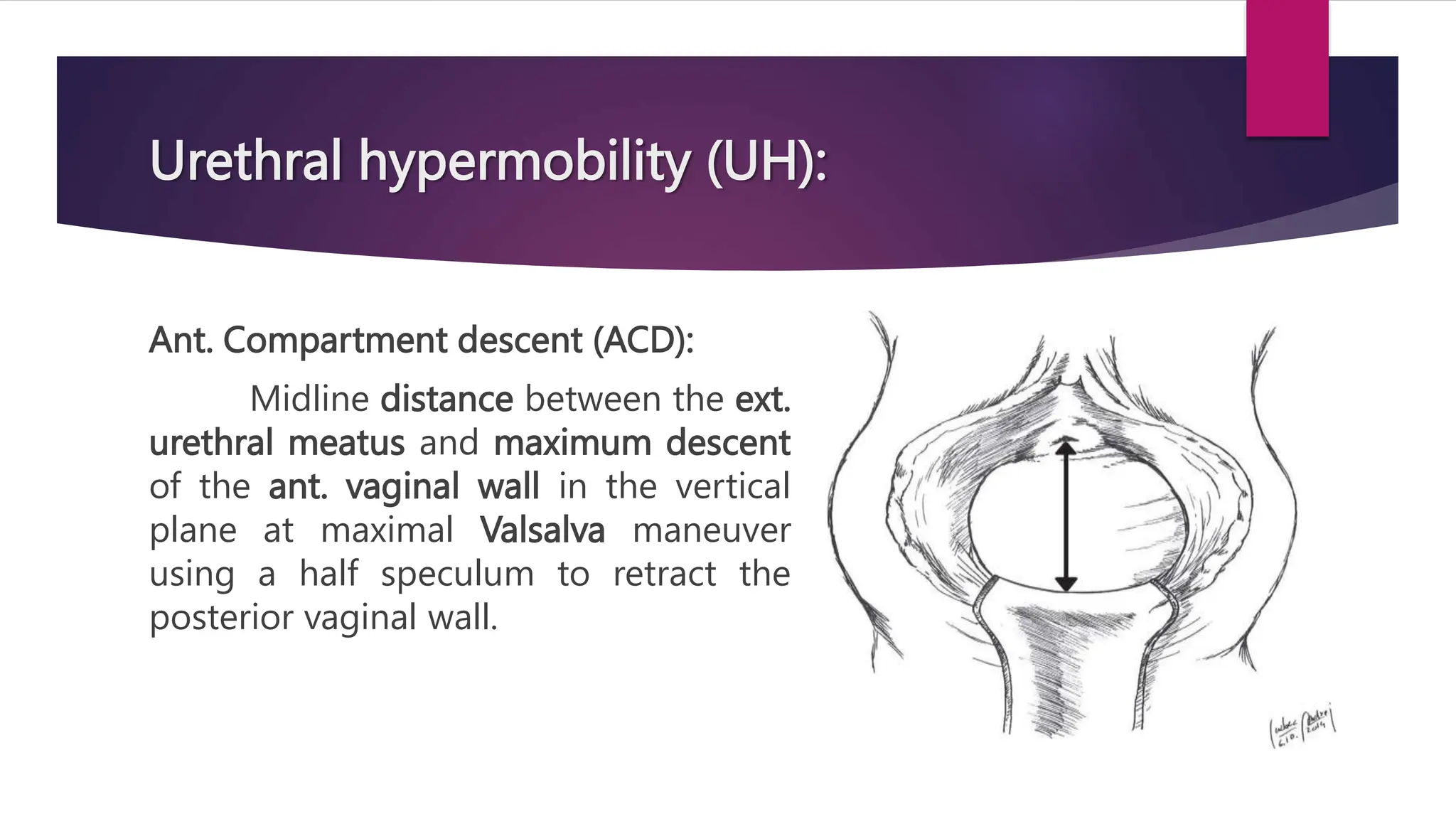
Ant. Compartment descent (ACD):
Midline distance between the ext.
urethral meatus and maximum descent
of the ant. vaginal wall in the vertical
plane at maximal Valsalva maneuver
using a half speculum to retract the
posterior vaginal wall.
Urethral hypermobility (UH):
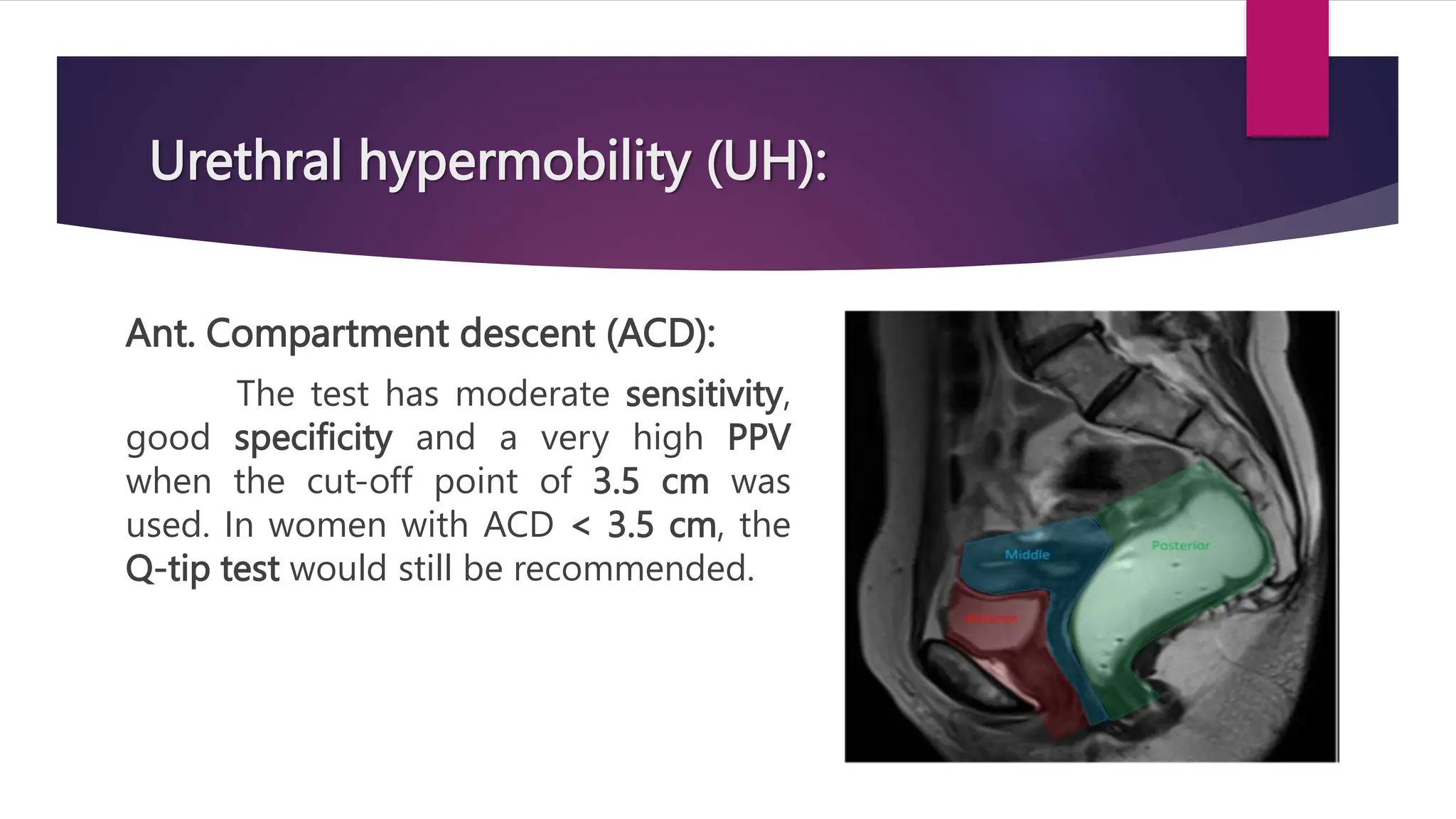
Ant. Compartment descent (ACD):
The test has moderate sensitivity,
good specificity and a very high PPV
when the cut-off point of 3.5 cm was
used. In women with ACD < 3.5 cm, the
Q-tip test would still be recommended.
Urodynamic testing in children:
- Bl.filling at rate of 5–10% of expected bl.capacity for age/min.
- Expected capacity (ml) = 30 + (age yrs x 30) for child > 2yrs.
= 7 × wt. (kg) < 2yrs.
For children with MMC = 24.5 x age in yrs + 62.
- Filling cycles should be performed at least twice.
- 2% lidocaine jelly intra-urethral pre-cath.
- Sedation is sometimes necessary.
Urodynamic report:
standard urodynamic report should include:
- all of the pre-tests mentioned above clinical assessments,
- urodynamic diagnosis
- management recommendation.
- Additional details regarding the temperature and type of fluid used, the
rate of filling, the size of the catheter, and patient position should also
be in the report.
Guidelines for urodynamics
in adults
URODYNAMIC STUDIES
AUA and Society of Urodynamics,
Female Pelvic Medicine and
Urogenital Reconstruction (SUFU)
guidelines for urodynamics in
adults.
URODYNAMIC STUDIES: GUIDELINES:
 PATIENTS WITH SUI and POP:
- Should assess urethral function (recommendation).
- Surgeons considering INVASIVE therapy in patients with
SUI should assess a post-void residual (PVR) (expert
opinion).
- May perform UDS in pnts with both symptoms and physical
findings of SUI who are considering INVASIVE, potentially
morbid, or irreversible treatments (option).
URODYNAMIC STUDIES: GUIDELINES:
- Should perform repeat stress testing with the urethral
catheter removed in patients suspected of having SUI who do
not demonstrate this finding with the catheter in place during
urodynamics (recommendation).
URODYNAMIC STUDIES: GUIDELINES:
- Should perform stress testing with reduction of POP in
women with high-grade POP but without symptoms
of SUI to look for occult SUI and detrusor dysfunction
(option).
URODYNAMIC STUDIES: GUIDELINES:
 OAB, UUI and MUI:
- May perform filling cystometry when it is important to
determine whether altered compliance, DO, or other
urodynamic abnormalities are present (or not) in pnts
with UUI in whom INVASIVE, potentially morbid, or
irreversible treatments are considered (option).
URODYNAMIC STUDIES: GUIDELINES:
- May perform pressure flow studies in pnts with UUI after
bladder outlet procedures to assess for BOO(expert
opinion).
- Should counsel pnts with UUI and MUI that the absence of
DO on a single urodynamic study does NOT exclude it
as a causative agent for their symptoms (clinical
principle).
URODYNAMIC STUDIES: GUIDELINES:
 NEUROGENIC BLADDER:
- Should perform PVR assessment when appropriate
(standard).
URODYNAMIC STUDIES: GUIDELINES:
- In pnts with relevant neurologic disease at risk for neurogenic
bl., in pnts with other neurologic disease and PVR, or in
pnts with urinary symptoms, clinicians:
. Should perform complex CMG (recommendation).
. Should perform pressure flow studies during the initial
evaluation (recommendation).
URODYNAMIC STUDIES: GUIDELINES:
• May perform fluoroscopy, when available
(recommendation).
• Should perform EMG (recommendation).
 LOWER URINARY TRACT SYMPTOMS (LUTSs):
- May perform PVR as a safety measure to rule out
significant urinary retention both initially and during
follow-up (clinical principle).
URODYNAMIC STUDIES: GUIDELINES:
- Uroflow may be used in the initial and ongoing evaluation
of male patients with LUTS when an abnormality of
voiding/emptying is suggested (recommendation).
- May perform filling cystometry when it is important to
determine whether DO or other abnormalities of bladder
filling/storage are present in patients with LUTS, particularly
when INVASIVE, potentially morbid, or irreversible treatments
are considered (expert opinion).
URODYNAMIC STUDIES: GUIDELINES:
- Should perform pressure flow studies in men when it is
important to determine whether urodynamic obstruction is
present in men with LUTS, particularly when INVASIVE,
potentially morbid, or irreversible treatments are considered
(standard).
URODYNAMIC STUDIES: GUIDELINES:
- May perform pressure flow studies in women when it is
important to determine whether obstruction is present (option).
- May perform video-urodynamics in properly selected
patients to localize the level of the obstruction, particularly for
the diagnosis of primary BNO (expert opinion).
Q & As
MCQ
An 82yrs old man with mixed storage and voiding LUTS is
referred for urodynamics. His Qmax is 15 mL/s and a Pdet at
Qmax of 85 cm H20. What is the BOO index for this man?
A. 45
B. 50
C. 55
D. 70
E. 103
MCQ
An 82yrs old man with daytime frequency, urinary urgency, occasional
incontinence and nocturia is treated with an anticholinergic. His
incontinence worsens. Urinalysis is normal. The next step is:
A. PVR
B. Uroflowmetry
C. Cystoscopy
D. Urodynamics
E. Renal tract ultrasound
MCQ
 When should we consider cardiac monitoring during urodynamics in pnts with low-level SCI
(< T1)? Is A.dysreflexia an issue?
- AD is a life-threatening condition. It is more frequently reported among higher level
SCI (e.g. cervical lesions).
- The lowest level of SCI where AD was documented is T10. The neurological level of
injury not always correspond with autonomic level of injury.
- AD could be a fatal event in pnts with SCI at T6 or higher. Therefore, all pnts with
this lesion, even if incomplete, should be monitored during UDS. There are some
risk factors that increase the likelihood, such as age (more risk in young people)
and high maximum Pdet during urination.
THANK YOU

Urodynamic studies overview and examples.pptx

  • 1.
    URODYNAMIC STUDIES DR. MOHAMMED HOSNIGABER AHMED MAHER TEACHING HOSPITAL
  • 2.
    URODYNAMIC STUDIES It isthe general term for studying storage and voiding function/dysfunction of LUT to provide objective pathophysiological explanations for symptoms of LUT/UUT. UDS should reproduce the patient’s presenting symptoms.
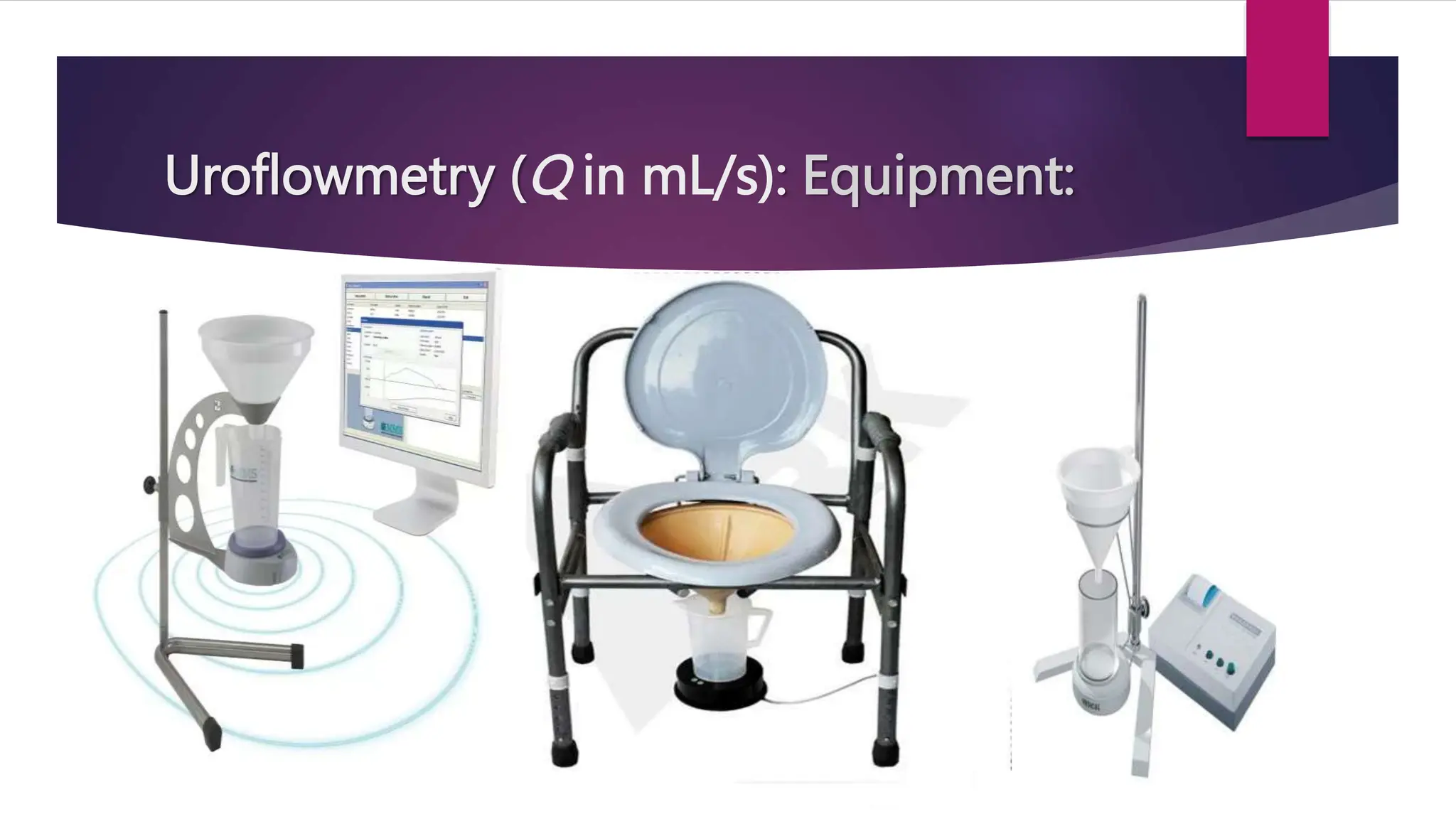
  • 3.
  • 4.
    Optimal function ofthe LUT STORAGE VOIDING - Emptying of UUT. - Low pressure in UUT. - Low pressure, stable bladder. - Adjustment of sphincter. - End-filling desire to void. INVESTIGATIONS: - Frequency/volume chart (voiding diary)(FVC). - Filling cystometry (CMG). - UPP. - Conscious control of mict.: . Voluntary start. . Capable of interruption of flow. - Powerful stream. - Coordinating det. and sph. - No PVR. - Post-void satisfaction - Frequency/volume chart (FVC). - Uroflow (Qura). - Pressure-flow study.
  • 5.
    (LUT Dysfunction) LUTS Storagesymptoms Voiding symptoms Post-void symptoms - Post-void unsatisfaction. - Post-void residual (PVR). - Post-void dribbling. - Difficulty: . To initiate(hesitancy). . Interrupted stream. . To terminate. - Frequency. - Nocturia - Urge. - Incontinence.
  • 6.
    Voiding diary:  Therecording of mic. events can be done in 3 main forms: 1. Mic. Time chart: Timing of voids d/n and inc. episodes for at least 24-hr. 2. Frequency/volume chart (FVC): Timing + volume of voids, inc. episodes and no. of pads for at least 24-hr. 3. Bladder diary: the most complete form and include: Timing + vol. of voids, inc. episodes, pad usage, fluid intake, degree of urgency and inc.
  • 7.
    Voiding diary:  Tofacilitate patient compliance, several apps for the iPhone and iPod are available on the market to create a quick and reliable digital voiding diary.
  • 8.
    Bladder diary:  Mostlyassess storage problems: - Urgency / frequency. - Incontinence – frequency and severity. - Functional bladder capacity. - Fluid intake: large / small / beverages. The patient records the vol. and time of each void for 3 consecutive days and also records any leakages of urine.
  • 9.
    Bladder diary: Maxm. Voided Vol. Polydipsia 24hr urinevol. > 40ml/kg BW Noct. urine vol. > 20% (young)/ 33% (elder) 24hr. U. output 1ry/2ry Bl./Prostate disorder Amount and type of fluids. DM / DI DM (I/II) DI (Pit./Renal/GI) 1ry Polydipsia Oestron level in females Impaired circadian sec. of AVP Cong. HF Sleep apnea Drugs: Lithium, Tetracyclines, Diuretics.
  • 10.
  • 11.
    Bladder diary: Normal bladderfunction The chart shows:  Micturition frequency: 6-7 times/24 hrs;  Nocturia: up to once/24 hrs;  Total volume voided/24 hrs: 1,900-2,000ml;  Maximum void: 500ml.
  • 12.
    Bladder diary: Examples Stressurinary incontinence: 29-yrs old mother, who enjoys exercise and jogging, has 2 children, the youngest of is 9 ms old. She has urine leakage on exertion and has no frequency or urgency. Over a single day, the chart shows:  Frequency d/n; 7/1 Continence aids: Panty liners;  Fluid intake: 2,080ml/ 24 hrs.  Total volume voided/24 hrs 1,925ml;  Maximum void: 450ml;  Leakage on exertion: 5 times/24 hrs;
  • 13.
    Bladder diary :Examples Interpretation:  Fluid intake and bl. function are within normal parameters, apart from episodes of leakage.  Other investigations: Urinalysis and physical examination.  Diagnosis of SUI was then made.  Treatment regimen of individualized PFMEs commenced.
  • 14.
    Bladder diary :Examples OAB: A 48-yr-old science teacher. C/O: Urinary urgency, and leaks urine if he is unable to reach the toilet quickly. On one occasion, he had to take a white coat from the classroom to cover his clothes as he could not control his urgency on the way to the toilet. Since he was unable to measure his voids, he was asked to put a tick in the column each time he passed urine.
  • 15.
    Bladder diary :Examples OAB: One day of three-day charting shows:  Frequency d/n: 12/2  Total volume voided/24 hrs: not recorded;  Maximum void: not recorded;  Leakage with urgency occurred once/24 hrs;  Continence aids: pads not used;  Fluid intake: 1,450ml, made up of 6 cups of strong black coffee and a pint of lager ( kind of bear).
  • 16.
    Bladder diary :Examples Interpretation: The obvious causes for concern are low fluid intake and the volume of strong black coffee. In addition, lager can irritate the bladder in some people. Investigations: Exclude UTI and a full continence assessment, The pnt was advised initially to gradually reduce his caffeinated drinks, replaced with non-caffeinated drinks and ensure his fluid intake was about 2l in 24 hrs. He will be reviewed in 4 ws for progress and further treatment, investigation and referral if required.
  • 17.
    Bladder diary :Examples Interstitial cystitis (IC):  55 yrs. old lady.  C/O: Urinary frequency, urgency, and leaks urine if unable to reach the toilet quickly. Lower abdominal pain occurs as her bladder fills.  She is otherwise fit and active, but is very tired due to daytime frequency and nocturia occurring every hour.
  • 18.
    Bladder diary :Examples One day of three-day charting shows:  Frequency d/n: 17/7;  Total volume voided/24 hrs: 1,665ml plus leakage;  Maximum void: 90ml;  Leakage with severe urgency: 5 times/24 hrs;  Continence aids: 3 rectangular pads used;  Fluid intake: 2,150ml.
  • 19.
    Bladder diary :Examples Interpretation:  The bladder diary confirmed the severity of lady’s symptoms.  Urinalysis and vaginal exam. did not show any abnormality, and constipation was excluded.  PVR U/S showed her bladder was completely emptying.  UDS; showed a significant increase in bl. Pr. during filling, resulting in severe urgency with high pr. and leakage at 90ml.  cystoscopy and biopsy confirmed interstitial cystitis as the cause of symptoms.
  • 20.
    Urodynamic department  Situatedin OPD.  Urodynamic MMS machine.  Commode and flowmeter.  Remote flowmeter.  Bladder scanner.
  • 21.
    URODYNAMIC STUDIES: Indications: NOTa 1st line investigation  Confirm or refute a diagnosis and identify all factors contributing to the causes of the LUTS.  Failed conservative and/or surgical treatments.  Play a part in surveillance or research programs.  Mixed UI with predominant frequency and urge, but only after failure of initial conservative treatment and prior to considering surgery.
  • 22.
    URODYNAMIC STUDIES: Disadvantages /complications:  Discomfort.  Bleeding.  Infection.  Failure: - Poor technique. - Inadequate interpretation.
  • 23.
    URODYNAMIC STUDIES: Consent: Pnts. with depression, anxiety or painful bladder syndrome have been found to experience the most discomfort and apprehension.  To optimize the patient’s experience, it is advisable to provide written information to explain the tests before their arrival, so they know what to expect.  An ICS Standard information leaflet for urodynamics is available.
  • 24.
    URODYNAMIC STUDIES: ICS-SUP: Each pnt. undergoing UDS testing; should have PRELIMINARY ICS standard urodynamics protocol (ICS-SUP): - A clinical history including a valid symptom and bother score(s), Quality of life questionaire (QoL) and medication list. - Relevant physical examination. - Urinalysis. - Frequency/volume chart and, optionally, a pad test.
  • 25.
    URODYNAMIC STUDIES: ICS-SUP: PAD test: - Complementary to voiding diary. - Assesses the degree of incontinence in a semi-objective manner. - Pad weight gain in non-menstruating women can be attributed mainly to urine and in small part to perspiration and vaginal discharges.
  • 26.
    URODYNAMIC STUDIES: ICS-SUP: PAD test: - Two types of pad test: • The short-term (1 h) with exercise for 30 minutes. • The long-term (24-48h) at home; changed every 4–6 hours. - Most accurate if based on a fixed bladder volume. - Incontinence is diagnosed if pad weight is more than 1 g/h on the short-term pad test and more than 8 g/24h on the long-term pad test.
  • 27.
    URODYNAMIC STUDIES: Botherscoring:  Examples of validated urinary incontinence questionnaires: • Urogenital Distress Inventory (UDI) • Incontinence Impact Questionnaire (IIQ) • Questionnaire for Urinary Incontinence Diagnosis(QUID) • Incontinence Quality of Life Questionnaire (I-QoL) • Incontinence Severity Index (ISI) • International Consultation on IncontinenceQuestionnaire (ICI-Q)  For LUTS in men use IPSS.
  • 28.
    URODYNAMIC STUDIES Non-invasive Uroflowmetry + Post-voidresidual (PVR). Invasive 1- Filling cystometry (FCM). 2- Pressure-flow mic. Study (PFM). 3- Urethral-pressure study (UPP). Supplementary: 4- Electro-physiological study(EMG). 5- Video-urodynamic studies. 6- Ambulatory urodynamics monitoring (AUM).
  • 29.
  • 30.
    Uroflowmetry (Q inmL/s):  Uroflowmetry is the measurement of the rate of urine flow / time.  It is an estimate of effectiveness of the act of voiding along with PVR.  It is the easiest urodynamic test useful as a preliminary or follow-up investigation of the LUT symptom.
  • 31.
    Uroflowmetry (Q inmL/s):  There’s lack of absolute values defining normal limits.  Nomograms are required to see the change in flow rates at different voided volumes. Nomograms were constructed to provide normal reference ranges in various age groups.
  • 32.
    Uroflowmetry (Q inmL/s):  There are racial differences described in African and Caucasian women and Indians for urodynamic parameters.  It is influenced by: - Voided volume. - Detrusor contraction. - Completeness of sph. relaxation. - Patency of the urethra.
  • 33.
    Uroflowmetry (Q inmL/s): Equipment:
  • 34.
    Uroflowmetry (Q inmL/s):  The patient should be well hydrated with full bladder.  The study should be performed in privacy and the patient encouraged to void his normal fashion.  The voided volume, patient’s position, method and rate of bladder filling, and type of fluid should be recorded.
  • 35.
    Uroflowmetry (Q inmL/s):  Variables during uroflowmetry: - Flow pattern. -Voided volume. - Maximum flow rate ( Qmax ). - Average flow rate ( Qmean). - Flow time. - Time to maximum flow. - Voiding time.
  • 36.
    Uroflowmetry (Qura inmL/s): Reports: The test reports are customizable. They can include items like the main patient data, the test graphs, summary of test results, nomograms and comments.
  • 37.
    Uroflowmetry (Q inmL/s):  Urine flow is defined as continuous or intermittent.  The continuous flow curve described as: - Smooth arc, bell-shaped curve without any rapid changes in amplitude. OR - Fluctuating when there are multiple peaks during period of continuous urine flow. NORMAL UROFLOW CURVE
  • 38.
    Uroflowmetry (Q inmL/s): NORMAL UROFLOW CURVE
  • 39.
    Uroflowmetry (Q inmL/s): Flow pattern (compressive) (constrictive)
  • 40.
    Uroflowmetry (Q inmL/s): VOIDED VOLUME (VV in mL) Optimal voides between 200-350 ml. Voids < 150ml are difficult to interpret.
  • 41.
    Uroflowmetry (Q inmL/s): MAXIMUM FLOW RATE (Qmax)  It is the most reliable variable in detecting abnormal voiding.  In general, in men peak flow rates (Qmax) > 15 ml/s are considered normal in young men and rates < 10 ml/s are considered abnormal.  10–15 mL/s is considered to be equivocal.
  • 42.
    Uroflowmetry (Q inmL/s): MAXIMUM FLOW RATE (Qmax) • It is influenced by: - Age/sex - Multiple testing accuracy. • In men; Values decline approximately 1 - 2 ml/s every 5 years and maximum flow rate at age 80 is 5.5 ml/s.
  • 43.
    Uroflowmetry (Q inmL/s): MAXIMUM FLOW RATE (Qmax) • The Qmax and pattern of curve are more reliable indicator of infra-vesical obs. • In women; Qmax can be >30 ml/s. It is not dependent on age.
  • 44.
    Uroflowmetry (Q inmL/s): MAXIMUM FLOW RATE (Qmax) • However, a SLOW or LOW Qmax may mean there is: - An obstruction at the BN or in the urethra, • OR - A weak detrusor.
  • 45.
    Uroflowmetry (Q inmL/s): MAXIMUM FLOW RATE (Qmax) • HIGH FLOW OBSTRUCTION: A male with severe LUTS + Qmax > 15ml/s + Intravesical pressure > 100cmH2O at a maximum flow rate.
  • 46.
    Uroflowmetry (Q inmL/s): AVERAGE FLOW RATE (Qavg) • Voided volume divided by flow time. • It should be interpreted with caution if flow is interrupted or there’s terminal dribbling.
  • 47.
    Uroflowmetry (Q inmL/s): FLOW TIME It is the time over which measurable flow actually occurs in seconds. (N < 20sec.)
  • 48.
    Uroflowmetry (Q inmL/s): VOIDING TIME Is the total duration of micturition in seconds i.e. includes interruptions. When voiding is completed without interruptions, the voiding time = flow time.
  • 49.
    Uroflowmetry (Q inmL/s): TIME TO MAXIMUM FLOW Onset of flow to Qmax in seconds.
  • 50.
    Uroflowmetry (Q inmL/s): Arrow 1 voided volume (Vvoid): 210 mls (voided volumes are rounded to the nearest 10 mls). It is sufficient for clinical interpretation. Increasing bladder volume increases the potential bladder power, notable in the range from empty up to 150 -250 mls. At volumes higher than 400-500 mls, detrusor may become overstretched and contractile strength may decrease. Arrow 2 Qmax: 9 mL/s (rounded to the nearest whole number) indicates poor flow. Time to Qmax should typically be reached within 5 s , however, it takes 41 secs. Flow curve pattern; fluctuating and does not demonstrate a rapid fall from high flow or a sharp cut-off at the termination of flow. 210ml 41s 9m/s
  • 51.
  • 52.
    Residual urine volume( PVR ):  It integrates activity of the bladder and outlet during emptying.  Measured directly by bl. catheterization or estimated by pelvic U/S ex.  What is considered normal PVR is controversial: - In adults: a value < 25ml is considered normal. - PVR > 100ml warrants careful surveillance and/or treatment
  • 53.
    Residual urine volume( PVR ): - In infants: PVR volume < 10% of the max. bl. vol. is considered normal.  Voided percentage (Void%): The numerical description of the voiding efficacy (VE) which is the proportion of bladder content emptied. Calculation: [vol. voided / vol. voided + PVR] x 100.
  • 54.
    Residual urine volume( PVR ): Fallacies:  In female pnts, overestimation of the PVR volume is quite common as the uterus can be measured as a part of the bladder volume. Therefore, if U/S-measured PVR volume of female pnts does not match the clinical signs, directly measuring PVR by catheterization is necessary.  Also in patients With ascites or with big ovarian cysts, ultrasound can show similar errors.
  • 55.
  • 56.
    Invasive UDS: UDMachine:  The equipment consist of: - PC or labtop with specific software installed. - Pump. - Transducers. - Connecting tubing. - Puller for UPP catheter.
  • 57.
  • 58.
    Invasive UDS: Transducers: Pressures measured via microtip or external transducer.
  • 59.
    Invasive UDS: UDCatheters:  Double lumen Cystometry UD catheter: Separate lumens for filling and bladder pressure measurement during cystometry and pressure flow studies. Options include straight, coudé, or pigtail tip catheters, with or without radiopaque markers.
  • 60.
    Invasive UDS: UDCatheters:  Rectal UD catheters: - Single lumen. - Double lumen : Non-latex balloon set around the tip. One lumen to measure Pabd, and the other lumen is used to inject a small amount of fluid inside the balloon to keep the catheter holes patent.
  • 61.
    Invasive UDS: UDCatheters:  Triple lumen Profilometry UD Catheter: Offer simultaneous bladder filling, bladder pressure (Pves) and urethral pressure (Pura) measurement. Options include straight, or coudé catheters, with or without radiopaque markers.
  • 62.
    Invasive UDS: UDCatheters:  Air-Charged T-DOC®ACCand Water- Charged Urodynamic Catheters: An air-charged UD cath.involves charging of a balloon that is placed around the catheter line. The theory and functioning of this technique is the same as the water-charged system, but a miniature balloon communicates with a transducer in order to determine a pressure reading.
  • 63.
    Invasive UDS: UDCatheters:  Air-Charged T-DOC®ACC and Water-Charged Urodynamic Catheters This system is advantageous because it eliminates inaccuracies due to changes in temperature or the presence of water bubbles. It is also inexpensive,single-use and disposable. Perhaps most importantly, it is less sensitive to patient movement, particularly during coughing. Caution should be used when comparing results from both catheters, as each has been shown to record different pres under similar conditions.
  • 64.
  • 66.
    Software available fordata collection UDS manufacturer Software Laborie (Mississauga, Ontario, Canada) - i-List®,UroConsole® Andromeda (Taufkirchen/Potzham,Germany) - AUDACT® Prometheus (Dover, New Hampshire, USA) - Morpheus®
  • 67.
    Indications of invasiveUDS: Its results should guide therapeutic intervention: 1- INCONTINENCE: - Recurrence after surgery. - Mixed urge and stress inc. - Associated voiding problems. - Pnt. with neurologic dis. - Pnt. with a mismatch between signs and symptoms.
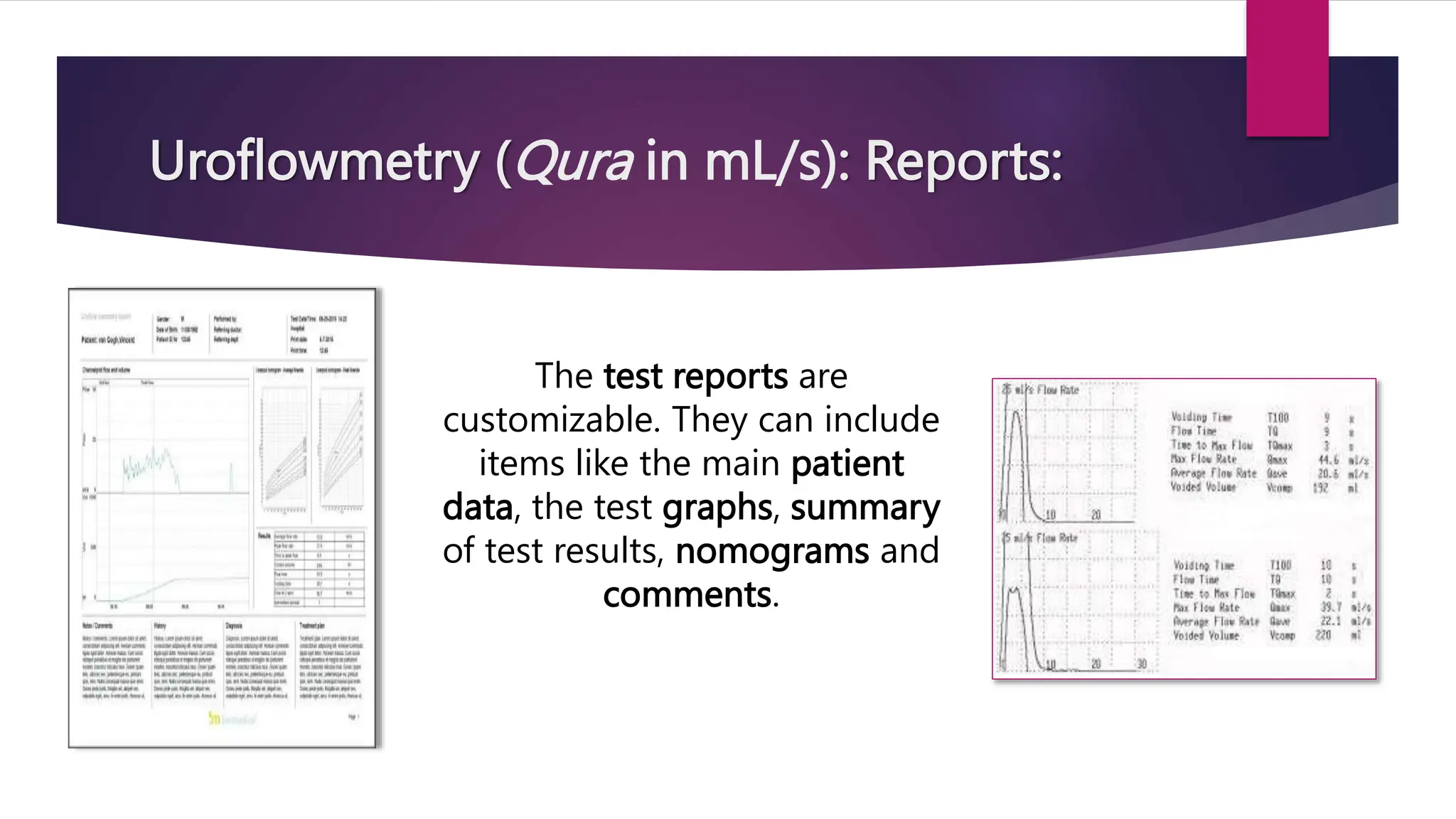
  • 68.
    Indications of invasiveUDS: 2- Neurologically impaired pnt. with voiding dysfunction. ( neurogenic bladder ) 3- Children with: - Daytime urgency. - Urge incontinence. - Recurrent UTI. - Reflux or UUT changes.
  • 69.
    Invasive UDS: Pnt. Preperationsand precautions:  History and physical examination.  Urinalysis and abdomino-pelvic U/S.  Three days voiding diary.  Certain drugs should be held (10-15ds before test).  UDS should be deferred in presence of: - UTI. - Recent instrumentation.
  • 70.
    Invasive UDS: Pnt. Preperationsand precautions:  ANTIBIOTICS: - Routine prophylactic antibiotics is not nessecary. - High risk pnts. ( cardiac valve, orthopedic prosthesis, GU prosthesis, pacemaker ); parentral AB prophylaxis might be nessecary.  Pnts who are catheter-dependent should have the catheter removed and be placed on CIC before UDS.
  • 71.
    Invasive UDS: Pnt. Preperationsand precautions:  Test should be performed in private area with as few observers as possible.  In neuropathic pnts.: Be cautious of autonomic dysreflexia. Monitor the pnt. Hemodynamically during procedure. If symptoms occur; empty the bladder and remove tight clothing and straps. Anti-hypertensives may be needed.
  • 72.
    Invasive UDS: Pnt. Preperationsand precautions:  Autonomic dysreflexia: Abn. over-reaction of the sympathetic autonomic NS to stimulation in pnts. with sp. cord injuries at or above the level of T6. This reaction may include: Change in HR, excessive sweating, high bl. Pr., m. spasms, skin color changes (paleness, redness, blue-gray skin color).
  • 73.
    Invasive UDS: Pnt. Preparationsand precautions:  Monitor HR and bl. Pr. / 5 min.  Assess for constipation and fecal impaction.  For continued hypertension consider administration of – Nitroglycerine (0.4 mg SL/ 5 minutes x 3 OR ½ inch nitropaste to chest wall) – Captopril 25 mg SL  Pnts. should be monitored after the AD event and educated on recurrent symptoms.
  • 74.
     Autonomic dysreflexia: Triggeredby noxious stimuli below the level of the injury – Urinary retention. – UTI. – DO with impaired compliance. – Constipation and fecal impaction. – Sacral decubitus ulcers. Invasive UDS: Pnt. Preparations and precautions:
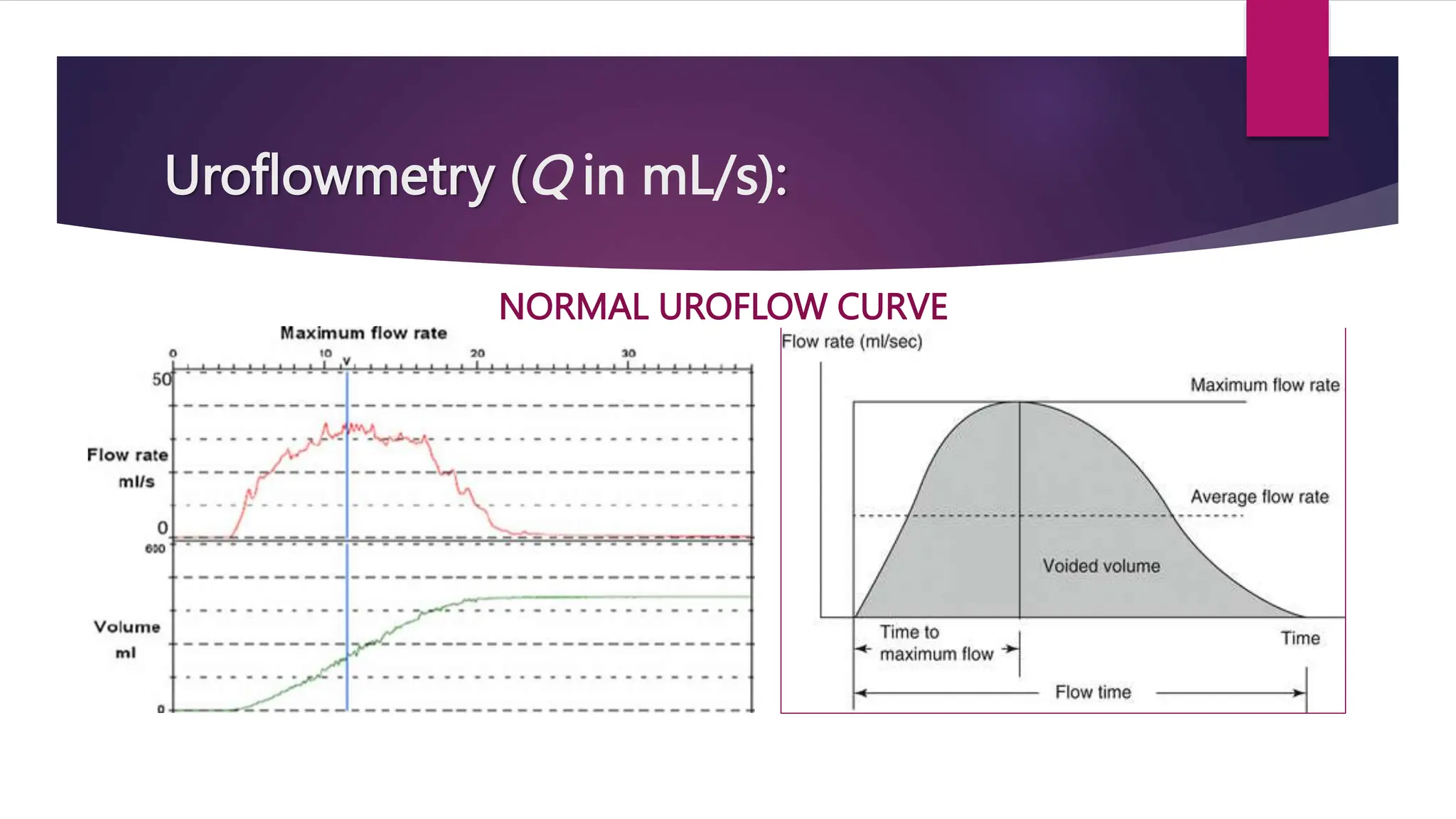
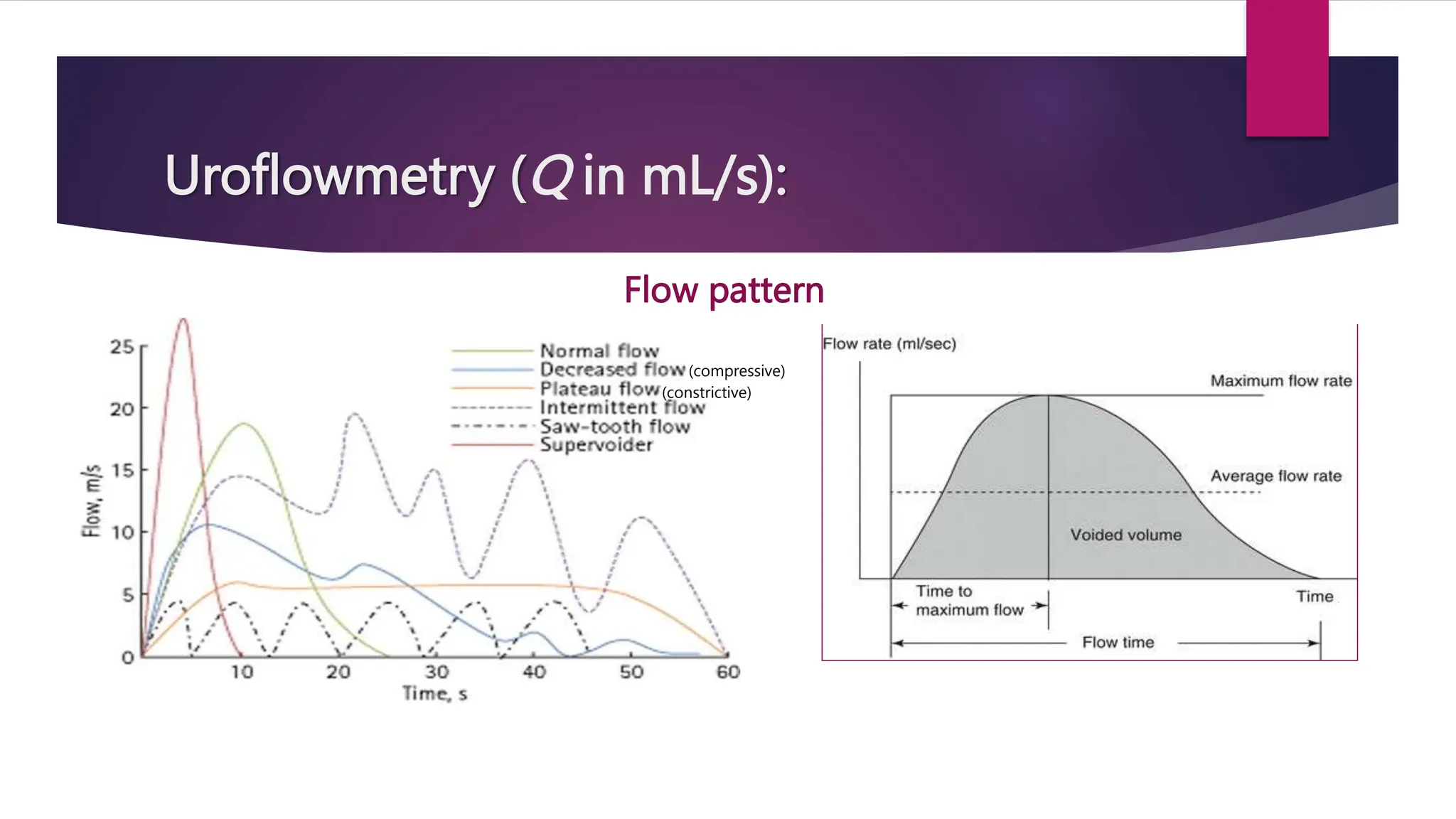
  • 75.
     Autonomic dysreflexia(AD): Other causes include: Guillain-Barré syndrome (NS auto-immune disease). Side effects of some medicines. Severe head trauma and other brain injuries. Subarachnoid hemorrhage. Use of illegal stimulant drugs such as cocaine and amphetamines. Invasive UDS: Pnt. Preparations and precautions:
  • 76.
    Invasive UDS: CorrectPreparation of Urodynamic Equipment  Calibration of equipment: – Pressure transducer to read 0 and 100 cm H20. – Urine flow meter to read 0 and 25 (or 50) ml/s. – Filling pump to fill at 10 and 50 ml/min.  Zero transducers to atmospheric pressure.  Check reference level of transducers: Superior edge of symphysis pubis.  Flush tubing to ensure absence of bubbles or leaks.
  • 77.
  • 78.
    Filling cystometry (CMG):Procedure:  Measure the pressure/volume relationship of the bladder during bladder filling.  TU or SP continuous fluid filling of the bladder at room temperature; minimally with Pves and Pabd measurement and display of Pdet, including cough (stress) testing.
  • 79.
    Filling cystometry (CMG):Procedure:  Filling rate: - 1ml/min. (physiologic) - 10-25-50-100 ml/min. ( slow - medium - fast )  Filling at a rate of 10% of the maximum voided volume suggested by some authors.  Patients with DO may need a slower rate of 10 ml/min.  Fluid used N. saline at 25-37C.
  • 80.
    Filling cystometry (CMG):Procedure: ► Position: Supine / Sitting / Standing. ► The detection of DO, urodynamic SUI, and bladder-filling sensations are influenced by pnt’s position. Sitting or standing position appears to have a higher sensitivity to detect abnormalities.
  • 81.
  • 82.
    Filling cystometry (CMG):Procedure:  Bladder sensations: ICS does not specifically provide the normal range for bladder sensation volume. Therefore clinician has to be the final judge of determining bladder sensation.
  • 83.
    Filling cystometry (CMG):Procedure:  Bladder sensations: - First sensation of bladder filling (FSF): (170–200 ml) The moment the patient feels that bladder is no longer empty. - First desire to void (FD): (~ 250 ml) The moment that normally tells the patient to go to the toilet, without any hurry, at the next convenient moment.
  • 84.
    Filling cystometry (CMG):Procedure:  Bladder sensations: - Strong desire to void (SD)(equal to MCC)( ~ 400-450ml): Persistent desire to void without the fear of leakage. - Urgency: Sudden compelling desire (emergency) to pass urine which is difficult to defer, may be associated with pain or fear of losing urine.
  • 85.
    Filling cystometry (CMG):Procedure:  Bladder sensations: - A catheter in bladder may cause irritation and/or pain which may be erroneously interpreted as a sensation to void. - Cold or overly warmed or too rapidly infused fluid can also affect bladder sensation. - Sensation is usually reported as absent, reduced, or increased.
  • 86.
    Filling cystometry (CMG):Procedure:  Abnormal bladder sensations: - Increased bl. Sens.: Early FS, FD, and SD which occur at Low bl.Vol. and persists. There will be a low max.cystometric capacity (MCC) with no abnormal increases in Pdet.
  • 87.
    Filling cystometry (CMG):Procedure:  Abnormal bladder sensations: - Reduced bl. Sens.: Diminished sens. Throughout filling. - Absent sens.: Pnt. Has no bl. Sens. - Abn. Bl. Sensations: is an awareness of sensation in the bladder, urethra, or pelvis, described with words like “tingling”,“burning”, or “electric shock”, in the setting of a clinically relevant neurologic disorder.
  • 88.
    Filling cystometry (CMG):Procedure:  Abnormal bladder sensations: - non-specific bladder sensation: Is a perception of bl. filling as abdominal fullness, vegetative symptoms, spasticity or other “non-bladder awareness” in the setting of a clinically relevant neurologic disorder.
  • 89.
  • 90.
    Filling cystometry (CMG):Procedure: Pressure recording:  Abdominal pressure (Pabd): measured via balloon cath. Put in the ampulla of the rectum, vagina or stoma after bowel resection and anal closure.  Vesical pressure (Pves).  Detrusor pressure: Pdet = Pves – Pabd (normal values: 5 to 15 cmH2O).
  • 91.
    Filling cystometry (CMG):Procedure: Pressure recording: The normal abdominal and vesical resting pressures are as follows:  Supine: 0 to 18 cm H2O  Sitting: 15 to 40 cm H2O  Standing: 20 to 50 cm H2O  Resting detrusor pressure: between -5 and +5 cm H2O
  • 92.
    Filling cystometry (CMG):Procedure:  Normal detrusor function during Filling: Bl. Filling with no or little change in Pdet; no involuntary phasic det. contractions despite provocations.
  • 93.
    Filling cystometry (CMG):Procedure:  The bladder outlet obstruction index (BOOI) = (Pdet Qmax – 2Qmax). If the difference is > 40; BOO can be diagnosed.
  • 94.
    Filling cystometry (CMG):Procedure:  Det. Overactivity (DO): Involuntary det. Contractions; spontaneous or provoked. Either: - Phasic: Characteristic waveform may or may not lead to inc. - Terminal: Single invol. contn. at CC can't suppressed; results in inc. with bl. emptying (void)(usually).
  • 95.
    Filling cystometry (CMG):Procedure:  Det. Overactivity (DO): - Combined: Phasic + terminal. - Sustained high pr. Det. Cont. in pnt. With DSD when attempting voiding. The term Neurogenic DO replaced D. hyper-reflexia. Idiopathic DO D. instability.
  • 96.
    Filling cystometry (CMG):Procedure:  During bladder filling, the pnt is asked to cough every minute to assess recording quality. This should produce an acute and equal rise in Pabd and Pves, with little or no rise in Pdet.  Provocation maneuvers to elicit the pnt’s symptoms are performed throughout the test.
  • 97.
    Filling cystometry (CMG):Procedure:  Provocations: Techniques used during filling to provoke DO: - Rapid filling. - Cooled filling fluid. - Postural changes. - Hand washing.
  • 98.
    Filling cystometry (CMG):Procedure: A- Typical storage reflex in a neurologically intact woman: EMG activity during filling, coughing, straining, and an uninhibited detrusor contraction. This indicates an intact synergistic pelvic floor response
  • 99.
    Filling cystometry (CMG):Procedure: B , Typical micturition reflex in a neurologically intact woman: Complete loss of EMG activity simultaneous with an increase in Pdet at initiation of voiding. (IDC, involuntary detrusor contraction; Pabd , intraabdominal pressure; Pdet , detrusor pressure; Pure , urethral pressure; Pves , intravesical pressure).
  • 100.
    Filling cystometry (CMG):Procedure: Time (min) Pves Pabd Pdet EMG Qura Vvoid Vinf FS 180ml FD 270ml SD 360ml MCC390ml Permission to void
  • 101.
    Filling cystometry (CMG):Procedure: Normal filling cystometry in upright position Vin Pabd Pves Pdet EMG
  • 102.
    Filling cystometry (CMG):Procedure: Normal filling cystometry in supine position Vin Pabd Pves Pdet EMG
  • 103.
    Normal det contractility Normaldetrusor contractility. Note that compliance is normal. The apparent rise in Pdet is artifactual and 2ry to Pabd drop out. Similarly, note a small dropout in Pabd during voiding which makes detrusor contraction appears to be artificially high Permission to void Pdet 57 Time Pves Pabd Pdet Qura
  • 104.
    Filling cystometry (CMG):Procedure: Normal cystogram with a filling and voiding phase Vvoid Vinf MCC Pdet
  • 105.
    Poor Compliance 63yr malec/o Frequency and Urgency, no post-void feeling of satisfaction. Pdet Pves Pabd Qura 1st S 1st D S D Start void Delay t (hesitancy) Stop fill Phasic Term 140ml 165ml 360ml 215ml 90ml Co
  • 106.
    Filling cystometry (CMG):Procedure: Filling and voiding cystogram showing unprovoked r Pdet (blue arrows) associated with the sensations of urgency suggestive of DO.
  • 107.
    Filling cystometry (CMG):Procedure: Low compliance with DO Provoked and unprovoked DO
  • 108.
    urodynamic SI Pump50ml/min Pump100ml/min 1st sensND SD Urge Pump stop Zero Taps stand Pump on 100ml/min Pump off Jog on spot Vinf Pdet Pves Pabd Qura Vura 19.5ml/s 825ml 243ml 403ml 426ml 491ml 798ml 27cmH2O Supine position Pdet at Qmax
  • 109.
  • 110.
    DO incontinence Pves Pabd Pdet Qura Vura EMG Vinf Permission tovoid Note that DO and normal detrusor contraction during voiding can look very similar. The key differentiation is the annotation of “permission to void”
  • 111.
    DO incontinence Pabd Pves Pdet Qura Vura EMG Vinf Stress-induced DO.The arrows represent stress-induced DO with resultant UI. Leak
  • 112.
    Detrusor underactivity (DUA) Notewhile there is some artifact from Pabd, but the waveform of Pves correlates to Pdet which demonstrates a mild poorly sustained detrusor contraction (arrows) that is unable to generate flow. Pves Pabd Pdet Qura Vvoid Vinf MCC 480ml Permission to void
  • 113.
    Abdominal spasms capturedby urodynamics 3 large amplitude pressure signals due to abdominal spasms (*) were observed on Pves and Pabd pr tracings beginning after ~2 min of start. These coincided with pnt-reported spasm sensation and leakage in absence of coughs ( pnt with neurologic disorder).
  • 114.
    Primary BNO 22 yrsold female, + High-tone pelvic floor (levator: puborectalis and iliococcygeus) ms. failed prior auto-augmentation, interstim, and anticholinergics. UIDC 20cmH2O No leak Qmax 10ml/s Pdet 26-66cmH2O Vvoid 87ml PVR125ml
  • 115.
  • 116.
    Detrusor hyperactivity (DO)with impaired contractility (DU) (DHIC): 86yrs old female with insensible UI with u.freq,urgency. Pnt reported sense of incomplete bl.emptying and weak stream. Initial PVR assessment in office was16ml. because of her complex LUTS. Pves Pabd Pdet Qura Vvoid Vinf IH2O ml/min
  • 117.
    Detrusor hyperactivity (DO)with impaired contractility (DU) (DHIC): Filling CMG: DO with urine leakage at a filling vol. 90ml.She leaked with cough (CL) with cough LPP of 60cmH2O at 150ml. During voiding, she urinated 75ml with Qmax of 4ml/s (red arrow) and Pdet at Qmax of 3.3cmH20 (blue arrow). She also showed some Valsalva efforts during voiding (black arrows).
  • 118.
    Detrusor hyperactivity (DO)with impaired contractility (DU) (DHIC):  DU is defined by ICS as: Detrusor contraction of reduced strength (BCI < 100) and/or duration, resulting in prolonged bladder emptying and/or a failure to achieve complete bladder emptying within a normal time span. There are no standardized cutoff urodynamic values that define DU. To be differentiated from AD which is defined by ICS as: one that cannot be demonstrated to contract during UDS.
  • 119.
    Detrusor hyperactivity (DO)with impaired contractility (DU) (DHIC):  The elderly (≥ 65yrs) are more predisposed to: - Fecal impaction, - Impaired mobility, and - Use of multiple medications that can affect det.function. Detrusor function decline with age, probably due to normal det.m.changes with aging with decreased sm.m. concentration and increased collagen deposition. DU tends to be more in men than women.
  • 120.
    Detrusor hyperactivity (DO)with impaired contractility (DU) (DHIC): - Urodynamic criteria to diagnose DU in men include: Bl.contractility index (BCI) < 100, BCI = Pdet Qmax + 5 Qmax. Bl.voiding efficiency (BVE) of < 90%, Voided vol.(ml) / pre-micturition vol.(ml) X 100 and Bl.outlet obstruction index (BOOI) < 20. Pdet Qmax – 2Qmax
  • 121.
  • 122.
    Filling cystometry (CMG):Procedure:  Compliance: Bladder fills to accommodate instillation while maintaining safe Pdet (protects kidneys). Compliance of 20 mL/cm H2O is commonly used as a threshold Point. • Safe < 20cmH2O • Low risk 20 – 30 cm H2O • High risk 30 – 40 cm H2O or greater
  • 123.
    Filling cystometry (CMG):Procedure:  Compliance: Calculated = V / Pdet. During that change in vol. It can suggest the presence of a neurological condition (if ) or prior radiotherapy damage (if or poor compliance). (N: 5-15 ml/cmH2O)
  • 124.
    Filling cystometry (CMG):Procedure: Compliance: compliance. The single arrow denotes a change in Pdet of 41 cm H2O. The double arrow demonstrates a change in volume of 493 mL. Compliance = ΔVolume/ΔPdet = 493 mL/41 cm = 12 mL/cm H2O Pves Pabd Pdet EMG Vinf Volume change of bl. just prior to volitional micturition or first involuntary bladder contraction by Pdet at that same point.
  • 125.
    Filling cystometry (CMG):Procedure: Compliance: Abnormal compliance is related to filling; DO is not: If you stop infusing fluid; Pdet will plateau in cases of low compliance but continues to rise toward the peak with DO.
  • 126.
    Poor Compliance 63yr malec/o Frequency and Urgency, no post-void feeling of satisfaction. Pdet Pves Pabd Qura 1st sens 1st des Strong d Start void Delay t (hesitancy) Stop fill
  • 127.
    Filling cystometry (CMG):Procedure: Compliance: Factors adversely affecting normal bladder compliance: - Detrusor hypertrophy (Long-standing BOO, V-U reflux.). - Fibrosis ( bl. radiation, multiple surgeries, multiple bl. tumor resections, rec. inf., chr. infl.). - Defunctionalized bl. after long-term anuria ( or u.output is < 300mL/24h), Long-term indwelling cath. ( R.transpl.) - Neurogenic dysfunction. - Posterior urethral valve (PUV).
  • 128.
    Factors adversely affectingnormal bladder compliance: Video urodynamics/VCUG can be helpful as high-grade reflux and large bladder diverticulum can act as a “pop- off”masking underlying abnormal compliance. Filling cystometry (CMG): Procedure: Compliance:
  • 129.
    Factors adversely affectingnormal bladder compliance: Testing of DLPP in pnts with abnormal compliance can be helpful in risk assessment of future UUT deterioration. DLPP is defined as the lowest value of Pdet at which leakage is observed in absence of abdominal strain (Pves) or detrusor contraction (Pdet). However, in certain individuals, a DLPP of less than 40 may also put the UUT at risk. Filling cystometry (CMG): Procedure: Compliance:
  • 130.
    Filling cystometry (CMG):Procedure: Compliance: Contracted bladder: Bl. contracture is irreversible when the cystographic or cystometric bl. capacity was < 100 ml, with filling pr. and bl. compliance proved by maxm.bl. capacity under anesthesia. Types: - Defunctionalized (reversible). - Irreversible.
  • 131.
  • 132.
    Filling cystometry (CMG):Procedure:  Urodynamic Stress Test: Abdominal Leak Point Pressure (ALPP): (in pnts with SUI) The lowest Pves at which urine leakage occurs due to Pabd in absence of a detrusor contraction. When Pabd increase is attained by Valsalva maneuver, ALPP is called Valsalva leak point pressure (VLPP). It is the best measure of ureth.sph. strength and it is used to evaluate magnitude of abdominal force needed to drive urine across a closed ureth.sph.
  • 133.
    Filling cystometry (CMG):Procedure:  Urodynamic Stress Test: Abdominal Leak Point Pressure (ALPP): The bl. is filled with 200 mL or ½ MCC. Then, the pnt progressively Pabd by valsalva until leakage occurs. If no leakage occurs even when the pressure is greater than 120 cmH2O, coughing is used to induce leakage.
  • 134.
    Filling cystometry (CMG):Procedure:  Urodynamic Stress Test: Abdominal Leak Point Pressure (ALPP): ALPPs < 60 cmH2O indicate ISD (SUI type III), whereas ALPPs > 90 cmH2O are usually associated with pure urethral hypermobility ( SUI type I-II), and ALPPs in between is interpreted as gray zone.
  • 135.
    Filling cystometry (CMG):Procedure:  Urodynamic Stress Test: Abdominal Leak Point Pressure (ALPP): Pnt positioning is important factor when performing LPP testing. It is lower in standing than in sitting or supine positions. As a result, it is important that pnt’s position be specified when performing the procedure and consistent during the entire examination.
  • 136.
    Filling cystometry (CMG):Procedure:  Urodynamic Stress Test: Abdominal Leak Point Pressure (ALPP): U.leakage determined by visual observation may be challenging in some pnts due to positioning, body habitus, or leakage of low volume. Radiographic visualization of leakage may be useful in these cases but is less sensitive.
  • 137.
    Filling cystometry (CMG):Procedure:  Urodynamic Stress Test: Abdominal Leak Point Pressure (ALPP): Leak Valsalva 3Co Leak difficult to ascertain exact pr, at leakage with a series of three coughs
  • 138.
    Filling cystometry (CMG):Procedure:  Detrusor Leak Point Pressure ( DLPP ):[ prev.bl. LPP ] Defined by ICS as: The lowest value of Pdet at which leakage is observed in absence of Pabd or det. contraction. High DLPP > 40 cm H2O may put pnts at risk for UUT deterioration, or 2ry bl. damage in cases with neurological dis. such as paraplegia, MS or children with MMC. There are no data on any correlation between Det. LPP and UUT damage in non-neurogenic pnts.
  • 139.
    Filling cystometry (CMG):Procedure:  Detrusor Leak Point Pressure ( DLPP ):[ prev.bl. LPP ] The main determinant of a normal low Pdet, during filling: - Bl.compliance which in turn is dependent on: - Viscoelastic properties of detrusor m., - Normal bl.wall composition, and - Normal neural mechanisms.
  • 140.
    Filling cystometry (CMG):Procedure:  Detrusor Leak Point Pressure ( DLPP ):[ bladder LPP ] In neurogenic bladder, DLPP > 40 cmH2O is considered as high-risk factor for upper urinary tract deterioration.  Detrusor overactivity leak point pressure (DOLPP): lowest Pdet with DO at which urine leakage first occurs in the absence of voluntary detrusor contraction or Pabd.
  • 141.
    Filling cystometry (CMG):Procedure:  Detrusor Leak Point Pressure ( DLPP ):[ bladder LPP ] Detrusor leak point volume (DLPV): Bladder volume at which first urine leakage occurs, either with DO or low compliance.
  • 142.
    Filling cystometry (CMG):Procedure:  Detrusor Leak Point Pressure ( DLPP ):[ bladder LPP ] DLPP > 40 cmH2O in pnt with long-term chronic stage of cauda equine syndrome with bilateral chronic poly- radiculopathy below L5 level.
  • 143.
    Filling cystometry (CMG):Procedure:  Cystometry ends with ‘permission to void’ or with incontinence (involuntary loss) of the total bladder content.  Fluid type and temperature; filling method and rate, catheter sizes and pressure recording technique, patient position, assessment and documentation of sensations, observations: contractions, compliance are recorded.
  • 144.
  • 145.
    Filling cystometry (CMG):Procedure:  Bladder capacities: (in pnt. with normal bl. Sens.) - Cystometric bl. Capacity (CBC): The bl. Vol. at the end of filling CMG = voided vol. + any PVR. - Maximum cystometric capacity (MCC): Vol. at the strong desire to void. - Functional bladder capacity (FBC): The working, day-to- day capacity of UB., obtained as largest recorded vol. on FVC. Normal cutoffs vary.
  • 146.
    Filling cystometry (CMG):Procedure:  Bladder capacities: - Maximum bl. Capacity under anaesthesia: Vol. to which the bl. can be filled under deep general or spinal anaesth. Should be qualified according to: . Type of anaesth. . Speed of filling. . Length of time of filling. . Pressure at which the bladder is filled.
  • 147.
    Filling cystometry (CMG):Procedure:  Bladder capacities: Age-based bladder capacity: Koff formula(1988); volume (mL) = 30(age in years +2) Kaefer formula(1997); volume (mL) = 32(2 x age in years +2) volume (mL) = 30(age in years/2 +6)
  • 148.
  • 149.
    Urodynamic studies (UDS):Artefacts:  Spikes in the flow rate and detrusor pressures are common, which can result in artificially high values.  Movement or tube knock → high frequency, short duration spikes in Pdet, in Pabd and Pves.  Patient position change → change in Pves and Pabd of equal magnitude.
  • 150.
    Urodynamic studies (UDS):Artefacts:  Expelled vesical or rectal catheter → Sudden drop in Pves or Pabd (usually < 0 cmH2O) because of voiding/valsalva. Recatheterise and repeat the test – not to be mistaken with a less drastic drop in Pabd at voiding caused by pelvic muscle relaxation.  Catheter flush → abrupt large increase in a single pressure trace lasting a few seconds, which suddenly normalizes.
  • 151.
    Urodynamic studies (UDS):Artefacts:  Empty bladder → Response of the intravesical catheter to a pressure transmission test is poor when the bladder volume is low.  Empty rectal catheter → Deterioration in Pabd transmission during filling or voiding.  Poor cough response → One cough spike is visibly smaller than others ( air bubble ).
  • 152.
    Urodynamic studies (UDS):Artefacts:  Poor response to live signal or dead signal ( air bubble ).  Rectal contractions → Temporary phasic ↑ in Pabd without change in Pves, resulting in negative deflections of Pdet.  Pump vibrations → Stable frequency oscillations of small but constant amplitude.
  • 153.
    Urodynamic studies (UDS):Artefacts: Cystometry demonstrating an artefact caused by pump vibrations
  • 154.
    Urodynamic studies (UDS): Sometimes the results of the urodynamic observations do not correspond with the patient’s symptoms; - ensure no artefacts. - immediately repeat the test. - supplementary tests: Pad test, videocystometry, ambulatory urodynamics. urethral pressure profile tests.
  • 155.
  • 156.
    Urodynamic studies (UDS): Pressure-Flowstudy (PFS): Performed after a cystometric evaluation and involve monitoring of Pabd, Pves, Pdet, Qura, EMG activity, as well as Pura are measured.
  • 157.
    Urodynamic studies (UDS): Pressure-Flowstudy (PFS): Pressure-Flow study in a normal male Vin Pves Pabd Pdet EMG Qura End filling phase Miction command
  • 158.
    Urodynamic studies (UDS): Pressure-Flowstudy (PFS): Pressure-Flow study in a normal female Vin Pves Pabd Pdet EMG Qura End filling phase Miction command
  • 159.
    Urodynamic studies (UDS): Pressure-Flowstudy:  Pre-micturition pressure = Pves immediately before the initial iso-volumetric = Resting pressure at max. cystometric capacity.
  • 160.
    Urodynamic studies (UDS): Pressure-Flowstudy: - Opening pressure: Pr. at the onset of measured flow ( 0.5 to 1 s. delay in the recording of flow for the time taken for urine to reach the flowmeter).
  • 161.
    Urodynamic studies (UDS): Pressure-Flowstudy: - Opening time: the time elapsed from the initial rise in Pdet. to the onset of flow. This is the initial iso-volumetric contraction period of micturition.
  • 162.
    Urodynamic studies (UDS): Pressure-Flowstudy: - Closing pr.: The pr. measured at the end of measured flow. - Minimum voiding pr.: Min. pr. during measured flow. ( not necessarily equal opening or closing pr.)
  • 163.
    Urodynamic studies (UDS): Pressure-Flowstudy: - Maximum voiding pressure: the max. pr. during voiding. - Pressure at maximum flow: the lowest pr. at max. flow rate. Any delay in the recording of flow rate must be allowed.
  • 164.
    Urodynamic studies (UDS): Pressure-Flowstudy: - Contraction pressure at max. flow: the difference between the pr. at maximum flow and the pre-micturition pr.
  • 165.
    Urodynamic studies (UDS): Pressure-Flowstudy: - After-contraction: describes the common findings of a pr. increase after flow cases. The etiology and significance of this event are unknown.
  • 166.
    Detrusor sphincter dyssynergia(DSD) Note the EMG flare begins at the time of the void
  • 167.
  • 168.
    Urodynamic studies (UDS): Urethralfunction tests:  A catheter is placed in the urethra and withdrawn along the length of the urethra. A graph is produced of the intra-luminal pressure along the length of the urethra.
  • 169.
    Urodynamic studies (UDS): Urethralfunction tests:  Urethral function tests (UPP): - Assesses the urethral ability to maintain a closed BO (along the full urethral length) with the bladder at rest. - It records absolute urethral length, functional urethral length, maximum urethral pressure, and maximum urethral closure pressure.
  • 170.
    Urodynamic studies (UDS): Urethralfunction tests:  Urethral function tests (UPP): - Both UPP (static) and LPP (dynamic) testing evaluate competence of ureth.sph. - If the patient is neurologically normal as in the case of female SUI, the diagnostic value of UPP is low.
  • 171.
    Urodynamic studies (UDS): Urethralfunction tests:  Urethral function tests (UPP): Female Male
  • 172.
    Urodynamic studies (UDS): Urethralfunction tests:  Urethral function tests (UPP): Sequential pressure events during water Profilometry.
  • 173.
    Urodynamic studies (UDS): Urethralfunction tests:  Normal urethral closure mechanism: Maintains a +ve closure pr. during filling even in presence of increased Pabd; may be overcomed by DO.  Incompetent urethral closure mechanism: Allows leakage of urine in absence of det. contn.
  • 174.
    Urodynamic studies (UDS): Urethralfunction tests:  Urethral relaxation incontinence: leakage due to urethral relaxation in absence of raised Pabd or DO.  Urodynamic stress incontinence: During filling; invol. Loss of urine during increased Pabd, in absence of det. contn. ( term replaced term of genuine stress inc.).
  • 175.
    Urodynamic studies (UDS): Urethralfunction tests:  Urethral function tests (UPP): - Urethral closure pr. profile: Urethral pr. – Pves. - Functional urethral length: Urethral length along which urethral pr. exceeds Pves in females.
  • 176.
    Urodynamic studies (UDS): Urethralfunction tests:  Urethral function tests (UPP): - maximum urethral closure pressure (MUCP): The max. diff. between ureth. Pr. and Pves. - maximum urethral pressure (MUP): Max. pr. of the measured profile. - Pressure transmission ratio: in urethral pr. on stress / simultaneously recorded in Pves. X 100
  • 177.
    Urodynamic studies (UDS): Urethralfunction tests:  UPP in Normal Male: A 59yrs old male presented with LUTS suggestive of BPH. TRUS: Prostate 24 mL. UPP: Normal pattern. Profile start EMG Pves Pabd Pdet Pura Pclos Pump Puller Time Profile end bladder neck Ext. sphincter
  • 178.
    Urodynamic studies (UDS): Urethralfunction tests:  UPP in Normal Male: Puller speed 60 mm/min Bladder filling 0ml Profile length 52.1 mm Functional urethral length 52.1 mm Length to peak 3 9.2 mm (75.2 %) Resting bl. pressure 3 cmH2O UCP at 30% 22 cmH2O MUCP 90 cmH2O UCP at 70% 77 cmH2O Profile start EMG Pves Pabd Pdet Pura Pclos Pump Puller Time Profile end bladder neck Ext. sphincter
  • 179.
    Urodynamic studies (UDS): Urethralfunction tests:  UPP in Normal Female: 57yrs old female with a mild SUI that occurred after menopause. Profile start Profile end EMG Pves Pabd Pdet Pura Pclos Pump Puller Time
  • 180.
    Urodynamic studies (UDS): Urethralfunction tests:  UPP in Normal Female: Puller speed 60 mm/min Bl. filling 0ml Profile length 46.5 mm Functional urethral length 45.0 mm Length to peak 2 6.6 mm (57.1 %) Resting bladder pr. 4 cmH2O UCP at 30% 21 cmH2O MUCP 60 cmH2O UCP at 70% 52 cmH2O Profile start Profile end EMG Pves Pabd Pdet Pura Pclos Pump Puller Time
  • 181.
    Normal Urethral PressureProfile 53yr old Uretheral Length 2.5 cms Maximum Uretheral Closure Pressure 62 cmH2O
  • 182.
    Stress Urethral PressureProfile 67yrs female with hx of SUI X 1- 2 yrs Hysterectomy 20 yrs ago Urethral Length 3cms Maximum Urethral Closure Pressure 24 cmH2O
  • 183.
    Urodynamic studies (UDS): Urethralfunction tests:  UPP in Incompetent Urethra: 52yrs old male who underwent neuro-surgery for lipo-meningo- myelocele with tethered cord synd. 27 years ago. He has had SUI since then. He had CIC before, but he stopped because the PVR was not significant. He had been on Crede voiding.
  • 184.
    Urodynamic studies (UDS): Urethralfunction tests:  UPP in Incompetent Urethra: Puller speed 60 mm/min Bladder filling 0ml Profile length 62.8 mm Functional urethral length 62.8 mm Length to peak 49.9 mm (79.4 %) Resting bladder pressure 9 cmH2O UCP at 30% 14 cmH2O MUCP 30 cmH2O UCP at 70% 23cmH2O Profile start Profile end EMG Pves Pabd Pdet Pura Pclos Pump Puller Time
  • 185.
    Urodynamic studies (UDS): Urethralfunction tests:  UPP in Incompetent Urethra: UDS: MCC 205 mL, Terminal DO, Acontractile det. Bl. compliance: slightly poor. VLPP: 28 cmH2O. Profile start Profile end EMG Pves Pabd Pdet Pura Pclos Pump Puller Time
  • 186.
    Urodynamic studies (UDS): Urethralfunction tests:  UPP in Incompetent Urethra: DRE : prostate about 25 g. Focused neurological ex.: - Anal sphincter tone: - bulbo-cavernosus reflex: (S2–S4) NOT observed. - Cough test: +ve. - PVR: 130 mL.
  • 187.
    Urodynamic studies (UDS): Urethralfunction tests:  UPP in Incompetent Urethra: Fluoroscopy: BN was incompetent during early phase of filling. Cystourethroscopy: BN was patulous. NB: As in this case where fixed BO resistance due to sphincter denervation is suggested, UPP has some clinical value.
  • 188.
  • 189.
    Video-urodynamic study:  InvasiveUDS performed with contrast fluid as the filling medium; with X-ray, CT or pelvic U/S real- time imaging.  Allows visualisation of the functional anatomy of the LUT.
  • 190.
    Video-urodynamic study:  Featuresthat may become evident: 1 - Structural anomalies: Diverticuli, obstructive lesions: residual valves - strictures, fistulae, bl.herniation and asses urethral and BN mobility. 2 - Vesicoureteral reflux (VUR): Is it present during bl.filling, voiding or both? Is there any 2ry refilling of the bladder?
  • 191.
    Video-urodynamic study:  Featuresthat may become evident: 3 - Functional problems: DSD 4 - Bladder emptying, true and false residuals. 5 - It can demonstrate leakage alongside the catheter.
  • 192.
  • 193.
    Video-urodynamic study:  Normalopen bladder neck during voiding.
  • 194.
    Video-urodynamic study:  Normalbladder at maximum cystometric capacity.  Narrow arrow marks a smooth- walled bladder.  Thick arrow demonstrates a closed bladder neck
  • 195.
    Video-urodynamic study: Irregular blin a man with a large PVR: The trabeculated bl (thin arrow) with small right- sided diverticulum (thick arrow) BP obstruction. Note the minimal contrast in obstructed prostatic urethra (thin arrow) and the “sunrise” sign-filling defect from median lobe of the prostate (thick arrow)
  • 196.
    Video-urodynamic study:  Obstructingmid-urethral sling: Abrupt cutoff of contrast at obstructing mid-urethral sling with proximal dilation of urethra (arrow)
  • 197.
    Video-urodynamic study:  PrimaryBNO: Pr-flow study demonstrated detrusor contraction without flow. The thin arrow demonstrates a closed bladder neck during the attempt to void. Permission tovoid
  • 198.
    Urodynamic management forcomplicated cases of SUI Problem being evaluated Urodynamic values to focus on How is treatment affected Mixed incontinence (urge predominant) Evaluate VLPP/MUCP Capacity Compliance Sensations DO If DO is demonstrated, anticholinergics should be offered first If SUI persists after conservative treatment for DO, then treat the SUI with MUS If MUCP is very low despite DO, treat SUI first with MUS
  • 199.
    Urodynamic management forcomplicated cases of SUI Problem being evaluated Urodynamic values to focus on How is treatment affected Failed urethral sling Prolapse without SUI Evaluate for DO VLPP/MUCP Opening Pdet Pressure-flow Perform with pessary/prolapse Reduction VLLP/MUCP If de novo DO is the problem, treat with anticholinergics If urgency continues, revise the sling If sling is found to be too tight, loosen sling Presence of occult SUI → MUS with prolapse repair
  • 200.
  • 201.
    URODYNAMIC STUDIES: Casestudy  57-year-old man with localized prostatic adenoca.  C/O: SUI that began immediately following a robotic radical prostatectomy 3 yrs prior to referral. Over time he developed irritative LUTS. No obstructive symptoms. No recent UTI nor hematuria.  P/H: He was instructed to perform Kegel exercises, which he performed on occasion and did not improve his symptoms. At time of referral, he was using 2 pads daily, with variable degree of saturation. At night he used a pad; it was typically dry.
  • 202.
    URODYNAMIC STUDIES: Casestudy  Physical Examination: Rectal exam: Normal sph.tone and empty prostatic fossa. Visible urine loss on cough. Urine culture was negative. PSA was undetectable. PVR 0 mL. Cystourethroscopy performed in office: No urethral strictures, BN contractures, or mucosal abnormalities in the bladder. Able to contract EUS.
  • 203.
    URODYNAMIC STUDIES: Casestudy 1st d 148 mL ND 352 mL CC 651 mL Qmax 44ml/s Pves Pabd Pdet Qura Vvoid Vinf EMG Rectal contns. Valsalva Sph.activity Pdet at CC 9cmH2O Pdet at Qmax 21 cm/H2O
  • 204.
    URODYNAMIC STUDIES: Casestudy  UDS: uroflowmetry: pnt voided 461 mL, and Qmax of 44 mL/s and Qavg of 20 mL/s.  Filling Phase: First desire 148 mL. No DO. There are several negative deflections in Pdet tracing; likely 2ry to rectal contractions and are not considered abnormal findings. Normal desire 352 mL. Cystometric capacity was 651 mL. pnt was asked to perform Valsalva maneuvers during examination, which did not recreate his symptoms.
  • 205.
    URODYNAMIC STUDIES: Casestudy  Filling Phase: The points at which he performed Valsalva are characterized by the sharp rise in Pabd, Pves and flat Pdet tracing. EMG tracing correlates with the Valsalva maneuvers suggesting the presence of sphincteric activity. Bl.compliance was normal and Pdet at capacity was 9 cm/H2O. After catheter was removed, with Valsalva, the patient did have incontinence.
  • 206.
    URODYNAMIC STUDIES: Casestudy  Voiding Phase: Qmax was 35 mL/s and average flow was 17 mL/s. Pdet at Qmax was 21 cm/H2O. Curve pattern normal bell curve. Total voided volume was 720 mL and PVR was 0 mL.
  • 207.
    URODYNAMIC STUDIES: Casestudy  Conclusion: Normal bl.sensation, capacity, and compliance. Urodynamic stress incontinence was not demonstrated in study; however, it had been demonstrated in physical exam. This may be due to decreased ureth.compliance and ureth.catheter used during the exam. ( explained by discrepancy in his pre-procedure Qmax = 44 mL/s and his voiding phase during UDS Qmax = 35 mL/s).
  • 208.
    URODYNAMIC STUDIES: Casestudy  He does demonstrate low Pdet at Qmax; however, this does not reflect a poorly contractile bladder as the urethral resistance may be diminished in a patient with stress incontinence 2ry to ISD.  Diagnosis: Mild to moderate stress incontinence (ISD)
  • 209.
    URODYNAMIC STUDIES: Casestudy  Treatment options: - Penile clamping device. - Peri-urethral bulking agents. - Male sling. - AUS.
  • 210.
  • 211.
    URODYNAMIC STUDIES: Casestudy  History : 65-year-old man with C/O: SUI following a radical prostatectomy 2 yrs prior to referral. At night he used a safety napkin and he used 3 napkins on a daily basis (only used napkins rather than pads). He had no other LUTS. P/H: Significant for a herniated lumbar disk. Prior to referral, he had tried Kegel exercises and utilized a penile clamp; however, he had unsatisfactory results with both. Voiding diary notable for a morning void of 350 mL and did not find time to perform a 24-h pad test.
  • 212.
    URODYNAMIC STUDIES: Casestudy  Physical Examination: General: no acute distress, appearing his stated age. Psychologic: no signs of depression. Neurologic: normal gait and sensory ex. CV, Abdomen, GU: NAD DRE: Normal sph.tone and empty prostatic fossa. He was asked to perform a Valsalva maneuver and as a result, he leaked several drops of urine.
  • 213.
    URODYNAMIC STUDIES: Casestudy  PSA was undetectable. UA and urine culture negative. PVR 0 mL.  Cystourethroscopy: No urethral stricture, BN contracture, and no bl.mucosal a bnormalities. Able to contract EUS.
  • 214.
    URODYNAMIC STUDIES: Casestudy  UDS: He was quite uncomfortable and did not tolerate bladder filling.  Filling Phase: 1st sensation 100 mL. 1st d to void was noted at 207 mL. ND to void occurred at 224 mL. DO noted. SUI (SUI noted without catheter on initial exam). No UUI noted. Cystometric capacity was 247 mL.
  • 215.
    URODYNAMIC STUDIES: Casestudy  Voiding Phase: Qmax 17 mL/s, Pdet of 18 cm/H2O at Qmax. Normal curve pattern and PVR was 14 mL. absent of high Pabd during voiding phase, suggesting the pnt not normally perform a Valsalva maneuver to void.
  • 216.
    URODYNAMIC STUDIES: Casestudy  Summary: Normal compliance, detrusor overactivity, and reduced bl.capacity. Voiding diary revealed his 1st-morning void was about 375 mL, suggesting that functional capacity was not represented in the examination (likely from discomfort). Additionally, DOA was noted during test although he did not complain of urinary urgency and frequency. The presence of detrusor overactivity is not unusual in post-prostatectomy pnts and is reported to be as high as 40 % of post-prostatectomy pnts during UDS.
  • 217.
    URODYNAMIC STUDIES: Casestudy 1st filling 2nd filling Qura start Baseline pr Co No leak Qmax Pr at Qmax Pves Pabd Pdet Vvoid Vinf Qura EMG 220ml 1st fill 248ml 2nd fill Co No leak 1st d SD UIDC Qura stop UIDC 1st s 100ml ND 224ml 1stD 207ml Vvoid 209ml 226ml Qmax 17ml/s 18cmH2O
  • 218.
    URODYNAMIC STUDIES: Casestudy  Treatment Options: Penile clamping device. Peri-urethral bulking agents. Male sling. AUS  This pnt elected to undergo placement of AdVance™ male sling. Postoperatively, he had complete resolution of his stress incontinence and did not require the use of pads. He was able to void without difficulty and his PVR was 0.
  • 219.
    URODYNAMIC STUDIES: Casestudy  2yrs later he presented with recurrent SUI for which he resumed using sanitary pads. He also complained of increased u.frequency (voiding up to 15 times daily), urgency, and nocturia. On his voiding diary, it was noted he was drinking approximately 1 L of herbal tea and coffee in addition to water and 3–4 glasses of wine after dinner.
  • 220.
    URODYNAMIC STUDIES: Casestudy  After behavioral modification including fluid restriction, caffeine restriction, and decreasing alcohol consumption, his OAB symptoms improved. He continued to experience SI and he underwent video urodynamics as part of his new evaluation.
  • 221.
    URODYNAMIC STUDIES: Casestudy UDS tracing after treatment failure with trans obturator sling Co Baseline pr 1st s 1st D 147ml Co Valsalva Pves Pabd Pdet EMG Qura Vvoid Vinf ND 207ml Co/Leak Qura st Qmax pre 17ml/s Uroflow stop Qmax Permission to void 92ml MCC 313ml Vvoid 246 mL PVR 66 mL Pdet at Qmax 39cmH2O
  • 222.
    URODYNAMIC STUDIES: Casestudy Fluoroscopic images for patient 2 captured during video urodynamics prior to undergoing implantation of AUS. Both images capture BN funneling and urethral kinking likely caused by the transobturator sling.
  • 223.
    URODYNAMIC STUDIES: Casestudy  Filling Phase: 1st sensation was noted at 92 mL. 1st First desire at 147 mL. ND at 207 mL. MCC at 313 mL. No DO noted. Bl.compliance was normal. VLPP was measured at 90 cm/H2O (volume 255 mL), as this was the lowest Pves where he leaked.
  • 224.
    URODYNAMIC STUDIES: Casestudy  Voiding Phase: Qmax was 17 mL/s. Pdet at Qmax = 39 cm/H2O. Total voided volume was 246 mL and PVR was 66 mL. On fluoroscopy, his bladder had a normal contour and leakage was noted as contrast passed alongside the catheter. As he voided there was BN funneling and kinking at the location of the sling.
  • 225.
    URODYNAMIC STUDIES: Casestudy  In summary, the 2nd UDS showed resolution of his DO seen on his prior study, SUI with an ALPP of 90 cm/H2O, and a nonobstructed BOI (BOI = 5). Treatment Options: Periurethral bulking agent Repeat male sling AUS
  • 226.
    URODYNAMIC STUDIES: Casestudy  For patients who have failed surgical management with male sling and continue to have SUI: - Repeat UDS to reassess bl.compliance, det.function, and rule out obs. - Treat any underlying cause of mixed UI (inf). - Video urodynamics can be utilized to visualize degree of mobility in the prox.urethra, sling placement, and examine bl.contour.
  • 227.
  • 228.
    Ambulatory urodynamic monitoring (AUM) A 2nd line investigation aiming to reproduce symptoms through normal ambulatory activity in pnts for whom standard urodynamic testing has not yielded definitive answers.  AUM has been recognized by ICS as a useful tool for investigating LUTS in pnts with inconclusive conventional urodynamic diagnoses (19% to 44%).
  • 229.
    Ambulatory urodynamic monitoring (AUM) ADVANTAGES: - Natural (orthograde) filling of the bladder. - Less embarrassing test (pnts are fully dressed). - The pressure are recorded for several hrs (3-4). - The pnts able to leave the urodynamic room. - Increased diagnostic accuracy in detection of DO.
  • 230.
    Ambulatory urodynamic monitoring (AUM) DISADVANTAGES: - Time-consuming test. - It requires trained and dedicated personnel. - It requires specialized equipment. - A high rate of abnormal detrusor contractions using AUM in asymptomatic controls.
  • 231.
    Ambulatory urodynamic monitoring (AUM) Recording urine leakage: Method has not yet been standardized, may be recorded by: - An electronic pad. - A remote control with event marker button. - Completing a urinary symptom diary. - All the above.
  • 232.
    Ambulatory urodynamic monitoring (AUM) Contraindications: - Poor patient mobility. - Cognitive impairment. - Inability to follow instructions. - Severe constipation. - Active UTI. - Medical conditions which limit pnt’s participation.
  • 233.
    Ambulatory urodynamic monitoring (AUM) Catheters: - Catheter-mounted microtip transducers: . Silicone-covered braided metal makes them very flexible. . Low stiffness and the circumferential configuration. . allow greater patient’s mobility. . low incidence of artifacts.
  • 234.
    Ambulatory urodynamic monitoring (AUM) Catheters: - Fluid-filled catheters: possible but use not yet proven. - Air-charged catheters: possible but use not yet proven
  • 235.
    Ambulatory urodynamic monitoring (AUM) Recording systems: Goby, Laborie Medical or Luna, MMS: - Newer systems - Small remote control attachment to capture data - Compatible with water, air and microtip catheters
  • 236.
    Ambulatory urodynamic monitoring (AUM) Patient preparation: - Explaining the test to pnts before the test. - Comfortably full bl. - Uroflow and urine analysis are performed. - Exclude UTI. - Wearing comfortable clothes (preferably gowns for women). - Empty bowel if possible.
  • 237.
    Ambulatory urodynamic monitoring (AUM) Patient preparation: - Post-procedure broad spectrum antibiotic cover may be considered in pnts with: - Diabetes. - Recurrent UTIs. - High PVR.
  • 238.
    Ambulatory urodynamic monitoring (AUM) Instructions to the patient: - To record episodes of urgency, incontinence, pain, voluntary voids, time and volume of fluid intake, feeling of catheter displacement, any provocative manoeuvres (running, washing hands, coughing etc)
  • 239.
    Ambulatory urodynamic monitoring (AUM) Instructions to the patient: - How to use the event buttons on the AUM device - To drink about 200-400 ml/hour or a fluid load up to 1L drunk over 30 minutes (unless a fluid load is contraindicated the AUM time would take longer).
  • 240.
    Ambulatory urodynamic monitoring (AUM) Instructions to the patient: To return to the urodynamic room: - Every hr to check system is recording pres correctly. - If need to void. - If one of catheter falls out. - If pnt needs to defecate, catheter would need to be removed and reinserted accordingly.
  • 241.
    Ambulatory urodynamic monitoring (AUM) Technique: - Similar to laboratory cystometry. - Catheters are inserted into the bl. and rectum. - Sufficient catheter length into bladder/rectum. - Catheters should be securely taped adjacent to the anus and ext. ureth. meatus. - Transducers set to zero and cath. connected to AUM recording system.
  • 242.
  • 243.
  • 244.
    Ambulatory urodynamic monitoring (AUM) UroMonitor: Catheter-free Wireless Ambulatory Bladder Pressure Monitor UroMonitor in this current early prototype stage measures pressure only and does not include bladder volume or other diagnostic measures. Future versions will be designed to expand the scope of measured and transmitted parameters.
  • 245.
    Ambulatory urodynamic monitoring (AUM) UroMonitor:Catheter-free Wireless Ambulatory Bladder Pressure Monitor enables catheter-free telemetric ambulatory bladder monitoring
  • 246.
    Ambulatory urodynamic monitoring (AUM) UroMonitor: Itwirelessly transmits vesical pressure data at 10 Hz to a small pager- like radio receiver taped to the subject’s abdomen. The radio receiver stores the data on a micro secure digital (microSD) memory card and simultaneously transmits it wirelessly to a nearby laptop using Bluetooth. A silk suture was attached to one end of the UroMonitor to aid in transurethral retrieval from the bl.
  • 247.
  • 248.
    Ambulatory urodynamic monitoring (AUM) UroMonitor:Catheter-free Wireless Ambulatory Bladder Pressure Monitor
  • 249.
  • 250.
    Pelvic muscle electromyography(EMG):  Pelvic floor muscle kinetics is judged with surface or needle electrodes. Two skin electrodes on the perineal surface placed on either side of vaginal opening or anus.
  • 251.
    Pelvic muscle electromyography(EMG):  Because the sm. sphincter consists of sm.m., its activity cannot be recorded on the EMG. but its activity can be observed by fluoroscopy. Pabd EMG EMG ground
  • 252.
    Pelvic muscle electromyography(EMG):  the activity of the striated sphincter can be indirectly observed on EMG by simultaneously obtaining concordant activity of the pelvic floor muscles. Pabd EMG EMG ground
  • 253.
    Pelvic muscle electromyography(EMG):  The sphincter activity can be measured by: - Surface electrode, - Intra-urethral ring electrode, - Direct needle electrode, - Anal EMG plug, and - Intra-urethral pressure.
  • 254.
     Assesses thecoordination between the detrusor muscle and the urethral sphincter.  Used in conjunction with filling cystometry, pressure-flow study or combined with uroflowmetry in the form of flow- EMG. Pelvic muscle electromyography (EMG):
  • 255.
    Pelvic muscle electromyography(EMG): Normal physiologic coordinated activity of the bladder and ext. sphin. (and pelvic floor musculature) during volitional voiding and the expected EMG potential. Lag time is also demonstrated.
  • 256.
     If thepatient intentionally contracts PFMs during the procedure, an error which can be misinterpreted as DSD may may occur. This is referred as ‘pseudo-DSD’.  It can NOT reliably assess the function of the striated sphincter.  it is NOT specific in many cases and also it is often inaccurate. Pelvic muscle electromyography (EMG):
  • 257.
     DSD canbe more easily and accurately confirmed by fluoroscopic monitoring. Normal EMG During Filling Phase Pelvic muscle electromyography (EMG):
  • 258.
    Normal EMG During VoidingPhase Pelvic muscle electromyography (EMG):
  • 259.
    Pelvic muscle electromyography(EMG): EMG Showing Detrusor Sphincter Dyssnergia ( DSD). EMG activity was increased when small superimposed involuntary contractions occurred (compound detrusor contraction).
  • 260.
    Pelvic muscle electromyography(EMG): Fluoroscopy demonstrated that the BN was open while the striated sphincter was closed by contraction, showing a typical sign of DSD.
  • 261.
  • 262.
    Urethral hypermobility (UH): Excessivemovement of the female urethra due to a weakened urogenital diaphragm. It describes the instability of the urethra in relation to PFMs. A weakened PFMs fail to adequately close the urethra and hence can cause SUI.
  • 263.
    Urethral hypermobility (UH): Thiscondition can be measured with Q-tip test or anterior compartment descent, pelvic floor U/S and/or dynamic MRI of PF.
  • 264.
    Urethral hypermobility (UH): Q-tiptest: carried out in a standardized manner by insertion of the lubricated cotton-tipped swab into the bladder, which was withdrawn until resistance was felt. Resting and maximal straining angle (Qv) were determined using a goniometer. UH was defined as maximal straining angle of ≥30° relative to the to the horizontal.
  • 265.
    Urethral hypermobility (UH): Ant.Compartment descent (ACD): Midline distance between the ext. urethral meatus and maximum descent of the ant. vaginal wall in the vertical plane at maximal Valsalva maneuver using a half speculum to retract the posterior vaginal wall.
  • 266.
    Urethral hypermobility (UH): Ant.Compartment descent (ACD): The test has moderate sensitivity, good specificity and a very high PPV when the cut-off point of 3.5 cm was used. In women with ACD < 3.5 cm, the Q-tip test would still be recommended.
  • 267.
    Urodynamic testing inchildren: - Bl.filling at rate of 5–10% of expected bl.capacity for age/min. - Expected capacity (ml) = 30 + (age yrs x 30) for child > 2yrs. = 7 × wt. (kg) < 2yrs. For children with MMC = 24.5 x age in yrs + 62. - Filling cycles should be performed at least twice. - 2% lidocaine jelly intra-urethral pre-cath. - Sedation is sometimes necessary.
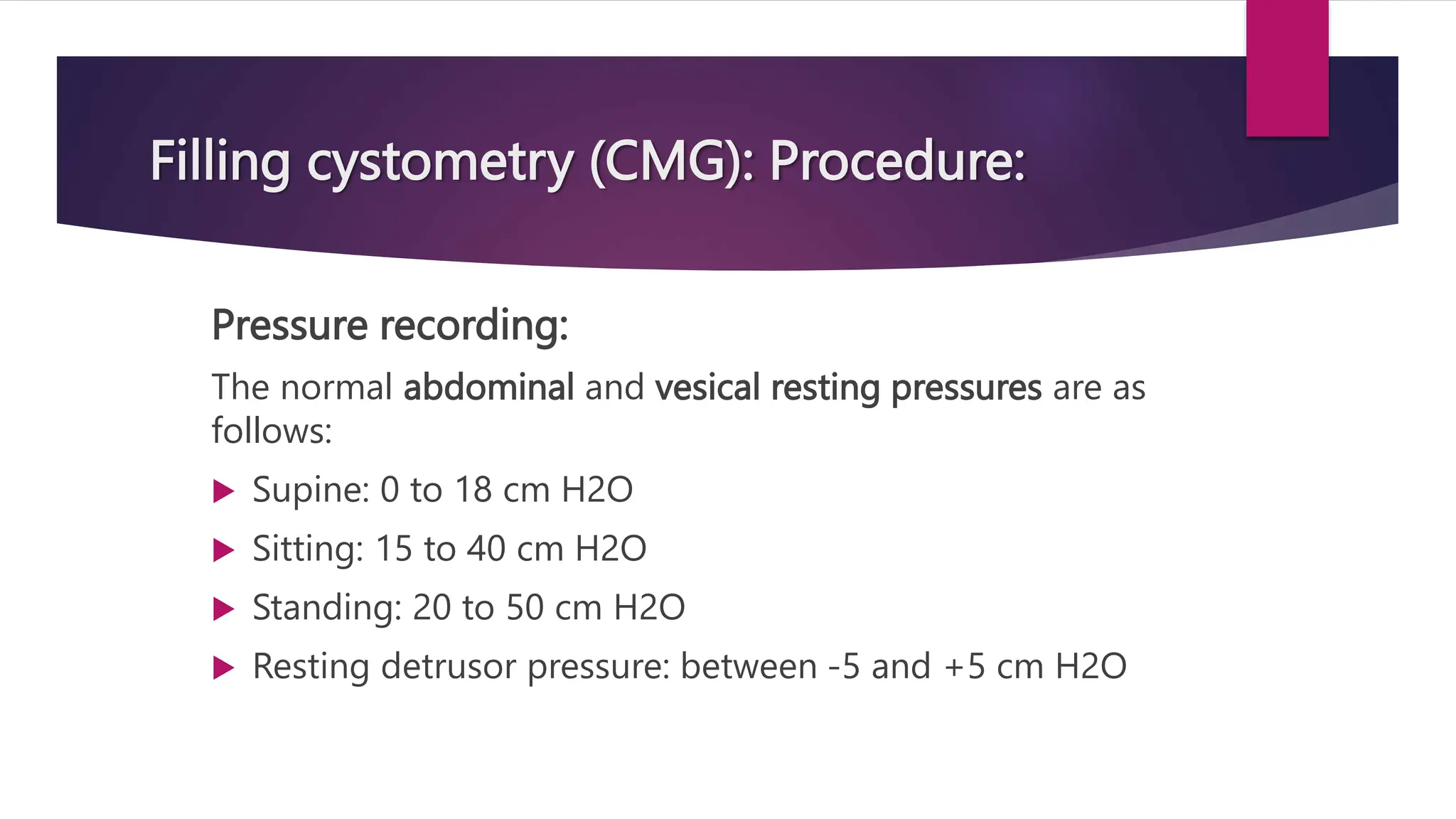
  • 268.
    Urodynamic report: standard urodynamicreport should include: - all of the pre-tests mentioned above clinical assessments, - urodynamic diagnosis - management recommendation. - Additional details regarding the temperature and type of fluid used, the rate of filling, the size of the catheter, and patient position should also be in the report.
  • 269.
  • 270.
    URODYNAMIC STUDIES AUA andSociety of Urodynamics, Female Pelvic Medicine and Urogenital Reconstruction (SUFU) guidelines for urodynamics in adults.
  • 271.
    URODYNAMIC STUDIES: GUIDELINES: PATIENTS WITH SUI and POP: - Should assess urethral function (recommendation). - Surgeons considering INVASIVE therapy in patients with SUI should assess a post-void residual (PVR) (expert opinion). - May perform UDS in pnts with both symptoms and physical findings of SUI who are considering INVASIVE, potentially morbid, or irreversible treatments (option).
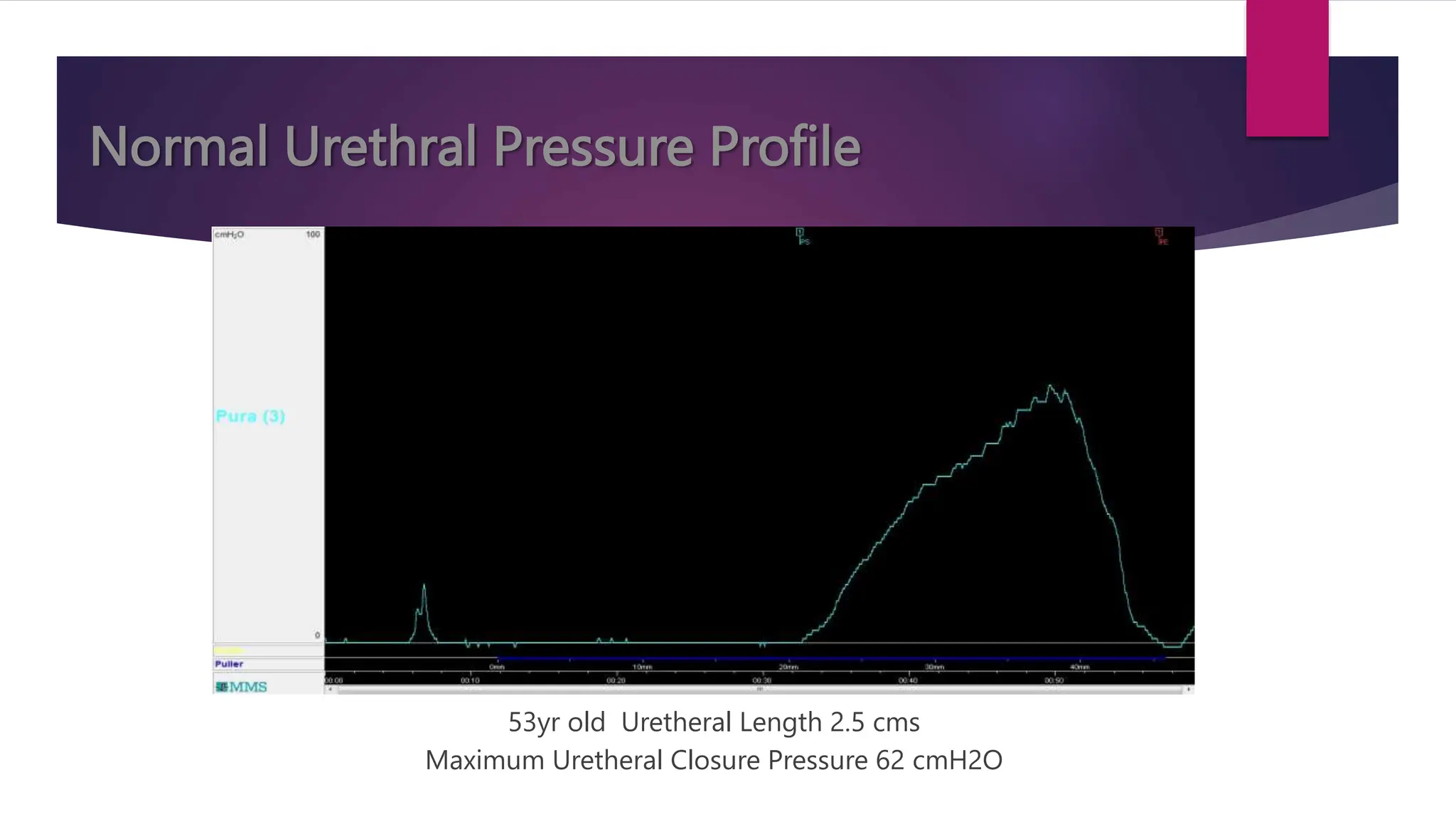
  • 272.
    URODYNAMIC STUDIES: GUIDELINES: -Should perform repeat stress testing with the urethral catheter removed in patients suspected of having SUI who do not demonstrate this finding with the catheter in place during urodynamics (recommendation).
  • 273.
    URODYNAMIC STUDIES: GUIDELINES: -Should perform stress testing with reduction of POP in women with high-grade POP but without symptoms of SUI to look for occult SUI and detrusor dysfunction (option).
  • 274.
    URODYNAMIC STUDIES: GUIDELINES: OAB, UUI and MUI: - May perform filling cystometry when it is important to determine whether altered compliance, DO, or other urodynamic abnormalities are present (or not) in pnts with UUI in whom INVASIVE, potentially morbid, or irreversible treatments are considered (option).
  • 275.
    URODYNAMIC STUDIES: GUIDELINES: -May perform pressure flow studies in pnts with UUI after bladder outlet procedures to assess for BOO(expert opinion). - Should counsel pnts with UUI and MUI that the absence of DO on a single urodynamic study does NOT exclude it as a causative agent for their symptoms (clinical principle).
  • 276.
    URODYNAMIC STUDIES: GUIDELINES: NEUROGENIC BLADDER: - Should perform PVR assessment when appropriate (standard).
  • 277.
    URODYNAMIC STUDIES: GUIDELINES: -In pnts with relevant neurologic disease at risk for neurogenic bl., in pnts with other neurologic disease and PVR, or in pnts with urinary symptoms, clinicians: . Should perform complex CMG (recommendation). . Should perform pressure flow studies during the initial evaluation (recommendation).
  • 278.
    URODYNAMIC STUDIES: GUIDELINES: •May perform fluoroscopy, when available (recommendation). • Should perform EMG (recommendation).  LOWER URINARY TRACT SYMPTOMS (LUTSs): - May perform PVR as a safety measure to rule out significant urinary retention both initially and during follow-up (clinical principle).
  • 279.
    URODYNAMIC STUDIES: GUIDELINES: -Uroflow may be used in the initial and ongoing evaluation of male patients with LUTS when an abnormality of voiding/emptying is suggested (recommendation). - May perform filling cystometry when it is important to determine whether DO or other abnormalities of bladder filling/storage are present in patients with LUTS, particularly when INVASIVE, potentially morbid, or irreversible treatments are considered (expert opinion).
  • 280.
    URODYNAMIC STUDIES: GUIDELINES: -Should perform pressure flow studies in men when it is important to determine whether urodynamic obstruction is present in men with LUTS, particularly when INVASIVE, potentially morbid, or irreversible treatments are considered (standard).
  • 281.
    URODYNAMIC STUDIES: GUIDELINES: -May perform pressure flow studies in women when it is important to determine whether obstruction is present (option). - May perform video-urodynamics in properly selected patients to localize the level of the obstruction, particularly for the diagnosis of primary BNO (expert opinion).
  • 282.
  • 283.
    MCQ An 82yrs oldman with mixed storage and voiding LUTS is referred for urodynamics. His Qmax is 15 mL/s and a Pdet at Qmax of 85 cm H20. What is the BOO index for this man? A. 45 B. 50 C. 55 D. 70 E. 103
  • 284.
    MCQ An 82yrs oldman with daytime frequency, urinary urgency, occasional incontinence and nocturia is treated with an anticholinergic. His incontinence worsens. Urinalysis is normal. The next step is: A. PVR B. Uroflowmetry C. Cystoscopy D. Urodynamics E. Renal tract ultrasound
  • 285.
    MCQ  When shouldwe consider cardiac monitoring during urodynamics in pnts with low-level SCI (< T1)? Is A.dysreflexia an issue? - AD is a life-threatening condition. It is more frequently reported among higher level SCI (e.g. cervical lesions). - The lowest level of SCI where AD was documented is T10. The neurological level of injury not always correspond with autonomic level of injury. - AD could be a fatal event in pnts with SCI at T6 or higher. Therefore, all pnts with this lesion, even if incomplete, should be monitored during UDS. There are some risk factors that increase the likelihood, such as age (more risk in young people) and high maximum Pdet during urination.
  • 286.

Editor's Notes

  • #116 Conventional cystometry study demonstrating pressure drift in the vesical line. Arrow 1 depicts the pressure decreasing in the vesical line which causes a subsequent negative detrusor pressure. If using a fluid-filled system, the vesical line should be flushed with fluid to eliminate the possibility of air-bubbles. All connections should be check for air-leaks in the system. Arrow 2 depicts correction of the artefact and normalization of the pressure reading in the vesical line which reflects the pressure reading from the abdominal line. On cough, there is a small biphasic pressure reading observed in detrusor pressure which is normal, and the detrusor pressure is reading 0 cmH2O. (b) Conventional cystometry study using air-charged catheters demonstrating a pressure drift in the abdominal line. Arrow 1 shows the pressure measured from the vagina (abdominal pressure) decreasing with time. This can be due to displacement of the catheter e.g., the catheter is slipping out, or there may be an air leak in the system. Notably, when the patient is asked to cough the pressure from the abdominal line is reduced in comparison to the intravesical pressure and this is reflected in the detrusor pressure by large spikes. The system was checked for air leaks (e.g., tightening the connections between the catheters and the transducers) and the catheter re-zeroed to atmosphere and charged to the patient. Arrow 2 shows the abdominal pressure measuring the same as the vesical pressure, and the detrusor pressure is now stable around 0 cmH2O. (c) Conventional cystometry study showing an artefactual increase in Pdet (Arrow 1) during the voiding phase caused by pelvic, and abdominal, relaxation (Arrow 2).The decrease in abdominal pressure from baseline should be subtracted from Pdet to obtain a true PdetQmax. (d) Conventional cystometry study showing extrusion of the intravesical catheter during the voiding phase (Arrow 1). The PdetQmax cannot be calculated as it is simply registering the pressure measured by the abdominal catheter only. REVIEW OBSTETRICS, GYNAECOLOGY AND REPRODUCTIVE MEDICINE 32:6 117 2022 Elsevier Ltd. All rights reserved. Descargado para
  • #285 LUTS in the elderly may be 2ry to a number of medical conditions, including immobility, congestive cardiac failure and diabetes. Antimuscarinic agents may cause or worsen urinary incontinence in elderly pnts with poor detrusor contractility. This may present with new or worsened incontinence due to overflow after the initiation of an antimuscarinic agent. This can be diagnosed with the non-invasive measurement of a PVR. Renal ultrasound is not indicated. There is no need at this point to proceed to uroflowmetry, urodynamics or cystoscopy, but these may be useful in further evaluation.