UPS
Uninterruptible Power Supply
By Linda Kurniawati
OTP ELECTRICAL TOTAL EP INDONESIE
(Batch 3)
2014
What the UPS is
 An Uninterruptible Power Supply (UPS) is a device that has
an alternate source of energy that can provide electrical
power when the primary power source is temporarily
disabled.
What the Function for
 To give several time for the genset for working properly.
 To protect eqiuipments and systems of the electrical
failure.
 To ensure there is continious power supply of electrical
power even the primary source is no longer present.
Types of Load
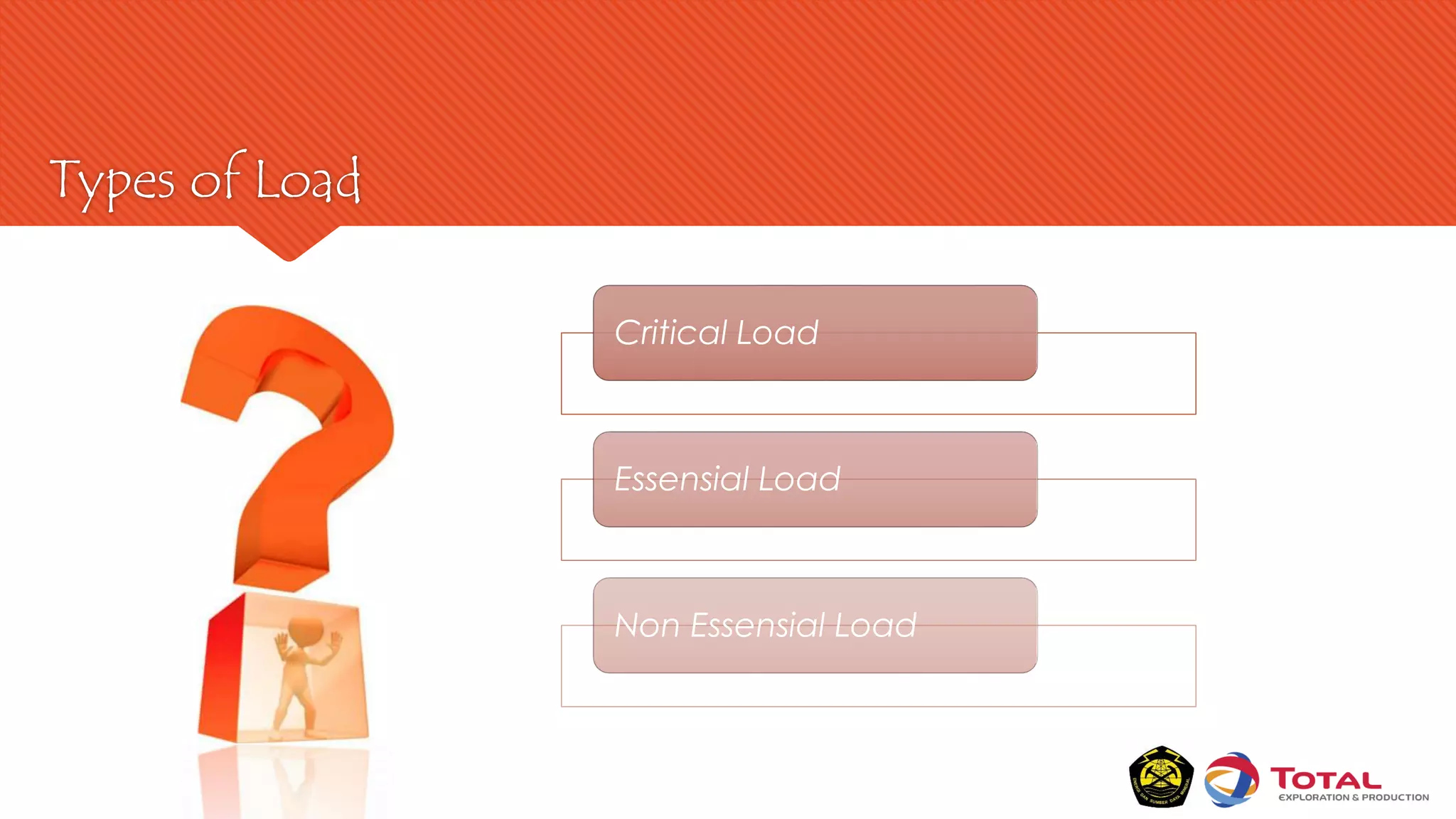
Critical Load
Essensial Load
Non Essensial Load
Critical Load
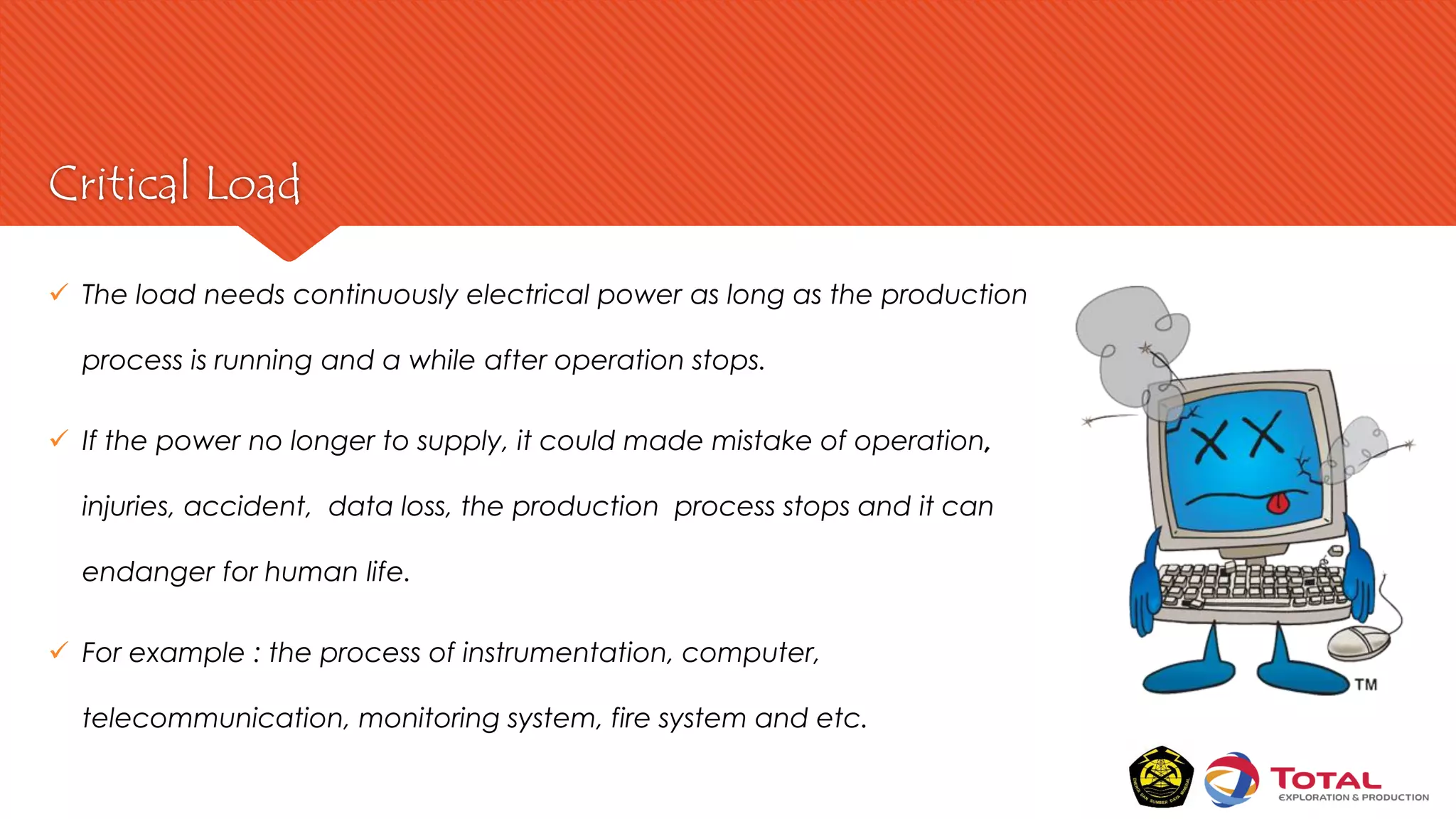
 The load needs continuously electrical power as long as the production
process is running and a while after operation stops.
 If the power no longer to supply, it could made mistake of operation,
injuries, accident, data loss, the production process stops and it can
endanger for human life.
 For example : the process of instrumentation, computer,
telecommunication, monitoring system, fire system and etc.
Essensial Load
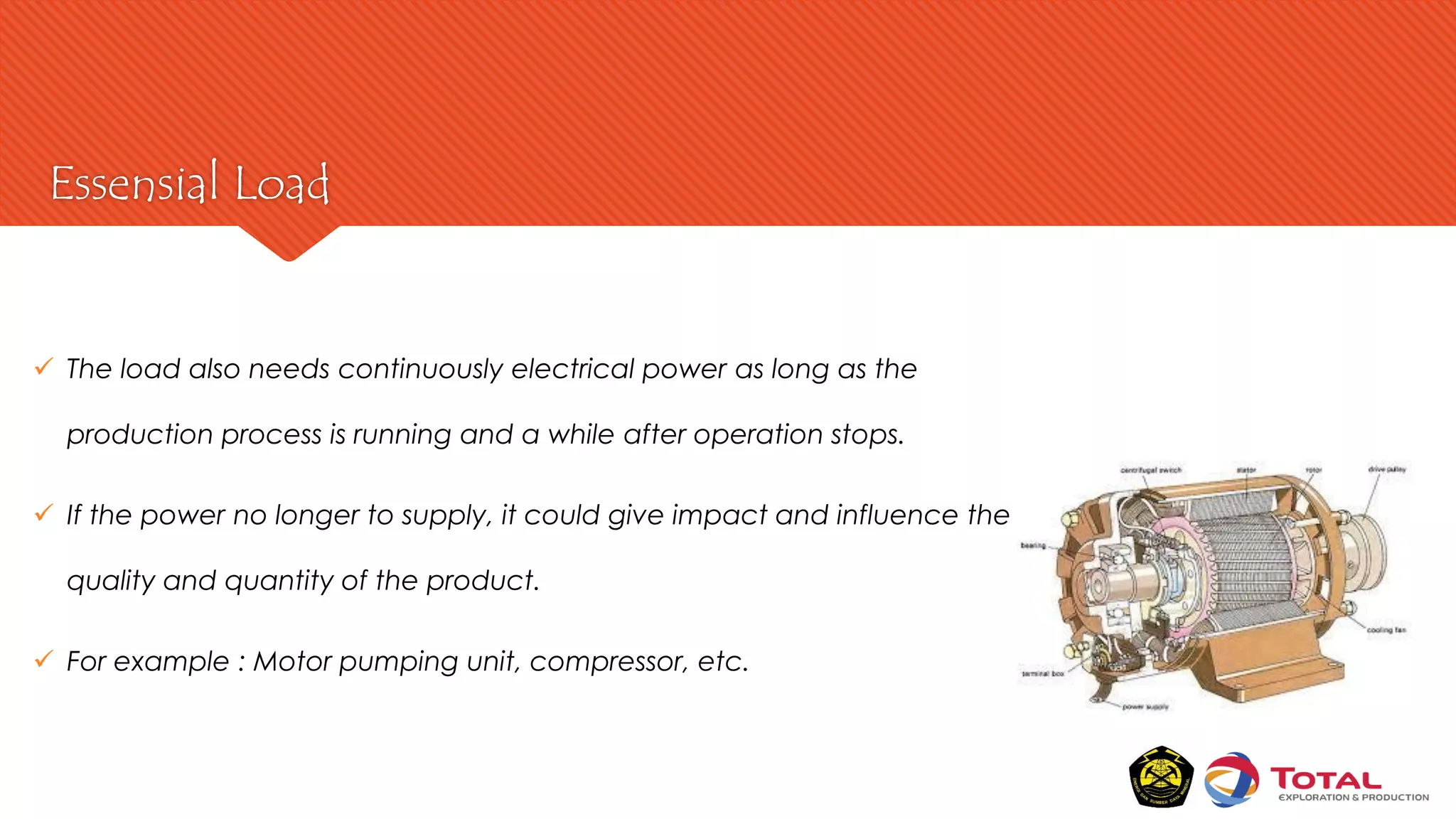
 The load also needs continuously electrical power as long as the
production process is running and a while after operation stops.
 If the power no longer to supply, it could give impact and influence the
quality and quantity of the product.
 For example : Motor pumping unit, compressor, etc.
Non Essensial Load
 The load doesn’t require continuously power supply.
 If the power no longer to supply, it doesn’t directly influence the
production process. The present of loads just to satisfy the determine
standart of product.
 For example : Lighting system, utility system, etc.
Types of UPS
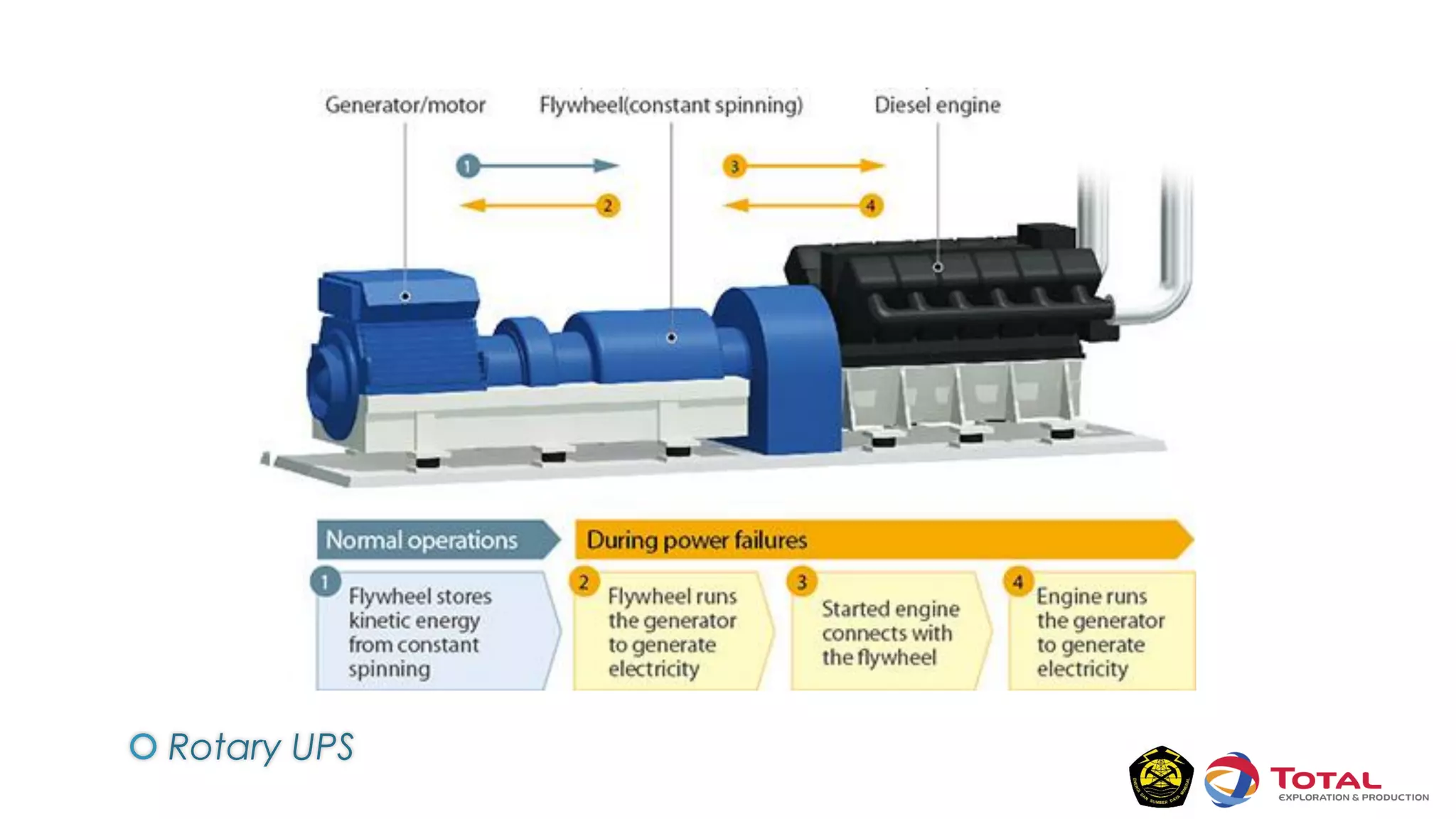
 Rotary UPS
A less common type of UPS which uses alternator to create the
electrical output.
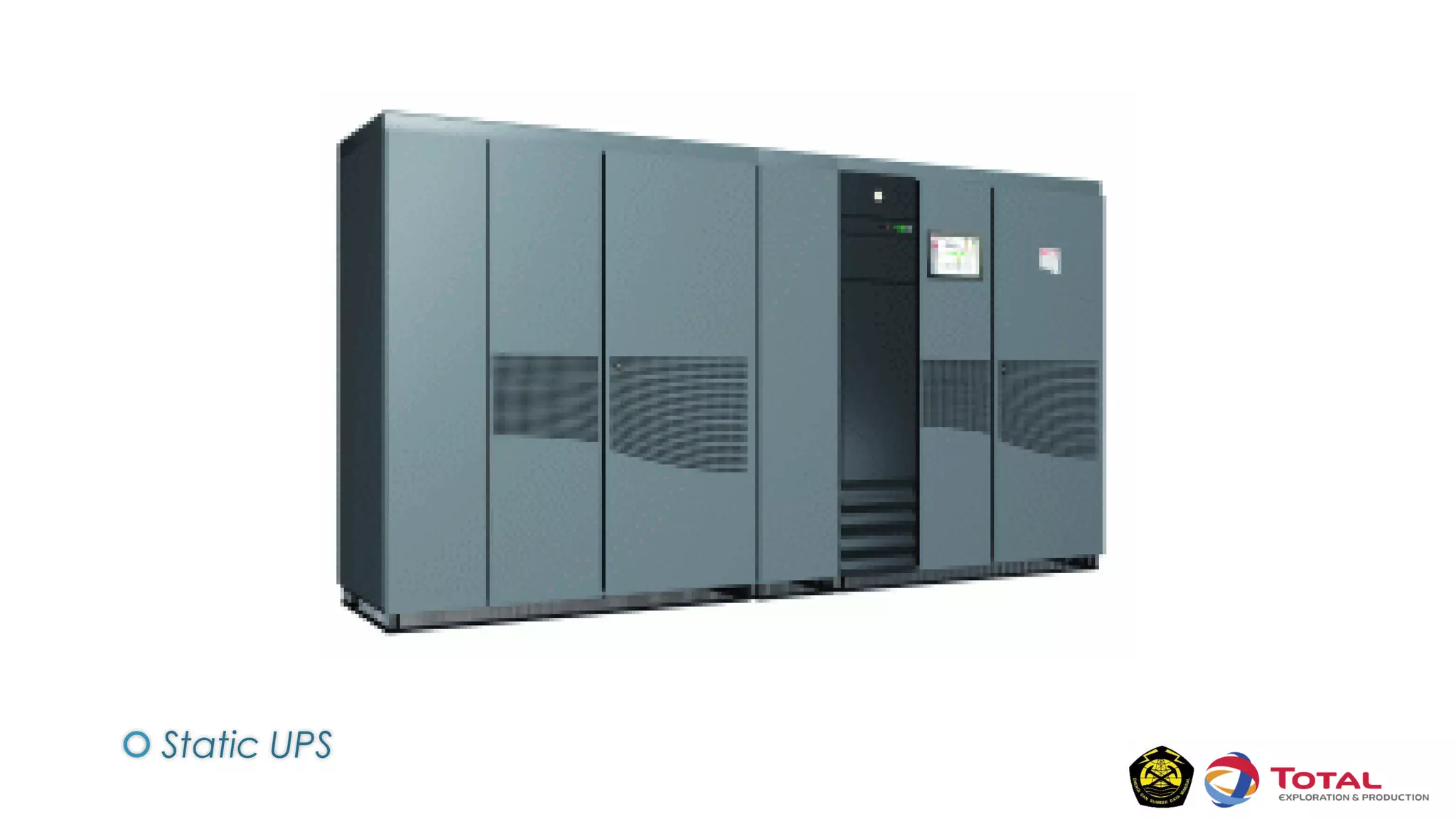
 Static UPS
A static device made of solid-state for producing electrical power
(no rotating devices are equipped).
 Rotary UPS
 Static UPS
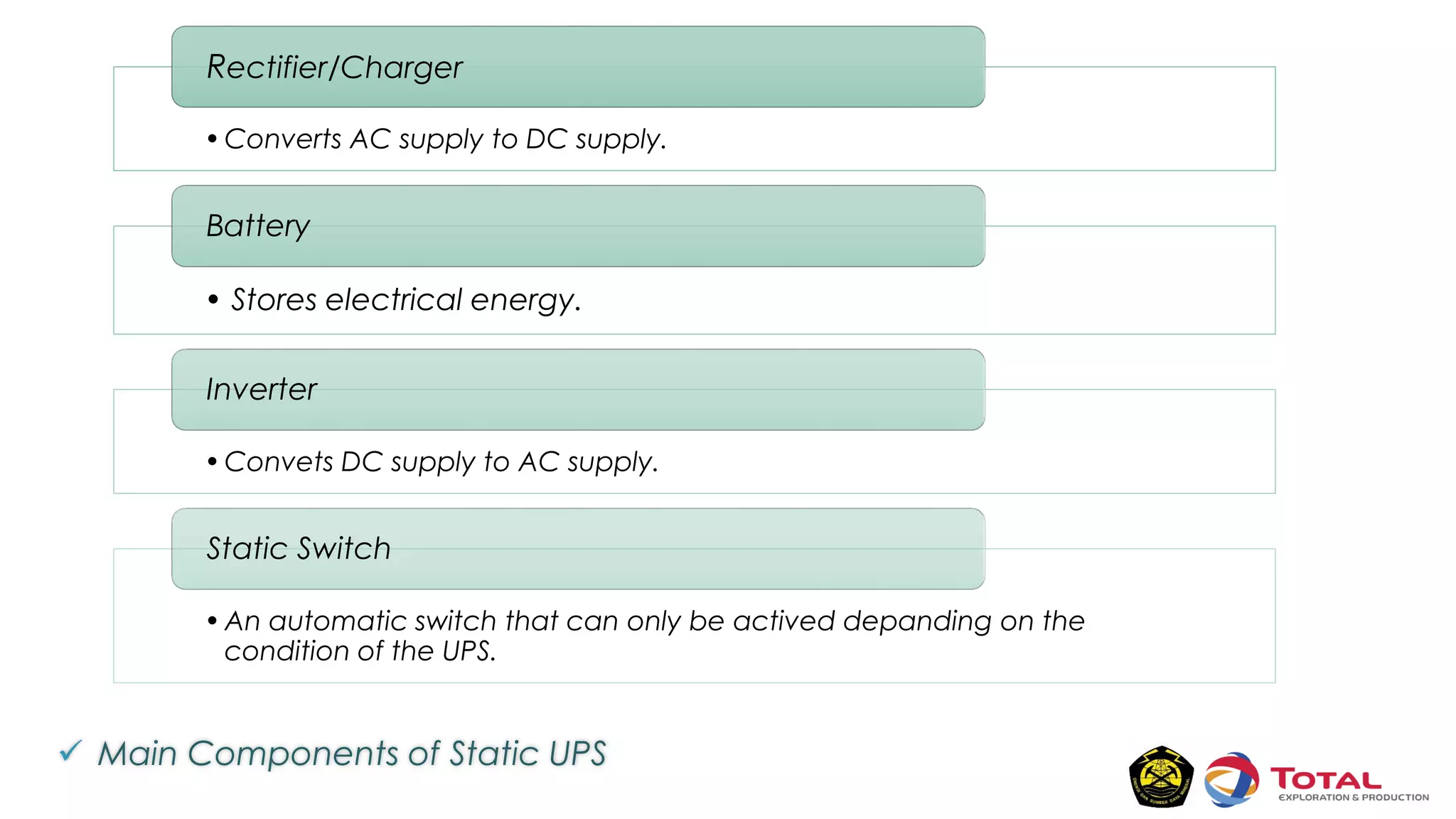
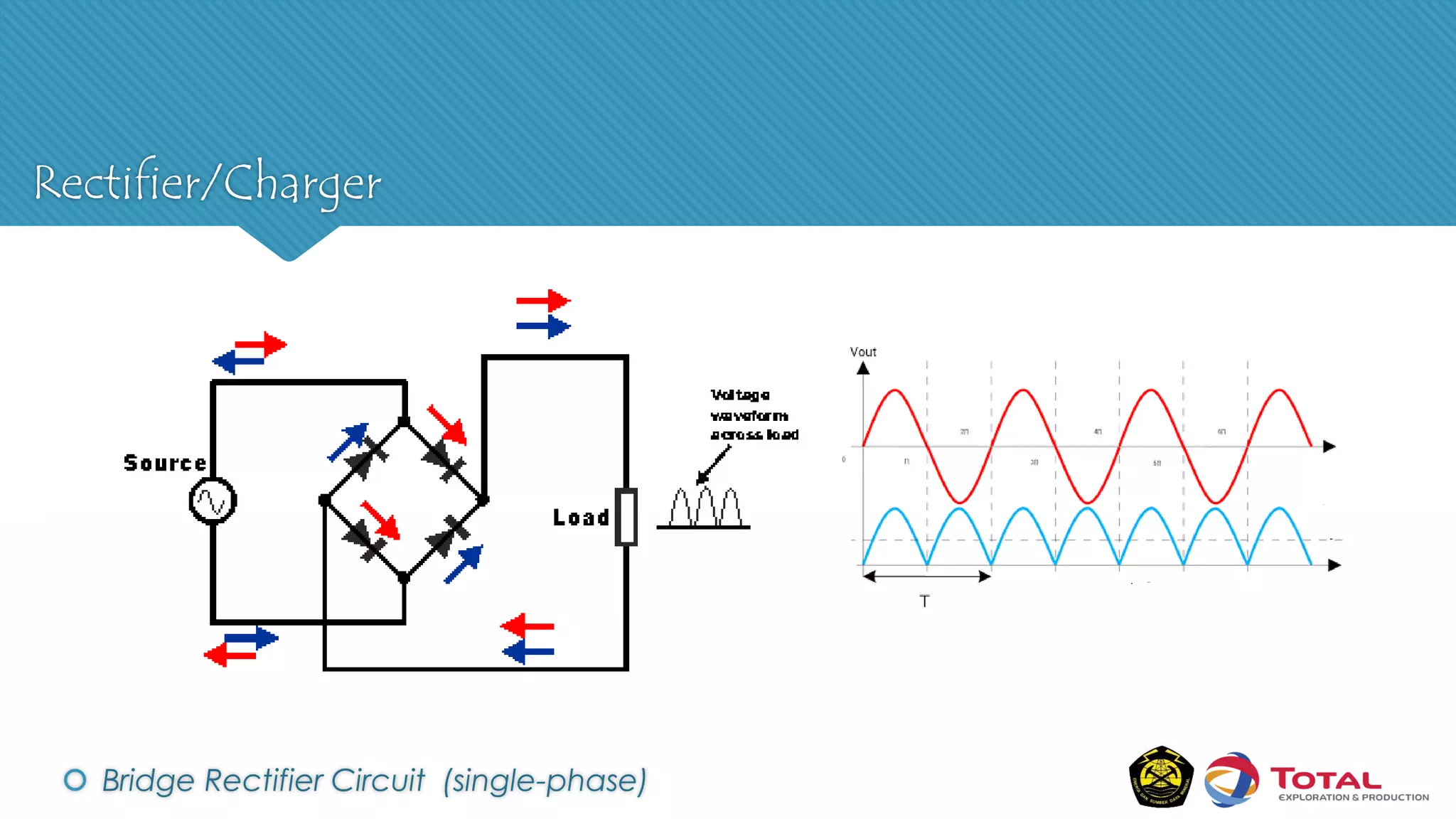
•Converts AC supply to DC supply.
Rectifier/Charger
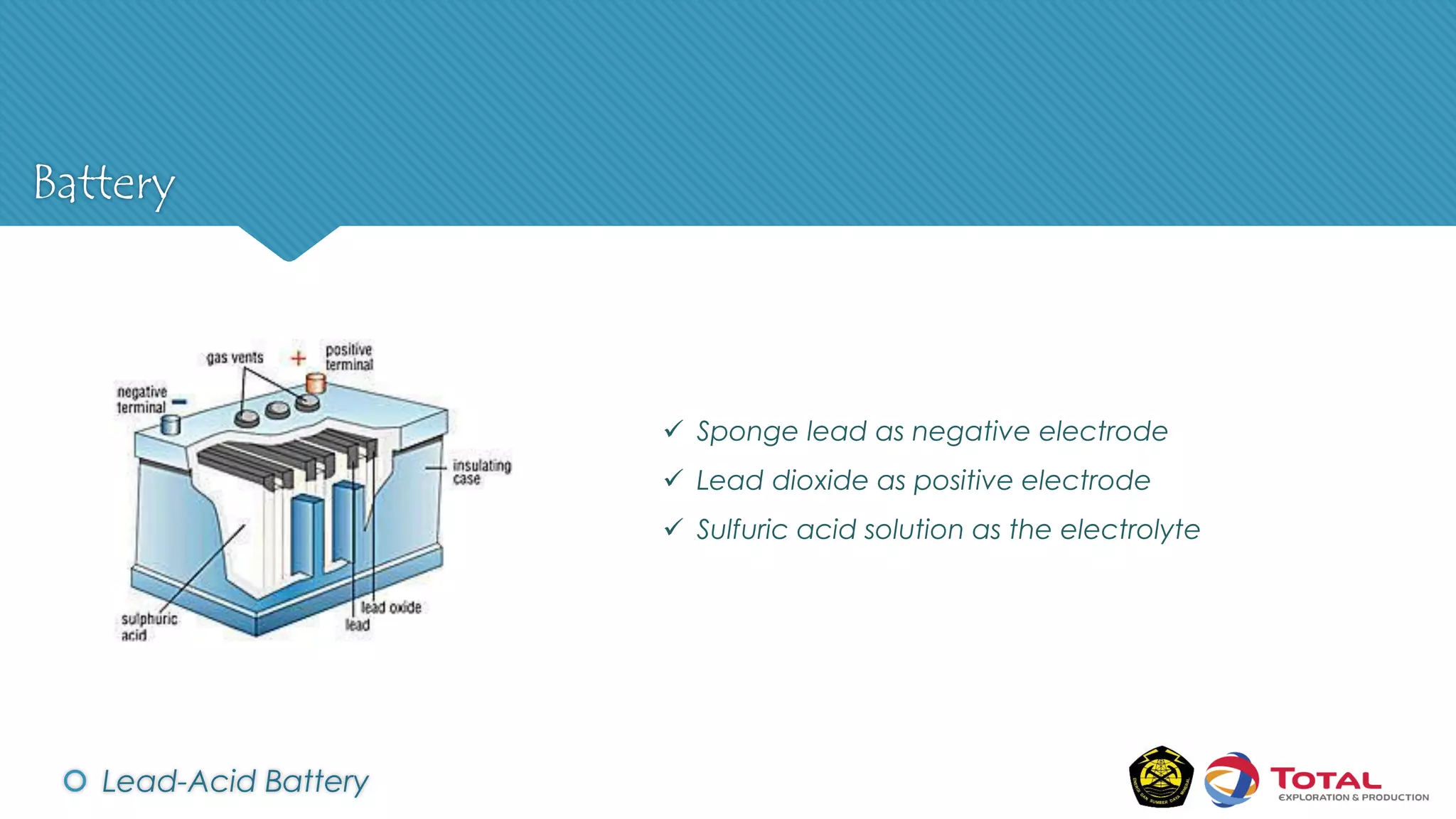
• Stores electrical energy.
Battery
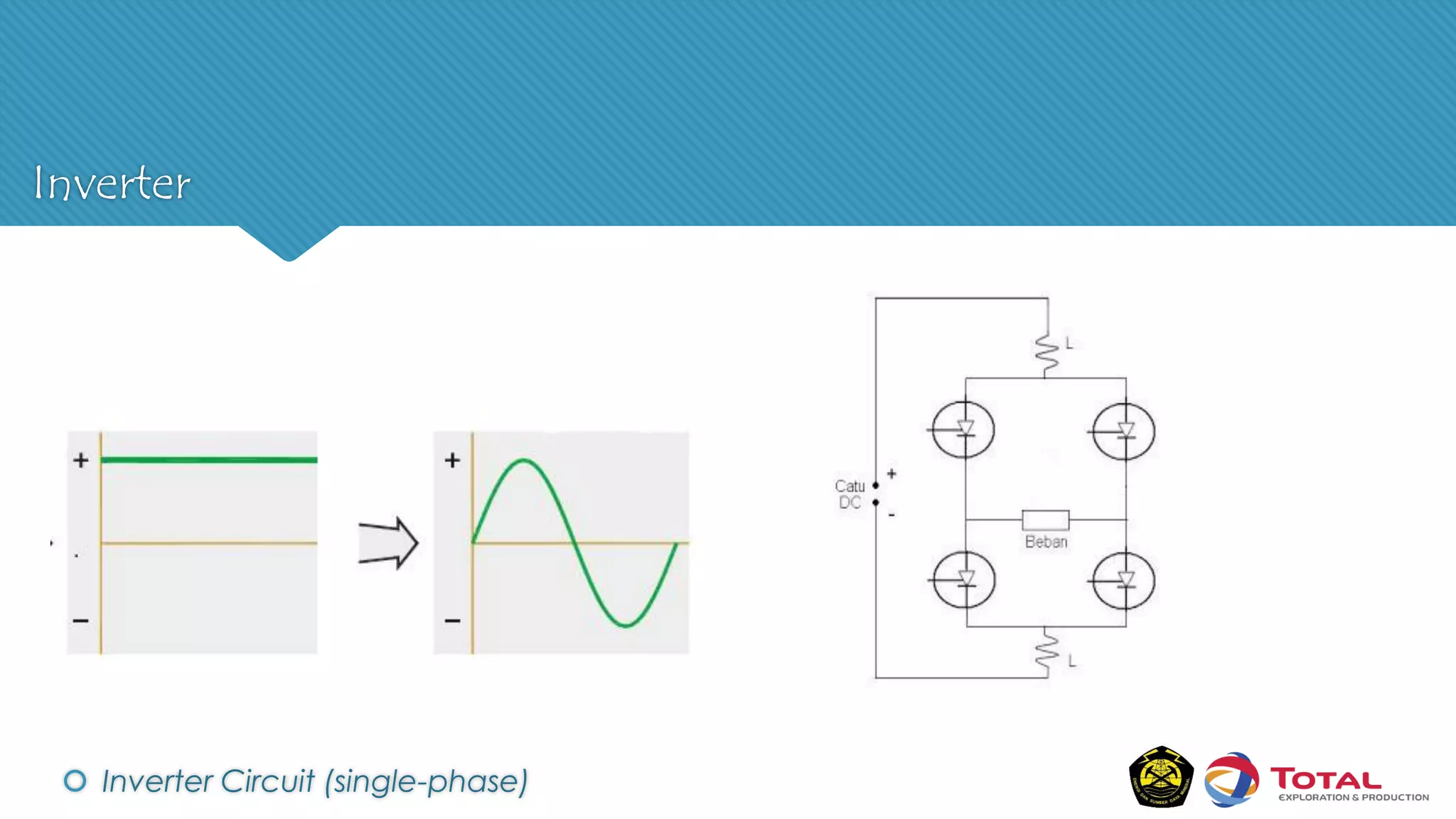
•Convets DC supply to AC supply.
Inverter
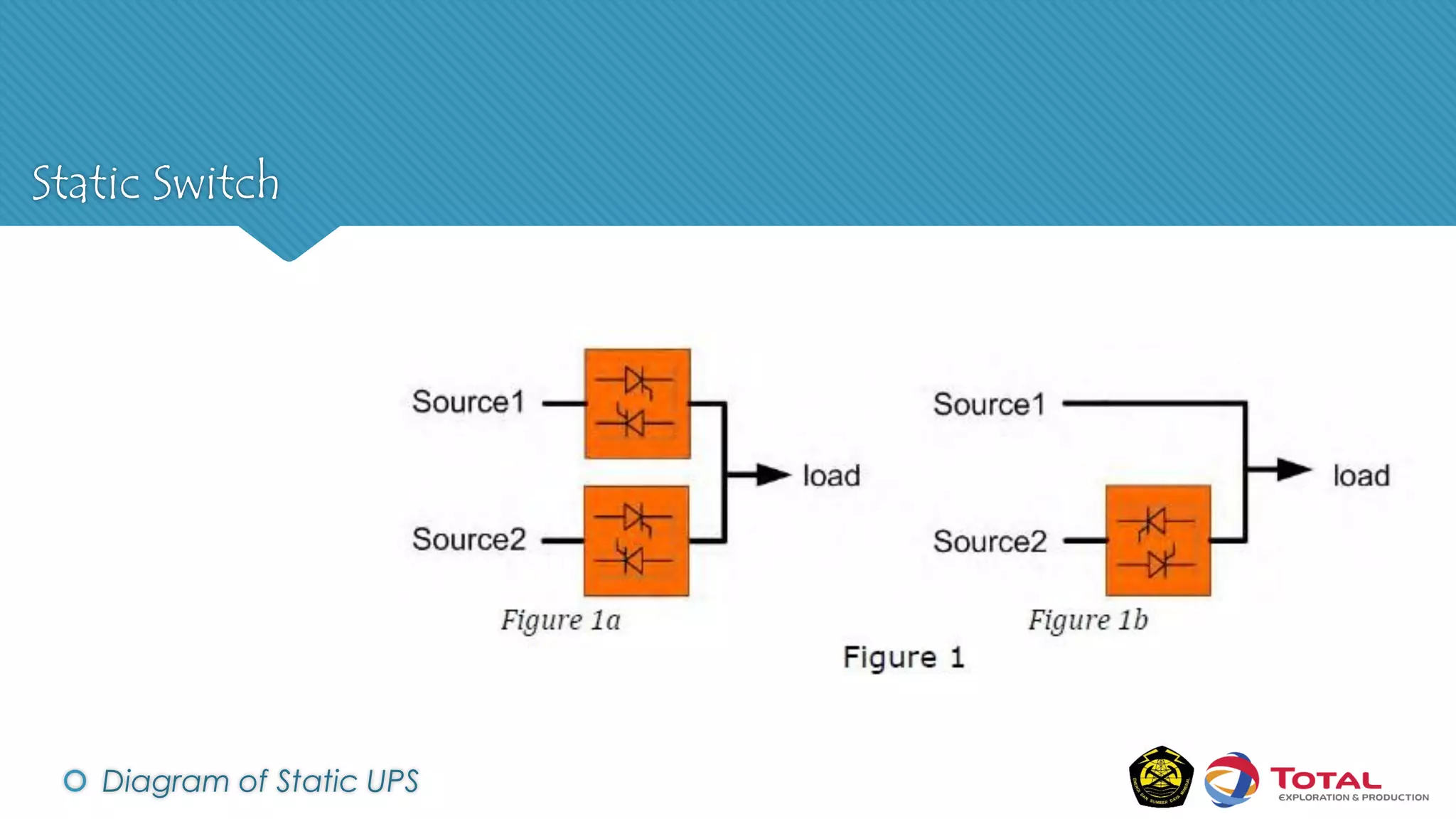
•An automatic switch that can only be actived depanding on the
condition of the UPS.
Static Switch
 Main Components of Static UPS
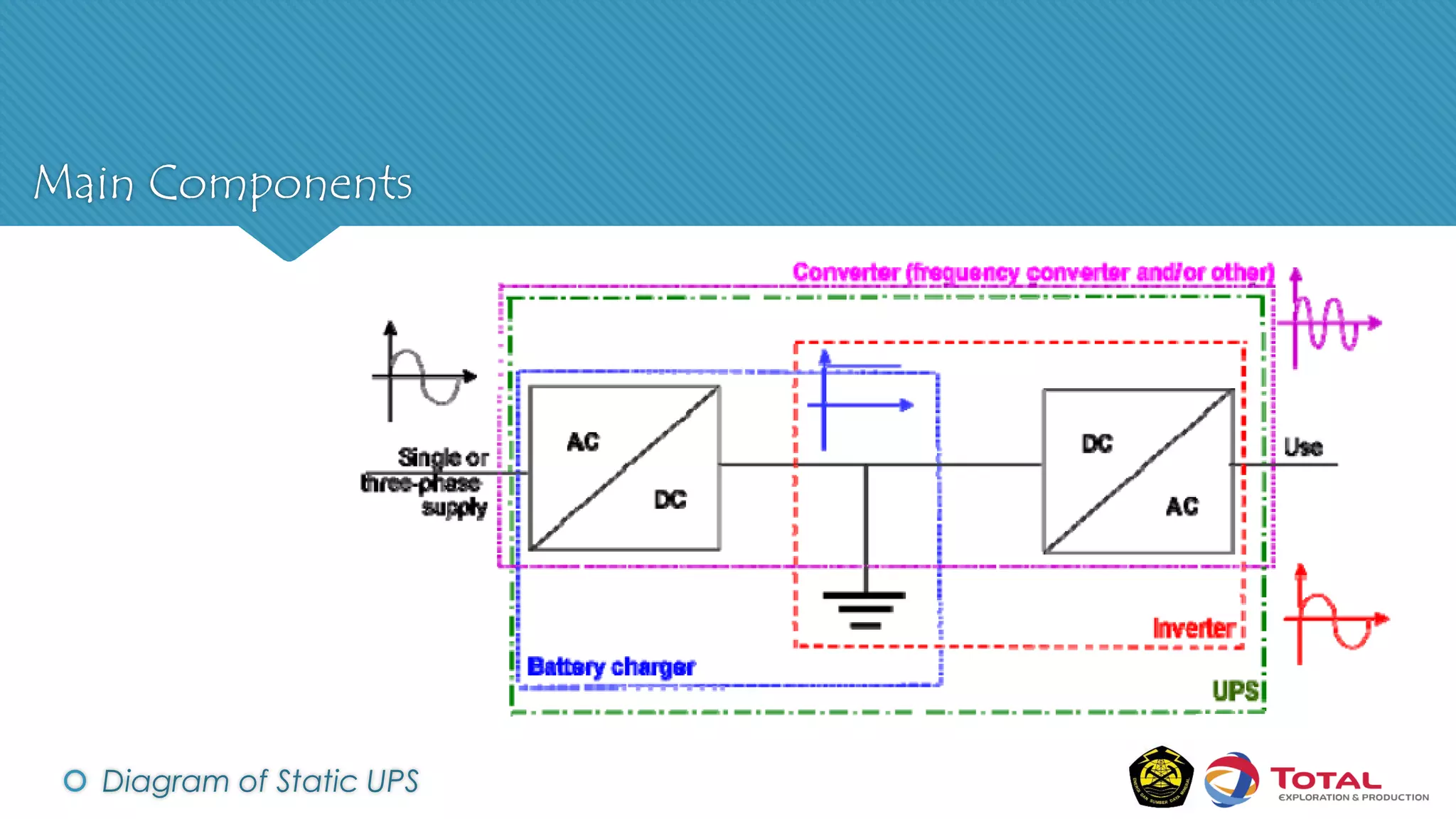
Main Components
 Diagram of Static UPS
Rectifier/Charger
 Bridge Rectifier Circuit (single-phase)
Battery
 Lead-Acid Battery
 Sponge lead as negative electrode
 Lead dioxide as positive electrode
 Sulfuric acid solution as the electrolyte
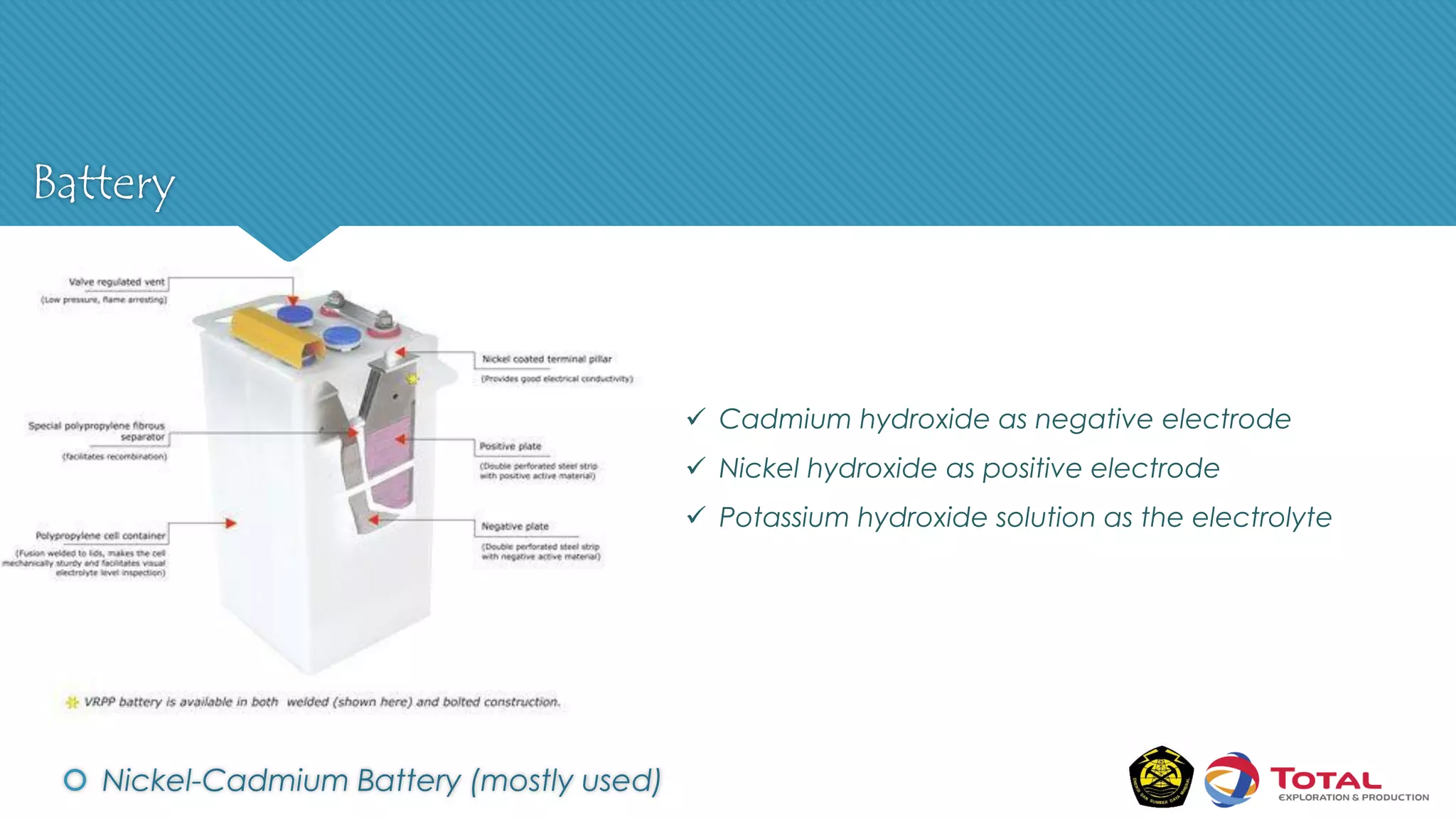
Battery
 Nickel-Cadmium Battery (mostly used)
 Cadmium hydroxide as negative electrode
 Nickel hydroxide as positive electrode
 Potassium hydroxide solution as the electrolyte
Inverter
 Inverter Circuit (single-phase)
Static Switch
 Diagram of Static UPS
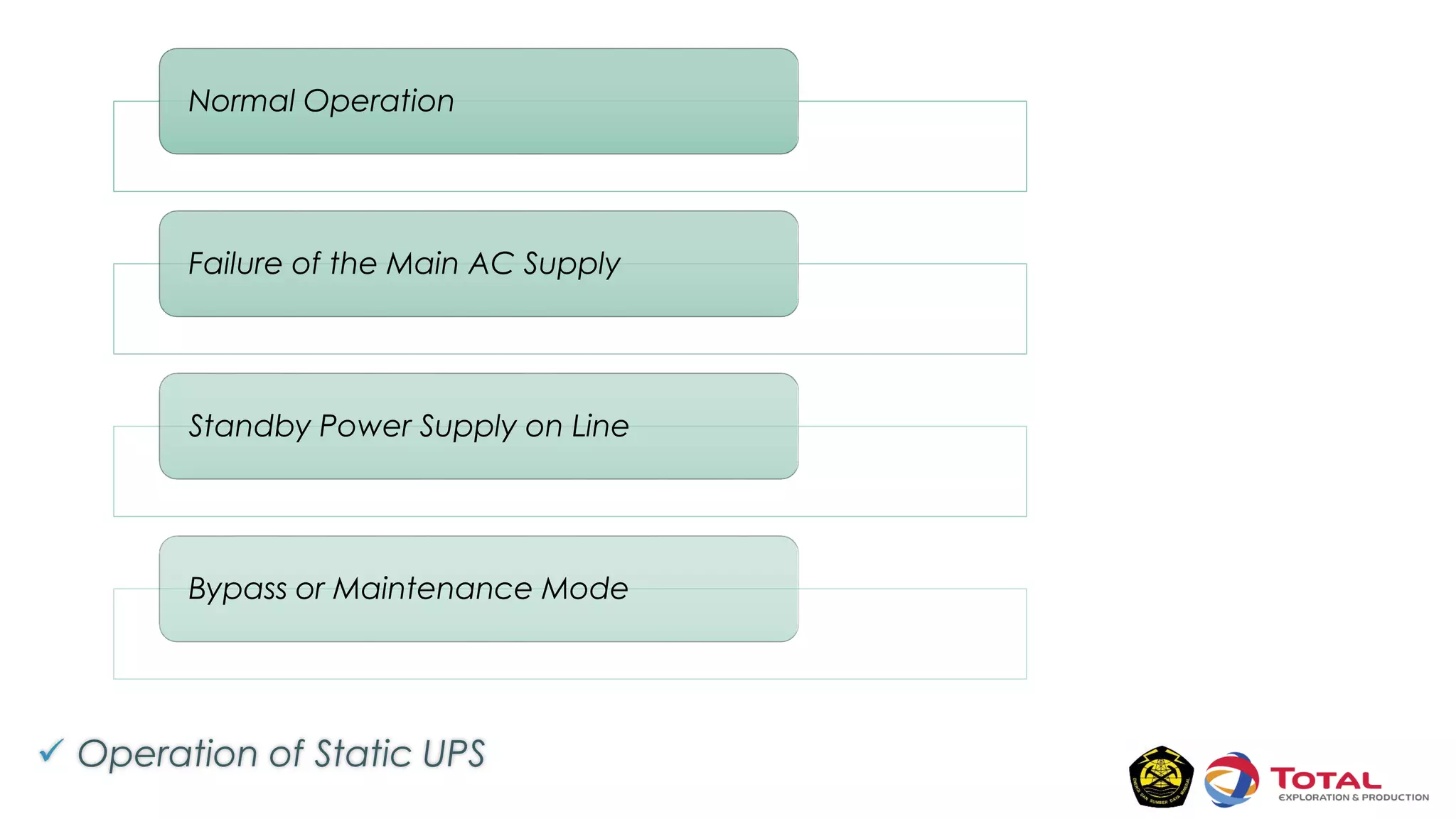
Normal Operation
Failure of the Main AC Supply
Standby Power Supply on Line
Bypass or Maintenance Mode
 Operation of Static UPS
Normal Operation
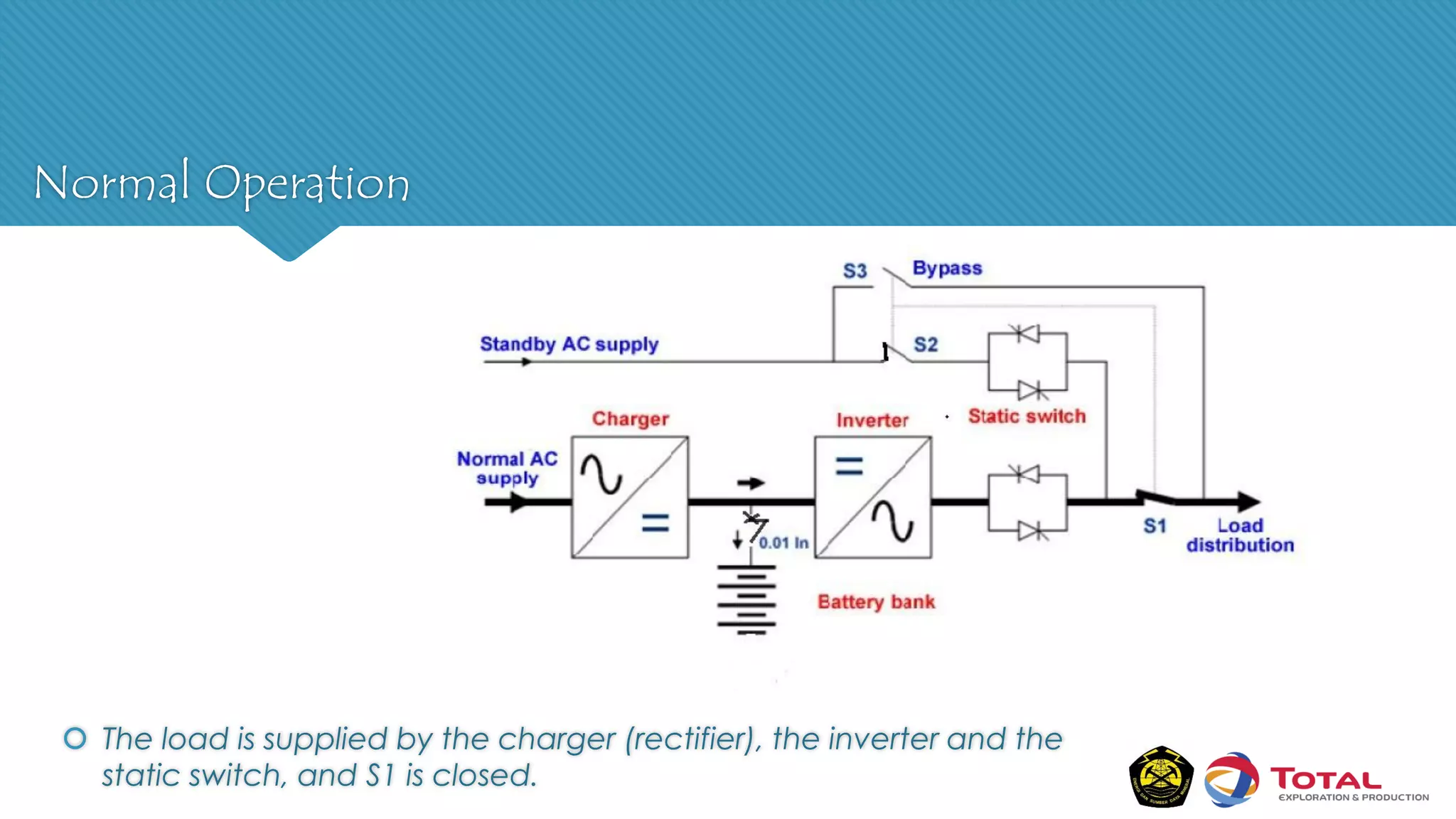
 The load is supplied by the charger (rectifier), the inverter and the
static switch, and S1 is closed.
Failure of the Main AC Supply
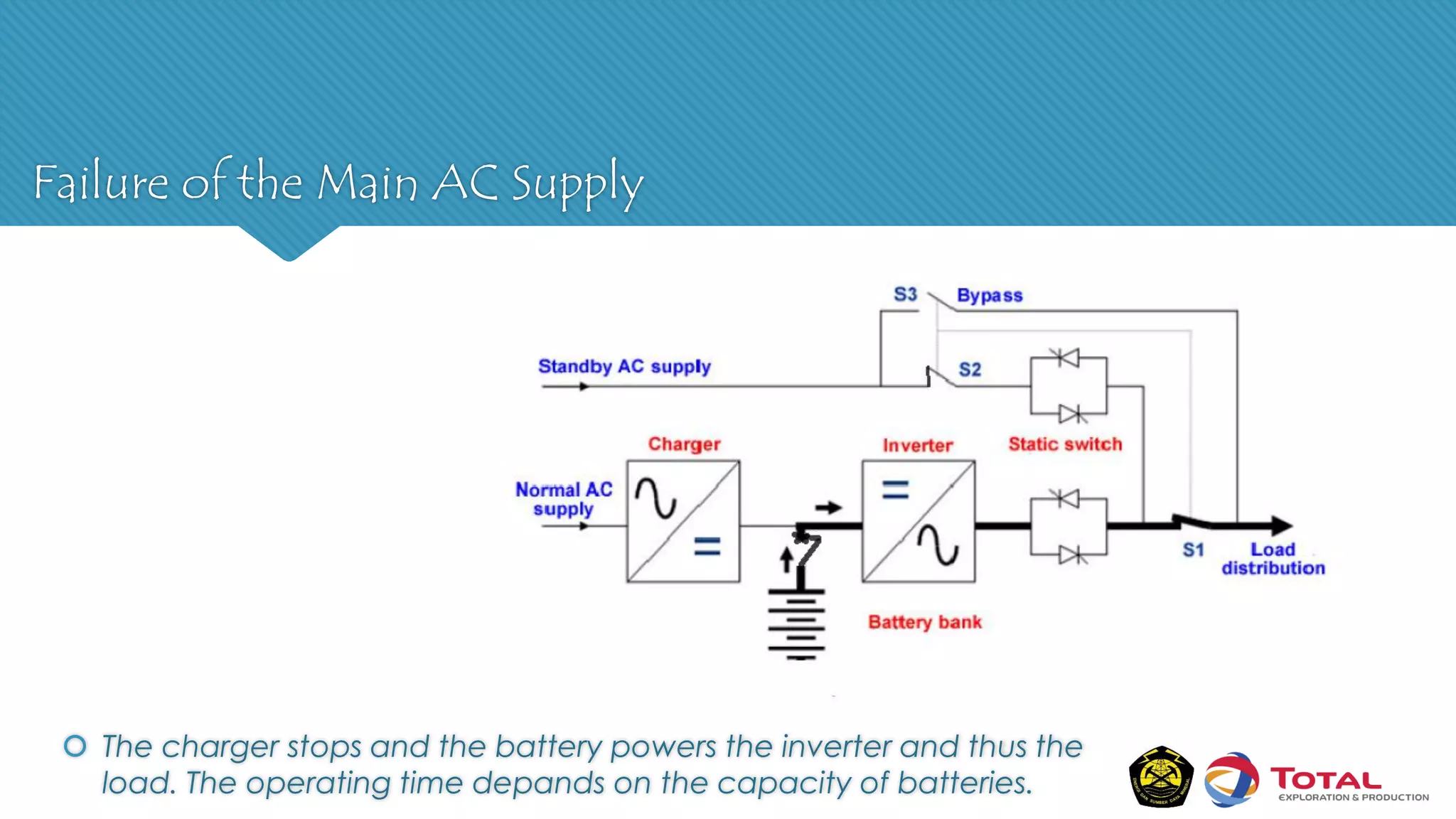
 The charger stops and the battery powers the inverter and thus the
load. The operating time depands on the capacity of batteries.
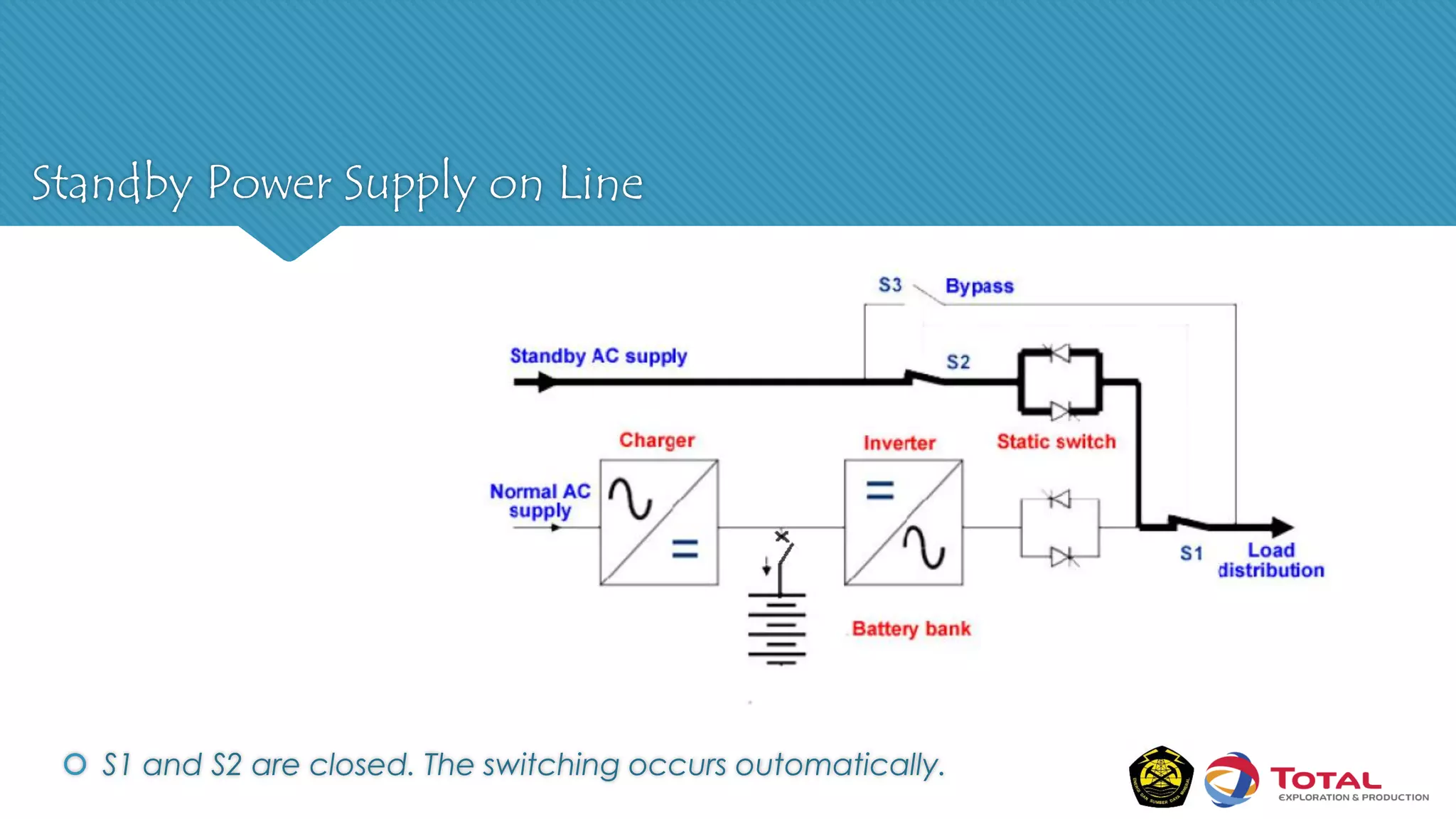
Standby Power Supply on Line
 S1 and S2 are closed. The switching occurs outomatically.
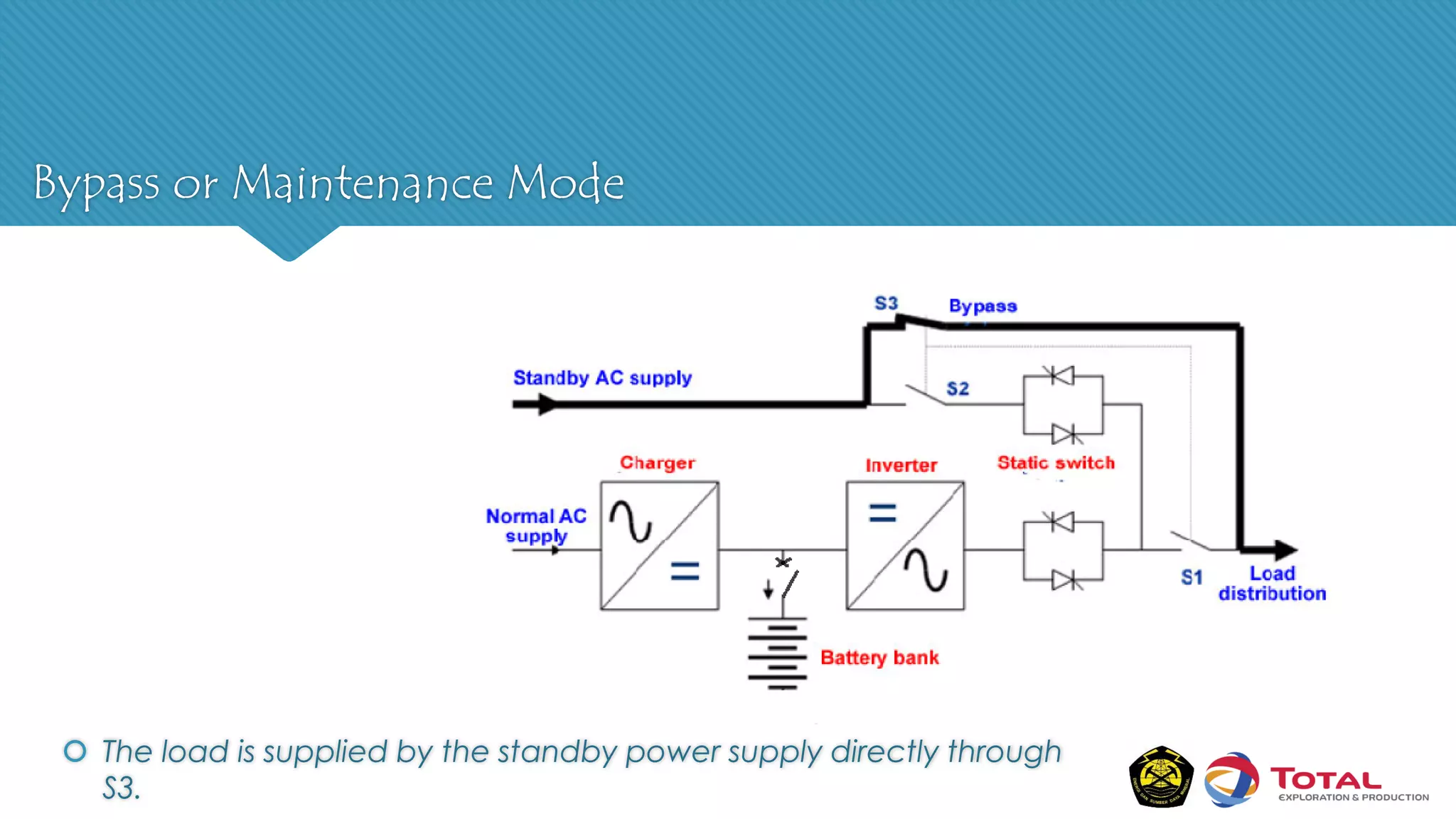
Bypass or Maintenance Mode
 The load is supplied by the standby power supply directly through
S3.
 Conclusion
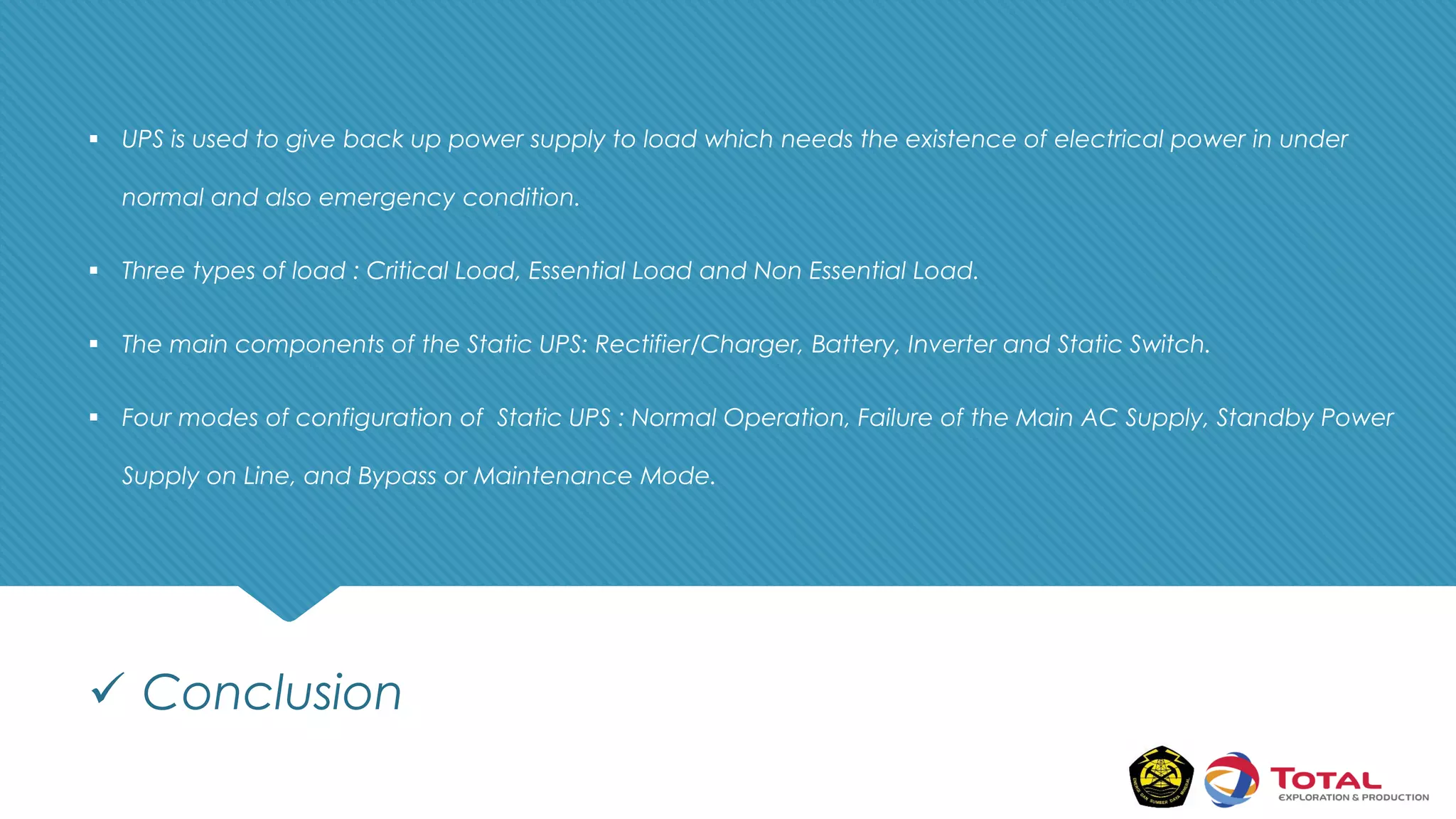
 UPS is used to give back up power supply to load which needs the existence of electrical power in under
normal and also emergency condition.
 Three types of load : Critical Load, Essential Load and Non Essential Load.
 The main components of the Static UPS: Rectifier/Charger, Battery, Inverter and Static Switch.
 Four modes of configuration of Static UPS : Normal Operation, Failure of the Main AC Supply, Standby Power
Supply on Line, and Bypass or Maintenance Mode.

UPS (Uninterruptible Power Supply) on oil and gas industry. pdf

  • 1.
    UPS Uninterruptible Power Supply ByLinda Kurniawati OTP ELECTRICAL TOTAL EP INDONESIE (Batch 3) 2014
  • 2.
    What the UPSis  An Uninterruptible Power Supply (UPS) is a device that has an alternate source of energy that can provide electrical power when the primary power source is temporarily disabled.
  • 4.
    What the Functionfor  To give several time for the genset for working properly.  To protect eqiuipments and systems of the electrical failure.  To ensure there is continious power supply of electrical power even the primary source is no longer present.
  • 5.
    Types of Load CriticalLoad Essensial Load Non Essensial Load
  • 6.
    Critical Load  Theload needs continuously electrical power as long as the production process is running and a while after operation stops.  If the power no longer to supply, it could made mistake of operation, injuries, accident, data loss, the production process stops and it can endanger for human life.  For example : the process of instrumentation, computer, telecommunication, monitoring system, fire system and etc.
  • 7.
    Essensial Load  Theload also needs continuously electrical power as long as the production process is running and a while after operation stops.  If the power no longer to supply, it could give impact and influence the quality and quantity of the product.  For example : Motor pumping unit, compressor, etc.
  • 8.
    Non Essensial Load The load doesn’t require continuously power supply.  If the power no longer to supply, it doesn’t directly influence the production process. The present of loads just to satisfy the determine standart of product.  For example : Lighting system, utility system, etc.
  • 9.
    Types of UPS Rotary UPS A less common type of UPS which uses alternator to create the electrical output.  Static UPS A static device made of solid-state for producing electrical power (no rotating devices are equipped).
  • 10.
  • 11.
  • 12.
    •Converts AC supplyto DC supply. Rectifier/Charger • Stores electrical energy. Battery •Convets DC supply to AC supply. Inverter •An automatic switch that can only be actived depanding on the condition of the UPS. Static Switch  Main Components of Static UPS
  • 13.
  • 14.
  • 15.
    Battery  Lead-Acid Battery Sponge lead as negative electrode  Lead dioxide as positive electrode  Sulfuric acid solution as the electrolyte
  • 16.
    Battery  Nickel-Cadmium Battery(mostly used)  Cadmium hydroxide as negative electrode  Nickel hydroxide as positive electrode  Potassium hydroxide solution as the electrolyte
  • 17.
  • 18.
  • 19.
    Normal Operation Failure ofthe Main AC Supply Standby Power Supply on Line Bypass or Maintenance Mode  Operation of Static UPS
  • 20.
    Normal Operation  Theload is supplied by the charger (rectifier), the inverter and the static switch, and S1 is closed.
  • 21.
    Failure of theMain AC Supply  The charger stops and the battery powers the inverter and thus the load. The operating time depands on the capacity of batteries.
  • 22.
    Standby Power Supplyon Line  S1 and S2 are closed. The switching occurs outomatically.
  • 23.
    Bypass or MaintenanceMode  The load is supplied by the standby power supply directly through S3.
  • 24.
     Conclusion  UPSis used to give back up power supply to load which needs the existence of electrical power in under normal and also emergency condition.  Three types of load : Critical Load, Essential Load and Non Essential Load.  The main components of the Static UPS: Rectifier/Charger, Battery, Inverter and Static Switch.  Four modes of configuration of Static UPS : Normal Operation, Failure of the Main AC Supply, Standby Power Supply on Line, and Bypass or Maintenance Mode.