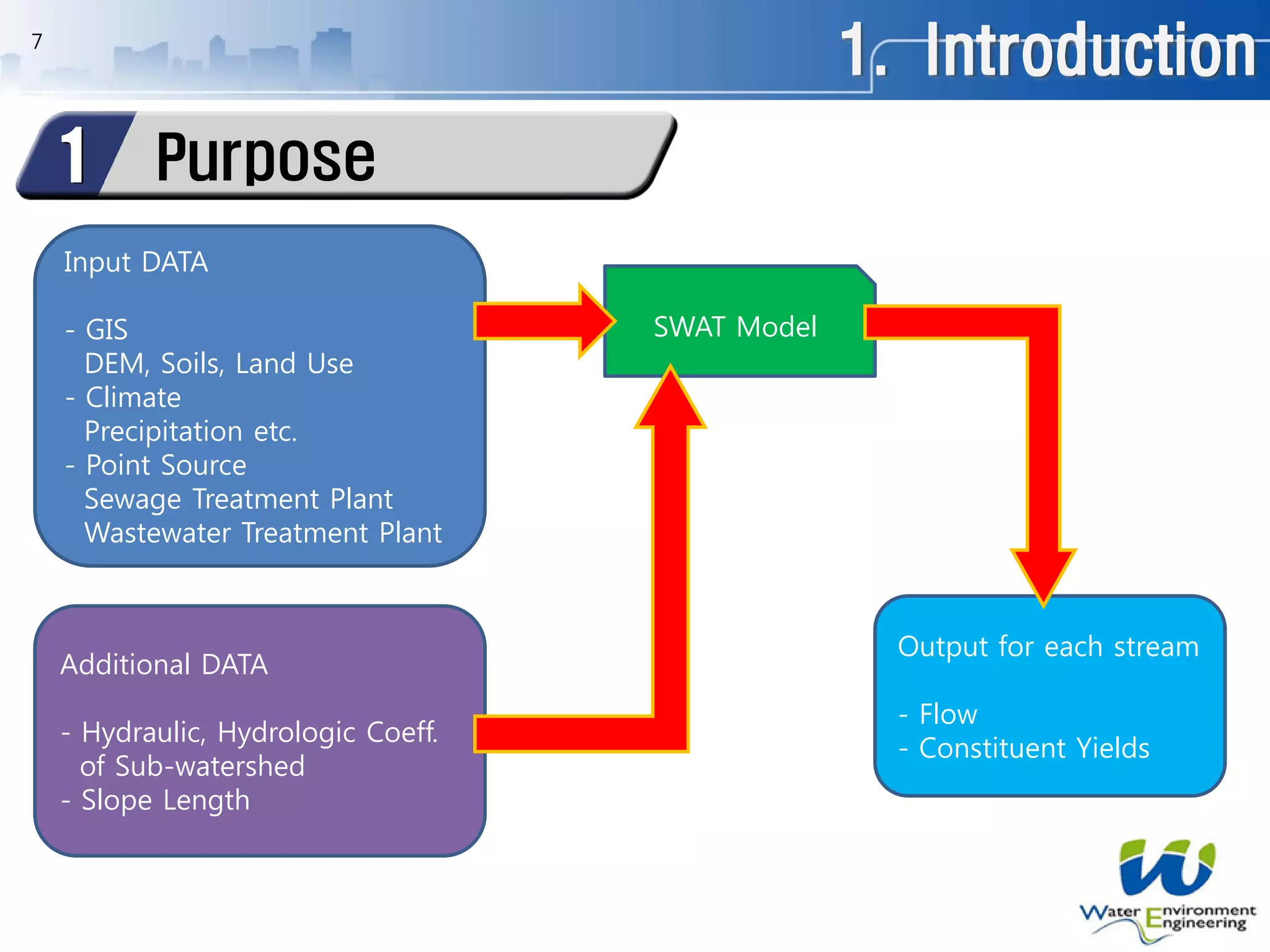
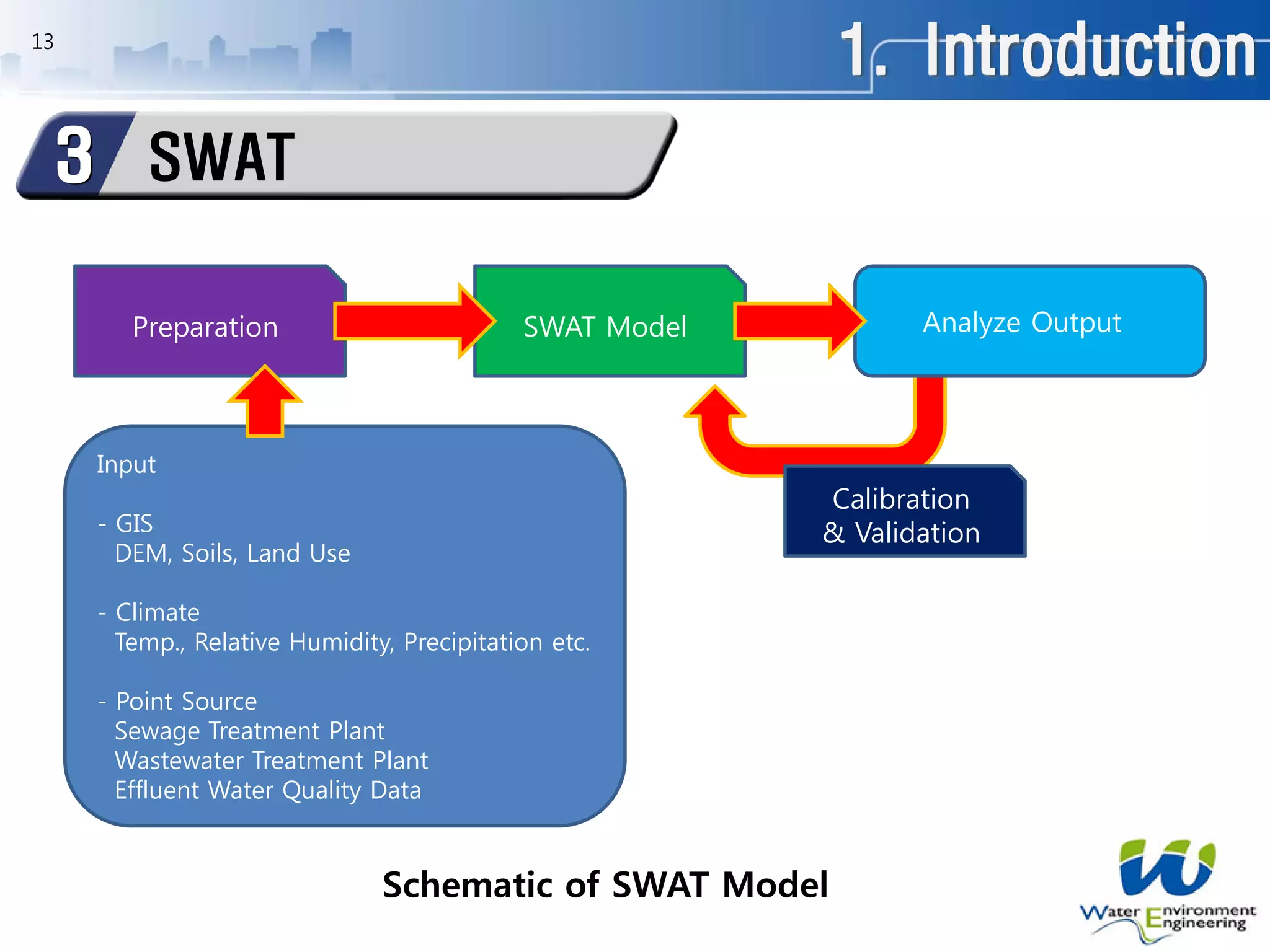
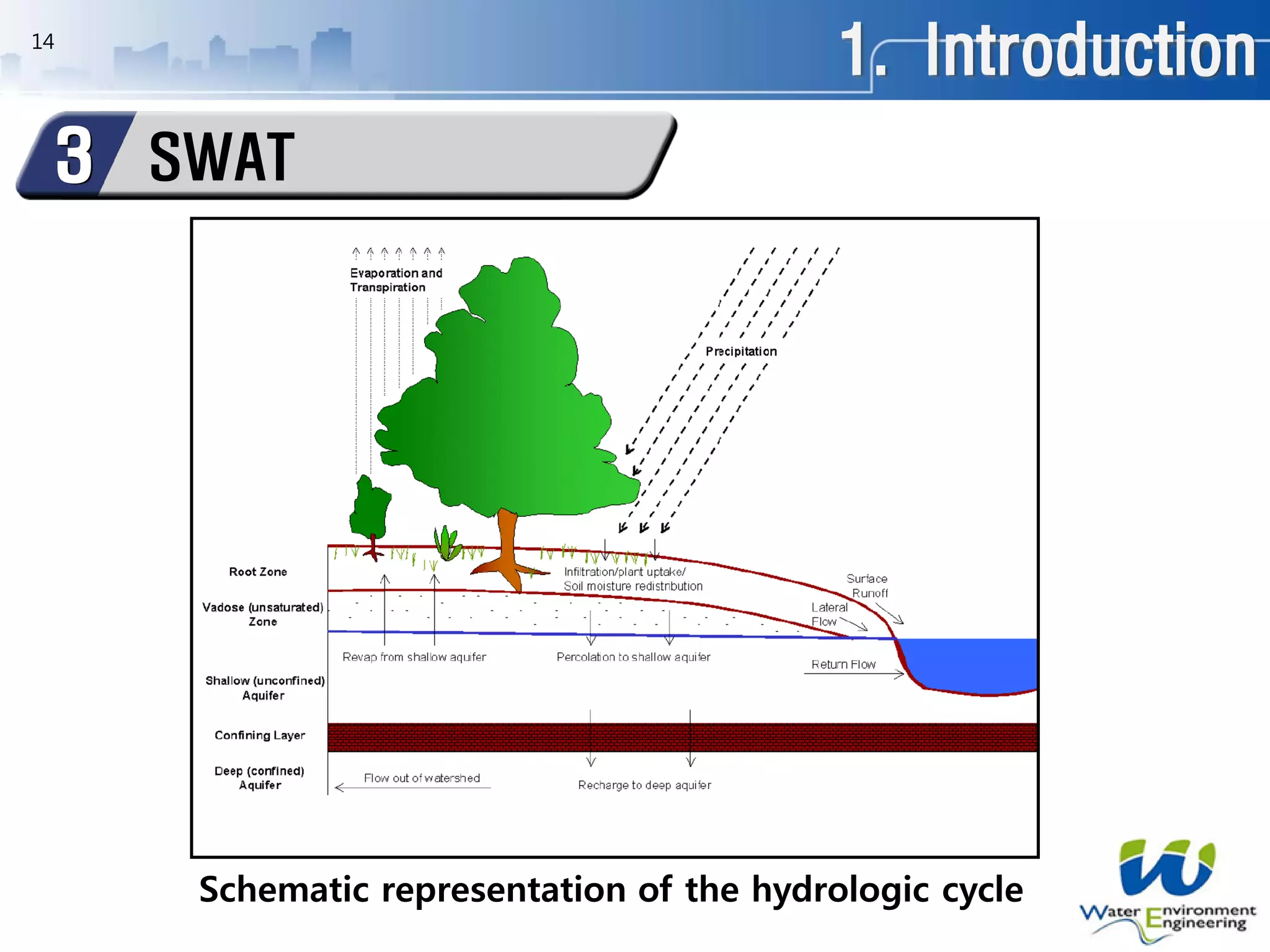
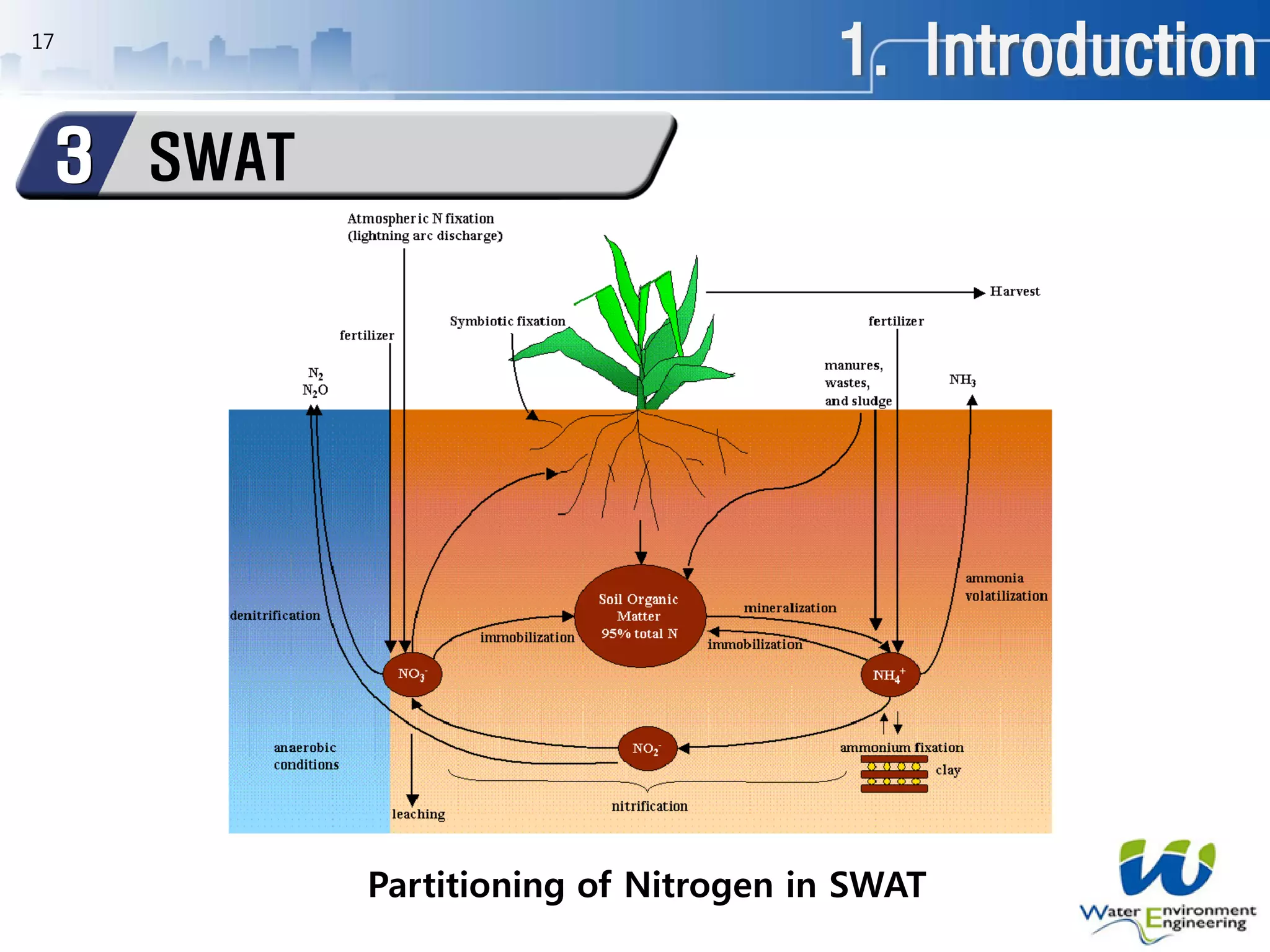
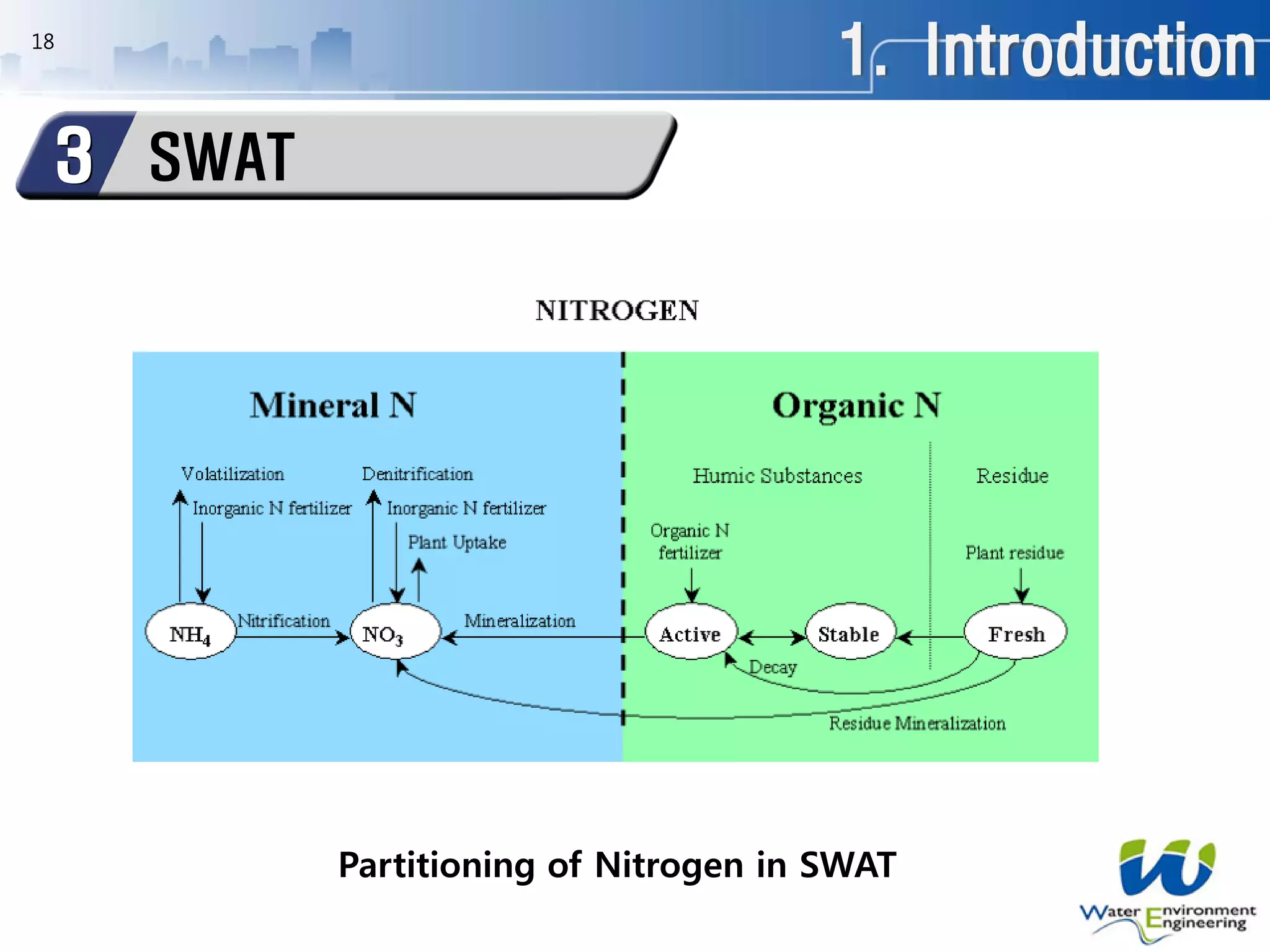
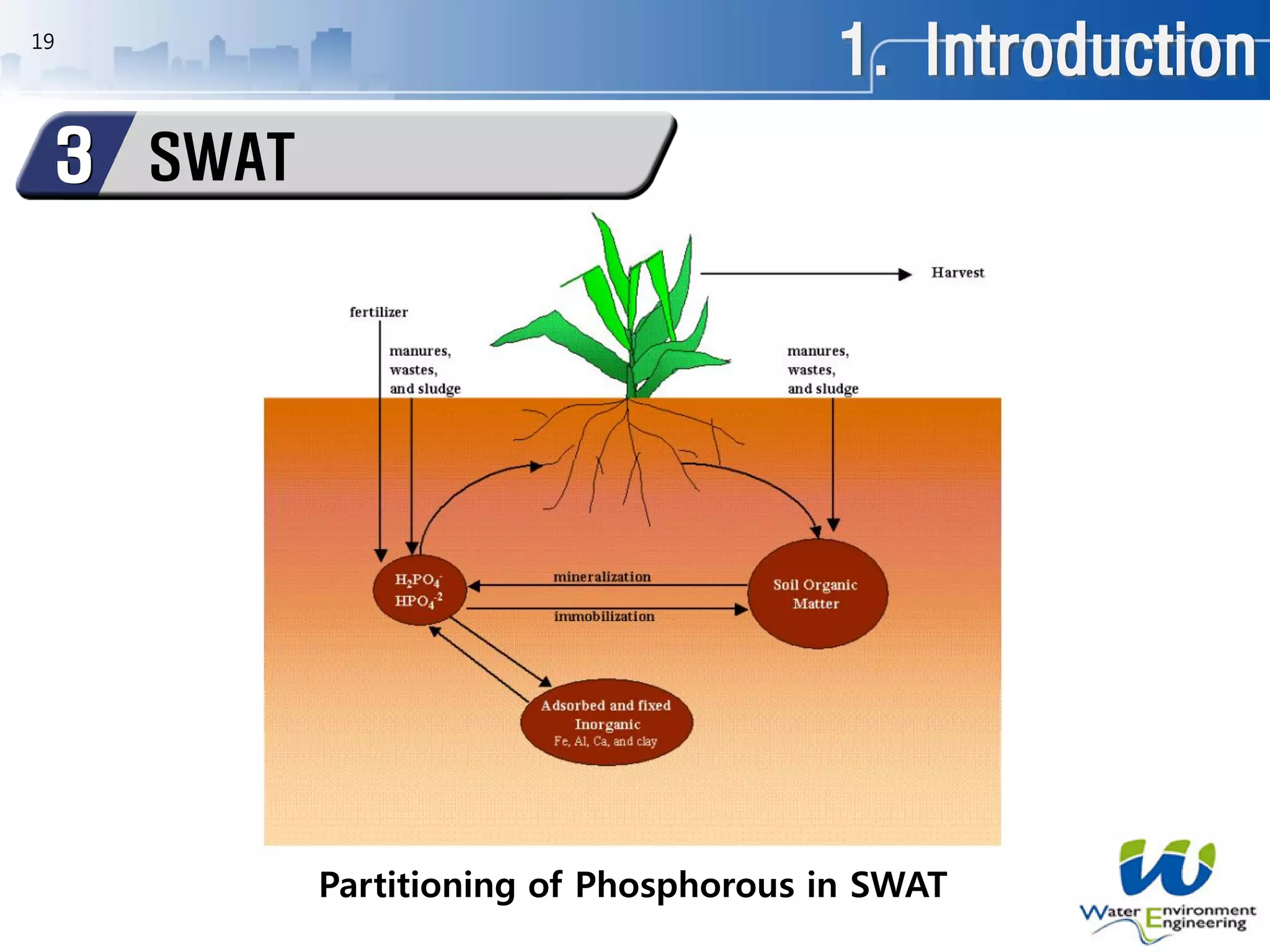
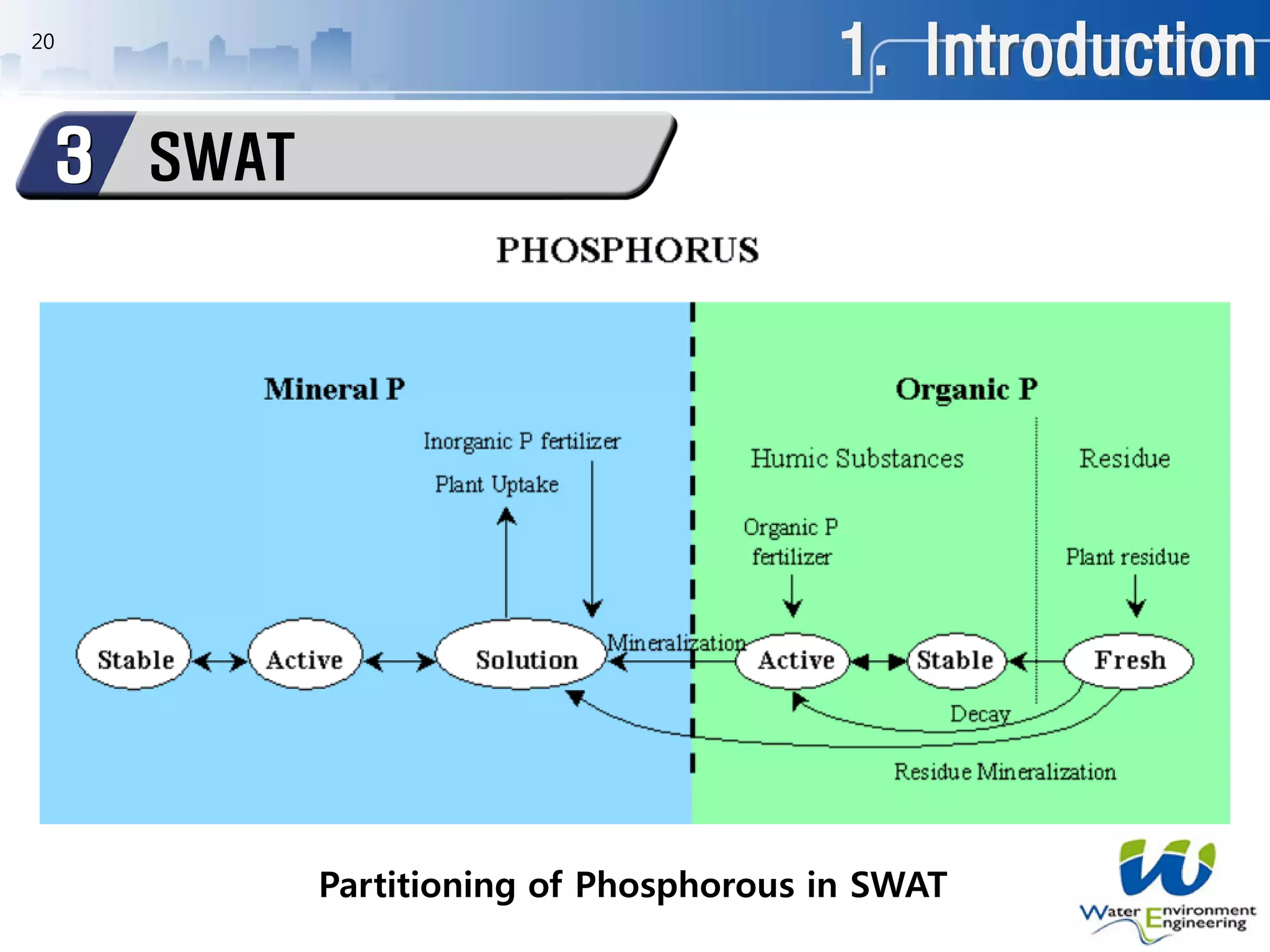
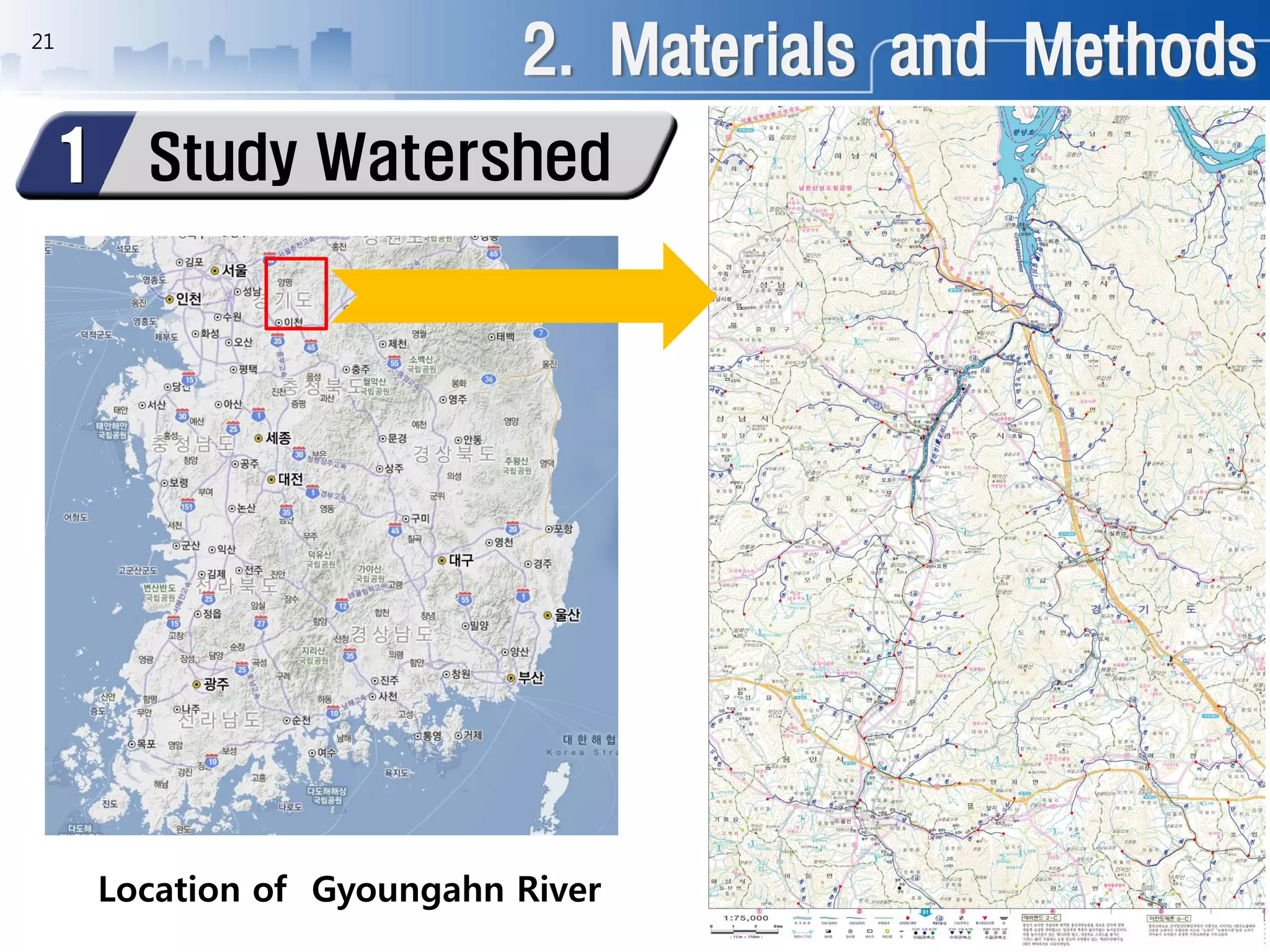
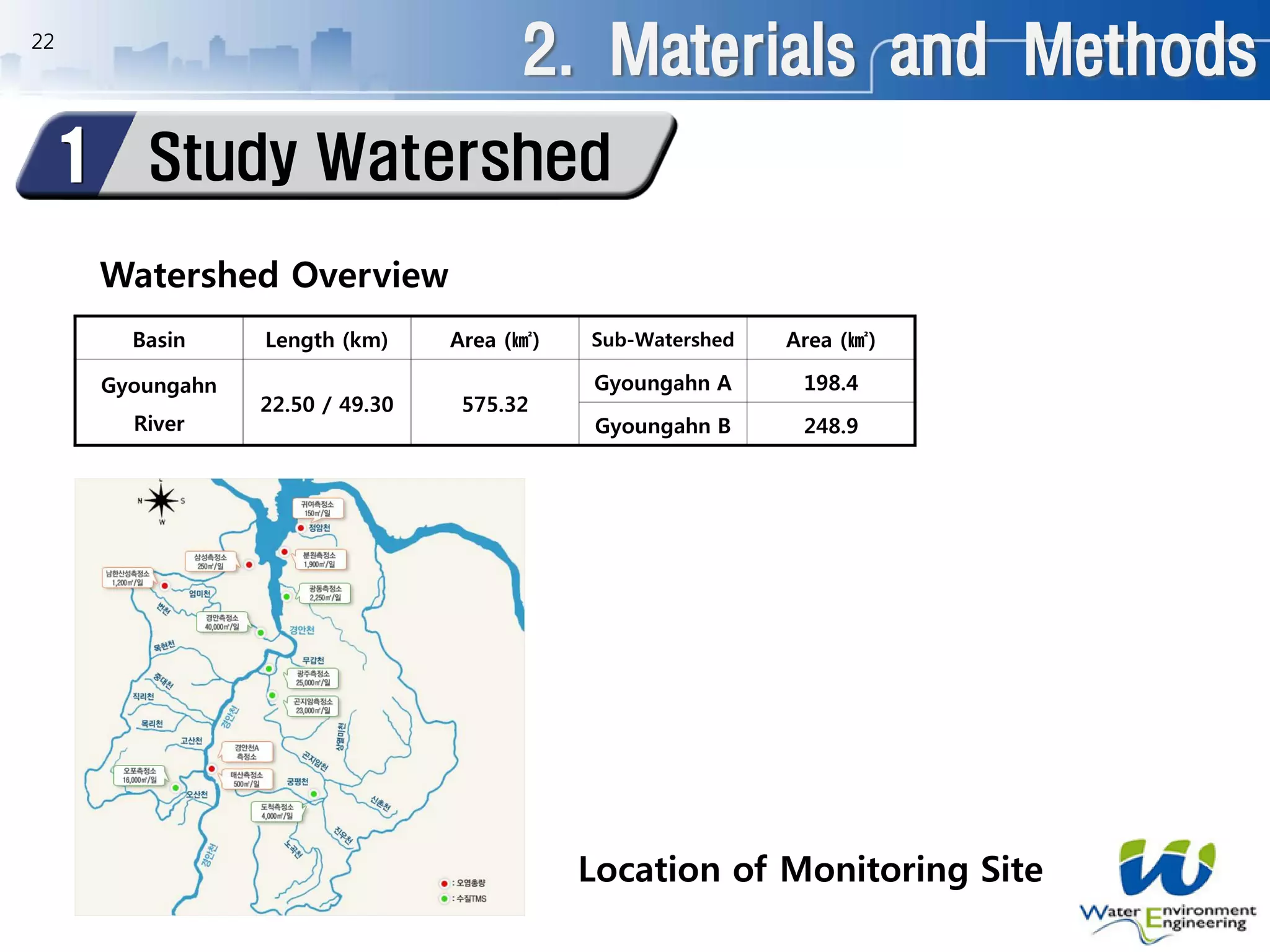
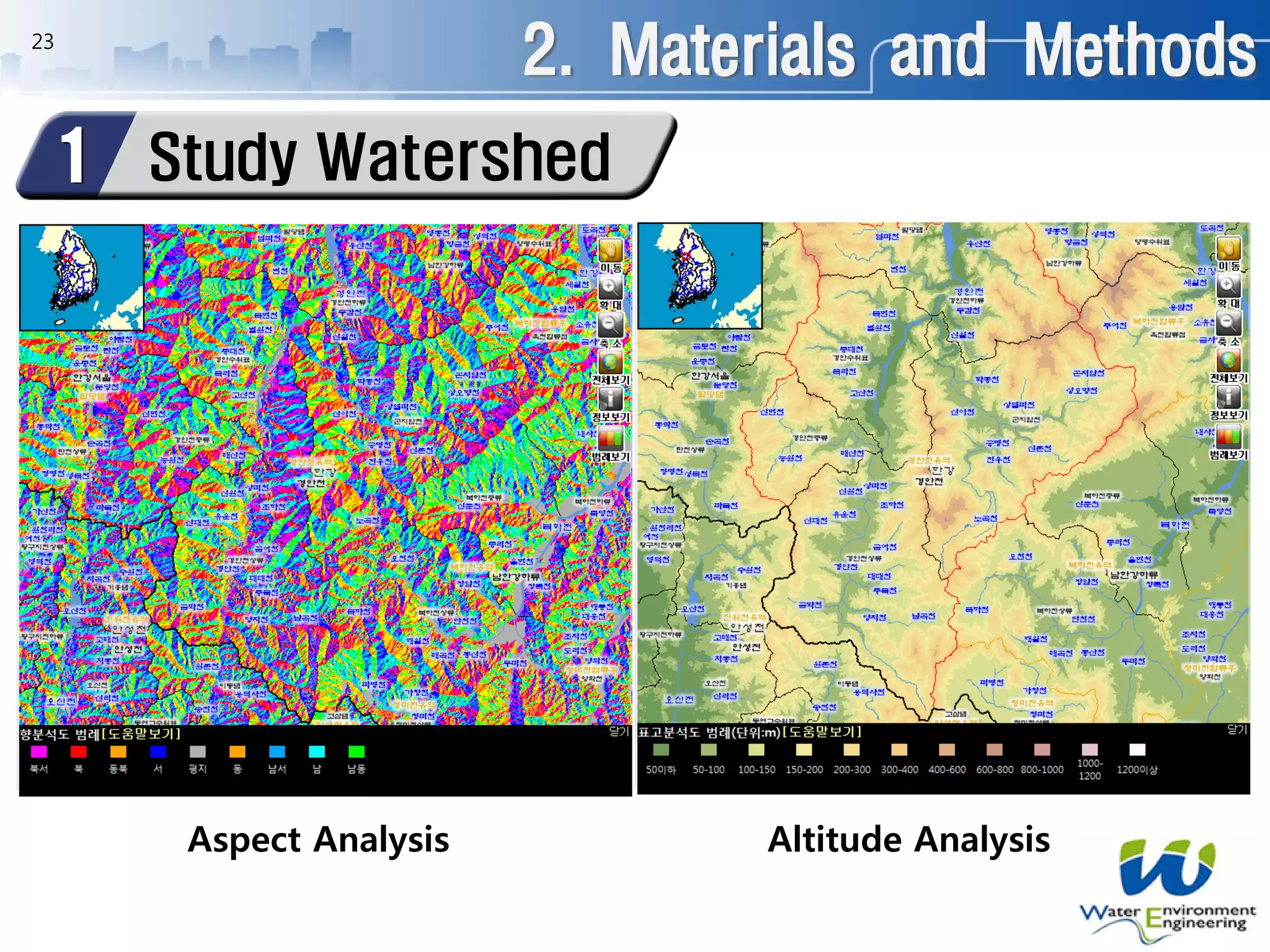
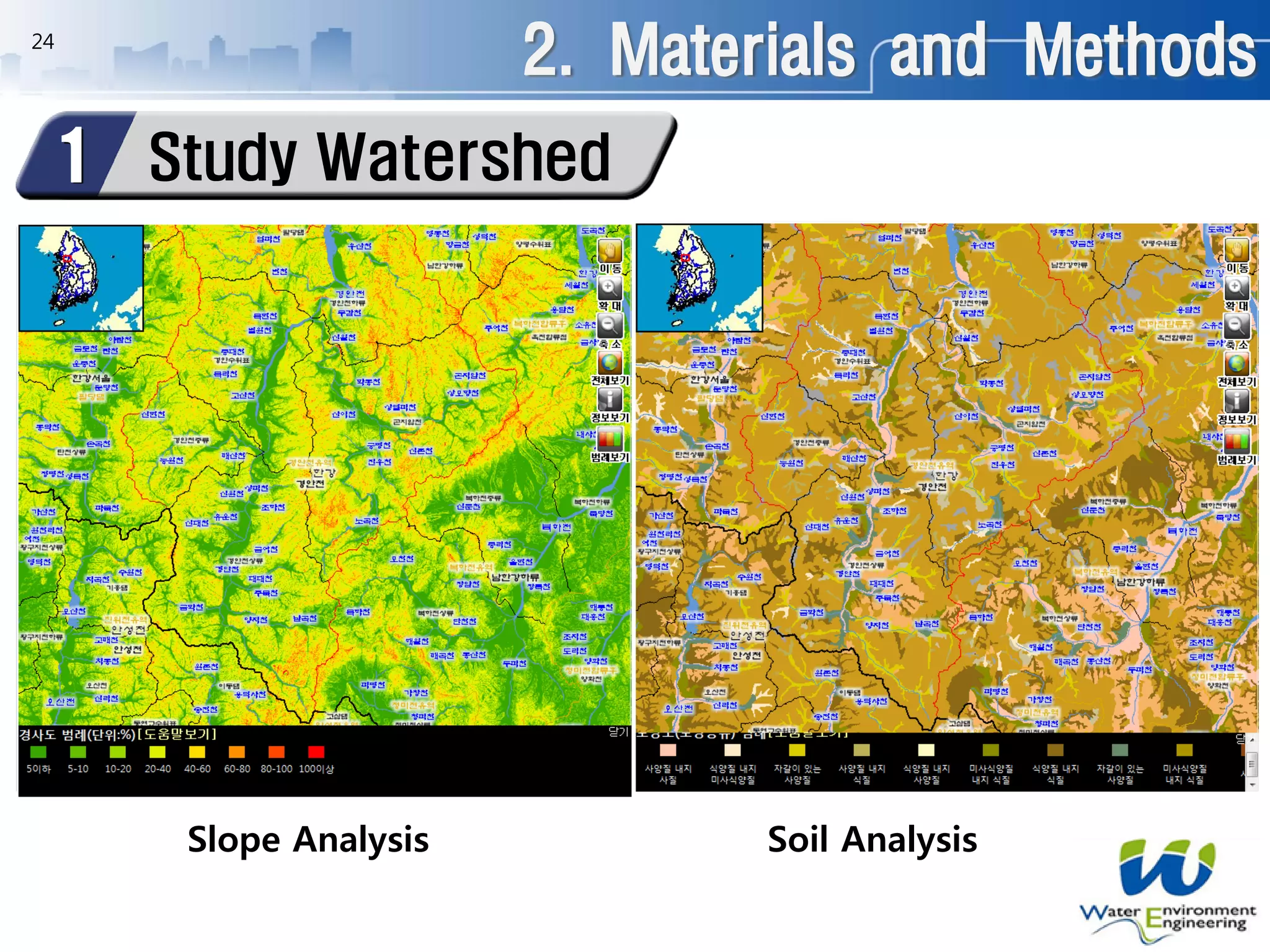
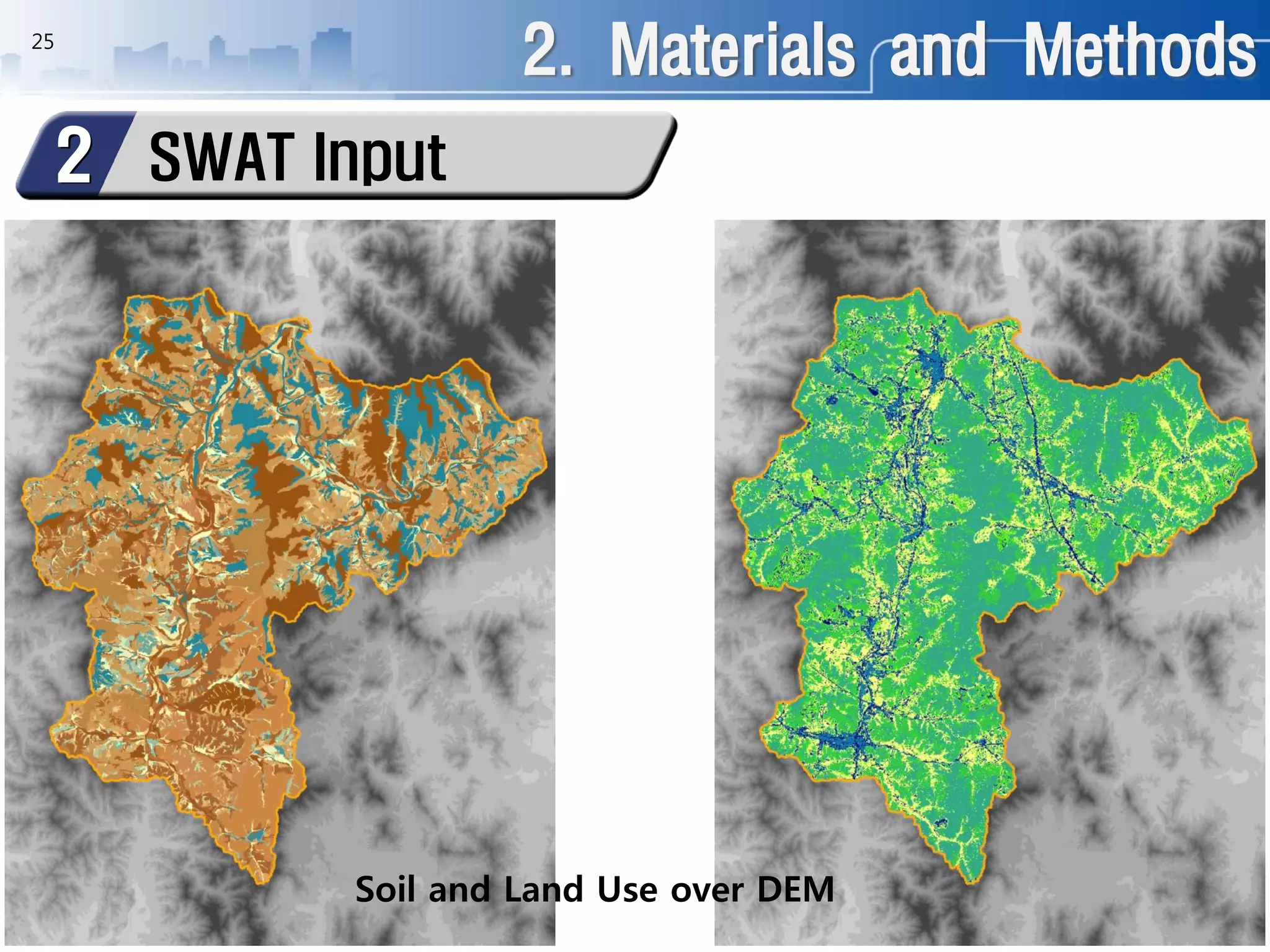
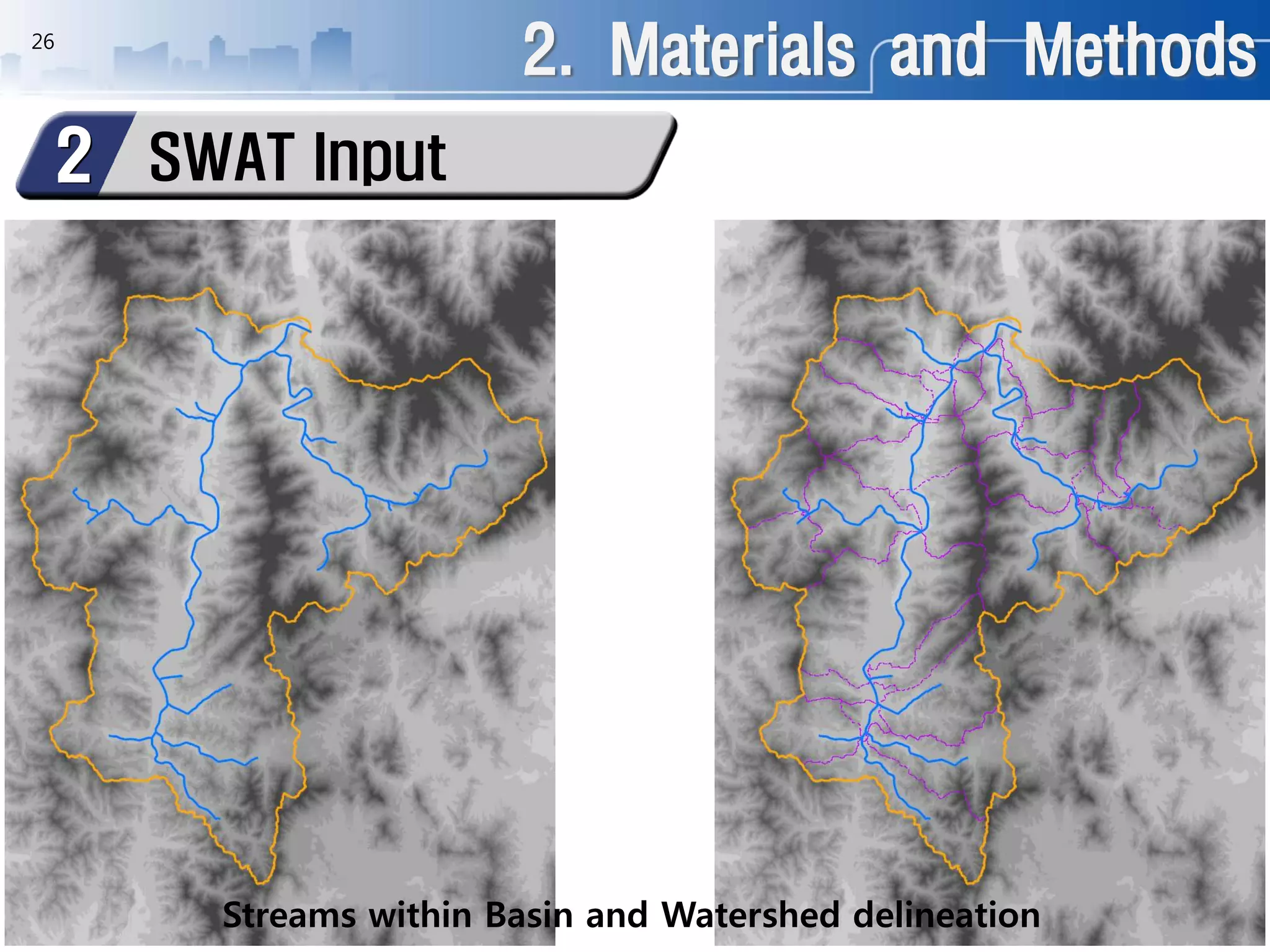
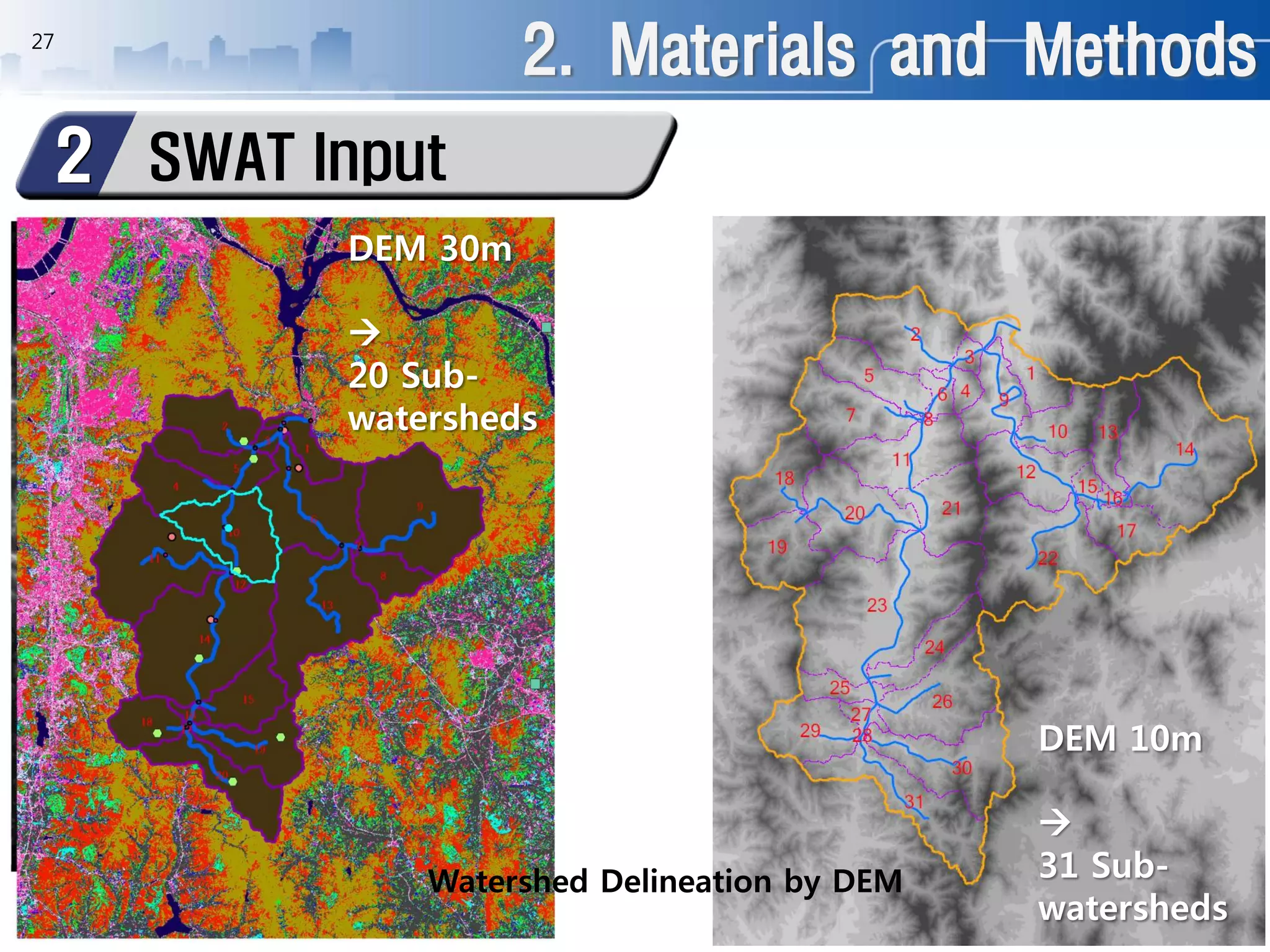
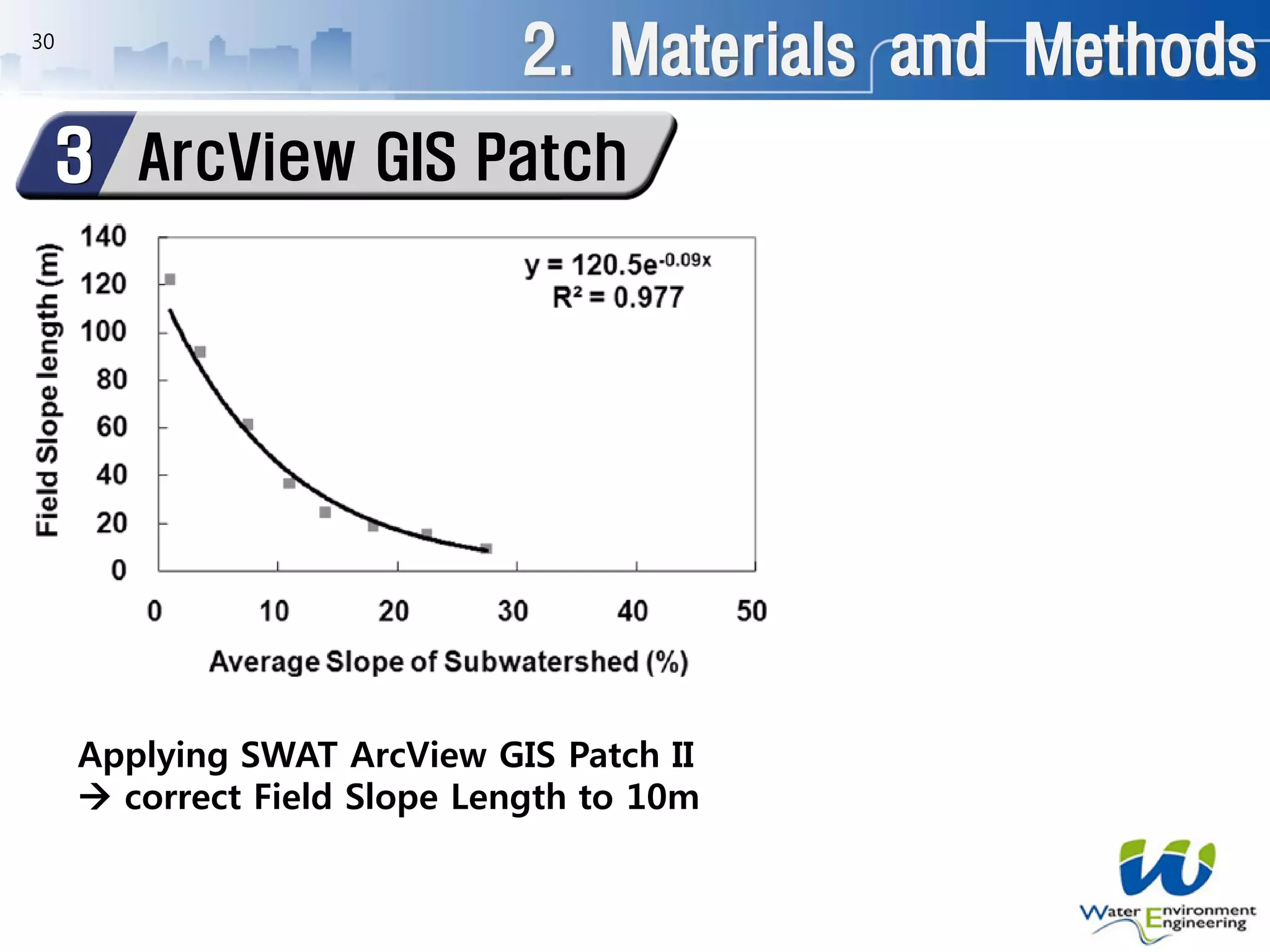
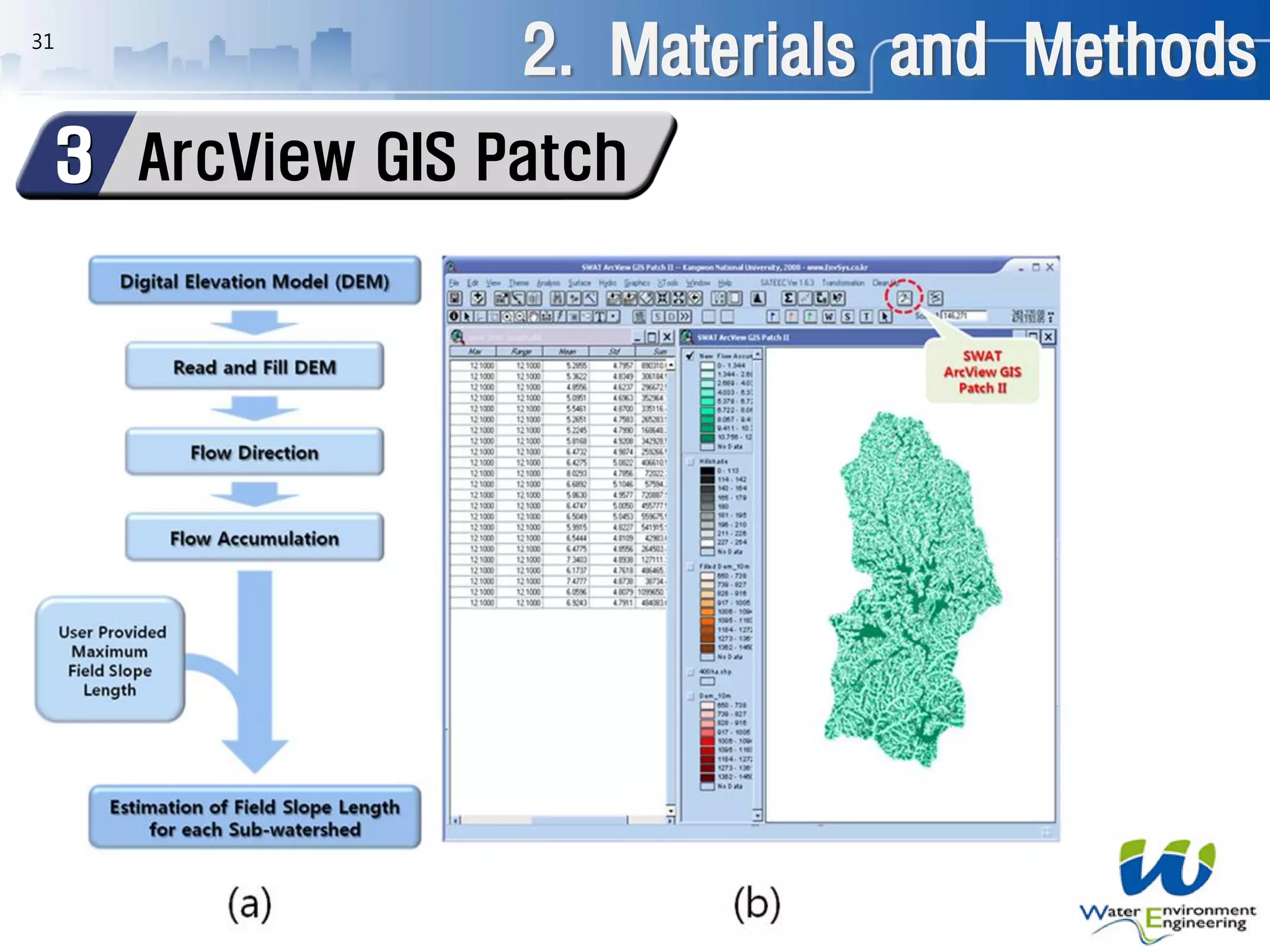
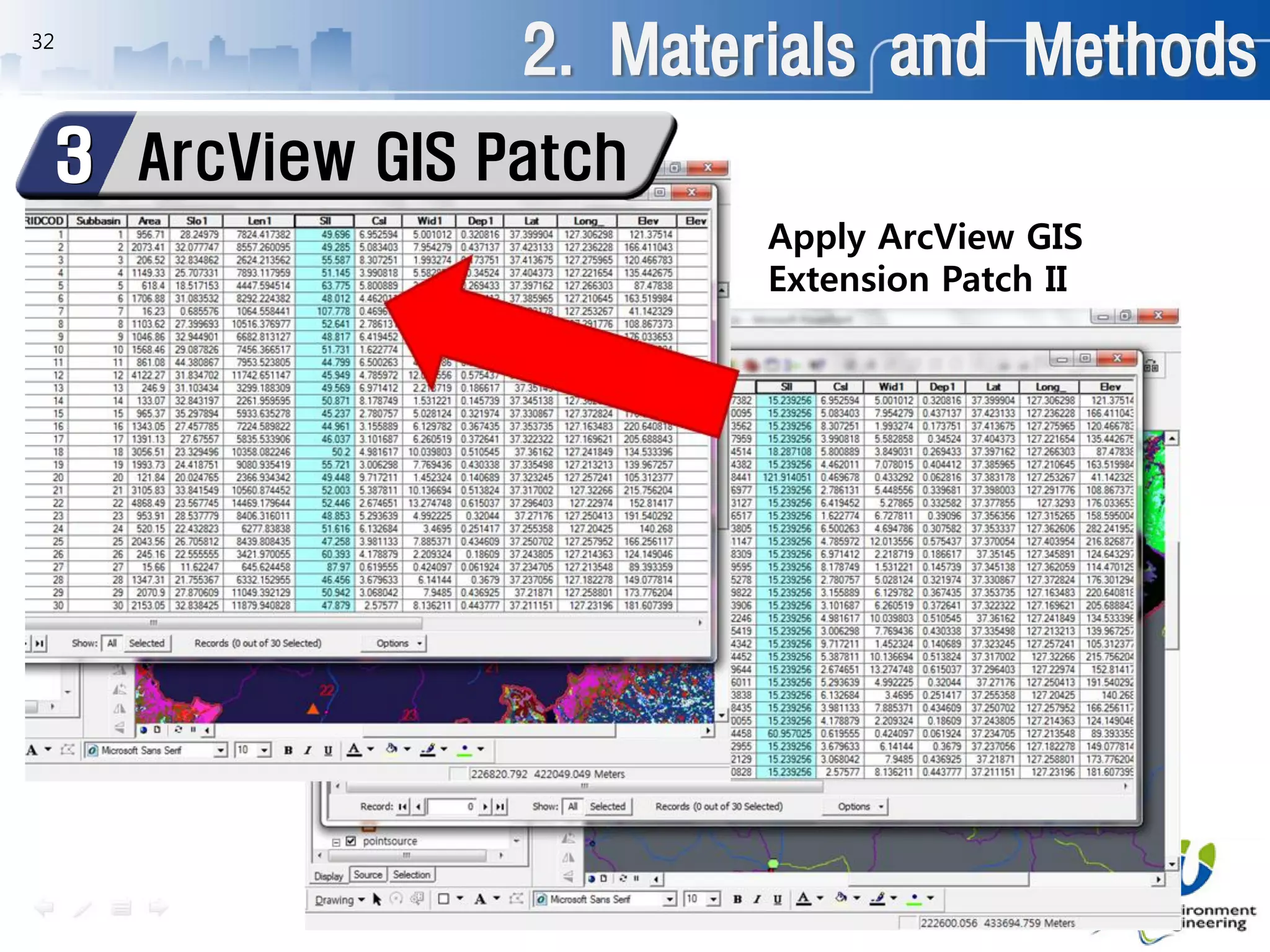
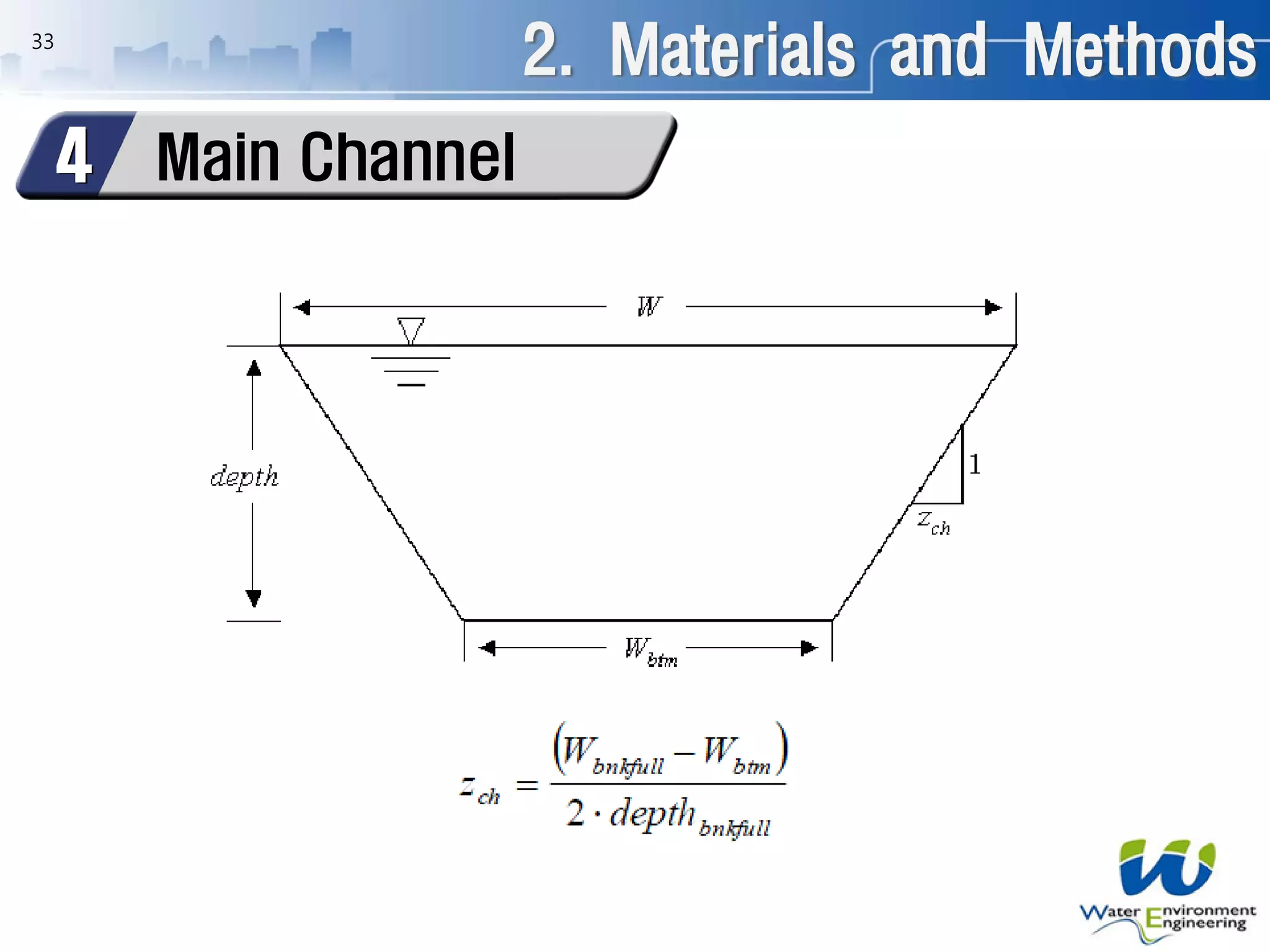
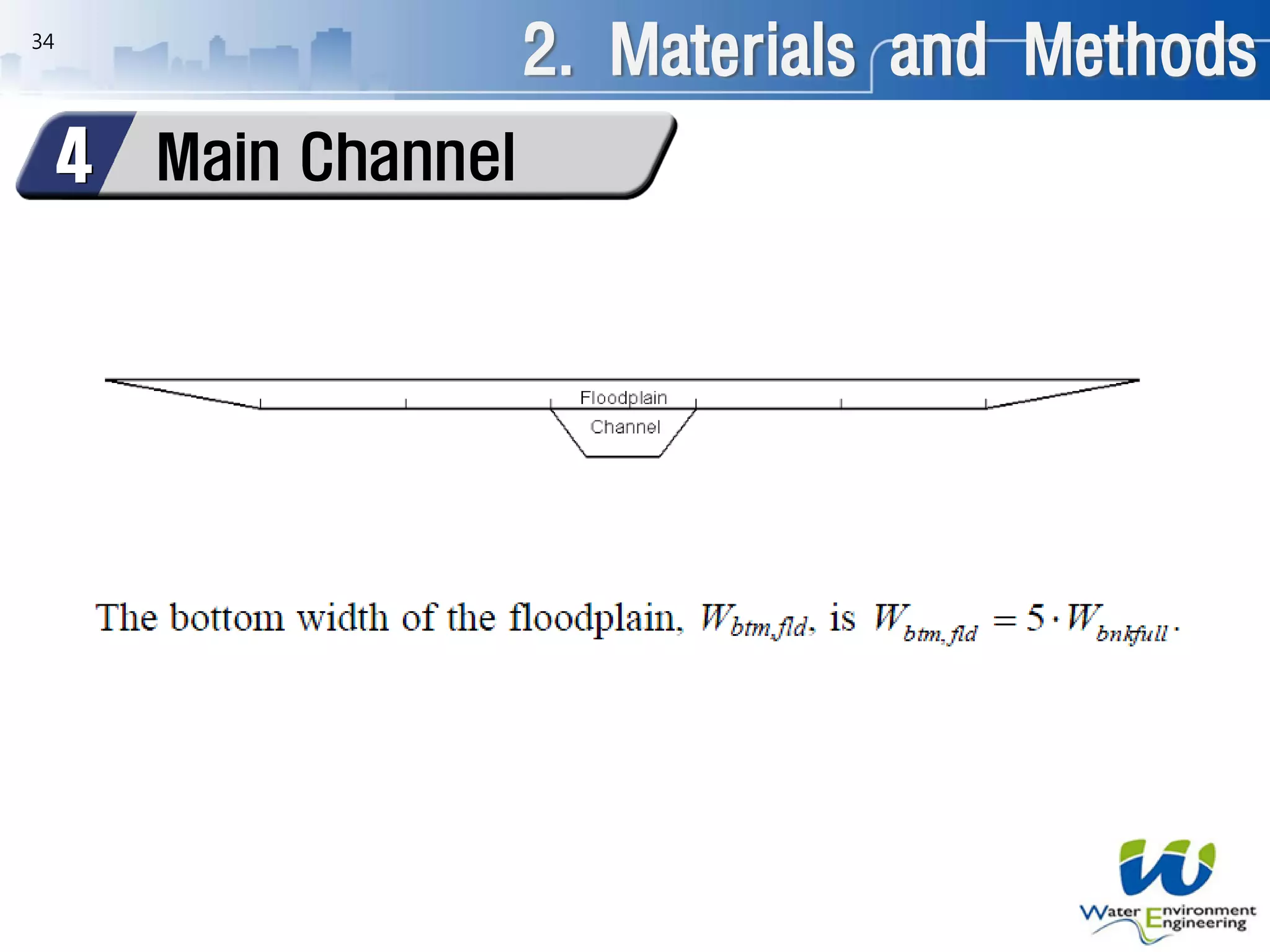
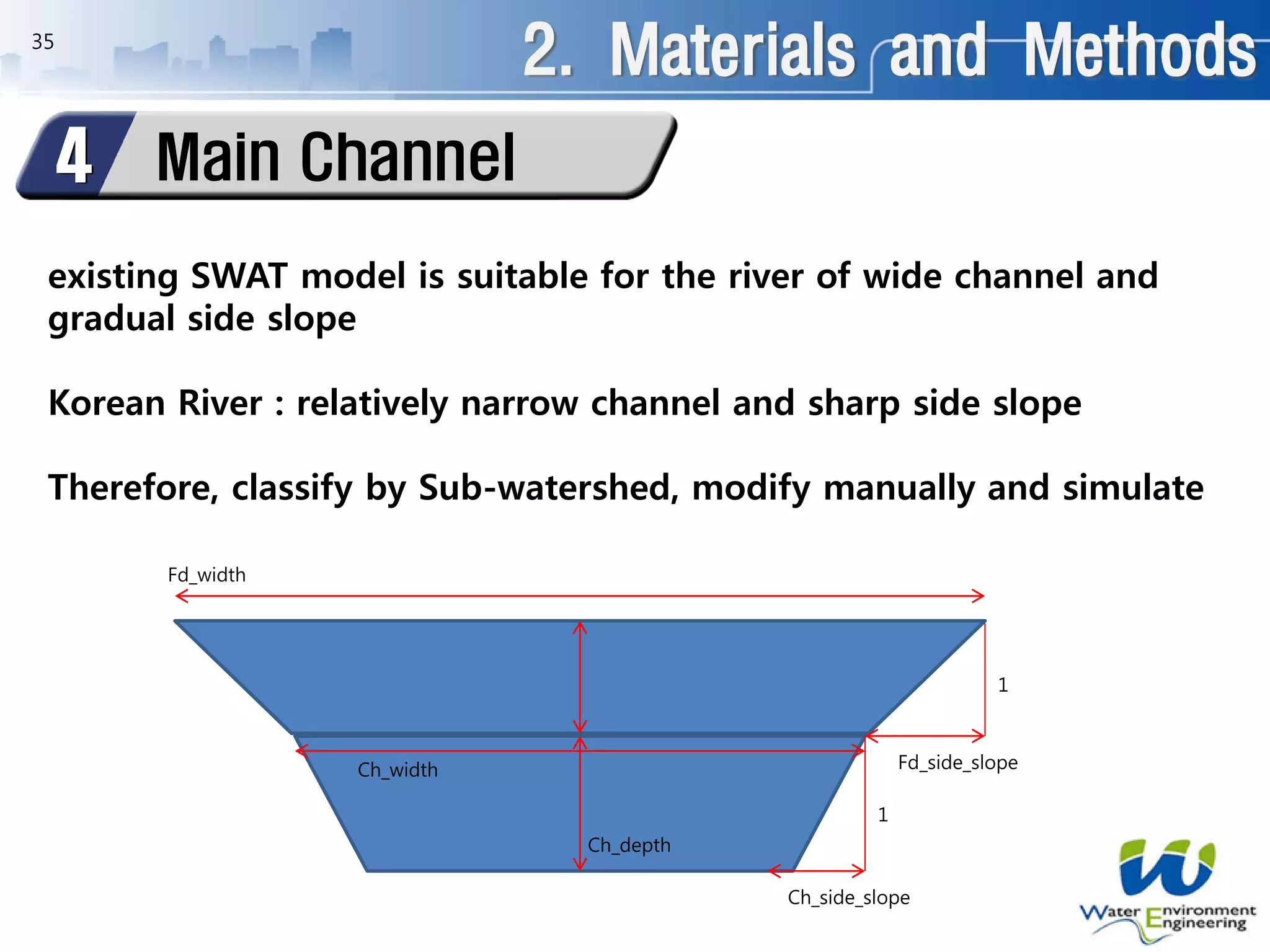
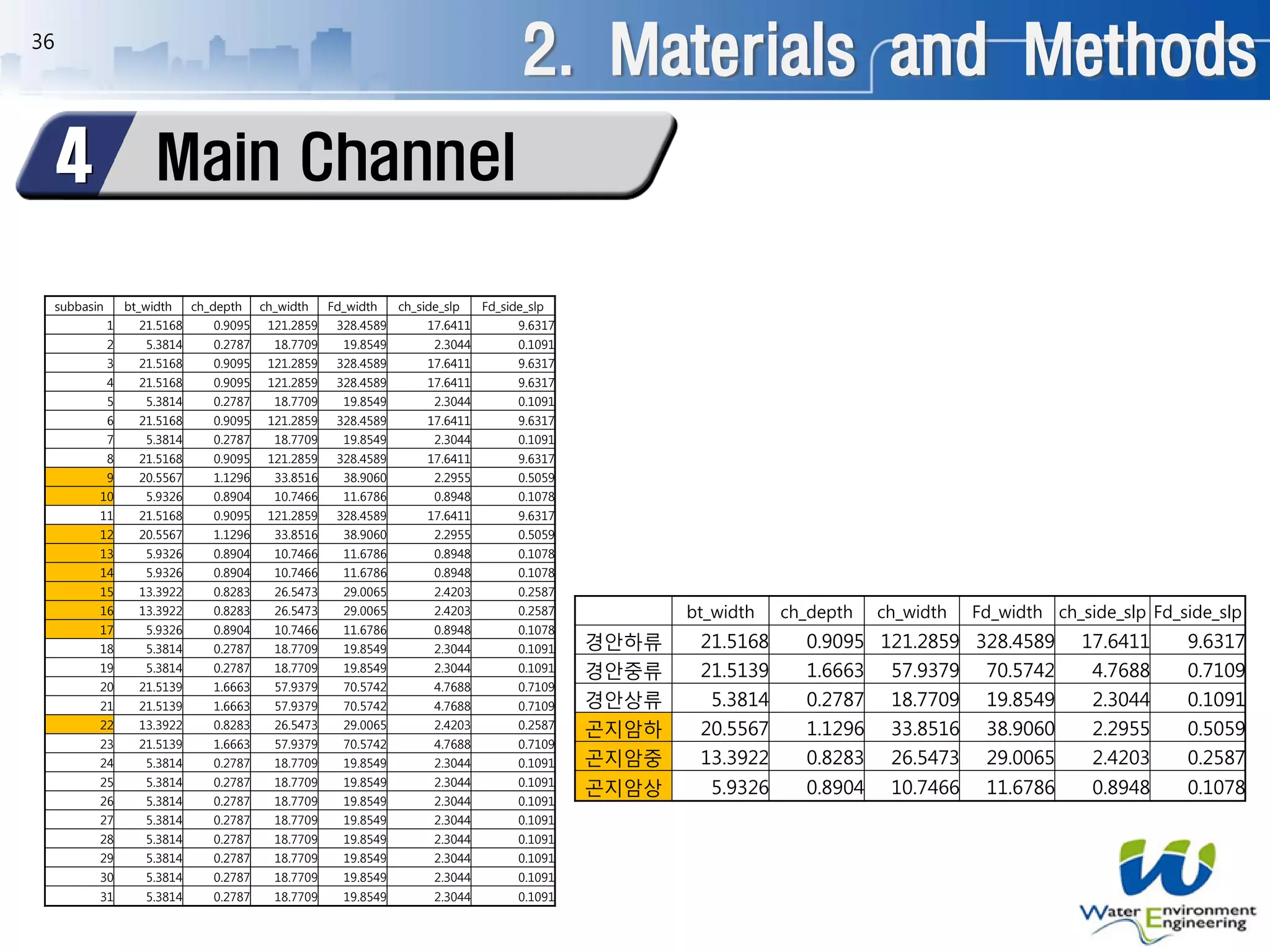
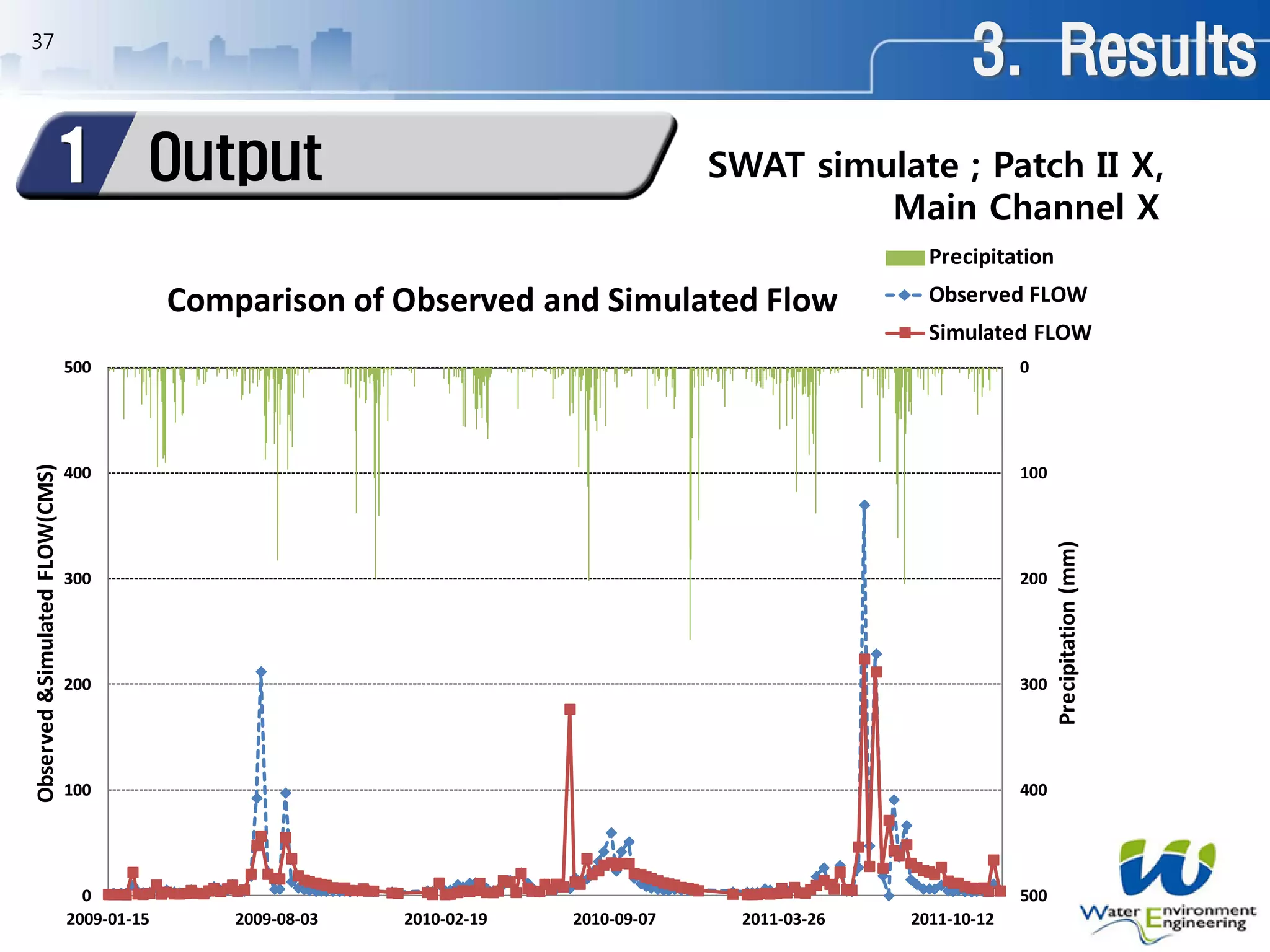
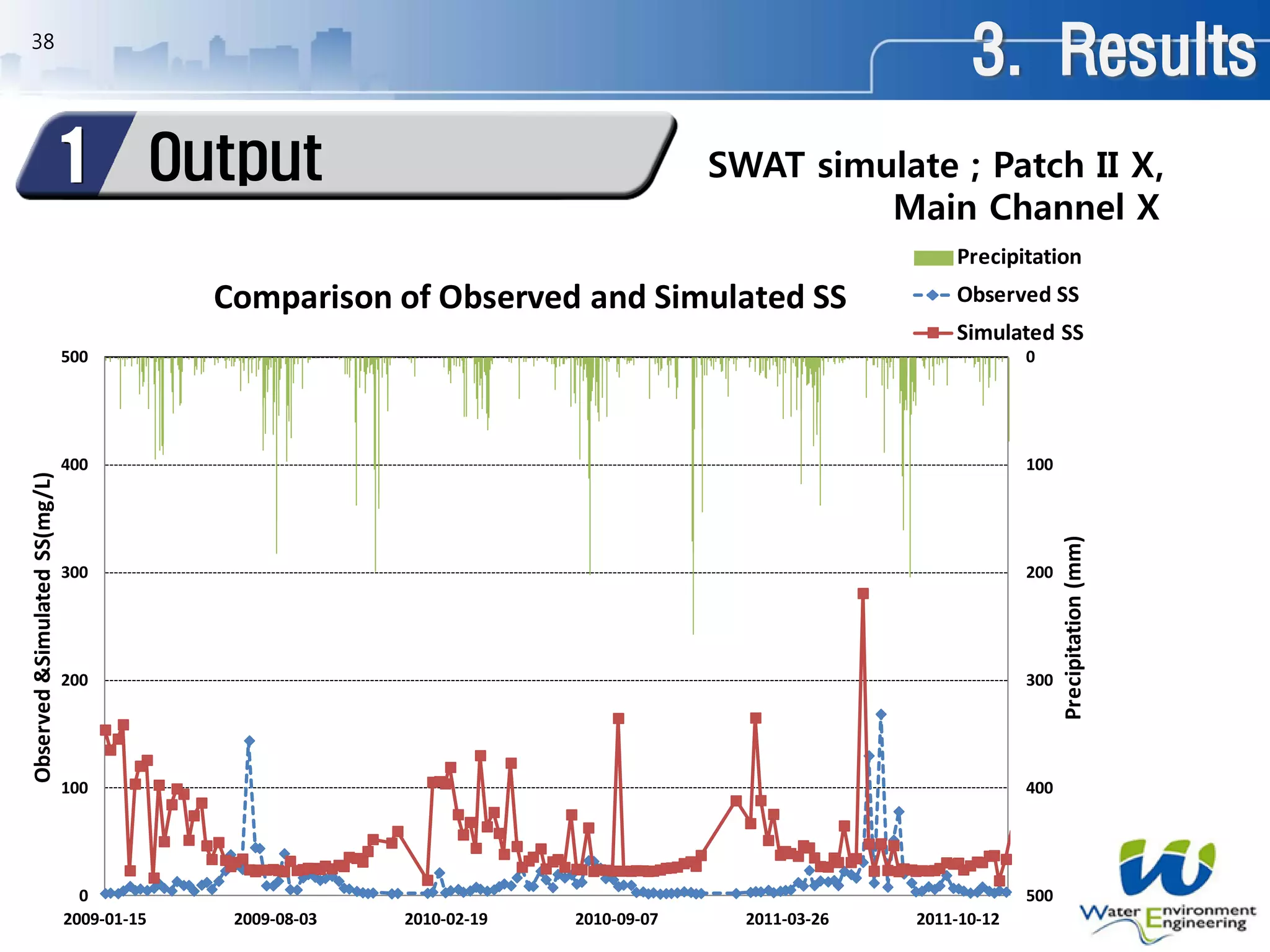
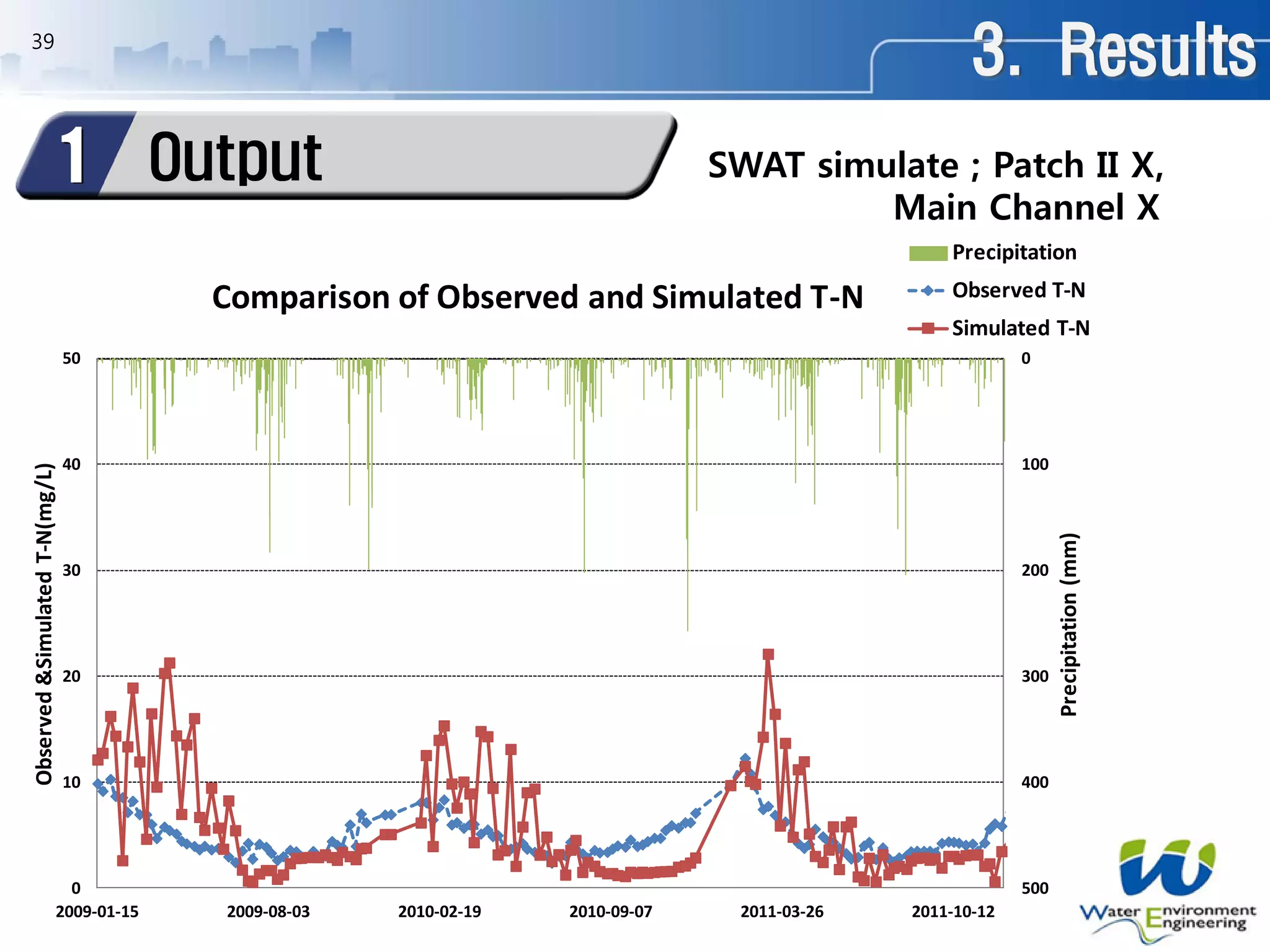
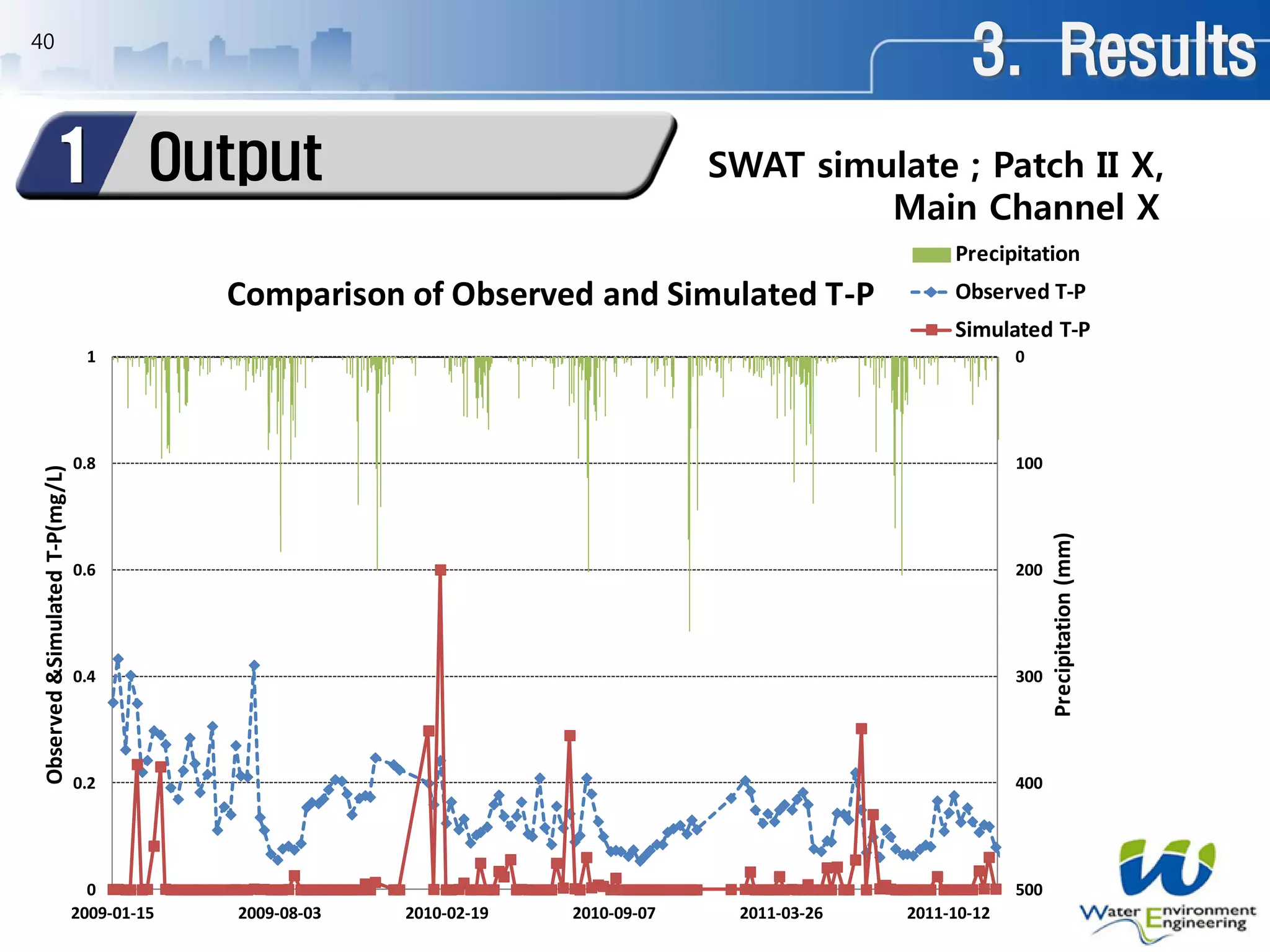
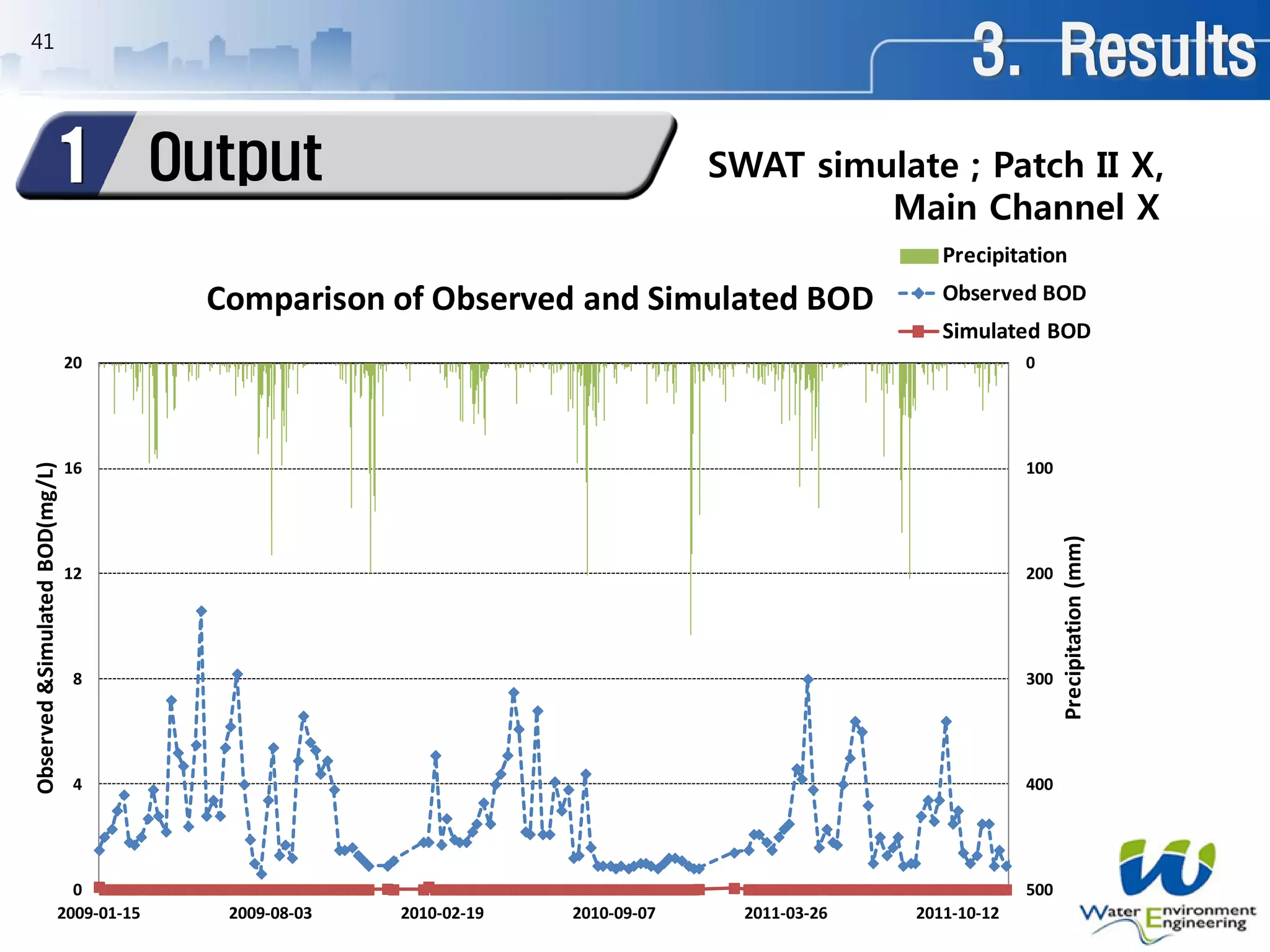
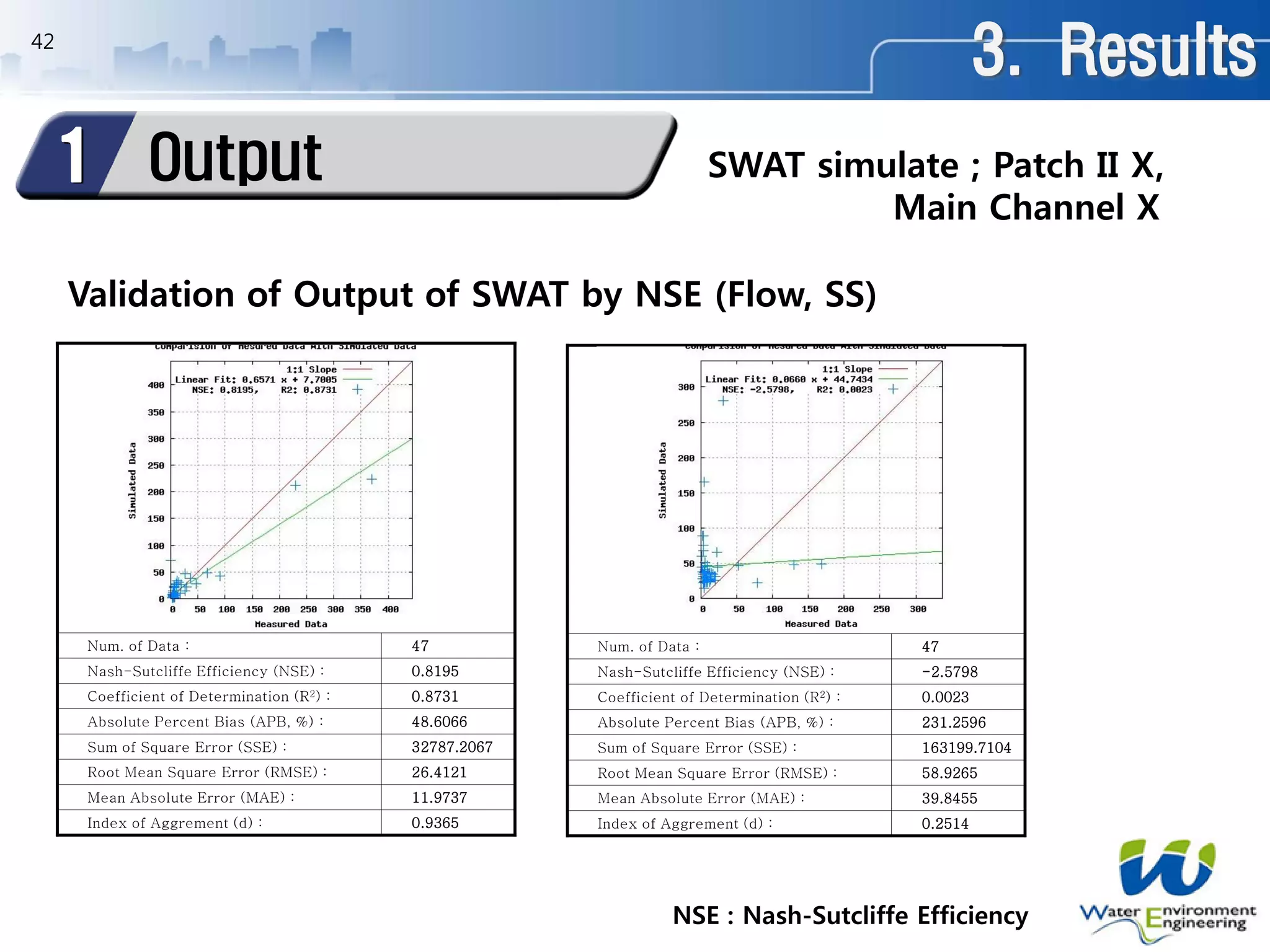
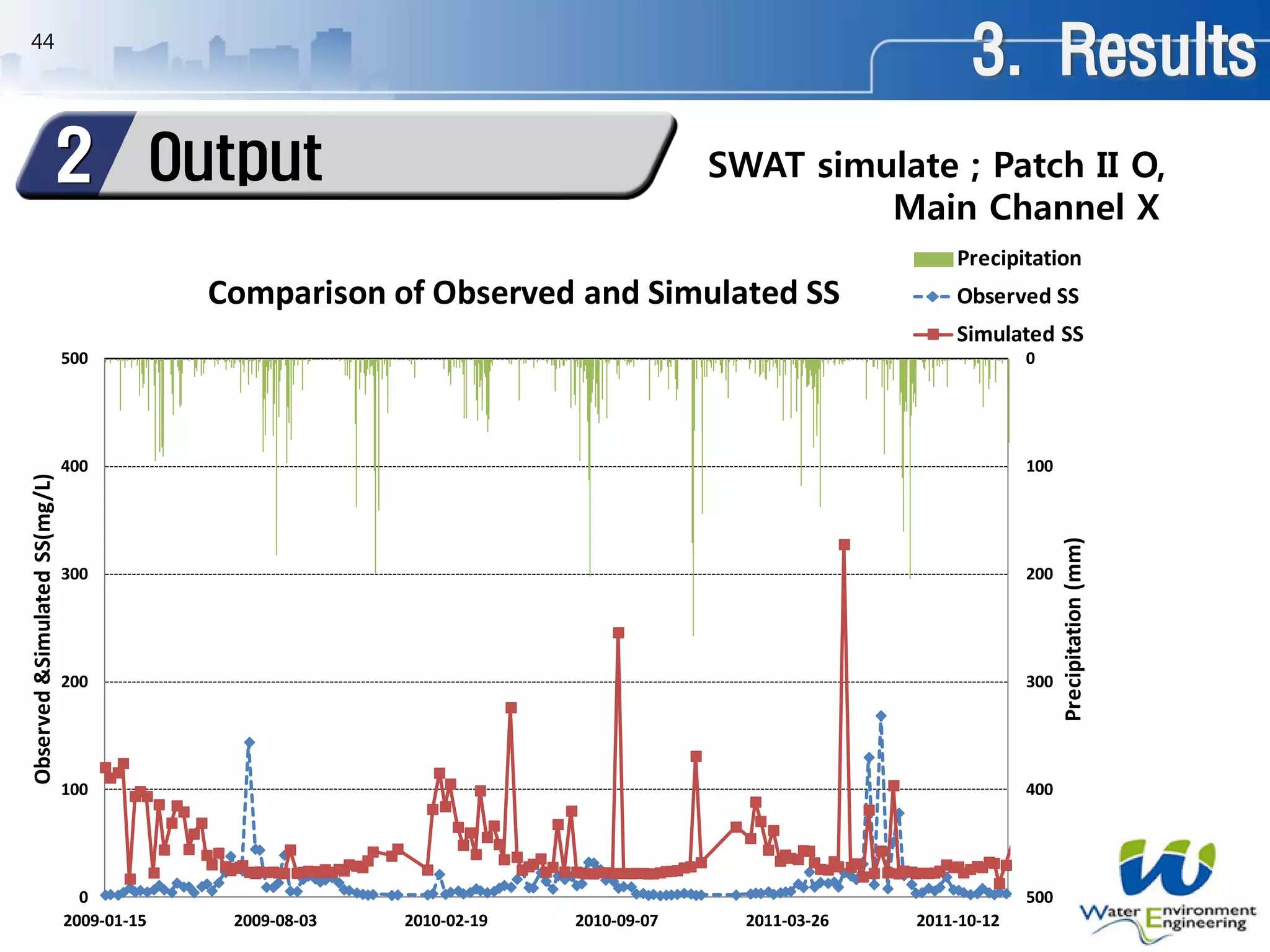
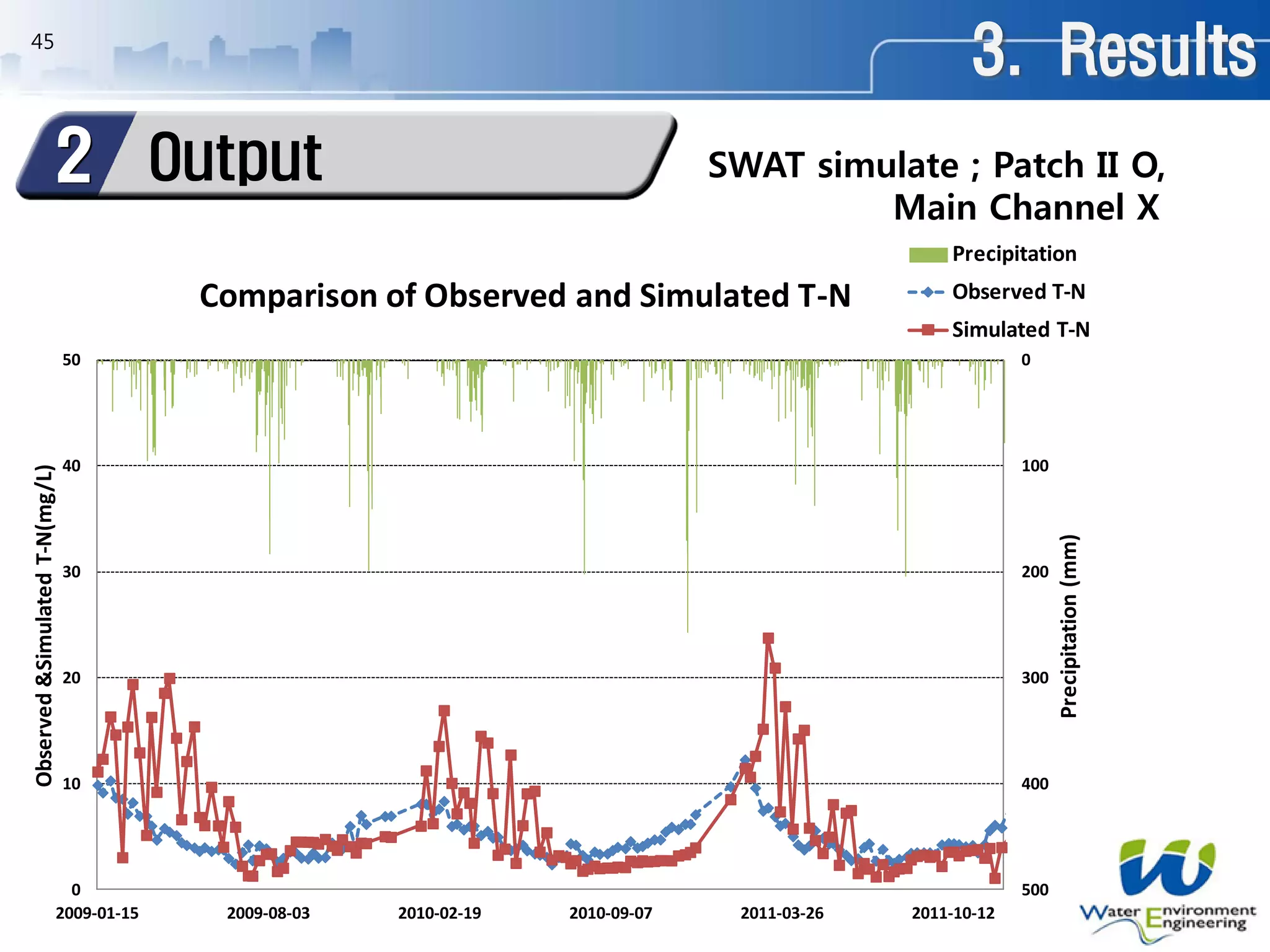
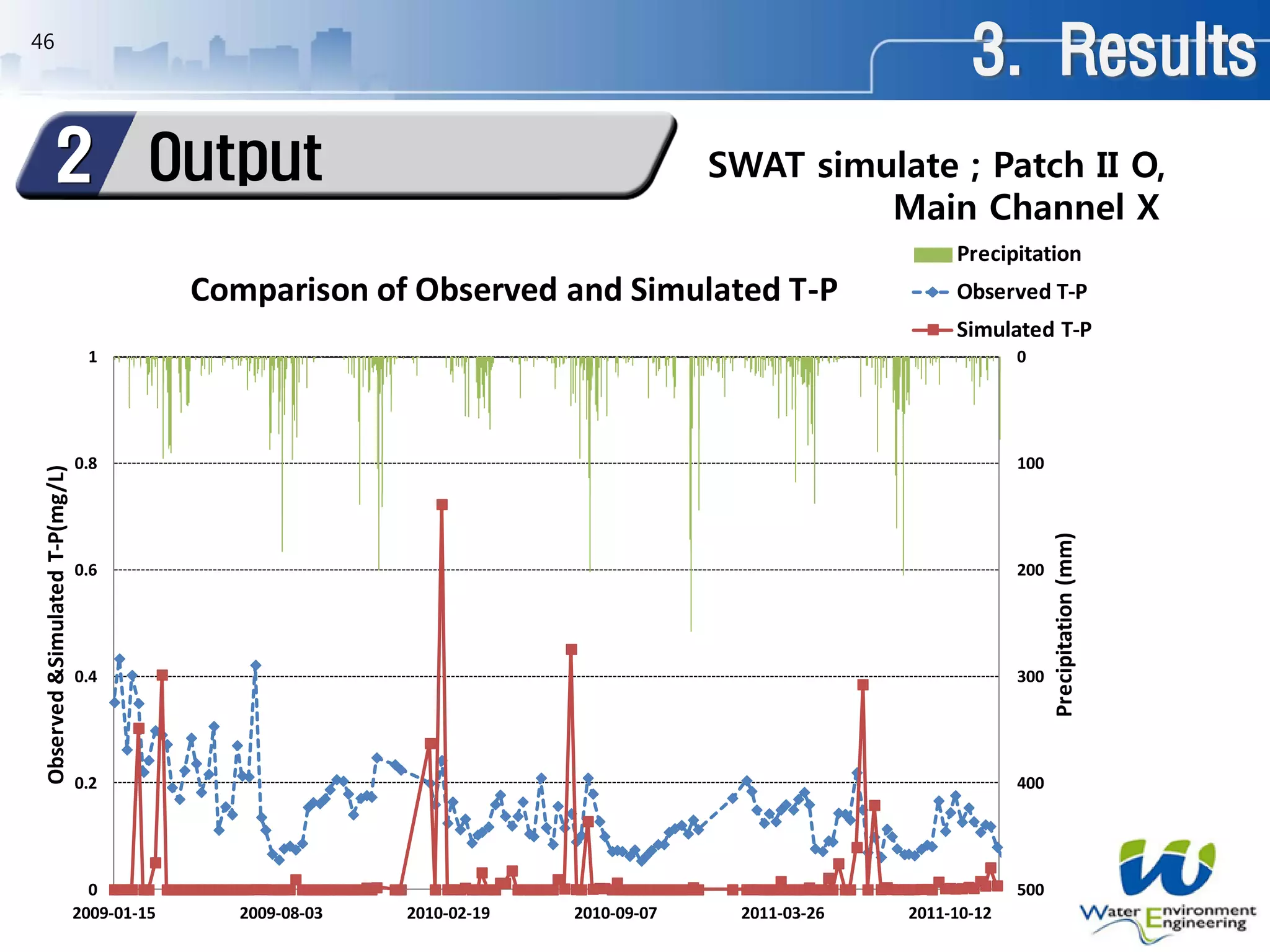
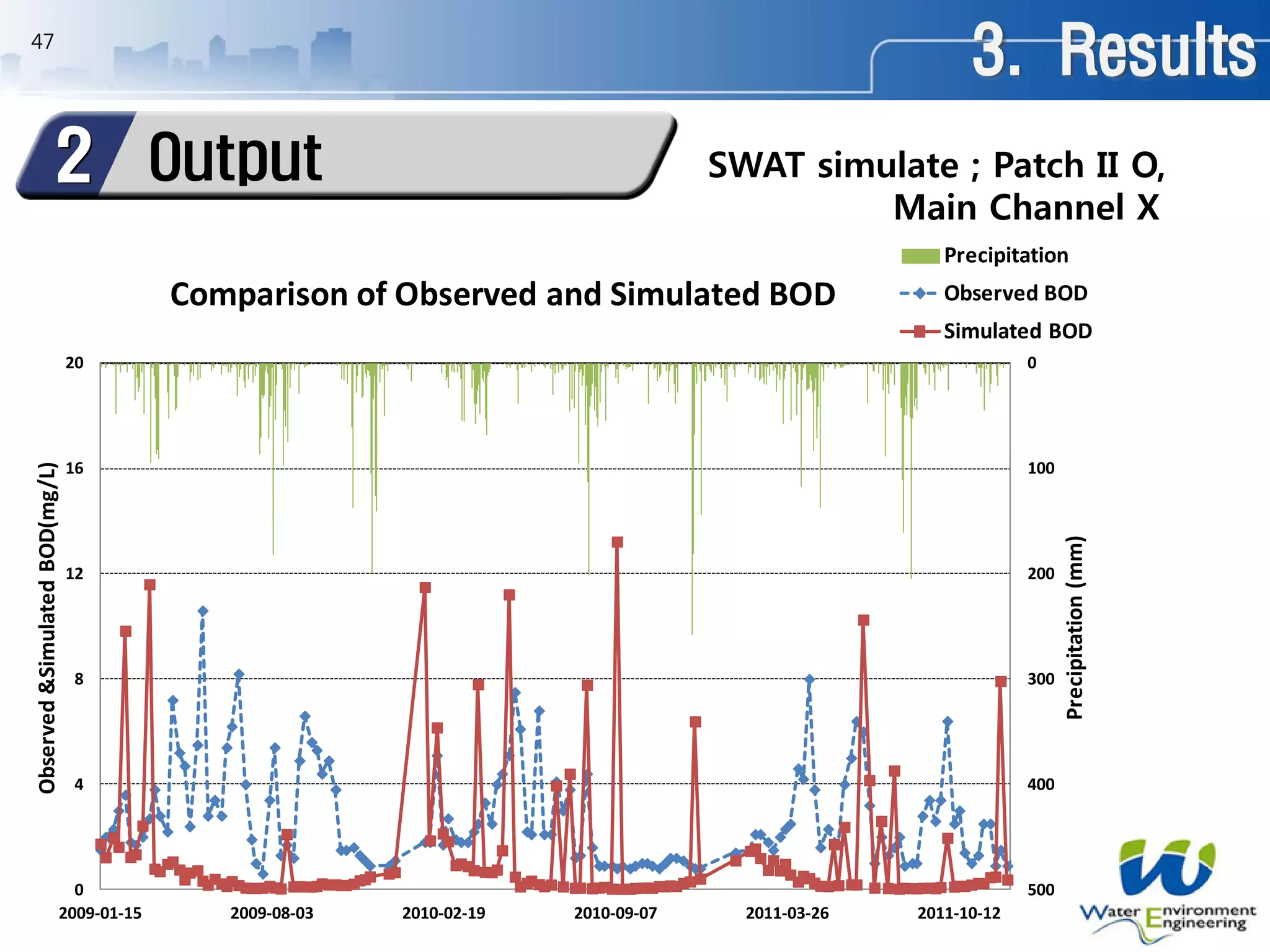
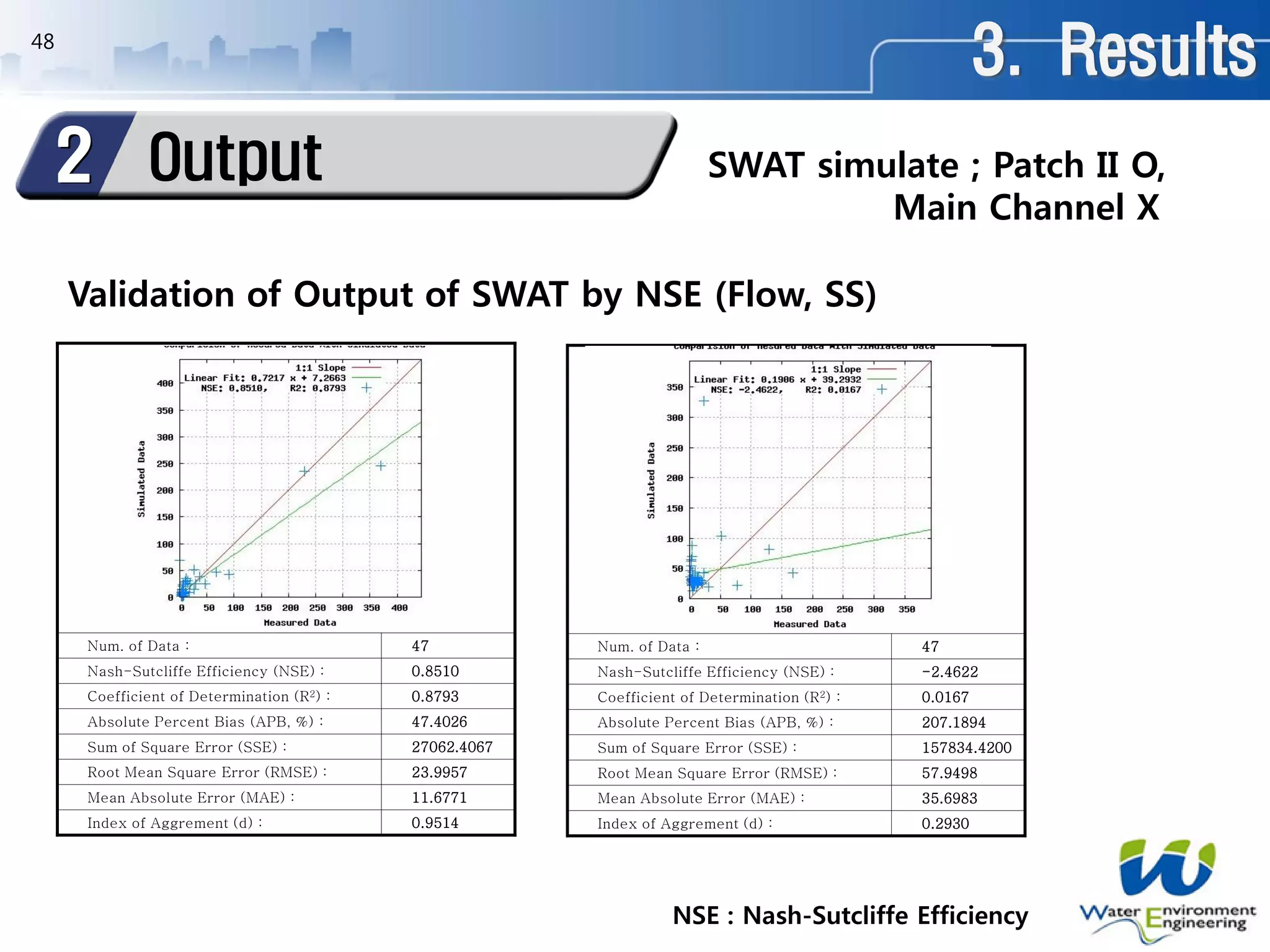
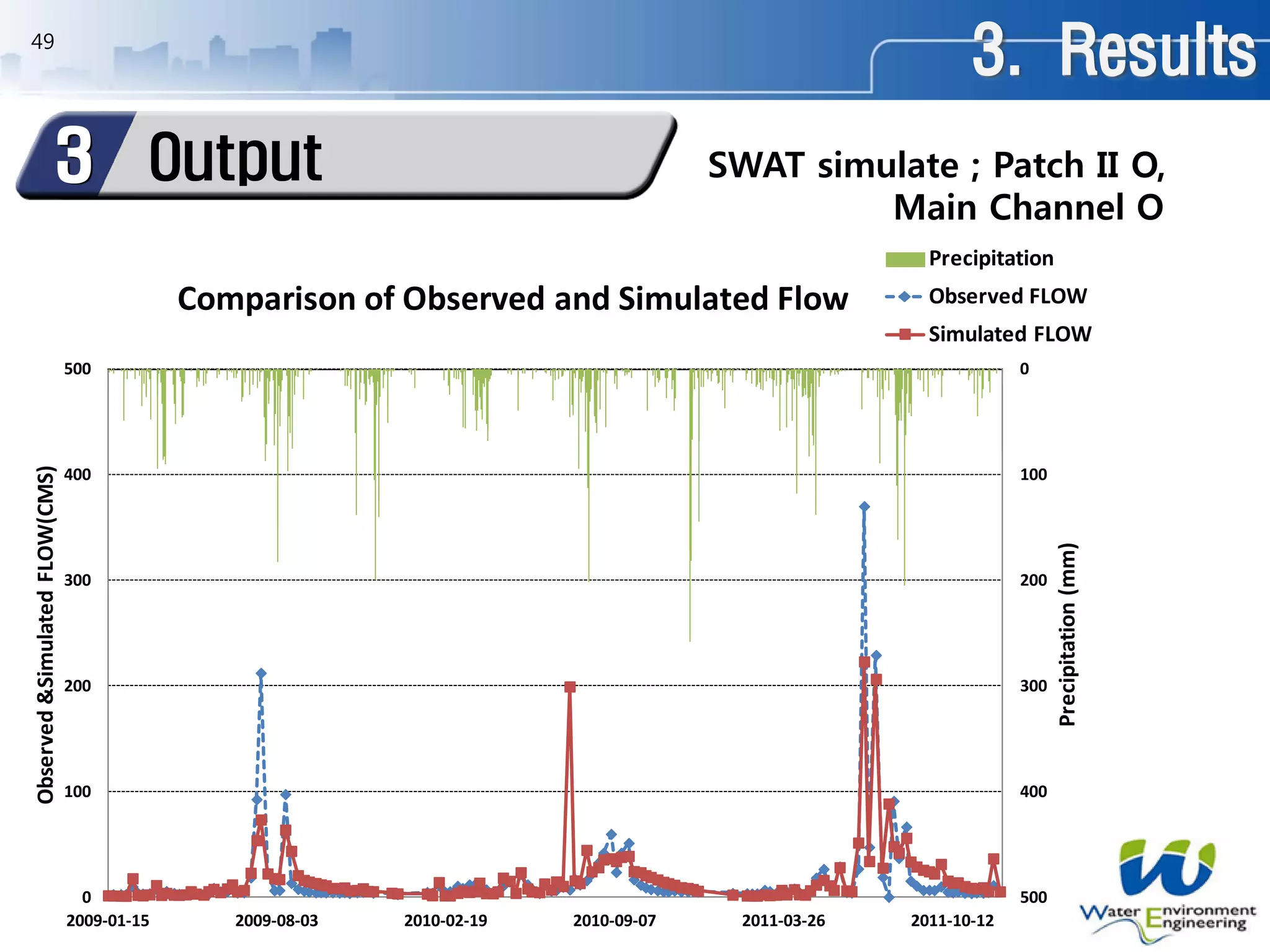
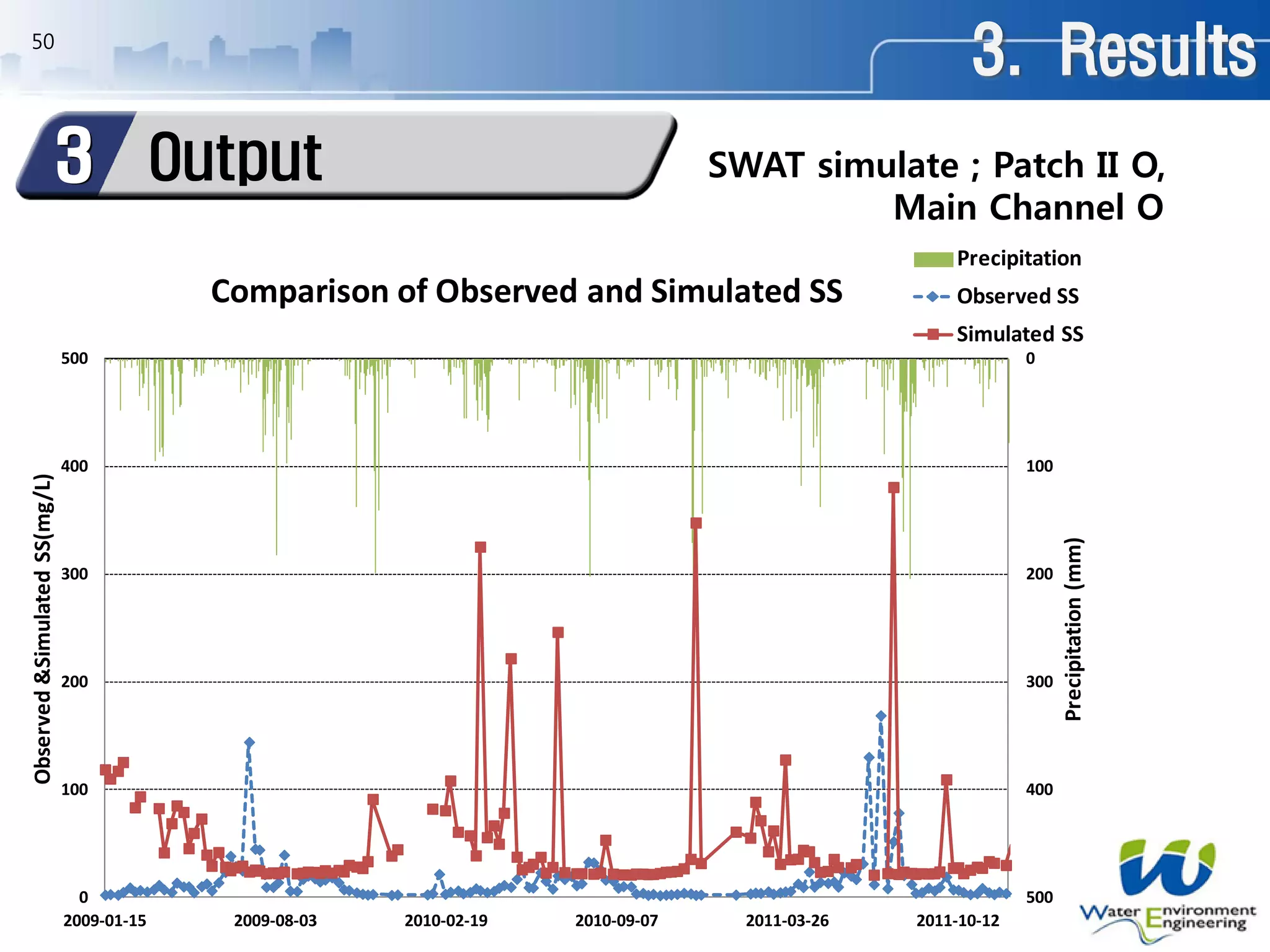
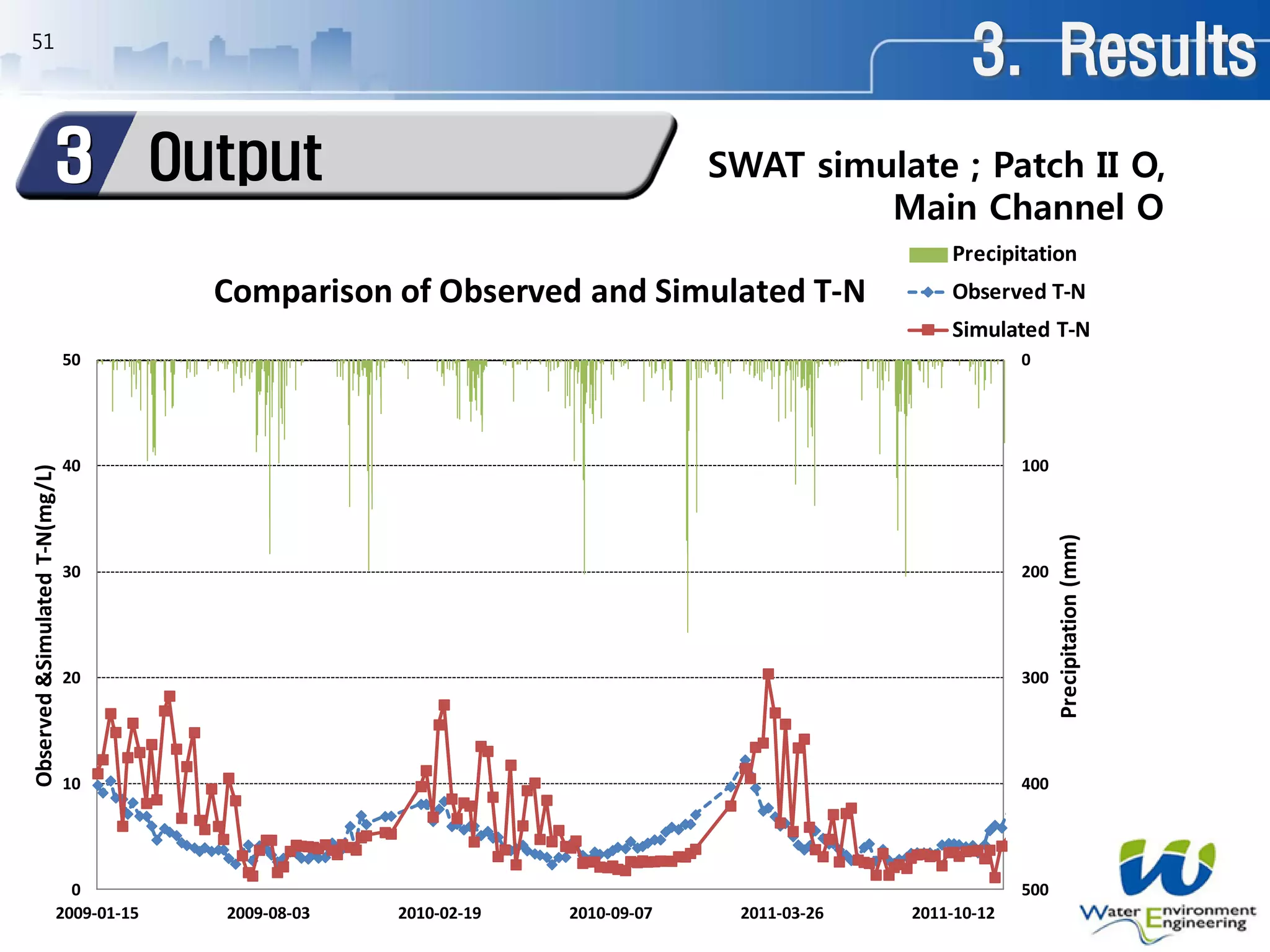
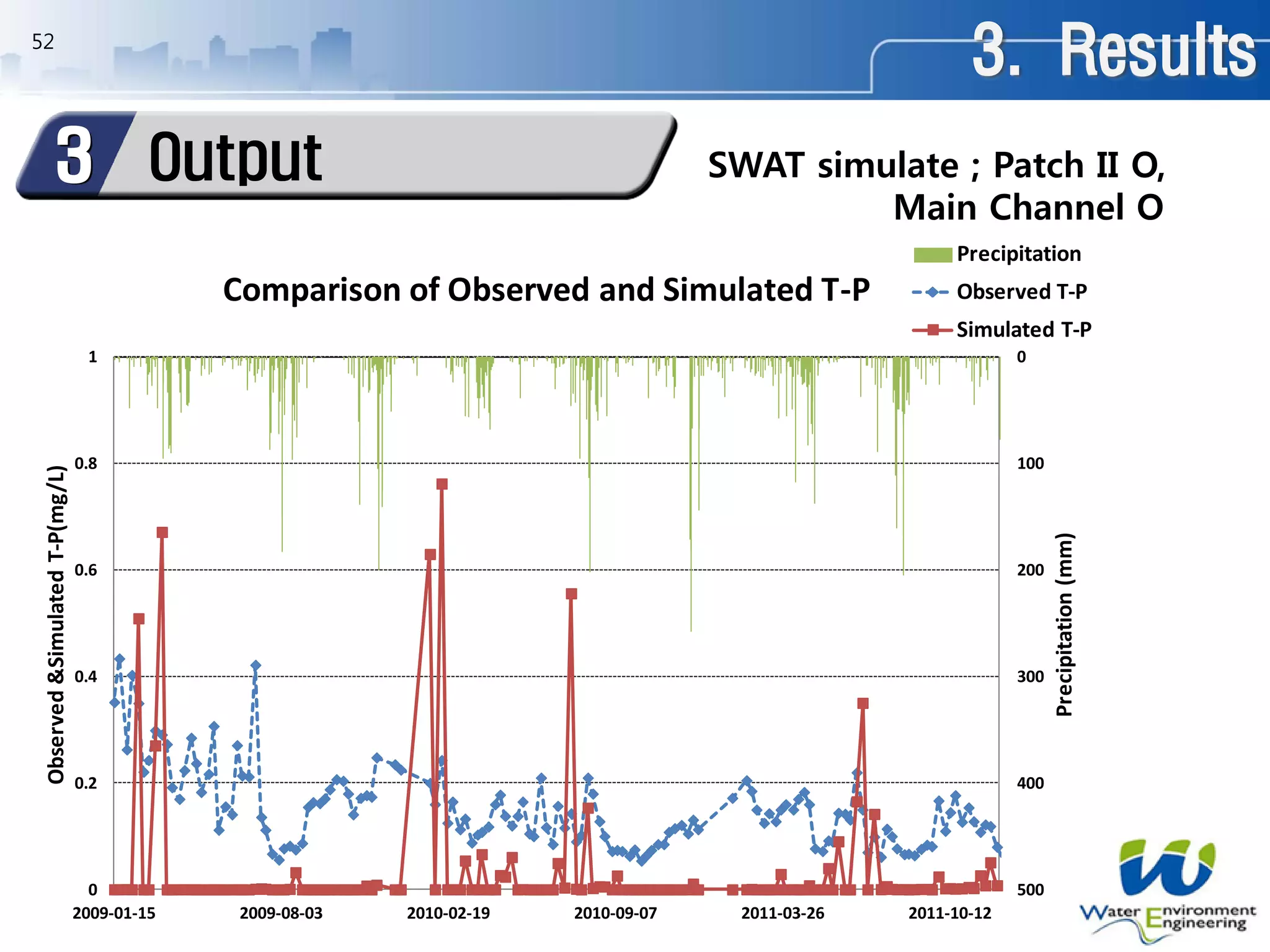
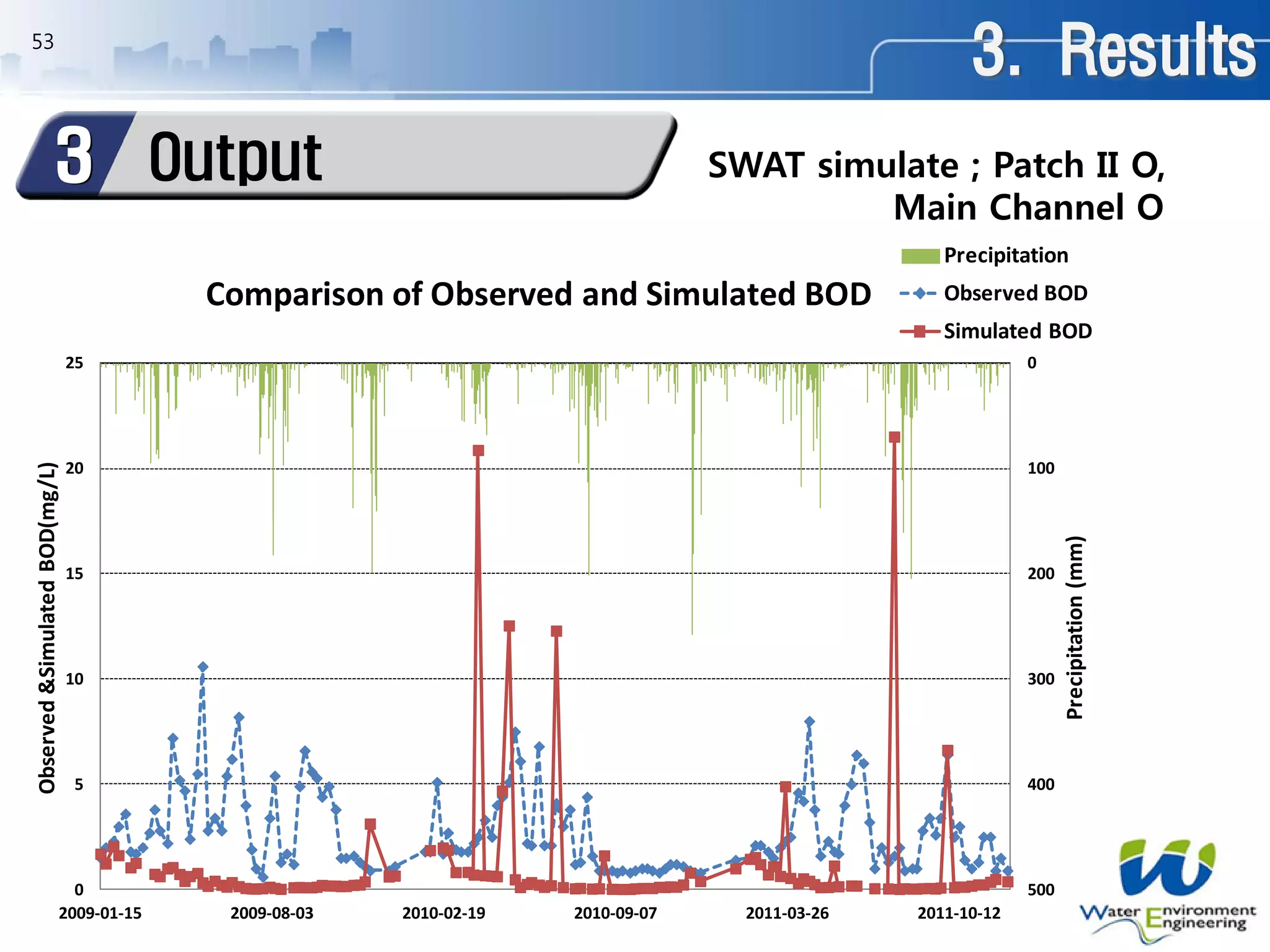
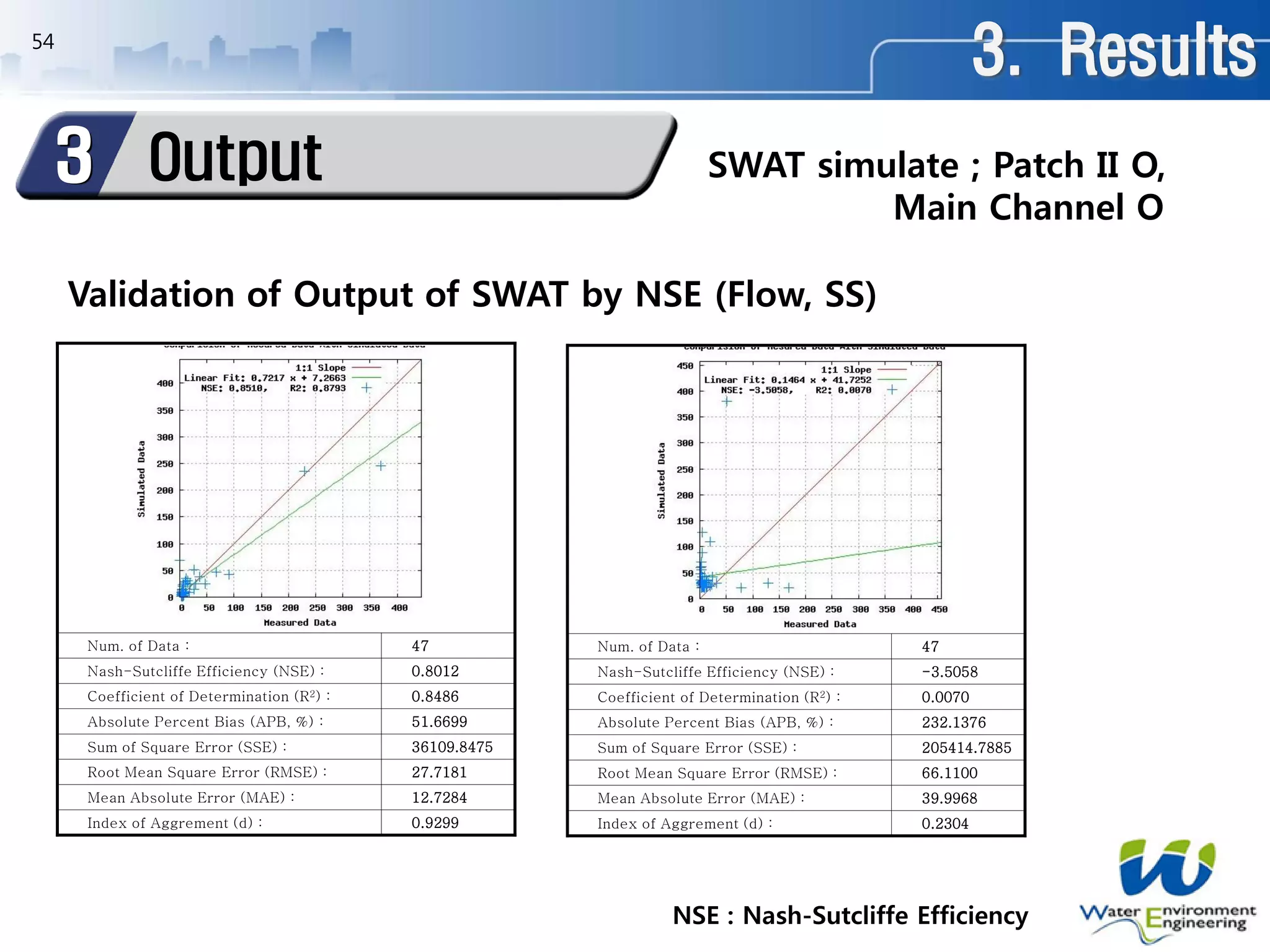
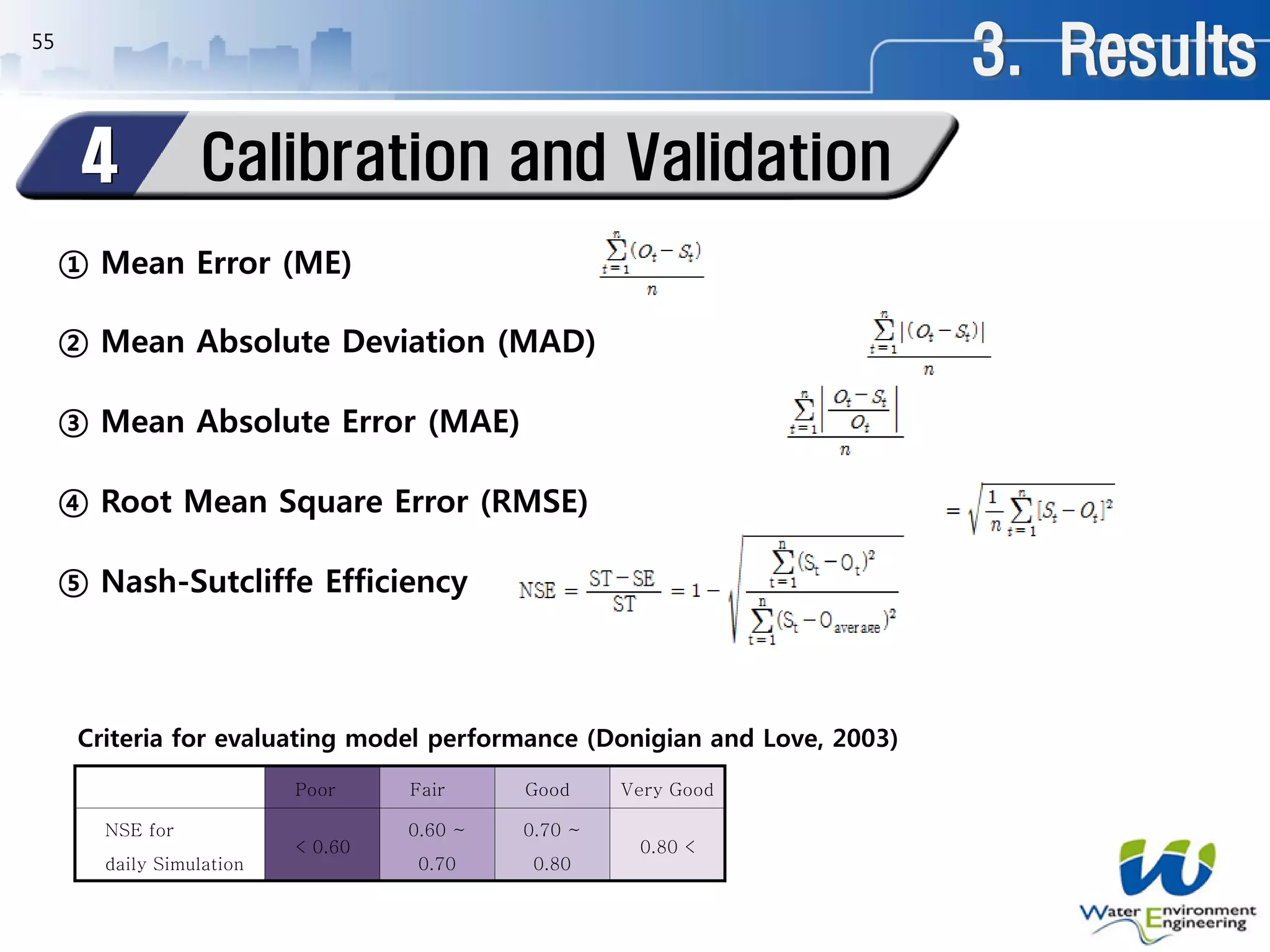
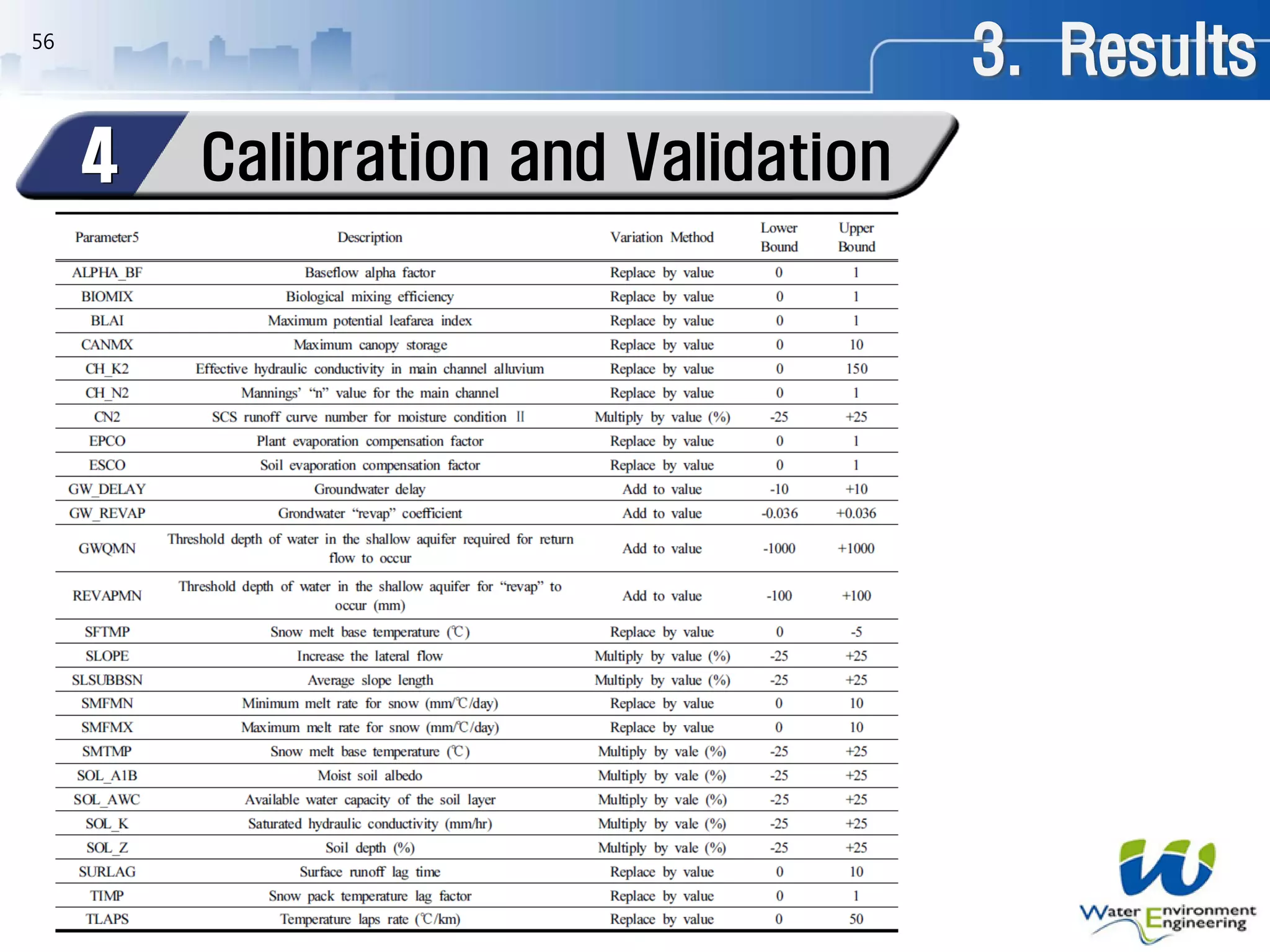
The study used GIS and the SWAT water quality model to estimate pollutant loads from point and non-point sources in the Gyoungahn River watershed. The SWAT model was set up using spatial data on soils, land use, and climate inputs. Model parameters were modified to better represent the steep slopes and narrow channels common in Korean rivers. Model outputs for flow, sediments, nitrogen, phosphorus and BOD showed good agreement with observed data based on statistical evaluations. The study demonstrated the ability of a modified SWAT model to estimate pollutant loads for the purposes of total maximum daily load management in the watershed.




![[세계일보] 서울 도시정책 수출 현장을 가다](https://cdn.slidesharecdn.com/ss_thumbnails/1-2-151012235736-lva1-app6892-thumbnail.jpg?width=640&height=640&fit=bounds)


