Building Enterprise
Developing the capacity of Social
Enterprise in Nottingham
Briefing Event
Monday 17 June 2014
@buildSocialEnt #buildEntBrief
11:15 Welcome and introduction
11:25 Building Enterprise: Introducing the project
- How to commission research and how it can help your organisation
- Evidencing impact: using data and telling your story
- New digital economy – what does it mean for social enterprises?
12:15 Introducing an Organisational Needs Analysis
12:30 Lunch
1:15 Targeted discussion workshops
1:45 Get involved
2:00 Close: Tea and cakes
Programme
What is Building Enterprise?
• Building Enterprise is a University and Community Partnership project, jointly
funded by European Regional Development Funds (ERDF), aimed at
supporting the development and growth of Social Enterprises.
• Funding for the project is currently available until June 2015
• The project came about from a Community Partnerships strategy aimed at
attempting to increase innovation and enterprise within the Community. It
follows a similar project that was undertaken previously using Roberts
Programme funding.
• One of the key aims of this project is to enable participants to identify a need
within their own organisation and with the University’s support, to develop
appropriate solutions to meet that need.
Benefits
• Building Enterprise aims to develop the capacity of Social Enterprises in
Nottingham and support your organisation to:
• Research ideas, trends and issues affecting you and the wider
community.
• Explore opportunities offered by advances in technology.
• Make use of the University’s world class resources and expertise.
• Utilise the University’s wealth of resources to build up your
expertise, make new contacts and access support and development
opportunities for your organisation.
Challenges: How can the
University help you?
• Organisational development – from setting up a new Social Enterprise to
adapting the way you do things in an existing one to maximise efficiency.
• Developing ways of measuring and improving your social and /or
environmental impact.
• Using advances in new technology to be more innovative, cost efficient and
competitive.
• The ability to analyse data and statistics to research growth areas and
explore new market opportunities.
• Be part of the University’s Community network and benefit by promoting
yourself and keeping updated about other available support activities.
Accessing and Commissioning
Research
Project Target:
• Building Enterprise is contracted by ERDF to achieve 55 graduate placements
over the lifetime of the project.
Number of Hours:
• Each graduate placement should complete a specific piece of work taking up
to a maximum of 100 hours.
Total Cost:
• The graduate will receive a payment of £10 per hour
Cost to the Social Enterprise:
• The Social Enterprise will contribute only £3 per hour
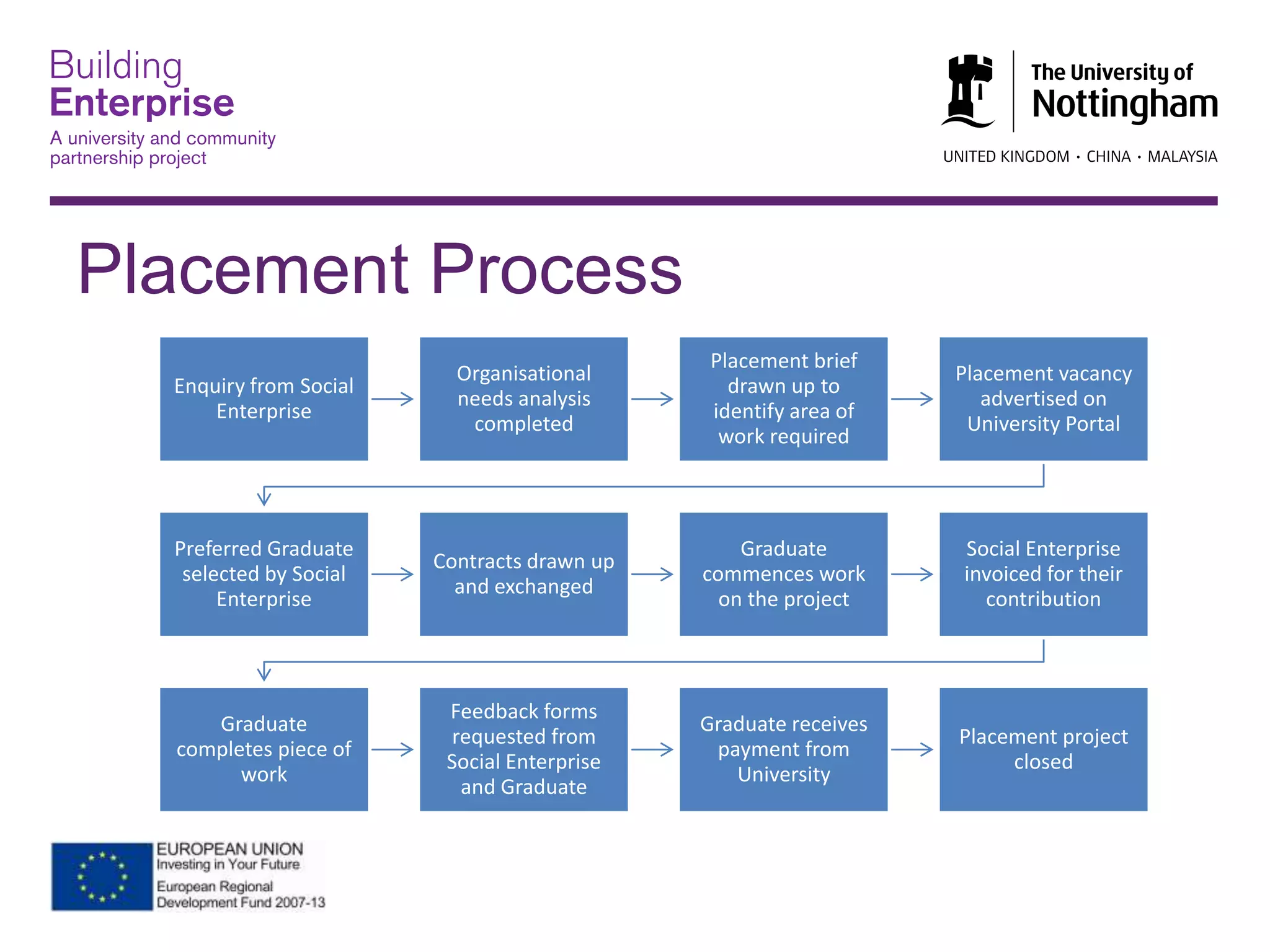
Placement Process
Enquiry from Social
Enterprise
Organisational
needs analysis
completed
Placement brief
drawn up to
identify area of
work required
Placement vacancy
advertised on
University Portal
Preferred Graduate
selected by Social
Enterprise
Contracts drawn up
and exchanged
Graduate
commences work
on the project
Social Enterprise
invoiced for their
contribution
Graduate
completes piece of
work
Feedback forms
requested from
Social Enterprise
and Graduate
Graduate receives
payment from
University
Placement project
closed
Evidencing impact: using data
and telling your story
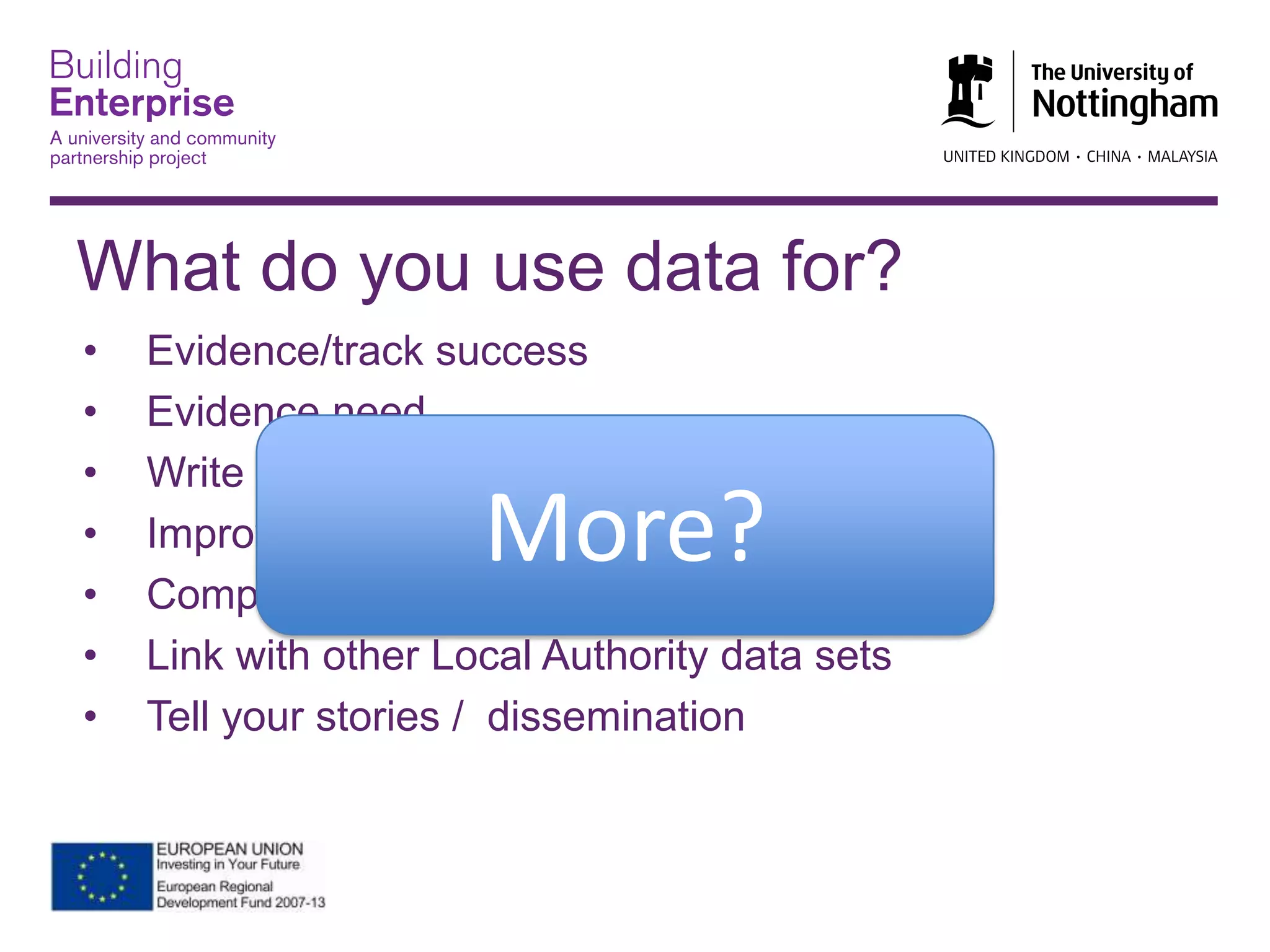
• Evidence/track success
• Evidence need
• Write funding proposals
• Improve services
• Compare with others in sector
• Link with other Local Authority data sets
• Tell your stories / dissemination
What do you use data for?
More?
“The opportunities offered by wider use of data in the third
sector are many, from allowing individual organisations to
provide donors and funding bodies with more tangible
evidence of their successes, to opening up previously
inaccessible datasets that could revolutionise their
operations.”
http://www.guardian.co.uk/news/datablog/2013/apr/30/open
-data-charities-perfect-fit
1. Impact and data
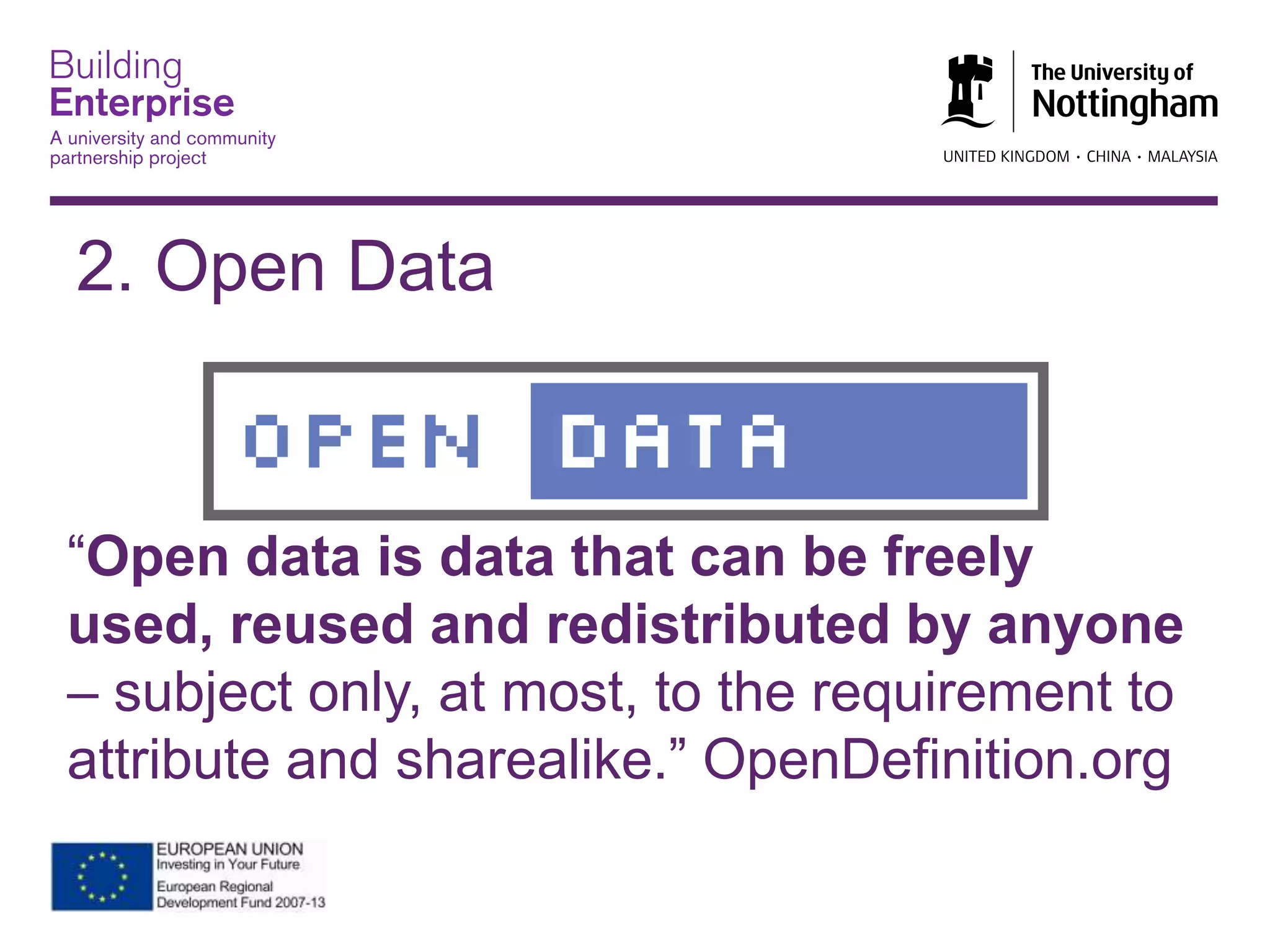
“Open data is data that can be freely
used, reused and redistributed by anyone
– subject only, at most, to the requirement to
attribute and sharealike.” OpenDefinition.org
2. Open Data
3. Open data for Social enterprise
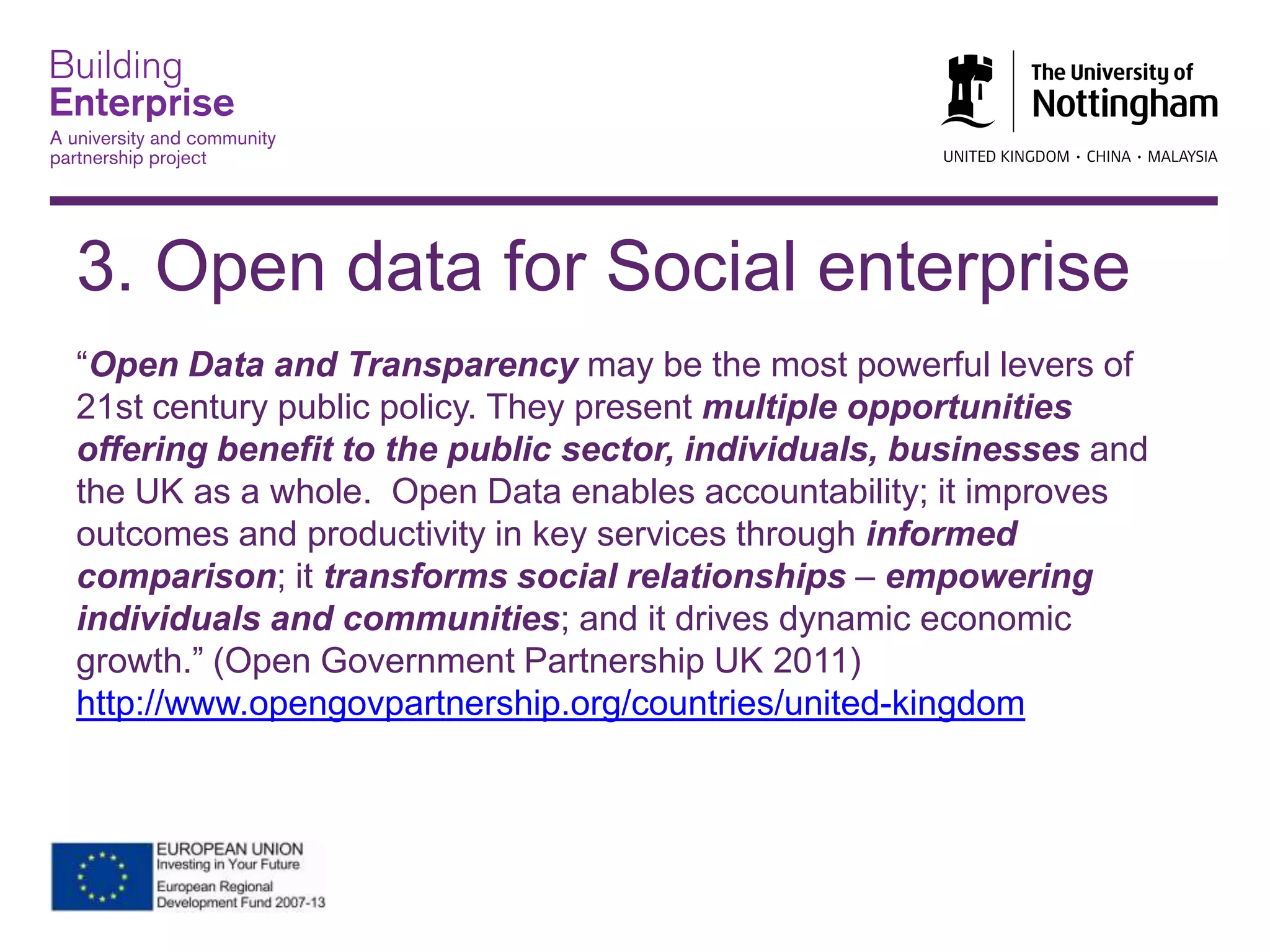
“Open Data and Transparency may be the most powerful levers of
21st century public policy. They present multiple opportunities
offering benefit to the public sector, individuals, businesses and
the UK as a whole. Open Data enables accountability; it improves
outcomes and productivity in key services through informed
comparison; it transforms social relationships – empowering
individuals and communities; and it drives dynamic economic
growth.” (Open Government Partnership UK 2011)
http://www.opengovpartnership.org/countries/united-kingdom
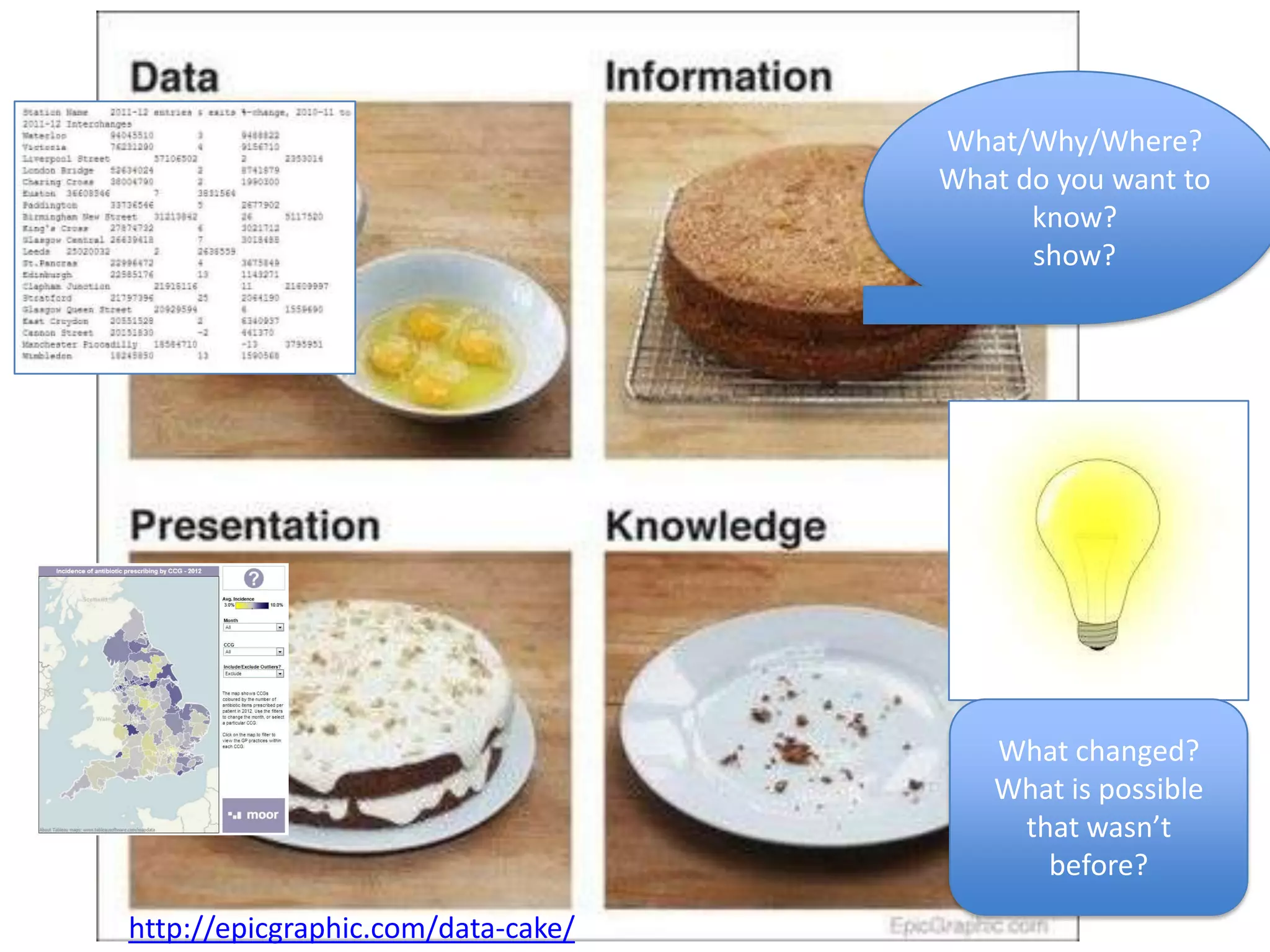
What/Why/Where?
What do you want to
know?
show?
What changed?
What is possible
that wasn’t
before?
http://epicgraphic.com/data-cake/
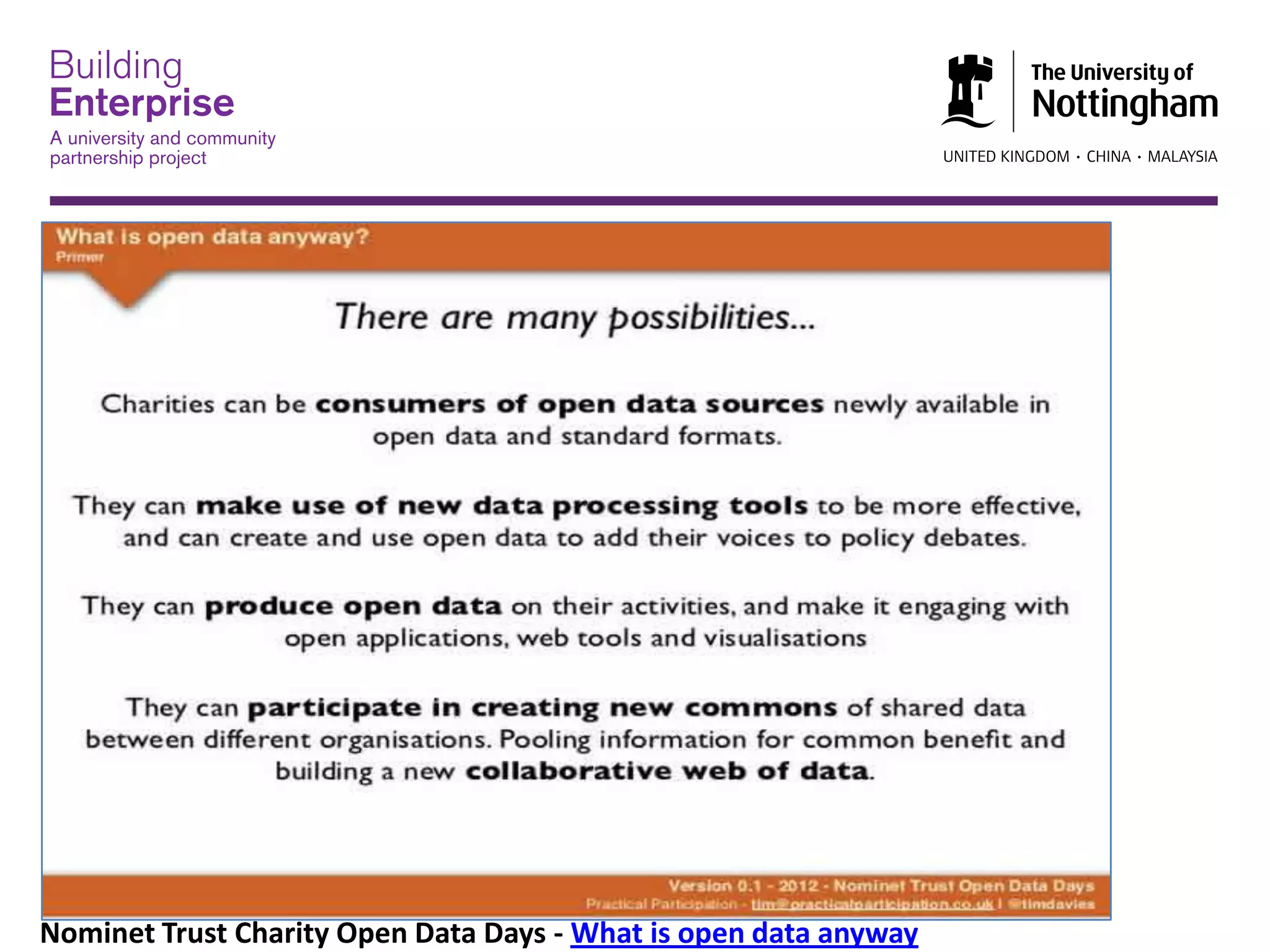
Nominet Trust Charity Open Data Days - What is open data anyway
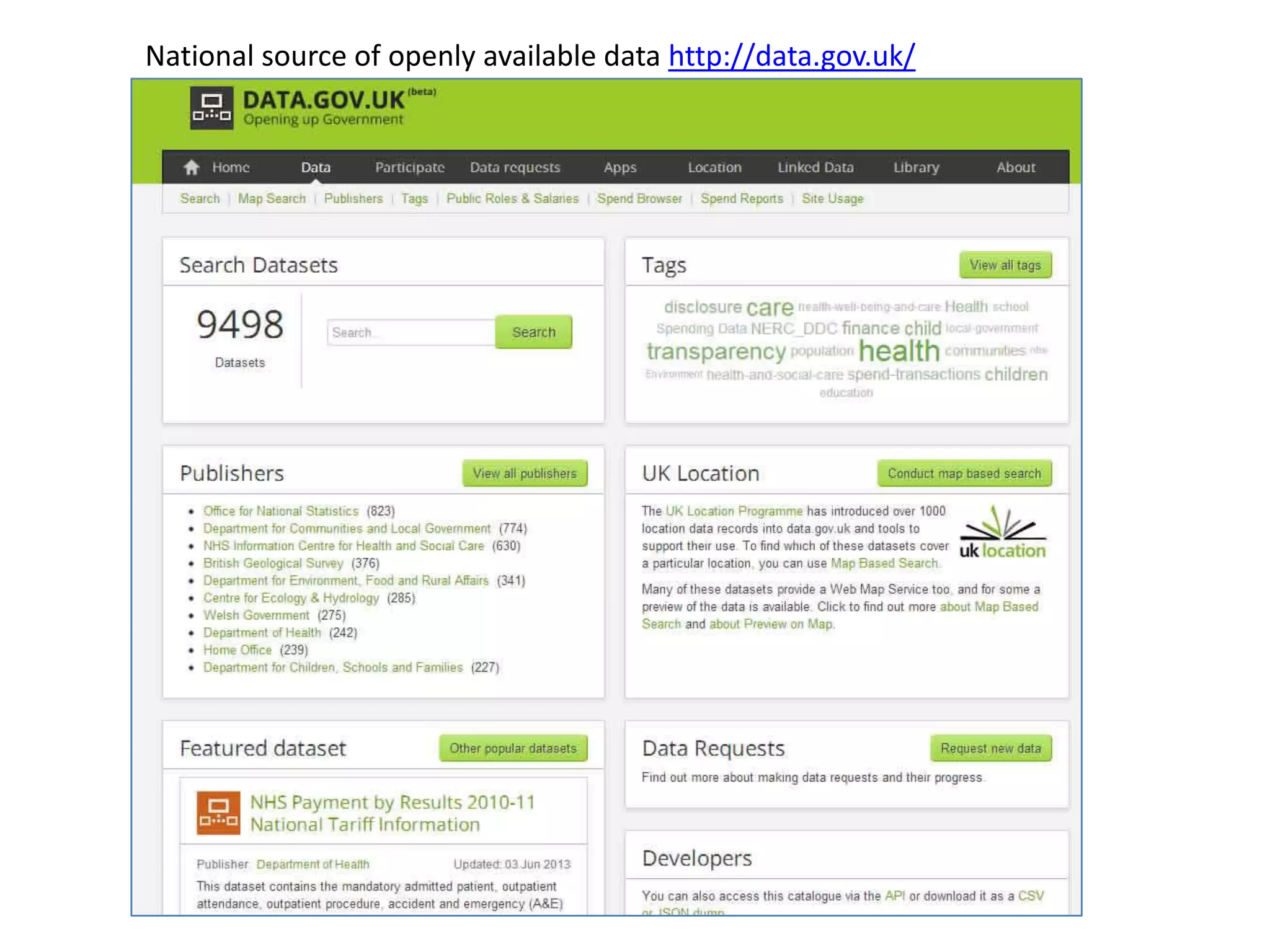
National source of openly available data http://data.gov.uk/
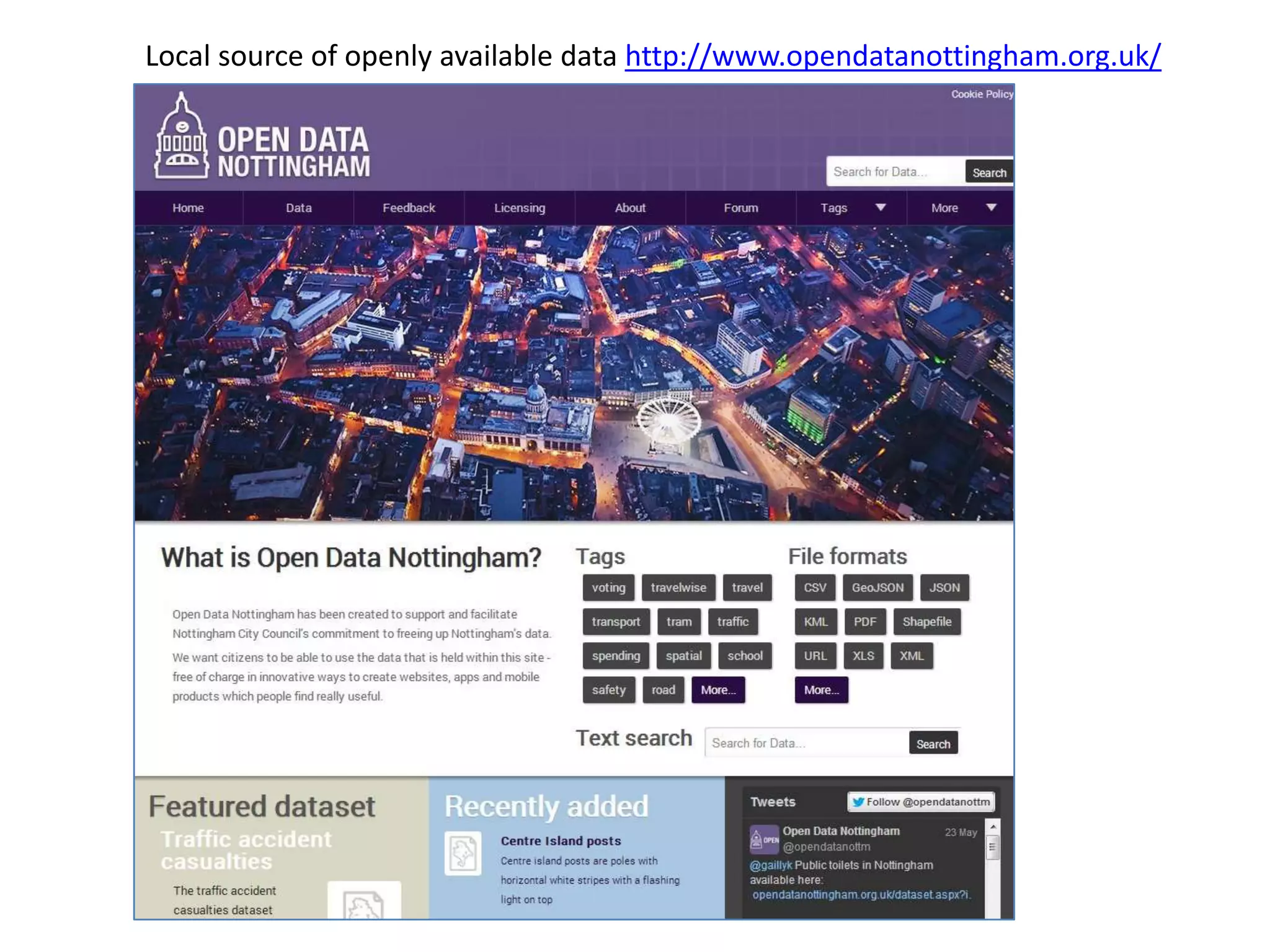
Local source of openly available data http://www.opendatanottingham.org.uk/
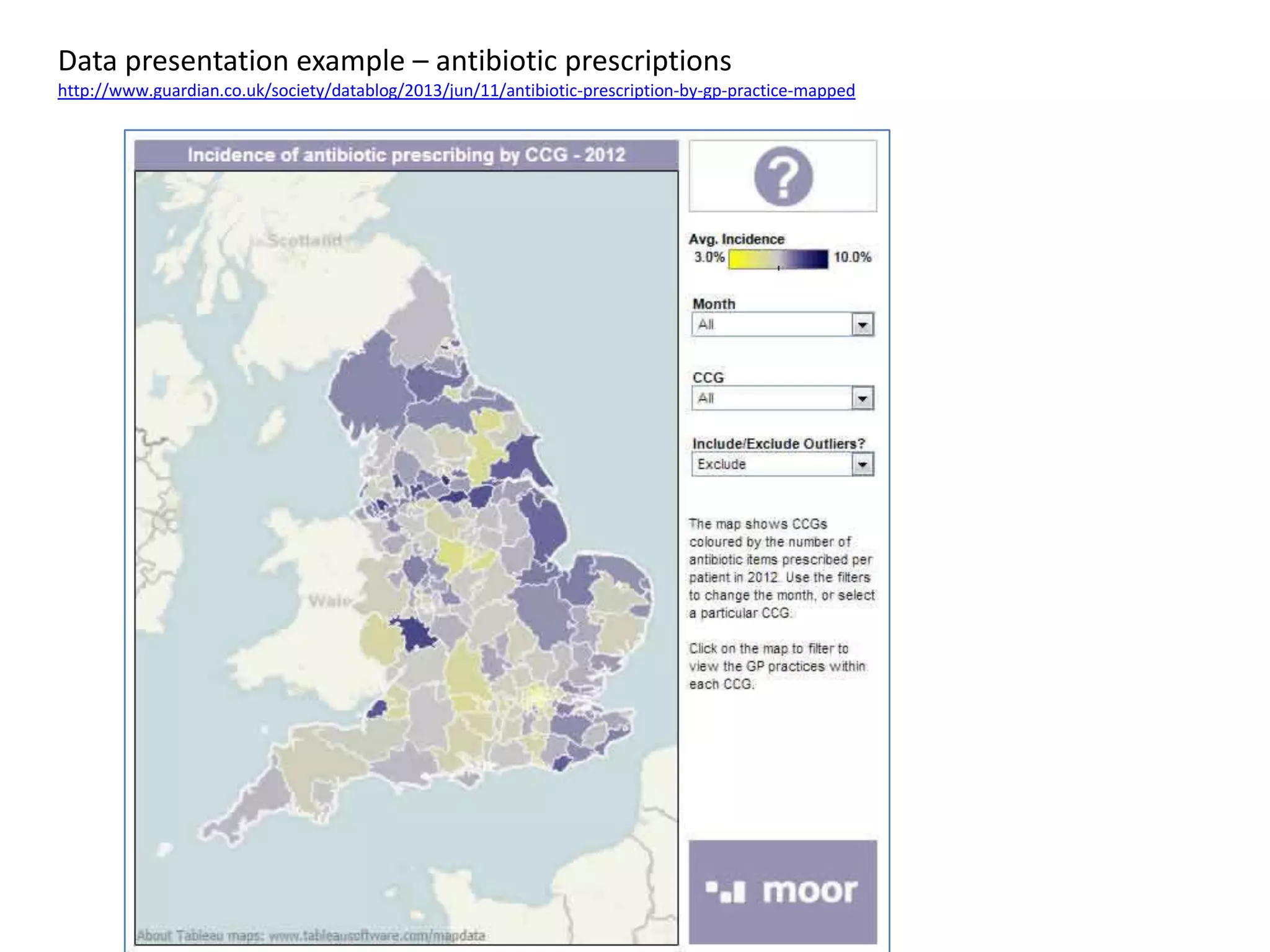
Data presentation example – antibiotic prescriptions
http://www.guardian.co.uk/society/datablog/2013/jun/11/antibiotic-prescription-by-gp-practice-mapped
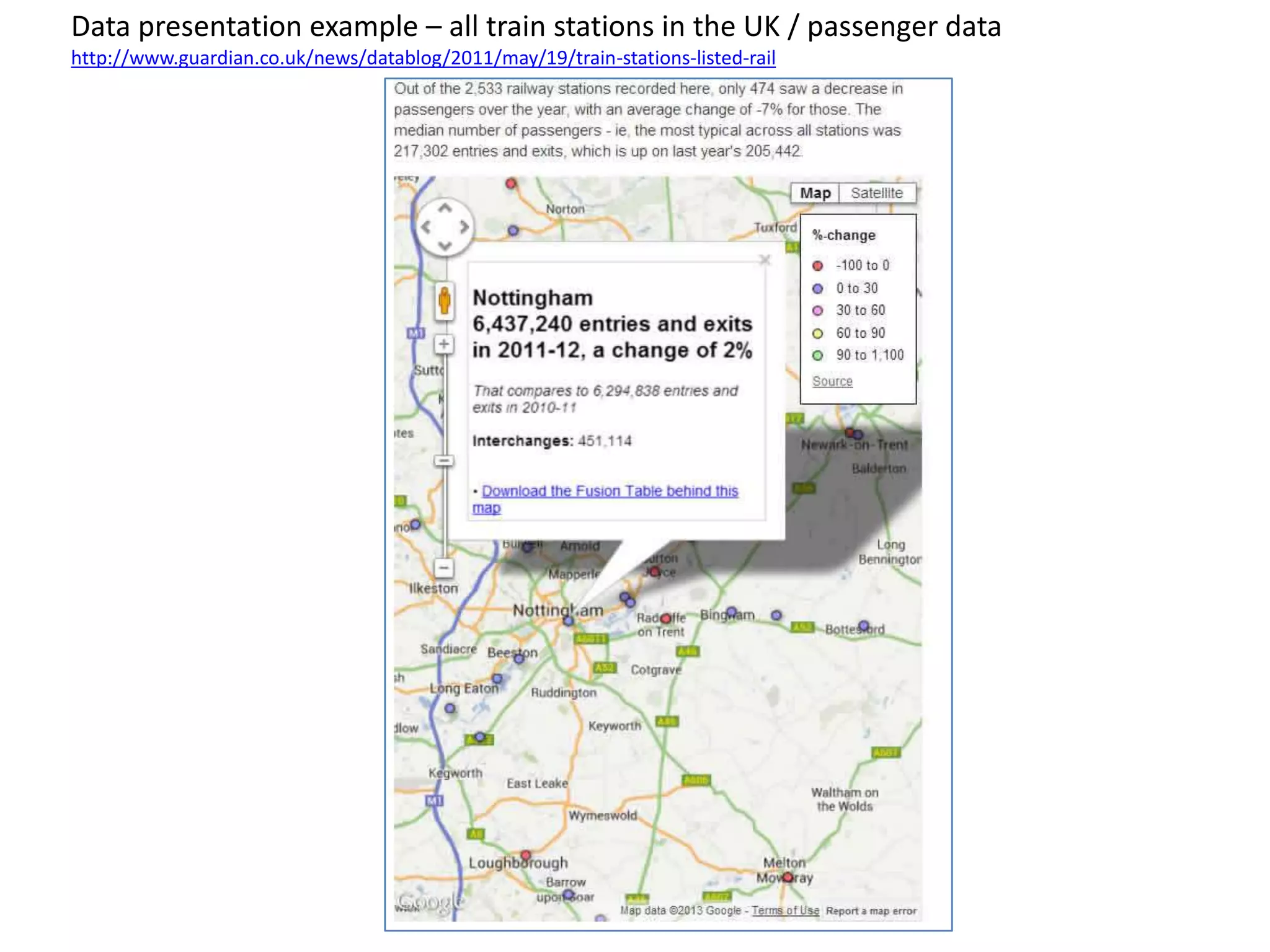
Data presentation example – all train stations in the UK / passenger data
http://www.guardian.co.uk/news/datablog/2011/may/19/train-stations-listed-rail
New opportunities?
“providing performance information for schools from preschool through college
with data from states and other sources, making education choices easier.”
“A company is letting consumers track their energy use and provides tips based
on household consumption patterns”
http://mashable.com/2013/05/30/7-ways-government-open-data/
What do you think?
Digital story-telling to demonstrate
impact
• Social media
• Images / infographics
• Blogging
• Video
http://en.wikipedia.org/wiki/Timeline_of_Star_Trek
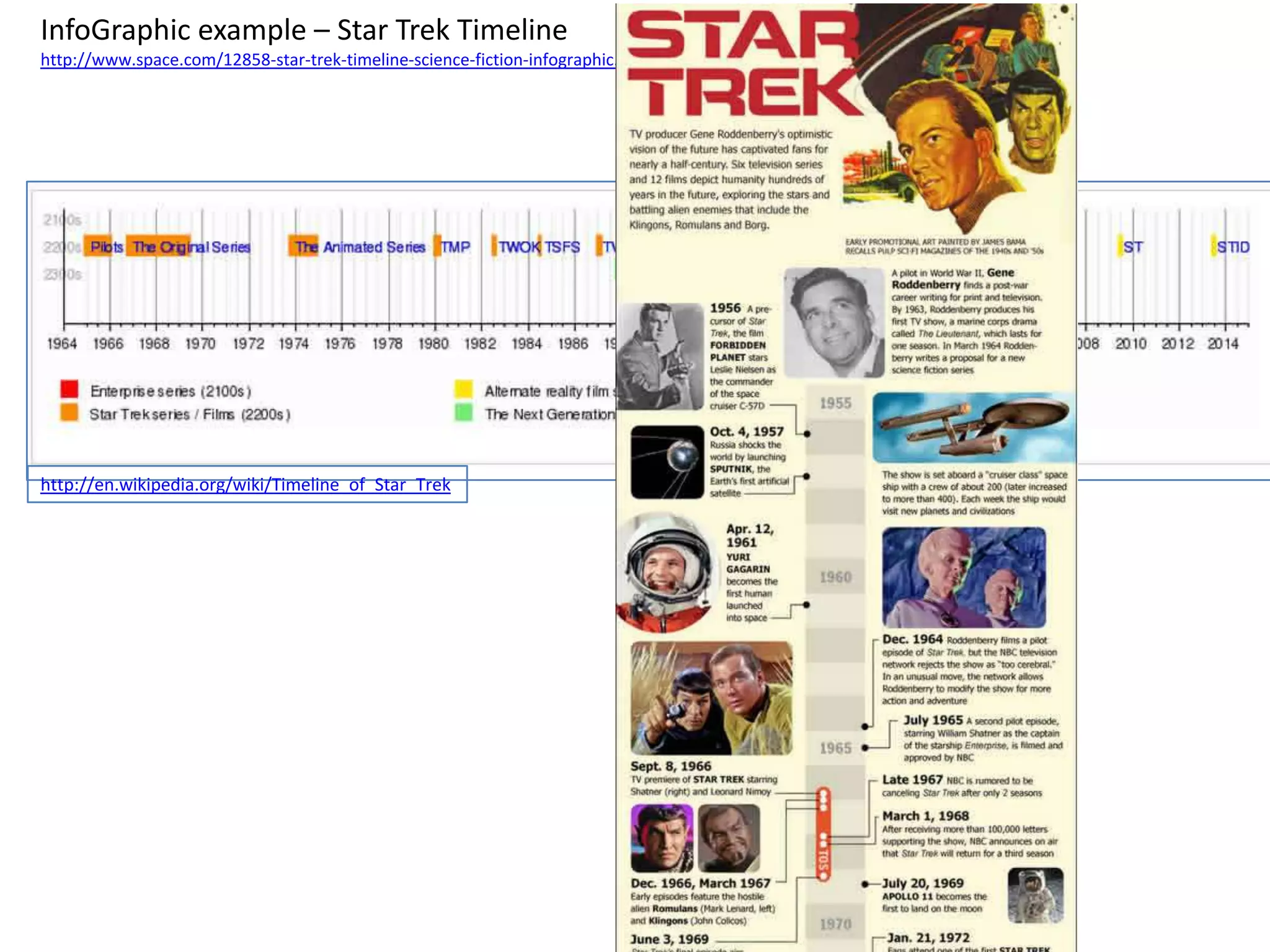
InfoGraphic example – Star Trek Timeline
http://www.space.com/12858-star-trek-timeline-science-fiction-infographic.html
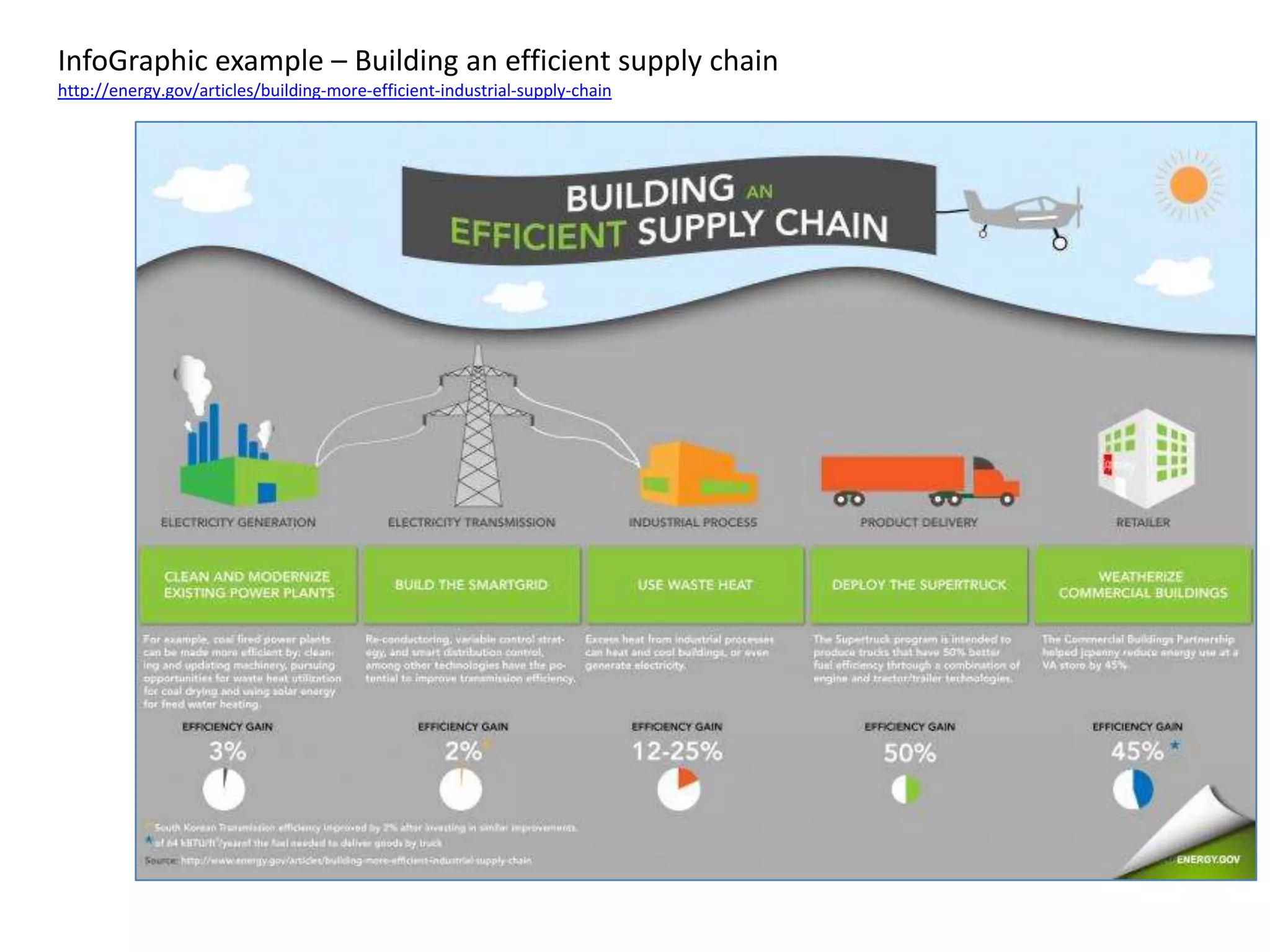
InfoGraphic example – Building an efficient supply chain
http://energy.gov/articles/building-more-efficient-industrial-supply-chain
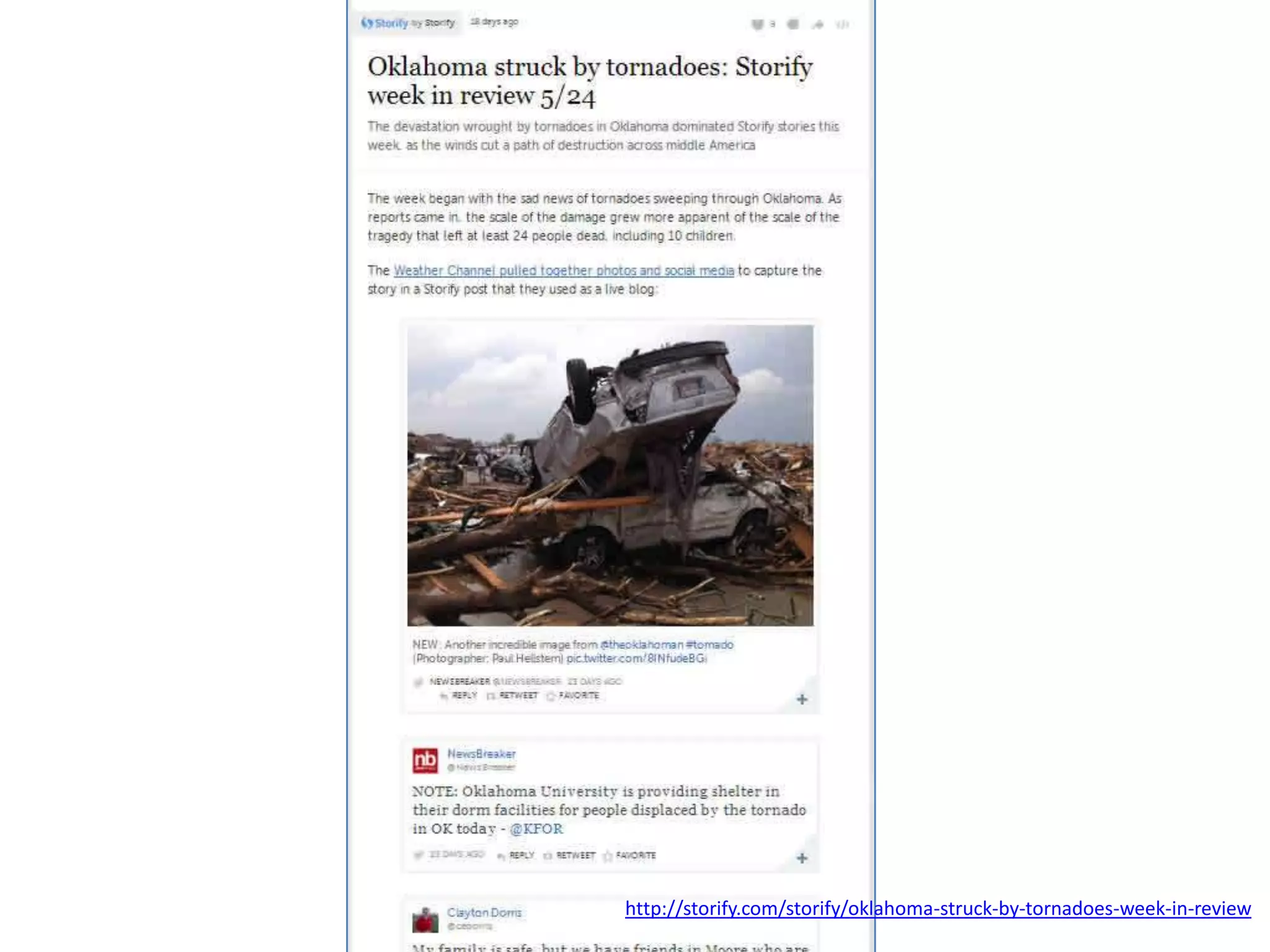
http://storify.com/storify/oklahoma-struck-by-tornadoes-week-in-review
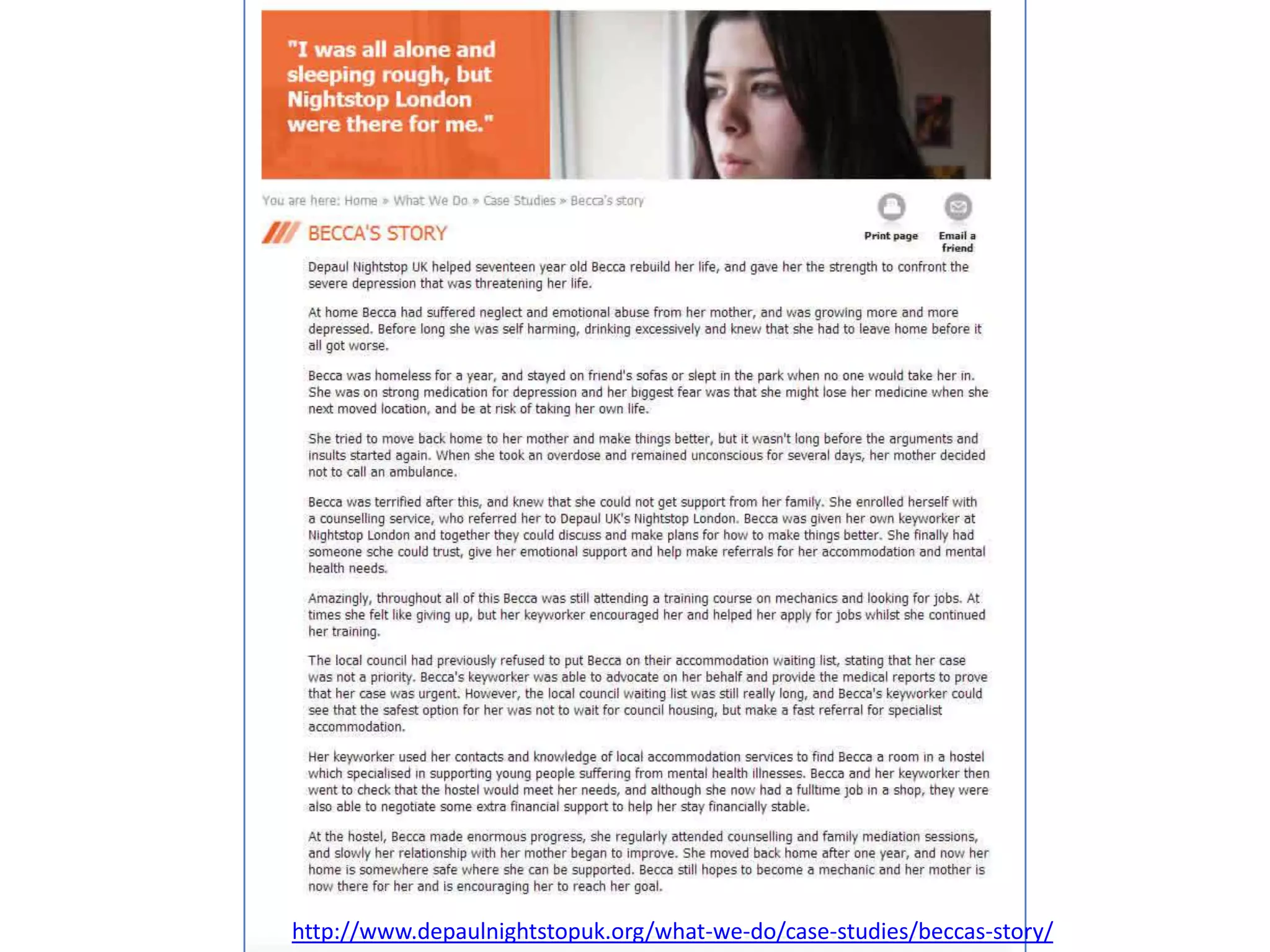
http://www.depaulnightstopuk.org/what-we-do/case-studies/beccas-story/
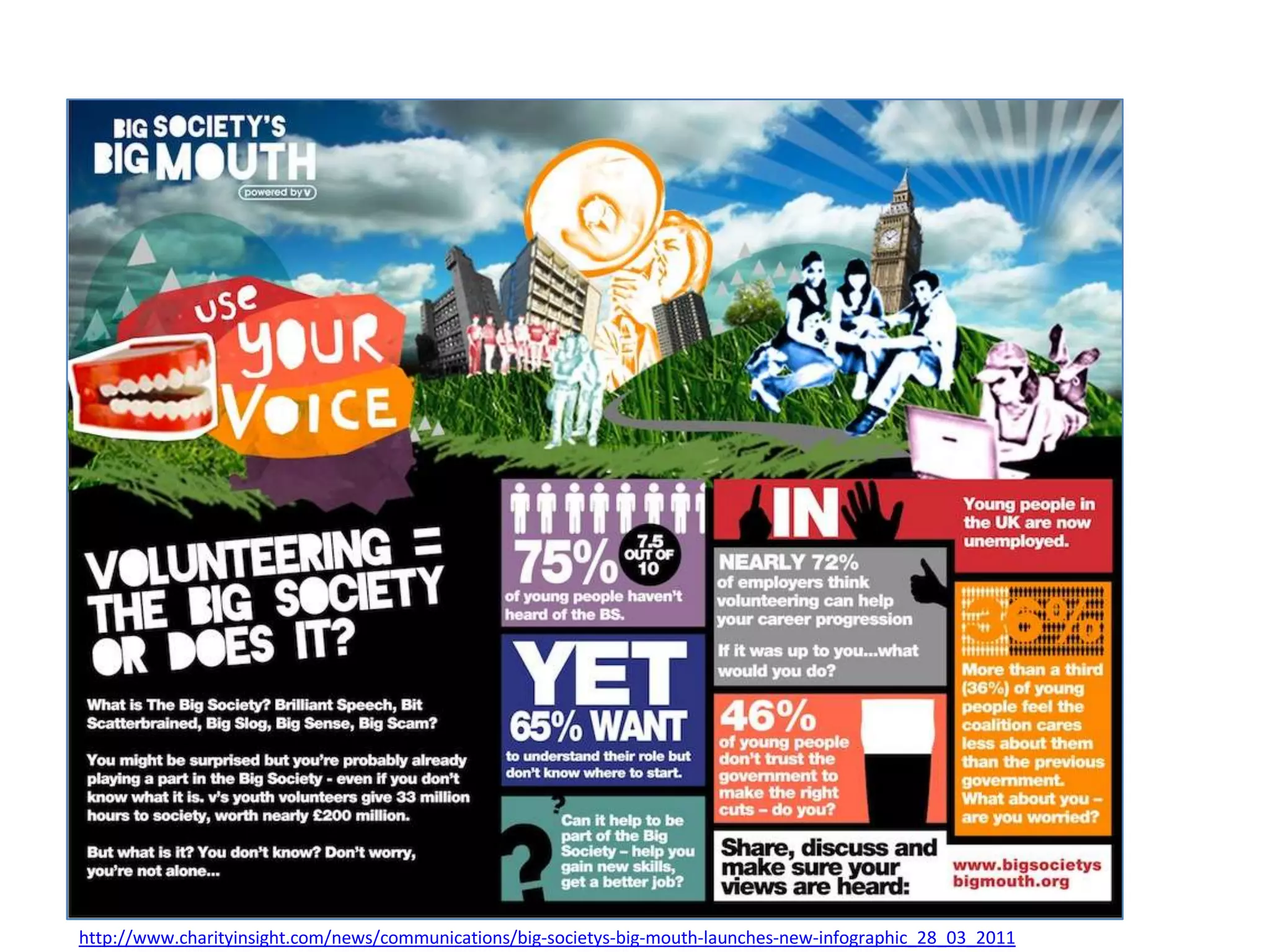
http://www.charityinsight.com/news/communications/big-societys-big-mouth-launches-new-infographic_28_03_2011
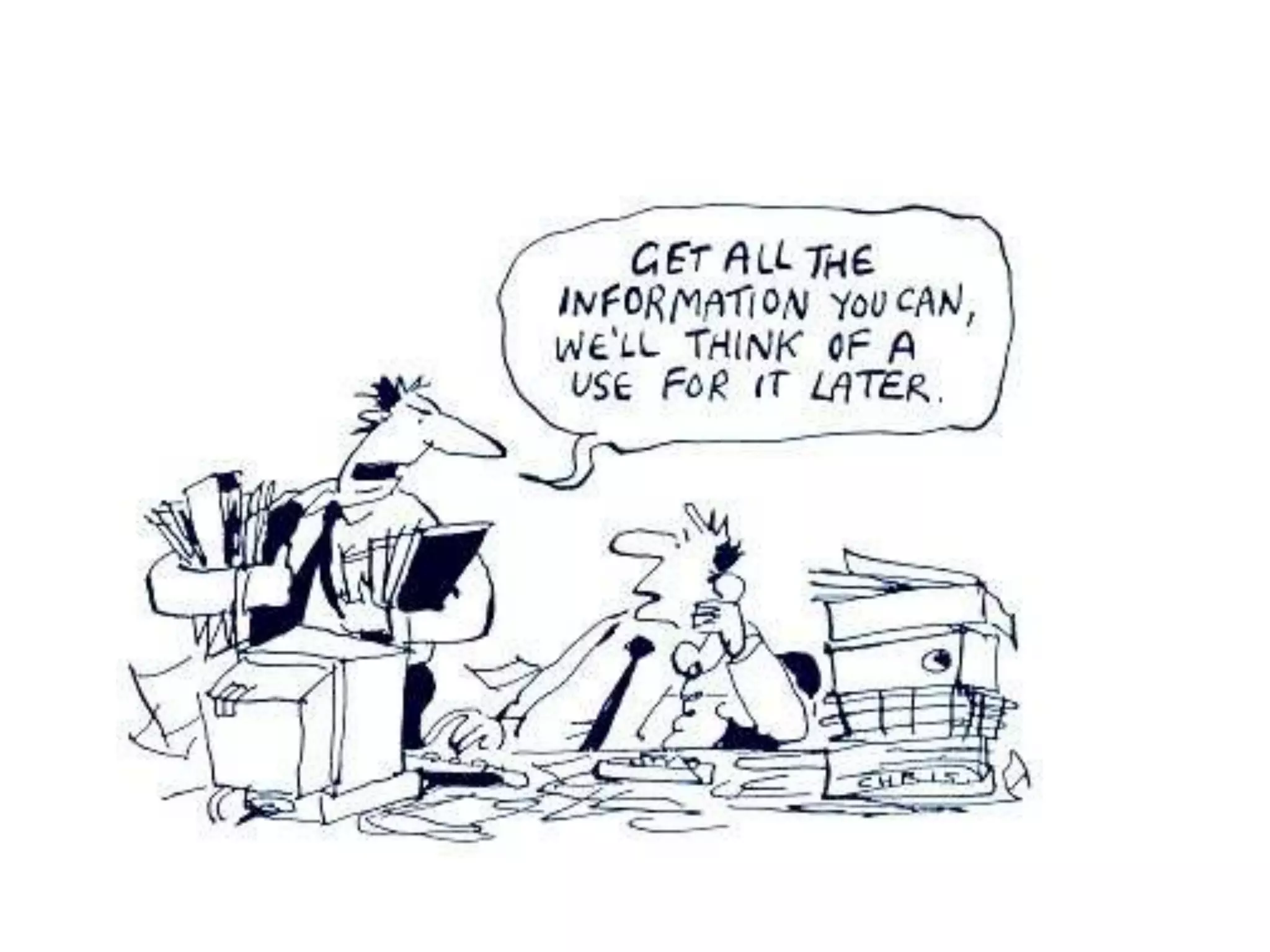
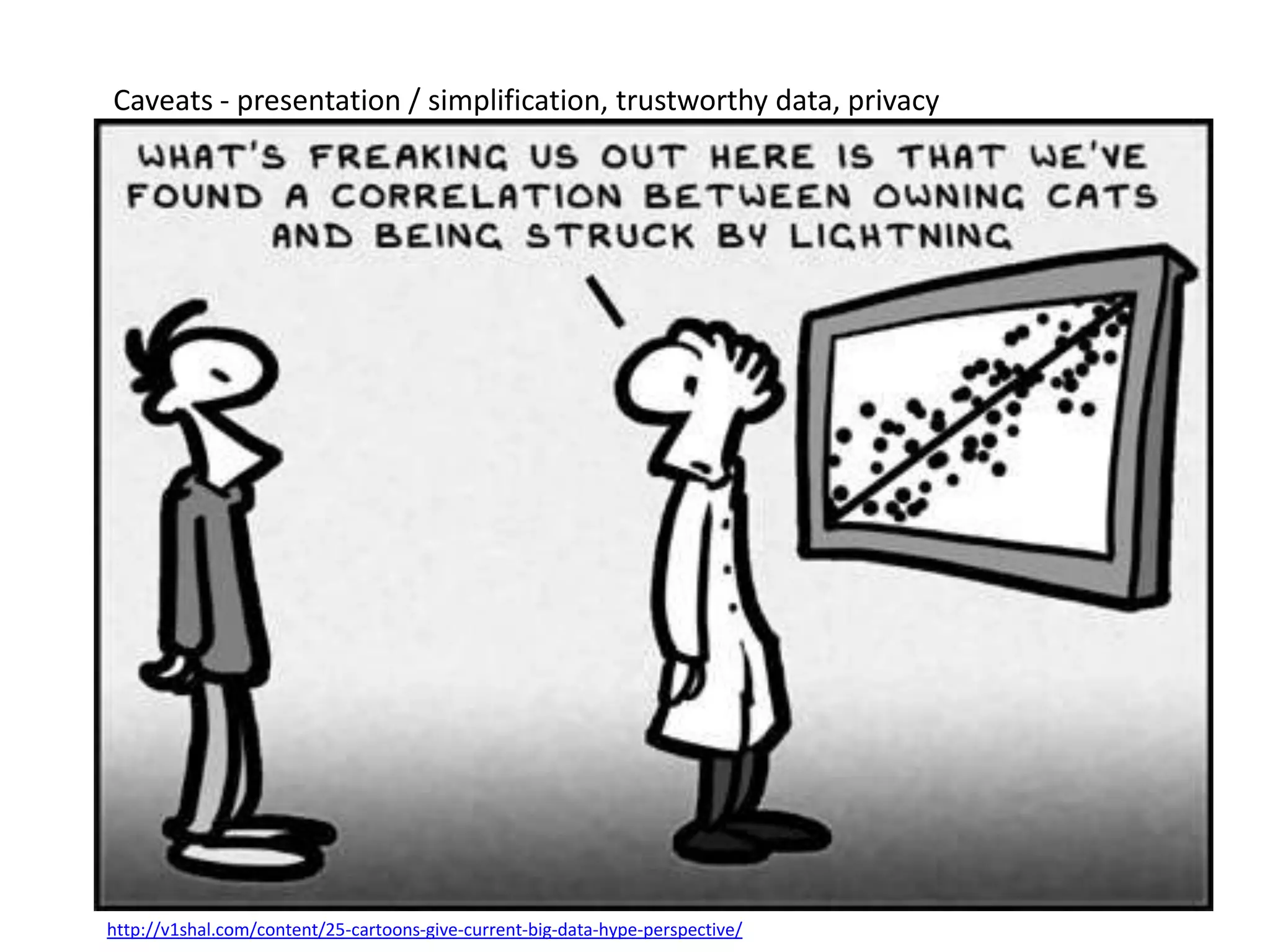
Caveats - presentation / simplification, trustworthy data, privacy
http://v1shal.com/content/25-cartoons-give-current-big-data-hype-perspective/
Do I have to be an expert?
• Help through Building Enterprise
• Tools are available
• Placement opportunities
• Working regionally/smarter – partnerships
for data / smart cities
What else can help?
• Open Source ICT
• „no‟ or „low‟ cost ICT
• Cloud
For file storage/sharing, meeting
organisation, event management,
blogging/websites, Office tools, accounting
etc…..
Organisational Needs Analysis
Digging deeper
Discussion activity
Get involved
• Request an Organisational Needs Analysis via
the form on our website:
www.nottingham.ac.uk/buildingenterprise
Thank You

Presentation for be briefing 17th june 2013

  • 1.
    Building Enterprise Developing thecapacity of Social Enterprise in Nottingham Briefing Event Monday 17 June 2014 @buildSocialEnt #buildEntBrief
  • 2.
    11:15 Welcome andintroduction 11:25 Building Enterprise: Introducing the project - How to commission research and how it can help your organisation - Evidencing impact: using data and telling your story - New digital economy – what does it mean for social enterprises? 12:15 Introducing an Organisational Needs Analysis 12:30 Lunch 1:15 Targeted discussion workshops 1:45 Get involved 2:00 Close: Tea and cakes Programme
  • 3.
    What is BuildingEnterprise? • Building Enterprise is a University and Community Partnership project, jointly funded by European Regional Development Funds (ERDF), aimed at supporting the development and growth of Social Enterprises. • Funding for the project is currently available until June 2015 • The project came about from a Community Partnerships strategy aimed at attempting to increase innovation and enterprise within the Community. It follows a similar project that was undertaken previously using Roberts Programme funding. • One of the key aims of this project is to enable participants to identify a need within their own organisation and with the University’s support, to develop appropriate solutions to meet that need.
  • 4.
    Benefits • Building Enterpriseaims to develop the capacity of Social Enterprises in Nottingham and support your organisation to: • Research ideas, trends and issues affecting you and the wider community. • Explore opportunities offered by advances in technology. • Make use of the University’s world class resources and expertise. • Utilise the University’s wealth of resources to build up your expertise, make new contacts and access support and development opportunities for your organisation.
  • 5.
    Challenges: How canthe University help you? • Organisational development – from setting up a new Social Enterprise to adapting the way you do things in an existing one to maximise efficiency. • Developing ways of measuring and improving your social and /or environmental impact. • Using advances in new technology to be more innovative, cost efficient and competitive. • The ability to analyse data and statistics to research growth areas and explore new market opportunities. • Be part of the University’s Community network and benefit by promoting yourself and keeping updated about other available support activities.
  • 6.
    Accessing and Commissioning Research ProjectTarget: • Building Enterprise is contracted by ERDF to achieve 55 graduate placements over the lifetime of the project. Number of Hours: • Each graduate placement should complete a specific piece of work taking up to a maximum of 100 hours. Total Cost: • The graduate will receive a payment of £10 per hour Cost to the Social Enterprise: • The Social Enterprise will contribute only £3 per hour
  • 7.
    Placement Process Enquiry fromSocial Enterprise Organisational needs analysis completed Placement brief drawn up to identify area of work required Placement vacancy advertised on University Portal Preferred Graduate selected by Social Enterprise Contracts drawn up and exchanged Graduate commences work on the project Social Enterprise invoiced for their contribution Graduate completes piece of work Feedback forms requested from Social Enterprise and Graduate Graduate receives payment from University Placement project closed
  • 8.
    Evidencing impact: usingdata and telling your story
  • 10.
    • Evidence/track success •Evidence need • Write funding proposals • Improve services • Compare with others in sector • Link with other Local Authority data sets • Tell your stories / dissemination What do you use data for? More?
  • 11.
    “The opportunities offeredby wider use of data in the third sector are many, from allowing individual organisations to provide donors and funding bodies with more tangible evidence of their successes, to opening up previously inaccessible datasets that could revolutionise their operations.” http://www.guardian.co.uk/news/datablog/2013/apr/30/open -data-charities-perfect-fit 1. Impact and data
  • 12.
    “Open data isdata that can be freely used, reused and redistributed by anyone – subject only, at most, to the requirement to attribute and sharealike.” OpenDefinition.org 2. Open Data
  • 13.
    3. Open datafor Social enterprise “Open Data and Transparency may be the most powerful levers of 21st century public policy. They present multiple opportunities offering benefit to the public sector, individuals, businesses and the UK as a whole. Open Data enables accountability; it improves outcomes and productivity in key services through informed comparison; it transforms social relationships – empowering individuals and communities; and it drives dynamic economic growth.” (Open Government Partnership UK 2011) http://www.opengovpartnership.org/countries/united-kingdom
  • 14.
    What/Why/Where? What do youwant to know? show? What changed? What is possible that wasn’t before? http://epicgraphic.com/data-cake/
  • 15.
    Nominet Trust CharityOpen Data Days - What is open data anyway
  • 16.
    National source ofopenly available data http://data.gov.uk/
  • 17.
    Local source ofopenly available data http://www.opendatanottingham.org.uk/
  • 18.
    Data presentation example– antibiotic prescriptions http://www.guardian.co.uk/society/datablog/2013/jun/11/antibiotic-prescription-by-gp-practice-mapped
  • 19.
    Data presentation example– all train stations in the UK / passenger data http://www.guardian.co.uk/news/datablog/2011/may/19/train-stations-listed-rail
  • 20.
    New opportunities? “providing performanceinformation for schools from preschool through college with data from states and other sources, making education choices easier.” “A company is letting consumers track their energy use and provides tips based on household consumption patterns” http://mashable.com/2013/05/30/7-ways-government-open-data/ What do you think?
  • 21.
    Digital story-telling todemonstrate impact • Social media • Images / infographics • Blogging • Video
  • 22.
    http://en.wikipedia.org/wiki/Timeline_of_Star_Trek InfoGraphic example –Star Trek Timeline http://www.space.com/12858-star-trek-timeline-science-fiction-infographic.html
  • 23.
    InfoGraphic example –Building an efficient supply chain http://energy.gov/articles/building-more-efficient-industrial-supply-chain
  • 24.
  • 25.
  • 26.
  • 27.
    Caveats - presentation/ simplification, trustworthy data, privacy http://v1shal.com/content/25-cartoons-give-current-big-data-hype-perspective/
  • 28.
    Do I haveto be an expert? • Help through Building Enterprise • Tools are available • Placement opportunities • Working regionally/smarter – partnerships for data / smart cities
  • 29.
    What else canhelp? • Open Source ICT • „no‟ or „low‟ cost ICT • Cloud For file storage/sharing, meeting organisation, event management, blogging/websites, Office tools, accounting etc…..
  • 31.
  • 32.
  • 33.
    Get involved • Requestan Organisational Needs Analysis via the form on our website: www.nottingham.ac.uk/buildingenterprise
  • 34.