UNIT 5
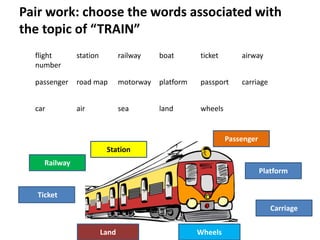
Pair work: choose the words associated with
the topic of “TRAIN”
flight
number
station railway boat ticket airway
passenger road map motorway platform passport carriage
car air sea land wheels
Station
Railway
Ticket
Passenger
Platform
Carriage
Land Wheels
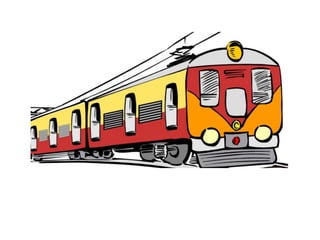
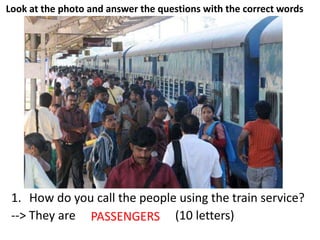
Look at the photo and answer the questions with the correct words
1. How do you call the people using the train service?
--> They are _ _ _ _ _ _ _ _ _ _ (10 letters)PASSENGERS
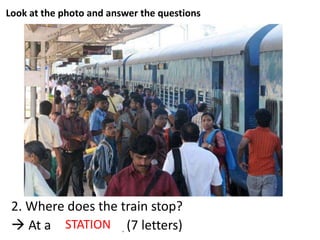
Look at the photo and answer the questions
2. Where does the train stop?
 At a _ _ _ _ _ _ _ (7 letters)STATION
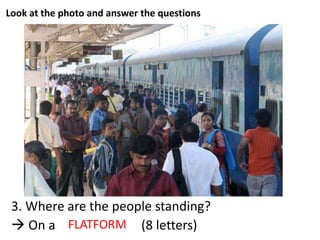
Look at the photo and answer the questions
3. Where are the people standing?
 On a _ _ _ _ _ _ _ _ (8 letters)FLATFORM
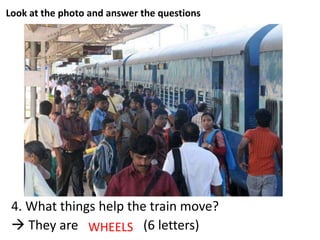
Look at the photo and answer the questions
4. What things help the train move?
 They are _ _ _ _ _ _ (6 letters)WHEELS
Look at the photo and answer the questions
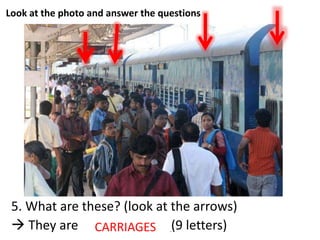
5. What are these? (look at the arrows)
 They are _ _ _ _ _ _ _ _ _(9 letters)CARRIAGES
Look at the photo and answer the questions
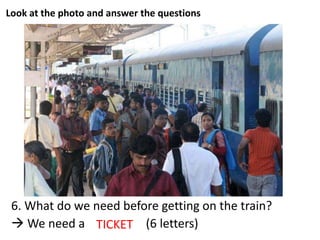
6. What do we need before getting on the train?
 We need a _ _ _ _ _ _ (6 letters)TICKET
Look at the photo and answer the questions
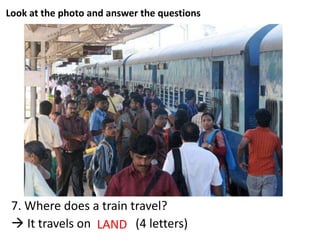
7. Where does a train travel?
 It travels on _ _ _ _ (4 letters)LAND
Look at the photo and answer the questions
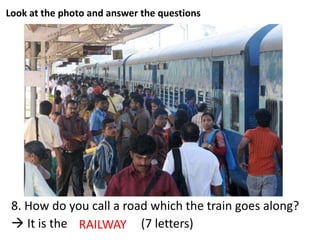
8. How do you call a road which the train goes along?
 It is the _ _ _ _ _ _ _ (7 letters)RAILWAY
Read the passage and find the names of the
famous train (activity 3, page 48)
1. ___________________________
2. ___________________________
The British Pullman Orient Express
The “Palaces on Wheels”
Read the passage again and answer the
questions below (page 48)
1. What does the Orient Express offer?
2. How long does a journey take?
3. What can passengers do on Sundays?
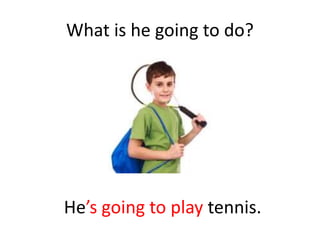
What is he going to do?
He’s going to play tennis.
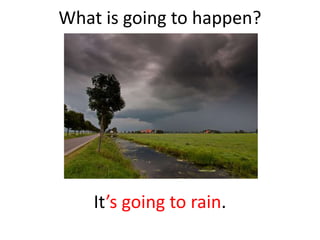
What is going to happen?
It’s going to rain.
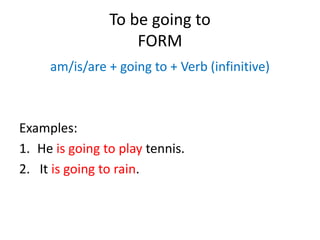
To be going to
FORM
am/is/are + going to + Verb (infinitive)
Examples:
1. He is going to play tennis.
2. It is going to rain.
To be going to
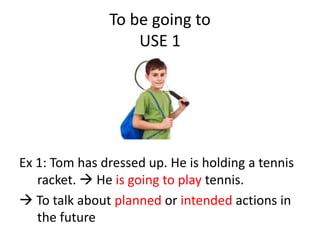
USE 1
Ex 1: Tom has dressed up. He is holding a tennis
racket.  He is going to play tennis.
 To talk about planned or intended actions in
the future
To be going to
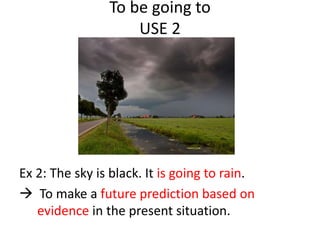
USE 2
Ex 2: The sky is black. It is going to rain.
 To make a future prediction based on
evidence in the present situation.
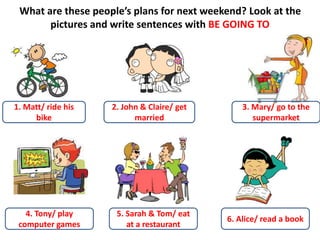
What are these people’s plans for next weekend? Look at the
pictures and write sentences with BE GOING TO
1. Matt/ ride his
bike
2. John & Claire/ get
married
3. Mary/ go to the
supermarket
4. Tony/ play
computer games
5. Sarah & Tom/ eat
at a restaurant
6. Alice/ read a book
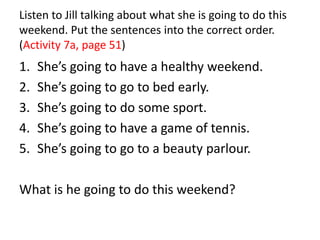
Listen to Jill talking about what she is going to do this
weekend. Put the sentences into the correct order.
(Activity 7a, page 51)
1. She’s going to have a healthy weekend.
2. She’s going to go to bed early.
3. She’s going to do some sport.
4. She’s going to have a game of tennis.
5. She’s going to go to a beauty parlour.
What is he going to do this weekend?
Pair work: ask your friend about his/ her plans for the
weekend.
A: What are you going to do this weekend?
B: I’m going to ...
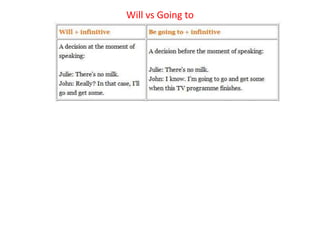
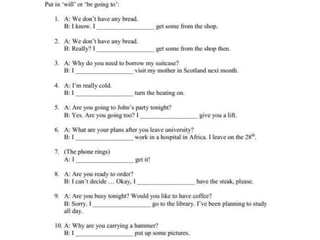
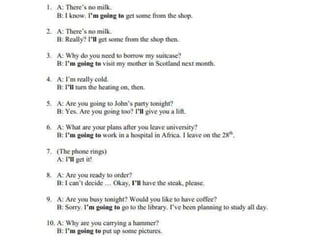
Will vs Going to
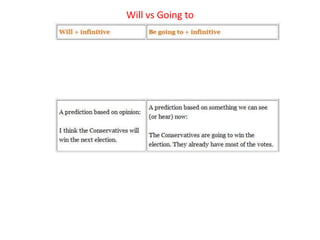
Will vs Going to
Unit5 a2
Unit5 a2

Unit5 a2

  • 1.
  • 3.
    Pair work: choosethe words associated with the topic of “TRAIN” flight number station railway boat ticket airway passenger road map motorway platform passport carriage car air sea land wheels Station Railway Ticket Passenger Platform Carriage Land Wheels
  • 4.
    Look at thephoto and answer the questions with the correct words 1. How do you call the people using the train service? --> They are _ _ _ _ _ _ _ _ _ _ (10 letters)PASSENGERS
  • 5.
    Look at thephoto and answer the questions 2. Where does the train stop?  At a _ _ _ _ _ _ _ (7 letters)STATION
  • 6.
    Look at thephoto and answer the questions 3. Where are the people standing?  On a _ _ _ _ _ _ _ _ (8 letters)FLATFORM
  • 7.
    Look at thephoto and answer the questions 4. What things help the train move?  They are _ _ _ _ _ _ (6 letters)WHEELS
  • 8.
    Look at thephoto and answer the questions 5. What are these? (look at the arrows)  They are _ _ _ _ _ _ _ _ _(9 letters)CARRIAGES
  • 9.
    Look at thephoto and answer the questions 6. What do we need before getting on the train?  We need a _ _ _ _ _ _ (6 letters)TICKET
  • 10.
    Look at thephoto and answer the questions 7. Where does a train travel?  It travels on _ _ _ _ (4 letters)LAND
  • 11.
    Look at thephoto and answer the questions 8. How do you call a road which the train goes along?  It is the _ _ _ _ _ _ _ (7 letters)RAILWAY
  • 12.
    Read the passageand find the names of the famous train (activity 3, page 48) 1. ___________________________ 2. ___________________________ The British Pullman Orient Express The “Palaces on Wheels”
  • 13.
    Read the passageagain and answer the questions below (page 48) 1. What does the Orient Express offer? 2. How long does a journey take? 3. What can passengers do on Sundays?
  • 14.
    What is hegoing to do? He’s going to play tennis.
  • 15.
    What is goingto happen? It’s going to rain.
  • 16.
    To be goingto FORM am/is/are + going to + Verb (infinitive) Examples: 1. He is going to play tennis. 2. It is going to rain.
  • 17.
    To be goingto USE 1 Ex 1: Tom has dressed up. He is holding a tennis racket.  He is going to play tennis.  To talk about planned or intended actions in the future
  • 18.
    To be goingto USE 2 Ex 2: The sky is black. It is going to rain.  To make a future prediction based on evidence in the present situation.
  • 19.
    What are thesepeople’s plans for next weekend? Look at the pictures and write sentences with BE GOING TO 1. Matt/ ride his bike 2. John & Claire/ get married 3. Mary/ go to the supermarket 4. Tony/ play computer games 5. Sarah & Tom/ eat at a restaurant 6. Alice/ read a book
  • 20.
    Listen to Jilltalking about what she is going to do this weekend. Put the sentences into the correct order. (Activity 7a, page 51) 1. She’s going to have a healthy weekend. 2. She’s going to go to bed early. 3. She’s going to do some sport. 4. She’s going to have a game of tennis. 5. She’s going to go to a beauty parlour. What is he going to do this weekend?
  • 21.
    Pair work: askyour friend about his/ her plans for the weekend. A: What are you going to do this weekend? B: I’m going to ...
  • 22.
  • 23.