INTRODUCTION
HT104
TOURISM MALAYSIA
Enjue jan2013
Jph.ptss
Tourist definition
 Tourism is travel for recreational, leisure or busines
s purposes.
 TheWorldTourism Organization defines tourists as
people who "travel to and stay in places outside
their usual environment for more than twenty-four
(24) hours and not more than one consecutive year
for leisure, business and other purposes not related
to the exercise of an activity remunerated from
within the place visited."[1]
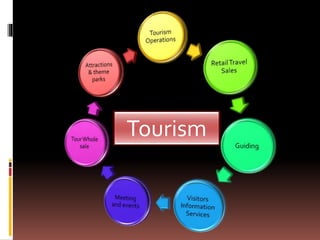
tourism
What tourism???
 “Umbrella term for the variety product and
services offered and desired by people while
away from home. Include are restaurants,
accommodations, activities, natural and man
made attractions, travel agencies,
government bureaus and transportation.
 Tourism refers to practice of traveling and visiting
places for pleasure and relaxation
 The industry that is involved in offering various
services for tourist, eg providing them with
information on where to stay or eat, places of
interest and which sometimes also reserve
accommodation, travel and tours.
Tourism industry
 Entire spectrum of government and business
activities that provide and manage the needs,
wants and desire of the tourist. Includes
agencies and groups seeking to promote
tourism, the residents of destination areas
and educational institutions seeking to
provide qualified industry personnel”
Tourism
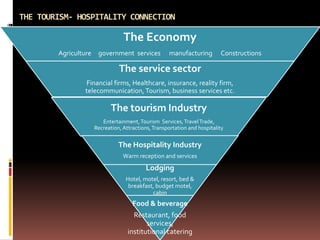
THE TOURISM- HOSPITALITY CONNECTION
The Economy
Agriculture government services manufacturing Constructions
The service sector
Financial firms, Healthcare, insurance, reality firm,
telecommunication, Tourism, business services etc.
The tourism Industry
Entertainment,Tourism Services,TravelTrade,
Recreation, Attractions,Transportation and hospitality
The Hospitality Industry
Warm reception and services
Lodging
Hotel, motel, resort, bed &
breakfast, budget motel,
cabin
Food & beverage
Restaurant, food
services,
institutional catering
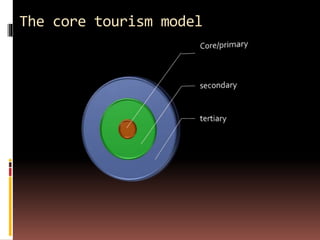
The core tourism model
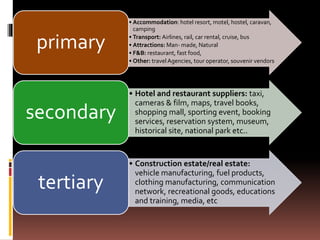
• Accommodation: hotel resort, motel, hostel, caravan,
camping
• Transport: Airlines, rail, car rental, cruise, bus
• Attractions: Man- made, Natural
• F&B: restaurant, fast food,
• Other: travelAgencies, tour operator, souvenir vendors
primary
• Hotel and restaurant suppliers: taxi,
cameras & film, maps, travel books,
shopping mall, sporting event, booking
services, reservation system, museum,
historical site, national park etc..
secondary
• Construction estate/real estate:
vehicle manufacturing, fuel products,
clothing manufacturing, communication
network, recreational goods, educations
and training, media, etc
tertiary
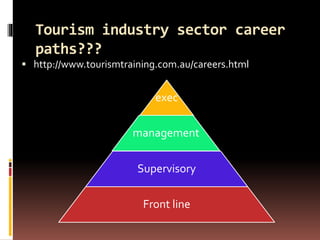
Tourism industry sector career
paths???
 http://www.tourismtraining.com.au/careers.html
exec
management
Supervisory
Front line
WHY TOURISM IS IMPORTANT????
 Tourism important!!Tourism is the country’s
2 nd foreign exchange earner.WhenYOU join
Malaysia's vibrant tourism industry, you join one
of the most important sectors of the economy
which provides 520,700 jobs.
 Tourism will become even more vital in the years
to come with Malaysia tourism targets of ringing
in 24.6 million visitors and generate RM 59.4
billion in tourism spending by 2010
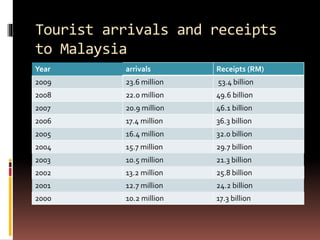
Tourist arrivals and receipts
to Malaysia
Year arrivals Receipts (RM)
2009 23.6 million 53.4 billion
2008 22.0 million 49.6 billion
2007 20.9 million 46.1 billion
2006 17.4 million 36.3 billion
2005 16.4 million 32.0 billion
2004 15.7 million 29.7 billion
2003 10.5 million 21.3 billion
2002 13.2 million 25.8 billion
2001 12.7 million 24.2 billion
2000 10.2 million 17.3 billion
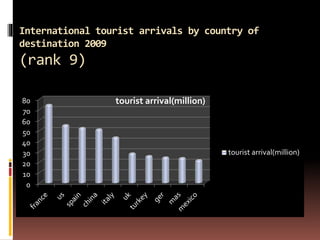
International tourist arrivals by country of
destination 2009
(rank 9)
0
10
20
30
40
50
60
70
80 tourist arrival(million)
tourist arrival(million)
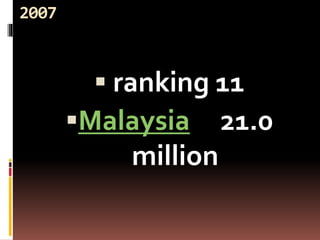
2007
 ranking 11
Malaysia 21.0
million
 The tourism industry in Malaysia currently
ranks as the second biggest foreign exchange
earner of the country
 In the Asian market, Malaysia ranked second
after China in terms of tourist arrivals.Tourism
in Asian countries is only behind export
industries in generating income for them.
Tourist receipts reached 53.37 billion ringgit
(Dh62.41 billion) in 2009, up from 8.5 billion
ringgit in 1998. Malaysia's tourism campaign
helped the country to achieve its target before
the end of the year.
 The increase in visitor arrivals and tourism dollars
spend in Malaysia means tourism player can expect
new jobs, more job opportunities, career with
competitive pay.
example in hotel industry :
a) Arabia course – FO, sale & marketing & f&B
Department
b) Syariah course – Quality department
 Training opportunities : enabling employees to
deliver against the standards' of excellence
expected of international establishment
 Employers, too, are having challenged to
change and innovate. Gaining new ways to
recruit, reward, retain and motivate employees.
 you will always have the opportunity to better
yourself. Obtain recognized certification and
advance your career within the industry with the
planned program
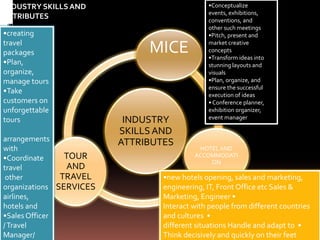
INDUSTRY
SKILLSAND
ATTRIBUTES
MICE
HOTELAND
ACCOMMODATI
ON
TOUR
AND
TRAVEL
SERVICES
INDUSTRY SKILLS AND
ATTRIBUTES
•Conceptualize
events, exhibitions,
conventions, and
other such meetings
•Pitch, present and
market creative
concepts
•Transform ideas into
stunning layouts and
visuals
•Plan, organize, and
ensure the successful
execution of ideas
• Conference planner,
exhibition organizer,
event manager
•new hotels opening, sales and marketing,
engineering, IT, Front Office etc Sales &
Marketing, Engineer •
Interact with people from different countries
and cultures •
different situations Handle and adapt to •
Think decisively and quickly on their feet
•creating
travel
packages
•Plan,
organize,
manage tours
•Take
customers on
unforgettable
tours
arrangements
with
•Coordinate
travel
other
organizations
airlines,
hotels and
•Sales Officer
/Travel
Manager/
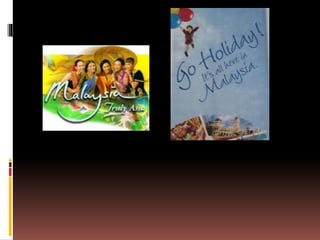
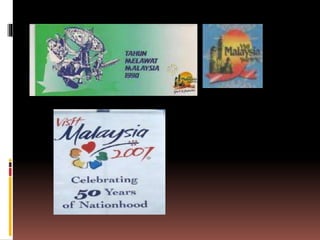
Malaysia Tourism campaign
 Tahun melawat Malaysia 1990
 Cuti-cuti Malaysia
 Malaysia truly Asia
 Visit Malaysia 2007- celebrating 50 year of nationhood
 Zoom Malaysia
TOURISM IN MALAYSIA
 The important of major historical events,
Malaysia history, people and culture related
to tourism development in Malaysia.
 Major historical events and its significance to
tourism industry development in Malaysia
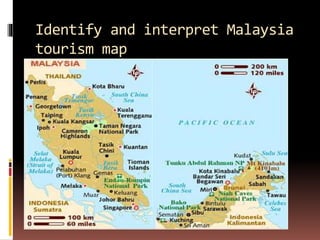
Identify and interpret Malaysia
tourism map
Why travel to Malaysia??
video
The historical of tourism in
Malaysia
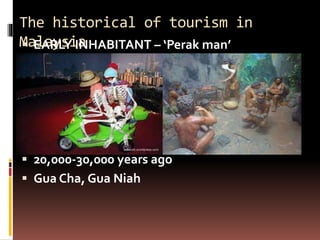
 EARLY INHABITANT – ‘Perak man’
 20,000-30,000 years ago
 Gua Cha, Gua Niah
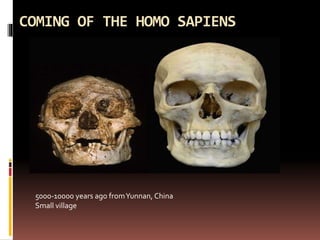
COMING OF THE HOMO SAPIENS
5000-10000 years ago fromYunnan, China
Small village
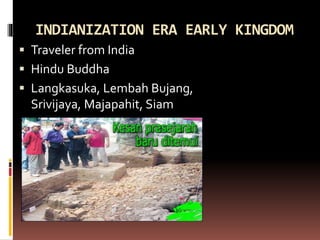
INDIANIZATION ERA EARLY KINGDOM
 Traveler from India
 Hindu Buddha
 Langkasuka, Lembah Bujang,
Srivijaya, Majapahit, Siam
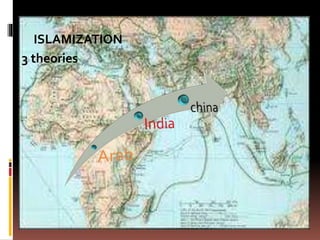
ISLAMIZATION
3 theories
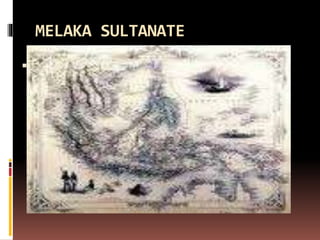
MELAKA SULTANATE

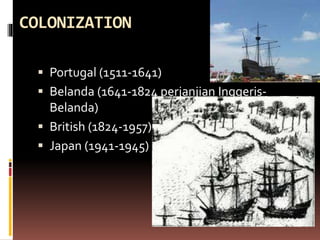
COLONIZATION
 Portugal (1511-1641)
 Belanda (1641-1824 perjanjian Inggeris-
Belanda)
 British (1824-1957)
 Japan (1941-1945)
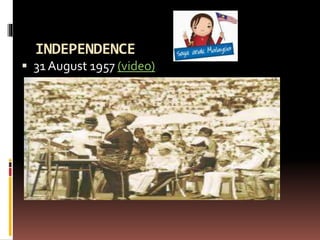
INDEPENDENCE
 31 August 1957 (video)
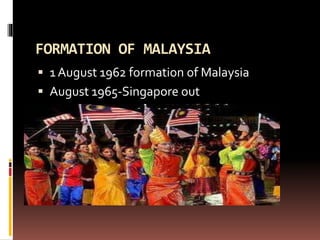
FORMATION OF MALAYSIA
 1 August 1962 formation of Malaysia
 August 1965-Singapore out
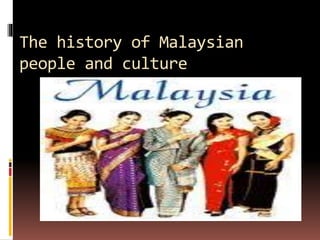
The history of Malaysian
people and culture
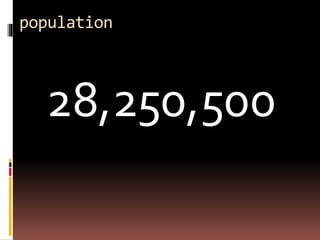
population
28,250,500
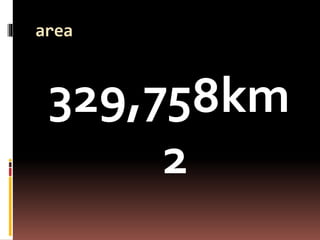
area
329,758km
2
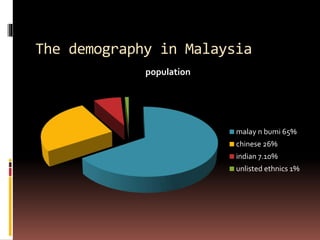
The demography in Malaysia
population
malay n bumi 65%
chinese 26%
indian 7.10%
unlisted ethnics 1%
 Language- Bahasa Malaysia
 Religion – official religion is Islam
but all other religions are
practiced freely
 Government- parliamentary
democracy and constitutional
monarchy
 Economic profile – manufacturing, tourism and
primary communities such as petroleum, palm
oil, national rubber and timber are major
contributors to its economy.
 Currency-The monetary unit of the country is
Ringgit Malaysia and is written as RM.The
exchange rate is valued at USD1 = RM3.15.
Foreign currencies can be exchanged at banks
and money changers
 Banking Hours- 9.30 am-4.00pm Monday to
Friday but in kel, trg and ked Saturday to
Wednesday
 Measurement system- metric system
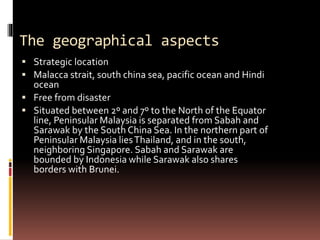
The geographical aspects
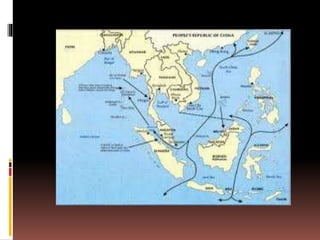
 Strategic location
 Malacca strait, south china sea, pacific ocean and Hindi
ocean
 Free from disaster
 Situated between 2º and 7º to the North of the Equator
line, Peninsular Malaysia is separated from Sabah and
Sarawak by the South China Sea. In the northern part of
Peninsular Malaysia liesThailand, and in the south,
neighboring Singapore. Sabah and Sarawak are
bounded by Indonesia while Sarawak also shares
borders with Brunei.
What special about weather of
Malaysia??
The country experiences tropical
weather year-round. Temperatures
are from 21ºC (70ºF) to 32ºC (90ºF).
Higher elevations are much colder with
temperatures between 15°C (59° F) to
25°C (77°F). Annual rainfall varies
from 2,000mm to 2,500mm.
weather??
Malaysian community
 Malay
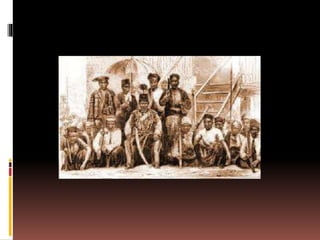
Today, the Malays, Malaysia's largest ethnic group,
make up more than 50% of the population. In
Malaysia, the term Malay refers to a person who
practices Islam and Malay traditions, speaks the
Malay language and whose ancestors are Malays.
Their conversion to Islam from Hinduism and
Theravada Buddhism began in the 1400s, largely
influenced by the decision of the royal court of
Melaka.The Malays are known for their gentle
mannerisms and rich arts heritage
CHINESE

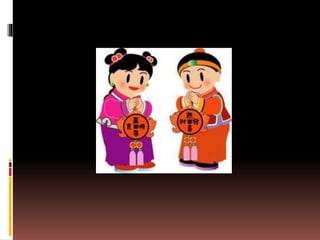
The second largest ethnic group, the Malaysian
Chinese form about 25% of the population.
Mostly descendants of Chinese immigrants
during the 19th century, the Chinese are known
for their diligence and keen business sense.The
three sub-groups who speak a different dialect of
the Chinese language are the Hokkien who live
predominantly on the northern island of Penang;
the Cantonese who live predominantly in the
capital city Kuala Lumpur; and the Mandarin-
speaking group who live predominantly in the
southern state of Johor
INDIAN

The smallest of three main ethnic groups, the
Malaysian Indians form about 10% of the
population. Most are descendants ofTamil-
speaking South Indian immigrants who came to
the country during the British colonial rule. Lured
by the prospect of breaking out of the Indian
caste system, they came to Malaysia to build a
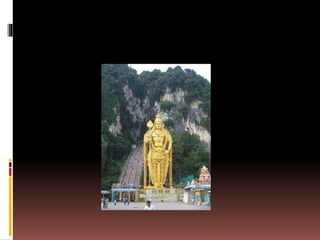
better life. Predominantly Hindus, they brought
with them their colourful culture such as ornate
temples, spicy cuisine and exquisite sarees.
INDIGENOUS ETHNIC GROUPS
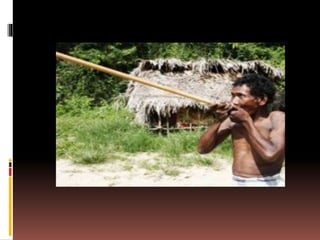
 Orang Asli
Orang Asli is a general term used for any
indigenous groups that are found in Peninsular
Malaysia.They are divided into three main tribal
groups: Negrito, Senoi and Proto-Malay.The
Negrito usually live in the north, the Senoi in the
middle and the Proto-Malay in the south. Each
group or sub-group has its own language and
culture. Some are fishermen, some farmers and
some are semi-nomadic.
sarawak
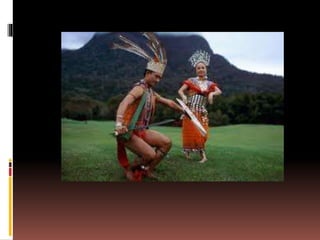
 Iban
The largest of Sarawak's ethnic groups, the Ibans
form 30% of the state's population. Sometimes
erroneously referred to as the Sea Dayaks
because of their skill with boats, they are actually
an upriver tribe from the heart of Kalimantan. In
the past, they were a fearsome warrior race
renowned for headhunting and piracy.
Traditionally, they worship a triumvirate of gods
under the authority of Singalang Burung, the
bird-god of war. Although now mostly Christians,
many traditional customs are still practised.
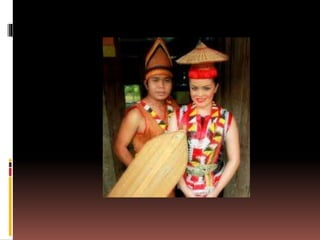
 Bidayuh
Peace-loving and easy-going, the gentle
Bidayuh of Sarawak are famous for their
hospitality and tuak or rice wine. Making their
homes in Sarawak's mountainous regions, they
are mostly farmers and hunters. In their past
headhunting days, their prized skulls were
stored in a 'baruk' a roundhouse that rises about
1.5 metres above the ground. Originally
animists, now most of them have converted to
Christianity
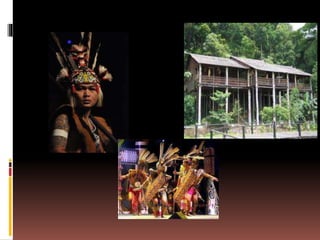
 Orang Ulu
Also known as upriver tribes of Sarawak.
Forming roughly 5.5% of Sarawak's population,
there are over 100,000 different Orang Ulu
tribes. Arguably Borneo's most artistic people,
their large longhouses are ornately decorated
with murals and superb woodcarvings; their
utensils are embellished with intricate
beadwork; and aristocratic ladies cover their
bodies with finely detailed tattoos.
sabah
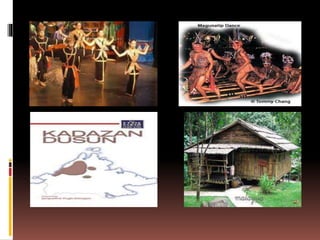
 Kadazan Dusun
The largest ethnic group of Sabah, the Kadazan
Dusuns form about 30% of the state's
population. Actually consisting of two tribes; the
Kadazan and the Dusun, they were grouped
together as they both share the same language
and culture. However, the Kadazan are mainly
inhabitants of flat valley deltas, which are
conducive to paddy field farming, while the
Dusun traditionally lived in the hilly and
mountainous regions of interior Sabah.
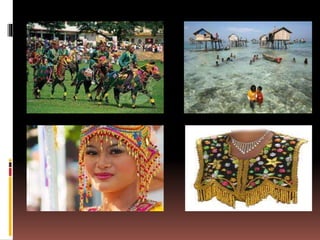
 Bajau
The second largest ethnic group in Sabah, the Bajaus
make up about 15% of the state's population.
Historically a nomadic sea-faring people that
worshipped the Omboh Dilaut or God of the Sea, they
are sometimes referred to as the Sea Gypsies.Those
who chose to leave their sea-faring ways became
farmers and cattle-breeders.These land Bajaus are
nicknamed 'Cowboys of the East' in tribute to their
impressive equestrian skills, which are publicly
displayed in the annual Tamu Besar festival at Kota
Belud.
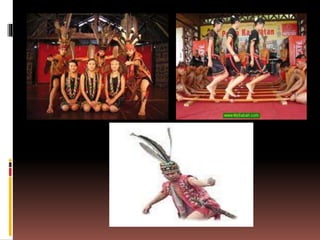
 Murut
The third largest ethnic group in Sabah the
Muruts make up about 3% of the state's
population.Traditionally inhabiting the northern
inland regions of Borneo, they were the last of
Sabah's ethnic groups to renounce headhunting.
Now, they are mostly shifting cultivators of hill
paddy and tapioca, supplementing their diet
with blowpipe hunting and fishing. Like most
indigenous tribes in Sabah, their traditional
clothing is decorated with distinctive beadwork.
references
 www.tourism.gov.my
 www.pnb.com.my
 Internet resources
THANKYOU

Unit1tourismmalaysiajan13

  • 2.
  • 5.
    Tourist definition  Tourismis travel for recreational, leisure or busines s purposes.  TheWorldTourism Organization defines tourists as people who "travel to and stay in places outside their usual environment for more than twenty-four (24) hours and not more than one consecutive year for leisure, business and other purposes not related to the exercise of an activity remunerated from within the place visited."[1]
  • 6.
  • 7.
    What tourism???  “Umbrellaterm for the variety product and services offered and desired by people while away from home. Include are restaurants, accommodations, activities, natural and man made attractions, travel agencies, government bureaus and transportation.
  • 8.
     Tourism refersto practice of traveling and visiting places for pleasure and relaxation  The industry that is involved in offering various services for tourist, eg providing them with information on where to stay or eat, places of interest and which sometimes also reserve accommodation, travel and tours.
  • 9.
    Tourism industry  Entirespectrum of government and business activities that provide and manage the needs, wants and desire of the tourist. Includes agencies and groups seeking to promote tourism, the residents of destination areas and educational institutions seeking to provide qualified industry personnel”
  • 10.
  • 11.
    THE TOURISM- HOSPITALITYCONNECTION The Economy Agriculture government services manufacturing Constructions The service sector Financial firms, Healthcare, insurance, reality firm, telecommunication, Tourism, business services etc. The tourism Industry Entertainment,Tourism Services,TravelTrade, Recreation, Attractions,Transportation and hospitality The Hospitality Industry Warm reception and services Lodging Hotel, motel, resort, bed & breakfast, budget motel, cabin Food & beverage Restaurant, food services, institutional catering
  • 12.
  • 13.
    • Accommodation: hotelresort, motel, hostel, caravan, camping • Transport: Airlines, rail, car rental, cruise, bus • Attractions: Man- made, Natural • F&B: restaurant, fast food, • Other: travelAgencies, tour operator, souvenir vendors primary • Hotel and restaurant suppliers: taxi, cameras & film, maps, travel books, shopping mall, sporting event, booking services, reservation system, museum, historical site, national park etc.. secondary • Construction estate/real estate: vehicle manufacturing, fuel products, clothing manufacturing, communication network, recreational goods, educations and training, media, etc tertiary
  • 14.
    Tourism industry sectorcareer paths???  http://www.tourismtraining.com.au/careers.html exec management Supervisory Front line
  • 15.
    WHY TOURISM ISIMPORTANT????
  • 16.
     Tourism important!!Tourismis the country’s 2 nd foreign exchange earner.WhenYOU join Malaysia's vibrant tourism industry, you join one of the most important sectors of the economy which provides 520,700 jobs.  Tourism will become even more vital in the years to come with Malaysia tourism targets of ringing in 24.6 million visitors and generate RM 59.4 billion in tourism spending by 2010
  • 17.
    Tourist arrivals andreceipts to Malaysia Year arrivals Receipts (RM) 2009 23.6 million 53.4 billion 2008 22.0 million 49.6 billion 2007 20.9 million 46.1 billion 2006 17.4 million 36.3 billion 2005 16.4 million 32.0 billion 2004 15.7 million 29.7 billion 2003 10.5 million 21.3 billion 2002 13.2 million 25.8 billion 2001 12.7 million 24.2 billion 2000 10.2 million 17.3 billion
  • 18.
    International tourist arrivalsby country of destination 2009 (rank 9) 0 10 20 30 40 50 60 70 80 tourist arrival(million) tourist arrival(million)
  • 19.
  • 20.
     The tourismindustry in Malaysia currently ranks as the second biggest foreign exchange earner of the country  In the Asian market, Malaysia ranked second after China in terms of tourist arrivals.Tourism in Asian countries is only behind export industries in generating income for them. Tourist receipts reached 53.37 billion ringgit (Dh62.41 billion) in 2009, up from 8.5 billion ringgit in 1998. Malaysia's tourism campaign helped the country to achieve its target before the end of the year.
  • 21.
     The increasein visitor arrivals and tourism dollars spend in Malaysia means tourism player can expect new jobs, more job opportunities, career with competitive pay. example in hotel industry : a) Arabia course – FO, sale & marketing & f&B Department b) Syariah course – Quality department  Training opportunities : enabling employees to deliver against the standards' of excellence expected of international establishment
  • 22.
     Employers, too,are having challenged to change and innovate. Gaining new ways to recruit, reward, retain and motivate employees.  you will always have the opportunity to better yourself. Obtain recognized certification and advance your career within the industry with the planned program
  • 23.
    INDUSTRY SKILLSAND ATTRIBUTES MICE HOTELAND ACCOMMODATI ON TOUR AND TRAVEL SERVICES INDUSTRY SKILLS AND ATTRIBUTES •Conceptualize events,exhibitions, conventions, and other such meetings •Pitch, present and market creative concepts •Transform ideas into stunning layouts and visuals •Plan, organize, and ensure the successful execution of ideas • Conference planner, exhibition organizer, event manager •new hotels opening, sales and marketing, engineering, IT, Front Office etc Sales & Marketing, Engineer • Interact with people from different countries and cultures • different situations Handle and adapt to • Think decisively and quickly on their feet •creating travel packages •Plan, organize, manage tours •Take customers on unforgettable tours arrangements with •Coordinate travel other organizations airlines, hotels and •Sales Officer /Travel Manager/
  • 24.
    Malaysia Tourism campaign Tahun melawat Malaysia 1990  Cuti-cuti Malaysia  Malaysia truly Asia  Visit Malaysia 2007- celebrating 50 year of nationhood  Zoom Malaysia
  • 27.
    TOURISM IN MALAYSIA The important of major historical events, Malaysia history, people and culture related to tourism development in Malaysia.  Major historical events and its significance to tourism industry development in Malaysia
  • 28.
    Identify and interpretMalaysia tourism map
  • 29.
    Why travel toMalaysia?? video
  • 30.
    The historical oftourism in Malaysia  EARLY INHABITANT – ‘Perak man’  20,000-30,000 years ago  Gua Cha, Gua Niah
  • 31.
    COMING OF THEHOMO SAPIENS 5000-10000 years ago fromYunnan, China Small village
  • 32.
    INDIANIZATION ERA EARLYKINGDOM  Traveler from India  Hindu Buddha  Langkasuka, Lembah Bujang, Srivijaya, Majapahit, Siam
  • 33.
  • 34.
  • 35.
    COLONIZATION  Portugal (1511-1641) Belanda (1641-1824 perjanjian Inggeris- Belanda)  British (1824-1957)  Japan (1941-1945)
  • 36.
  • 37.
    FORMATION OF MALAYSIA 1 August 1962 formation of Malaysia  August 1965-Singapore out
  • 38.
    The history ofMalaysian people and culture
  • 39.
  • 40.
  • 41.
    The demography inMalaysia population malay n bumi 65% chinese 26% indian 7.10% unlisted ethnics 1%
  • 42.
     Language- BahasaMalaysia  Religion – official religion is Islam but all other religions are practiced freely  Government- parliamentary democracy and constitutional monarchy
  • 43.
     Economic profile– manufacturing, tourism and primary communities such as petroleum, palm oil, national rubber and timber are major contributors to its economy.  Currency-The monetary unit of the country is Ringgit Malaysia and is written as RM.The exchange rate is valued at USD1 = RM3.15. Foreign currencies can be exchanged at banks and money changers  Banking Hours- 9.30 am-4.00pm Monday to Friday but in kel, trg and ked Saturday to Wednesday  Measurement system- metric system
  • 44.
    The geographical aspects Strategic location  Malacca strait, south china sea, pacific ocean and Hindi ocean  Free from disaster  Situated between 2º and 7º to the North of the Equator line, Peninsular Malaysia is separated from Sabah and Sarawak by the South China Sea. In the northern part of Peninsular Malaysia liesThailand, and in the south, neighboring Singapore. Sabah and Sarawak are bounded by Indonesia while Sarawak also shares borders with Brunei.
  • 46.
    What special aboutweather of Malaysia?? The country experiences tropical weather year-round. Temperatures are from 21ºC (70ºF) to 32ºC (90ºF). Higher elevations are much colder with temperatures between 15°C (59° F) to 25°C (77°F). Annual rainfall varies from 2,000mm to 2,500mm. weather??
  • 47.
    Malaysian community  Malay Today,the Malays, Malaysia's largest ethnic group, make up more than 50% of the population. In Malaysia, the term Malay refers to a person who practices Islam and Malay traditions, speaks the Malay language and whose ancestors are Malays. Their conversion to Islam from Hinduism and Theravada Buddhism began in the 1400s, largely influenced by the decision of the royal court of Melaka.The Malays are known for their gentle mannerisms and rich arts heritage
  • 49.
    CHINESE  The second largestethnic group, the Malaysian Chinese form about 25% of the population. Mostly descendants of Chinese immigrants during the 19th century, the Chinese are known for their diligence and keen business sense.The three sub-groups who speak a different dialect of the Chinese language are the Hokkien who live predominantly on the northern island of Penang; the Cantonese who live predominantly in the capital city Kuala Lumpur; and the Mandarin- speaking group who live predominantly in the southern state of Johor
  • 51.
    INDIAN  The smallest ofthree main ethnic groups, the Malaysian Indians form about 10% of the population. Most are descendants ofTamil- speaking South Indian immigrants who came to the country during the British colonial rule. Lured by the prospect of breaking out of the Indian caste system, they came to Malaysia to build a better life. Predominantly Hindus, they brought with them their colourful culture such as ornate temples, spicy cuisine and exquisite sarees.
  • 53.
    INDIGENOUS ETHNIC GROUPS Orang Asli Orang Asli is a general term used for any indigenous groups that are found in Peninsular Malaysia.They are divided into three main tribal groups: Negrito, Senoi and Proto-Malay.The Negrito usually live in the north, the Senoi in the middle and the Proto-Malay in the south. Each group or sub-group has its own language and culture. Some are fishermen, some farmers and some are semi-nomadic.
  • 55.
    sarawak  Iban The largestof Sarawak's ethnic groups, the Ibans form 30% of the state's population. Sometimes erroneously referred to as the Sea Dayaks because of their skill with boats, they are actually an upriver tribe from the heart of Kalimantan. In the past, they were a fearsome warrior race renowned for headhunting and piracy. Traditionally, they worship a triumvirate of gods under the authority of Singalang Burung, the bird-god of war. Although now mostly Christians, many traditional customs are still practised.
  • 57.
     Bidayuh Peace-loving andeasy-going, the gentle Bidayuh of Sarawak are famous for their hospitality and tuak or rice wine. Making their homes in Sarawak's mountainous regions, they are mostly farmers and hunters. In their past headhunting days, their prized skulls were stored in a 'baruk' a roundhouse that rises about 1.5 metres above the ground. Originally animists, now most of them have converted to Christianity
  • 59.
     Orang Ulu Alsoknown as upriver tribes of Sarawak. Forming roughly 5.5% of Sarawak's population, there are over 100,000 different Orang Ulu tribes. Arguably Borneo's most artistic people, their large longhouses are ornately decorated with murals and superb woodcarvings; their utensils are embellished with intricate beadwork; and aristocratic ladies cover their bodies with finely detailed tattoos.
  • 61.
    sabah  Kadazan Dusun Thelargest ethnic group of Sabah, the Kadazan Dusuns form about 30% of the state's population. Actually consisting of two tribes; the Kadazan and the Dusun, they were grouped together as they both share the same language and culture. However, the Kadazan are mainly inhabitants of flat valley deltas, which are conducive to paddy field farming, while the Dusun traditionally lived in the hilly and mountainous regions of interior Sabah.
  • 63.
     Bajau The secondlargest ethnic group in Sabah, the Bajaus make up about 15% of the state's population. Historically a nomadic sea-faring people that worshipped the Omboh Dilaut or God of the Sea, they are sometimes referred to as the Sea Gypsies.Those who chose to leave their sea-faring ways became farmers and cattle-breeders.These land Bajaus are nicknamed 'Cowboys of the East' in tribute to their impressive equestrian skills, which are publicly displayed in the annual Tamu Besar festival at Kota Belud.
  • 65.
     Murut The thirdlargest ethnic group in Sabah the Muruts make up about 3% of the state's population.Traditionally inhabiting the northern inland regions of Borneo, they were the last of Sabah's ethnic groups to renounce headhunting. Now, they are mostly shifting cultivators of hill paddy and tapioca, supplementing their diet with blowpipe hunting and fishing. Like most indigenous tribes in Sabah, their traditional clothing is decorated with distinctive beadwork.
  • 67.
  • 68.