MG8591 PRINCIPLES OF
MANAGEMENT
UNIT – III - ORGANIZING
Dr.A.NITHYA,
Associate Professor/MECH,
Kongunadu College of Engineering and Technology.
Introduction
 Organizing is the process of identifying and grouping the
activities required to attain the objectives, delegating,
authority, creating responsibilities and establishing
relationship for people to work effectively.
 According to Koontz and O’Donnel – ‘the grouping of
activities necessary to attain objectives, the assignment
of each grouoing to a manager with authority necessary to
supervise it and the provision for the co-ordination
horizontally and vertically in the enterprize structure’.
Nature of Organizng
 Common objectives
 Specialization or Division of labour
 Authority of structure
 Group of persons
 Coordination
 Environment rules and regulations
Process or levels of organizing
 Determination of activities
 Grouping of activities
 Assignment of duties
 Delegation of authority
 Establishment of structural relationship
 Coordination of activities
Purpose or importance of organizing
 To facilitate administration
 To increase the efficiency of management
 To facilitate growth and diversification
 To ensure optimum use of man and material resources
 To facilitate co-ordination and communication
 To permit optimum use of technological innovations
 To stimulate creativity and initiative
 To facilitate the development of managerial ability
Formal organization
 According to Allen – ‘the formal organization is a system of well defined jobs,
each bearing a definite measure of authority, responsibility and
accountability’
 Characteristics
 Flexible
 Properly planned
 Division of labour
 Efficiency of operation
 Organization charts
 Coordination
 Responsibility and accountability
 Unit of command
Informal Organization
 The network of social group based on friendship is called
informal organization.
 Characteristics
 Voluntarily
 Based on similarity
 No organization chart
 Part of total organization
 No structure
 Become a member of several informal organization.
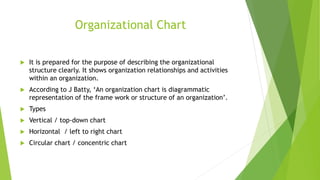
Organizational Chart
 It is prepared for the purpose of describing the organizational
structure clearly. It shows organization relationships and activities
within an organization.
 According to J Batty, ‘An organization chart is diagrammatic
representation of the frame work or structure of an organization’.
 Types
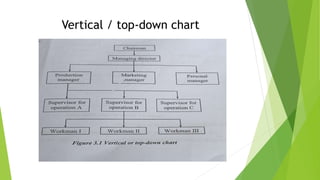
 Vertical / top-down chart
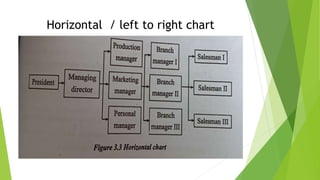
 Horizontal / left to right chart
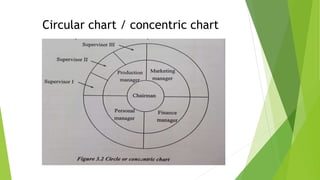
 Circular chart / concentric chart
Vertical / top-down chart
Horizontal / left to right chart
Circular chart / concentric chart

Unit III - Organizing.pptx

  • 1.
    MG8591 PRINCIPLES OF MANAGEMENT UNIT– III - ORGANIZING Dr.A.NITHYA, Associate Professor/MECH, Kongunadu College of Engineering and Technology.
  • 2.
    Introduction  Organizing isthe process of identifying and grouping the activities required to attain the objectives, delegating, authority, creating responsibilities and establishing relationship for people to work effectively.  According to Koontz and O’Donnel – ‘the grouping of activities necessary to attain objectives, the assignment of each grouoing to a manager with authority necessary to supervise it and the provision for the co-ordination horizontally and vertically in the enterprize structure’.
  • 3.
    Nature of Organizng Common objectives  Specialization or Division of labour  Authority of structure  Group of persons  Coordination  Environment rules and regulations
  • 4.
    Process or levelsof organizing  Determination of activities  Grouping of activities  Assignment of duties  Delegation of authority  Establishment of structural relationship  Coordination of activities
  • 5.
    Purpose or importanceof organizing  To facilitate administration  To increase the efficiency of management  To facilitate growth and diversification  To ensure optimum use of man and material resources  To facilitate co-ordination and communication  To permit optimum use of technological innovations  To stimulate creativity and initiative  To facilitate the development of managerial ability
  • 6.
    Formal organization  Accordingto Allen – ‘the formal organization is a system of well defined jobs, each bearing a definite measure of authority, responsibility and accountability’  Characteristics  Flexible  Properly planned  Division of labour  Efficiency of operation  Organization charts  Coordination  Responsibility and accountability  Unit of command
  • 7.
    Informal Organization  Thenetwork of social group based on friendship is called informal organization.  Characteristics  Voluntarily  Based on similarity  No organization chart  Part of total organization  No structure  Become a member of several informal organization.
  • 8.
    Organizational Chart  Itis prepared for the purpose of describing the organizational structure clearly. It shows organization relationships and activities within an organization.  According to J Batty, ‘An organization chart is diagrammatic representation of the frame work or structure of an organization’.  Types  Vertical / top-down chart  Horizontal / left to right chart  Circular chart / concentric chart
  • 9.
  • 10.
    Horizontal / leftto right chart
  • 11.
    Circular chart /concentric chart