SERVICES RELATEDTO
GENETIC NURSING
MR. HITESH CHAUDHARY
(ASST. PROFESSOR)
M.SC. (N), M.BA. HA
UNIT
-5
GENETICTESTING
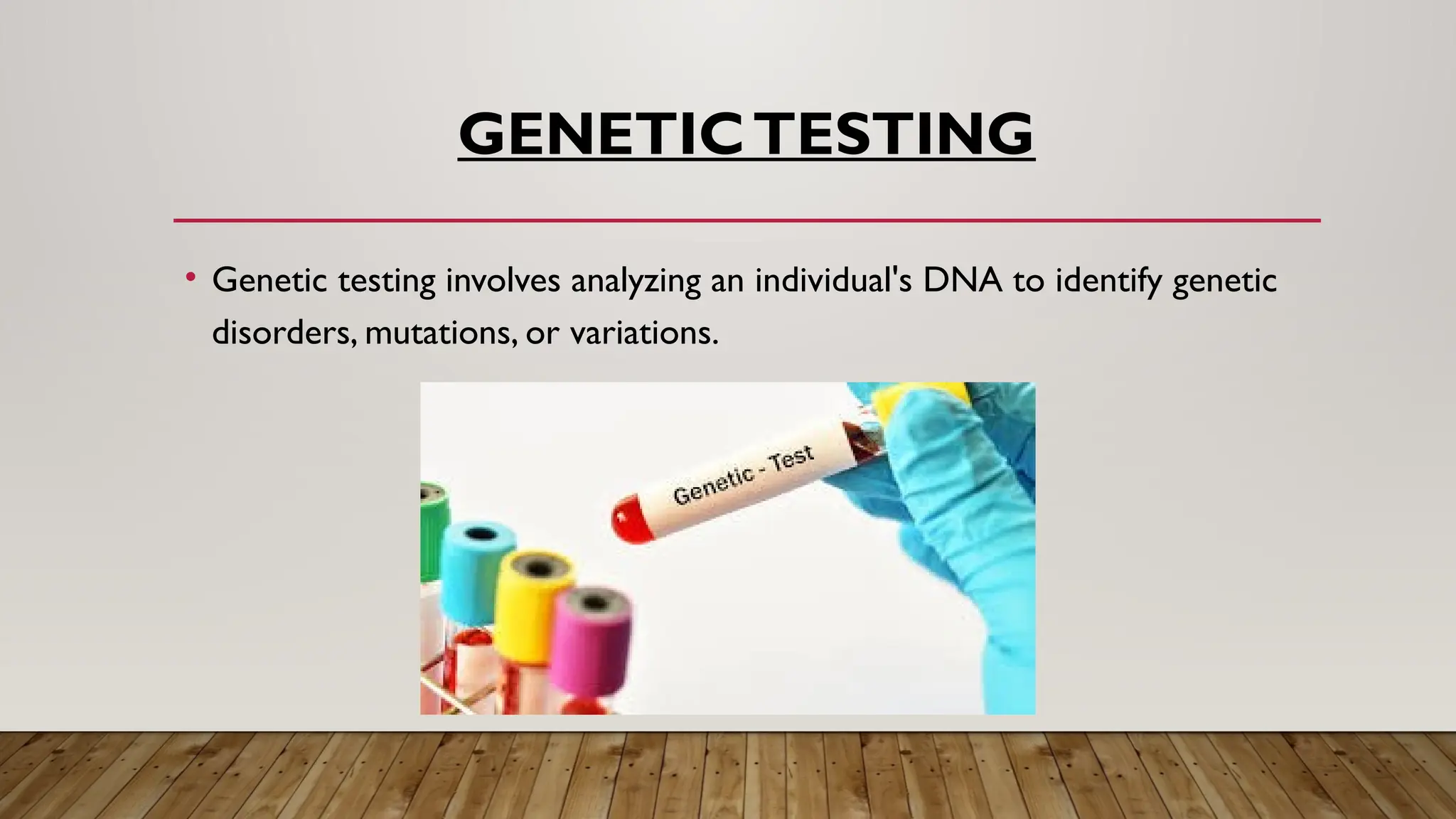
• Genetic testing involves analyzing an individual's DNA to identify genetic
disorders, mutations, or variations.
• TYPES OF GENETIC TESTING
1. Diagnostic testing: Identifies the genetic cause of a patient's symptoms.
2. Predictive testing: Determines the likelihood of developing a genetic disorder.
3. Carrier testing: Identifies individuals who carry a genetic mutation that can be
passed to their offspring.
4. Prenatal testing: Screens for genetic disorders during pregnancy.
5. Newborn screening: Tests newborns for genetic disorders.
• METHODS OF GENETIC TESTING
1. DNA sequencing: Analyzes the order of DNA building blocks.
2. Chromosomal analysis: Examines the structure and number of
chromosomes.
3. Biochemical testing: Measures the levels of specific proteins or
enzymes.
4. Molecular testing: Analyzes DNA or RNA to identify genetic
mutations.
• APPLICATIONS OF GENETIC TESTING
1. Diagnosis of Genetic Disorders: Identifies the genetic cause of a patient's
symptoms.
2. Risk Assessment: Determines the likelihood of developing a genetic disorder.
3. Family Planning: Helps individuals and families make informed decisions
about reproduction.
4. Personalized Medicine: Tailors medical treatment to an individual's genetic
profile.
5. Forensic Analysis: Analyzes DNA evidence in criminal investigations.
• BENEFITS AND LIMITATIONS OF GENETIC
TESTING
Benefits:
1. Accurate diagnosis: Identifies the genetic cause of a patient's symptoms.
2. Informed decision-making: Helps individuals and families make informed
decisions about reproduction and medical treatment.
3. Personalized medicine: Tailors medical treatment to an individual's genetic
profile.
• BENEFITS AND LIMITATIONS OF GENETIC
TESTING
Limitations:
1. False positives and false negatives: Genetic tests can produce incorrect
results.
2. Limited predictive value: Genetic tests may not accurately predict the
development of a genetic disorder.
3. Emotional and psychological impact: Genetic testing can have emotional and
psychological implications for individuals and families.
• ETHICAL CONSIDERATIONS
1. Informed consent: Individuals must provide informed consent before
undergoing genetic testing.
2. Confidentiality: Genetic test results must be kept confidential.
3. Discrimination: Genetic testing must not be used to discriminate against
individuals.
4. Counseling: Genetic counseling must be provided to individuals
undergoing genetic testing.
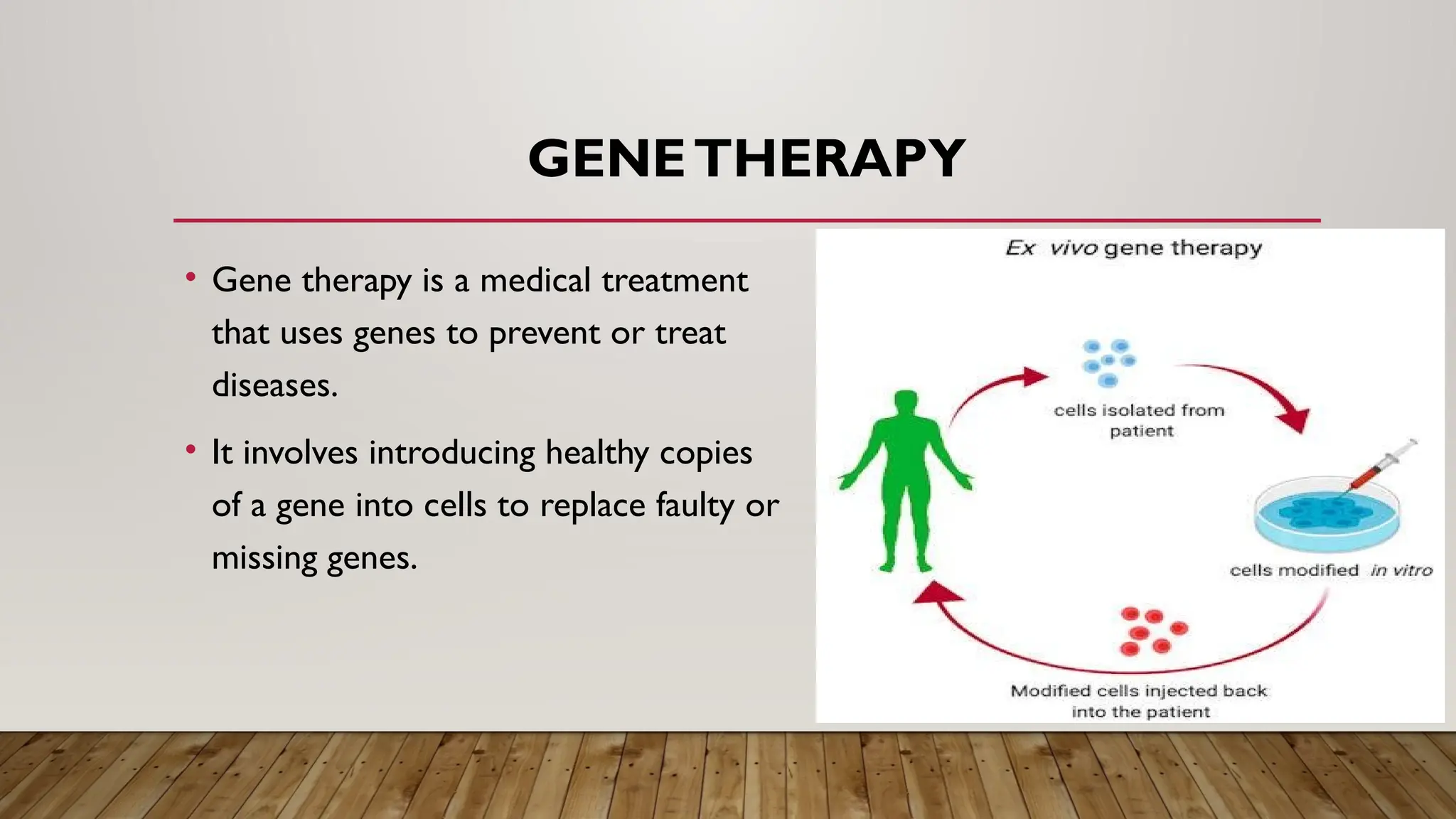
GENETHERAPY
• Gene therapy is a medical treatment
that uses genes to prevent or treat
diseases.
• It involves introducing healthy copies
of a gene into cells to replace faulty or
missing genes.
• TYPES OF GENE THERAPY
1. Germline GeneTherapy: Involves making changes to the genes in
reproductive cells, which can be passed on to future generations.
2. Somatic GeneTherapy: Involves making changes to the genes in non-
reproductive cells, which cannot be passed on to future generations.
• METHODS OF GENE THERAPY
1. ViralVectors: Using viruses to deliver healthy copies of a gene to cells.
2. Non-ViralVectors: Using liposomes, nanoparticles, or other methods
to deliver healthy copies of a gene to cells.
3. Gene Editing: Using techniques like CRISPR/Cas9 to edit genes
directly.
• APPLICATIONS OF GENE THERAPY:
1. Inherited Disorders: Gene therapy can be used to treat inherited disorders, such as sickle
cell anemia and cystic fibrosis.
2. Cancer: Gene therapy can be used to treat cancer by introducing genes that help kill cancer
cells.
3. Genetic Disorders: Gene therapy can be used to treat genetic disorders, such as muscular
dystrophy and Huntington's disease.
4. Viral Infections: Gene therapy can be used to treat viral infections, such as HIV and
hepatitis.
• BENEFITS OF GENE THERAPY
1. Potential Cure: Gene therapy can potentially cure genetic disorders.
2. Long-TermTreatment: Gene therapy can provide long-term treatment
for chronic diseases.
3. Reduced Symptoms: Gene therapy can reduce symptoms and improve
quality of life.
• CHALLENGES AND RISKS OF GENE THERAPY
1. Safety concerns: Gene therapy can have safety concerns, such as off-target
effects and immune responses.
2. Efficacy: Gene therapy may not be effective for all patients or conditions.
3. Cost: Gene therapy can be expensive and may not be accessible to all patients.
4. Regulatory frameworks: Gene therapy is regulated by various frameworks,
which can vary by country and region.
• FUTURE OF GENE THERAPY
1. Advances in technology: Advances in technology, such as CRISPR/Cas9, are improving the
efficiency and accuracy of gene therapy.
2. Increased funding: Increased funding for gene therapy research is helping to advance the field.
3. Growing demand: Growing demand for gene therapy is driving innovation and investment in
the field.
4. Regulatory frameworks: Regulatory frameworks are evolving to accommodate the growth of
gene therapy.
GENETIC COUNSELING
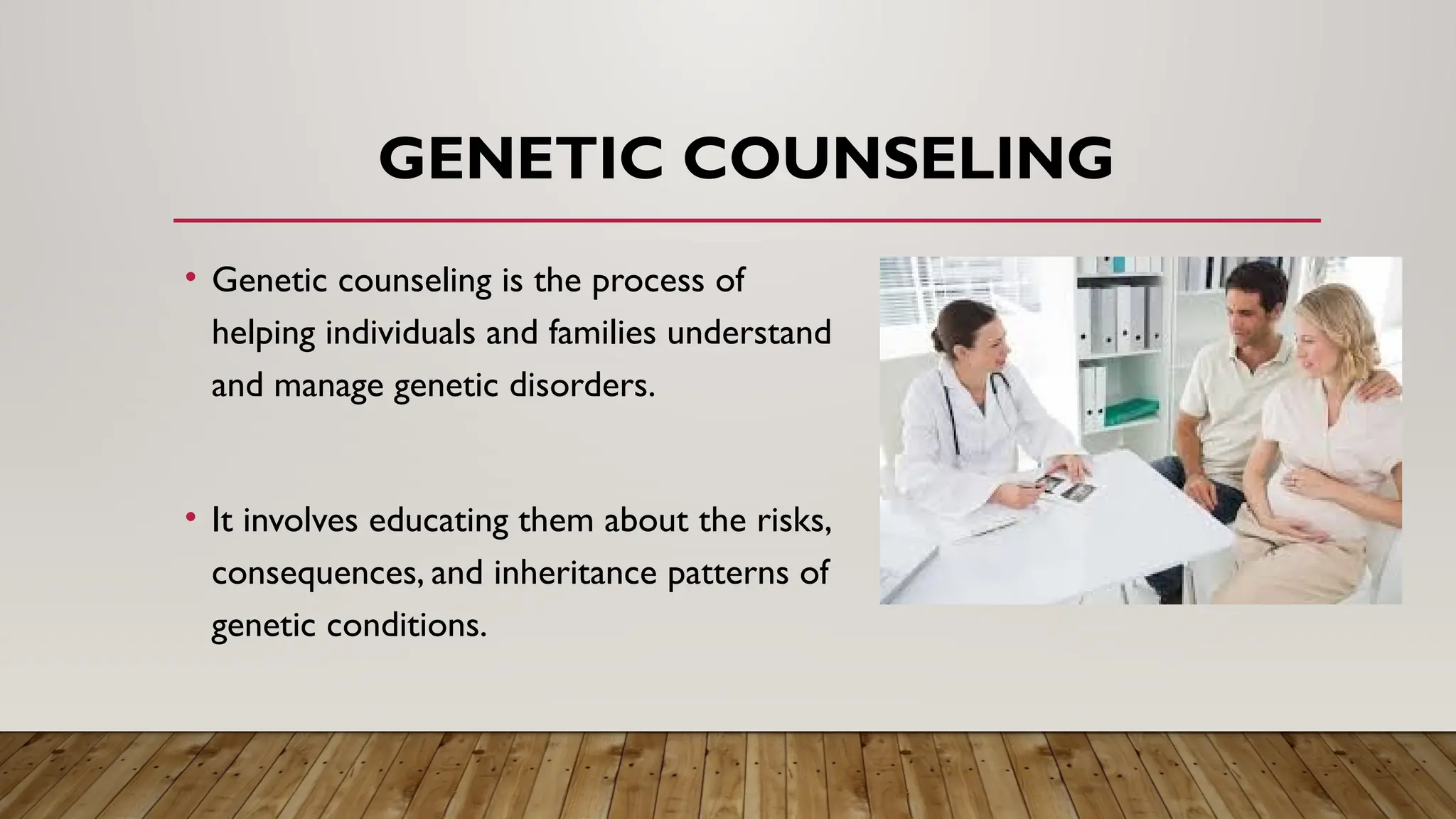
• Genetic counseling is the process of
helping individuals and families understand
and manage genetic disorders.
• It involves educating them about the risks,
consequences, and inheritance patterns of
genetic conditions.
• GOALS OF GENETIC COUNSELLING
1. Informing: Educating individuals and families about genetic disorders and their
risks.
2. Supporting: Providing emotional support and guidance to individuals and families
affected by genetic disorders.
3. Empowering: Empowering individuals and families to make informed decisions
about their health and reproductive options.
• PROCESS OF GENETIC COUNSELING
1. Initial Consultation: Gathering medical and family history information.
2. Risk Assessment: Evaluating the risk of genetic disorders based on family
history and medical information.
3. GeneticTesting: Discussing and arranging genetic testing, if necessary.
4. Result Interpretation: Interpreting and explaining genetic test results.
5. Counseling and Support: Providing emotional support and guidance on
reproductive options and disease management.
• TYPES OF GENETIC COUNSELING
1. Prenatal Genetic Counseling: Counseling during pregnancy about genetic
risks and testing options.
2. Pediatric Genetic Counseling: Counseling children and their families about
genetic disorders and management.
3. Adult Genetic Counseling: Counseling adults about genetic risks and
testing options for themselves and their families.
4. Cancer Genetic Counseling: Counseling individuals and families about
genetic risks and testing options for cancer.
• SKILLS AND QUALIFICATIONS OF GENETIC
COUNSELORS
1. Master’s Degree in Genetic Counseling: A graduate degree in genetic
counseling or a related field.
2. Certification: Certification by the American Board of Genetic Counseling
(ABGC).
3. Clinical Experience: Experience working in a clinical setting with patients and
families.
4. Communication Skills: Strong communication and interpersonal skills to
effectively counsel patients and families.
• CHALLENGES AND LIMITATIONS OF GENETIC
COUNSELING
1. Complexity of Genetic Information: Difficulty communicating complex
genetic information to patients and families.
2. Emotional Impact: Managing the emotional impact of genetic diagnoses
on patients and families.
3. Limited Resources: Limited access to genetic testing and counseling
services, particularly in underserved populations.
4. Rapidly Evolving Field: Staying current with advances in genetic
technology and research.
LEGAL AND ETHICAL ISSUES IN
GENETICS
• Legal Issues
1. Informed Consent: Ensuring individuals understand genetic testing and its implications.
2. Privacy and Confidentiality: Protecting genetic information from unauthorized
disclosure.
3. Discrimination: Preventing genetic discrimination in employment, insurance, and
education.
4. Patent and Intellectual Property: Regulating patenting of genetic material and genes.
5. Regulation of GeneticTesting: Ensuring accuracy and reliability of genetic testing.
LEGAL AND ETHICAL ISSUES IN
GENETICS
• Ethical Issues
1. Autonomy and Choice: Respecting individuals' decisions regarding genetic testing and
reproductive choices.
2. Beneficence and Non-Maleficence: Ensuring genetic testing and interventions promote
well-being and minimize harm.
3. Justice and Fairness: Ensuring equal access to genetic services and benefits.
4. Respect for Persons: Protecting dignity and privacy of individuals undergoing genetic
testing.
5. Cultural Sensitivity: Considering diverse cultural perspectives on genetic issues.
ROLE OF NURSE IN GENETICS
• Assessment and Identification
1. Family History Assessment: Collecting and analyzing family medical histories to identify potential
genetic risks.
2. Genetic Risk Assessment: Evaluating patients' genetic risks based on family history, medical history,
and genetic testing results.
• Education and Counselling
1. Genetic Education: Providing patients and families with information about genetic
disorders, testing, and management.
2. Genetic Counseling: Supporting patients and families in making informed decisions
about genetic testing and reproductive options.
3. Risk Communication: Clearly communicating genetic risks and test results to
patients and families.
ROLE OF NURSE IN GENETICS
• Care Coordination and Management
1. Care planning: Developing individualized care plans for patients with
genetic disorders.
2. Coordination of care: Collaborating with healthcare teams to ensure
comprehensive care for patients with genetic disorders.
3. Symptom management: Providing symptom management and
supportive care to patients with genetic disorders.
ROLE OF NURSE IN GENETICS
• Research and Advocacy
1. Research Participation: Participating in genetic research studies to
improve understanding and management of genetic disorders.
2. Advocacy: Advocating for patients and families affected by genetic
disorders, ensuring access to necessary resources and support.
ROLE OF NURSE IN GENETICS
• Interprofessional Collaboration
1. Collaboration with Geneticists: Working with geneticists and other
healthcare professionals to provide comprehensive care for patients
with genetic disorders.
2. InterdisciplinaryTeams: Participating in interdisciplinary teams to
develop and implement care plans for patients with genetic disorders.
ROLE OF NURSE IN GENETICS
• Professional Development
1. Genetic Education andTraining: Pursuing ongoing education and
training in genetics to stay current with advances in the field.
2. Certification: Obtaining certification in genetics, such as the Certified
Genetic Nurse (CGN) credential.
ROLE OF NURSE IN GENETICS
THANKYOU

Unit 5- Services Related to Genetics in Nursing

  • 1.
    SERVICES RELATEDTO GENETIC NURSING MR.HITESH CHAUDHARY (ASST. PROFESSOR) M.SC. (N), M.BA. HA UNIT -5
  • 2.
    GENETICTESTING • Genetic testinginvolves analyzing an individual's DNA to identify genetic disorders, mutations, or variations.
  • 3.
    • TYPES OFGENETIC TESTING 1. Diagnostic testing: Identifies the genetic cause of a patient's symptoms. 2. Predictive testing: Determines the likelihood of developing a genetic disorder. 3. Carrier testing: Identifies individuals who carry a genetic mutation that can be passed to their offspring. 4. Prenatal testing: Screens for genetic disorders during pregnancy. 5. Newborn screening: Tests newborns for genetic disorders.
  • 4.
    • METHODS OFGENETIC TESTING 1. DNA sequencing: Analyzes the order of DNA building blocks. 2. Chromosomal analysis: Examines the structure and number of chromosomes. 3. Biochemical testing: Measures the levels of specific proteins or enzymes. 4. Molecular testing: Analyzes DNA or RNA to identify genetic mutations.
  • 5.
    • APPLICATIONS OFGENETIC TESTING 1. Diagnosis of Genetic Disorders: Identifies the genetic cause of a patient's symptoms. 2. Risk Assessment: Determines the likelihood of developing a genetic disorder. 3. Family Planning: Helps individuals and families make informed decisions about reproduction. 4. Personalized Medicine: Tailors medical treatment to an individual's genetic profile. 5. Forensic Analysis: Analyzes DNA evidence in criminal investigations.
  • 6.
    • BENEFITS ANDLIMITATIONS OF GENETIC TESTING Benefits: 1. Accurate diagnosis: Identifies the genetic cause of a patient's symptoms. 2. Informed decision-making: Helps individuals and families make informed decisions about reproduction and medical treatment. 3. Personalized medicine: Tailors medical treatment to an individual's genetic profile.
  • 7.
    • BENEFITS ANDLIMITATIONS OF GENETIC TESTING Limitations: 1. False positives and false negatives: Genetic tests can produce incorrect results. 2. Limited predictive value: Genetic tests may not accurately predict the development of a genetic disorder. 3. Emotional and psychological impact: Genetic testing can have emotional and psychological implications for individuals and families.
  • 8.
    • ETHICAL CONSIDERATIONS 1.Informed consent: Individuals must provide informed consent before undergoing genetic testing. 2. Confidentiality: Genetic test results must be kept confidential. 3. Discrimination: Genetic testing must not be used to discriminate against individuals. 4. Counseling: Genetic counseling must be provided to individuals undergoing genetic testing.
  • 9.
    GENETHERAPY • Gene therapyis a medical treatment that uses genes to prevent or treat diseases. • It involves introducing healthy copies of a gene into cells to replace faulty or missing genes.
  • 10.
    • TYPES OFGENE THERAPY 1. Germline GeneTherapy: Involves making changes to the genes in reproductive cells, which can be passed on to future generations. 2. Somatic GeneTherapy: Involves making changes to the genes in non- reproductive cells, which cannot be passed on to future generations.
  • 11.
    • METHODS OFGENE THERAPY 1. ViralVectors: Using viruses to deliver healthy copies of a gene to cells. 2. Non-ViralVectors: Using liposomes, nanoparticles, or other methods to deliver healthy copies of a gene to cells. 3. Gene Editing: Using techniques like CRISPR/Cas9 to edit genes directly.
  • 12.
    • APPLICATIONS OFGENE THERAPY: 1. Inherited Disorders: Gene therapy can be used to treat inherited disorders, such as sickle cell anemia and cystic fibrosis. 2. Cancer: Gene therapy can be used to treat cancer by introducing genes that help kill cancer cells. 3. Genetic Disorders: Gene therapy can be used to treat genetic disorders, such as muscular dystrophy and Huntington's disease. 4. Viral Infections: Gene therapy can be used to treat viral infections, such as HIV and hepatitis.
  • 13.
    • BENEFITS OFGENE THERAPY 1. Potential Cure: Gene therapy can potentially cure genetic disorders. 2. Long-TermTreatment: Gene therapy can provide long-term treatment for chronic diseases. 3. Reduced Symptoms: Gene therapy can reduce symptoms and improve quality of life.
  • 14.
    • CHALLENGES ANDRISKS OF GENE THERAPY 1. Safety concerns: Gene therapy can have safety concerns, such as off-target effects and immune responses. 2. Efficacy: Gene therapy may not be effective for all patients or conditions. 3. Cost: Gene therapy can be expensive and may not be accessible to all patients. 4. Regulatory frameworks: Gene therapy is regulated by various frameworks, which can vary by country and region.
  • 15.
    • FUTURE OFGENE THERAPY 1. Advances in technology: Advances in technology, such as CRISPR/Cas9, are improving the efficiency and accuracy of gene therapy. 2. Increased funding: Increased funding for gene therapy research is helping to advance the field. 3. Growing demand: Growing demand for gene therapy is driving innovation and investment in the field. 4. Regulatory frameworks: Regulatory frameworks are evolving to accommodate the growth of gene therapy.
  • 16.
    GENETIC COUNSELING • Geneticcounseling is the process of helping individuals and families understand and manage genetic disorders. • It involves educating them about the risks, consequences, and inheritance patterns of genetic conditions.
  • 17.
    • GOALS OFGENETIC COUNSELLING 1. Informing: Educating individuals and families about genetic disorders and their risks. 2. Supporting: Providing emotional support and guidance to individuals and families affected by genetic disorders. 3. Empowering: Empowering individuals and families to make informed decisions about their health and reproductive options.
  • 18.
    • PROCESS OFGENETIC COUNSELING 1. Initial Consultation: Gathering medical and family history information. 2. Risk Assessment: Evaluating the risk of genetic disorders based on family history and medical information. 3. GeneticTesting: Discussing and arranging genetic testing, if necessary. 4. Result Interpretation: Interpreting and explaining genetic test results. 5. Counseling and Support: Providing emotional support and guidance on reproductive options and disease management.
  • 19.
    • TYPES OFGENETIC COUNSELING 1. Prenatal Genetic Counseling: Counseling during pregnancy about genetic risks and testing options. 2. Pediatric Genetic Counseling: Counseling children and their families about genetic disorders and management. 3. Adult Genetic Counseling: Counseling adults about genetic risks and testing options for themselves and their families. 4. Cancer Genetic Counseling: Counseling individuals and families about genetic risks and testing options for cancer.
  • 20.
    • SKILLS ANDQUALIFICATIONS OF GENETIC COUNSELORS 1. Master’s Degree in Genetic Counseling: A graduate degree in genetic counseling or a related field. 2. Certification: Certification by the American Board of Genetic Counseling (ABGC). 3. Clinical Experience: Experience working in a clinical setting with patients and families. 4. Communication Skills: Strong communication and interpersonal skills to effectively counsel patients and families.
  • 21.
    • CHALLENGES ANDLIMITATIONS OF GENETIC COUNSELING 1. Complexity of Genetic Information: Difficulty communicating complex genetic information to patients and families. 2. Emotional Impact: Managing the emotional impact of genetic diagnoses on patients and families. 3. Limited Resources: Limited access to genetic testing and counseling services, particularly in underserved populations. 4. Rapidly Evolving Field: Staying current with advances in genetic technology and research.
  • 22.
    LEGAL AND ETHICALISSUES IN GENETICS • Legal Issues 1. Informed Consent: Ensuring individuals understand genetic testing and its implications. 2. Privacy and Confidentiality: Protecting genetic information from unauthorized disclosure. 3. Discrimination: Preventing genetic discrimination in employment, insurance, and education. 4. Patent and Intellectual Property: Regulating patenting of genetic material and genes. 5. Regulation of GeneticTesting: Ensuring accuracy and reliability of genetic testing.
  • 23.
    LEGAL AND ETHICALISSUES IN GENETICS • Ethical Issues 1. Autonomy and Choice: Respecting individuals' decisions regarding genetic testing and reproductive choices. 2. Beneficence and Non-Maleficence: Ensuring genetic testing and interventions promote well-being and minimize harm. 3. Justice and Fairness: Ensuring equal access to genetic services and benefits. 4. Respect for Persons: Protecting dignity and privacy of individuals undergoing genetic testing. 5. Cultural Sensitivity: Considering diverse cultural perspectives on genetic issues.
  • 24.
    ROLE OF NURSEIN GENETICS • Assessment and Identification 1. Family History Assessment: Collecting and analyzing family medical histories to identify potential genetic risks. 2. Genetic Risk Assessment: Evaluating patients' genetic risks based on family history, medical history, and genetic testing results.
  • 25.
    • Education andCounselling 1. Genetic Education: Providing patients and families with information about genetic disorders, testing, and management. 2. Genetic Counseling: Supporting patients and families in making informed decisions about genetic testing and reproductive options. 3. Risk Communication: Clearly communicating genetic risks and test results to patients and families. ROLE OF NURSE IN GENETICS
  • 26.
    • Care Coordinationand Management 1. Care planning: Developing individualized care plans for patients with genetic disorders. 2. Coordination of care: Collaborating with healthcare teams to ensure comprehensive care for patients with genetic disorders. 3. Symptom management: Providing symptom management and supportive care to patients with genetic disorders. ROLE OF NURSE IN GENETICS
  • 27.
    • Research andAdvocacy 1. Research Participation: Participating in genetic research studies to improve understanding and management of genetic disorders. 2. Advocacy: Advocating for patients and families affected by genetic disorders, ensuring access to necessary resources and support. ROLE OF NURSE IN GENETICS
  • 28.
    • Interprofessional Collaboration 1.Collaboration with Geneticists: Working with geneticists and other healthcare professionals to provide comprehensive care for patients with genetic disorders. 2. InterdisciplinaryTeams: Participating in interdisciplinary teams to develop and implement care plans for patients with genetic disorders. ROLE OF NURSE IN GENETICS
  • 29.
    • Professional Development 1.Genetic Education andTraining: Pursuing ongoing education and training in genetics to stay current with advances in the field. 2. Certification: Obtaining certification in genetics, such as the Certified Genetic Nurse (CGN) credential. ROLE OF NURSE IN GENETICS
  • 30.