UNIT 11 – ANCIENT ROME
1-How did Rome become an empire?
2- What were the Monarchy and the Republic?
3- How did the Republic evolve?
4- How was the Roman Empire created?
5- Why did the Roman Empire decline?
8- What was a Roman City like?
10- How did religious beliefs change?
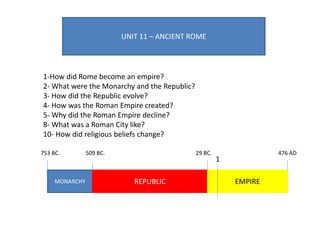
MONARCHY REPUBLIC EMPIRE
753 BC. 509 BC. 29 BC. 476 AD
1
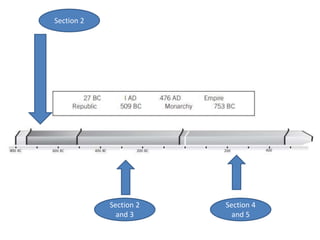
Section 2
Section 2
and 3
Section 4
and 5
Monarchy
753-509 BC
Governed by a king
helped by a senate.
6th c. Rome was conquered
by the Etruscans.
509 BC the last Etruscan
king
Republic
509-29 BC
Three main institutions
Comitias: Assambly of
citizens.
Magistratus: political,
military and religious
power.
Senatus: The most
important institution.
Two different groups:
Patricians: minority richest
Plebeians: Other citizens
Main conflicts:
Punic Wars (246-
146 BC) against
Carthage.
Consequence: Roman
extended its power
around the
Mediterranean.
The crisis of the Republic
because of corruption,
internal conflicts and the
power of the military
increasing.
It finished when Octavius
took control.
Empire
The rise of the empire (27BC-235 AD)
The decline of the Roman Empire
Octavius Augustus created the
empire.
Roman empire reached its peak
during
The crisis of the 3rd century
Military anarchy and
Germanic and Persian
invasions
The empire recovered in the 4th
century with Diocletian, Constantine
and Theodosius 395: The empire is divided into
two: Western and
Eastern Roman Empire
476: Last Western Roman Empire is
deposed; Eastern Empire lasted 1000
years more: Byzantine Empire
How did Rome become an empire?
Rome: from city to empire
Strategic location
on the centre of
the Italian P.
Centre of the
Mediterranean
Sea
500-250 BC
Rome conquered the
Italian P.
250-1 BC
Rome conquered the
Western Mediterranean
territories.
1st 2nd C. AD
Roman territories
spread stretched
from the British I. to
the Sahara desert;
from Mesopotamia
to Iberian P.
Roman territories spread stretched from the
British I. to the Sahara desert; from
Mesopotamia to Iberian P.
Roman Empire
MAKING A TIMELINE.
3- Locate the following events in your timeline
753 BC: Founding of Rome
509 BC. End of the Roman Monarchy; republican period begins
323 BC: Alexander the Great died
29 BC.: Beginning of the Roman Empire
180 AD.:Roman emperor Marcus Aurelius died
380 AD: Christianismus: official religion of the Roman Empire
476 AD: The fall of the Roman Empire
622 AD Mohammed runaway from Mecca; starts of the Muslim calendar
800 AD.: Charlemagne crowned Emperor of the West
LET’S LOCATE SOME PERIODS ON THE TIME LINE.
753 BC – 509 BC.: Roman monarchy
509 BC- 29 BC: Roman republic
29 BC- 476 AD: Roman empire
The way to represent a period in the timeline is to delimit it with the start and
the end dates and to paint it of a different color to the rest of the line.
1000 a.C. 1000 d.C.
1
500 a.C. 500 d.C.
753 BC
509 BC.
29 BC.
323 BC.
180 AD
380 AD.
476 AD.
622 AD.
800 AD.
Monarchy Republic Empire
800 a.C.900 a.C. 400 a.C.700 a.C.600 a.C. 200 a.C.300 a.C. 100 a.C.
Your timeline has to be some thing like this…
EndoftheRomanmonarchy
AlexandertheGreat
died
BeginningoftheRoman
Empire
FoundingofRome
RomanemperorMarcus
Aureliusdied
Christianismus:official
religionoftheRomanEmpire
ThefalloftheRoman
Empire
Charlemagnecrowned
EmperoroftheWest
Los antiguos
campamentos de las
legiones romanas
acabaron por
convertirse en
ciudades
Plano de la Zaragoza romana
CAMPAMENTO ROMANO
Muchas ciudades europeas
actuales tuvieron como origen
un antiguo campamento militar
romano. El trazado de esos
antiguos campamentos
permanece en los planos
actuales de las ciudades. Un
ejemplo es Zaragoza.
EL LEGADO DE ROMA: LAS CALZADAS ROMANAS
Las calzadas eran un elemento vital para controlar el territorio porque permitían un
rápido desplazamiento de los ejércitos (legiones) a través del territorio.
El legado romano: los puentes
Puente-acueducto sobre el río Gard en Francia. Los romanos encajaban las piezas de los
arcos sobre el encofrado de madera sin
ningún tipo de argamasa.
Los acueductos suministraban agua corriente a las ciudades a partir de
las fuentes públicas situadas en las plazas.
Construcciones romanas: los acueductos
Construcciones romanas: los anfiteatros
El Coliseo de Roma es el anfiteatro más famoso, tenía capacidad para 80.000 espectadores y fue construido
en el siglo I d. C. Albergaba espectáculos de gladiadores y hasta batallas navales.
Construcciones romanas: las termas y el
teatro
LOS ARCOS DE TRIUNFO

Unit 11 Ancient Rome

  • 1.
    UNIT 11 –ANCIENT ROME 1-How did Rome become an empire? 2- What were the Monarchy and the Republic? 3- How did the Republic evolve? 4- How was the Roman Empire created? 5- Why did the Roman Empire decline? 8- What was a Roman City like? 10- How did religious beliefs change? MONARCHY REPUBLIC EMPIRE 753 BC. 509 BC. 29 BC. 476 AD 1
  • 2.
    Section 2 Section 2 and3 Section 4 and 5
  • 3.
    Monarchy 753-509 BC Governed bya king helped by a senate. 6th c. Rome was conquered by the Etruscans. 509 BC the last Etruscan king Republic 509-29 BC Three main institutions Comitias: Assambly of citizens. Magistratus: political, military and religious power. Senatus: The most important institution. Two different groups: Patricians: minority richest Plebeians: Other citizens Main conflicts: Punic Wars (246- 146 BC) against Carthage. Consequence: Roman extended its power around the Mediterranean. The crisis of the Republic because of corruption, internal conflicts and the power of the military increasing. It finished when Octavius took control.
  • 4.
    Empire The rise ofthe empire (27BC-235 AD) The decline of the Roman Empire Octavius Augustus created the empire. Roman empire reached its peak during The crisis of the 3rd century Military anarchy and Germanic and Persian invasions The empire recovered in the 4th century with Diocletian, Constantine and Theodosius 395: The empire is divided into two: Western and Eastern Roman Empire 476: Last Western Roman Empire is deposed; Eastern Empire lasted 1000 years more: Byzantine Empire
  • 5.
    How did Romebecome an empire? Rome: from city to empire Strategic location on the centre of the Italian P. Centre of the Mediterranean Sea 500-250 BC Rome conquered the Italian P. 250-1 BC Rome conquered the Western Mediterranean territories. 1st 2nd C. AD Roman territories spread stretched from the British I. to the Sahara desert; from Mesopotamia to Iberian P.
  • 6.
    Roman territories spreadstretched from the British I. to the Sahara desert; from Mesopotamia to Iberian P. Roman Empire
  • 7.
    MAKING A TIMELINE. 3-Locate the following events in your timeline 753 BC: Founding of Rome 509 BC. End of the Roman Monarchy; republican period begins 323 BC: Alexander the Great died 29 BC.: Beginning of the Roman Empire 180 AD.:Roman emperor Marcus Aurelius died 380 AD: Christianismus: official religion of the Roman Empire 476 AD: The fall of the Roman Empire 622 AD Mohammed runaway from Mecca; starts of the Muslim calendar 800 AD.: Charlemagne crowned Emperor of the West
  • 8.
    LET’S LOCATE SOMEPERIODS ON THE TIME LINE. 753 BC – 509 BC.: Roman monarchy 509 BC- 29 BC: Roman republic 29 BC- 476 AD: Roman empire The way to represent a period in the timeline is to delimit it with the start and the end dates and to paint it of a different color to the rest of the line.
  • 9.
    1000 a.C. 1000d.C. 1 500 a.C. 500 d.C. 753 BC 509 BC. 29 BC. 323 BC. 180 AD 380 AD. 476 AD. 622 AD. 800 AD. Monarchy Republic Empire 800 a.C.900 a.C. 400 a.C.700 a.C.600 a.C. 200 a.C.300 a.C. 100 a.C. Your timeline has to be some thing like this… EndoftheRomanmonarchy AlexandertheGreat died BeginningoftheRoman Empire FoundingofRome RomanemperorMarcus Aureliusdied Christianismus:official religionoftheRomanEmpire ThefalloftheRoman Empire Charlemagnecrowned EmperoroftheWest
  • 10.
    Los antiguos campamentos delas legiones romanas acabaron por convertirse en ciudades Plano de la Zaragoza romana CAMPAMENTO ROMANO Muchas ciudades europeas actuales tuvieron como origen un antiguo campamento militar romano. El trazado de esos antiguos campamentos permanece en los planos actuales de las ciudades. Un ejemplo es Zaragoza.
  • 11.
    EL LEGADO DEROMA: LAS CALZADAS ROMANAS Las calzadas eran un elemento vital para controlar el territorio porque permitían un rápido desplazamiento de los ejércitos (legiones) a través del territorio.
  • 12.
    El legado romano:los puentes Puente-acueducto sobre el río Gard en Francia. Los romanos encajaban las piezas de los arcos sobre el encofrado de madera sin ningún tipo de argamasa.
  • 13.
    Los acueductos suministrabanagua corriente a las ciudades a partir de las fuentes públicas situadas en las plazas. Construcciones romanas: los acueductos
  • 14.
    Construcciones romanas: losanfiteatros El Coliseo de Roma es el anfiteatro más famoso, tenía capacidad para 80.000 espectadores y fue construido en el siglo I d. C. Albergaba espectáculos de gladiadores y hasta batallas navales.
  • 15.
    Construcciones romanas: lastermas y el teatro
  • 16.
    LOS ARCOS DETRIUNFO