Unit 103
Introduction to Working in
the Facilities Industry
Employment in the Facilities
Industry
Aims and Objectives for this unit:
Cover topics such as:
 Places of work in the facilities industry
 Service areas within the industry
 Job roles
 Progress opportunities
 Working as part of a team
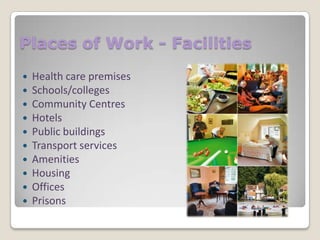
Places of Work - Facilities











Health care premises
Schools/colleges
Community Centres
Hotels
Public buildings
Transport services
Amenities
Housing
Offices
Prisons
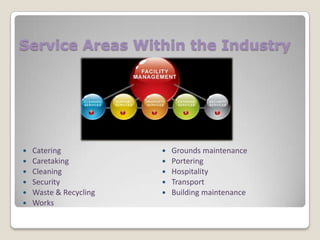
Service Areas Within the Industry








Catering
Caretaking
Cleaning
Security
Waste & Recycling
Works







Grounds maintenance
Portering
Hospitality
Transport
Building maintenance
Job roles-Soft and Hard FM


Soft Services
◦
◦
◦
◦
◦
◦
◦
◦

Cleaning
Receptionist
Portering
Grounds maintenance
Housekeeping
Laundry
Caretaking
Refuse operatives



Hard Services
◦
◦
◦
◦

Engineers
Electricians
Plumbers
Security systems
Progression Through the Industry


Qualifications






Work related
Personal skills
Team leading
Supervisory
Management



Professional Development







Work shadowing
Volunteer work
Courses and seminars
Exhibitions
Reading publications
Expand knowledge
Personal attributes to assist:


Presenting a positive image



Communication



Working with customers and others



Team work
Image of Organisation
Positive image
 Your overall appearance
 Your body language
 Your facial expressions
 Your eye contact
 Communication
 Attitude
 Work ethic
 Standard of work

Represent
 Your employer
 Your team
 Your building
 Your colleagues
 Town/City?
What is body language?


Body language is made up of a whole range of
features many of which we combine together

without ever thinking about what it is we are doing
or what we are expressing.
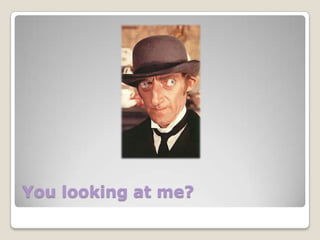
You looking at me?
Eye contact


Helping to establishing rapport



Dishonest or having something to hide?



Turn taking during conversation



Indicate that they want to interrupt
No longer wants to listen will avoid eye contact



Understanding with a single look



Way of communicating attraction
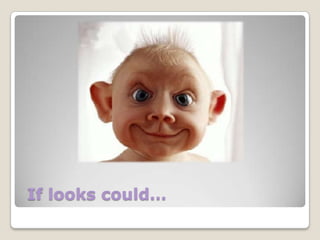
If looks could…
Facial expression


Mood



Attitude



Understanding



Confusion



Whole range of other things
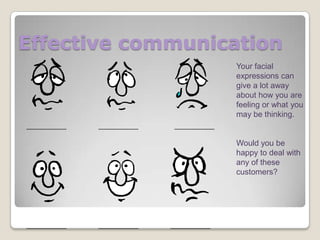
Effective communication
Your facial
expressions can
give a lot away
about how you are
feeling or what you
may be thinking.

Would you be
happy to deal with
any of these
customers?
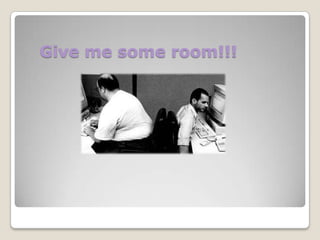
Give me some room!!!
Proximity


British people require a lot of 'private space'



very uncomfortable



signal attraction



something that can easily be misinterpreted
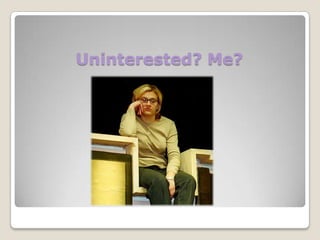
Uninterested? Me?
Posture


Conveys a whole range of attitudes



Interest or the lack of it



Degrees of respect or subordination
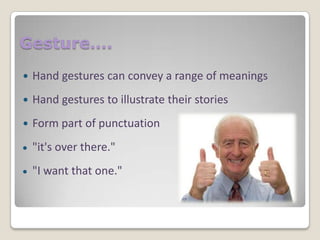
Gesture….


Hand gestures can convey a range of meanings



Hand gestures to illustrate their stories



Form part of punctuation
"it's over there."
"I want that one."
Positive image
Giving a good impression ?
 Arriving on time
 Being courteous and helpful
 Working to the standard required
 Responding positively to requests
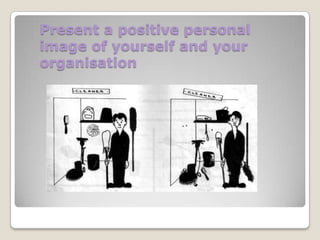
Present a positive personal
image of yourself and your
organisation
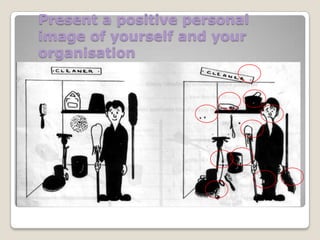
Present a positive personal
image of yourself and your
organisation
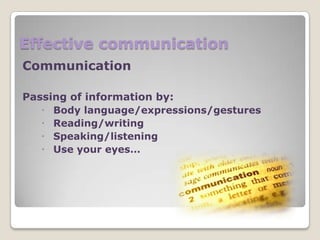
Effective communication
Communication
Passing of information by:
 Body language/expressions/gestures
 Reading/writing
 Speaking/listening
 Use your eyes…
Breakfast task
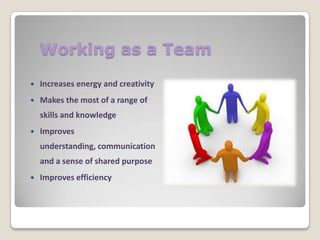
Working as a Team


Increases energy and creativity



Makes the most of a range of

skills and knowledge


Improves
understanding, communication
and a sense of shared purpose



Improves efficiency


Listening - it is important to listen to other people's ideas. When people are allowed to freely express their
ideas, these initial ideas will produce other ideas.



Discussing



Questioning - it is important to ask questions, interact, and discuss the objectives of the team



Persuading



Respecting - it is important to treat others with respect and to support their ideas.



Helping - it is crucial to help one's co-workers, which is the general theme of teamwork.



Sharing - it is important to share with the team to create an environment of teamwork.



Participating - all members of the team are encouraged to participate in the team. (Usually consist of

- it is important to discuss your ideas with your teammates until you agree.

- individuals are encouraged to exchange, defend, and then to ultimately rethink their ideas.

three or more people)



Communicating - For a team to work effectively it is essential team members acquire communication
skills and use effective communication channels between one another e.g. using email, group meetings and so on.
This will enable team members of the group to work together and achieve the team's purpose and goals.
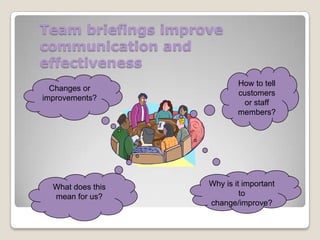
Team briefings improve
communication and
effectiveness
Changes or
improvements?

What does this
mean for us?

How to tell
customers
or staff
members?

Why is it important
to
change/improve?
When things don’t just run
smoothly…
Differences of opinion


Within life not everything always runs smoothly. At work
differences of opinion may occur that fall into two groups.
These may be work related or Personal.



Examples may include:



Work related



Personal related
Resolution…
Dealing with the problem
 Seeing the person involved
 Involving a neutral
 Discuss with supervisor
 Involve HR/Personnel
 Union representation
 Citizens Advice Bureau
Present a positive personal image
of yourself and your organisation
Dealing with customers
 Limits of your own authority
 Information current, up to date, concise
 Confidentiality
 Who to refer to if unsure?

Unit 103 Introduction to the Facilities Industry

  • 1.
    Unit 103 Introduction toWorking in the Facilities Industry
  • 2.
    Employment in theFacilities Industry Aims and Objectives for this unit: Cover topics such as:  Places of work in the facilities industry  Service areas within the industry  Job roles  Progress opportunities  Working as part of a team
  • 3.
    Places of Work- Facilities           Health care premises Schools/colleges Community Centres Hotels Public buildings Transport services Amenities Housing Offices Prisons
  • 4.
    Service Areas Withinthe Industry       Catering Caretaking Cleaning Security Waste & Recycling Works      Grounds maintenance Portering Hospitality Transport Building maintenance
  • 5.
    Job roles-Soft andHard FM  Soft Services ◦ ◦ ◦ ◦ ◦ ◦ ◦ ◦ Cleaning Receptionist Portering Grounds maintenance Housekeeping Laundry Caretaking Refuse operatives  Hard Services ◦ ◦ ◦ ◦ Engineers Electricians Plumbers Security systems
  • 7.
    Progression Through theIndustry  Qualifications      Work related Personal skills Team leading Supervisory Management  Professional Development       Work shadowing Volunteer work Courses and seminars Exhibitions Reading publications Expand knowledge
  • 8.
    Personal attributes toassist:  Presenting a positive image  Communication  Working with customers and others  Team work
  • 9.
    Image of Organisation Positiveimage  Your overall appearance  Your body language  Your facial expressions  Your eye contact  Communication  Attitude  Work ethic  Standard of work Represent  Your employer  Your team  Your building  Your colleagues  Town/City?
  • 10.
    What is bodylanguage?  Body language is made up of a whole range of features many of which we combine together without ever thinking about what it is we are doing or what we are expressing.
  • 11.
  • 12.
    Eye contact  Helping toestablishing rapport  Dishonest or having something to hide?  Turn taking during conversation  Indicate that they want to interrupt No longer wants to listen will avoid eye contact  Understanding with a single look  Way of communicating attraction
  • 13.
  • 14.
  • 15.
    Effective communication Your facial expressionscan give a lot away about how you are feeling or what you may be thinking. Would you be happy to deal with any of these customers?
  • 16.
    Give me someroom!!!
  • 17.
    Proximity  British people requirea lot of 'private space'  very uncomfortable  signal attraction  something that can easily be misinterpreted
  • 18.
  • 19.
    Posture  Conveys a wholerange of attitudes  Interest or the lack of it  Degrees of respect or subordination
  • 20.
    Gesture….  Hand gestures canconvey a range of meanings  Hand gestures to illustrate their stories  Form part of punctuation "it's over there." "I want that one."
  • 21.
    Positive image Giving agood impression ?  Arriving on time  Being courteous and helpful  Working to the standard required  Responding positively to requests
  • 22.
    Present a positivepersonal image of yourself and your organisation
  • 23.
    Present a positivepersonal image of yourself and your organisation
  • 24.
    Effective communication Communication Passing ofinformation by:  Body language/expressions/gestures  Reading/writing  Speaking/listening  Use your eyes…
  • 25.
  • 26.
    Working as aTeam  Increases energy and creativity  Makes the most of a range of skills and knowledge  Improves understanding, communication and a sense of shared purpose  Improves efficiency
  • 27.
     Listening - itis important to listen to other people's ideas. When people are allowed to freely express their ideas, these initial ideas will produce other ideas.  Discussing  Questioning - it is important to ask questions, interact, and discuss the objectives of the team  Persuading  Respecting - it is important to treat others with respect and to support their ideas.  Helping - it is crucial to help one's co-workers, which is the general theme of teamwork.  Sharing - it is important to share with the team to create an environment of teamwork.  Participating - all members of the team are encouraged to participate in the team. (Usually consist of - it is important to discuss your ideas with your teammates until you agree. - individuals are encouraged to exchange, defend, and then to ultimately rethink their ideas. three or more people)  Communicating - For a team to work effectively it is essential team members acquire communication skills and use effective communication channels between one another e.g. using email, group meetings and so on. This will enable team members of the group to work together and achieve the team's purpose and goals.
  • 28.
    Team briefings improve communicationand effectiveness Changes or improvements? What does this mean for us? How to tell customers or staff members? Why is it important to change/improve?
  • 29.
    When things don’tjust run smoothly… Differences of opinion  Within life not everything always runs smoothly. At work differences of opinion may occur that fall into two groups. These may be work related or Personal.  Examples may include:  Work related  Personal related
  • 30.
    Resolution… Dealing with theproblem  Seeing the person involved  Involving a neutral  Discuss with supervisor  Involve HR/Personnel  Union representation  Citizens Advice Bureau
  • 31.
    Present a positivepersonal image of yourself and your organisation Dealing with customers  Limits of your own authority  Information current, up to date, concise  Confidentiality  Who to refer to if unsure?