7517 Principles of
Sustainable
Resource
Management
Unit 204 Know how to maintain
confidentiality of information
within the waste/recycling industry
Outcome for the unit
 Just one...
Know how to maintain
confidentiality of information
Assessment criteria
 Explain what information is permitted to be
passed on to others
 Explain what information is not permitted to be
passed on to others
 Explain why some information is confidential
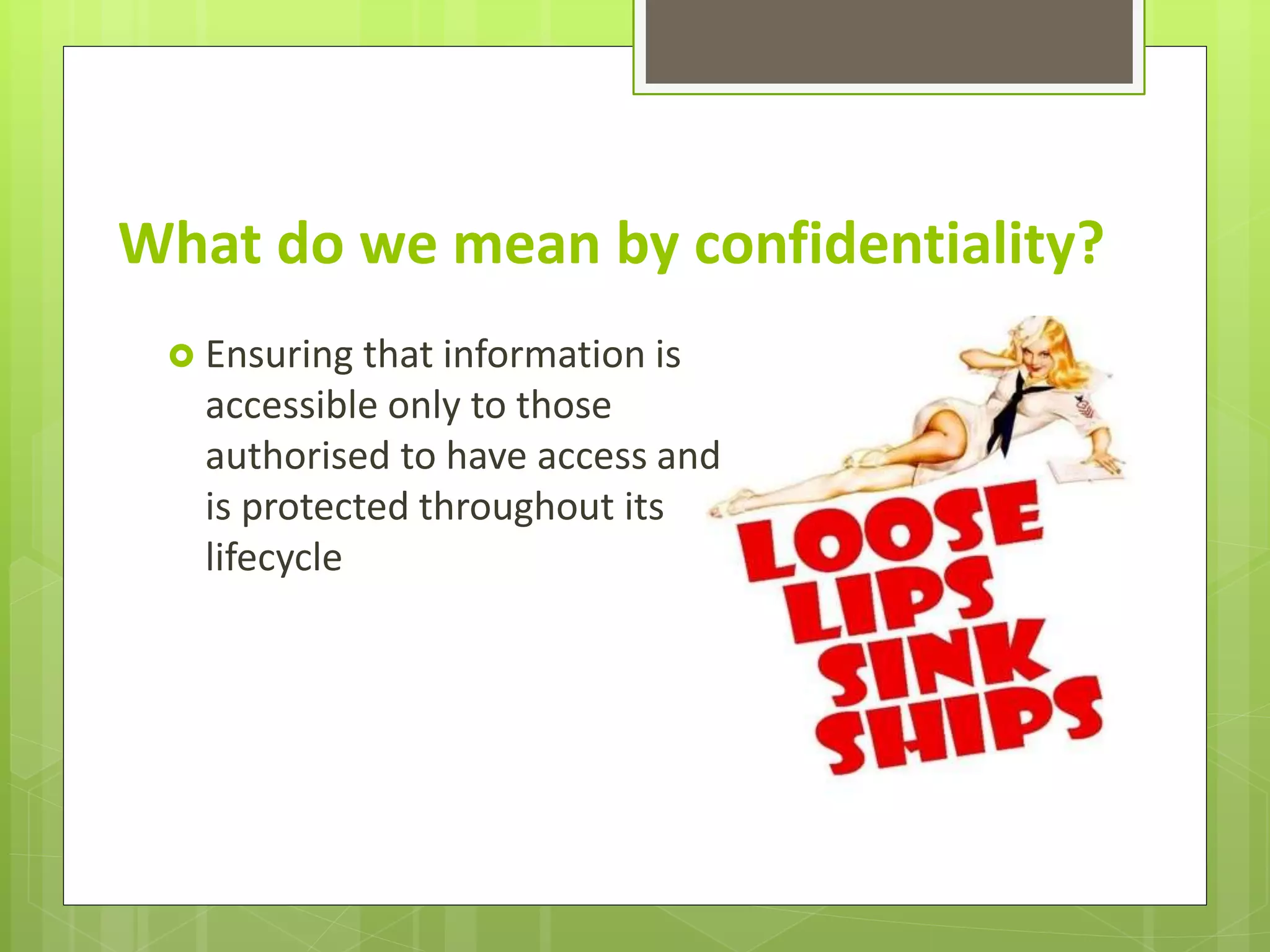
What do we mean by confidentiality?
 Ensuring that information is
accessible only to those
authorised to have access and
is protected throughout its
lifecycle
Information permitted to share
 Services provided
 Service/dept contact info
 Collection schedules
 Specialist collection procedures
 General advice
 Regulations
Not permitted..
 Personal information
 Personal details
 Identity info
 Medical information
 Secret information about organisation
 Financial information
 Info with a commercial value
 Unsubstantiated information
 Organisation
 Personal information
Data protection act 1998
 Act of Parliament
 To protect personal information
 Healthcare info
 Criminal proceedings
 Financial information
 Ethnicity
 Beliefs
 Privacy breaches
Why is information confidential?
 Security breach
 Wrong hands
 Put business at risk
 Rumours may spread
 Put people in danger
 Prejudice
 Identity fraud
 Unwanted contact

Unit 204 Maintain Confidentiality within the Waste and Recycling Industry

  • 1.
    7517 Principles of Sustainable Resource Management Unit204 Know how to maintain confidentiality of information within the waste/recycling industry
  • 2.
    Outcome for theunit  Just one... Know how to maintain confidentiality of information
  • 3.
    Assessment criteria  Explainwhat information is permitted to be passed on to others  Explain what information is not permitted to be passed on to others  Explain why some information is confidential
  • 4.
    What do wemean by confidentiality?  Ensuring that information is accessible only to those authorised to have access and is protected throughout its lifecycle
  • 5.
    Information permitted toshare  Services provided  Service/dept contact info  Collection schedules  Specialist collection procedures  General advice  Regulations
  • 6.
    Not permitted..  Personalinformation  Personal details  Identity info  Medical information  Secret information about organisation  Financial information  Info with a commercial value  Unsubstantiated information  Organisation  Personal information
  • 7.
    Data protection act1998  Act of Parliament  To protect personal information  Healthcare info  Criminal proceedings  Financial information  Ethnicity  Beliefs  Privacy breaches
  • 8.
    Why is informationconfidential?  Security breach  Wrong hands  Put business at risk  Rumours may spread  Put people in danger  Prejudice  Identity fraud  Unwanted contact