Work and Education Elina Lehtmaa 11c
The workforce of England The primary sector: based on natural resources (mining, farming, fishing) The secondary sector: manufacturing (shipbuilding, construction). It has been in decline since the 1950s due to economic recessions The tertiary sector: services (lawyers, civil servants, hairdressers, shop assistants, etc.) About 75% of the population is employed in this sector
About one fifth of business employment is in small business – companies employing fewer than four people The number of people employed in the public sector has decreased, due to privatisation programmes A process called ‘outsourcing’ began – organisations started to buy in services from other companies The armed forces have decreased and less money is spent on defence since the end of the cold war and the creation of the EU
Finding a Job Unskilled people find it very difficult to get a job in Britain Women with children often have part-time jobs Some people are ‘on the dole’ – they are unemployed and receive job-seeker’s allowance Single parents receive ‘income support’
Working Practices English businesses are financially quite efficient, but workers don’t feel very secure Many East-Europeans have work permits – employers make greater use of temporary workers and part-time contracts People with full-time job work 40-hour, 5-day week For part-time workers, it is 16 hours per week Flexitime working – people can vary the times they start and finish
Salaries  Low paid: agriculture, fishing, hotel and restaurant Well paid: finance, business Low paid jobs are offered to women Women earn 20-25% less than man despite the laws for equal pay The national minimum wage is £4.50 per hour for 18-21-year-olds, and £5.20 for anyone over 22
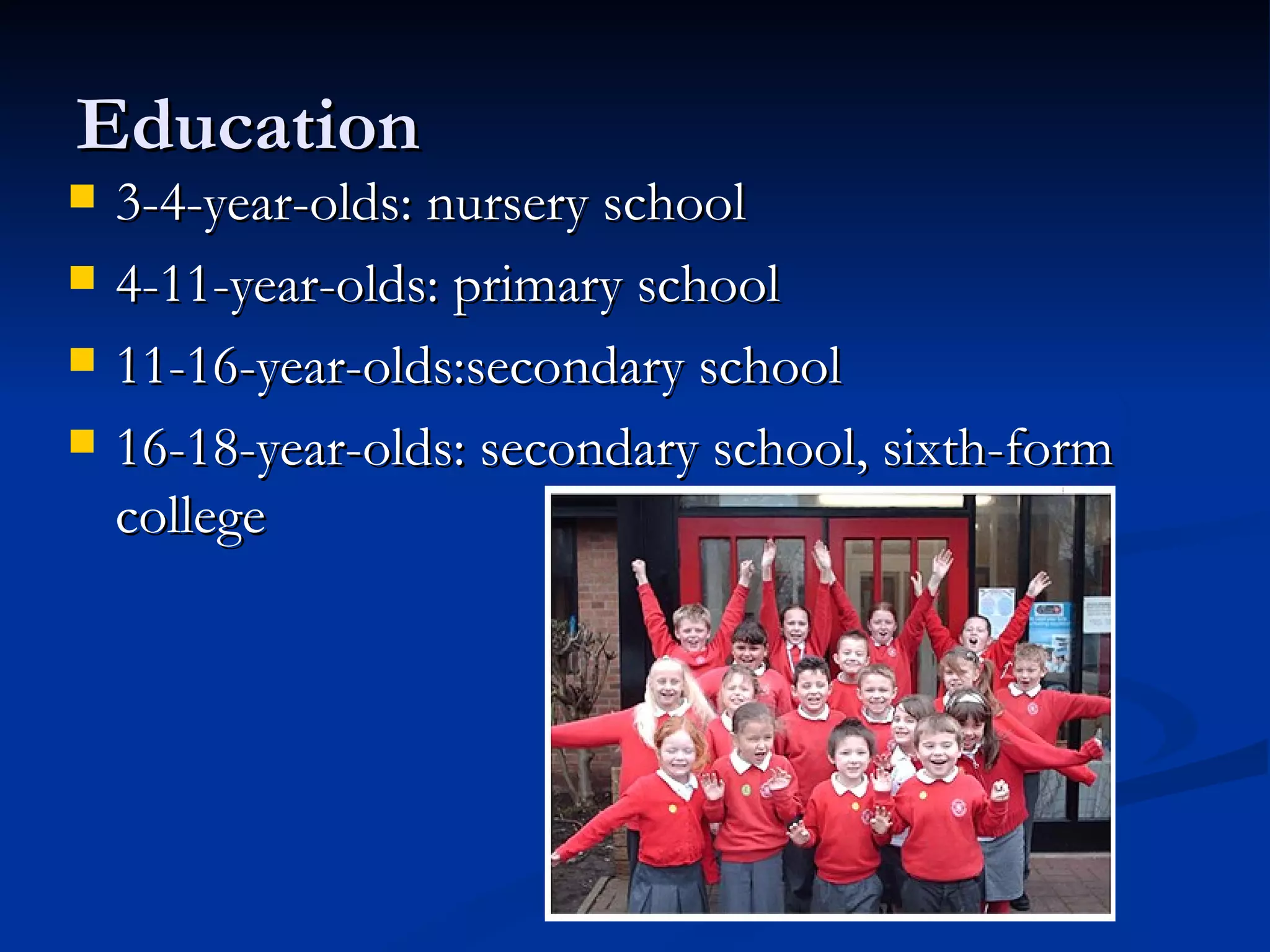
Education  3-4-year-olds: nursery school 4-11-year-olds: primary school 11-16-year-olds:secondary school 16-18-year-olds: secondary school, sixth-form college
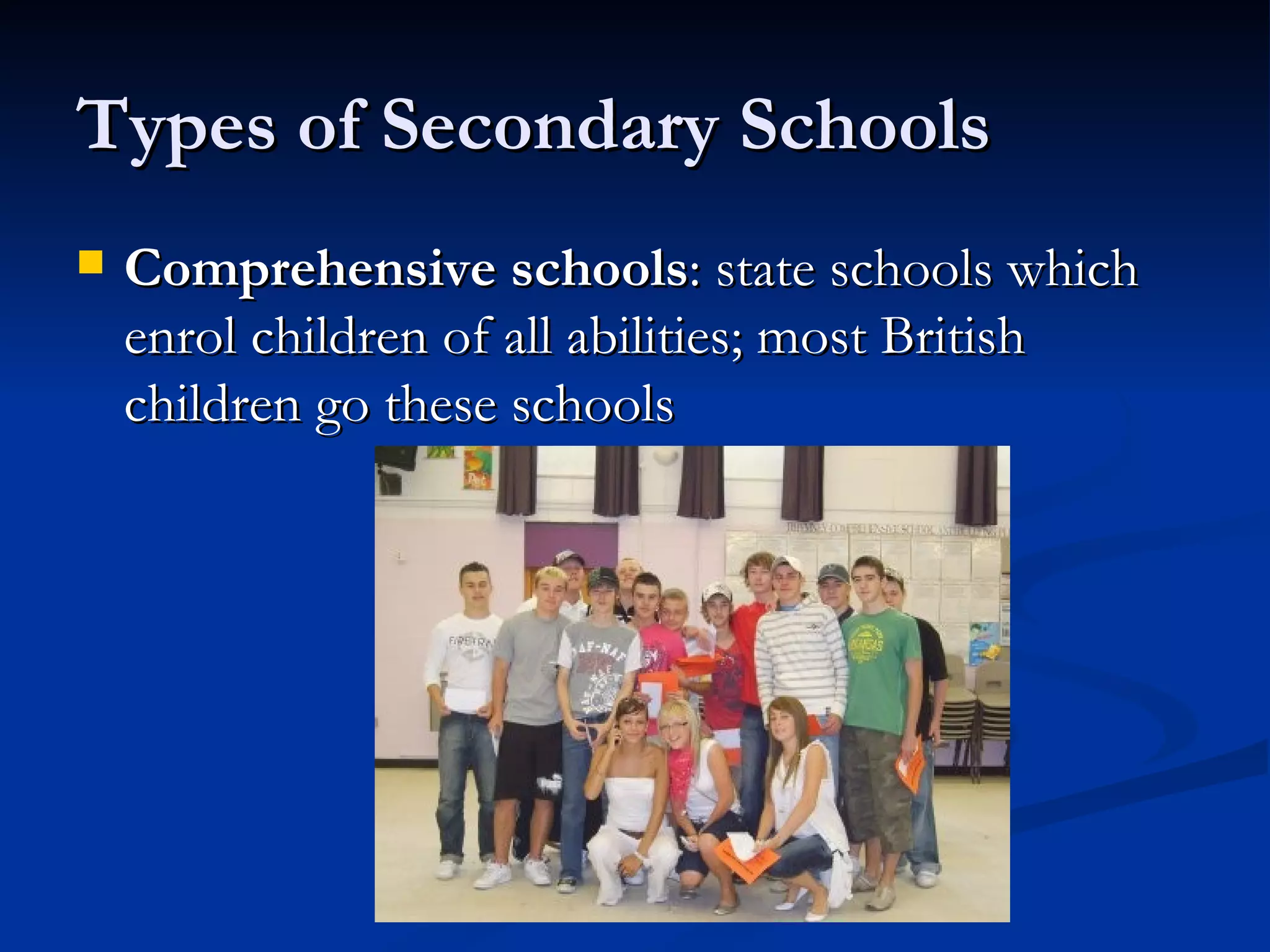
Types of Secondary Schools Comprehensive schools : state schools which enrol children of all abilities; most British children go these schools
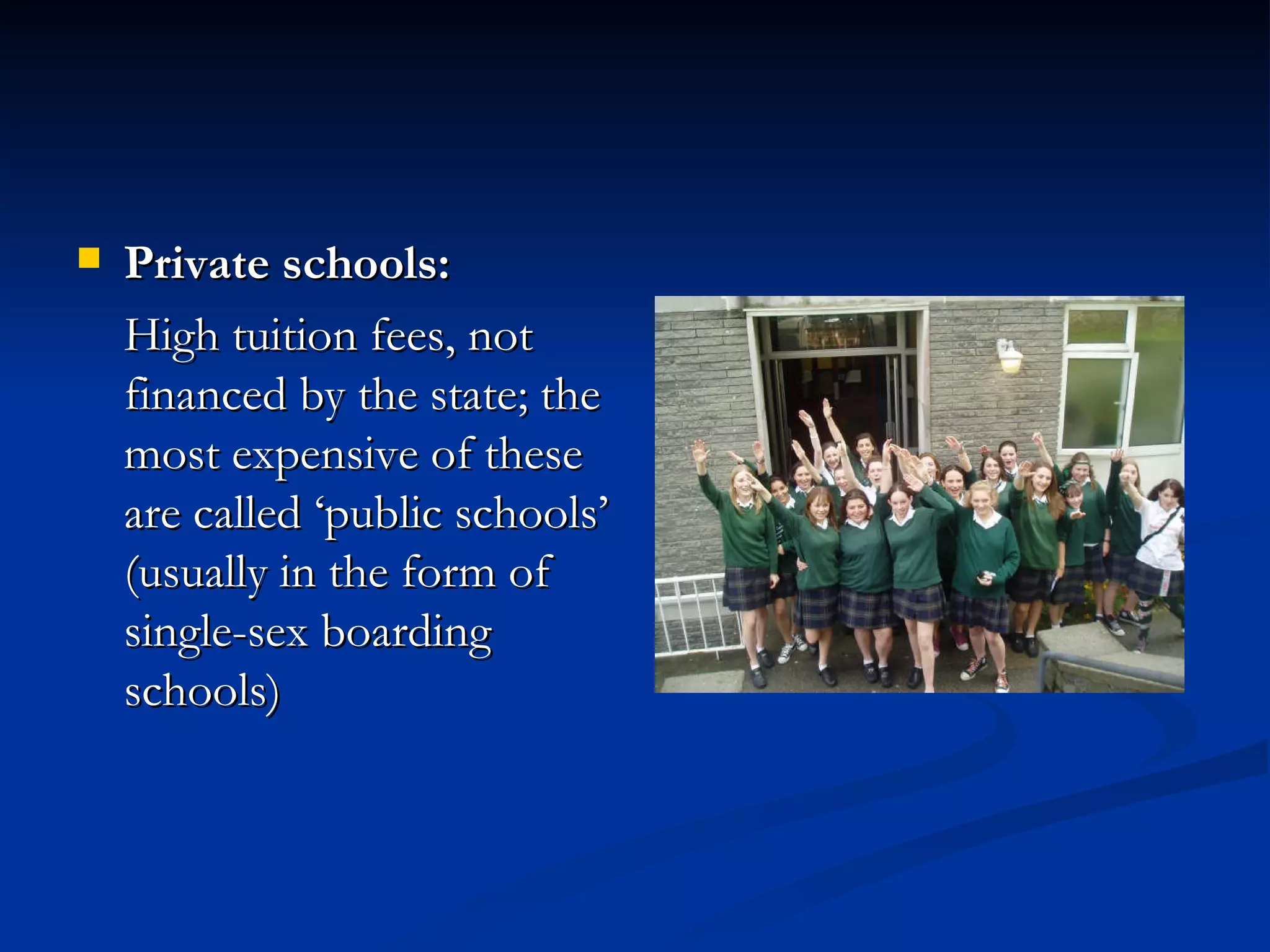
Private schools: High tuition fees, not financed by the state; the most expensive of these are called ‘public schools’ (usually in the form of single-sex boarding schools)
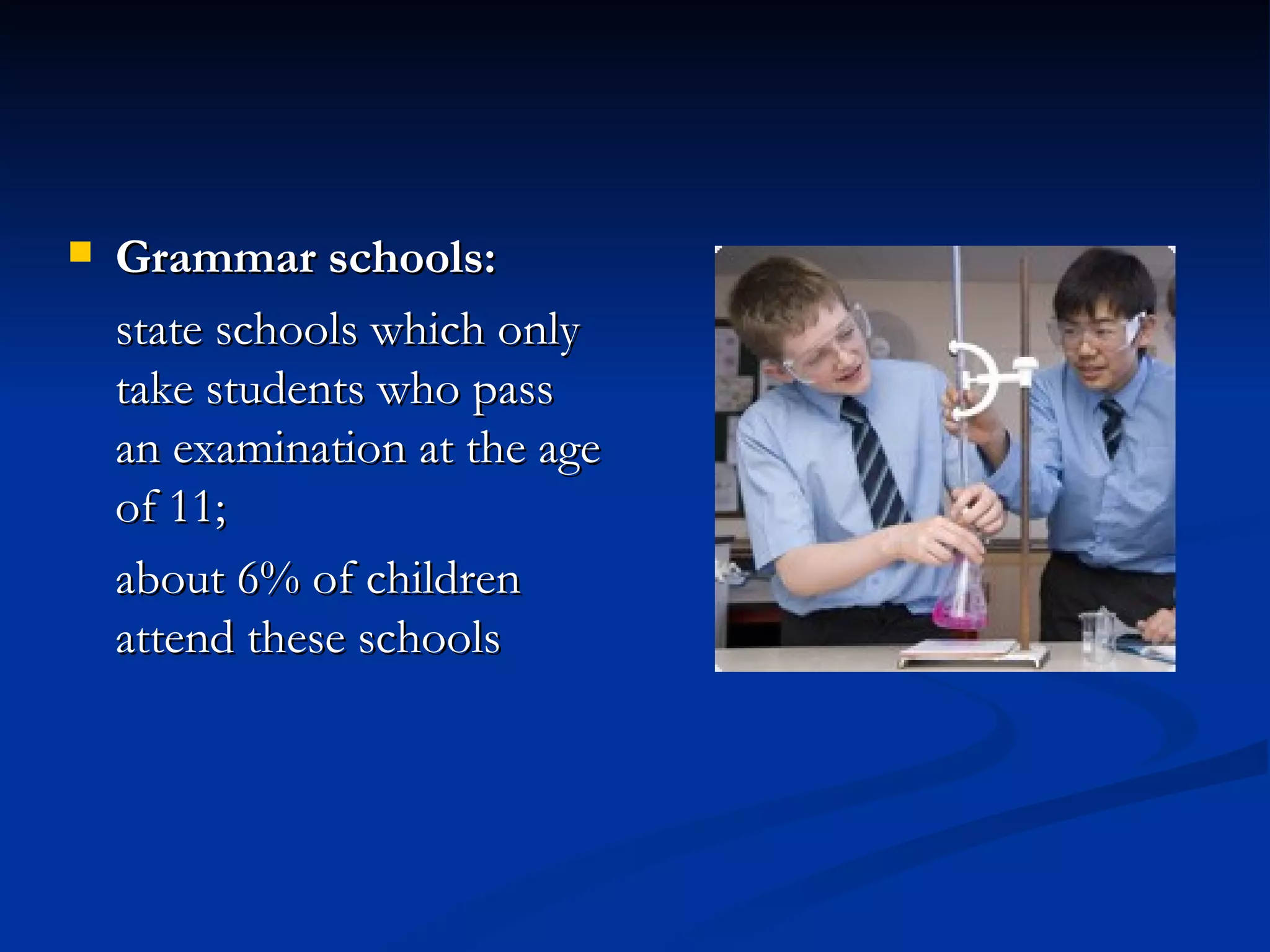
Grammar schools: state schools which only take students who pass an examination at the age of 11;  about 6% of children attend these schools
Studying for GCSE exams, pupils must take English, Maths and Science and a half GSCE in a foreign language and Technology Pupils who don’t leave school at the age of 16 take A levels, AS levels or GNVQs Traditional subjects when taking A levels: French, Physics, History GNVQs - vocational qualifications (Business, Leisure, Tourism, Art, Design)
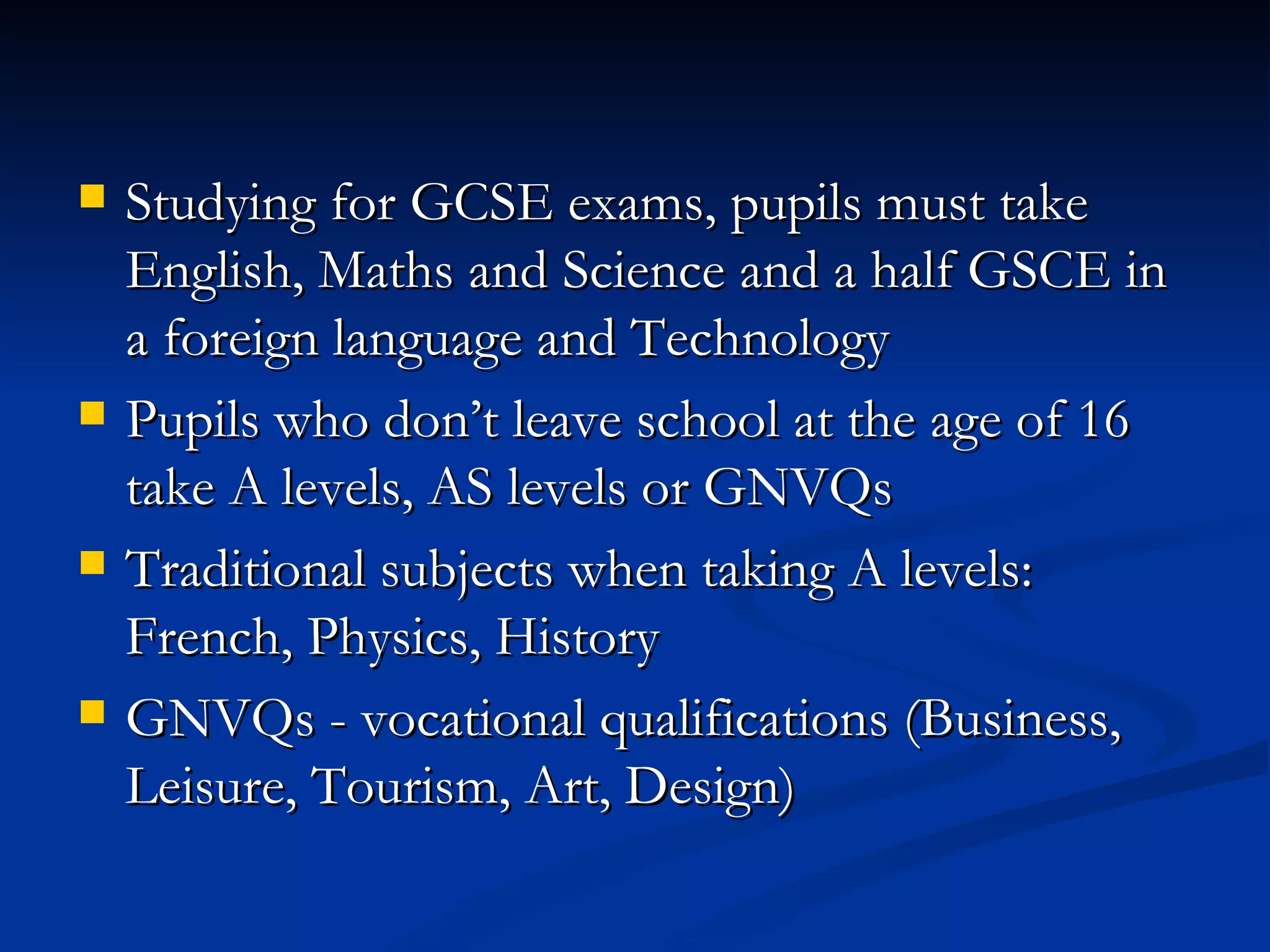
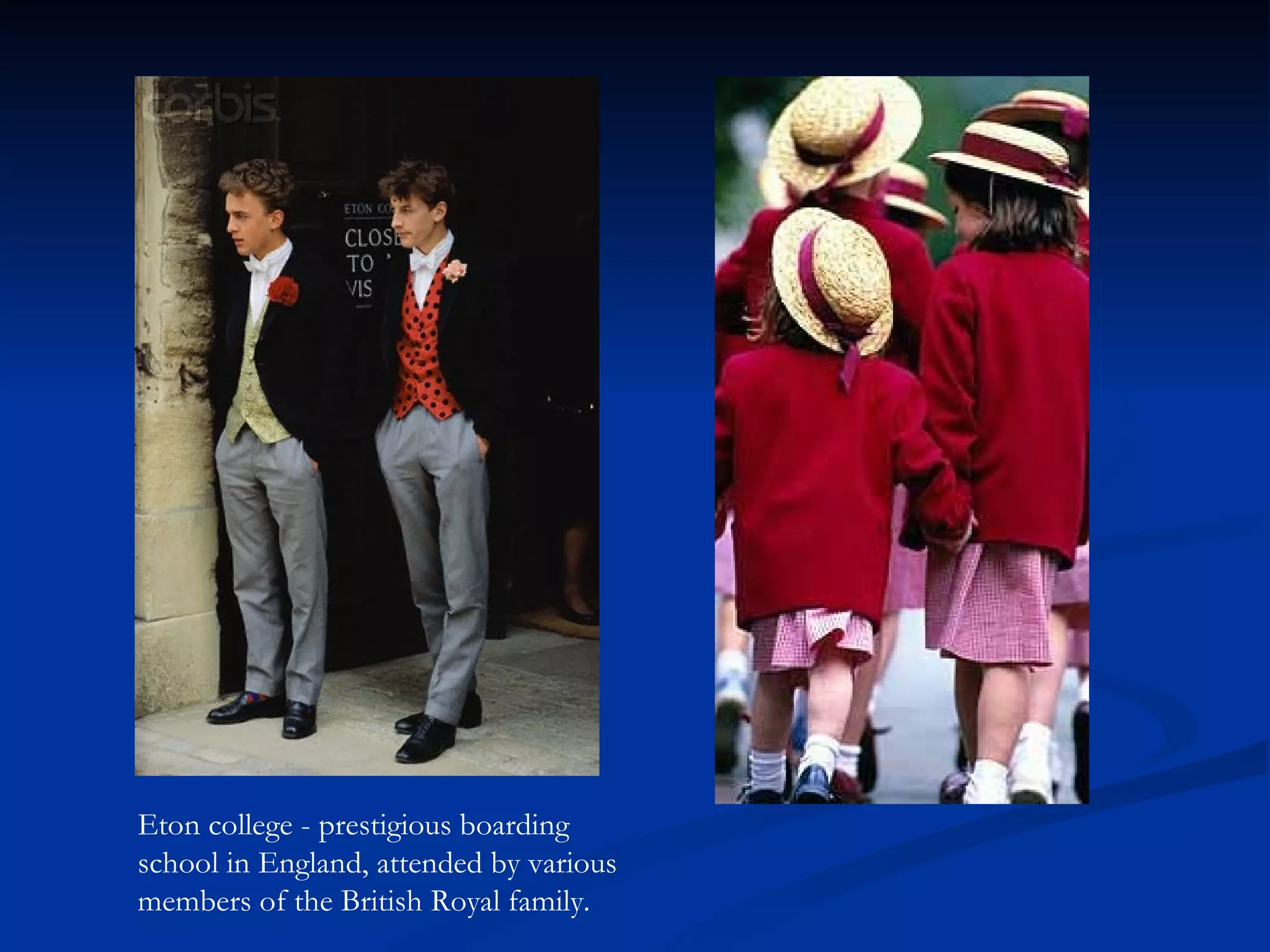
Eton college - prestigious boarding school in England, attended by various members of the British Royal family.
Higher Education 91 universities and 47 colleges of higher education Competition to get into universities is tough, despite the fact that only about a quarter of the student population apply for admission Since 1998, students must pay about £1,150 a year in tuition fees Many students receive a grant from the local education authority to pay tuition fees
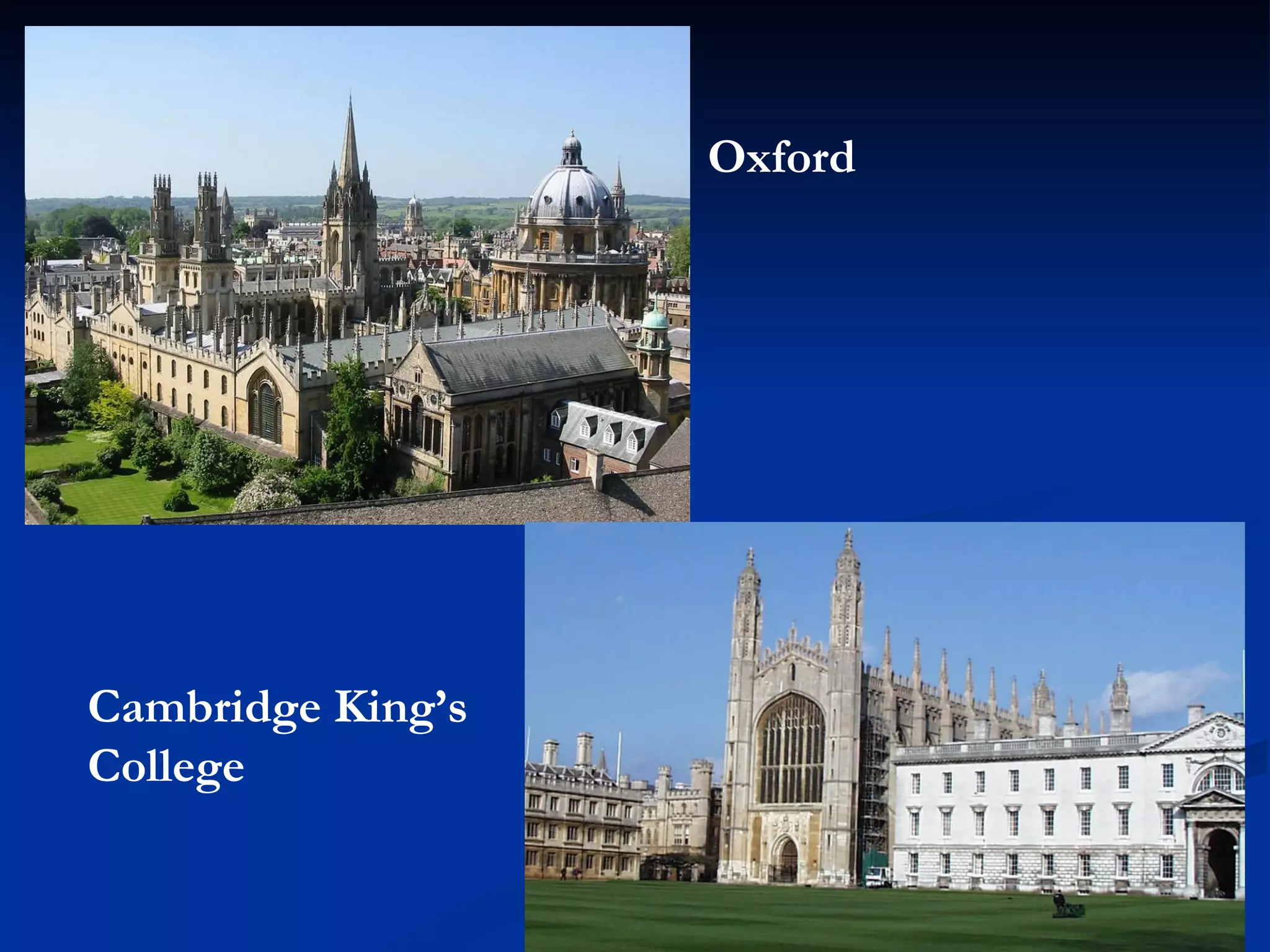
Oxford and Cambridge (Oxbridge) Stand out as the oldest and best-known for their high standard education. Graduates of Oxbridge were once the most powerful and successful members of society Nowadays it is criticised as being too old-fashioned, traditional and self-important
Oxford Cambridge King’s College

Unit 10: Work and Education

  • 1.
    Work and EducationElina Lehtmaa 11c
  • 2.
    The workforce ofEngland The primary sector: based on natural resources (mining, farming, fishing) The secondary sector: manufacturing (shipbuilding, construction). It has been in decline since the 1950s due to economic recessions The tertiary sector: services (lawyers, civil servants, hairdressers, shop assistants, etc.) About 75% of the population is employed in this sector
  • 3.
    About one fifthof business employment is in small business – companies employing fewer than four people The number of people employed in the public sector has decreased, due to privatisation programmes A process called ‘outsourcing’ began – organisations started to buy in services from other companies The armed forces have decreased and less money is spent on defence since the end of the cold war and the creation of the EU
  • 4.
    Finding a JobUnskilled people find it very difficult to get a job in Britain Women with children often have part-time jobs Some people are ‘on the dole’ – they are unemployed and receive job-seeker’s allowance Single parents receive ‘income support’
  • 5.
    Working Practices Englishbusinesses are financially quite efficient, but workers don’t feel very secure Many East-Europeans have work permits – employers make greater use of temporary workers and part-time contracts People with full-time job work 40-hour, 5-day week For part-time workers, it is 16 hours per week Flexitime working – people can vary the times they start and finish
  • 6.
    Salaries Lowpaid: agriculture, fishing, hotel and restaurant Well paid: finance, business Low paid jobs are offered to women Women earn 20-25% less than man despite the laws for equal pay The national minimum wage is £4.50 per hour for 18-21-year-olds, and £5.20 for anyone over 22
  • 7.
    Education 3-4-year-olds:nursery school 4-11-year-olds: primary school 11-16-year-olds:secondary school 16-18-year-olds: secondary school, sixth-form college
  • 8.
    Types of SecondarySchools Comprehensive schools : state schools which enrol children of all abilities; most British children go these schools
  • 9.
    Private schools: Hightuition fees, not financed by the state; the most expensive of these are called ‘public schools’ (usually in the form of single-sex boarding schools)
  • 10.
    Grammar schools: stateschools which only take students who pass an examination at the age of 11; about 6% of children attend these schools
  • 11.
    Studying for GCSEexams, pupils must take English, Maths and Science and a half GSCE in a foreign language and Technology Pupils who don’t leave school at the age of 16 take A levels, AS levels or GNVQs Traditional subjects when taking A levels: French, Physics, History GNVQs - vocational qualifications (Business, Leisure, Tourism, Art, Design)
  • 12.
    Eton college -prestigious boarding school in England, attended by various members of the British Royal family.
  • 13.
    Higher Education 91universities and 47 colleges of higher education Competition to get into universities is tough, despite the fact that only about a quarter of the student population apply for admission Since 1998, students must pay about £1,150 a year in tuition fees Many students receive a grant from the local education authority to pay tuition fees
  • 14.
    Oxford and Cambridge(Oxbridge) Stand out as the oldest and best-known for their high standard education. Graduates of Oxbridge were once the most powerful and successful members of society Nowadays it is criticised as being too old-fashioned, traditional and self-important
  • 15.