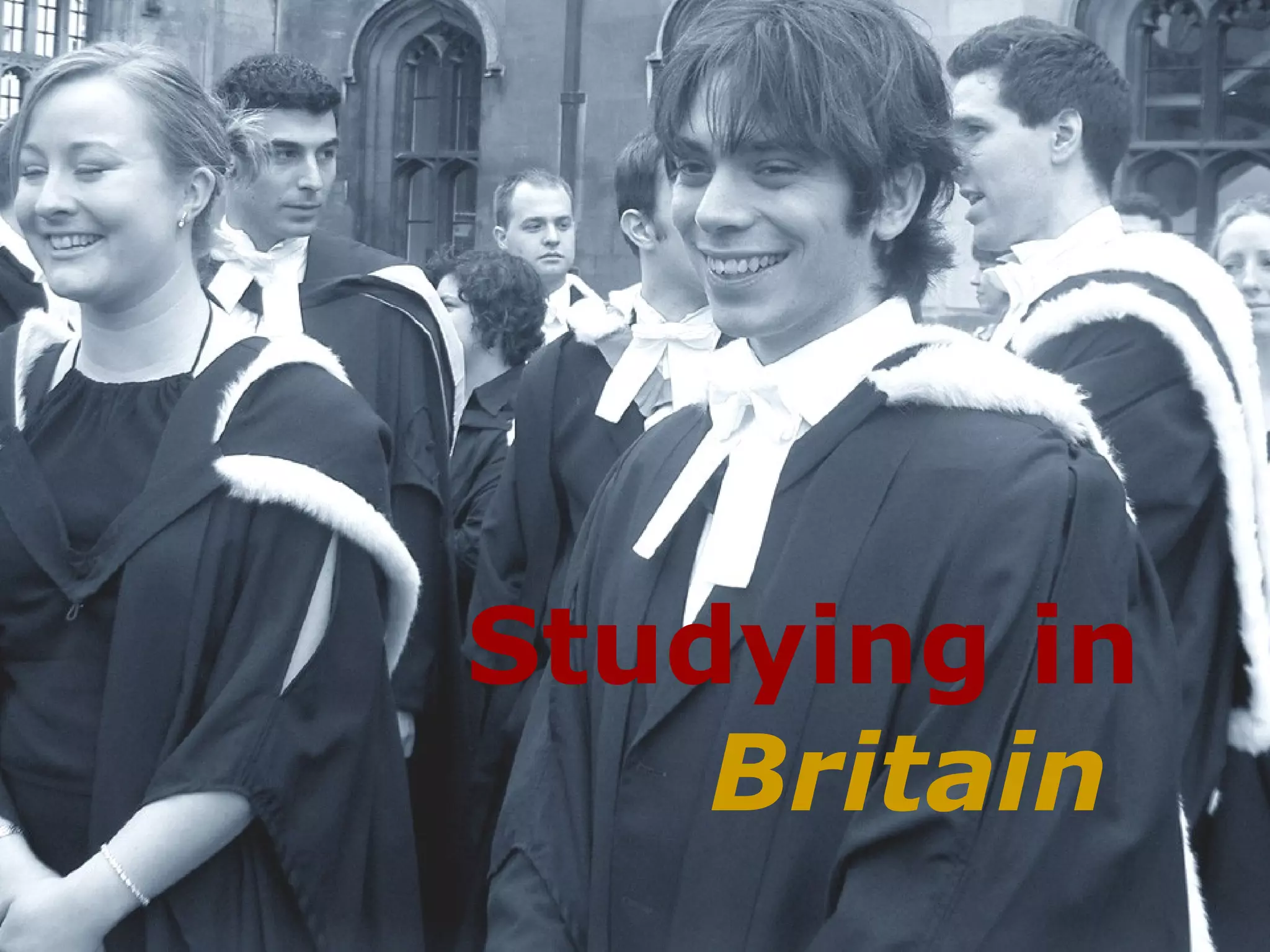
Studying in
    Britain
The Education System
 School Education
 Further Education
 Higher Education
School Education
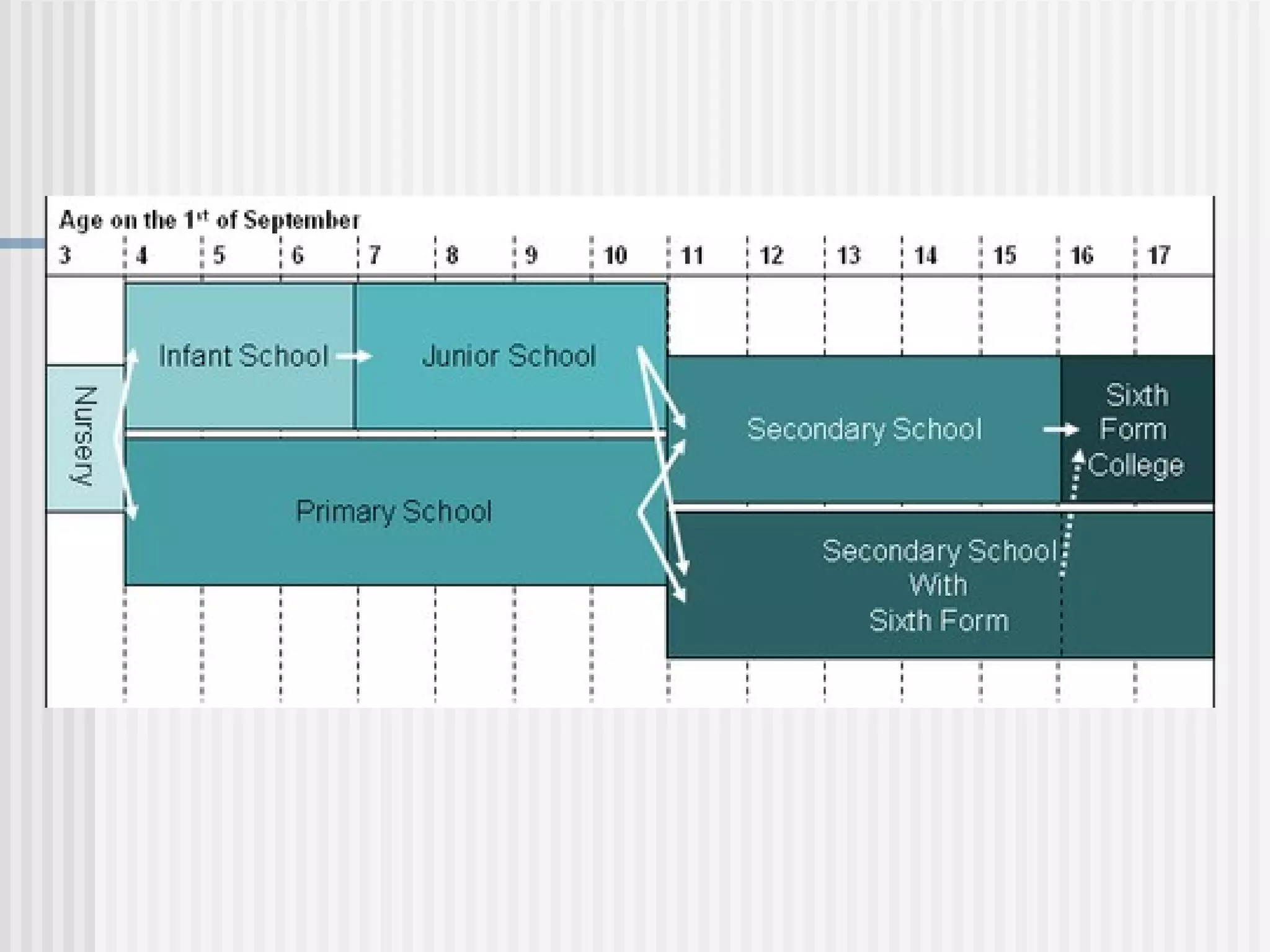
   Compulsory education from 5 to 16

   Soon to be extended to 18

   Students follow the National
    Curriculum
Further Education
 Usually for students between 16 and
  18
 Prepares for university or for a
  vocation
 A wide variety of examinations,
  including ‘A’ levels, baccalaureate,
  Scottish Highers
Primary School Subjects
   One teacher teaches:
       Art
       Analysis
       Drama
       English
       Geography
       History
       Mathematics
       Scottish Gaelic (in Scotland)
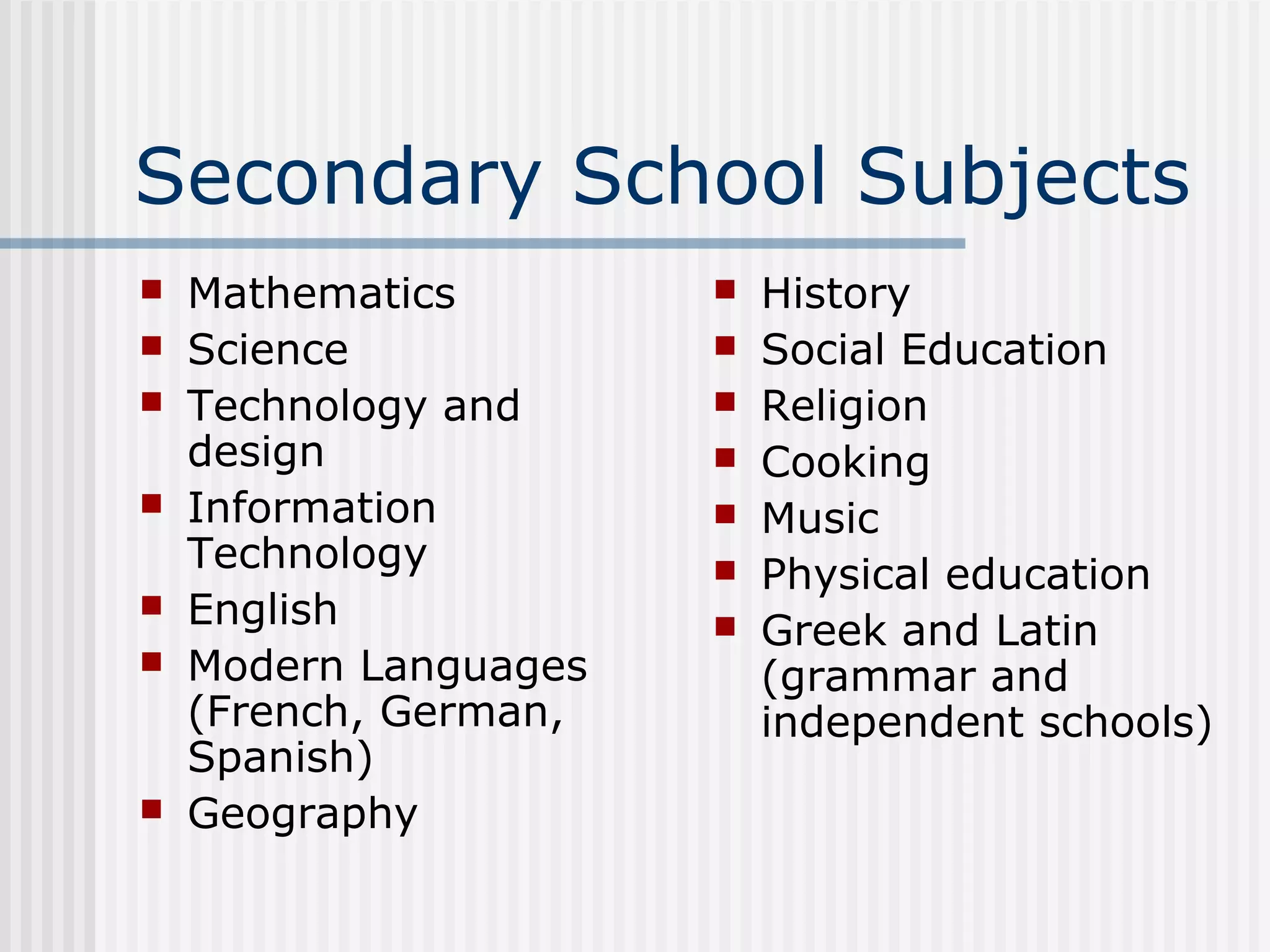
Secondary School Subjects
   Mathematics           History
   Science               Social Education
   Technology and        Religion
    design                Cooking
   Information           Music
    Technology            Physical education
   English               Greek and Latin
   Modern Languages       (grammar and
    (French, German,       independent schools)
    Spanish)
   Geography
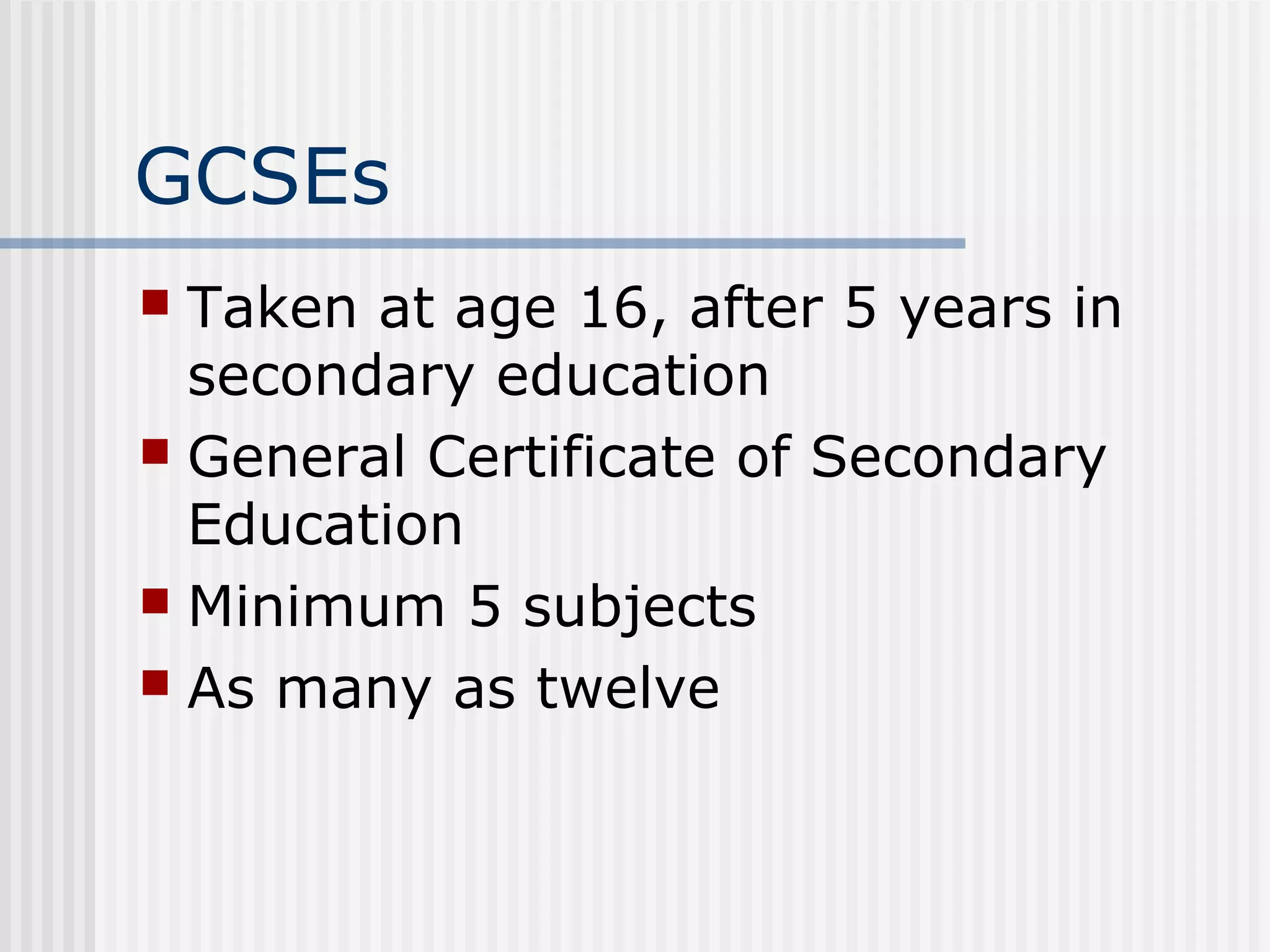
GCSEs
 Taken at age 16, after 5 years in
  secondary education
 General Certificate of Secondary
  Education
 Minimum 5 subjects
 As many as twelve
Further education
   England, Wales, Northern Ireland
       3 or more ‘A’ levels taken at age 18
   Scotland
       Highers
   Alternative
       International Baccalaureate
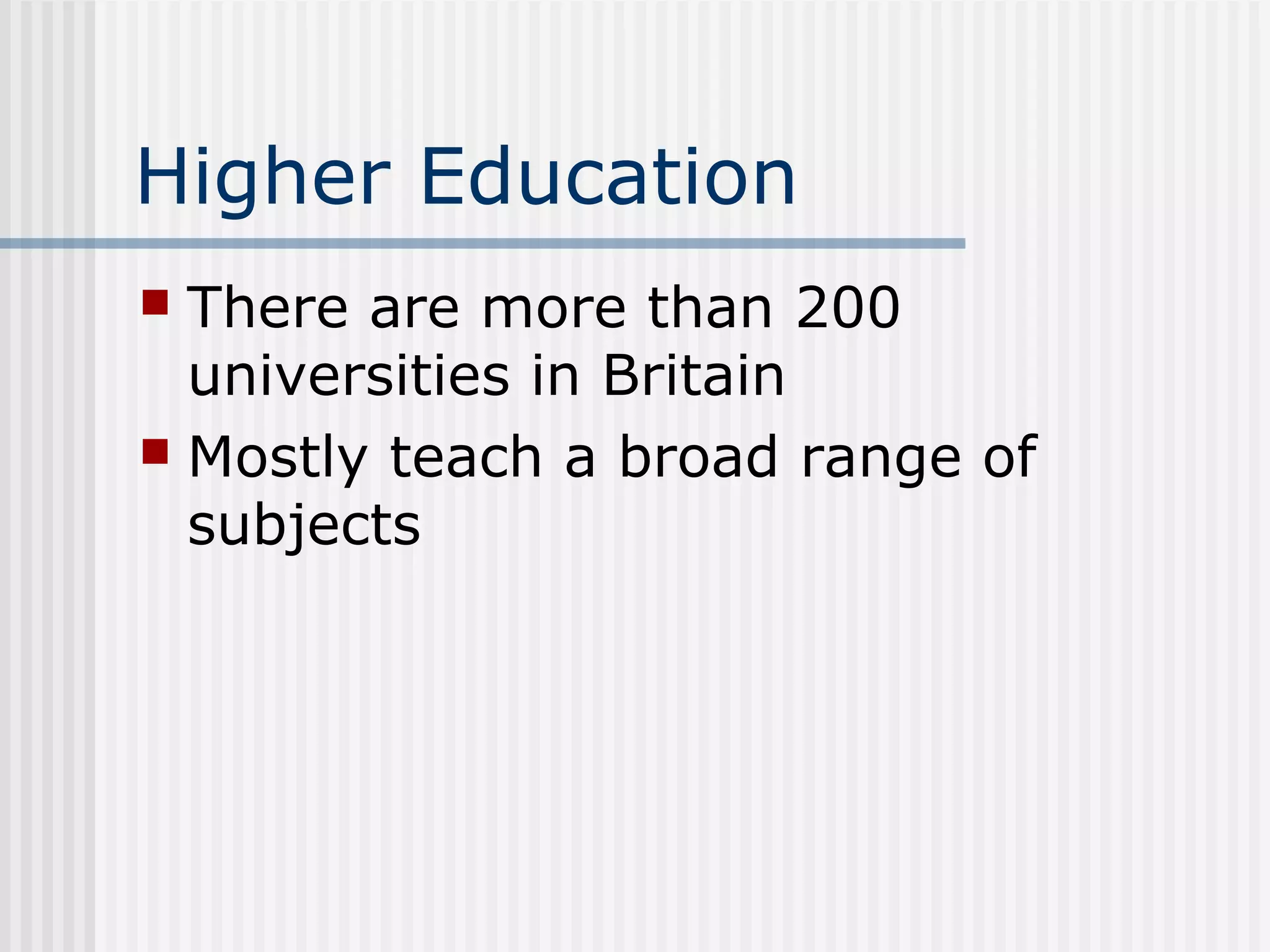
Higher Education
 There are more than 200
  universities in Britain
 Mostly teach a broad range of
  subjects
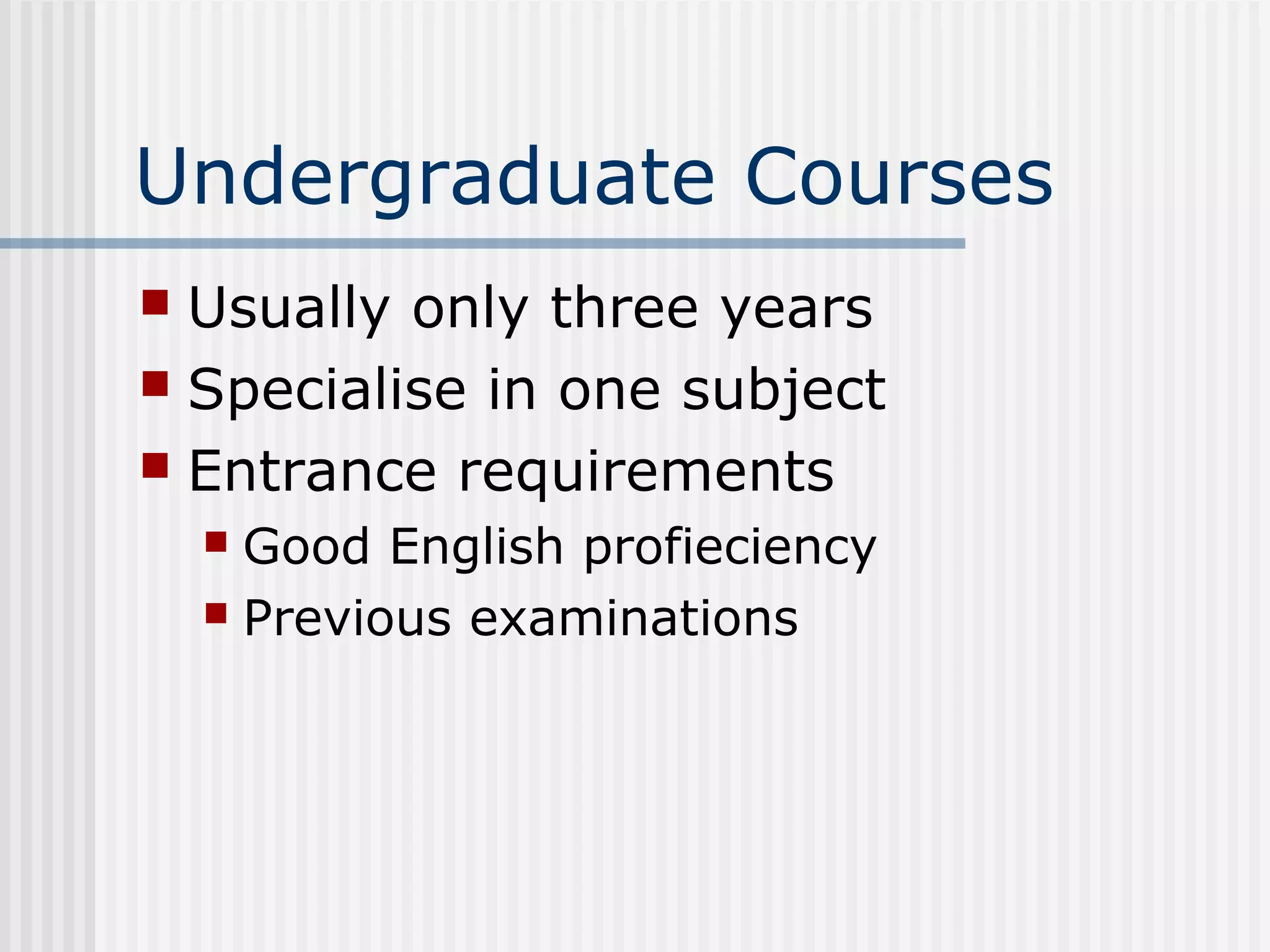
Undergraduate Courses
 Usually only three years
 Specialise in one subject
 Entrance requirements
     Good English profieciency
     Previous examinations
Postgraduate courses
   Masters
     Can be teaching or research based
     Usually examined by dissertation

     One or two years

   Doctorate
       Always research, never taught
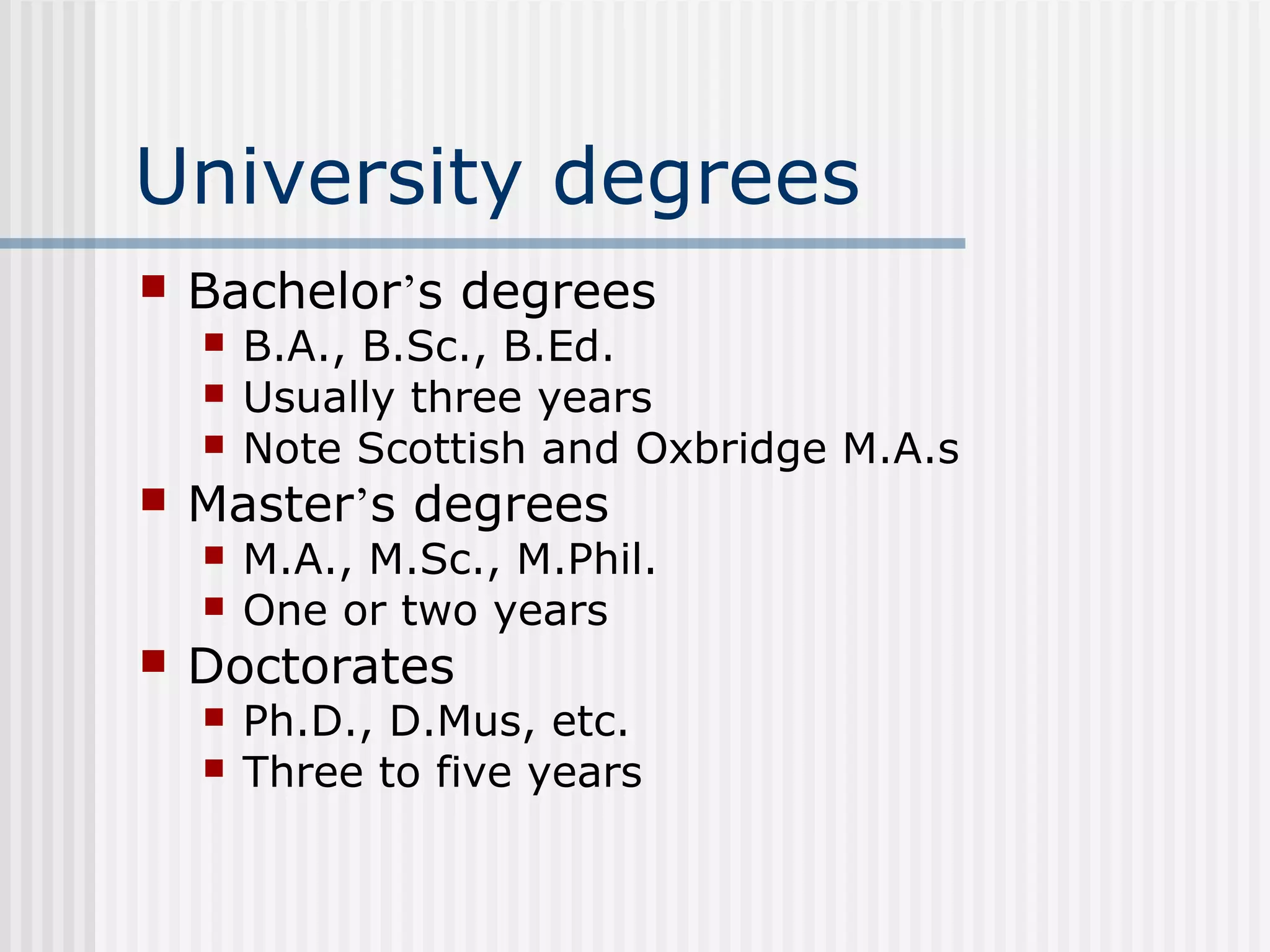
University degrees
   Bachelor’s degrees
       B.A., B.Sc., B.Ed.
       Usually three years
       Note Scottish and Oxbridge M.A.s
   Master’s degrees
       M.A., M.Sc., M.Phil.
       One or two years
   Doctorates
       Ph.D., D.Mus, etc.
       Three to five years
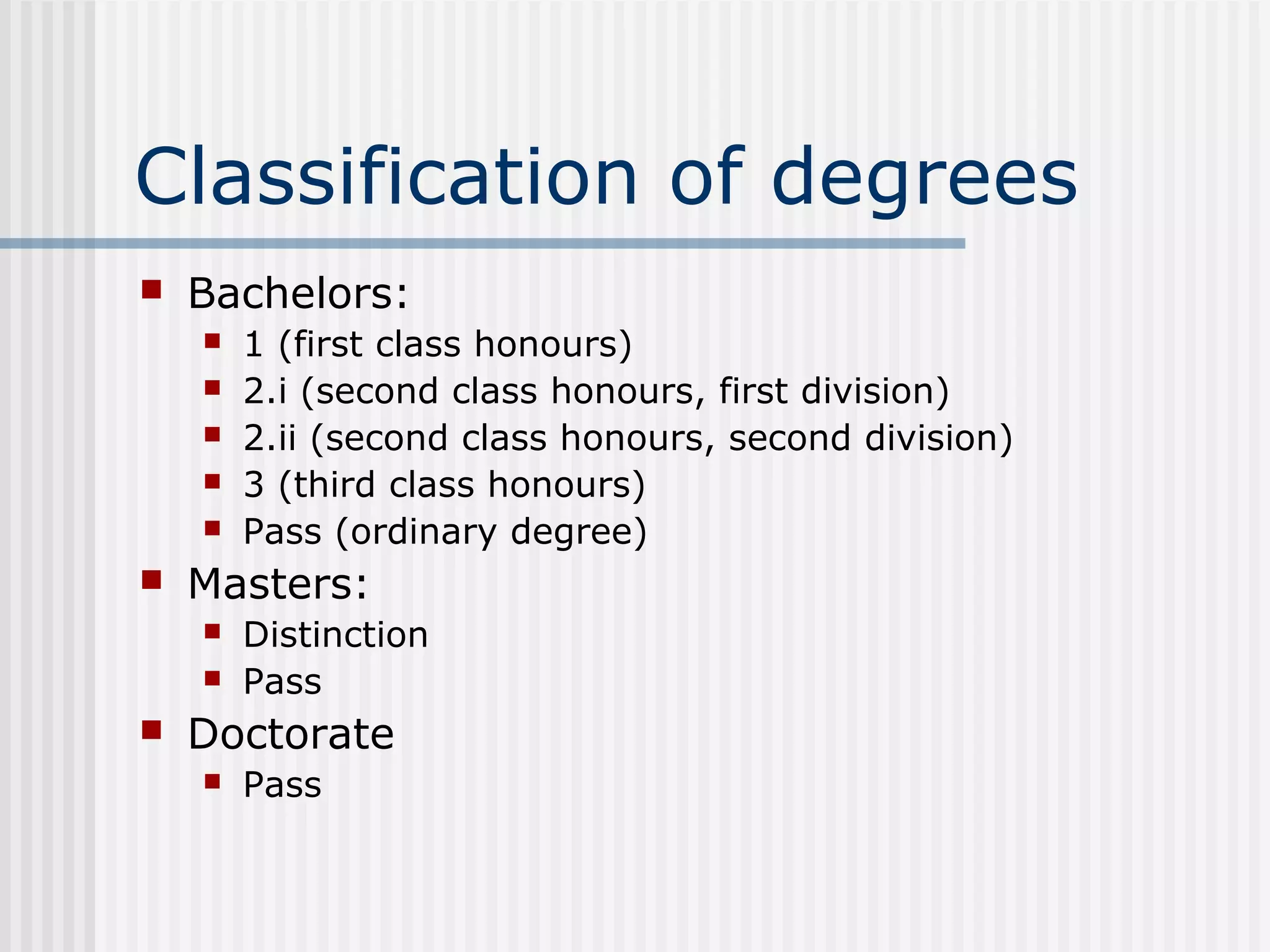
Classification of degrees
   Bachelors:
       1 (first class honours)
       2.i (second class honours, first division)
       2.ii (second class honours, second division)
       3 (third class honours)
       Pass (ordinary degree)
   Masters:
       Distinction
       Pass
   Doctorate
       Pass
Chinese students in Britain
  In 2000 nearly 19,000 student visas
   were awarded to Chinese citizens,
   more than to any other visa-
   requiring country
  The next most represented country
   was Russia, with about 9,000
   student visas
Source: United Kingdom Government, Foreign and
Commonwealth Office

Studying in britain

  • 1.
    Studying in Britain
  • 2.
    The Education System School Education  Further Education  Higher Education
  • 3.
    School Education  Compulsory education from 5 to 16  Soon to be extended to 18  Students follow the National Curriculum
  • 4.
    Further Education  Usuallyfor students between 16 and 18  Prepares for university or for a vocation  A wide variety of examinations, including ‘A’ levels, baccalaureate, Scottish Highers
  • 6.
    Primary School Subjects  One teacher teaches:  Art  Analysis  Drama  English  Geography  History  Mathematics  Scottish Gaelic (in Scotland)
  • 7.
    Secondary School Subjects  Mathematics  History  Science  Social Education  Technology and  Religion design  Cooking  Information  Music Technology  Physical education  English  Greek and Latin  Modern Languages (grammar and (French, German, independent schools) Spanish)  Geography
  • 8.
    GCSEs  Taken atage 16, after 5 years in secondary education  General Certificate of Secondary Education  Minimum 5 subjects  As many as twelve
  • 9.
    Further education  England, Wales, Northern Ireland  3 or more ‘A’ levels taken at age 18  Scotland  Highers  Alternative  International Baccalaureate
  • 10.
    Higher Education  Thereare more than 200 universities in Britain  Mostly teach a broad range of subjects
  • 11.
    Undergraduate Courses  Usuallyonly three years  Specialise in one subject  Entrance requirements  Good English profieciency  Previous examinations
  • 12.
    Postgraduate courses  Masters  Can be teaching or research based  Usually examined by dissertation  One or two years  Doctorate  Always research, never taught
  • 13.
    University degrees  Bachelor’s degrees  B.A., B.Sc., B.Ed.  Usually three years  Note Scottish and Oxbridge M.A.s  Master’s degrees  M.A., M.Sc., M.Phil.  One or two years  Doctorates  Ph.D., D.Mus, etc.  Three to five years
  • 14.
    Classification of degrees  Bachelors:  1 (first class honours)  2.i (second class honours, first division)  2.ii (second class honours, second division)  3 (third class honours)  Pass (ordinary degree)  Masters:  Distinction  Pass  Doctorate  Pass
  • 15.
    Chinese students inBritain  In 2000 nearly 19,000 student visas were awarded to Chinese citizens, more than to any other visa- requiring country  The next most represented country was Russia, with about 9,000 student visas Source: United Kingdom Government, Foreign and Commonwealth Office