Welcome to my
presentation
My presentation topic on
Uninterruptable power supply (UPS)
SUBBMITED BY SUBBMITED TO:
MD. MD. ATIKUL ISLAM KANIJ AHMED
ID: 162-33-3507 DEPARTMENTOF EEE
SECTION : D
DEPARTMENT OF EEE
What is UPS?
 Uninterruptable power supply is a device that provides battery backup
when the power tails on drops to an unacceptable voltage level.
 The switch overs time must be small (2 or 4 ms) enough to not cause break
in the operation of the loads.
Power problems:
 The voltage distortion then can cause problems in all electrical
equipment connected to that power source, including the UPS itself. It will
also cause more power to be lost in the wiring supplying power to
the UPS due to the spikes in current flow.
Basic parts of an ups:
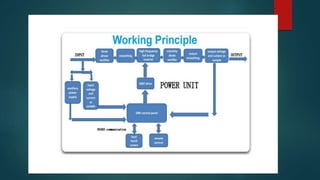
 1. The static bypass: The online UPS has an internal static bypass circuit that is the first
line of defense should you experience a failure within your UPS system.
 2. The rectifier: The rectifier has two main functions. One is to charge the batteries (like
an alternator in a car) so your batteries remain at the proper float voltage.
 3. The battery: The battery is the heart of your UPS system. Should your facility
experience a utility power failure, your mission critical equipment will depend on your
UPS’s battery system to support the load.
 4. The inverter: The final main component of a UPS system is the inverter. This device
accepts the D/C from the D/C buss, which is supplied by the rectifier and the battery.
Power quality of ups:
 Uninterruptible Power Supply (UPS) is a power quality device, which provides
continuous and conditioned power to a critical load. Also, the device averts power
quality problems coming from the distribution system such as interruptions, voltage
sags, swells, harmonics and noise from disrupting the performance of sensitive
electronic components and other electrical equipment. In other words, a UPS
provides protection against all types of interruption and, as a bonus, can also isolate
the critical load from other power quality problems that are present in the incoming
supply.
UPS topology:
 UPS on the market today come in basically two types of designs: Line-interactive and Double
conversion. These two topologies operate differently and can impact the critical load if the
wrong style is use. Typically a line-interactive UPS is adequate for personnel computing or
for applications where isolation on the output is not critical. For most facilities we
recommend a double conversion UPS because they have a better output wave form across
all operating modes and better isolation. This can be referred to as computer grade power.
Applications of ups:
 Data centers
 Telecommunications
 Healthcare
 Industries
 Special projects
Conclusion:
 1 UPS’s strategic aim “best service and lowest rate”.
 2 information technology systems help ups succeed .
 3 UPS upgrades its information technology as needed in order to meet the
customers needs of the price in order to provide new opportunities for
ups.
Thank you

Uninterruptable power supply

  • 1.
  • 2.
    My presentation topicon Uninterruptable power supply (UPS) SUBBMITED BY SUBBMITED TO: MD. MD. ATIKUL ISLAM KANIJ AHMED ID: 162-33-3507 DEPARTMENTOF EEE SECTION : D DEPARTMENT OF EEE
  • 3.
    What is UPS? Uninterruptable power supply is a device that provides battery backup when the power tails on drops to an unacceptable voltage level.  The switch overs time must be small (2 or 4 ms) enough to not cause break in the operation of the loads.
  • 5.
    Power problems:  Thevoltage distortion then can cause problems in all electrical equipment connected to that power source, including the UPS itself. It will also cause more power to be lost in the wiring supplying power to the UPS due to the spikes in current flow.
  • 6.
    Basic parts ofan ups:  1. The static bypass: The online UPS has an internal static bypass circuit that is the first line of defense should you experience a failure within your UPS system.  2. The rectifier: The rectifier has two main functions. One is to charge the batteries (like an alternator in a car) so your batteries remain at the proper float voltage.  3. The battery: The battery is the heart of your UPS system. Should your facility experience a utility power failure, your mission critical equipment will depend on your UPS’s battery system to support the load.  4. The inverter: The final main component of a UPS system is the inverter. This device accepts the D/C from the D/C buss, which is supplied by the rectifier and the battery.
  • 7.
    Power quality ofups:  Uninterruptible Power Supply (UPS) is a power quality device, which provides continuous and conditioned power to a critical load. Also, the device averts power quality problems coming from the distribution system such as interruptions, voltage sags, swells, harmonics and noise from disrupting the performance of sensitive electronic components and other electrical equipment. In other words, a UPS provides protection against all types of interruption and, as a bonus, can also isolate the critical load from other power quality problems that are present in the incoming supply.
  • 8.
    UPS topology:  UPSon the market today come in basically two types of designs: Line-interactive and Double conversion. These two topologies operate differently and can impact the critical load if the wrong style is use. Typically a line-interactive UPS is adequate for personnel computing or for applications where isolation on the output is not critical. For most facilities we recommend a double conversion UPS because they have a better output wave form across all operating modes and better isolation. This can be referred to as computer grade power.
  • 9.
    Applications of ups: Data centers  Telecommunications  Healthcare  Industries  Special projects
  • 10.
    Conclusion:  1 UPS’sstrategic aim “best service and lowest rate”.  2 information technology systems help ups succeed .  3 UPS upgrades its information technology as needed in order to meet the customers needs of the price in order to provide new opportunities for ups.
  • 11.