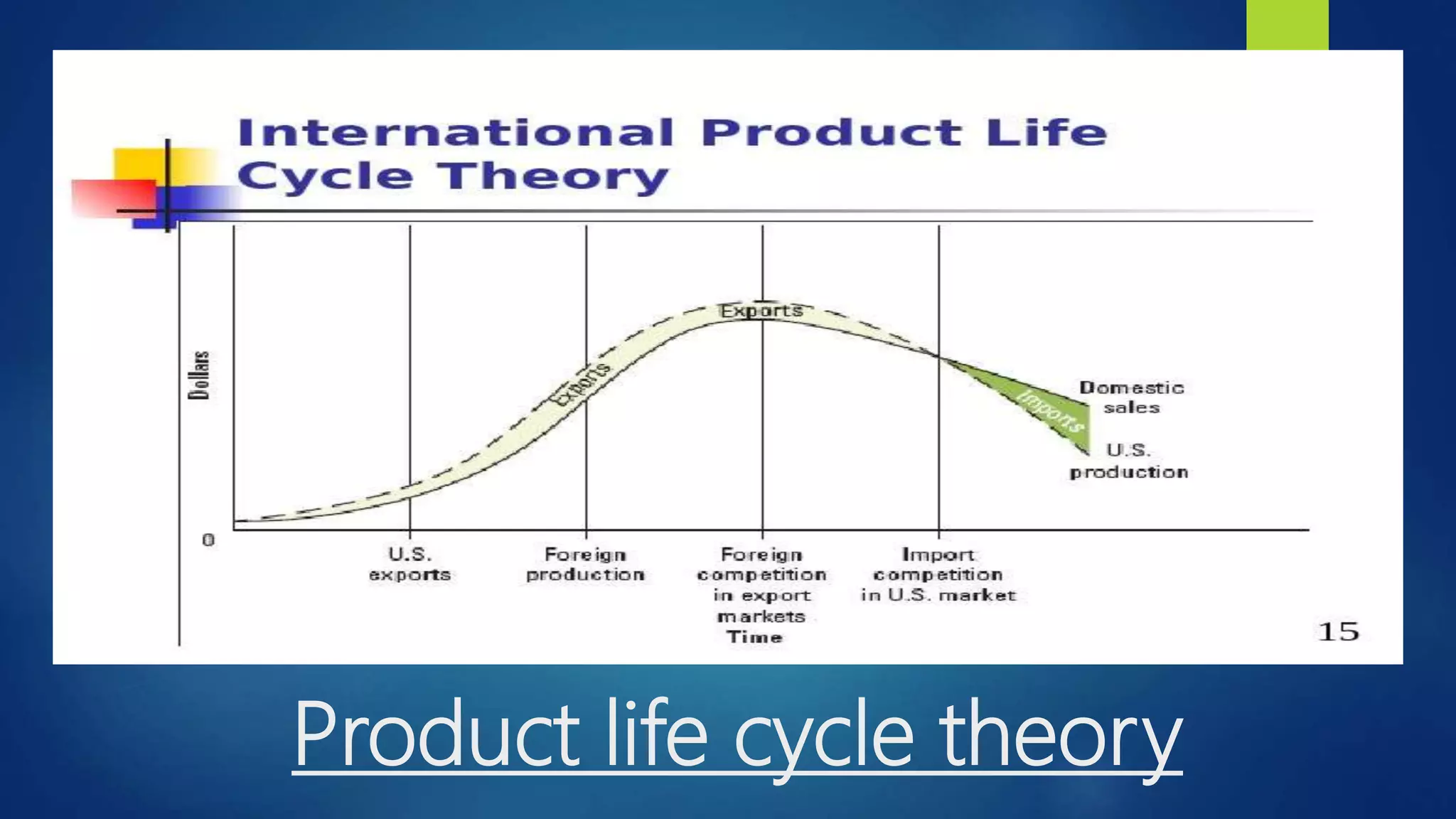
Product life cycle theory
Definition
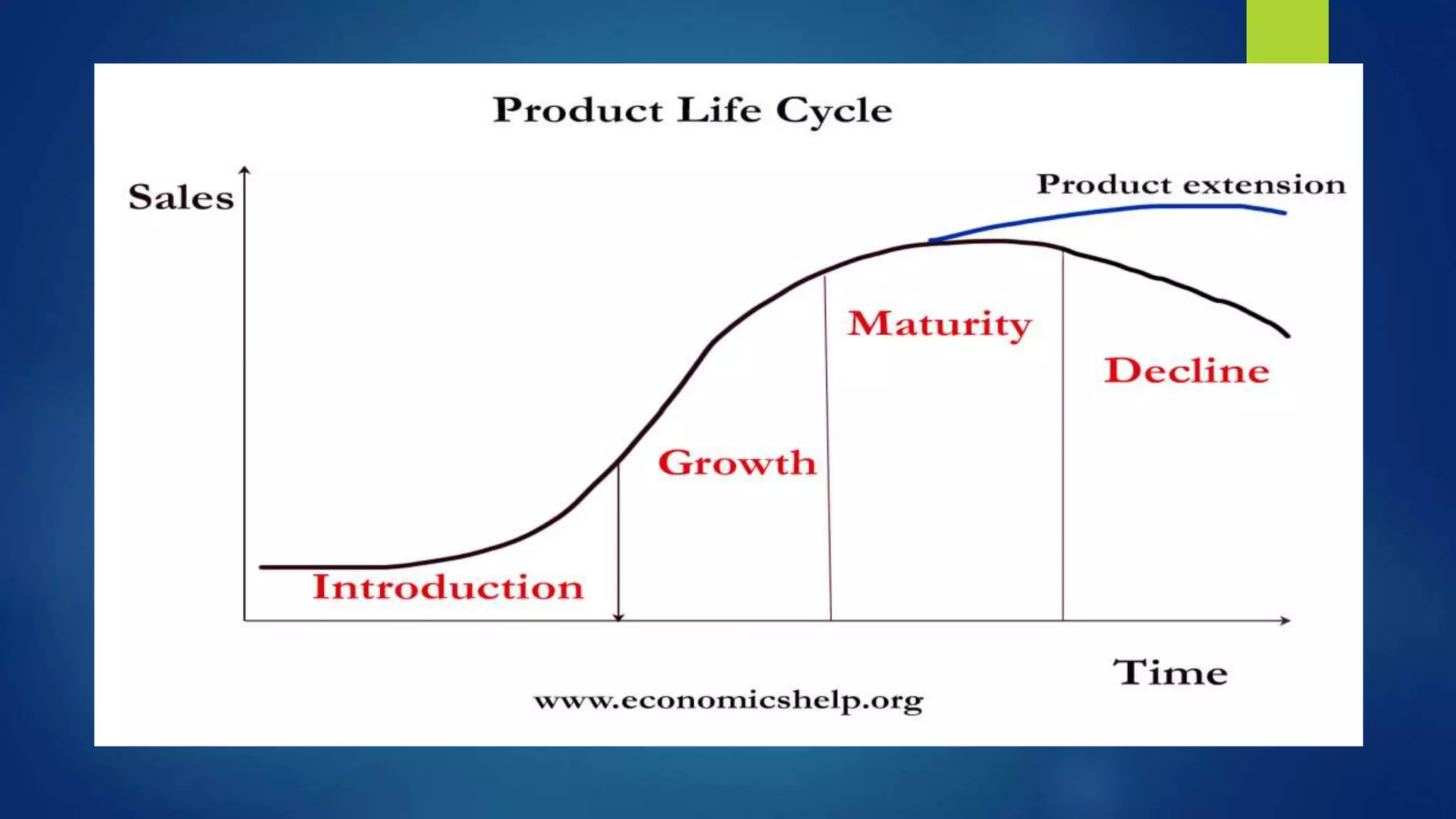
The product life-cycle (PLC) refers to the different stages a
product goes through from introduction to withdrawal.
The product life-cycle refers to a likely pathway a product may
take. It has implications for the marketing strategy of a firm as it
seeks to introduce, grow and maintain market share.
Stages of Products
1.Introduction – when the product is
introduced and struggles to gain brand
2.Growth – advertising and word of mouth
helps the product to increase sales. As sales
firms are willing to stock the product which
product to grow even further.
Continued…
3. Maturity – When the product
reaches peak market penetration.
4. Decline – the product gets
eclipsed by new products
Example of the Product Life Cycle
2018
1. Introduction – Self-driving cars. Self-driving cars are still
at the testing stage, but firms hope to be able to sell to
early adopters relatively soon.
2. Growth – Electric cars. For example, the Tesla Model S is
in its growth phase. Electric cars still need to convince
people that it will work and be practical. As there are
more electric charging points and more people adopt, it
becomes easier to sell to those who are more sceptical of
new technology like electric cars.
3.Maturity – Ford Focus. The Ford Focus is a well-
established car. It has a good brand reputation and has
of market penetration. It would be difficult to gain a
share. The product life cycle of the Ford Focus has been
upgrades and redesigns to keep the car on top of the
4.Decline – Diesel cars. Since governments have expressed
concern at the level of pollution from diesel cars. Some
to ban diesel cars within a few years. Sales have fallen
market for diesel cars may be in terminal decline.
Criticisms
Difficult to determine Phase
Neglected consumer side
life cycle

Uni 1-Product life cycle theory.pptx

  • 1.
  • 2.
    Definition The product life-cycle(PLC) refers to the different stages a product goes through from introduction to withdrawal. The product life-cycle refers to a likely pathway a product may take. It has implications for the marketing strategy of a firm as it seeks to introduce, grow and maintain market share.
  • 4.
    Stages of Products 1.Introduction– when the product is introduced and struggles to gain brand 2.Growth – advertising and word of mouth helps the product to increase sales. As sales firms are willing to stock the product which product to grow even further.
  • 5.
    Continued… 3. Maturity –When the product reaches peak market penetration. 4. Decline – the product gets eclipsed by new products
  • 6.
    Example of theProduct Life Cycle 2018 1. Introduction – Self-driving cars. Self-driving cars are still at the testing stage, but firms hope to be able to sell to early adopters relatively soon. 2. Growth – Electric cars. For example, the Tesla Model S is in its growth phase. Electric cars still need to convince people that it will work and be practical. As there are more electric charging points and more people adopt, it becomes easier to sell to those who are more sceptical of new technology like electric cars.
  • 7.
    3.Maturity – FordFocus. The Ford Focus is a well- established car. It has a good brand reputation and has of market penetration. It would be difficult to gain a share. The product life cycle of the Ford Focus has been upgrades and redesigns to keep the car on top of the 4.Decline – Diesel cars. Since governments have expressed concern at the level of pollution from diesel cars. Some to ban diesel cars within a few years. Sales have fallen market for diesel cars may be in terminal decline.
  • 8.
    Criticisms Difficult to determinePhase Neglected consumer side life cycle