UNDERWATER
CONSTRUCTION
Construction that happens under water.
Mainly foundation of bridges, dams etc require
underwater constructions.
Has many difficulties when the water depth is
considerable.
Main objective-to create dry and water free
environment for working to attain structural stability.
Introduction
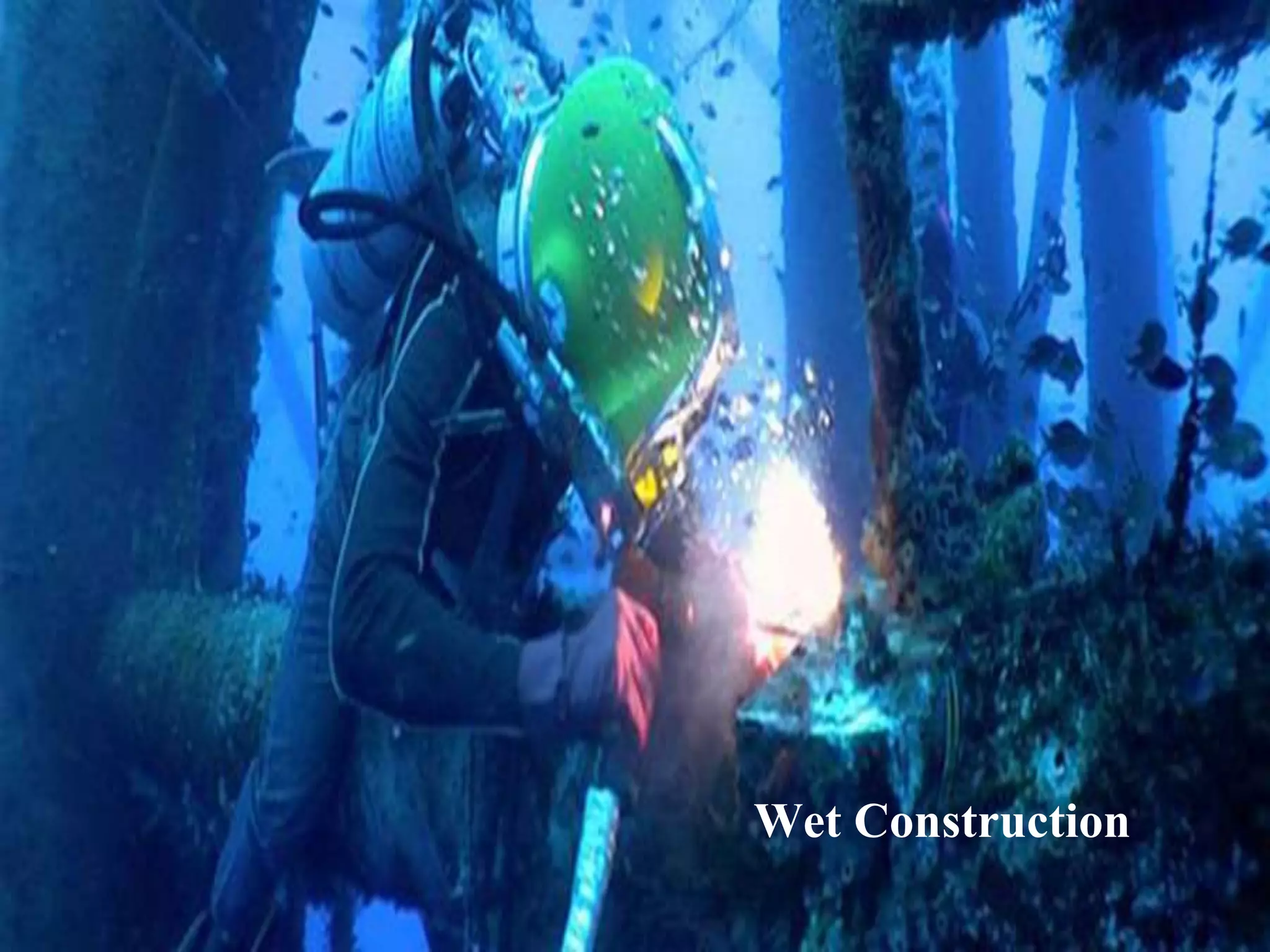
Wet Construction
❏ water tight retaining structure.
❏ permanent in nature.
❏ used in construction of bridge piers, building
columns, dams, etc.
❏ constructed in a way that the water can be pumped
out.
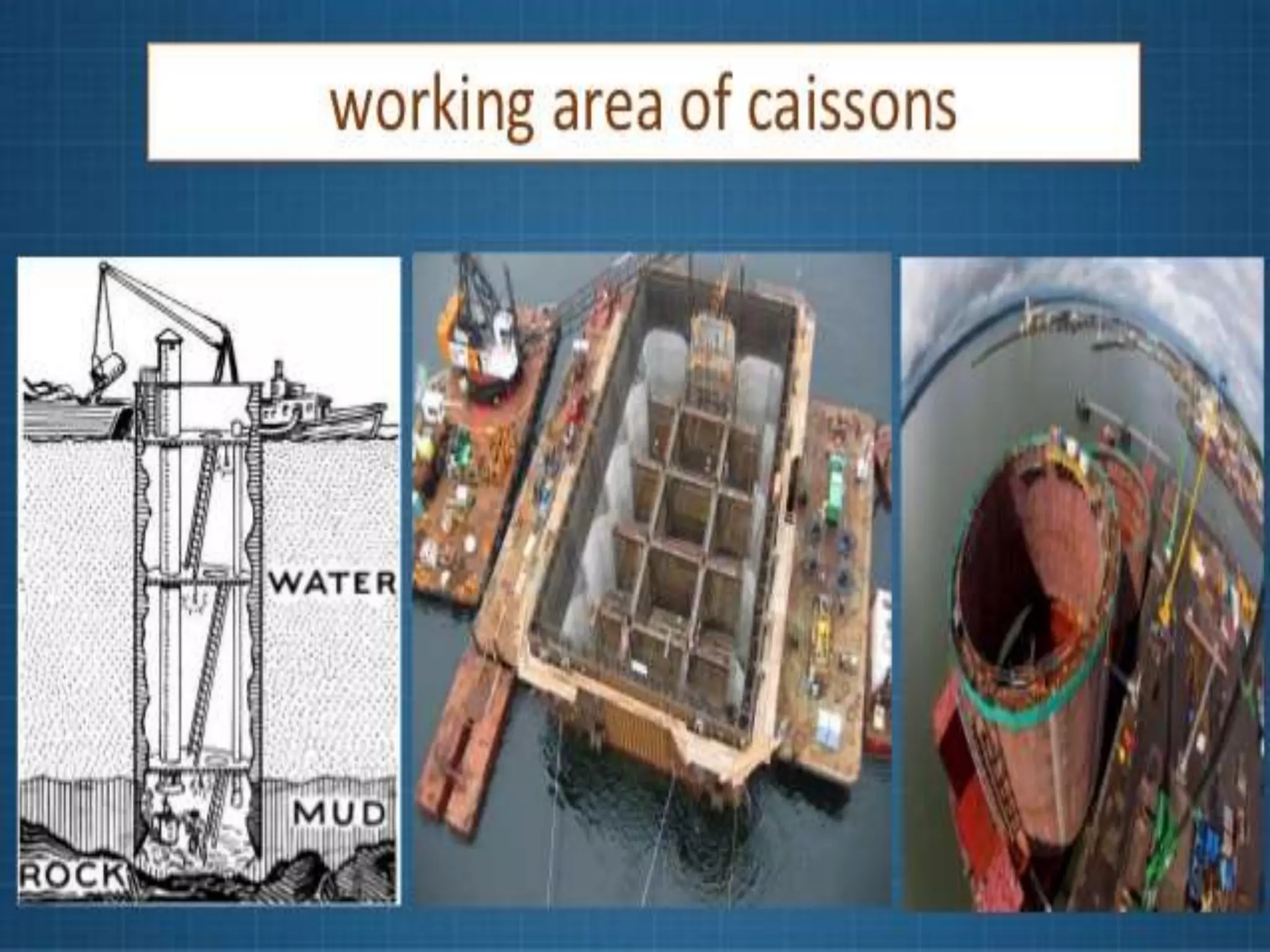
CAISSONS
❏ economic, less noise and reduced vibrations.
❏ adaptable to varying site conditions.
❏ high axial and lateral loading capacity.
❏ placement is possible where pile driving is not
possible.
ADVANTAGES
❏ It is so named since it appeared in construction
workers when they left the compressed atmosphere
of the caisson and re-entered the normal atmospheric
conditions.
❏ Construction of the Brooklyn Bridge, which was
built with the help of caissons, resulted in numerous
workers being either killed or permanently injured
by caisson disease during its construction, including
the designer’s son and Chief Engineer of the project.
CAISSON DISEASE
❏ temporary structure, built within or in pairs across a
body of water.
❏ allows enclosed space to be pumped out.
❏ enclosed coffers are used for construction and repair
of oil platforms, bridge piers and other support
structures within or over water.
COFFERDAMS
❏ involves the interaction of the structure , soil and
water.
❏ the loads imposed includes the hydrostatic forces and
the dynamic forces due to currents and waves.
❏ used for shallow constructions having depth less than
10m.
Contd….
❏ allow construction and excavation in poor
environment.
❏ provides safe environment to work.
❏ sheet piles can easily be installed and removed.
❏ materials can typically be reused on other projects
ADVANTAGES
It is the process in which the prepared concrete is
poured below the water surface by using suitable
methods.
PLACEMENT METHODS
• tremie method
• pump method
• toggle bags
UNDERWATER CONCRETING
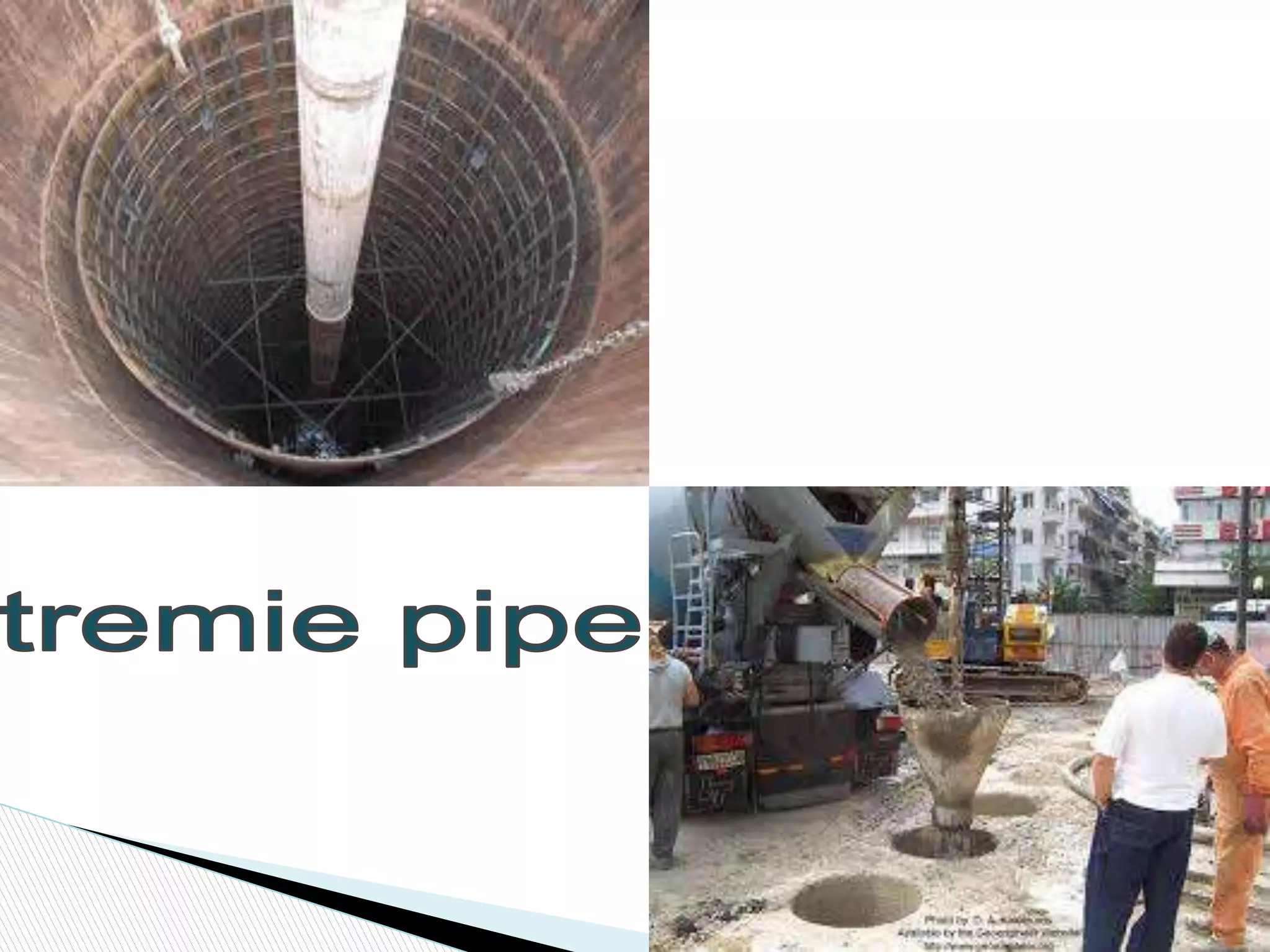
❏ Watertight pipe generally with 250mm diameter.
❏ has a funnel shaped hopper at its top and a loose plug
at the bottom.
❏ supported on a working platform above water level.
❏ lower end of the pipe is kept immersed in fresh
concrete.
TREMIE METHOD
❏ Pumping concrete directly into its final position,
involving both horizontal and vertical delivery of
concrete.
❏ operational efficiency with potential savings of time
and labour.
❏ for massive underwater concrete construction of
navigation structures, the method is prohibited.
PUMP METHOD
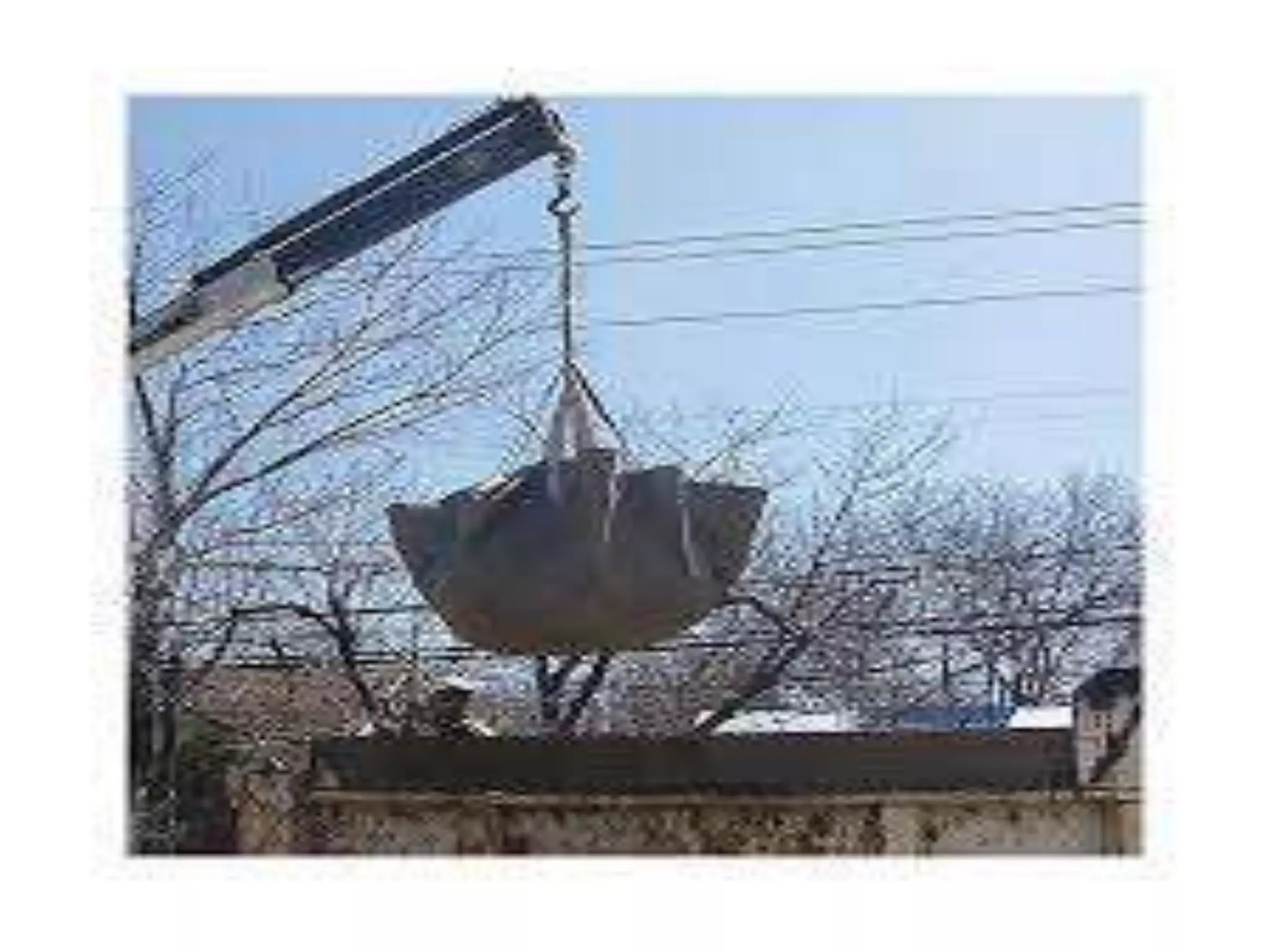
❏ Used for the placement of small amounts of
concrete.
❏ bag is filled in dry condition with wet concrete.
❏ used mainly for repairing works.
❏ concrete is squeezed out from the bag by the diver.
TOGGLE BAGS
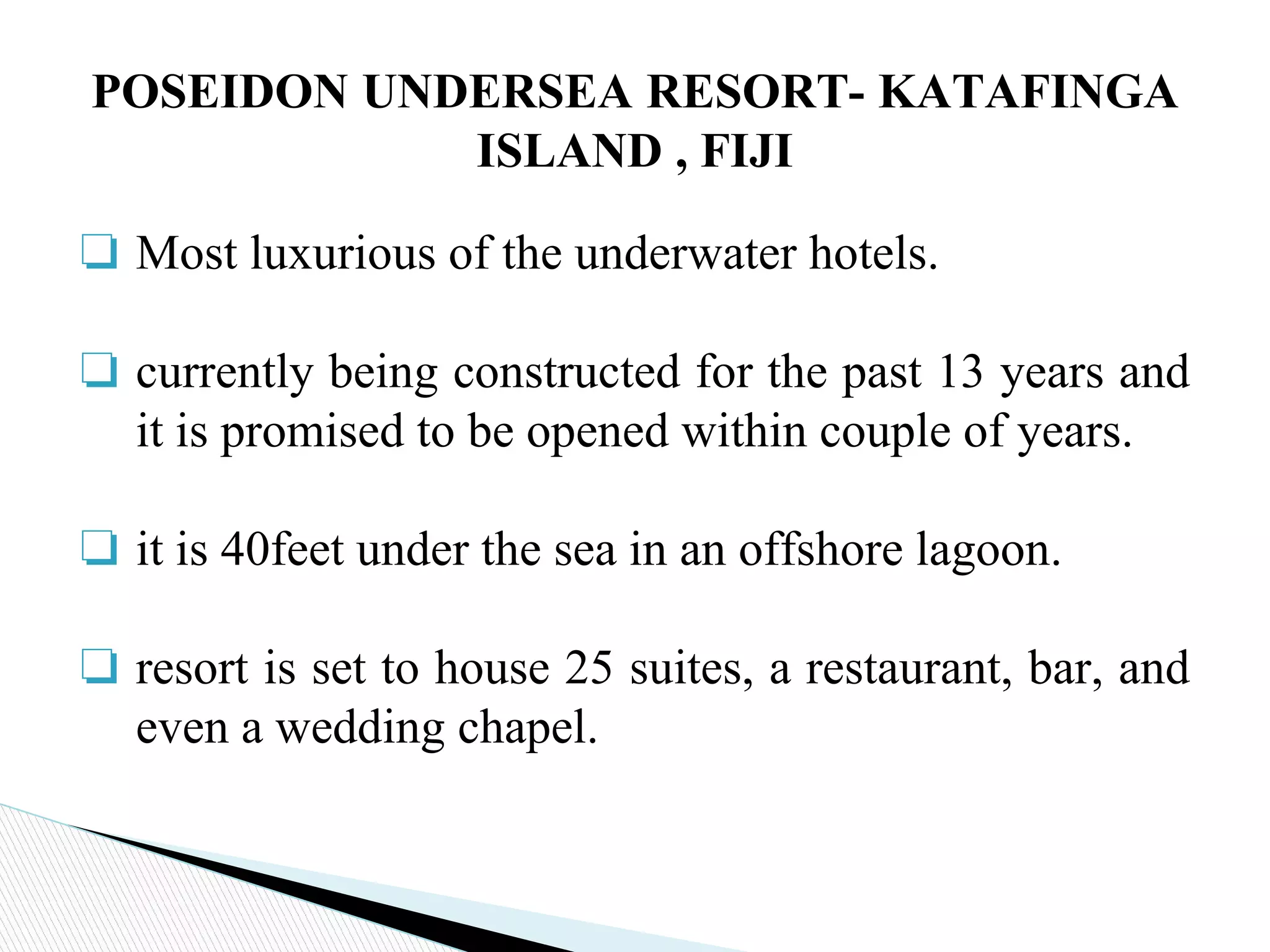
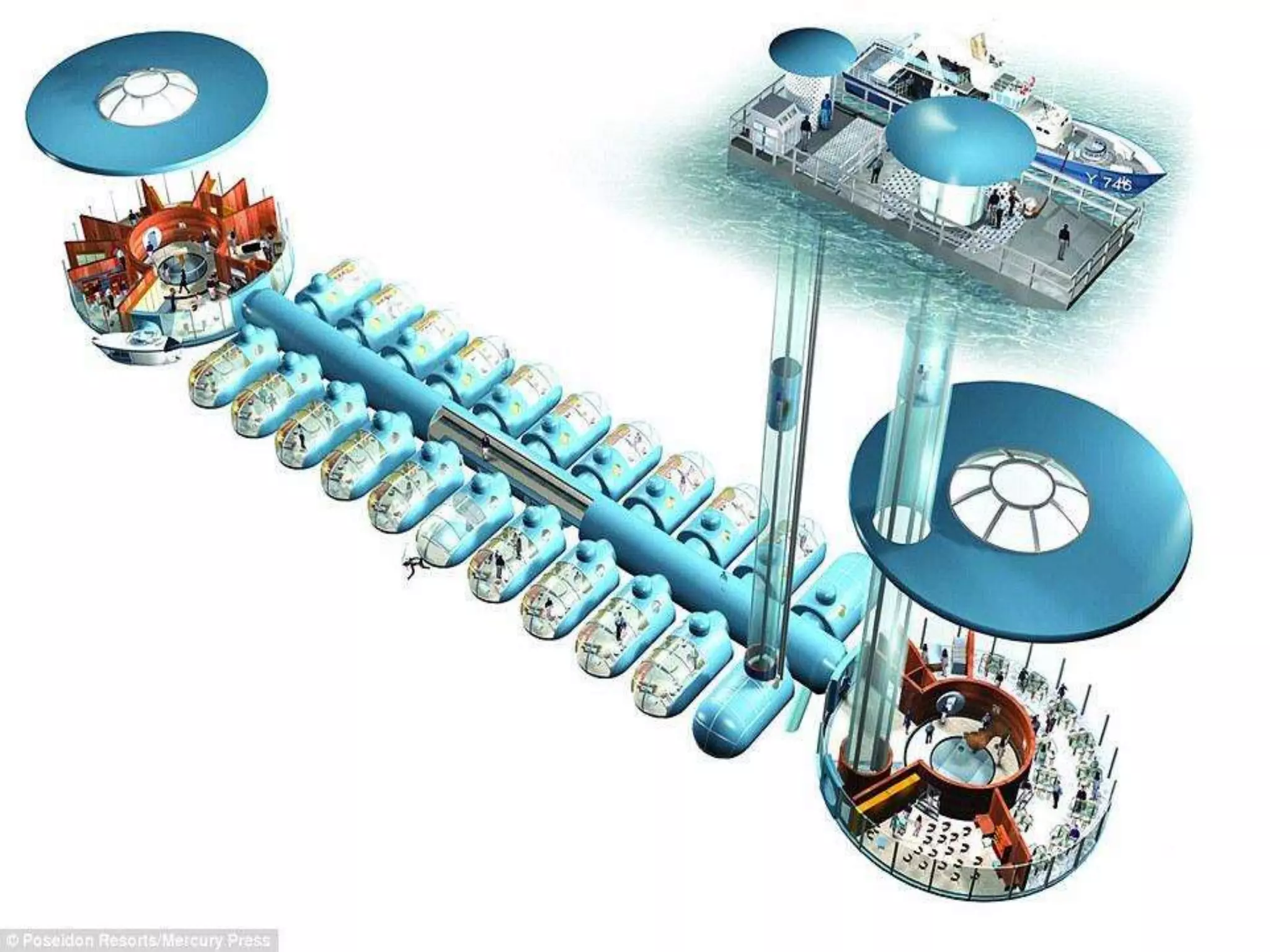
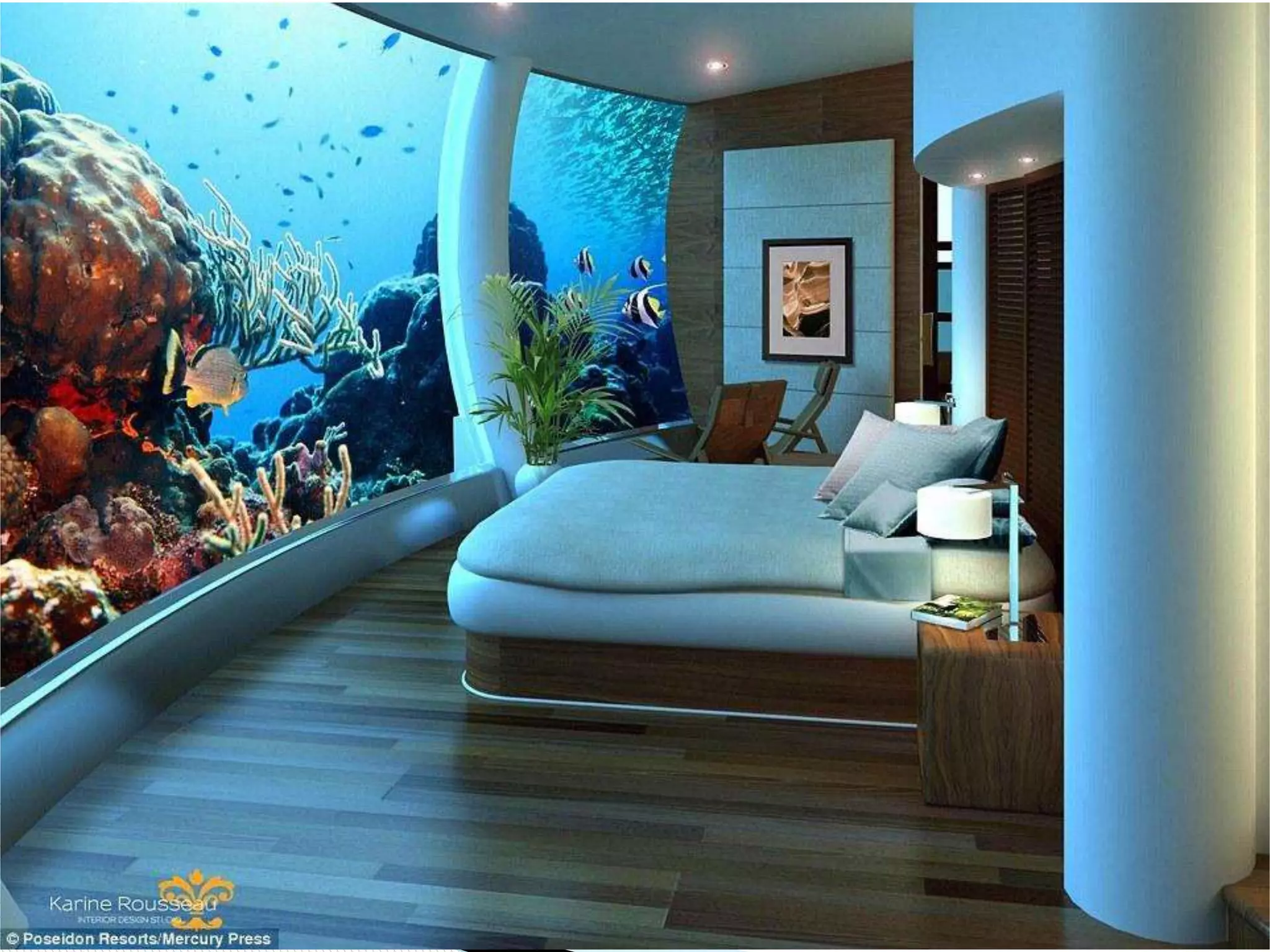
❏ Most luxurious of the underwater hotels.
❏ currently being constructed for the past 13 years and
it is promised to be opened within couple of years.
❏ it is 40feet under the sea in an offshore lagoon.
❏ resort is set to house 25 suites, a restaurant, bar, and
even a wedding chapel.
POSEIDON UNDERSEA RESORT- KATAFINGA
ISLAND , FIJI
❏ Located in the Persian gulf between the Burj al Arab
and the Palm Jumeirah islands.
❏ proposed by the polish architect Krysztof Kotala.
❏ sports arena will also double up as an aquarium with
a rooftop coral reef which will put on display an
abundance of sea life for spectators as well as for
players.
LATEST UNDERWATER TENNIS COURT
DUBAI
❏ Cofferdams are used in cases where the plan area of
the foundation is very large, depth of water is less
and for soft soils.
❏ Caissons becomes economical in cases where the
plan are of foundation is small, large depth of water
and for loose soil.
❏ Tremie placement method is the standard way of
placing high quality concrete under water.
CONCLUSION
Submitted by,
Hamsui Harold
&
Sharu Tany Prasad
THANK YOU…

UNDERWATER CONSTRUCTION

  • 1.
  • 2.
    Construction that happensunder water. Mainly foundation of bridges, dams etc require underwater constructions. Has many difficulties when the water depth is considerable. Main objective-to create dry and water free environment for working to attain structural stability. Introduction
  • 4.
  • 6.
    ❏ water tightretaining structure. ❏ permanent in nature. ❏ used in construction of bridge piers, building columns, dams, etc. ❏ constructed in a way that the water can be pumped out. CAISSONS
  • 8.
    ❏ economic, lessnoise and reduced vibrations. ❏ adaptable to varying site conditions. ❏ high axial and lateral loading capacity. ❏ placement is possible where pile driving is not possible. ADVANTAGES
  • 9.
    ❏ It isso named since it appeared in construction workers when they left the compressed atmosphere of the caisson and re-entered the normal atmospheric conditions. ❏ Construction of the Brooklyn Bridge, which was built with the help of caissons, resulted in numerous workers being either killed or permanently injured by caisson disease during its construction, including the designer’s son and Chief Engineer of the project. CAISSON DISEASE
  • 10.
    ❏ temporary structure,built within or in pairs across a body of water. ❏ allows enclosed space to be pumped out. ❏ enclosed coffers are used for construction and repair of oil platforms, bridge piers and other support structures within or over water. COFFERDAMS
  • 11.
    ❏ involves theinteraction of the structure , soil and water. ❏ the loads imposed includes the hydrostatic forces and the dynamic forces due to currents and waves. ❏ used for shallow constructions having depth less than 10m. Contd….
  • 13.
    ❏ allow constructionand excavation in poor environment. ❏ provides safe environment to work. ❏ sheet piles can easily be installed and removed. ❏ materials can typically be reused on other projects ADVANTAGES
  • 14.
    It is theprocess in which the prepared concrete is poured below the water surface by using suitable methods. PLACEMENT METHODS • tremie method • pump method • toggle bags UNDERWATER CONCRETING
  • 15.
    ❏ Watertight pipegenerally with 250mm diameter. ❏ has a funnel shaped hopper at its top and a loose plug at the bottom. ❏ supported on a working platform above water level. ❏ lower end of the pipe is kept immersed in fresh concrete. TREMIE METHOD
  • 17.
    ❏ Pumping concretedirectly into its final position, involving both horizontal and vertical delivery of concrete. ❏ operational efficiency with potential savings of time and labour. ❏ for massive underwater concrete construction of navigation structures, the method is prohibited. PUMP METHOD
  • 19.
    ❏ Used forthe placement of small amounts of concrete. ❏ bag is filled in dry condition with wet concrete. ❏ used mainly for repairing works. ❏ concrete is squeezed out from the bag by the diver. TOGGLE BAGS
  • 21.
    ❏ Most luxuriousof the underwater hotels. ❏ currently being constructed for the past 13 years and it is promised to be opened within couple of years. ❏ it is 40feet under the sea in an offshore lagoon. ❏ resort is set to house 25 suites, a restaurant, bar, and even a wedding chapel. POSEIDON UNDERSEA RESORT- KATAFINGA ISLAND , FIJI
  • 25.
    ❏ Located inthe Persian gulf between the Burj al Arab and the Palm Jumeirah islands. ❏ proposed by the polish architect Krysztof Kotala. ❏ sports arena will also double up as an aquarium with a rooftop coral reef which will put on display an abundance of sea life for spectators as well as for players. LATEST UNDERWATER TENNIS COURT DUBAI
  • 27.
    ❏ Cofferdams areused in cases where the plan area of the foundation is very large, depth of water is less and for soft soils. ❏ Caissons becomes economical in cases where the plan are of foundation is small, large depth of water and for loose soil. ❏ Tremie placement method is the standard way of placing high quality concrete under water. CONCLUSION
  • 28.
  • 29.